3a Hair: The Curl Type That Needs Less Product, Not More
Oleh Onysko Updated 29 September 2026 18 min read
In this article
3a hair is the loosest of the type 3 curls: a springy spiral that loops a full circle around something roughly an inch across, about the width of a wine cork. It is a real curl, not a wave, and the pattern starts high near the root rather than halfway down.
Here is the thing almost every 3a guide gets backwards. Most curly hair advice is written for tighter textures, where the enemy is dryness and the answer is more product. 3a is the one curl type where the enemy is weight. Load it with butters, thick creams and daily oil and it does not get bouncier, it goes flat and stringy by lunchtime. The rest of this page is what follows from that: how to tell 3a from 2c and 3b in about thirty seconds, which cuts hold at which length, what to put in it and what to leave on the shelf.
What 3a hair actually is
3a is the first band of type 3 on the Andre Walker typing chart, the scale Oprah's stylist built in the 1990s to sell a product line and which the internet then adopted as gospel. Worth knowing, because the chart is a rough description of curl diameter, not a diagnosis, and it was never meant to carry the weight people put on it. The chart starts at type 1A, hair with no bend at all, and runs to the tightest 4c coils.
What makes a curl 3a rather than a wave is geometry. The strand does not just bend back and forth in one plane; it wraps all the way around an imaginary cylinder and keeps going, like a stretched spring. On 3a that cylinder is about an inch wide. You can count the individual loops from across a room. It is also why artists who draw curly hair sketch each 3a curl as a stretched spring rather than a circle.
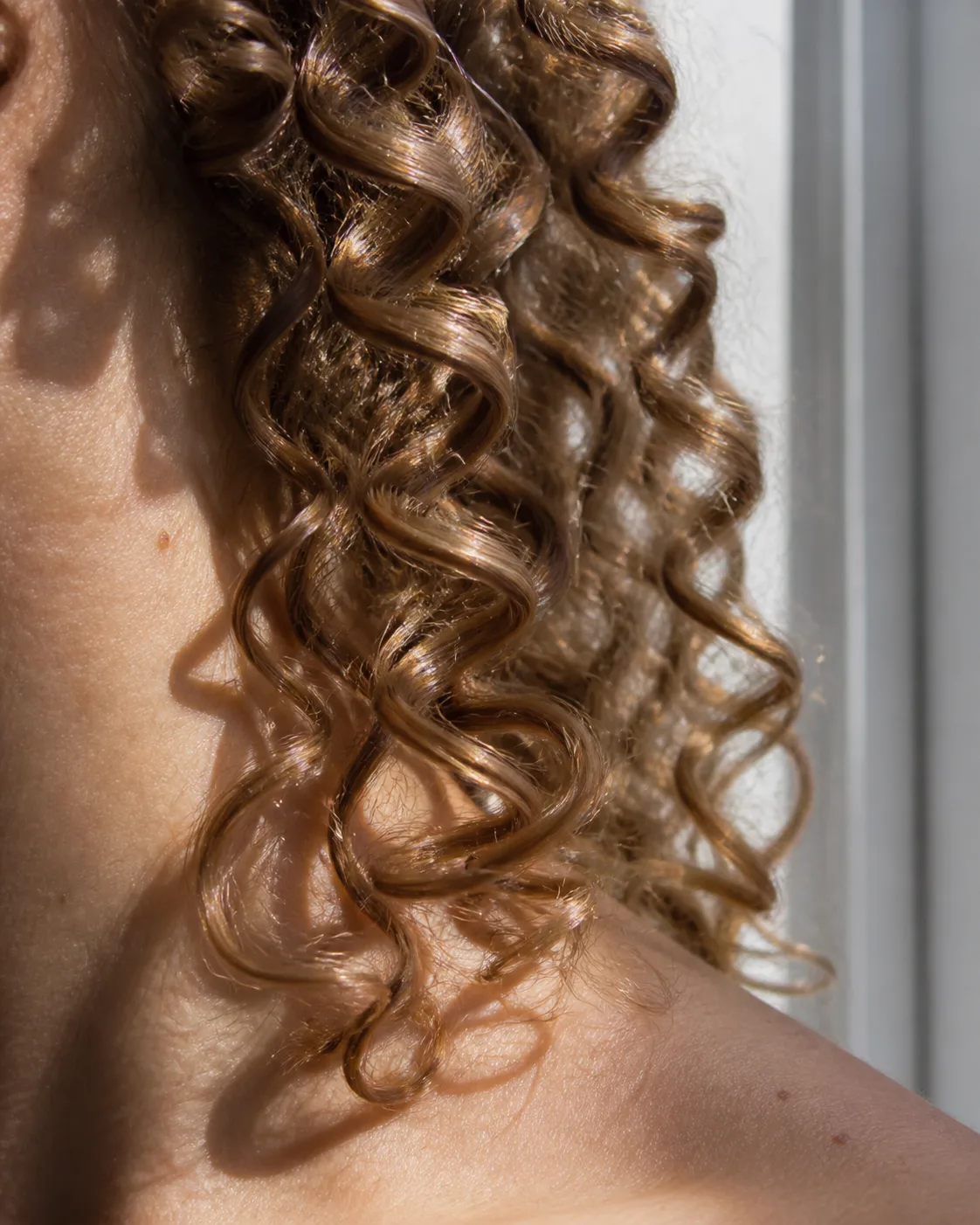
Two other things travel with 3a. The strand itself is usually fine to medium, which is why the pattern gives up under weight so easily. And the curl is loose enough that gravity wins at the roots, so 3a is the curl type most likely to be flat on top and full at the ends.
| 2c | 3a | 3b | |
|---|---|---|---|
| One curl, described | A flat S lying in one plane | A spiral loop about an inch across | A spiral loop about half an inch across |
| Wraps around | Nothing, it never closes a loop | A wine cork | A Sharpie marker |
| Where the pattern starts | Mid-length, roots usually flat | High, close to the root | At the root |
| Under a heavy cream | Pulls straight | Drops to a wave | Stays curly, goes greasy |
| Silhouette | Narrow, hangs close to the head | Oval, hangs and swings | Wide, pushes outward |
Am I 2c or 3a?
This is the single most asked question about 3a, and it has a clean answer. Take one dry curl and look at it side on. If the hair bends left and right but stays flat, like a ribbon laid on a table, that is 2c. If any part of it wraps all the way around so you can see a hollow down the middle of the curl, that is 3a. A wave bends. A curl loops.
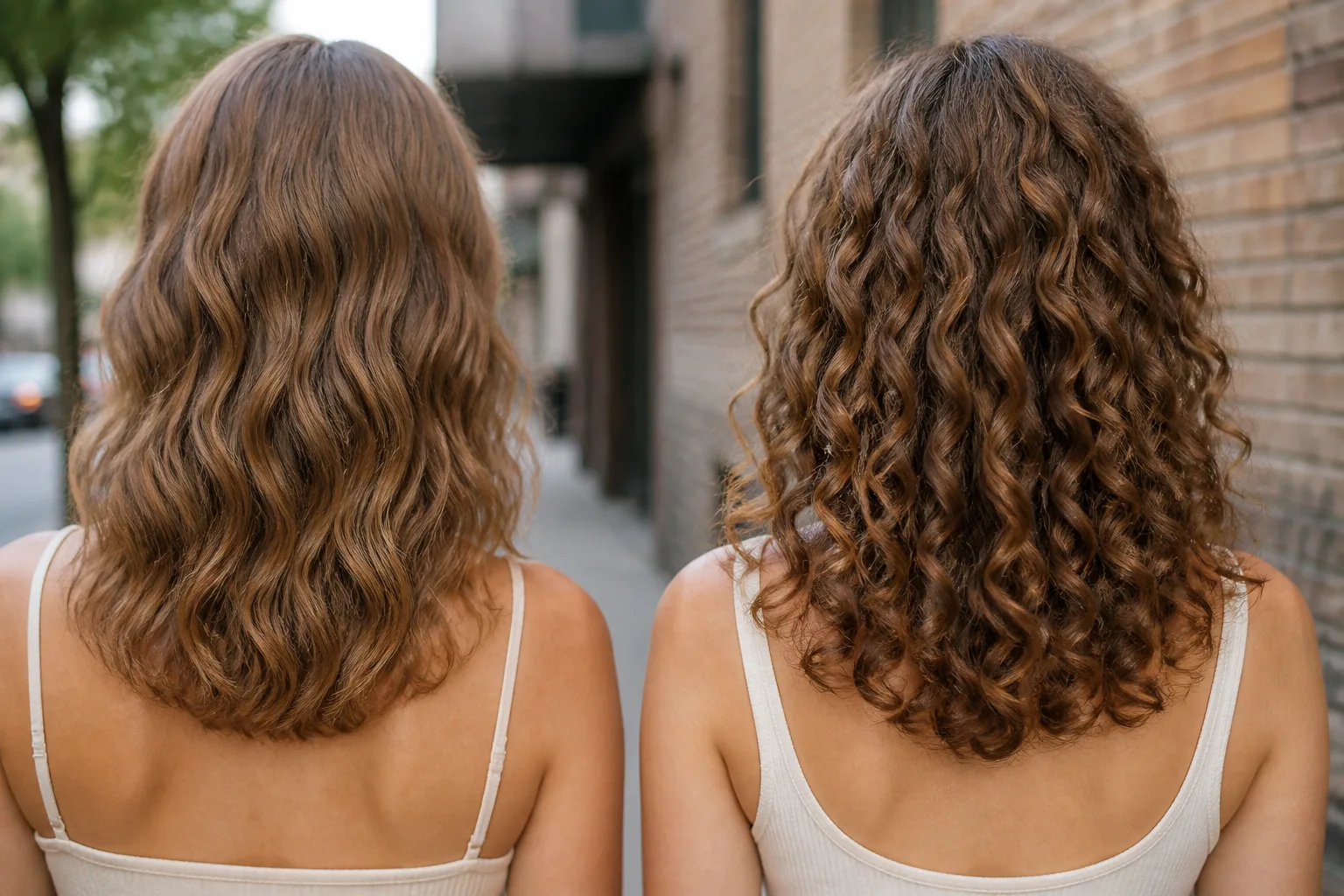
The second test is what happens when the hair dries untouched. 2c mostly keeps its length and frizzes along the surface. 3a springs up noticeably and the frizz, when it comes, is whole curls breaking out of formation rather than a halo of small hairs.
Plenty of people land between the two, and quite a few carry both on the same head, looser at the crown and curlier underneath. If you cannot decide, treat it as 3a. The 3a routine works fine on 2c, and the 2c routine leaves 3a undefined.
Am I 3a or 3b?
Same test, different measurement. Both are true spirals, so the loop is not the question. The question is how wide it is.
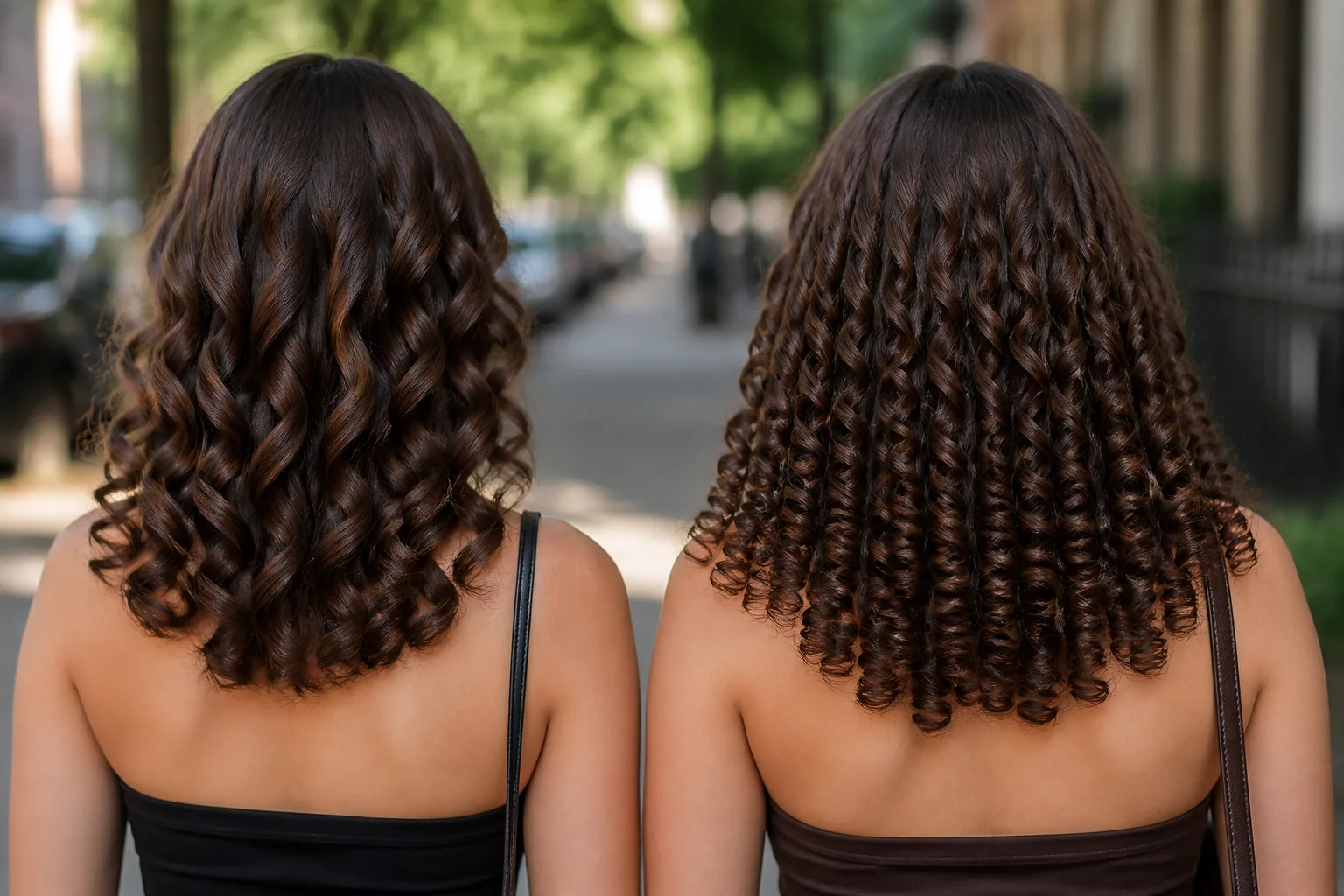
Hold a curl against a marker pen. If the loop is wider than the pen and closer to a wine cork or a stick of sidewalk chalk, that is 3a. If the loop is about the width of the pen or narrower, that is 3b. The practical tell is the silhouette: 3a hangs and swings, 3b pushes outward and gets wider before it gets longer.
It matters for exactly two decisions. 3b can carry more product and more layers before it looks over-worked; 3a cannot. And 3b needs weight removed to stop it widening, while 3a needs weight removed to stop it flattening. Different reasons, same haircut instruction, which is why so much advice blurs the two.
The 3a problem is weight, not dryness
If you have read anything about curly hair, you have read that curls are dry and need moisture. That is true of coily textures, where the natural oils cannot travel down a tight bend. Sebum has a much easier trip down a one-inch spiral, so 3a is not usually parched. What it is, is heavy.
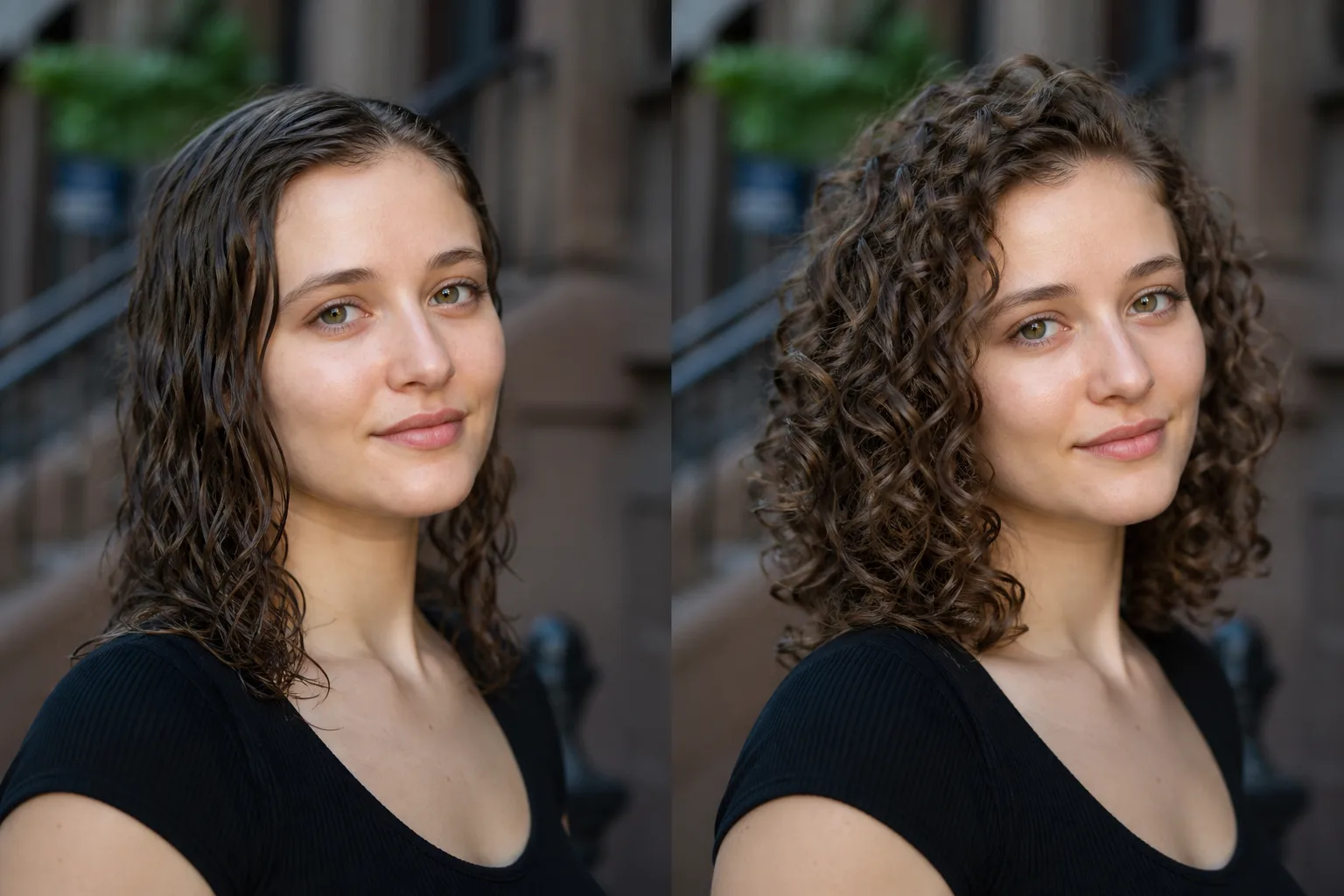
Here is the sequence that ruins most 3a hair. Someone reads that curls need moisture, buys a thick butter and a rich leave-in, skips shampoo because sulphates are bad, and applies all of it every day. Two weeks later the curls have dropped, the roots are flat, the ends are stringy, and the conclusion is "my curl pattern is loosening". It is not. It is buried.
The fix is unglamorous. Wash properly with an actual shampoo at least once a week. Use less product than the bottle suggests, and put it on soaking wet hair rather than damp. Keep oil off the roots entirely. If your curls look better on day one after a wash and worse every day after, weight is your problem and you can prove it in a single wash cycle.
If you want the other end of the same chart for contrast, the coily textures genuinely do fight dryness, and almost none of the advice written for them transfers to a one-inch spiral.
The best 3a haircuts, by length
The one decision that changes everything is where the perimeter sits, because 3a is heavy enough to be pulled straight by its own length. Every cut below is really the same instruction in four sizes: take weight out of the interior, keep the perimeter soft, and never leave a blunt line at the widest part of your head.
| Stretched length | What holds | What fails | Back in the chair |
|---|---|---|---|
| Pixie, under 5 inches | Curly pixie with a rounded crown and a soft nape taper | Blunt crops and hard undercuts, which fight the spring | Every 6 to 8 weeks |
| Chin, 6 to 9 inches | Curly bob with internal layers, French bob | A one-length blunt bob, which sets as a triangle | Every 10 to 12 weeks |
| Collarbone, 10 to 14 inches | Layered lob with curtain bangs | A heavy blunt perimeter with no interior layering | Every 12 weeks |
| Past the chest, 15 inches and up | Long face-framing layers, curly shag, wolf cut | No layers at all, which flattens the top under the weight | Every 4 to 6 months |
The default: a layered lob on the collarbone
If you want one answer and you do not want to think about it, this is the cut. The perimeter sits on the collarbone, long invisible layers take weight out of the middle so the curls stack instead of piling sideways, and curtain bangs parted in the centre put the shortest pieces at the cheekbone where the curl springs most. The silhouette comes out as an oval: narrow at the jaw, widest low down near the ends. That is the shape a triangle is not.

Say this to your barber
Keep the length on the collarbone, take weight out of the interior with long invisible layers, leave the perimeter soft rather than blunt, and cut it dry so you can see where the curls actually fall.
Shorter than that
A curly pixie is the only 3a length where the cut is the entire look, because there is not enough length for product to save a bad shape. Ask for a rounded crown and a soft taper at the nape, not a hard undercut. It suits high foreheads and strong jaws, and it is the fastest way to get root volume that 3a otherwise has to be coaxed into.
At chin length, the one thing to avoid is a blunt one-length bob. Cut 3a straight across and it dries as a pyramid, wide at the ears and flat on top. Internal layers, cut dry, fix that before it happens.
Longer than that
Past the chest, weight becomes the whole story again. Long face-framing layers, a curly shag or a wolf cut all do the same job: they move bulk up the head so the top has something to spring from. If you want the shape without committing, the shag is the gentlest version of it and grows out without a line. There is also plenty of length worth wearing down once the layers are in, and on a lazy day, pinning the top half back buys the root lift the cut cannot.
Cut dry, always. 3a shrinks enough between wet and dry that a stylist cutting it wet is guessing, and the guess is usually two inches too short.
Yours could be here.
Start with one selfie.
One photo, twenty seconds, and you'll know. Free account, no card for your first render.
3a hair on men
The men's version is one decision: how much length stays on top. 3a curls need about three to four inches before they read as curls rather than as fluff, so anything shorter than that and you are wearing texture, not a curl pattern.

Pair that length with a taper rather than a high fade. A taper follows the hairline and finishes close at the sideburn and nape, which keeps the sides tight without the hard step that makes a curly top look like a mushroom. A high skin fade puts a bare line right where the curl volume starts, and on loose curls that reads as a helmet. The full range of shapes that work on curly men's hair goes further into the fade versus taper question.
A 3a routine that does not flatten it
Five steps, and the whole thing turns on doing them to soaking wet hair rather than towel-dried hair. Water is the carrier; on damp hair the same product sits on the surface as a film.

How to style 3a hair without weighing it down
- Wash with actual shampoo
Once or twice a week, on the scalp, worked in with your fingertips. Co-washing alone leaves buildup, and buildup is the single fastest way to lose a 3a curl pattern.
- Condition, detangle, and leave the water in
Rinse-out conditioner through the mid-lengths and ends. Detangle with your fingers or a wide-tooth comb while it is in, then rinse most of it out. Do not squeeze the hair dry afterwards.
- Apply to soaking wet hair
Still dripping. A light gel or a mousse, raked through and then scrunched upward. Half as much as you think, and none of it on the scalp.
- Scrunch out the water, do not rub it
Cup a microfibre towel or a cotton t-shirt around a section and press it upward towards your scalp. Rubbing downward opens the cuticle and turns a curl into frizz.
- Dry it, then leave it alone
Diffuse on low heat and low speed, or air dry. Either way, do not touch it again until it is completely dry. Every touch before that point costs you definition. Once dry, scrunch out any crunch with clean dry hands.
Products: what to reach for and what to skip
| For | Reach for | Skip |
|---|---|---|
| Cleansing | A gentle shampoo, once or twice a week, on the scalp | Co-washing only, indefinitely |
| Conditioning | Rinse-out conditioner, generously, then rinsed | Thick butters and heavy masks left in |
| Hold | One light gel or mousse on soaking wet hair | Stacking a cream under a gel under an oil |
| Oil | A few drops on the ends, on dry hair, if at all | Anything oily near the roots |
| Drying | Microfibre towel, then a diffuser on low | A cotton towel, and rubbing |
| Overnight | A loose high pineapple, silk or satin pillowcase | Sleeping on cotton with the hair down |
One rule covers most of it: one product with hold, one without, and nothing else. If you cannot say what a bottle is for, it is probably the thing flattening your roots.
The mistakes that cost 3a its curl
Brushing it dry. A brush pulls a spiral into a frizzy rope and the curl will not come back until it is wet again. Detangle wet, with conditioner in, and then leave the brush in the drawer.
Following advice written for tighter curls. The heavy butters, the daily oiling, the no-shampoo rule. All of it makes sense at 4b and none of it makes sense at 3a. This is the mistake that costs the most and gets the most encouragement online.
Cutting it wet with a blunt perimeter. Two problems at once: the stylist cannot see where the curls fall, and the straight line sets as a triangle when it springs up. Ask for a dry cut and a soft perimeter.
Touching it while it dries. Every finger through drying hair breaks a curl clump. The frizz people blame on humidity is usually their own hands at minute twenty.
Colouring it and changing nothing else. Lightening 3a raises the porosity and the curl loosens, sometimes permanently at the ends. If you want the look without the risk, a hidden panel of colour under the top layer leaves the surface curls untouched, or try the shade on a photo before you commit to it.
Ten ways 3a is actually worn
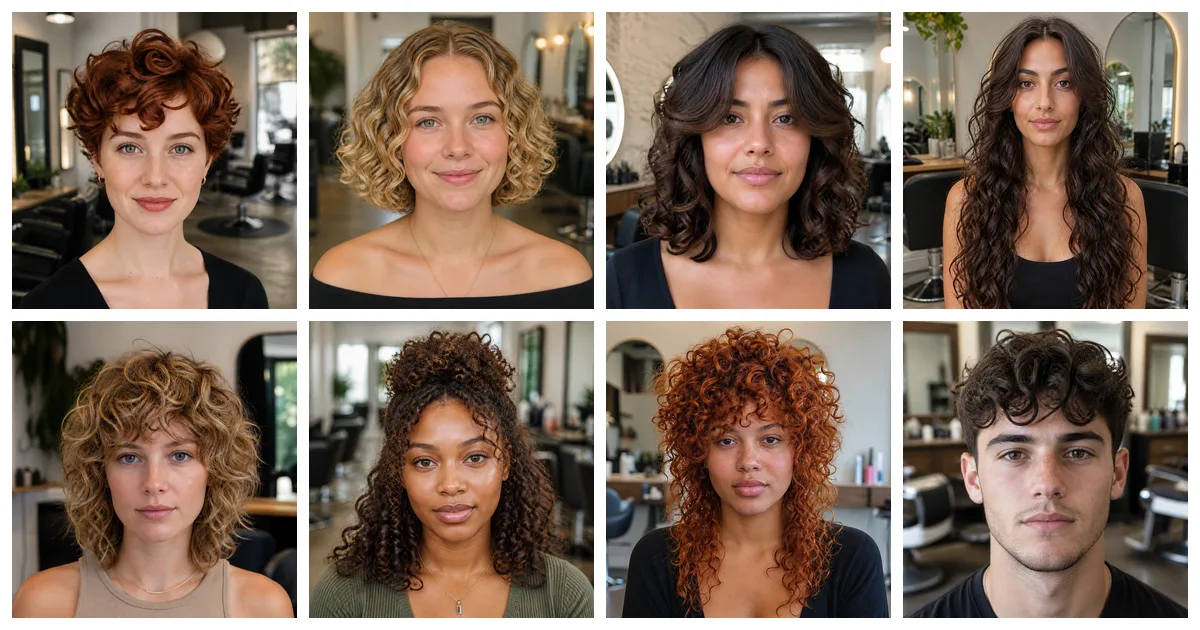
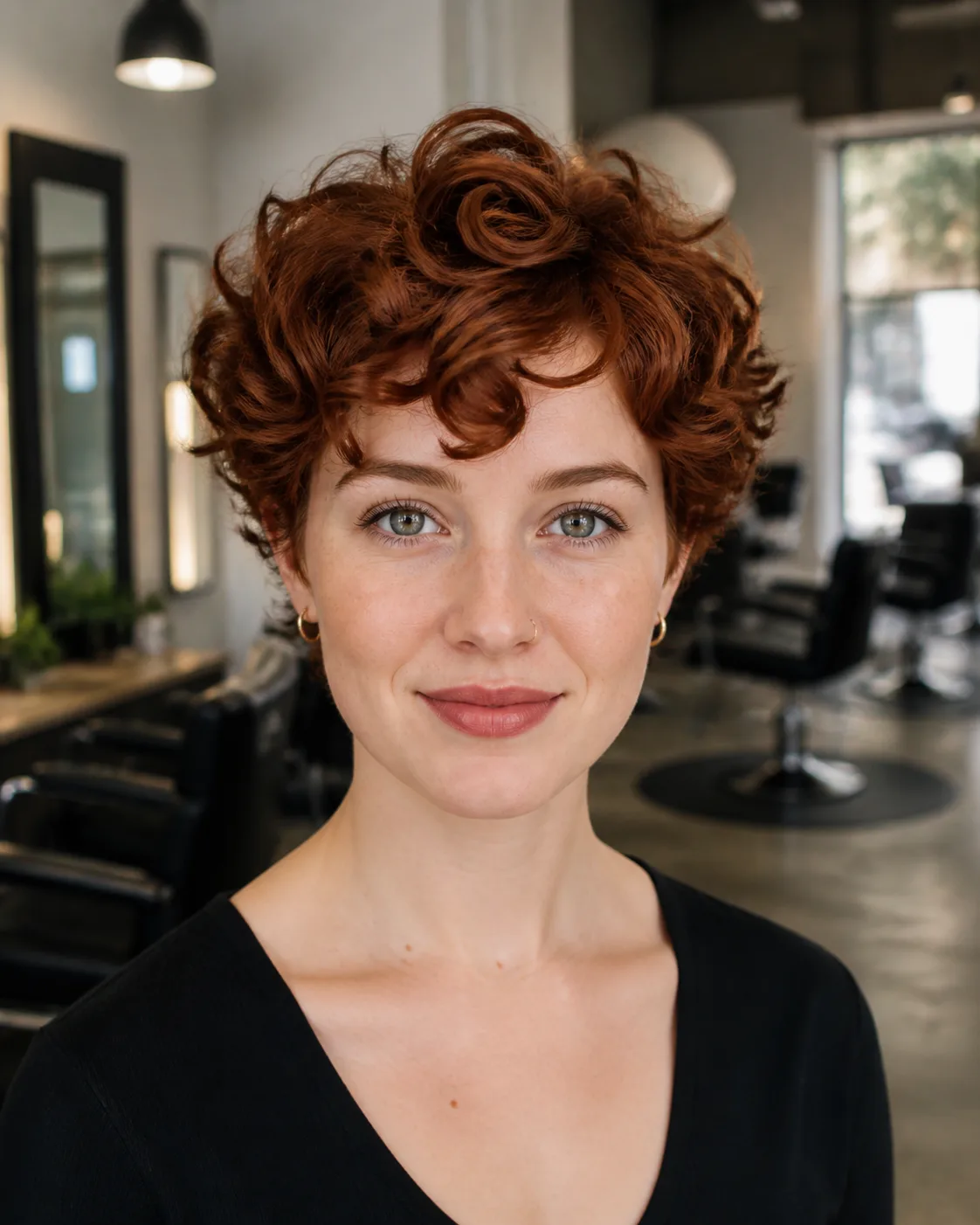
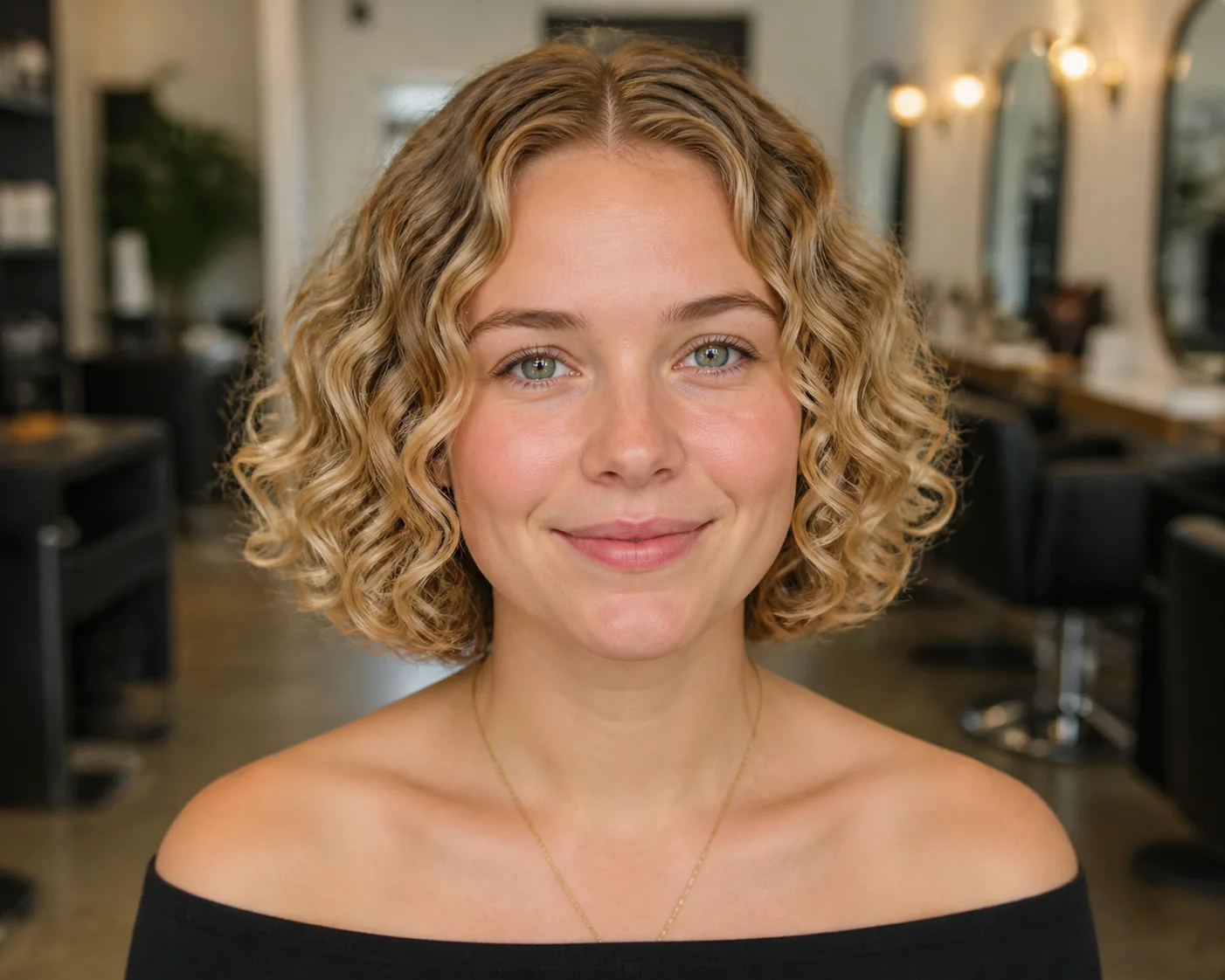
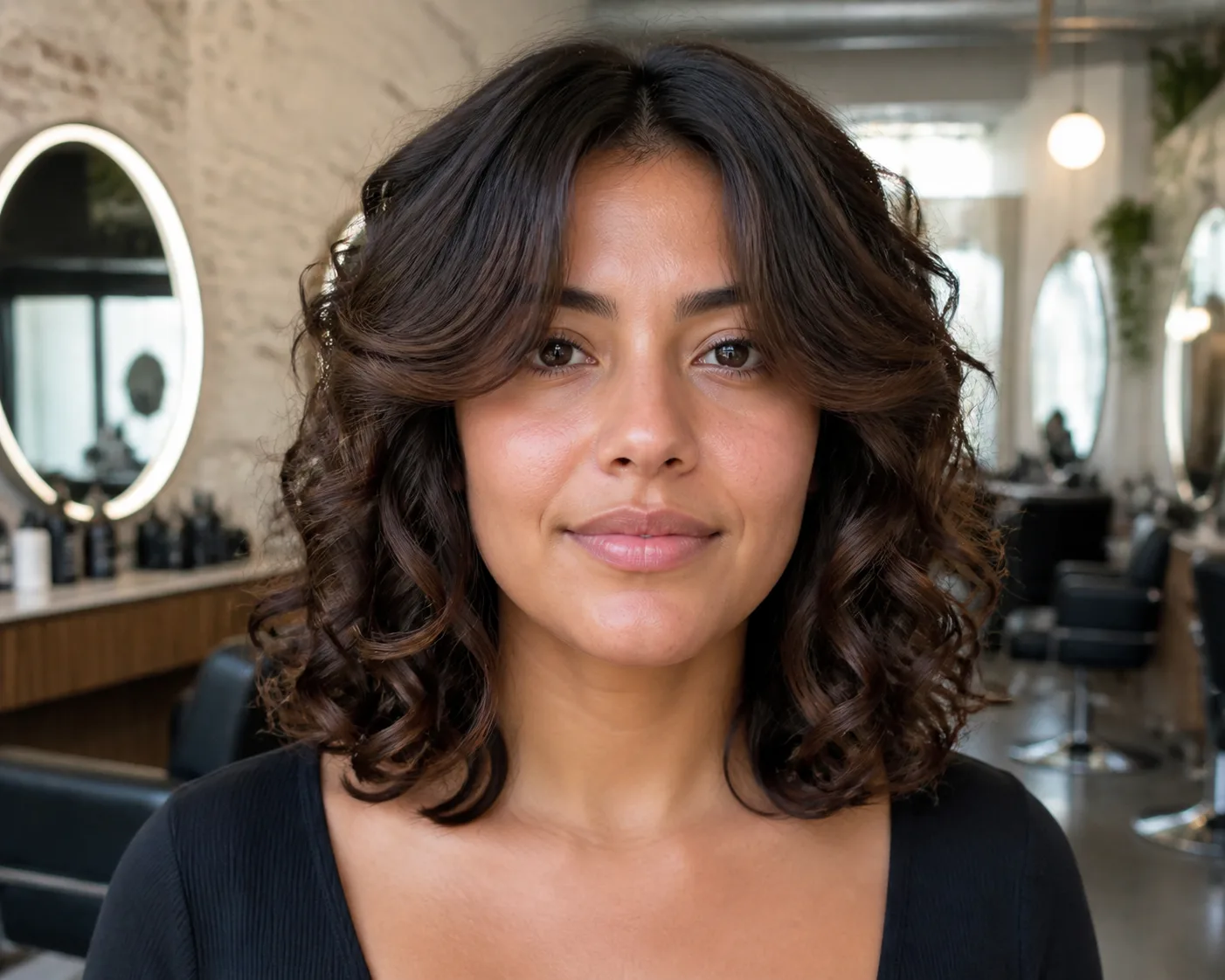
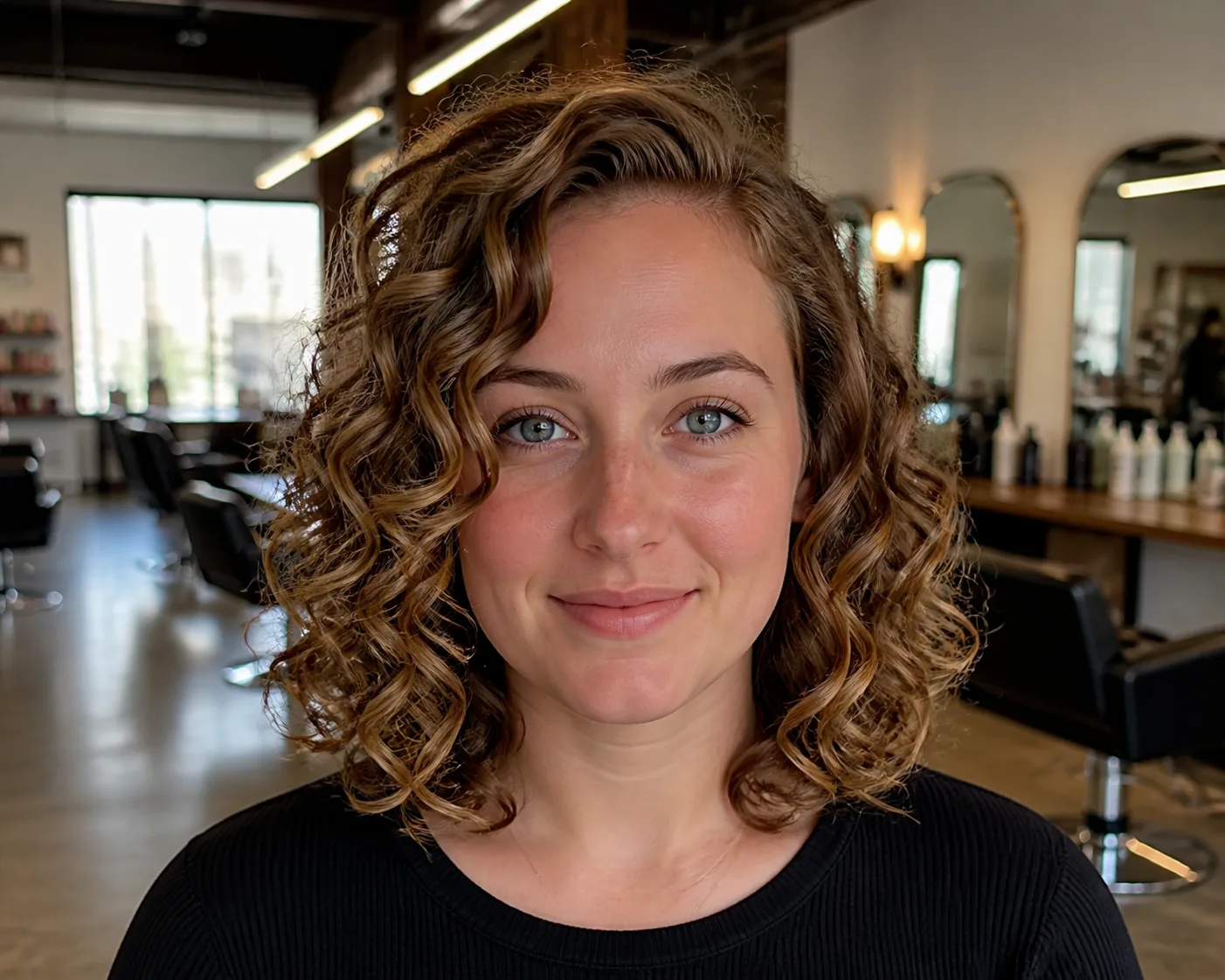
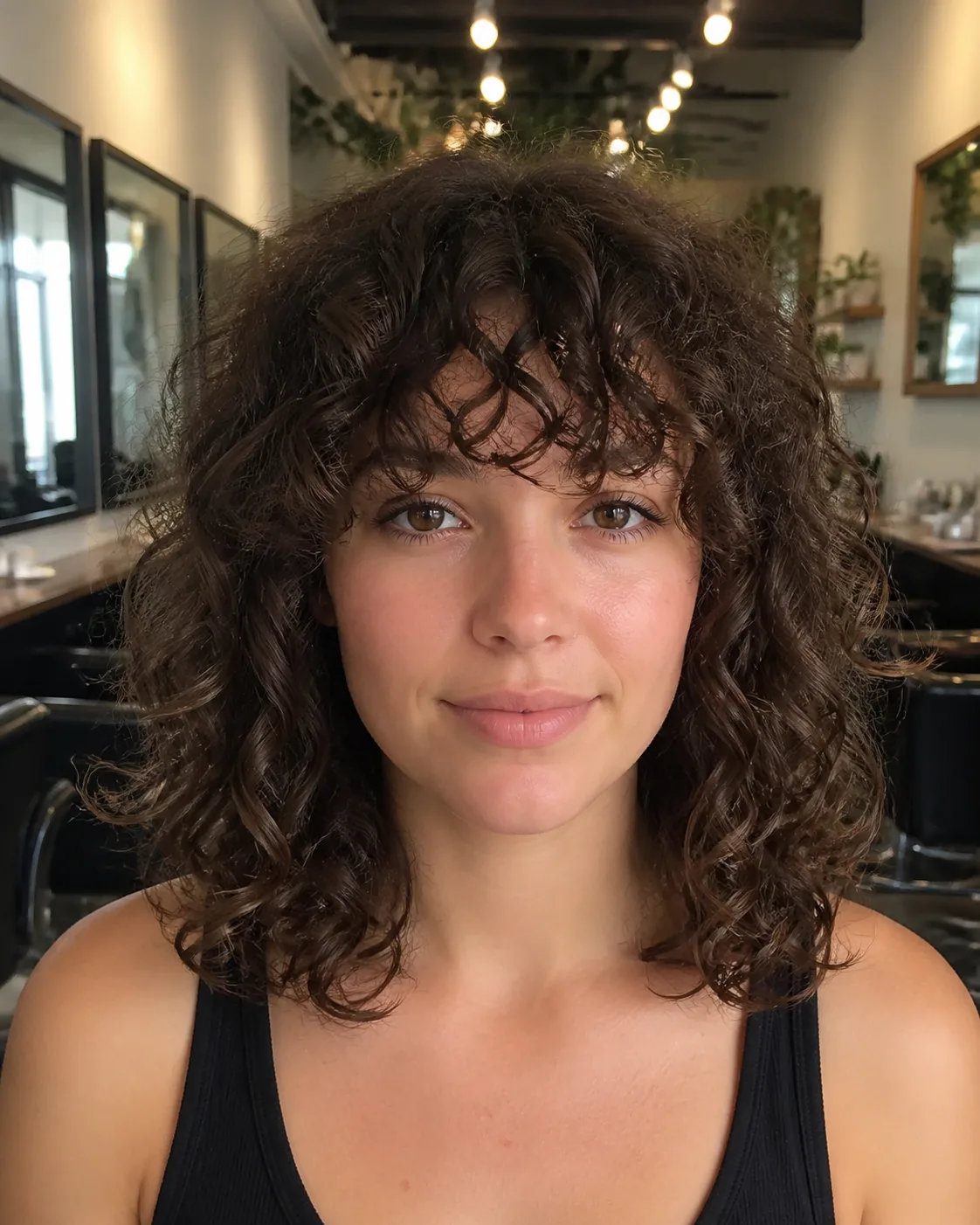
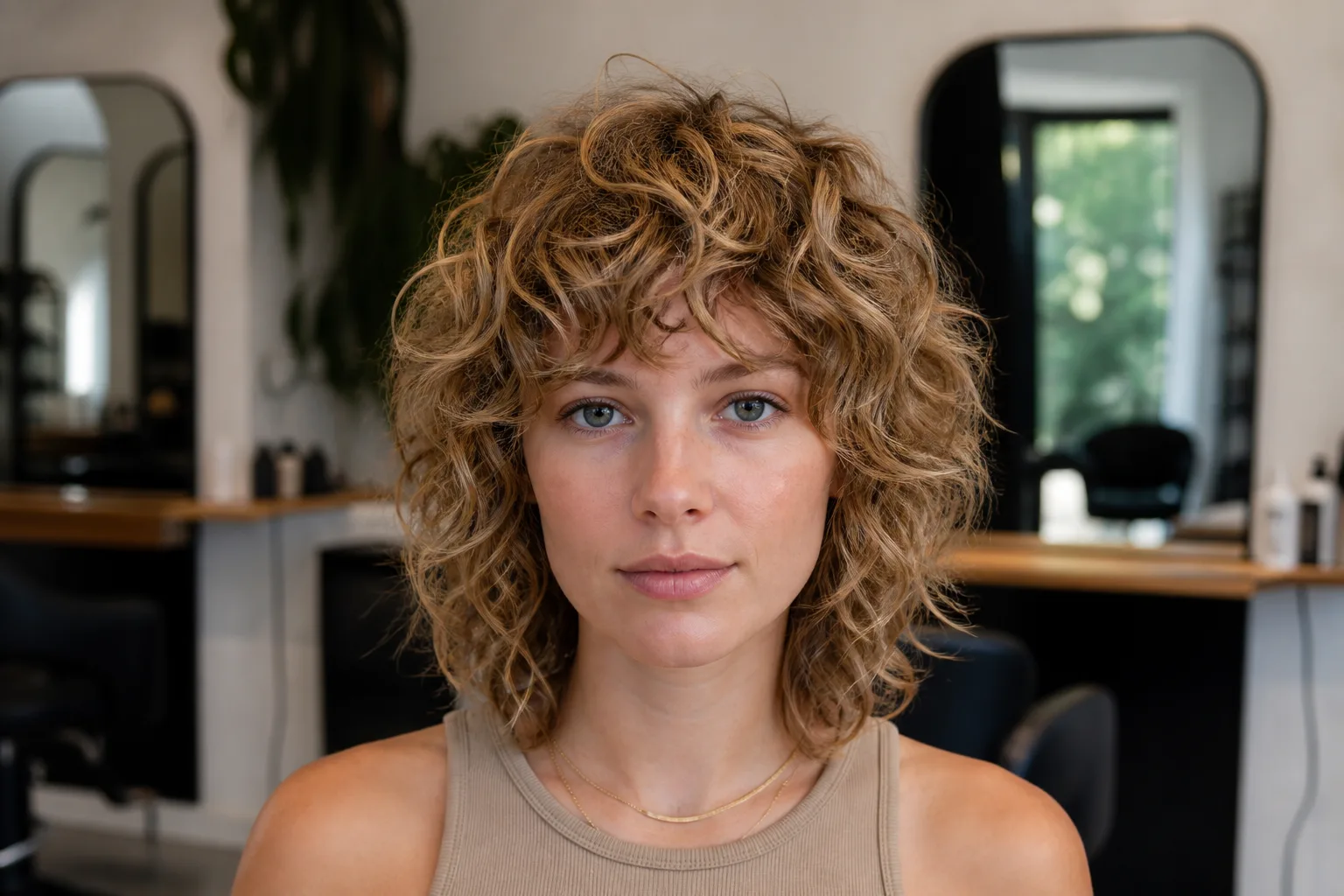
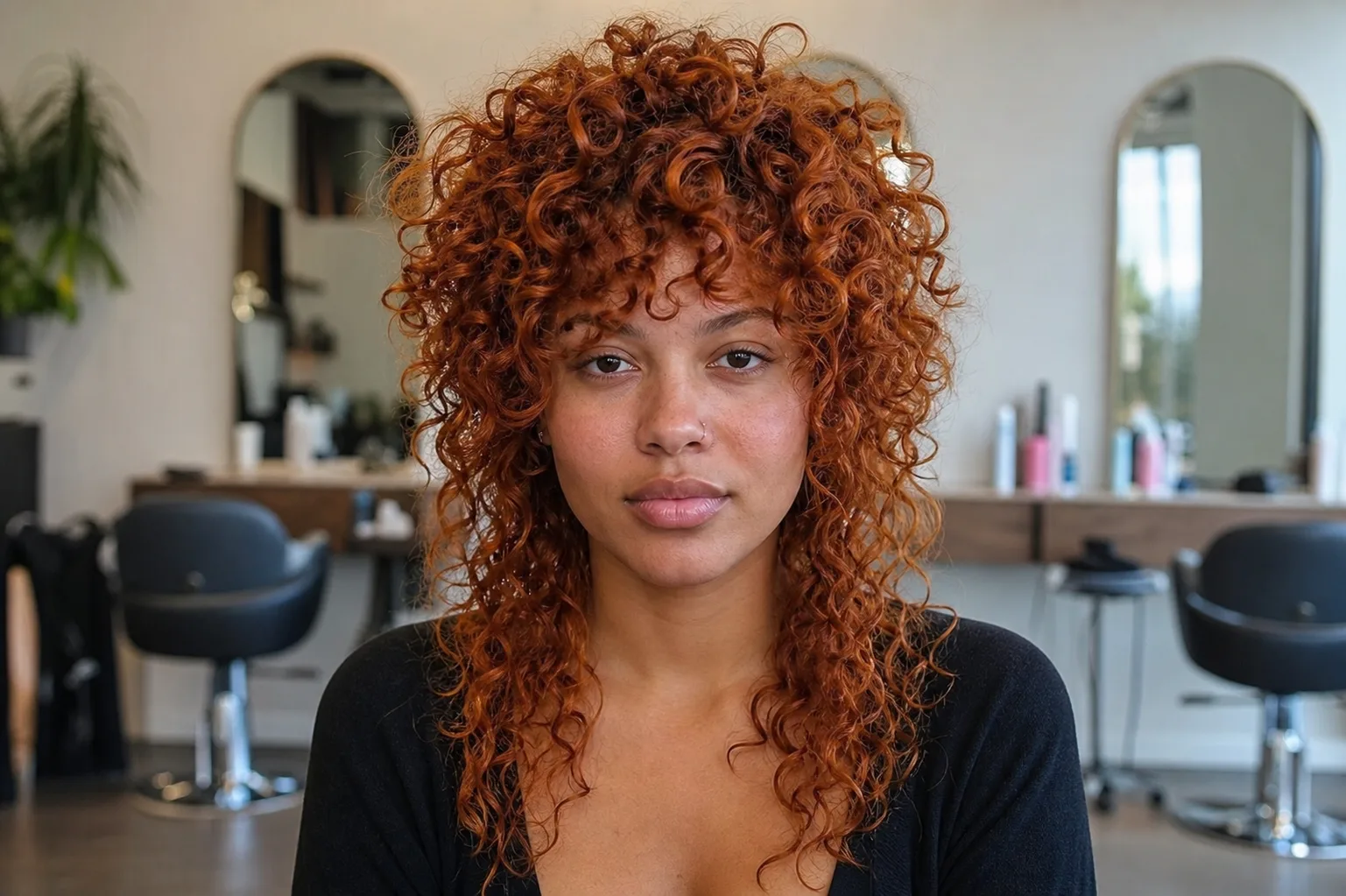
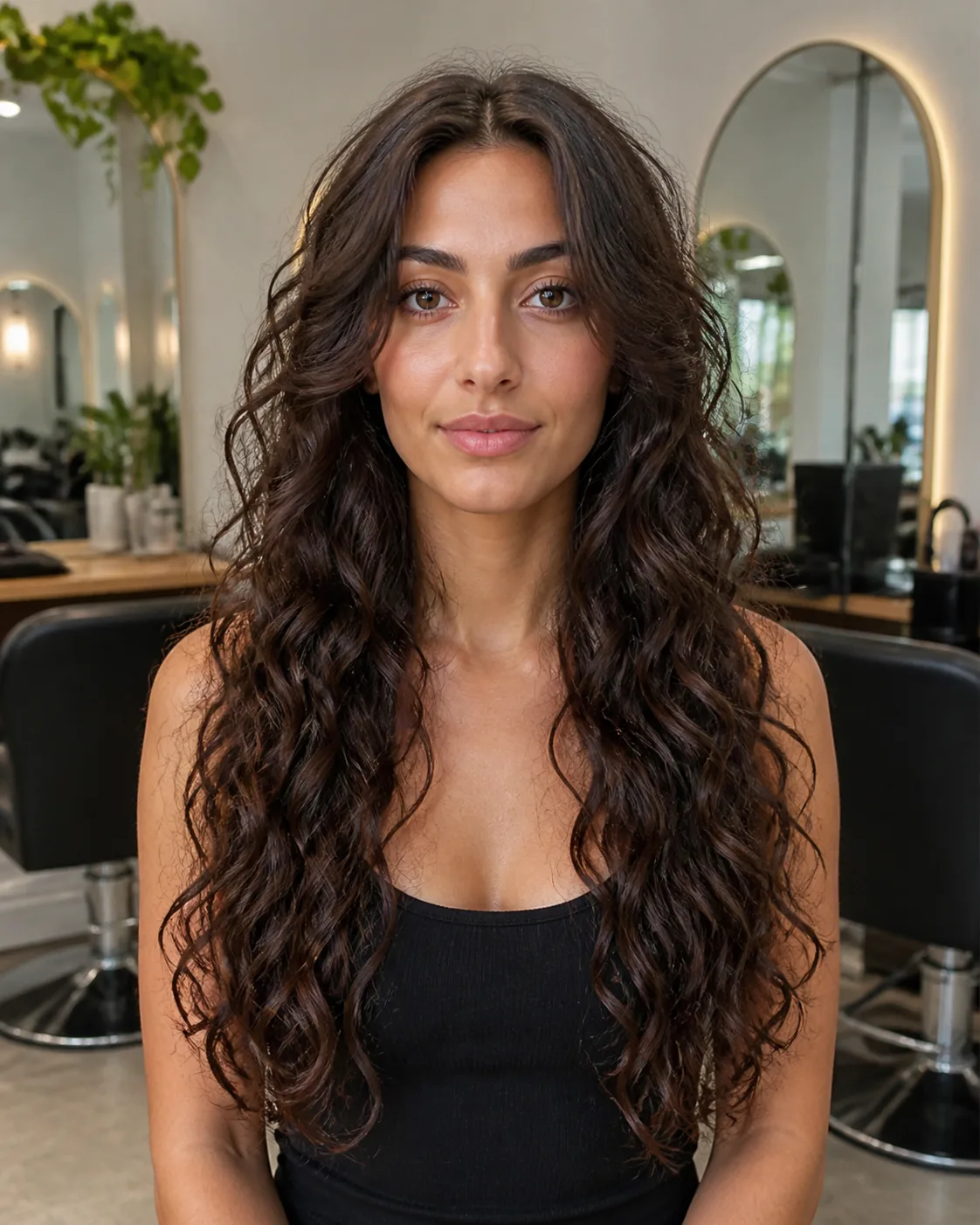
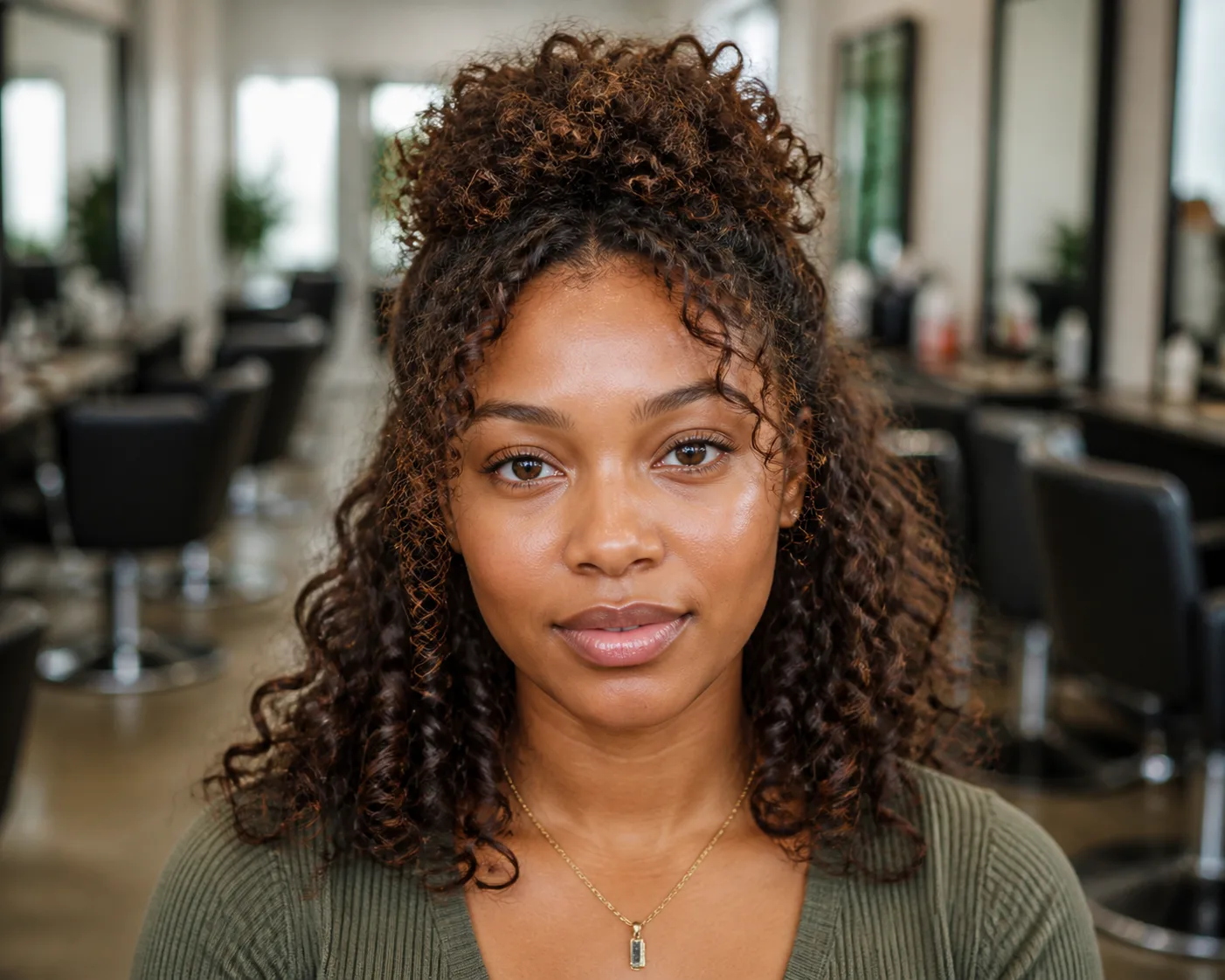
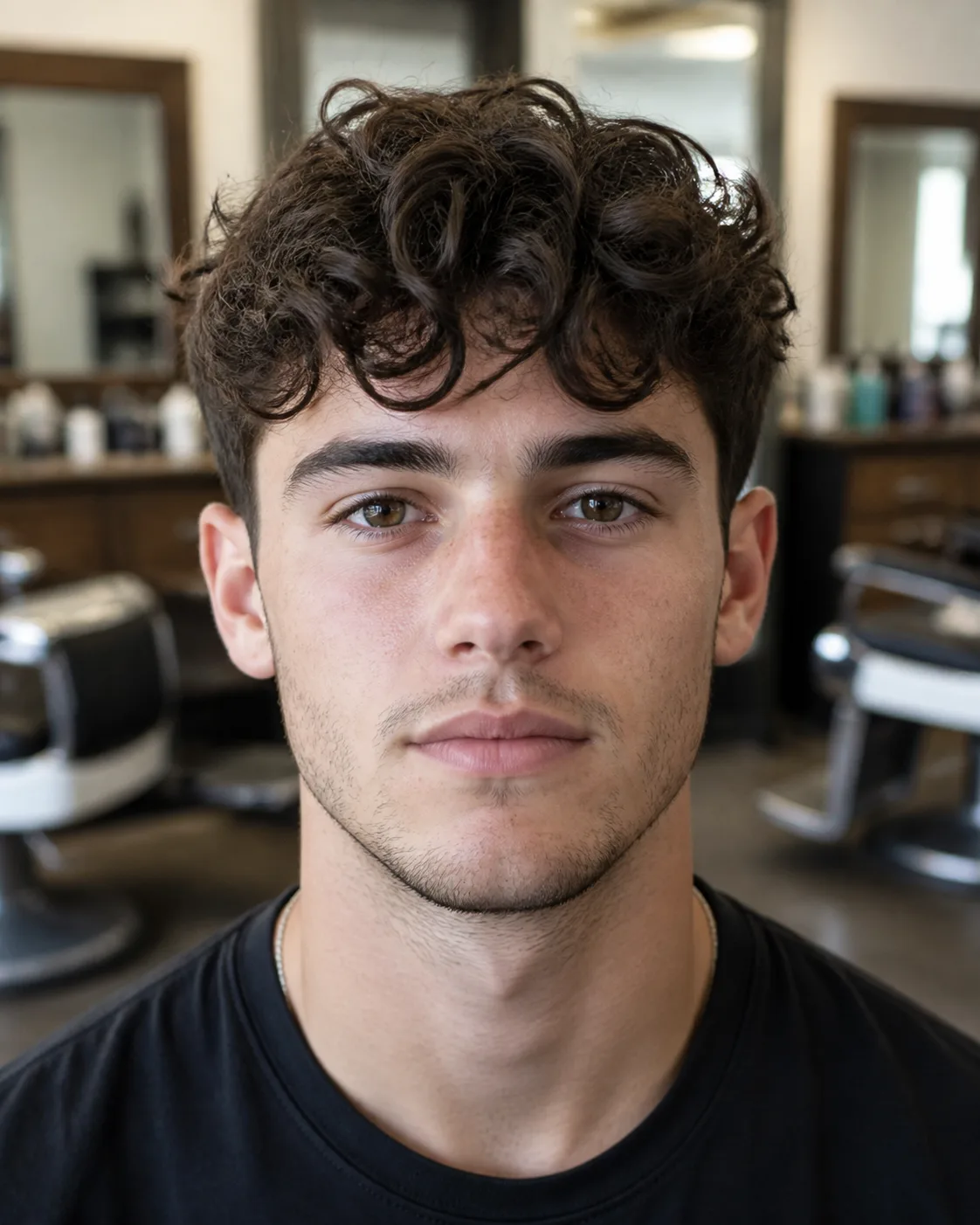
Same curl pattern in all ten. The only thing changing is the cut, from a pixie up to past the chest, so you can see what the length does to the shape before you sit in the chair.
Gallery10 photos · tap to enlarge
 Try this on me
 Try this on me
 Try this on me
 Try this on me
 Try this on me
 Try this on me
 Try this on me
 Try this on me
 Try this on me
 Try this on me
Which of those suits you is mostly a question of where your face is widest, which is a separate problem with its own measuring tool.
Is trying one on free?
The first look costs nothing and takes no card: one hairstyle on your photo, plus one colour on it, front view. Downloads at that tier carry a watermark. Beyond that, Plus is $9 a month or $60 a year for 150 credits, where a cut on your photo is 10 credits and a colour on that cut is another 5, with clean downloads and all fourteen hair textures. There is a seven-day refund with no conditions on it. Full numbers are on the pricing page.
If you would rather spend nothing at all, the honest free method still works: save five photos of the cut from different angles, take one of your own hair dry and unstyled, and bring both to the consultation. The wall that runs into is that you still cannot see the cut on your own head, which is the only thing you actually wanted to know.
3a is the easiest curl type to look after and the easiest one to ruin, and both facts come from the same place: the loop is loose enough that anything heavy pulls it out. Wash it properly, use half the product, cut the weight out of the interior, and stop touching it while it dries. That is nearly the whole job.
If you take one thing from this page, take the diagnostic. A curl that closes a loop is a curl. A curl about an inch wide is a 3a. Everything else on this page follows from those two sentences, and most of the advice that will not work on your hair fails the same test.
Frequently asked questions
Curly. 3a sits in the type 3 band, which is defined by a strand that wraps a full circle rather than bending back and forth in one plane. It is the loosest curl on that band, which is why it gets mistaken for a strong wave, but the loop is the line and 3a is on the curl side of it.
Look at one dry curl side on. If it bends left and right but stays flat, like a ribbon, that is 2c. If any part of it wraps around so you can see a hollow down the middle, that is 3a. The second clue is where the pattern starts: 2c roots are usually flat with the wave beginning halfway down, while 3a starts spiralling close to the scalp.
Measure the loop, not the tightness. A 3a curl wraps around something about an inch across, roughly a wine cork. A 3b curl wraps around something about half that, roughly a marker pen. In practice 3a hangs and swings while 3b widens outward before it gets longer.
Nobody knows, and anyone giving you a percentage is making it up. The typing chart was built to market a product line, not to survey a population, so no reliable count of how many people fall into each band exists. Loose curls are common across a lot of the world, which is the most that can honestly be said.
Yes, and plenty do. 3a is defined by the diameter of the curl, not by ancestry, and one-inch spirals turn up across white, Latino, Middle Eastern, mixed-race and Black hair alike. The chart describes a shape; it does not belong to anyone.
A layered lob sitting on the collarbone with long invisible layers and curtain bangs, cut dry. It removes weight from the interior so the curls stack instead of dropping, keeps the silhouette an oval rather than a triangle, and grows out without a hard line. Shorter and longer versions work too, but that one fails the least often.
Three, in order. Roots that go flat while the ends stay full, because the curl is loose enough for gravity to win. Curl clumps breaking into frizz, usually from being touched while drying. And the pattern dropping out entirely under too much heavy product, which people misread as their hair changing texture.
Yes, and most people do have more than one pattern on one head. The crown is often looser than the underneath, and the hairline is often looser than both. Style for the curlier sections and the looser ones will be fine; do it the other way around and the curls stay undefined.
Shampoo once or twice a week, condition and detangle in the shower, then apply one light gel or mousse to soaking wet hair. Scrunch the water out upward with a microfibre towel, diffuse on low or air dry, and do not touch it until it is completely dry. Less product, more water, fewer hands.
Preview it on your own photo: Virtual Hair Color Try-On.
Share article
About the author
More articles
Women's Haircuts · 14 min
Bleached Hair: How Light Yours Can Go, 14 Shades, Aftercare
How light your bleached hair can go depends on where it starts. See 14 bleached shades on one cut, what each starting color can reach in one session, how toner finishes the job, and the aftercare that keeps it soft.
Women's Haircuts · 16 min
Waves Hair: How to Get Beach, Loose and Hollywood Waves That Last
Waves hair is about what you leave straight. How to get beach, loose, Hollywood and heatless waves, which wave suits your hair type, and why your waves keep falling out.
Women's Haircuts · 15 min
Fino Hair Mask: Who It Suits, How to Use It, and Its Limit
The Fino hair mask makes dry, bleached and frizzy hair smooth and shiny in one use, mostly by coating it. Here is what is in the jar, which hair types it suits, exactly how to use it, and what to do when the ends are past a mask.