Blowout Taper Fade: 14 Looks and How to Ask Your Barber
Oleh Onysko 2 November 2026 16 min read
In this article
A blowout taper fade is a low taper on the sides and back with 3 to 4 inches left on top, blow-dried up and back so it stands tall and flares out. The taper is the frame, but the blowout is the haircut: get the top length and the blow-dry right and almost any taper works, get them wrong and the cleanest taper in the shop looks like a plain short back and sides.
That is the part most guides skip. Below you get 14 blowout tapers on different hair types, a verdict on which hair it suits, the mistakes that ruin it, the exact sentence to say in the chair, and a five minute styling routine.
What Is a Blowout Taper Fade?
A blowout taper fade is two things on one head. The sides get a low taper: the hair shortens gradually from about an inch down to a short clipper length, but only in a narrow band around the ear, at the sideburn and at the back of the neck. The top keeps 3 to 4 inches, and that length is blown upward and back with a hair dryer so it sits high off the forehead with a slight flare at the front corners.
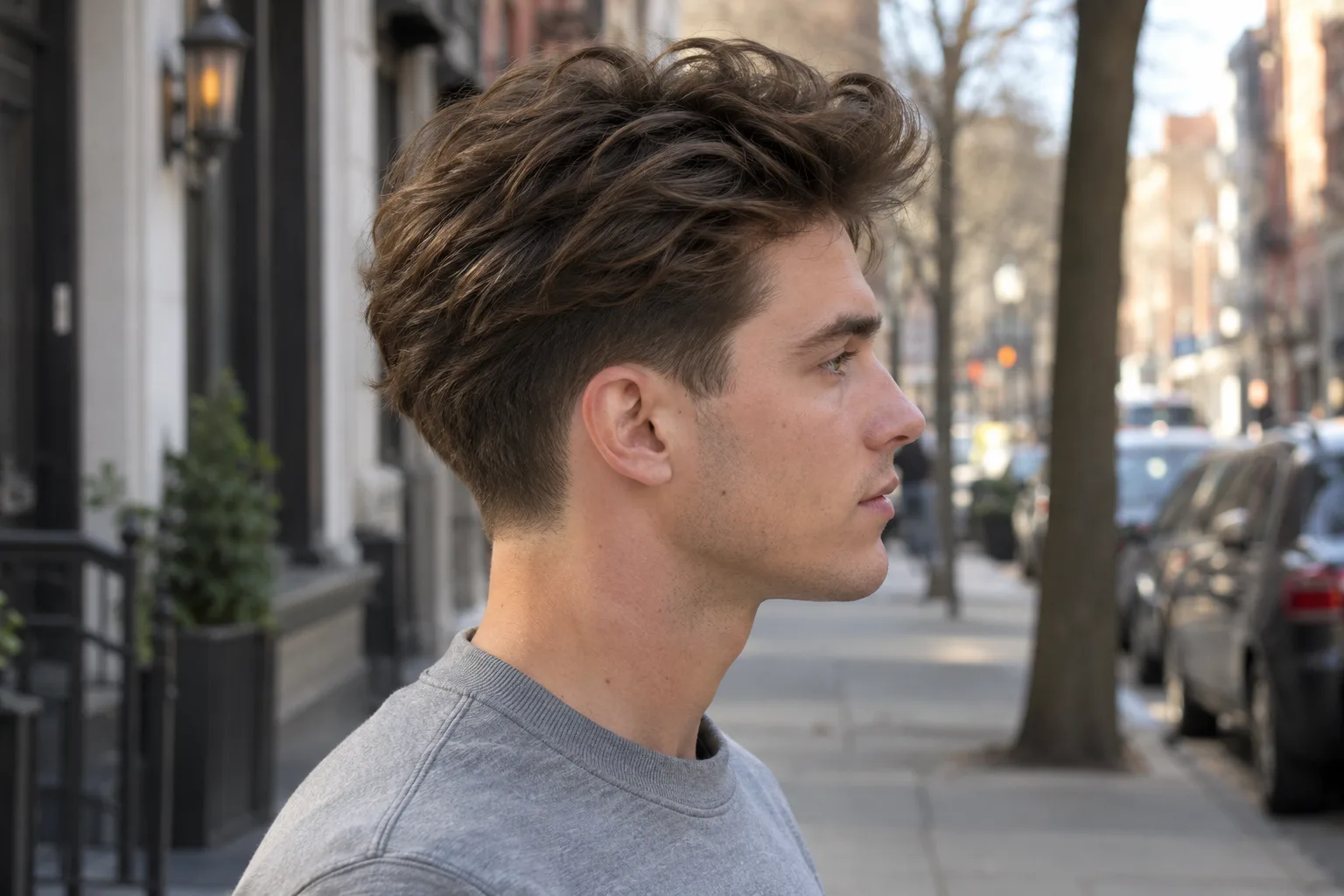
What it is not:
- Not a skin fade. The shortest point is a short clipper length, not bare skin. Some barbers take the very edge to skin, but the classic look keeps a shadow.
- Not a high fade. The taper stops just above the top of the ear. Above that line the sides stay full, about 1 to 1.5 inches, which is why the cut looks heavy and round instead of sharp.
- Not a pompadour. A pompadour is combed smooth with shine. A blowout is matte, airy and separated, more volume than polish.
The style grew out of the "Brooklyn blowout" from New York barbershops. The low taper version is the one people mean when they search for it now.
Want to see it first? Try a low taper fade on your own photo.
Blowout Taper vs Low Taper Fade vs Burst Fade
All three use a short taper near the ear. What separates them is the top and the shape of the fade, so if you only say "taper", you can walk out with any of them.
| Cut | Where the short part sits | Top length | Top styled | Best for |
|---|---|---|---|---|
| Blowout taper fade | Low band around the ear and nape | 3 to 4 in | Blown up and back, flared | Thick or wavy hair that wants height |
| Low taper fade | Same low band | 1 to 4 in | Anything: crop, fringe, curls | Anyone who wants a clean, safe cut |
| Burst fade | Curves around the ear, length left at the nape | 2 to 4 in | Textured, curly or mullet | Curly hair and mullets |
| Mid taper | Starts higher, near the temple | 1 to 3 in | Short and textured | Longer faces that do not need extra height |
The difference between a blowout taper fade and a low taper fade is only the top. A low taper fade is the side and back work. A blowout taper is a low taper plus a long top styled for height. You can turn one into the other by growing out the top and buying a hair dryer.
Low, mid or high blowout taper?
Go low. The whole point of a blowout is the contrast between a tall top and full sides, and a mid or high taper takes away the sides that make the top look big. A mid blowout taper works on a round face that needs the sides slimmer, and on very thick hair that puffs out at the temple. A high blowout taper looks like a different haircut altogether and loses the flare.
14 Blowout Tapers: Same Cut, Different Hair Texture
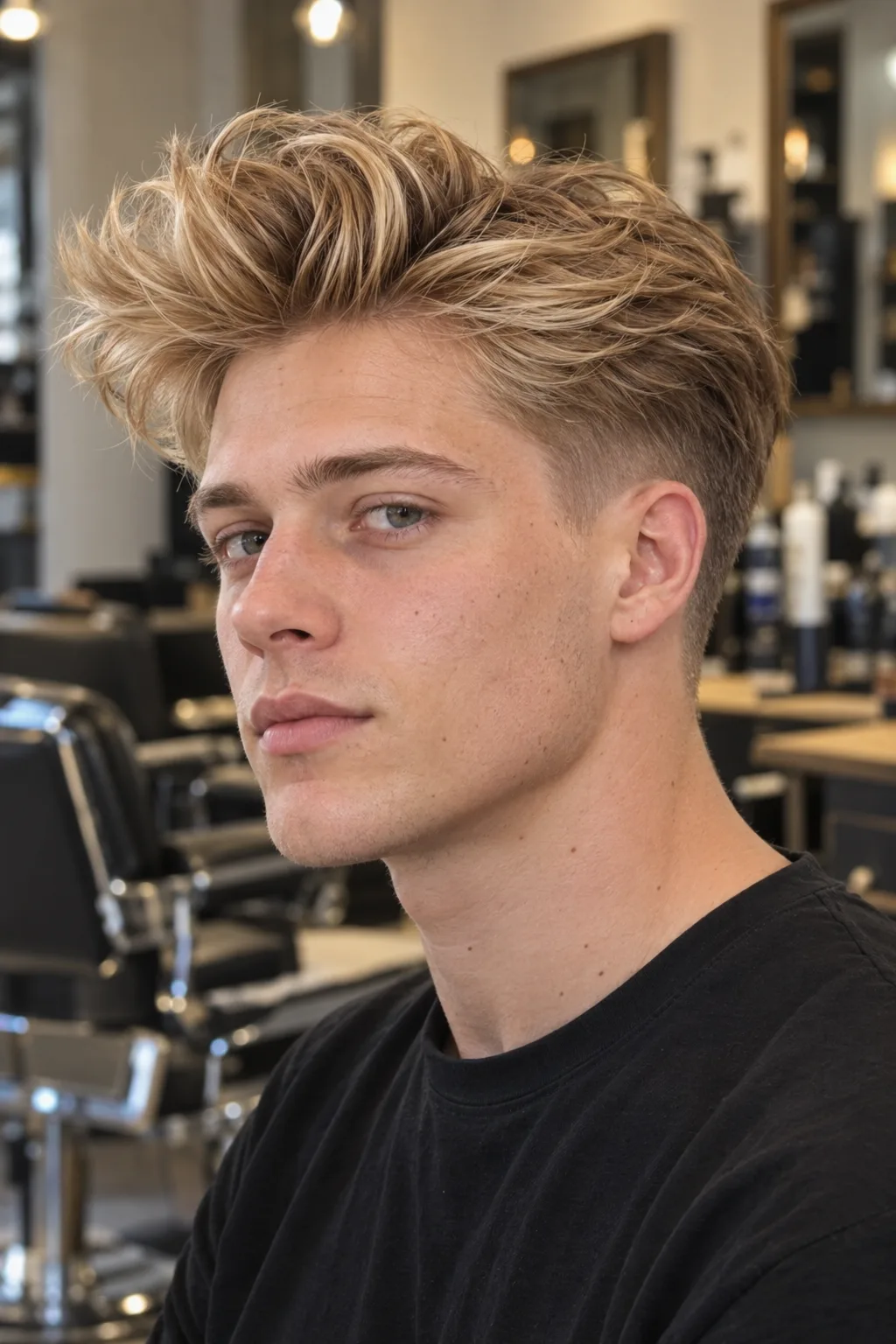
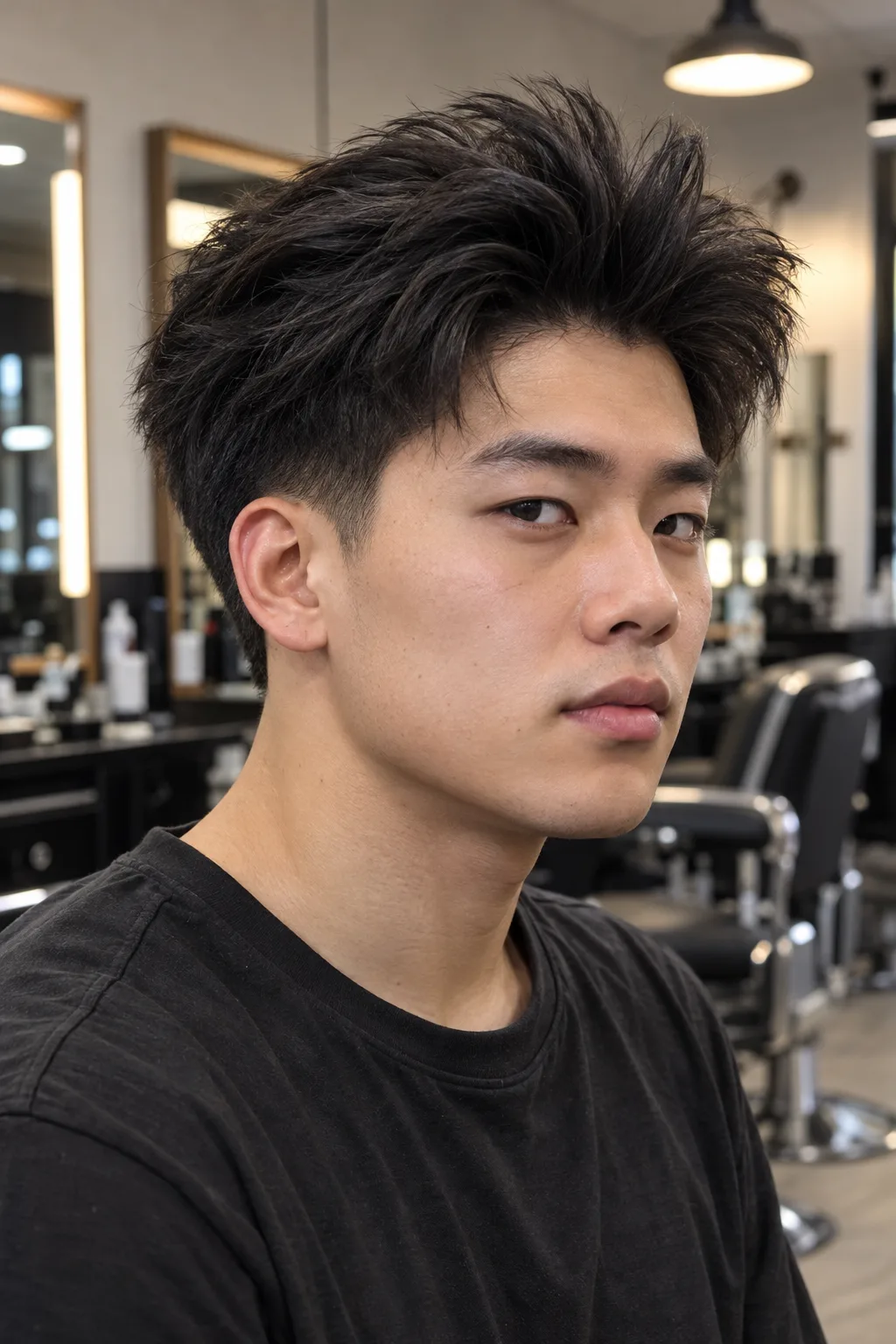
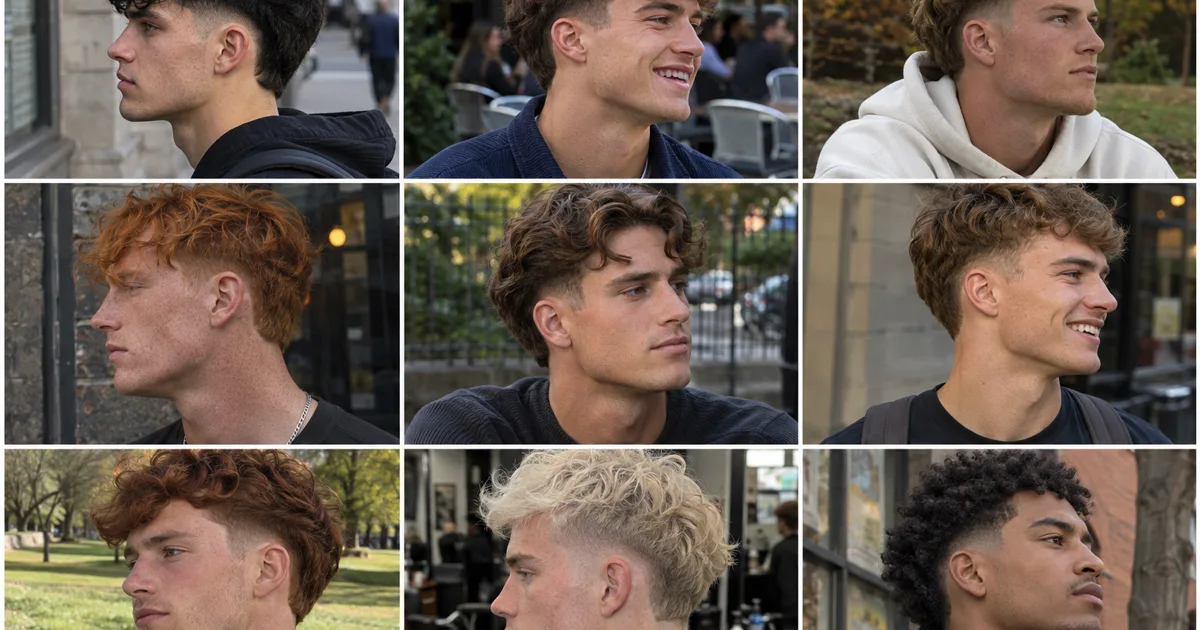
Every photo below is the same cut: a low taper and a long top blown up and back. The one thing that changes is the hair itself, from fine straight to tight coils, so you can find the head that looks most like yours and see what the blowout does on it.
Gallery14 photos · tap to enlarge
 Would this suit me?
 Would this suit me?
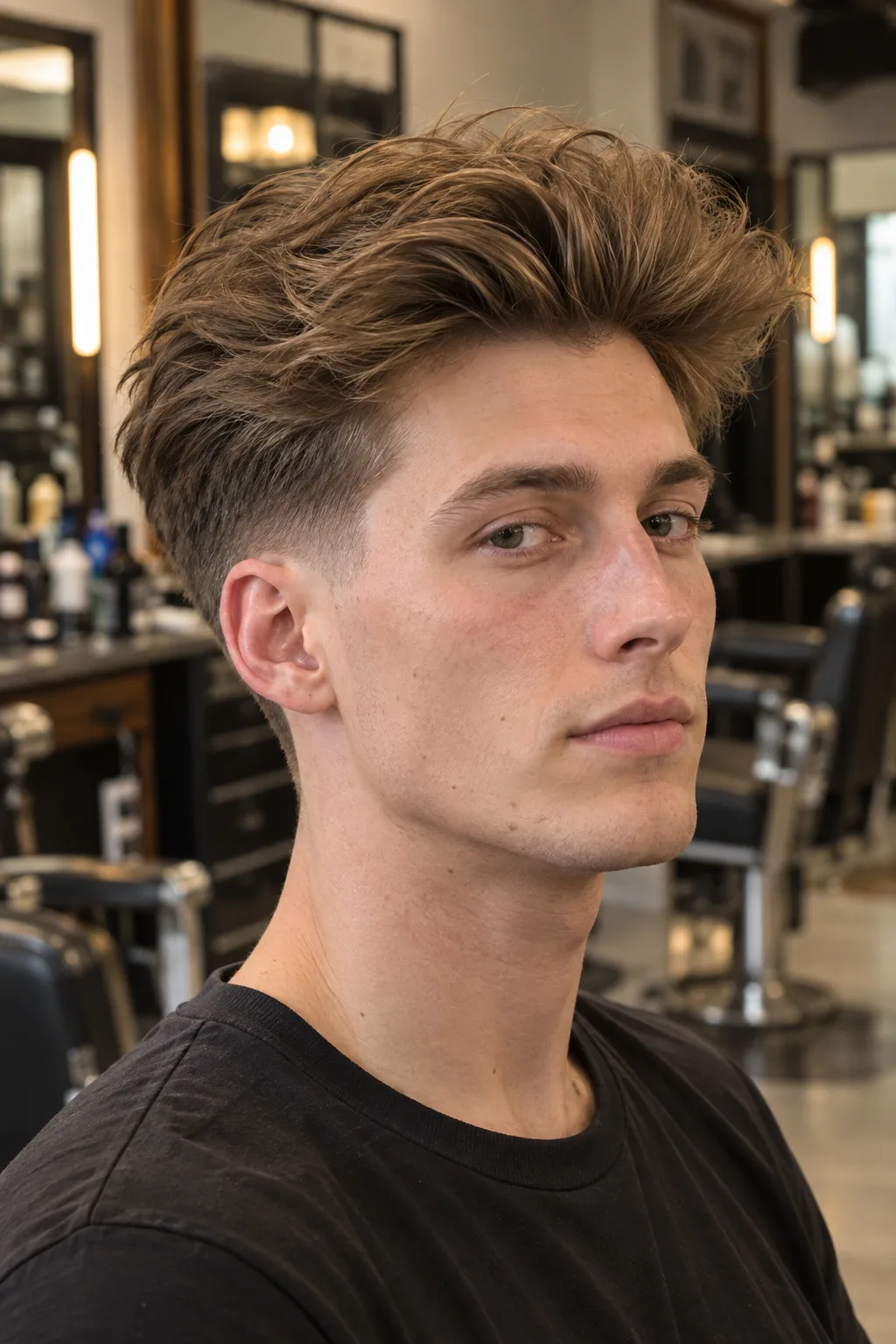 Would this suit me?
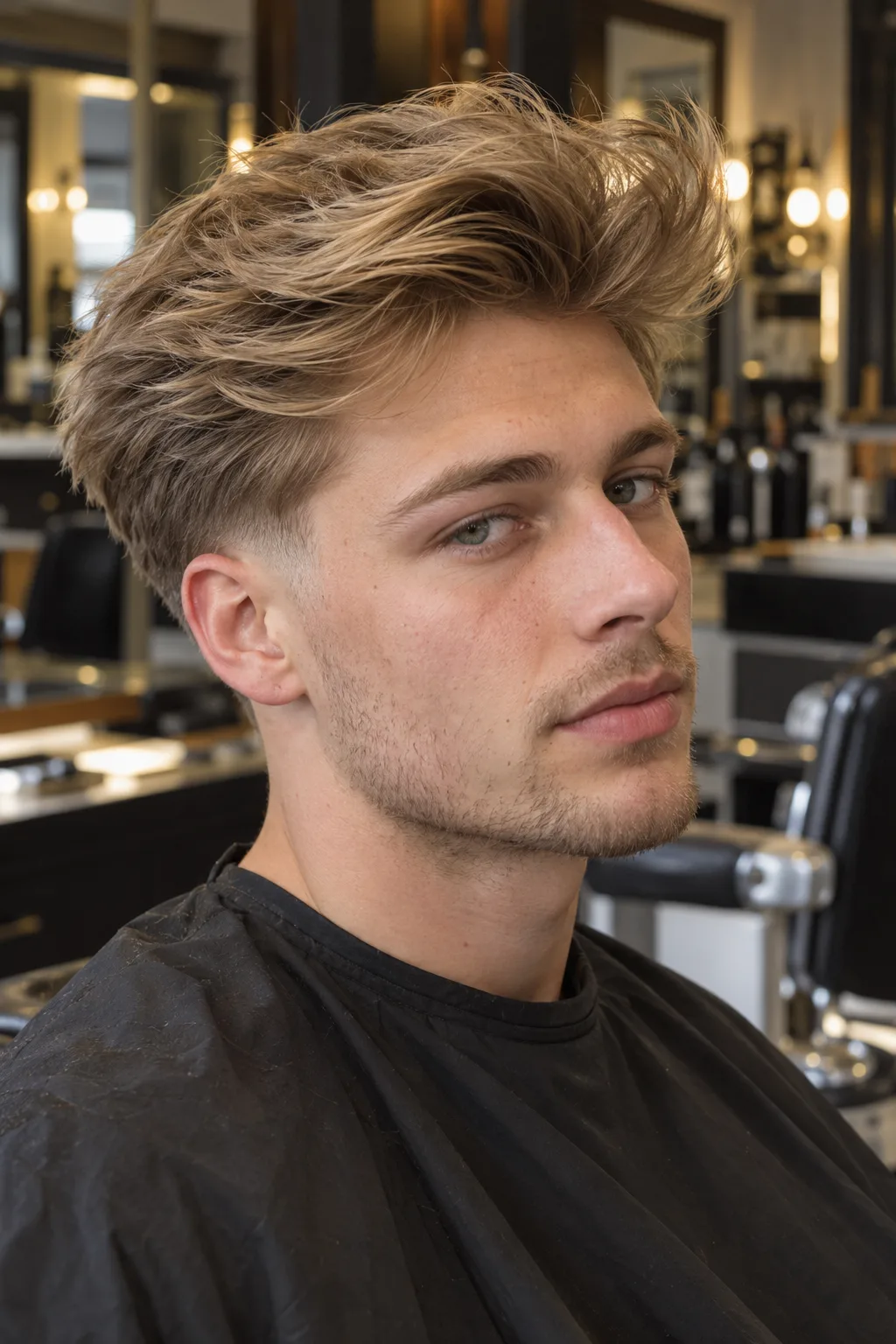 Would this suit me?
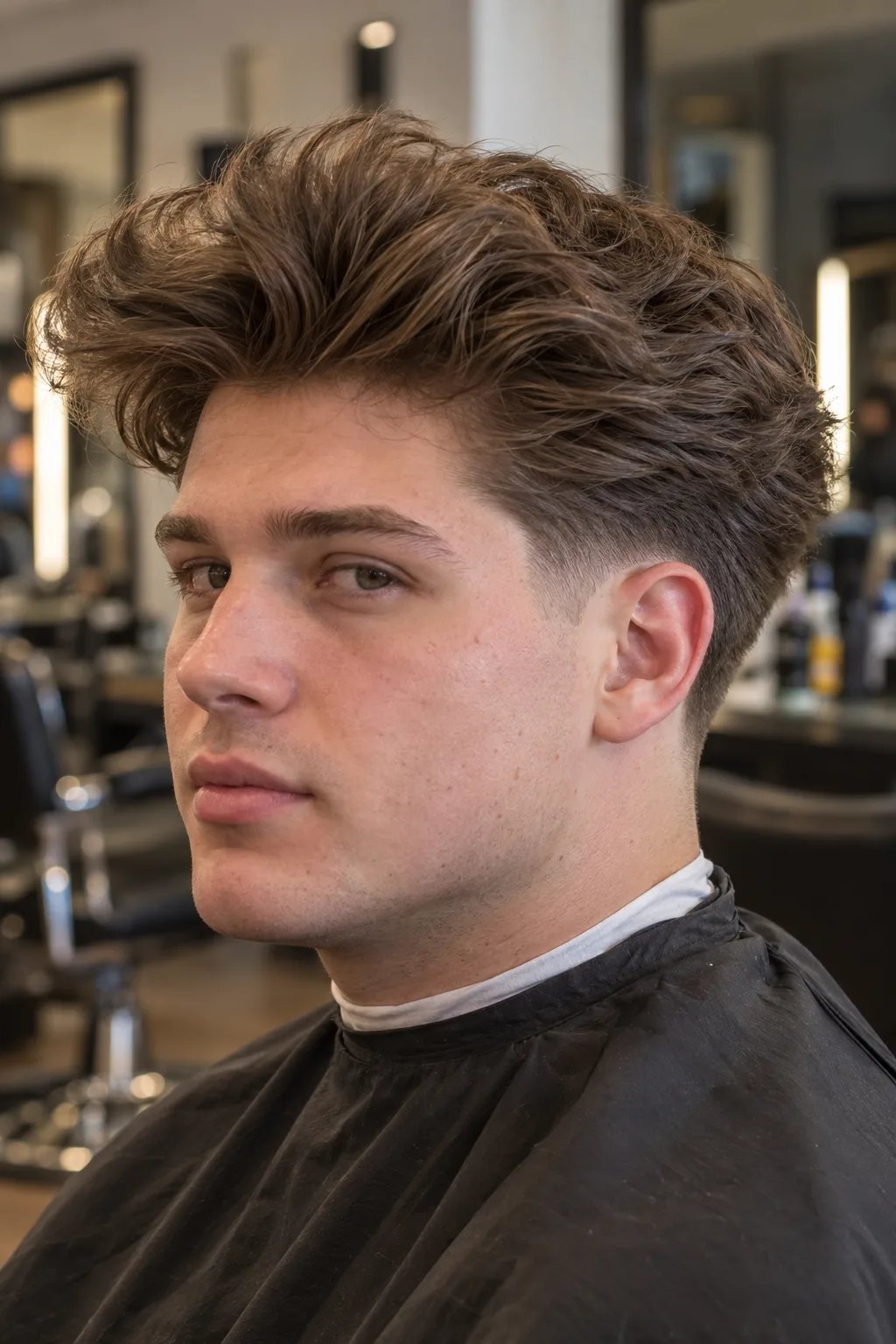 Would this suit me?
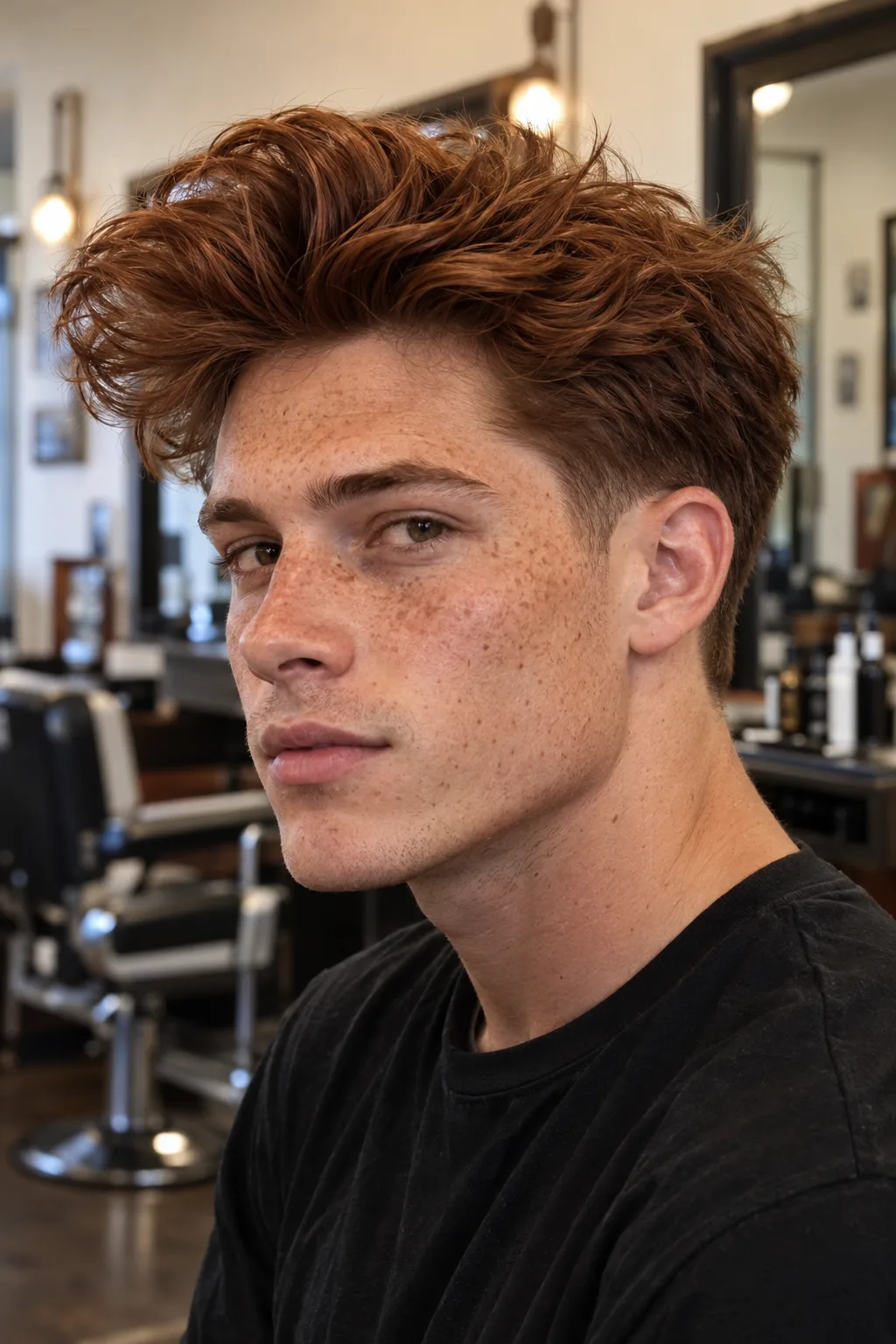 Would this suit me?
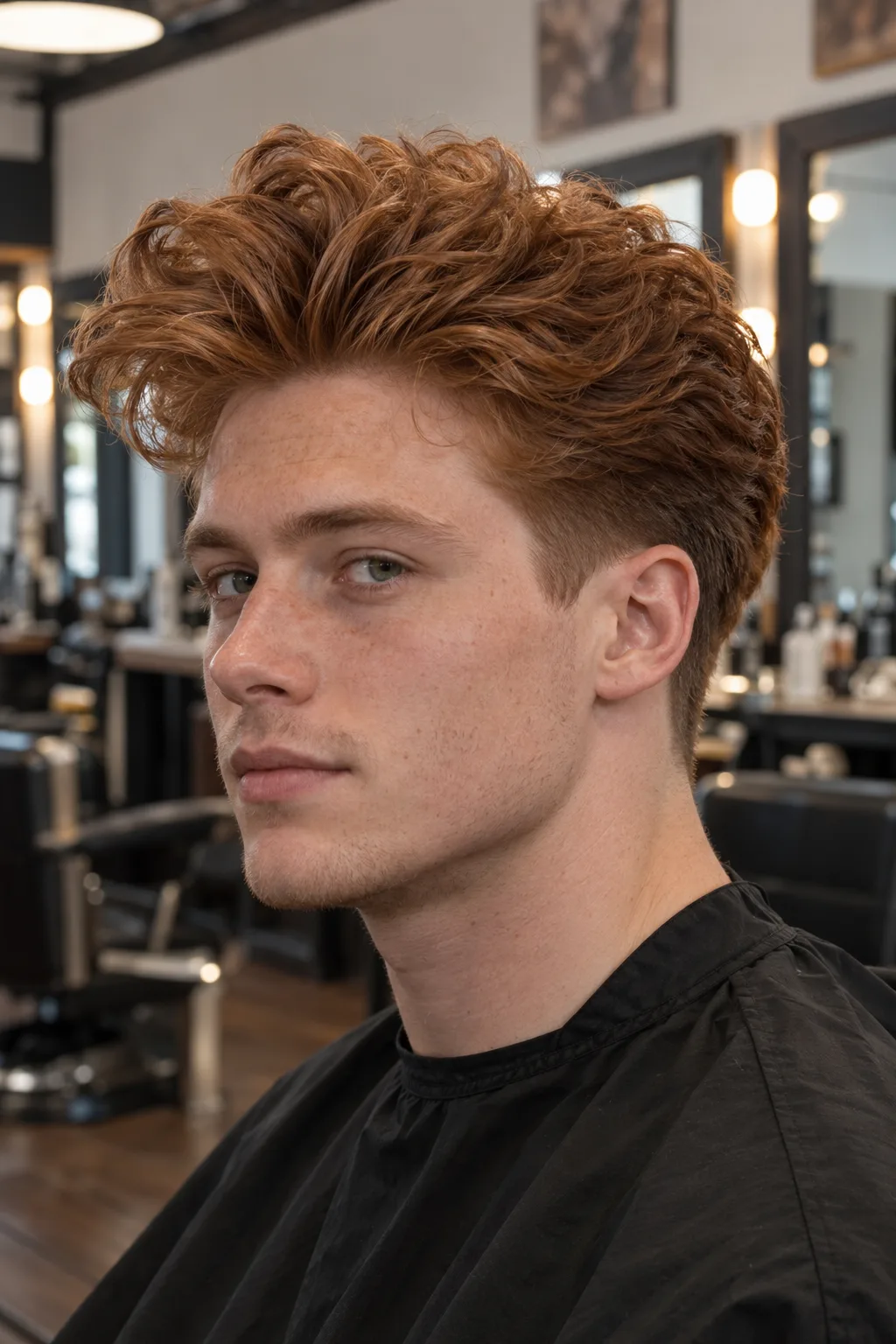 Would this suit me?
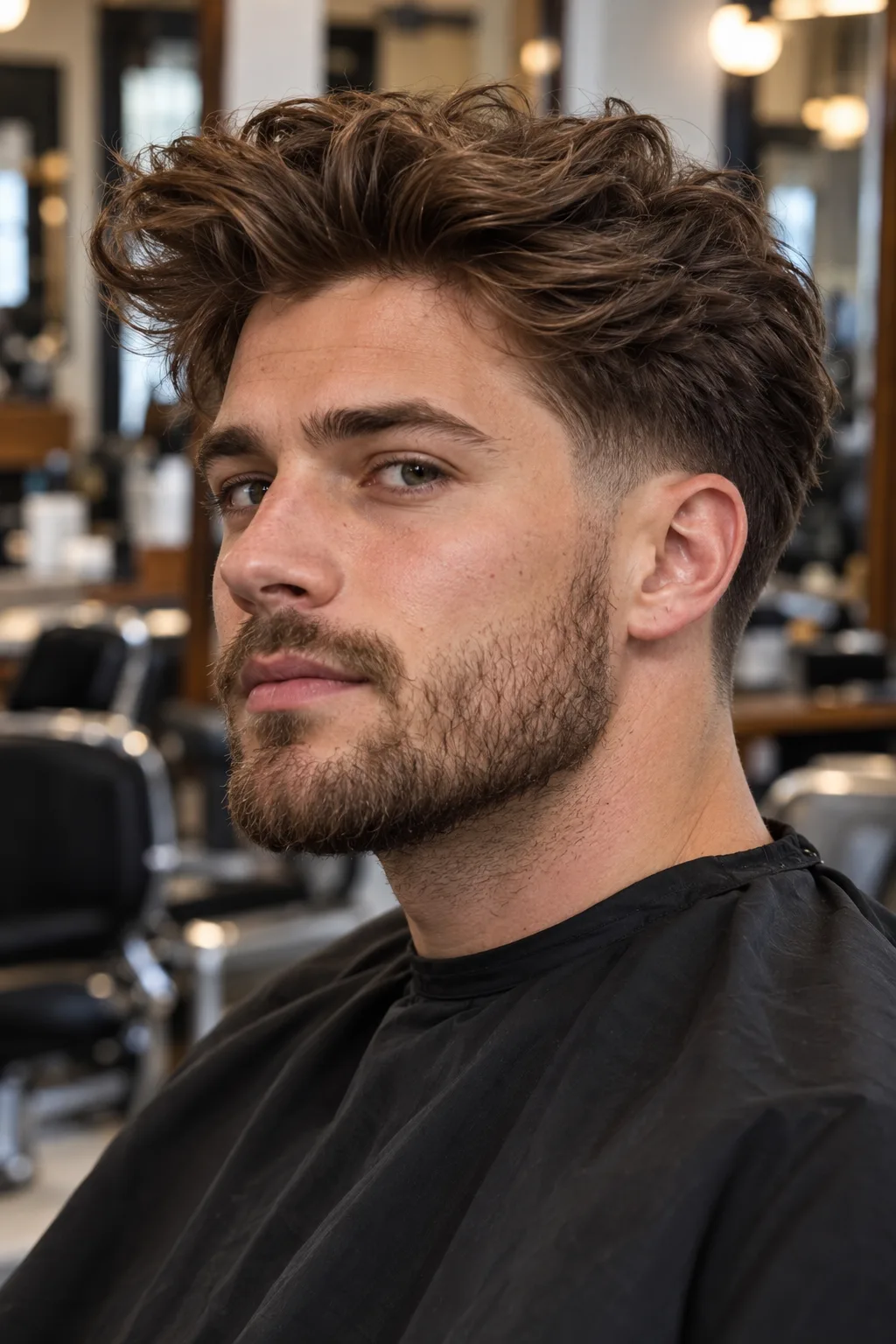 Would this suit me?
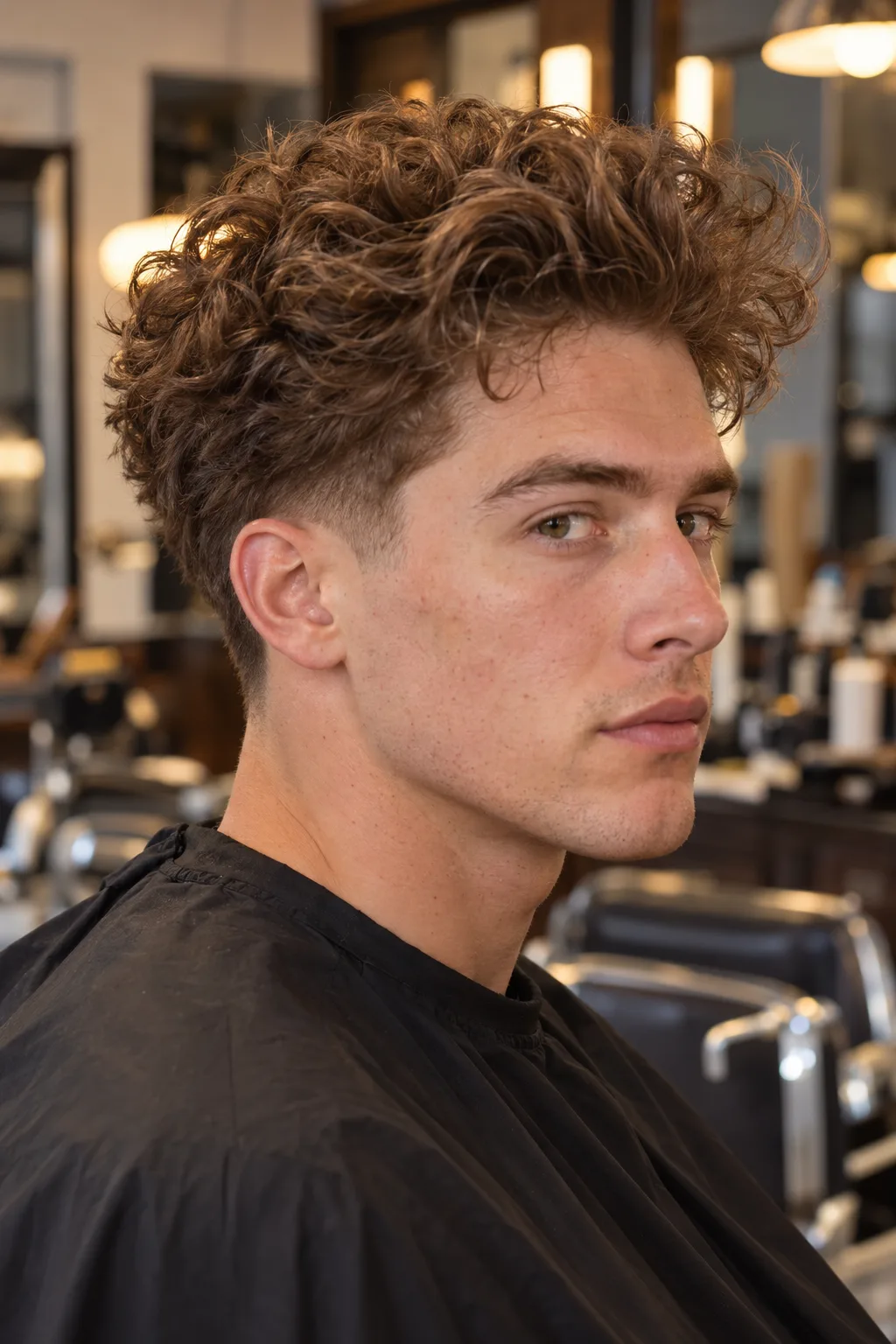 Would this suit me?
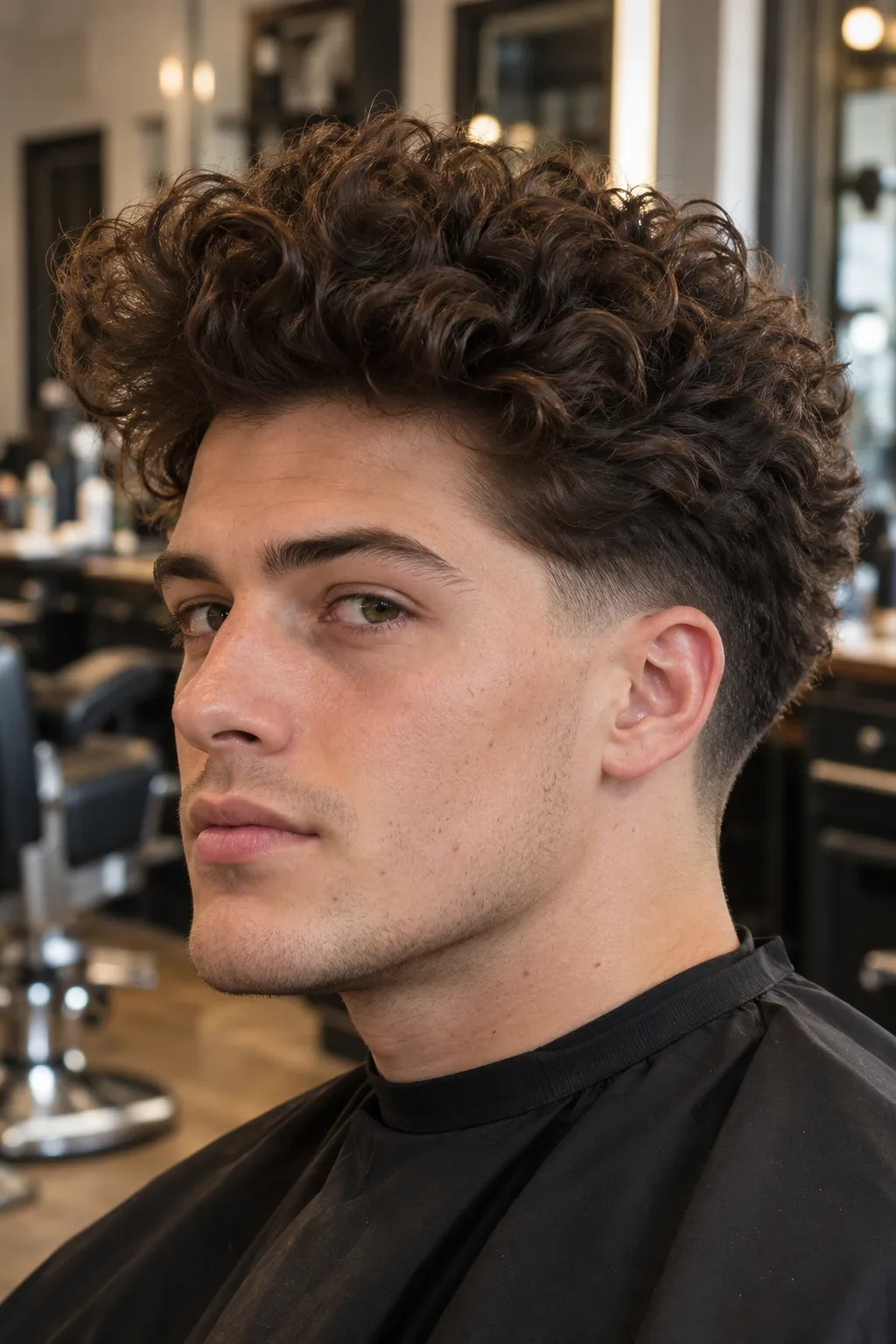 Would this suit me?
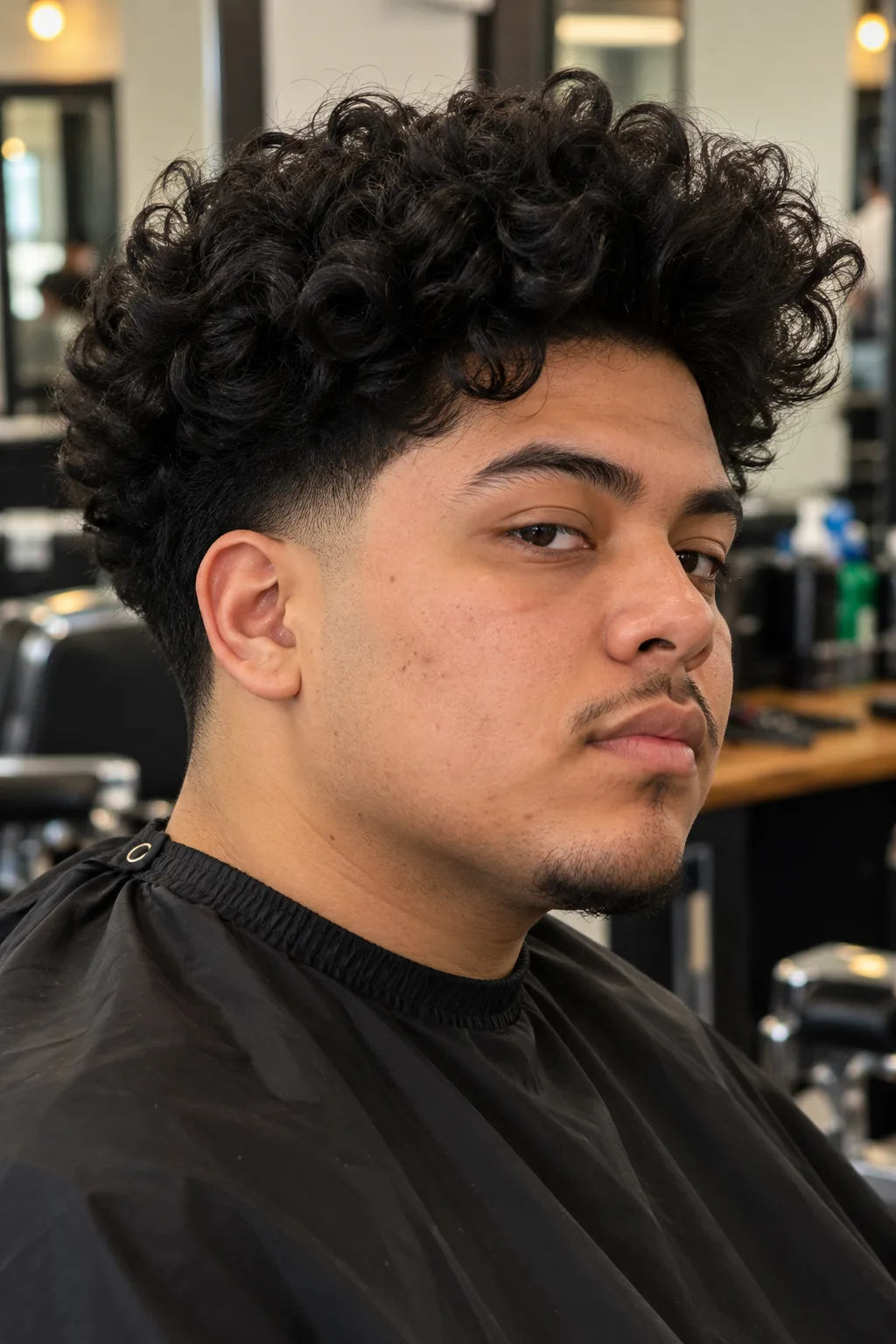 Would this suit me?
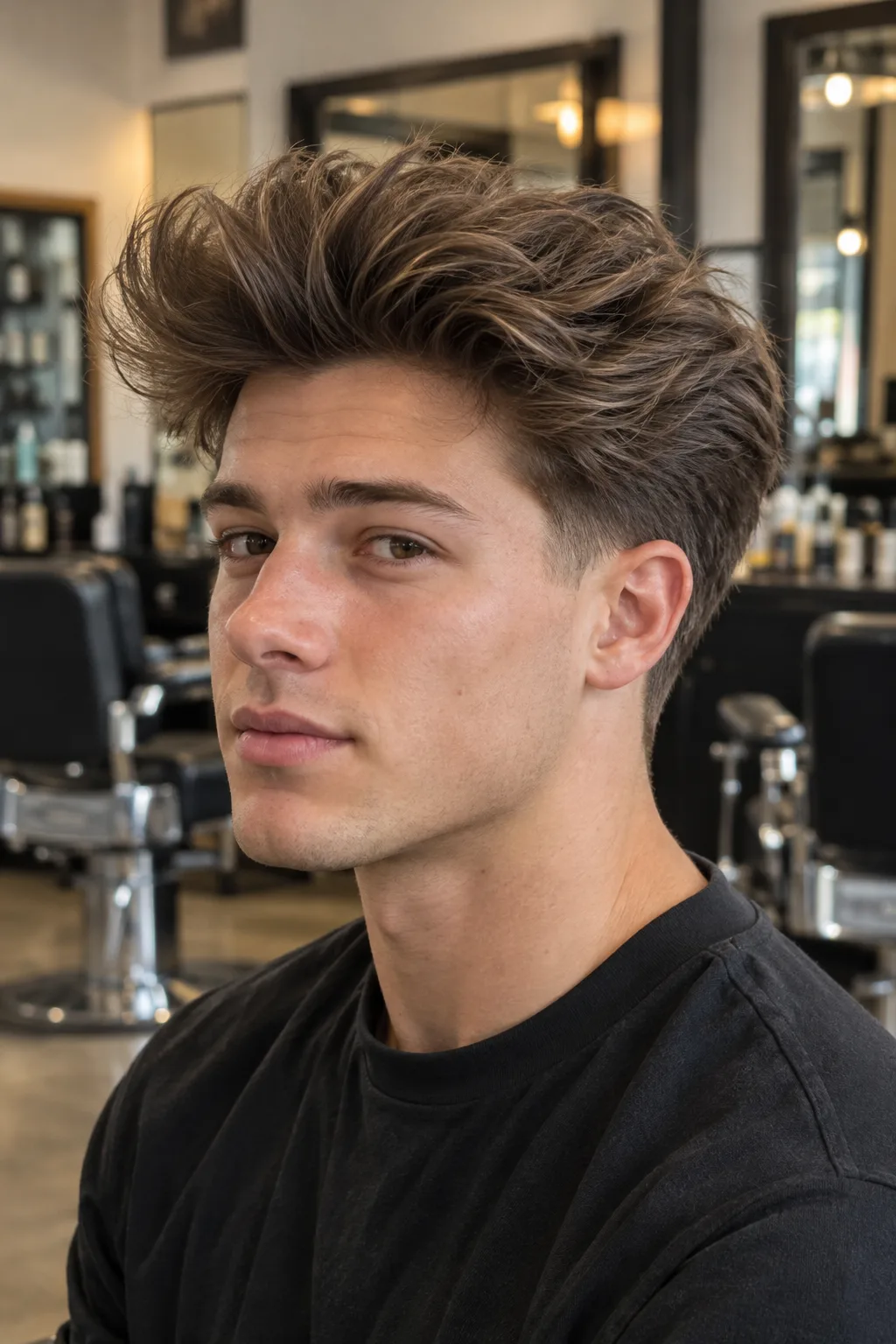 Would this suit me?
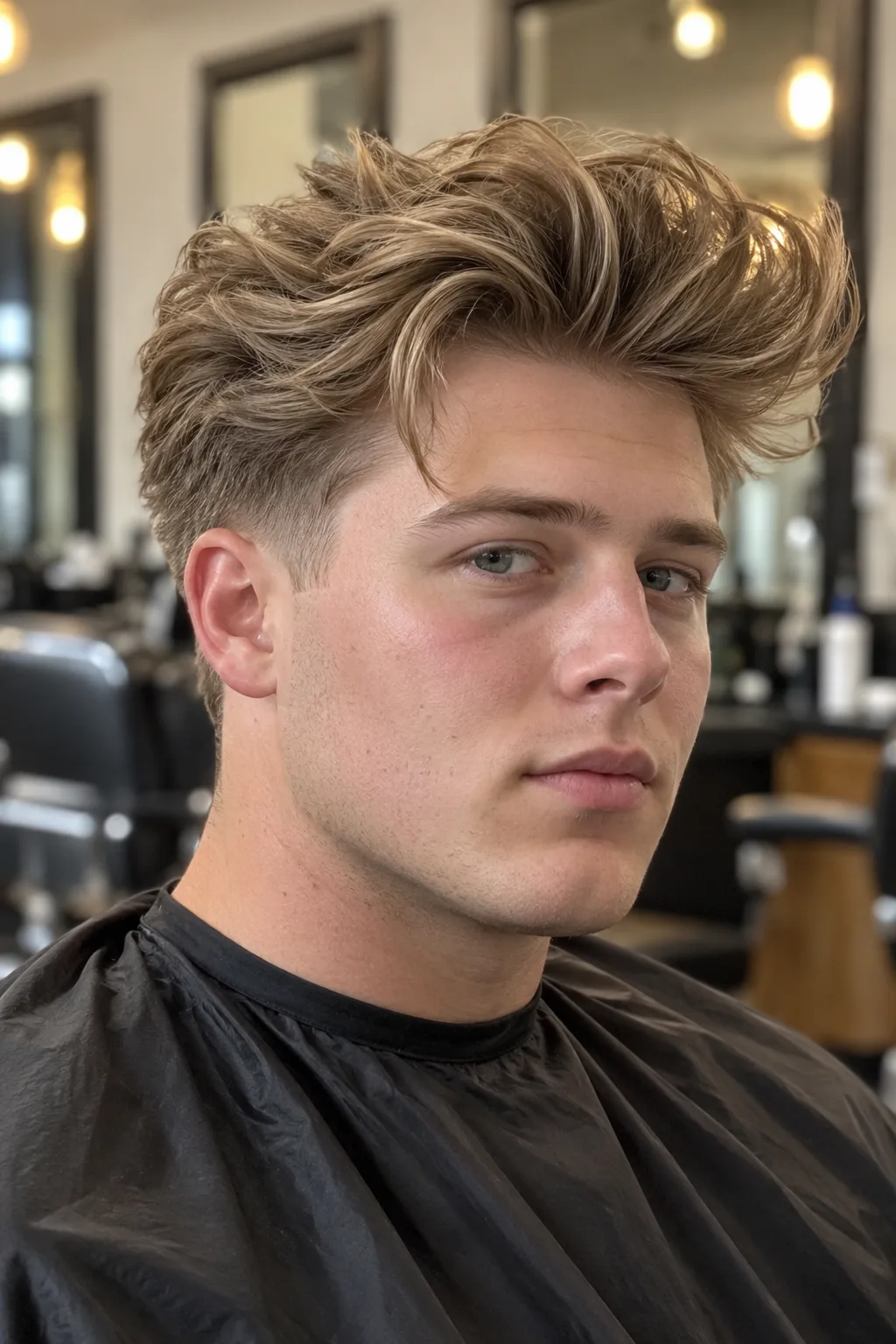 Would this suit me?
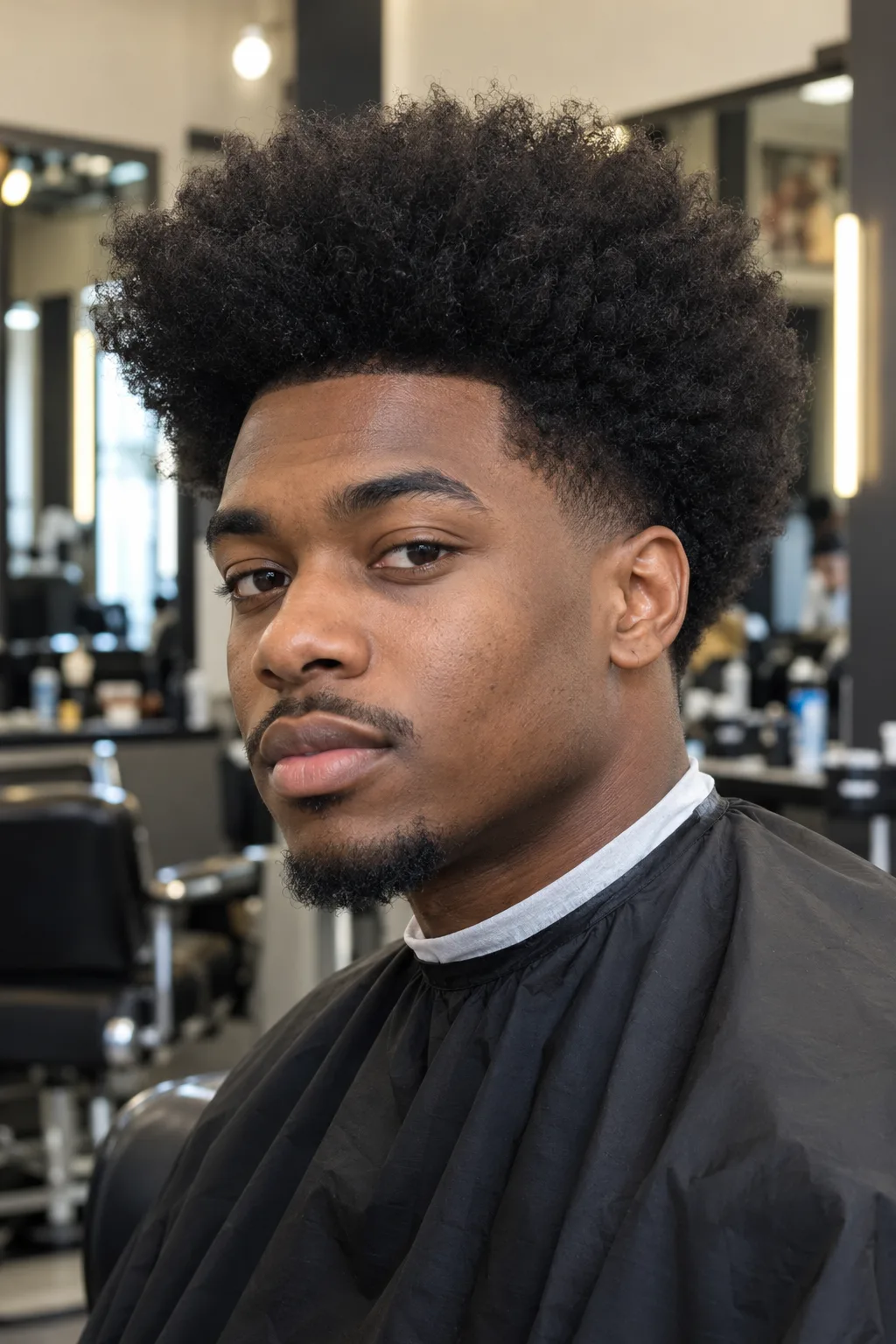 Would this suit me?
Which cut makes you look best?
Find out in 60 seconds.
A few quick taps and one selfie, and you'll know. Free account, no card for your first render.
Which Hair Type Suits a Blowout Taper?
Thick hair with a little wave is the easiest head for this cut, because it holds height on its own and the blow-dry only has to point it. Fine straight hair is the hardest. Here is the verdict for each type before the detail.
| Hair type | Verdict | What changes |
|---|---|---|
| Thick straight | Very good | Needs a dryer every day or it falls flat by noon |
| Fine or thin straight | Workable | Shorter top, about 3 in, plus volume powder |
| Wavy (2a to 2c) | Best | Waves do half the blowout for you |
| Curly (3a to 3c) | Very good | Diffuse instead of brushing, top can go to 4 to 5 in |
| Coily (4a to 4c) | Good | Picked out into a rounded shape, the "afro taper" family |
Thick straight hair

Thick straight hair takes a blowout well but will not keep it without help. Straight hair falls back down along its weight, so the lift has to come from the root. Blow-dry with the nozzle pointed up at the roots while you lift the front with your fingers, then lock it with a matte clay. If your hair is straight and flat, our low taper fade for straight hair guide covers the side work in more detail.
Fine or thin hair
Is a blowout good for fine, thin hair? Yes, if the top stays shorter. At 4 inches fine hair collapses under its own length and shows scalp. Ask for about 3 inches with texture cut into the ends, use sea salt spray or volume powder before the dryer, and keep the taper low so the sides add bulk instead of taking it away. If your hairline is thinning at the temples, skip the flare at the front corners and push the top straight back instead.
Wavy hair
Wavy hair is the best match. The waves give the top body and separation, so a rough blow-dry with your fingers is often enough. This is also where the "messy" blowout lives: half blown, half air-dried, with the waves left visible.
Curly hair

A curly blowout taper is diffused, not brushed. Brushing curls straight up and blowing them out turns them into frizz. A diffuser on low heat lifts the curls at the root and keeps them defined, and the result is a tall, rounded top. Curly hair can carry 4 to 5 inches on top because it shrinks. For more cuts built on curl, see our guide to haircuts for curly hair.
Coily hair
On 4a to 4c hair the blowout becomes a picked or blown-out rounded top over a low taper, closer to an afro taper than a Brooklyn blowout. The geometry is the same: low taper, full top. The tools change to a pick and a blow-dryer with a comb attachment.
Does a Blowout Taper Suit a Round Face?
Yes, and it is one of the better cuts for one. Height on top makes a round face look longer, and a low taper keeps a little width at the side so the head does not look like a lightbulb. The one change for a round face: keep the flare at the front corners small, because sideways volume at cheekbone level adds width. Long or oblong faces have the opposite problem and should keep the top shorter, 2.5 to 3 inches, so the height does not stretch the face further.
Not sure which shape you are? Measure it here. The full breakdown by shape is in our face shape guide.
Measure it instead of guessing
Both numbers in the same unit — the answer is a ratio, so it does not matter which.
Under 1.15 reads round, 1.15 to 1.5 reads oval, over 1.5 reads long. Oval and long split on the jaw rather than the ratio: an oval tapers toward the chin, a long face runs straight down.
6 Mistakes That Ruin a Blowout Taper

- The taper goes too high. If the short part climbs past the temple, the sides lose the bulk the top is meant to sit on and the cut reads as a fade with long hair on top. It takes four to six weeks to grow back.
- The top is cut too short. Under about 3 inches there is nothing to blow out. Say the length in inches, not "a little off the top".
- A hard line at the nape. The back should taper softly to the neckline. A blocked neckline grows out fuzzy in a week.
- Skipping the dryer. Air-dried, a blowout taper is just a low taper with a messy top. The dryer is not optional, it is the style.
- Shine products. Pomade with shine pulls the top flat and turns it into a pompadour. Use matte clay or paste.
- Too much heat. Blasting high heat every day dries the hair out. The American Academy of Dermatology recommends blow-drying fewer times a week and keeping heat down to limit damage, so use medium heat and finish with a cool shot.
How to Ask for a Blowout Taper
Show a photo, then say it in this order: the taper, where it stops, what happens at the back, and the length on top. The words matter because "taper" alone means very different things in different shops.
How to ask for a blowout taper
- Say "low taper" first
Ask for a low taper, not a fade. That tells the barber the short part stays in a narrow band near the ear.
- Show where it stops
Touch the top of your ear. Say the taper should stop there and the sides above it should stay full, about an inch.
- Ask for a soft nape
Ask for the back to taper down to the neckline with no hard line, so it grows out clean.
- Give the top length in inches
Say "leave 3 to 4 inches on top, I am going to blow it out". The words "blow it out" tell the barber to cut it for height, not to lie flat.
- Ask them to style it
Ask the barber to blow-dry it in the shop and watch how they point the dryer. That is your daily routine.
Say this to your barber
Low blowout taper please: taper stops at the top of the ear, sides stay full, soft taper at the nape with no hard line, and leave 3 to 4 inches on top for blowing out.
If your barber asks how to cut it, our low taper fade cutting guide walks through the clipper work step by step. That post is about how the taper is cut; this one is about the blowout you build on it.
How to Style a Blowout Taper in 5 Minutes
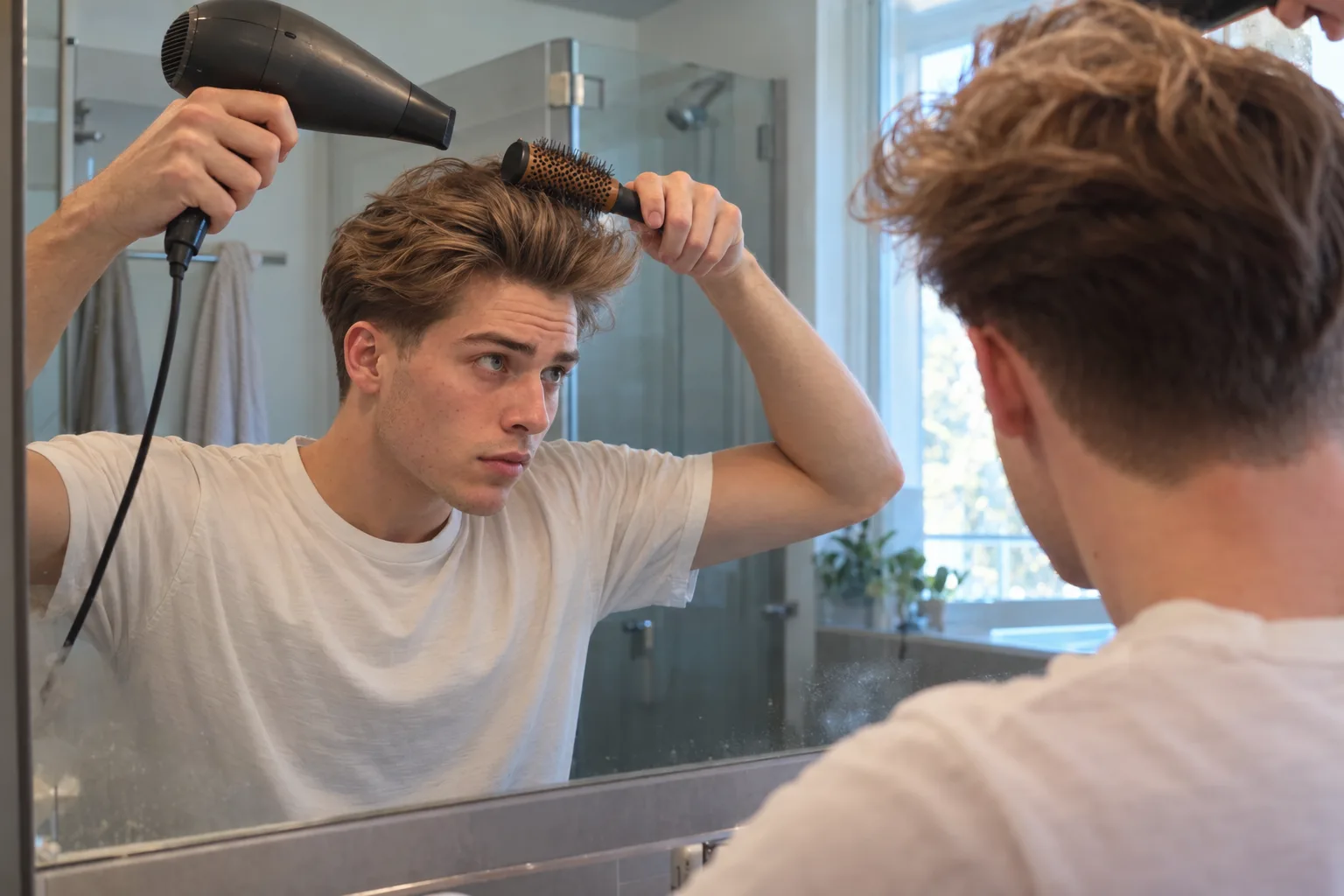
- Start damp, not wet. Towel-dry until the hair stops dripping. Spray sea salt or a pre-styler into the top.
- Point the air up. Blow-dry the top with the nozzle aimed at the roots, lifting the front with your fingers or a round brush. Push the hair up and back, not forward.
- Flare the corners. Brush the front corners slightly outward while they dry. This is the flare that makes it a blowout.
- Cool shot. Hit the top with cold air for ten seconds. Hair sets as it cools.
- Matte product last. Rub a pea-sized amount of clay between your palms and push it through from the back to the front. Pinch a few pieces for separation.
For a softer, more grown-out version, push less product through and skip the cool shot so the top moves.
How Long Does a Blowout Taper Last?
The taper looks sharp for about two weeks and needs a cleanup every two to three weeks. The top lasts longer: trim it every five to six weeks to keep the ends from going heavy. Daily, the blowout lasts until you wash it or sleep on it, so most people re-blow it each morning.
Can You See a Blowout Taper on Yourself for Free?
Partly. The free method is to take a selfie with your hair pushed up and back, then hold it next to the gallery shots above that match your hair type. That tells you whether your texture can hold the height.
Where it hits a wall is your face. Whether a tall top makes you look longer and sharper or just taller depends on your face length and your hairline, and you cannot see that on someone else's head.
HairstyleAtlas closes that gap. Upload one selfie and see a low taper blowout on your own face before the clippers come out, with the fade haircut simulator or the button below. The first look is free, needs no card and shows the front view, which is enough to judge the height. Plus is $9 a month for every cut and color. Side, three quarter and back angles, where you see the taper itself, are in Pro at $24 a month. Both cancel in two clicks with a seven day refund.
Get the low version first. A low blowout taper keeps the sides full, grows out into a normal haircut if you hate it, and suits more face shapes than any mid or high taper. Then put the money into the top: ask for 3 to 4 inches, buy a decent dryer and a matte clay, and learn the five minute routine. The taper is what you pay the barber for. The blowout is what you do every morning, and it is what people actually notice.
Frequently asked questions
A fade blowout, or blowout taper fade, is a haircut with short tapered sides and a long top blow-dried up and back for volume. The taper usually stays low around the ear and nape, and the top keeps 3 to 4 inches so there is enough length to blow out.
The sides can be identical. A low taper fade describes only the short work around the ear and neck, and can go with any top. A blowout taper is a low taper plus a long top styled tall with a hair dryer.
A low taper with 3 to 4 inches on top. The low taper keeps the sides full so the top looks big, and the length gives the dryer something to lift. Thick or wavy hair holds it best.
It works if you keep the top shorter, about 3 inches, and use volume powder or sea salt spray before blow-drying. Longer tops on fine hair collapse and show the scalp.
Yes. Straight hair needs the lift built at the root with a dryer pointed upward, then a matte clay to hold it. Without the dryer, straight hair falls flat within a few hours.
Not quite. A taper shortens the hair gradually and only near the ear and neckline. A fade usually goes shorter, often down to skin, and climbs higher up the sides. A blowout is almost always paired with a taper.
For a blowout, low. It keeps the sides full and makes the top look taller. A mid taper suits a round face or very thick hair that puffs out at the temples.
The taper stays sharp for about two weeks. Book a cleanup every two to three weeks, and a trim on top every five to six weeks.
Blow the back and crown up and back as usual, but dry the front few inches forward and slightly to one side, then pinch it into pieces with a little matte paste. The result is the same height with a messy fringe at the front. Our blowout taper textured fringe guide shows 14 fringe variations on this cut and what to ask for.
Preview it on your own photo: Low Taper Fade Try-On.
Share article
About the author

Related posts
Men's Haircuts · 12 min
Modern Mod Cut: 14 Variations and How to Ask Your Barber
The modern mod cut is decided at the sides, not the fringe. 14 variations, which hair type and face shape it suits, the mistakes that cost three months, and the exact words for your barber.

Men's Haircuts · 14 min
Man Wolf Cut: 15 Ways to Wear It and How to Ask Your Barber
A men's wolf cut is decided at the sides, not on top. See 15 versions from classic to low taper, which one suits your hair type and face shape, and the exact words for your barber.
Men's Haircuts · 15 min
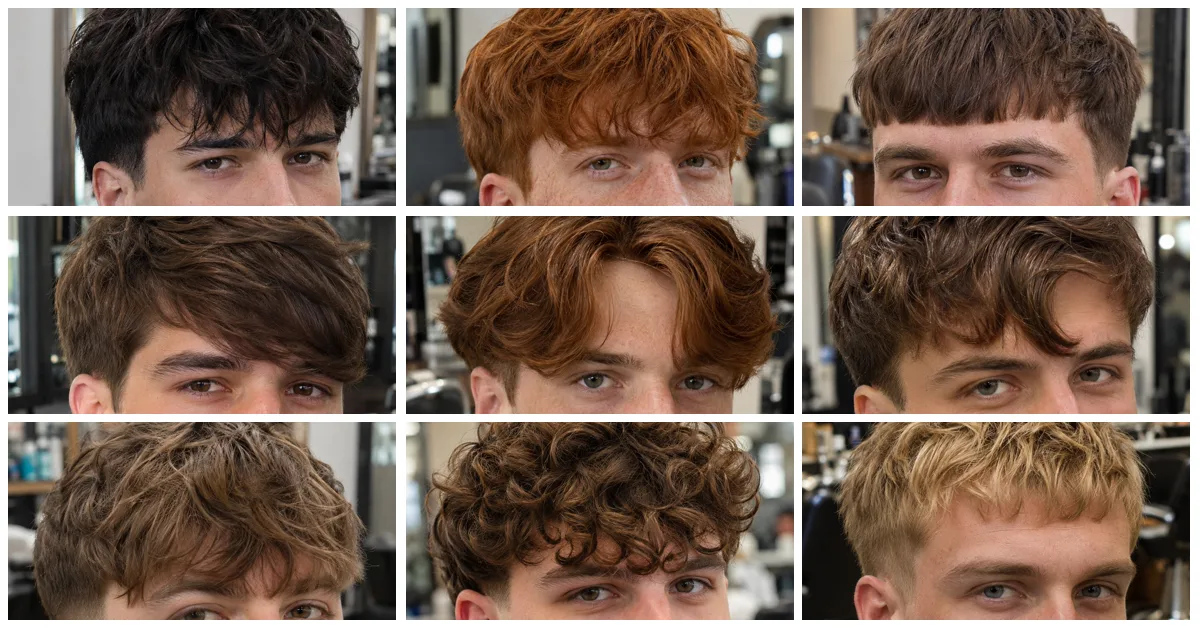
Fringe Cut: 9 Men's Fringe Types and Which One Suits You
A fringe cut lets the front of your hair fall onto your forehead. Your hairline, not your face shape, decides which of the nine types will sit right. See all nine, check yours in 30 seconds, and get the words for your barber.
Men's Haircuts · 13 min
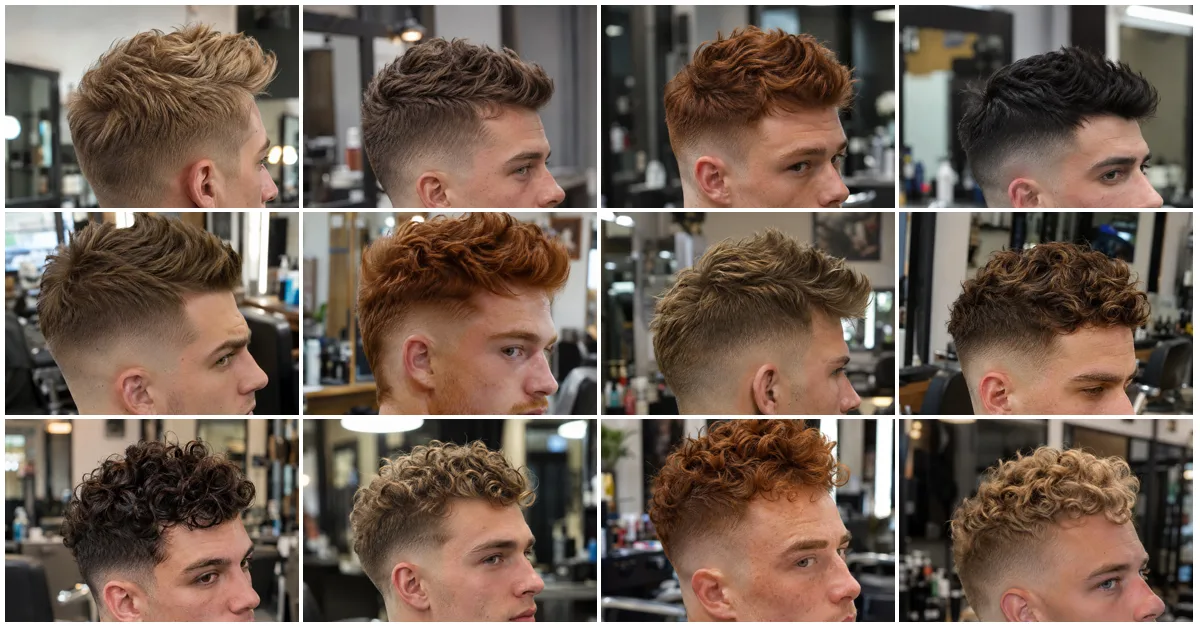
Fade Fohawk: 14 Faux Hawk Fades and How to Pick Yours
A fade fohawk is a faux hawk with faded sides. The ridge is the easy part; the fade decides how loud it reads. 14 versions compared, which fade suits you, and what to tell your barber.
Men's Haircuts · 15 min
Taper Burst Fade: 14 Looks and the Words That Stop Your Barber Going to Skin
A taper burst fade curves around the ear, never goes to bare skin and keeps the back long. See it on 14 different tops, which hair type it suits, and exactly what to say in the chair.

Men's Haircuts · 13 min
Men's Short Fade Cuts: 14 Looks and What to Ask Your Barber
14 men's short fade cuts on the same mid fade, matched to your hair type, plus the fade height rule most guides skip and the exact words to say in the chair.