Buzz Cut Fade: 14 Fade Types and How to Pick Yours
Oleh Onysko 2 October 2026 15 min read
In this article
A buzz cut fade is a buzz cut, one clipper length all over the top, with the sides and back blended shorter toward the skin. Pick the fade by your head shape and your barber budget, because with a quarter inch on top there is nothing else in the haircut to do the work.
That is the thing most guides skip. On a longer cut the top carries the look and the fade is trim. On a buzz cut the fade is the haircut.
What a Buzz Cut Fade Actually Is

Two parts, both done with clippers. The top and crown get one guard length all over, usually a number 2 (a quarter inch) or a number 3 (three eighths of an inch). The sides and back start at that same length and get gradually shorter as they go down, ending at a number 1, a zero or bare skin at the bottom edge.
No scissors, no styling, no part. If there is a quiff or a textured fringe up top, it is a different haircut: a crew cut or a crop with a fade. A buzz cut fade stays the same length from forehead to crown.
The fade itself has two settings and they are independent. Height is where the blend starts: just above the ear (low), at the temple (mid) or near the top of the side of the head (high). Depth is how short it gets at the bottom: bare skin (a skin or bald fade) or a short stubble (a shadow fade). Every named variation below is a combination of those two plus a shape.
Buzz Cut vs Buzz Cut Fade

A plain buzz cut is one guard everywhere, top, sides and back. It is the cheapest haircut there is, and you can do it yourself with a decent set of clippers for a buzz cut in ten minutes.
The trouble is that one length all over makes the head look wider at the sides than it really is, because hair at the sides stands out a little and catches light. A fade takes that width away. It is the difference between a haircut that looks done to you and one that looks done for you.
| Plain buzz | Buzz with taper | Buzz with fade | |
|---|---|---|---|
| Sides | Same as top | Short only at the edges | Blend to stubble or skin |
| Head shape | Rounder, wider | Close to natural | Narrower, longer |
| Looks sharp for | 3 to 4 weeks | 3 to 4 weeks | 1 to 3 weeks |
| Doable at home | Yes, easily | Yes, with practice | Hard, needs a mirror and patience |
The 3-2-1 Rule
The 3-2-1 rule is the home version of a fade: a number 3 guard on top, a number 2 on the sides and a number 1 around the bottom edge and neckline. It gives you a stepped taper with three lengths instead of one.
It works, and it is a real upgrade on one guard all over. But it is not a fade. Three lengths leave two lines where the guards meet, and blending those lines out with a lever and a flicking motion is the skill barbers spend months learning. If you want the 3-2-1 look done at home, accept the soft lines and keep them low. If you want a true blend, that is a barber's job.
| Guard | Length | Where it goes in a 3-2-1 |
|---|---|---|
| Number 3 | 3/8 inch | Top and crown |
| Number 2 | 1/4 inch | Sides and back |
| Number 1 | 1/8 inch | Bottom inch and neckline |
| Zero / skin | 0 to under 1/16 inch | Only in a true fade |
14 Buzz Cut Fades, From Taper to High Skin
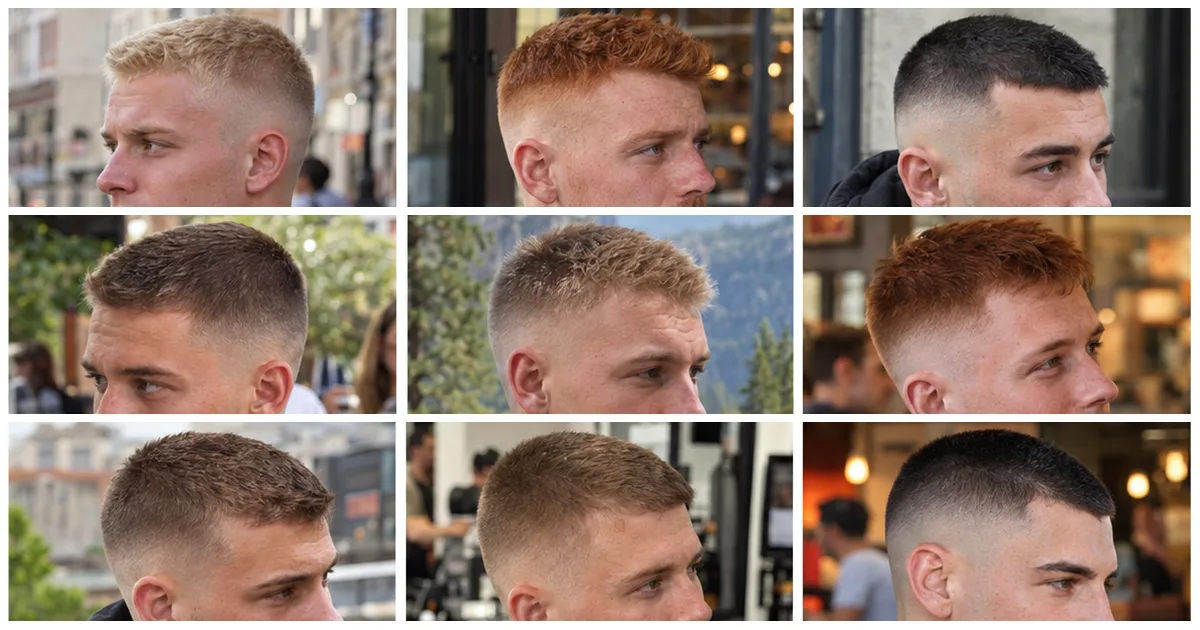
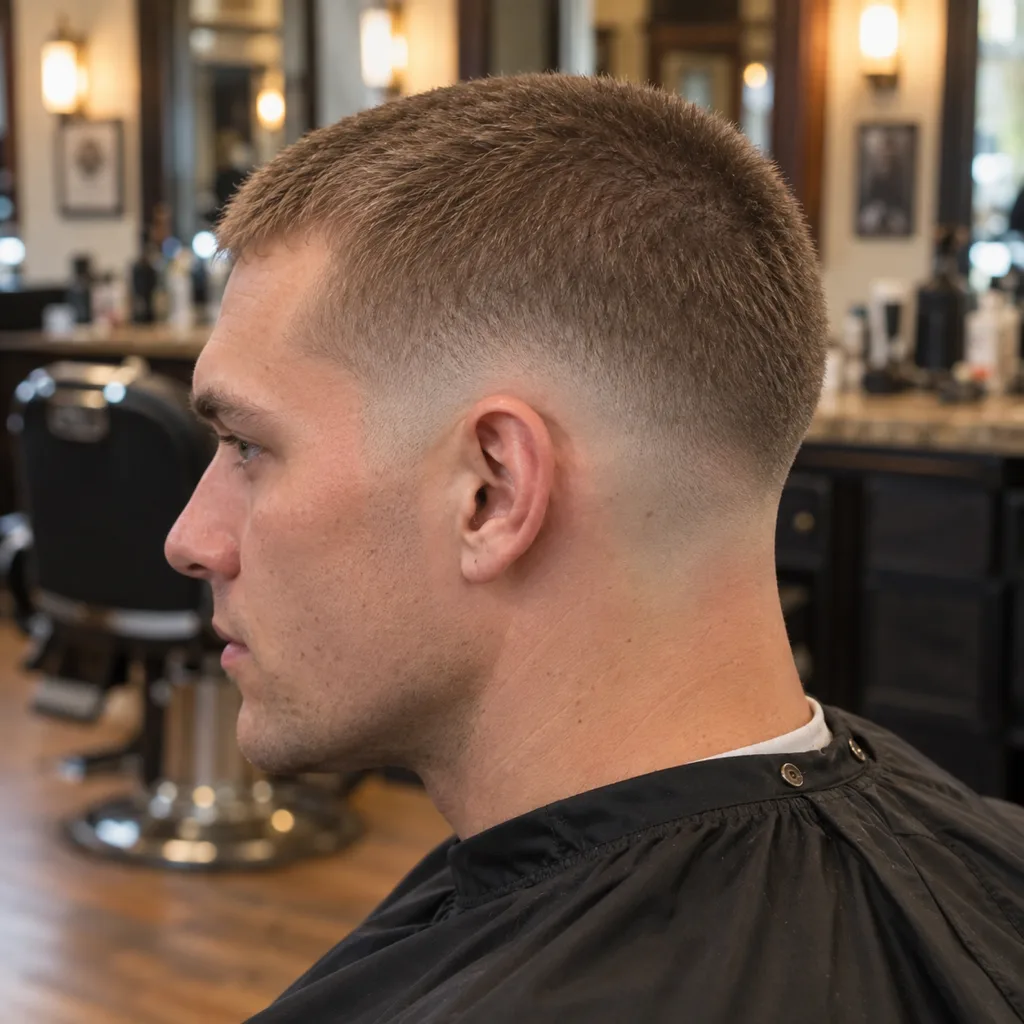
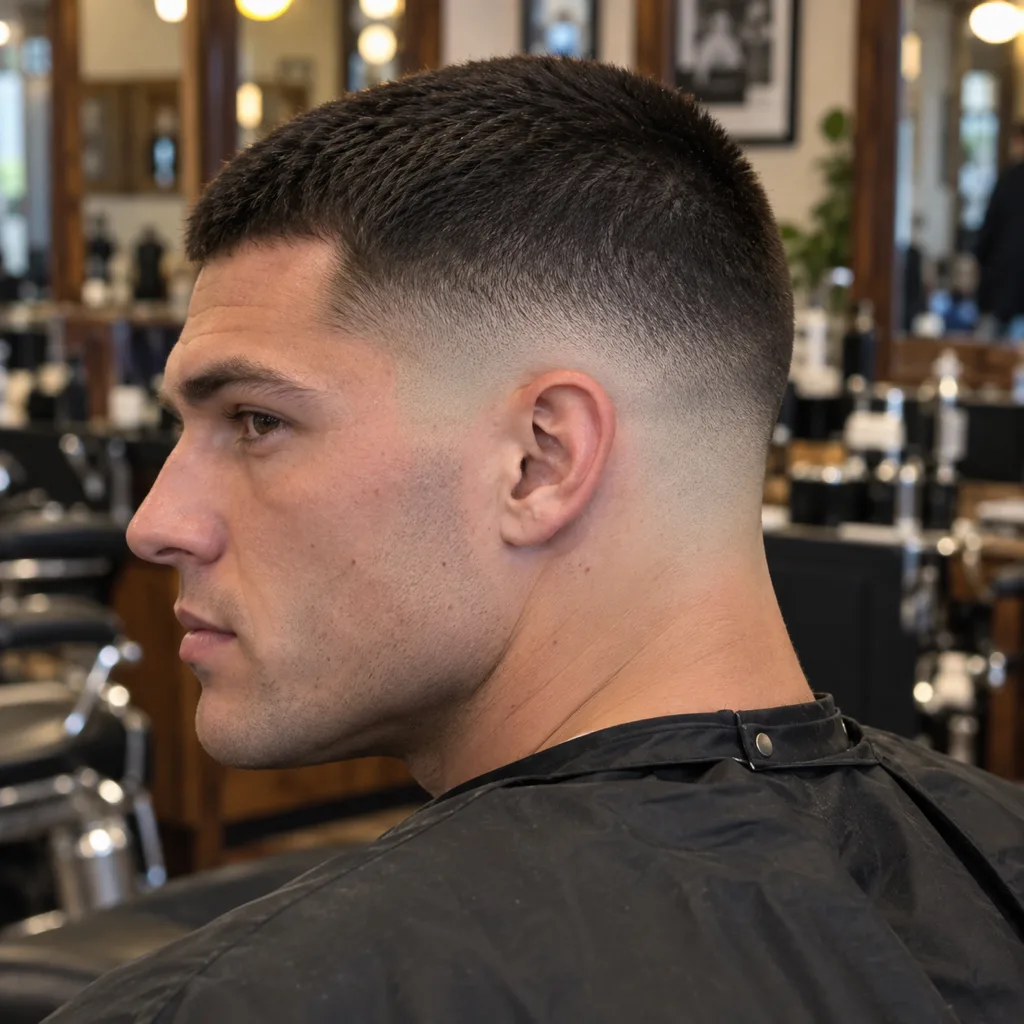
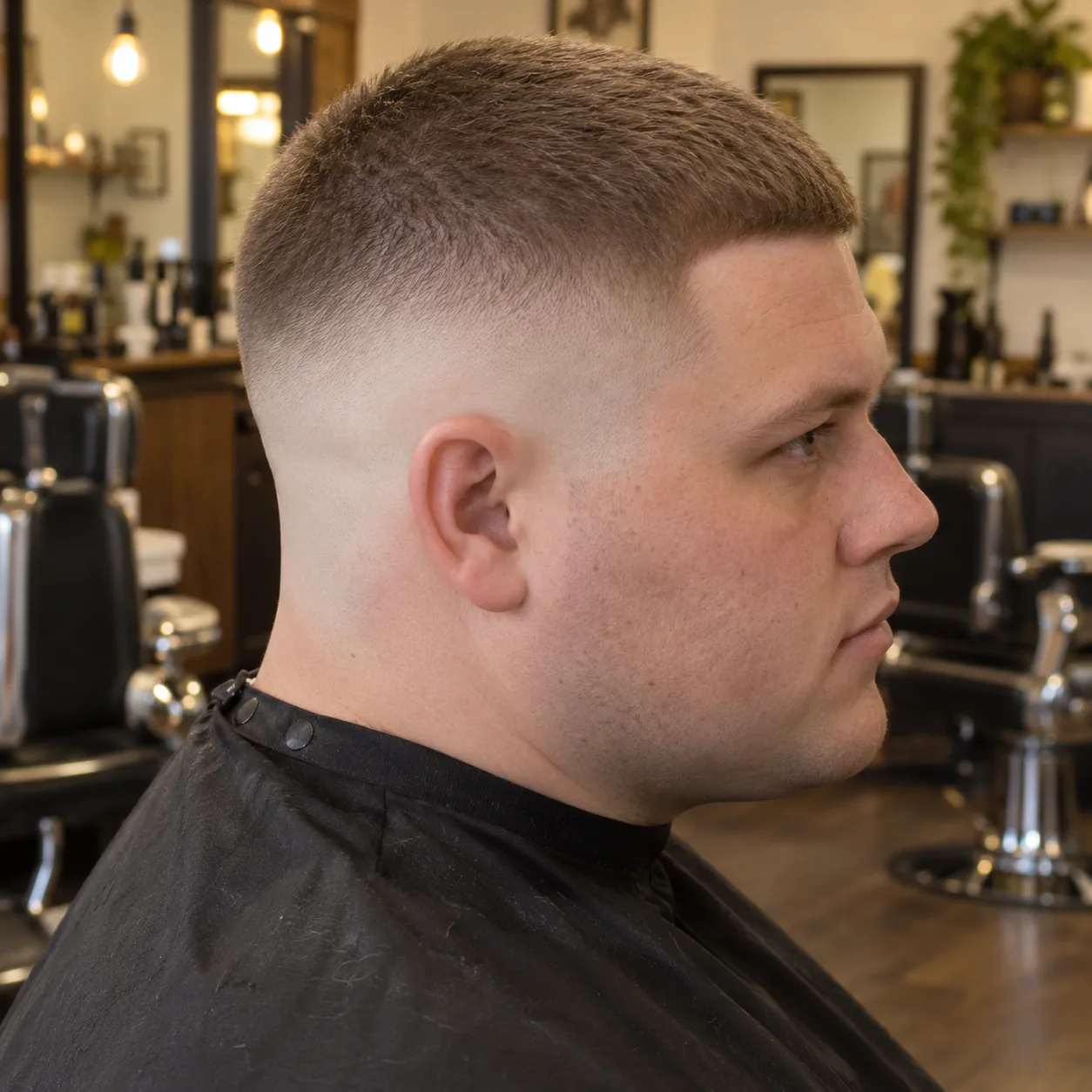
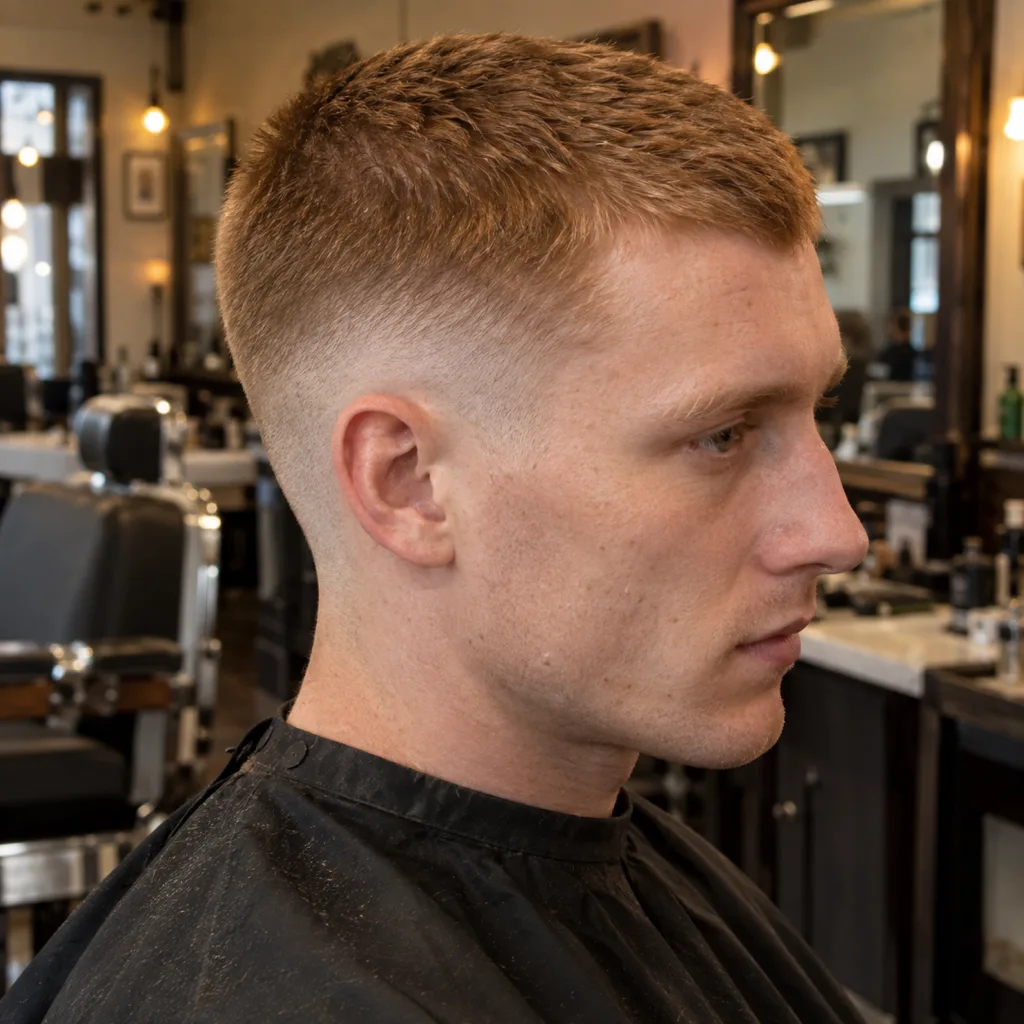
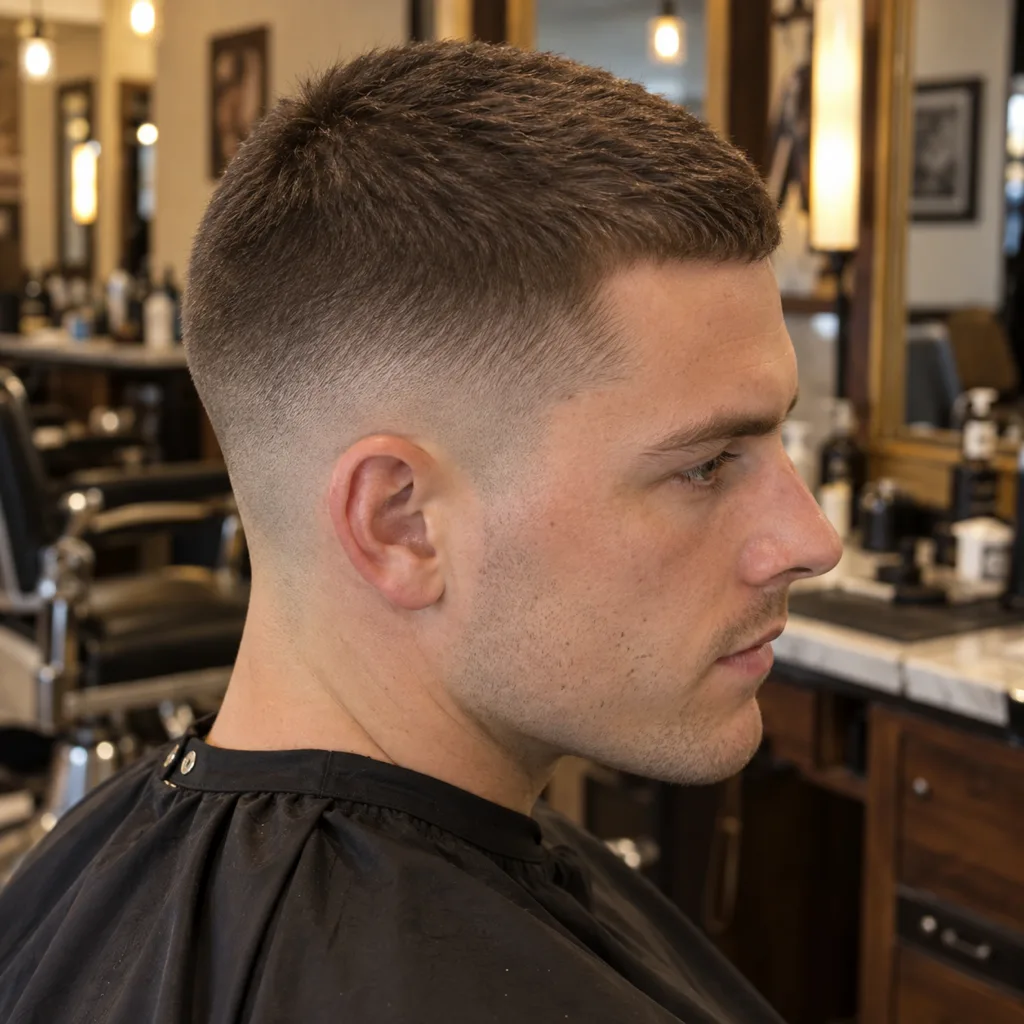
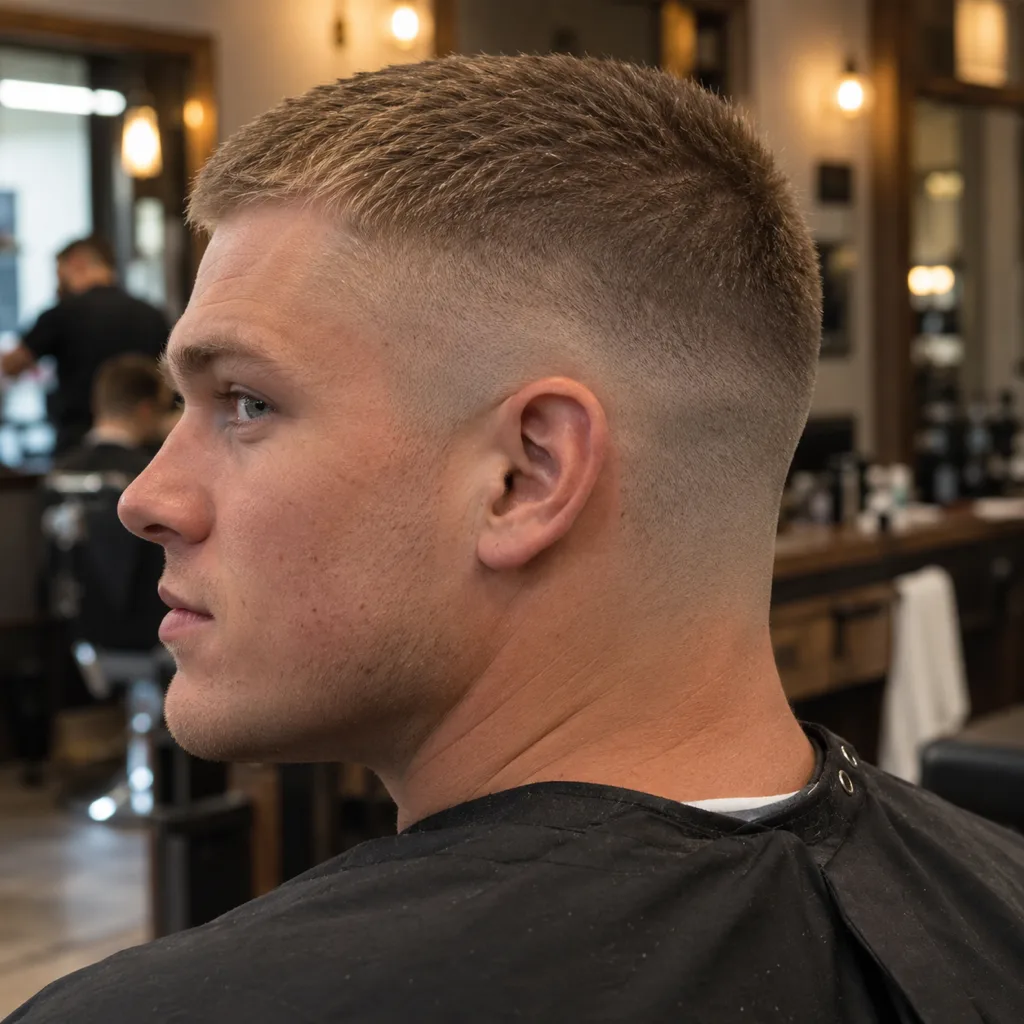
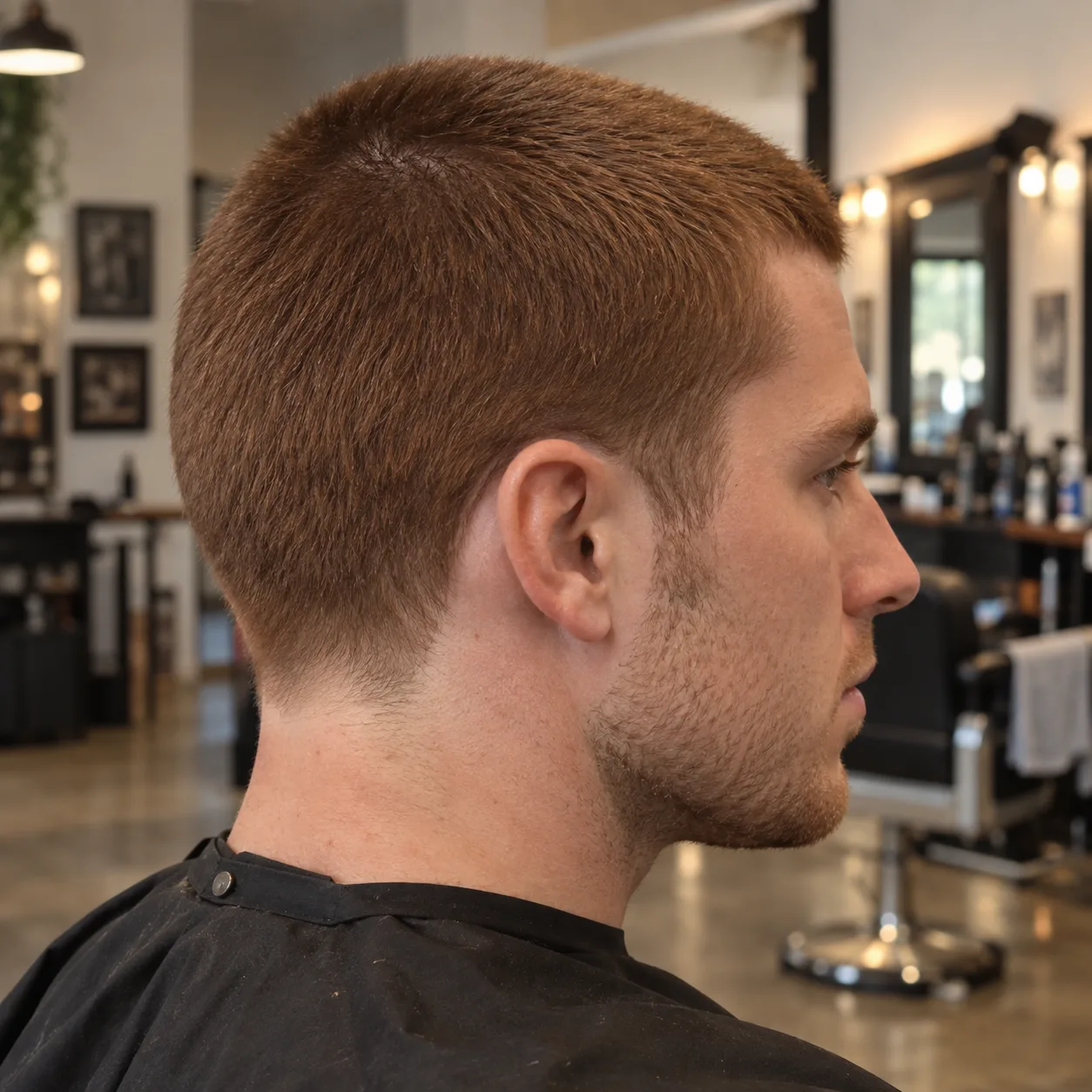
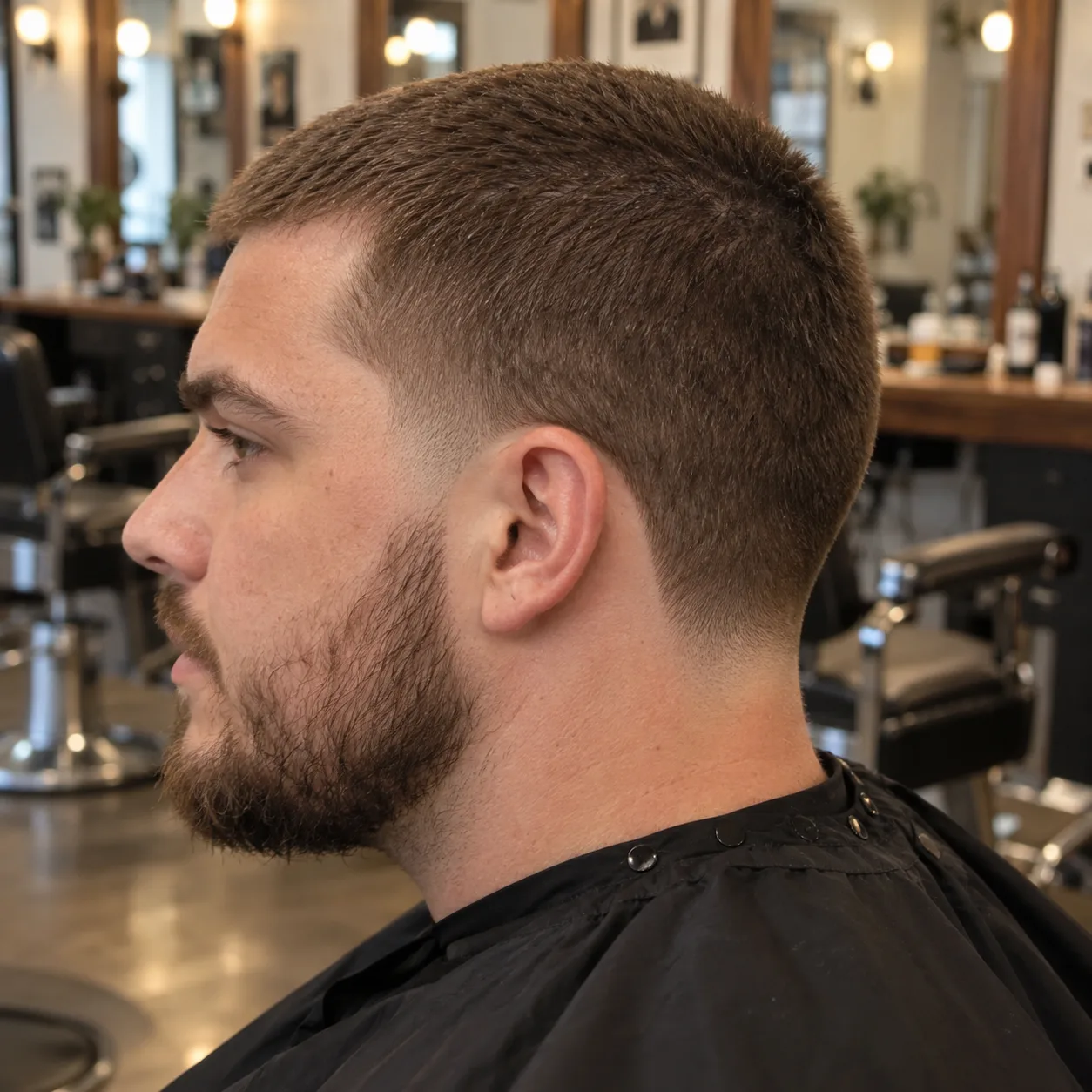
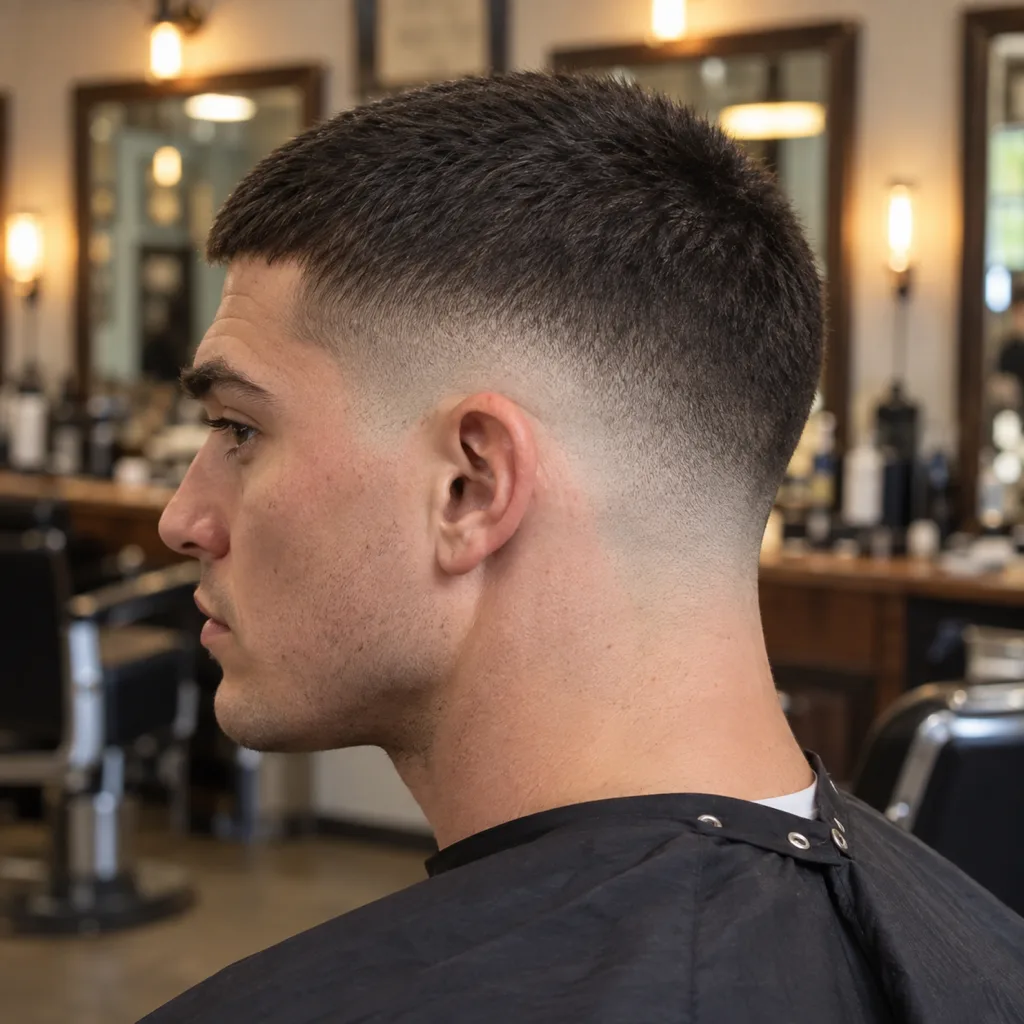
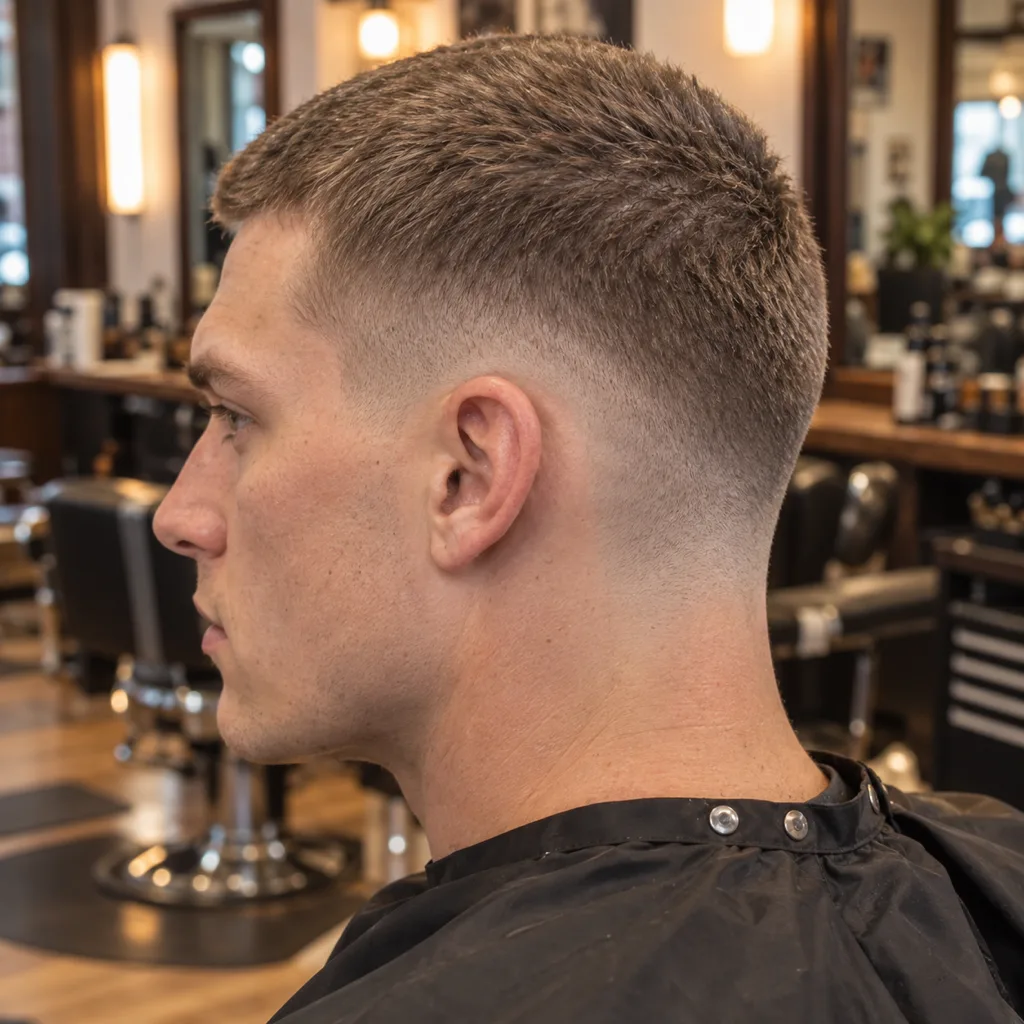
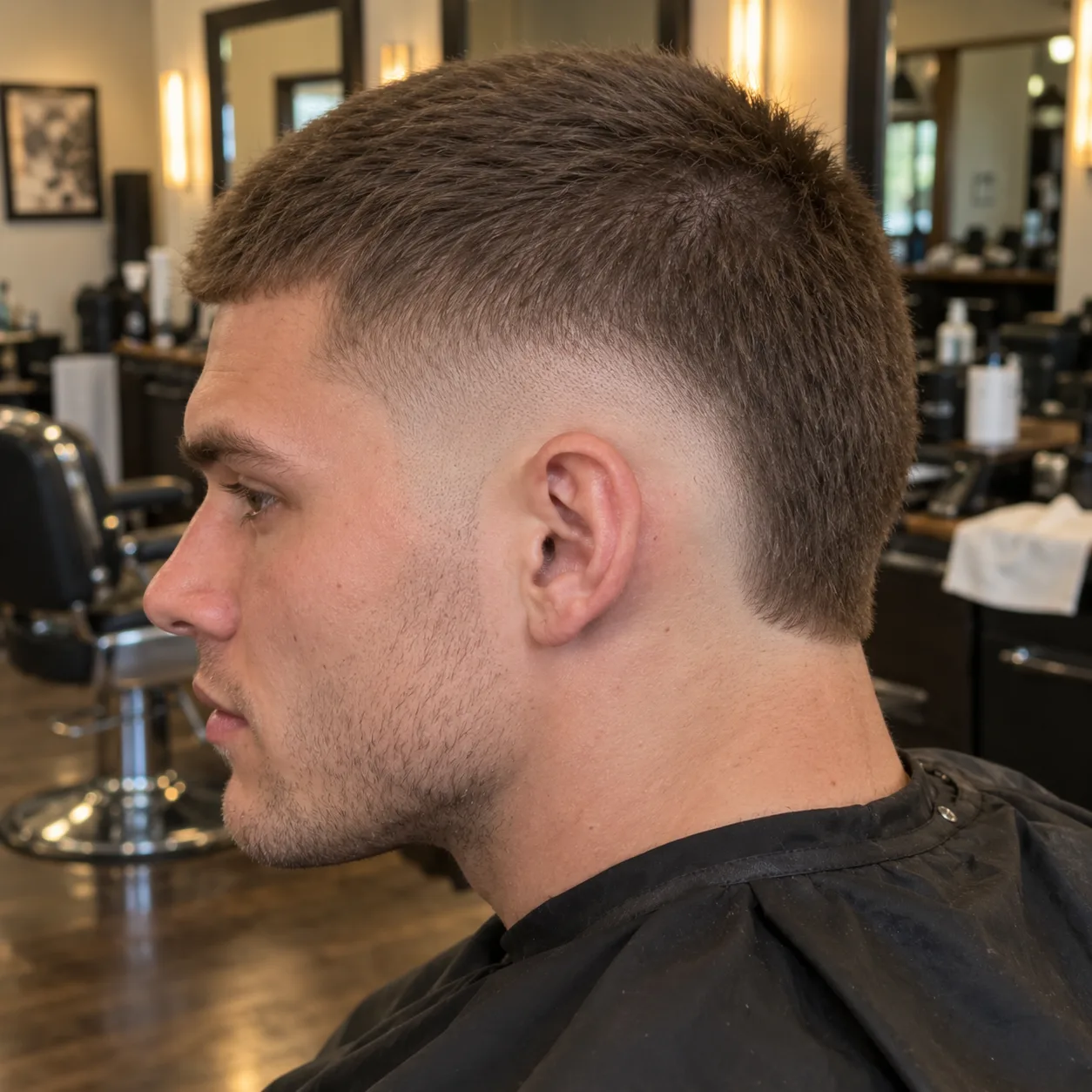
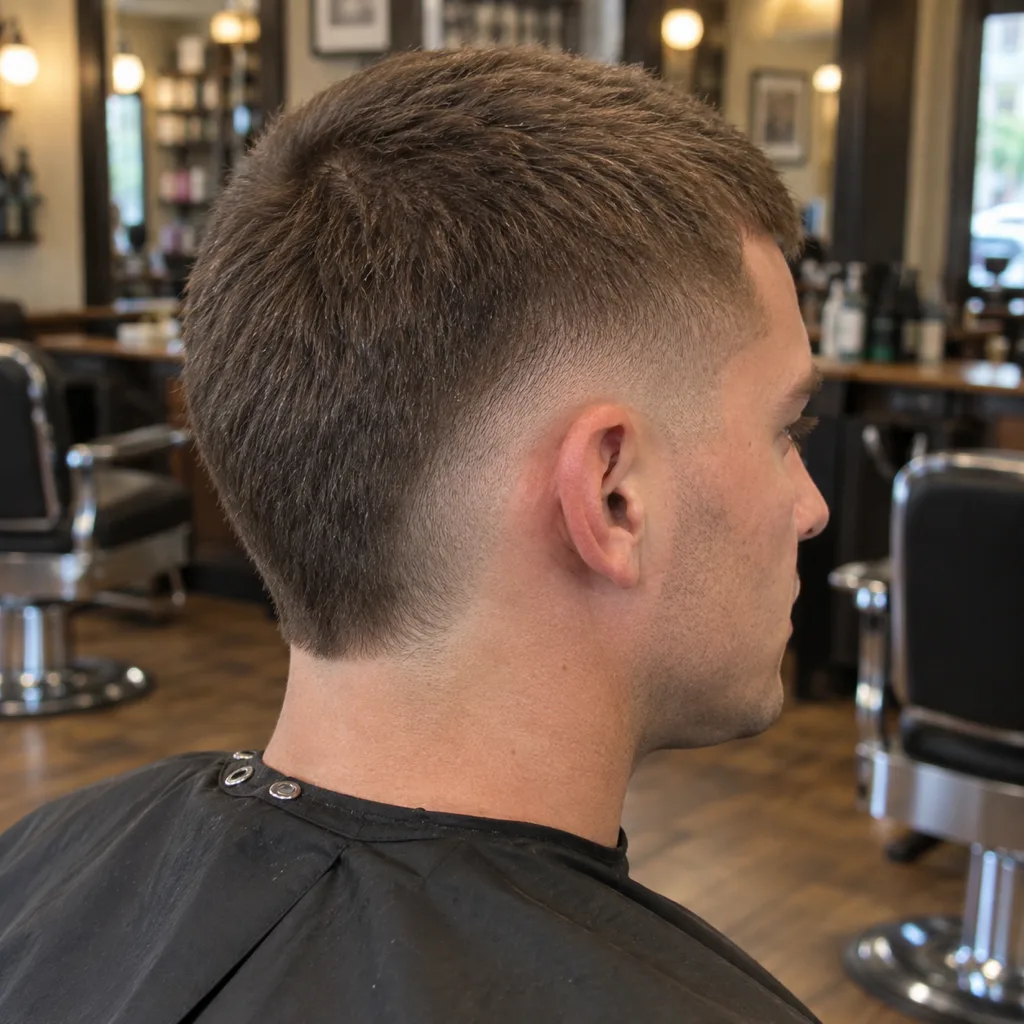
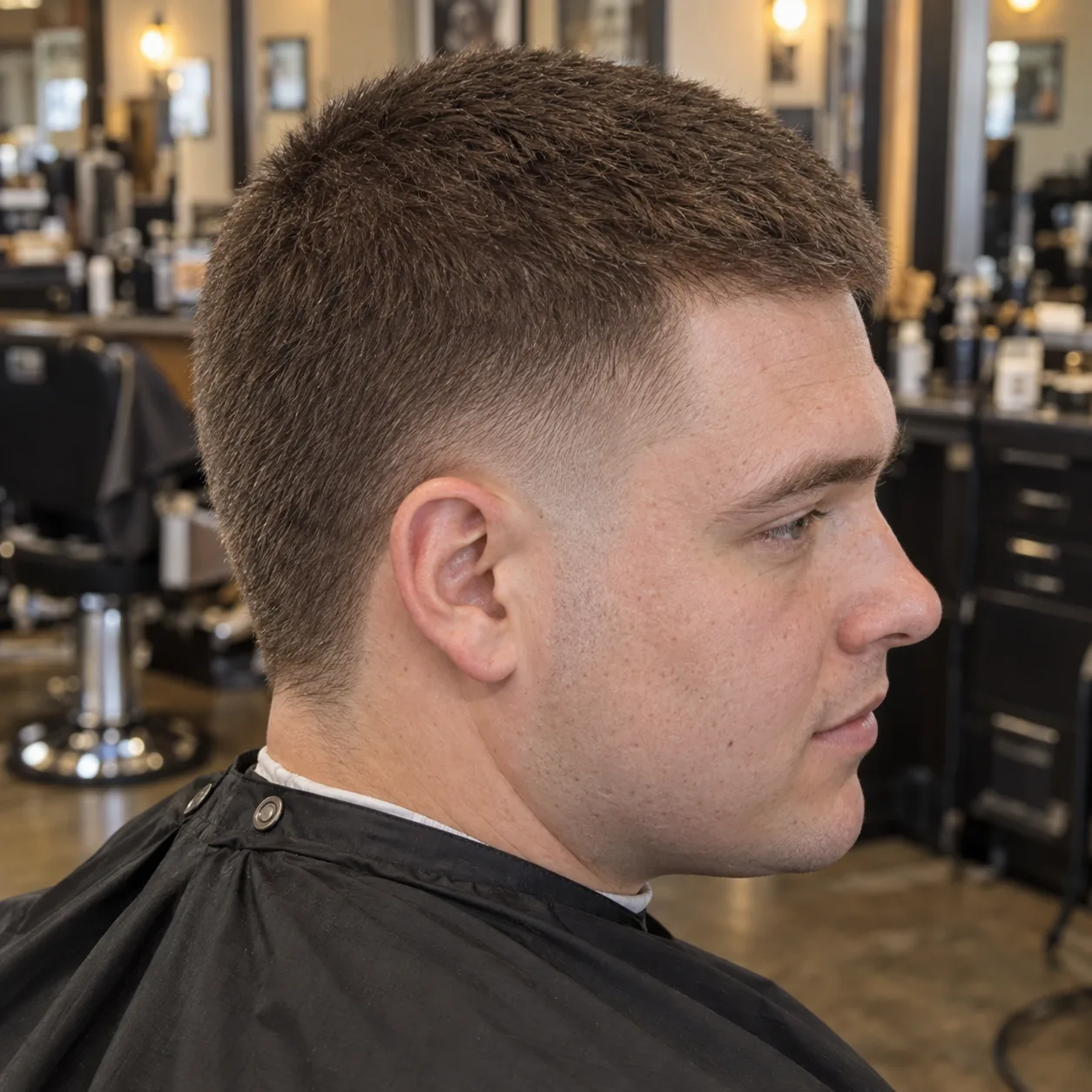
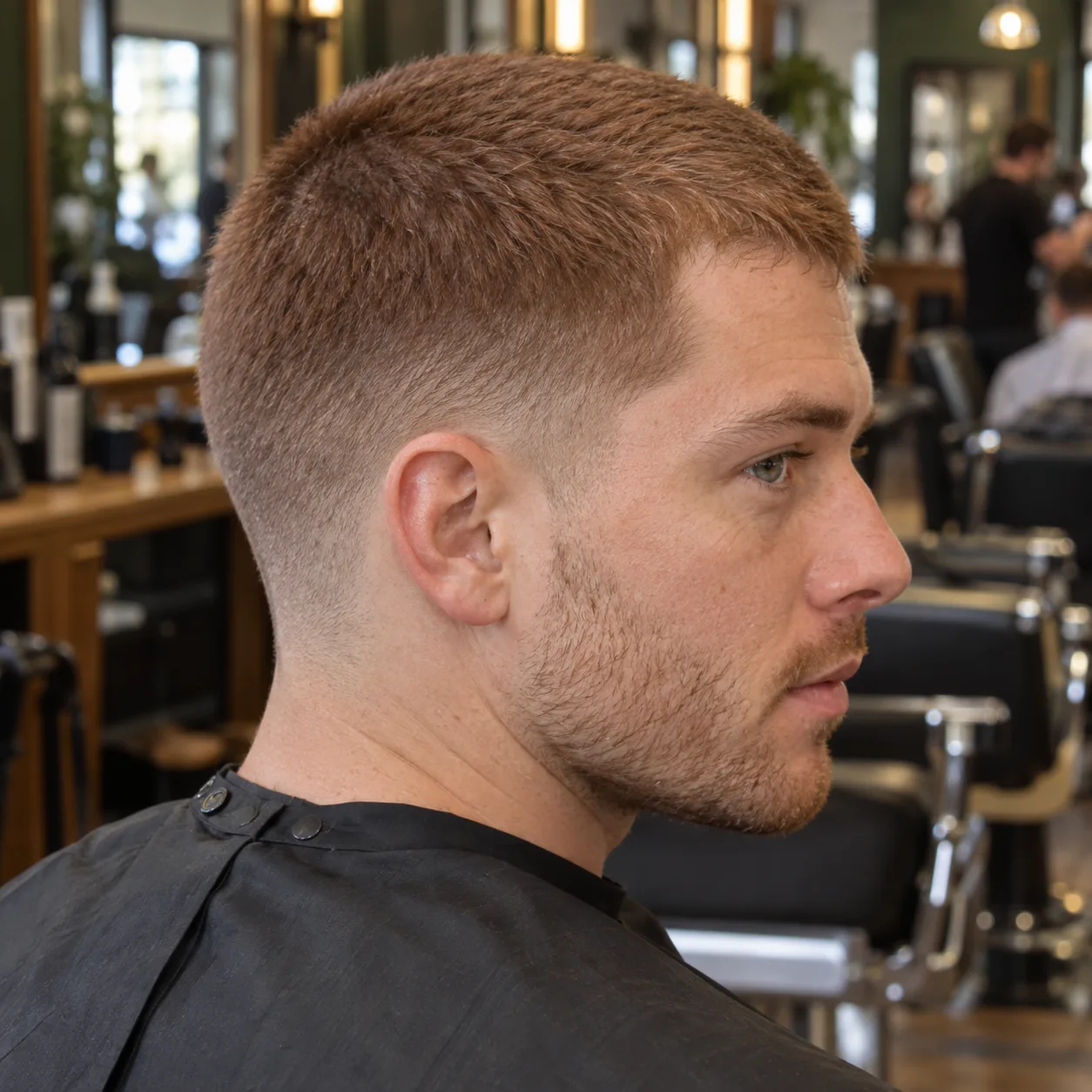
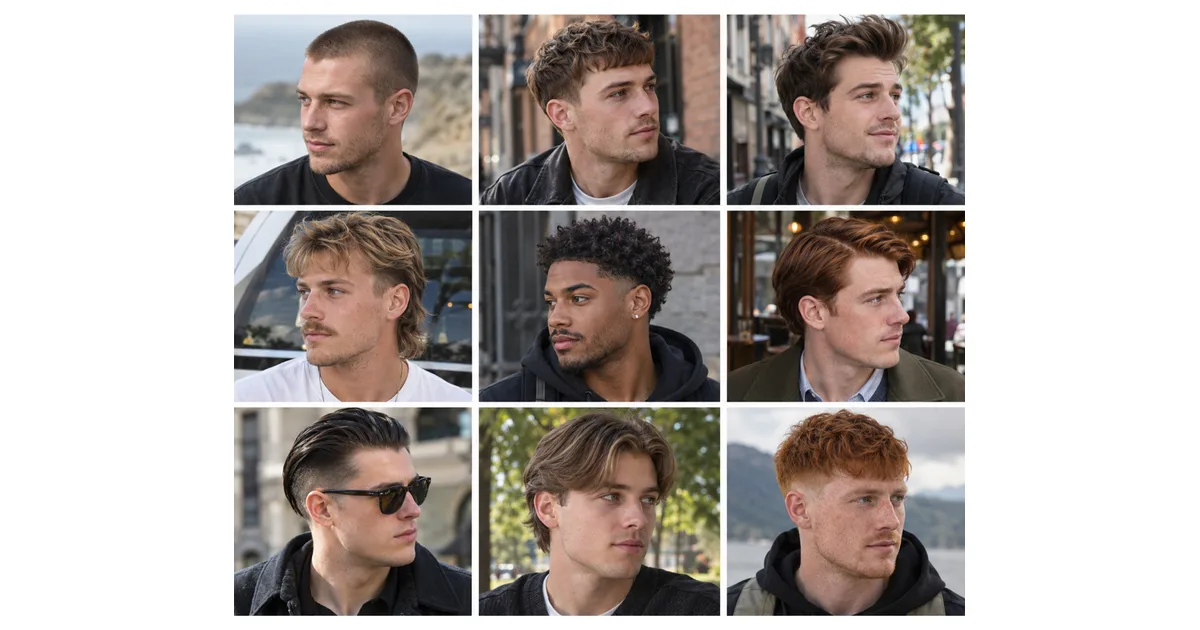
One variable across all fourteen: the fade. Every man here has the same quarter inch buzz on top, so the only thing changing is where the fade starts, how short it goes and what shape the line takes.
Gallery14 photos · tap to enlarge
 Try this on me
 Try this on me
 Try this on me
 Try this on me
 Try this on me
 Try this on me
 Try this on me
 Try this on me
 Try this on me
 Try this on me
 Try this on me
 Try this on me
 Try this on me
 Try this on me
The quick read: low and taper versions keep the head close to its natural shape, mid is the default most barbers will give you, high versions are the most dramatic and the most work. Drop and burst fades change the shape of the line, not its height. A burst leaves the back full, which is the same move that sits under every mullet fade.
Yours could be here.
Start with one selfie.
One photo, twenty seconds, and you'll know. Free account, no card for your first render.
Low, Mid or High: Which Height to Pick
Pick by what you want the haircut to do to your head shape, then check it against how often you will go back.
| Fade | Starts at | Effect on the head | Recut every |
|---|---|---|---|
| Taper | Sideburns and nape only | Almost none, just tidy edges | 4 weeks |
| Low fade | Just above the ear | Slightly narrower, still natural | 3 to 4 weeks |
| Mid fade | Temple height | Clearly narrower and longer | 2 to 3 weeks |
| High fade | Top of the side of the head | Much longer, very sharp | 2 weeks |
The low fade is the safe choice and it grows out into a normal buzz without anyone noticing. The mid fade is what you get when you just say "buzz cut with a fade", and for most people it is the right answer. A high fade on a buzz cut pushes toward a military look, and if you take the sides almost to skin all the way up with no blend you have a high and tight.
Which Buzz Cut Fade Suits Your Face Shape
A buzz cut hides nothing, so face shape matters more here than with almost any other cut. With no hair on top to add height, the fade height is the only tool you have to change proportions.
| Face shape | Best fade | Why |
|---|---|---|
| Round | Mid or high skin fade | Tight sides take width off the widest part of the face |
| Oval | Anything | Balanced already, pick by upkeep |
| Long or narrow | Low fade or taper | A high fade makes the face look even longer |
| Square | Mid or high | A strong jaw carries the contrast |
| Heart or diamond | Low to mid shadow fade | Keeps some width at the temples where the face narrows |
Round face

A buzz cut on a round face works better than people expect, as long as the sides are tighter than the top. The mistake is a plain buzz, one length all over, which adds width exactly where you have it. Go mid or high, take it to skin, and keep the top at a number 2 or 3 rather than shorter, so there is still a little contrast up there.
Long or narrow face

The opposite problem. A high skin fade strips the sides and makes a long face longer. Keep weight on the sides with a low fade or just a taper at the edges, and the head reads wider and better balanced.
Not sure which one you are?
Most people guess their face shape wrong, usually calling an oval face round. Measure it instead of guessing.
Measure it instead of guessing
Both numbers in the same unit — the answer is a ratio, so it does not matter which.
Under 1.15 reads round, 1.15 to 1.5 reads oval, over 1.5 reads long. Oval and long split on the jaw rather than the ratio: an oval tapers toward the chin, a long face runs straight down.
Receding Hairline and Thinning Hair

A buzz cut is the best haircut there is for a receding hairline, because short hair everywhere means there is no long hair next to the recession to make it obvious. The fade is where it can go wrong.
The rule is contrast. Bare skin on the sides next to a longer, thinning top advertises the thinning. In the picture the fade is high, but the top is so short that sides and top read as one value, and the receding corners barely register. So if your hairline is going, take the top down to a number 1 or 2 first. If you want to keep more length on top, keep the fade low and stop it at stubble rather than skin. Check what your hairline will look like in a year with the hairline preview before you commit to a high fade.
What a Good Blend Looks Like
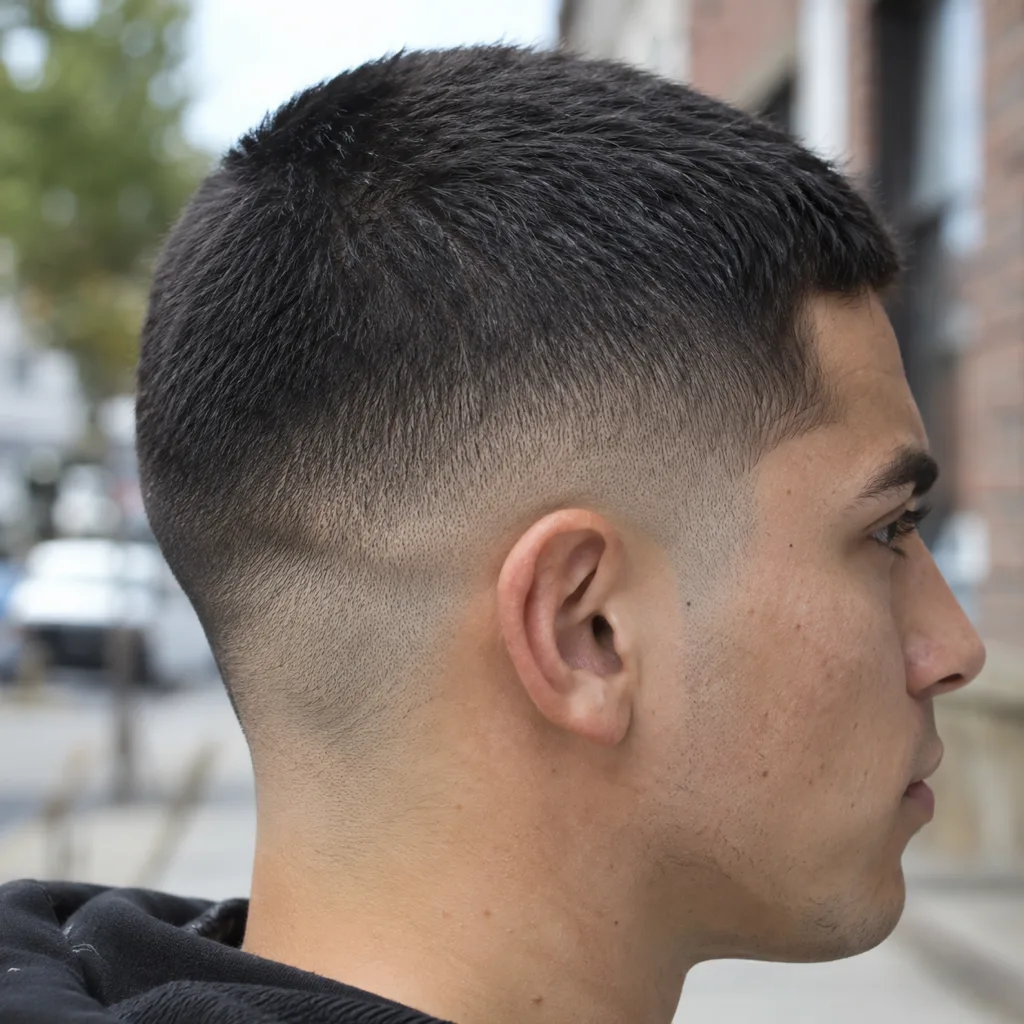
Look at the side of the head under even light. A good fade has no visible line anywhere, no band of one shade sitting on top of another, and both sides start at the same height. If you can see where one guard stopped and the next began, it needs another pass.
5 Mistakes That Ruin a Buzz Cut Fade
Going too short on top with a skin fade. A number 1 on top over a skin fade has almost no contrast, so the fade barely reads. If you want a visible fade, keep the top at a number 2 or longer.
Picking a high fade you cannot keep up. A high skin fade looks sharp for about ten days. On a monthly schedule you spend half the month with a fuzzy, uneven line.
Fading at home without a second mirror. You cannot see the back of your own head, and the nape is where uneven home fades show worst. Do the top and sides yourself if you want, and leave the fade to a barber.
Skin fade on a sensitive neck. Shaving the same strip every two weeks irritates the skin. The American Academy of Dermatology lists folliculitis as a common result of shaving and close clipping. If your nape breaks out, ask for a shadow fade instead.
Saying "short" instead of a number. "Short on top" can mean anything from a number 1 to two inches. Barbers work in guard numbers, so say the number.
How to Ask for a Buzz Cut Fade
How to ask for a buzz cut fade
- Give the top a guard number
"Number 2 on top" or "number 3 on top". If you have never had a buzz cut, start at a 3. You can always go shorter in the chair, never longer.
- Name the height against a landmark
Point at your head. Just above the ear is low, the temple is mid, where the side turns into the top is high. Landmarks beat adjectives.
- Say skin or no skin
"Skin fade" or "bald fade" means bare scalp at the bottom. "Shadow fade" or "leave a number half at the bottom" means it stops at stubble. Say which one before the clippers start.
- Ask for the line up, or not
A line up squares off the front hairline and the corners with a trimmer. It looks sharp for a week and grows out fuzzy. If you will not keep it up, skip it.
Say this to your barber
Buzz cut with a mid skin fade please, number 2 on top, blended to skin starting at the temple, natural hairline, no line up.
The same script works for every variation in the fade haircut guide, just swap the height and the length.
Can You See a Buzz Cut Fade on Yourself First?
Yes, and a buzz cut is the cut worth checking, because you cannot add a half inch back. The free method: find photos of yourself with your hair pushed flat or wet, and compare your head shape against a few of the gallery shots above. It catches the big things, like whether your head is flatter at the back than you thought.
Where it hits a wall is the fade. You are comparing your head to someone else's, and the right fade height depends on your skull, your hairline and your face width, not theirs. Nobody can picture that accurately.
That is the gap HairstyleAtlas fills. Upload one photo and see the buzz cut on your own head before you sit down, at the buzz cut filter or straight from the button below. The first look is free, needs no card and shows the front view. Plus is $9 a month for every cut and color, and seeing the side and back angles, where the fade lives, is in Pro at $24 a month. Both cancel in two clicks with a seven day refund.
Start with a number 2 or 3 on top and a mid fade, because that is the version that suits the most heads and still grows out cleanly. Go higher only if your face is round or square and you will be back in the chair every two weeks. Keep it low and soft if your face is long or your hairline is going.
If you want something you can leave alone for a month, compare it against the low taper fade before you book.
Frequently asked questions
A mid fade suits most people: it narrows the head without the upkeep of a high fade. Go low or taper if your face is long or you only get cut once a month, and go high if your face is round or square and you are happy with recuts every two weeks.
No. A buzz cut is about length: one short clipper guard on top. A fade is about the sides and back blending shorter toward the skin. You can have a buzz cut with no fade, a fade with longer hair on top, or both together, which is a buzz cut fade.
For most heads, yes. A plain buzz makes the sides look wider than they are, and a fade takes that width off. The trade is upkeep: a plain buzz looks fine for a month, a fade starts losing its blend after one to three weeks.
It means a number 3 guard on top, a number 2 on the sides and a number 1 around the bottom and neckline. It is an easy way to get a tapered buzz at home, but it leaves soft lines between the guards rather than a true blended fade.
Yes, if the sides are shorter than the top. A mid or high skin fade with a number 2 or 3 on top takes width off the sides. A plain buzz with one length everywhere is the version to avoid, because it adds width exactly where a round face has it.
A number 4 guard leaves half an inch of hair. That is long enough that the scalp does not show through in most light, and it is a good starting point if you have never had a buzz cut and want to keep a fade looking soft.
Give three things: the guard number for the top, the fade height against a landmark (ear, temple or the top of the side), and whether it goes to skin. For example: "Number 2 on top, mid skin fade starting at the temple, no line up."
Buzz the whole head with the top guard first, then go one guard shorter on the sides below your chosen line, and one shorter again for the bottom inch. Flick the clipper outward as you reach each line to soften it. Use a handheld mirror for the back, and expect the result to look like a taper rather than a barber's blend.
Preview it on your own photo: Buzz Cut Filter.
Share article
About the author

More articles
Men's Haircuts · 15 min
Men's Hair Cuts: 14 Styles and the Numbers to Ask For
Every men's haircut name is shorthand for three numbers: the guard on the sides, where the short part stops, and inches on top. The 14 cuts men ask for, the guard numbers decoded, and which cut suits your face and hair.
Men's Haircuts · 14 min
Benny Blanco Haircut: The Fake Half Shave and the Real Curls
Benny Blanco did not shave half his head. It was a prosthetic bald cap, and the buzz cuts are AI. Here is what his curly mop actually is, the short version, and exactly what to tell your barber.
Men's Haircuts · 16 min
1A Hair: How to Tell If You Have It + 14 Cuts That Work
1A hair is pin-straight with no bend from root to tip. How to tell it from 1B and 1C, why it goes flat, 14 haircuts that work on it, and how to style it for volume.