High and Tight Haircut: 4 Versions and the Head Shape Rule
Oleh Onysko 28 September 2026 15 min read
In this article
A high and tight haircut is a military cut: the sides and back are clipped almost to the skin, all the way up to the widest part of your skull, and only a short patch of hair stays on top. "High" is how far up the clipped zone goes. "Tight" is how sharply it stops.
Here is the part most guides skip. Because the sides are gone up to the top of your head, this cut hides nothing about the shape of your skull. Face shape barely changes whether it works. Your head shape, your ears and how often you will sit in the chair decide almost everything.
What Is a High and Tight Haircut?
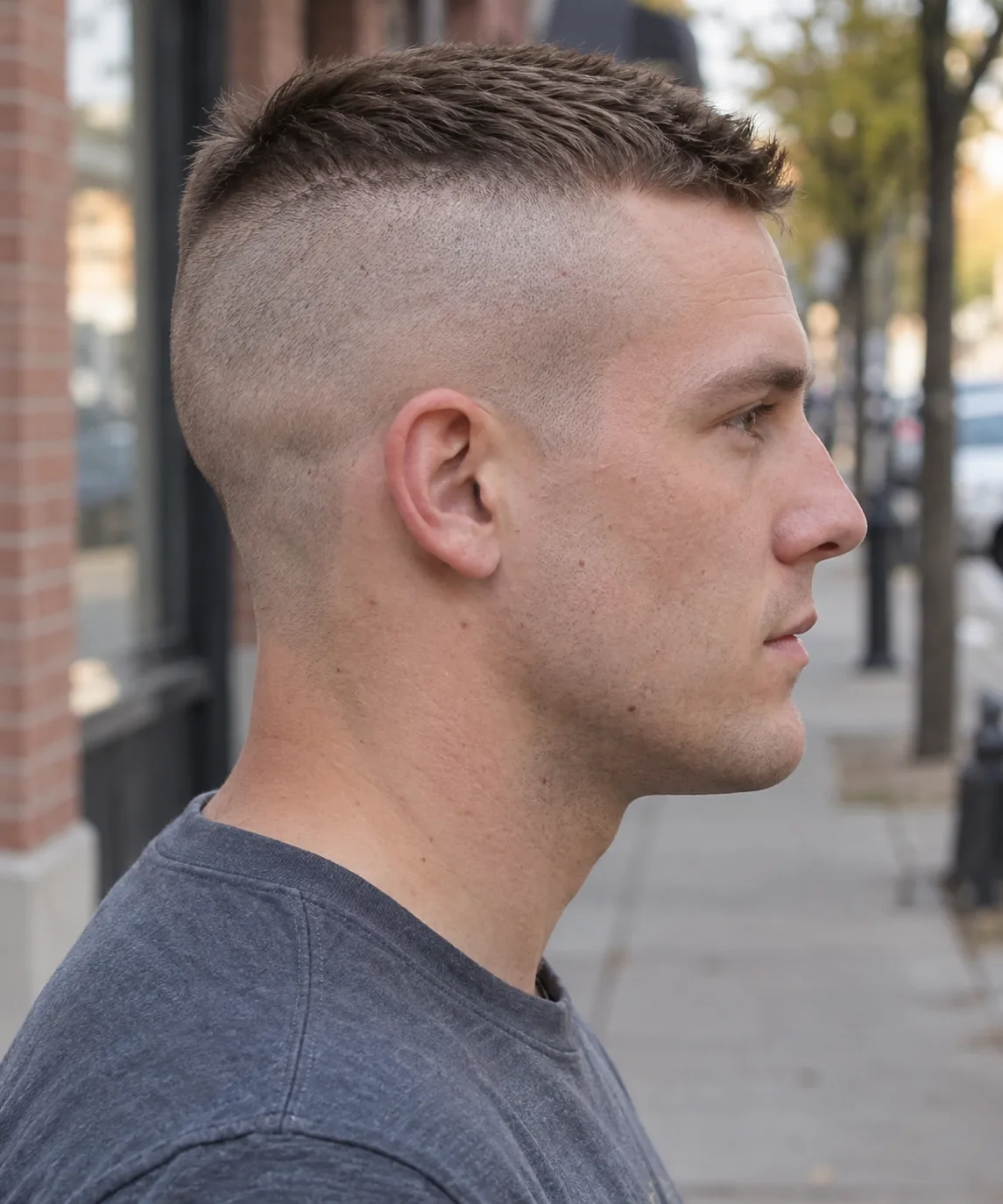
A high and tight is a very short haircut where the back and sides are clipped to 1/16 inch or less, up past the temples, with a small block of hair on top, usually 1/4 to 1 inch long. It is the classic US Marine and Army haircut, and Wikipedia describes it as a military variant of the crew cut.
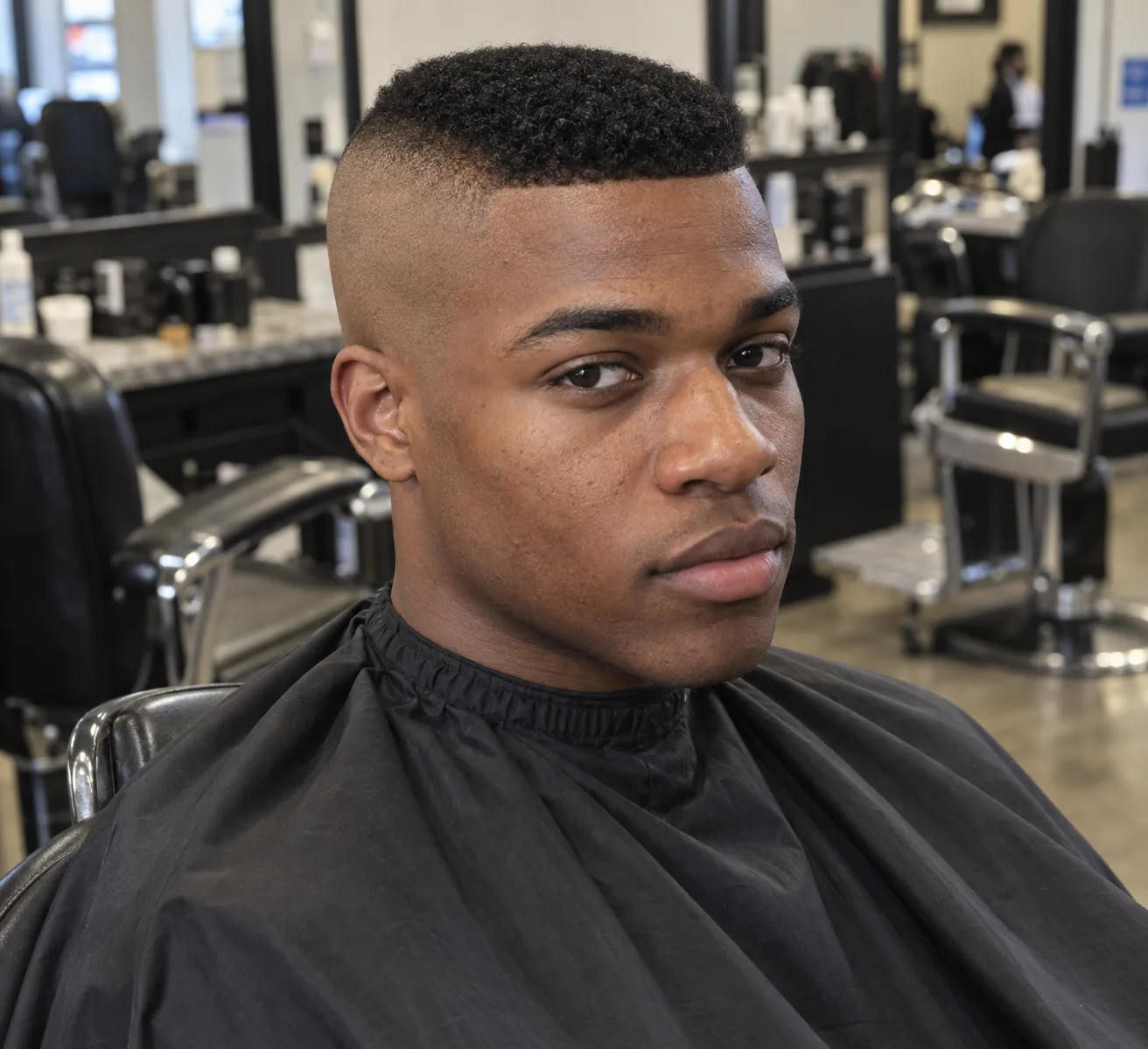
Look at the picture. The clipped zone does not stop at the ear or the temple. It climbs to the parietal ridge, the point where the side of your head curves over into the top. Above that line the hair is short, even and textured, cut clipper over comb. Between the two there is barely a transition, maybe a finger's width.
That is what separates it from the cuts people confuse it with.
| Cut | Sides | How high the short part goes | Top |
|---|---|---|---|
| High and tight | #0 or #1, scalp shows | To the top of the head | 1/4 to 1 inch, separate patch |
| Crew cut | #2 to #4, tapered | Blends gradually | 1 to 2 inches, graded front to back |
| High fade | Gradient from skin | High, but fully blended | Any length |
| Buzz cut | One length everywhere | No line at all | Same as the sides |
In plain terms: a crew cut blends and a high and tight contrasts. A high fade blends too, just higher up. If you want the smooth gradient, you want a fade haircut, not this.
Why Your Head Shape Matters More Than Your Face
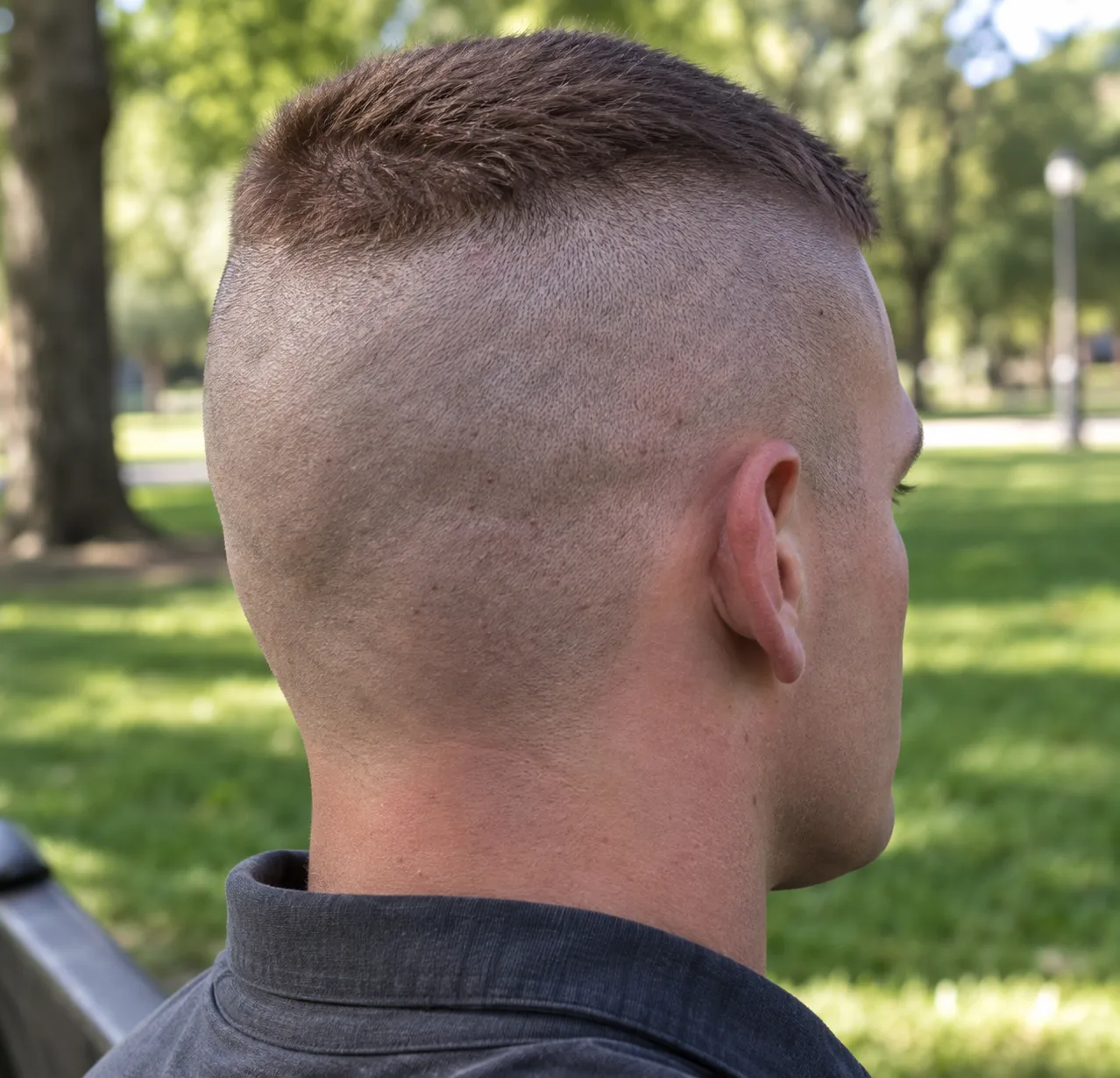
Most haircuts give you a layer of hair to shape. A high and tight takes that layer away. What is left is your skull, seen from the side and the back, which is exactly the view you never check in the mirror.
The picture above shows a good candidate: an even, rounded back of the head with no flat spot at the crown. On a head like that, the classic version looks sharp from every angle.
Three things change the answer:
- A flat back of the head. Clipped to a #0, the flat plane shows. Keep the back at a #1 or #2 and it softens.
- Bumps, ridges or scars. Anything on the scalp becomes visible. A barber can see this before cutting; ask them to feel the back of your head first.
- Ears that stick out. Close sides frame the ears. It is not a dealbreaker, but it becomes one of the first things people notice.
Face shape still matters a little. A very long face gets longer with height on top, so keep the top flat. A round face benefits from the tight sides. But between a flat-backed head and a round face, the flat back is the bigger problem.
14 High and Tights on 14 Different Heads
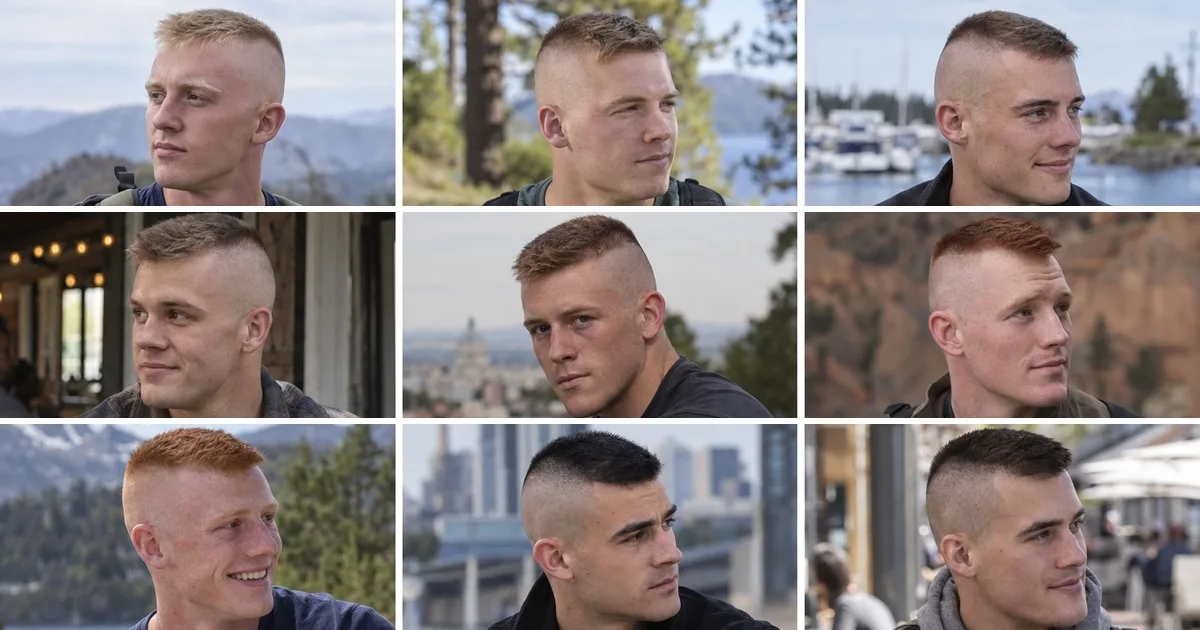
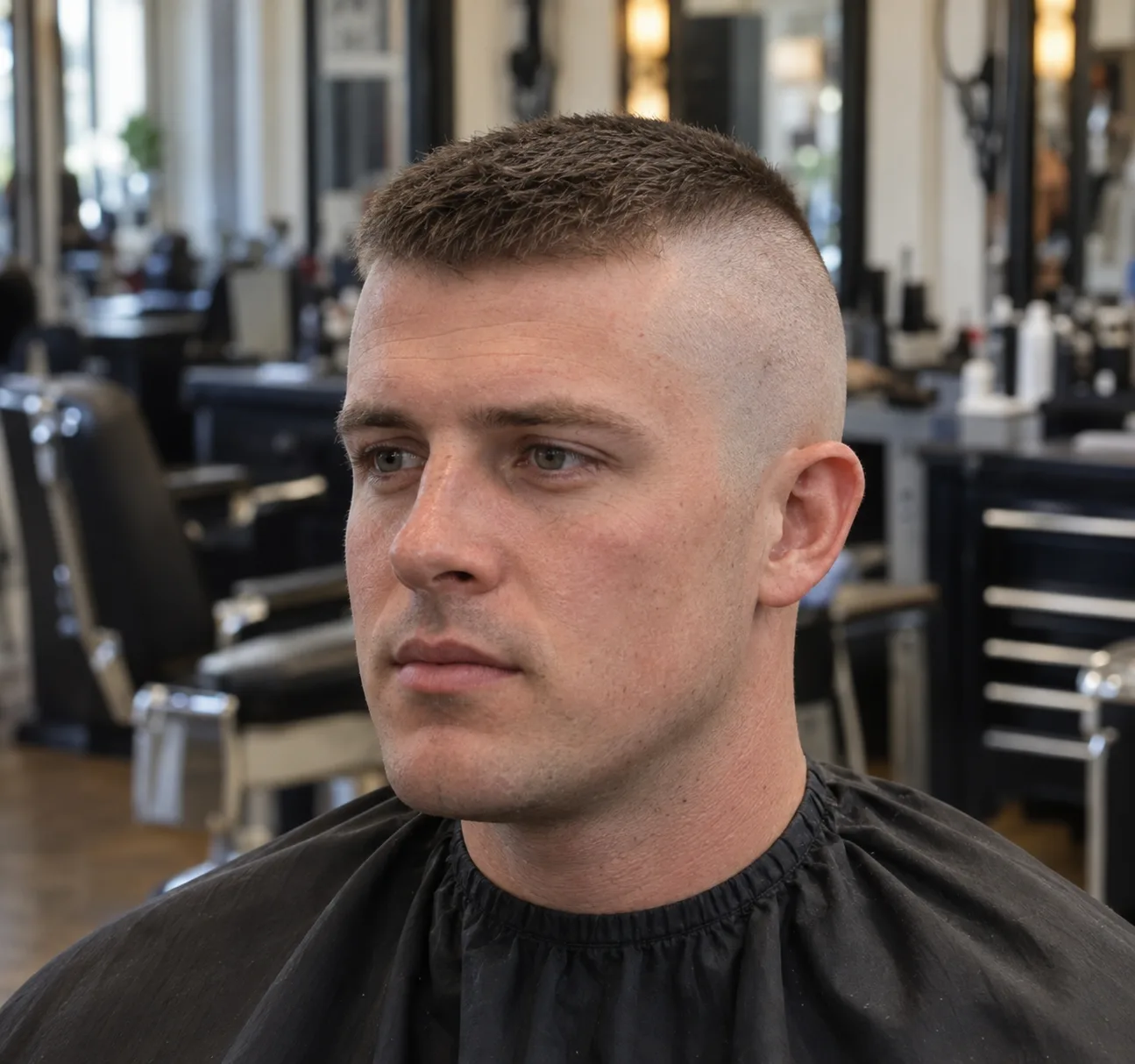
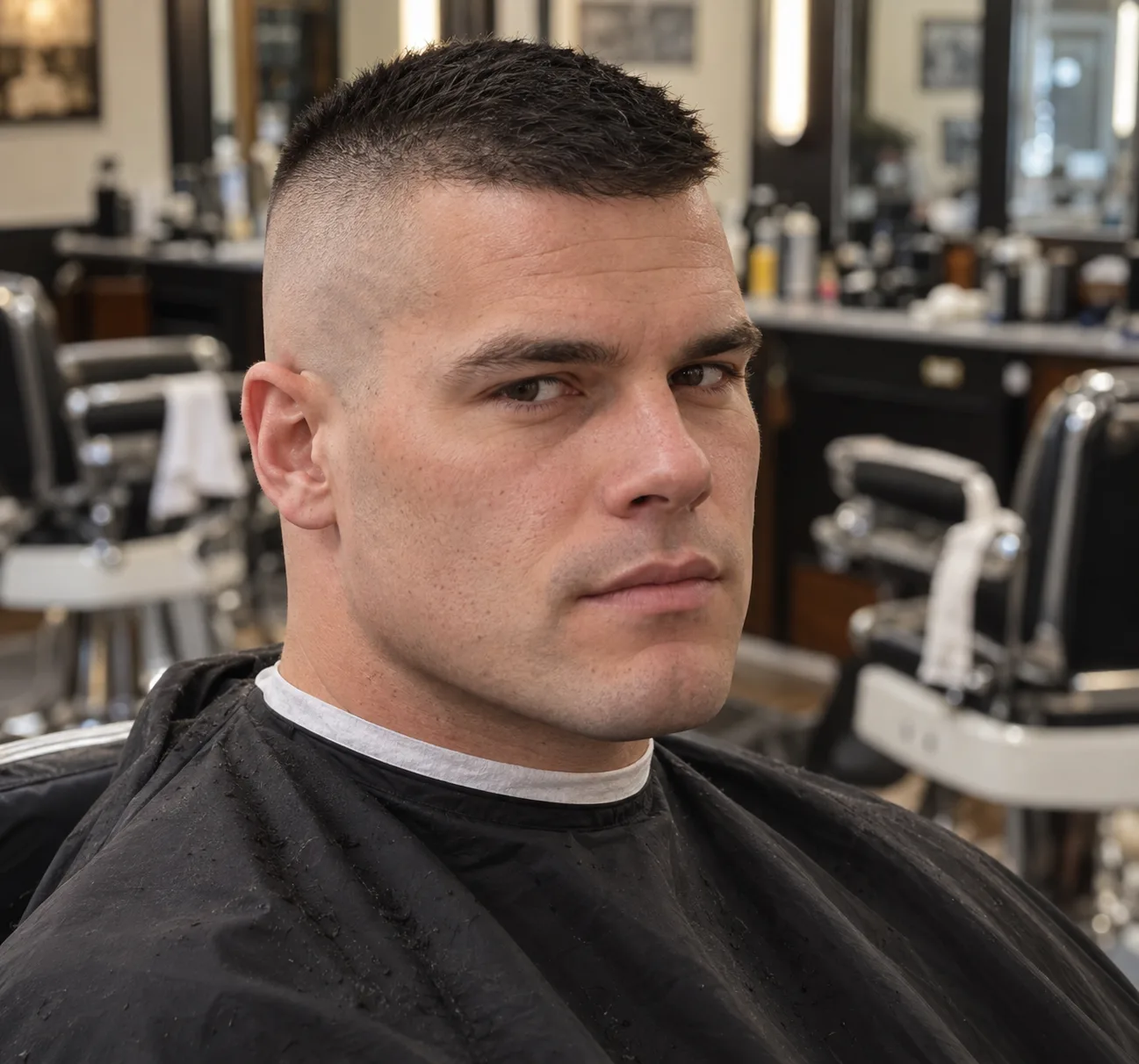
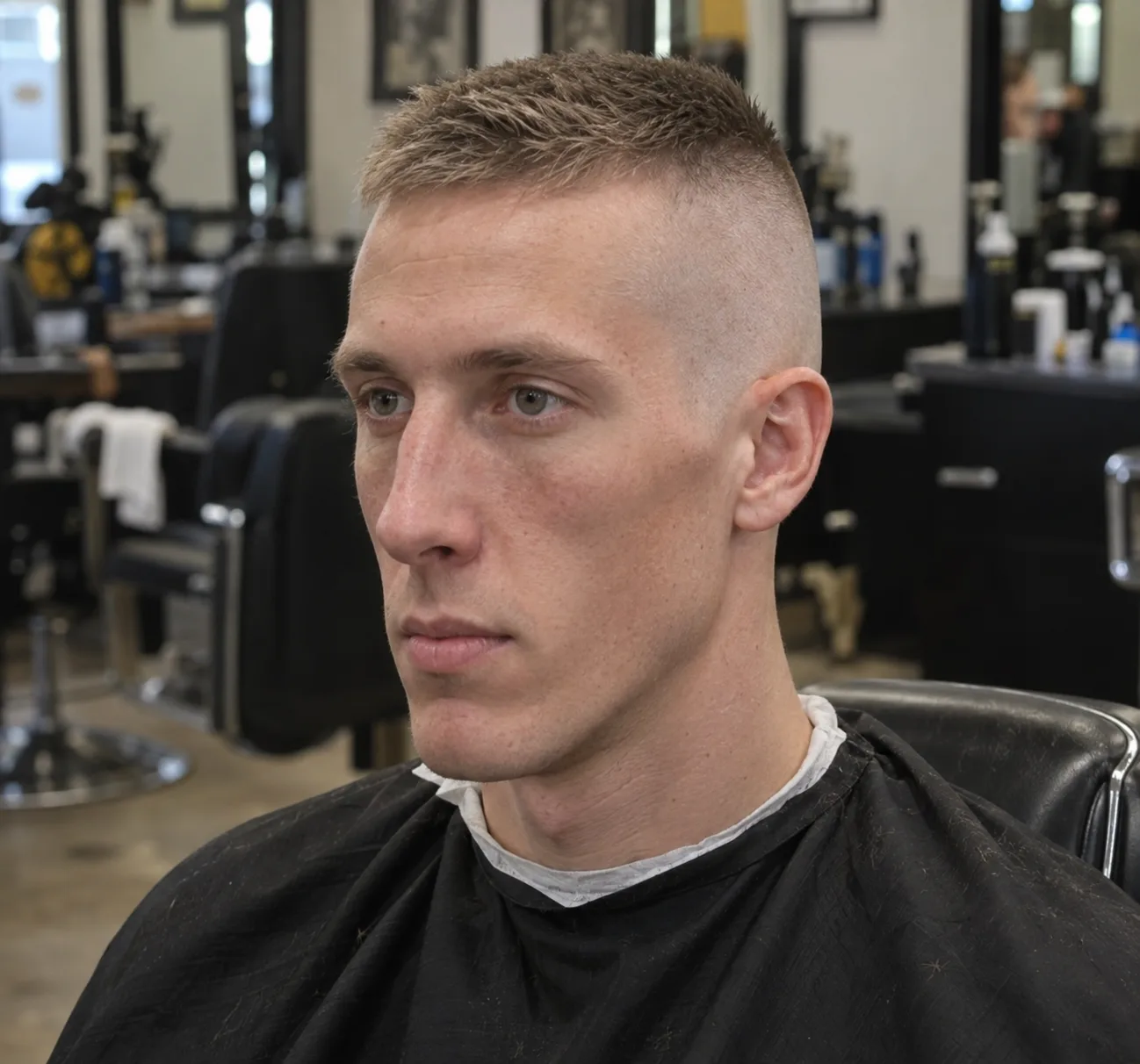
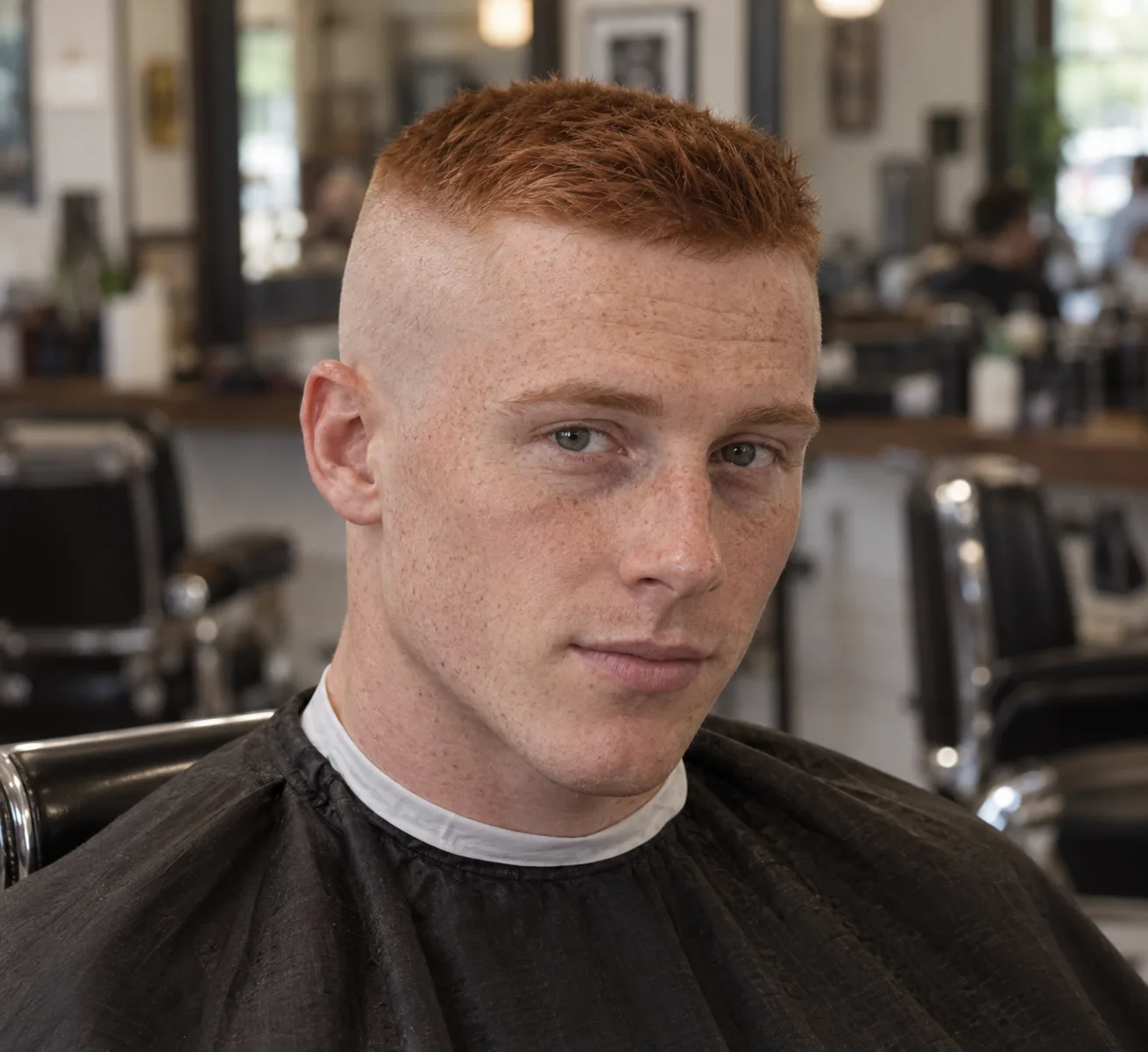
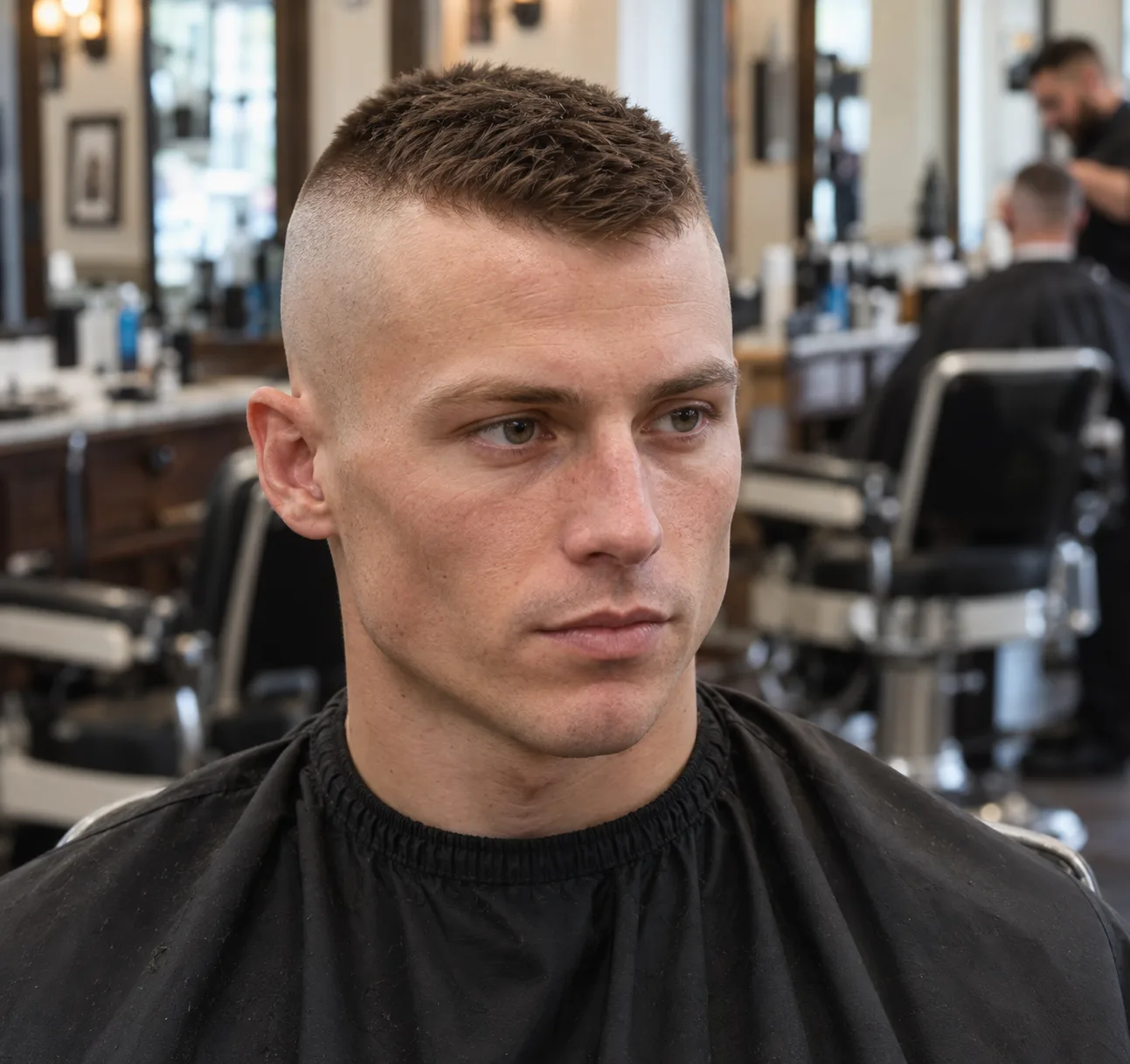
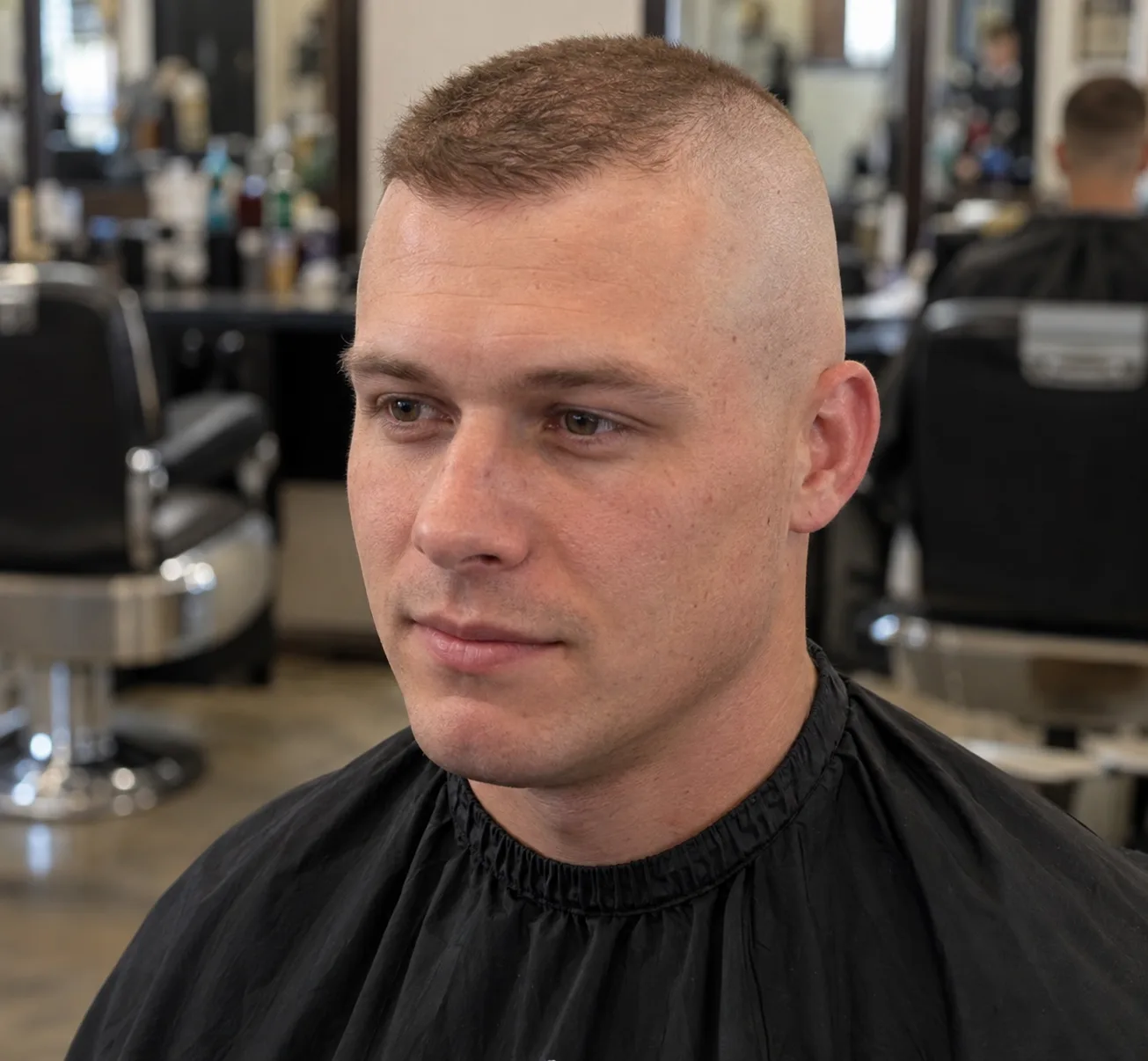
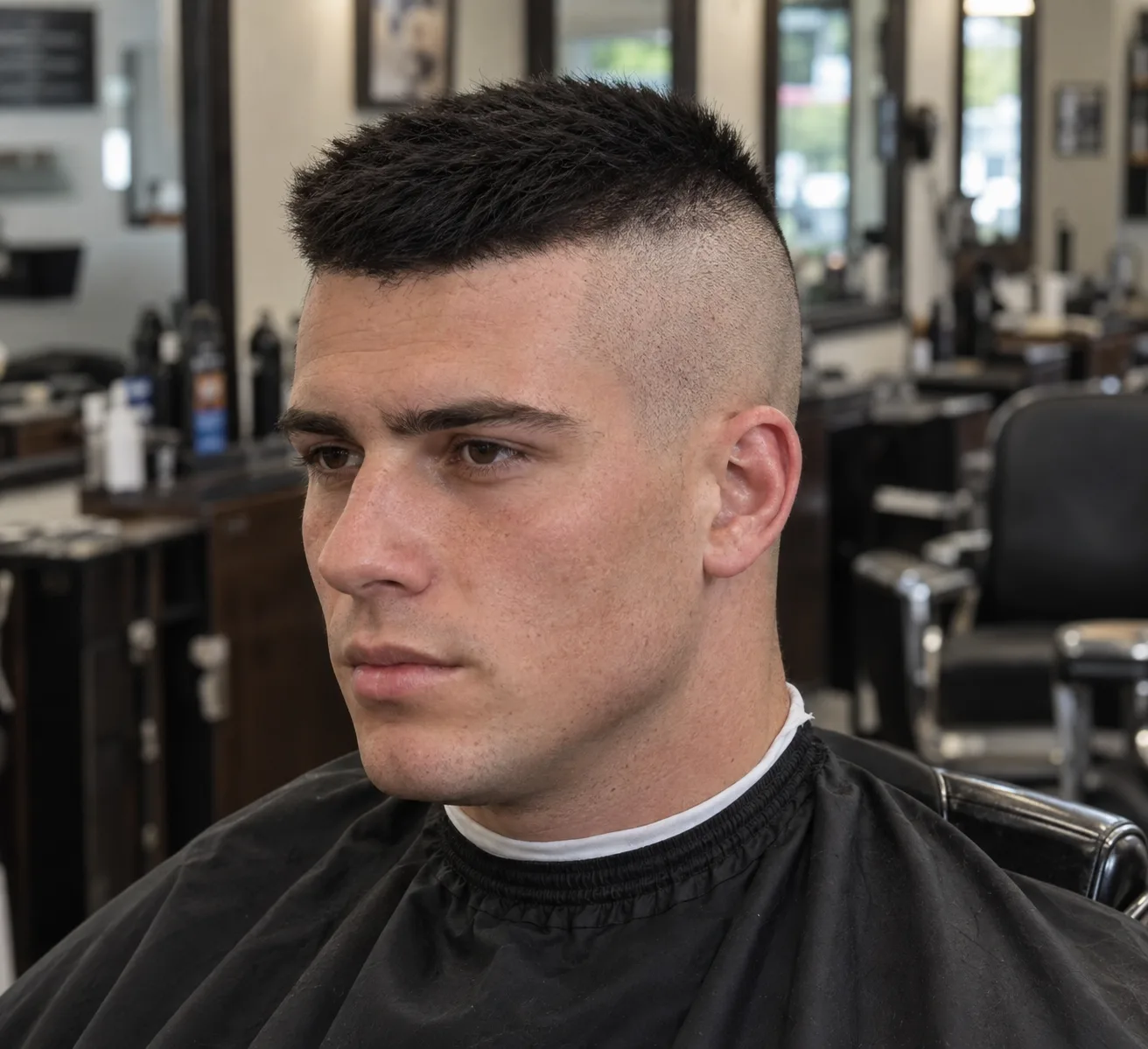
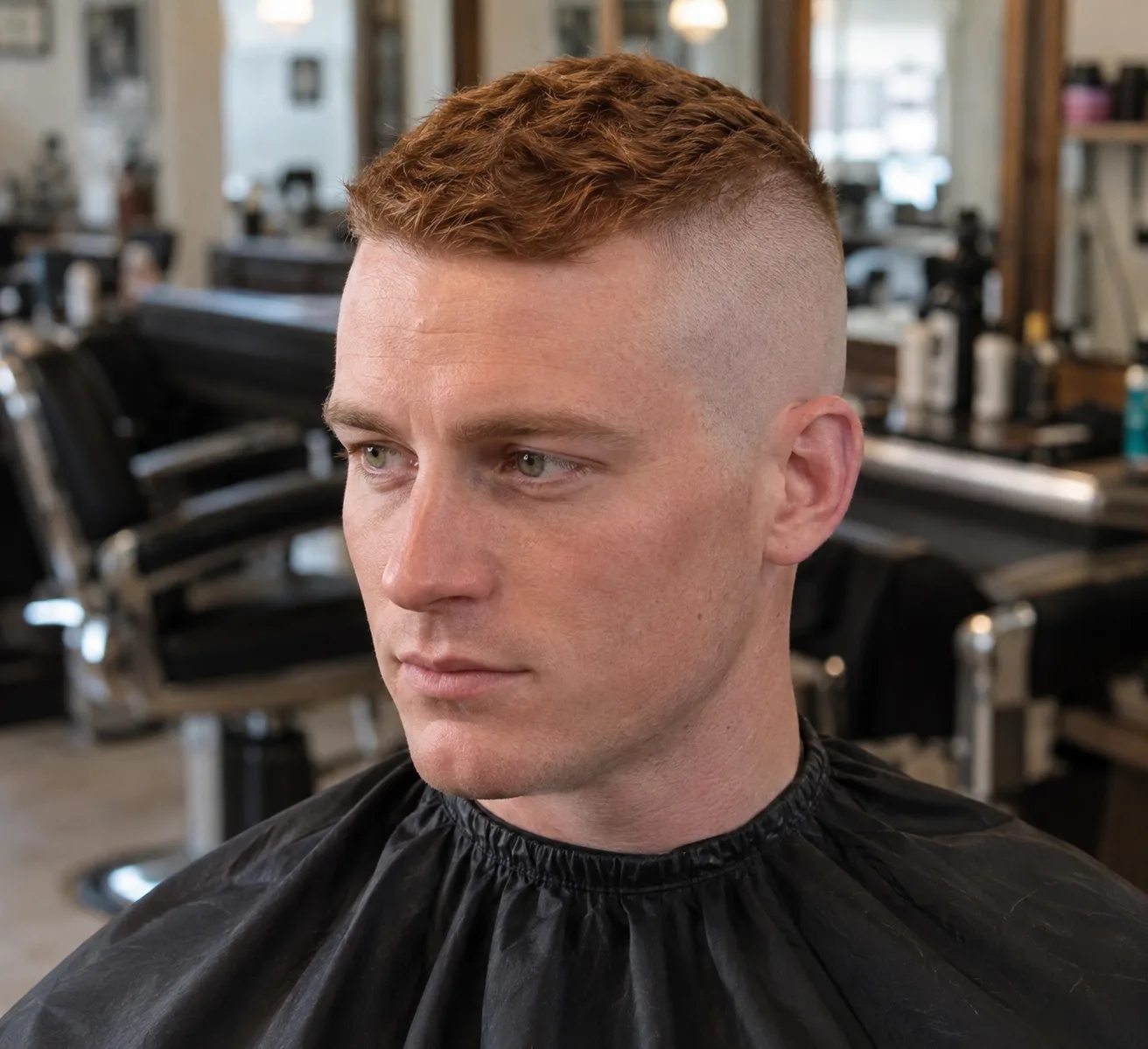
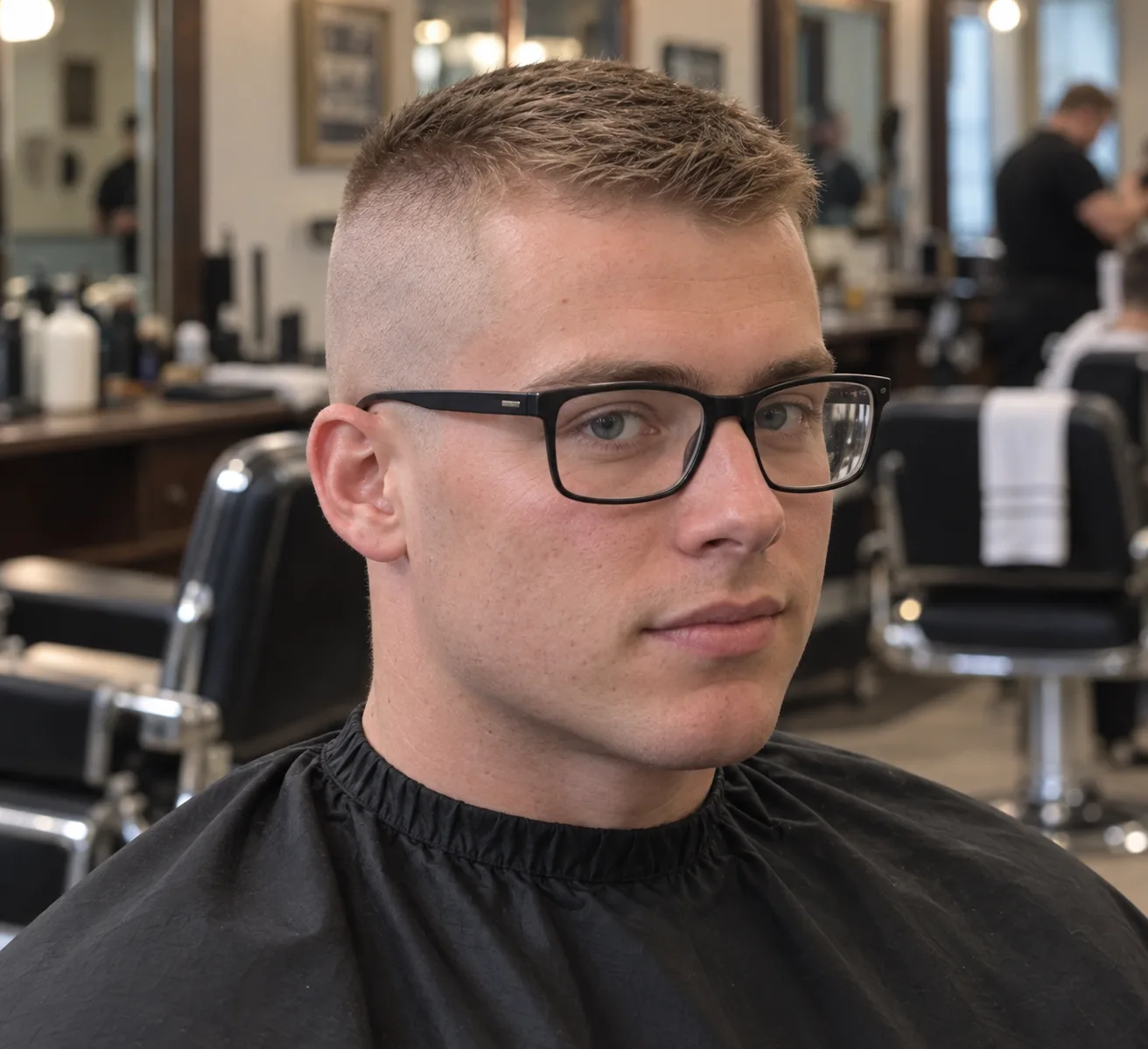
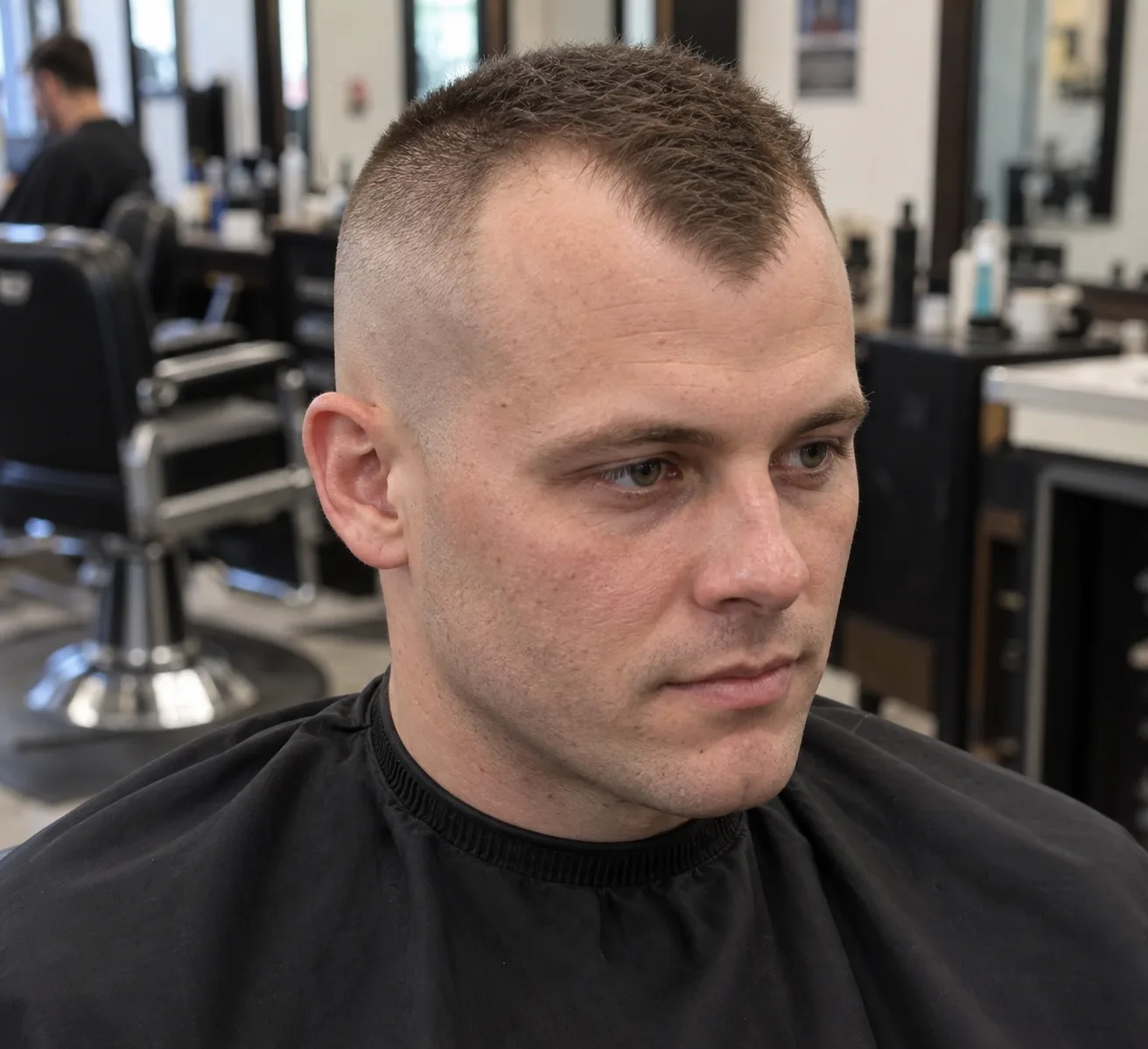
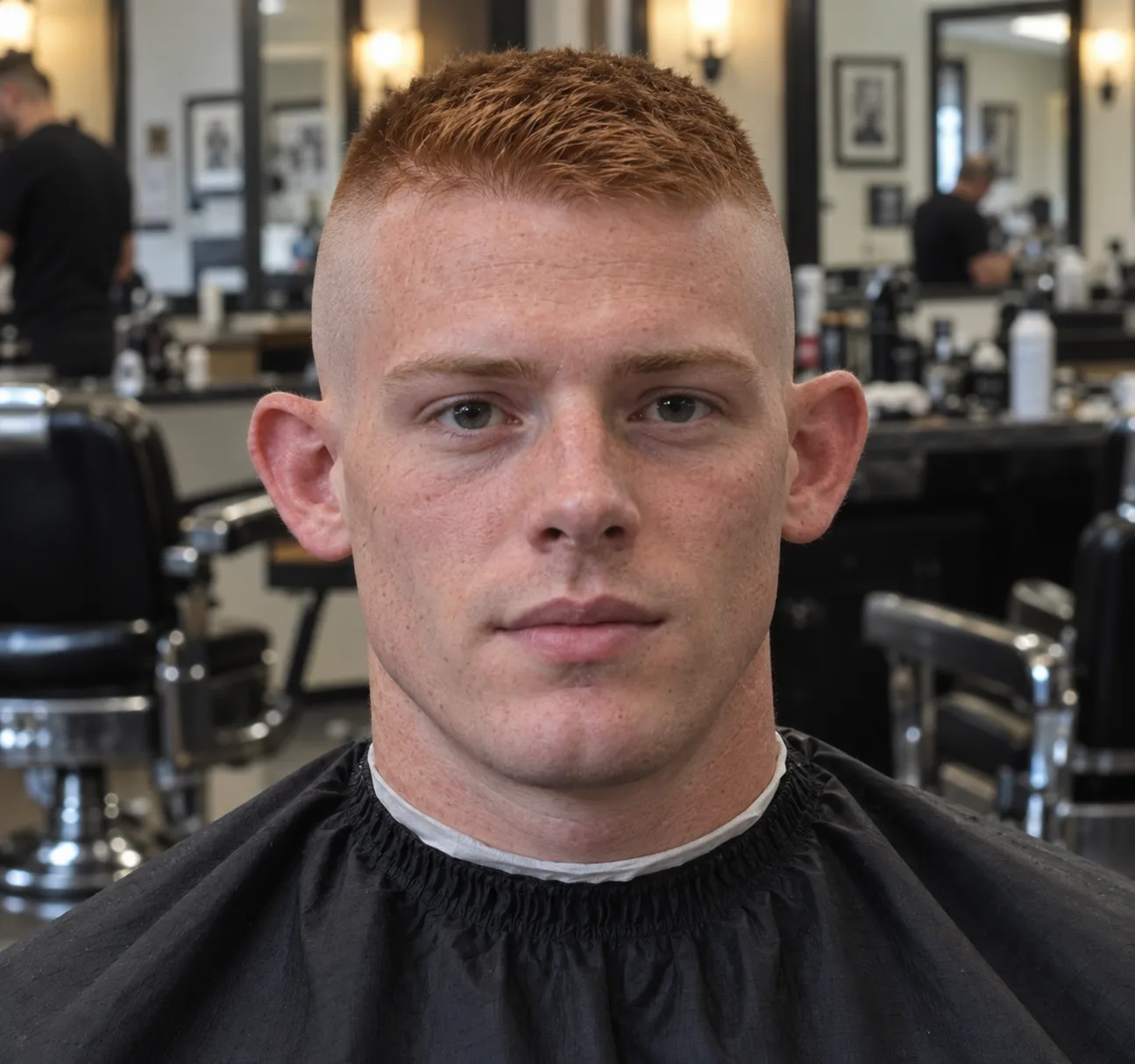
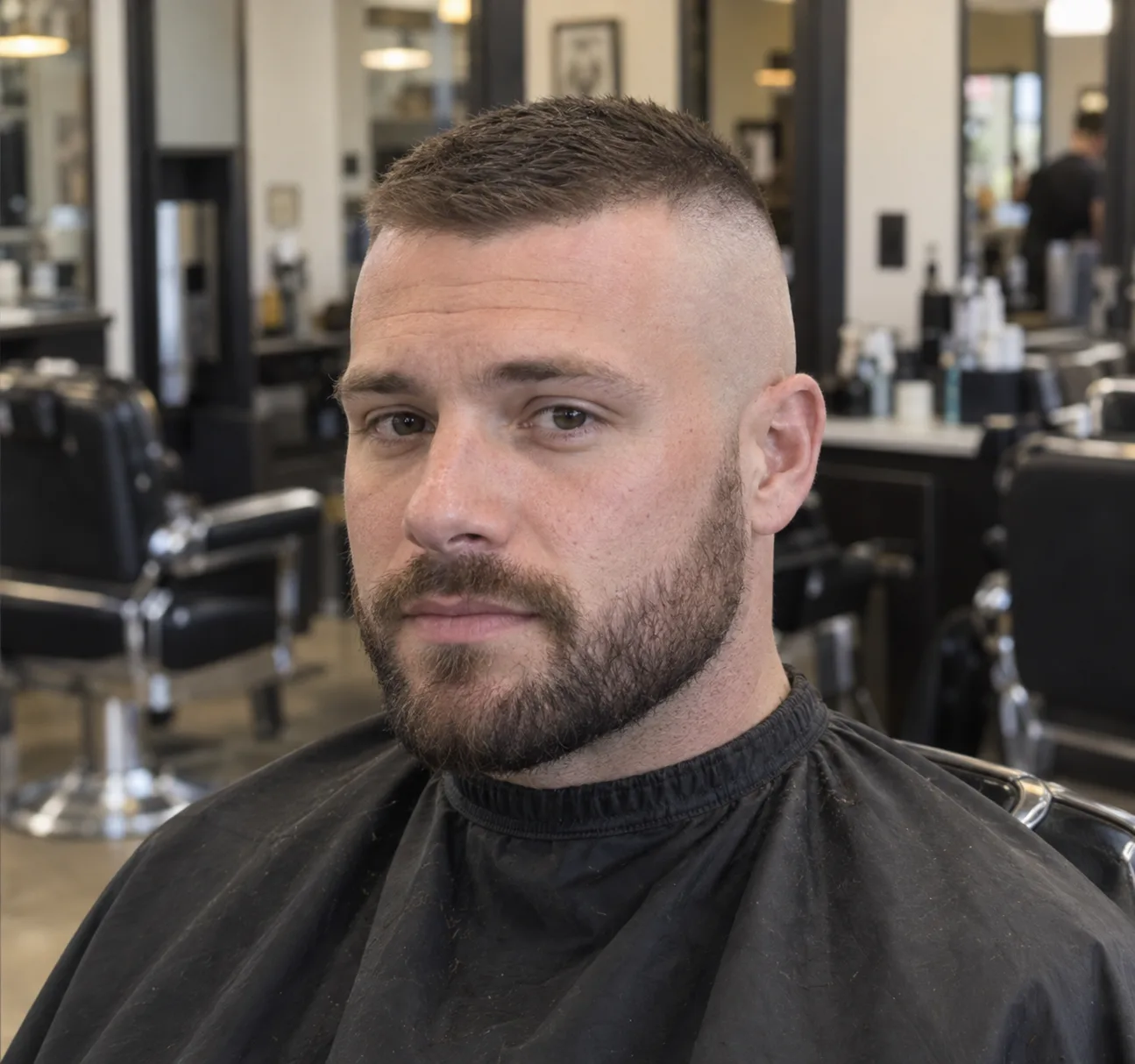
The cut is held constant across all fourteen pictures below: close sides up to the top of the head, a short patch on top. Only the person changes, so you can see how face shape, hair color, texture and features change the same haircut.
Gallery14 photos · tap to enlarge
 Try this on me
 Try this on me
 Try this on me
 Try this on me
 Try this on me
 Try this on me
 Try this on me
 Try this on me
 Try this on me
 Try this on me
 Try this on me
 Try this on me
 Try this on me
 Try this on me
Two things stand out. On light hair and fair skin, the clipped sides almost vanish, so the cut reads closer to shaved. On dark, dense hair the sides keep a visible shadow, which is why the black-haired versions look the most defined on day one.
Yours could be here.
Start with one selfie.
One photo, twenty seconds, and you'll know. Free account, no card for your first render.
Classic High and Tight
This is the version in the side and back photos above: #0 or #1 sides and back up to the top of the head, a sharp line, 1/2 inch or so on top. It is the one the military standardized and the one people mean when they search the term.
Pick it if you have an even head shape, want the least possible maintenance at home and can get back to the barber every two weeks. Nothing else on this list is as clean on day three.
High and Tight With a Skin Fade

The modern version. Instead of one close guard all the way up, the barber shaves the bottom of the sides and back to bare skin, then blends up through the guards to the high line. Look around the ear in the picture: there is skin at the bottom and the hair darkens gradually as it climbs.
It looks sharper and more current, and it has the same weakness as any bald fade: the skin section is gone within a week. Choose it if you like the look enough to book every 10 to 14 days.
Recon
The most extreme version. The sides are taken even higher, and the top is shaved short enough down the center line that the scalp shows through, leaving a horseshoe of hair. It is associated with Marine Recon units, and outside that world it is a statement haircut. Unless you have a reason, the classic is the better choice.
Regulation Cut

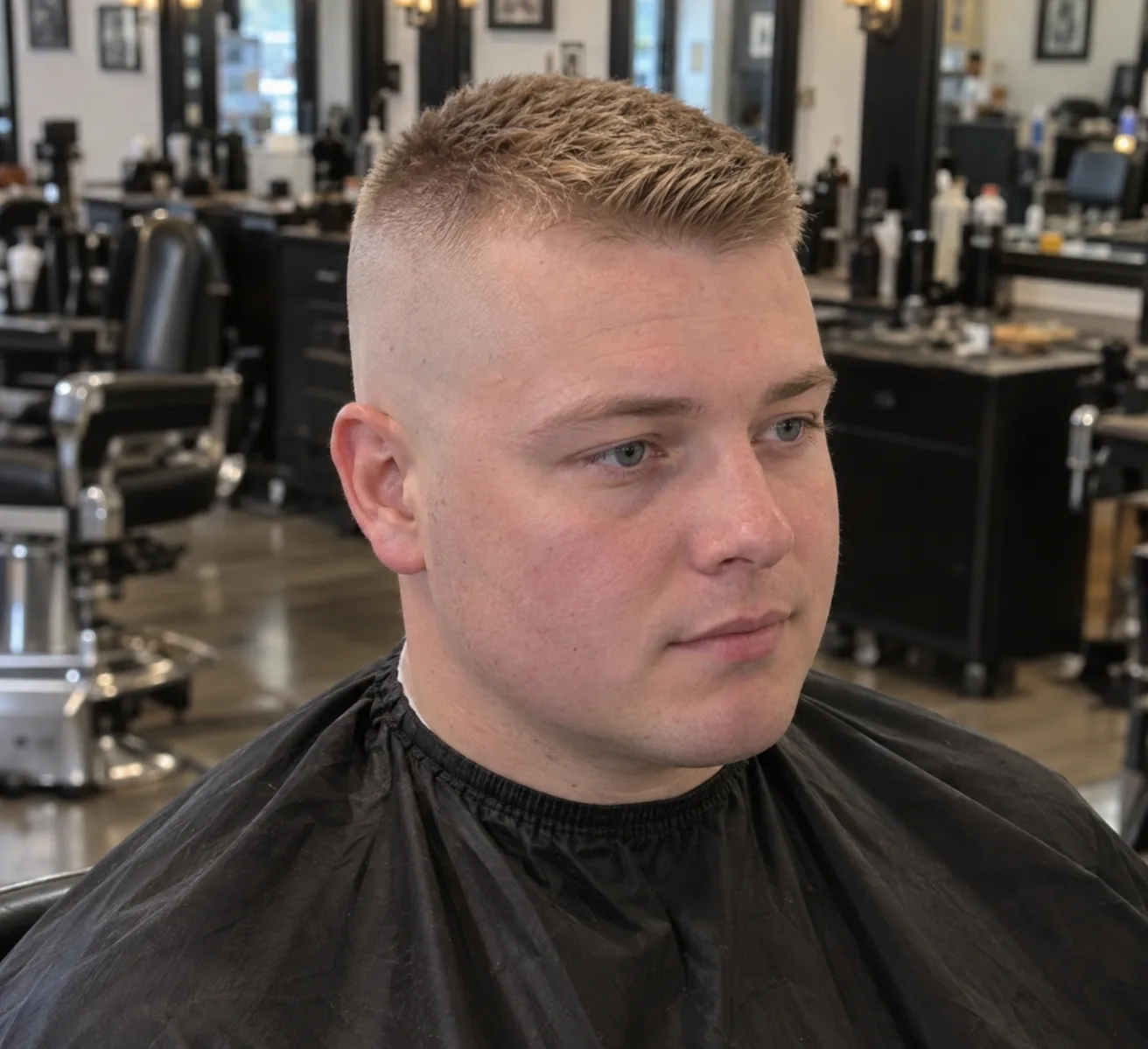
If the classic feels like too much, this is the civilian answer. The sides go to a #2 instead of a #0, the short zone stops lower, around the temples, and the top is left at about an inch with a blend instead of a hard line. The man in the picture could walk into any office.
This is the version to pick for a flat back of the head, scalp bumps or prominent ears, because the #2 leaves enough hair to soften all three. It sits close to a mid fade with a short top.
Which Version Suits Your Head and Hair?
Match the version to your situation rather than to a photo you liked. This is the short verdict.
| Your situation | Best version | Why |
|---|---|---|
| Even, rounded head | Classic | Nothing to hide, so maximum contrast looks best |
| Flat back of the head | Regulation | A #2 at the back softens the flat plane |
| Bumps or scars on the scalp | Regulation | A #0 shows every ridge |
| Prominent ears | Regulation, or classic at #1 | More hair on the sides reduces the framing effect |
| Receding temples | Classic | The high line matches the recession, so it looks intentional |
| Thick, dark, coarse hair | Classic or skin fade | Dense hair gives the sharpest contrast |
| Fine or light blonde hair | Classic at #1, not skin | Skin plus light hair reads as almost shaved |
| Long face | Classic, flat top | Height on top would lengthen the face further |
The receding hairline row surprises people. When the temples are already back, a high and tight lines up with them, so the recession looks like part of the design instead of something the haircut is failing to cover.
How to Ask Your Barber for a High and Tight
Most barbers know the name, but "high and tight" still gets interpreted three ways. Be specific about the height, the guard and the top.
How to ask for a high and tight
- Name the guard for the sides
Say "a #1 on the back and sides" for the classic, "#0" for the most extreme, or "#2" for the regulation version. If you want skin at the bottom, say "skin fade at the bottom, blended up".
- Point to where the short part stops
Touch the spot where the side of your head turns into the top and say "all the way up to here". That is what makes it high. Saying "short on the sides" gets you a crew cut.
- Say how sharp the line is
"Keep the transition tight, I want a clear line" for the classic. "Blend it" for the regulation. This one decision changes the look more than the guard does.
- Give the top a length in inches
"Half an inch on top, clipper over comb" for the classic, "about an inch, textured" for something softer. Adjectives like "short" mean different things to different barbers.
Say this to your barber
High and tight please: #1 on the back and sides, taken all the way up to the top of the head, a tight line, and half an inch on top, clipper over comb.
If your hair is straight and fine, the straight hair guide for men covers what to expect when the top is that short.
How Long a High and Tight Lasts

A high and tight looks right for about two weeks. By week three it looks like the picture: the sides have grown to around 1/4 inch, the scalp no longer shows through, and the line between the sides and the top has disappeared. At that point you are wearing a short crew cut.
So the real cost of this haircut is the schedule. Two weeks for the classic, 10 to 14 days for the skin fade, three to four weeks for the regulation version. If you cut your own hair between visits, a decent set of clippers for a buzz cut will hold the sides, though the line on top is hard to keep clean by yourself.
6 Mistakes That Ruin a High and Tight
- Asking for a fade. You get a smooth gradient and a longer top, which is a different haircut. Say "high and tight" and describe the line.
- Letting the line sit too low. If the short part stops at the temple, it is a crew cut with short sides. The height is the whole point.
- Leaving the top too long. Over about an inch and a half, the patch on top starts looking like a disconnected undercut.
- Going to skin on a bumpy or flat head. The closest guard shows the most. A #1 or #2 is the safer start, and you can always go shorter next time.
- Skipping the recut. Week three is not a high and tight anymore. Book the next appointment before you leave.
- Razor on sensitive skin. Shaving the sides to skin every two weeks can cause bumps and irritation; the American Academy of Dermatology lists razor bumps and folliculitis among the common results. Clippers at a #0 are gentler than a blade.
Can You See a High and Tight on Yourself Before Cutting?
Yes, partly, for free. The manual way works: slick your hair down flat with water, then use two mirrors or a friend's phone to look at the back and sides of your head. You will see the shape of your skull roughly, and whether the back is flat.
The wall is that wet hair is not clipped hair. You cannot see how your ears, your hairline and your face read with the sides gone, and once the clippers take the sides to a #0, it takes weeks to undo.
That is the gap a try-on fills. Upload a photo and see the cut on your own face before anyone touches your hair. The first look is free with no card, and it shows the front view. The side and back angles, the ones that matter most for this cut, are part of the Pro plan at $24 a month.
The high and tight is the simplest haircut to describe and the least forgiving to wear. Clipped sides up to the top of the head, a sharp line, half an inch on top, and a barber visit every two weeks.
Decide by your head, not your face. An even skull gets the classic or the skin fade. A flat back, bumps or prominent ears get the regulation version at a #2. If you are still between cuts, browse more short hairstyles for men or the gentler taper haircut, then check it on your own photo first.
Frequently asked questions
A high and tight is a military haircut with the back and sides clipped to 1/16 inch or less, up to the top of the head, and a short patch of hair on top, usually 1/4 to 1 inch. The line between the two is sharp, which is the "tight" part.
A fade blends the hair gradually from short to long with no visible line. A high and tight keeps the sides at one very close length up to the top of the head and stops sharply. A skin fade version combines the two by blending the bottom of the sides into bare skin.
It is a high and tight where the lowest part of the sides and back is shaved to bare skin, then blended up to the high line. It looks sharper than the classic but loses its skin section in about a week.
Barbers usually mean the clipper guards: a #3 on top, a #2 through the middle and a #1 at the bottom, blended together. It is a short buzz with a gentle taper, softer than a high and tight because nothing gets close to skin and there is no separate patch on top.
On an even, rounded head with a defined jaw, it is one of the sharpest short cuts there is. On a flat-backed head or with very prominent ears it can look harsh, and the regulation version with #2 sides is usually more flattering.
Soldiers and Marines first, then police officers and other public safety workers, mostly because it needs no styling and sits cleanly under a helmet. It has also been a civilian cut for decades among men who want zero styling time.
The best known is the high and tight. Other common military cuts are the recon, with an even shorter top, the crew cut and the buzz cut. Official rules generally ask for a tapered, neat appearance rather than naming one style.
Say "high and tight, #1 on the back and sides taken all the way up to the top of the head, a tight line, and half an inch on top." Point to where the side of your head turns into the top so the barber knows how high to go.
Preview it on your own photo: Men's Hairstyle Try-On.
Share article
About the author

More articles
Men's Haircuts · 14 min
Benny Blanco Haircut: The Fake Half Shave and the Real Curls
Benny Blanco did not shave half his head. It was a prosthetic bald cap, and the buzz cuts are AI. Here is what his curly mop actually is, the short version, and exactly what to tell your barber.
Men's Haircuts · 16 min
1A Hair: How to Tell If You Have It + 14 Cuts That Work
1A hair is pin-straight with no bend from root to tip. How to tell it from 1B and 1C, why it goes flat, 14 haircuts that work on it, and how to style it for volume.
Men's Haircuts · 15 min
Mullet Fade: 14 Looks and the One Line That Makes It Work
A mullet fade is a mullet with faded sides and a long back. The fade height matters less than where it stops behind the ear. Low, mid, high, drop and burst compared, 14 looks, and the exact words for your barber.