Buzz Cut Clippers: What to Buy, Which Guard, How to Cut
Oleh Onysko Updated 28 September 2026 13 min read
In this article
The best buzz cut clippers are a full-size corded or cordless clipper with a wide blade, a strong motor and a complete set of sturdy guards from #1 to #8. Skip beard trimmers and cheap all-in-one kits: the guards, not the brand on the handle, decide whether your buzz comes out even.
That is the part most clipper reviews miss. A buzz cut is one length everywhere, so every flaw in the guard shows. A guard that flexes on a curve, or a narrow blade that needs twice the passes, leaves the patchy result you blame on your own hands.
What Clippers to Use for a Buzz Cut
Use a full-size hair clipper, not a trimmer. Clippers have a wider blade, around two inches, and a motor built to push through a full head of hair in long strokes. Trimmers are narrow and made for edges, beards and necklines. You can buzz a whole head with one, but it takes about twice as many passes, and every extra pass is another chance to miss a patch.
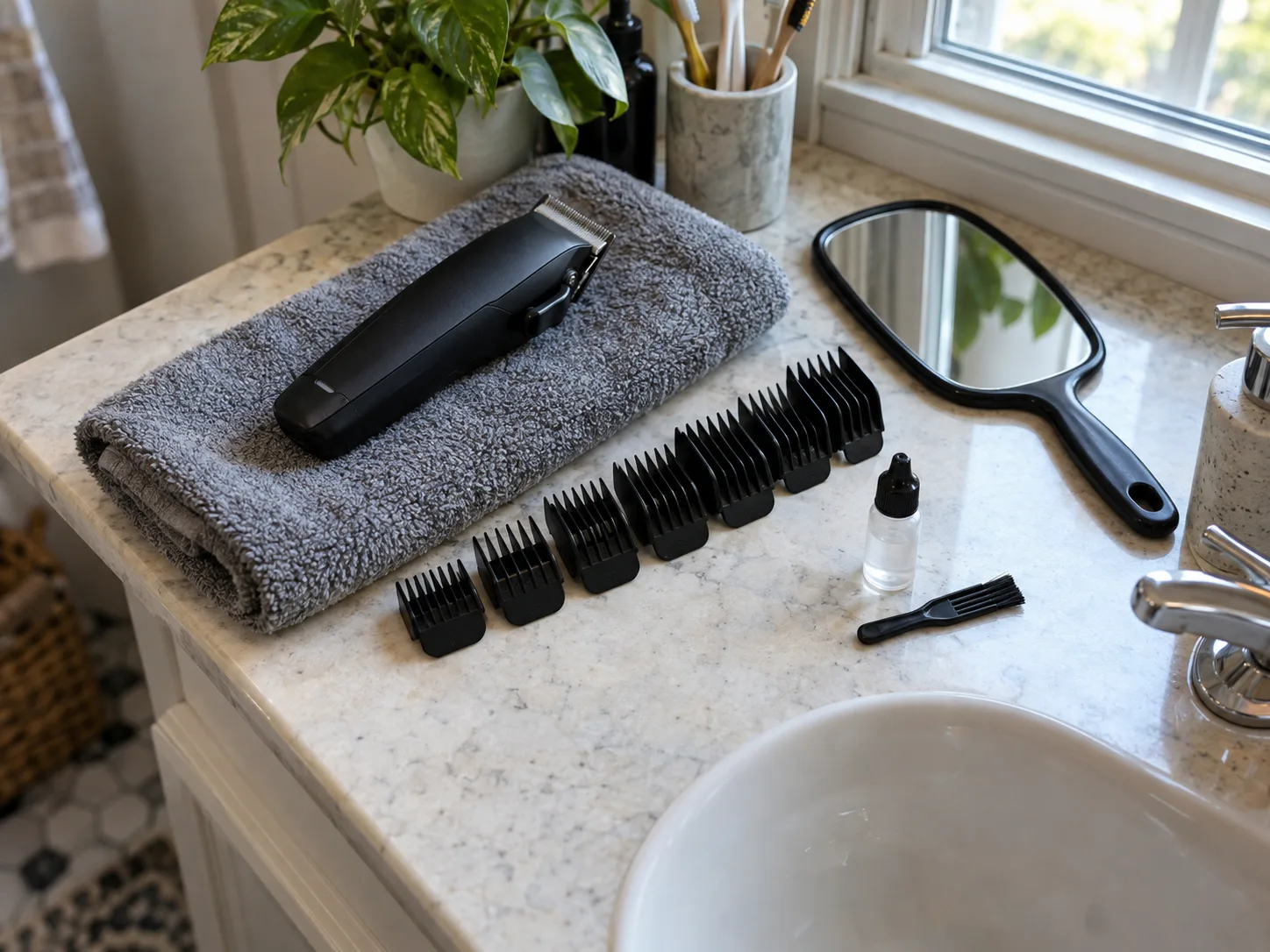
What to look for, in order of how much it matters:
- A full guard set with rigid teeth. You want #1 through #8 at minimum, ideally with half sizes. Press a guard against your palm: if the teeth bend, it will bend on your crown too and leave a longer strip.
- A guard that clicks on and stays on. A guard that pops off mid-pass takes a bald stripe out of the top of your head. This is the single most common home buzz disaster.
- Motor strength over extra features. Thick or coarse hair needs a stronger motor, or the blade drags and pulls. If your hair is dense, favor a clipper sold as barber grade or professional over a cheap kit.
- Cord or battery that lasts a full cut. A cordless clipper that fades halfway through cuts unevenly as the blade slows. A cord never fades.
- A taper lever. It is useful for the neckline but not essential for a basic buzz.
A pair of trimmers is still worth owning for the neckline and around the ears. Wahl's own guide to doing a buzz cut at home makes the same split: clippers for the length, trimmers for the edges.
Clippers for your situation
| Your situation | Best tool | Why |
|---|---|---|
| Cutting your own hair, straight or wavy | Full-size cordless clipper with guards | Freedom to move around your head without the cord catching |
| Thick or coarse hair | Corded barber-grade clipper | Constant power, no dragging through dense hair |
| Curly or coily hair | Clipper with a strong motor and a long guard first | Take bulk off at #8 before going shorter, so the blade does not jam |
| Fine or thinning hair | Any full-size clipper, short guard | Less resistance, and shorter lengths hide thinning better |
| Only touching up between cuts | Trimmer plus one guard | Edges and neckline, not the full head |
Buzz Cut Numbers and Guard Sizes
Each clipper guard number adds roughly an eighth of an inch. A #1 leaves 1/8 inch, a #2 leaves 1/4 inch, and a #8 leaves a full inch. This numbering is standard across the big US clipper brands, so a #3 at the barbershop is the same as a #3 at home.
| Guard | Length left | What it looks like |
|---|---|---|
| No guard | about 1/16 inch | Stubble shadow, scalp visible everywhere |
| #1 | 1/8 inch | Very short, scalp clearly shows through |
| #1.5 | 3/16 inch | Short, scalp faintly visible |
| #2 | 1/4 inch | The classic buzz, scalp only at the temples |
| #3 | 3/8 inch | Solid color, no scalp showing |
| #4 | 1/2 inch | Plush, the soft end of a buzz |
| #5 to #6 | 5/8 to 3/4 inch | Visible texture, starting to lie forward |
| #7 to #8 | 7/8 to 1 inch | Borderline crop, hair moves |
The most common choice for a first buzz is a #3, which is long enough that nobody sees scalp and short enough to look deliberate. The safest rule for home cutting: start two numbers longer than you think you want. You can always go shorter the same evening. You cannot go back.
How to Buzz Cut Your Own Hair
Yes, it is easy, and it is the one haircut almost anyone can do alone. The whole job is running a single guard against the grain until nothing more falls out. The only hard part is the back of your head, which you cannot see.
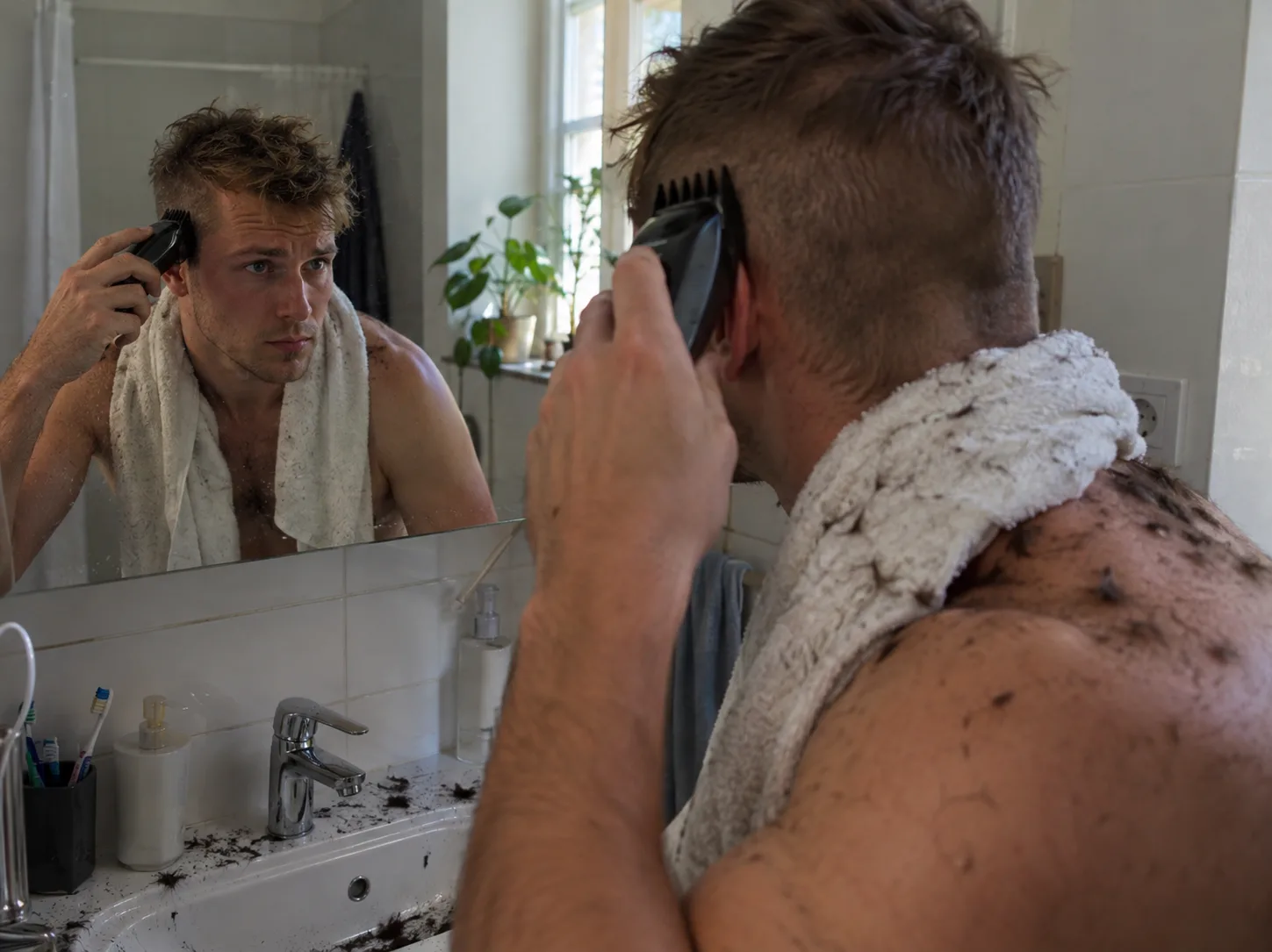
How to give yourself a buzz cut with clippers
- Start with clean, dry hair
Wash and dry it fully. Wet hair clumps and lies flat, so the guard skips over it. Drape a towel over your shoulders and stand in front of a mirror, ideally with a hand mirror for the back.
- Take the bulk off with a long guard
If your hair is longer than an inch, run a #8 over the whole head first. This stops the blade jamming when you switch to the short guard.
- Snap on your chosen guard and check it
Push the guard on until it clicks, then tug it. A loose guard is how people end up with a bald strip.
- Cut against the grain in slow, overlapping passes
Start at the sides and back and move upward against the direction of growth. On top, go from front to back. Overlap each pass by half a blade width and go slowly. Rushing is what leaves the longer patches.
- Cross-check from a second direction
Once everything looks done, go over the whole head again sideways. The crown grows in a swirl, so hair there lies in every direction and hides from one-direction passes.
- Tidy the neckline and around the ears
Remove the guard or switch to a trimmer. Clean up below the natural neckline and fold each ear down to trim above it. Leave the front hairline alone.
Some barbers use what gets called the 3/2/1 approach: a #3 on top, a #2 on the sides and a #1 around the edges and neckline. Strictly, that is no longer a buzz cut, it is a soft taper. It does make a home cut look tidier, and it is a good second cut once you have done a one-length buzz and know how your head takes it. If you want the blend to be more visible, read our breakdown of the taper haircut first.
The Neckline Decides Whether It Looks Finished
A one-length buzz with a messy neck looks like you did it yourself. The same buzz with a clean neckline looks like a barber did it. That difference takes two minutes with a trimmer.
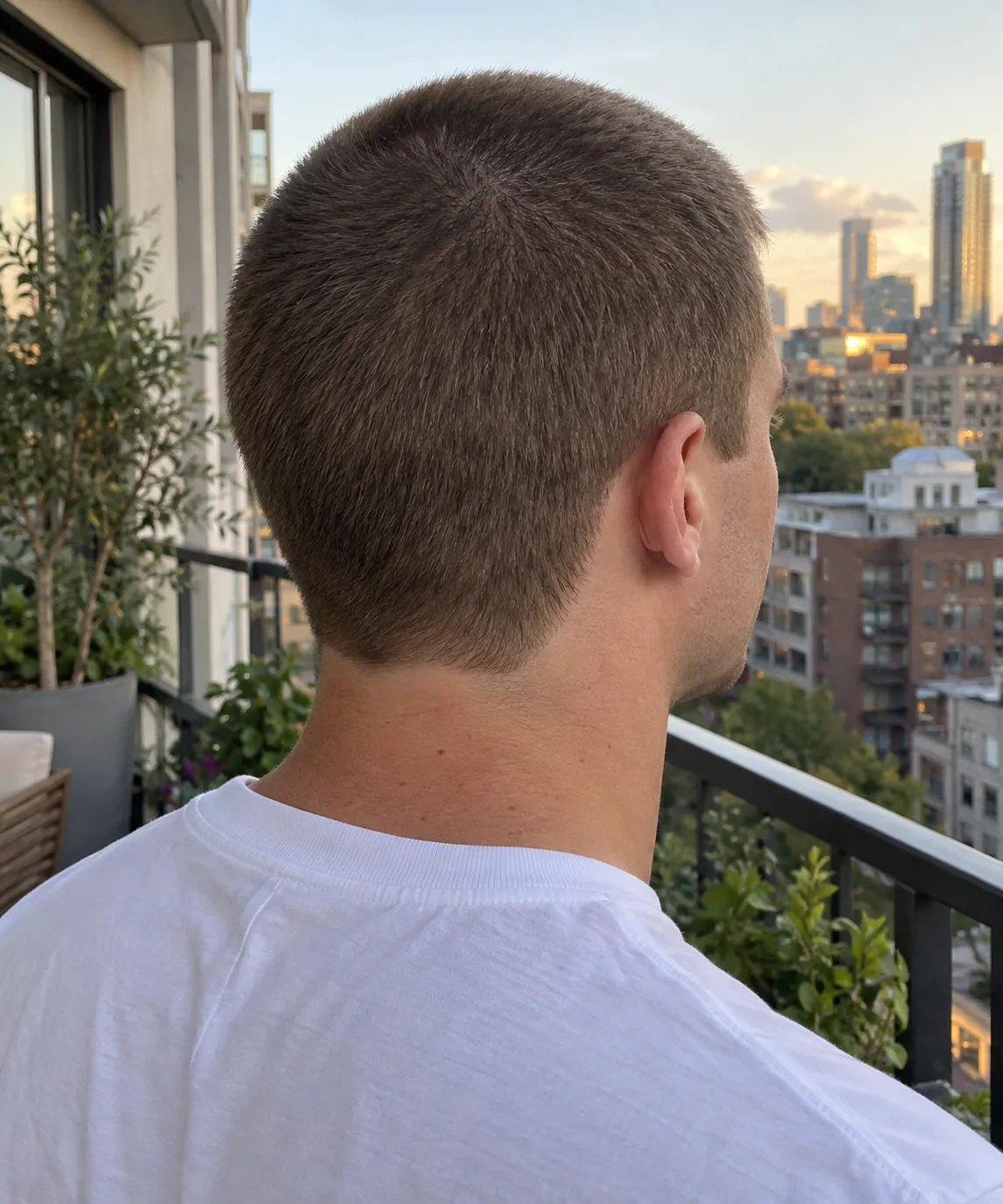
Keep the line at or just above your natural hairline, never higher. Rounded looks softer and grows out gracefully; squared looks sharper for a week and then gets fuzzy fast. If you cannot see the back, take a phone photo, check it, and go again.
Which Buzz Length Suits Your Face and Hairline
A buzz shows your whole head shape, so the length is a dial for how much it shows. Shorter lengths expose more of your skull and jaw. Longer lengths soften both. If you want the sides at a #0 or #1 but a small patch of shape left on top, the next step is a high and tight haircut.
| Face or hair | Best buzz length | Why |
|---|---|---|
| Oval | Any, #1 to #4 | Balanced proportions, nothing to hide |
| Round | #3 to #4 | A little bulk on top adds height and takes attention off the cheeks |
| Square | #1 to #2 | Short lengths show off a strong jaw |
| Long or oblong | #3 to #5 | Some length on the sides keeps the head from looking taller |
| Receding or thinning | #1 to #2 | Less contrast between thin and thick areas |
Buzz cut for a round face
Yes, a buzz works on a round or fuller face, as long as you do not go too short. A #3 or #4 keeps some softness and a little height on top. Add stubble along the jaw and the face reads longer, not wider.

Buzz cut with a receding hairline
A buzz is one of the best cuts for a receding hairline, which is why so many men choose it the first time they notice thinning. Keep it short, a #1 or #2, so the thin temples blend into the rest of the head instead of standing out against longer hair. Our hairline preview shows how your current hairline looks at different lengths.

The men who should think twice about a buzz are those with a noticeably uneven skull, a scar they do not want on show, or very pale skin that burns easily. None of those is a hard no. Each one is a reason to try a longer guard first.
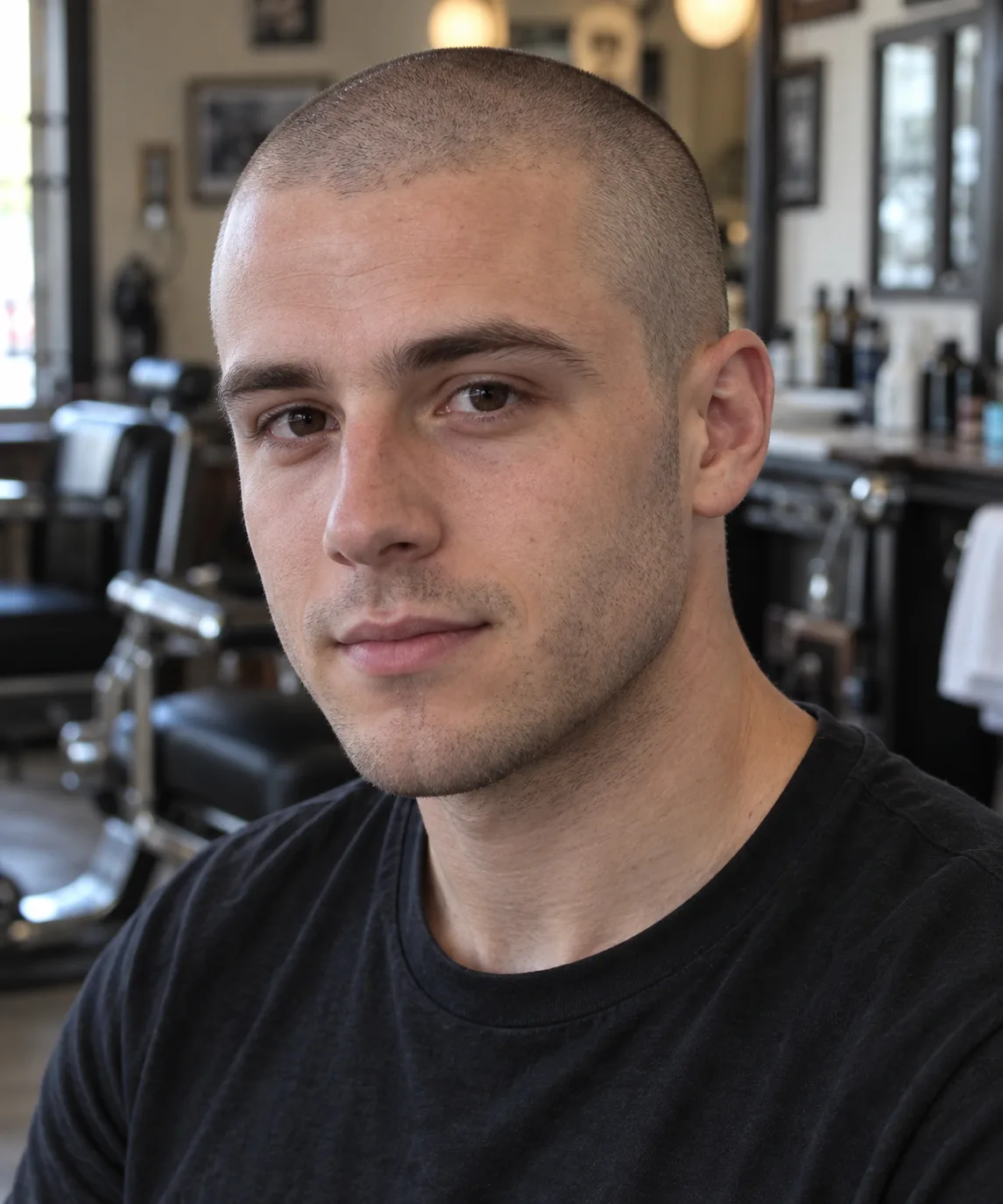
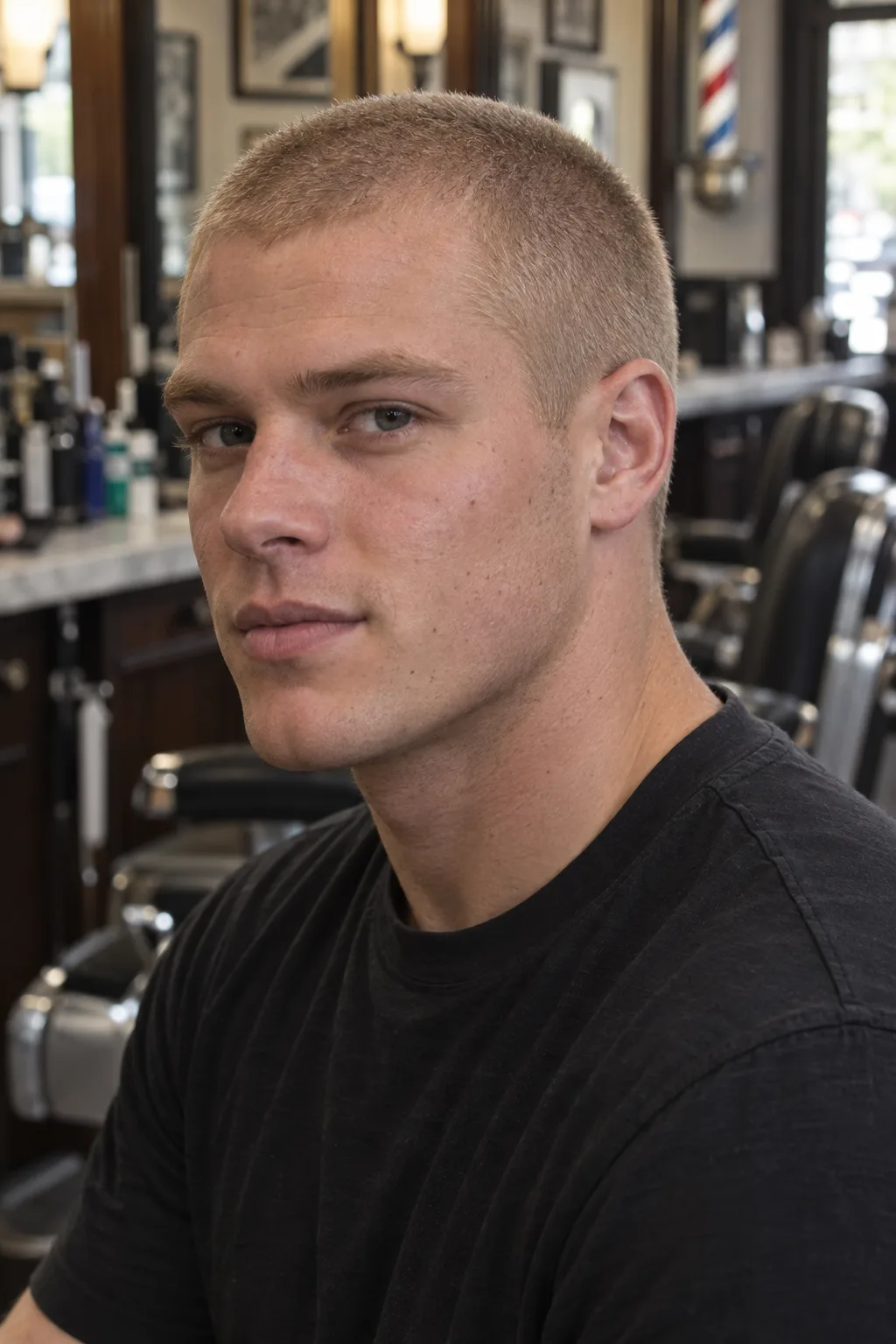
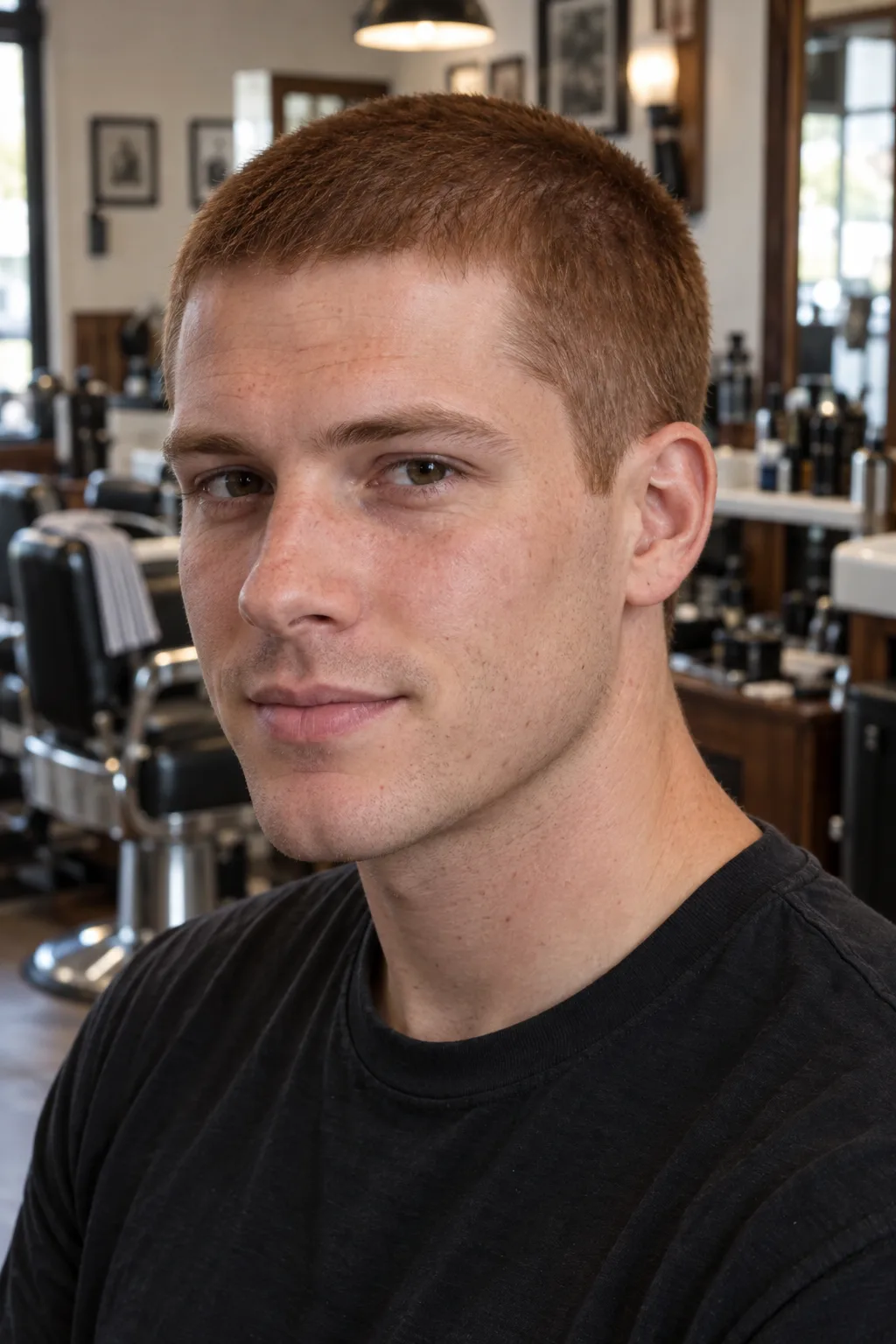
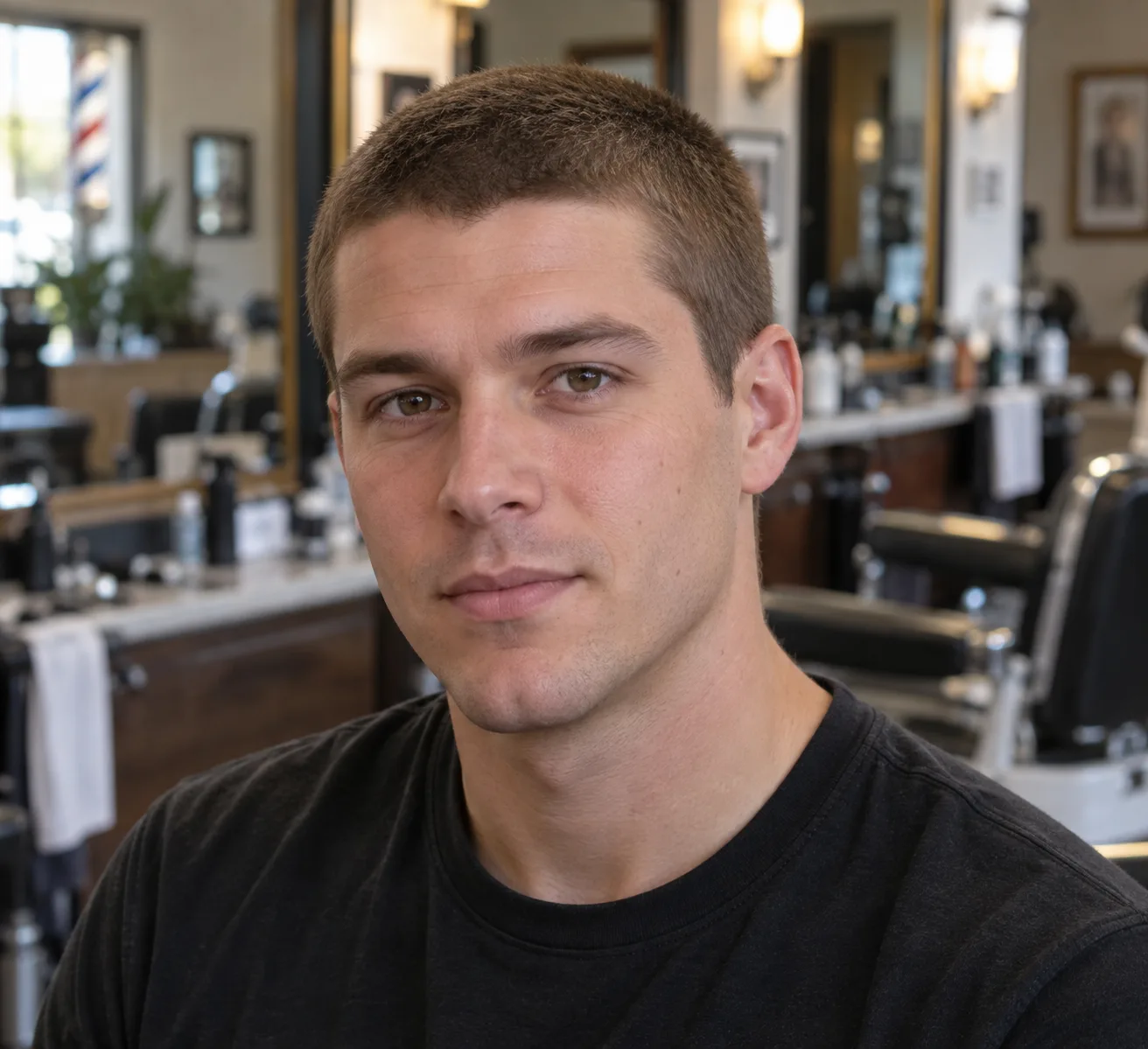
10 Buzz Cut Lengths From No Guard to #8
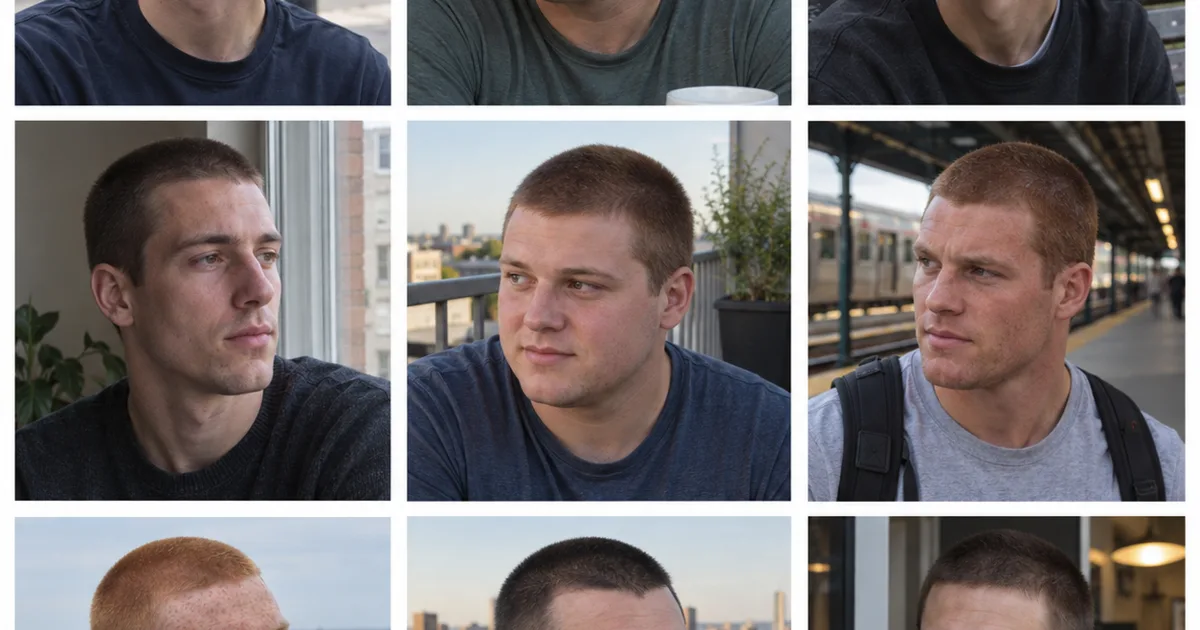
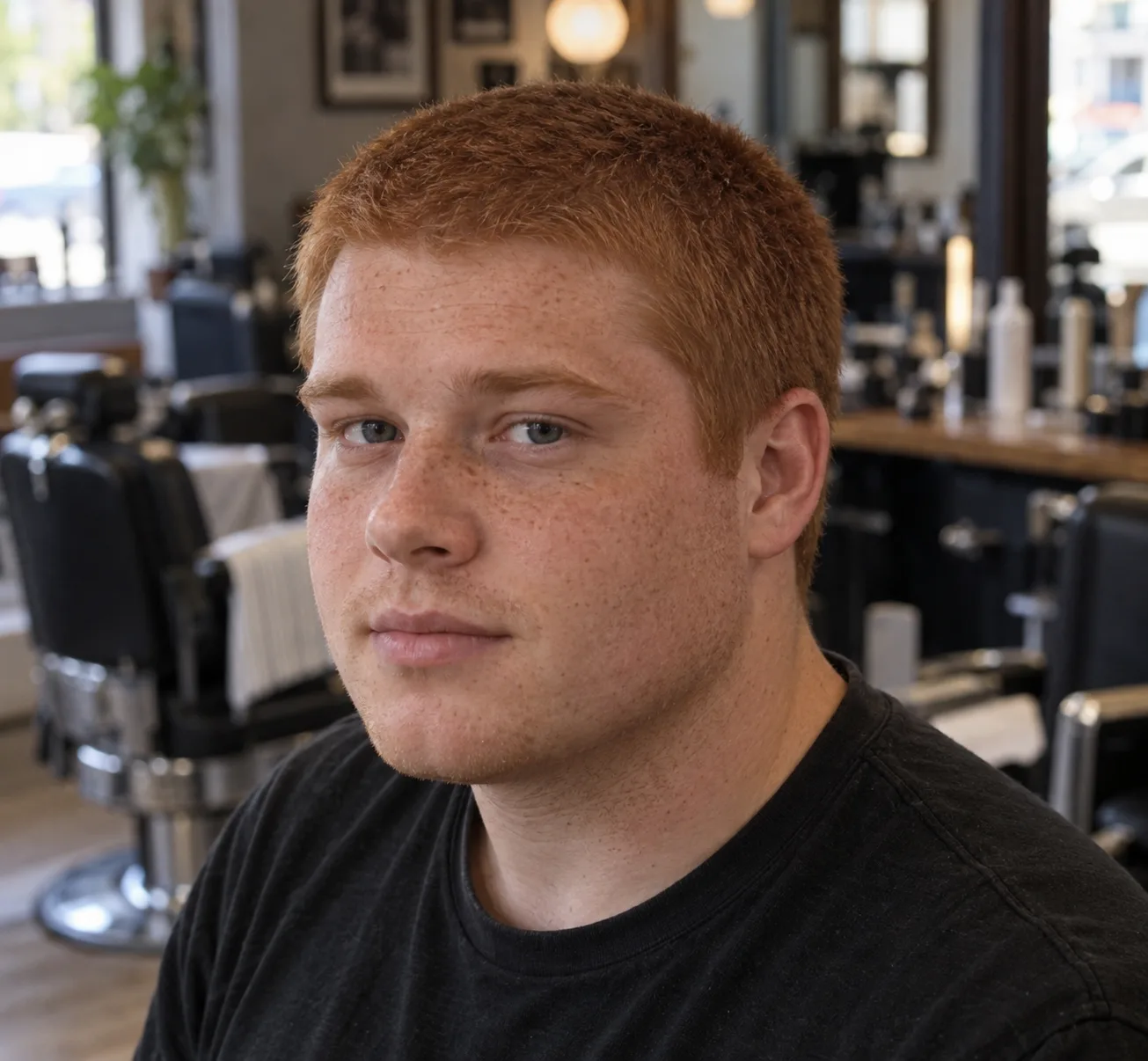
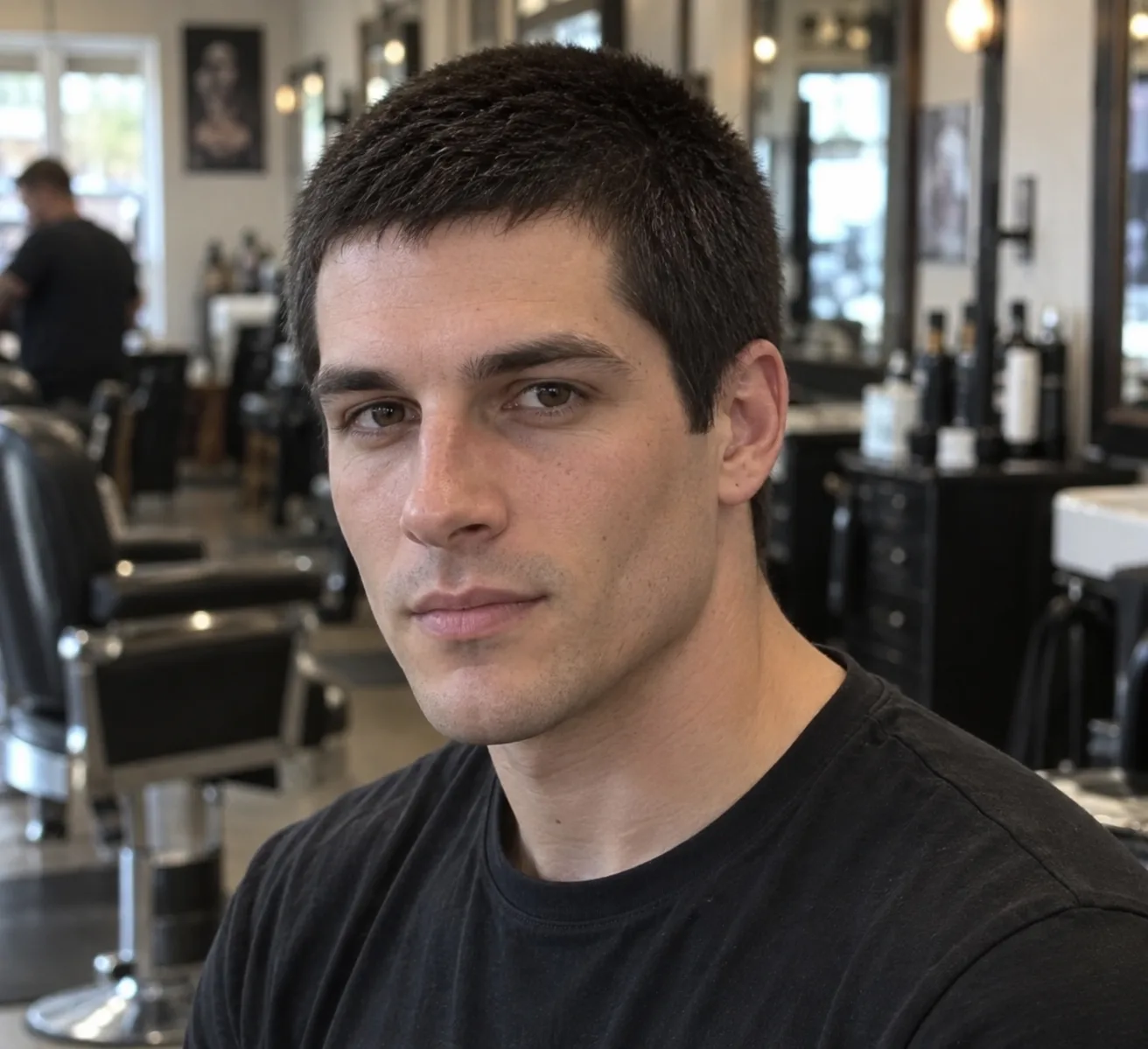
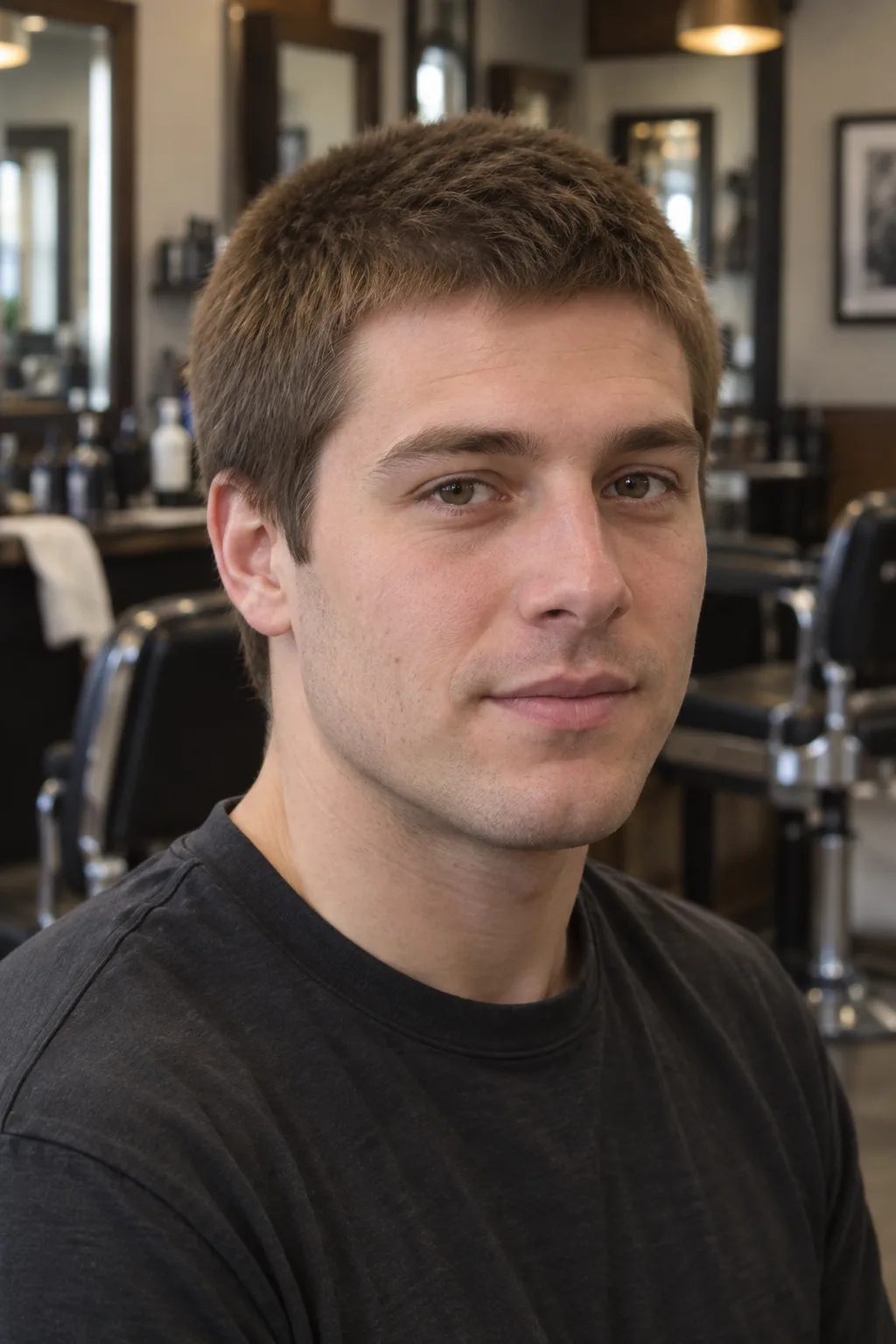
Same haircut, same barbershop light, one variable: the guard. Scroll it from shortest to longest and stop at the first one that looks like you. Hair color changes how short a length reads, because blonde hair shows scalp sooner than dark hair.
Gallery10 photos · tap to enlarge
 Try this on me
 Try this on me
 Try this on me
 Try this on me
 Try this on me
 Try this on me
 Try this on me
 Try this on me
 Try this on me
 Try this on me
Past a #4 the cut starts to behave more like a short crop than a buzz. If you like the #7 and #8 look but want a cleaner outline on the sides, a low taper fade keeps that top and tightens everything else.
Yours could be here.
Start with one selfie.
One photo, twenty seconds, and you'll know. Free account, no card for your first render.
If you would rather have a barber do it, here is the line to say in the chair:
Say this to your barber
A number 3 all over, same length on top and sides, no fade, round the neckline off and leave my hairline natural.
5 Buzz Cut Mistakes That Cost You Weeks
Starting too short. Hair grows about half an inch a month. Go from a #1 you hate to a #4 you like and that is roughly three weeks of waiting.
Not checking the guard. A guard that slips off takes out a stripe down to the skin. Tug it every time you put it on.
Cutting wet hair. Wet hair lies flat and the guard glides over it. It dries, stands up, and you find the patches the next morning.
Only cutting in one direction. Crowns and cowlicks grow in swirls. One direction leaves longer tufts there. Always finish with a cross pass.
Buzzing to hide thinning with a long guard. A #4 or longer over thin areas shows the contrast. Shorter is kinder to a thinning crown, which is the same logic we cover in the bad haircuts guide.
Can You See a Buzz Cut on Yourself Before You Pick Up the Clippers?
Yes. The free way first: find a clear front photo of yourself, cover your hair with your hand or a cap, and look at your head shape and ears. It is crude, but it tells you whether you like what is under there.
Where that method stops working is length. A hand over your hair cannot show you the difference between a #1 and a #4, and that is exactly the decision you are about to make with a guard you cannot undo. Comparing yourself to the photos above only goes so far either, because your skull and hairline are not the model's.
HairstyleAtlas does that part. Upload one selfie and see a buzz cut at different lengths on your own head, then pick the guard with confidence. The buzz cut filter is built for exactly this. The first look is free and needs no card. Plans start at $9 a month if you want more, with a seven day refund.
Buy a full-size clipper with a guard set that does not flex, start two numbers longer than you think, and always finish with a cross pass and a clean neckline. That is the whole job.
If a buzz turns out to be too plain for you, the next step up is a fade haircut, which keeps the buzz on top and graduates the sides. For more starting points, browse our list of hairstyles for men.
Frequently asked questions
A full-size hair clipper with a wide blade and a complete set of rigid guards from #1 to #8. Corded clippers keep constant power for thick hair; cordless ones are easier when cutting your own. Keep a trimmer for the neckline and ears.
A trimmer is the wrong tool for the full head. It has a narrow blade, so it takes twice the passes and leaves more patches. Use a clipper for the length and a trimmer only for edges and the neckline.
It usually means a #3 guard on top, a #2 on the sides and a #1 around the neckline and edges. The result is a buzz with a soft taper, which looks tidier as it grows out. A true buzz cut uses one guard everywhere.
They are clipper guard sizes. Each number adds about an eighth of an inch: a #1 is 1/8 inch, a #2 is 1/4 inch, a #3 is 3/8 inch, a #4 is 1/2 inch and a #5 is 5/8 inch.
A #4 leaves about half an inch of hair. That is long enough that no scalp shows and the hair looks soft and dense, the gentlest version of a buzz.
About one inch. At that length the hair moves and shows texture, so it reads more like a short crop than a buzz cut.
Yes. It is the easiest haircut to do yourself: one guard, slow passes against the grain, a cross pass to catch the crown, and a trimmer for the neckline. Use a hand mirror or phone photo for the back.
Nobody has to, but think twice if you have an uneven head shape, a scar you want covered, or skin that burns easily. In those cases start with a longer guard like a #4 and go shorter only if you like it.
Preview it on your own photo: Buzz Cut Filter.
Share article
About the author

More articles
Men's Haircuts · 14 min
Benny Blanco Haircut: The Fake Half Shave and the Real Curls
Benny Blanco did not shave half his head. It was a prosthetic bald cap, and the buzz cuts are AI. Here is what his curly mop actually is, the short version, and exactly what to tell your barber.
Men's Haircuts · 16 min
1A Hair: How to Tell If You Have It + 14 Cuts That Work
1A hair is pin-straight with no bend from root to tip. How to tell it from 1B and 1C, why it goes flat, 14 haircuts that work on it, and how to style it for volume.
Men's Haircuts · 15 min
High and Tight Haircut: 4 Versions and the Head Shape Rule
A high and tight clips the sides almost to skin all the way up to the top of the head, so it shows your skull shape more than your face. The 4 versions, 14 photos, what to tell your barber, and how long it lasts.