Calico Hair: The 3-Tone Rule That Stops It Looking Cheap
Oleh Onysko Updated 27 September 2026 17 min read
In this article
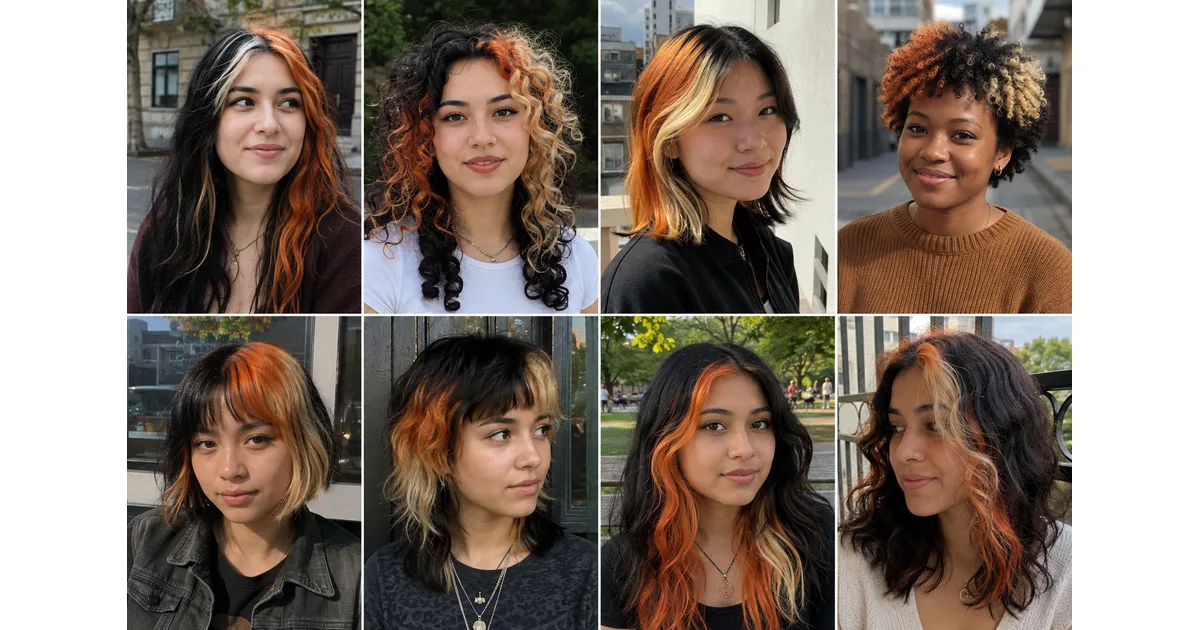
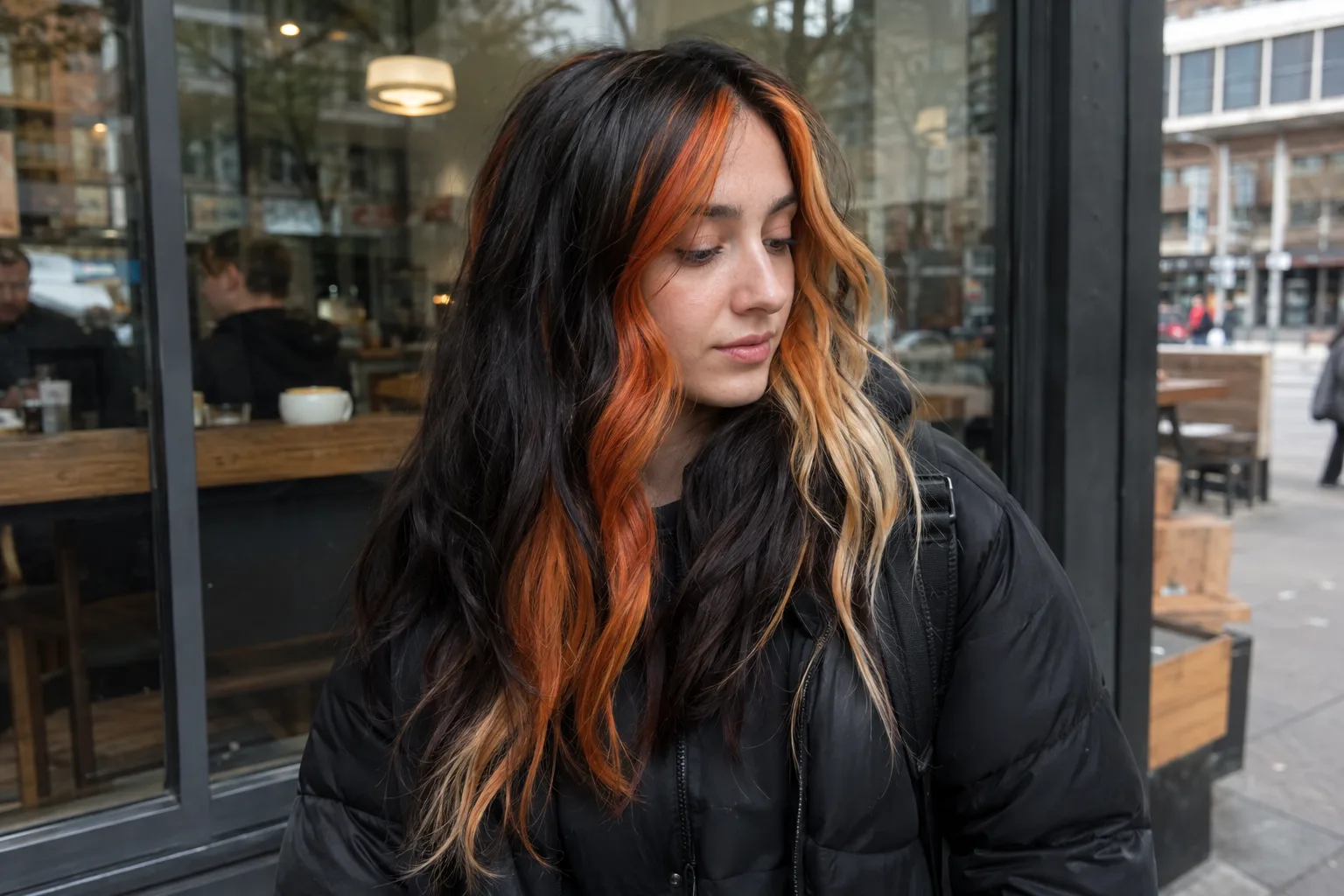
Calico hair is three colors on one head: a dark base, a ginger copper, and a pale cream blonde, dropped in patches of different sizes the way the three colors land on a calico cat. It is not a highlight pattern and it is not balayage. The thing that makes it work is that the three tones are deliberately unequal, and the thing that makes it fail is doing them tidily.
The tone people leave out is the ginger. Skip it and you have dark hair with blonde chunks in it, which is a Y2K streak job and reads as one. The ginger is the bridge between the darkest and the lightest tone, and it has to be the second biggest share of your head, not a token piece near your face.
What is calico hair?
Calico hair is a multi tonal color built from three shades worn at once: your dark base, a warm ginger or copper, and a cream or butter blonde, placed in wide patches rather than in fine highlights. The name comes from calico cats, whose coats carry black, orange and white in a pattern that never repeats. L'Oreal Paris logged it as a TikTok color trend, and it has been in the fashion press since, so your colorist will almost certainly know the word.
Two things separate it from every other dimensional color. The patches are wide enough that you read them as blocks rather than as strands. And they are unequal, so nobody else's calico looks like yours.
The three tone rule that makes or breaks it
Calico only reads as calico when the three tones hold roughly this split. Ask for the ratio, not for a mood board.
| Tone | Share of your head | What it does |
|---|---|---|
| Your dark base | About 60 percent | Holds the whole thing together and keeps the roots low maintenance |
| Ginger or copper | About 25 percent | The bridge tone. Without it the other two look like an accident |
| Cream or butter blonde | About 15 percent | The pop. More than this and it stops being calico and starts being blonde |
Two rules sit under the table. The base stays the majority, so no more than about 40 percent of your head is colored. And the blonde never outweighs the ginger, because the moment it does you have blonde hair with orange in it, which is a completely different look.
Why tidy calico looks cheap
Salon highlight technique is trained to be even. Foils go in at regular intervals, both sides get the same treatment, and the result is meant to look balanced. Every one of those instincts is wrong here.
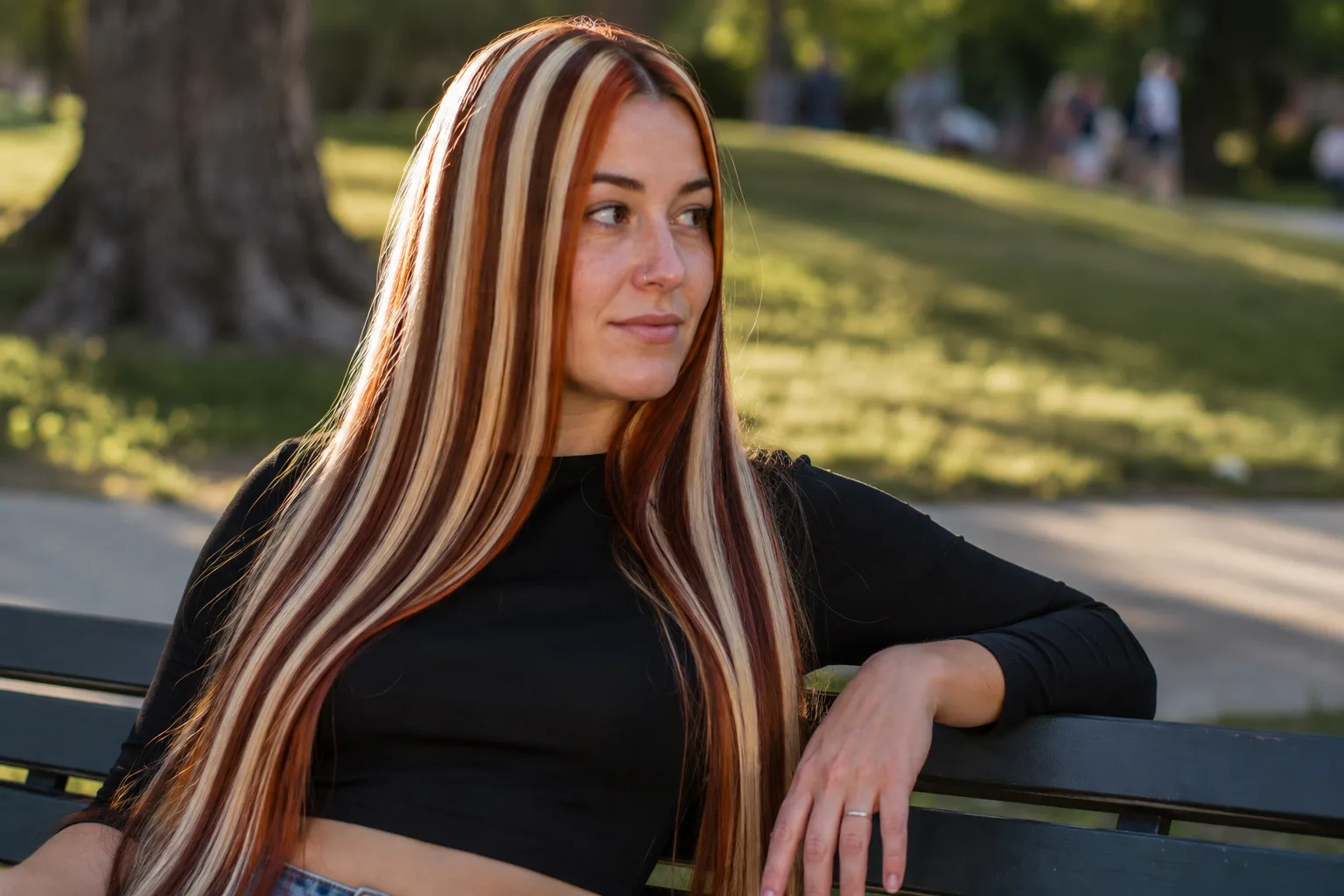
That picture is what happens when calico is applied evenly: stripes of matching width, repeated all the way round, roughly mirrored on both sides, no root shadow. It reads as a wig, not as color. Nothing in a calico cat's coat repeats, and nothing in calico hair should either.
Three things to say out loud in the chair: different widths, both sides different from each other, and no piece placed directly opposite another.
Calico hair by your natural base color
Your starting color decides how much lifting is involved, how loud the result is, and how often you are back in the chair. This is the biggest variable, bigger than your hair length or your face shape. It works the same way in reverse when you stop colouring altogether, since the colour you are leaving behind decides how visible the regrowth line will be.
| Your natural base | How calico lands | Main problem to solve |
|---|---|---|
| Black or near black | The most graphic version, hard contrast | Getting the blonde light enough without frying it |
| Dark brown | The classic look, cat like and obvious | Warmth creeping into the blonde as it fades |
| Medium brown | Easiest version, lifts cleanly to both tones | Keeping the base dark enough to stay the majority |
| Light brown or dark blonde | Very little lifting needed | Copper takes over unless it is kept small |
| Natural red | The ginger is already there for free | Finding a base dark enough to sit against it |
| Blonde | Has to be built downwards with a darker base | Your base becomes the dyed part, so roots grow out backwards |
| Grey or silver | The cream tone is already there | Grey resists warm tones, so the copper needs more processing |
Black and dark brown hair
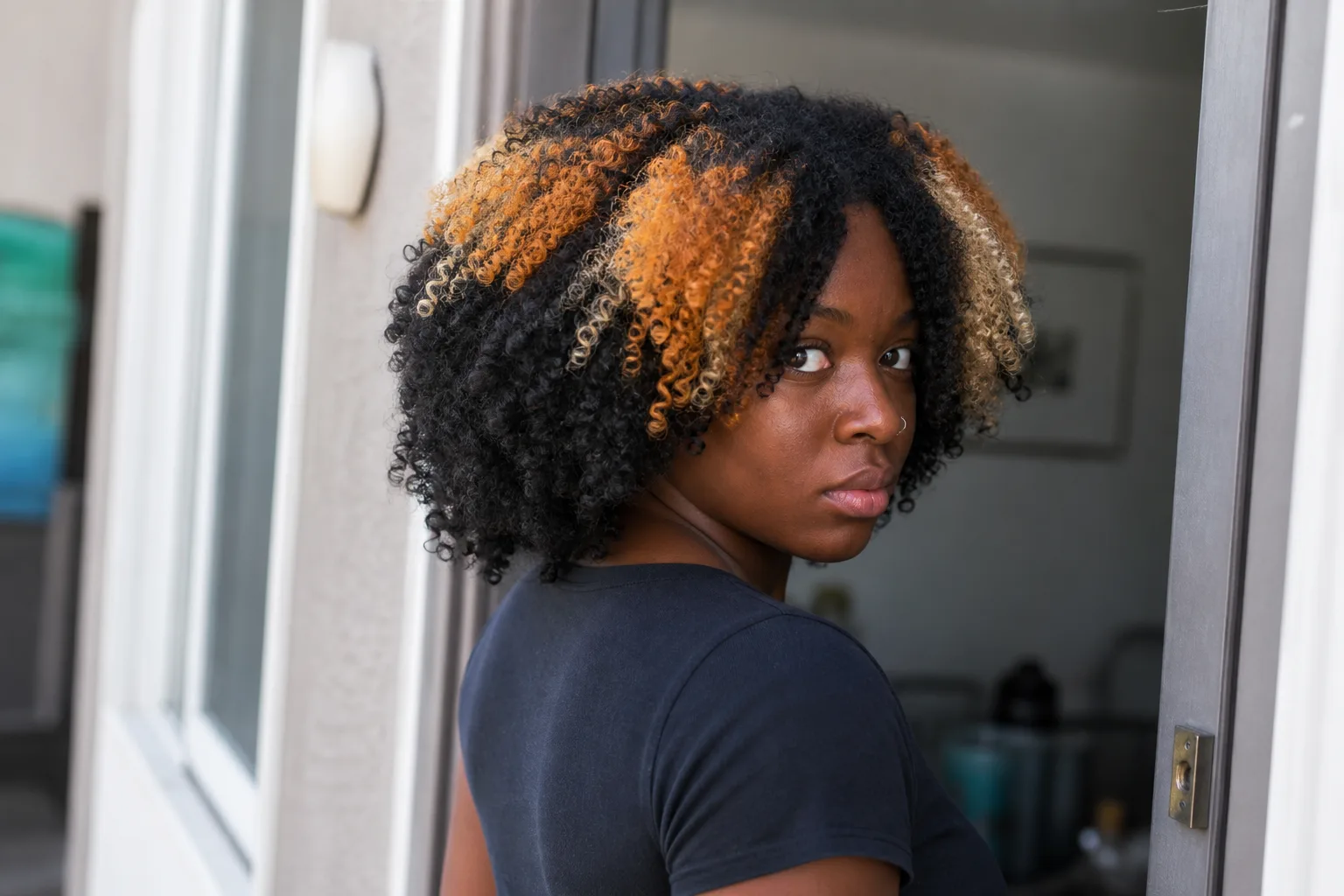
Dark hair gives the loudest calico, because the contrast between a level 1 base and a cream blonde is about as much as hair can do. The catch is that getting there means lifting the same sections more than once, and on coily or fine hair that is where damage happens. Split it over two appointments if your colorist offers to, and if your hair is tightly coiled read up on what 4c hair can take before you commit.
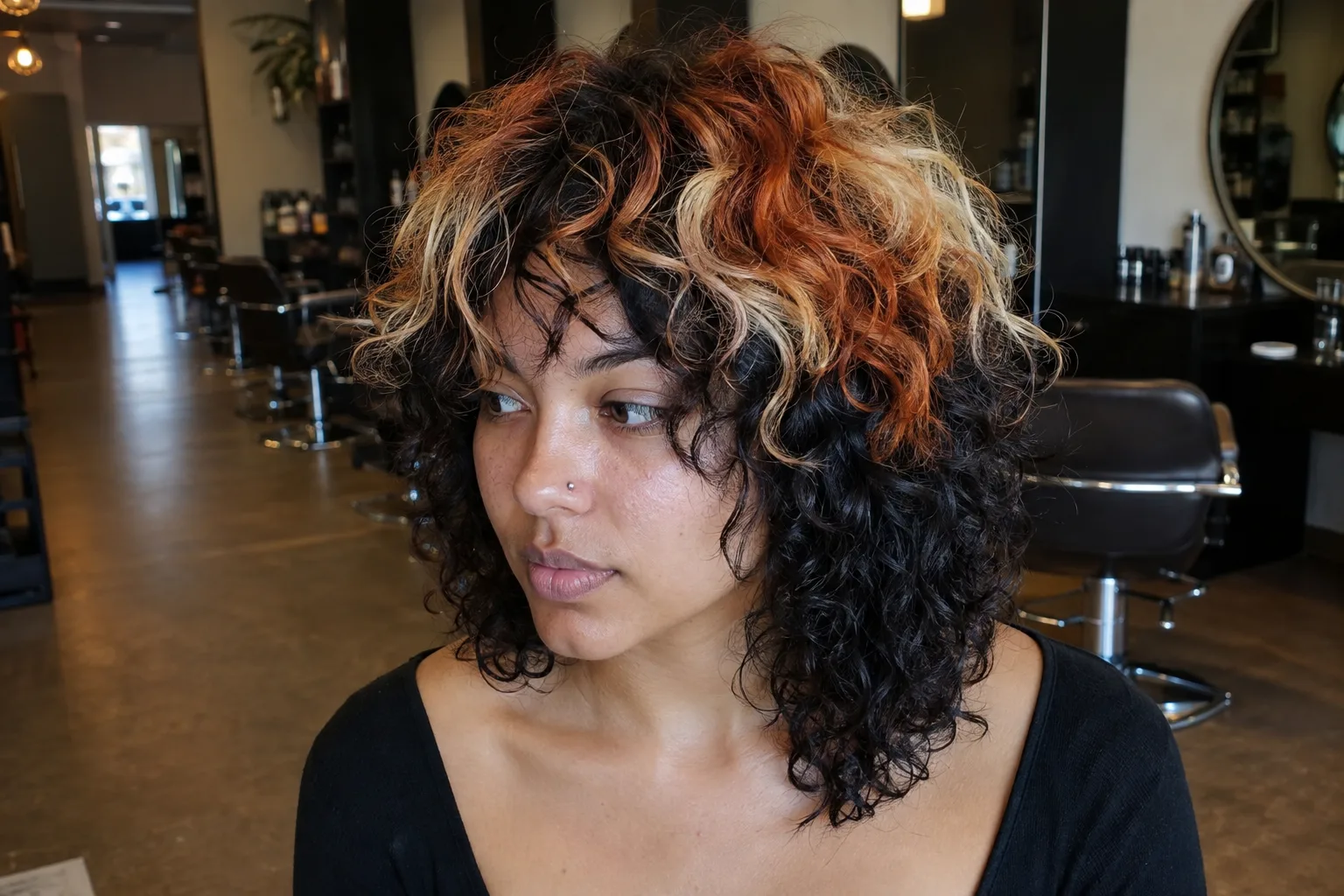
Curl helps you here. Texture breaks the patches into clusters, which hides any evenness in the placement for free.
Light brown and dark blonde hair
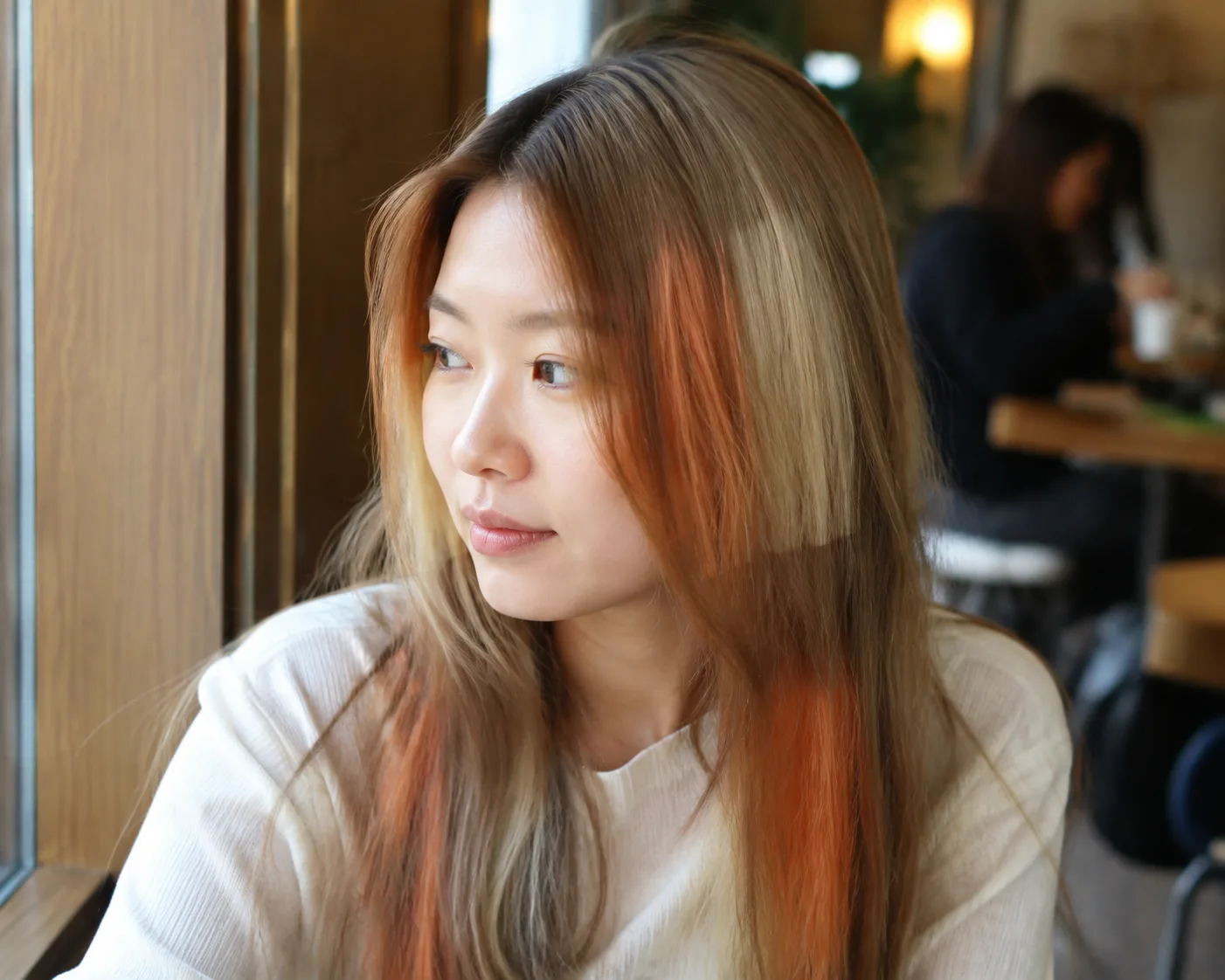
The lifting is easy on a lighter base. That is not the problem. The problem is the one in that photo: with less depth in the base, the copper stops being a bridge tone and becomes the loudest thing on your head. Keep it to a couple of pieces, and let the base do the work it is supposed to do.
If your base is already blonde, calico runs in reverse. You are having a dark tone put in rather than taken out, which means your regrowth is your natural color pushing through a dyed base. That grows out worse, not better.
Short hair
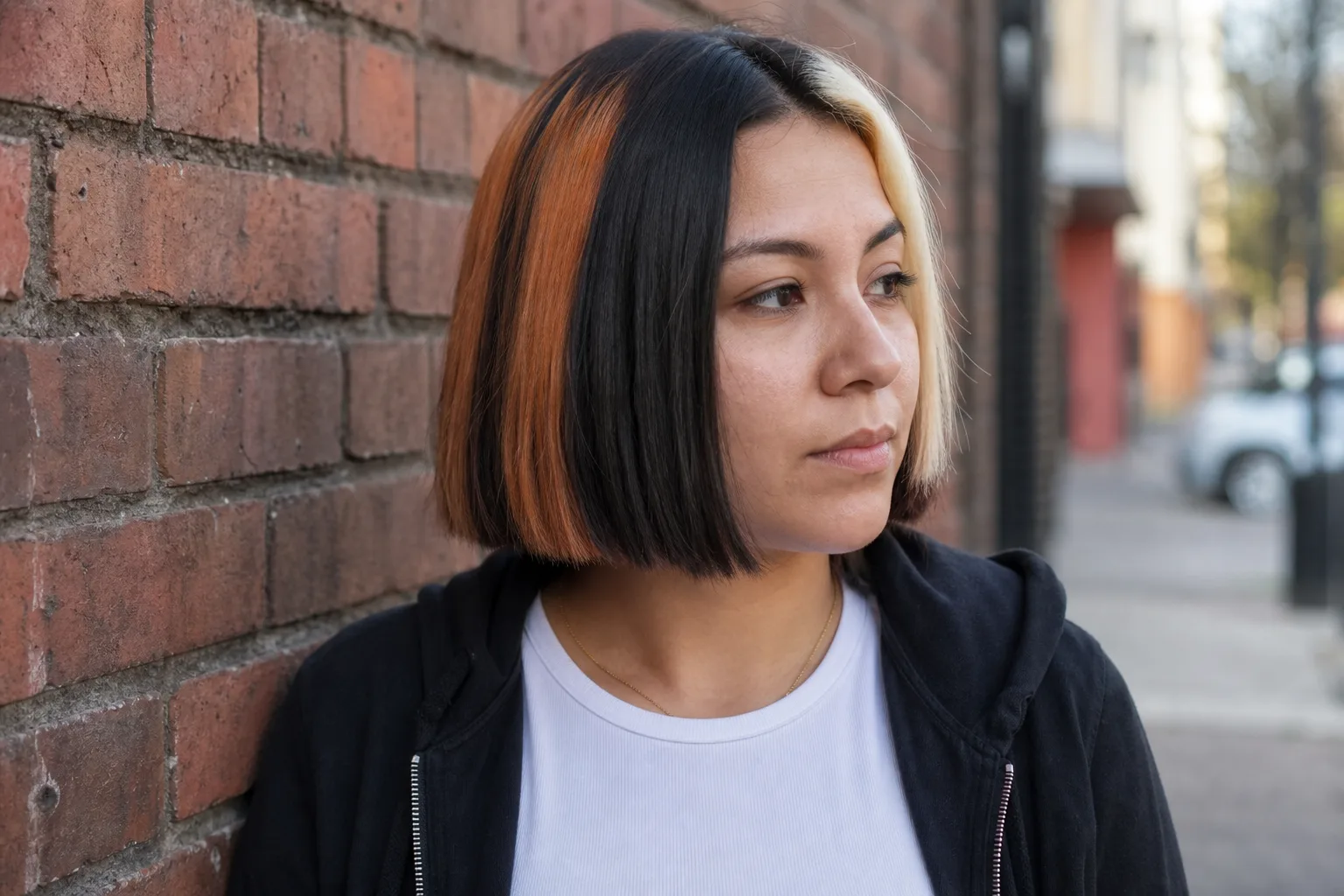
A chin length bob has room for two or three patches, not eight, and each one runs the whole visible length. That makes the width of every patch a much bigger decision than it is on long hair. Blunt ends make it harsher still, because there is no taper to soften where one tone stops.
On long hair you have the opposite freedom: room for six or seven patches at different heights, which is why most of the calico you have seen online is on long hair.
Where the color actually goes
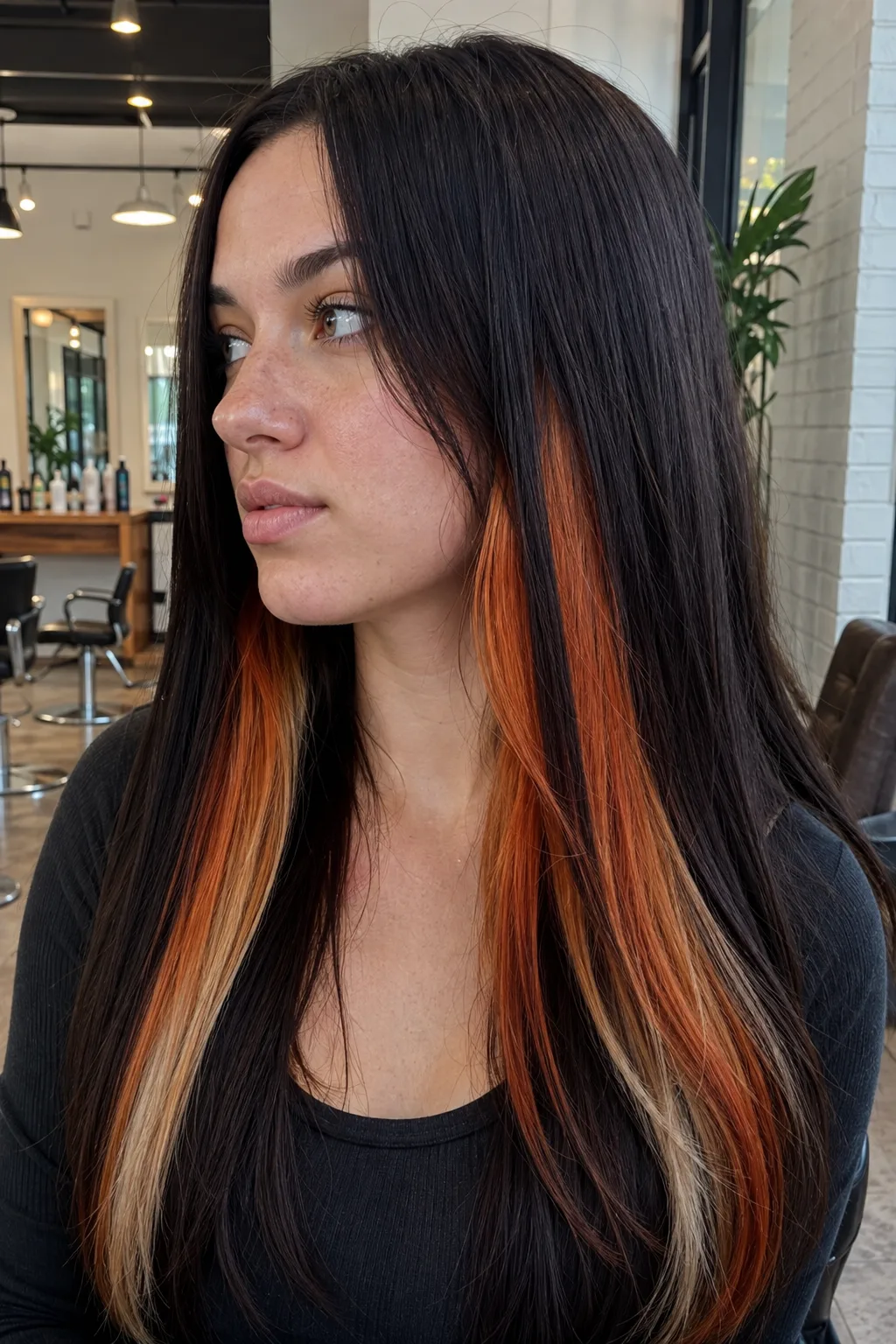
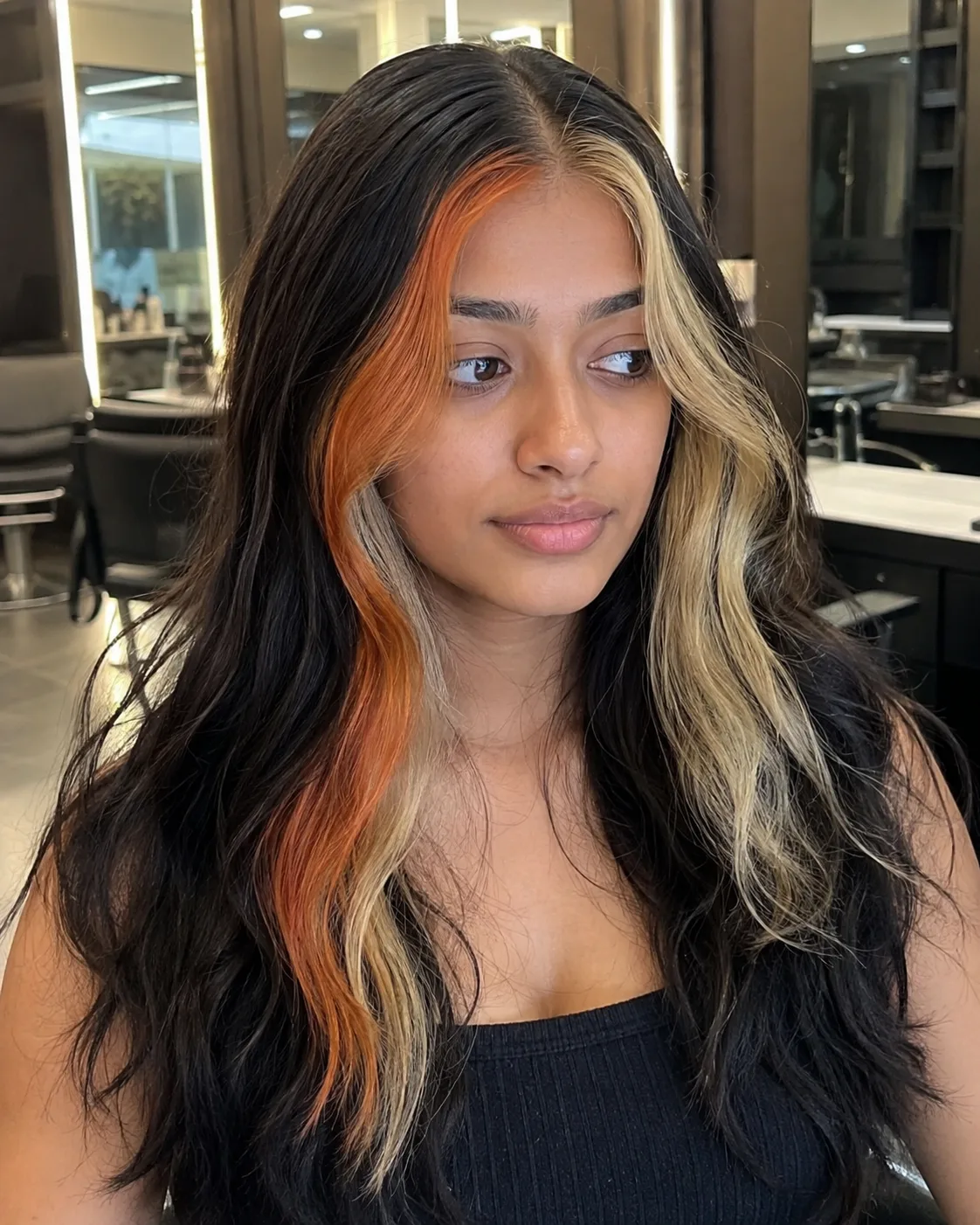
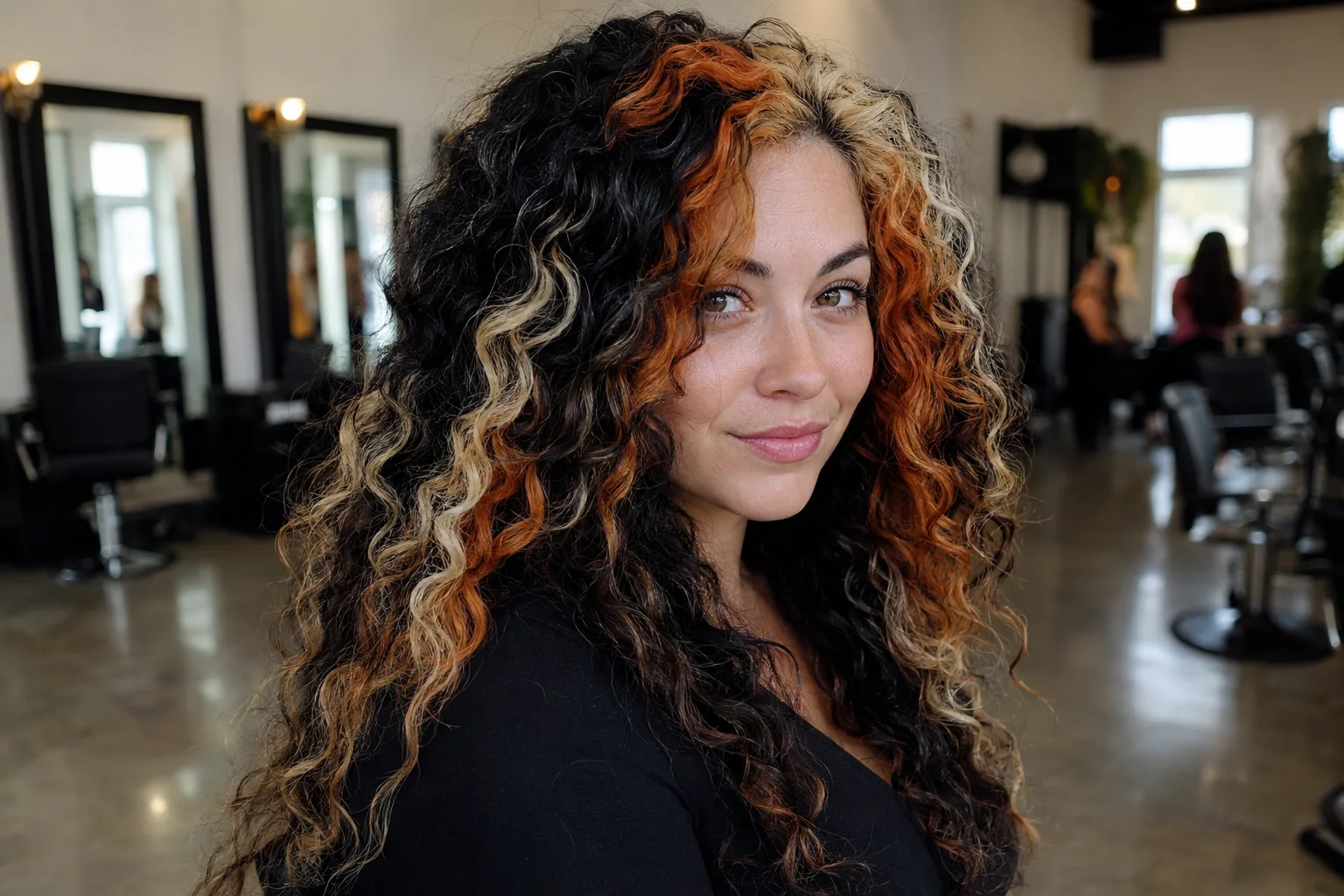
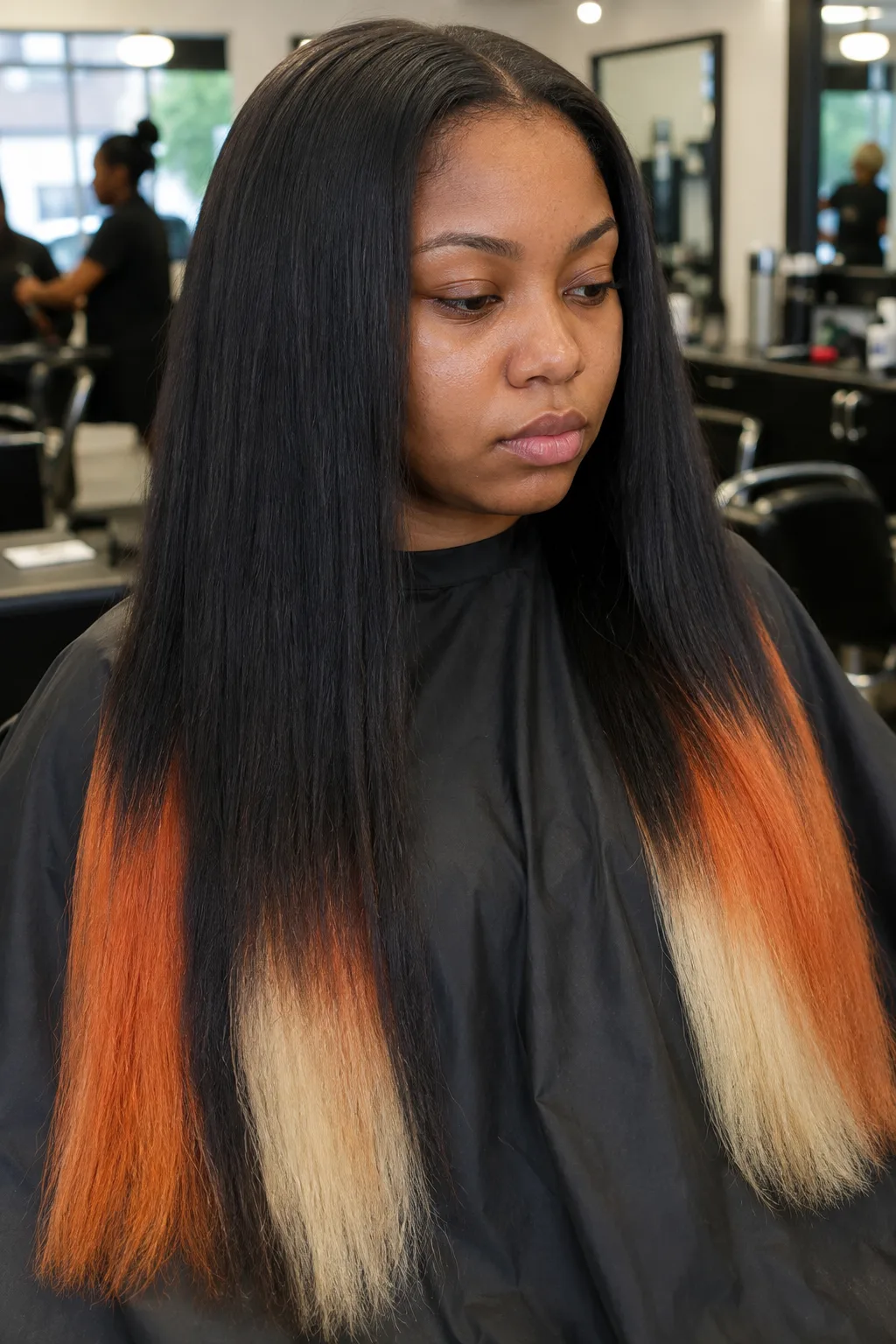
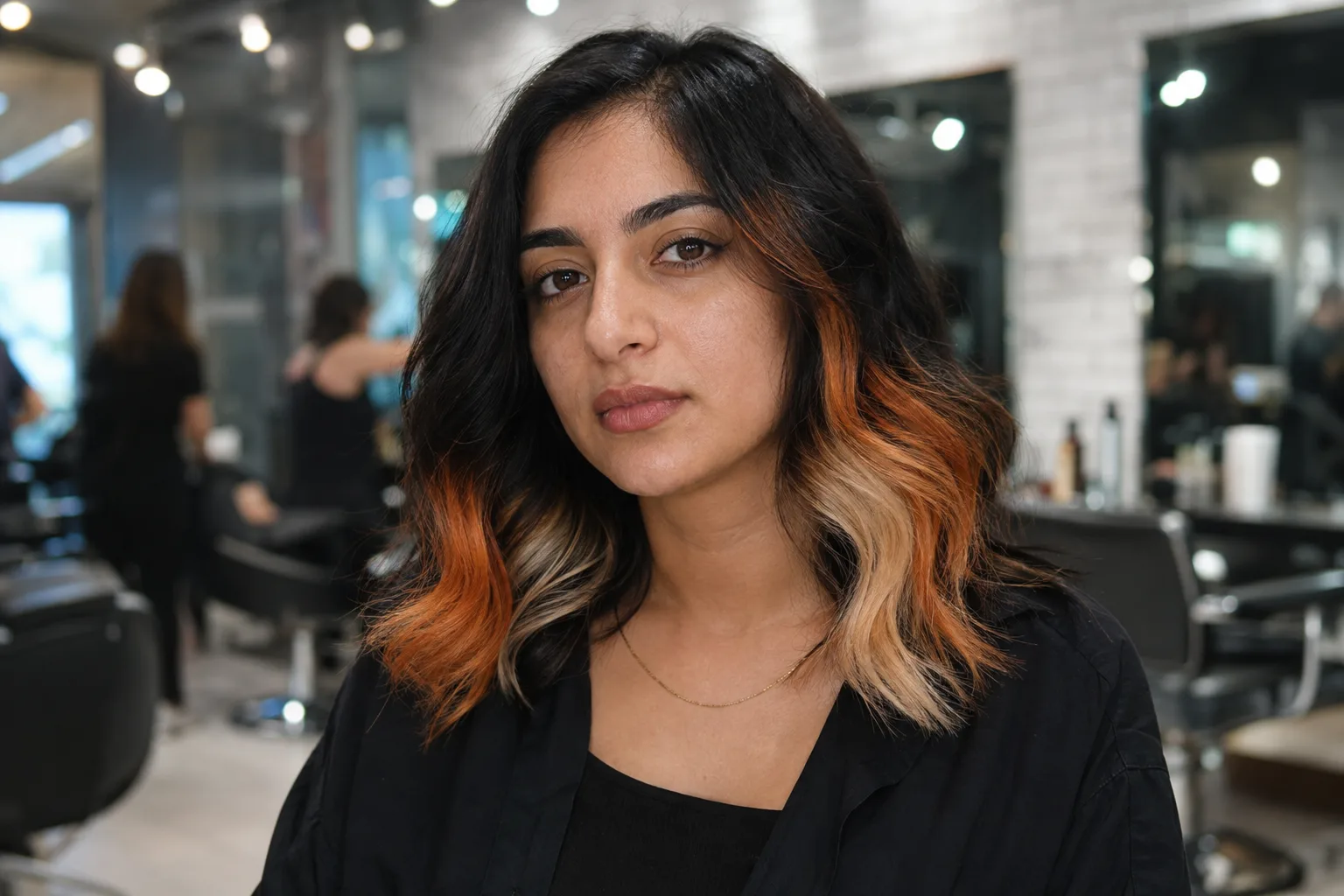
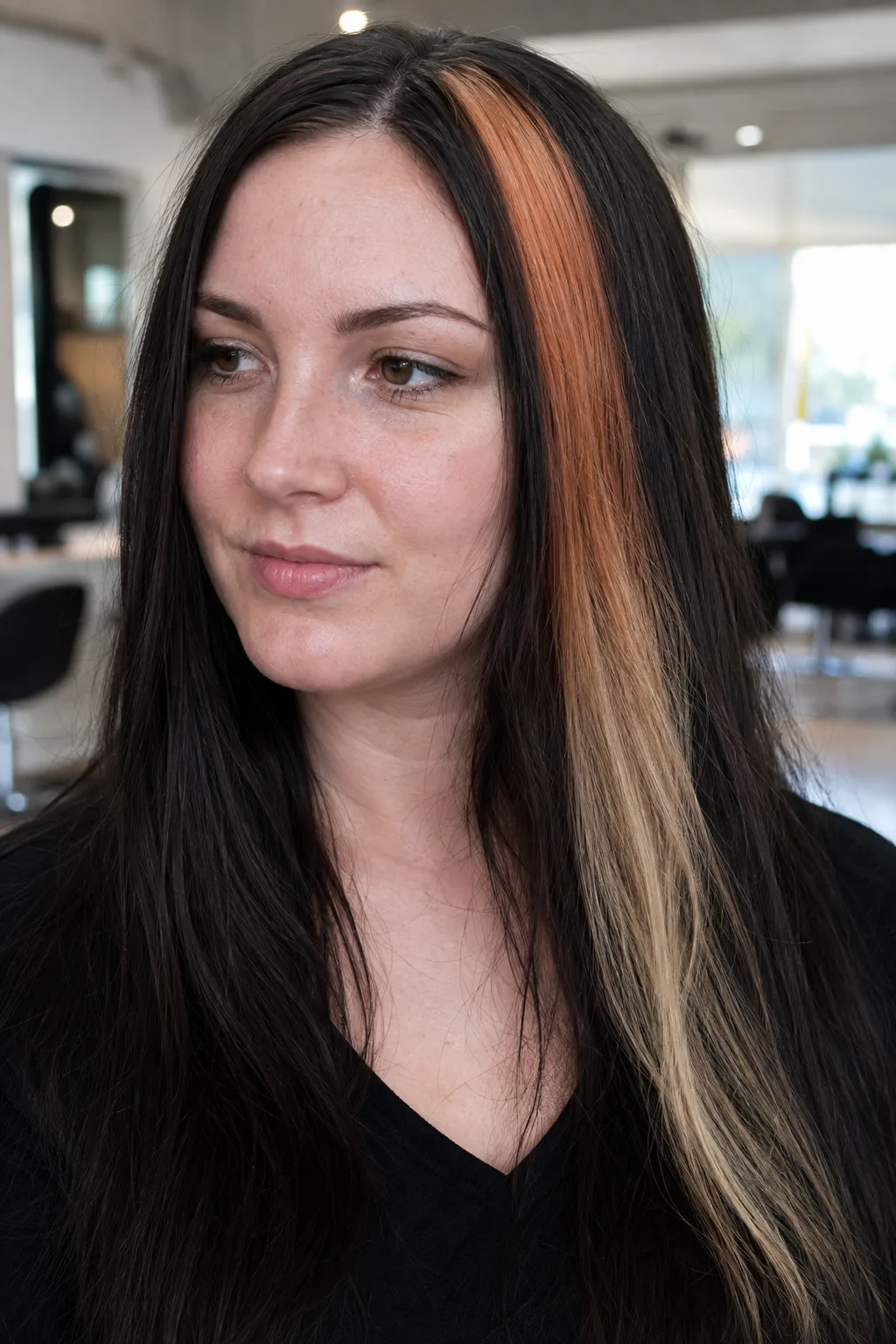
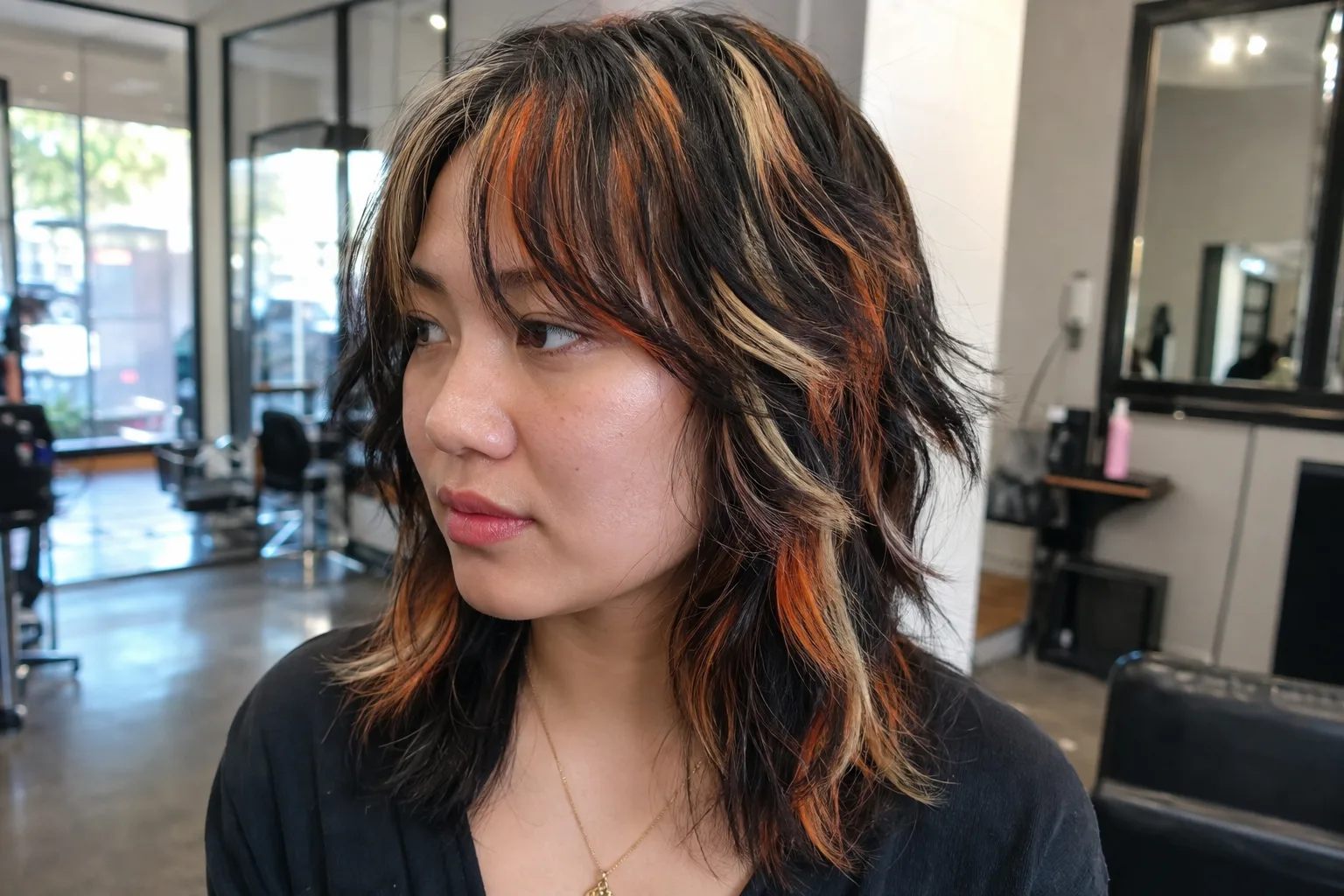
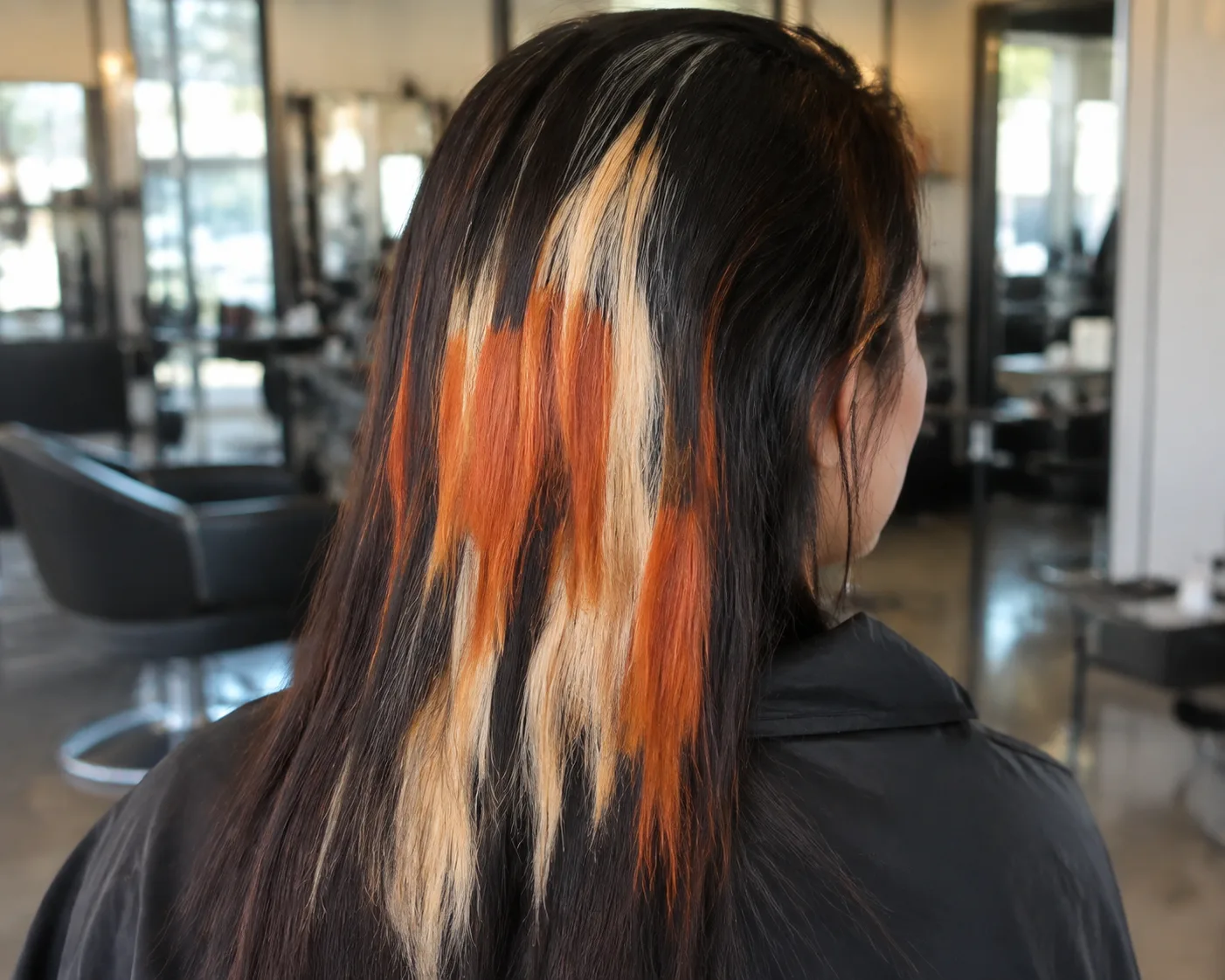
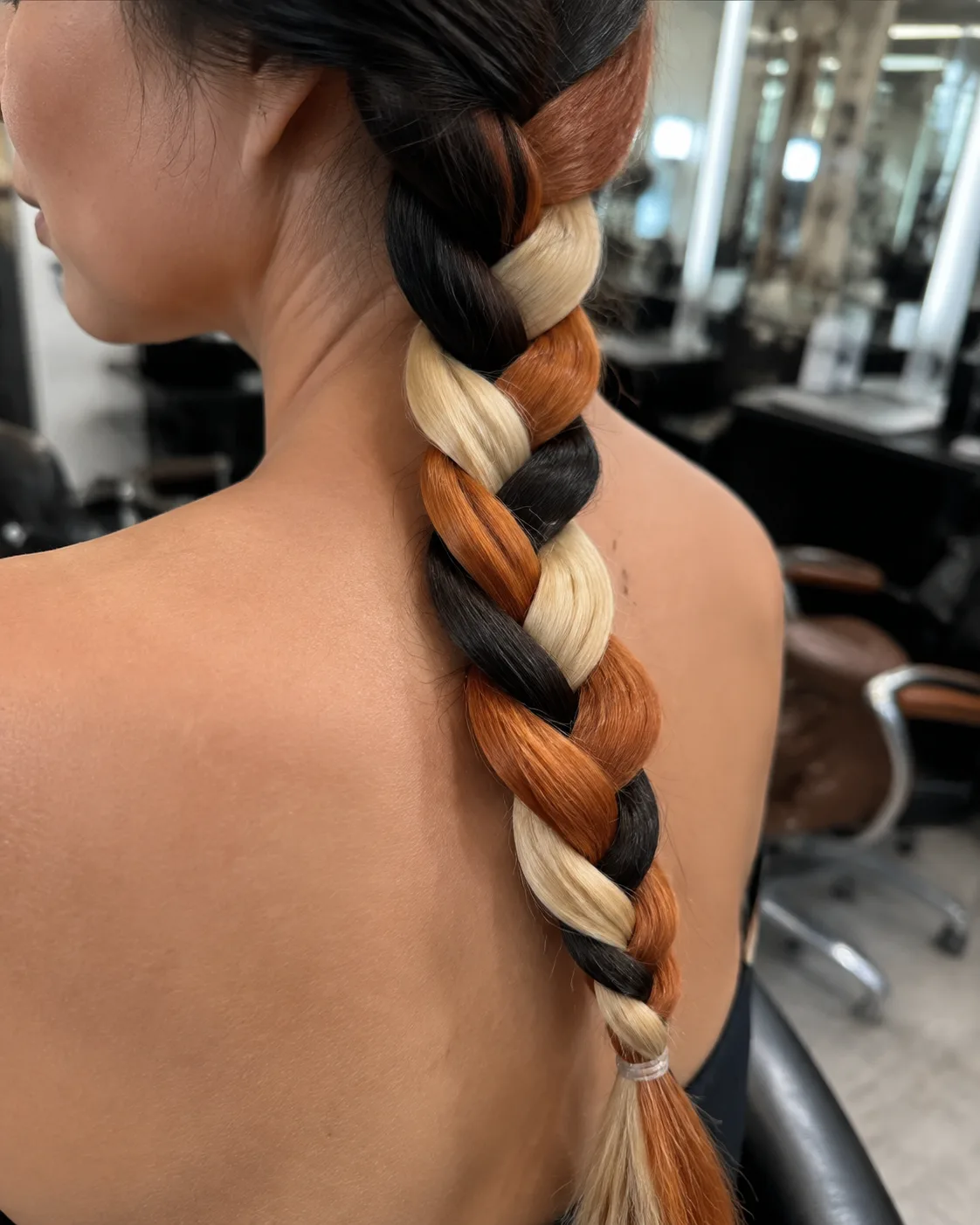
Placement is the decision that changes your life more than the shades do, because it decides whether this is visible in a job interview. Here are ten placements holding the same three tones constant and moving only where they sit.
Gallery10 photos · tap to enlarge
 Try this on me
 Try this on me
 Try this on me
 Try this on me
 Try this on me
 Try this on me
 Try this on me
 Try this on me
 Try this on me
 Try this on me
Two of those are worth calling out. The braid is the only placement that changes when you style it, because plaiting folds the three tones over each other into interlocking blocks you cannot get any other way. And the back panel is the one to pick if you want the color for yourself rather than for other people.
The version you can hide
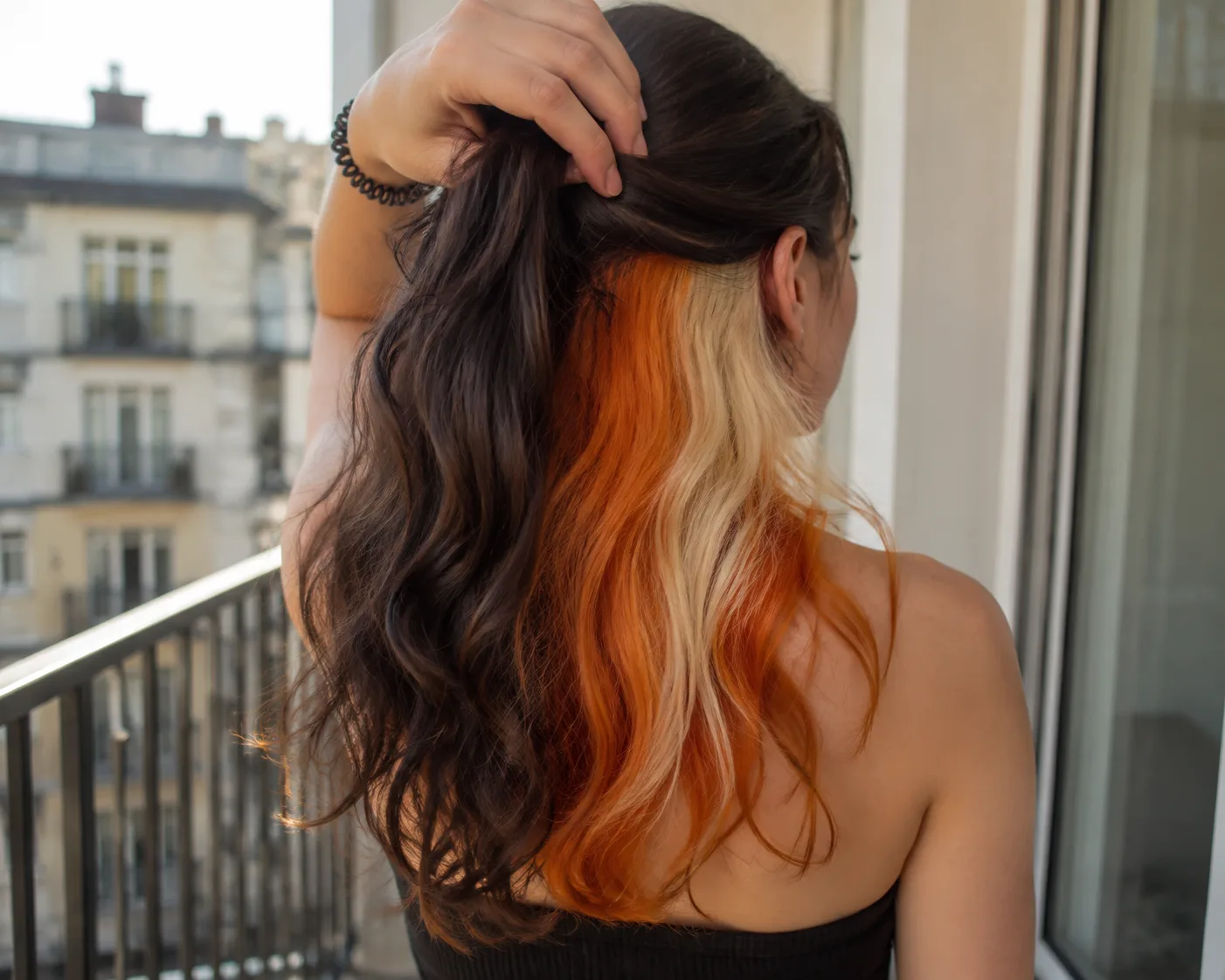
If you like calico but cannot wear it at work, the answer is to put all of it on the under layer. Worn down, your hair is your natural color. Lift it, tie it up, or move your head in the sun and the whole thing appears.
This is also the cheapest way to find out whether you like living with three tones, because the visible half of your hair is untouched and the grow out is invisible.
Say this to your barber
Calico placement, all of it on the under layer only, please leave the whole top canopy my natural color.
Yours could be here.
Start with one selfie.
One photo, twenty seconds, and you'll know. Free account, no card for your first render.
How to plan calico hair before you book
How to plan calico hair before you book
- Pick your three tones, in order
Name the base first, then the ginger, then the blonde, and say roughly what share each one gets. A colorist can work from 60, 25 and 15. They cannot work from a screenshot of someone with different hair.
- Decide where it sits before you decide how much
Underneath, front pieces, ends only, or all over. This one choice decides whether you can wear it to work, and it is much harder to undo than the shades.
- Ask what has to be lifted and how many times
If any section needs two rounds of lightener, you want to know that before you sit down, not while you are sitting there. Ask whether it can be split across two appointments.
- Get the price in writing for three processes
Calico is three separate color jobs on one head plus a toner. Ask for a written quote for all of it, including the toner and the blow dry, because a per foil price will not tell you what you actually pay.
- Book the toner appointment at the same time
The copper and the blonde both shift as they fade. Booking the refresh at the same time as the color is the difference between the look lasting and the look going brassy in a month.
What goes wrong
Even widths. The single most common mistake, and the one that makes calico look like a costume wig. Different widths on every patch, always.
Mirrored sides. If your left and right match, your brain reads it as a pattern rather than as a coat. Ask for the two sides to be deliberately different.
Skipping the ginger. Dark hair plus blonde chunks is not calico, it is chunky highlights from 2002. The ginger is what makes the other two make sense. If plain brown hair with blonde highlights is what you actually wanted, that is a simpler and cheaper job than this one.
Too much blonde. Once the pale tone is more than about a sixth of your head, the base stops being the base. You have now committed to blonde maintenance without meaning to.
Blonde that never got light enough. A cream tone that stalls at yellow makes the whole thing look brassy, and no toner fully fixes underlifted hair. This is the one that costs money to correct.
No root shadow. Color that starts at the scalp on every patch grows out as a hard line all the way round. A few inches of untouched root on most of the patches buys months.
Is calico hair high maintenance?
Yes, more than a single process color and more than balayage, because you are maintaining two lifted tones that fade in opposite directions. The copper fades out and dulls, the blonde fades warm and goes brassy, and they do it at different speeds.
What actually keeps it looking right is toner, not color. Most of the upkeep is refreshing the two lifted tones rather than redoing the whole head. Put the color on the under layer or the ends and that upkeep drops sharply, because the pieces that fade are the pieces nobody is looking at.
Copper is the shortest lived of the three. Warm reds sit on the outside of the hair shaft rather than deep inside it, so they wash down faster than anything else on your head.
Can you see it on your own face first?
You can, and you should, because calico is the kind of color that looks incredible on the person whose photo you saved and completely wrong on you. The variable is not the shades. It is how much contrast your skin can carry next to a copper patch at your jaw.
The free way is to hold physical color swatches against your face in daylight, next to a window and with no makeup on. Any decent salon has a swatch ring and will do it in five minutes at a consultation. It is genuinely useful, and it is free, so do that first.
The wall it hits is that swatches show you the tones one at a time. Calico is not one tone, it is three arranged in a specific ratio, and the whole question is whether that arrangement works on your head. A swatch ring cannot answer that, and neither can a photo of somebody else.
That is the gap our virtual hair color try on fills: you upload one selfie and see the actual combination on your own face before anyone mixes anything. The first look is free and needs no card, and it includes one style with one color on it. Paid plans start at $9 a month if you want to compare several placements side by side, with a color on a cut costing 5 credits. The full pricing is on one page.
If the answer turns out to be no, that is a good outcome for the price of a selfie. And if you want the look without the commitment at all, a human hair wig gets you there with nothing done to your own hair.
Calico hair vs balayage, ombre and money piece
The four get confused constantly, and the differences are simple once you see them side by side.
| Look | How many tones | Edges | Where it sits |
|---|---|---|---|
| Calico | Three, unequal shares | Visible, patchy, no two the same | Wide patches anywhere on the head |
| Balayage | Two, blended | Soft and invisible | Painted through the mid lengths and ends |
| Ombre | Two | One horizontal transition | Dark at the top, light at the bottom |
| Money piece | Two | Contained and deliberate | The two sections framing the face |
The short version: calico is patchy on purpose. Balayage is the opposite instinct, which is why asking for calico and getting balayage is such a common disappointment. If what you actually wanted was one lighter tone worn softly, a blonde or a balayage is the cheaper and lower maintenance choice. And if you only want the brightness around your face, money piece hair matched to your base color is the contained version of the same instinct.
The one thing to get right
If you take one line into the salon, take this one: three tones, unequal, and the ginger is bigger than the blonde. Everything else is placement, and placement you can change later. A colorist who evens out the widths has given you a striped wig, and no toner fixes that.
Decide where it sits before you decide how loud it is. Under layer if you have to look normal on Monday, front pieces if you want it seen, all over if you have already made up your mind.
Frequently asked questions
Yes. It is more upkeep than balayage because two lifted tones are fading in different directions at different speeds, and the copper fades fastest. Most of the maintenance is toner rather than a full recolor. Putting the patches on the under layer or the ends cuts it down a lot.
It means hair colored in three tones at once, a dark base with ginger and cream patches, arranged unevenly. The name comes from calico cats, which carry black, orange and white in a random unrepeating pattern.
No. Balayage is a painting technique that blends two tones with invisible edges. Calico is three tones with visible edges and uneven patches. A colorist can use balayage brushwork to place calico, but the result is meant to look patchy, which is the opposite of what balayage is for.
No, and the difference is the ginger. Highlights are lighter pieces of one tone through a base. Calico is a third warm tone bridging the darkest and lightest, in wide unequal patches rather than fine strands. Take the ginger out and you do just have chunky highlights.
It costs more than a single process color anywhere you go, because it is three color applications plus a toner in one appointment. Prices vary far too much by city and salon for a number here to mean anything, so ask for a written quote covering all three tones, the toner and the blow dry rather than a per foil price.
Not in the calico cat sense. Human hair does grow in more than one shade on the same head, and natural red and blonde patches are real, but the three way split with hard edged patches does not occur naturally. Calico hair is always colored.
The copper does. Warm red tones sit closer to the surface of the hair shaft than other pigments and wash out faster, so the ginger is usually the first thing to go dull. The blonde does not fade so much as turn warm and brassy. Cool water, sulfate free shampoo and a toning appointment on the calendar are what slow both down. If you are tempted to add the copper at home with a drugstore vivid, check how Splat hair dye behaves first, since it stains more and washes out less than the box suggests.
It is still being written about and asked for, and it has held on longer than most color trends because it works on dark hair, which most trends do not. If you want to hedge, keep it to a few patches or to the under layer, which lets you grow it out quietly if it dates.
Preview it on your own photo: Virtual Hair Color Try-On.
Share article
About the author

More articles
Trends and Celebrity · 15 min
70s Hairstyles: 10 Iconic Looks and How to Get Them Now
The defining 70s hairstyles, from the Farrah flip and the shag to the afro and the wedge, which one suits your hair type, and the one tool that turns every 70s cut into a modern look.

Trends and Celebrity · 14 min
Splat Hair Dye Review: Why It Won't Fully Wash Out
Splat is cheap, bright and very good on light hair. It also stains everything and rarely washes fully out of bleached hair. Which Splat kit suits your starting color, how long it really lasts, how to use it, and how to see the shade on your face first.
Women's Haircuts · 15 min
Brown Hair With Blonde Highlights: 10 Ideas, 1 Rule
The blonde should sit two to four levels above your base, not six. Ten brown hair with blonde highlights ideas sorted by how dark your brown is, plus what to ask for and what the upkeep really costs.