Grey Hair Transition: Real Timelines and 3 Routes
Oleh Onysko Updated 27 September 2026 16 min read
In this article
A grey hair transition takes 12 to 24 months if you refuse to cut your hair, and 3 to 6 months if you are willing to go short. Nothing else moves that number. Hair grows roughly half an inch a month, and permanent dye does not fade off the ends, so the only tool that genuinely removes the old colour is a pair of scissors.
That framing is missing from almost every guide you will read. The forums argue about clarifying shampoo, toners and purple conditioner. None of it shortens the wait by a day. What you are actually choosing is how much length you are willing to lose, and how much contrast you are willing to wear while the rest catches up.
The fear underneath this search is not vanity. It is looking unkempt for a year in front of people who will notice. That is avoidable, but only if you pick a route deliberately in month one instead of drifting into the worst one by month eight.
How grey actually arrives
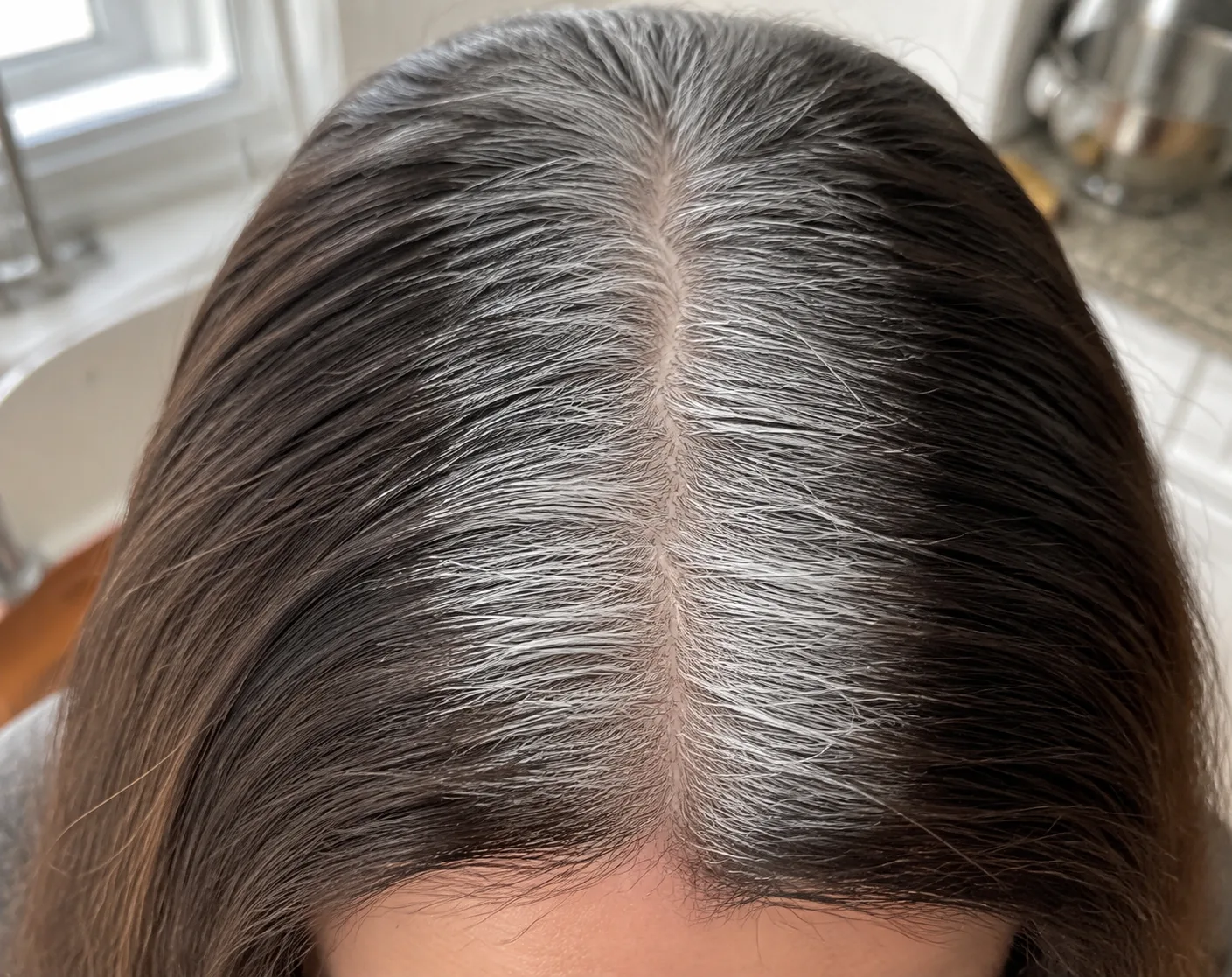
Grey does not grow in as a solid sheet. Follicles stop producing pigment one at a time, so what appears is a mix: white and silver strands threaded through whatever colour you already had. It shows up first at the temples and along the part, which is why you spot it in the mirror months before anyone else does.
This matters for the decision ahead. If your natural grey is 20 percent silver against dark brown, the grown-out result will read as salt and pepper, not silver. If it is 80 percent, it will read as silver. You do not get to pick, and no photo of somebody else's transition tells you which one you have. The only honest preview is your own roots, or a grey hair filter that puts the colour on your own face before you commit two years to it.
How long does a grey hair transition take?
Long enough that you should plan it, short enough that people finish it. The arithmetic is simple: every inch of hair you intend to keep at the end has to be new growth, and new growth arrives at about half an inch a month. The American Academy of Dermatology puts average scalp hair growth at roughly half an inch per month, which is the number every timeline below is built on.
| Length you want when it is over | New growth needed | Months at half an inch |
|---|---|---|
| Pixie, 2 to 3 inches | 3 inches | About 6 |
| Jaw-length bob, 6 inches | 6 inches | About 12 |
| Collarbone lob, 10 inches | 10 inches | About 20 |
| Mid-back, 16 inches | 16 inches | About 32 |
Read that table again, because it is the whole article. Your timeline is not set by your hair, your colourist or your patience. It is set by the length you refuse to cut. A woman who accepts a chin-length bob is done in a year. A woman who wants to keep mid-back length is signing up for nearly three.
What the demarcation line looks like month by month
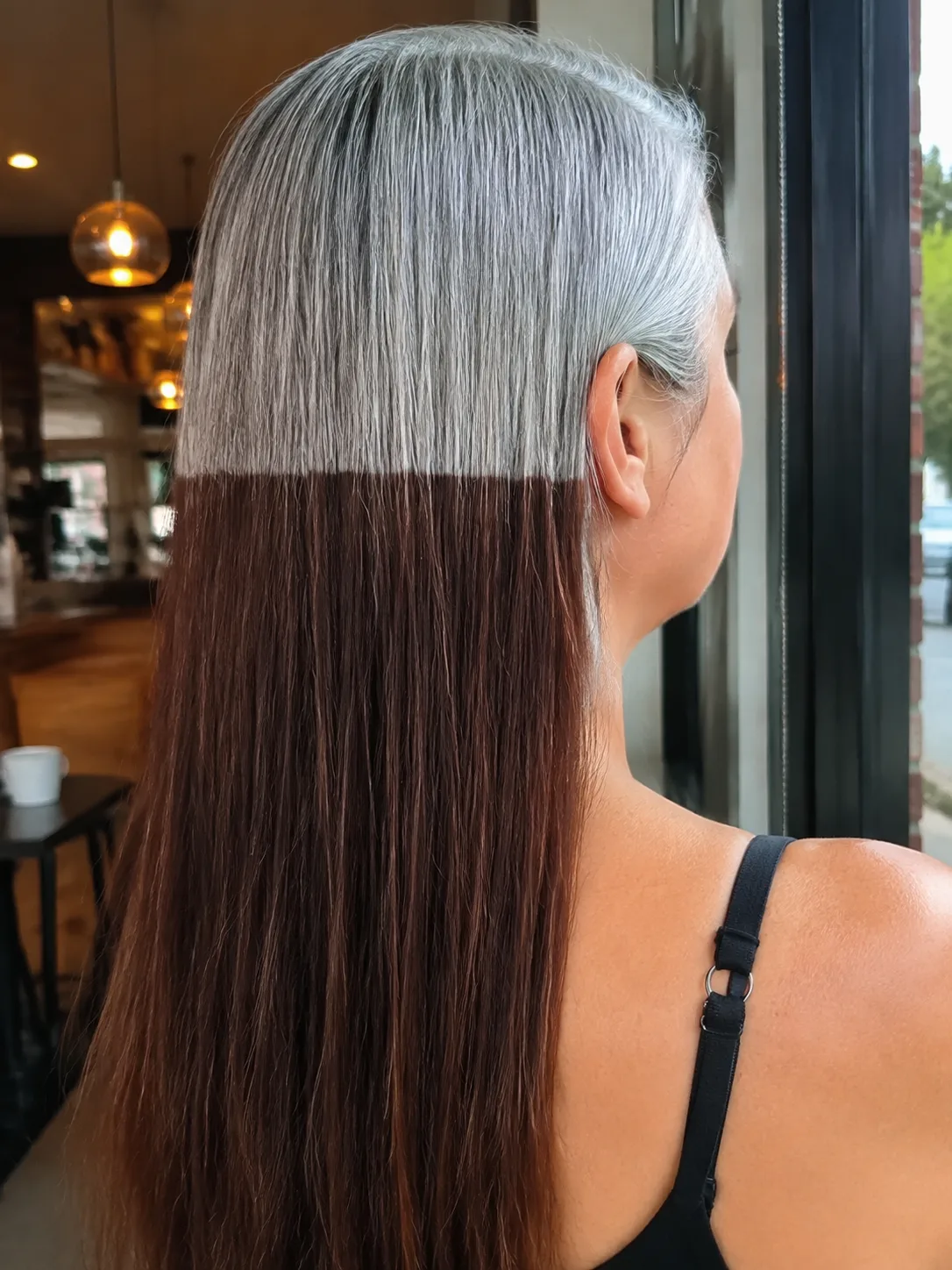
The demarcation line is the horizontal edge where your natural regrowth meets old dye. How visible it is depends almost entirely on contrast: the further apart the two colours sit in lightness, the harder the line reads. Silver roots against jet black box dye is the worst case in existence. Silver roots against dark blonde is barely a line at all.
Here is the honest stage by stage, assuming you do nothing to help it:
- Months 1 to 2. Half an inch to an inch. Visible at the part when you look down, invisible to everyone else. This is the stage where most people quit, and quitting here costs you nothing but the restart.
- Months 3 to 4. Two inches. The band is now obvious at the part and temples in daylight and in photographs. It reads as roots, not as a style.
- Months 5 to 7. Three inches or so. The line clears the cheekbones. This is the peak awkward window and the point where the three routes below stop being theoretical.
- Months 8 to 12. Four to six inches. The line sits around the ears and jaw. Paradoxically it often looks better here than at month four, because there is now enough silver to read as a deliberate two-tone rather than neglect.
- Month 12 onward. More than half of what people see is your own colour. From here every trim is progress, not damage control.
What it looks like from your starting colour
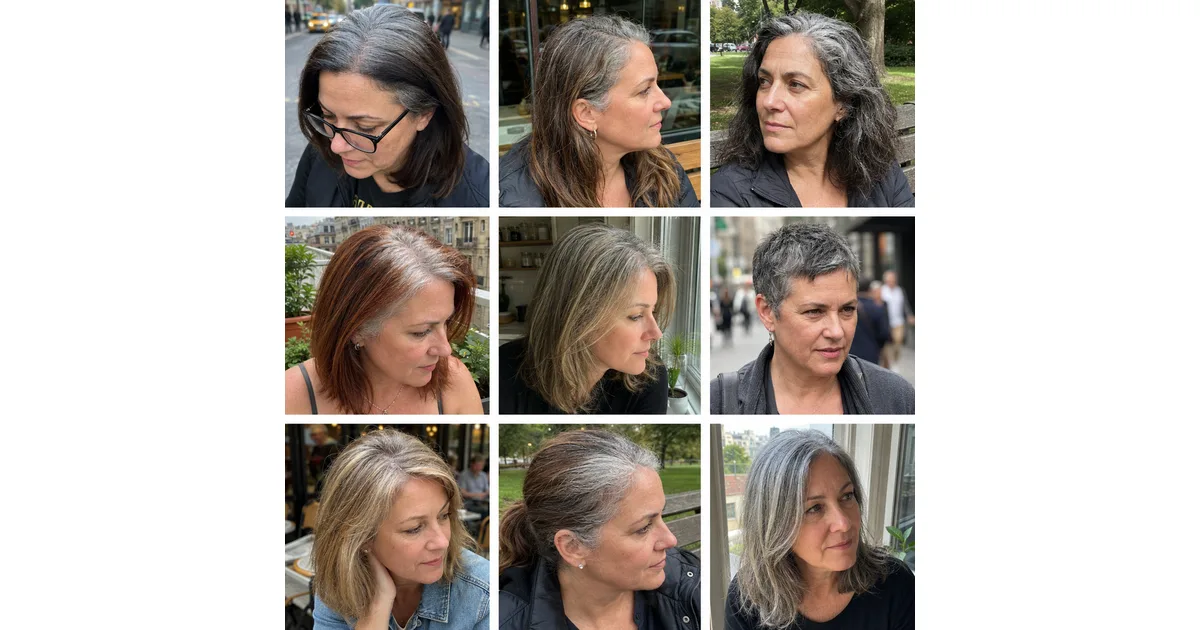
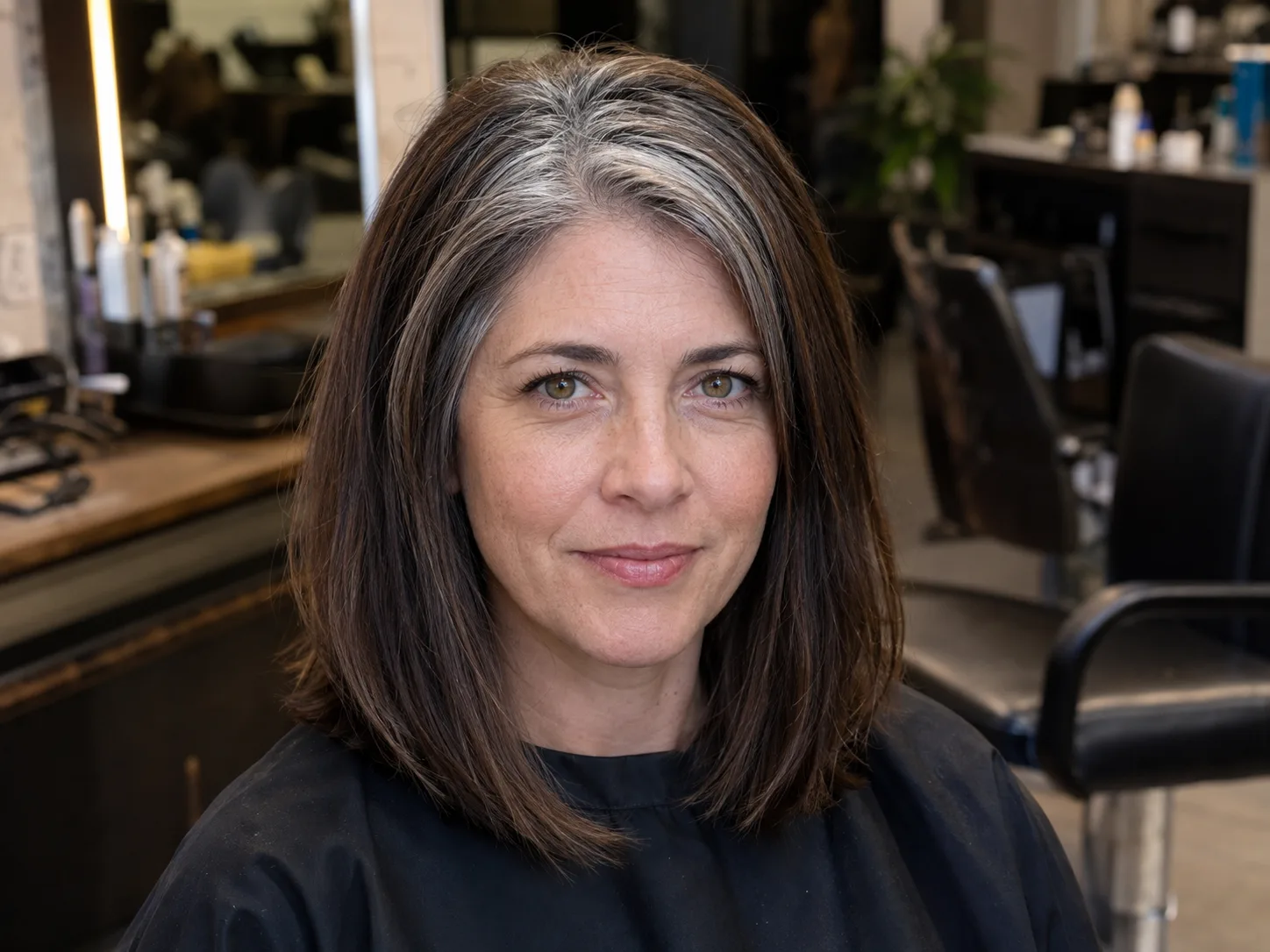
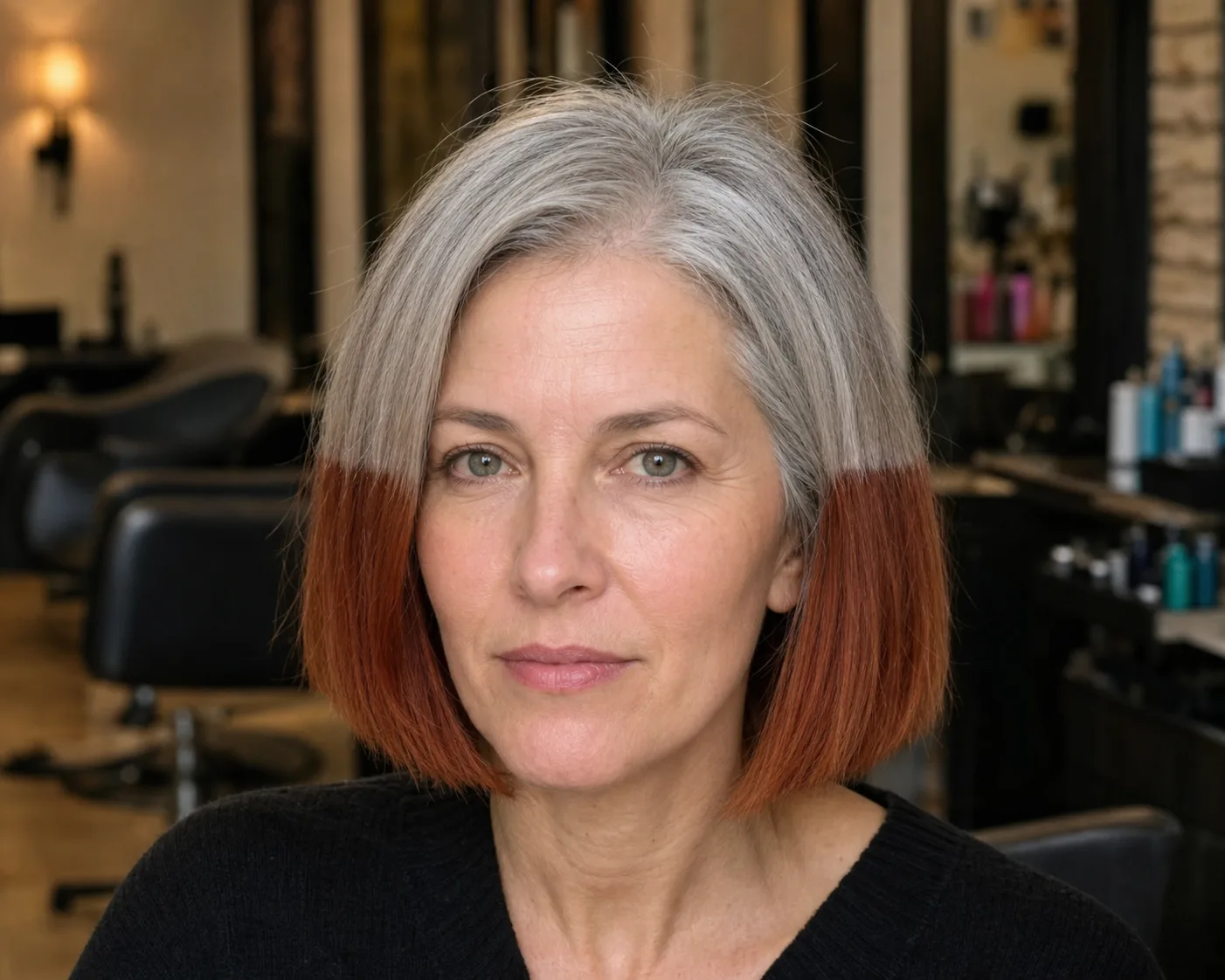
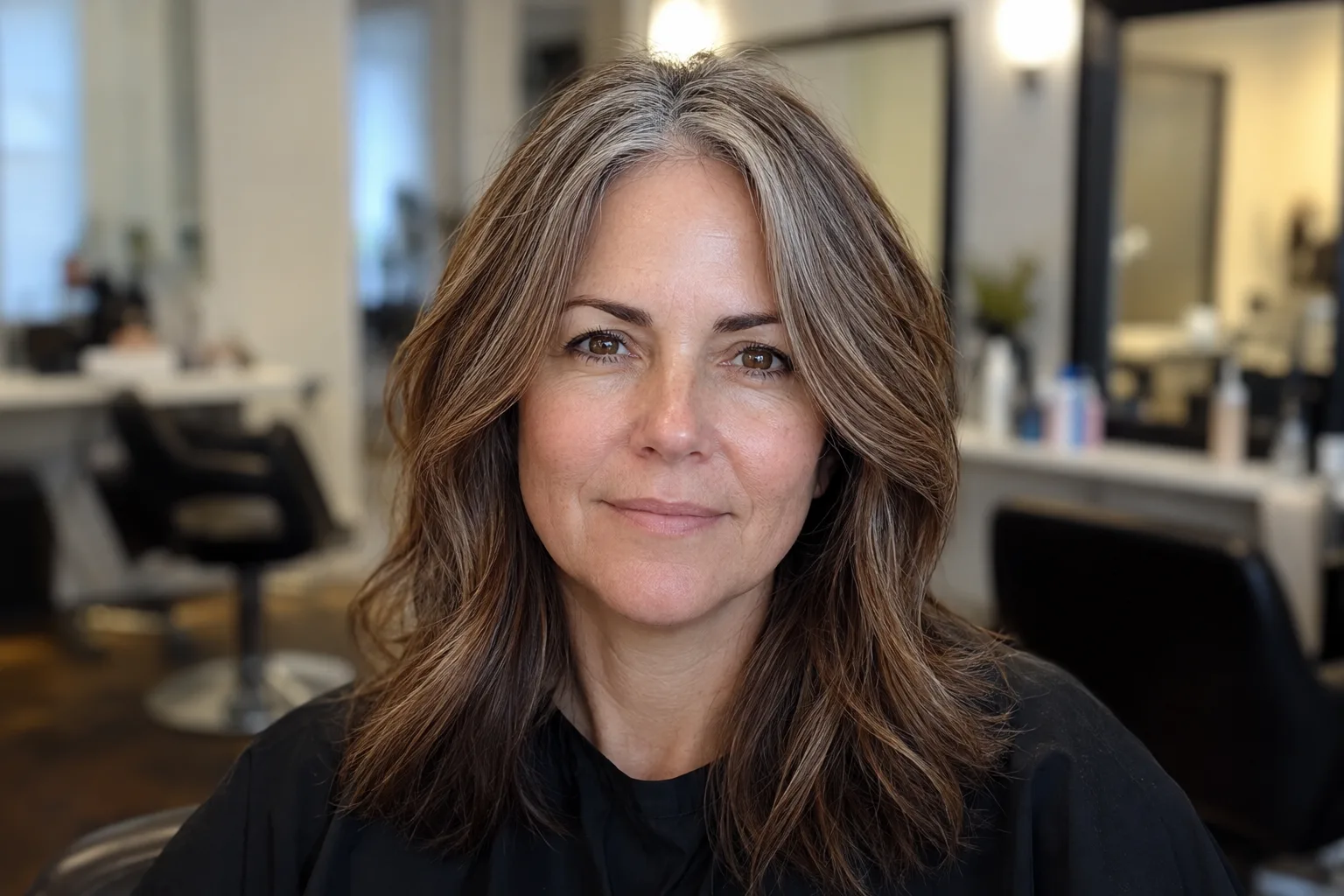
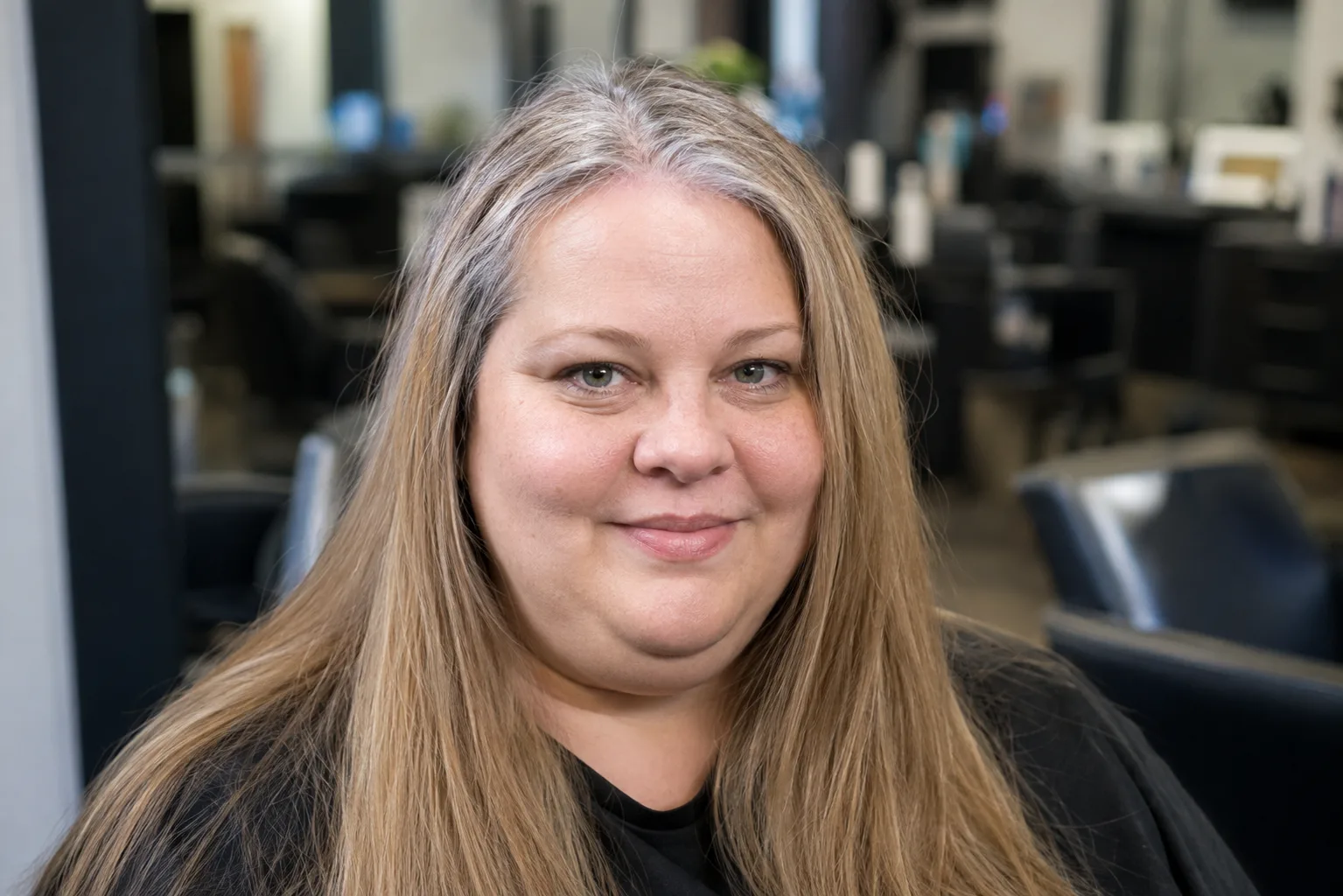
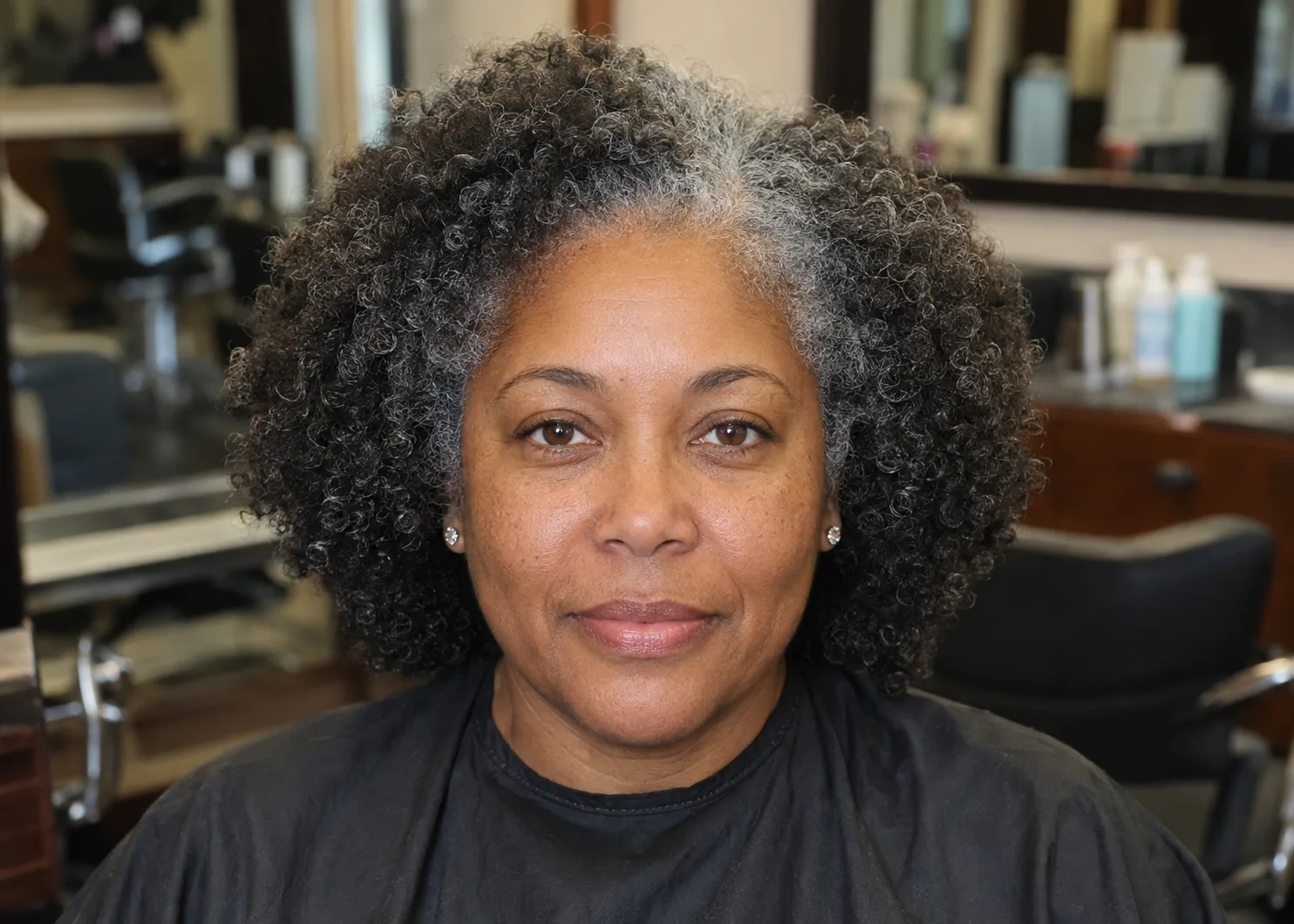
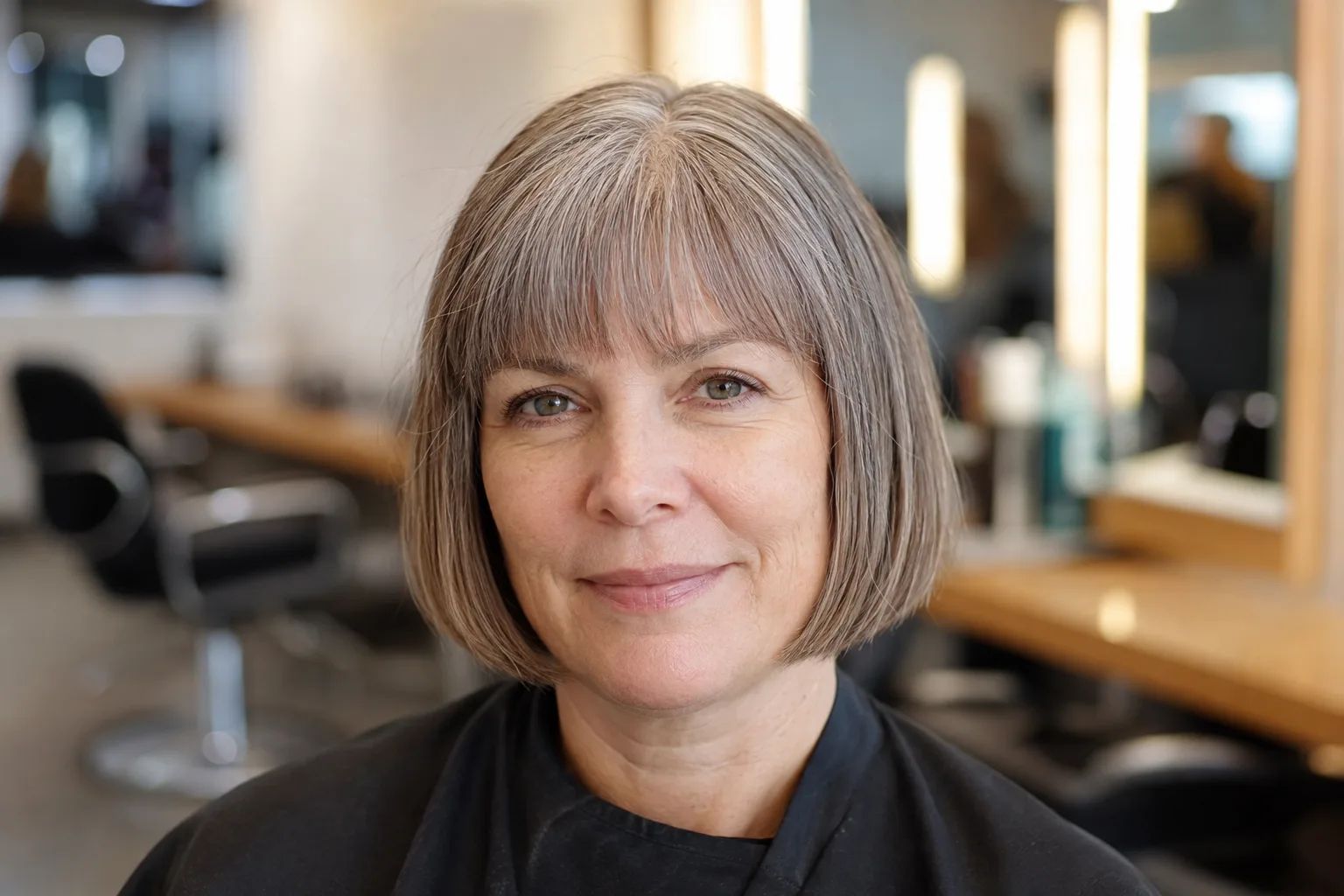
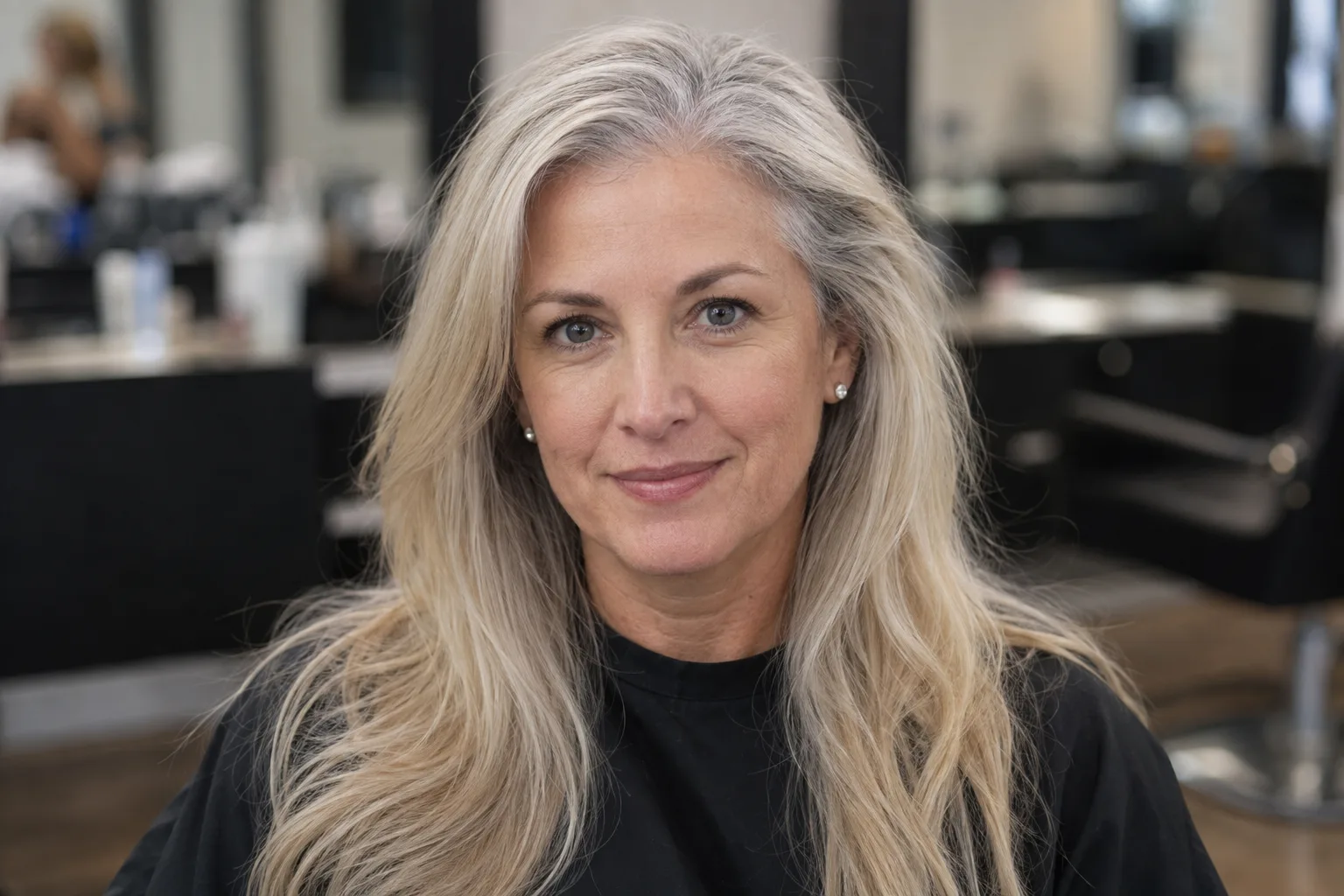
The single best predictor of how rough your transition will be is the colour you are leaving. These ten are the same process seen from ten different starting points, from the easiest case to the hardest.
Gallery10 photos · tap to enlarge
 Try this on me
 Try this on me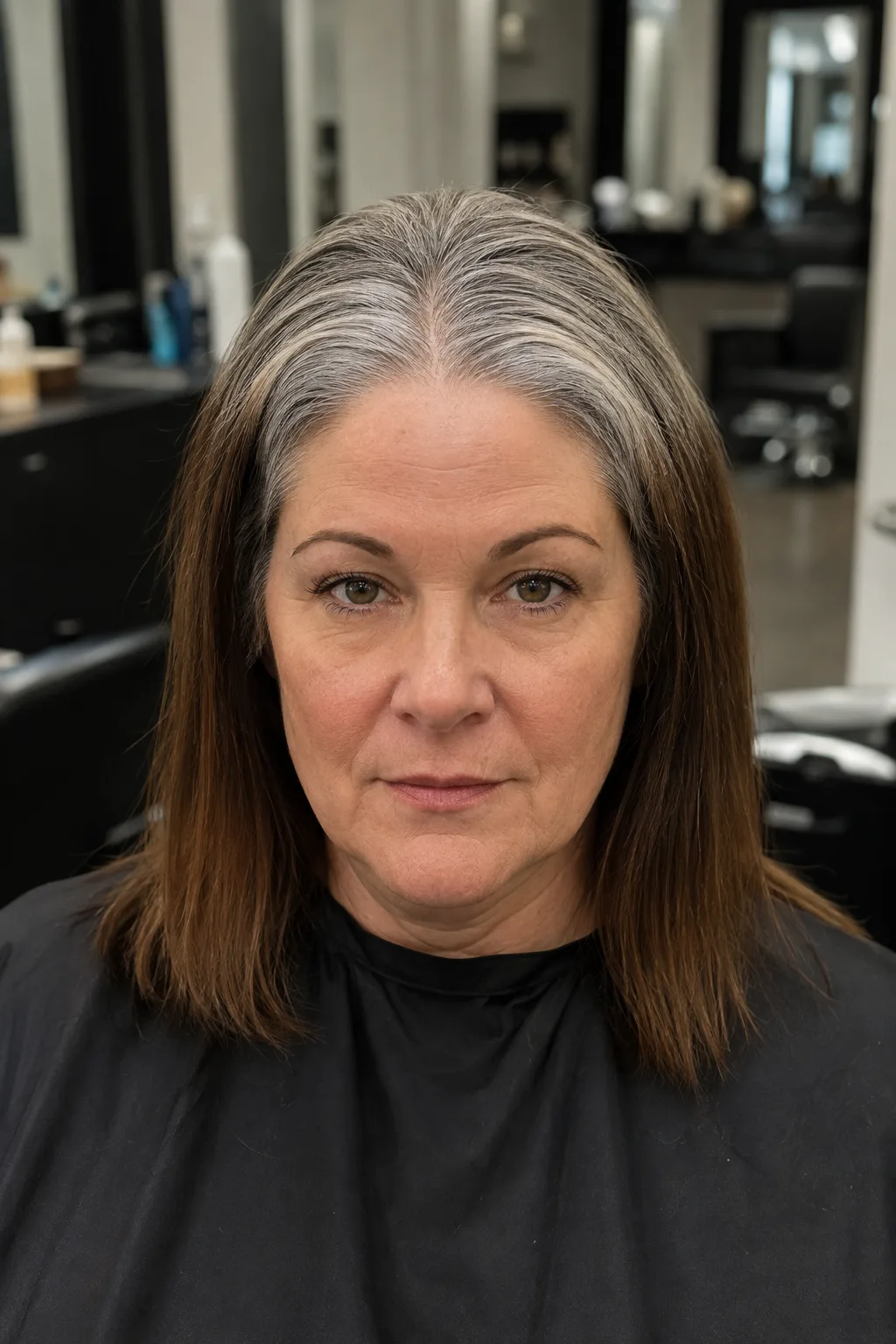
 Try this on me
 Try this on me
 Try this on me
 Try this on me
 Try this on me
 Try this on me
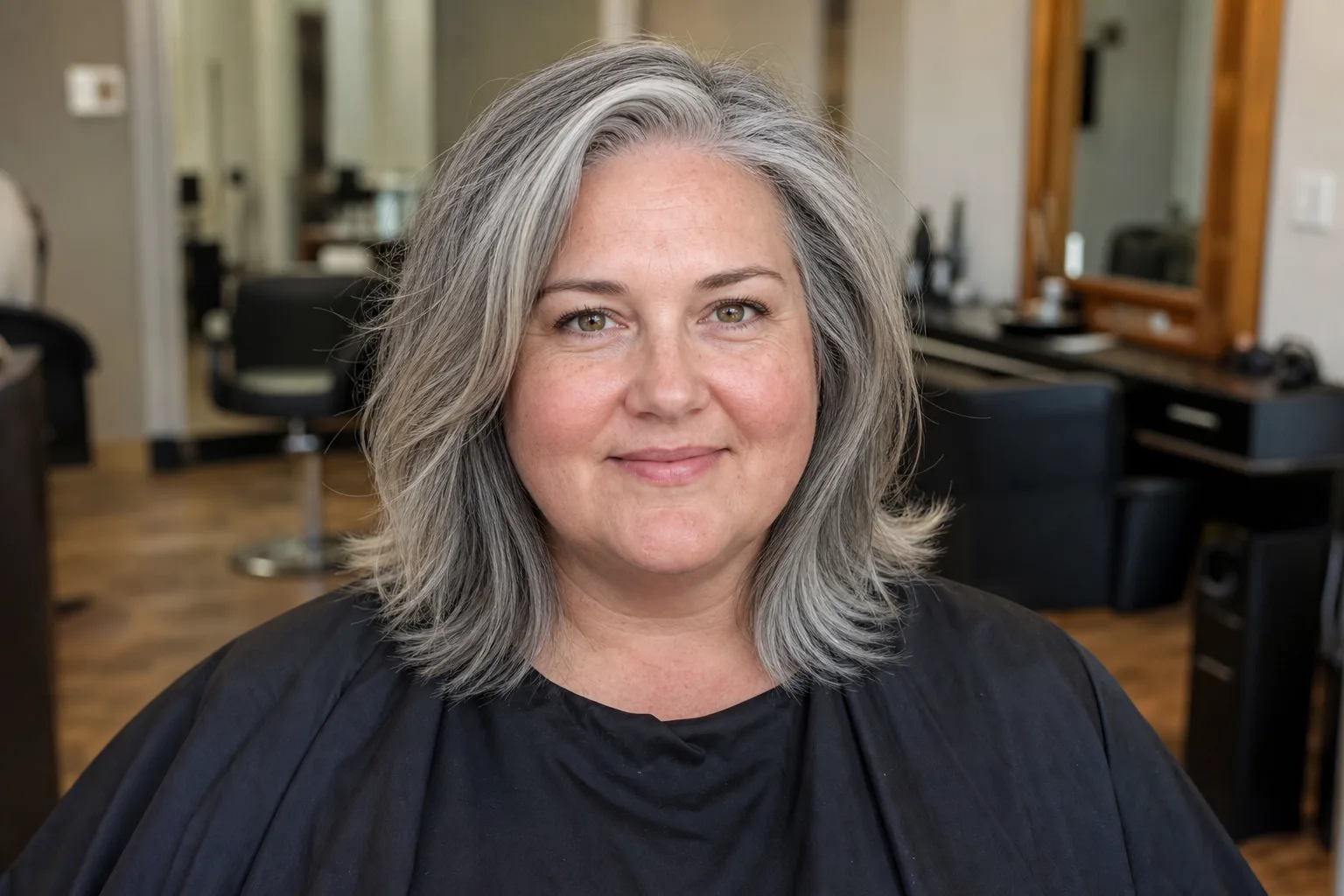
Two things are worth noticing. The red-to-silver tile is not badly lit or badly shot; that is genuinely what warm dye against cool regrowth looks like, and it is why colourists push red clients hardest toward blending or a cut. And the fully grown out result is not one flat silver. Real grey is dimensional, with darker pewter underneath, which is exactly the quality a box of silver dye cannot reproduce.
Blend it, chop it, or ride it out
Three routes. They are not equal, and the wrong one for your starting colour is the reason grow-outs look bad.
| Route | Time to dye free | Rough cost | Best if | Worst moment |
|---|---|---|---|---|
| Cold turkey, no salon | 12 to 32 months by length | The price of trims | Your dye is close to your natural level, or you can wear the line without flinching | Months 3 to 7, when the band is loud and short |
| Salon blending | Same total, far less visible | Several appointments a year at highlight prices | High contrast, a job with a camera in it, or long hair you will not cut | The first appointment, which rarely finishes the job |
| Cut it short | 6 to 12 months | One or two cuts, then trims | You have wanted short hair anyway, or your dye is far darker than your grey | The week after the cut, before you get used to it |
If the short route appeals, these short haircuts for women over 60 are sorted by hair type, including the coarse grey that tends to come in wiry.
Say this to your barber
I am growing out my natural grey. Please blend the line rather than cover it, and keep the tone cool so it does not go brassy.
Route one: cold turkey
You stop colouring and you let it grow. This is the cheapest route and the only one where the finished result is completely, unambiguously your own hair.
It works far better than its reputation when your dye sits close to your natural level. If you were colouring dark blonde over grey, the line is soft from day one and nobody will comment. It fails when the value gap is large: silver against black or against a dyed red gives you a ruled edge across your head for the better part of a year.
The people who get through cold turkey well tend to do three unglamorous things. They book a trim every eight to ten weeks and take a real inch each time, because the timeline is made of scissors. They wear their hair up or in a half-up style through the loud months, since a ponytail hides a horizontal line better than anything a colourist can sell you. And they switch to a cool-toned shampoo early, because old dye going brassy at the ends is what actually makes the whole thing look tired.
Route two: blend it at the salon
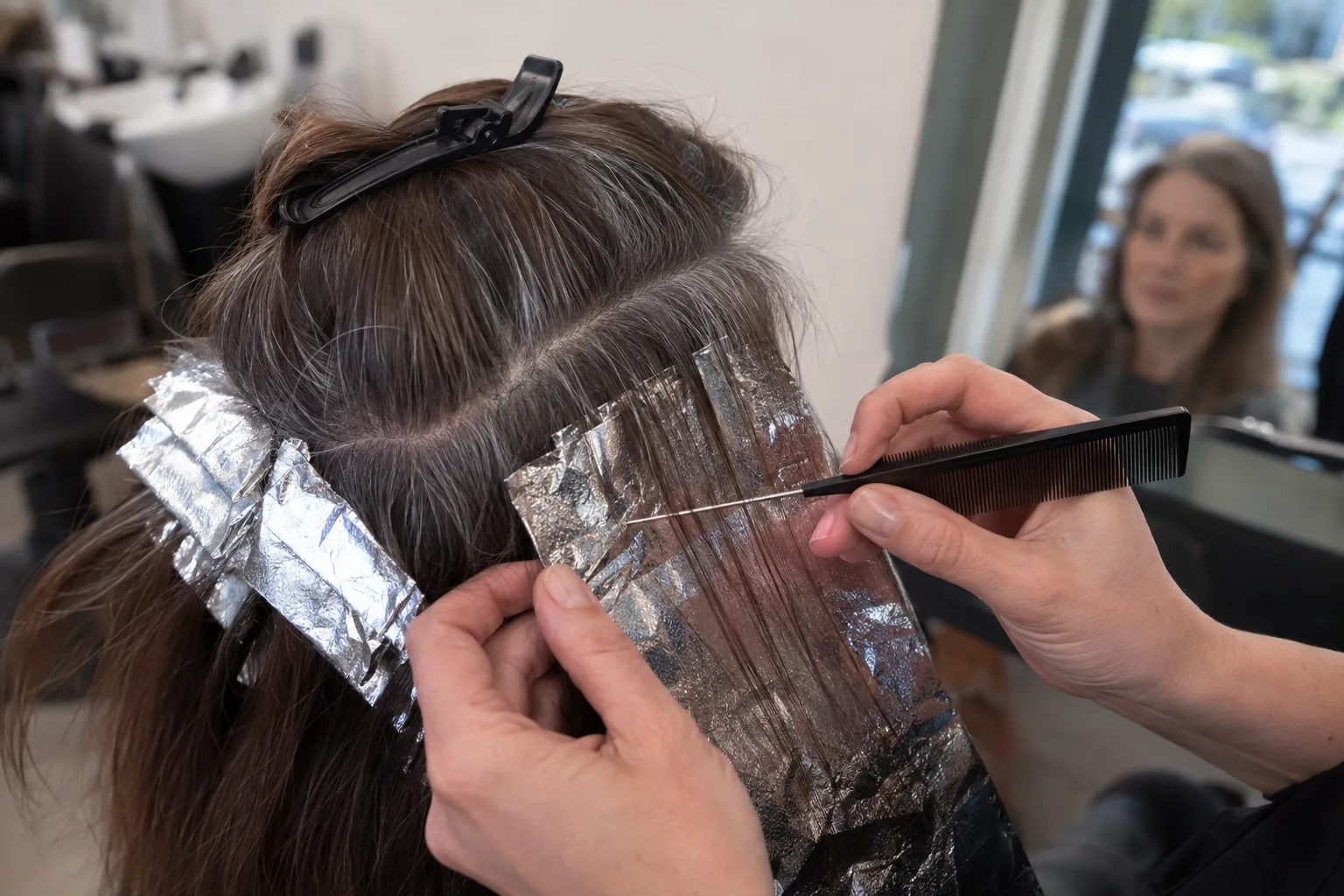
Blending does not remove the line. It breaks it up, which is a different and better goal. It is the same principle that makes blonde highlights blend into a brown base: the smaller the contrast gap, the less the eye has to catch on. A colourist weaves fine highlights and lowlights from the roots down through the dyed length so the eye cannot find a single edge to lock onto. Done properly, you look like you have a colour, not a problem.
Ask for grey blending or a grey-friendly balayage by name. Do not ask for a full head of highlights, which is a different service, costs more and lifts hair you are about to grow out anyway. The tell of a good grey blending appointment is that the colourist places pieces on top of your regrowth band, not only below it.
The honest downside is that this is the slow route in disguise. Your dye is still on the ends, so the calendar in the table above has not changed at all. What you have bought is dignity during the wait, at somewhere between three and six appointments a year. If you want to see what those tones do on your face first, the virtual hair colour try-on is a cheaper way to be wrong than a chair is.
Route three: cut it off
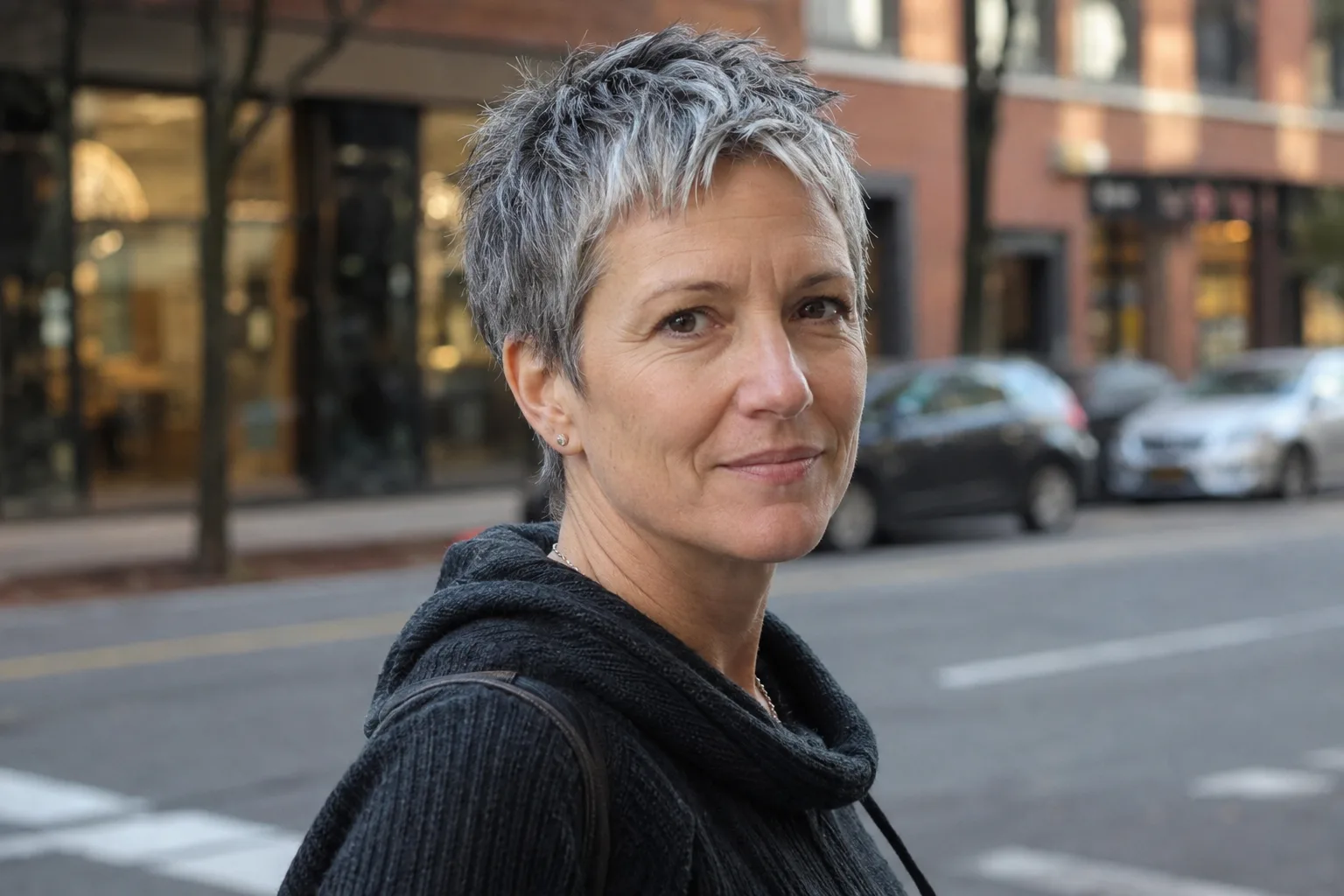
This is the fastest route by a wide margin, and the one people resist hardest. Cut to a textured pixie and you are dye free in about six months. Cut to a jaw-length bob and you are dye free in about a year, from any starting length.
It is also the route that most often produces the result people actually wanted. Short silver hair reads as a decision. Long hair with four inches of regrowth reads as an accident, however good the rest of it is. If you have been circling a short cut for years, this is the excuse, and a blunt bob is the softest version of it if a pixie feels like too far in one step.
The thing to be clear-eyed about: you cannot undo it for a year. Before you book, put the cut on your own face, and check it against your face shape rather than against a photograph of somebody with a different jaw. If short cuts in general are the part you are unsure about, the boyish haircuts guide covers the range between a pixie and a bob.
What grey blending actually costs
Grey blending is priced as a highlight service, not as a root touch-up, so it costs more than the colour you are quitting. Published US survey figures put balayage in a typical range of about $100 to $300, rising past $400 for complex placement on long hair at specialist studios, according to the Salon Price Index. Partial and face-framing work sits lower, in the region of $110 to $220.
Multiply by three to six appointments a year and blending a two-year transition is a four-figure decision. That is not an argument against it. It is an argument for knowing the number before you start, and for asking your colourist how many appointments they think the plan needs rather than booking one and hoping.
Try it on your own face first
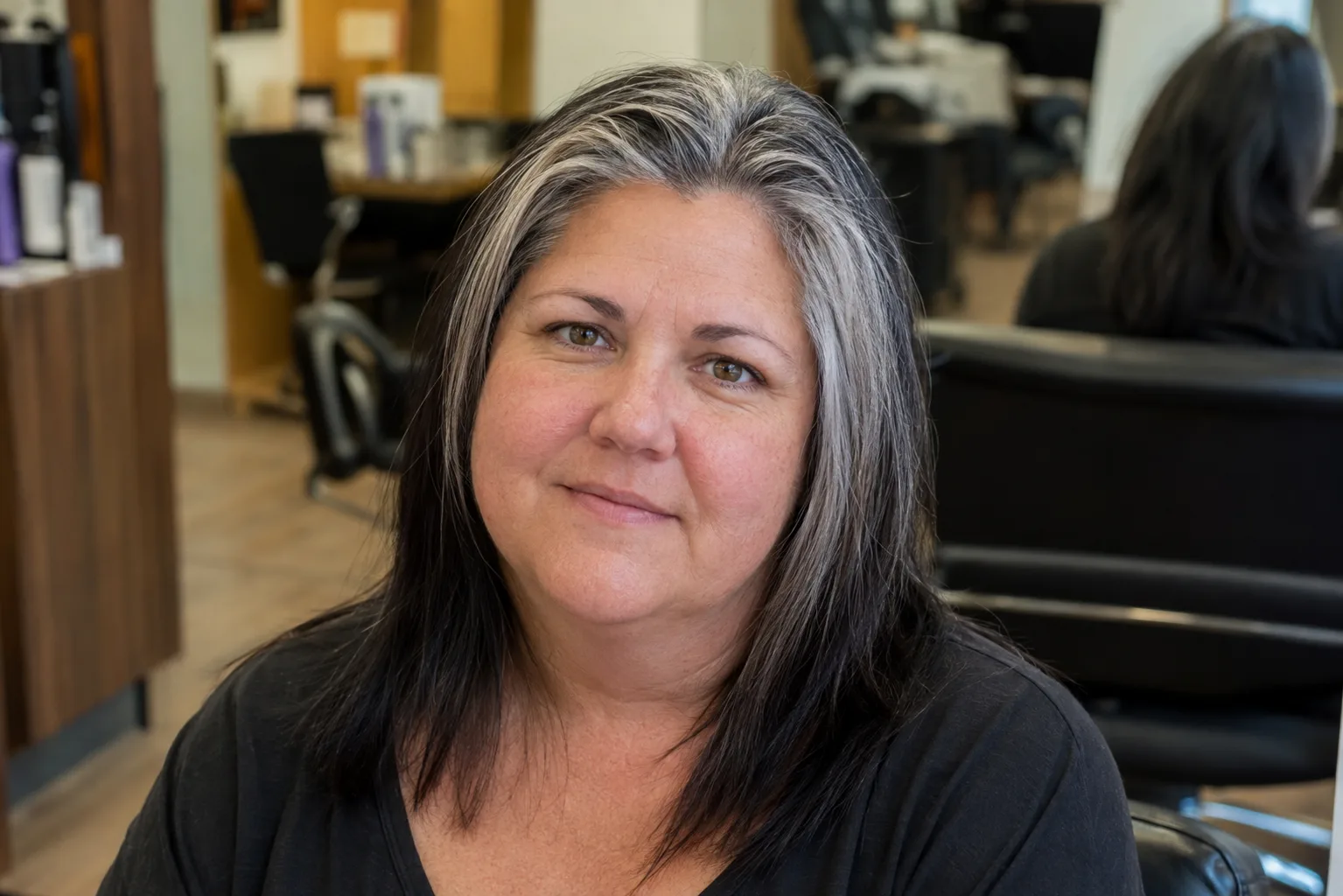
Every photograph above is somebody else's face, somebody else's grey percentage and somebody else's lighting. That is the core problem with deciding this from a Pinterest board. Drop a selfie here and see the grown-out version on your own features before you spend a year finding out.
Yours could be here.
Start with one selfie.
One photo, twenty seconds, and you'll know. Free account, no card for your first render.
Mistakes that make a grow-out look unkempt
Almost nobody looks bad because they went grey. They look bad because of one of these.
- Waiting for the dye to fade. It does not. Permanent colour sits on the hair until it is cut off. Every month you spend hoping is a month added to the end of the timeline.
- Letting the ends go brassy. Old dye oxidises warm. Warm faded ends under cool silver roots is the single ugliest combination in this whole process, and it is the one most easily fixed with a purple or blue toning shampoo once a week.
- Skipping trims to save length. The trim is the transition. Refusing to cut is choosing the 32-month row of that table on purpose.
- One salon appointment and then nothing. Blending is a programme, not an event. A single set of highlights grows out into a second line four months later.
- Box-dyeing over it in month four. Understandable and expensive. You have just reset the clock to zero and added a fresh band of pigment to grow out.
- Choosing a route by mood instead of by contrast. If your dye is more than three shades darker than your natural grey, cold turkey will look rough and you should know that going in.
Is the try-on free?
The first look is free and needs no card: one hairstyle and one colour on it, front view. That is enough to see whether the grey reads well on your face, which is the question you came here with.
If you want to compare routes properly, the paid plans start at $9 a month or $90 a year for 150 credits, all cuts and colours, and a before and after sheet you can hand to your colourist. The full terms are on the pricing page, including the two-click cancel and the seven-day refund.
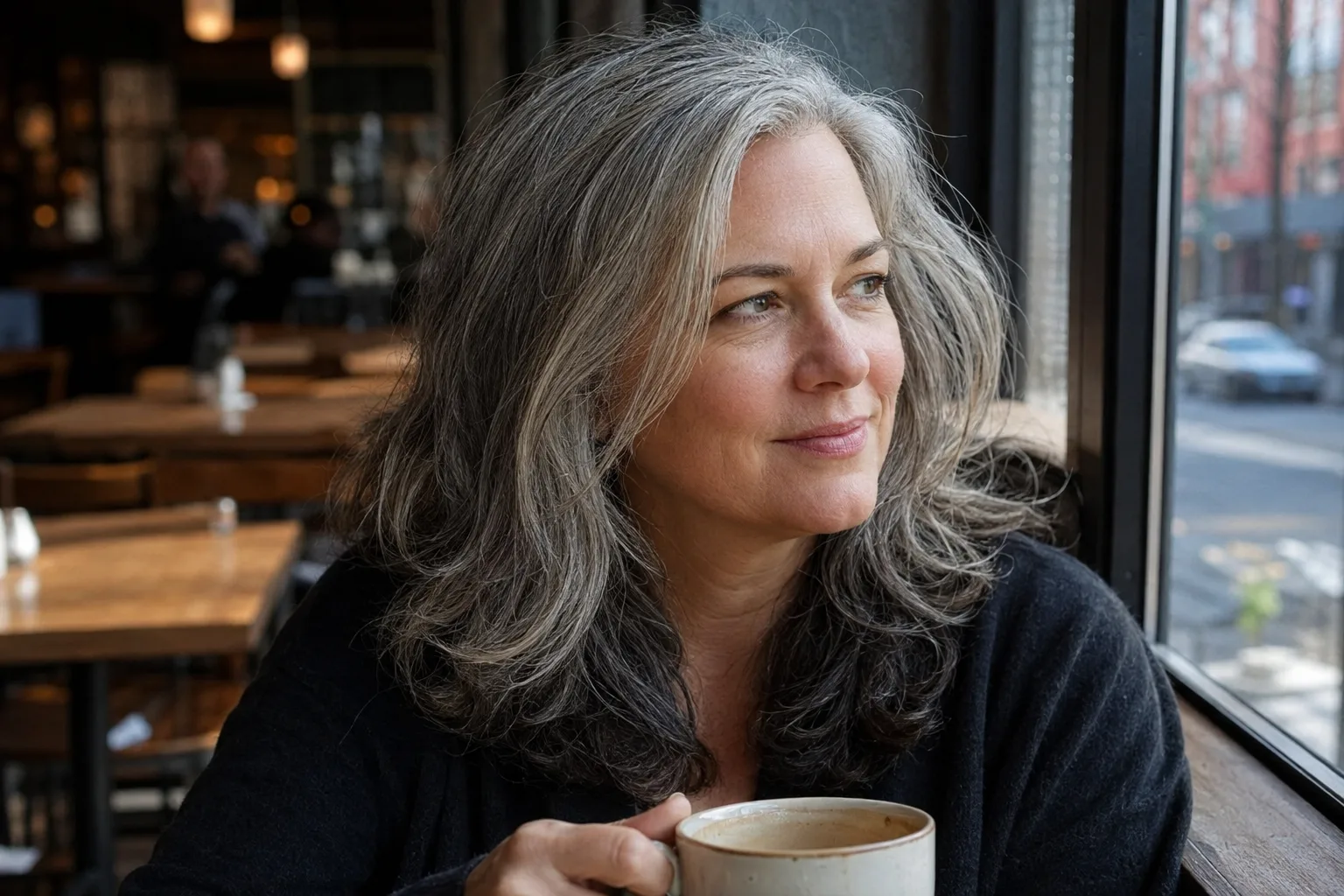
Two years is the honest answer for long hair, six months for short, and the difference between them is entirely a decision you make with a pair of scissors. Everything else in this article is about how visible you are willing to be while it happens.
Pick the route in month one. Book the trims in advance so they happen whether or not you feel like it. And accept that the awkward window is real but narrow: roughly months three to seven, after which every week works in your favour.
Frequently asked questions
Between 6 and 32 months, and the variable is length, not time. Every inch you keep at the end must be new growth, and hair grows about half an inch a month. A pixie gets you dye free in roughly 6 months, a jaw-length bob in about 12, a collarbone lob in about 20, and mid-back length in about 32.
Pick one of three routes in month one and stick to it: grow it out untouched, blend the line with highlights and lowlights at the salon, or cut the dyed length off. The ungraceful transitions are almost always the ones where somebody drifted without deciding, then panicked and box-dyed over it at month four.
Grey itself is neutral. What ages a grow-out is the things around it: brassy faded ends, a flat one-length cut, and a colour that has drifted warm while your skin has not. Keep the tone cool, keep the cut current, and the grey reads as a choice rather than a surrender.
It is priced as a highlight service. Published US survey ranges put balayage at roughly $100 to $300, with complex work on long hair going past $400, and partial or face-framing placement around $110 to $220. Budget for three to six visits a year while the transition runs.
There is no age. The useful trigger is the maintenance interval: when your regrowth is visible again within two weeks of a colour, you are on a treadmill that will only speed up. That is the point where most people find the transition cheaper and easier than continuing.
The one closest in lightness to your own grey, because contrast is what makes the line visible. In practice that means moving toward cool ash tones and away from anything warm or dark. Going lighter before you stop colouring shortens the awkward window considerably.
Yes, and the levers are cut and tone rather than colour. A cut with movement in it, ends kept free of brassiness, and a slightly warmer makeup or clothing palette to offset the cooler hair is the whole formula. Dimensional silver reads far younger than flat uniform grey.
Yes, and it is the most common starting point. Nothing about previously coloured hair prevents a clean transition. It only means the old pigment has to be grown out or cut out, which is why the length you decide to keep sets your calendar.
Preview it on your own photo: Balayage Try-On.
Share article
About the author

More articles
Women's Haircuts · 14 min
Bleached Hair: How Light Yours Can Go, 14 Shades, Aftercare
How light your bleached hair can go depends on where it starts. See 14 bleached shades on one cut, what each starting color can reach in one session, how toner finishes the job, and the aftercare that keeps it soft.
Women's Haircuts · 16 min
Waves Hair: How to Get Beach, Loose and Hollywood Waves That Last
Waves hair is about what you leave straight. How to get beach, loose, Hollywood and heatless waves, which wave suits your hair type, and why your waves keep falling out.
Women's Haircuts · 15 min
Fino Hair Mask: Who It Suits, How to Use It, and Its Limit
The Fino hair mask makes dry, bleached and frizzy hair smooth and shiny in one use, mostly by coating it. Here is what is in the jar, which hair types it suits, exactly how to use it, and what to do when the ends are past a mask.