70s Hairstyles: 10 Iconic Looks and How to Get Them Now
Oleh Onysko 26 September 2026 15 min read
In this article
The defining 70s hairstyles were the Farrah flip, the shag, the afro, long straight hair with a center part, the wedge and big disco curls, plus the feathered cut and the shag on men. What ties them together is not a length or a shape. It is movement: every one of them was built to swing, bounce or flick, and almost none of them was ironed flat.
That is the thing most 70s hair guides miss. The cut only gets you halfway. The other half is the tool, and it is usually a round brush, a set of rollers or plain air drying. Use a flat iron or a modern curling wand on a 70s cut and you get a 2020s look with a 70s haircut underneath. Below are the ten looks worth copying, which one suits your hair type, how to do the feathered blowout at home, and the mistakes that turn it into a costume.
What Were the Most Popular 70s Hairstyles?
The most popular 70s hairstyles were feathered layers (made famous by Farrah Fawcett), the shag, the afro, long center-parted hair, the Dorothy Hamill wedge and roller-set disco curls. Men wore the same ideas: feathered cuts over the ears, shaggy layers to the collar, and big natural afros.
The decade split roughly in two. The early 70s carried over the hippie look from the late 60s: long, straight or loosely wavy, parted in the middle and left alone. By the middle of the decade, blow-dried volume took over. Farrah Fawcett's red swimsuit photo from 1976 became what the Smithsonian calls the bestselling poster of all time, and the feathered hair in it became the look half the country asked for. Dorothy Hamill won Olympic gold the same year and put the short wedge in every salon.
| 70s hairstyle | Length | What makes it | Hardest part |
|---|---|---|---|
| Farrah flip | Past the shoulders | Long layers plus a round brush | Daily blow-dry |
| Shag | Collarbone | Choppy crown layers, wispy ends | Growing it out |
| Afro | Any | Natural coils, picked out | Keeping the shape even |
| Long and center-parted | Chest to waist | One length, no layers | Ends splitting |
| Wedge | Short | Stacked back, tapered nape | Trims every 5 to 6 weeks |
| Disco curls | Shoulder | Hot rollers, brushed out | Humidity |
| Pageboy | Chin | Ends turned under, full bangs | Needs thick hair |
| Boho waves | Long | Air-dried waves, headband | Frizz |
| Men's feathered cut | Covers the ears | Side layers blown back | Blow-drying every day |
| Men's shag | Collar to shoulder | Choppy layers, bangs | Looks messy if under-cut |
The Farrah Flip
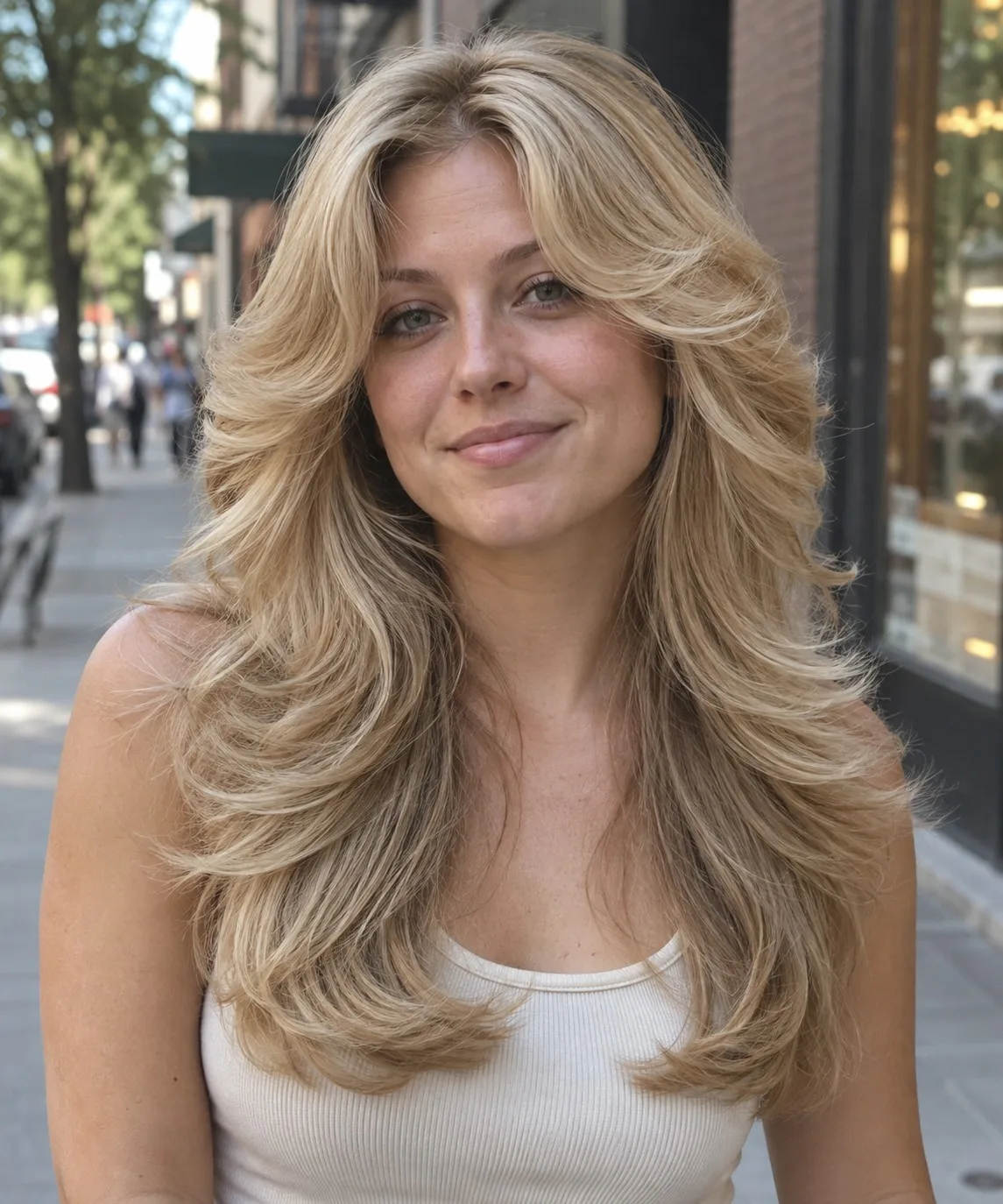
The Farrah flip is long hair with face-framing layers that start around the cheekbone, blow-dried back and away from the face in rounded wings. It has curtain bangs split at a center part, a lot of lift at the roots and ends that flick outward.
Here is the part that matters: the flip is not in the cut. A stylist can give you the exact layers and you will still walk out with ordinary long layers if nobody blows them back. The shape is made each morning with a round brush, rolling each front section away from your face. If you are not willing to spend ten minutes on that, pick a different look on this list.
Ask for it in plain terms. "Feathered" means different things to different stylists, so name the landmarks.
Say this to your barber
Long layers with curtain bangs. Start the shortest face-framing layer at my cheekbone and keep the length past my shoulders. I want to blow the front back into feathered wings.
The Shag
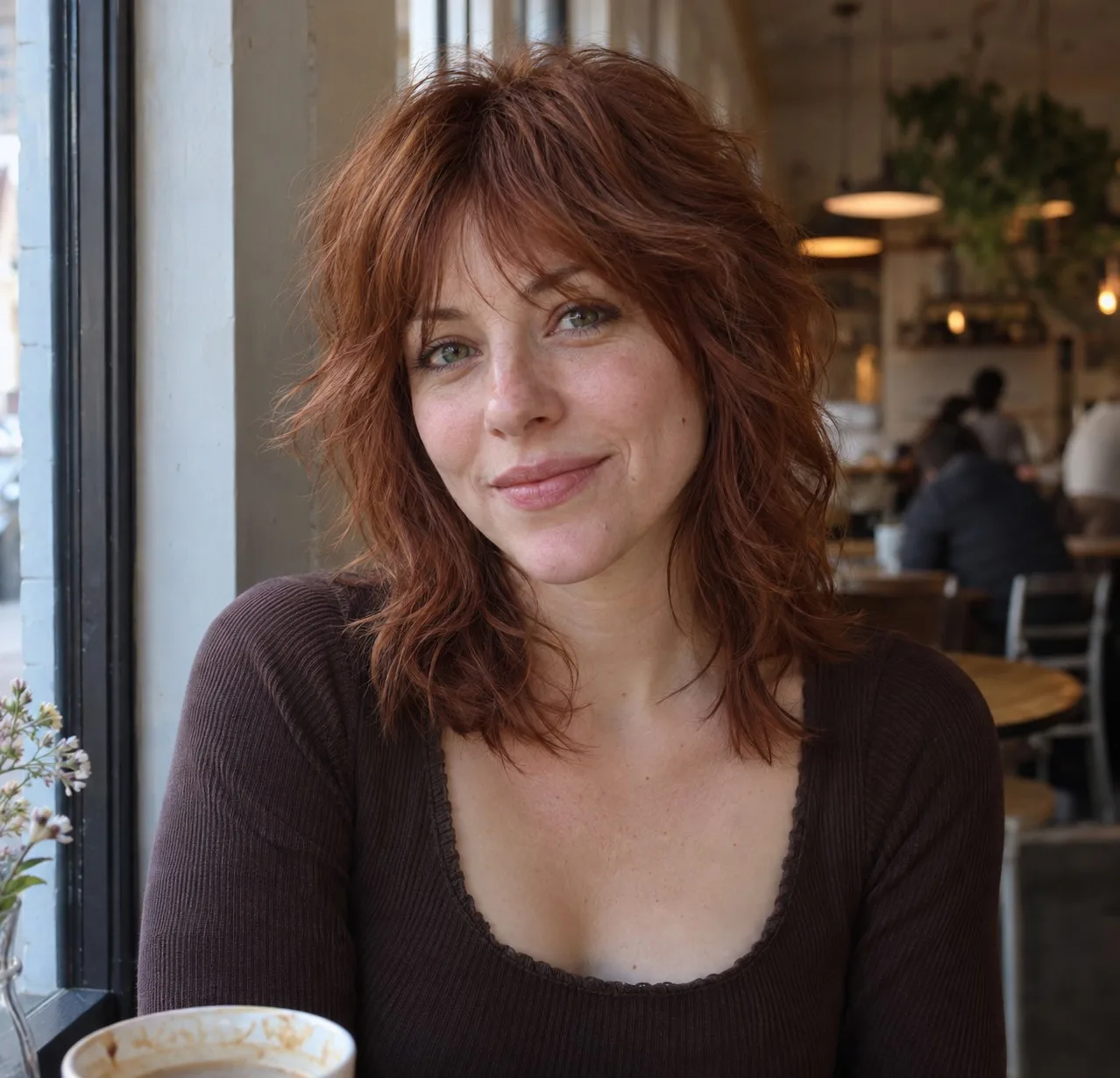
The 70s shag is short, choppy layers at the crown that get longer toward thin, wispy ends, usually with bangs. It sits around the collarbone and relies on natural texture rather than heat. That is why it has come back so hard: it is the one 70s look that gets better the less you do to it.
It suits wavy hair best, because the layers give the wave room to move. On very straight, fine hair it can go flat and stringy by lunch. If you are still deciding between a true shag and its softer modern cousins, our shag haircut guide breaks down the medium, long and curly versions.
The Afro
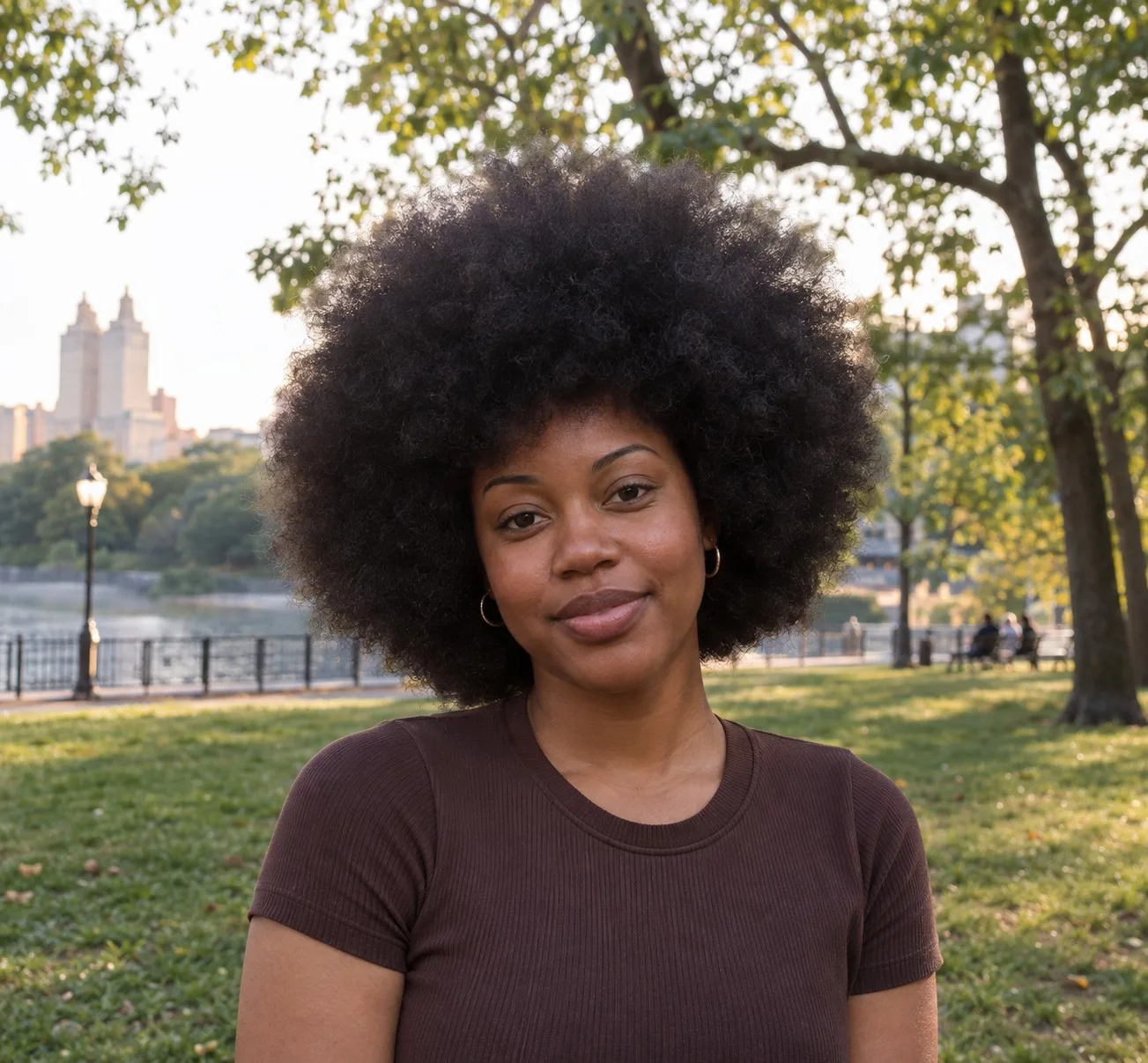
The 70s afro is natural coily hair picked out into a full, rounded shape. It was as much a statement as a style, and it is still the best way to show off the volume of type 4 hair without heat.
The shape comes from the pick and from shaping cuts, not from length alone. Ask for the afro to be cut dry and in its natural state, so the stylist can see where it wants to sit. For wash day and moisture routines that keep a picked-out shape soft, see our 4c hair guide.
Long, Straight and Center-Parted
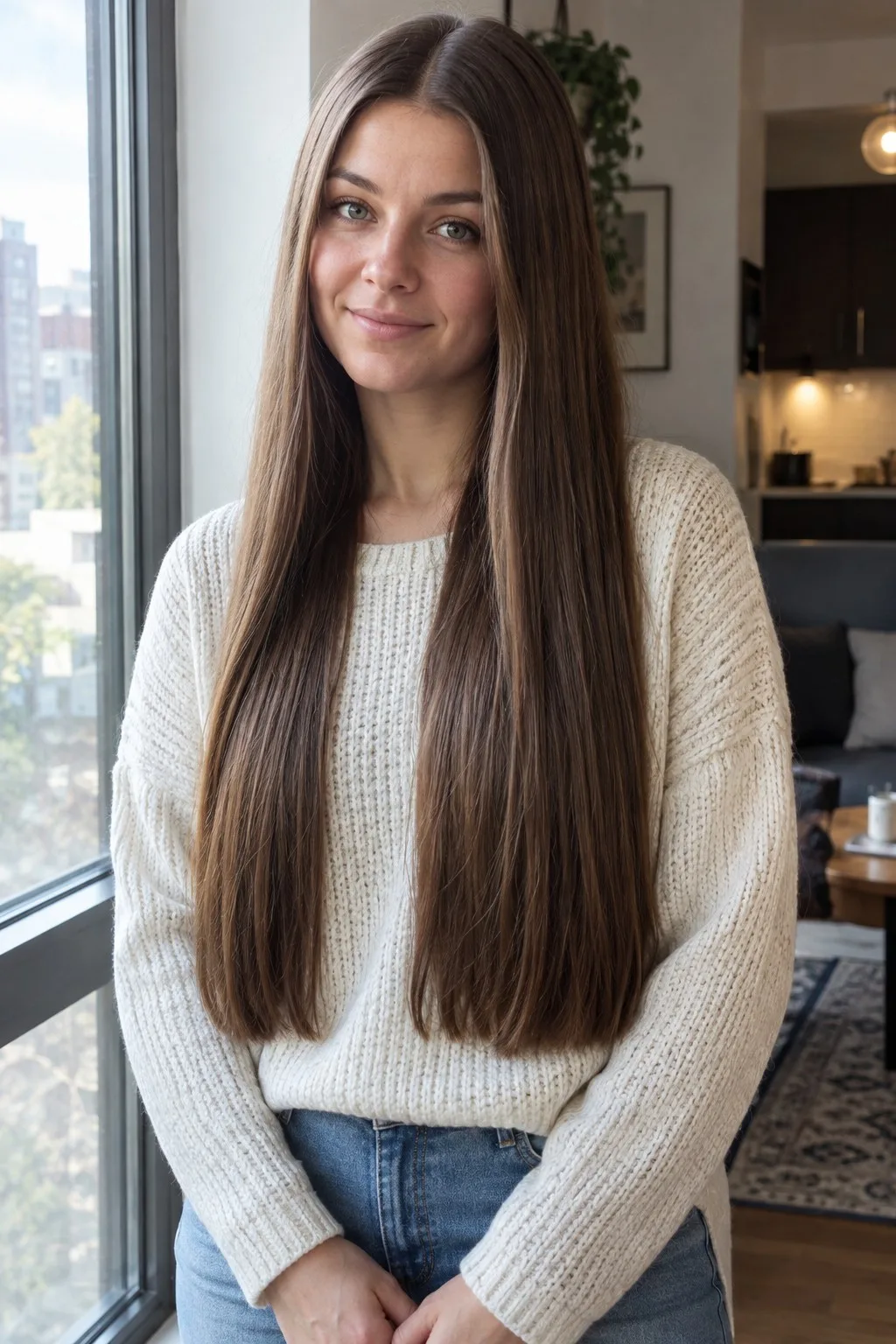
The early 70s look was long, straight hair with a sharp center part and no layers at all. Think of it as the anti-haircut. It was grown, not styled, and it was often worn past the chest.
The only real demand is healthy ends. One-length hair shows every split end because there are no layers to hide them, so trim a quarter inch every eight to ten weeks and nothing more. If your hair is long already, this is the cheapest 70s look on the list. Our long hair guide covers the layered alternatives if one length feels too heavy.
The Wedge
The wedge is a short cut with the back stacked in graduated layers, so the volume sits in a rounded shelf above a close, tapered nape. Dorothy Hamill wore it at the 1976 Winter Olympics and a generation of girls started asking for "the Dorothy Hamill".
It is a precision cut, so the growing-out phase is unforgiving. Book trims every five to six weeks or the stacked shape collapses into a shapeless bob. It works best on straight to slightly wavy hair with medium density.
Disco Curls
Disco curls are big, soft curls set on hot rollers and then brushed out, so they merge into volume rather than separate ringlets. That brushing step is the whole difference. Unbrushed roller curls look like the 40s. Brushed-out ones look like the dance floor in 1977.
Use large rollers of about 1.5 inches, set on dry hair, leave them until they cool completely, then break them up with your fingers or a wide paddle brush. On naturally curly hair you can get the same shape with a diffuser and a lot less effort.
The Pageboy
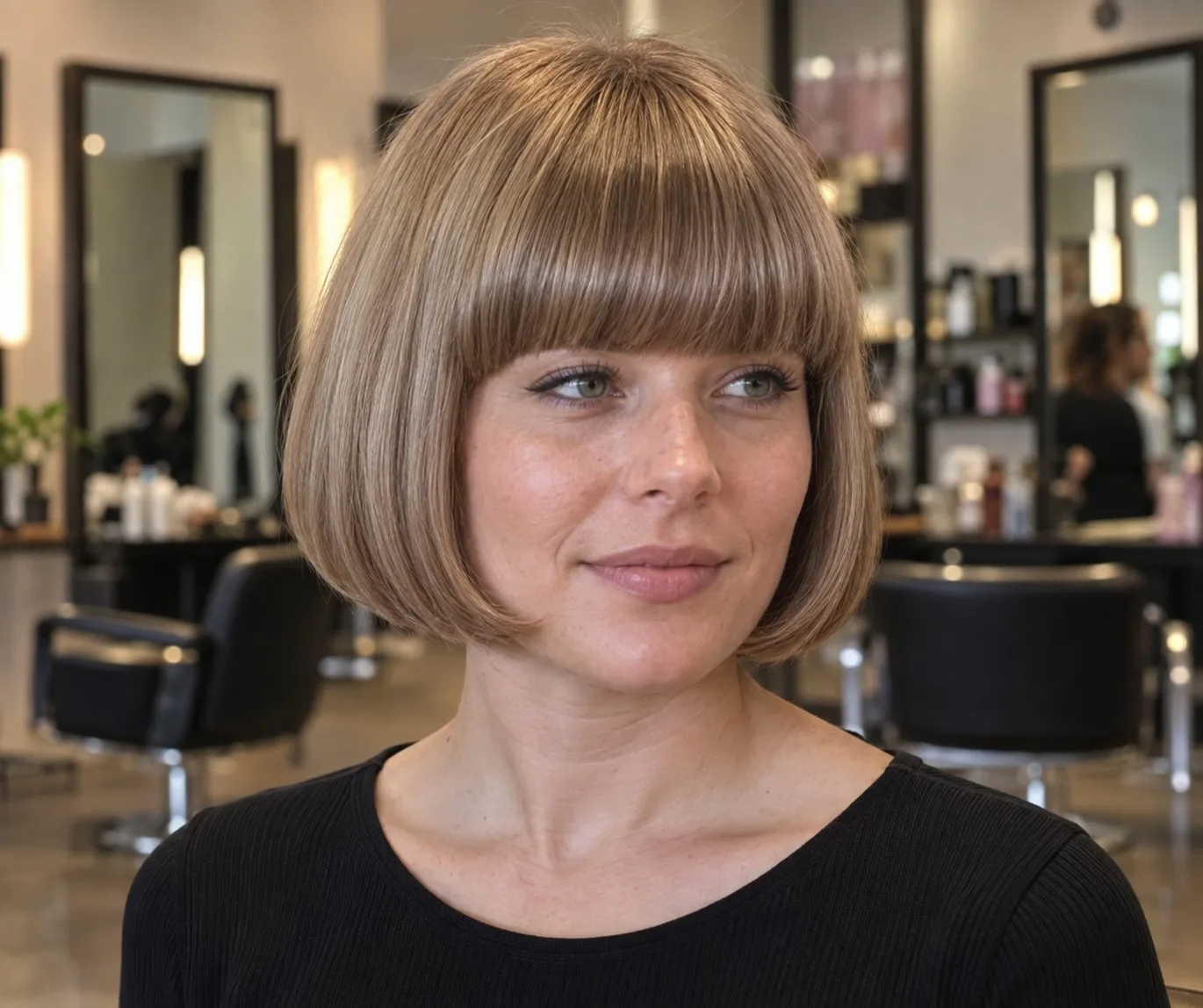
The pageboy is a chin-length, one-length cut with the ends turned under all the way around and full bangs to the eyebrows. It is the tidiest look on this list and the one that has aged least.
It needs thick, straight hair to hold the rounded shape. On fine hair it can look thin at the ends, and a layered bob is the more forgiving choice.
Boho Waves With a Headband
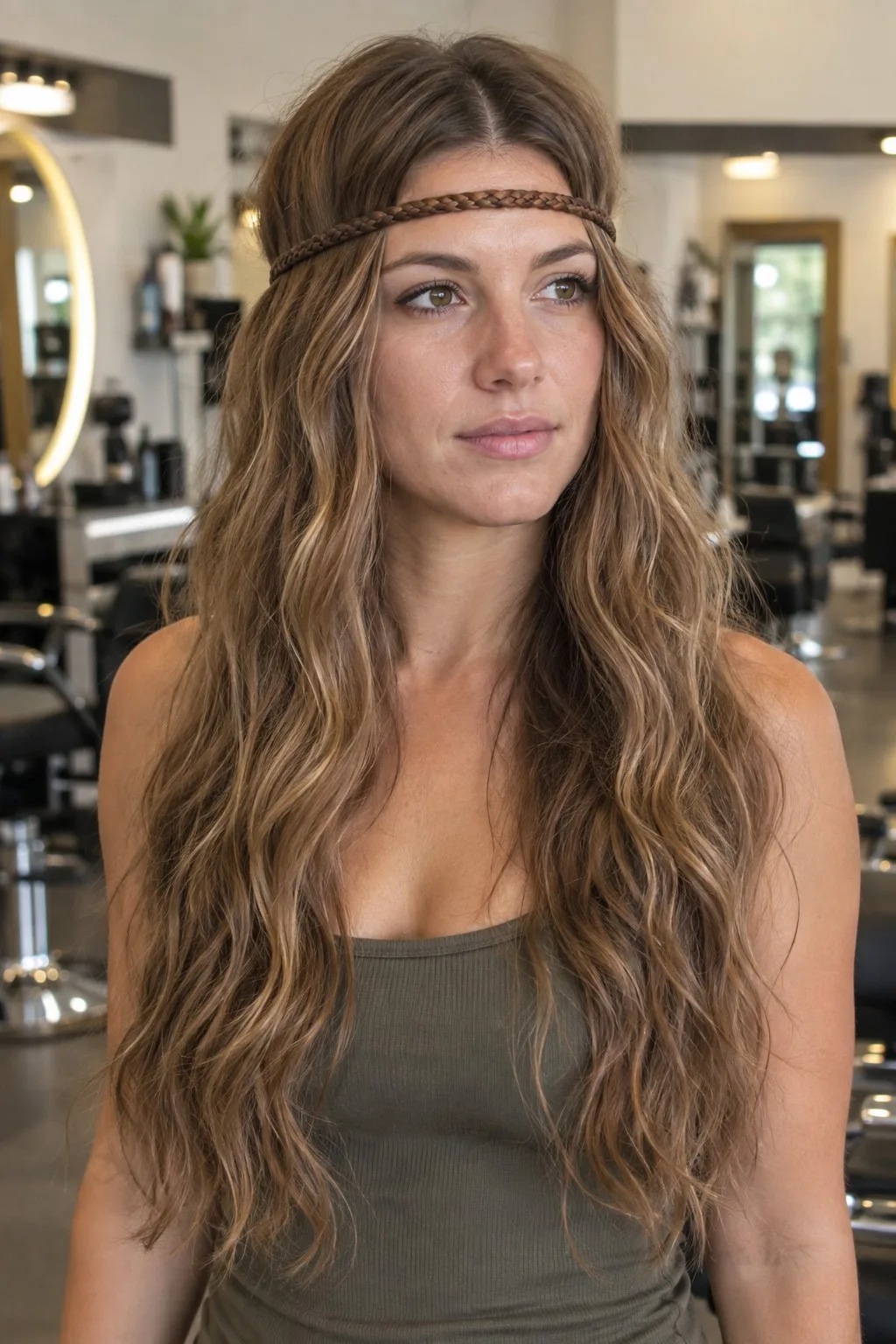
Boho waves are long, loosely waved hair with a center part, often worn with a thin headband across the forehead. It is the hippie look from the early part of the decade, and it is mostly air drying.
Scrunch in a light mousse on damp hair, part it in the center and let it dry. The headband is optional. The center part is not.
The Men's Feathered Cut
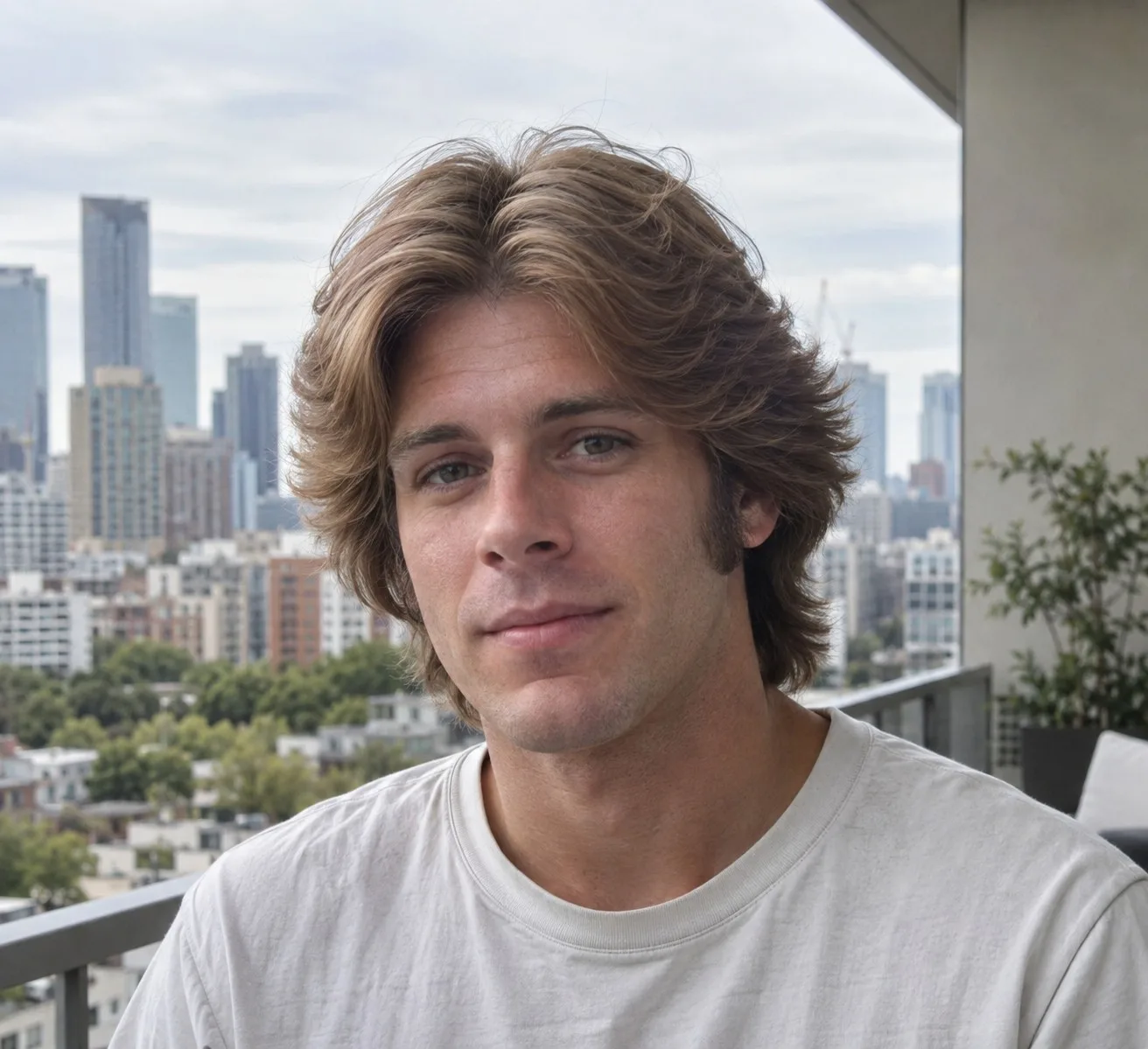
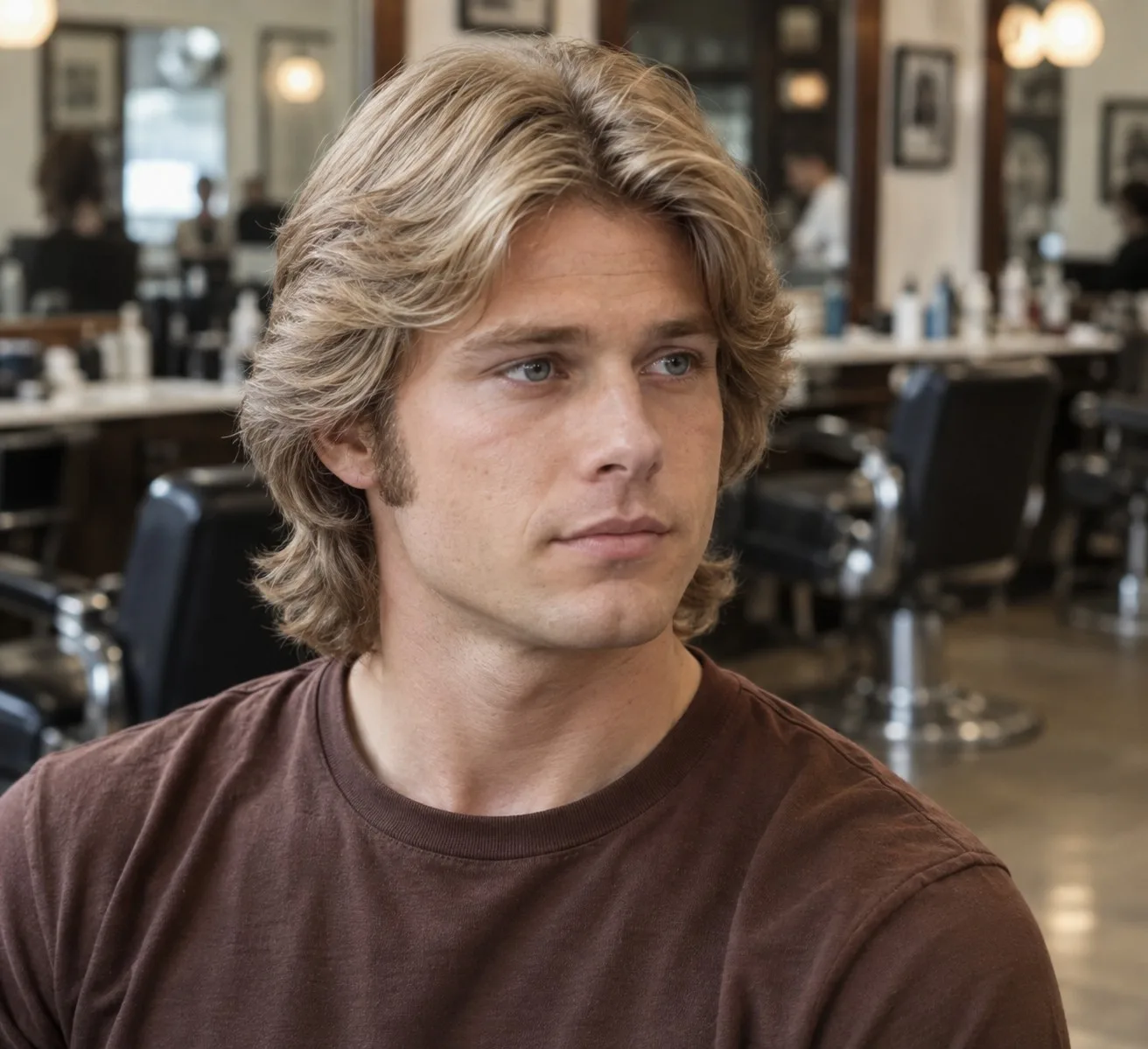
The 70s men's feathered cut has a center part, hair covering the tops of the ears and touching the collar, and side layers blown back in soft wings. Full sideburns finish it. No fade, no clippers.
It is the same technique as the Farrah flip on shorter hair, so it needs the same daily blow-dry. Grow the sides past the ears before you ask for it. The awkward stage is covered in our guide to growing out long hair as a man.
The Men's Shag
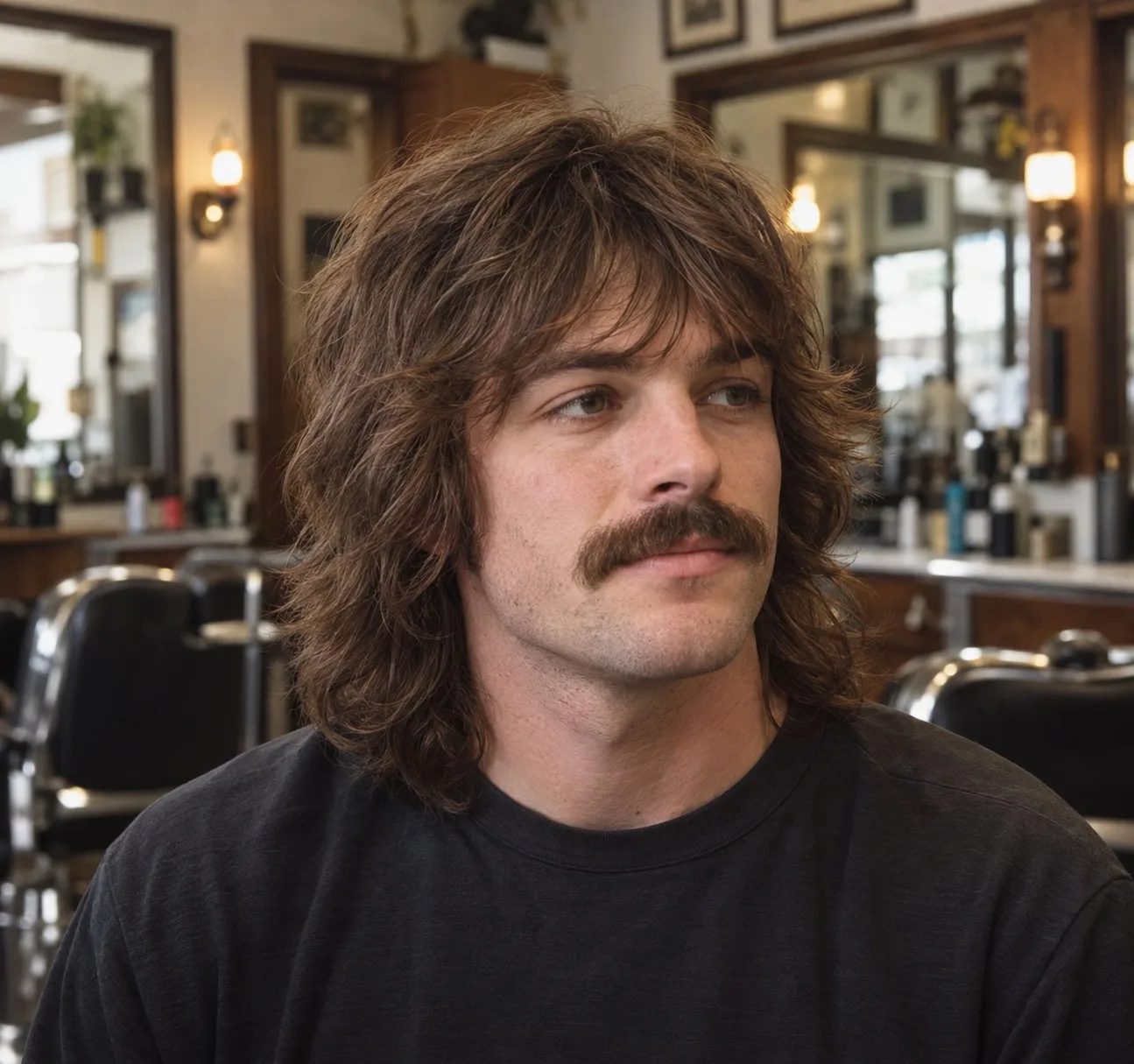
The men's shag is shoulder-length hair with choppy layers on top and at the crown and wispy bangs to the eyebrows. It was the rock musician's cut of the decade, and it still works best with some natural wave.
Ask for the layers to be point-cut rather than razor-cut on fine hair, so the ends do not go thin and see-through.
Which 70s Hairstyle Suits Your Hair Type?
Your hair type decides which 70s look will hold its shape past lunchtime. Blow-dried looks need hair that holds a bend. Air-dried looks need hair with its own movement.
| Hair type | Best 70s looks | Hardest | Why |
|---|---|---|---|
| Fine, straight | Long center part, pageboy, wedge | Shag, disco curls | Fine hair drops blow-dried lift within hours; blunt shapes read thicker |
| Thick, straight | Farrah flip, pageboy, men's feathered cut | Boho waves | Holds a round-brush bend all day, but does not wave on its own |
| Wavy | Shag, boho waves, men's shag | Pageboy | The shag was built around natural movement |
| Curly | Shag, disco curls | Farrah flip | Curls give disco volume for free; the flip needs a full blowout every day |
| Coily | Afro | Feathered looks | The afro shows off coil volume without any heat |
Fine, Straight Hair
Pick shapes that rely on a clean line, not lift. The long center part and the pageboy look fuller than they are because every strand ends in the same place. A Farrah flip on fine hair will look great at 8am and flat by noon.
Wavy Hair
You are the natural 70s type. A shag or boho waves need almost no heat on 2a hair and up. Cut the layers dry if you can, so the stylist sees where each wave actually falls.
Curly and Coily Hair
Lean into volume. Disco curls, a curly shag and the afro all reward curl. On 3c hair and tighter, feathered looks only work after a silk press, and the flip drops out the first humid day.
How to Do a 70s Feathered Blowout
- Start on hair that is 80 percent dry
Rough dry until the hair is damp but not wet. Work a golf-ball amount of light mousse into the roots. Wet hair will not take the shape; fully dry hair will not either.
- Dry the roots against their direction
Flip your part side to side as you dry the roots. This gives the lift at the crown that makes the whole look sit up instead of lying flat.
- Separate the front sections
Clip back everything except the face-framing layers on each side. These are the pieces that make the wings.
- Roll each front section back and away
Take a round brush of about 2 inches, place it under a front section and roll it back, away from your face, following it with the dryer nozzle pointed down the hair shaft. Hold for three seconds, hit the cool shot, then release.
- Set the wings for ten minutes
For hold that lasts all day, wrap each front section around a large velcro roller, still rolled away from the face, and leave it while you do everything else.
- Brush out and spray
Remove the rollers, run your fingers through the wings to soften them, then use a light, flexible hairspray. A stiff spray freezes the flick and makes it look like a wig.
The Mistakes That Make 70s Hair Look Like a Costume
Most bad 70s hair is not a bad haircut. It is a modern tool, or a missing step, on a good one.
- Using a flat iron or a curling wand. A flat iron kills the flick and a wand gives tubular modern curls. The 70s shapes are made with round brushes, rollers and air. Swap the tool and the same cut suddenly reads right.
- Skipping the brush-out. Roller curls left as they come out look 1940s. Brush them out and they look 1977.
- Cutting the face-framing layers too short. Feathered layers that start above the cheekbone flip up into a helmet. Start at the cheekbone or below; you can always go shorter next visit.
- Asking for "feathered" and nothing else. It means six different things to six stylists. Name the landmark where the shortest layer starts and where the length should stop.
- Going all in on costume details. A 70s cut with modern clothes reads current. Add the flared jeans, the headband and the blue eyeshadow and it becomes a party look.
The mistake that costs the most is the third one, because layers are the part you cannot undo. Hair grows about half an inch a month, so a feathered layer cut two inches too short is a four-month wait. That is the wall with any 70s cut: you cannot see the shape on your own face until it is already cut.
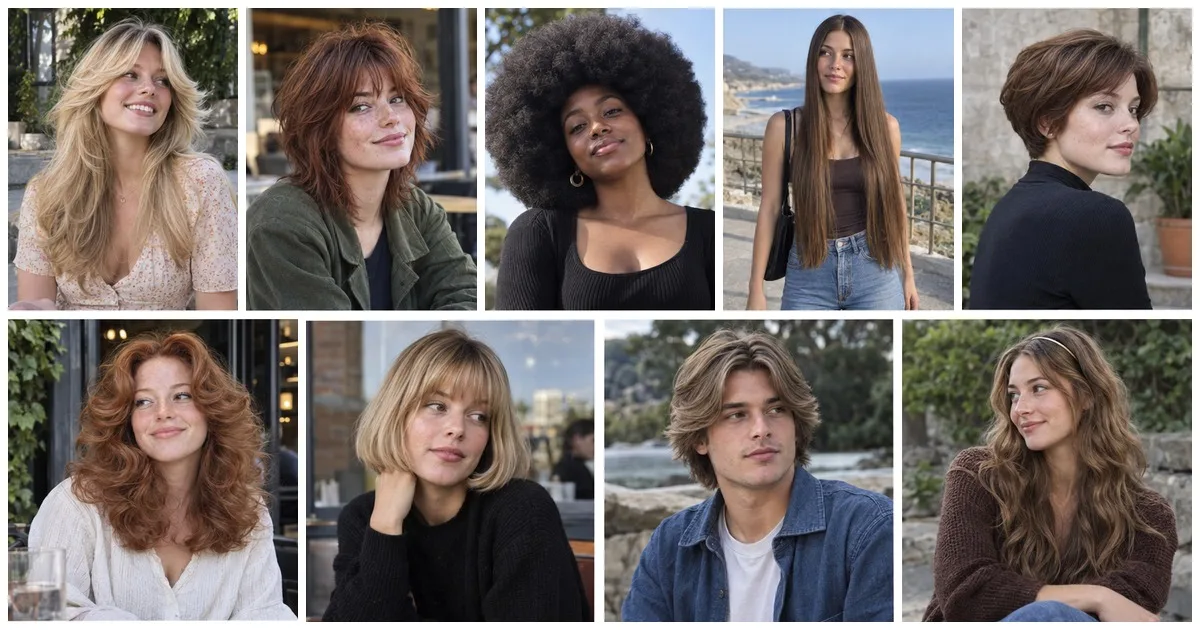
70s Hairstyles Gallery: 10 Looks Side by Side
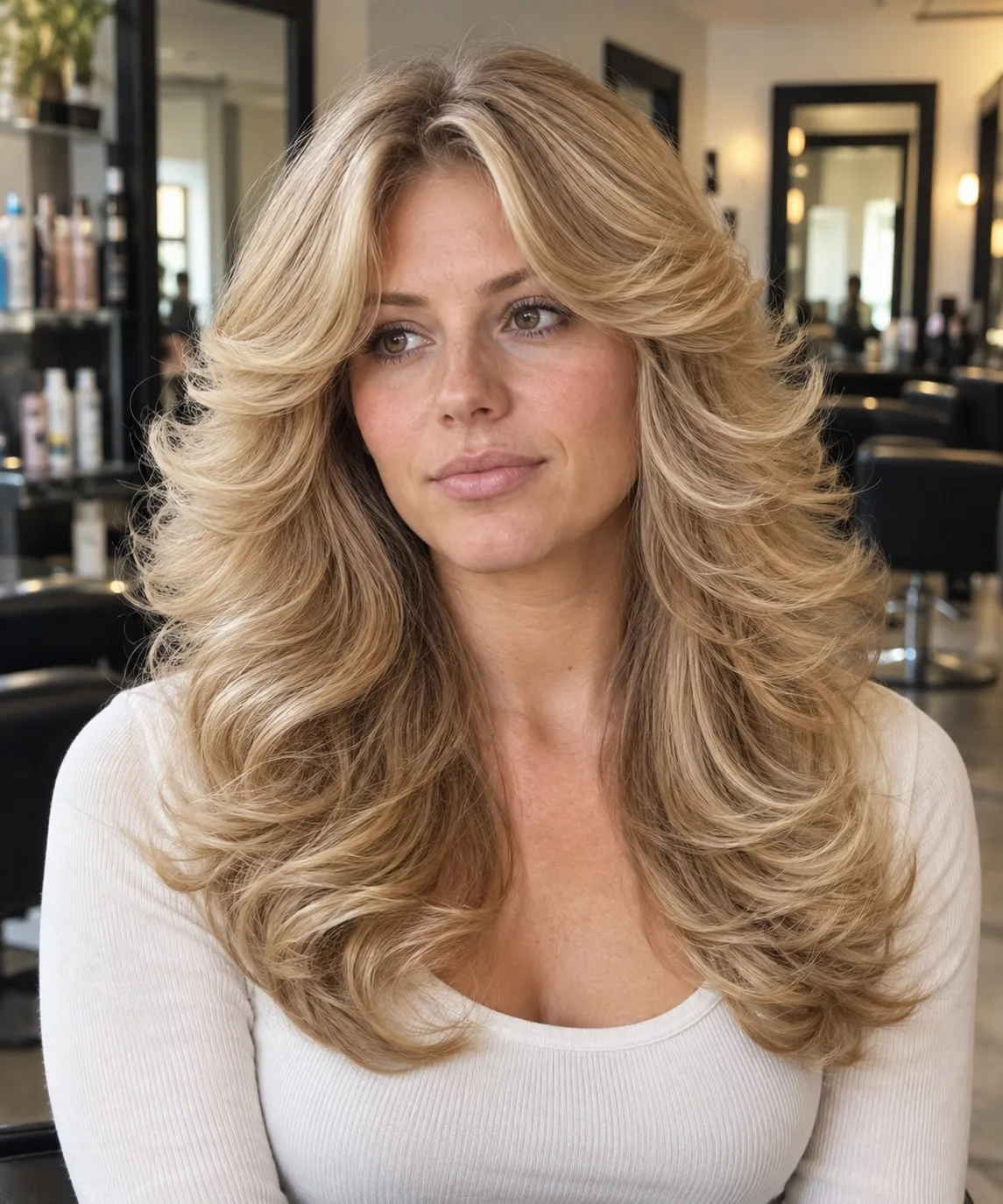
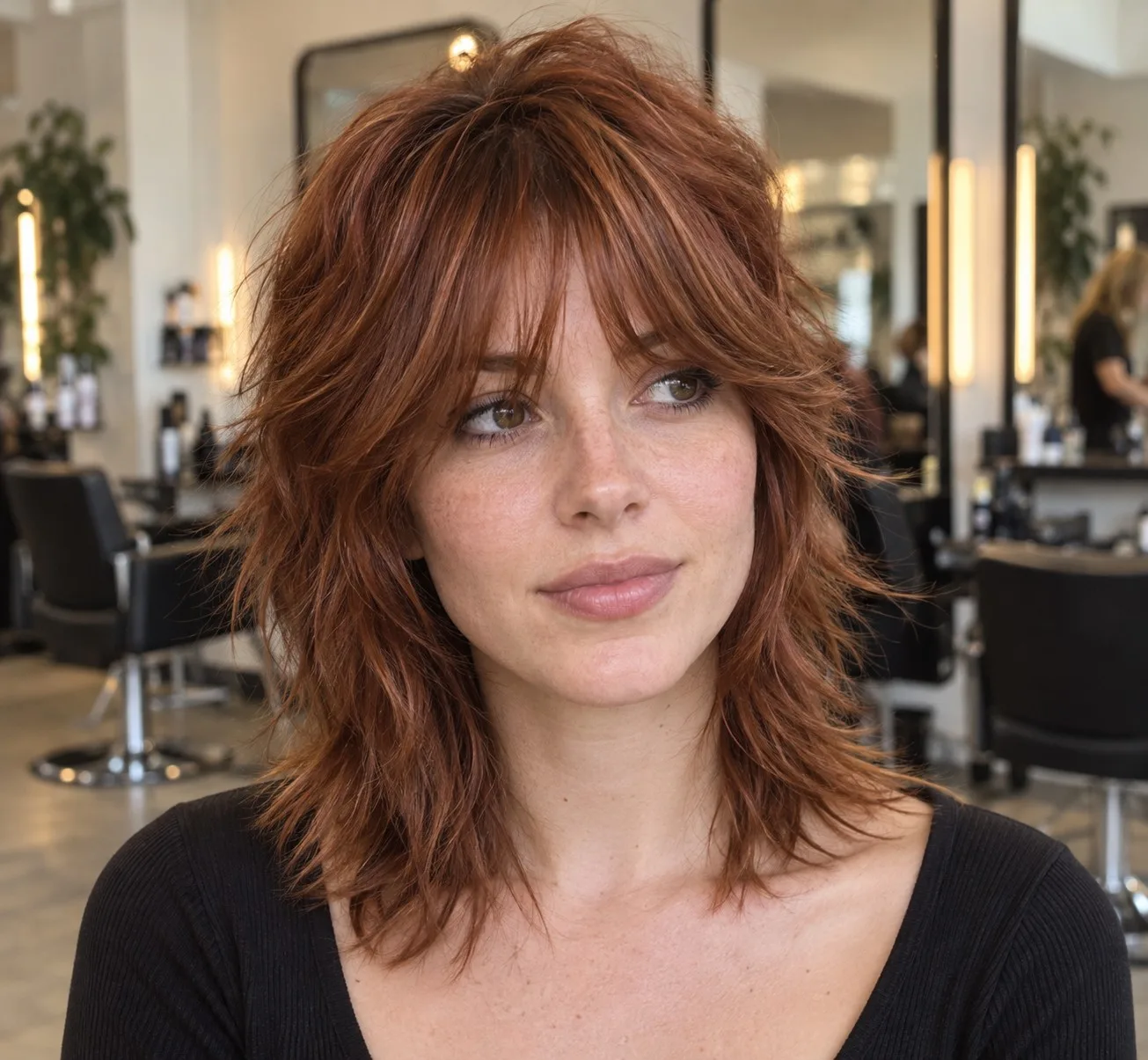
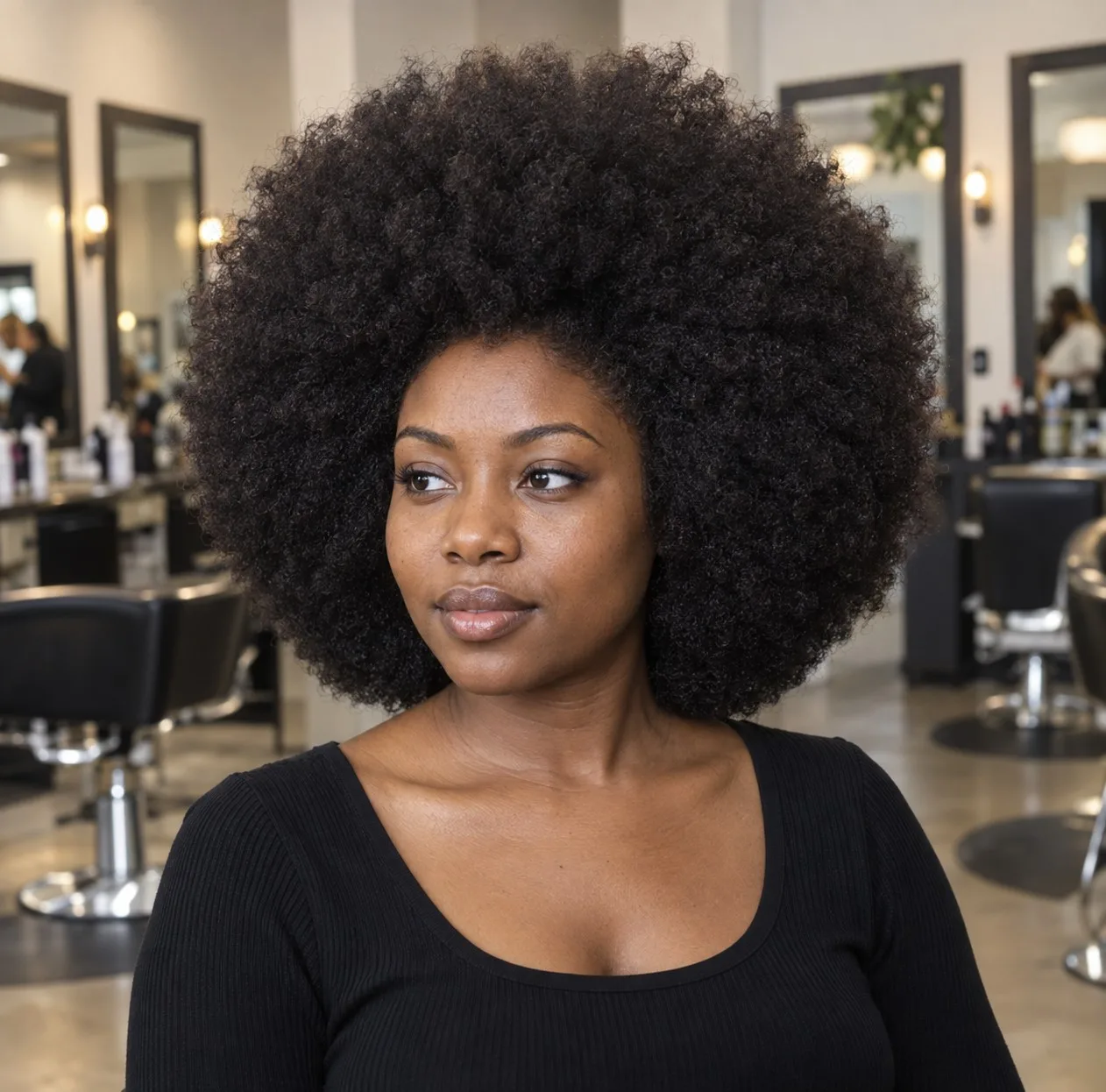
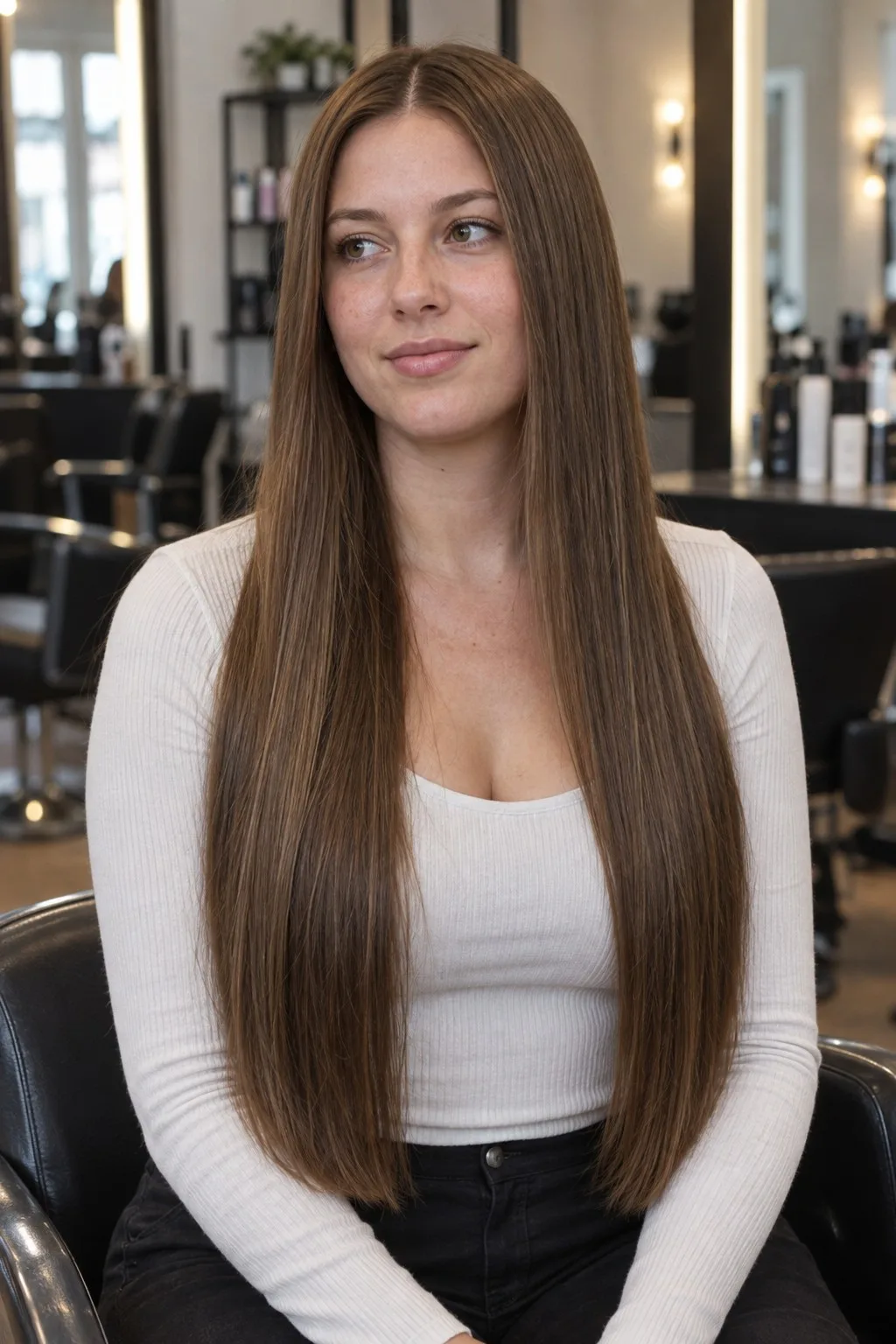
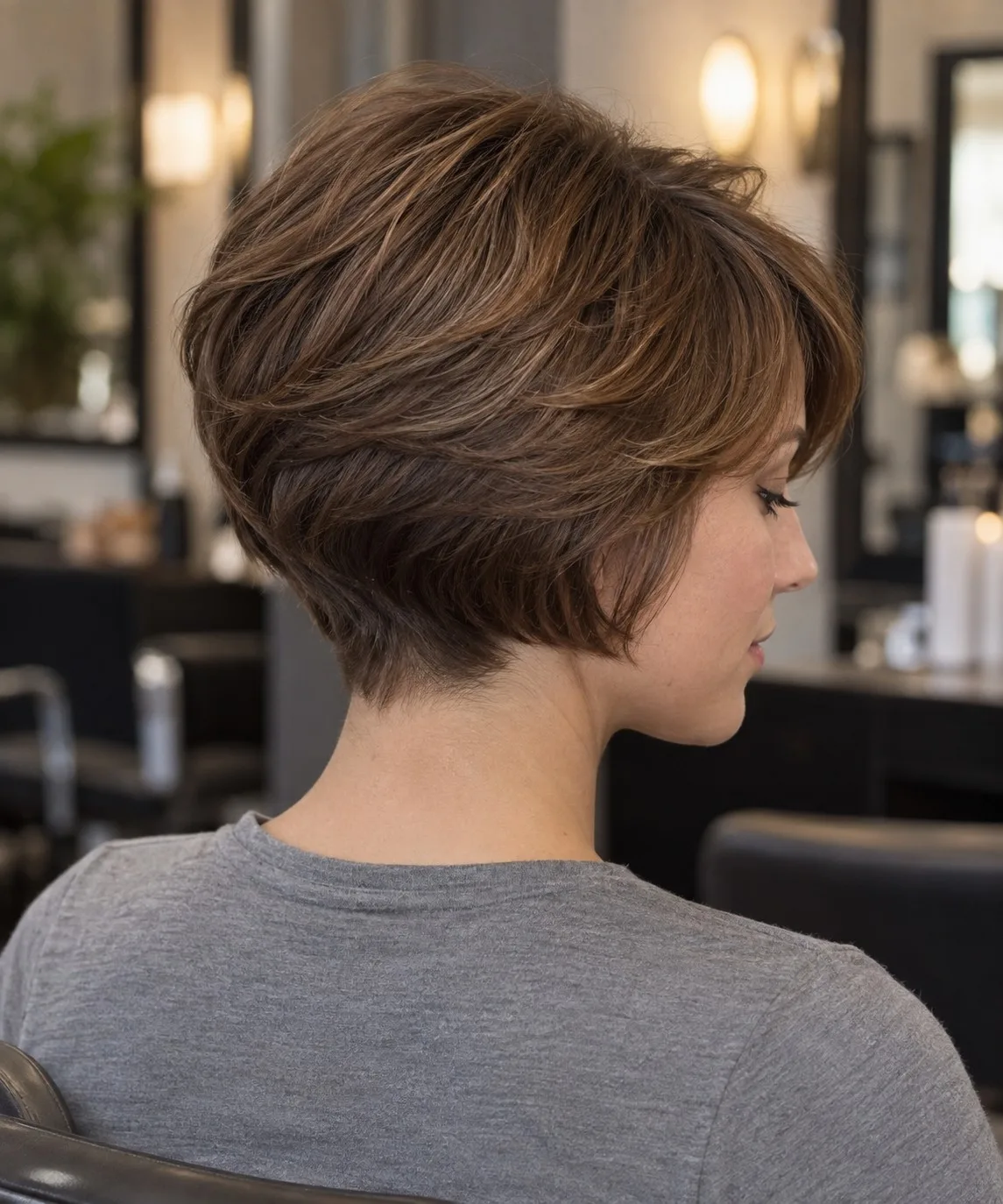
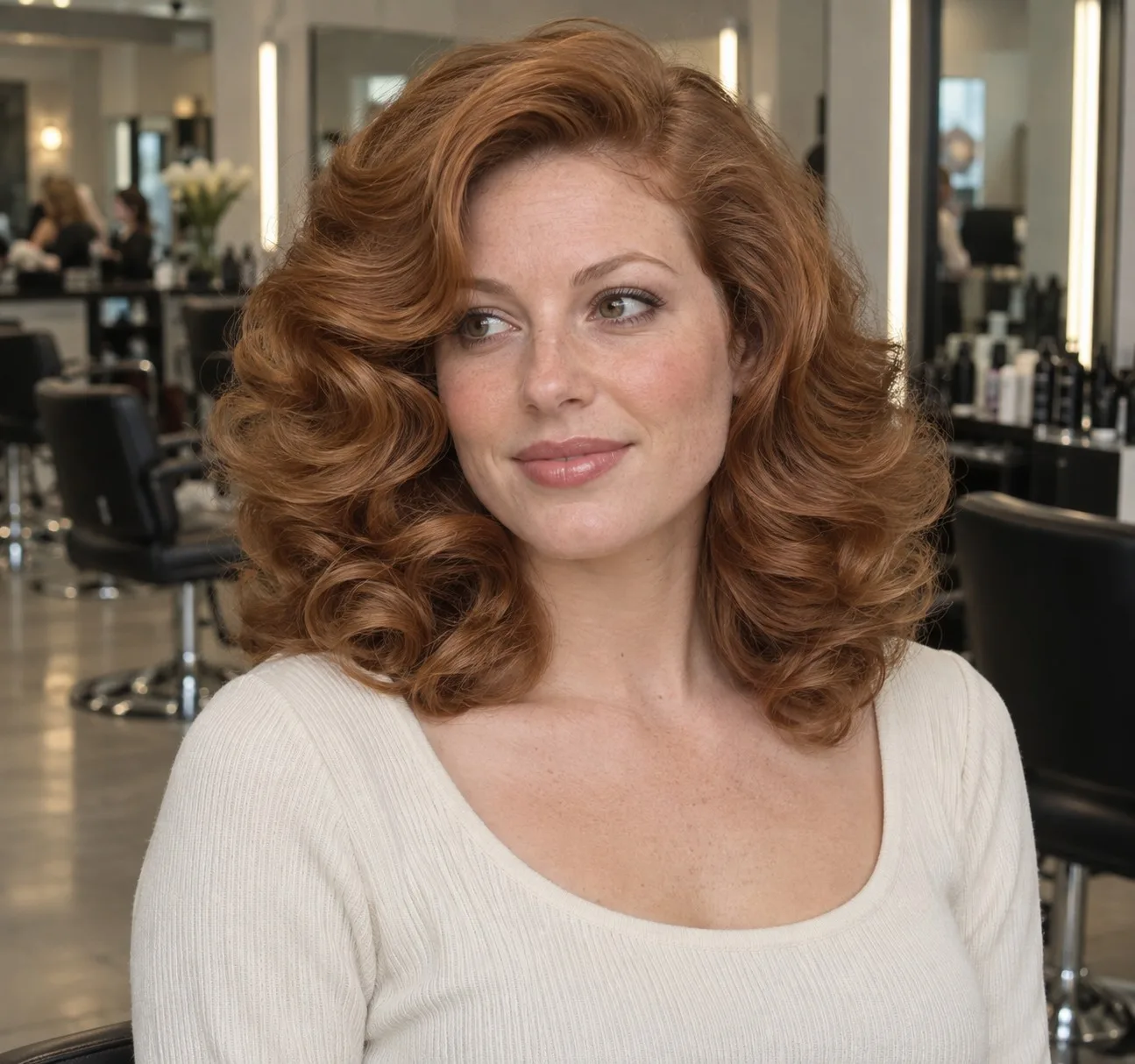
Same salon, same light, same framing. The only thing that changes from tile to tile is the hairstyle, so you are comparing the shapes and nothing else. Tap any tile to try it on.
Gallery10 photos · tap to enlarge
 Try this on me
 Try this on me
 Try this on me
 Try this on me
 Try this on me
 Try this on me
 Try this on me
 Try this on me
 Try this on me
 Try this on me
 Yours could be here.
Start with one selfie.
One photo, twenty seconds, and you'll know. Free account, no card for your first render.
If you want one 70s hairstyle that works today with the least daily effort, get the shag. If you want the one everyone recognizes, get the Farrah flip, but only if you will blow-dry it every morning. And whatever you choose, put the flat iron away: the decade was made with brushes, rollers and air.
Not sure the layers will suit your face? Before you book, read up on messy bangs, since the curtain bangs on most of these looks start the same way.
Frequently asked questions
Feathered layers, the look made famous by Farrah Fawcett, were the most popular hairstyle of the mid 1970s. The shag, the afro and long center-parted hair were just as common across the decade, and Dorothy Hamill's wedge took off after 1976.
Start with the right cut, then use 70s tools. For feathered hair, round-brush the front sections back and away from your face and set them with large velcro rollers. For shags and waves, scrunch in mousse and air dry. Avoid flat irons and curling wands, which make the result look modern.
Ask for long layers with curtain bangs, with the shortest face-framing layer starting at your cheekbone. At home, blow-dry the roots for lift, then roll each front section back with a 2 inch round brush, finish with the cool shot and a light hairspray.
Set large hot rollers of about 1.5 inches on dry hair, rolled away from the face at the front. Leave them until they cool completely, then brush the curls out with fingers or a paddle brush so they merge into soft volume rather than separate ringlets.
Hippies wore their hair long, natural and usually center-parted, straight or loosely waved and left to air dry. Headbands across the forehead were common, and men grew their hair past the collar. Afros were worn natural and picked out.
The feathered cut was the most popular 70s hairstyle for men: a center part, hair over the ears and to the collar, and side layers blown back. Shaggy shoulder-length layers, big natural afros and long sideburns were also everywhere.
There is no single 70s haircut. The names you will hear most are the shag, feathered hair (often called the Farrah), the wedge and the afro. If you ask a stylist for a "70s haircut", they will almost always hear a shag.
Yes. Long hair was the default for both women and men in the early 1970s, usually worn straight with a center part. By the middle of the decade, layered and blow-dried long hair took over, and shorter cuts like the wedge became popular after 1976.
Preview it on your own photo: Virtual Hair Color Try-On.
Share article
About the author
More articles
Trends and Celebrity · 14 min
Splat Hair Dye Review: Why It Won't Fully Wash Out
Splat is cheap, bright and very good on light hair. It also stains everything and rarely washes fully out of bleached hair. Which Splat kit suits your starting color, how long it really lasts, how to use it, and how to see the shade on your face first.
Women's Haircuts · 15 min
Brown Hair With Blonde Highlights: 10 Ideas, 1 Rule
The blonde should sit two to four levels above your base, not six. Ten brown hair with blonde highlights ideas sorted by how dark your brown is, plus what to ask for and what the upkeep really costs.
Women's Haircuts · 15 min
Jellyfish Haircut: What It Is, Who It Suits, How to Ask
The jellyfish haircut is two haircuts on one head: a blunt bowl-shaped cap over much longer hair, with nothing joining them. Here is where to put the hemline for your face, what the cut does on curly and coily hair, the exact sentence to say in the chair, and the five mistakes that turn it into an expensive bowl cut.