Money Piece Hair: The Right Shade for Your Base Color
Oleh Onysko Updated 30 September 2026 13 min read
In this article
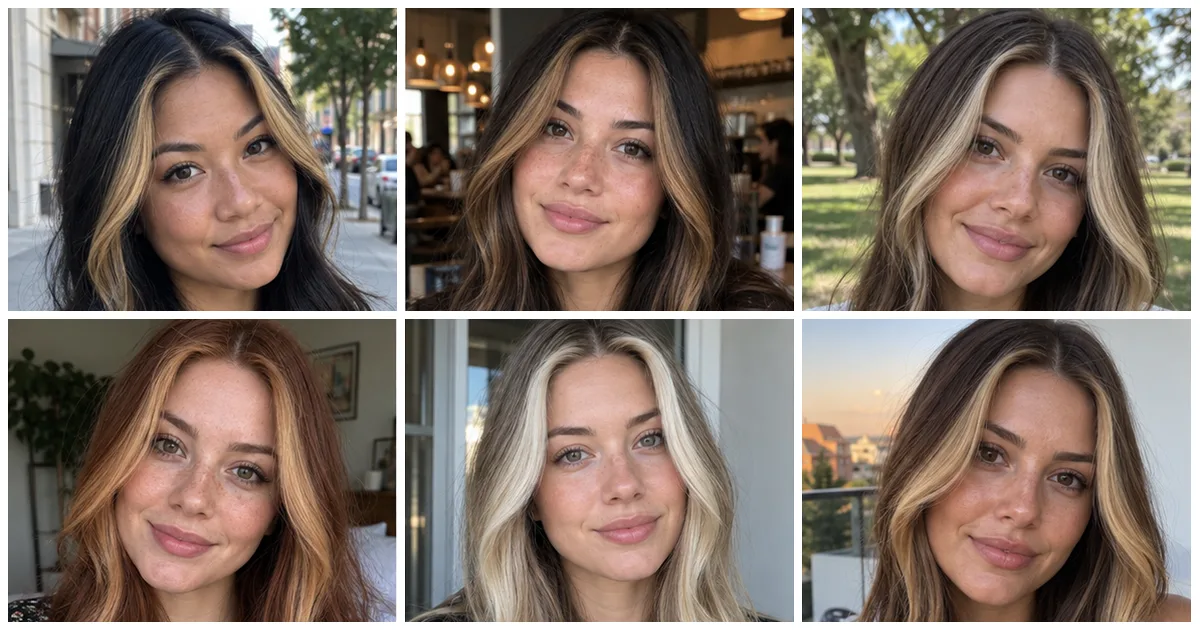
Money piece hair is two bright, face-framing bands of lighter color placed right at the front hairline, one on each side of your part, while the rest of your hair stays its natural shade. It is the smallest highlight job a colorist does and the one that changes your face the most, because it is the only hair you see head-on in every photo and every mirror.
Here is the part most guides skip: the right money piece is chosen by your base color, not by the picture you saved. The same platinum streak that looks crisp on dirty blonde turns orange and blocky on black hair. So this guide is organized by what you start with, then tells you exactly how wide to go, what to say in the chair, and how to see it on your own face before anyone opens a tub of lightener.
What is money piece hair?
A money piece is a face-framing highlight that starts at the root on the front hairline and runs to the ends, usually 1 to 2 inches wide on each side. Nothing else on the head is lightened, which is what separates it from brown hair with blonde highlights spread through the whole head.
Why the name? Colorists call it the money piece because it is the section that earns the look: a small amount of lightener in the most visible spot makes the whole head read brighter. It first went big in the 90s with chunky front streaks, and the version you see now is softer, blended at the root and matched to the base.
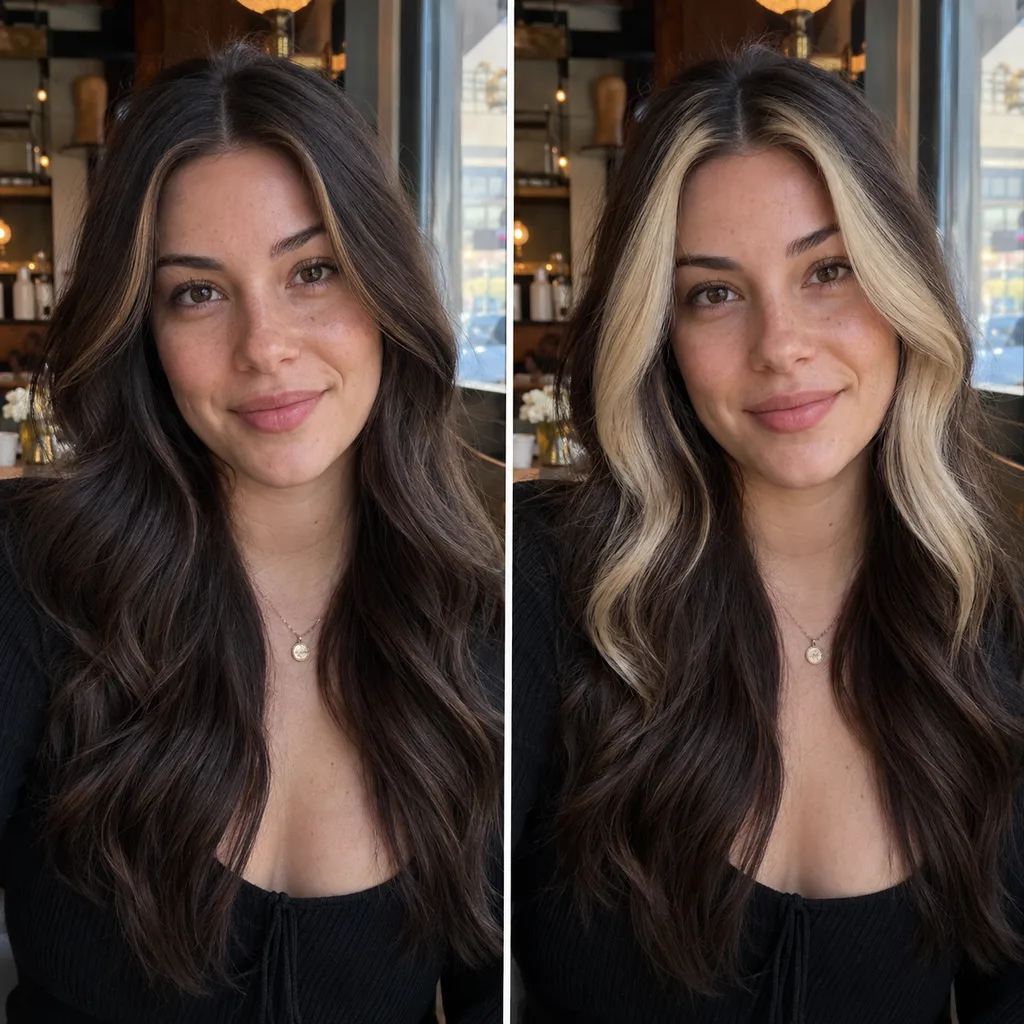
The width is the second decision after the shade. Thin wisps under half an inch read as sun, not color. Bands over 2 inches read as a statement stripe. Most people land around 1 to 1.5 inches, which frames the face without looking like a block.
Is money piece hair still in style in 2026?
Yes, but the version has changed. The high-contrast stripe of 2020 is now the minority request; the common one is a blended piece two or three shades above the base, often paired with curtain bangs or long face-framing layers. The chunky 90s look still shows up on purpose, usually on black or dark brown hair with a honey or platinum band.
Is it outdated? Only the harsh, unblended version is. A soft money piece is closer to a permanent part of the color menu now than a trend, much like peekaboo hair went from novelty to a standard request.
The right money piece for your base color
This is the decision that matters. Pick the shade by how far it sits above your natural color. The American Academy of Dermatology notes that lightening hair more than three shades requires higher volumes of peroxide, which causes more hair damage, and on the front hairline that damage shows first, because it is the finest hair on your head.
| Your base color | Best money piece shade | How far to lift | Watch out for |
|---|---|---|---|
| Black | Honey, caramel, toffee | 3 to 4 shades | Orange bands if you push to platinum in one session |
| Dark brown | Golden caramel, beige blonde | 2 to 4 shades | Stripes that stop short of the root |
| Medium or light brown | Beige or ash blonde | 2 to 3 shades | Going so close to the base it disappears |
| Auburn or red | Strawberry blonde, peach | 2 to 3 shades | Cool blondes clashing with warm red |
| Blonde | Icy platinum, white blonde | 1 to 2 shades | Too little contrast, so the piece vanishes |
Money piece on black or dark hair
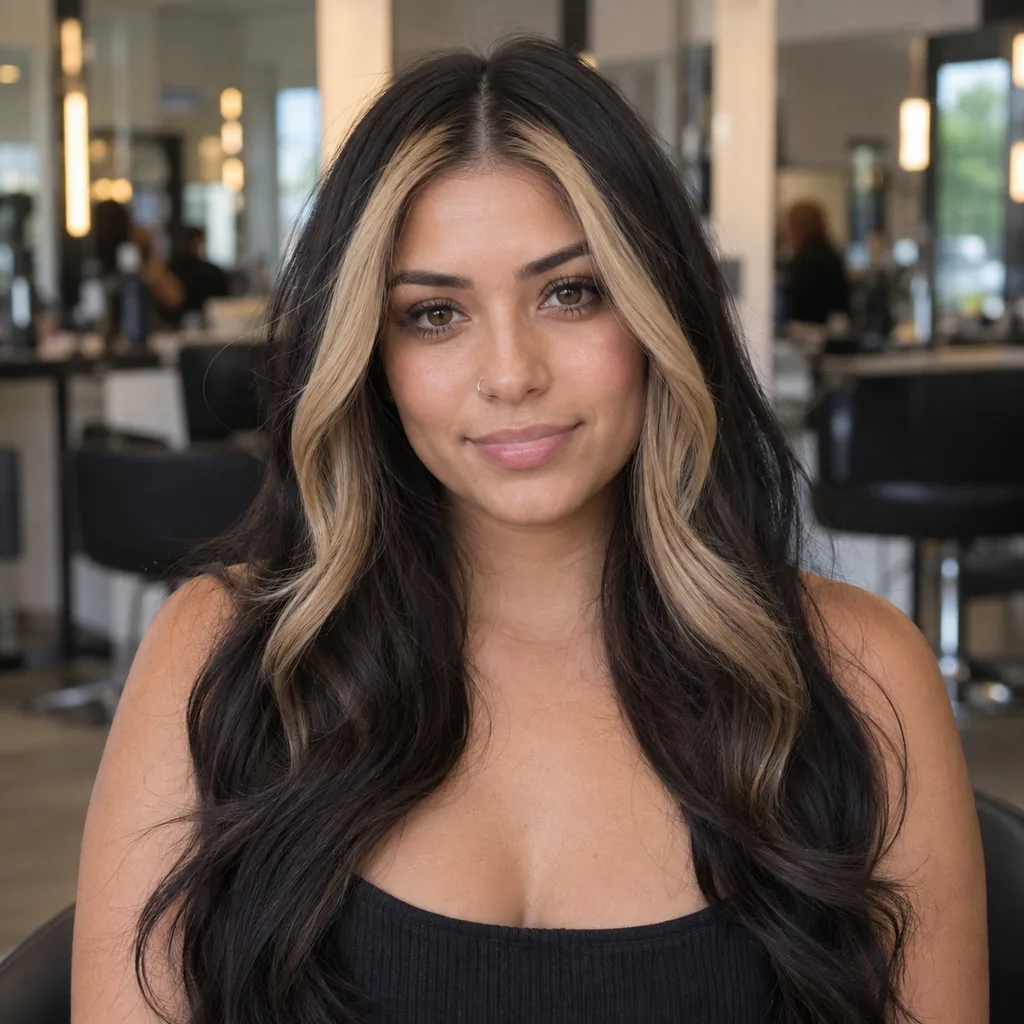
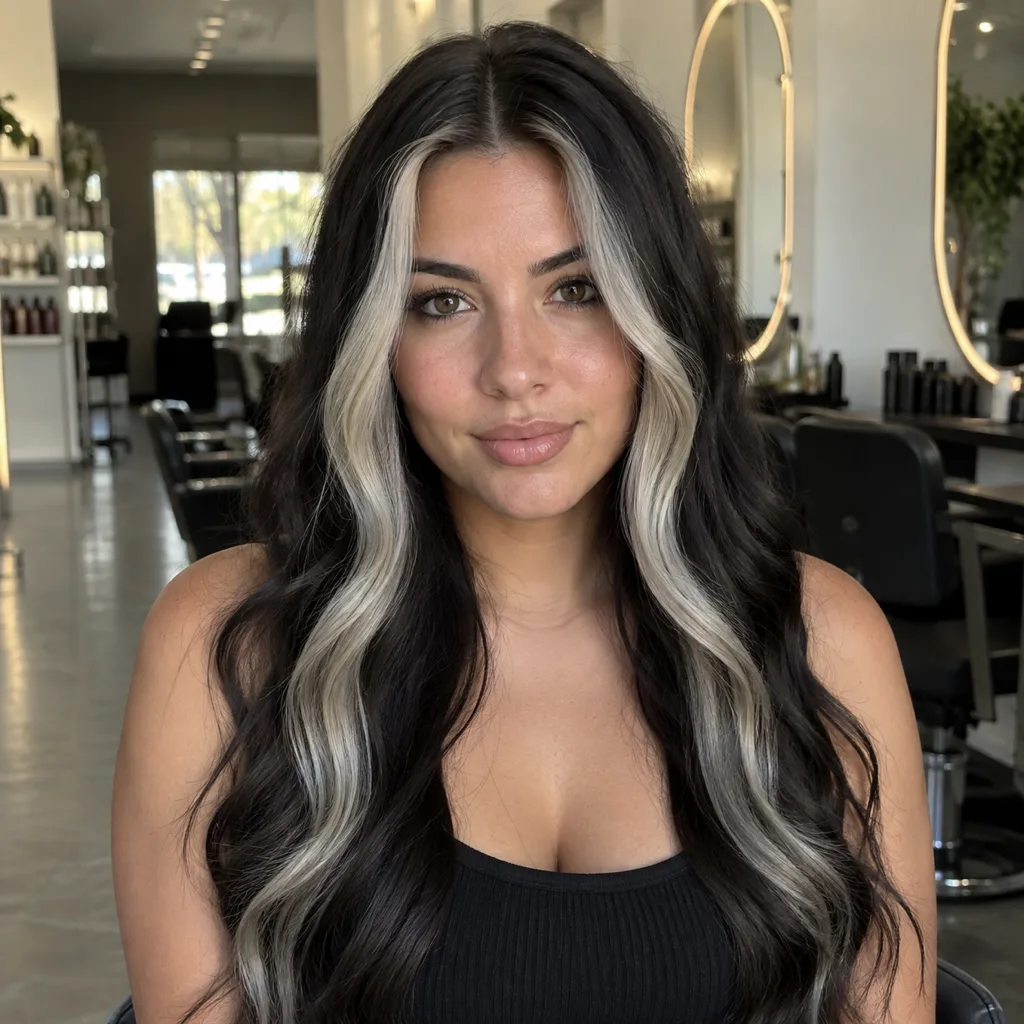
On black hair, a warm honey or caramel band is the safest bet: it reads clearly against the dark and stays inside a lift most hair can take in one appointment. If you want the high-contrast platinum stripe, plan on two sessions and a toner, the same trade that applies to bleaching black hair all over, just on a smaller patch.
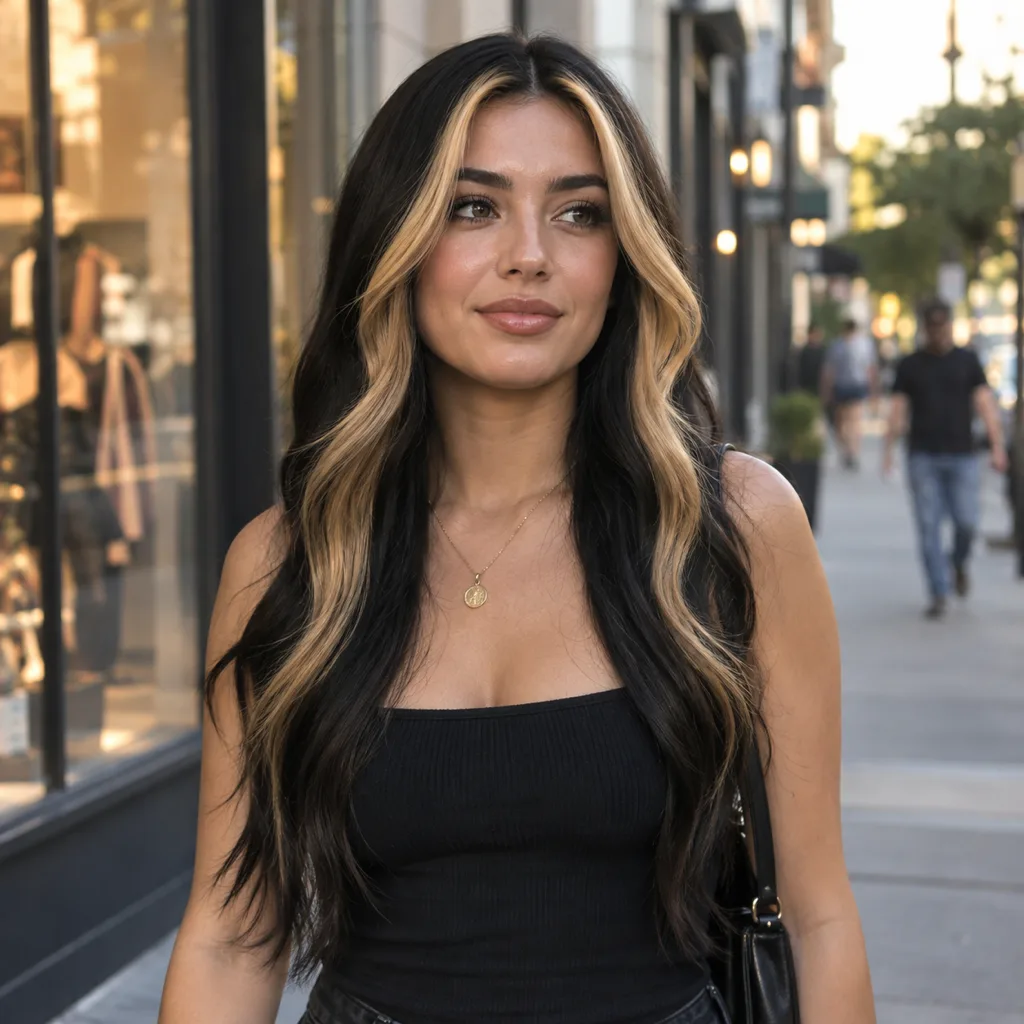
The picture here is the classic pairing: jet black lengths with honey blonde bands from the root. The contrast is strong, but it is warm, so it never flashes orange at the edges. If your dark hair is also coarse or tightly curled, ask your colorist to keep the band slightly narrower than on straight hair, since curls spread the color out wider than it was painted.
Money piece on brown hair
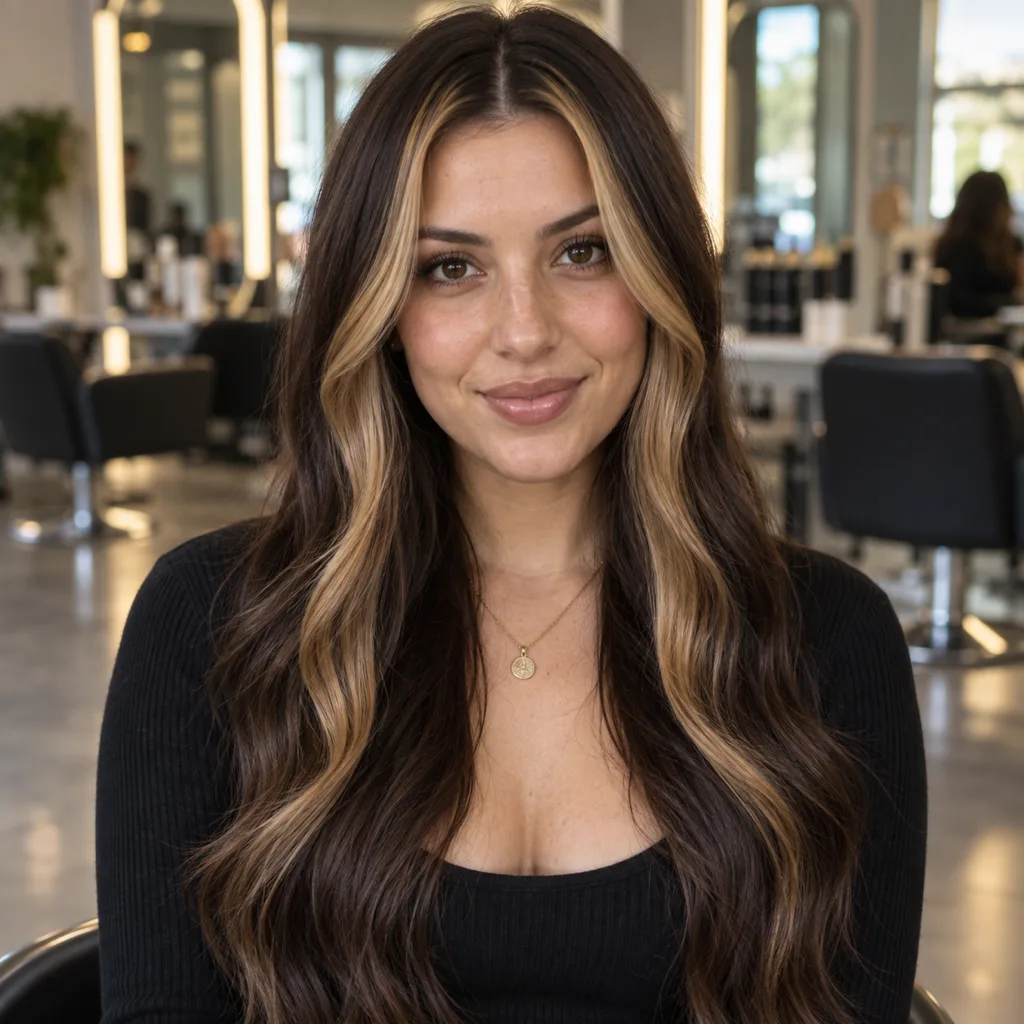
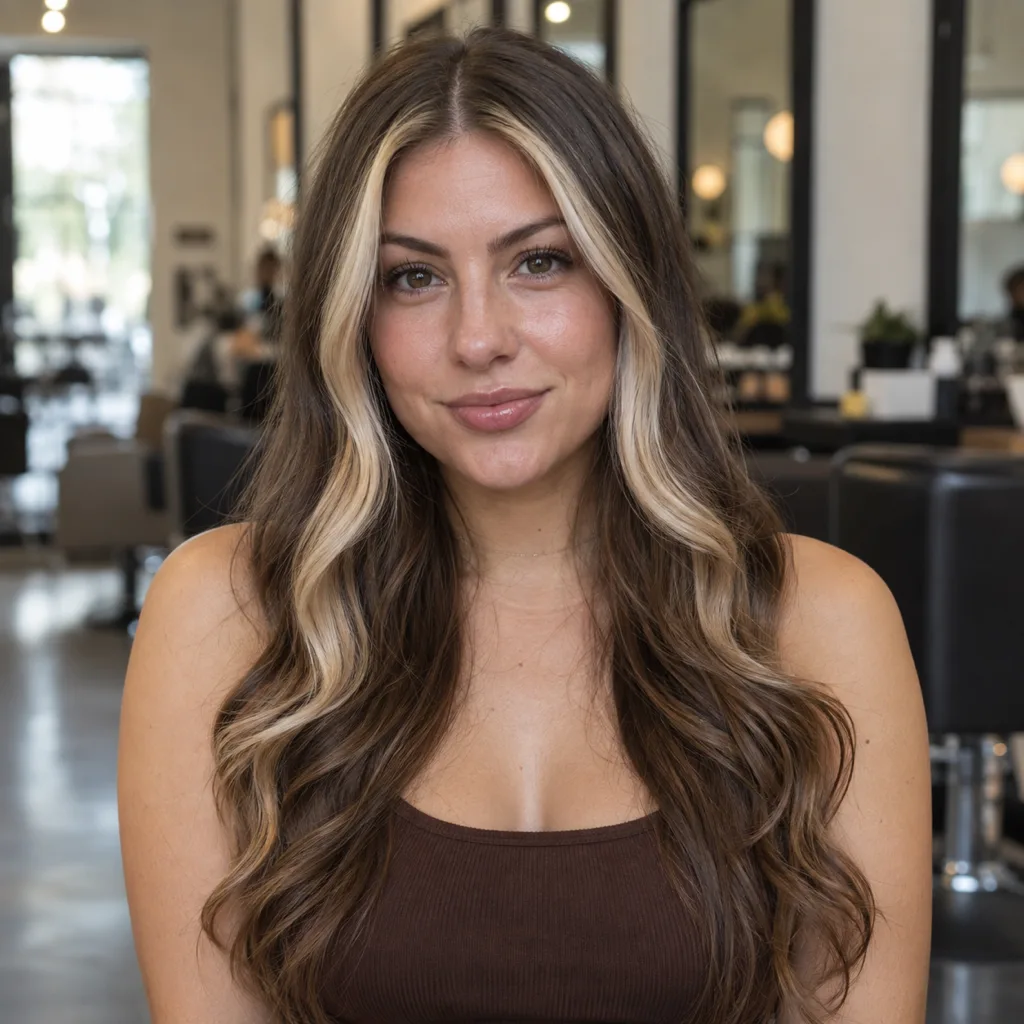
Brown is the easiest base for a money piece and the one most people have. You have the full range: a subtle caramel two shades up, or a bright beige blonde if you want it noticed.

Soft caramel on chocolate brown, like here, is the lowest-maintenance version on this page. The regrowth line is barely visible, so you can stretch touch-ups to 10 or 12 weeks. For the brighter version on brown, see how beige blonde pieces sit on light brown in the gallery below.
Money piece on blonde hair
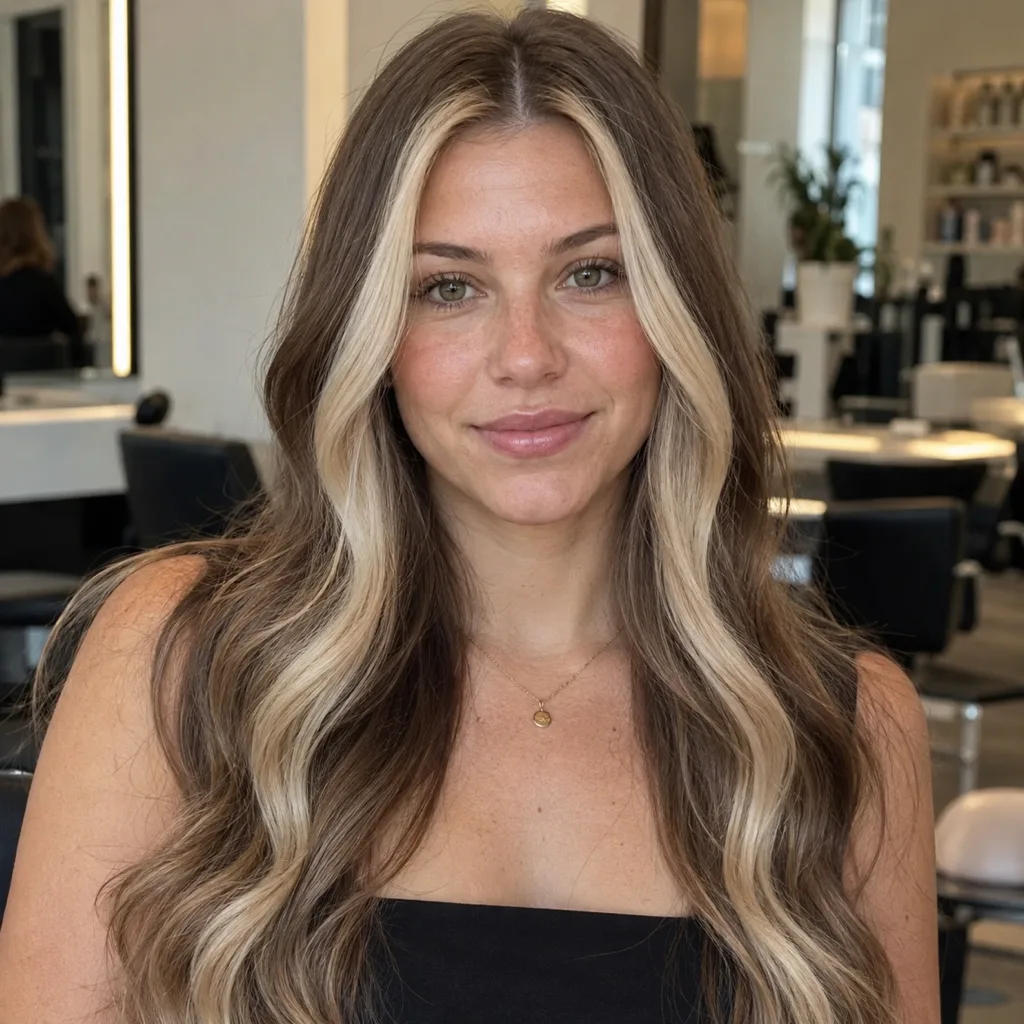
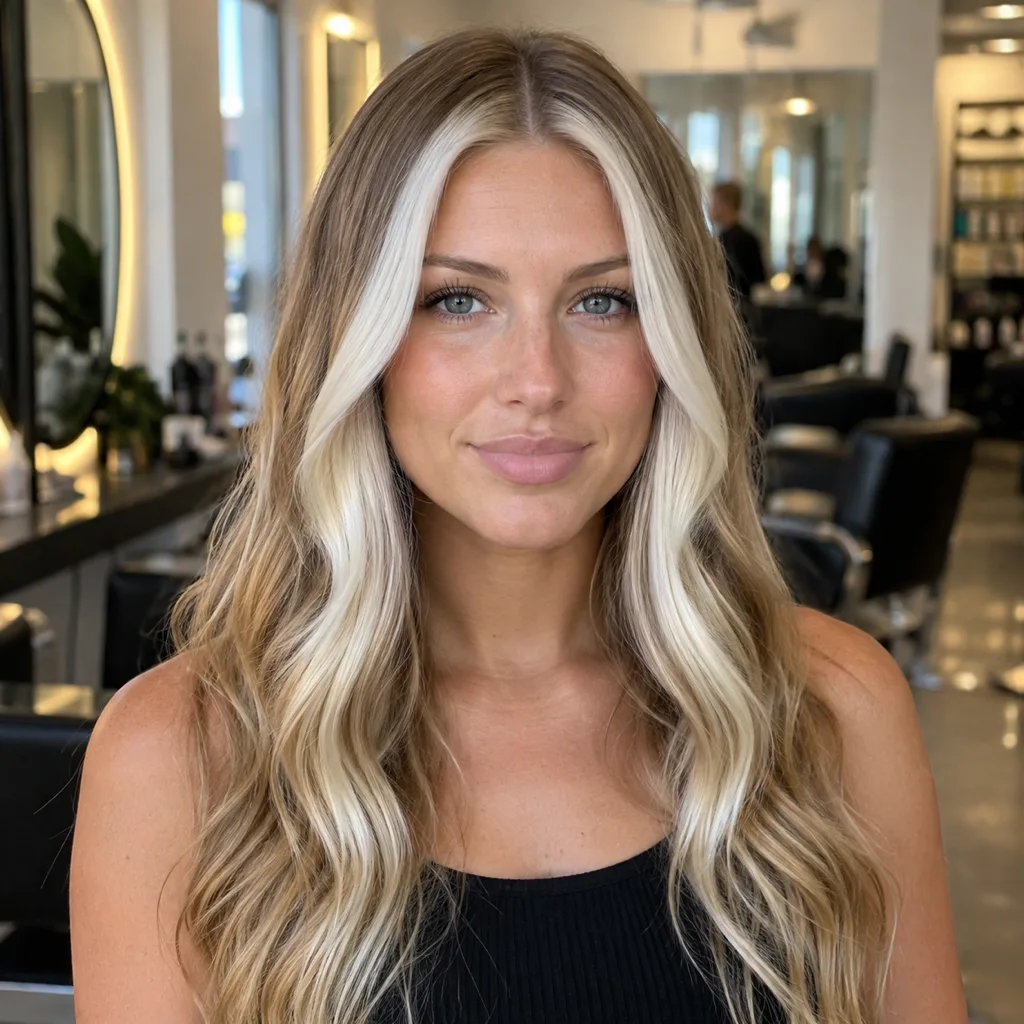
Blondes have the opposite problem: not enough room above the base. A money piece on blonde only works if it is noticeably brighter or cooler, so icy platinum or white blonde over golden or dirty blonde.
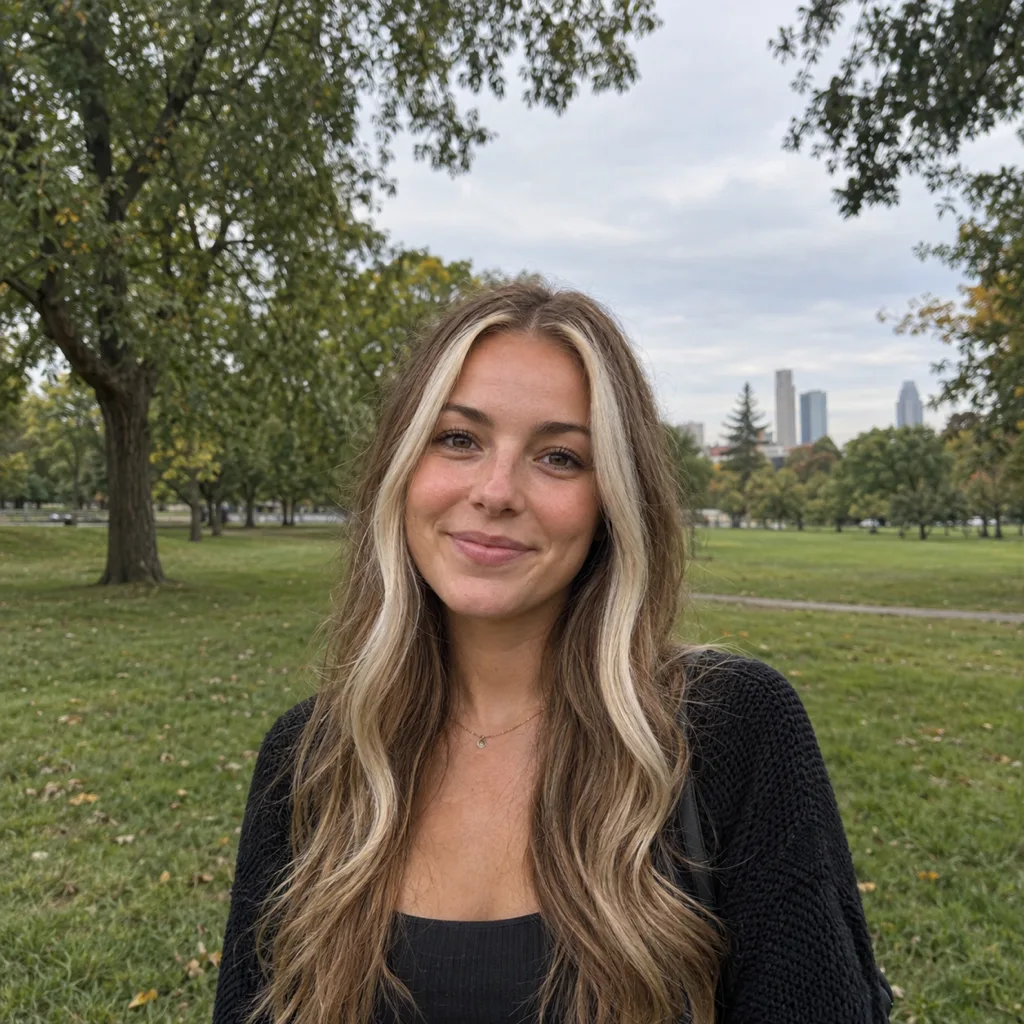
The golden to platinum shift you see here is what makes it visible. If your blonde is already very light, your colorist may lowlight the rest a shade darker instead, which gives the front the same pop without stressing hair that is already lifted.
Money piece on red and auburn hair
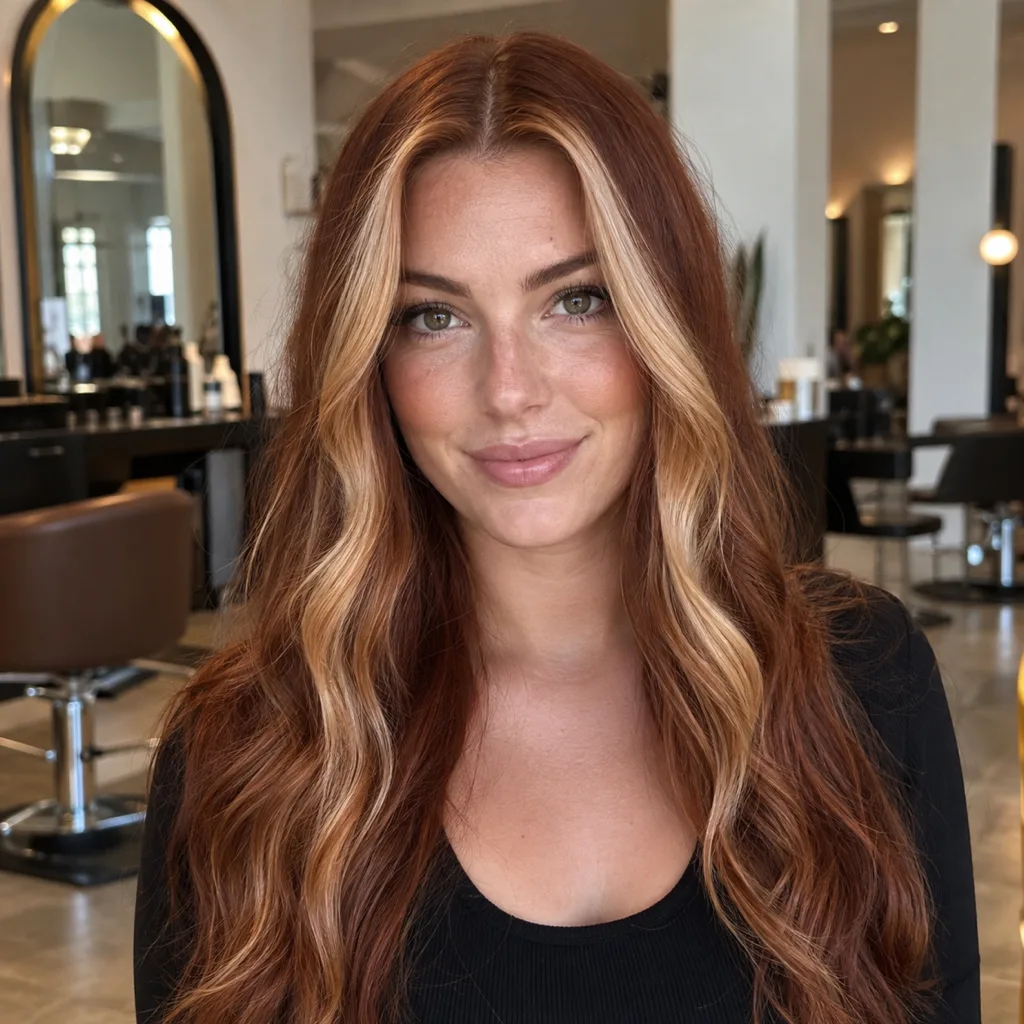
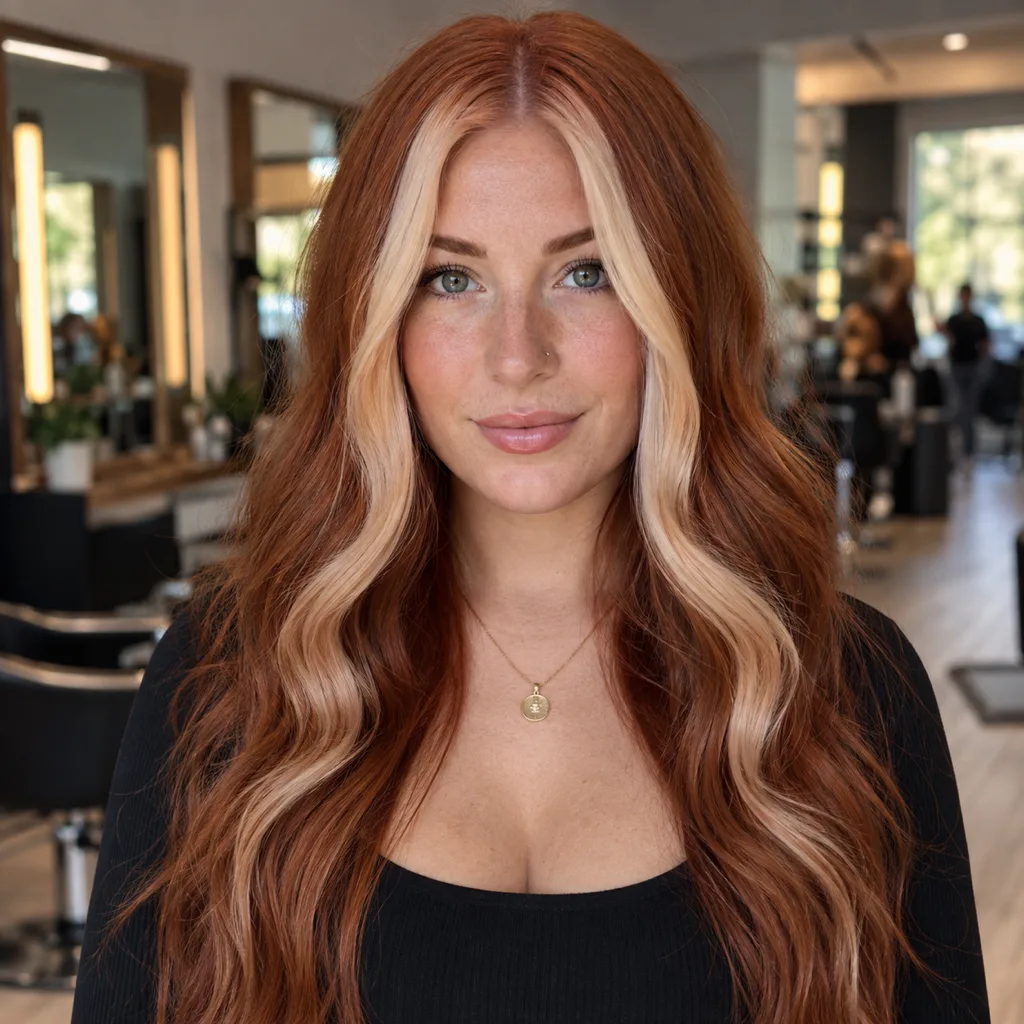
Red is the base that punishes a wrong shade most. A cool ash blonde next to warm auburn looks like two different people's hair. Keep it warm: strawberry blonde, peach or golden copper.
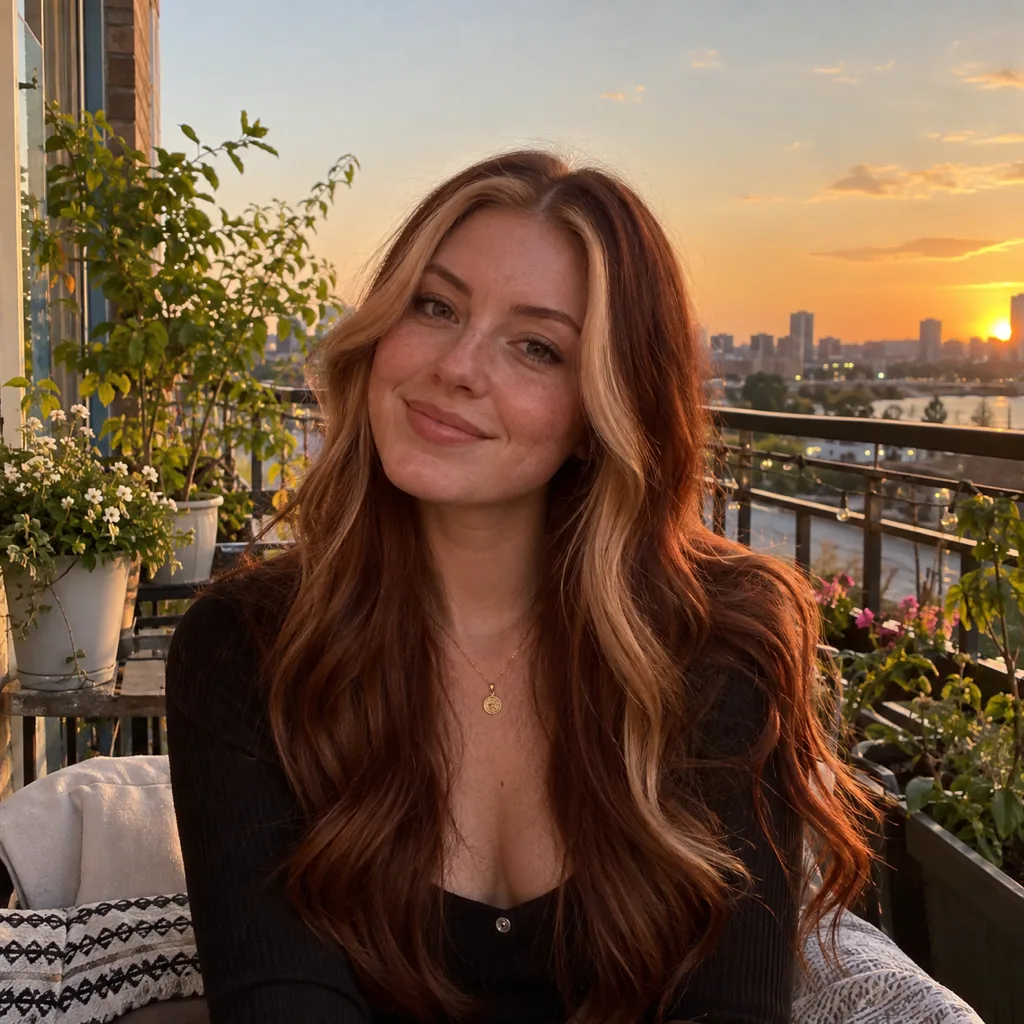
Strawberry blonde on auburn, as here, reads as sunlight rather than a stripe. Red fades faster than any other color, so book a gloss for the base at the same time as the money piece refresh, or the bands will look brighter each week as the red around them washes out.
Money piece hair with bangs
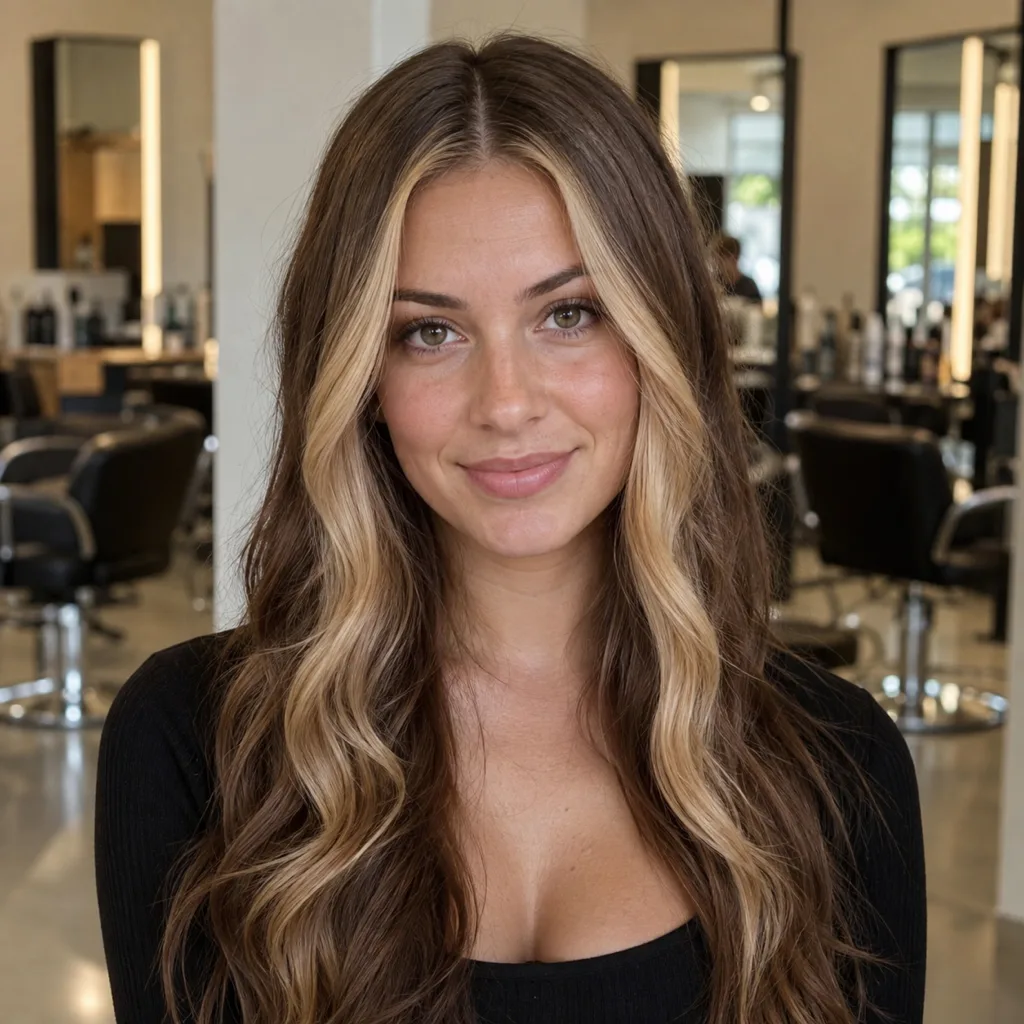
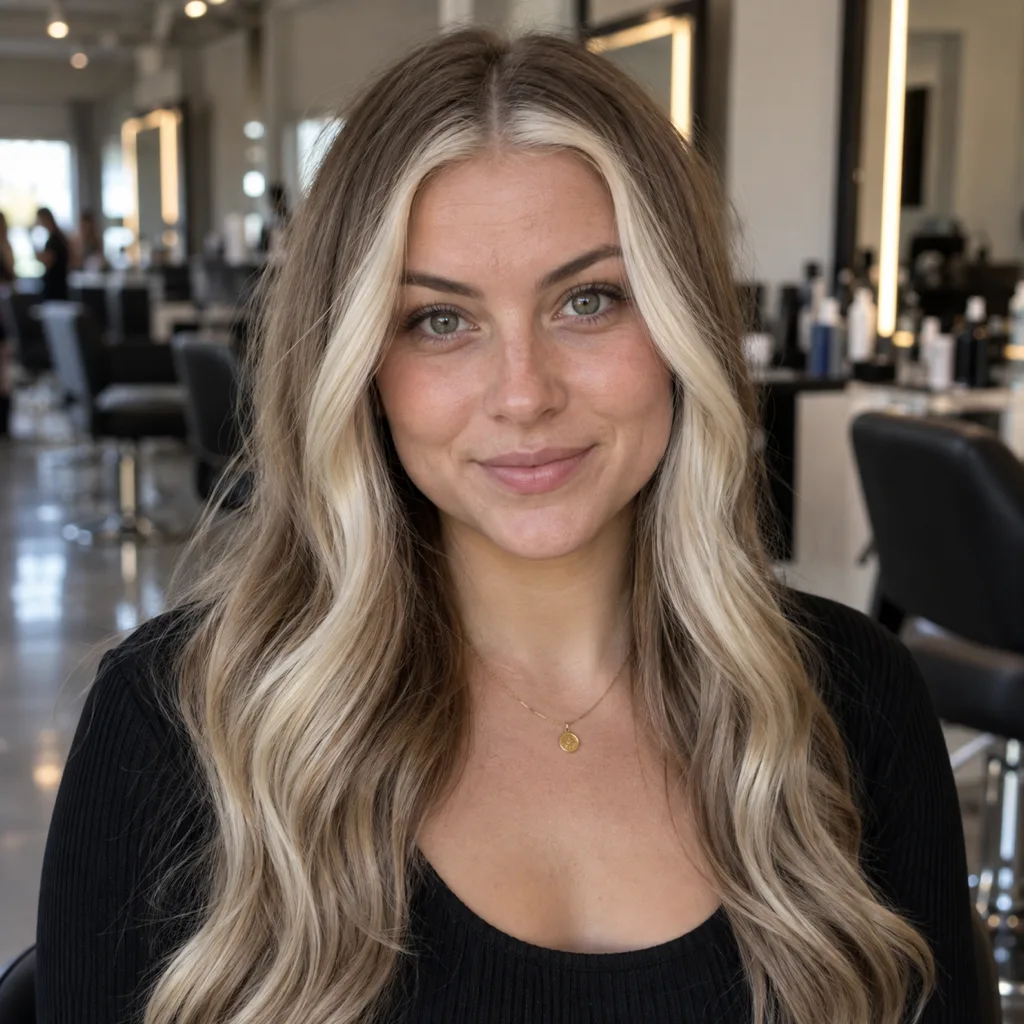
Bangs change where the money piece goes. With curtain bangs, the brightest color should run through the bangs themselves, not start behind them, or the lightened strands end up hidden under the fringe.
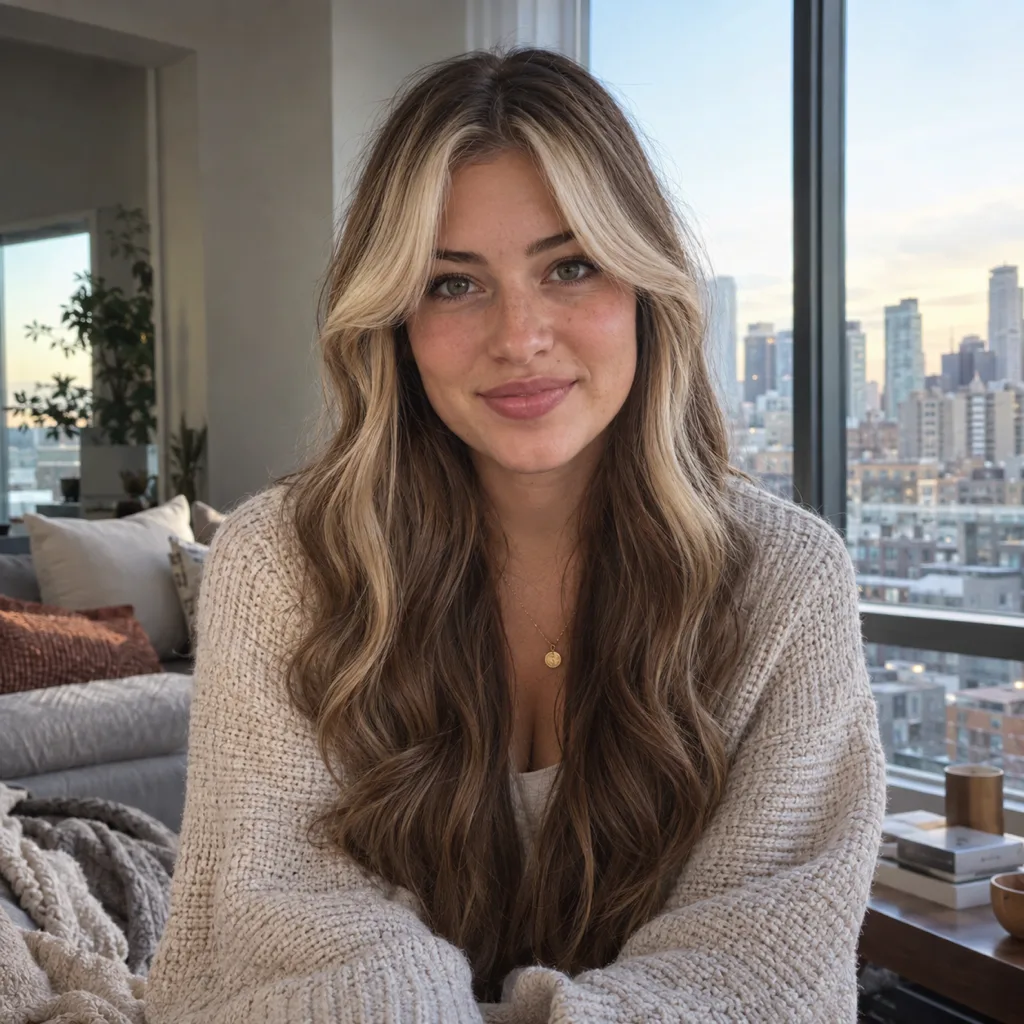
Here the beige blonde sits in the curtain bangs and the strands right beside them, over a light brown base. That is the version to ask for. If you are still deciding on the bangs themselves, preview them first with a bangs filter, since a fringe is harder to undo than a color.
How to ask for a money piece at the salon
Bring one reference photo on a base close to yours, then say the width and the shade out loud. Colorists read "money piece" differently, so the numbers do the work.
Say this to your barber
I want a money piece: two face-framing bands from the root, about one and a half inches wide on each side of my part, two to three shades lighter than my base, blended at the root, nothing else lightened.
How to get money piece hair at the salon
- Pick the shade from your base
Use the table above. Choose a shade two or three steps above your natural color, and bring a photo of someone with your starting color, not a blonde if you are brunette.
- Name the width in inches
Say "one inch" or "one and a half inches" per side. "Chunky" and "subtle" mean different things to every colorist.
- Confirm the part
The money piece is placed off your part. If you switch between a middle and side part, say so, and ask for it to be placed so both work.
- Ask for a root blend
A soft root keeps the regrowth line from showing in two weeks. It also buys you weeks between visits.
- Book the gloss with it
A toner or gloss at the end removes brassiness and sets the exact shade. Ask when to come back for a refresh; for most people it is 8 to 12 weeks.
Mistakes that cost you a second appointment
Most money piece regrets come from four decisions made before the lightener goes on.
- Choosing the shade from a picture on a different base. A platinum streak photographed on blonde will not look the same on your brown. It is the most common reason people come back for a correction.
- Going too wide. Past 2 inches the piece stops framing your face and starts reading as a two-tone head. You can always add width next time; you cannot take it back without dyeing over it.
- Lifting too far in one sitting. Past three shades the front hairline, your finest hair, takes the most damage, and it breaks first. A rich rinse-out like the Fino hair mask softens rough pieces between appointments, but it hides that damage rather than reversing it.
- Forgetting the toner. Without a gloss, lightened brown and black hair turns yellow or orange within a few washes.
Try it on your face before you book
The manual way works: save photos of people with your base color, hold them next to your face, and ask your colorist to match. The wall it hits is that a photo of someone else's face does not tell you whether a bright band flatters your skin tone, eye color and face shape. That is the part people regret.
Hairstyle Atlas renders the look on your actual photo, so you can compare a caramel band against a platinum one on your own face in a minute. The first look is free and needs no card; after that, the Plus plan is $9 a month for every color and cut. If you want the lightening spread through the lengths instead, the balayage try-on and the virtual hair color try-on do the same job for a full-head color, and the blonde hair filter shows you a full commitment. Cutting to a bob at the same time? Run a bob haircut try-on first.
Yours could be here.
Start with one selfie.
One photo, twenty seconds, and you'll know. Free account, no card for your first render.
Money piece hair ideas by base color
Every picture below keeps everything the same except one thing: the base color, and the band shade chosen to match it. Use it to find your starting color, then look at what sits in front of the face.
Gallery10 photos · tap to enlarge
 Try this on me
 Try this on me
 Try this on me
 Try this on me
 Try this on me
 Try this on me
 Try this on me
 Try this on me
 Try this on me
 Try this on me
A pattern shows up across all ten: the pieces that look expensive are the ones that stay warm on warm bases and cool on cool ones. Copper with peach and black with honey read as one head of hair. Black with silver is the one exception, and it only works because the contrast is intentional.
The one thing to get right
If you remember one thing, pick the shade from your base color, two or three steps up, and name the width in inches. Everything else, the bangs, the part, the toner, is refinement. The money piece is small enough to try once and cheap enough to adjust, which is exactly why it is worth seeing on your own face first. If you like how the brighter front changes things, the next step up is calico hair, which scatters those bright pieces through the whole head.
Frequently asked questions
A money piece is two face-framing highlights that start at the root along your front hairline, one on each side of your part, about 1 to 2 inches wide. The rest of your hair stays its natural color, so all the brightness sits around your face.
Because it is the section that earns the look. A small amount of lightener in the most visible spot brightens the whole face, so it gives the biggest visible result for the least color work.
Yes. The soft, blended version two or three shades above the base is a standard request now. The harsh, high-contrast 2020 stripe is less common, but the chunky 90s look still appears on purpose on dark hair.
Only the unblended stripe version looks dated. A money piece matched to your base with a soft root blend reads as current, and it pairs well with curtain bangs and face-framing layers.
Golden caramel or beige blonde for dark brown, and beige or ash blonde for medium and light brown. Stay two to three shades above your base so the piece is visible without heavy lightening.
It works from a chin-length bob to hair past the shoulders. It shows the most on shoulder length and longer, where the band has room to run past the face, and on short hair it reads more like a bright fringe.
Almost every face shape. On round faces, keep the bands running past the chin to draw the eye down; on long faces, a slightly wider piece near the cheekbones adds width. The shade matters more than the face shape.
The color lasts until it grows out, but the regrowth line at your part usually shows in 6 to 8 weeks. With a soft root blend and a gloss, most people refresh every 8 to 12 weeks.
Preview it on your own photo: Virtual Hair Color Try-On.
Share article
About the author
More articles
Women's Haircuts · 14 min
Bleached Hair: How Light Yours Can Go, 14 Shades, Aftercare
How light your bleached hair can go depends on where it starts. See 14 bleached shades on one cut, what each starting color can reach in one session, how toner finishes the job, and the aftercare that keeps it soft.
Women's Haircuts · 16 min
Waves Hair: How to Get Beach, Loose and Hollywood Waves That Last
Waves hair is about what you leave straight. How to get beach, loose, Hollywood and heatless waves, which wave suits your hair type, and why your waves keep falling out.
Women's Haircuts · 15 min
Fino Hair Mask: Who It Suits, How to Use It, and Its Limit
The Fino hair mask makes dry, bleached and frizzy hair smooth and shiny in one use, mostly by coating it. Here is what is in the jar, which hair types it suits, exactly how to use it, and what to do when the ends are past a mask.