Peekaboo Hair: The Parting Matters More Than the Color
Oleh Onysko Updated 22 September 2026 16 min read
In this article
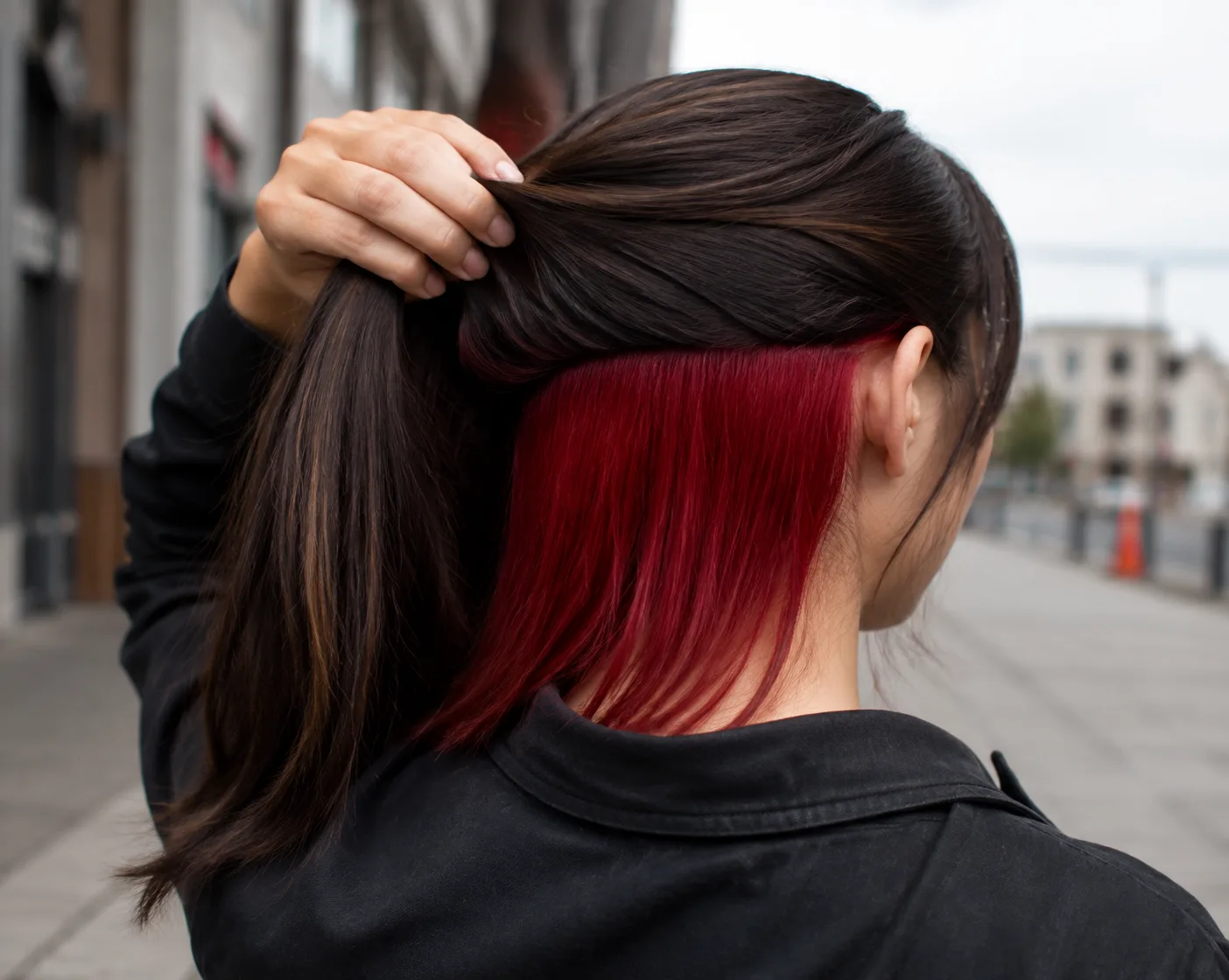
Peekaboo hair is a vivid color dyed into the layer underneath your natural hair. A parting runs across the back of your head, everything above it stays your own shade, and everything below it goes bright. Hair down, nobody sees it. Hair lifted, tied up, or caught by wind, and there is a stripe of cobalt or cherry red where a second ago there was nothing.
That is why it is the lowest-risk way to wear an unnatural color. The section that gets bleached is the section nobody photographs.
Most guides send you straight to a shade chart. That is the wrong end of the problem. Violet or teal is the easy call, and eight weeks of washing undoes it either way. The decision that actually makes or breaks a peekaboo is one your colorist will not raise unless you do: how high the parting sits.
What is peekaboo hair?
Peekaboo hair is a partial color service. Your colorist takes a horizontal section across the back of your head, clips everything above it out of the way, and treats only what is left below. Bleach first if the shade needs lift, then color on the panel. The untouched canopy falls back over it and hides the whole thing.
You will see it sold under three names, and two of them are not the same service:
- Peekaboo highlights are tonal. Caramel under brunette, honey under dark blonde. Soft, sometimes no bleach at all, and no hard line where the layers meet.
- Peekaboo hair color, sometimes called underlights or hidden color, is the vivid version. Cobalt, magenta, emerald. High contrast on purpose, and almost always bleached first.
- A peekaboo panel is what a colorist calls the section itself, whichever of the two goes on it.
Book the wrong one and you get quoted the wrong price, then talked into the wrong service in the chair. And if you want the lighter color on show at the front rather than hidden underneath, that is a different service again: face-framing money piece highlights sit right at the hairline.
The parting is the whole trick
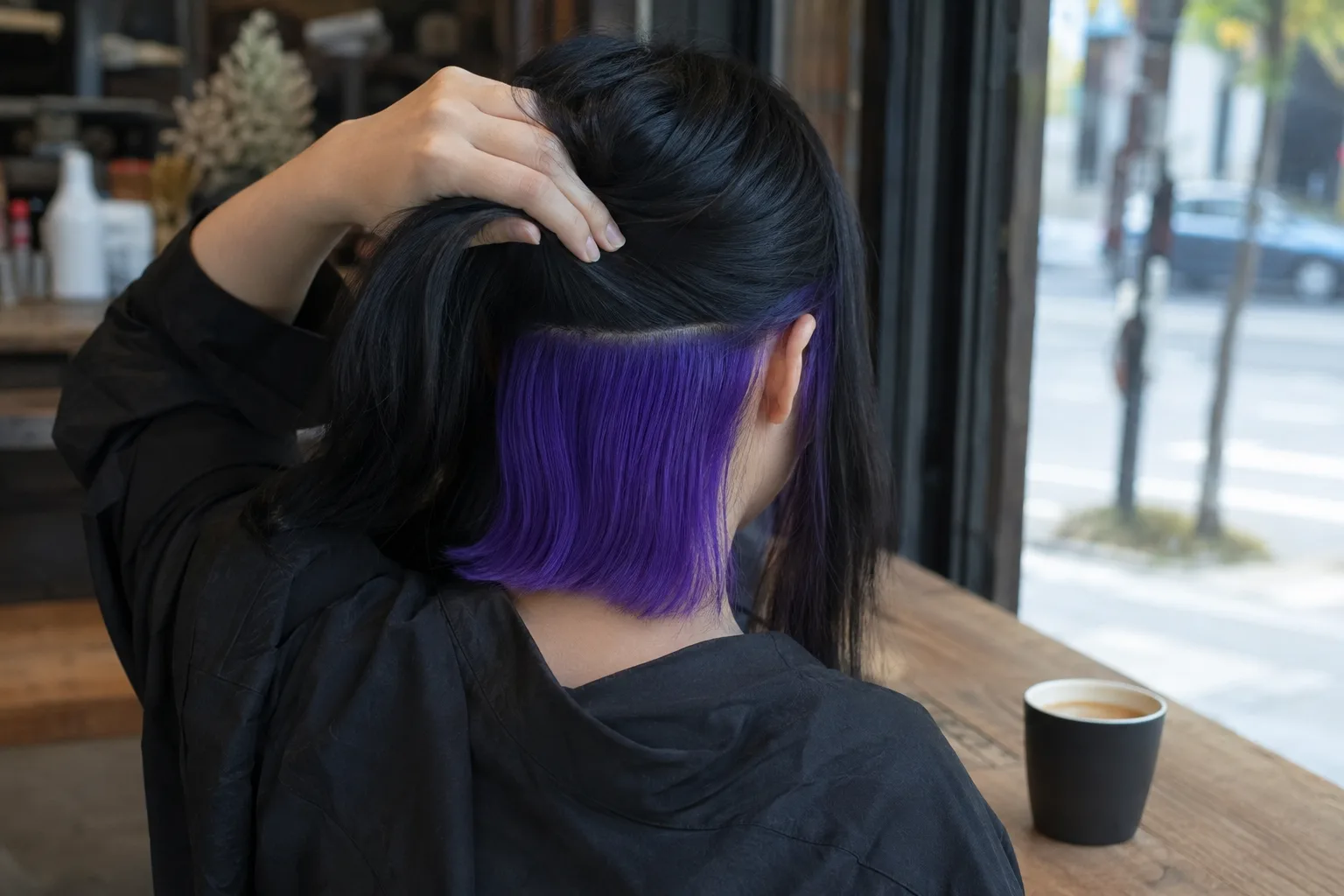
How hidden your peekaboo stays has almost nothing to do with the shade and almost everything to do with two things: where the horizontal parting sits, and how much hair is left above it.
| Parting height | What you see day to day | Who it suits |
|---|---|---|
| Nape only, below the occipital bone | Almost never visible. Shows in a high ponytail and nowhere else | A first attempt, or a job with a dress code |
| Ear to ear, level with the top of the ears | Hidden at rest, flashes when your hair moves. The standard | Most people |
| Above the ears, into the sides | Visible most of the time. Reads as two-tone, not as a secret | You want it seen |
| Down from the crown | Not a peekaboo at all. That is an all-over with a natural top | Nobody who asked for a peekaboo |
Density decides how far you can push that. Fine or thinning hair lets light through, so an ear-level parting will glow pink in daylight before you have left the salon. Take it lower. Thick hair hides a higher parting easily, which is why the same placement looks flawless on one head and obvious on another.
The third variable nobody mentions is the part on top. A center part drops even weight down both sides. A deep side part leaves one side thin, and that thin side is where your peekaboo will leak.
Pick a shade for your base color
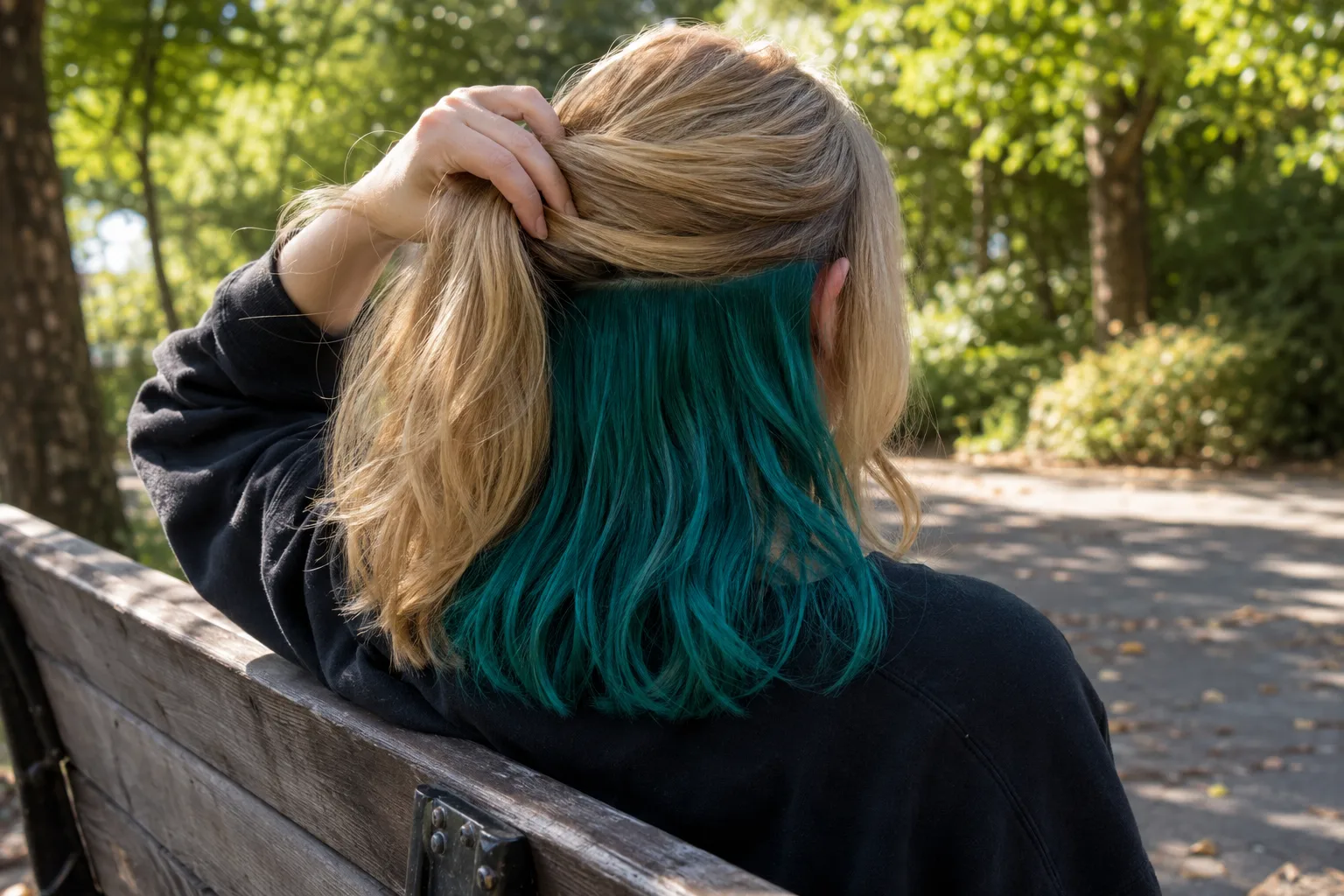
A shade only reads if it clears your natural depth. On black hair, pastels need so much lift that the damage outweighs the result, so go saturated instead. On blonde hair almost anything works, and the real problem becomes stopping the color from bleeding into the blonde on every wash.
| Your base | Shades that read | Lift needed first | Where it fades to |
|---|---|---|---|
| Jet black, dark brown | Cherry red, cobalt, violet, emerald | Level 7 or lighter | Red to pink, cobalt to teal, violet to steel grey |
| Light brown | Burgundy, magenta, teal, copper | Level 7 to 8 | Burgundy to rose, magenta to peach |
| Blonde | Anything, pastels included | Little or none | Pastels first, often within a handful of washes |
| Natural red | Emerald, deep violet, blue | Level 7 to 8 | Green to a yellow-green |
| Grey and silver | Pastels and cool tones | None | Stains lighter, but holds longer than on blonde |
The fade is not a fault, it is how these colors work. The vivids are direct dyes: no developer, no lift, they sit on the hair shaft and wash out. All of the damage in a peekaboo comes from the bleach step, and bleaching one panel once is a very different proposition from bleaching a whole head every six weeks. The American Academy of Dermatology's healthy hair guidance is worth reading before you agree to two lightening sessions in a day. If you are doing the panel at home with a drugstore kit, read what Splat hair dye actually does first, because it stains more and leaves more slowly than most direct dyes.
If your base is already light, run the shade past your own hair first with the blonde and light hair filter before you commit to a toner. The same arithmetic governs ordinary highlights too, where how many levels the blonde sits above your base decides whether it reads as sun or as bleach.
Peekaboo on curly and coily hair
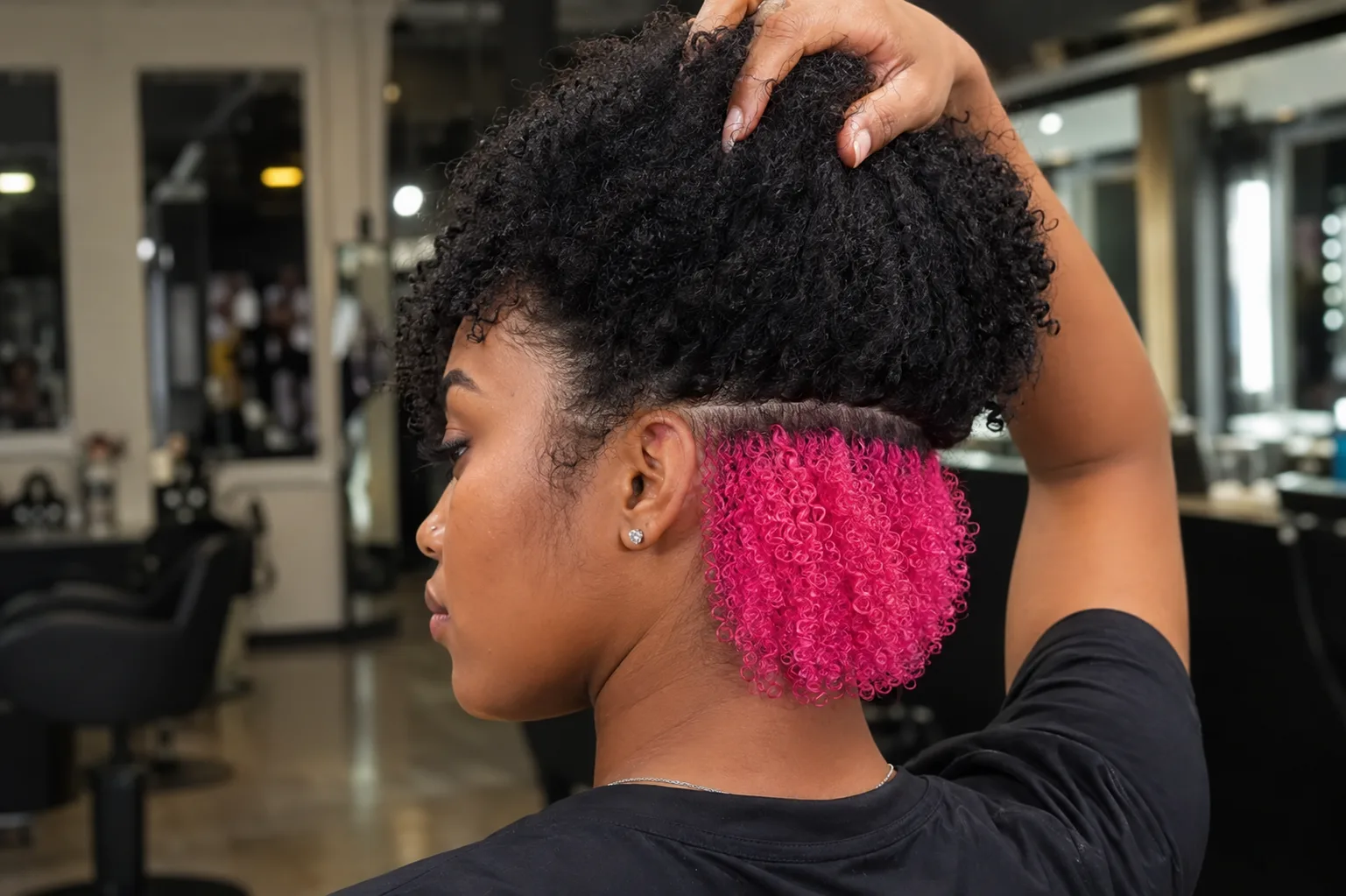
Curls are the best hair type for this and the fiddliest to place. Best, because the volume of the canopy hides the panel completely, even at an ear-level parting. Fiddliest, because coils do not fall in flat sheets, so a parting sectioned while the hair is soaking wet lands somewhere else entirely once it dries and shrinks.
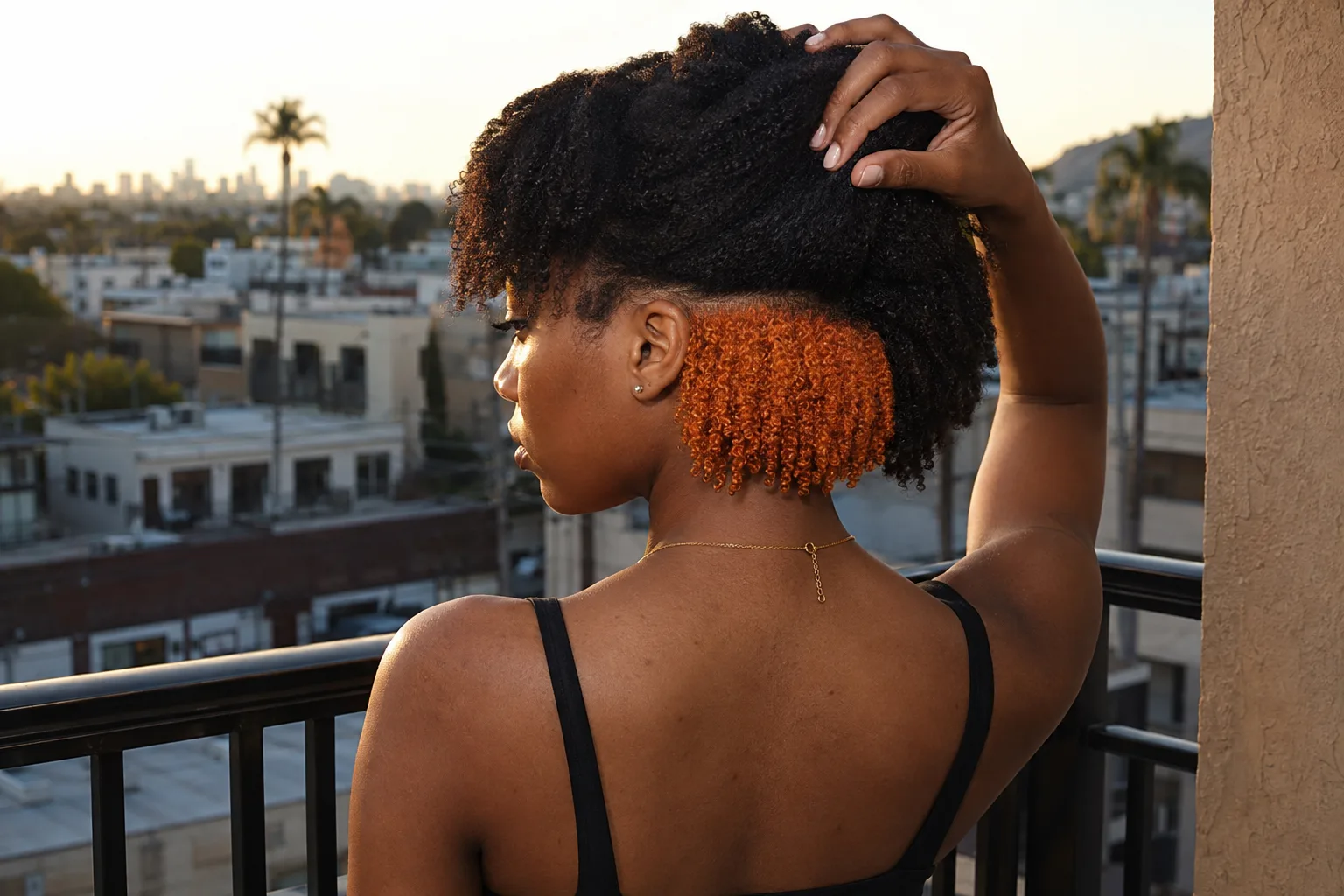
Two rules. Section dry or in the hair's natural state so shrinkage does not move your line. And take the panel wider than you would on straight hair, because a narrow band of color inside a coil pattern simply vanishes into the texture.
Porosity matters more here than base color. High-porosity coils grab a direct dye fast and hold it long, which is good news for the fade and bad news if you picked the wrong shade. If you are still working out what your pattern needs, our guide to 4c hair covers the handling side, and the curly hair try-on will show the panel on your own pattern.
Peekaboo on short hair and bobs
It works down to about chin length. Below that, the panel stops being hidden and becomes a visible bottom half, which is a different look with a different name.
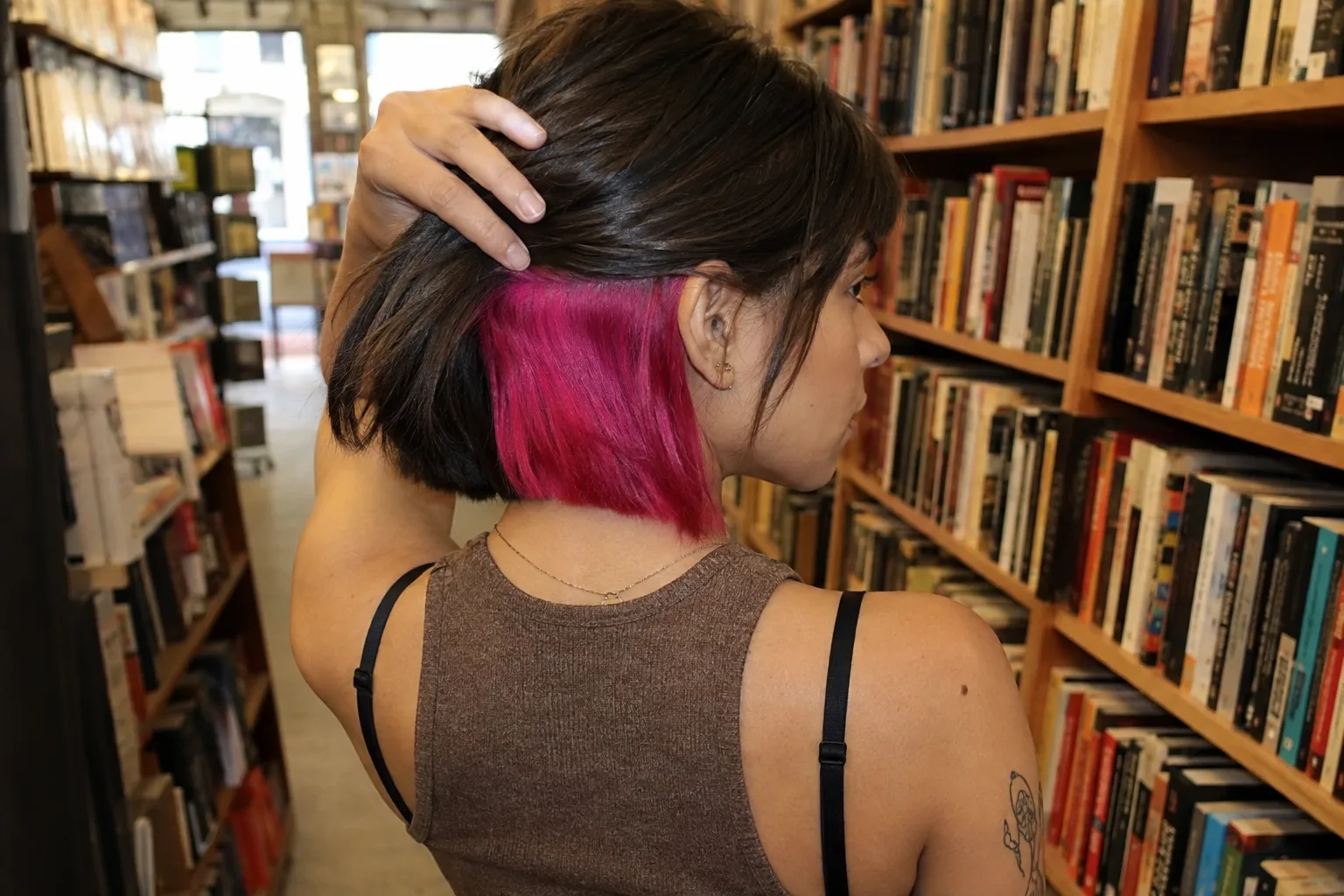
On a blunt bob the join between the layers is a hard horizontal line, which reads as deliberate. On a layered chin-length cut like the one above, the color breaks up and shows from more angles, which reads as accidental in the best way. Pick according to which of those you actually want, and say so, because your colorist cannot guess.
Short hair also changes the economics. Less hair per panel means less bleach and a shorter appointment, but you wash the ends more often, so the color fades faster. Expect to refresh sooner than a friend with long hair does. If you are weighing the cut itself, the bob try-on and our list of hairstyles for long hair both sit next to this decision.
Nine peekaboo hair colors, and what each one becomes
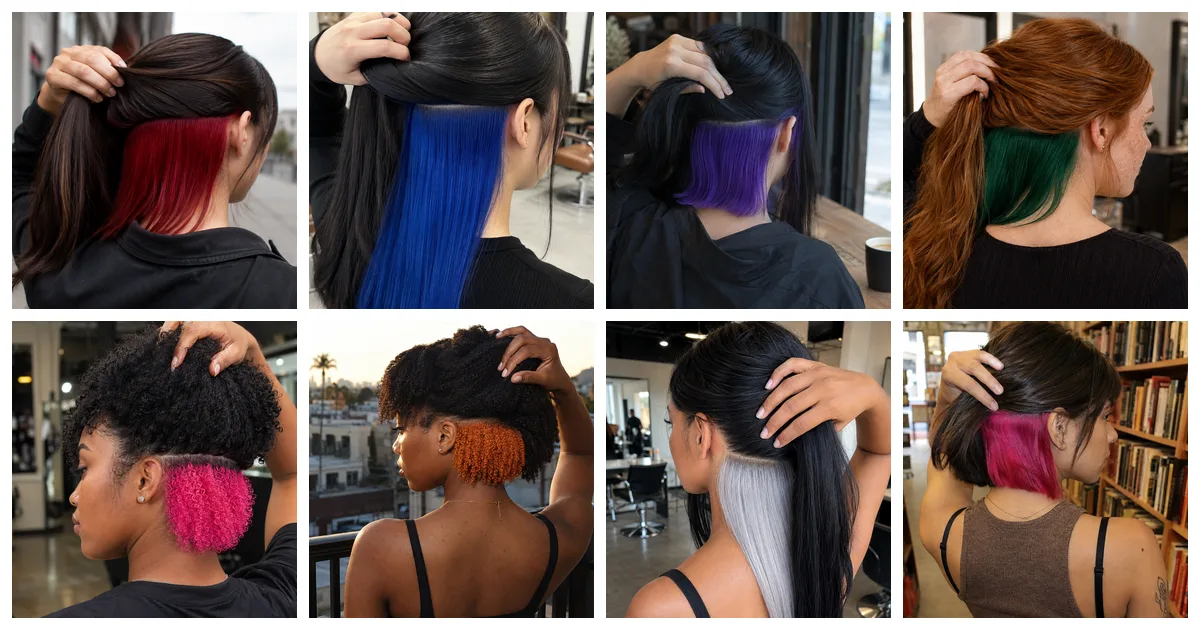
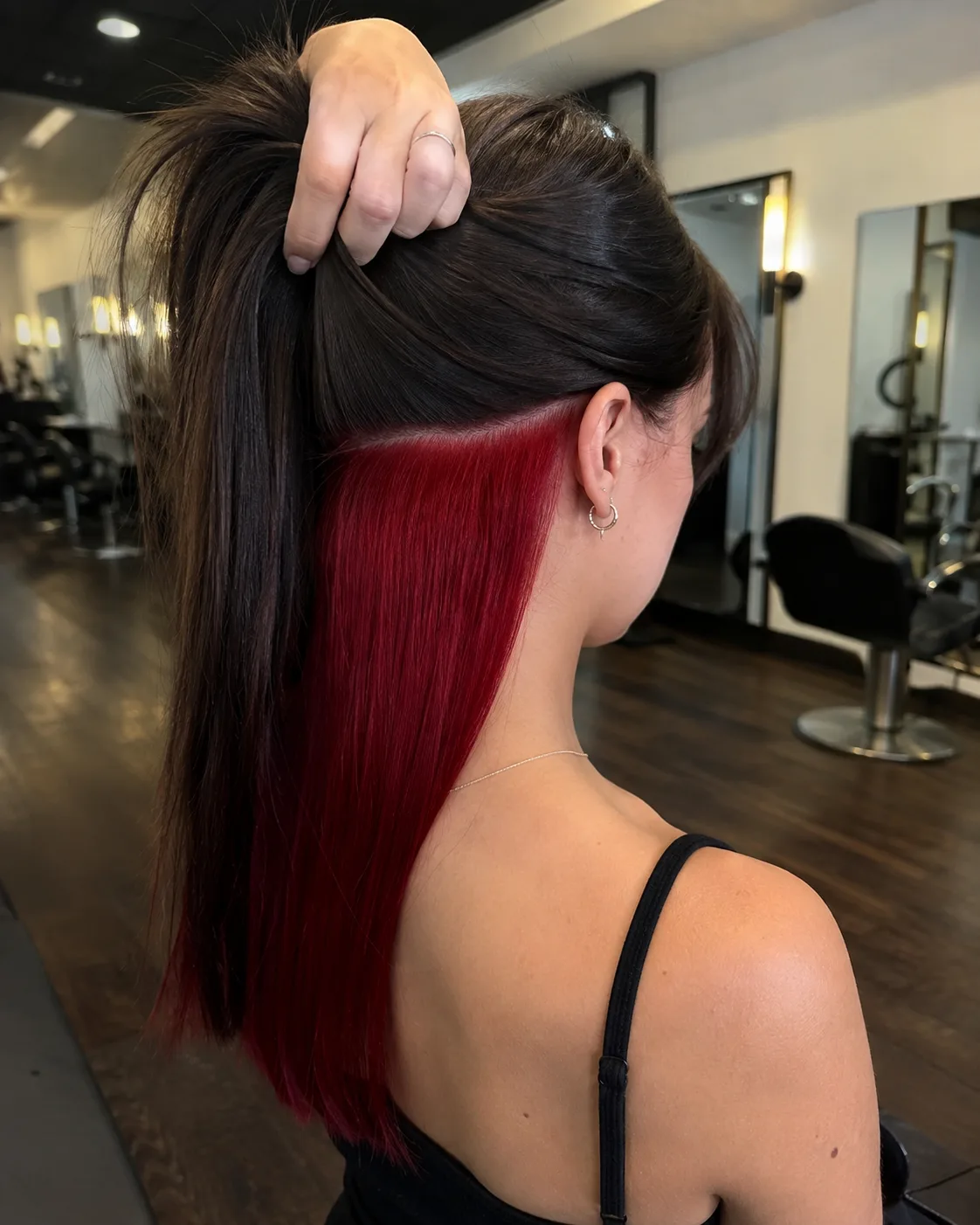
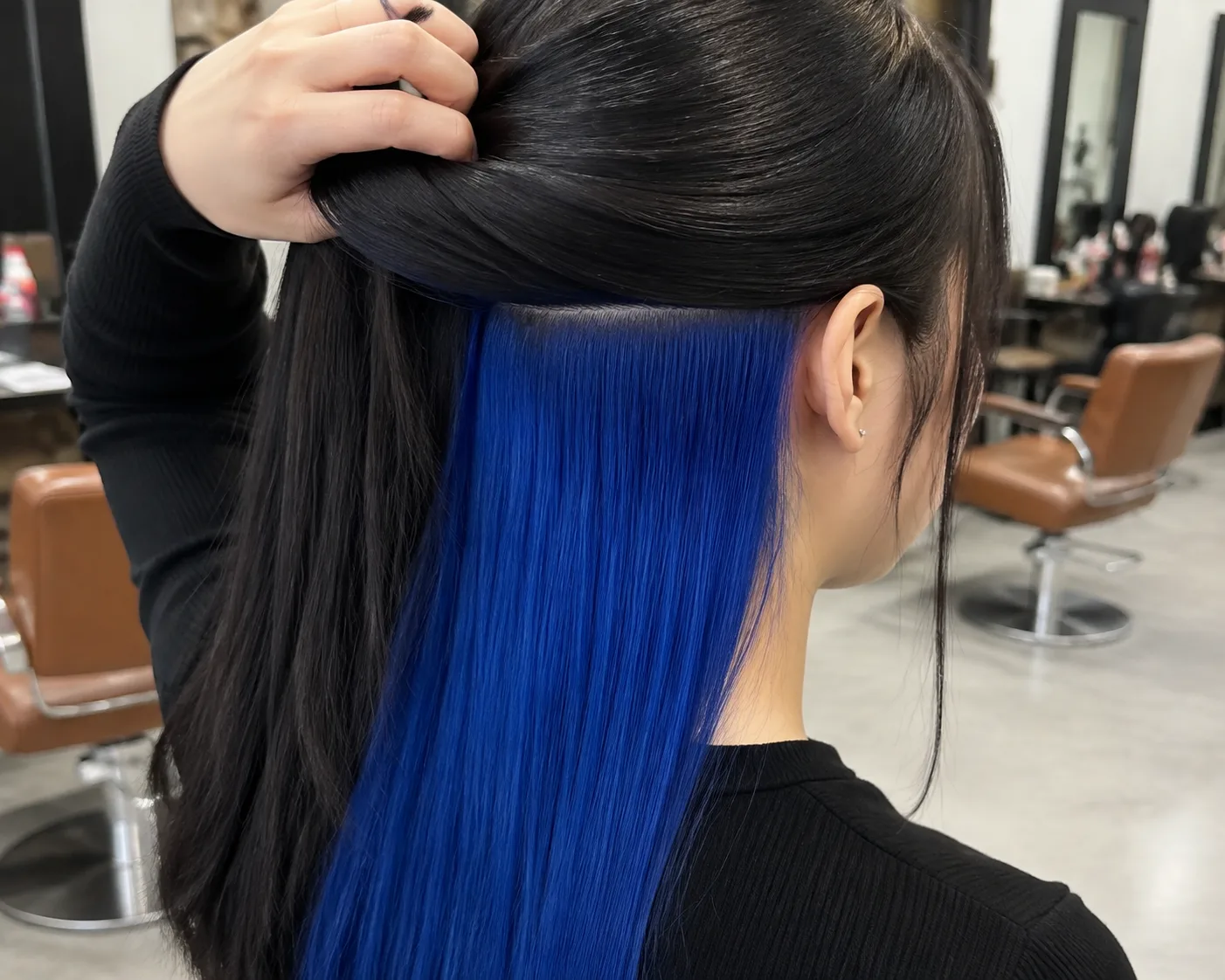
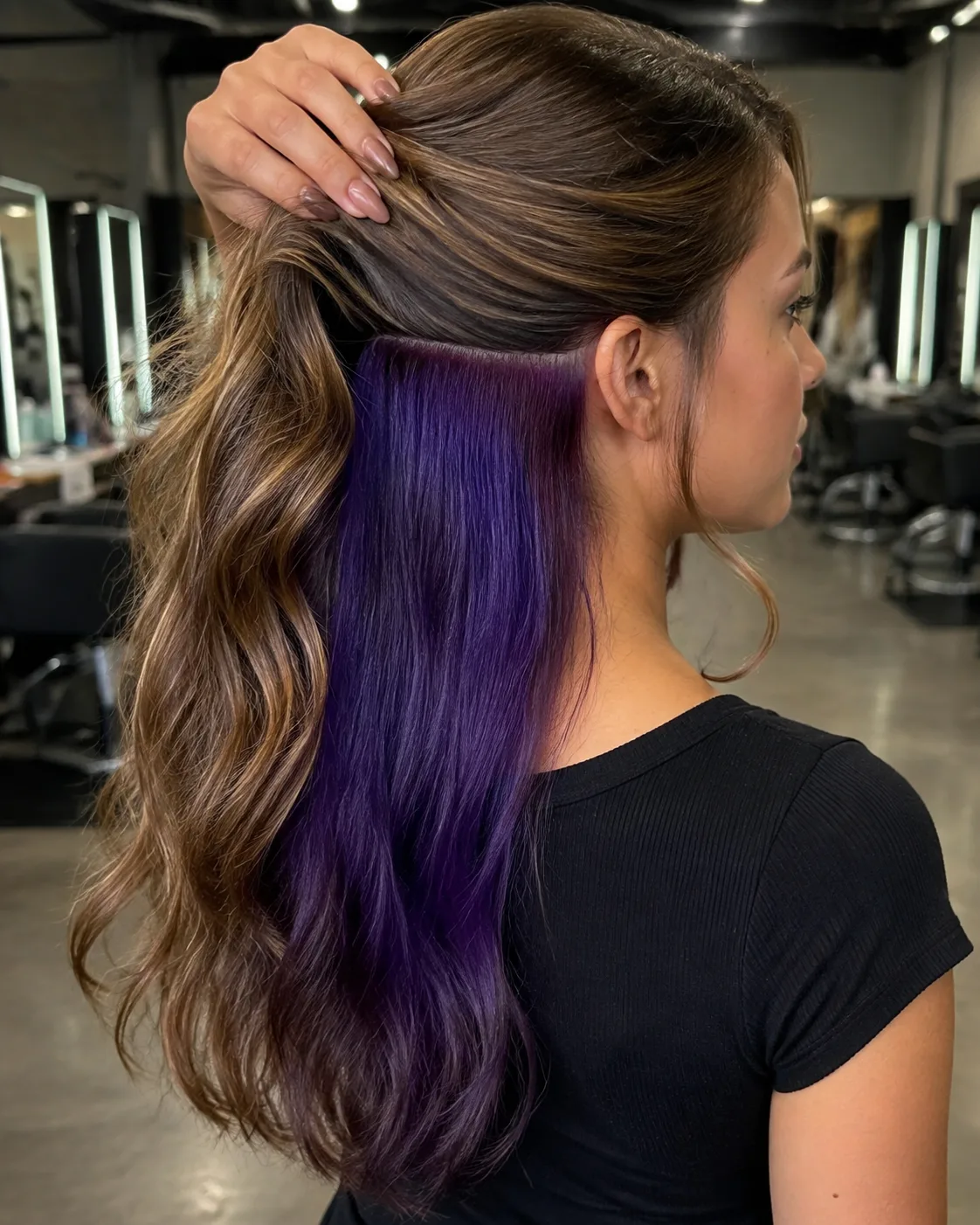
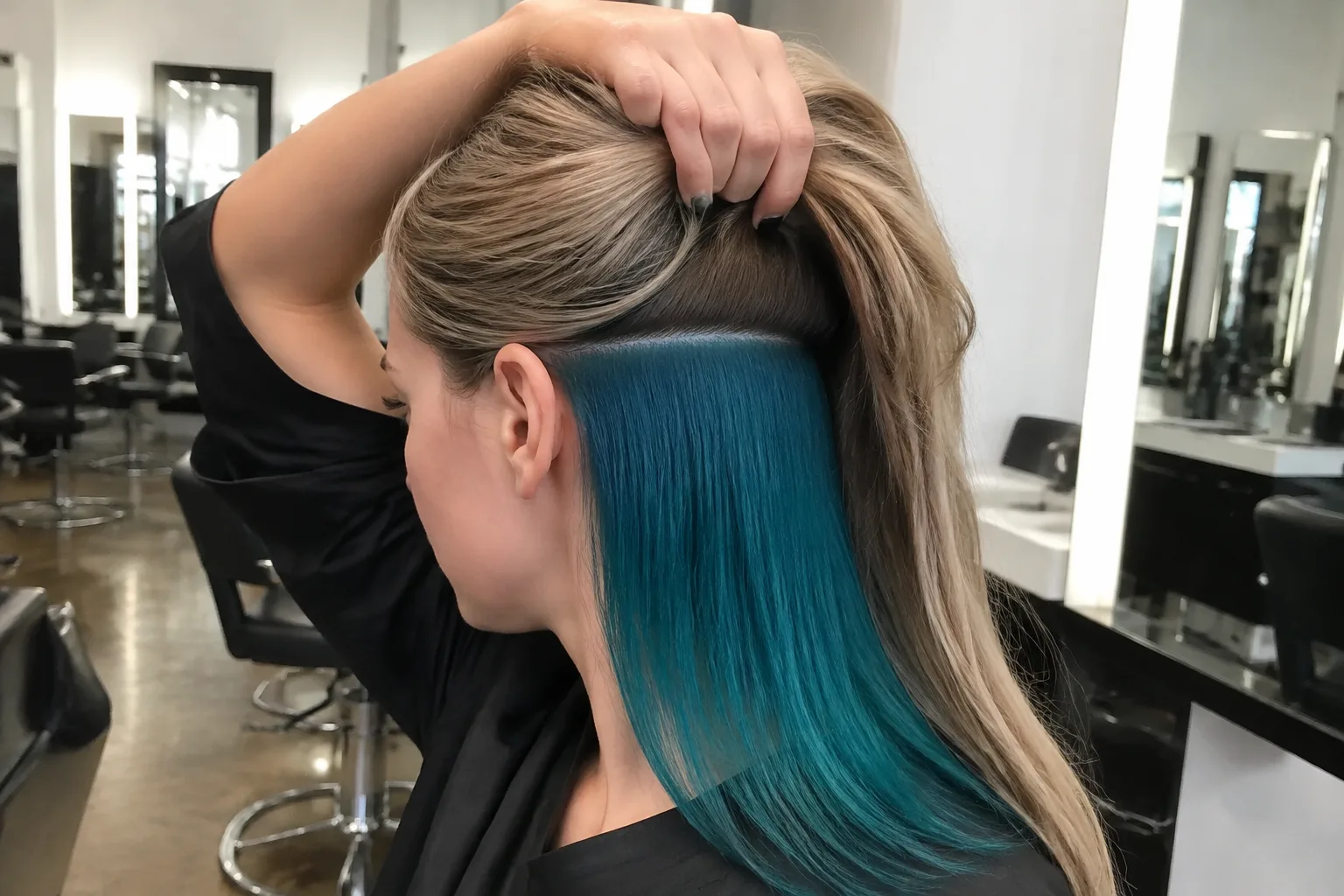
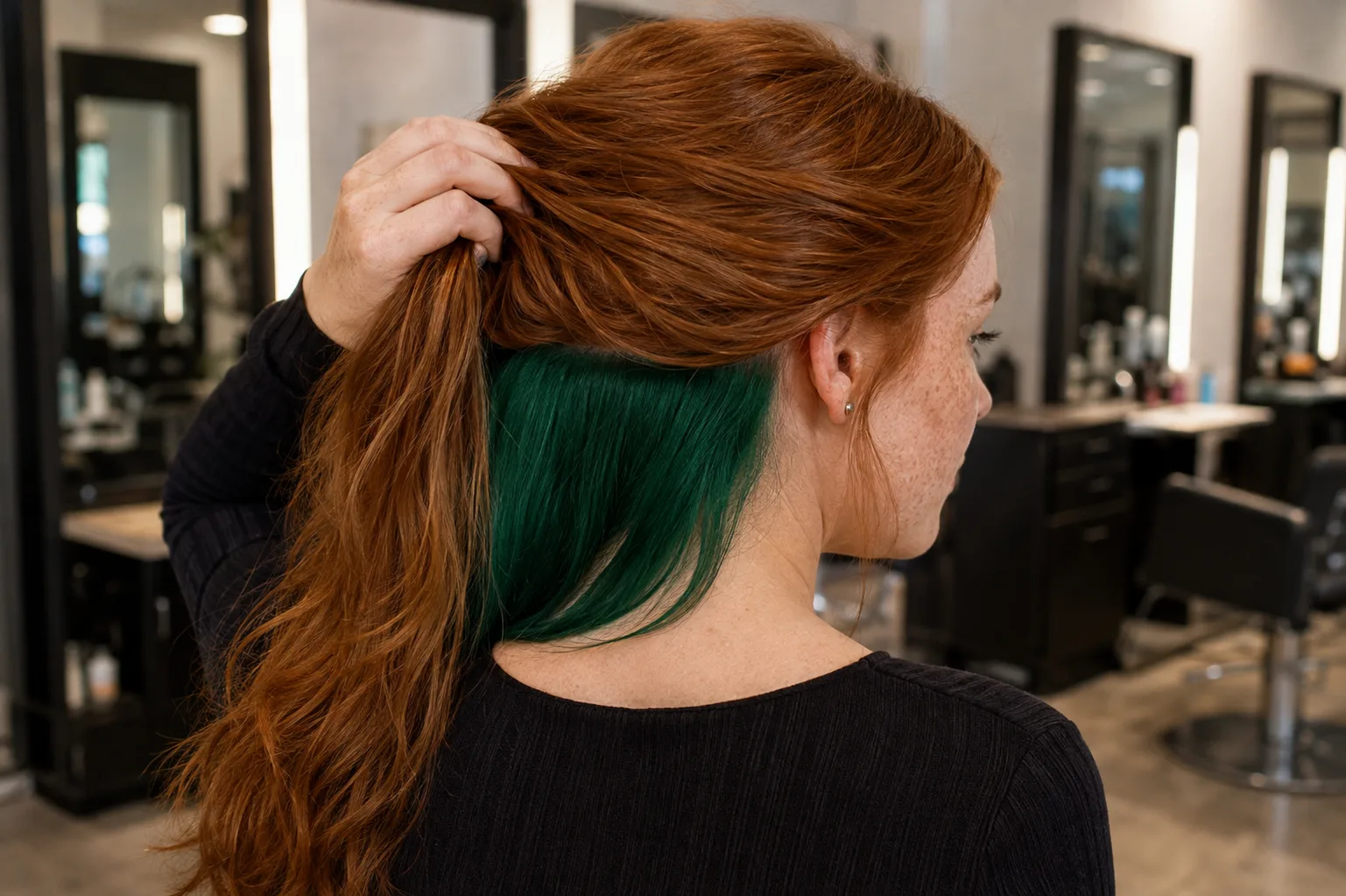
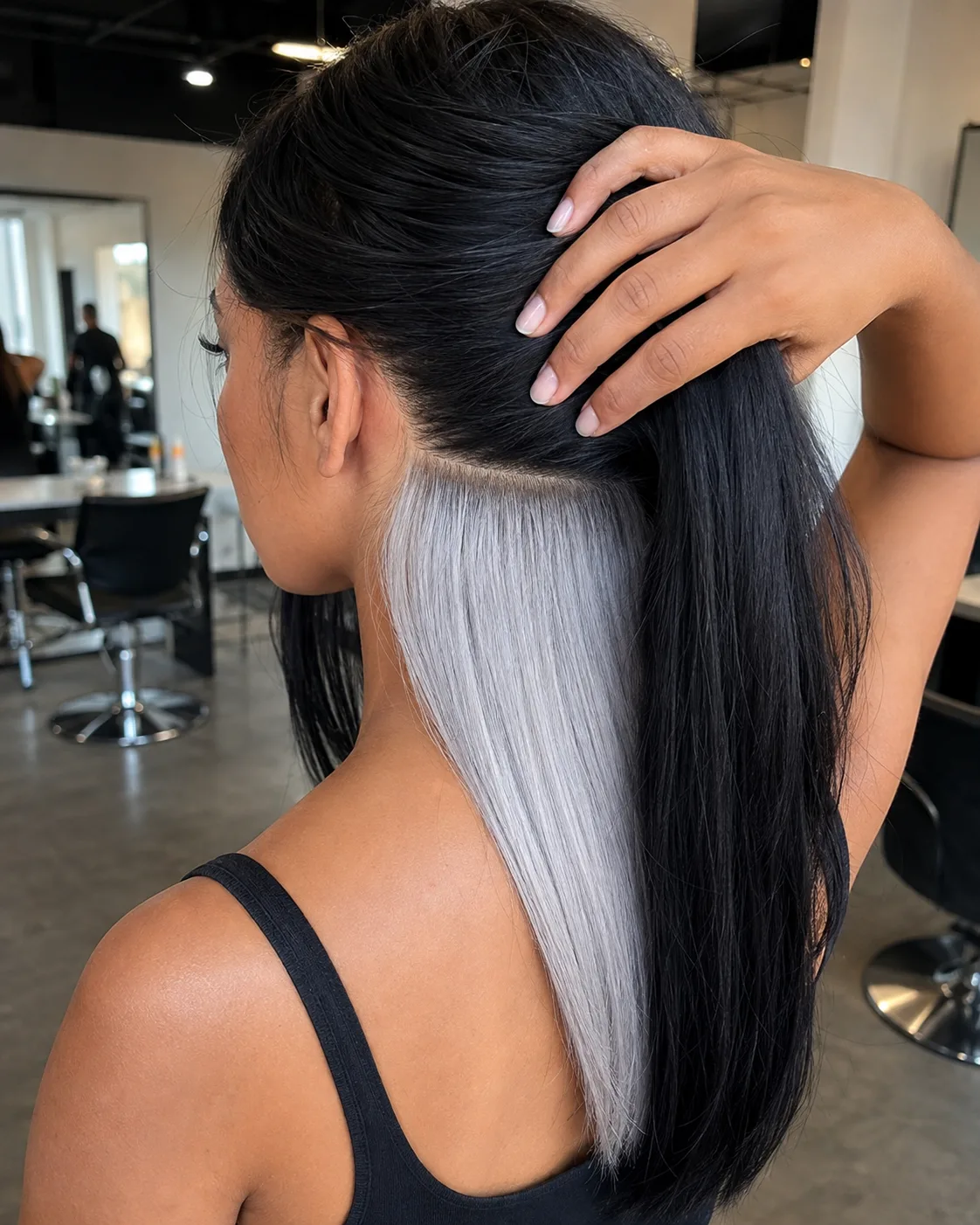
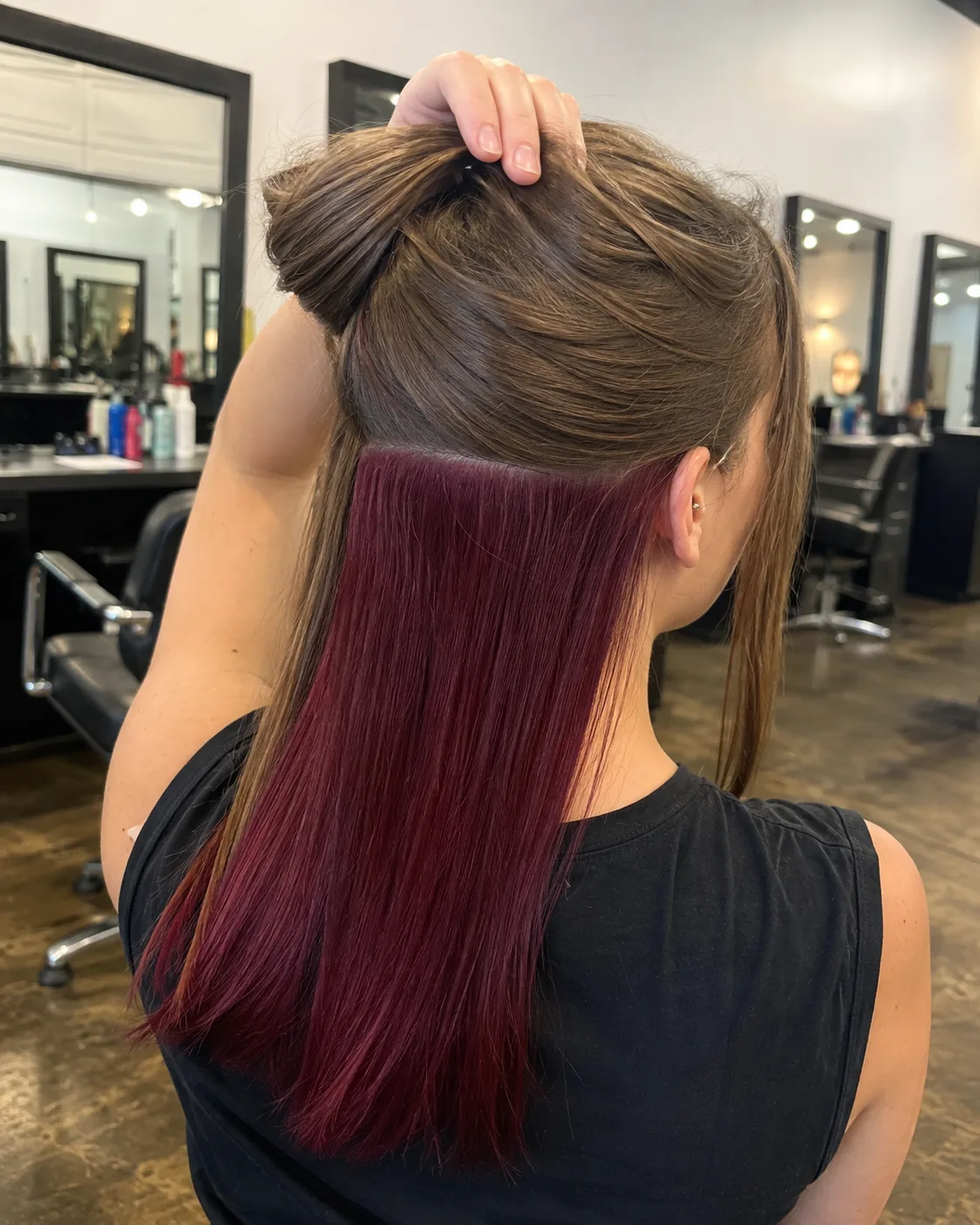
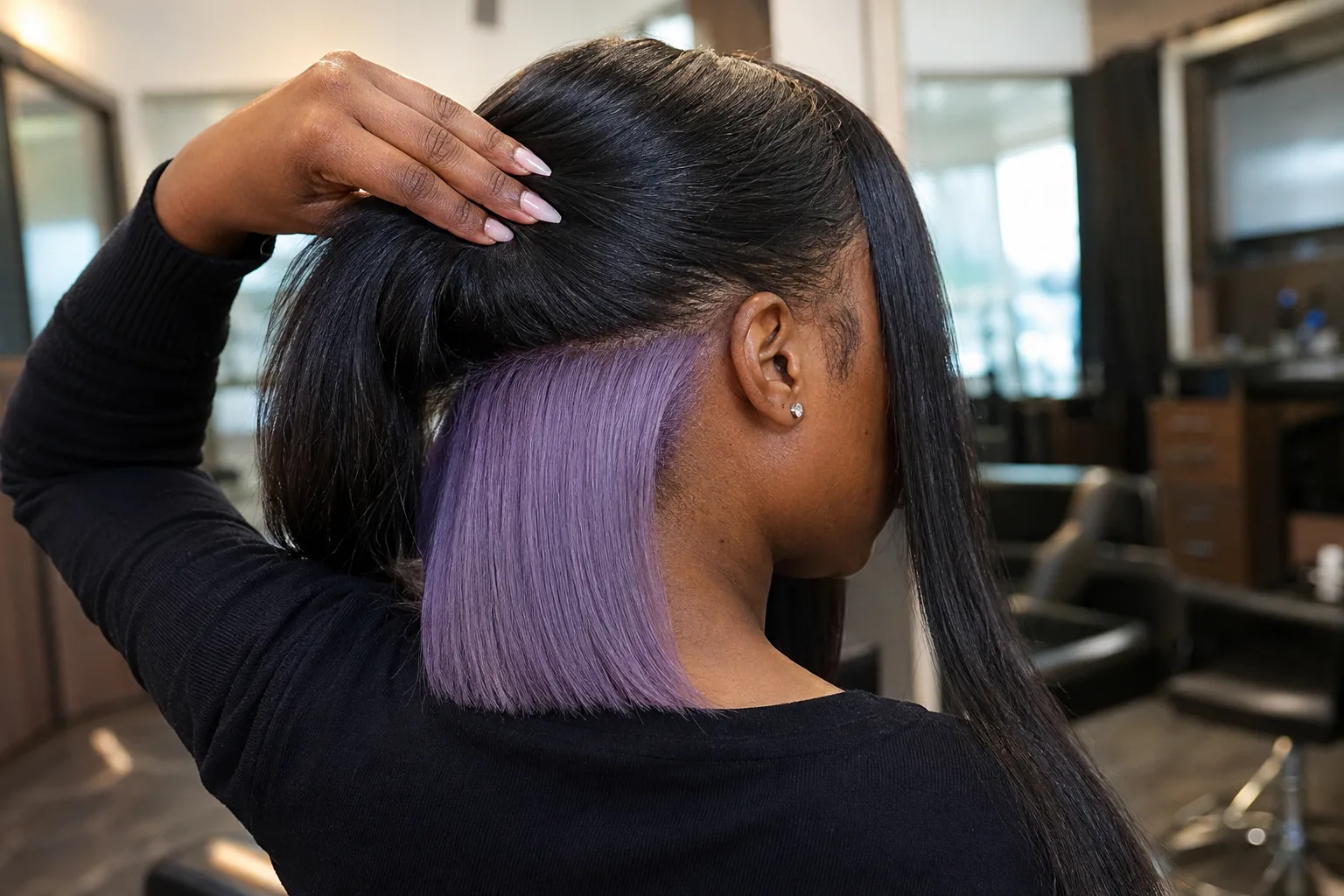
Same placement in every shot below, same lifting hand, same natural canopy on top. The only thing changing is the shade underneath and the base it has to fight.
Gallery9 photos · tap to enlarge
 Try this on me
 Try this on me
 Try this on me
 Try this on me
 Try this on me
 Try this on me
 Try this on me
 Try this on me
 Try this on me
Two of those are worth reading twice. The violet sits under a top layer that already carries blonde highlights, which is the most forgiving version of this: the canopy has dimension, so any leak looks intentional. The lavender is a nape-only panel under long black hair, and it is completely invisible until she lifts it. That is the placement to ask for if you are testing the water.
How to ask for it in the chair
Bring a photo of the back of a head, not a face-on shot. Nobody can price a peekaboo from the front.
Say this to your barber
I want a peekaboo panel underneath, sectioned ear to ear at the top of my ears. Bleach and tone the panel only, then a semi-permanent cobalt on it. Nothing on top.
Then ask three questions before they mix anything:
- What level will my panel realistically lift to in one session? If the honest answer is level 6, your cobalt will look black and you have wasted the appointment.
- Is the parting going where I asked, or where it is easiest to section? These are not always the same.
- What is the toner, and is it included?
How to do peekaboo hair at home
Doable, and genuinely cheaper. The failure mode is bleach on your top layer, so the sectioning is where the care goes.
How to do peekaboo hair at home
- Section it dry
Comb a horizontal parting from behind one ear to the other, level with the top of your ears. Do this on dry hair, in a mirror, with a second mirror behind you. Wet hair lies flat and lies to you.
- Clip the whole top away
Twist everything above the parting into a bun and clip it hard. Anything that escapes gets bleached, and you will not spot it until it is dry.
- Strand test
Bleach one small piece from the panel and time it. This tells you how many minutes you actually have and whether your hair will reach the level the shade needs.
- Bleach the panel only
Apply from the ends up, keeping the product off the top layer and off your scalp. Watch it, do not clock-watch it. Rinse the second it hits your level.
- Tone if you are going pastel or cool
Skip this and a pastel goes green or peach on the yellow underneath. Deep reds and burgundy do not need it.
- Put the color on
Direct dyes are gentle enough to apply with gloved hands. Saturate to the root of the panel and leave it longer than the box says.
- Rinse cool, and skip the shampoo
Cold water, conditioner only, for the first few washes. Heat and detergent are what pull vivids out fastest.
What peekaboo hair costs
Salons price this as partial color, not full color, because the product and foil count is a fraction of an all-over. Four things move the number: whether the panel needs bleach at all, whether it needs more than one lightening session, whether a toner goes on, and your length.
The wording matters more than the haggling. Ask for a quote on "partial lightening plus a vivid on the panel". Ask for "vivid color" with no qualifier and the number that comes back will be a full-head number. Get it in writing before the appointment, and ask specifically whether a second lightening session is priced in or billed separately, because that is where a quote usually breaks.
For a fraction of that and zero bleach, how to put hair tinsel in is worth a look: the fine strands tie in at home and give the same hidden pop of something extra, then snip out in an afternoon.
Five mistakes that ruin a peekaboo
Taking the parting too high
The single most common one. Above the ears, the color stops being hidden and starts looking like an all-over dye that ran out of money. There is no fix except waiting for growth.
Picking a shade one step from your base
Copper under auburn. Honey under blonde. You bleached your hair for a contrast nobody can see. If you cannot tell the two apart in a photo, the shade is wrong.
Stopping the bleach at level 6 and hoping
Blue on level 6 looks black. Emerald on level 6 looks like a shadow. Either go to the level the shade needs or pick a shade that works at the level you can safely reach.
Washing hot, and washing often
Vivids leave in hot water. A peekaboo washed daily at full heat will be a pale ghost of itself inside a month, which is a fast way to conclude the whole idea was a waste of money.
Forgetting that the panel needs a plan for growing out
This is actually the good news, and people miss it. Because the roots of the panel are hidden under the canopy, a peekaboo grows out more gracefully than any all-over color. You are never dealing with a visible line across your part. Left alone it simply gets shorter, and that is a perfectly acceptable ending.
See it on your own head before you bleach anything
There are real free ways to preview this, and you should use them:
- Hair chalk, colored wax or wash-out spray. A few dollars, out in one wash. On blonde or light brown hair it genuinely shows you the shade against your skin.
- Semi-permanent direct dye with no bleach. If your base is level 7 or lighter, a vivid will take enough to give you a real answer with no lightening at all.
- Clip-in colored extensions under the top layer. The closest physical preview there is, reusable, and no chemicals anywhere near your hair.
Now the wall all three of them hit. Chalk and direct dye show you nothing on dark hair, which is exactly the hair that has the most to lose from a bad call. Extensions are a different texture and read as extensions from every angle. And none of them answer the actual question, which is whether that shade suits you at your length, in your color, from behind, where you cannot see it.
Bleach is one-way. Once that panel is at level 8, you own it until it grows out.
Yours could be here.
Start with one selfie.
One photo, twenty seconds, and you'll know. Free account, no card for your first render.
The first look is free and needs no card: one hairstyle with one color on it. After that, plans start at $9 a month for 150 credits, and a color on a cut costs 5 credits, so running a shortlist of eight shades past your own face costs less than the parking at the salon. The full pricing is on one page, and the virtual hair color try-on is where the shades live.
The one decision that matters
Get the parting right and a mediocre shade still looks deliberate. Get it wrong and the best color in the world reads as a dye job that went badly. Decide the height first, say it out loud in the chair before anyone picks up a comb, and then argue about cobalt versus violet.
If you want to see the whole thing on your own head first, the women's hairstyle try-on does cut and color together.
Frequently asked questions
A peekaboo is a panel of color dyed into the layer underneath your natural hair, hidden by the untouched canopy on top. It is invisible when your hair hangs flat and visible when you lift it, tie it up, or move. Colorists also call it underlights or hidden color.
Yes, in billing terms. It is a partial color service: only one sectioned panel is treated, so the product, foil and chair time are all a fraction of an all-over. Ask for a quote on partial lightening rather than on color generally, or you will be priced for a full head.
It depends on four things: whether the panel needs bleach, whether it needs more than one lightening session, whether a toner is required, and how long your hair is. Get the quote in writing and ask specifically whether a second lightening session is included, because that is where most quotes break.
The color itself is not. Vivids are direct dyes, applied with no developer and no lift, so they sit on the hair rather than opening it. All of the damage risk lives in the bleach step, and a peekaboo bleaches one panel rather than a whole head. Push for more than two levels of lift in a single session and that changes.
Saturated shades on dark bases, because they survive without extreme lift: cherry red, cobalt, violet, emerald. Pastels only on blonde, grey or pre-lightened hair. The test is contrast, not fashion. If the panel and your base look similar in a photo, you have bleached your hair for nothing.
Section a horizontal parting ear to ear on dry hair, clip everything above it away, strand test, bleach only the panel, tone if you are going pastel, then apply the color. The step everyone skips is sectioning dry, and it is the step that keeps bleach off your top layer.
Budget an afternoon. Sectioning and bleach take the bulk of it, a toner adds a round, and the color itself is fast. Dark hair going pastel can need a second appointment on another day, which is worth confirming when you book rather than discovering at the basin.
They have outlasted most color trends because a peekaboo is not really a look, it is a placement. The shade underneath changes with fashion. The idea of keeping your natural top layer intact and hiding the risk underneath does not, which is also why it keeps getting picked up by people who cannot wear visible color to work.
Preview it on your own photo: Virtual Hair Color Try-On.
Share article
About the author
More articles
Women's Haircuts · 14 min
Bleached Hair: How Light Yours Can Go, 14 Shades, Aftercare
How light your bleached hair can go depends on where it starts. See 14 bleached shades on one cut, what each starting color can reach in one session, how toner finishes the job, and the aftercare that keeps it soft.
Women's Haircuts · 16 min
Waves Hair: How to Get Beach, Loose and Hollywood Waves That Last
Waves hair is about what you leave straight. How to get beach, loose, Hollywood and heatless waves, which wave suits your hair type, and why your waves keep falling out.
Women's Haircuts · 15 min
Fino Hair Mask: Who It Suits, How to Use It, and Its Limit
The Fino hair mask makes dry, bleached and frizzy hair smooth and shiny in one use, mostly by coating it. Here is what is in the jar, which hair types it suits, exactly how to use it, and what to do when the ends are past a mask.