Braided Ponytail: 14 Styles and How to Do One That Lasts
Oleh Onysko 10 November 2026 14 min read
In this article
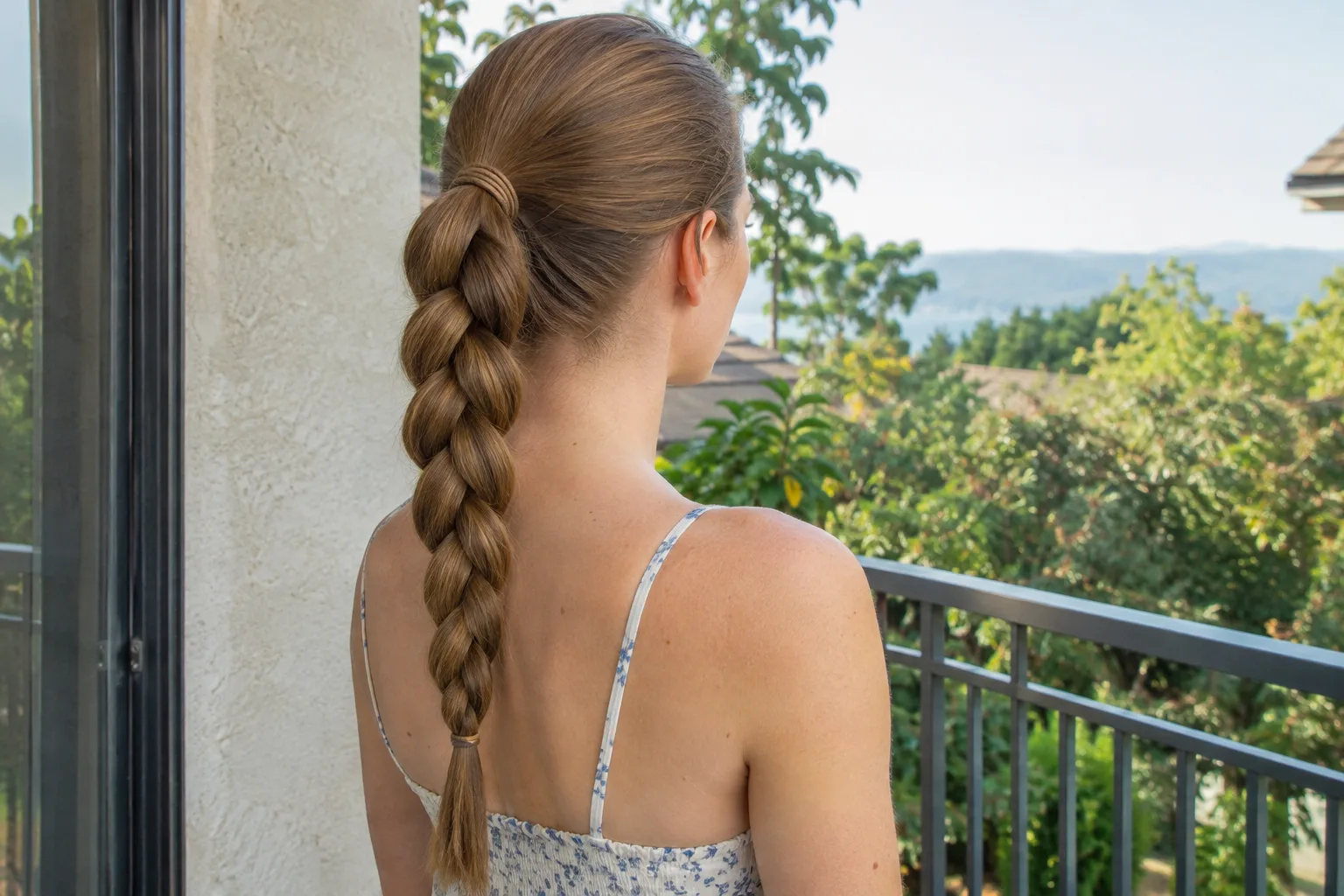
A braided ponytail is a ponytail whose tail is braided instead of left loose, or hair that is braided back into the tie point and then tied. You can do it on your own hair in about five minutes, or have a braider build a long sleek one with added braiding hair that lasts the night out.
Here is the part most tutorials skip. The braid is the easy bit. What makes a braided ponytail look expensive, and what decides whether it damages your hair, is the base: where it sits, how smooth it is, and how hard it pulls at your hairline. Get the base right and almost any braid looks good. Get it wrong and the best braid in the room still looks like a gym tie.
This guide shows 14 braided ponytail styles side by side, which one suits your hair type, a step by step method, how much braiding hair to buy, and the mistakes that cost people their edges.
What is a braided ponytail?
A braided ponytail is any style where all the hair ends up at one tie point and the length is braided. There are two ways to get there. Either you tie a ponytail first and braid the tail, or you braid the hair back from the hairline (Dutch braids, French braids or feed-in cornrows) and gather those braids into the ponytail.
It is not two braids or pigtails, which split the hair in two, and it is not a braided bun, where the braid is wrapped and pinned away. If the length still hangs free from one point, it counts.
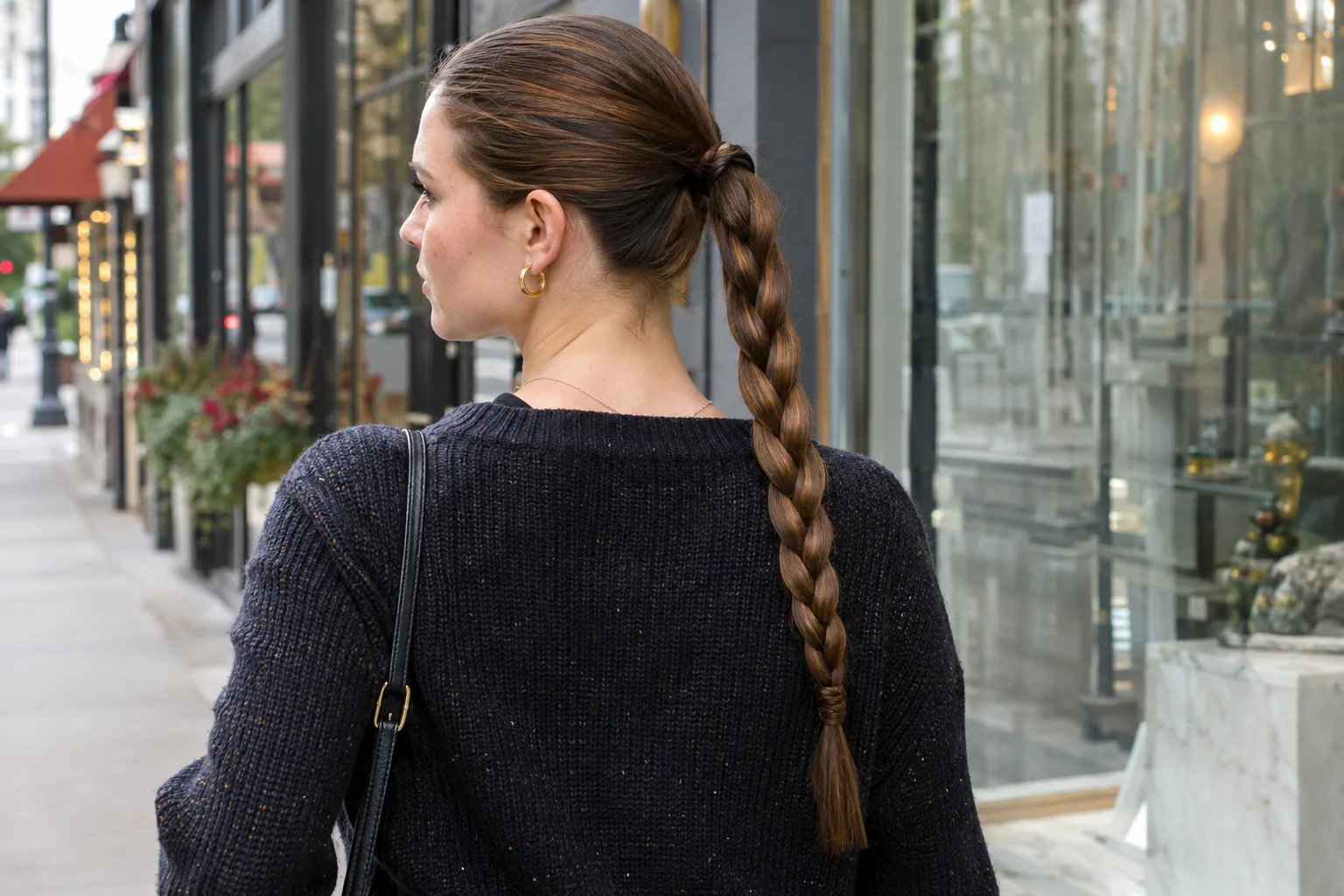
The braid does one thing a loose tail cannot: it packs the ends together. A thin or uneven tail that looks stringy hanging loose looks deliberate once it is braided, which is why a braid is the quickest fix for a ponytail that always looks thin.
Braided ponytail types compared
There are two families. Braids you can do on your own hair at home, and styles built with added braiding hair, usually by a braider. The table puts them side by side.
| Style | Own hair or added hair | Time | Skill | Lasts |
|---|---|---|---|---|
| Classic three-strand tail | Own hair | 5 minutes | Beginner | A day |
| Fishtail ponytail | Own hair | 10 to 15 minutes | Easy, just slow | A day |
| Dutch or French braid into ponytail | Own hair | 15 to 20 minutes | Intermediate | 1 to 2 days |
| Rope braid ponytail | Own hair | 5 to 10 minutes | Beginner | A day |
| Sleek jumbo braided ponytail | Added braiding hair | 1 to 2 hours | Braider or practiced | Up to a week with a scarf at night |
| Feed-in or stitch braids into a ponytail | Added braiding hair | 3 to 5 hours | Braider | 2 to 4 weeks |
If you have never braided, start with the classic three-strand tail. It is the base of every other style on this list.
14 braided ponytail styles, side by side
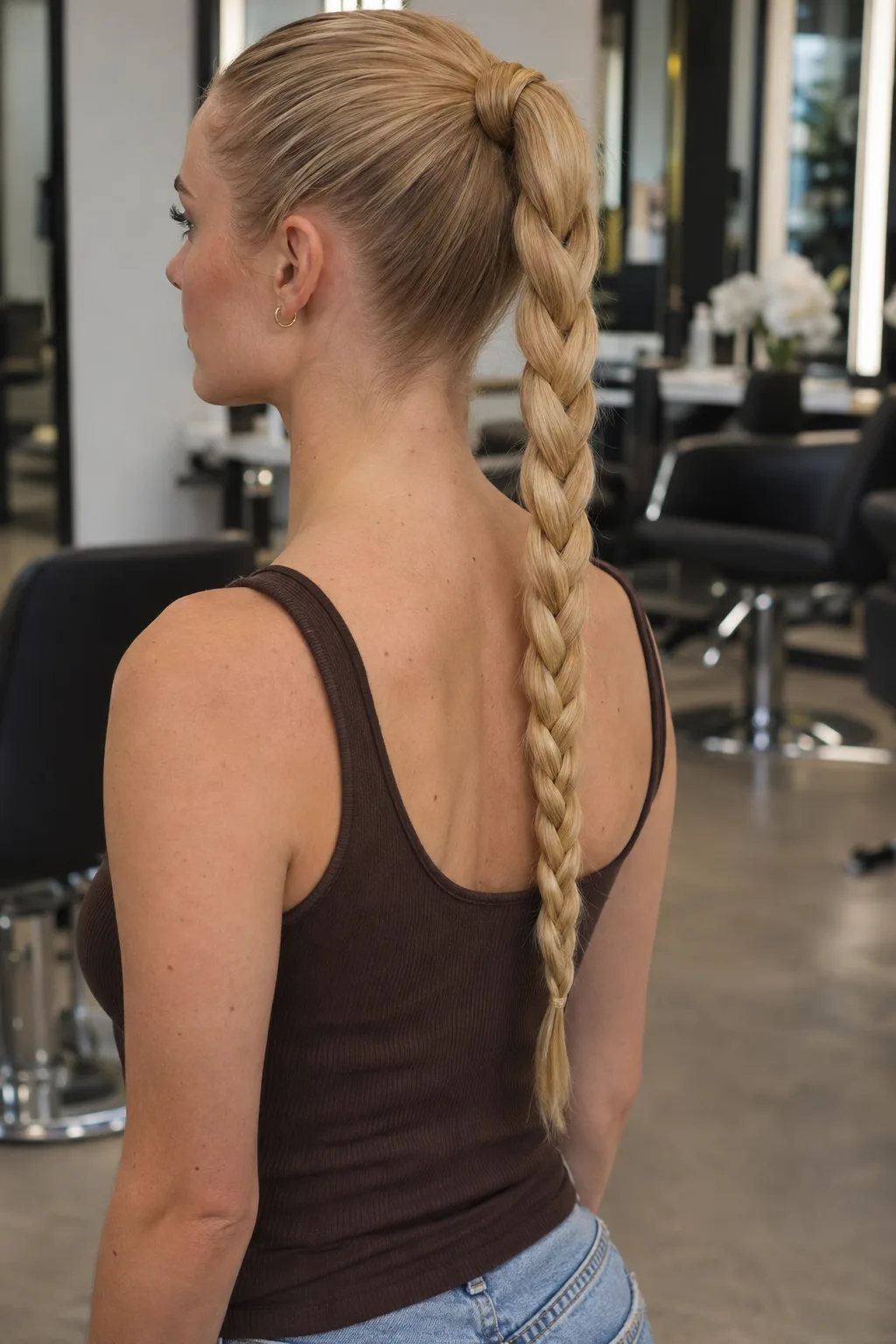
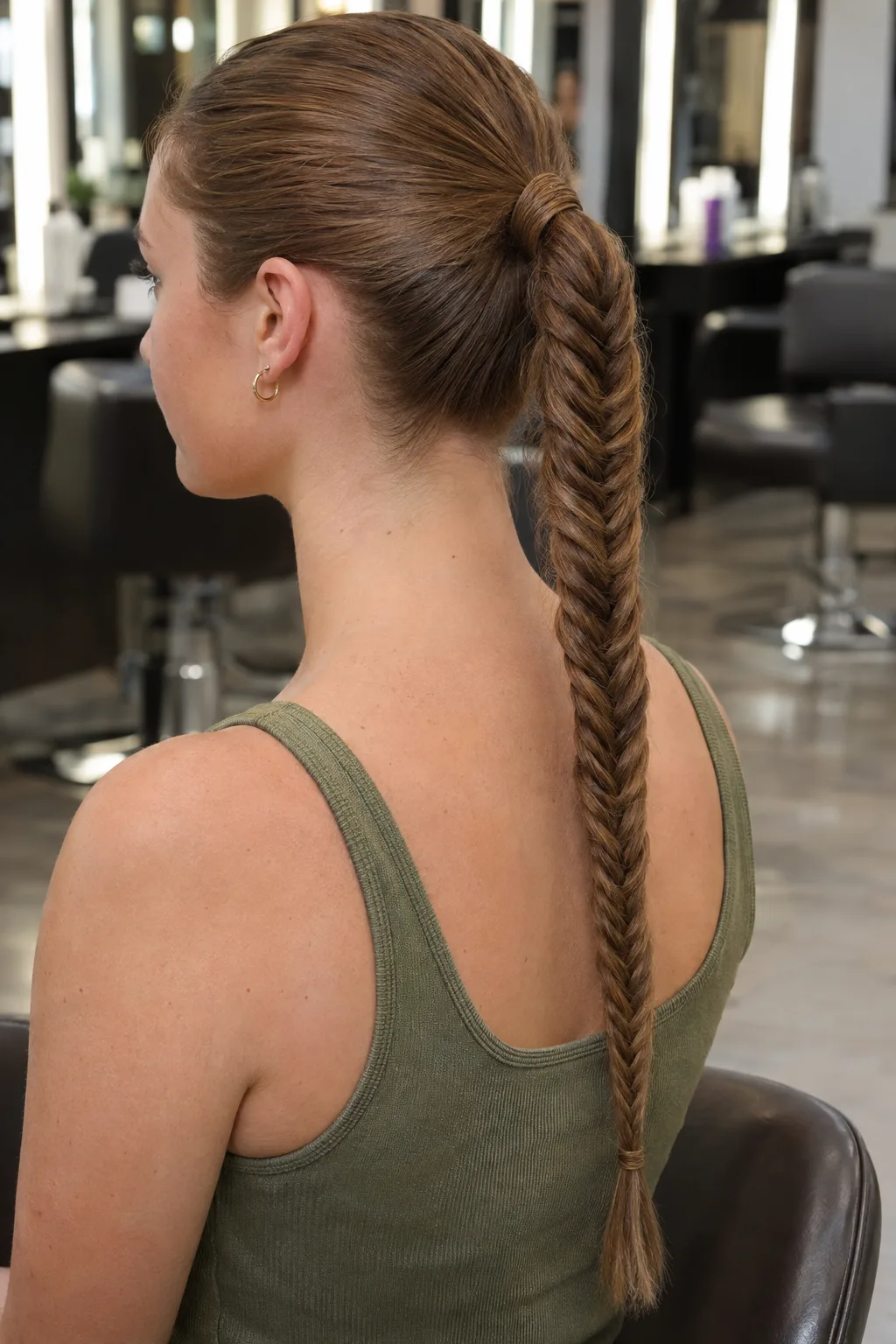
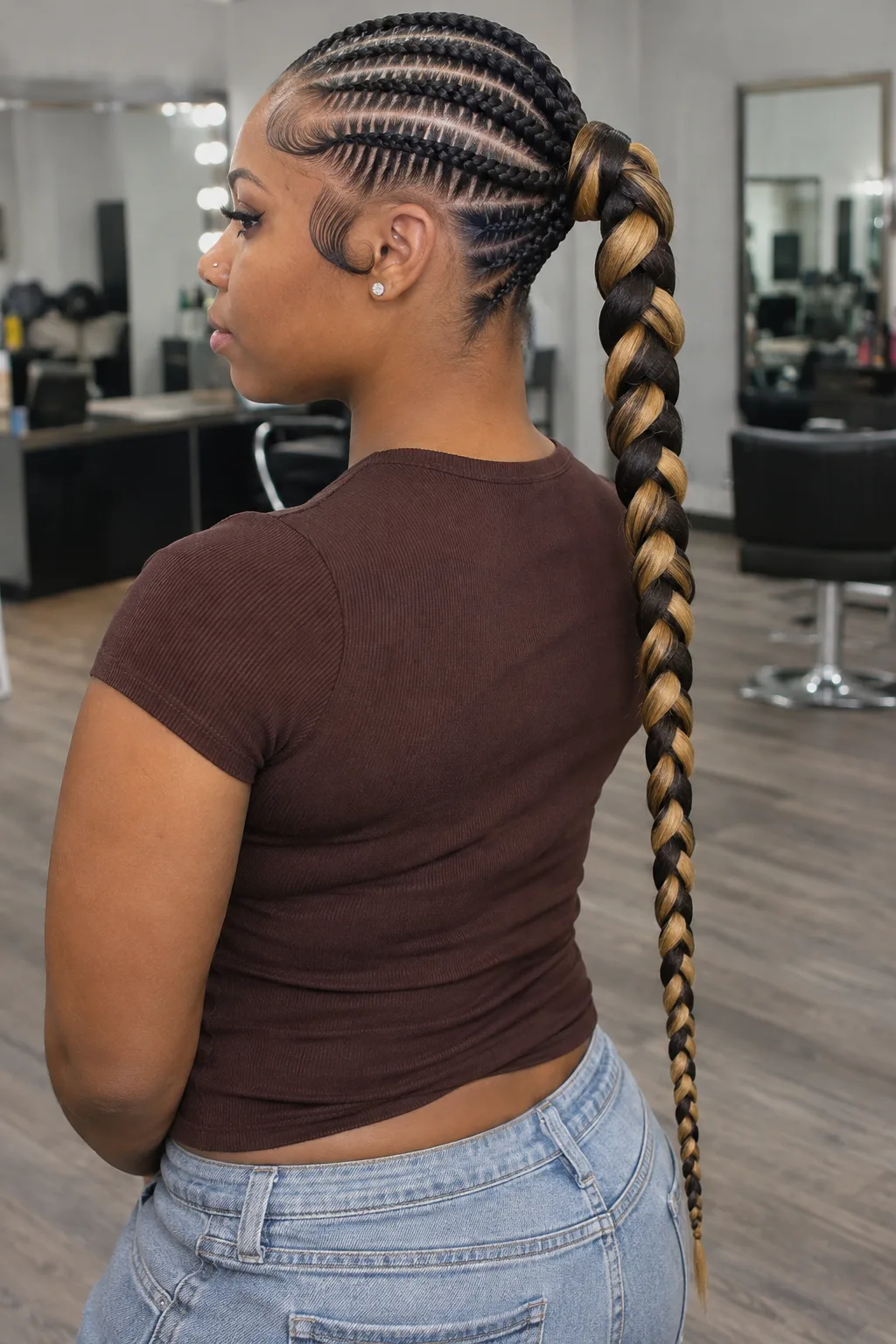
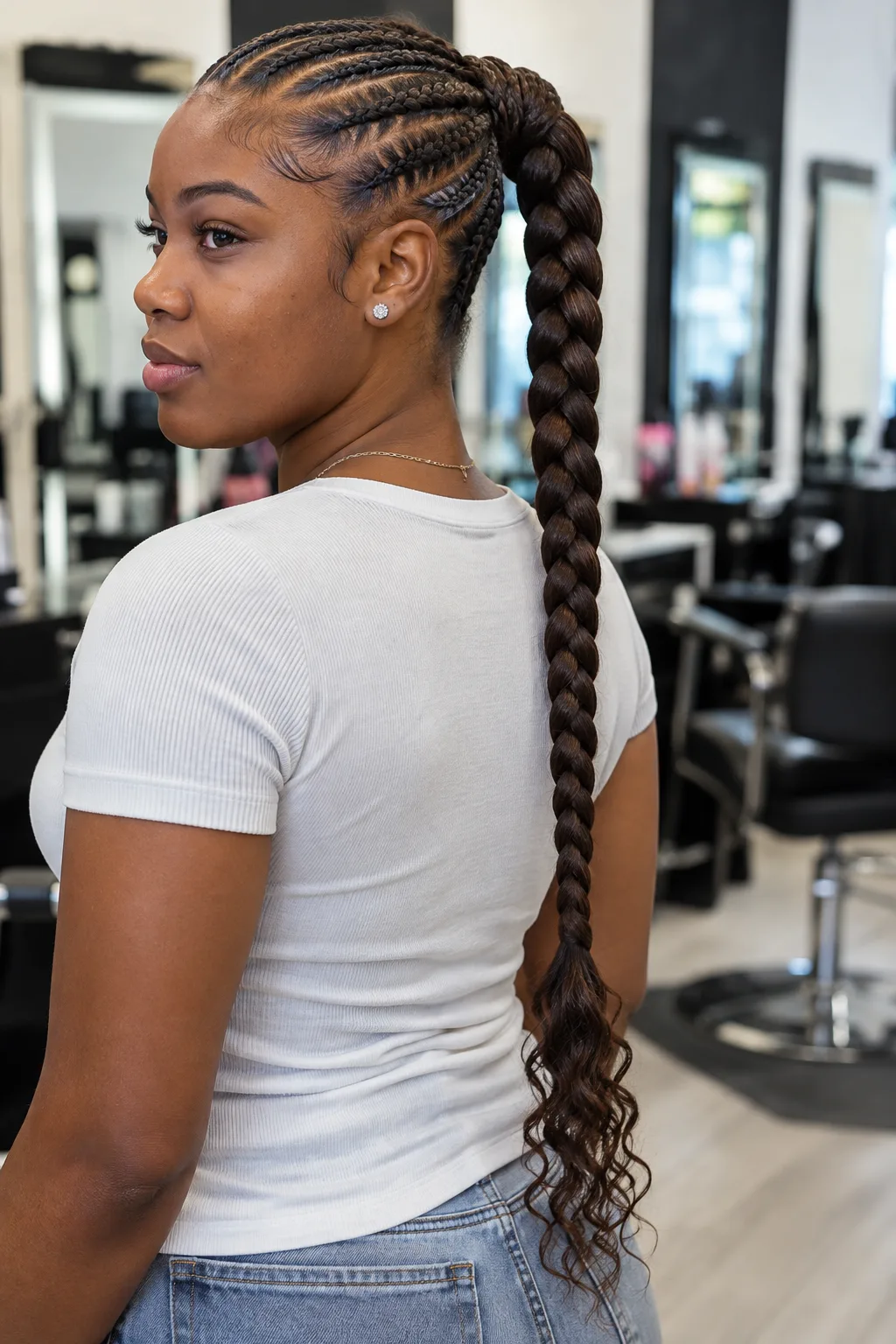
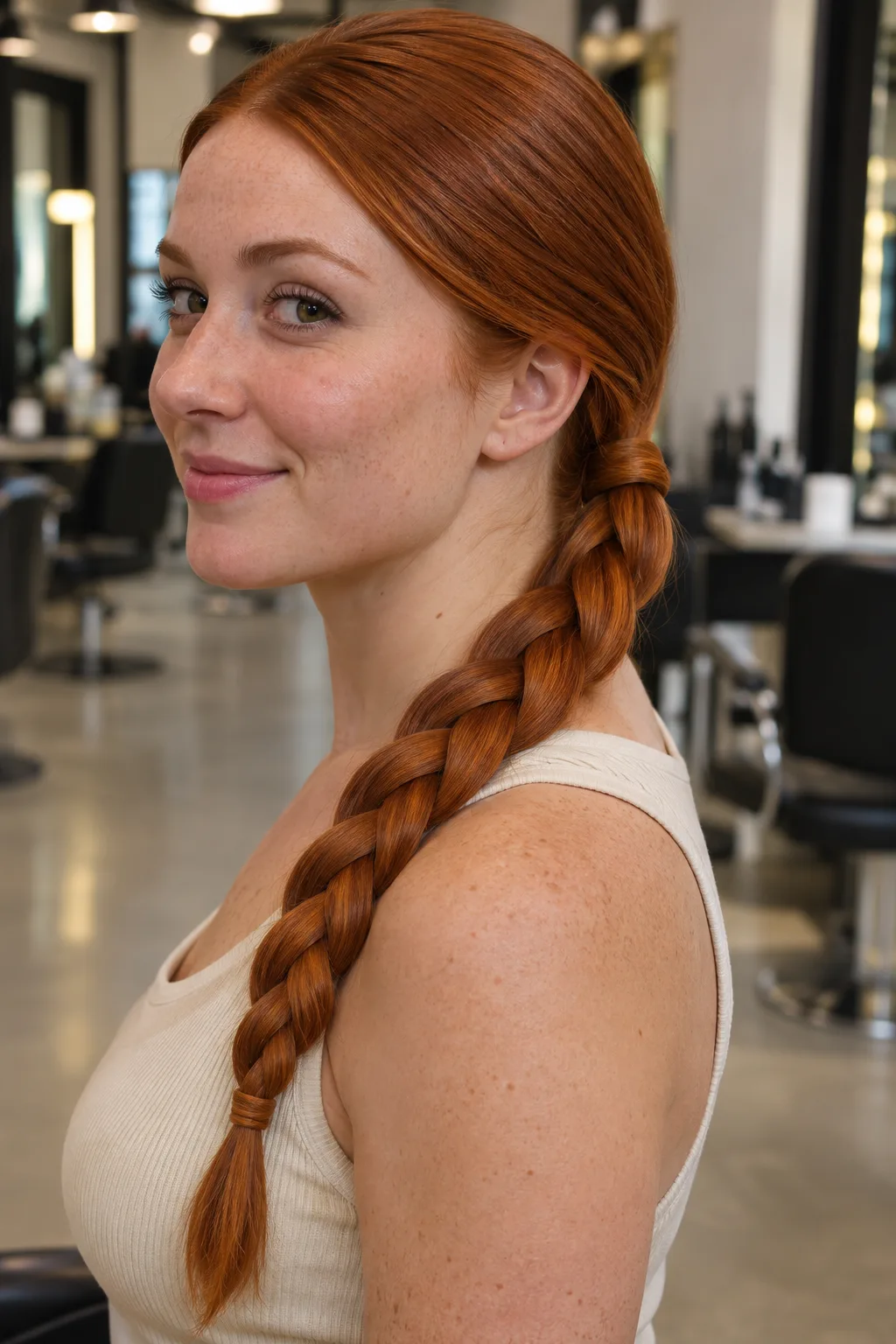
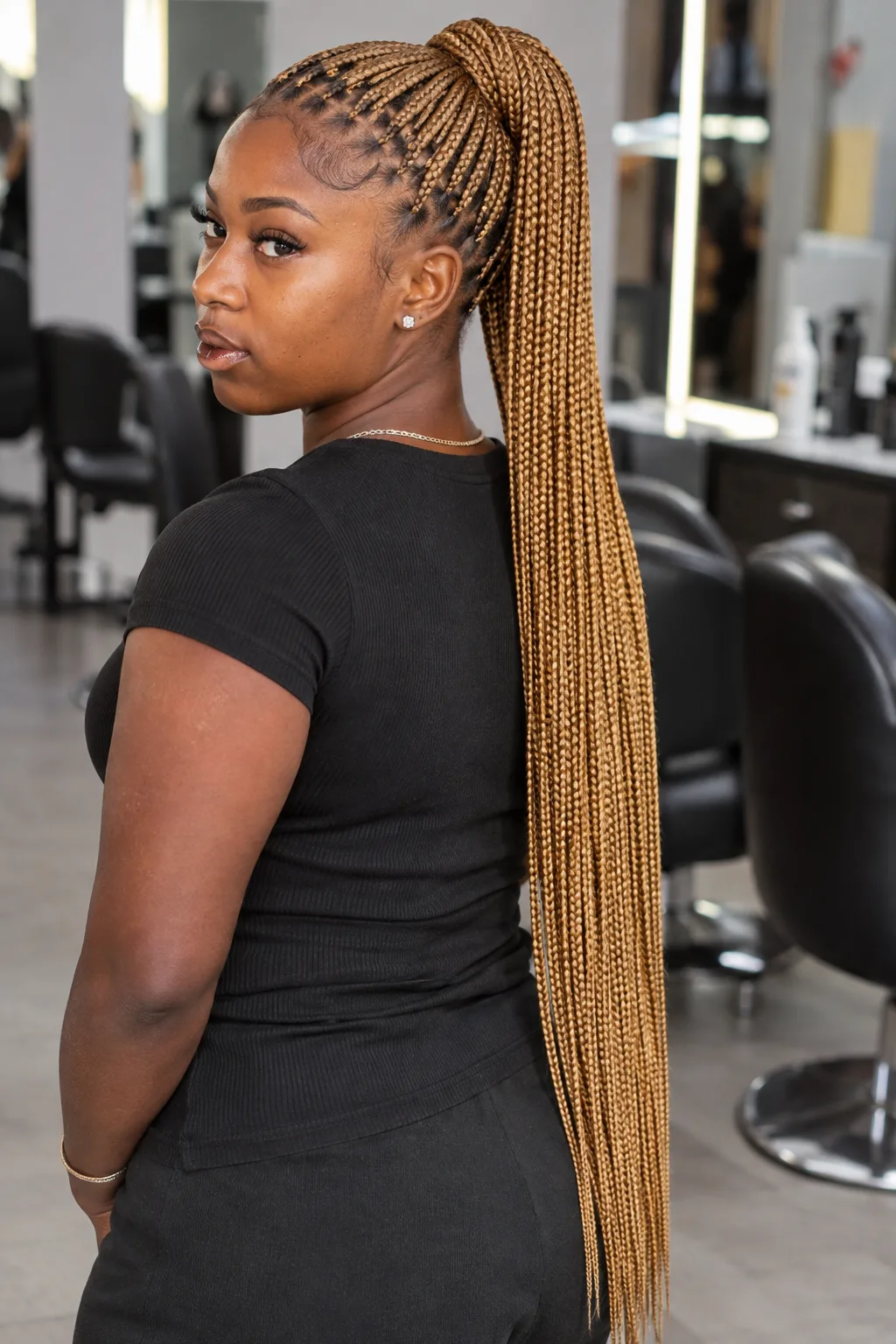
Every photo below is shot from the same three-quarter back angle in a salon, so you can see the tie point and the whole braid. What changes from tile to tile is the braid itself: the technique, where it starts and whether hair was added. Hair color changes too, so you can picture it in yours.
Gallery14 photos · tap to enlarge
 Would this suit me?
 Would this suit me?
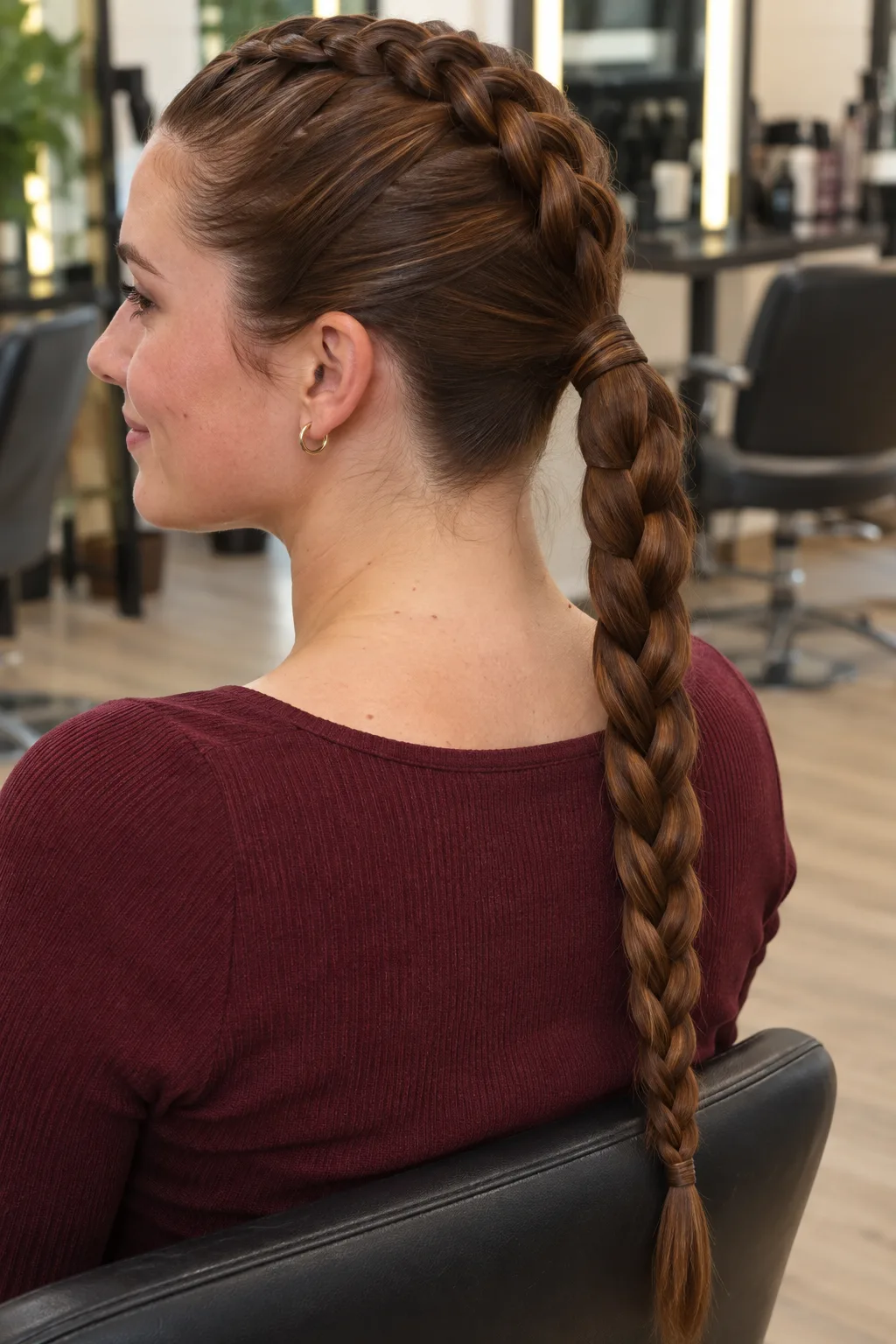 Would this suit me?
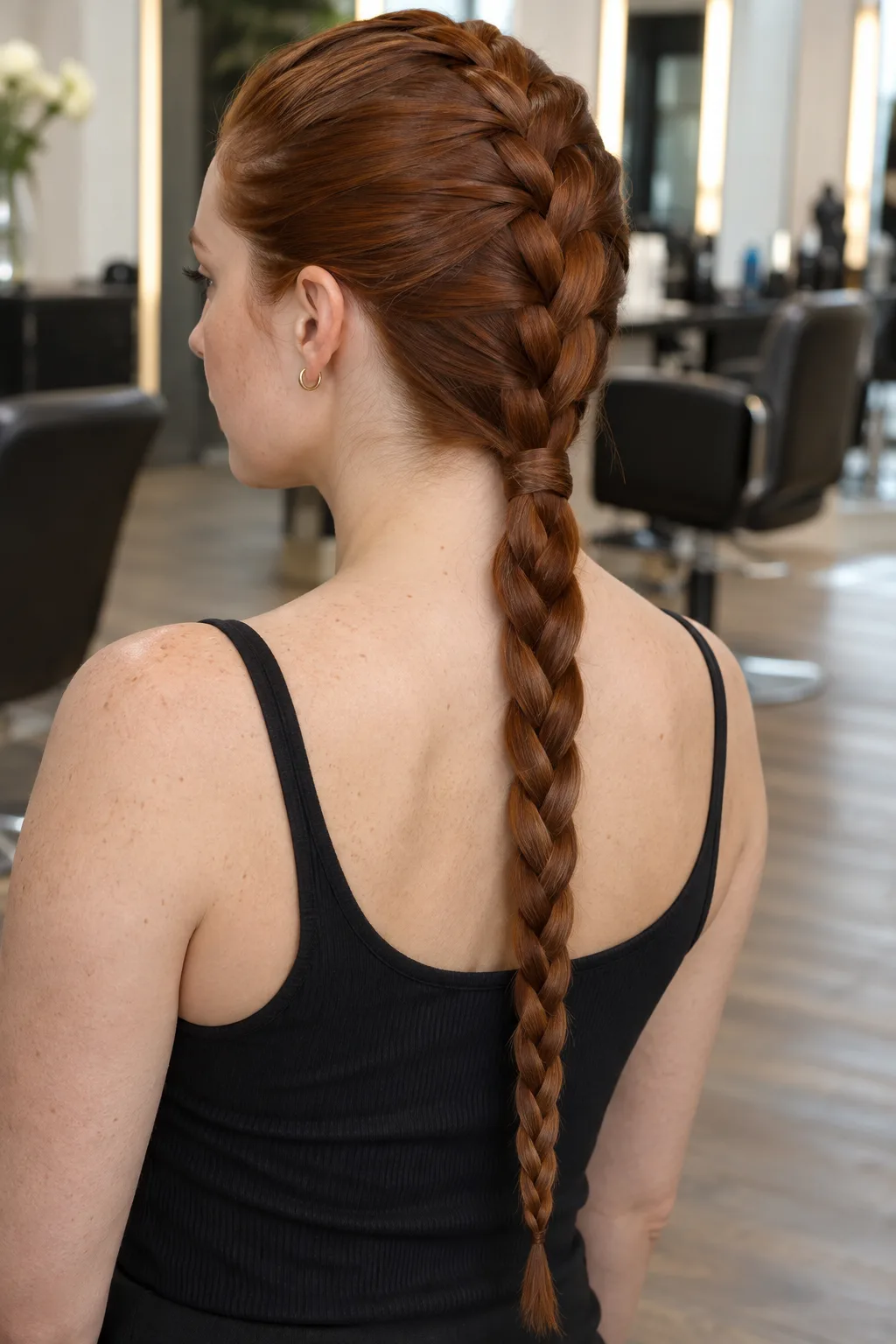 Would this suit me?
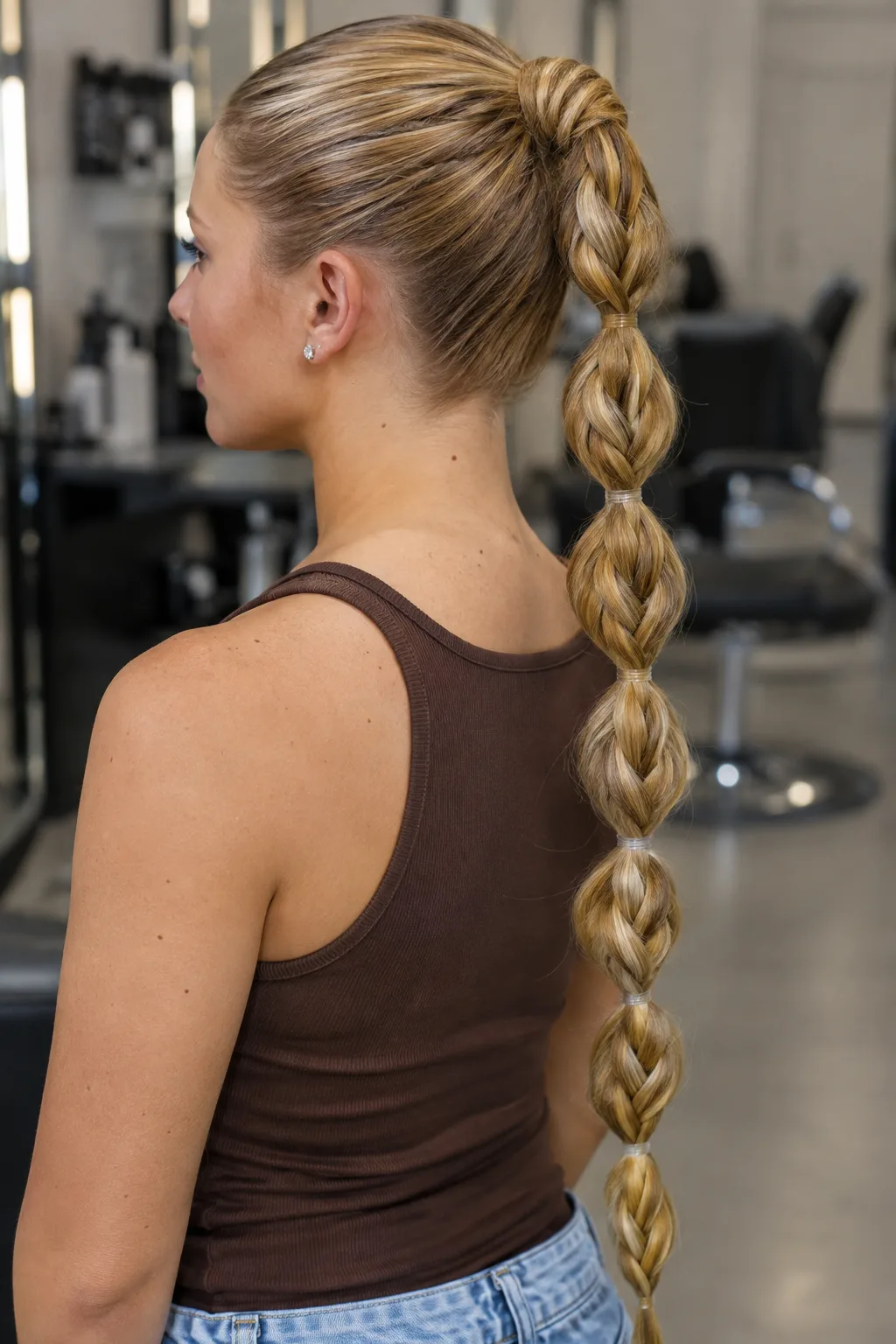 Would this suit me?
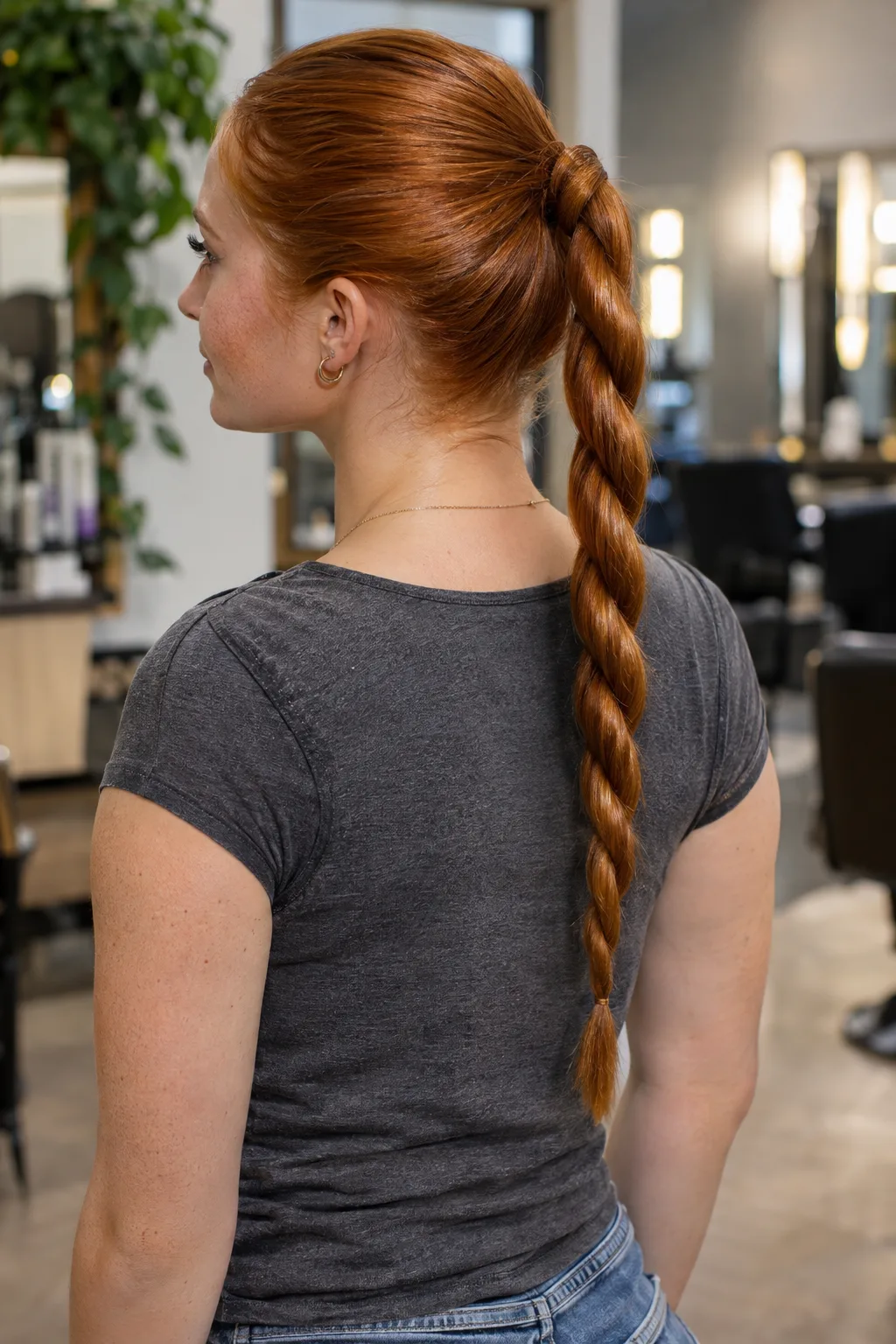 Would this suit me?
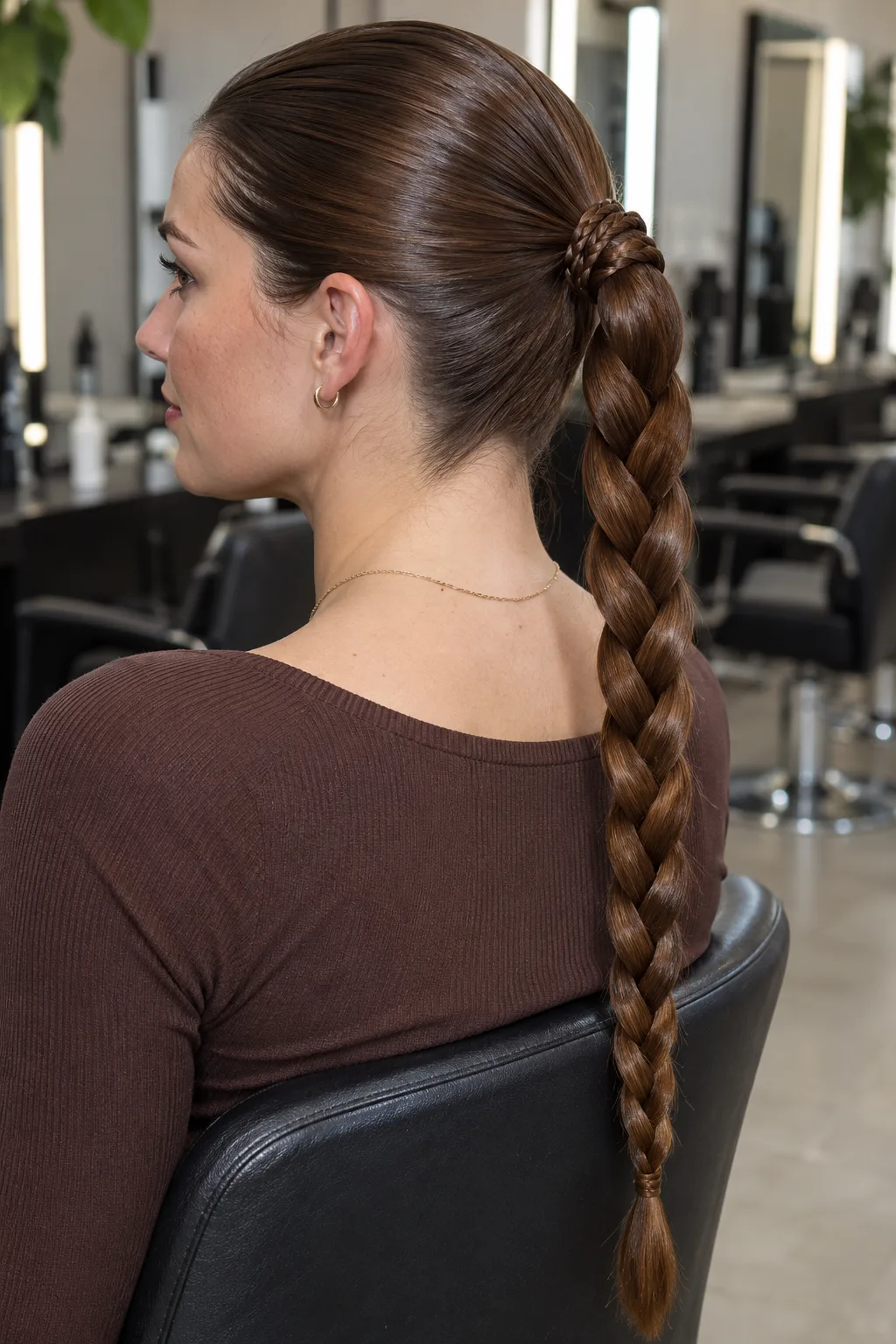 Would this suit me?
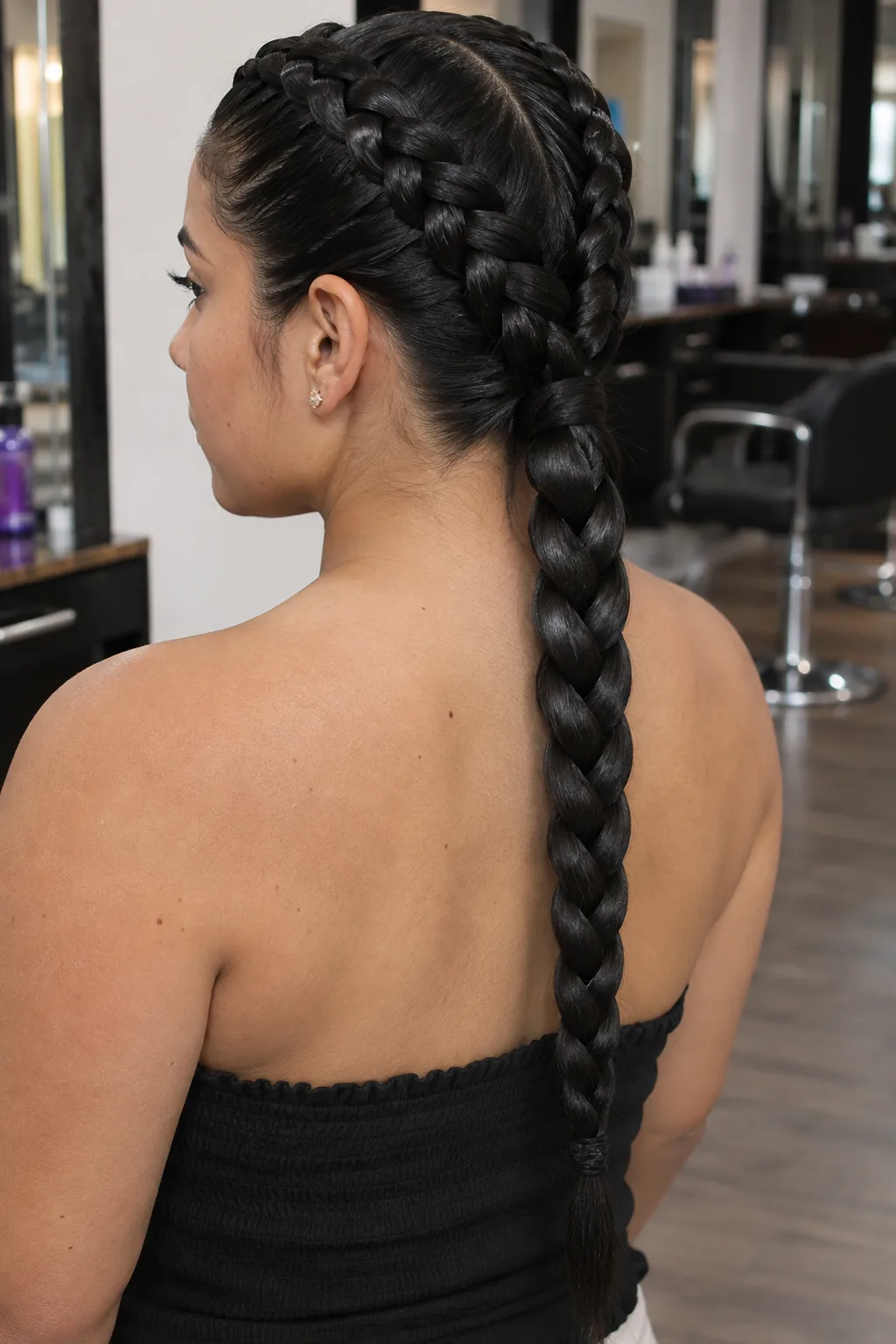 Would this suit me?
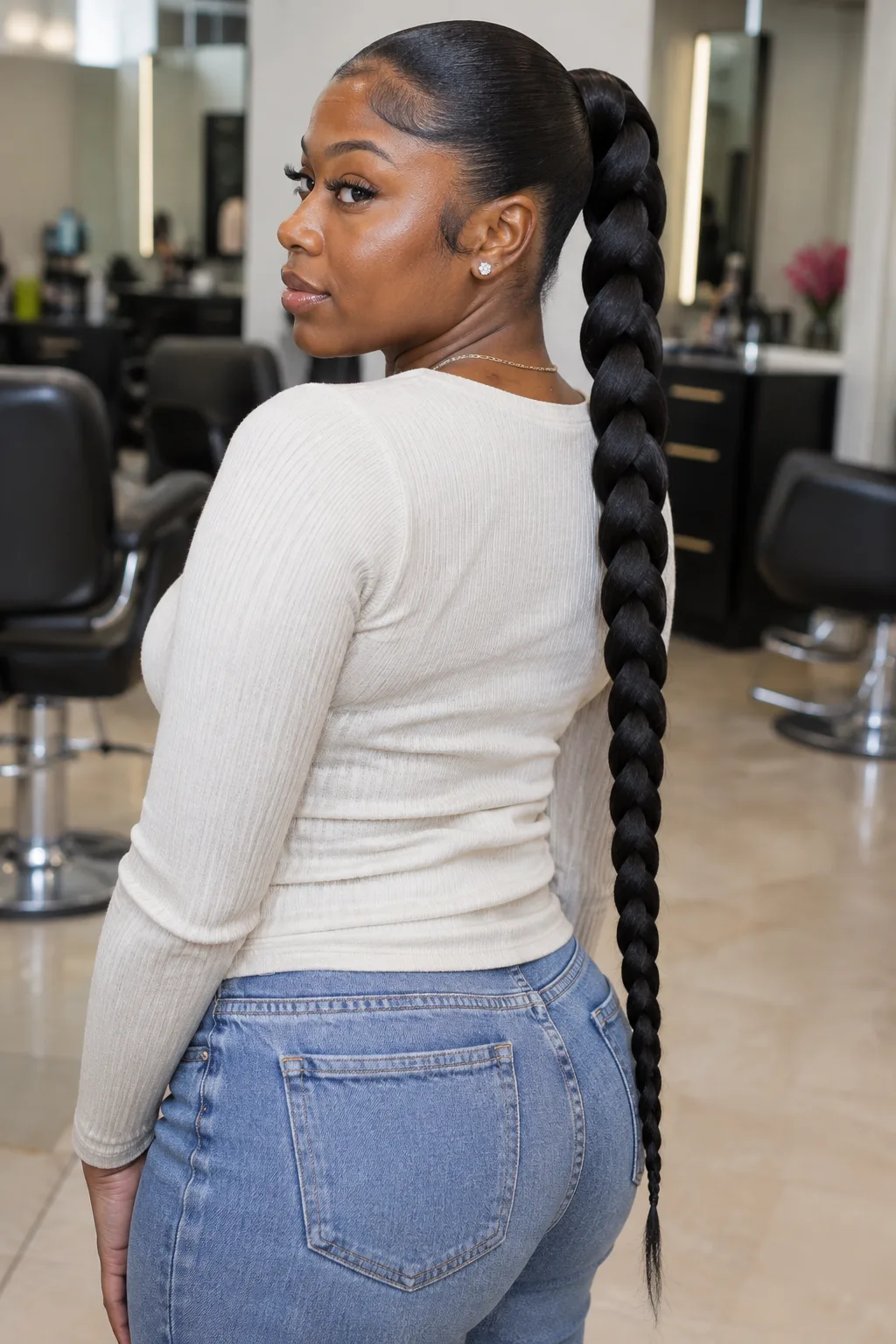 Would this suit me?
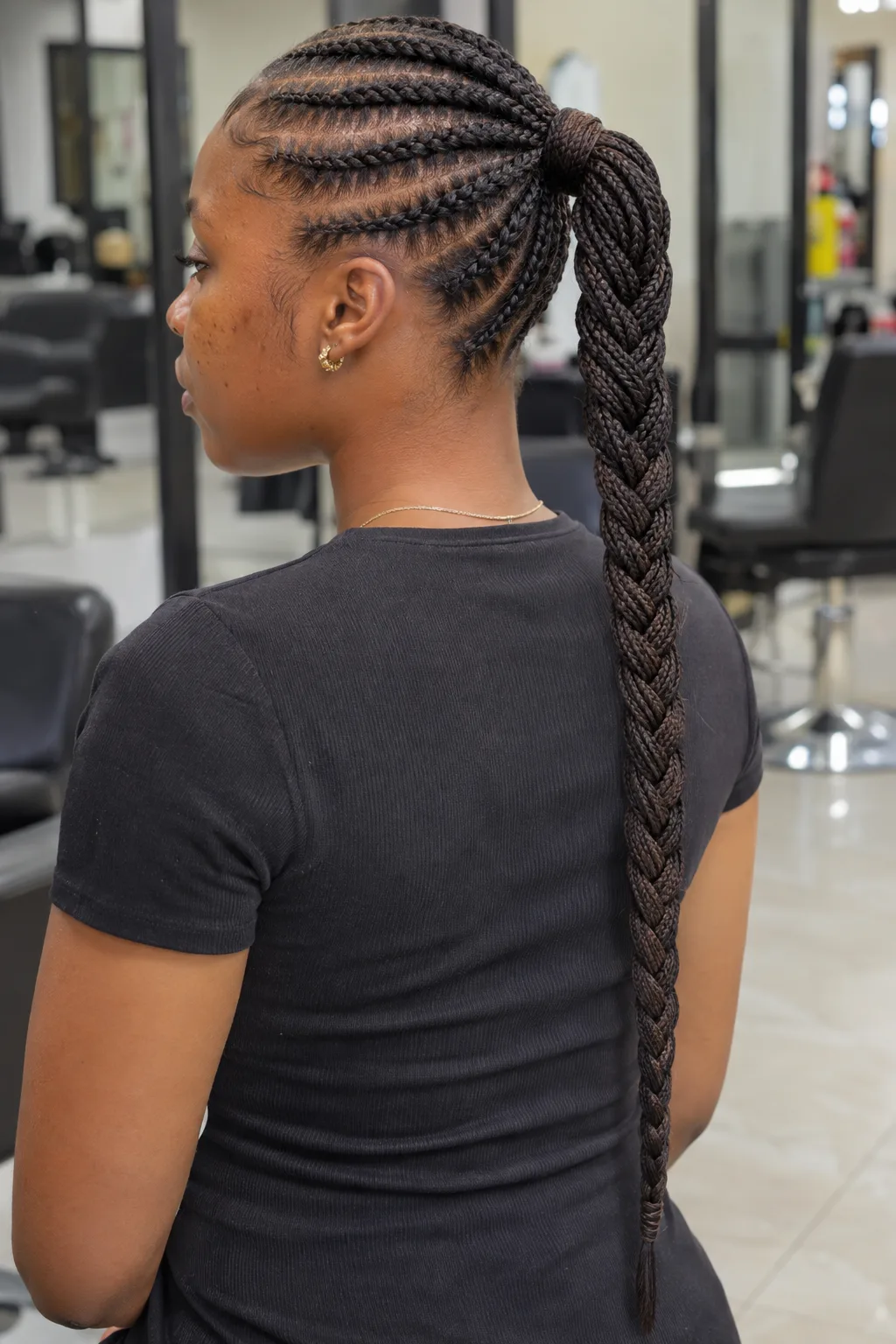 Would this suit me?
 Would this suit me?
 Would this suit me?
 Would this suit me?
 Would this suit me?
Look at which ones read as polished from across a room. It is not the most complicated braids. It is the ones with a smooth, flat base and a clean tie, like the classic, the wrapped base and the sleek jumbo. The fishtail and the Dutch braid get their effect from texture instead, which is why they forgive a few bumps.
Which cut makes you look best?
Find out in 60 seconds.
A few quick taps and one selfie, and you'll know. Free account, no card for your first render.
How to do a braided ponytail
This is the version on your own hair, and it works on anything long enough to reach the tie point with a few inches to spare. Second-day hair grips better than freshly washed hair. If your hair is slippery, add a little texture spray or a light cream first.
How to do a braided ponytail
- Pick the height
Decide where the tie goes before you brush anything. High at the crown for lift, level with the tops of the ears for every day, at the nape for a calm, polished look.
- Brush it smooth toward that point
Brush or comb all the hair toward the tie point, tilting your head so gravity helps. A smooth base is what makes the finished style look styled. A boar bristle brush gives the flattest finish.
- Tie it with one strong elastic
Secure it with a fabric-covered or spiral elastic, firm but not painful. If it pulls at your hairline or gives you a headache, it is too tight. Loosen it now, not later.
- Split the tail into three equal sections
Equal sections make an even braid. If one section is thicker, the braid will twist to that side as it goes down.
- Braid down to the ends
Cross the right section over the middle, then the left over the middle, and repeat. Keep the tension even and the braid close to the head for the first few crossings so there is no gap under the elastic.
- Tie off and pancake it
Secure the end with a small clear elastic. For a fuller look, gently pull the outer edge of each loop outward, starting at the top. This is called pancaking and it can make a braid look about twice as thick.
- Hide the elastic
Take a thin strand from underneath the tail, wrap it around the base twice and pin it under. This one step is the difference between a gym braid and a styled one.
For a fishtail, split the tail into two sections instead and keep moving a thin strand from the outside of one section to the inside of the other. For a Dutch braid into a ponytail, braid from the hairline crossing each strand under the middle, adding hair as you go, then tie the finished braid and the rest of the hair together at the back.
The version with braiding hair
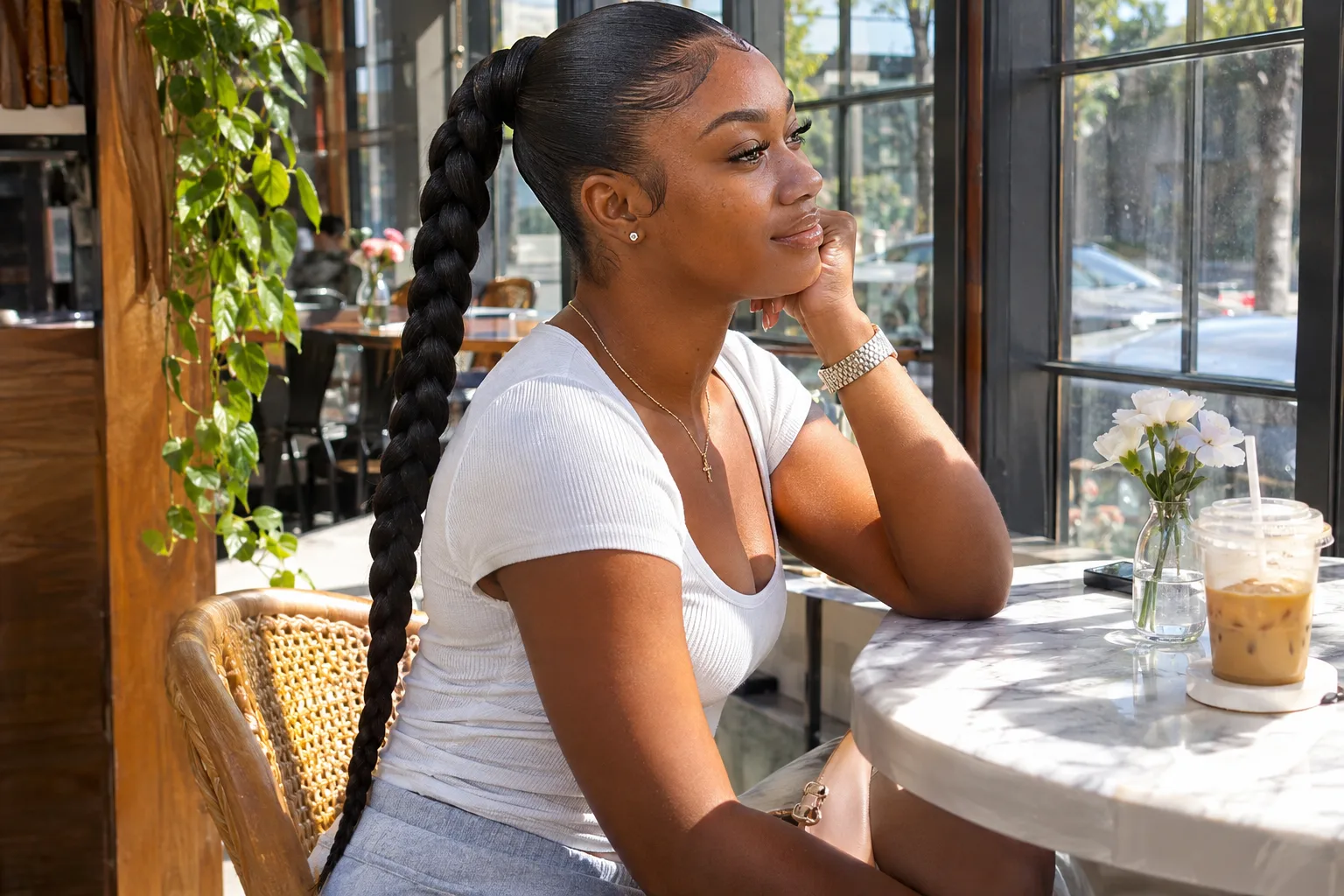
The long sleek look in half the photos here is built differently. In short: smooth the hair into a tight-looking but comfortable ponytail with gel and a soft brush, wrap the base, then attach pre-stretched braiding hair to the ponytail and braid it all as one jumbo braid, or feed it in as several braids. Most people get this done by a braider the first time, because the base is where the skill is. A bumpy or lopsided base cannot be fixed once the braid is in.
How much braiding hair do you need for a braided ponytail?
For one jumbo braid to around waist length, two to three packs of pre-stretched braiding hair is the usual amount. For a feed-in ponytail with many braids, plan on four to six packs, more if you want it longer than waist length or very full. Buy one more pack than you think you need and match the color to your ends, not your roots.
| Look | Packs of braiding hair | Typical length |
|---|---|---|
| One jumbo braid | 2 to 3 | Mid back to waist |
| Two to four large braids | 3 to 4 | Waist |
| Feed-in or stitch braids into ponytail | 4 to 6 | Waist and longer |
| Ponytail of small knotless braids | 5 to 7 | Waist and longer |
For the small braid version, our guide to knotless braids covers sizes and how long they last.
Which braided ponytail suits your hair type?
The right braid depends more on your hair than on your face. Density and texture decide whether a braid looks full, whether it holds, and whether you need added hair at all.
| Your hair | Best braided ponytail | Why |
|---|---|---|
| Fine or thin | Classic or fishtail, pancaked | Pulling the loops wider doubles how full it looks |
| Thick and straight | Dutch braid into ponytail, rope braid | Enough hair to show off texture without bulk at the tie |
| Wavy or curly | Fishtail or loose classic | Texture grips, so the braid holds without product |
| Coily, 4b or 4c | Two Dutch braids into a puff, or feed-in braids | Protects the ends and works with shrinkage |
| Short, above the shoulders | Dutch braids into a short ponytail | A tail is too short to braid, so braid the head instead |
Fine or thin hair
Braid it slightly loose, then pancake it. A tight braid on fine hair looks like a pencil. A pulled-out one looks like twice the hair. Tie it at mid height rather than high, so the tail hangs longer.
Thick hair
Thick hair has the opposite problem: a bulky lump at the tie. Thin the bulk by braiding the top section back first (a Dutch braid), then tying. If you have a lot of it, our thick hair guide covers the cuts that make it easier to put up.
Coily and natural hair
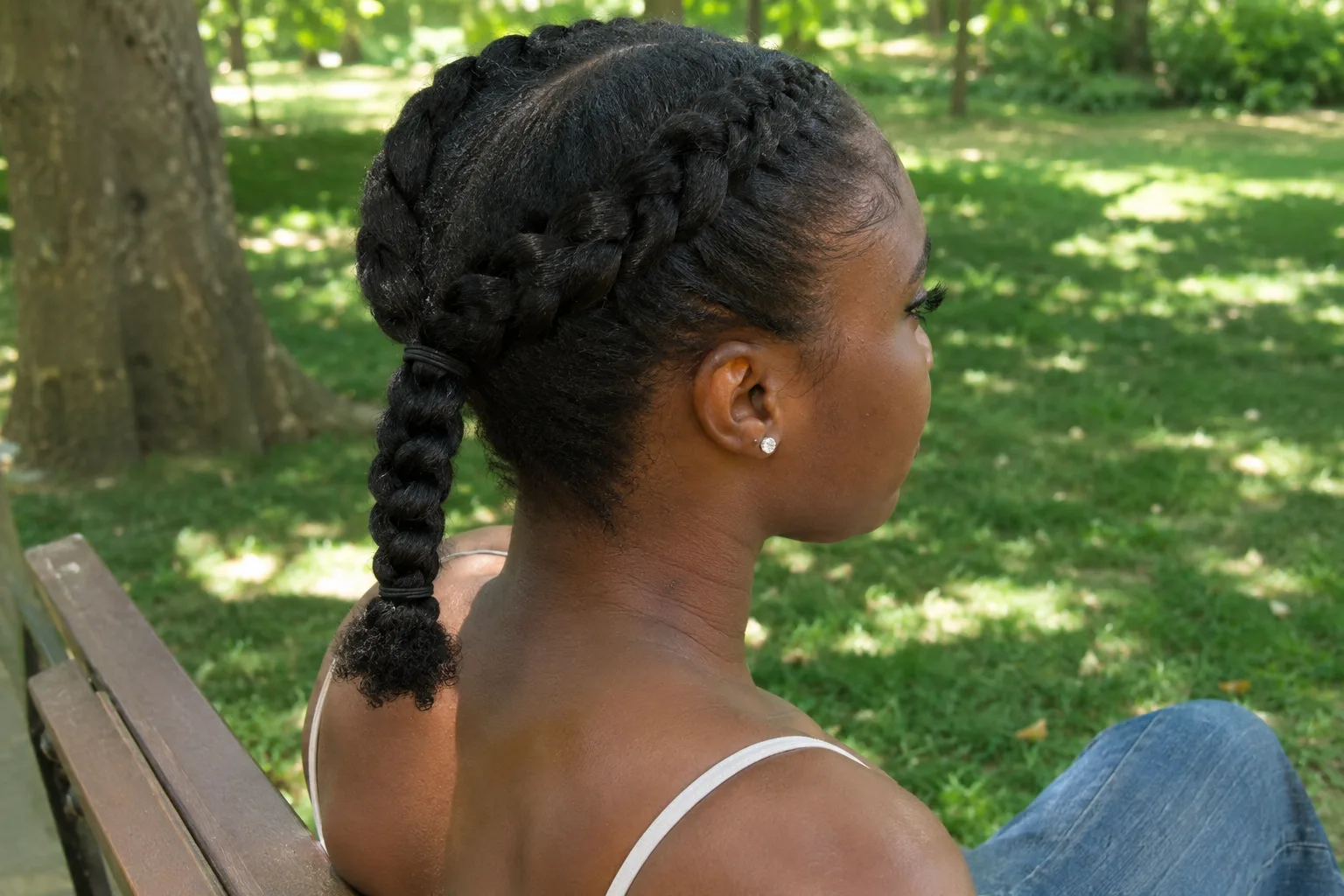
On your own natural hair, braid it back while it is stretched, after a twist-out or a blow dry on low heat, and seal the ends with a light oil. Two chunky Dutch braids into a puff is the low-tension version. The 4c hair guide goes deeper on keeping coils moisturized under protective styles.
Which height suits your face shape?
Height still matters on a braided ponytail, because it pulls all the hair off your face. A high braided ponytail adds length and slims a round face. A low one calms a long face. Oval faces can wear any height.
Not sure which face shape you have? This calculator measures it from a few points on your face.
Measure it instead of guessing
Both numbers in the same unit — the answer is a ratio, so it does not matter which.
Under 1.15 reads round, 1.15 to 1.5 reads oval, over 1.5 reads long. Oval and long split on the jaw rather than the ratio: an oval tapers toward the chin, a long face runs straight down.
Braided ponytail mistakes and what they cost
Most problems come from the base, not the braid. Some cost you a photo. One can cost you hair.
- Pulling the base too tight. Constant pull at the hairline can cause traction alopecia, hair loss along the edges and temples. The American Academy of Dermatology names tight ponytails and braids among the styles that can cause it. If you feel pain, see bumps, or get a headache, take it out.
- Wearing a heavy extension ponytail for weeks. Waist-length braiding hair is heavy, and all of that weight hangs from one point. Keep heavy versions to days, not weeks, and sleep in a scarf with the ponytail let down if you can.
- Unequal sections. The braid twists to one side and looks crooked from behind.
- Braiding wet hair. Hair stretches when wet and shrinks as it dries, so a braid done wet gets tighter and pulls harder at the base as the day goes on.
- Using the wrong color hair. Braiding hair matched to your roots looks fine at the tie and fake at the tail. Match it to your ends.
Say this to your barber
A sleek high braided ponytail with one jumbo braid to my waist, smooth base at my crown, edges laid, and not pulled tight at my hairline.
Here is the wall. You can practice a braid on your own hair, but you cannot see a waist-length sleek braided ponytail on your face before you sit down for two hours and buy the hair. You also cannot see from the front how a high ponytail changes your face shape without a second mirror and a lot of guessing.
Can you see a braided ponytail on yourself first?
Yes. Upload one selfie to HairstyleAtlas and it renders the hairstyle on your own face, so you can compare a sleek high ponytail with your current look before you book a braider. Your first look is free and needs no card. After that, Plus is $9 a month for 150 credits, according to our pricing page, and a hairstyle costs 10 credits. To compare braided styles specifically, try the braids try-on.
Start with a classic three-strand braid on a mid ponytail, wrap the base, and pancake the loops. That covers most days. For a night out or a week of low effort, the sleek jumbo braided ponytail with added hair is the one that looks best in photos, but treat the base as the whole job: smooth, comfortable, and never painful at the edges. If you like braids that hold their shape, bubble braids and Fulani braids are the next ones to try.
Frequently asked questions
Smooth your hair into a ponytail with gel and wrap the base, then fold a section of pre-stretched braiding hair around the ponytail and braid your hair and the added hair together as one braid, or as several. Finish the ends by dipping them in hot water or with a small elastic. It is easier with a second person, and the base is where most of the skill is.
Two to three packs of pre-stretched braiding hair for one jumbo braid to around waist length, and four to six for a feed-in ponytail with many braids. Buy one extra pack so you do not run short halfway.
Tie your own hair into a ponytail first, then attach the added hair at the base: either braid it in, wrap a ponytail extension around the elastic with its comb or drawstring, or wrap the base with a strand of the extension to hide the join.
Part the hair down the middle, Dutch or French braid each side from the hairline back toward the nape or crown, then gather both braids and the remaining loose hair into one elastic. Braid the tail or leave it loose.
Two braided ponytails are usually called braided pigtails, or double Dutch braids when each side is braided from the hairline. They are a different style from a braided ponytail, which has one tie point.
They use the same technique, crossing each strand under the middle so the braid sits on top. Cornrows are usually small, tight and in many rows close to the scalp, while a Dutch braid is usually one or two larger braids.
Dry, or very slightly damp at most. Wet hair stretches and then shrinks as it dries, so a braid done wet tightens and pulls harder at the base during the day.
A loose braid on your own hair at a mid or low height, tied with a fabric elastic and changed position from day to day. The most damaging is a tight, heavy extension ponytail worn for weeks, because all of the weight pulls on the hairline.
Preview it on your own photo: Virtual Hair Color Try-On.
Share article
About the author
Related posts
Women's Haircuts · 15 min
Lob Haircut: 14 Long Bob Ideas and the One Call That Decides If It Suits You
A lob is a long bob that ends between the jaw and the collarbone. Fourteen versions at the same length, which one suits your face and hair type, and the exact words to say in the chair.
Women's Haircuts · 11 min
Layered Hair: 14 Looks and the One Number That Decides Each
Layered hair comes down to one number: the gap between your shortest piece and your longest. See 14 layered looks sorted by that gap, which suits your face and hair type, and what to say in the chair.
Women's Haircuts · 13 min
Copper Hair Color: 14 Shades and Which One Suits Your Skin
Copper is a bright orange-red, like a new penny. See 14 copper shades side by side, which one suits your skin tone, what to say at the salon, and why maintenance matters more than your complexion.
Women's Haircuts · 12 min
Blowout Hair: 14 Looks and How to Do a Salon Blowout at Home
Blowout hair is set by the cool shot, not the heat. See 14 blowout finishes from sleek to 90s bounce, the at-home routine step by step, and which version suits your hair type.
Women's Haircuts · 14 min
Miracle Knots Hair: 12 Looks, How It Works and How Long It Lasts
Miracle knots loop curly human hair into small plaits of your own hair: boho braids in 2 to 3.5 hours, with less weight. How it works, how many bundles, which hair it suits and how long it lasts.
Women's Haircuts · 14 min
Black Short Hairstyles for Women: 14 Cuts Sorted by Upkeep
Fourteen short hairstyles for Black women, from the TWA and tapered cut to the pixie, braided bob and buzz cut, sorted by how much upkeep each one really takes.