Fulani Braids: 8 Styles, Cost, Care and What to Ask
Oleh Onysko Updated 28 September 2026 14 min read
In this article
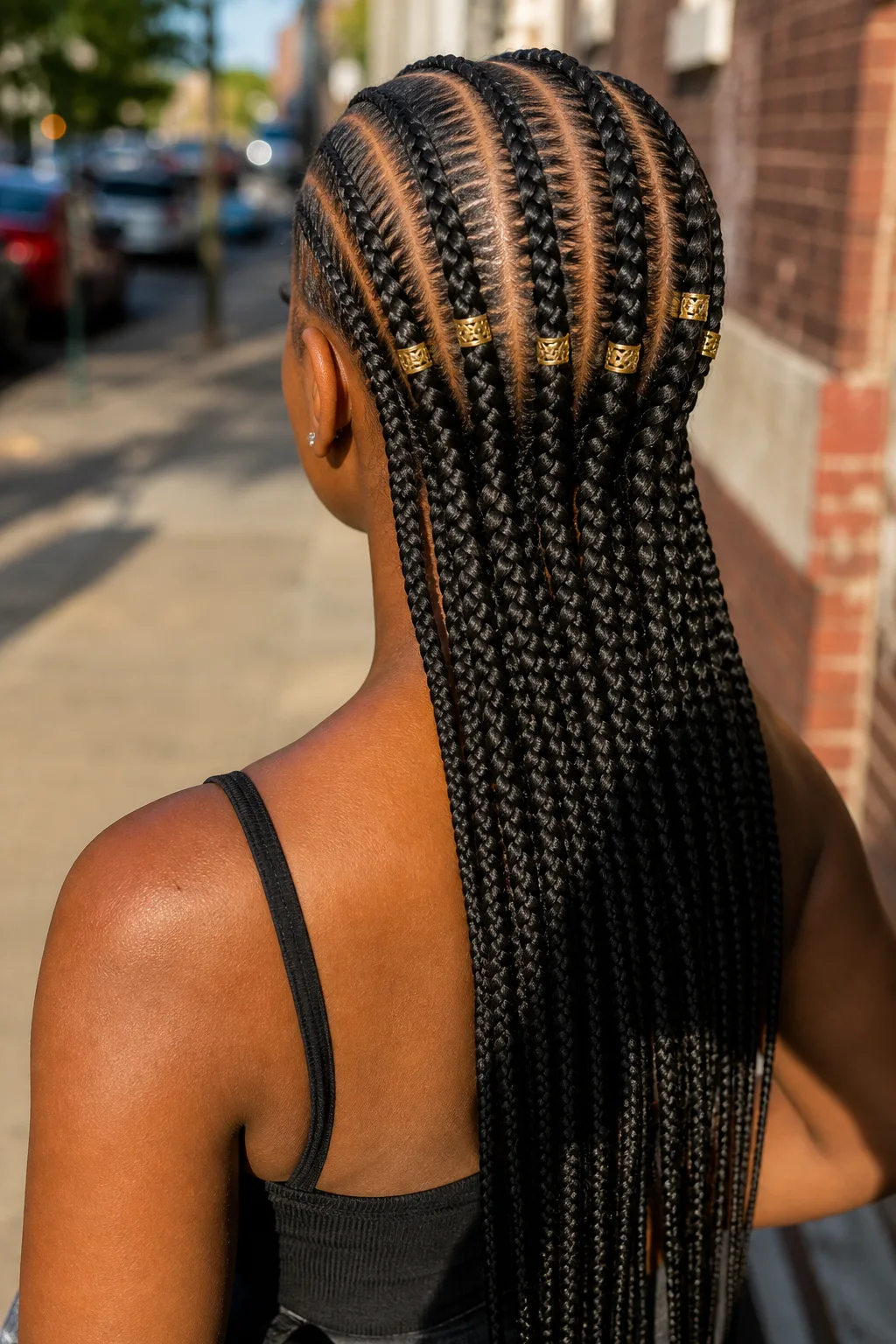
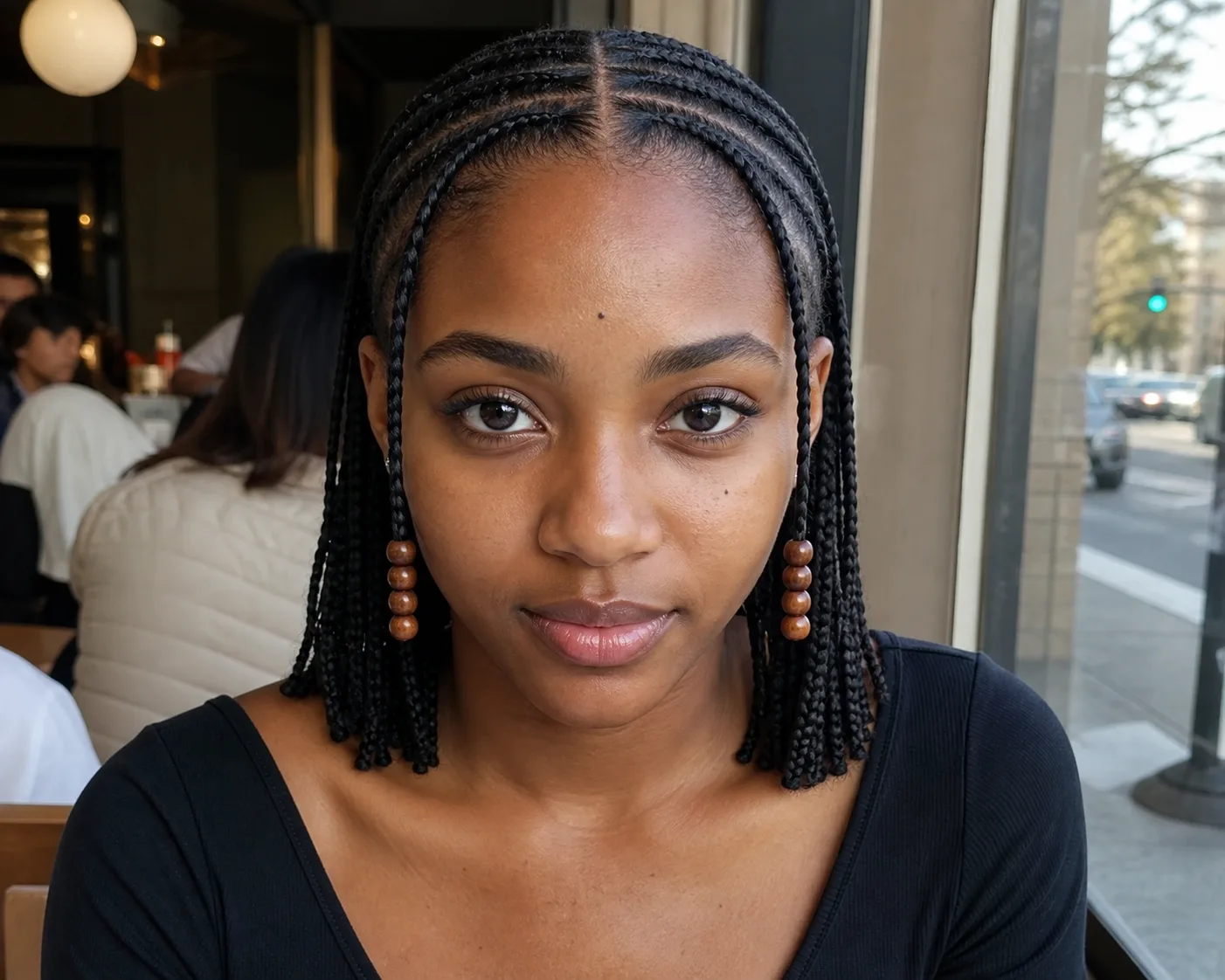
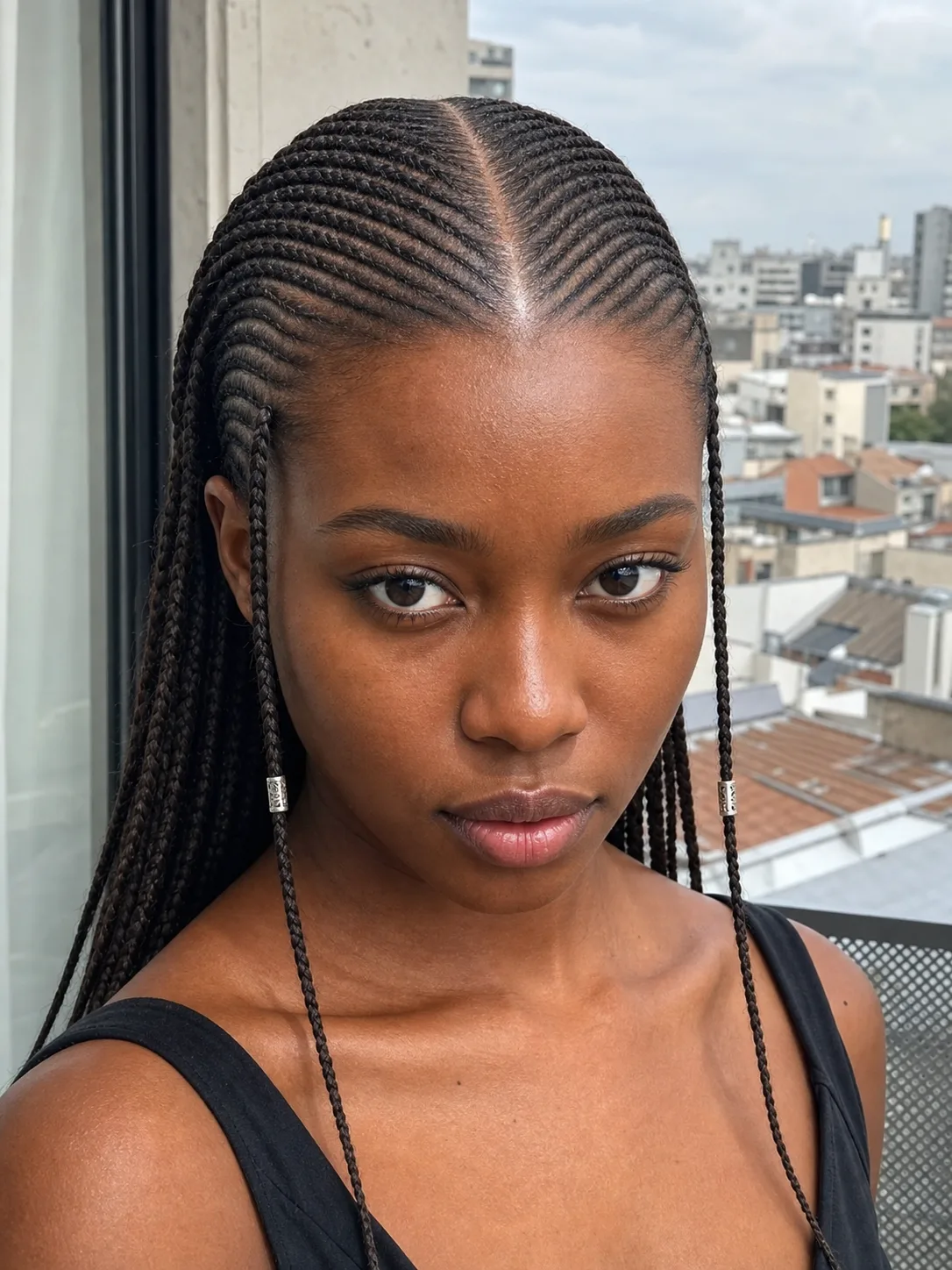
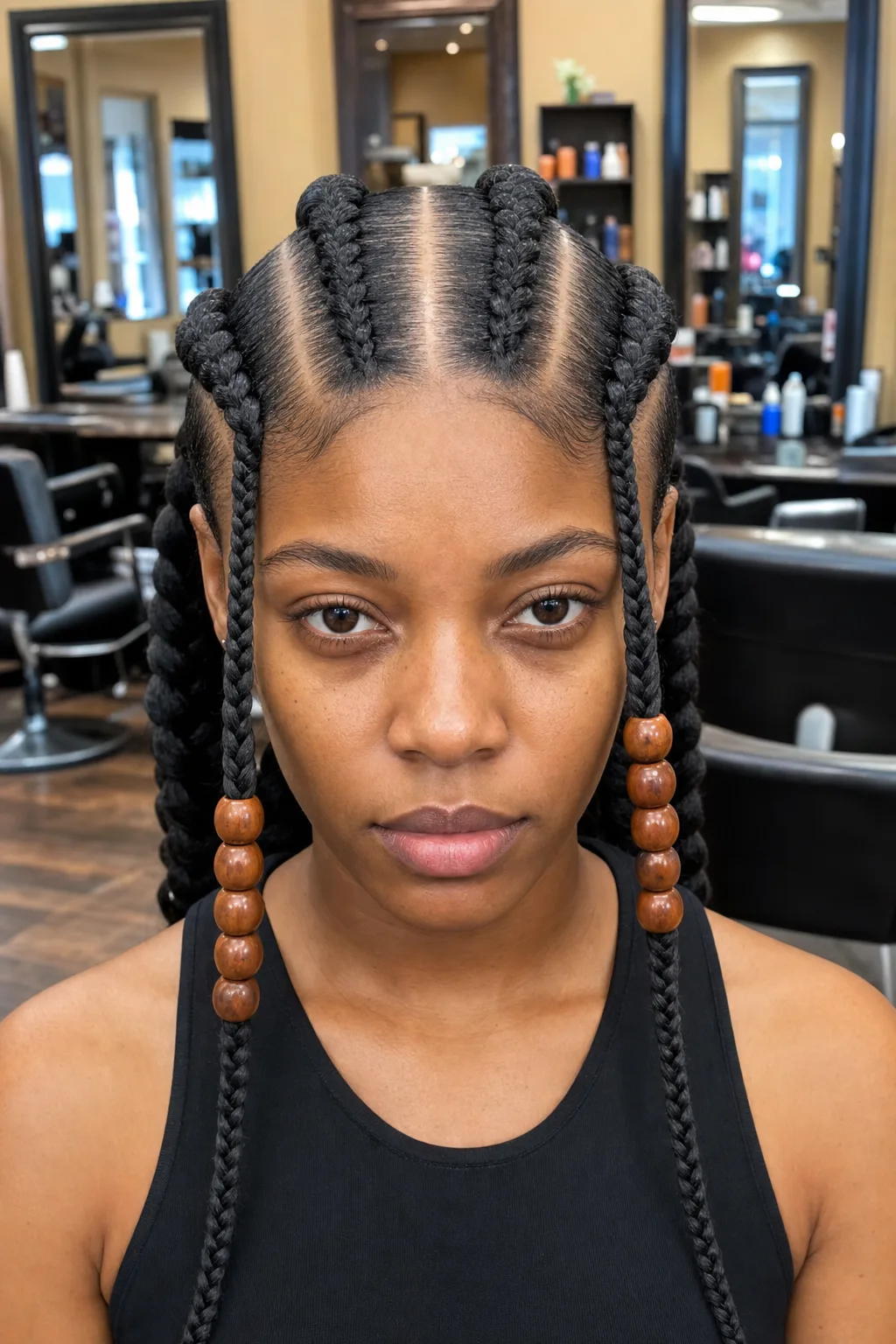
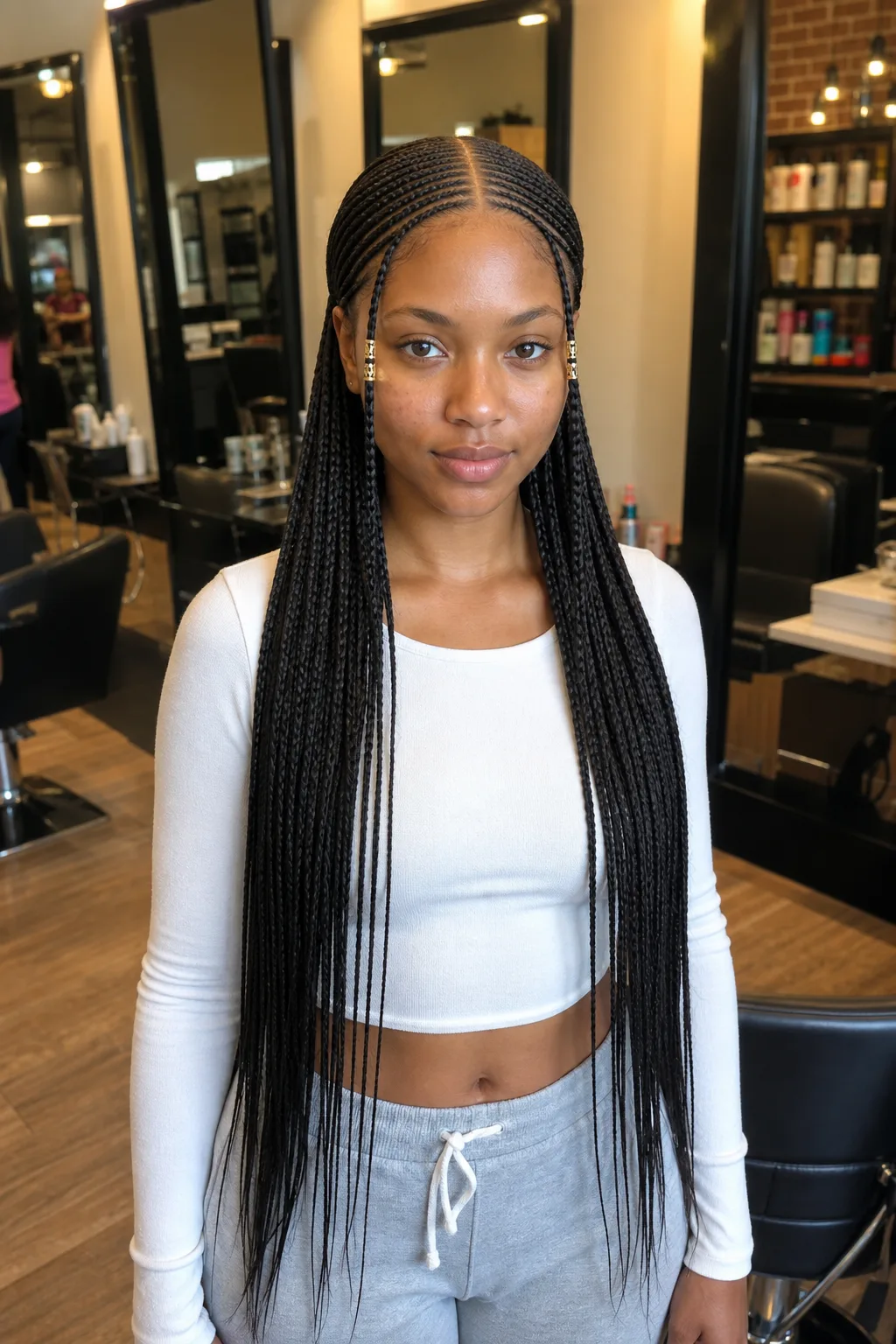
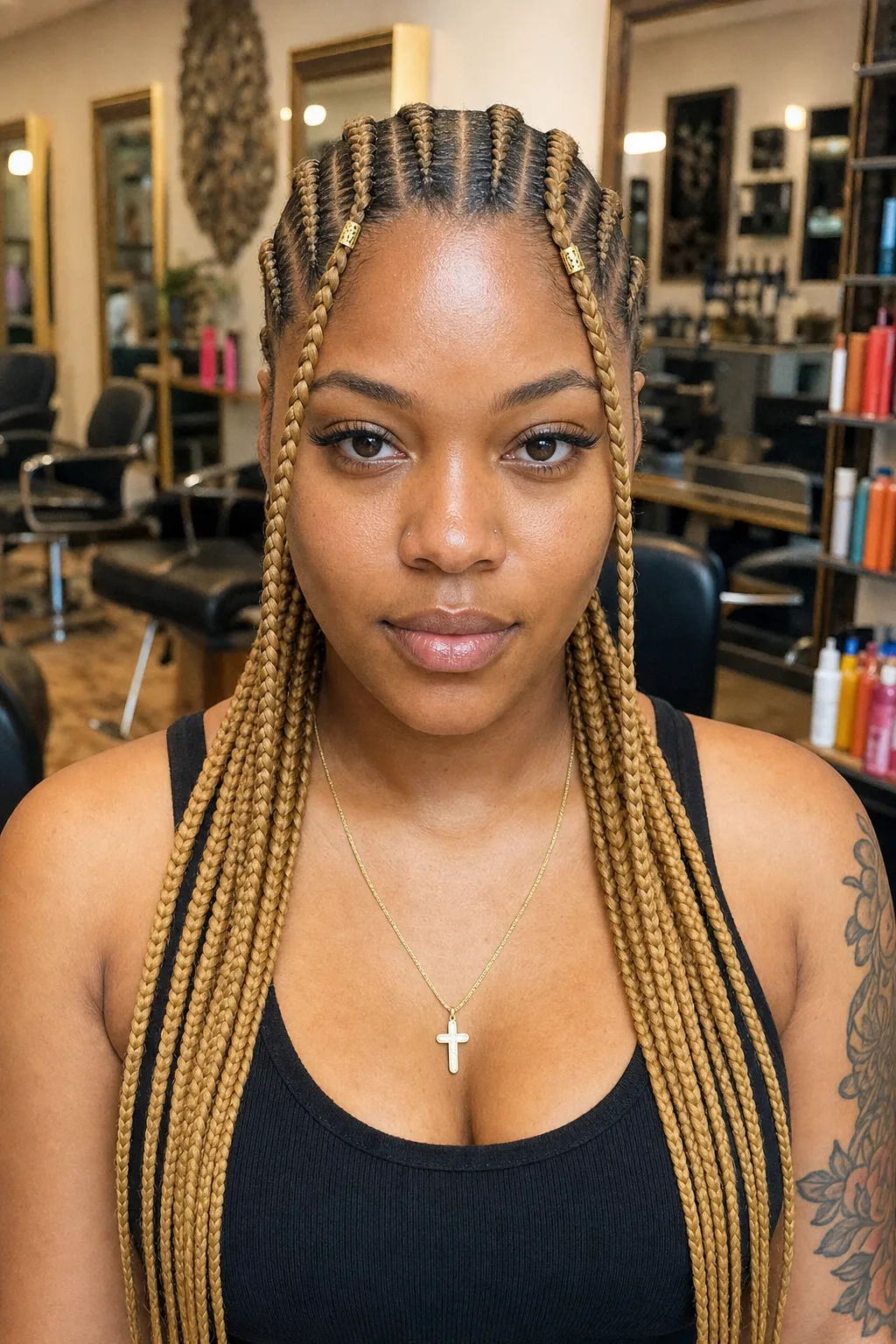
Fulani braids combine front-to-back cornrows around a clear center part with face-framing side braids and individual braids through the back. The pattern is the identity of the style. Beads, cuffs, color, curls, and length are options, not substitutes for that geometry.
If you are booking the look, bring front, side, and back references. A beautiful photo that hides the crown does not tell your braider where the cornrows should stop or how the back should be sectioned.
What exactly are Fulani braids?
Fulani braids are a braided style associated with the Fulani people across West Africa and the Sahel. The recognizable modern salon version usually has a central part, cornrows braided away from the hairline toward the crown, one or more braids near each temple or ear, and loose-hanging individual braids at the back.
The center part and face-framing pieces matter more than the accessories. Remove every bead and cuff and the layout should still read as Fulani braids. If the whole scalp is divided into square boxes, it is box braids. If every braid stays attached to the scalp from forehead to nape, it is an all-cornrow style. Most braiders now start the hanging back braids with a feed-in rather than a knot, which is the same root construction covered in our guide to knotless braids.
The phrase "tribal braids" is often used online as a broad search label, but it is imprecise. Ask for Fulani braids when this is the pattern you want, then describe the exact placement rather than relying on a label alone.
| Feature | Fulani braids | Straight-back cornrows | Box braids |
|---|---|---|---|
| Front pattern | Center part with cornrows on both sides | Parallel rows from hairline to nape | Individual square or triangular parts |
| Face framing | Side braids commonly hang near the ears | Usually none | Braids fall from box sections all around |
| Back section | Often individual braids after the crown | Cornrows remain attached to the scalp | Individual braids from root to end |
| Common accents | Beads, cuffs, rings, color | Simple ends or cuffs | Color, curls, beads, varied parts |
What should you ask your braider for?
Ask for the scalp map before discussing color or beads. The safest consultation names the center part, the direction of the cornrows, the number of face-framing braids, the size of the back braids, the finished length, and how much tension feels acceptable. Fulani braids are one entry in a much wider set of Black hairstyles sorted by texture and length.
Say this to your barber
I want Fulani braids with a clean center part, symmetrical cornrows running from the front hairline toward the crown, one braid framing each side of my face, and long individual braids at the back. Please keep the edges comfortable and add only a few cuffs or beads.
Bring at least three reference angles. Point out what you do not want too. If you dislike a side-swept pattern, oversized cornrows, dense bead placement, or very tight edges, say it before the first row is braided.
Decide these details before the appointment
| Decision | Lower-commitment choice | Bolder choice | What changes |
|---|---|---|---|
| Braid size | Medium | Small or jumbo | Install time, weight, and how visible the scalp pattern looks |
| Length | Shoulder or mid-back | Waist length | Extension quantity, weight, and styling range |
| Decoration | A few cuffs | Beads on many ends | Sound, weight, and how dressy the result feels |
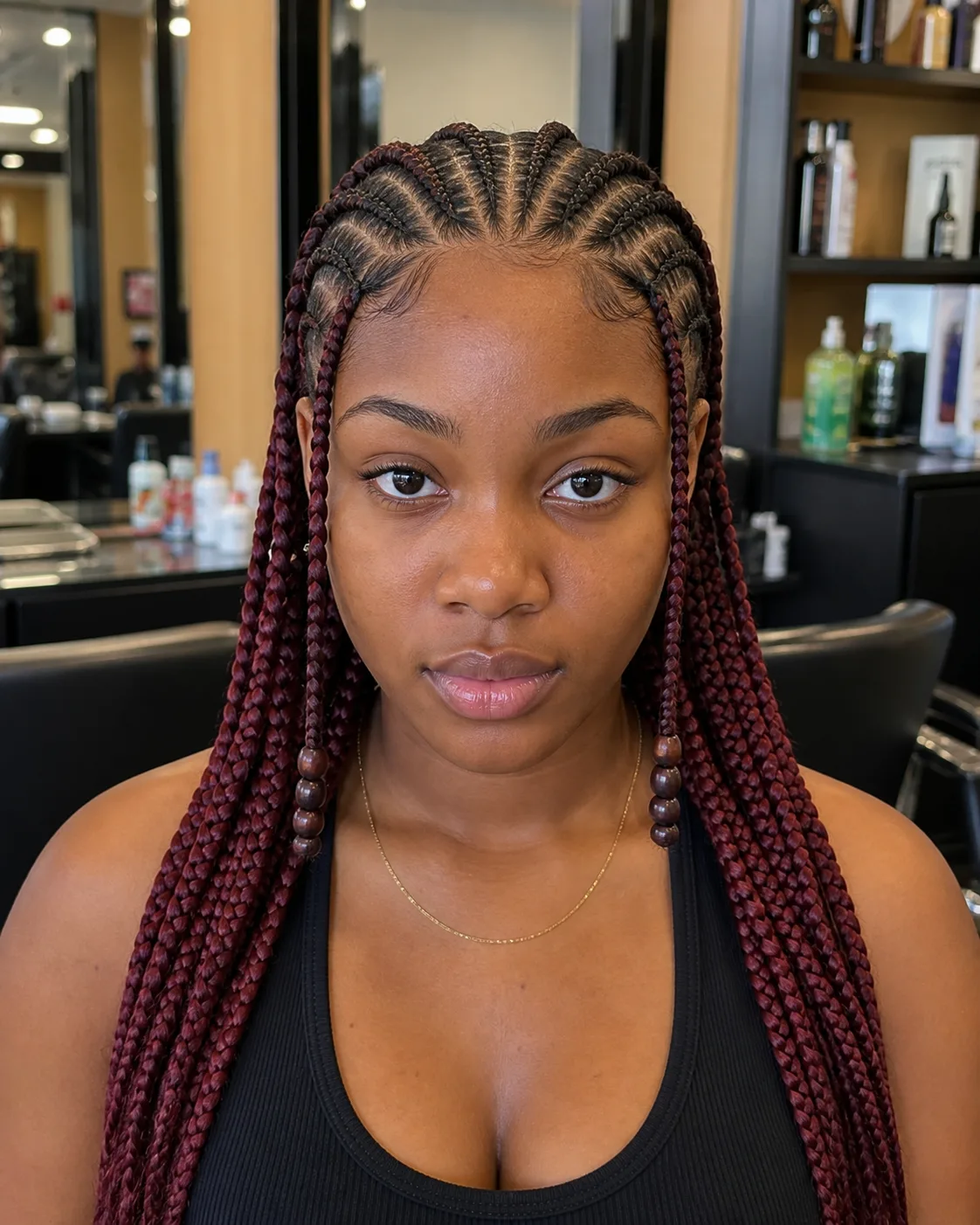
| Color | Natural black or brown | Burgundy or honey blonde | Contrast at the roots and overall statement |
| Finish | Fully braided lengths | A few loose curls at the back | Humidity response and daily upkeep |
Use the women's hairstyle try-on to test length and color before buying extension hair. The preview will not replace a braider's sectioning plan, but it can settle whether shoulder-length black braids or long honey-blonde braids feel more like you. If only the shade is open, the hair color visualizer puts burgundy or honey blonde on your own photo.
How are Fulani braids installed?
Fulani braids are installed by mapping the scalp first, cornrowing the front and sides toward the crown, then creating the hanging braids at the back. The exact feed-in and attachment method varies by braider, so the consultation should cover both appearance and comfort.
How to prepare for a Fulani braids appointment
- Save references from three angles
Choose a front view that shows the center part, a side view that shows the face-framing braid, and a back view that shows the transition into individual braids.
- Confirm size, length, and color
Ask your braider which extension hair and how many packs their method requires. Do not buy from a generic list before confirming the brand, texture, and amount they prefer.
- Arrive with hair prepared as requested
Follow the salon's instructions for washing, detangling, stretching, or blow-drying. Product-heavy roots can make clean parting harder.
- Approve the first rows before continuing
Check the center part, cornrow direction, edge tension, and side-braid placement while changes are still easy. Say something immediately if you feel pinching or a headache.
- Review the crown and finish
Before leaving, use a mirror or phone camera to inspect the back transition. Confirm that beads and cuffs are secure and ask how the braider wants you to wrap the style at night.
The installation can take several hours because it combines two techniques and a detailed scalp design. Time depends on braid size, length, density, extension method, and whether beads are added one by one. Ask your braider for an estimate based on your chosen reference, not a generic promise.
Which braid size should you choose?
Medium Fulani braids are the safest first choice. They show the center pattern clearly, feel less visually heavy than jumbo braids, and usually demand less installation time than very small braids.
Small Fulani braids
Small braids create the most detailed scalp pattern and the lightest-looking individual strands. They also mean more parts, more time in the chair, and more opportunities for tension if the front rows are made too tight.
Medium Fulani braids
Medium braids balance definition and practicality. Choose them when you want the pattern to read from normal conversation distance without the weight and scale of jumbo sections.
Jumbo Fulani braids
Jumbo braids make the geometry bold, but they leave fewer rows to communicate the design. The front pattern must be especially deliberate or the finished result can read as a generic large cornrow style.
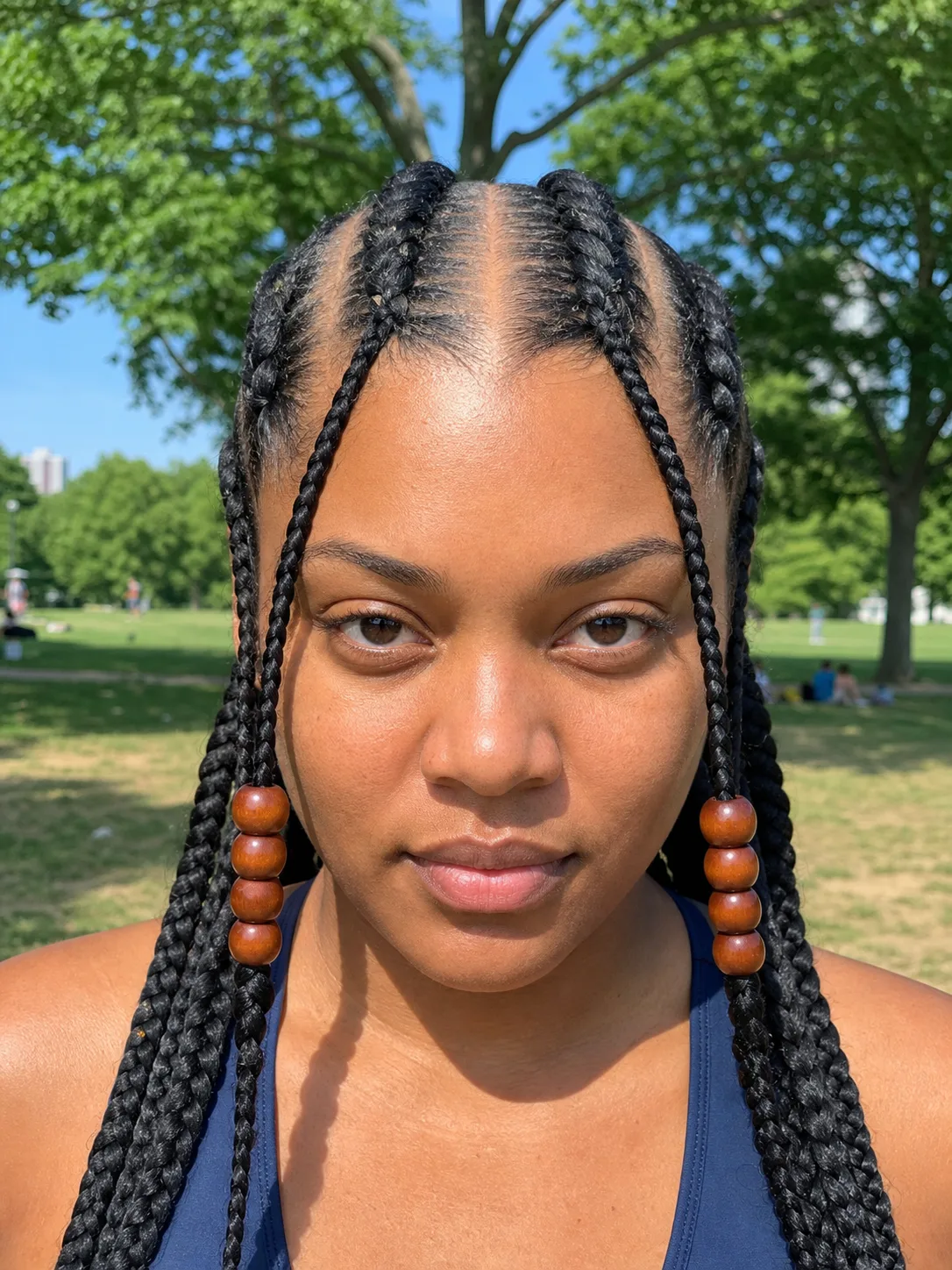
If you are unsure which scale suits your features, compare the visual weight with the face shape guide tool. A smaller face is not automatically limited to small braids. What matters is the balance among braid width, length, bead size, and the amount of forehead left visible.
Size is the single number that moves your hours, your price and your hairline, and it works the same way across every style of African braiding, not just this one.
How long do Fulani braids last?
Fulani braids commonly look their best for about four to six weeks, though the scalp rows may fuzz earlier than the hanging braids. Growth, sweat, braid size, hair texture, edge tension, and nighttime care all affect the useful life of the style.
Keeping them longer is not automatically better. New growth increases movement at the root, buildup collects between parts, and heavy lengths can pull on a loosened base. The American Academy of Dermatology warns that repeatedly tight styles can contribute to traction alopecia, so pain and persistent tenderness are reasons to act, not a normal break-in period.
A simple care routine
Use a satin scarf or bonnet at night, focusing on holding the front cornrows flat without crushing the hanging braids. Clean the scalp gently according to your braider's advice, dry it fully, and use only enough product to relieve dryness. Heavy gels and oils can turn neat parts into a buildup problem.
When the braids come out, your own length needs a plan of its own, and the long hair guide covers which cuts hold shape on coils without building a triangle.
For workouts, tie the lengths loosely and let the scalp dry afterward. If you plan frequent swimming, tell your braider before installation. Water, friction, and added weight can shorten the neat phase and make very long braids uncomfortable.
How much do Fulani braids cost?
Fulani braid pricing varies too much for one honest universal number. Your city, the braider's experience, braid size, finished length, extension hair, density, design complexity, and bead work can all change the quote.
Ask whether extension hair, washing, takedown, and accessories are included. A low base price can become expensive after length, small-part, and decoration add-ons. Send the exact reference image and request a written total before the appointment.
| Quote item | Ask this question | Why it matters |
|---|---|---|
| Extension hair | Is hair included, and which type? | Texture, color, and quantity affect both price and result |
| Length | What length is included in the base price? | Waist length usually needs more material and time |
| Size | Is there an extra charge for small braids? | More sections generally mean more labor |
| Accessories | Are beads and cuffs included? | Some salons charge for pieces and installation separately |
| Prep | Must I arrive washed and stretched? | Wash or blow-dry services may be separate |
| Maintenance | Do you offer a front-row refresh? | A refresh may extend the neat look without a full reinstall |
Eight Fulani braid ideas that keep the pattern intact
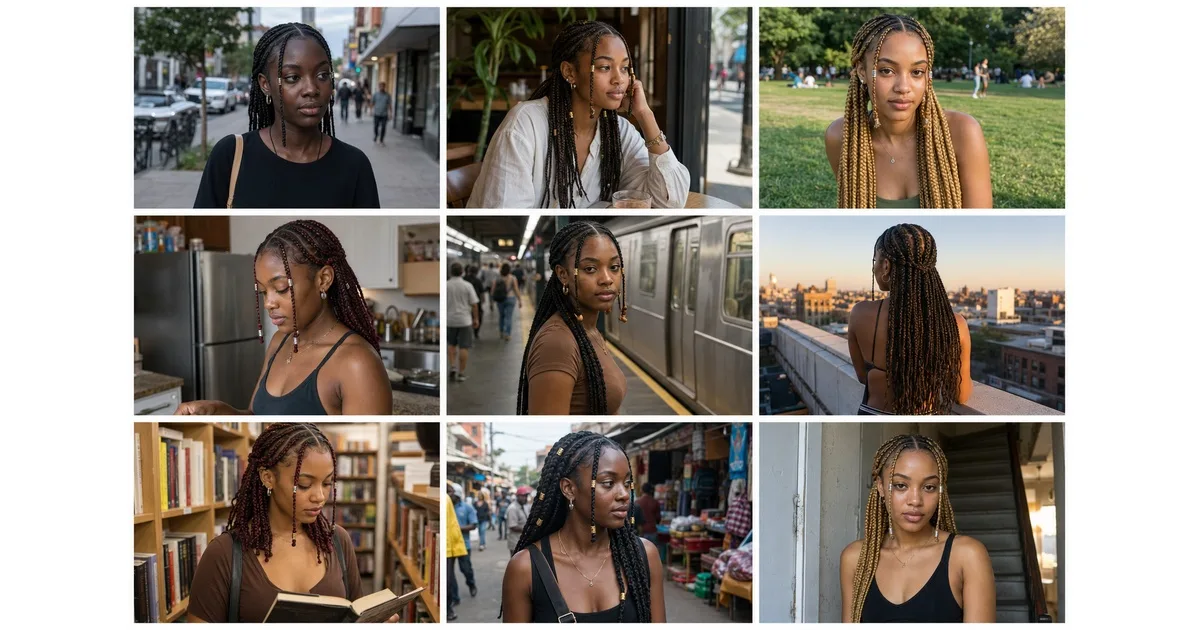
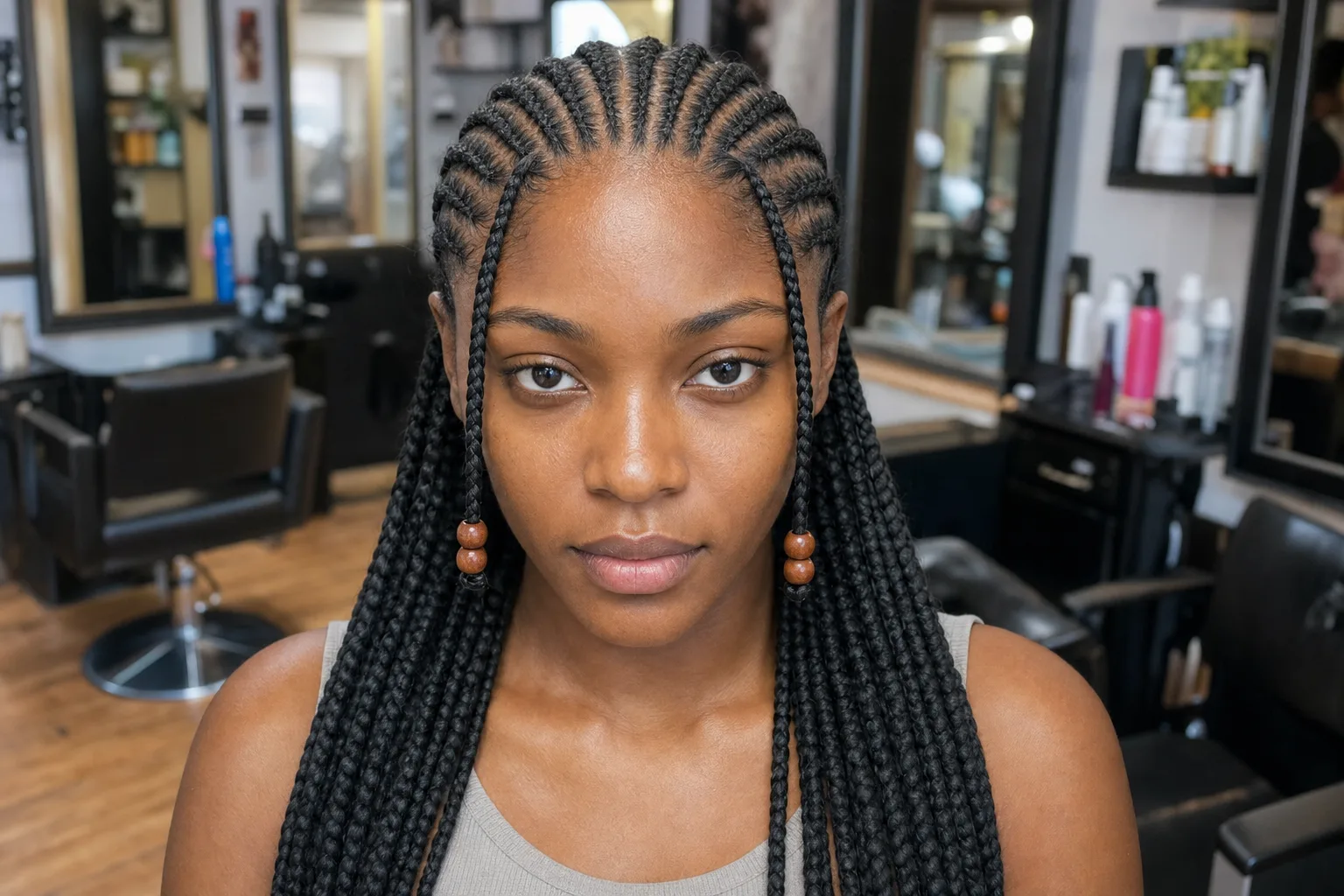
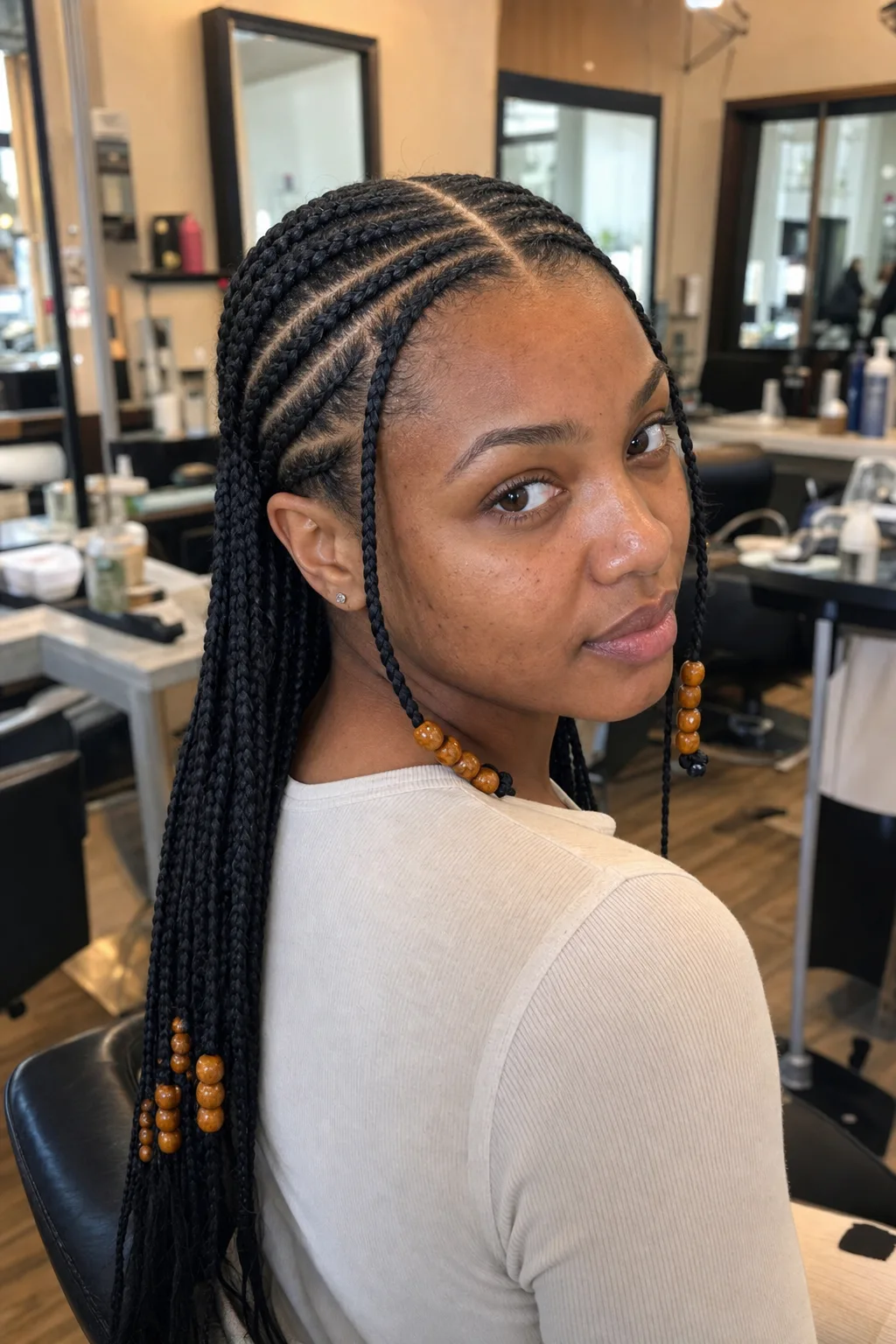
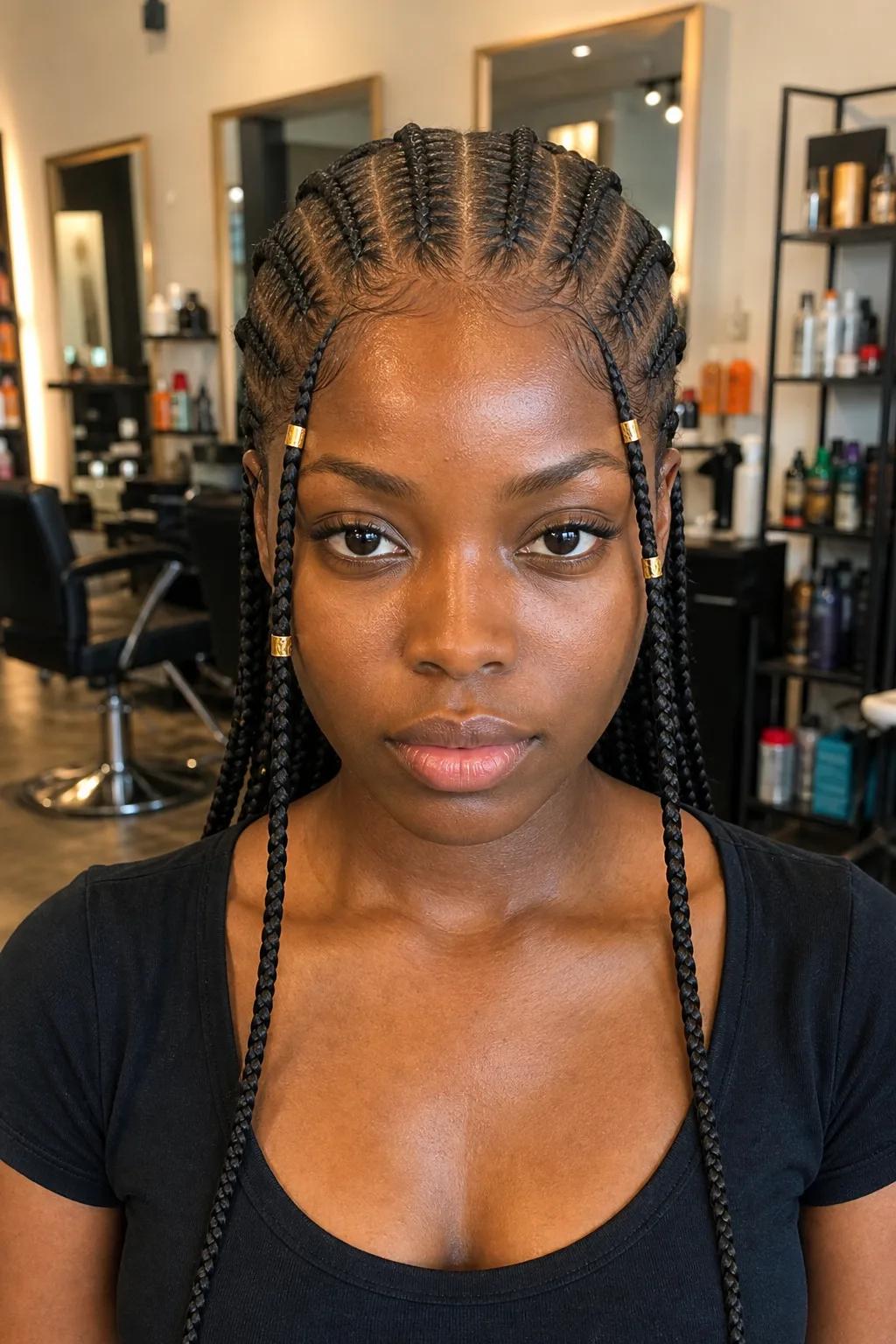
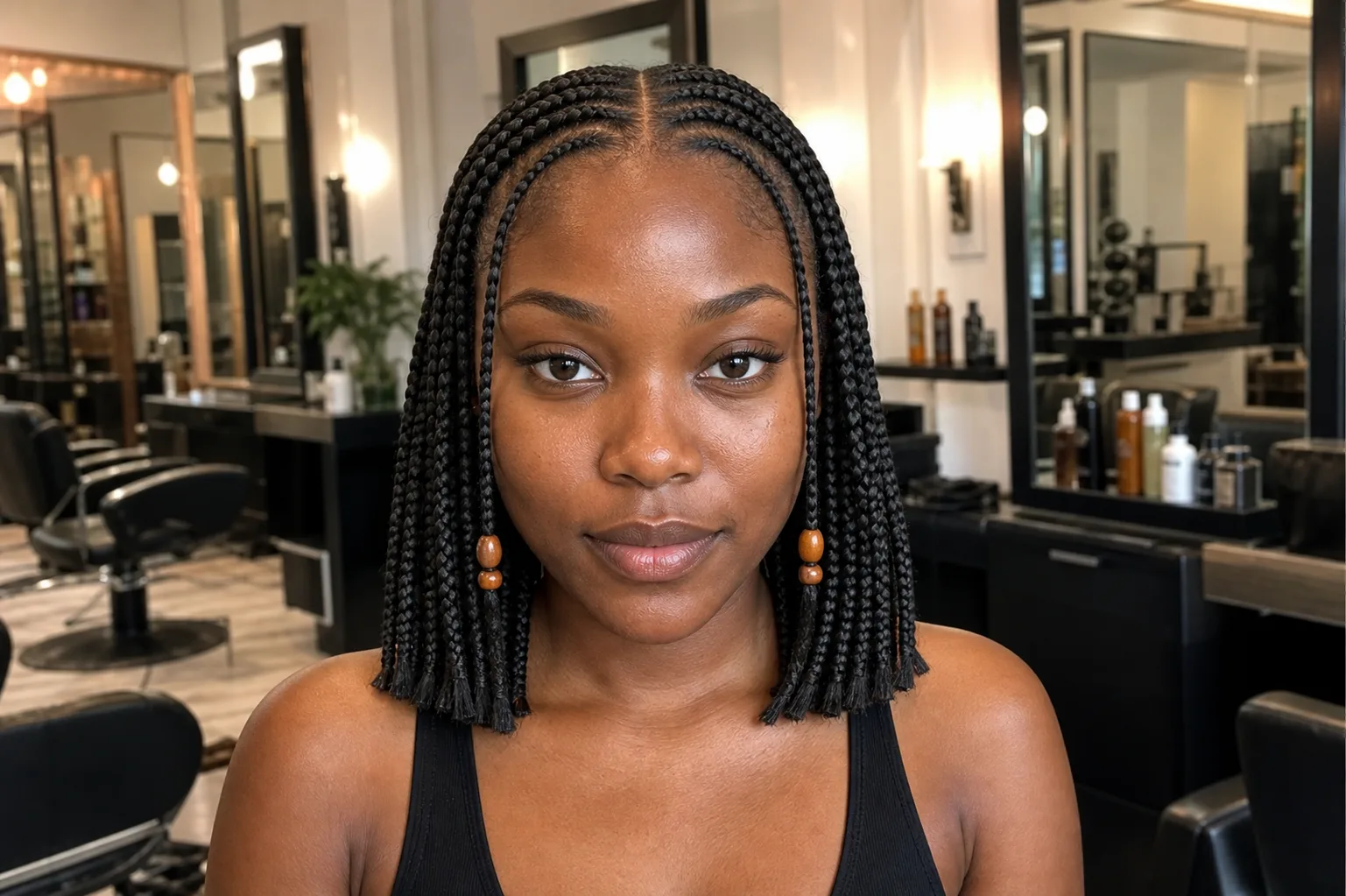
These eight looks vary one visible choice at a time while preserving the same Fulani foundation: center part, front-to-back cornrows, side braids, and individual lengths at the back. Use the gallery to choose decoration, length, braid size, or color without losing the identity of the style.
Fulani braids with curls are another popular variation, but the loose pieces need more humidity control than fully braided lengths. Keep curls at the back so the crown and side-braid geometry stay easy to read.
Gallery8 photos · tap to enlarge
 Try this on me
 Try this on me
 Try this on me
 Try this on me
 Try this on me
 Try this on me
 Try this on me
 Try this on me
 Yours could be here.
Start with one selfie.
One photo, twenty seconds, and you'll know. Free account, no card for your first render.
Color and length are easier to reverse than a scalp pattern you dislike. Try a long hair preview before committing to waist-length extensions, and use the curly hair try-on if loose curls are the main variable. If front framing is your deciding factor, the textured fringe hairstyles guide shows how strongly a detail around the forehead can change facial balance, even though the styling method is completely different.
What mistakes make Fulani braids disappointing?
The biggest mistake is choosing accessories before approving the geometry. Beads cannot rescue a missing center part, uneven front rows, or a crown transition that turns the style into ordinary box braids.
Accepting pain as part of the process
Firm grip is not the same as pain. Burning, bumps, a headache, shiny pulled skin, or difficulty sleeping are warning signs. Ask for a row to be redone immediately. Protecting the style is never more important than protecting the hairline. The same tension rule decides whether the braid pattern under a lace front unit costs you your edges. The same rule holds for anything permanent at the edges, and it is worth reading what you can and cannot undo at the hairline before you book it.
Tension is worse on tightly coiled hair because the bends are where strands snap first, and the 4c hair guide sets out what that texture can take before a braider ever touches it.
Using one hidden-angle reference
A front portrait can conceal the entire back construction. Without a rear reference, you and the braider may imagine different transitions. Save a reference set, then circle the specific details you want copied.
Buying extension hair before asking the braider
Braiders use different feed-in methods and have preferences about pre-stretched texture, bundle length, and pack quantity. Confirm the shopping list first. This avoids mismatched color, excess weight, and unopened packs you cannot return.
Making every design choice loud
Jumbo rows, waist length, bright color, curls, and beads can compete rather than cooperate. Pick one lead feature. Keep the remaining choices quieter so the scalp pattern still reads.
Leaving the style in because it still looks acceptable
The hanging lengths can look polished after the roots have grown and started carrying extra movement. Judge the style by scalp comfort and root condition, not only by the ends. If you see breakage, thinning, or persistent irritation, remove the style carefully and seek professional advice.
The best first version to book
For a first appointment, choose medium black or dark-brown Fulani braids at mid-back length with a few cuffs or beads. That version makes the signature pattern easy to see, keeps the accessory decision reversible, and gives your braider a clear brief.
Take the scalp map seriously. A precise center part, symmetric front rows, comfortable edges, intentional side braids, and a clean crown transition will matter every day. Color and jewelry are the final five percent.
Frequently asked questions
Fulani braids combine cornrows at the front and sides with a recognizable center part, face-framing braids, and individual hanging braids toward the back. Beads and cuffs are common, but the scalp pattern defines the style.
Cost depends on location, braid size, length, extension hair, design complexity, and accessories. Send your braider a clear front and back reference, then ask for a total that states whether hair, prep, and beads are included.
Cornrows describe a technique in which hair is braided close to the scalp. Fulani braids use cornrows as part of a specific pattern, then commonly transition into face-framing and free-hanging individual braids. All Fulani styles may contain cornrows, but not all cornrow styles are Fulani braids.
Many people plan on roughly four to six weeks of wear. Small front rows, rapid growth, frequent sweating, swimming, buildup, and poor nighttime protection can shorten the neat phase.
Braids do not have to damage hair, but excessive tension, heavy extensions, rough takedown, and repeated tight styling can cause breakage or traction alopecia. Pain, bumps, or a pulled shiny hairline should not be ignored.
They can be a protective style because the hair is tucked and daily manipulation is reduced. They stop being protective when the roots are too tight, the extensions are too heavy, the scalp is neglected, or the style stays in beyond what the roots can comfortably support.
There is no single minimum that fits every texture and technique. Your natural hair must be long enough for the braider to grip securely without painful tension. Send current photos to the braider, especially if your edges or nape are shorter than the rest.
Many braiders use pre-stretched braiding hair for the feed-in cornrows and hanging lengths, but brand, texture, color, and pack count depend on their method and your chosen size and length. Ask for the braider's exact shopping list before purchasing.
Preview it on your own photo: Virtual Hair Color Try-On.
Share article
About the author

More articles
Women's Haircuts · 14 min
Bleached Hair: How Light Yours Can Go, 14 Shades, Aftercare
How light your bleached hair can go depends on where it starts. See 14 bleached shades on one cut, what each starting color can reach in one session, how toner finishes the job, and the aftercare that keeps it soft.
Women's Haircuts · 16 min
Waves Hair: How to Get Beach, Loose and Hollywood Waves That Last
Waves hair is about what you leave straight. How to get beach, loose, Hollywood and heatless waves, which wave suits your hair type, and why your waves keep falling out.

Women's Haircuts · 15 min
Fino Hair Mask: Who It Suits, How to Use It, and Its Limit
The Fino hair mask makes dry, bleached and frizzy hair smooth and shiny in one use, mostly by coating it. Here is what is in the jar, which hair types it suits, exactly how to use it, and what to do when the ends are past a mask.