Black Short Hairstyles for Women: 14 Cuts Sorted by Upkeep
Oleh Onysko 9 November 2026 14 min read
In this article
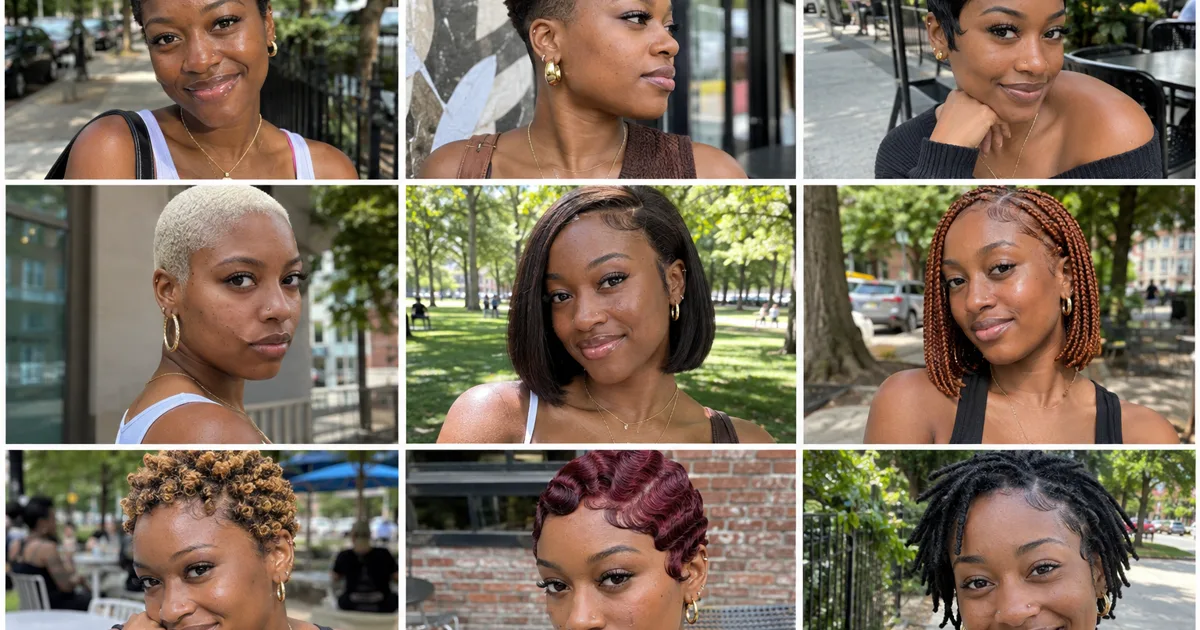
The best short hairstyles for Black women right now are the TWA, the tapered natural cut, finger coils, the silk press pixie, the chin-length bob, the braided bob, short starter locs and the buzz cut. Pick by the hair you have today and the minutes you will give it each morning, not by the photo that stopped your scroll.
Here is the thing most short-hair galleries skip: on Black hair, length on top is the easy part. What makes a short cut look expensive is the shape at the nape and the temples, and how fast that shape grows out. A tapered cut that looks sharp on day one can look shaggy by week four. So this guide sorts every look by upkeep first, then shows you all fourteen side by side.
Which short hairstyle fits your hair and your week?
Start with two honest answers: is your hair natural, relaxed or pressed, and how often will you sit in a chair? The table does the rest.
| Style | Works on | Daily styling | Back in the chair | Best for |
|---|---|---|---|---|
| TWA | Natural 4a to 4c | 2 to 5 minutes | Every 6 to 8 weeks | The big chop, low budget, gym every day |
| Tapered natural cut | Natural 3c to 4c | 5 to 10 minutes | Every 2 to 4 weeks | A defined shape with very little product |
| Finger coils or twist-out | Natural 3c to 4c | 30 to 60 minutes once, then refresh | Every 8 weeks | Definition and volume for several days |
| Silk press pixie | Relaxed or pressed | 10 minutes | Every 3 to 5 weeks | A sleek, polished look |
| Chin-length bob | Relaxed or pressed | 10 to 15 minutes | Every 6 to 8 weeks | Movement without full length |
| Braided bob | Any | Almost none | New install every 4 to 6 weeks | Protecting your hair while it grows |
| Starter locs | Natural 4a to 4c | Almost none | Retwist every 4 to 6 weeks | A long-term commitment |
| Buzz cut | Natural | Under 2 minutes | Every 2 to 3 weeks | The least work of any style here |
The column that decides most people is "back in the chair". The shorter the sides, the faster the shape goes. If you can only book a stylist every two months, skip the hard tapers and go for a rounded TWA, a bob or a braided style. Those three still look intentional at week eight. A hard taper or a crisp lineup does not, and no amount of product at home brings a clean nape back once it has grown in.
Want to see it first? Try a buzz cut on your own photo.
14 short hairstyles for Black women, side by side
Every look below was shot the same way: same salon setting, same three-quarter angle, so the only thing that changes is the cut and the colour. Use it to compare shapes, not faces. Tap any picture marked tryable to see that exact cut on your own photo.
Gallery14 photos · tap to enlarge
 Would this suit me?
 Would this suit me?
 Would this suit me?
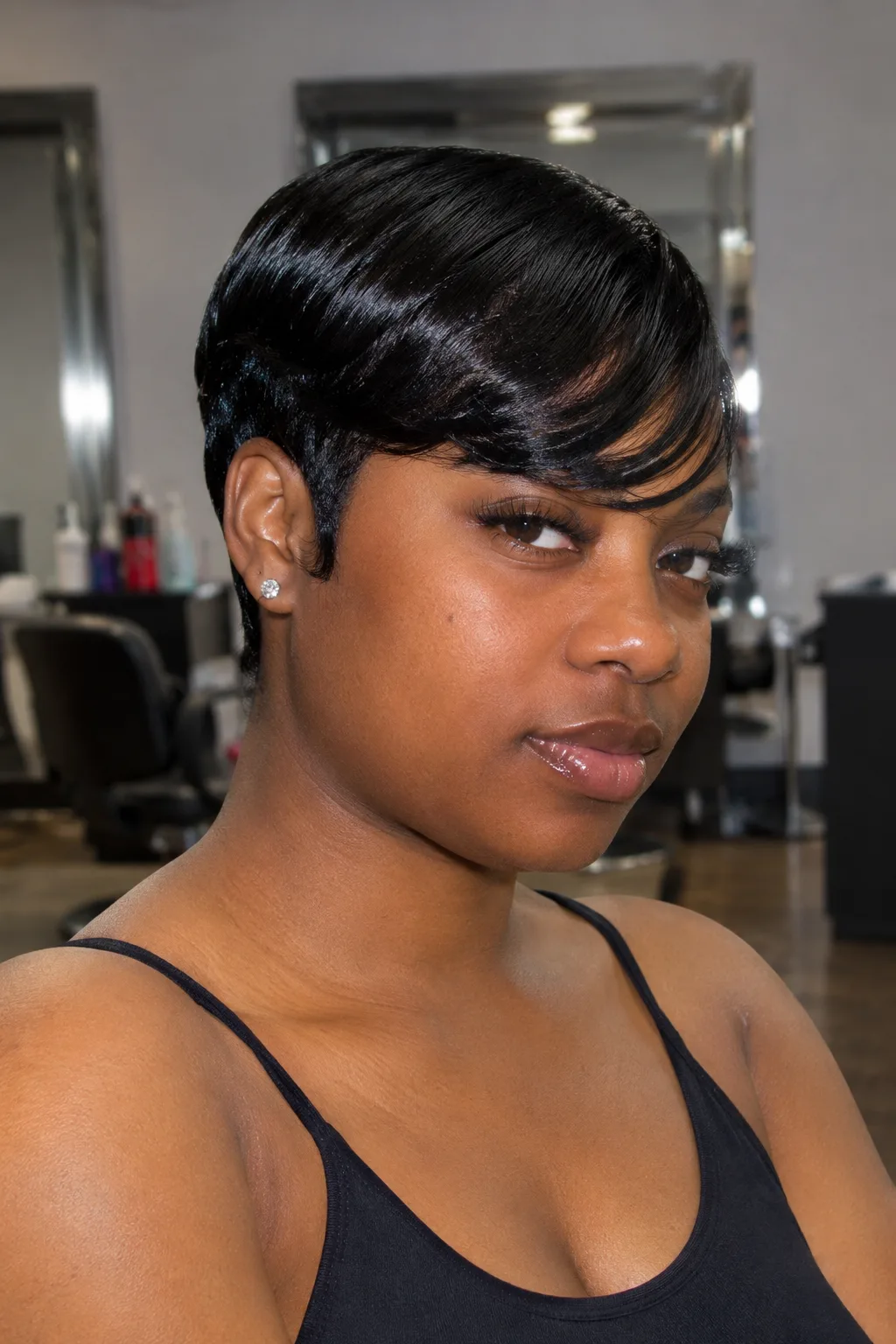 Would this suit me?
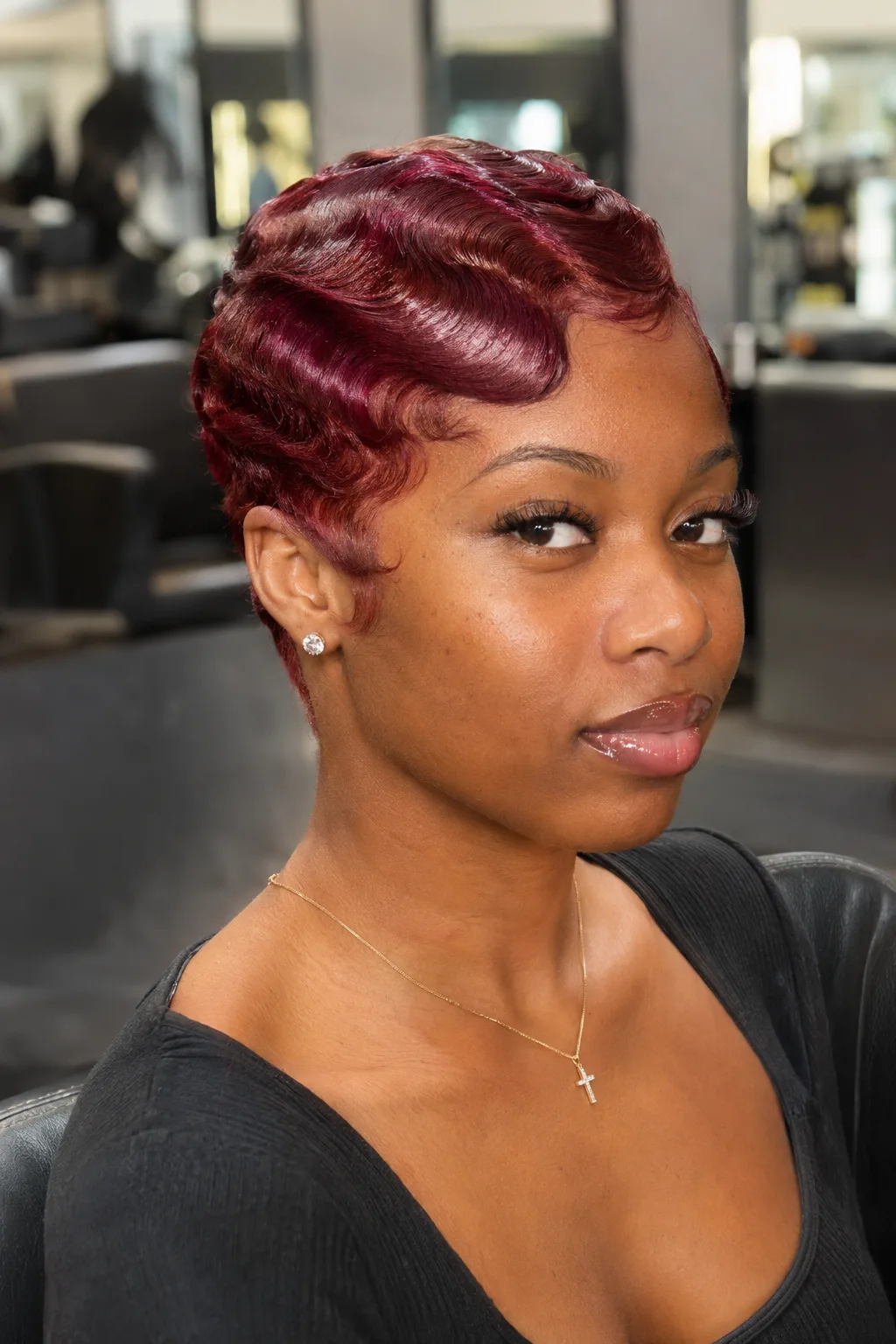 Would this suit me?
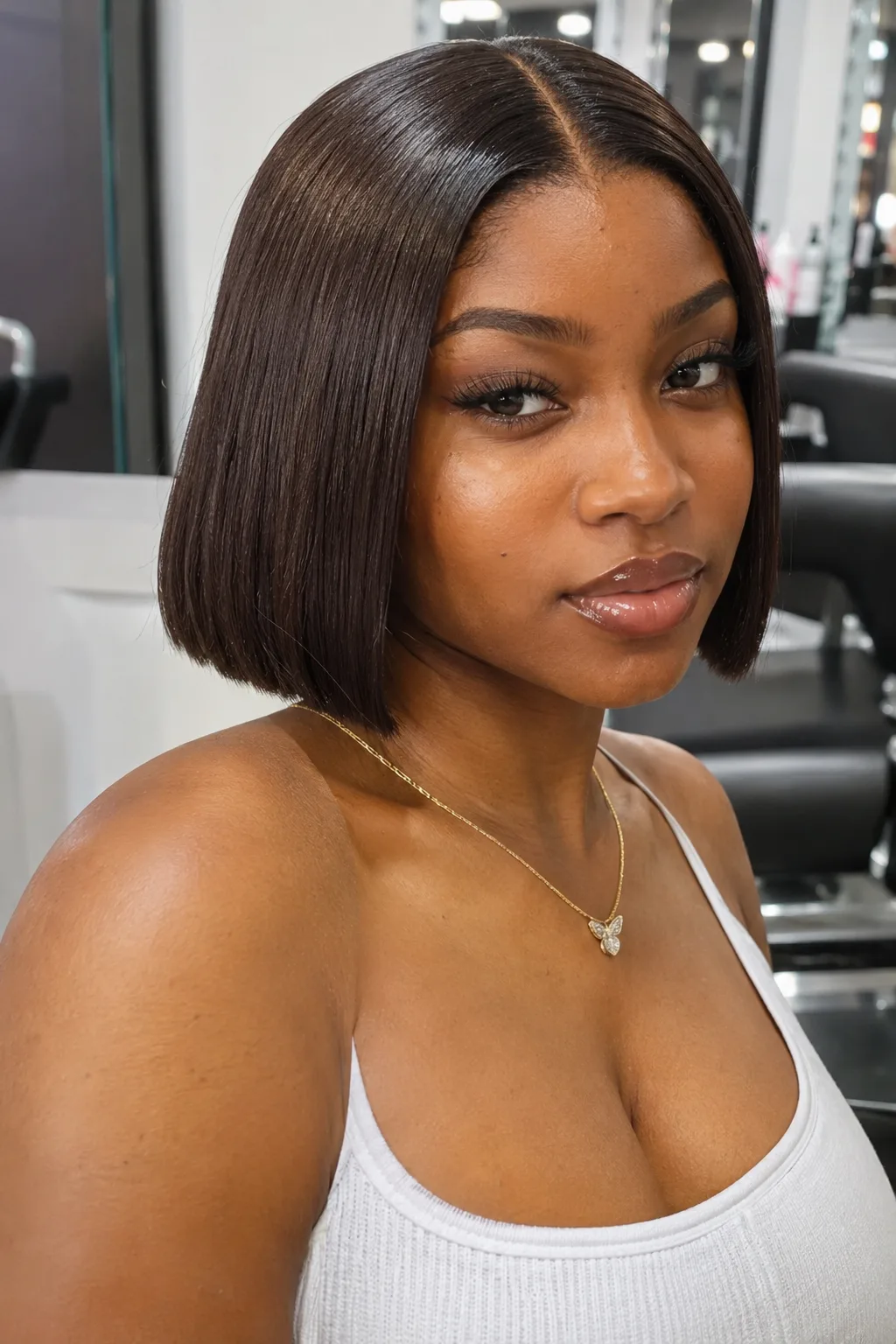 Would this suit me?
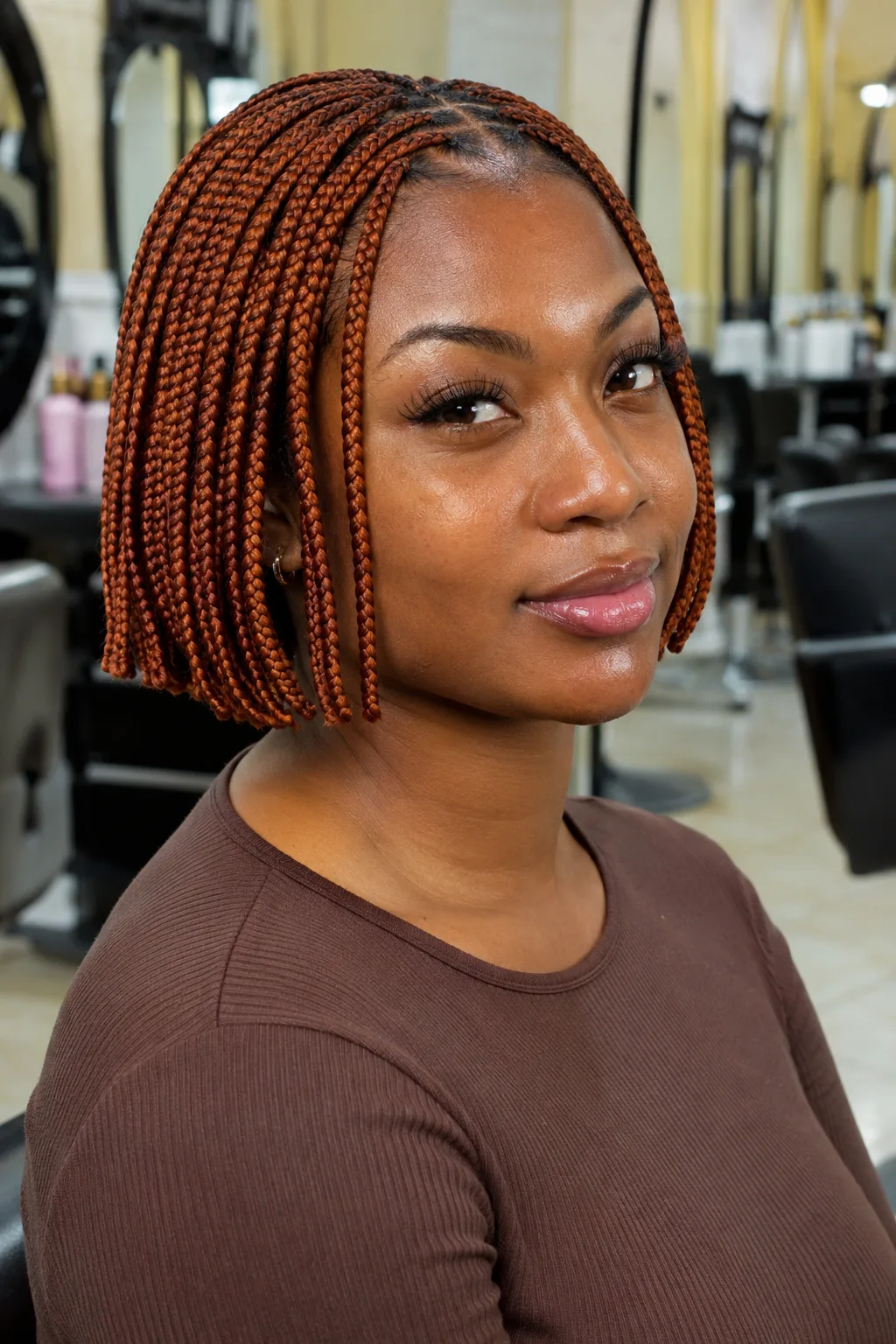 Would this suit me?
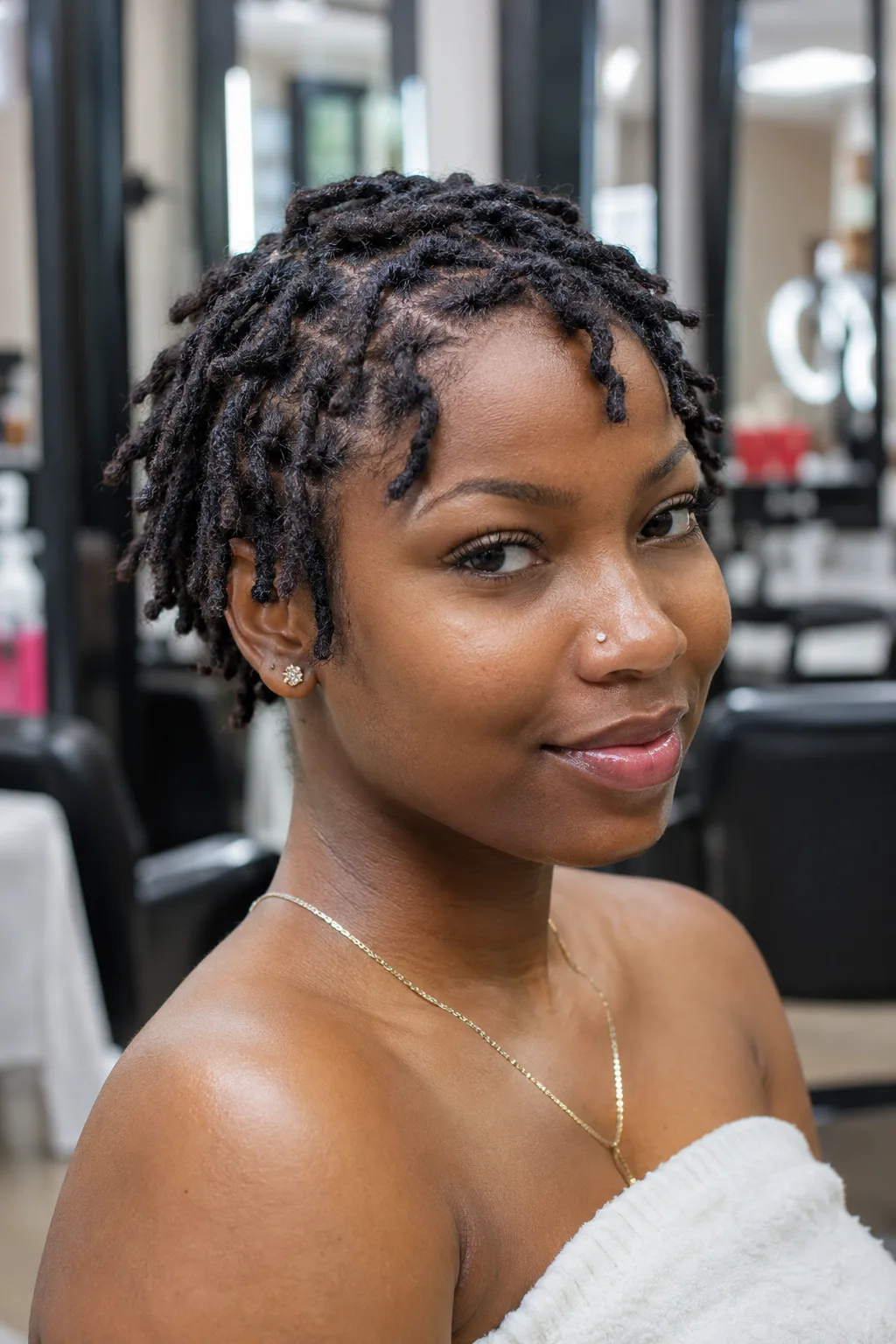 Would this suit me?
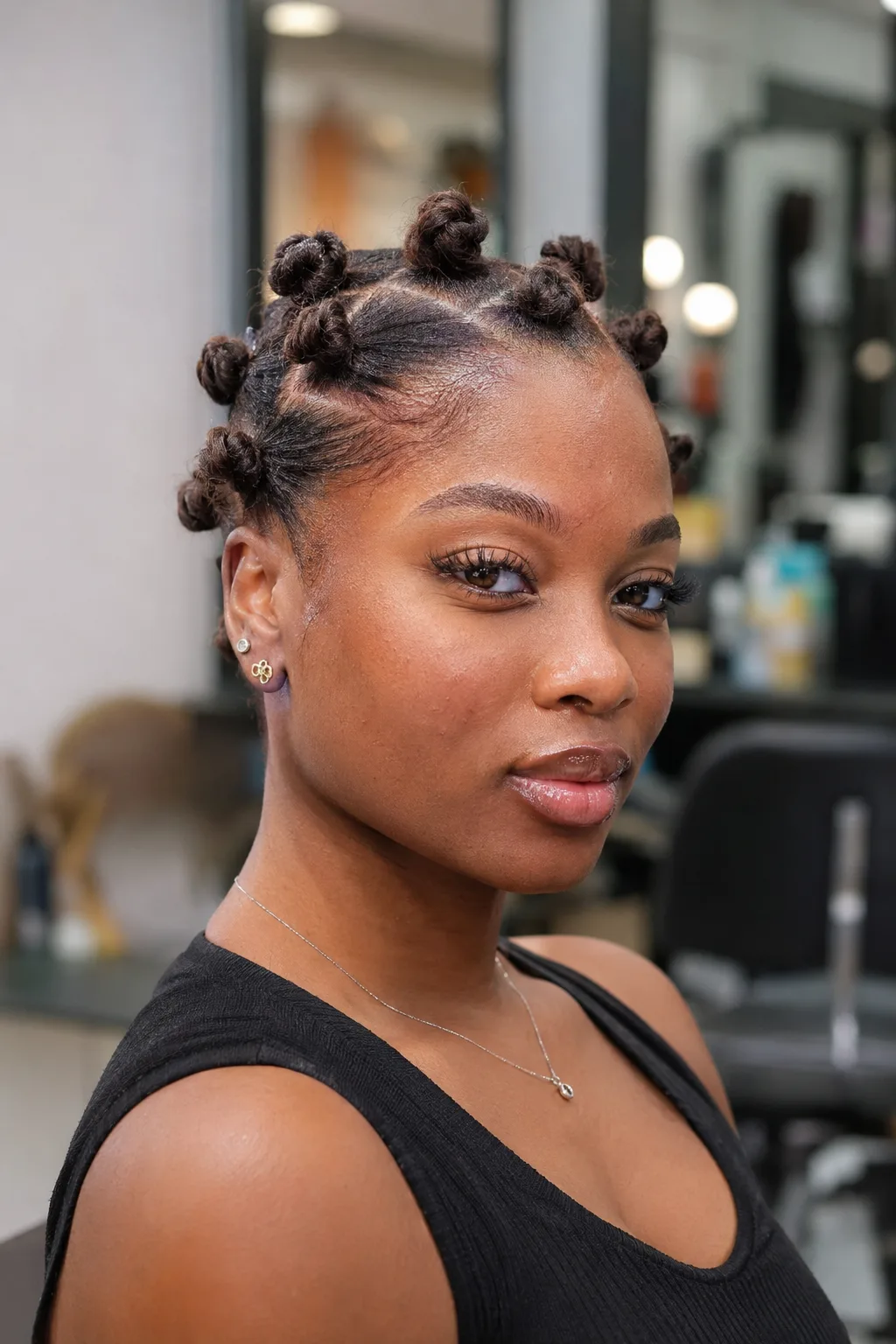 Would this suit me?
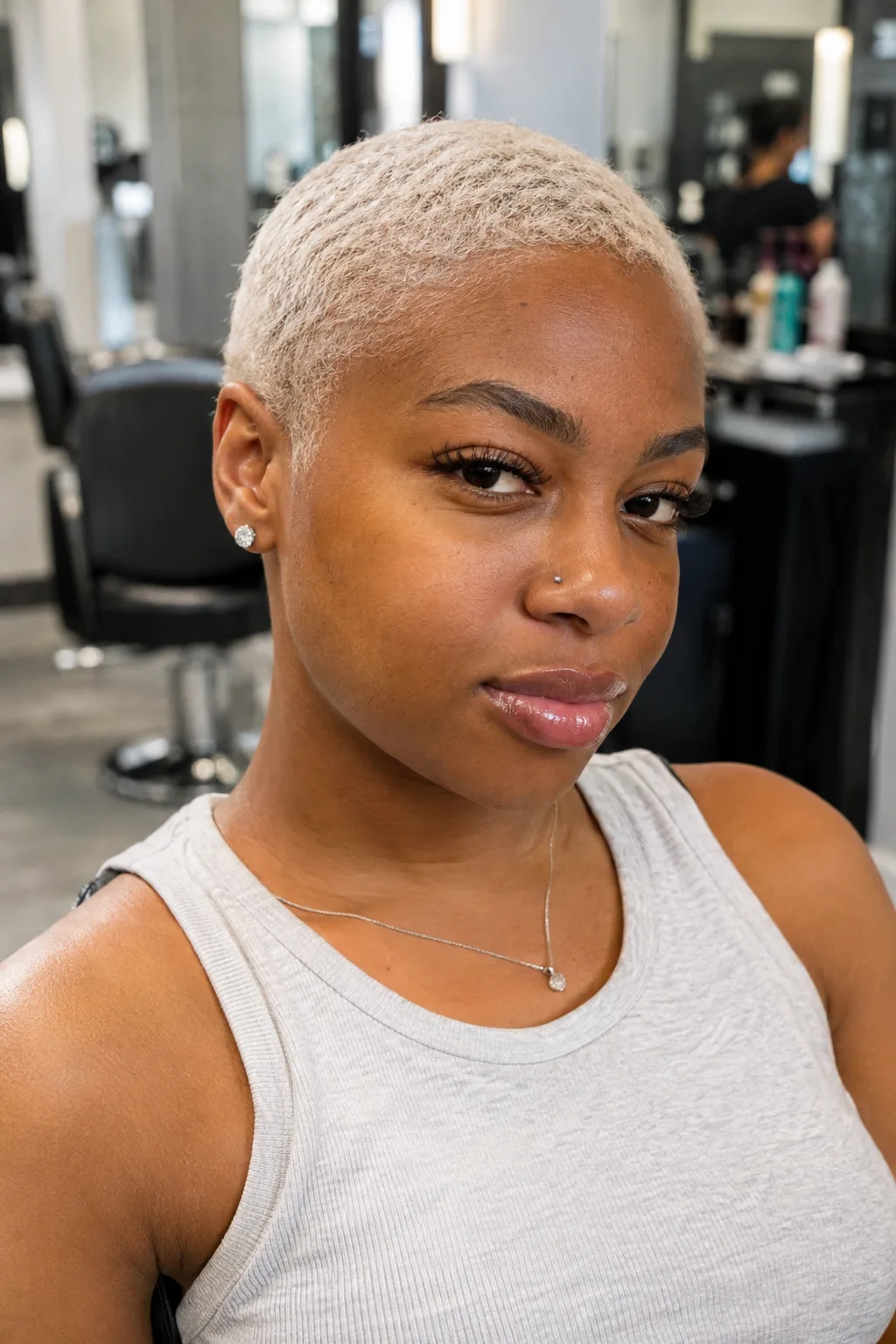 Would this suit me?
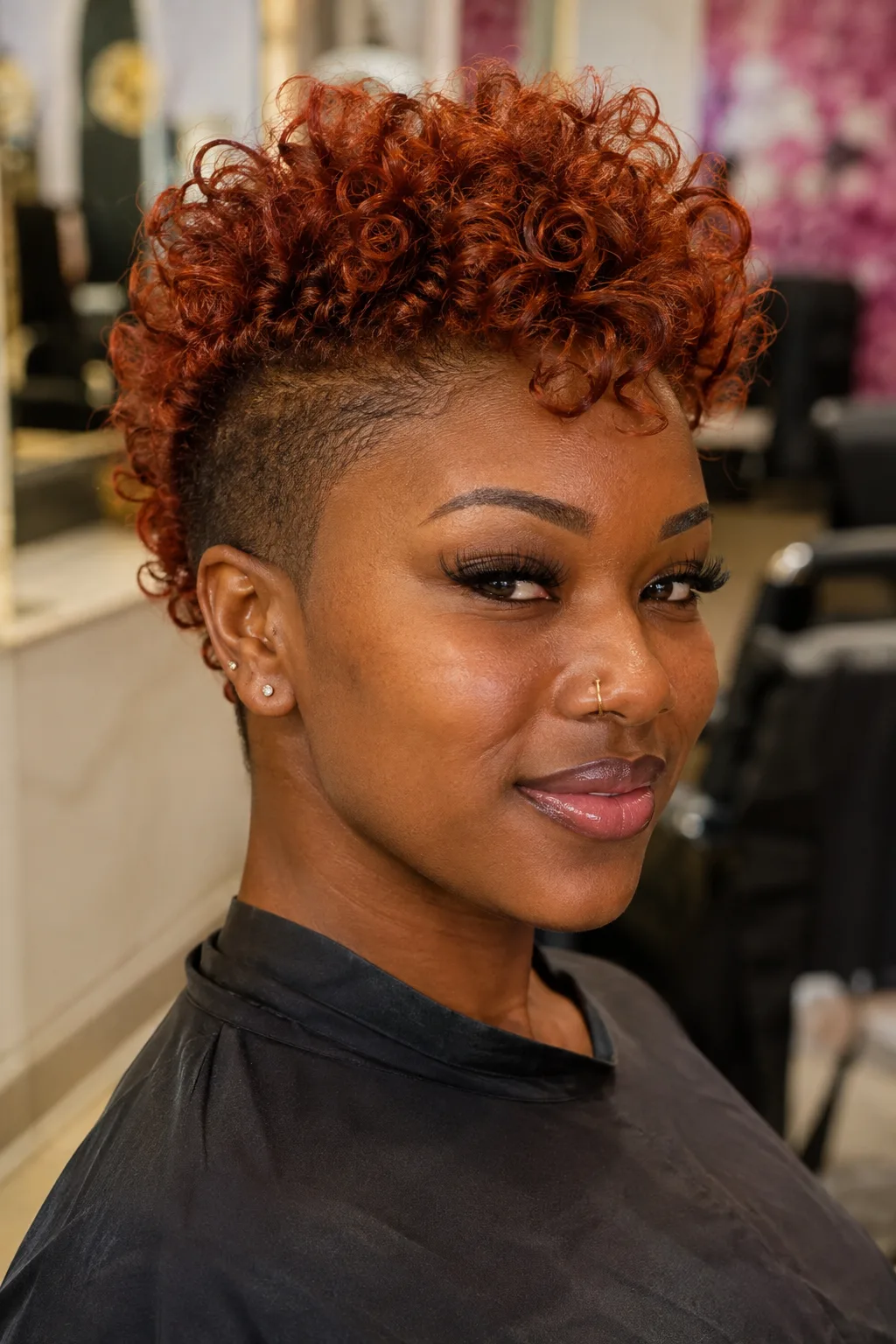 Would this suit me?
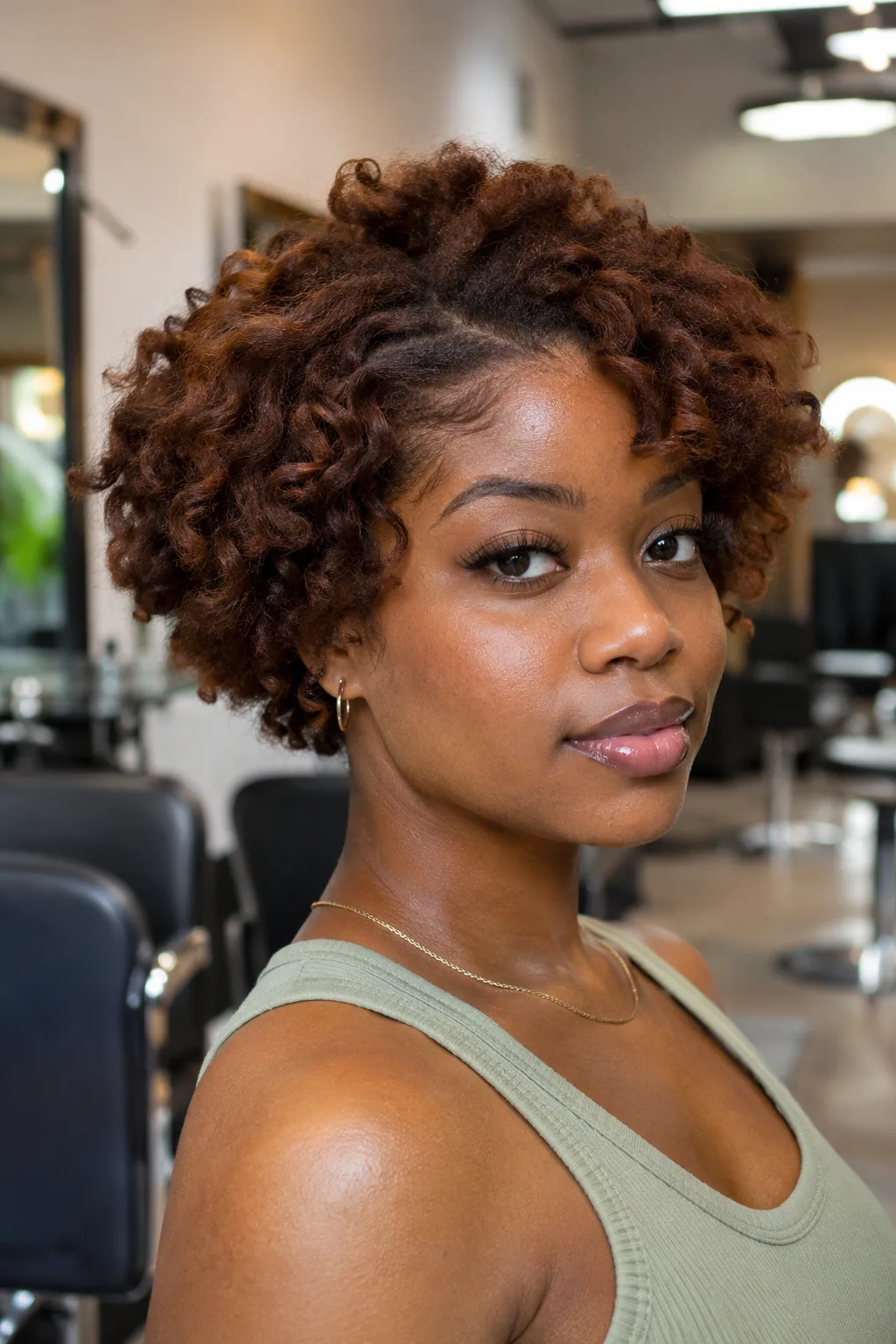 Would this suit me?
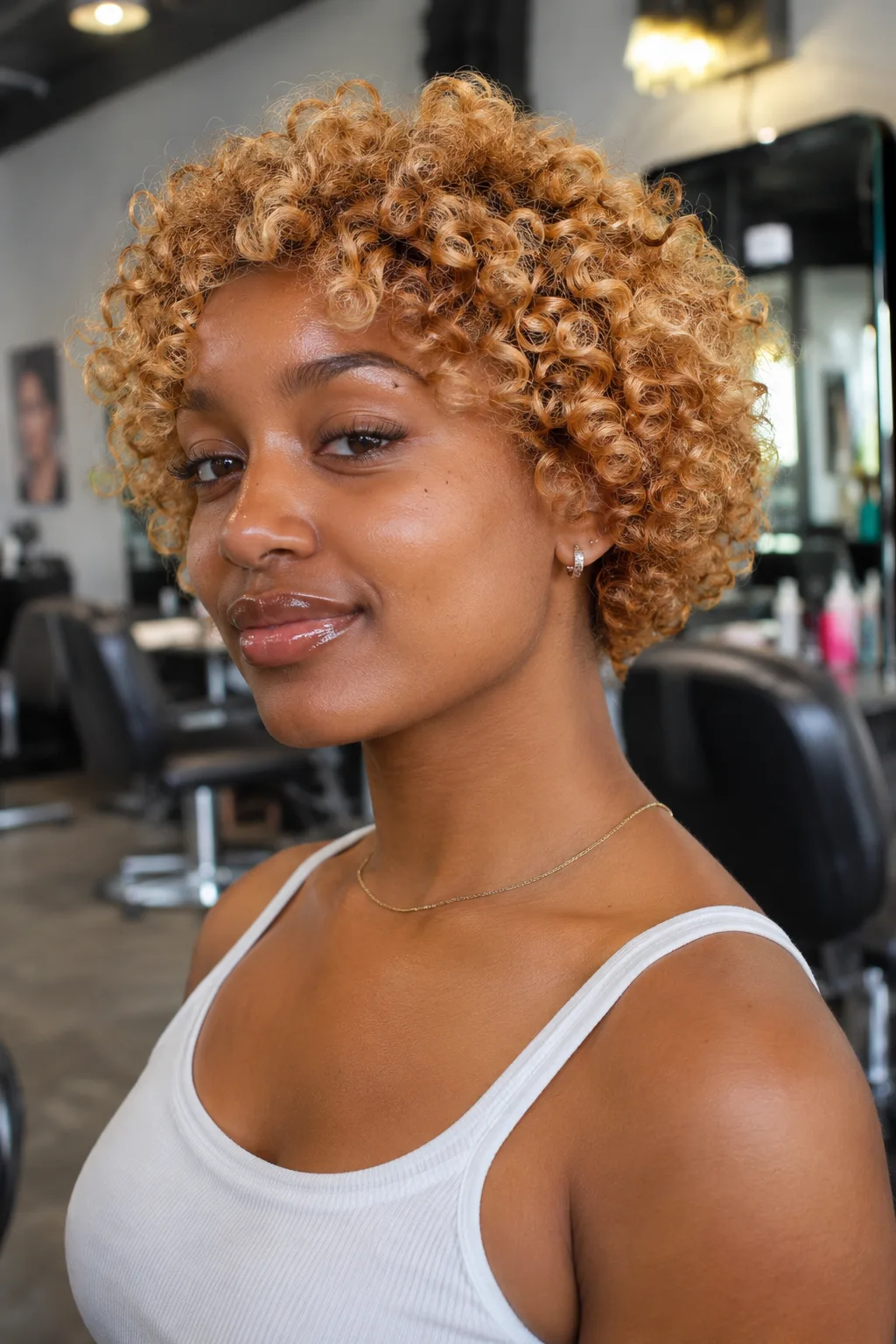 Would this suit me?
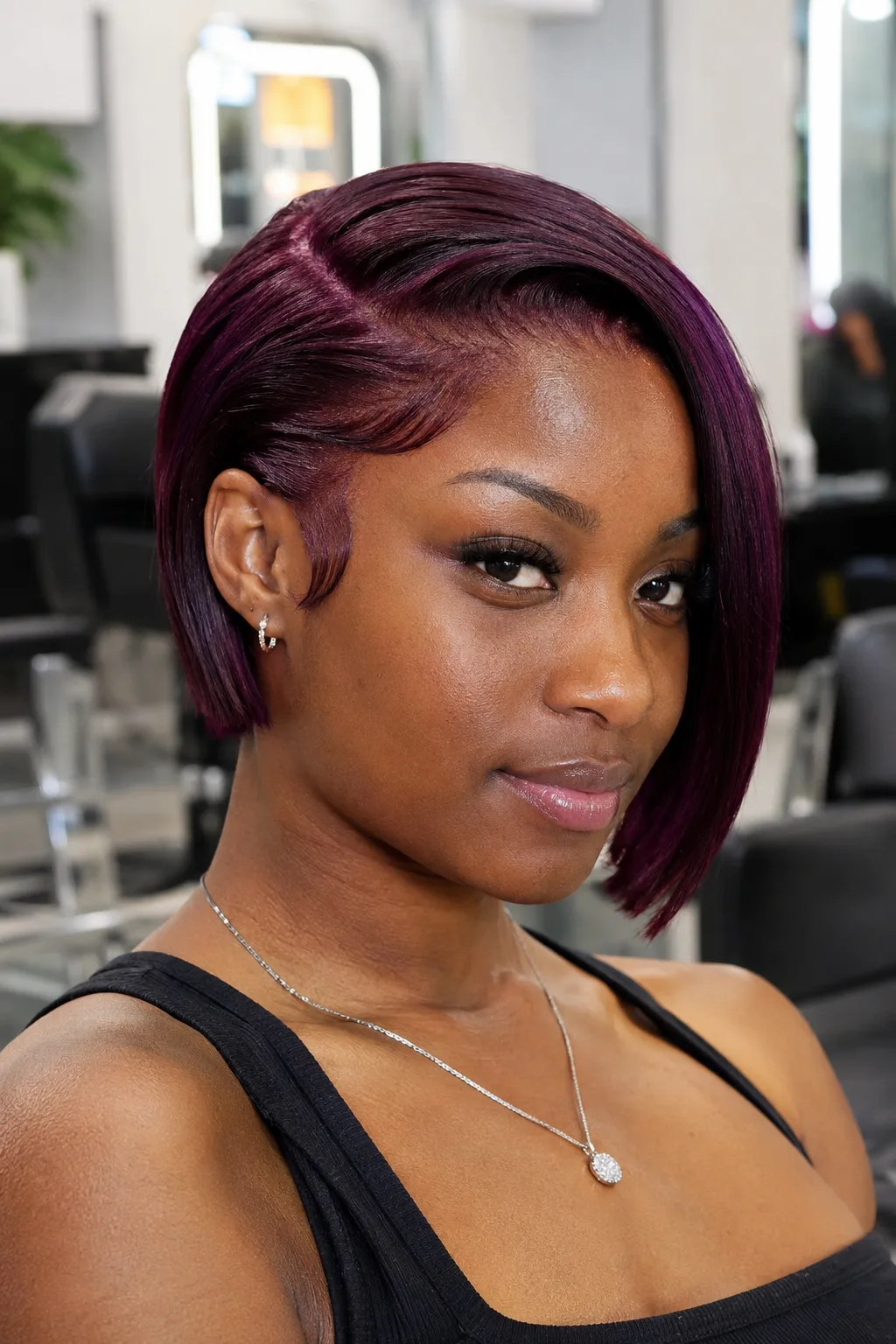 Would this suit me?
Short natural hairstyles for 4b and 4c hair
Natural short hair has one rule the photos never tell you: shrinkage. Coily hair can look half its stretched length once it dries, so a stylist who cuts it wet and stretched can leave you far shorter than you asked for. Ask for the length you want to see dry. If you are not sure where your pattern sits, our type 4 hair guide walks through 4a, 4b and 4c with a strand test you can do at home.
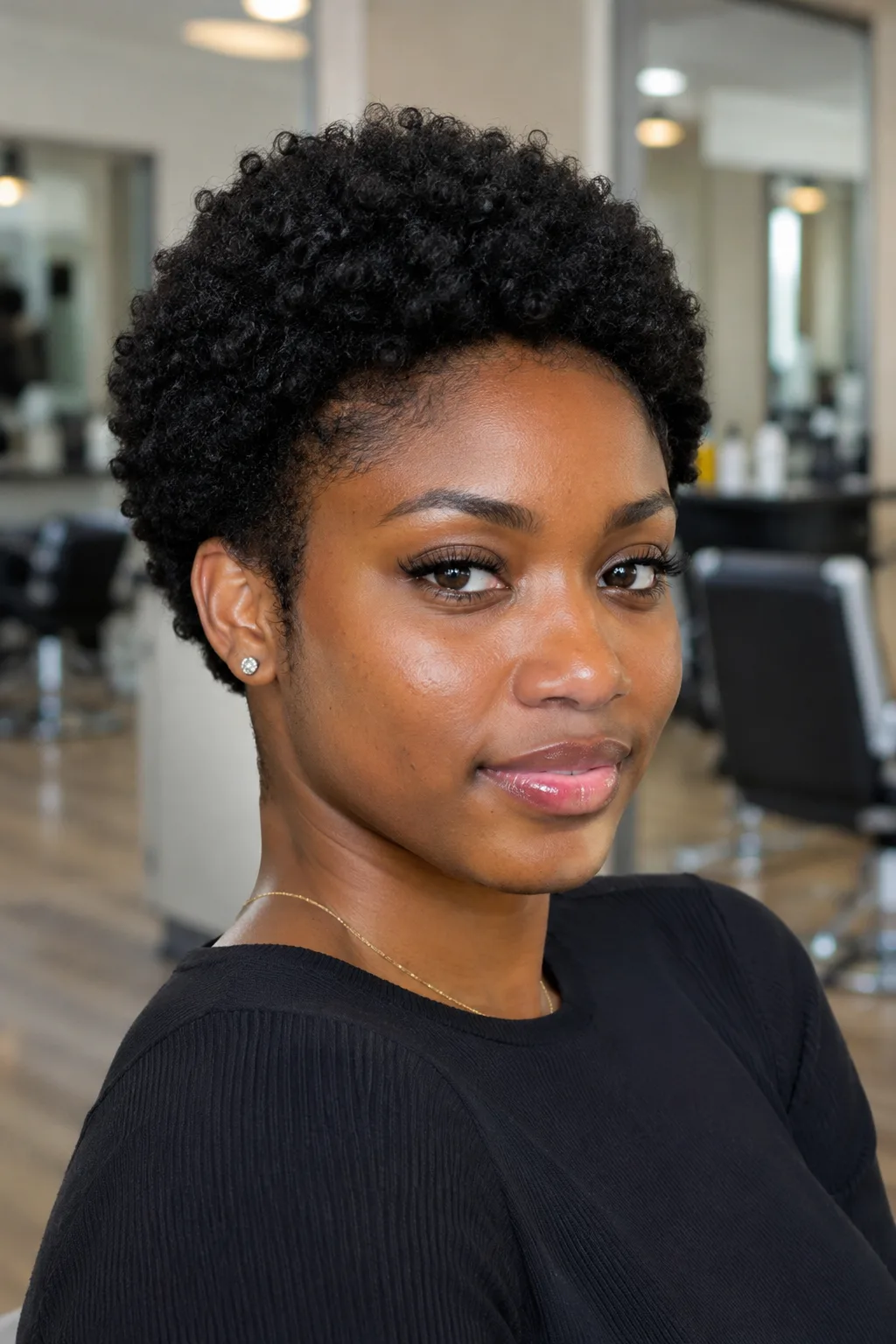
The TWA (teeny weeny afro)

A TWA is natural hair cut to an even inch or two all over and worn in its own coil. It is the classic look after a big chop, and it is the cheapest short style to keep: wash, leave-in, a little cream, done. The trade-off is that it shows dryness fast, because short coils have nowhere to hide. Lock moisture in with a cream or butter, especially if your hair drinks product and still feels dry, which is the sign of high porosity hair.
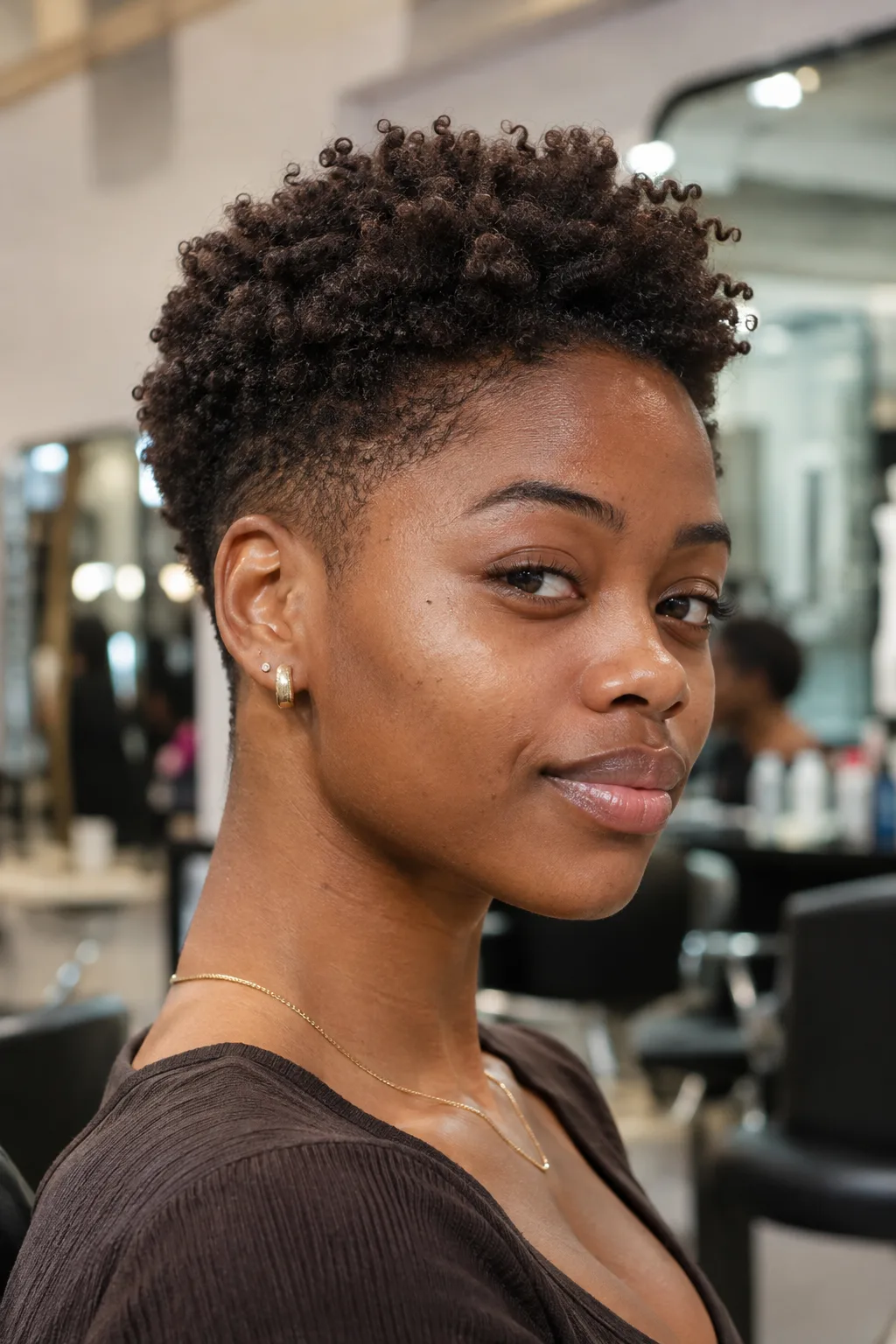
The tapered natural cut
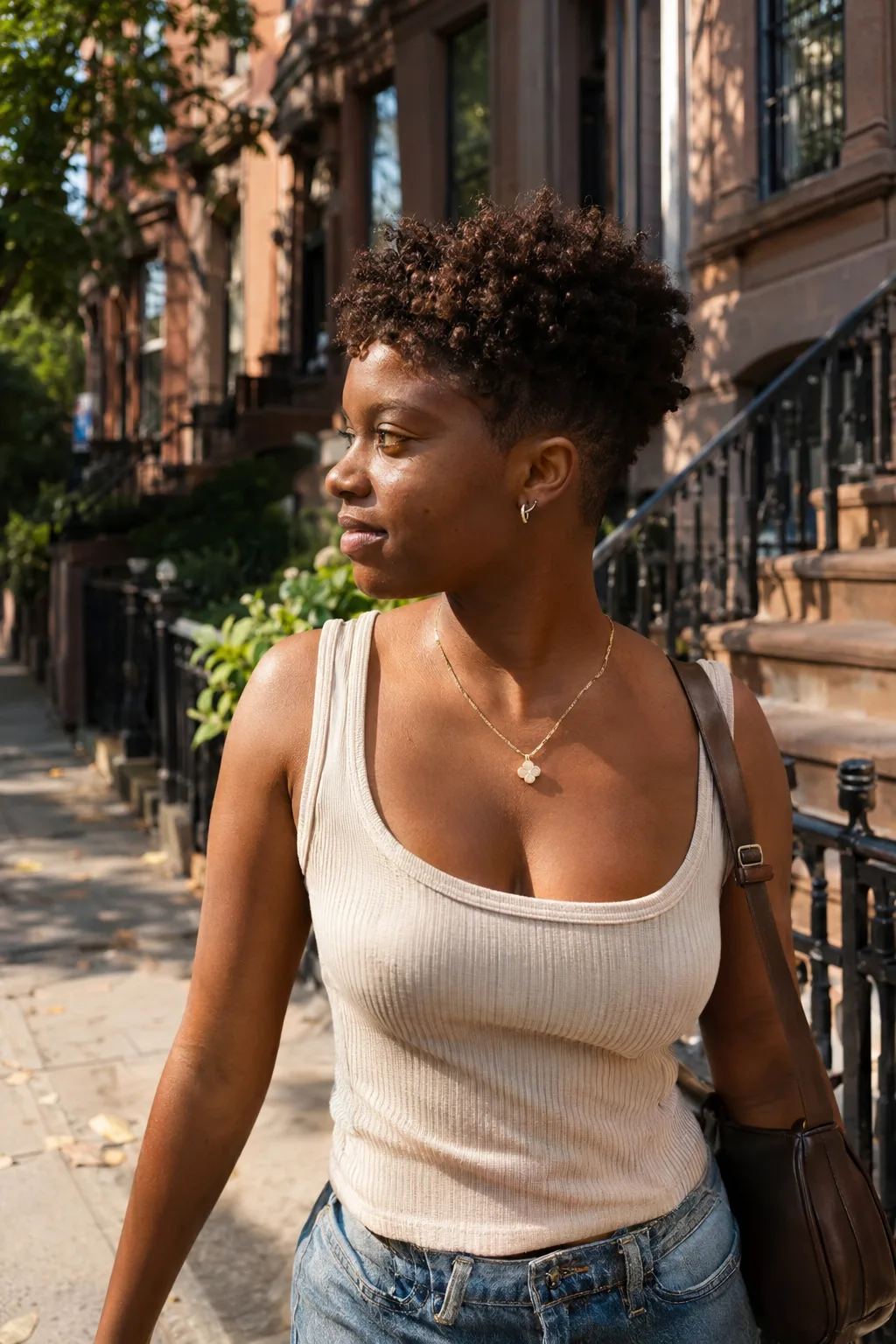
The tapered cut keeps two to three inches of coils on top and takes the sides and nape down close, with the graduation starting just above the ear. Done well, it fades softly with no hard line. It is the most flattering short natural cut for most faces because it lifts the eye up to the crown. The catch is upkeep: the clean taper is the whole point, and it softens in two to four weeks.
Say this to your barber
Please cut it dry, keep about two and a half inches of coils on top shaped round, and taper the sides and nape close starting just above the ear, no hard line and not down to skin.
Which cut makes you look best?
Find out in 60 seconds.
A few quick taps and one selfie, and you'll know. Free account, no card for your first render.
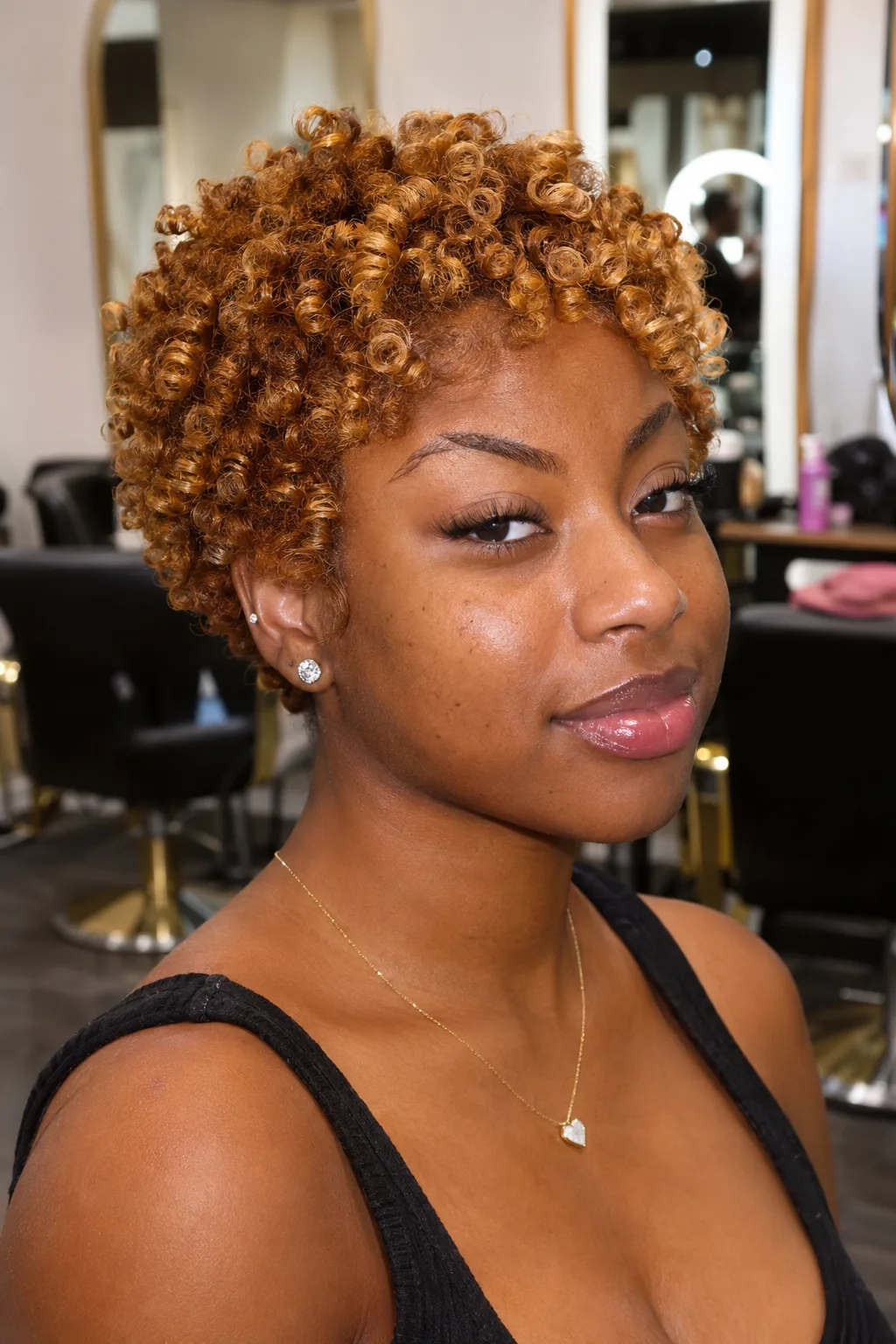
Finger coils and twist-outs
Finger coils and short twist-outs are the definition styles. You coil or twist the hair while it is damp with a cream or gel, let it dry fully, then wear it for several days. They take the most time of any natural short look on day one and almost none after. Keep heat off them: a diffuser on low is fine, but if you ever press your hair, use a proper heat protectant made for curly hair. If your curls are looser, in the coily or 4a range, a dry-cut rounded shape gives the same effect with less work.
Short hairstyles for relaxed or silk-pressed hair
Straight short hair lives or dies on the cut line. With no curl to blur it, every uneven inch shows, so this is where a good stylist earns their price.
The pixie
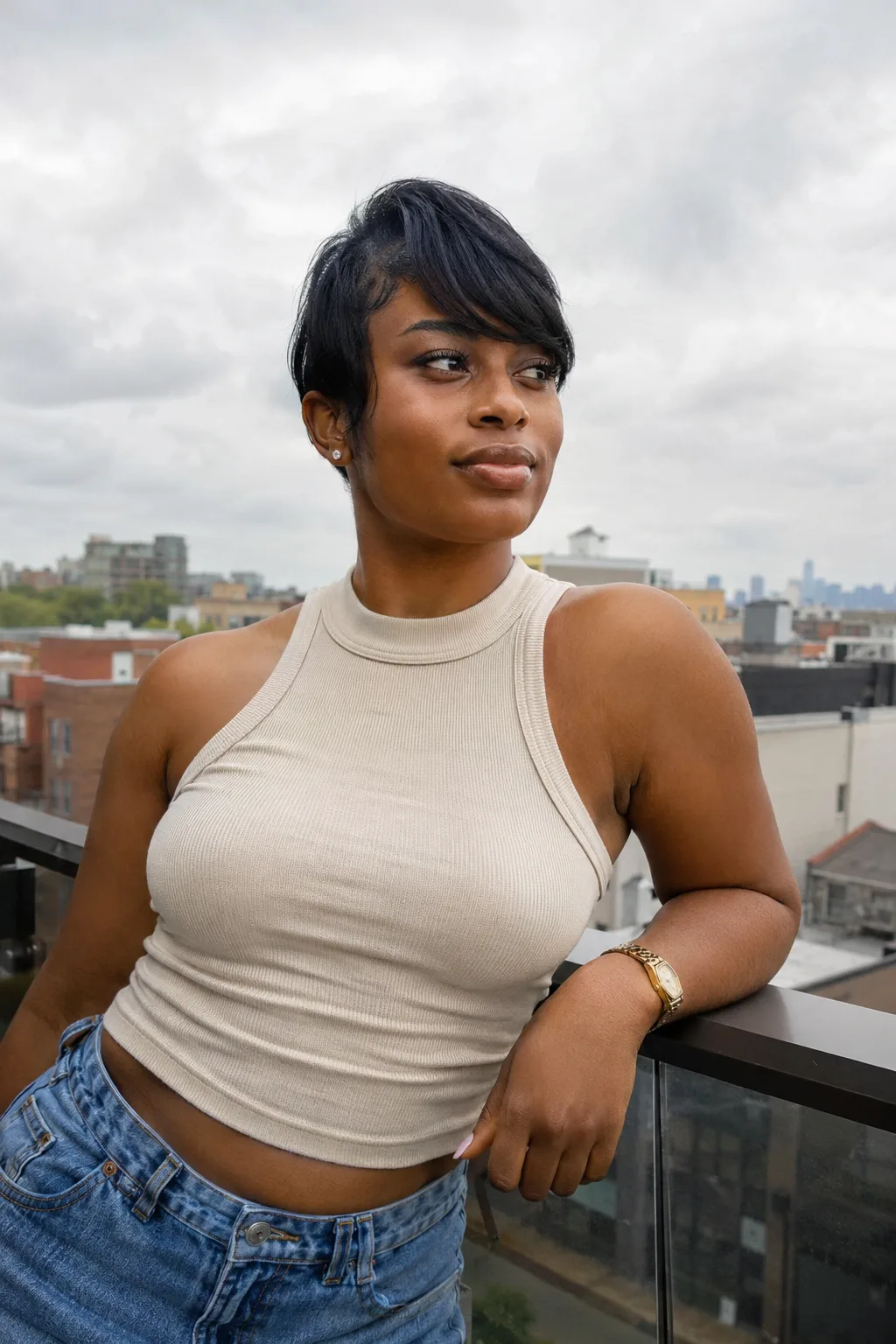
A short pixie on relaxed or pressed hair sits close at the nape and over the ears, with a longer swept piece in front. It is the most polished short look here and the fastest to style in the morning. The thing to plan for is the in-between stage if you ever want length back. Our guide to going from long hair to a pixie covers what the first three months look like, and the bixie cut is the softer, longer cousin if a full pixie feels like too much.
The chin-length bob
A blunt bob that ends right at the chin is the safest short cut for anyone nervous about going short. It keeps enough length to tuck behind an ear, and a silk press gives it swing. If chin length still feels short, a shoulder-length bob is the next step down in commitment.
Short protective styles
Protective styles let you wear short hair without cutting yours. A braided bob or short locs keep your own hair tucked away while it grows.
The braided bob

A braided bob is small braids cut to the chin, usually knotless at the root. It needs almost no styling and lasts four to six weeks. The risk is tension. The American Academy of Dermatology warns that hairstyles that pull on the hair can cause hair loss, especially at the edges, and recommends looser braids. If an install hurts, gives you bumps or feels tight the next day, it is too tight. Ask for it to be redone.
Starter locs and bantu knots
Short starter locs are a long-term choice: the first months look different every week, and you need a retwist every four to six weeks. Bantu knots are the opposite, a short-term set you wear for a few days and then unravel into a curl pattern. Both suit 4b and 4c hair best.
The lowest-maintenance short haircut: the buzz cut

If you want the least work, buzz it. Natural hair cut to a quarter or half inch all over takes under two minutes a morning and shows off the shape of your head and your bone structure. It is also the boldest way to wear colour: a buzz cut is short enough that you can bleach your hair platinum and cut the damage off in a few weeks. The only upkeep is a clean lineup at the hairline every two to three weeks.
Which short hairstyle suits your face shape?
Short hair shows your face more than any other length, so face shape matters more here.
- Round face: go for height on top, like a tapered cut or a pixie with lift, and avoid a full rounded TWA that adds width at the cheeks.
- Long or oblong face: a fuller TWA or a chin-length bob adds width and shortens the line.
- Heart face: a pixie with a side-swept front or a bob that ends at the jaw balances a narrower chin.
- Square face: soft coils or a twist-out round off a strong jaw better than a sharp blunt line.
Not sure which one you are? The calculator below measures it from three numbers. Our full guide to haircuts by face shape goes deeper.
Measure it instead of guessing
Both numbers in the same unit — the answer is a ratio, so it does not matter which.
Under 1.15 reads round, 1.15 to 1.5 reads oval, over 1.5 reads long. Oval and long split on the jaw rather than the ratio: an oval tapers toward the chin, a long face runs straight down.
Mistakes that make a short cut look unfinished
- Cutting wet natural hair to the length you want dry. Shrinkage takes it much shorter. Ask for a dry cut or say the dry length you want.
- A taper that starts too high. If the short part climbs above the temple, the cut looks like a fade on a man. Ask for the graduation to start just above the ear.
- Skipping the edges. A short cut with grown-out edges reads as overdue. A lineup between cuts costs far less than a full cut.
- Tight installs to make them last. Tension at the hairline is how edges thin out. Looser lasts a little less and keeps your hair.
- Picking from someone else's photo. The same cut looks completely different on a different head shape and hairline, which is the next problem.
How to ask for a short haircut
How to ask for a short haircut as a Black woman
- Bring photos of hair like yours
Pick photos of the cut on the same texture and similar density as your own. A tapered cut on 3c curls and on 4c coils are two different cuts.
- Say the dry length on top
Give a number in inches and say you mean dry. "Two and a half inches dry on top" is a clear instruction. "Not too short" is not.
- Name where the taper starts
Say where the short part should begin, for example "just above the ear", and whether you want it taken down to skin or left with some hair.
- Agree on the edges
Say whether you want a soft natural hairline or a crisp lineup, and ask how often to come back for it.
- Check it dry before you leave
Look at the shape once your hair has dried and shrunk. That is the cut you will actually wear.
Can you try a short hairstyle on for free?
Yes, for the first look. You get one hairstyle, plus one colour on it, on your own photo in front view, with no card needed. After that, Plus is $9 a month for 150 credits, where a hairstyle costs 10 credits and a colour on it costs 5. Pro is $24 a month for 480 credits and adds other angles of the head, including the back, which is where a taper lives. Every plan has a seven-day refund with no conditions. Full details are on the pricing page.
The free method is the one above: photos of hair like yours, plus a stylist you trust. It works until the real question comes up, which is how a buzz cut or a tapered cut looks on your head shape, your hairline and your face. You can only find that out after the cut, and short hair takes months to grow back. Seeing it on your own photo first is the fix for exactly that.
If you want one recommendation: get the tapered natural cut if you can see a stylist every three weeks, and the TWA if you cannot. Both are your own hair, both cost little to keep, and both tell you within a month whether short suits you. Go sleek with a pixie only if you already press or relax. And if you are not ready to cut at all, a braided bob gives you the look while your hair stays safe underneath.
Frequently asked questions
Styles with height on top suit a round face best: a tapered natural cut with coils lifted at the crown, or a pixie with volume in front. Avoid a full, perfectly round TWA, which adds width at the cheeks. An asymmetric cut also breaks up the roundness.
Do it if you are tired of two textures, want healthy hair faster and are ready for a few months of very short hair. If you are not ready, transition with protective styles and trim the relaxed ends a little at a time. Seeing a TWA on your own photo first takes most of the fear out of it.
No. You can grow out a relaxer by trimming the straight ends every few weeks while wearing braids, twists or flexi-rod sets that blend the two textures. It takes longer and needs gentle handling at the line where the two textures meet, which is where hair breaks most.
Keep it simple: wash with a gentle shampoo, use a water-based leave-in, seal with a cream or butter, and wear it as a TWA. Shape it with a soft brush or your fingers. Book a shape-up after about six weeks, once you see how your hair grows.
Get one if you want a defined short shape and can keep it up. It flatters most faces because it lifts the eye up to the crown. Skip it if you can only see a stylist every two months, because the taper is the whole look and it grows out in a few weeks.
Moisturise the coils on top every day or two, refresh the definition with a little cream or gel, and wear a satin scarf or bonnet at night. Book a taper and lineup every two to four weeks. Between visits, keep the nape and edges tidy rather than trying to recut the shape yourself.
Wrap it in a satin or silk scarf, or wear a satin bonnet, and sleep on a satin pillowcase if you can. Short coils flatten and dry out against cotton. In the morning, a light mist of water and your fingers bring the shape back.
Let the sides and nape catch up with the top, and only trim the top to keep the shape round. Expect an awkward stage at around three to four months. Twist-outs, finger coils and headbands hide it well, and a stylist can shape it into a rounded cut on the way to longer hair.
Preview it on your own photo: Virtual Hair Color Try-On.
Share article
About the author

Related posts
Women's Haircuts · 15 min
Lob Haircut: 14 Long Bob Ideas and the One Call That Decides If It Suits You
A lob is a long bob that ends between the jaw and the collarbone. Fourteen versions at the same length, which one suits your face and hair type, and the exact words to say in the chair.
Women's Haircuts · 11 min
Layered Hair: 14 Looks and the One Number That Decides Each
Layered hair comes down to one number: the gap between your shortest piece and your longest. See 14 layered looks sorted by that gap, which suits your face and hair type, and what to say in the chair.
Women's Haircuts · 13 min
Copper Hair Color: 14 Shades and Which One Suits Your Skin
Copper is a bright orange-red, like a new penny. See 14 copper shades side by side, which one suits your skin tone, what to say at the salon, and why maintenance matters more than your complexion.
Women's Haircuts · 12 min
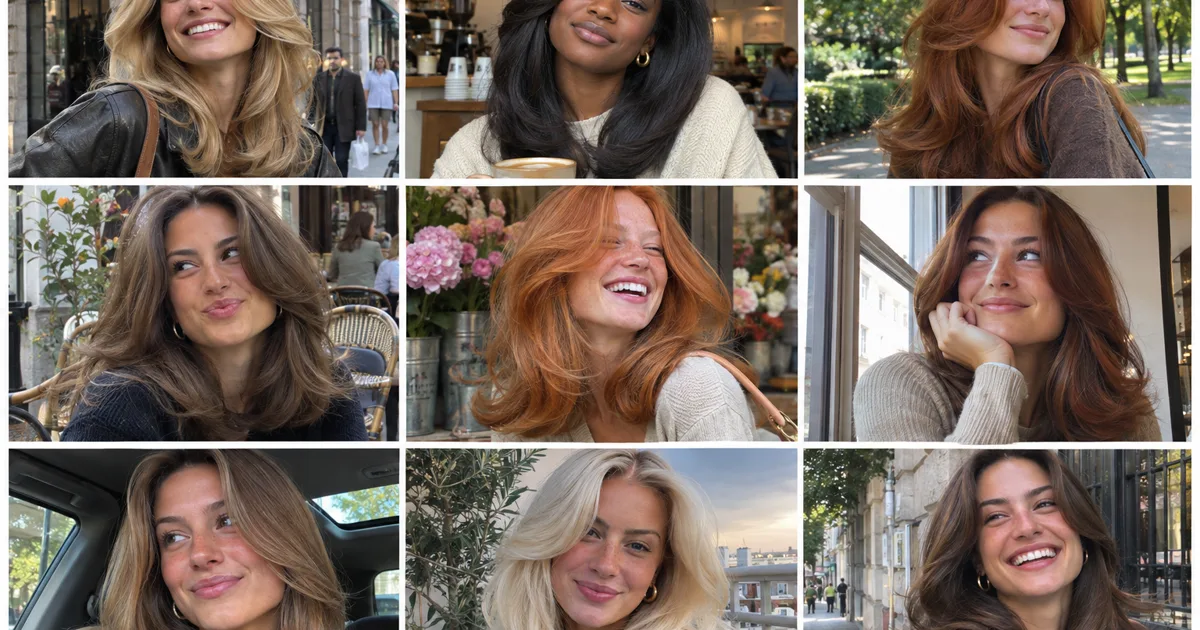
Blowout Hair: 14 Looks and How to Do a Salon Blowout at Home
Blowout hair is set by the cool shot, not the heat. See 14 blowout finishes from sleek to 90s bounce, the at-home routine step by step, and which version suits your hair type.
Women's Haircuts · 14 min
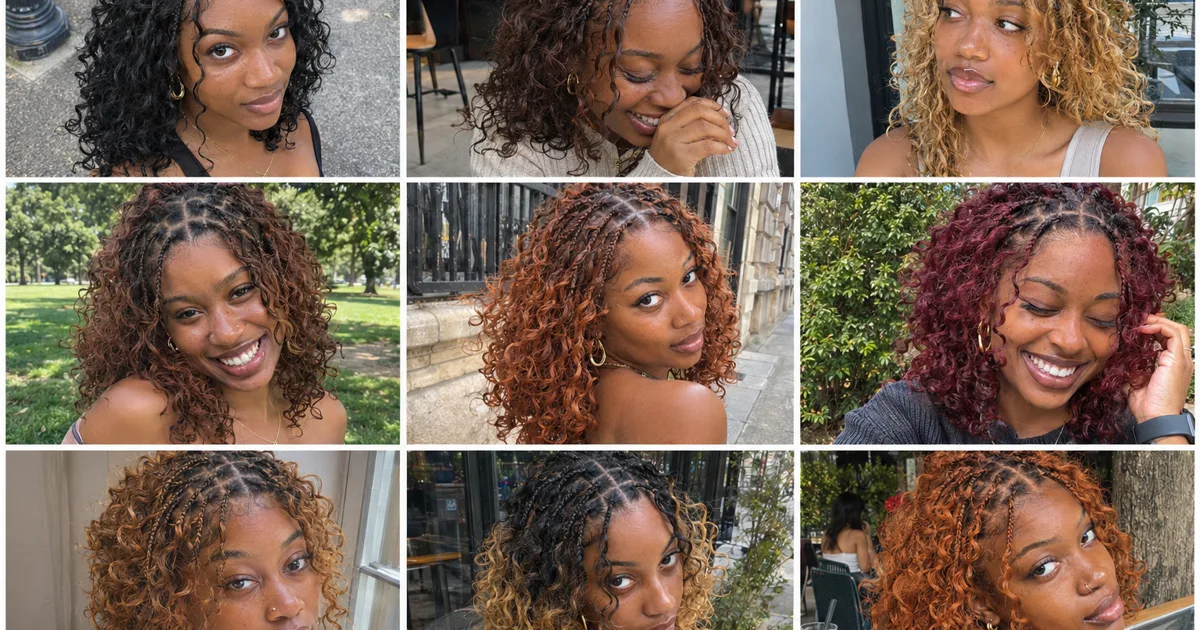
Miracle Knots Hair: 12 Looks, How It Works and How Long It Lasts
Miracle knots loop curly human hair into small plaits of your own hair: boho braids in 2 to 3.5 hours, with less weight. How it works, how many bundles, which hair it suits and how long it lasts.
Women's Haircuts · 14 min
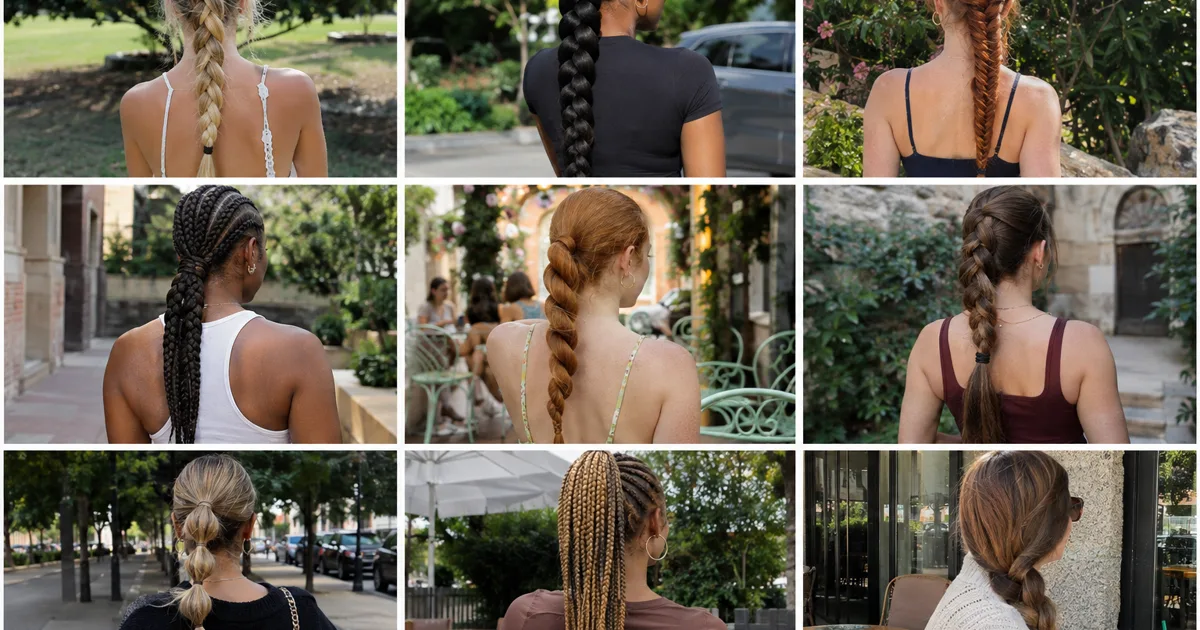
Braided Ponytail: 14 Styles and How to Do One That Lasts
The braid is the easy part. 14 braided ponytail styles side by side, which one suits your hair type, how many packs of braiding hair to buy, and how to keep the base from pulling out your edges.