Braids for Men: 10 Styles and the Length You Need
Oleh Onysko Updated 27 September 2026 16 min read
In this article
Almost every guy who walks into a braider with a photo gets told one of two things: no, or yes but not like that. The photo is rarely the problem. Two numbers decide what you can actually get, and neither of them is the style name: how long your hair is at its shortest point, and how thick each braid will be.
Get those two right and the rest is taste. Get them wrong and you either leave with nothing, or leave with something that unravels in nine days. This guide goes through both numbers, then the styles that fit each one, what the chair time and upkeep really cost, and how to ask for it without handing over a photo and hoping.
The two numbers that decide which braids you can get
Your shortest hair, not your longest
Braiders measure the section they have to work with, not the hair on top of your head. If you have five inches at the crown and one and a half at the temples, your braids are decided by the one and a half. That is where the pattern starts, and a braid that cannot hold at the front hairline will slide loose within days no matter how good the rest looks.
The working minimum for natural hair, no extensions added, is about two inches of curly or coily hair all the way through the pattern. Straighter hair needs more, closer to four, because it has less grip on itself. Below that you are either adding extensions or waiting.
The size of each braid
Braid size is the setting nobody discusses in the chair, and it changes everything downstream: how long the style lasts, how long you sit, what it costs, and how hard it pulls. Fewer, thicker braids go fast and stay comfortable. More, thinner braids look sharper and last longer, and every extra part is another point of tension along your hairline.
| Braid size | Rows or braids | Chair time | Holds for | Trade-off |
|---|---|---|---|---|
| Jumbo | 4 to 6 | 45 to 90 min | 1 to 2 weeks | Cheap and fast, frizzes early |
| Medium | 7 to 10 | 1.5 to 3 hrs | 2 to 4 weeks | The default for a reason |
| Small | 12 to 20 | 3 to 6 hrs | 4 to 6 weeks | Sharpest lines, most tension |
| Micro or individual | 40+ | 5 to 10 hrs | 6 to 8 weeks | Long sit, real hairline risk |
The counterintuitive part: small braids are not the gentle option. They last longer because each section is anchored harder, and that anchoring is exactly what pulls. If your edges are already thin, go bigger, not smaller.
What your hair length actually allows
This is the table to check before you save a picture.
| Your hair length | What works | What does not | Realistic hold |
|---|---|---|---|
| Under 2 inches | Nothing yet, or a fade with a design | Any braid pattern | n/a |
| 2 to 3 inches | Short cornrows, stitch braids, braids over a fade | Anything that hangs | 1 to 2 weeks |
| 4 to 5 inches | Full cornrow patterns, feed-in braids, a small bun | Shoulder-length box braids | 2 to 4 weeks |
| 6 inches and up | Box braids, braided bun, two braids, Viking braids | Very little | 3 to 6 weeks |
| Any length + extensions | Almost everything, including box braids | Nothing, but tension doubles | 4 to 8 weeks |
Two to three inches
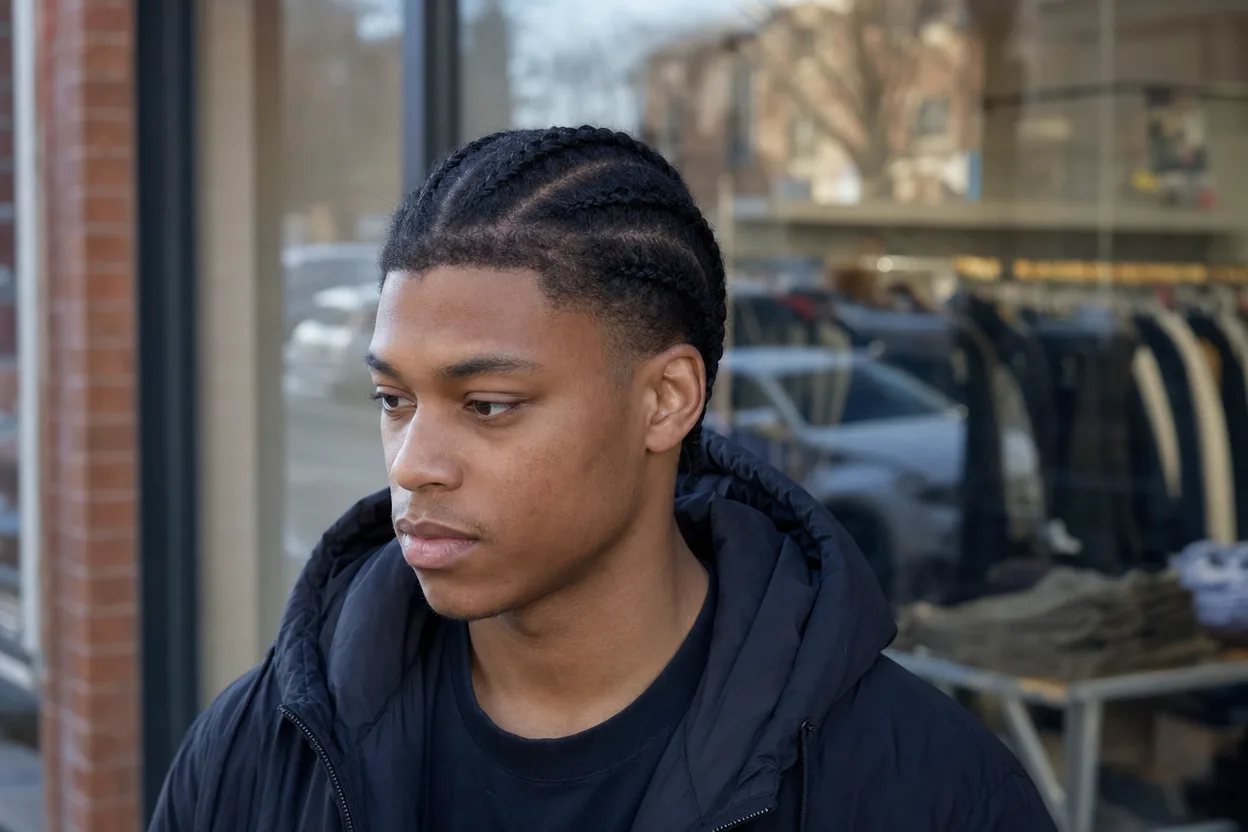
This is the length most men are at, and it is enough. Cornrows braided straight back with the ends tucked at the nape look finished and cost you an hour. They will not hang, they will not swing, and they will fuzz at the parts inside two weeks. That is the deal at this length and it is a fair one. If you only want one braid, a braided rat tail at the center of the nape works on hair that is short everywhere else.
What does not work here is anything advertised as lasting a month. There is not enough hair in each section to hold that long, and a braider who promises it is going to braid too tight to get there.
Four to five inches
Now the pattern can be interesting. Curved parts, zigzags, a section braided one way and the rest another, or two large feed-in braids that thicken as they travel back. You also unlock the small braided bun at the crown, which is the shortest length that reads as long hair from the front.
Six inches and up
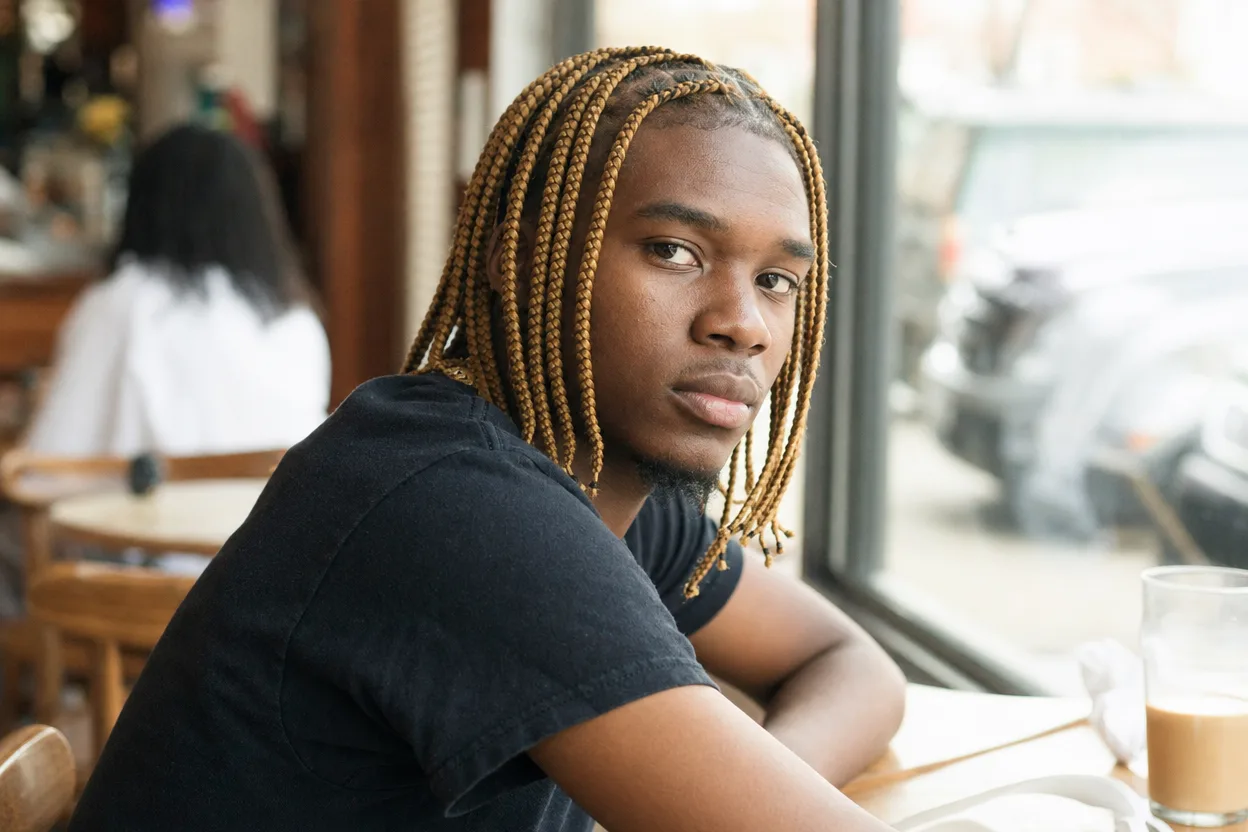
This is box braid territory without extensions, and it is where men with grown-out 4c hair have the most options. Braids hang, which means they move, which means the style still reads when you are facing away. It also means six hours in a chair and a satin scarf every night, because friction against a pillow is what turns a clean set into a fuzzy one by week two.
Seven braid styles men actually ask for
Everything below assumes the length table above. Skip anything your hair is not long enough for yet.
Cornrows
The base of everything. Three-strand braids worked flat against the scalp in rows, most often straight back from the hairline to the nape. Straight-back is the version that suits the most face shapes because it adds visible height at the front without widening anything. Every other pattern on this list is a variation on where the parts go.
Stitch braids
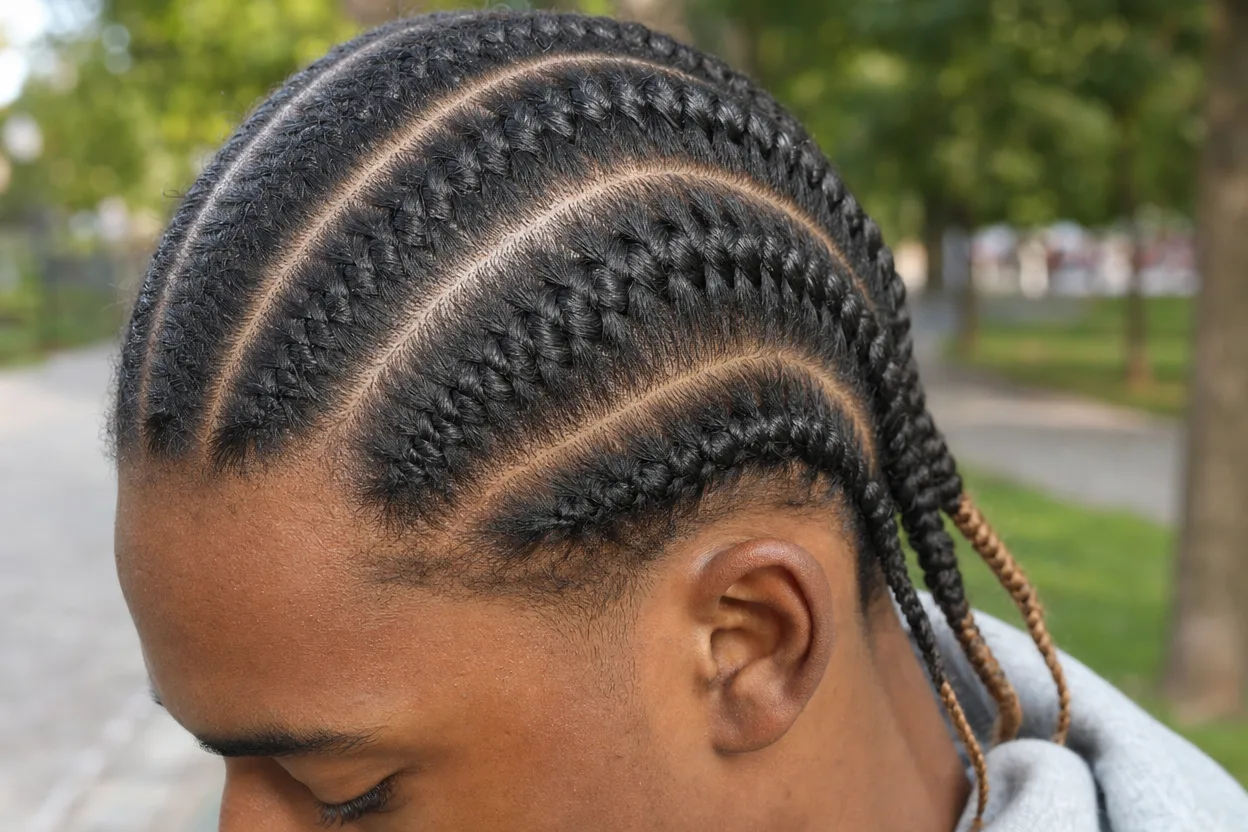
A cornrow where each braid is built from a series of small, distinct rungs instead of a smooth rope, so the braid reads as a ladder running back across the scalp. It is the detail that makes a pattern look expensive in a photo, and it is the reason pop smoke braids took off as a style rather than staying a haircut. Ask for it by name. Plenty of barbers braid, fewer stitch.
Box braids
Individual braids hanging free from square sections of scalp. Needs real length or added hair, takes the longest, and lasts the longest. Worth knowing that the square parting is the whole look: if the sections are sloppy, the hanging braids will not save it. For the gentler version on the roots, read up on knotless braids before you book.
Two feed-in braids
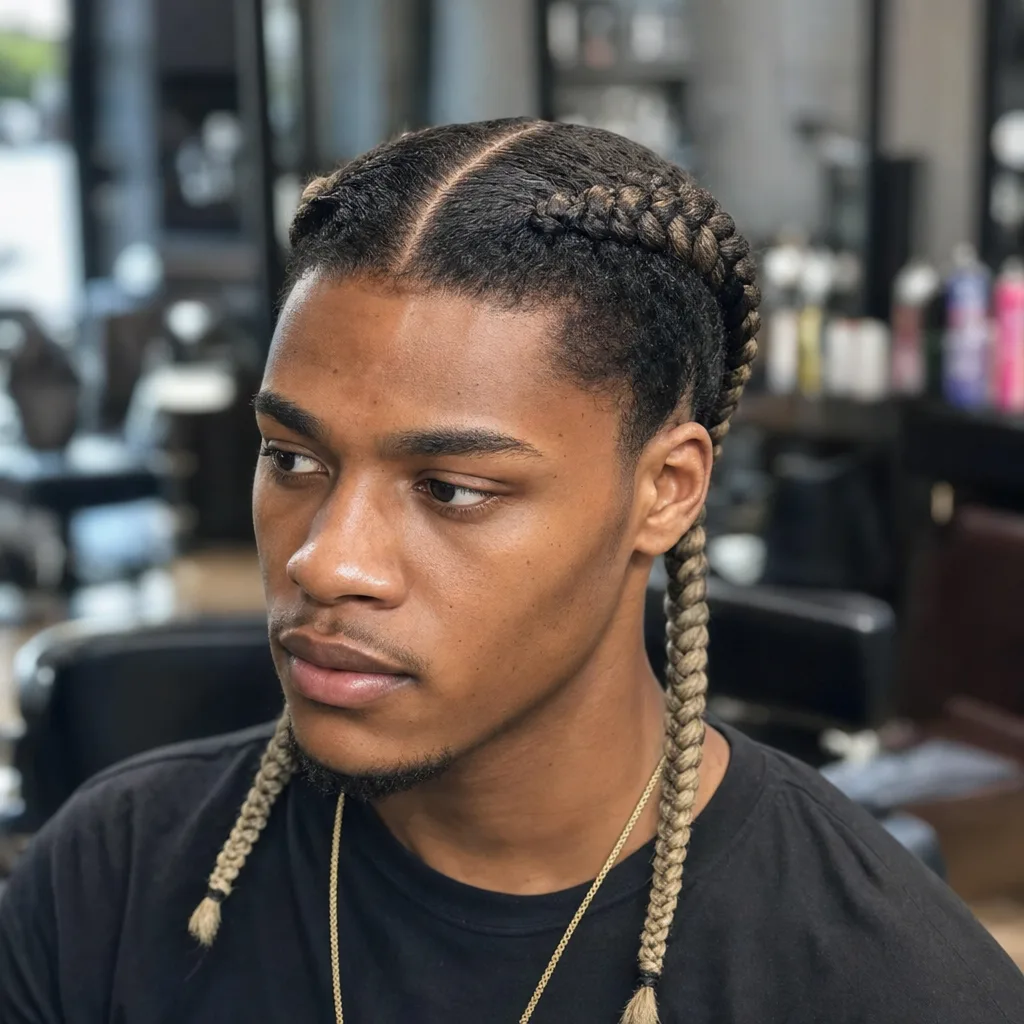
Two large braids either side of a center part, starting thin at the hairline and thickening as hair is fed in along the way. Fast, high contrast, and the most forgiving pattern on a round or full face because the center part cuts a vertical line down the middle.
Braids over a fade
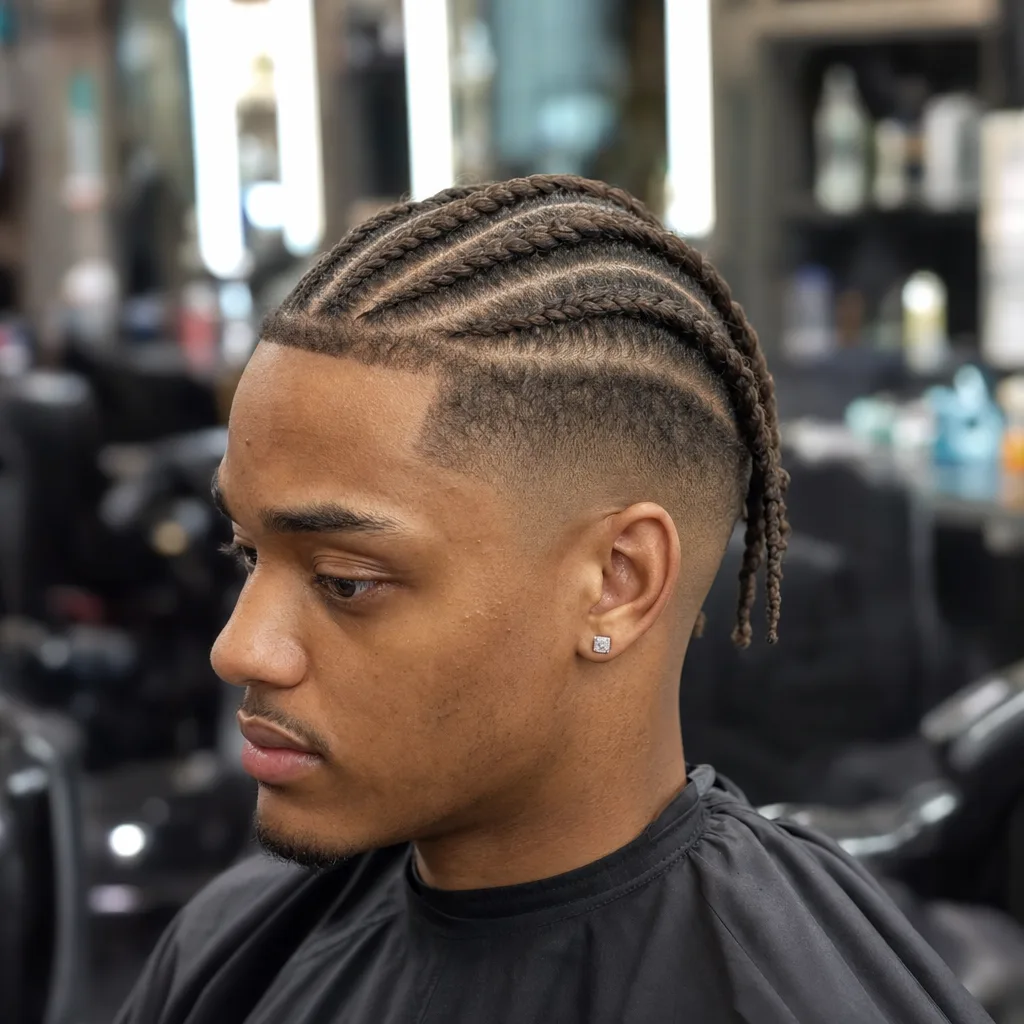
The braid pattern stays on top, the sides and back come down to a taper or a low taper fade. It is the version that works in an office, because it keeps the outline of a normal haircut and puts all the texture on top. It is also the shortest-lived: the braided section sits on hair you keep cutting around, so you are back every three weeks.
Viking braids
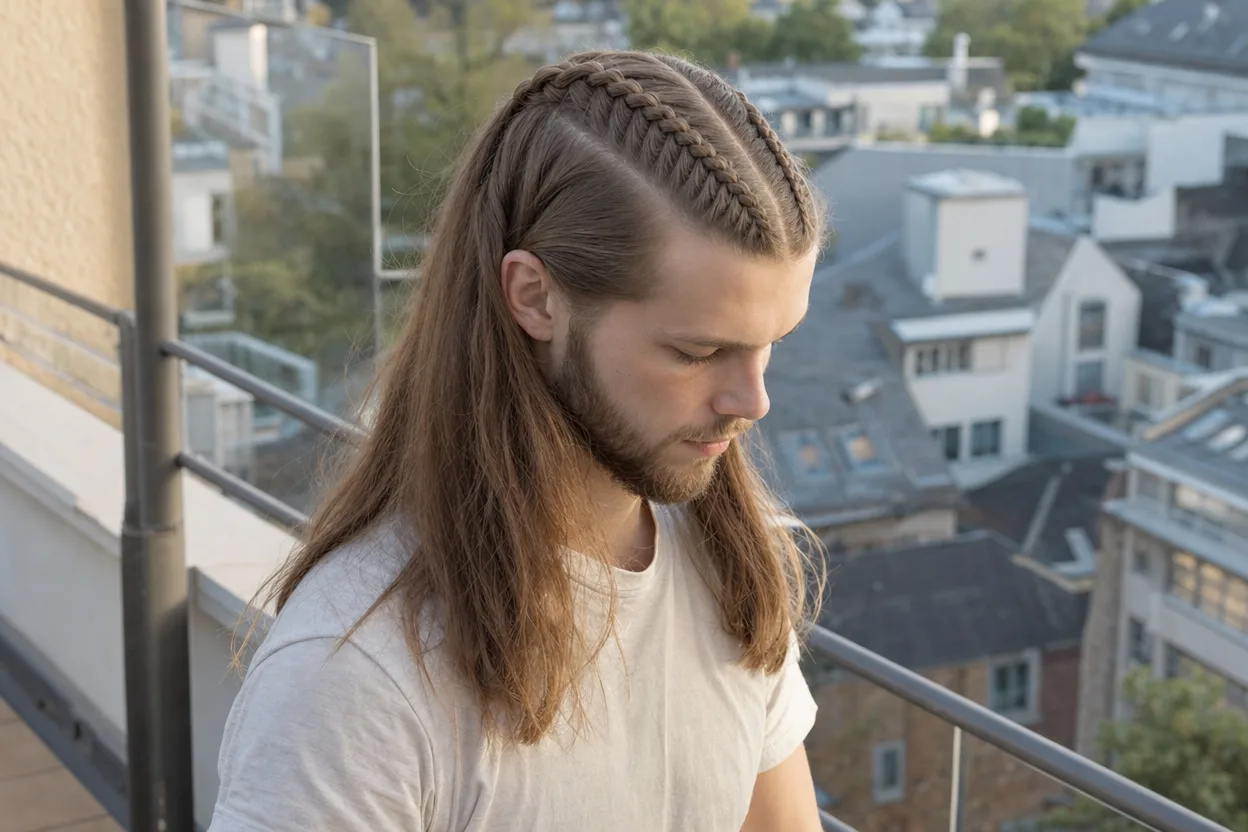
The one style on this list that assumes straight or wavy hair rather than coily. Two or three braids run back along the top of the head while the rest of the length hangs loose. It needs six inches minimum on top and shoulder-length or longer at the back, and it falls apart on fine hair. Pairs with a beard or it reads unfinished.
Braided bun
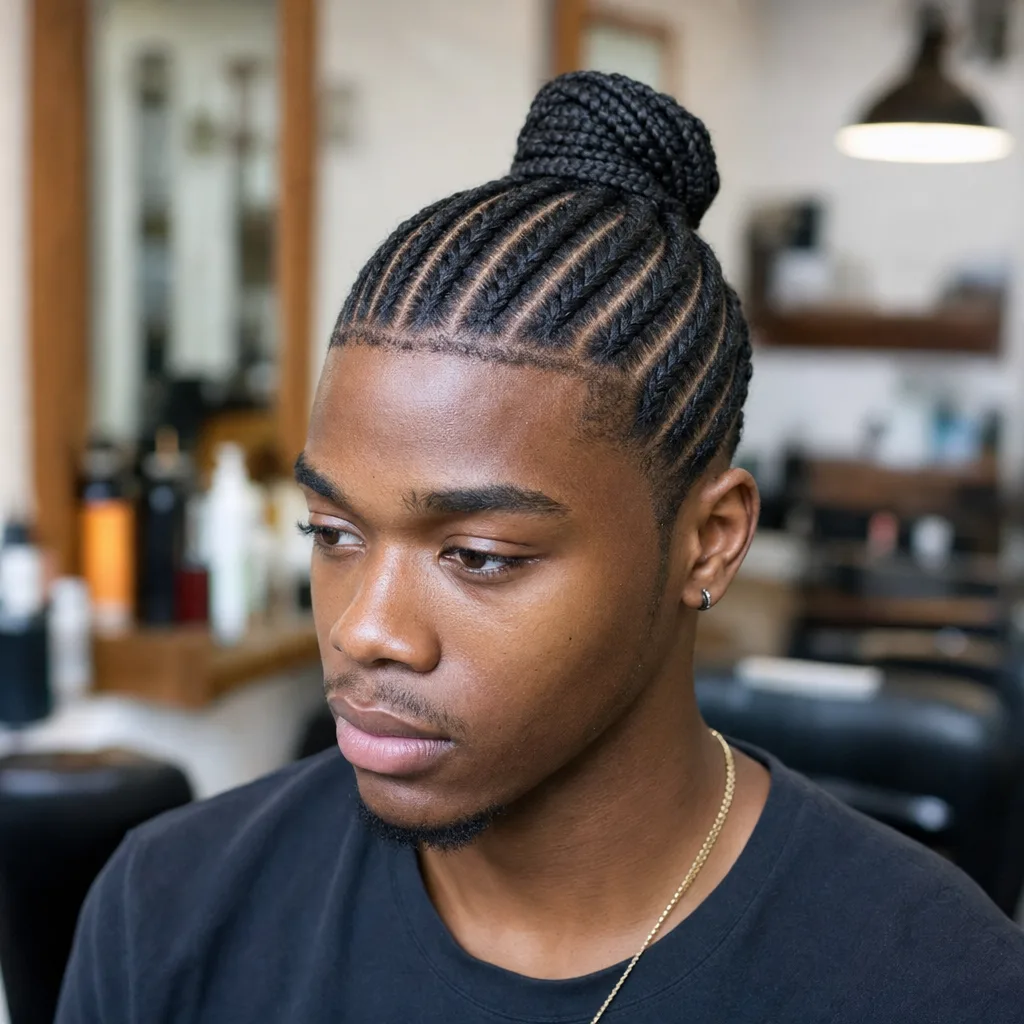
Cornrows braided back and gathered into a knot at the crown. It is the one braid style that works for a job interview and a gym session on the same day, and the only one on this list you can undo yourself in ten seconds.
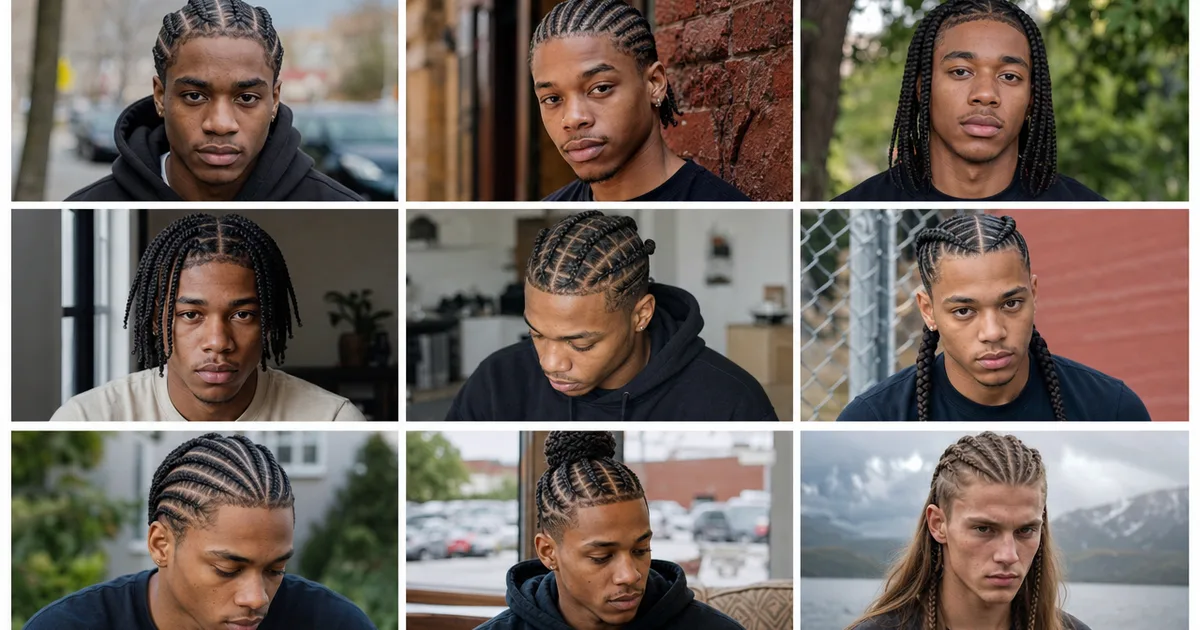
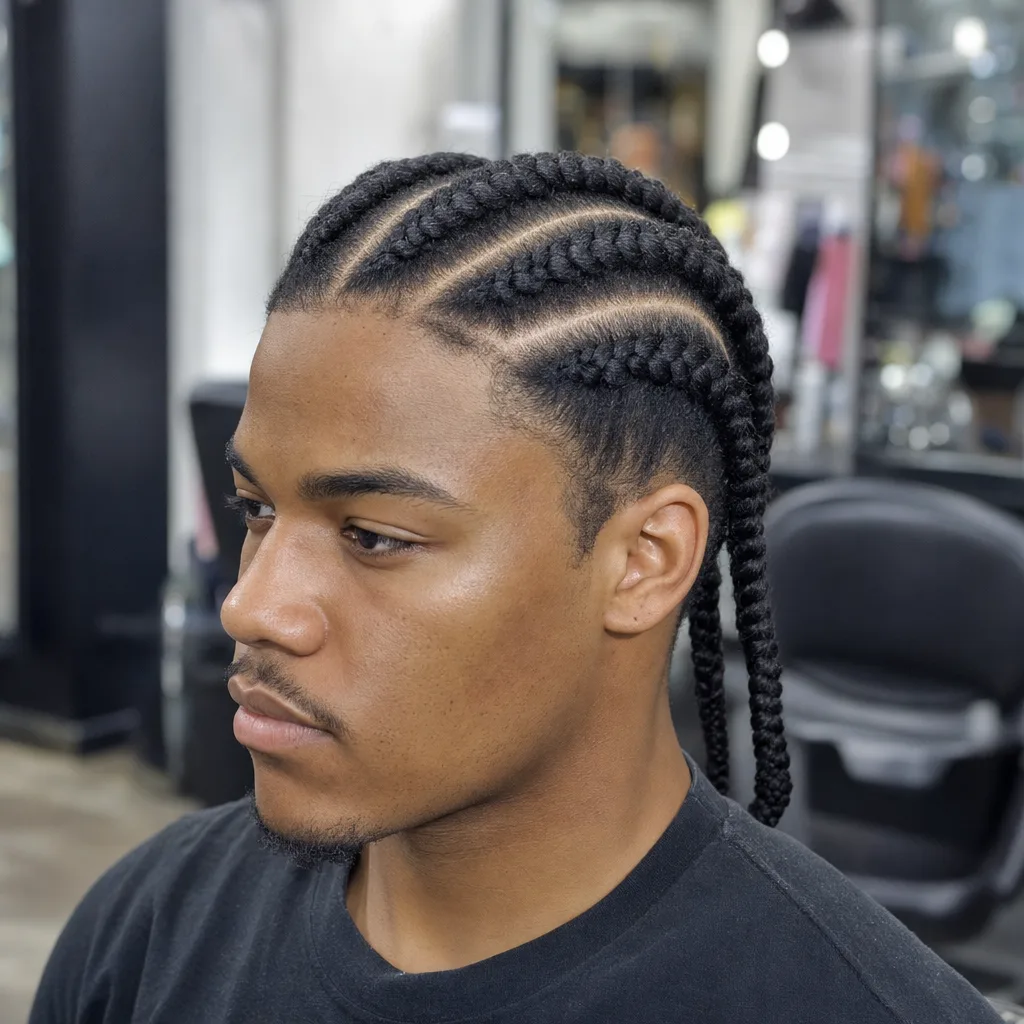
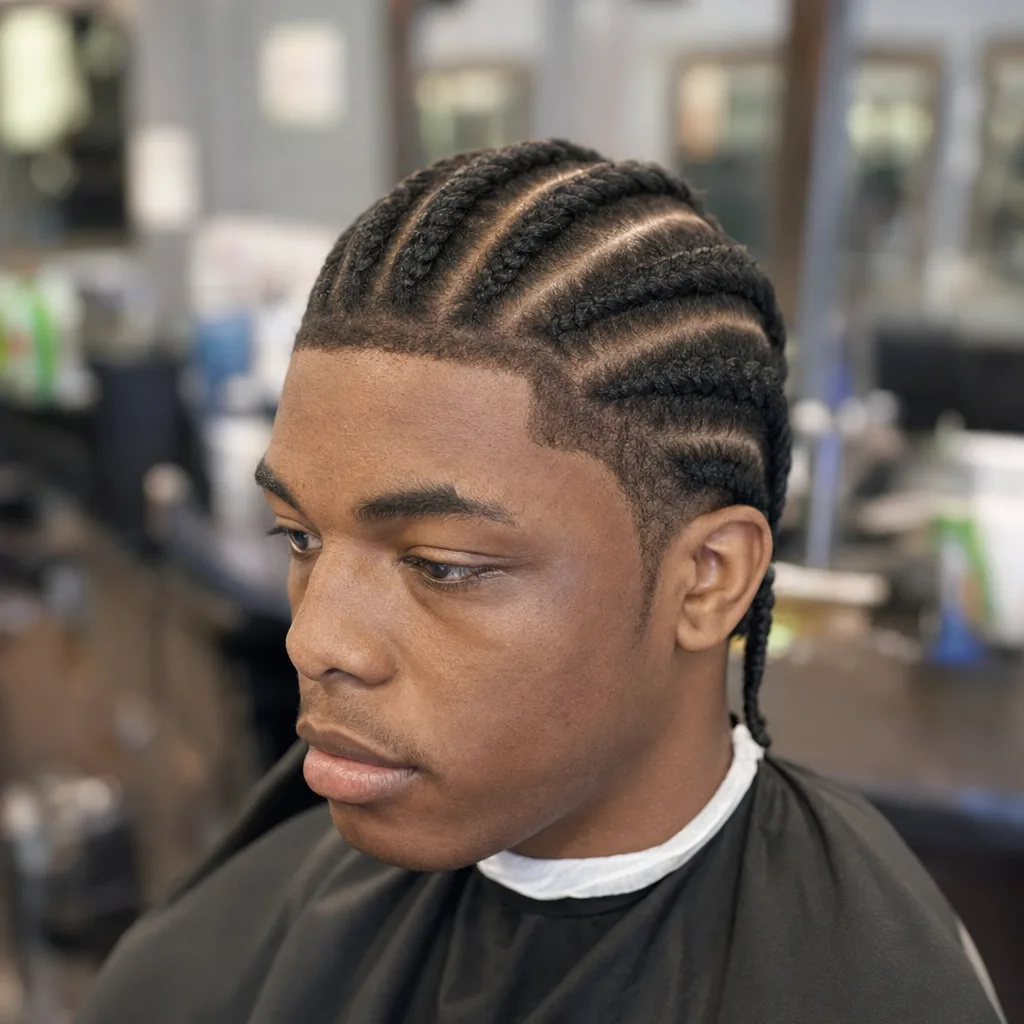
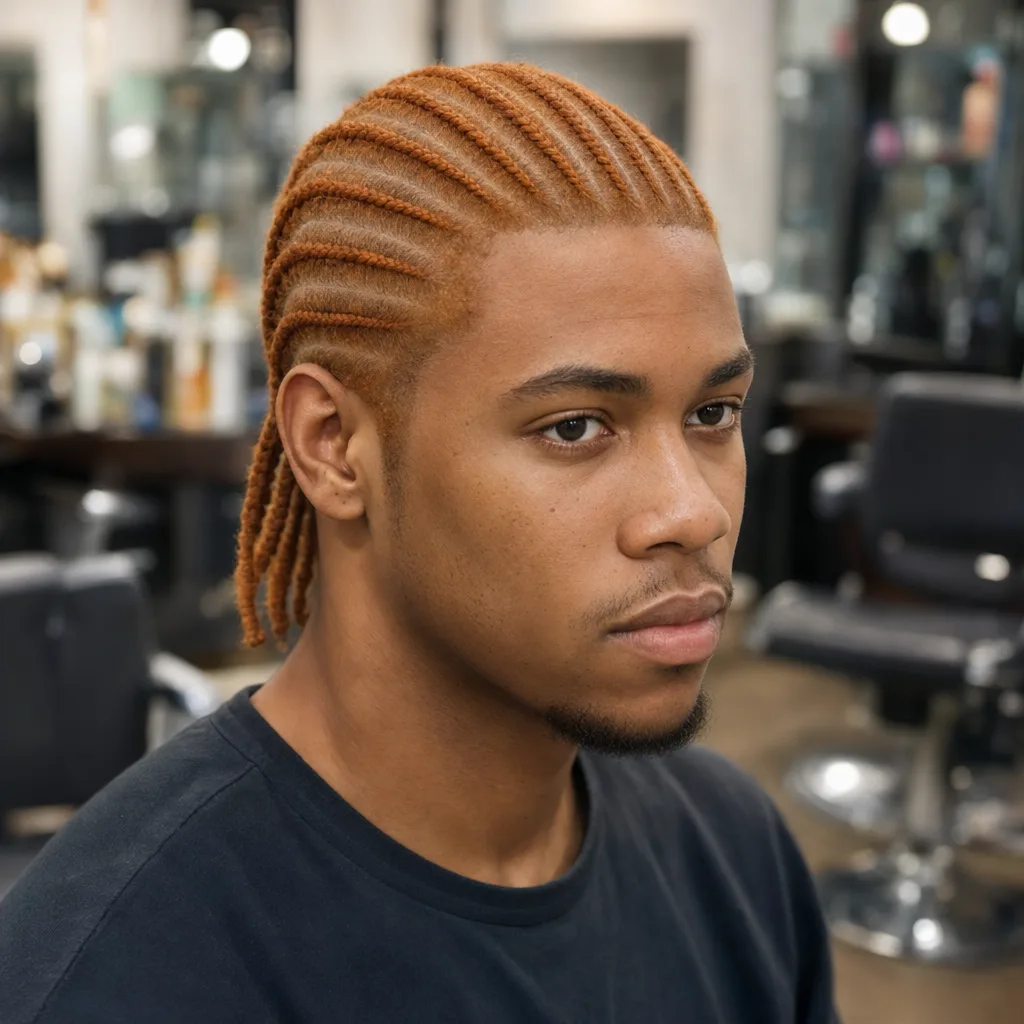
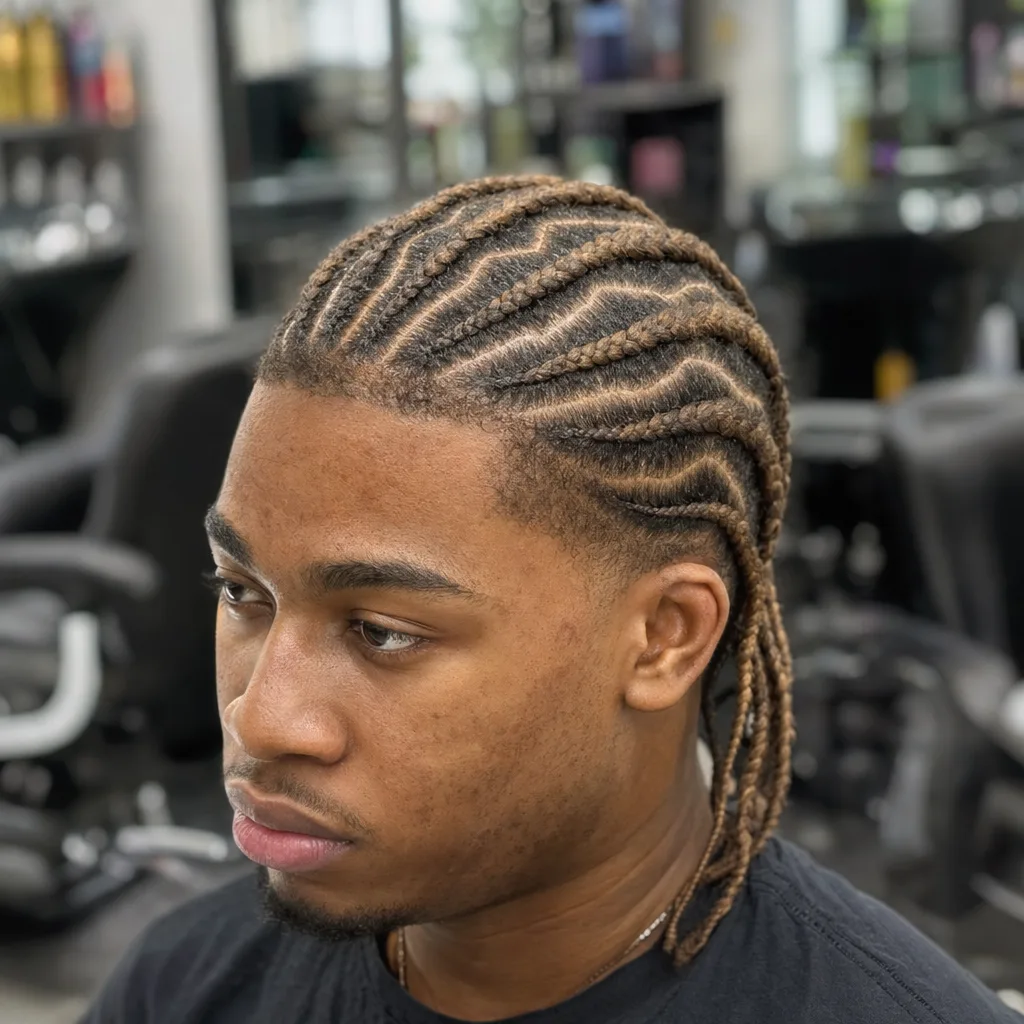
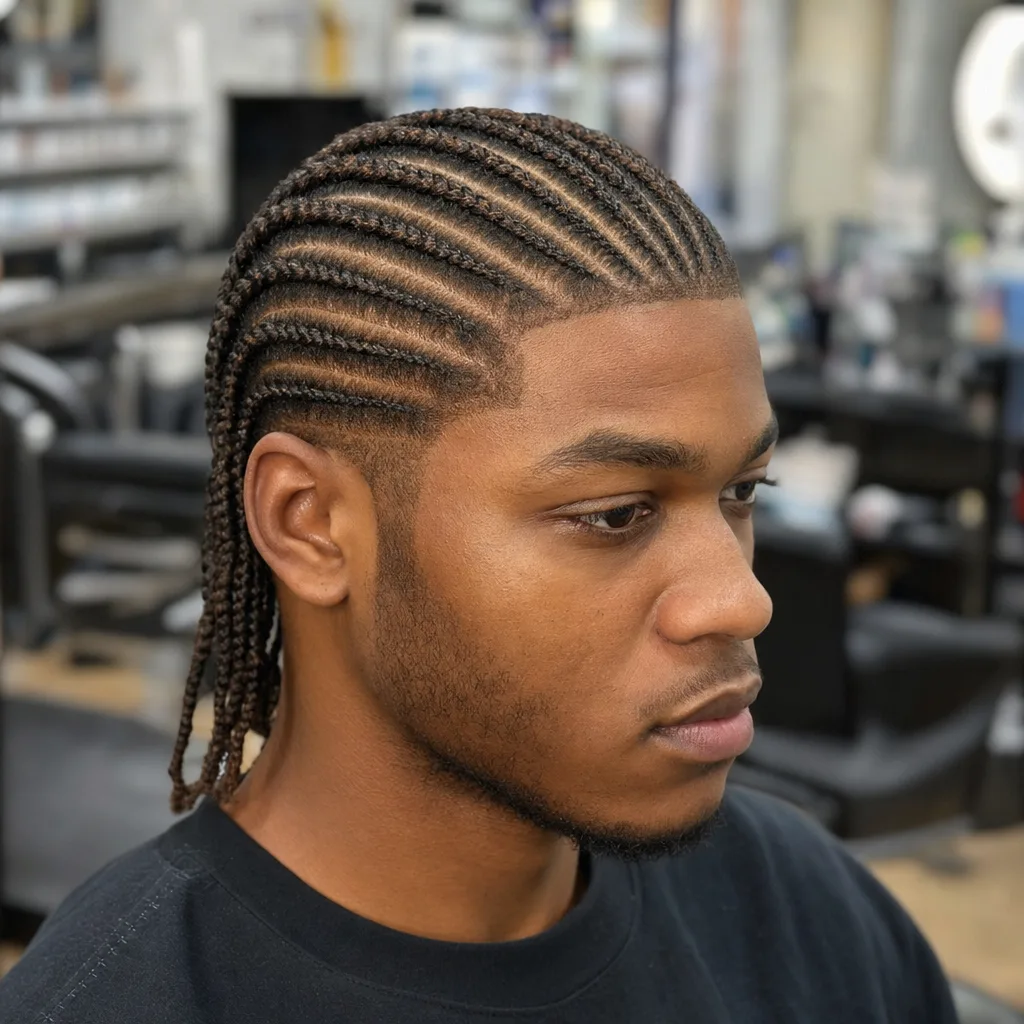
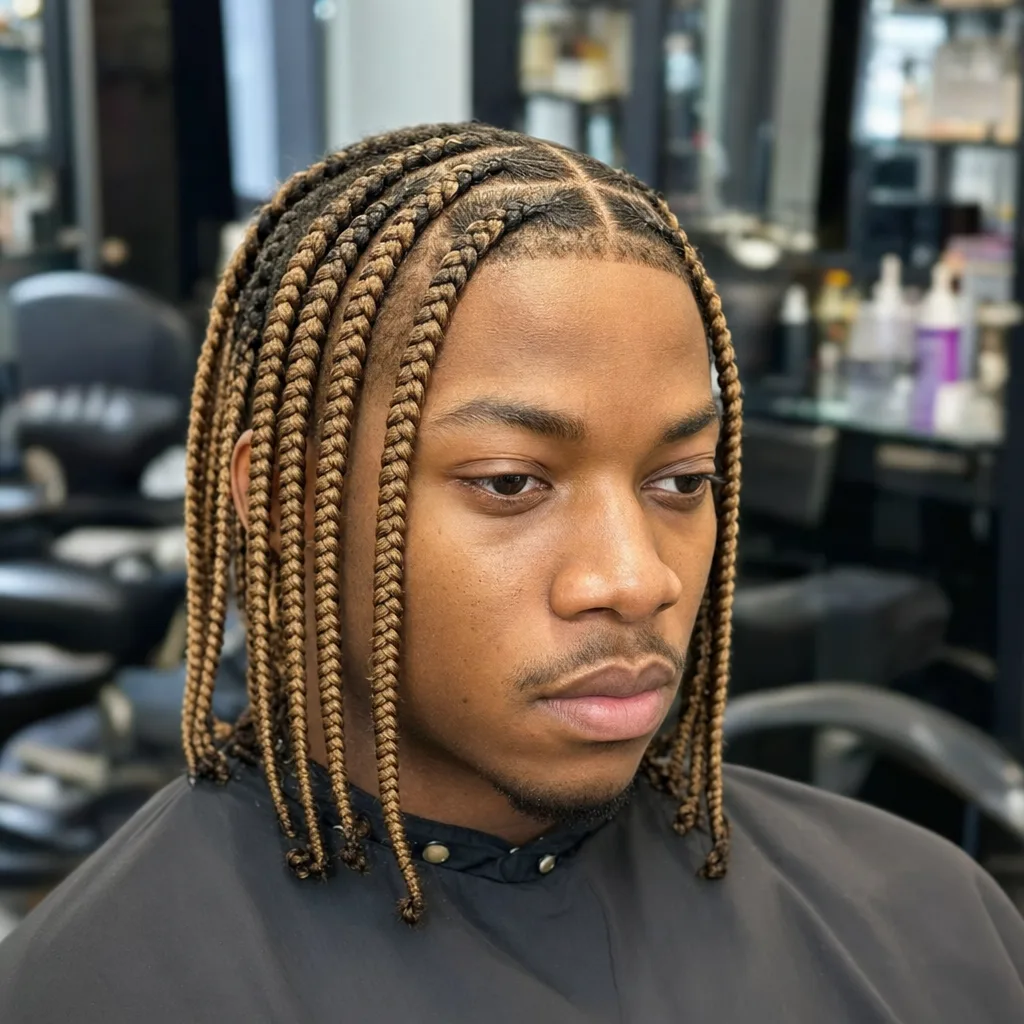
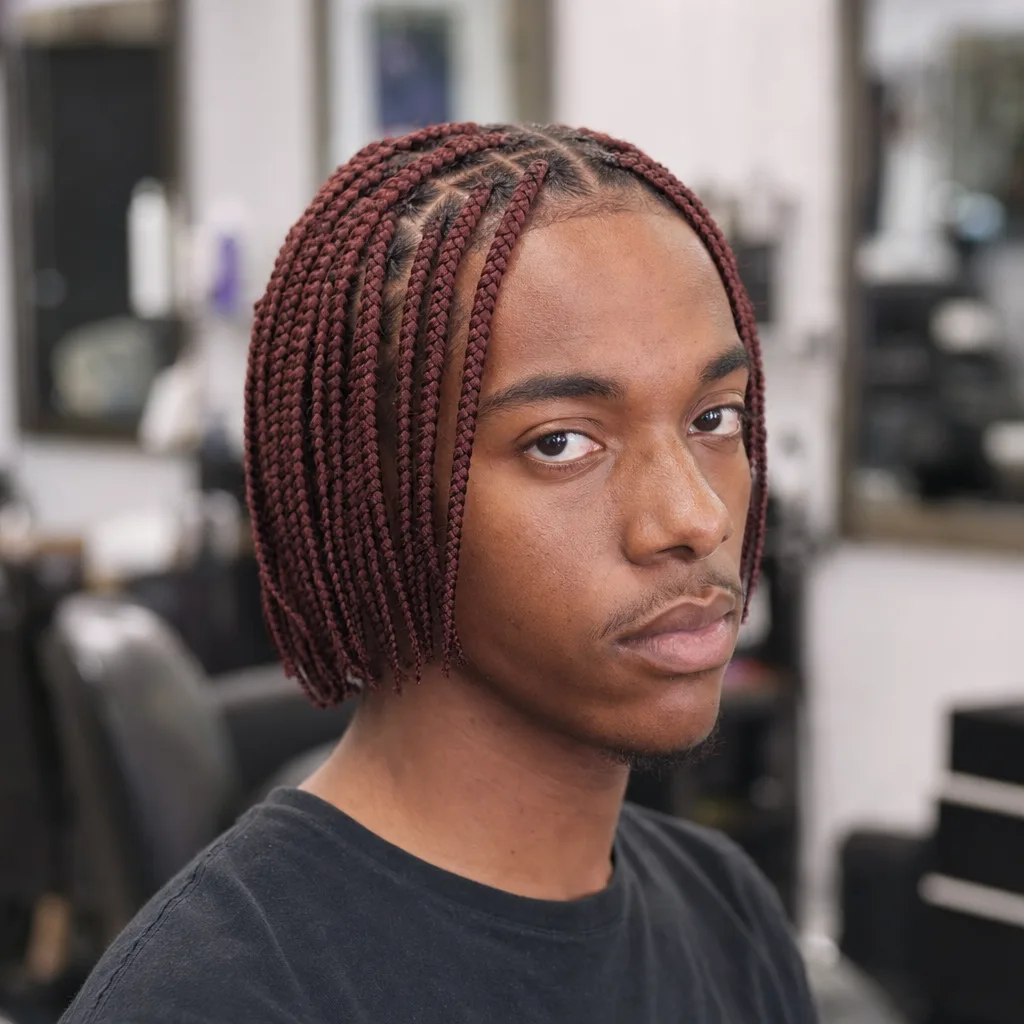
Ten patterns, one variable: size and parting
Same length, same texture, same room. The only thing changing across these ten is how big the braids are and where the parts go, which is the decision you actually make in the chair.
Gallery10 photos · tap to enlarge
 Try this on me
 Try this on me
 Try this on me
 Try this on me
 Try this on me
 Try this on me
 Try this on me
 Try this on me
 Try this on me
 Try this on me
 Yours could be here.
Start with one selfie.
One photo, twenty seconds, and you'll know. Free account, no card for your first render.
How to ask for it so you get what you pictured
Bring a photo, but do not lead with it. Lead with the two numbers, then the photo as a reference for the pattern only. Braiders are used to men handing over a picture of a head that is not shaped like theirs.
Say this to your barber
Medium cornrows, straight back, about eight rows, my own hair with no extensions, ends tucked at the nape.
How to ask for braids at the shop
- Say the size before the style
Give a number of rows or a braid thickness first. "Eight rows, medium" tells a braider more than any photo does, and it is the number that sets your price and your sitting time.
- Say whether you want extensions
This is the single biggest cost and comfort difference, and it is the thing most often assumed rather than asked. Say "my own hair only" or "add hair" out loud.
- Name the parting
Straight back, side part, curved, or zigzag. If you do not name it you get straight back, which is usually fine, but not always what you saved a picture for.
- Set the tension rule up front
Say "not too tight at the front" before they start, not after. Once a row is braided it is not getting loosened.
- Agree the ends
Tucked, sealed, left loose, or cut. On short hair this is the difference between a finished look and a fraying one.
What goes wrong
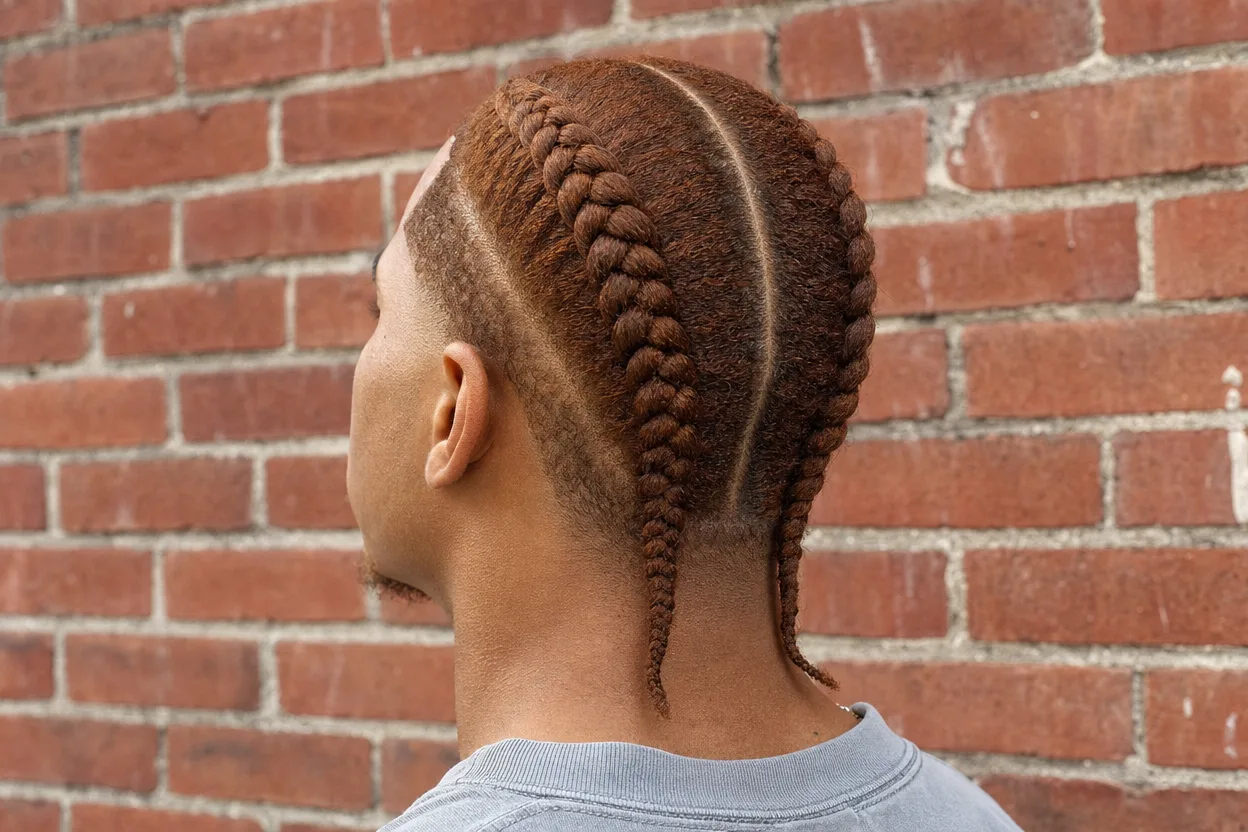
Tension at the hairline. This is the one with permanent consequences. Repeated pulling at the front edge causes traction alopecia, and the American Academy of Dermatology names braids, cornrows and extensions directly as hairstyles that can cause hair loss. The early signs are small bumps along the hairline the day after, and a sore scalp for more than 48 hours. Neither is normal, and neither means the braids are "settling".
Leaving them in past the point of value. Braids stop protecting and start pulling once the new growth at the root has outgrown the braid. On most men that is week six. Locked-in dirt and a month of accumulated tension at the same follicles is how a good set of braids turns into a receding front.
Going smaller to fix thin edges. People do this because small braids look neater, which reads as healthier. It is backwards. If your edges are already going, go jumbo and leave the front hairline out of the pattern entirely.
Braiding wet and sleeping on it. Hair stretches wet and shrinks dry, which tightens every braid overnight. Braid on dry or barely damp hair and the tension you agreed to is the tension you get.
What braids actually cost you per month
The sticker price is not the number that matters. Divide it by how long the style holds.
Medium cornrows at around 60 to 90 dollars, redone every three weeks, is roughly a haircut and a half per month. Small box braids with extensions at 200 or more, held for six weeks, works out cheaper per week and more expensive per sitting. Add a satin scarf or a durag, which is not optional if you want the second half of that window to look like the first.
The cheapest option is also the least discussed: learn to braid two feed-in braids on yourself. Most men can get a passable version inside a month of trying, and it turns a 90 dollar style into a free one.
See it on your own head before you commit
The free version of this decision is genuinely useful, so do it first. Pull five photos of the pattern you want, find the ones on a head shaped like yours, and take a photo of your own head from the back with your phone camera reversed. That last step is the one people skip, and it is the one that tells you where your hairline actually sits and how much crown you have.
Here is the wall you will hit anyway: you cannot see a braid pattern on your own head from the front, which is the only angle you ever look at yourself from. A photo of someone else wearing it tells you about their head. And unlike a fade, braids are not a decision you can reverse on the way home. You have sat for three hours by the time you find out.
That is what the try-on is for. The first look is free and does not need a card: one hairstyle, one color, the front view. If you want to compare several patterns side by side, download without a watermark, or get a before and after sheet to hand your braider, that is the Plus plan at 9 dollars a month or 60 a year, with a seven-day refund. Pro at 24 a month adds the angles that matter most for braids, including the back of the head, which is the view you will never get any other way.
If you are still deciding between braids and something shorter, the broader hairstyles for men guide covers the alternatives, and there is a separate walkthrough of protective black hairstyles if this is your first time out of a clipper cut. Men working with looser curl patterns will get more out of the curly hair haircuts guide, and the history and regional patterns behind these styles are worth reading in the african hair braiding piece.
The short version
Check your shortest hair before you save a picture. Pick the braid size before you pick the style, because size sets your price, your sitting time and your hairline risk far more than the pattern does. Say the number of rows out loud in the chair. Take them out at week six whether or not they still look good.
Everything else on this page is detail on those four lines.
Frequently asked questions
Straight-back cornrows in a medium size suit more men than any other pattern, because they add height at the front without widening the head and they work on the two to five inches of hair most men actually have. If your face is round or full, two feed-in braids either side of a center part do more for you, since the part cuts a vertical line down the middle.
Two to four weeks for medium cornrows on your own hair, four to six for small braids, and up to eight for box braids with extensions. The upper end assumes you sleep in a satin scarf or durag. Take any set out by week six regardless of how it looks, because that is when new growth at the root turns protection into pulling.
Yes, from about two inches of curly or coily hair, or about four inches if your hair is straight. Below that there is not enough length in each section for the braid to grip and it will slide out within days. At two to three inches you are limited to patterns that stay flat to the scalp, which means cornrows and stitch braids rather than anything that hangs.
Start with two feed-in braids rather than a full pattern, because you can reach both of them and you only need one clean center part. Work on dry or barely damp hair, use a rat-tail comb for the part, and feed small sections of hair in as you go rather than trying to hold everything at once. Expect the first several attempts to be uneven. Full cornrow patterns on the back of your own head are not a beginner project.
Dry, or barely damp. Wet hair stretches while you braid it and shrinks as it dries, so every braid tightens overnight and you end up with more tension than you agreed to. Damp with a light leave-in gives you enough grip to work without that shrinkage.
They can, and it is the main risk of the style. Repeated tension at the front edge causes traction alopecia, which is reversible early and permanent if you keep going. Bumps along the hairline the day after, or a scalp that is still sore after two days, mean they were braided too tight. Larger braids, leaving the front hairline out of the pattern, and taking the set out by week six all reduce the risk.
Braiding itself is not. Tension and time are. A style braided at comfortable tension and removed inside six weeks protects hair by keeping it out of daily combing and friction. The same style braided tight, or left in for two months, damages the follicles at the perimeter where the pull is highest.
Two or three braids running back along the top of the head with the rest of the hair left loose, worn on straight or wavy hair rather than coily. It needs about six inches on top and shoulder-length hair at the back, and it works best on medium to thick hair since fine hair will not hold the braid volume.
Stitch braids, and the patterns built on them. The visible rung detail is what separates them from plain cornrows in a photo, which is exactly why they travel on social feeds. Braids worn over a taper fade are the other growth area, because they keep the outline of a conventional haircut.
Preview it on your own photo: Men's Hairstyle Try-On.
Share article
About the author
More articles
Men's Haircuts · 14 min
Benny Blanco Haircut: The Fake Half Shave and the Real Curls
Benny Blanco did not shave half his head. It was a prosthetic bald cap, and the buzz cuts are AI. Here is what his curly mop actually is, the short version, and exactly what to tell your barber.
Men's Haircuts · 16 min
1A Hair: How to Tell If You Have It + 14 Cuts That Work
1A hair is pin-straight with no bend from root to tip. How to tell it from 1B and 1C, why it goes flat, 14 haircuts that work on it, and how to style it for volume.
Men's Haircuts · 15 min
High and Tight Haircut: 4 Versions and the Head Shape Rule
A high and tight clips the sides almost to skin all the way up to the top of the head, so it shows your skull shape more than your face. The 4 versions, 14 photos, what to tell your barber, and how long it lasts.