African Hair Braiding: 10 Styles and How Long Each Lasts
Oleh Onysko Updated 27 September 2026 13 min read
In this article
African hair braiding is not one style. It is two families, and everything that matters to you follows from which one you are sitting down for. Either the braid is anchored flat against your scalp, like cornrows and feed-ins, or it hangs free from its own parting, like box braids and knotless. That single fork decides your hours in the chair, how many weeks the style holds, and how hard it pulls at your hairline.
The second number nobody asks about is parting size. Two people can book the exact same style name and walk out with completely different results because one asked for one inch partings and the other did not ask at all. Below are the ten styles people actually book, what each one costs you in hours, and which one fits your situation rather than your Pinterest board.
The two families every African braiding style belongs to
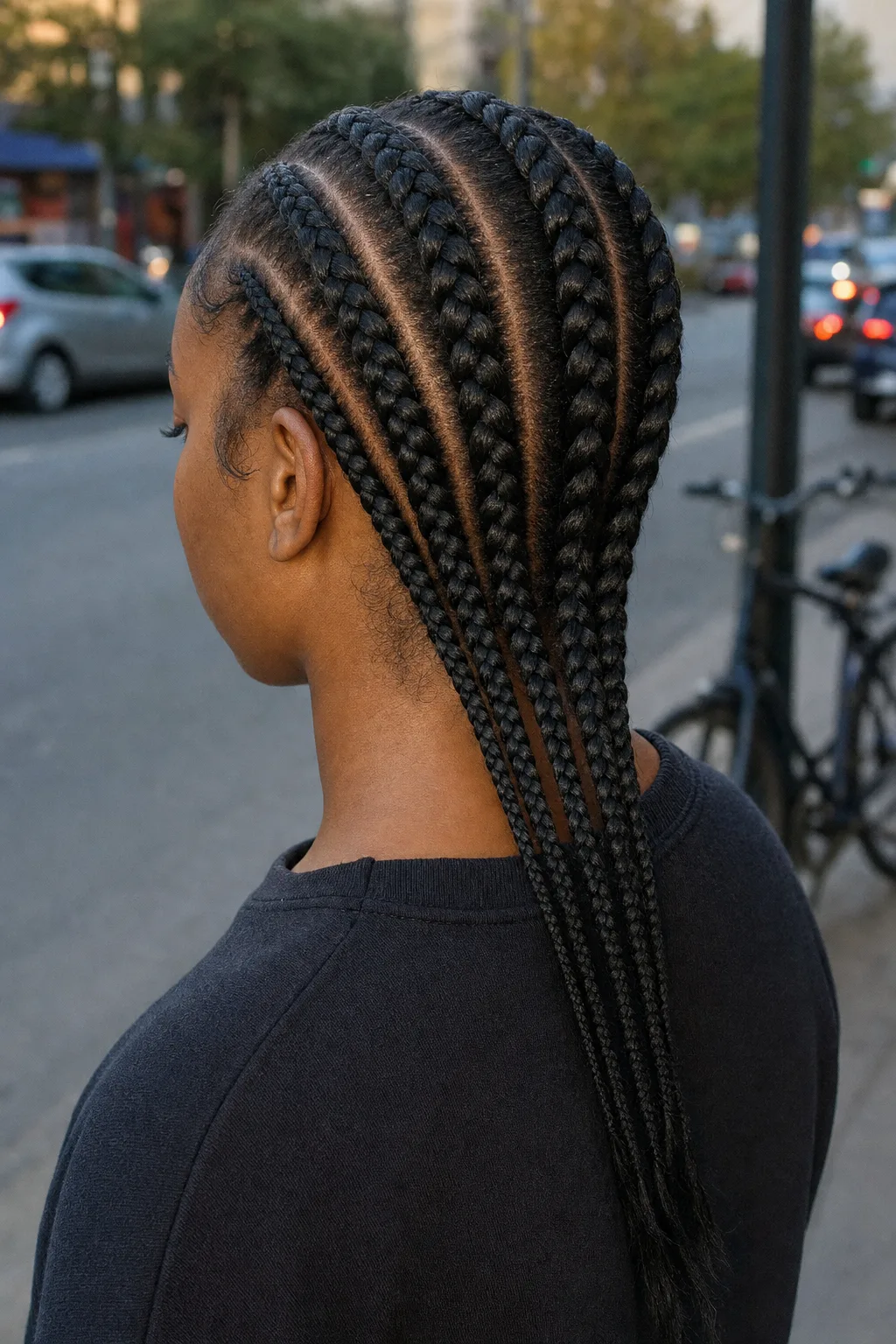
Scalp-attached braids are braided flat to the head so the finished braid lies against the skin. Cornrows, feed-ins, stitch braids, lemonade braids and Fulani braids all live here. The tension is spread along the whole row instead of loading one point, they take the fewest hours, and they are the easiest to keep tidy for the first two weeks. They also have the shortest honest lifespan, because the moment your roots grow the row lifts off the scalp and the neat lines go.
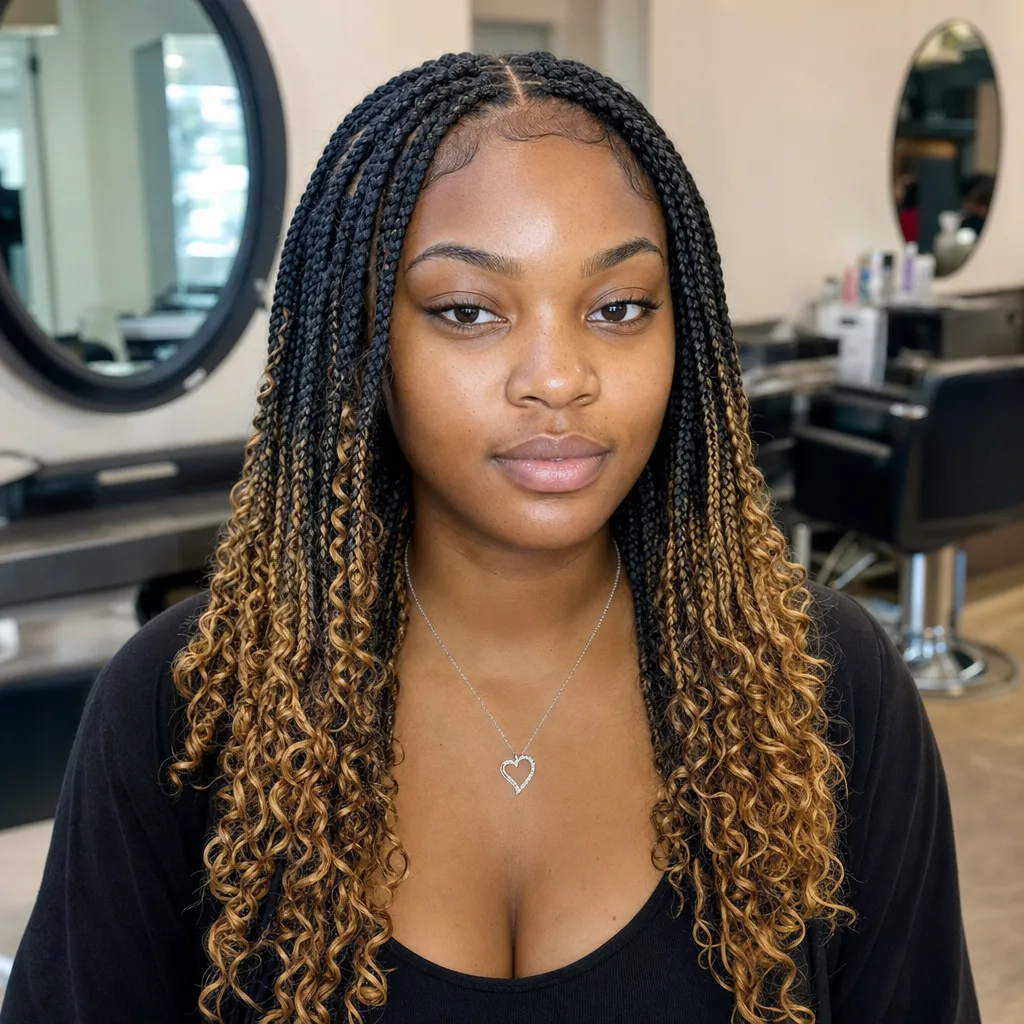
Free-hanging braids start at one parting and swing loose from there. Box braids, knotless braids, micro braids, goddess and boho braids are all this family. They last the longest by a wide margin, they hide new growth for weeks, and they are the ones you can actually restyle. The trade is weight and hours: every braid carries its own load at a single anchor point, and hundreds of anchor points take a long time to build.
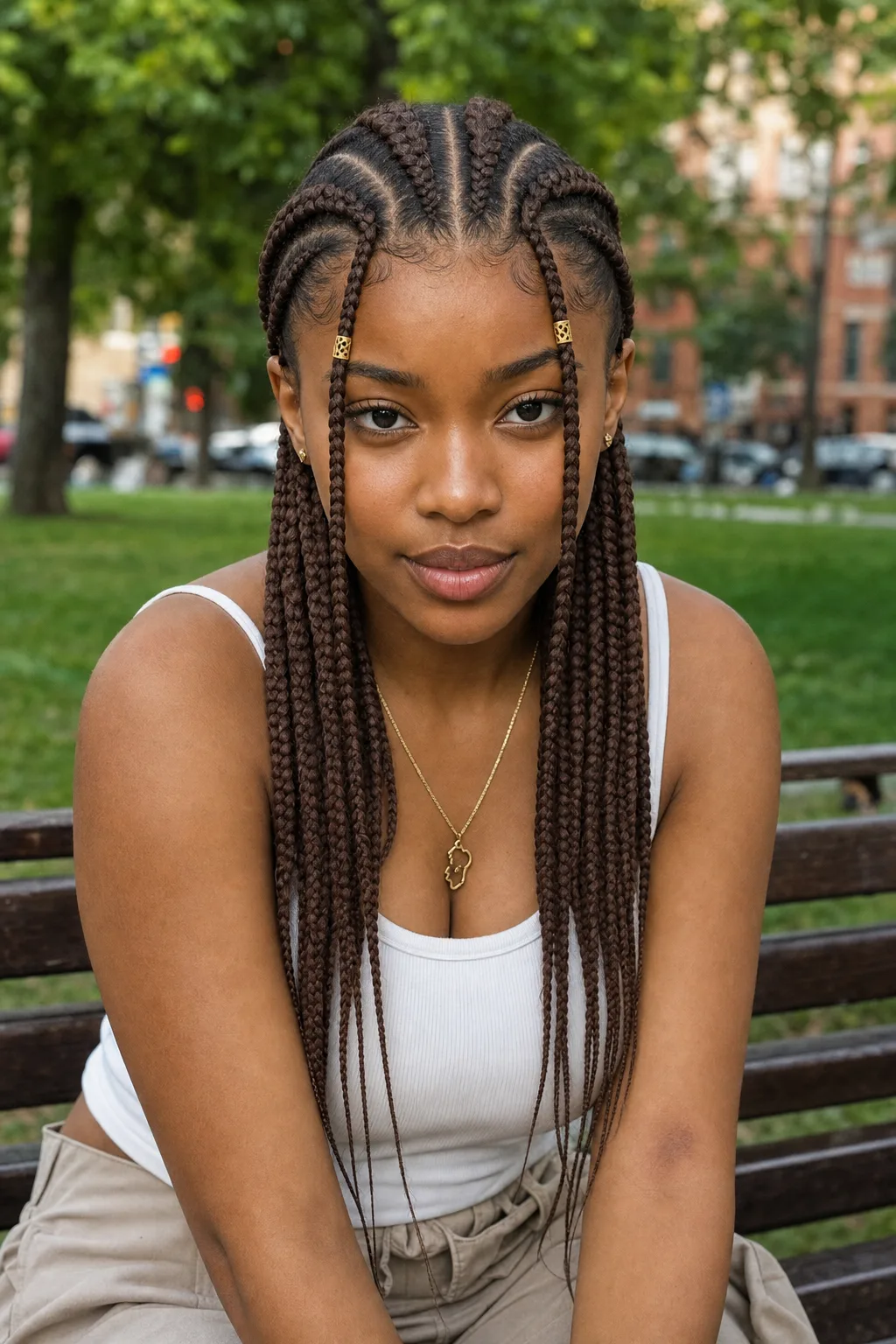
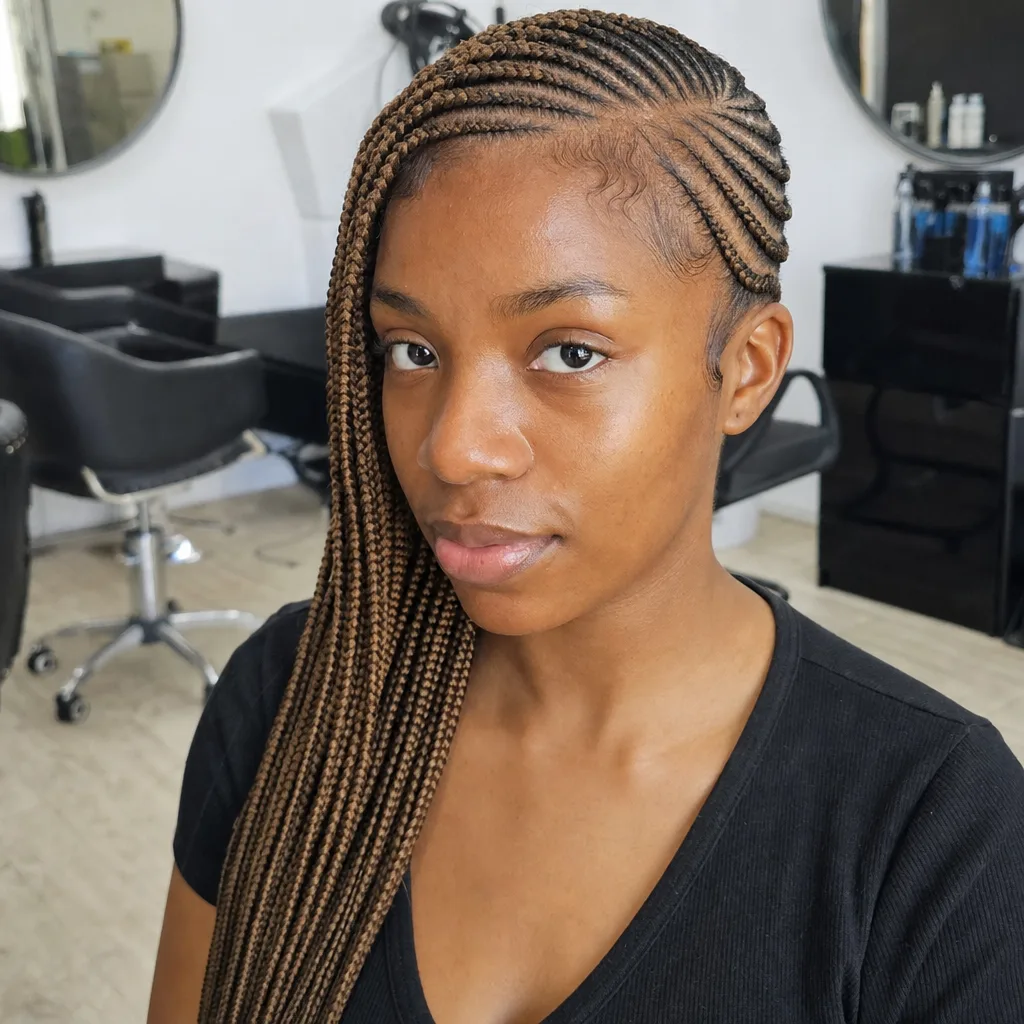
Most real styles are honest hybrids. Fulani braiding is cornrows on top with free braids behind. That is not a compromise, it is usually the smartest pick, and it is the same logic behind the men's cornrow styles that read as one clean pattern from the front.
Parting size is the number that actually decides your result
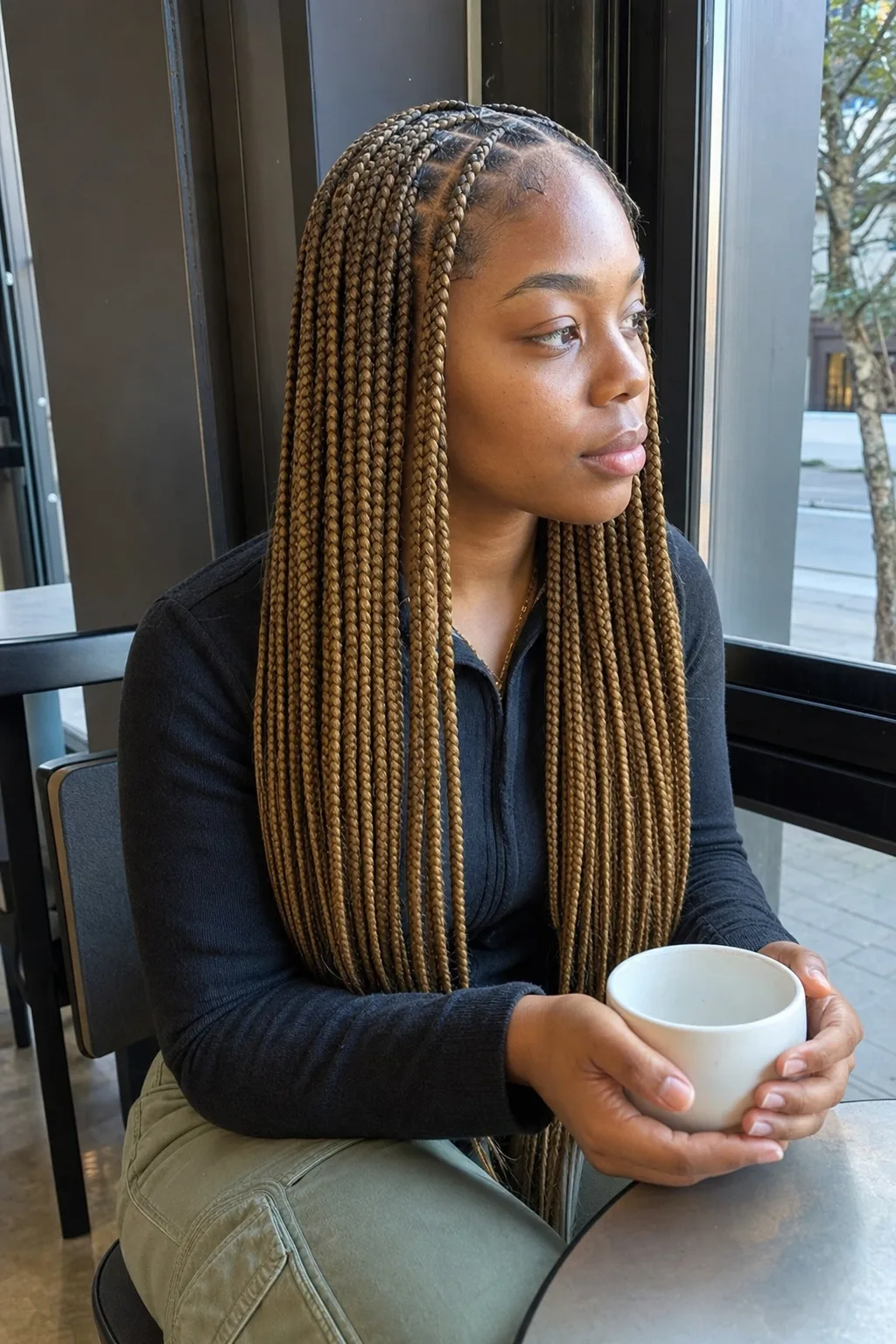
Ask any braider what changes the price and the answer is not the style, it is how big the sections are. A small parting means more braids, more hours and a finer finish. A large parting means fewer braids, a faster install and a bolder look, but each of those braids is anchored to a bigger patch of your own hair and carries more weight on it.
Here is the part that surprises people. Small partings are not automatically gentler. Hundreds of tiny braids add up to a lot of total load, and micro braids are the style most likely to be installed tight because the braider is working at the limit of what the section can hold. Jumbo braids are not automatically harsher either. They are heavy, but there are only a few dozen of them and a good braider leaves slack at the root.
The thing that damages hair is tension at the root, not the picture on the wall. If it stings, if your eyebrows lift, if you cannot sleep on it the first night, that is too tight regardless of which style you chose.
Book by three numbers, not by a style name: parting size, length, and how many weeks you need it to last.
Which African braiding style fits your situation
| Style | Family | Parting size | Typical time in the chair | Holds for | Tension load |
|---|---|---|---|---|---|
| Micro braids | Free-hanging | Tiny | 8 to 12 hours, often two sittings | 8 weeks or more | High, from sheer count |
| Small knotless | Free-hanging | Small | 6 to 8 hours | 6 to 8 weeks | Low at the root |
| Medium box braids | Free-hanging | About 1 inch | 5 to 7 hours | 6 to 8 weeks | Moderate |
| Jumbo box braids | Free-hanging | 2 inches or more | 2 to 4 hours | 4 to 6 weeks | Heavy per braid |
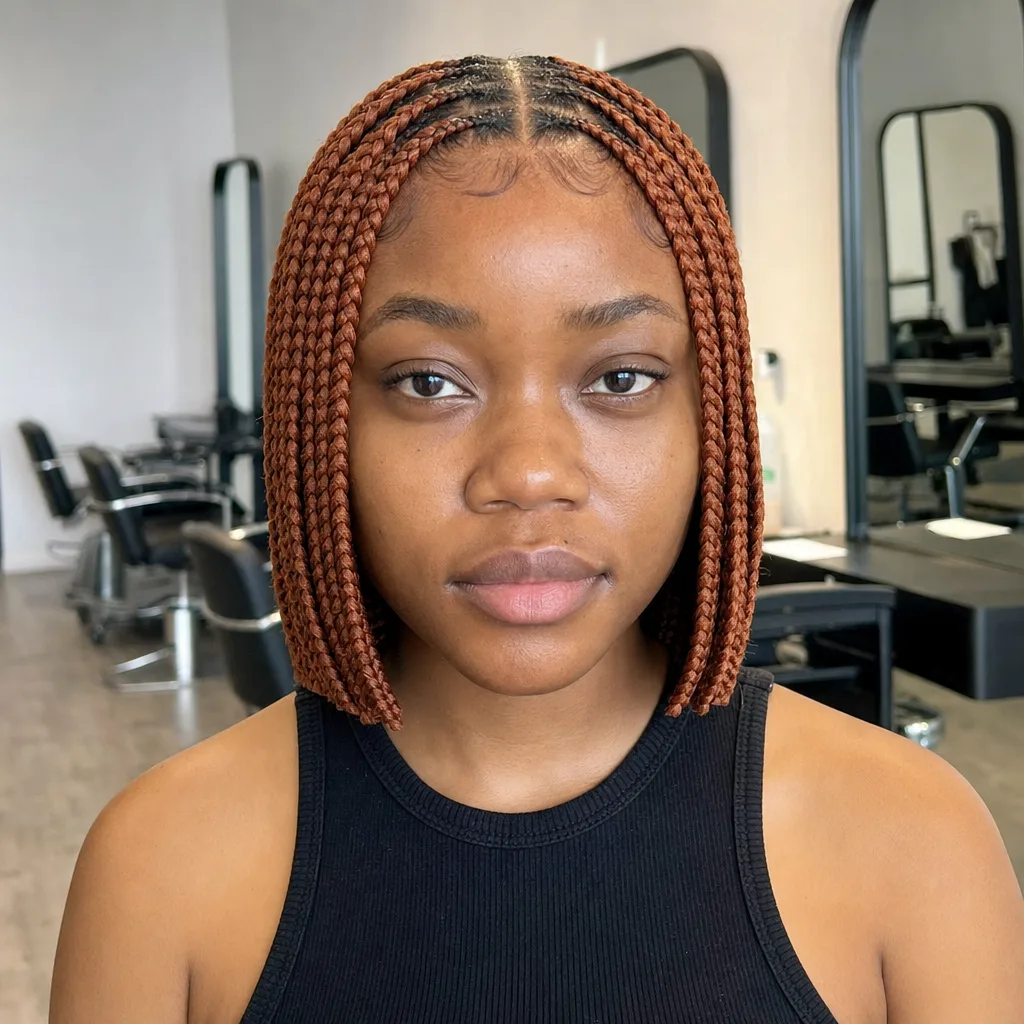
| Braided bob | Free-hanging | Small to medium | 3 to 5 hours | 4 to 6 weeks | Low, short lengths |
| Goddess or boho braids | Free-hanging | Medium | 5 to 8 hours | 4 to 6 weeks | Moderate |
| Straight-back cornrows | Scalp-attached | Row width | 2 to 3 hours | 2 to 3 weeks | Low if left slack |
| Stitch or feed-in braids | Scalp-attached | Row width | 3 to 4 hours | 2 to 4 weeks | Low to moderate |
| Lemonade braids | Scalp-attached | Row width | 3 to 5 hours | 2 to 4 weeks | Moderate at the part |
| Fulani braids | Hybrid | Mixed | 4 to 6 hours | 4 to 6 weeks | Moderate |
If you can only sit for three or four hours
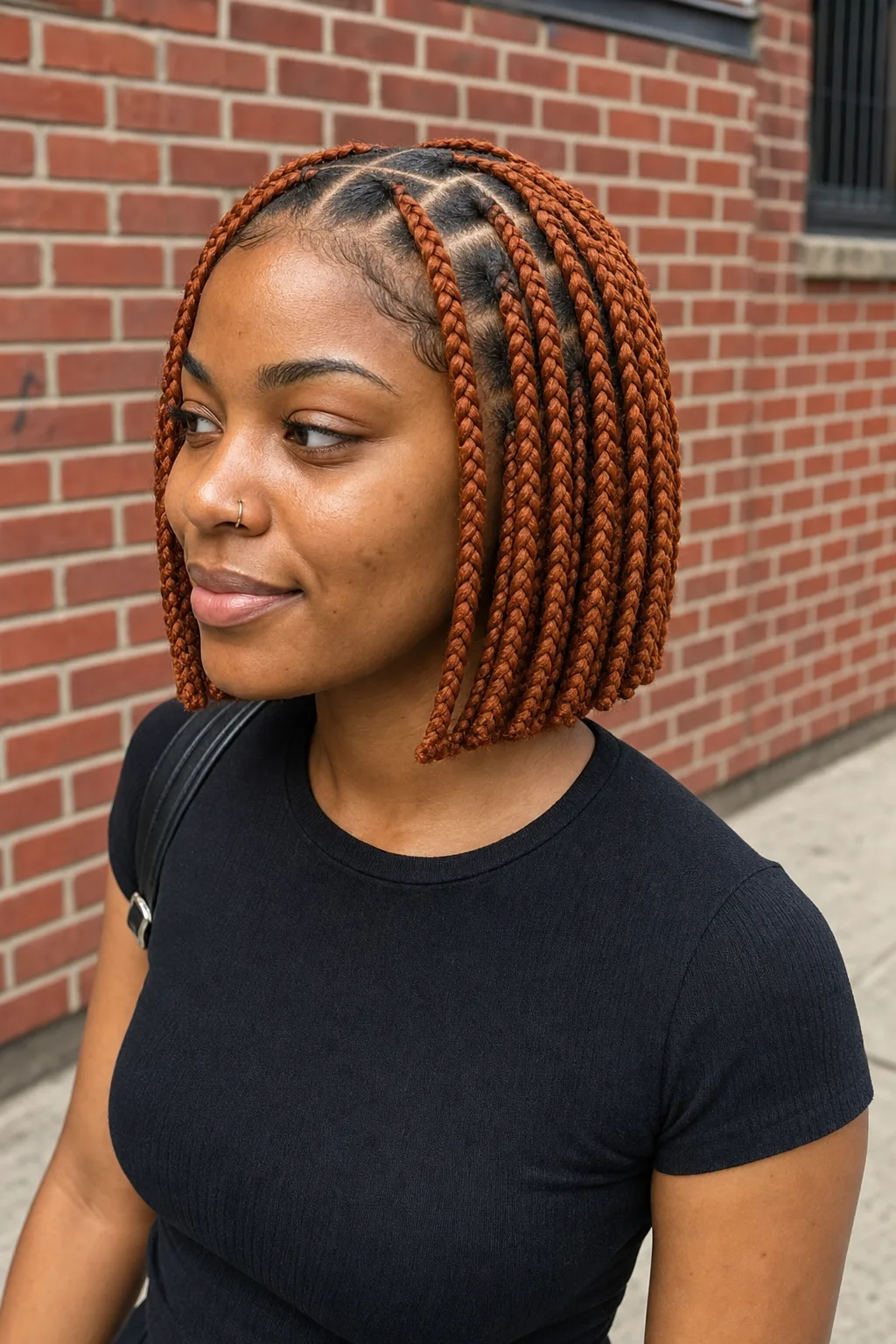
Take a braided bob or straight-back cornrows. The bob is the underrated one: short lengths mean less weight, less time and a style that looks deliberate rather than rushed. Jumbo box braids are the other fast route, but you are trading speed for weight.
If you need six weeks or more out of one appointment
Go free-hanging and go small to medium. Knotless braids at medium parting are the value pick, because they hide root growth well and the rootless start means you can wear them longer before they look grown out. Cornrows cannot do this. Anything flat to the scalp announces new growth in week three.
If your edges are already thin
Scalp-attached styles with feed-in technique, and nothing anchored at your hairline. Feed-ins start with your own hair and add extension gradually, so the front of the row carries almost no extra weight. Ask the braider to leave your perimeter out entirely and to skip the slicked baby hairs. The American Academy of Dermatology is direct about this: hairstyles that pull are a leading cause of traction alopecia, and it becomes permanent once the follicle scars.
If this is your first install
Medium knotless, shoulder length. It is the most forgiving combination in African braiding: light enough that you will sleep, long enough to style, and short enough that the weight will not ruin your first week. Save waist-length for when you know how your scalp handles it.
10 African braiding styles, from the smallest parting to the largest
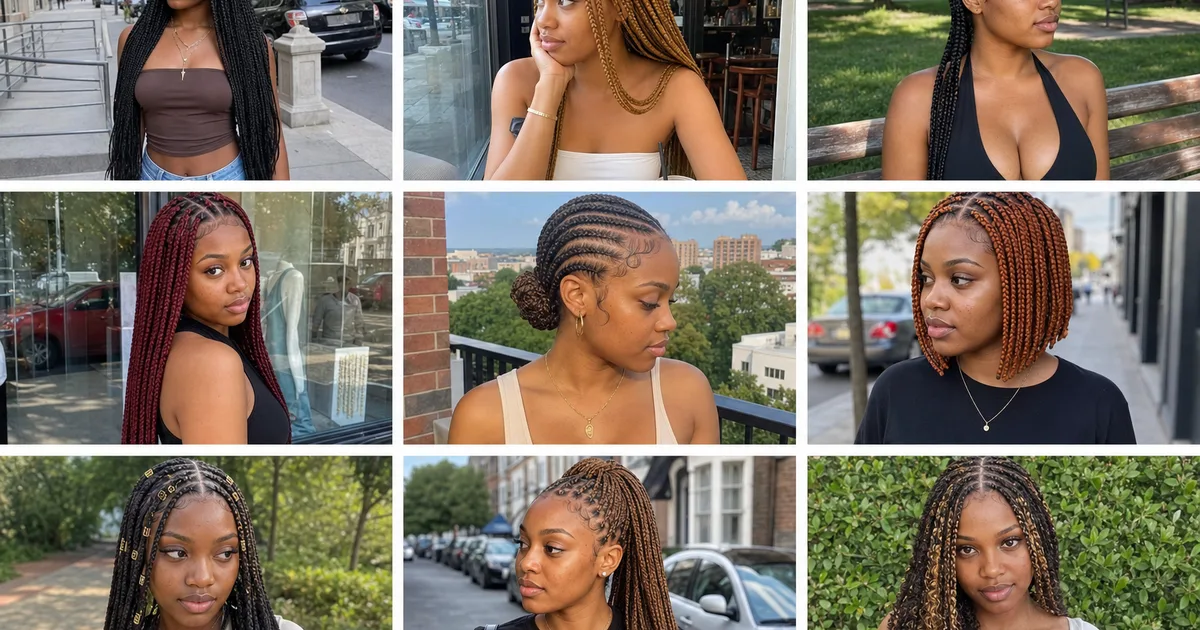
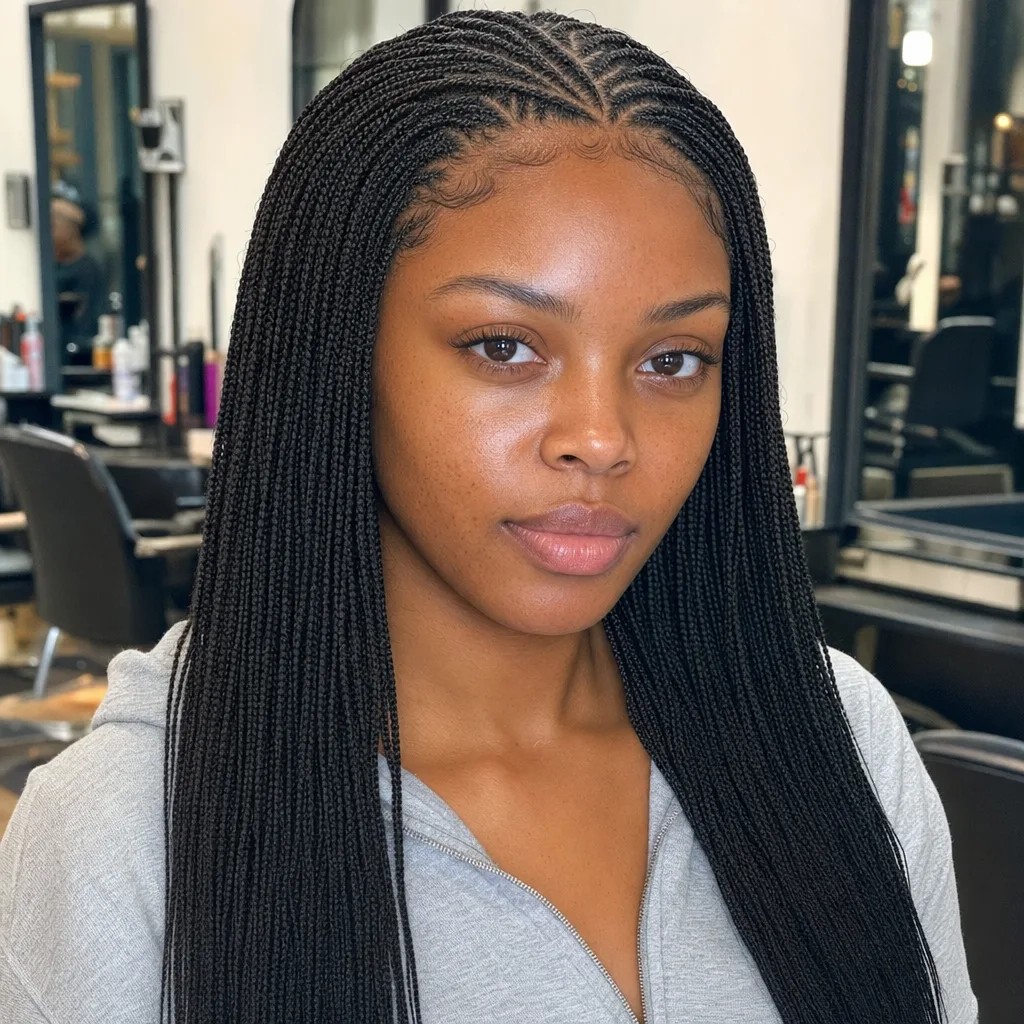
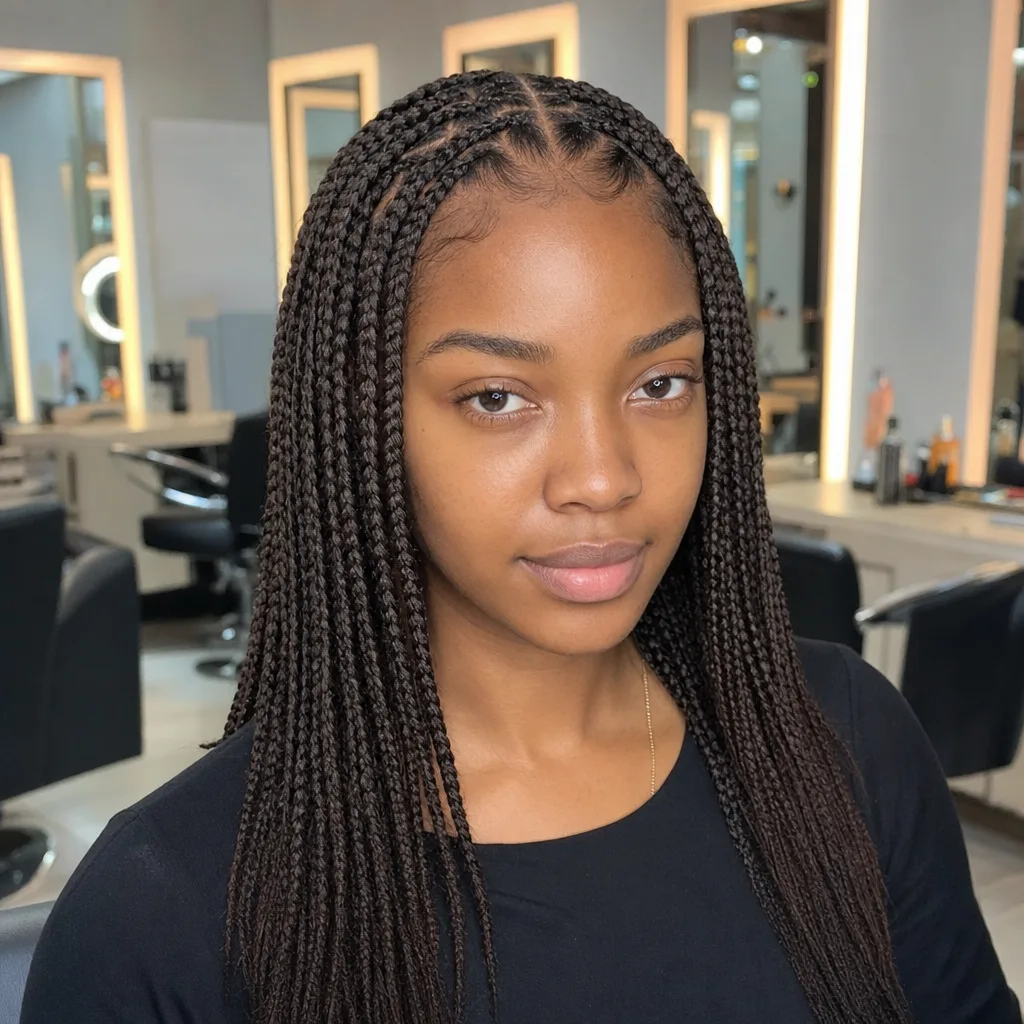
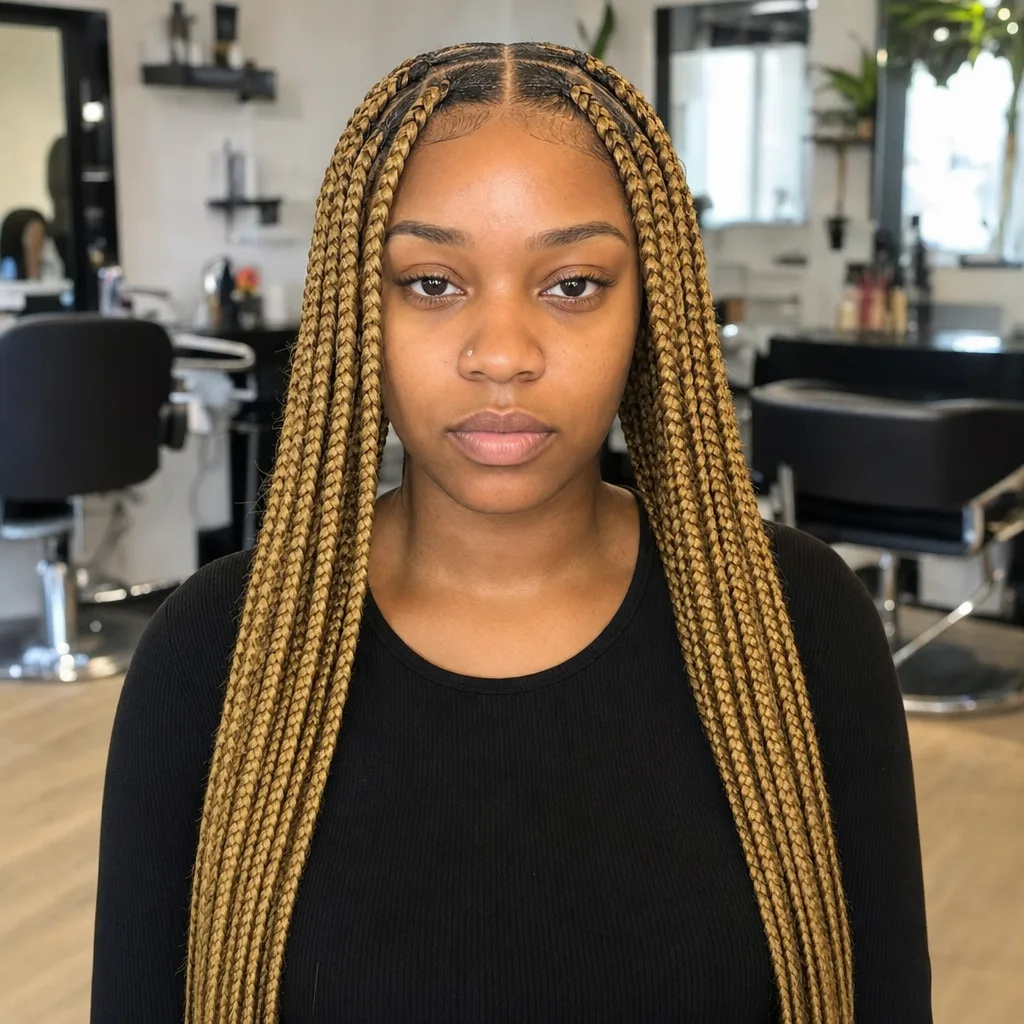
One variable runs through this set: how big the sections are and whether the braid is anchored to the scalp or hanging free. Everything else is held steady so you can see what parting size alone does to a head of hair.
Gallery10 photos · tap to enlarge
 Try this on me
 Try this on me
 Try this on me
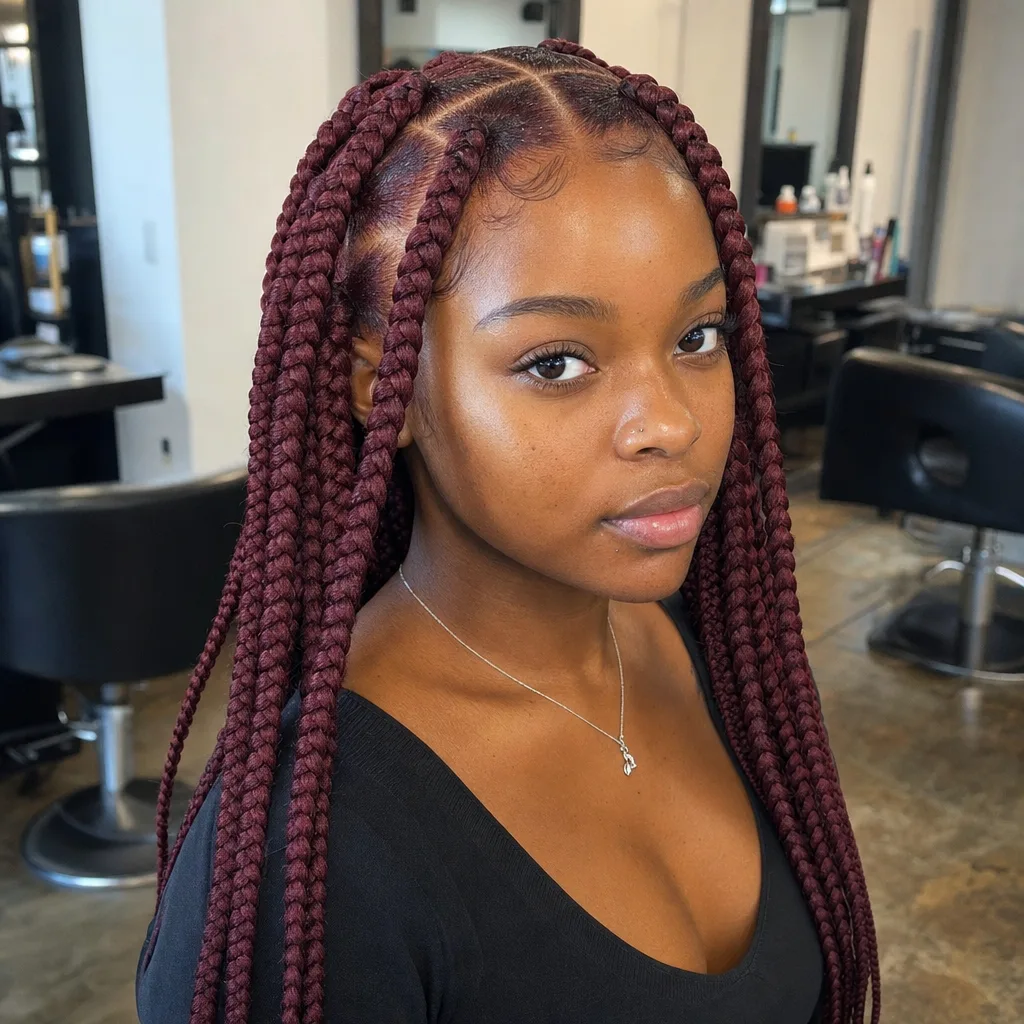 Try this on me
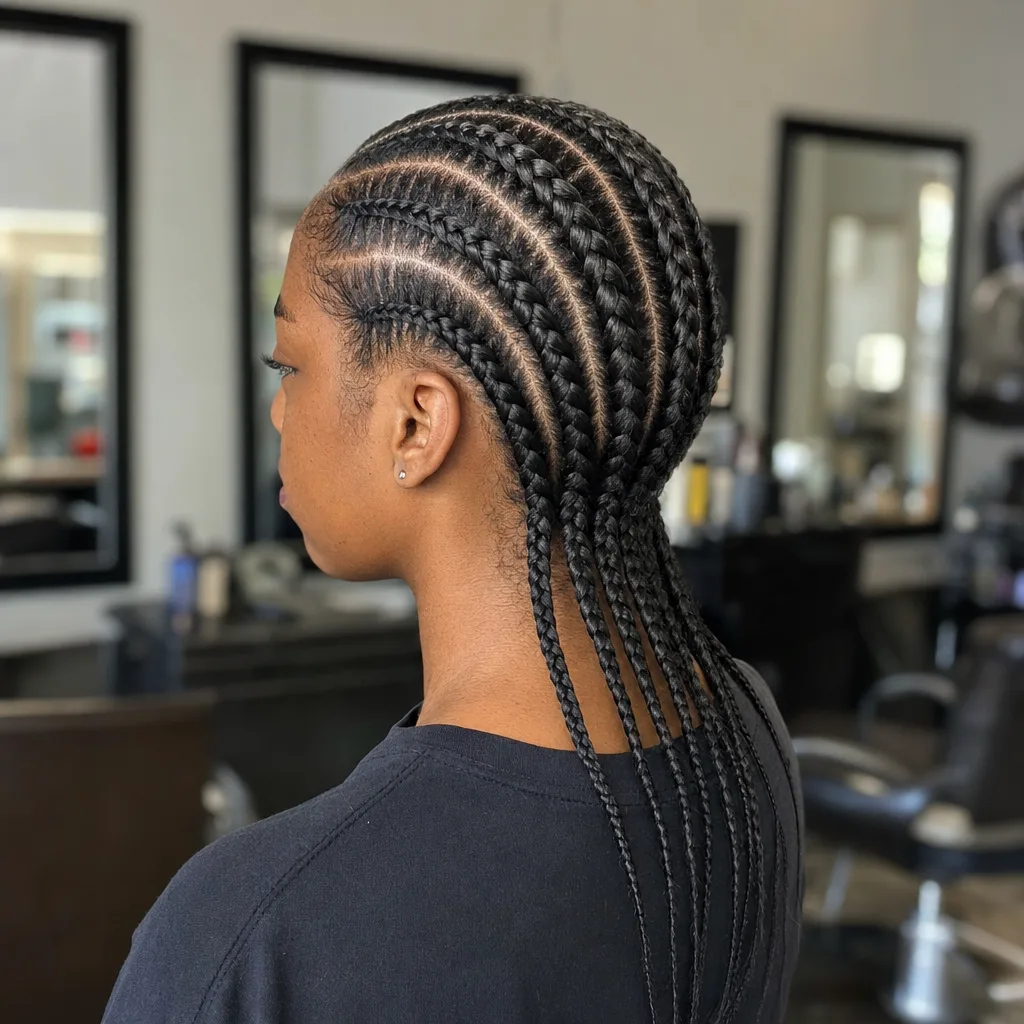 Try this on me
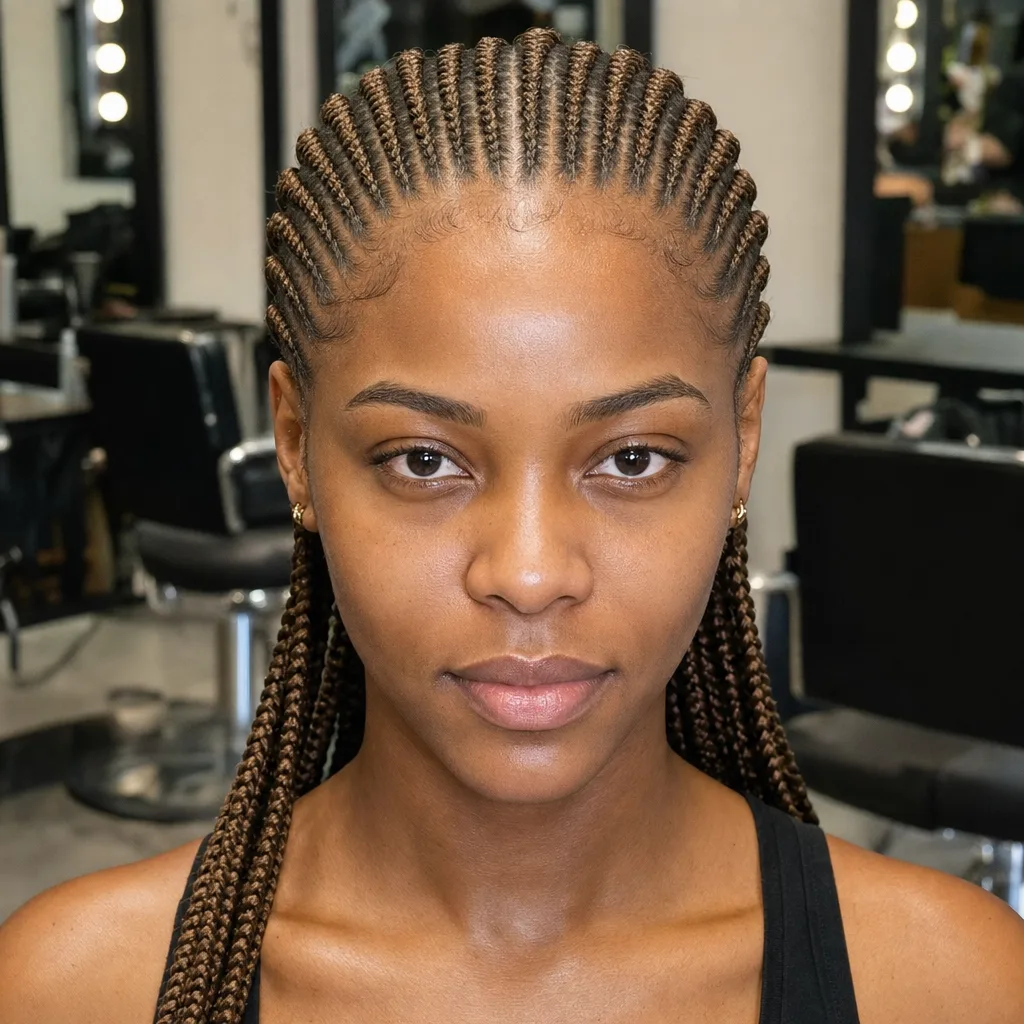 Try this on me
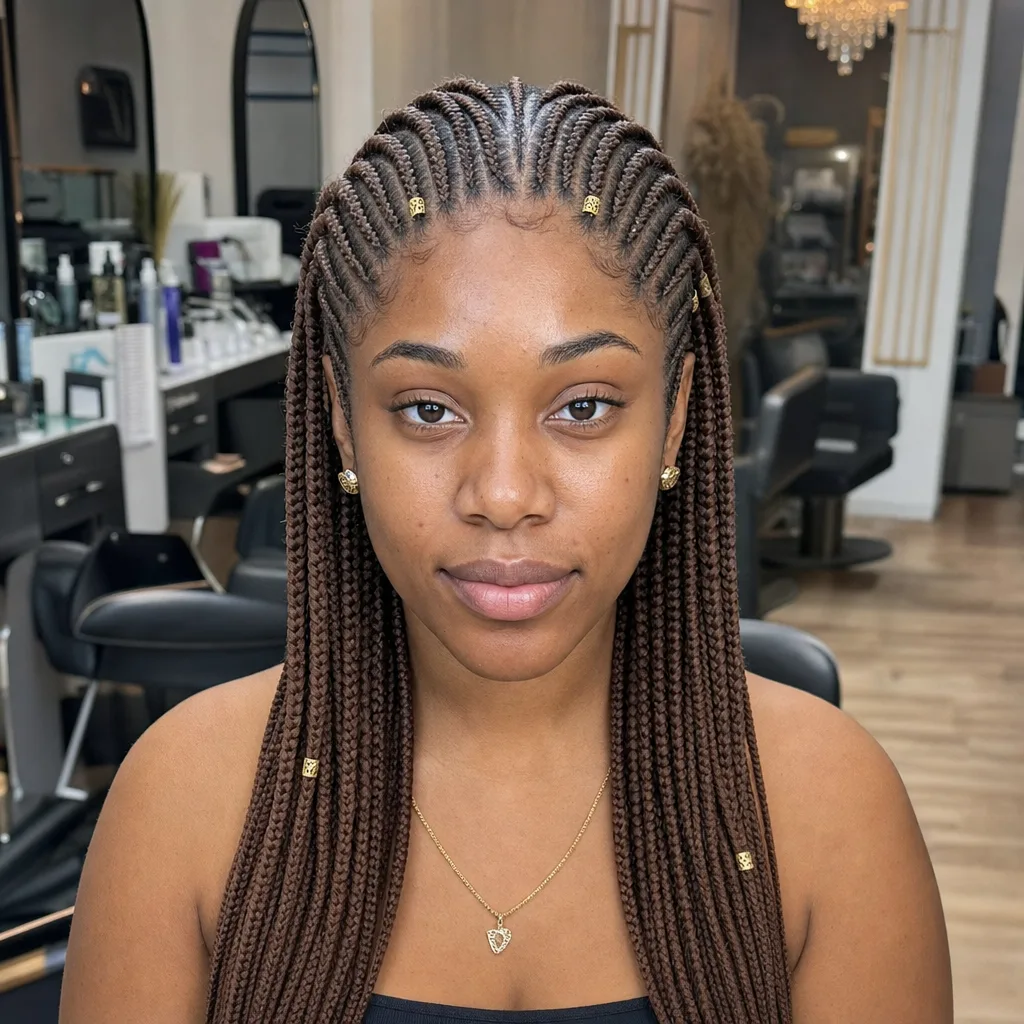 Try this on me
 Try this on me
 Try this on me
 Try this on me
If the free-hanging styles are what you keep coming back to, the wider set of protective styles for black hair covers the twists and knots that use the same partings without the length. Two strands instead of three gets you a twist rather than a braid, which installs in about half the time and comes down faster.
The mistakes that cost people their hairline
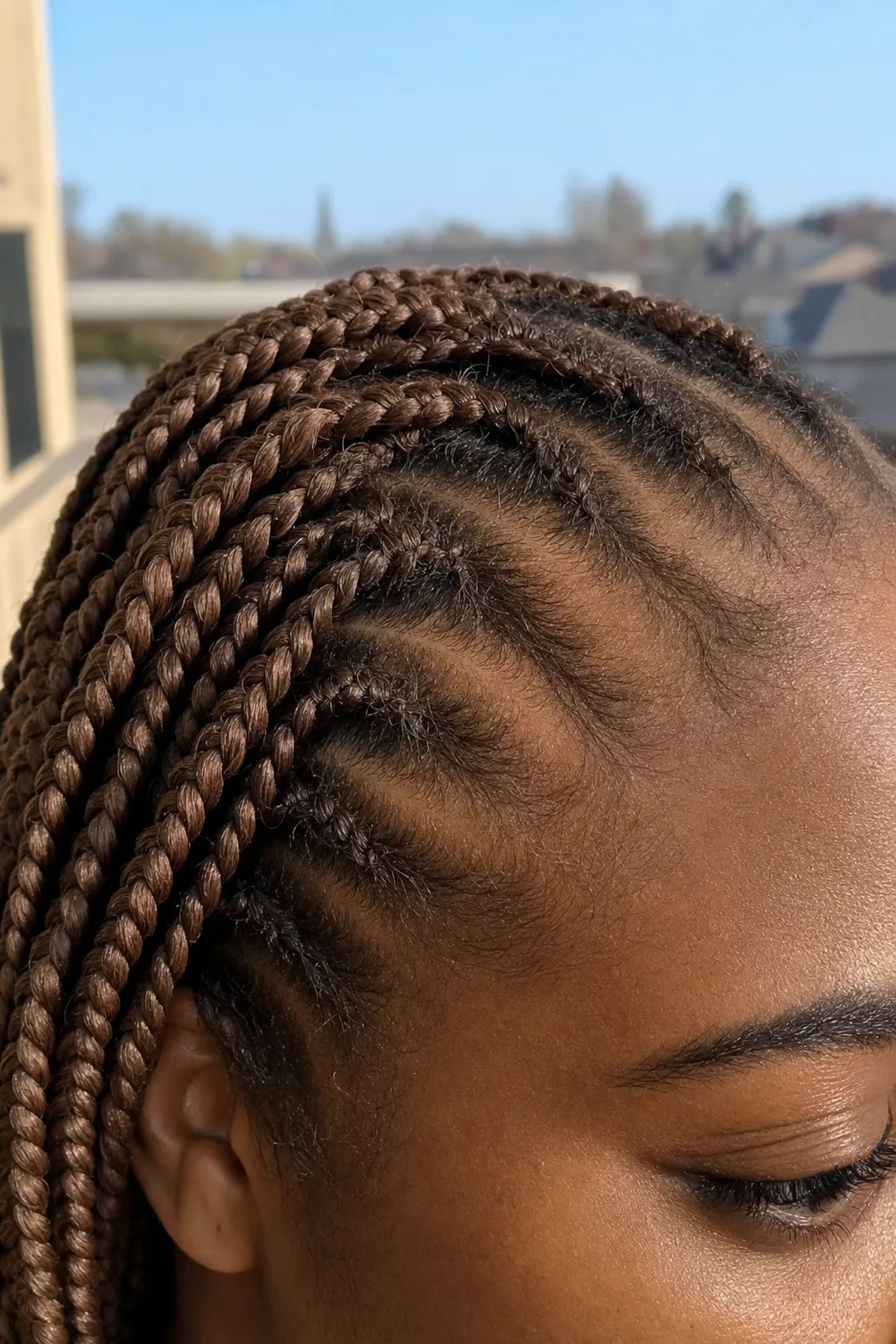
Braiding the perimeter. The hairs at your temples are the finest on your head and they are the ones under a braid that pulls sideways all day. Losing that corner takes months to notice and years to grow back, if it grows back at all.
Saying nothing when it stings. Braiders cannot feel your scalp. The window to say "that is too tight" is while the row is being built, not at the end when redoing it costs another hour.
Wearing it past the date. Free-hanging braids at eight weeks are carrying eight weeks of shed hair that never fell out. That matted weight at the root is what tears when you finally take them down. Take them out on time and take them out wet with conditioner.
Going waist-length on fine or fragile hair. Length is weight, and weight is tension you feel for six weeks. If your hair is tightly coiled and fine, the density of your own strand matters more than the texture.
Slicking the baby hairs every morning. Gel plus a brush plus daily friction on the one section already under load is how a thin edge becomes a bald one.
How to ask for it in the chair
Braiders do not read minds and style names travel badly between salons. Two numbers and one instruction get you what you pictured.
Say this to your barber
Medium knotless braids, one inch partings, to my collarbone, and please leave my edges out and keep the roots loose.
Bring a picture. Bring two, in fact: one of the parting size you want and one of the length. Those are different decisions and a single photo usually only shows one of them clearly.
See it on your face before you book eight hours
The honest free method is the one everyone already uses: search the style, save twenty photos, hold your phone next to your face in the mirror. It works well enough to narrow a style family, and it is worth doing before you spend anything.
It hits a wall on the only question that matters. Every photo you saved is someone else's face, someone else's hairline and someone else's head shape, and braiding is the style category where those three things change the result most. A jumbo parting that reads bold on a long face reads heavy on a round one. A centre part in Fulani braids is unforgiving if your hairline is uneven.
That is the wall the try-on removes. Upload one selfie and see the actual style on your actual face before you commit a Saturday to it.
Yours could be here.
Start with one selfie.
One photo, twenty seconds, and you'll know. Free account, no card for your first render.
The first look is free and needs no card. If you want to compare several styles side by side or take a clean before-and-after sheet to your braider, the paid plans start at $9 a month with a seven day refund. Pick the style first, then book the chair.
If you are keeping braids for events rather than every day, the same partings work under half up half down styling, and looser plaited looks like bubble braids give you a night out without an eight hour install.
The short version
Pick the family first. If you need weeks of wear and a style you can restyle, go free-hanging and medium. If you need speed, tidiness and the lightest load on your scalp, go scalp-attached with feed-ins. Then say your parting size out loud when you book, because that one number moves your hours, your price and your hairline more than the style name ever will.
Frequently asked questions
They split into two families. Scalp-attached braiding includes cornrows, stitch or feed-in braids, lemonade braids and the cornrowed front of Fulani styles. Free-hanging braiding includes box braids, knotless braids, micro braids, braided bobs, and goddess or boho braids with hair left out. Most named styles you see online are a combination of the two.
Free-hanging braids with small to medium partings. Micro braids and small knotless can hold eight weeks or more, because the braid starts at its own parting and new root growth does not disturb the pattern. Anything flat to the scalp looks grown out in two to three weeks no matter how well it was installed.
Knotless and feed-in styles, because both start with your own hair and add extension gradually instead of clamping a knot of synthetic hair onto a small section at the root. Parting size matters less than tension. A loosely installed jumbo braid is kinder than a tight micro braid, and any style is damaging if it is anchored into your edges.
Straight-back cornrows, usually two to three hours, and jumbo box braids, often under four. A braided bob is the fastest free-hanging option because you are braiding short lengths. Micro braids sit at the other end and frequently need two sittings.
Feed-in and stitch braids are the hardest to do well, because the parting lines have to stay perfectly straight while extension hair is added mid-row without a visible bump. Micro braids are the hardest in stamina terms rather than skill. Curved patterns like lemonade braids need the braider to keep even tension around the shape of the skull, which is where most cheap installs go wrong.
A feed-in braid starts with your natural hair alone and the braider adds small pieces of extension hair as the braid travels down the row. The result is a braid that begins thin and flat at your hairline and thickens gradually, with no knot and no bulk at the root. It is the standard technique for cornrows on anyone who cares about their edges.
Not inherently. The technique itself puts less weight on your hairline than a knotted start, which is why it is recommended for fine edges. Damage comes from tension and from wearing the style too long. Keep them to three or four weeks, do not let the braider anchor into your perimeter, and take them down if your scalp is sore after the first night.
Very short hair, at any texture, because there is not enough length to hold a section. Beyond that, fine and low density hair is harder than tightly coiled hair, since fine strands slip out of a section and give the braider less to grip. Tightly coiled hair is the easiest to braid neatly, which is exactly why African braiding developed around it.
Preview it on your own photo: Virtual Hair Color Try-On.
Share article
About the author
More articles
Women's Haircuts · 14 min
Bleached Hair: How Light Yours Can Go, 14 Shades, Aftercare
How light your bleached hair can go depends on where it starts. See 14 bleached shades on one cut, what each starting color can reach in one session, how toner finishes the job, and the aftercare that keeps it soft.
Women's Haircuts · 16 min
Waves Hair: How to Get Beach, Loose and Hollywood Waves That Last
Waves hair is about what you leave straight. How to get beach, loose, Hollywood and heatless waves, which wave suits your hair type, and why your waves keep falling out.
Women's Haircuts · 15 min
Fino Hair Mask: Who It Suits, How to Use It, and Its Limit
The Fino hair mask makes dry, bleached and frizzy hair smooth and shiny in one use, mostly by coating it. Here is what is in the jar, which hair types it suits, exactly how to use it, and what to do when the ends are past a mask.