Knotless Braids: Sizes, Cost and How Long They Last
Oleh Onysko Updated 27 September 2026 16 min read
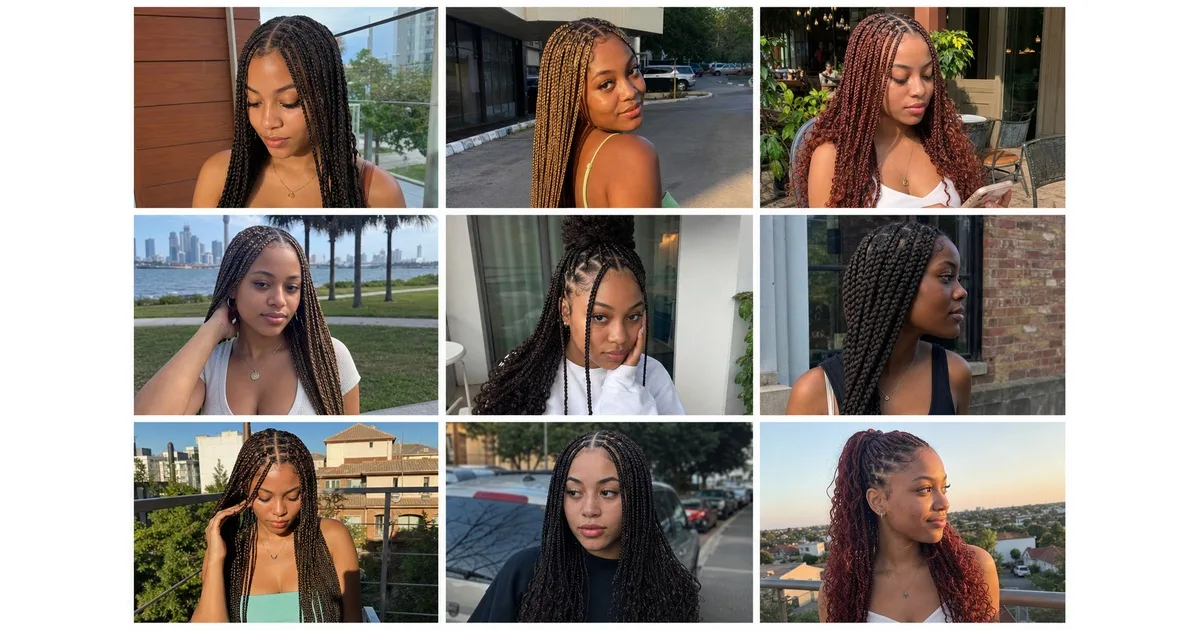
In this article
Knotless braids are box braids that start with your own hair instead of a knot. The braider takes a small section of your hair, plaits the first half inch flat against your scalp, then feeds the extension hair in gradually until the braid reaches full width. No knot at the root means no ball of tension sitting on one follicle for the next six weeks.
That single change is why the style took over. The parts sit flatter, the braids move from day one, and the headache most people expect on night one does not arrive. This guide covers the four sizes, what each one costs you in chair time, how long they actually last, and what goes wrong when they are installed badly. If you are still choosing a protective look, see how knotless sits next to every other option in our guide to Black hairstyles.
What are knotless braids?
A knotless braid is an individual plait built with a feed-in start. The first section is 100 percent your own hair, and braiding hair is added in small increments over roughly the first two inches, so the braid thickens from hair-thin at the scalp to full width below the crown. A classic box braid does the opposite: the extension is knotted onto your hair at the scalp before the plait begins.
Look at the root and you can tell them apart in a second. A knotless root lies flat and you can see the parting line running clean between the braids. A knotted root sits up off the scalp as a small bump, and a full head of them reads as texture along every part.
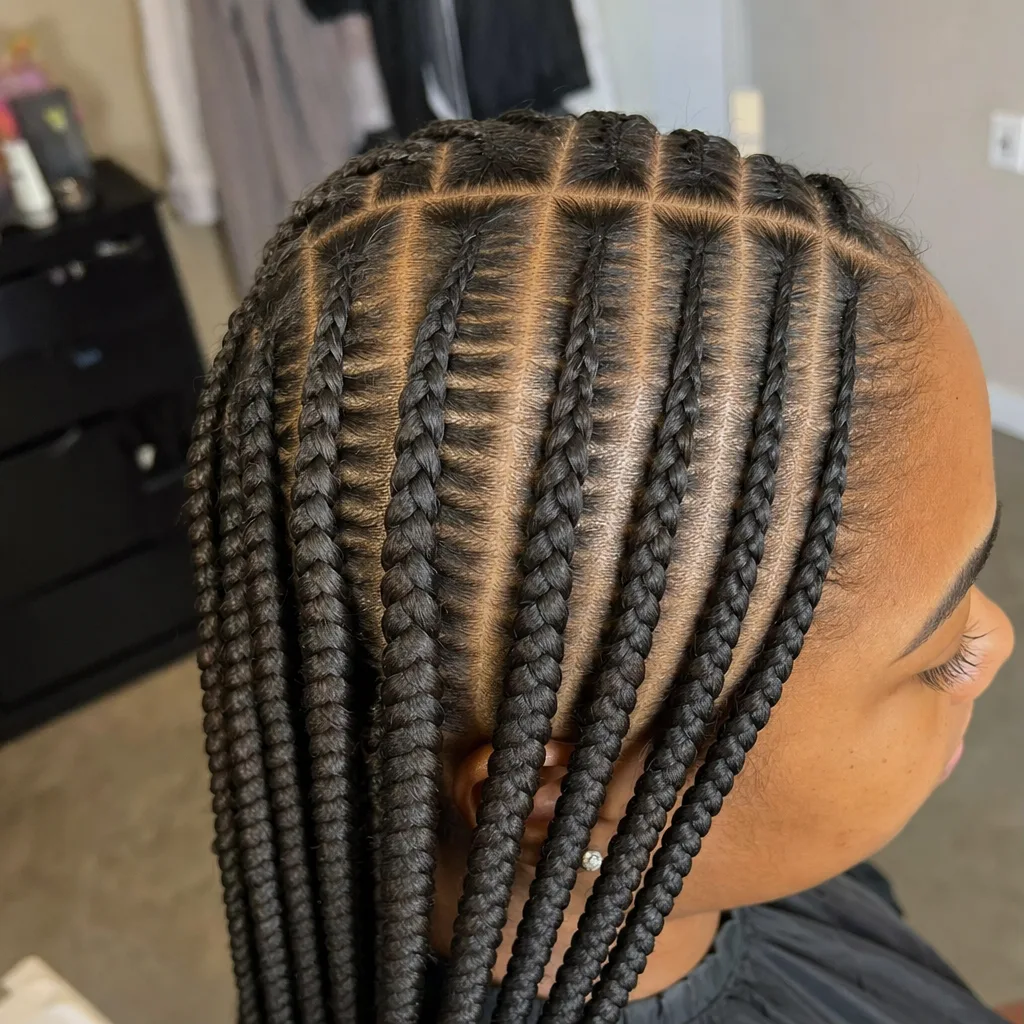
Knotless braids vs box braids: which should you book?
Book knotless if your scalp is sensitive, your edges are thin, or you want the style to look worn-in immediately. Book classic box braids if you want the lowest price and the longest wear out of one install. Knotless costs more and generally loosens sooner, because there is no knot holding the extension in place.
| Knotless braids | Classic box braids | |
|---|---|---|
| Root | Your own hair, flat to the scalp | Extension knotted at the scalp |
| Tension on day one | Low, usually no headache | Noticeable, often 24 to 48 hours |
| Install time | Longer, the feed-in is slower | Faster |
| Price | Higher for the same size and length | Lower |
| Grip on the extension | Weaker, slips sooner | Stronger, holds longer |
| Best for | Fine hair, thin edges, tender scalps | Maximum wear time per dollar |
If you want the same feed-in technique worn flat to the scalp instead of hanging free, pop smoke braids are the cornrowed version of the same idea and a much shorter appointment.
If you are weighing braids against other protective styles, the same trade-off shows up in Fulani braids, where the cornrowed front carries most of the tension and the hanging braids carry almost none.
If you are still weighing this against cornrows, feed-ins or a braided bob, the wider comparison of African hair braiding styles sets all ten side by side with the hours each one takes.
Which knotless braid size is right for you?
Size decides three things at once: how long you sit, how much you pay, and how heavy the finished style feels. Length changes the price. Size changes the day.
| Size | Braid width | Typical chair time | Feels | Best if |
|---|---|---|---|---|
| Small | About a pencil lead | Longest, often a full day | Light per braid, heavy in total | You want maximum styling range and can sit |
| Medium | About a ballpoint pen | Middle | The everyday balance | This is your first set |
| Large | Roughly a marker | Shorter | Noticeably lighter | You want a fast install |
| Jumbo | About a thumb | Shortest | Lightest, most visible scalp | Your hair is fine, or you hate long appointments |
| Boho | Any size, curls left out | Add an hour or two | Softest | You want it to look undone |
Small knotless braids
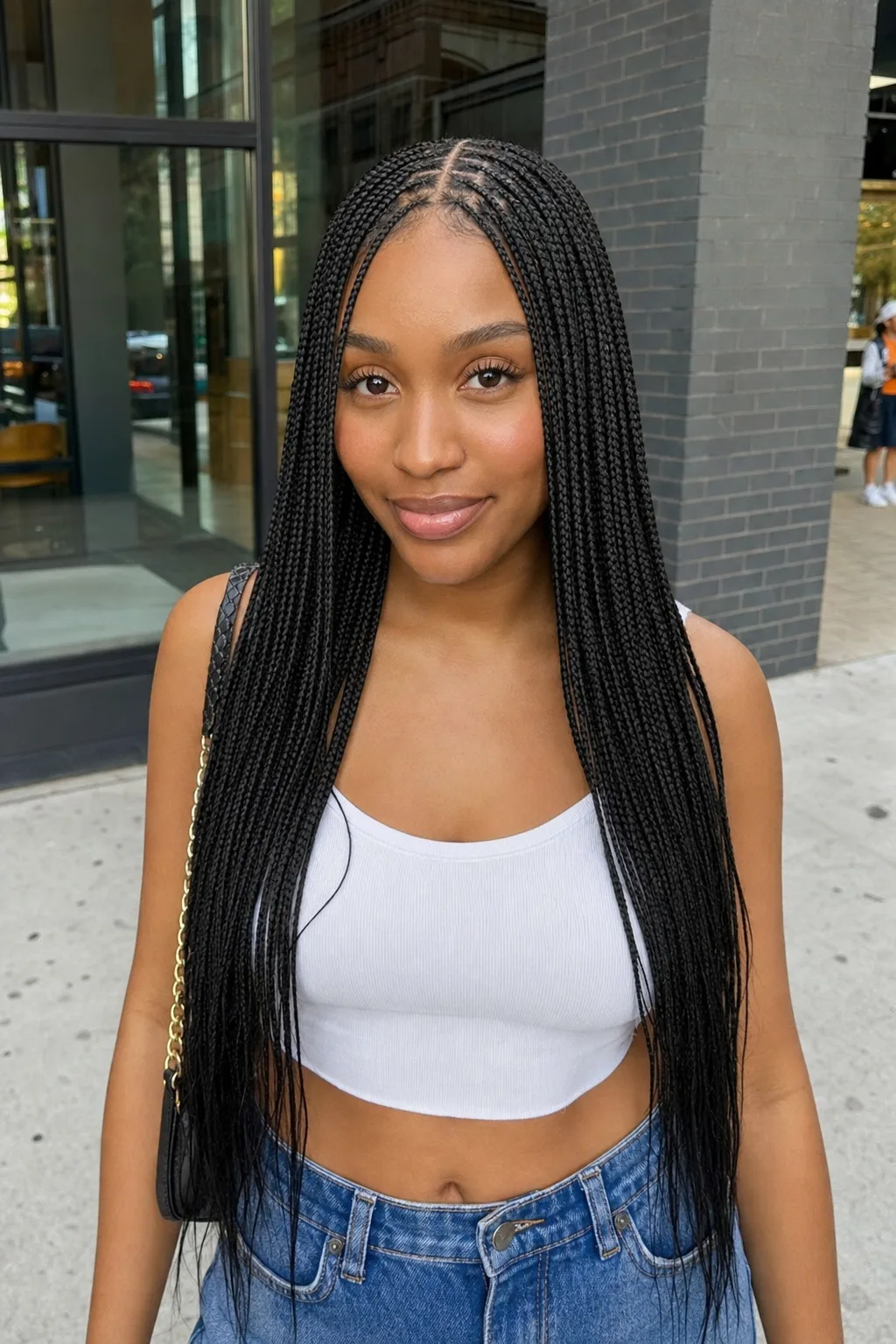
Small braids give you the most styling options and the most convincing drape, and they cost the most chair time by a wide margin. They also distribute weight across many more sections, which is why people with fine hair often prefer them despite the appointment length.
Medium knotless braids
Medium is the default for a reason. The install fits inside a normal working day, the braids are heavy enough to hang properly and light enough to sleep on, and every style in the gallery below works on them without argument. If you have never had knotless braids, start here.
Large and jumbo knotless braids
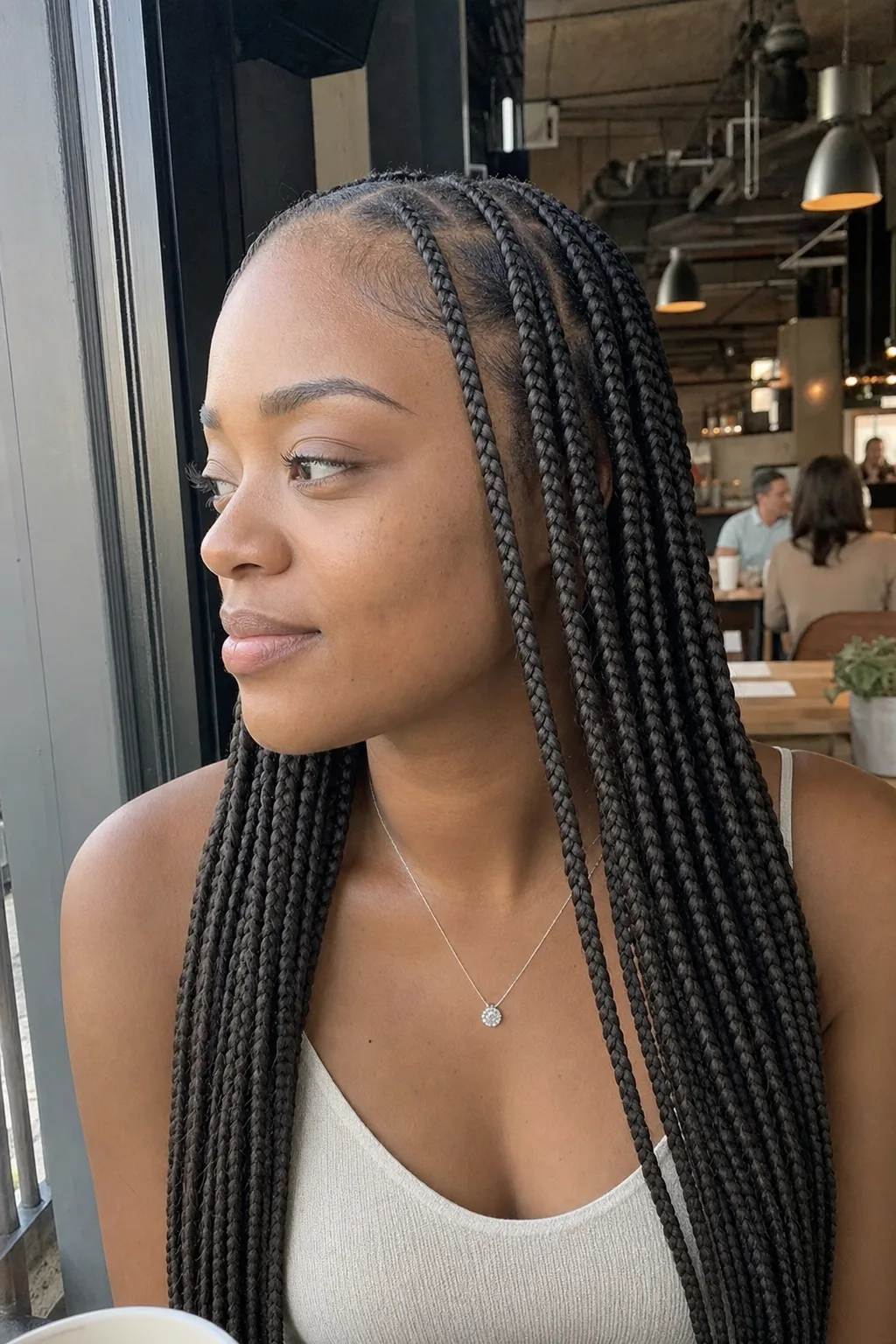
Jumbo braids are the fast option, short of switching to two-strand twists. Fewer sections means fewer hours, less total weight and much more visible scalp, which some people love and some people do not. The catch is that each braid holds a bigger piece of your hair, so a badly tensioned jumbo set concentrates pull rather than spreading it.
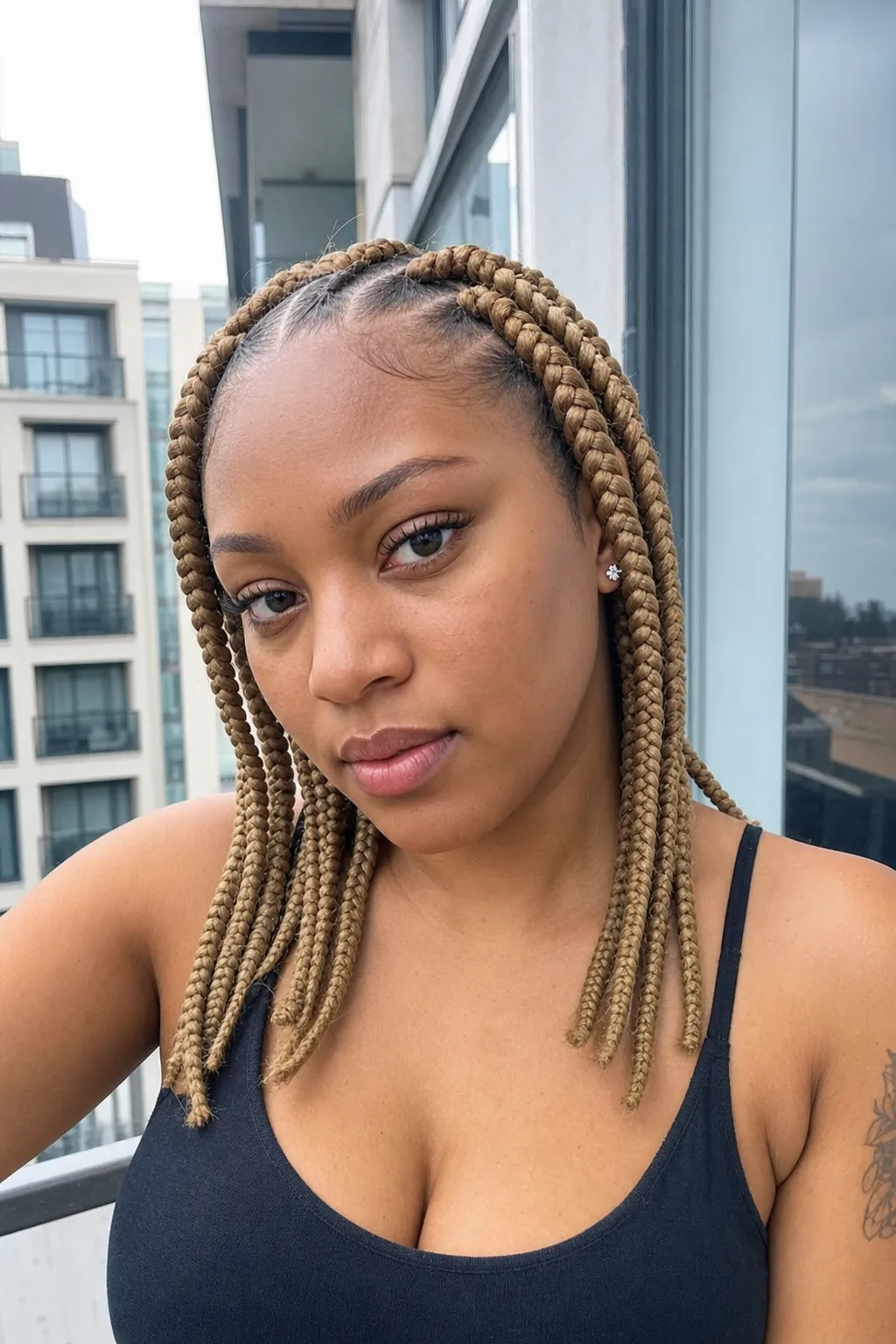
Color changes a braid set more than length does. If you are considering going lighter, see what honey blonde does to your skin tone before you buy the packs.
Boho knotless braids
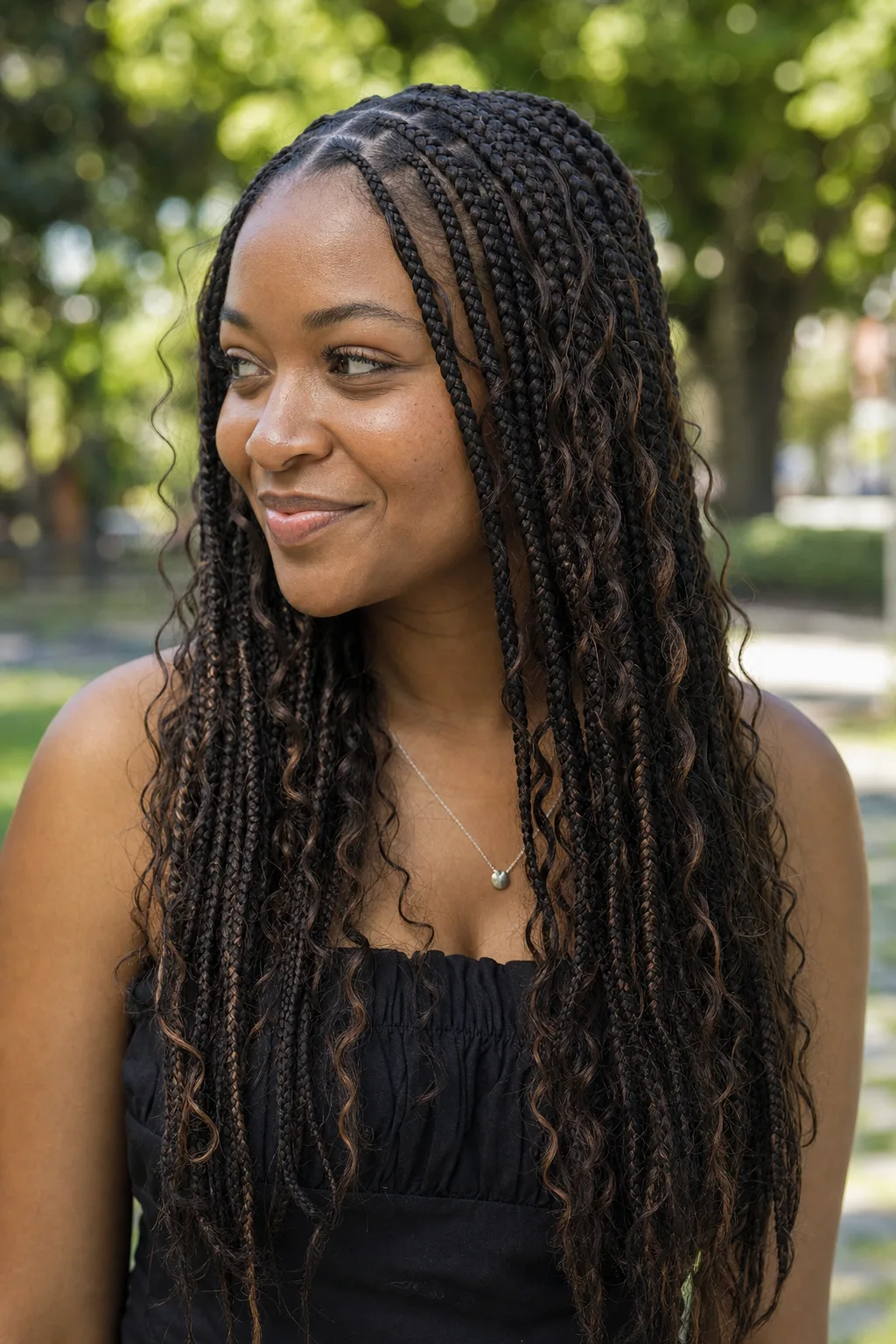
Boho knotless leaves loose curly strands out along the length of some braids, so the finish reads soft instead of sleek. It searches almost as hard as the parent term, and it is the version most people are actually picturing when they say they want braids that do not look severe. Expect an extra hour or two, because the curls are added by hand.
Yours could be here.
Start with one selfie.
One photo, twenty seconds, and you'll know. Free account, no card for your first render.
Say this to your barber
Medium knotless braids, mid-back length, dark brown, and please keep the first two inches loose at the root.
How long do knotless braids last?
Six to eight weeks is the honest answer, and eight is the ceiling, not the target. Somewhere around week five the roots start to grow out and the braids begin to slip, because a knotless start has no knot gripping the extension. Past eight weeks you are not wearing a protective style any more, you are wearing a mat of new growth that will cost you hair on the way out.
Small braids hold their shape a week or two longer than jumbo, purely because more sections share the load. Anyone telling you three months is fine is selling you the install, not the takedown.
What goes wrong with knotless braids
Most bad braid stories are one of four things, and every one of them is decided in the chair, not afterwards. A fifth happens before you sit down, at the shop: buying too few packs, or two packs from different colour lots. If you are going boho and need wavy hair to leave out along each braid, our breakdown of the Organique textures covers which pack gives a soft feathered edge and which gives tight spirals.
- Braided too tight at the root. The whole point of knotless is low tension. If you feel pulling while it is happening, say so during the first row, not at the end. The American Academy of Dermatology is blunt that repeated pulling on the follicle causes traction alopecia, and the hairline is where it shows first. No bottle undoes that either, which is the part the hair growth vitamin aisle tends to leave out.
- Sections that are too big for the extension. A thin section carrying a heavy braid is a follicle under load for six weeks. This is the real risk with jumbo, not the size itself.
- Left in past eight weeks. New growth tangles at the root, and the takedown pulls out hair that would otherwise have stayed on your head.
- Never washed. Six weeks of product on a scalp you cannot see is how you get flaking, itching and a smell that appears around week three.
How to wash knotless braids without ruining them
- Dilute the shampoo
Mix a clarifying or gentle shampoo with water in an applicator bottle. Neat shampoo poured on braids foams up between the plaits and takes forever to rinse.
- Go at the scalp, not the length
Apply along the parts and massage with the pads of your fingers. The braids get clean from the water running down them. Scrubbing the length is how frizz starts.
- Rinse longer than feels necessary
Leftover product is the main cause of flaking in braids. Rinse until the water runs clear, then rinse again.
- Squeeze, do not rub
Press the water out with a towel down the length. Rubbing roughs up every braid at once.
- Dry all the way through
Sit under a hooded dryer or let them air dry fully before you tie anything up. Damp braids tied down for a night is how the smell starts.
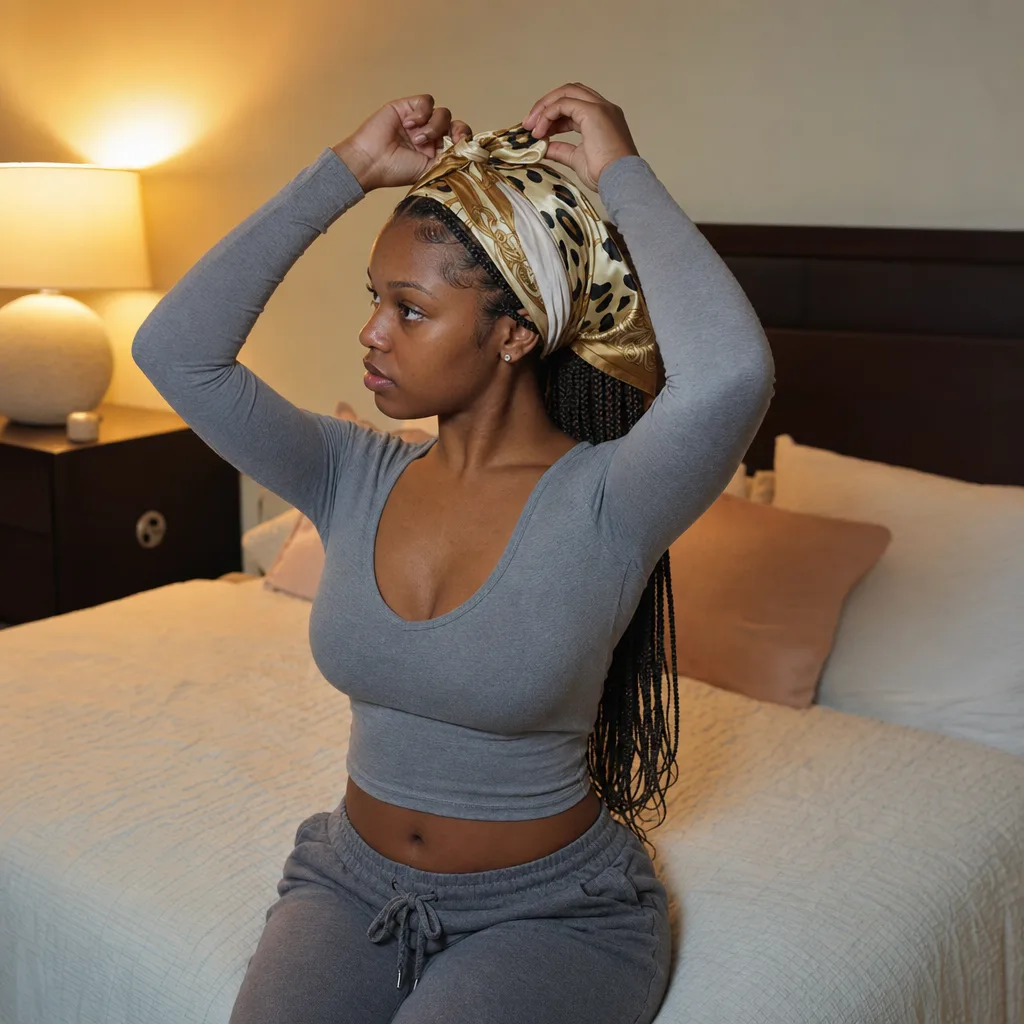
Between washes, a satin scarf or bonnet at night is the single highest-return habit. Cotton pillowcases drag on braids, and the frizz you see at week four is mostly friction rather than age.
Do knotless braids work on your hair type?
Yes, on every texture, but the reason to book them changes. On fine or relaxed hair the case is tension: no knot means no single point of load, which matters most when the hair at the root is fragile. On dense coily hair the case is comfort and finish, because the parts lie flat instead of sitting up over the knots.
If your natural texture is tightly coiled and you want to see how a style sits before you commit six hours to it, the curly and coily try-on is built on that texture rather than straight hair with a filter over it.
How much your own hair shrinks also decides how much length you are really working with, which is worth checking against what type 4c hair does when it dries before you book a length.
The one honest limit is very short hair. You need roughly two to three inches at the root for the braider to have something to feed into. Below that, the first inch cannot hold and the braid slides.
Is it free to see knotless braids on your own face?
Your first look is free and needs no card: one hairstyle and one color, front view, on your own photo. After that, Hairstyle Atlas pricing is $9 a month for Starter with 150 credits, or $24 a month for Pro with 480 credits and additional angles of the same cut. There is a seven-day refund with no conditions attached.
We are saying that plainly because a six-hour appointment and a $250 bill is a bad place to discover that waist-length braids swamp your frame. Ten seconds and a selfie is a cheaper way to find out.
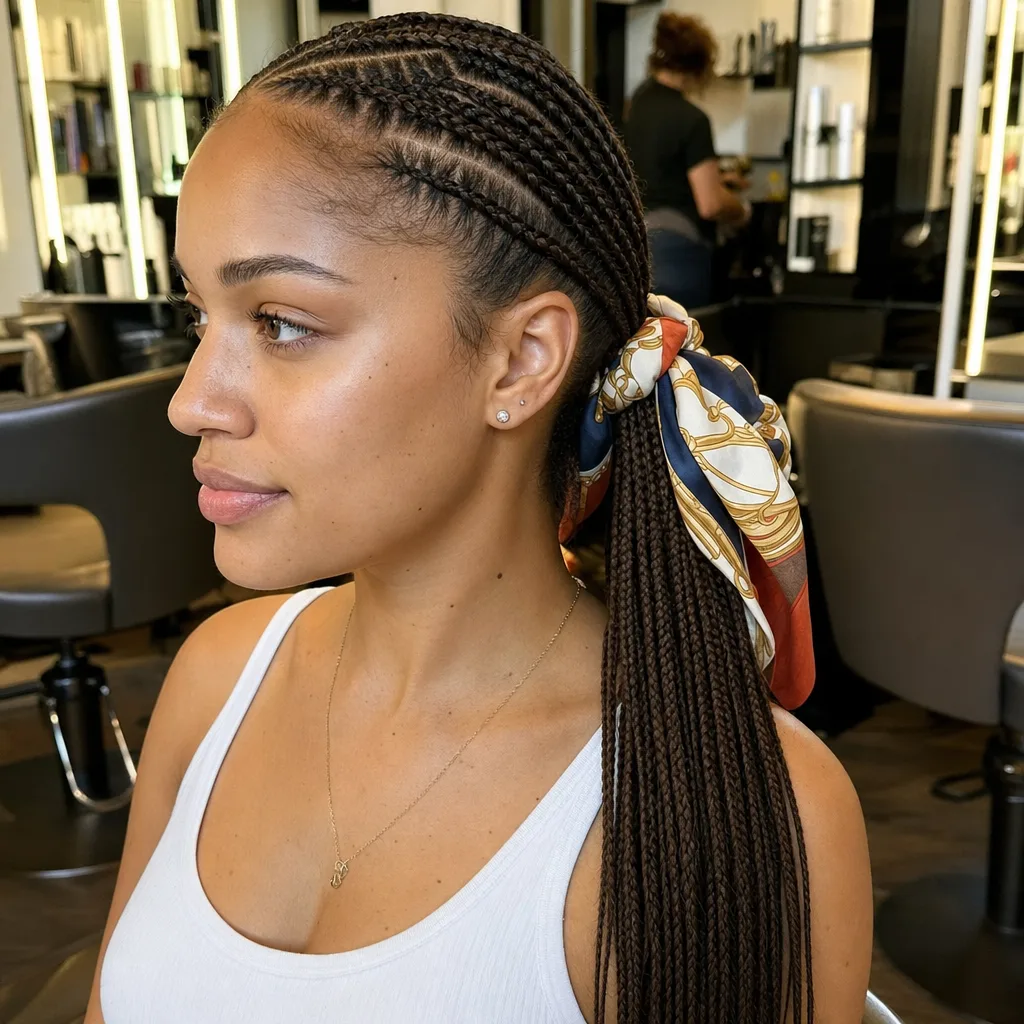
Knotless braid styles: 10 ways to wear the same set
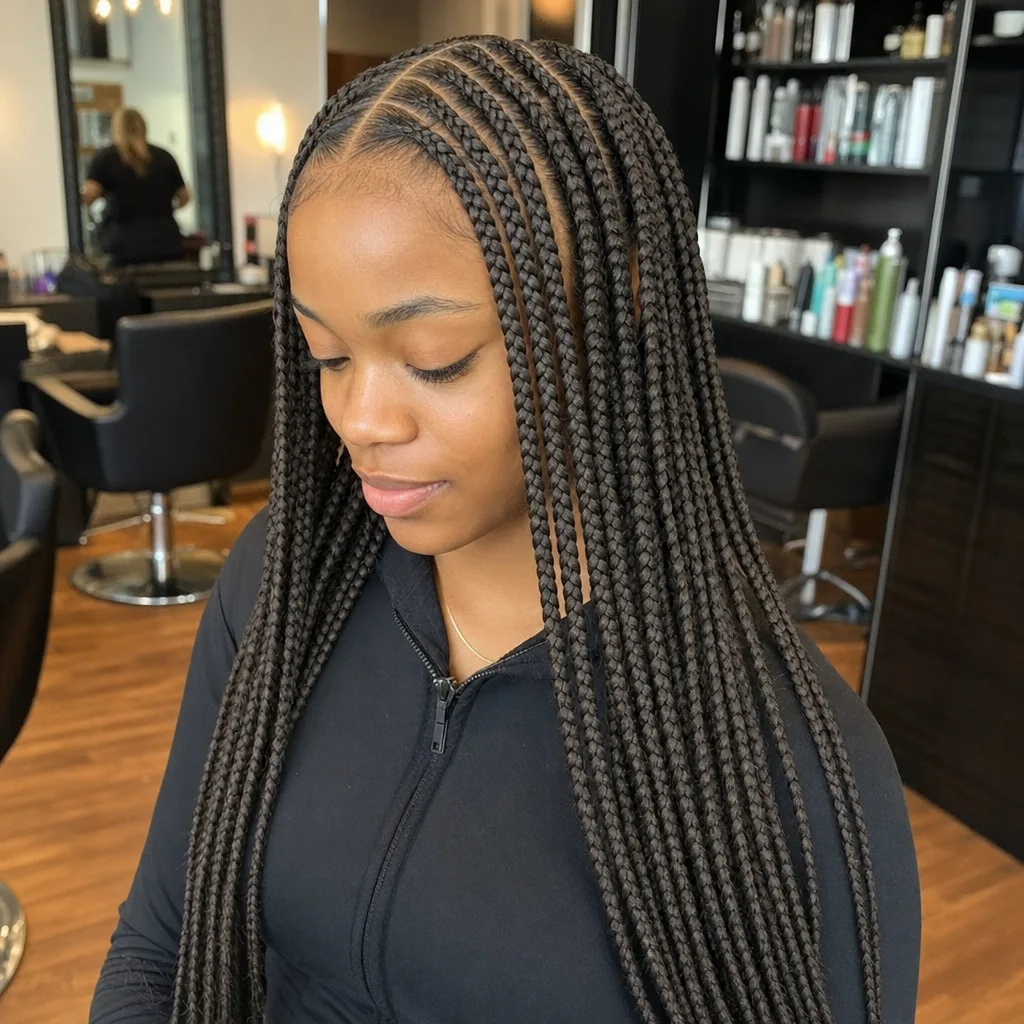
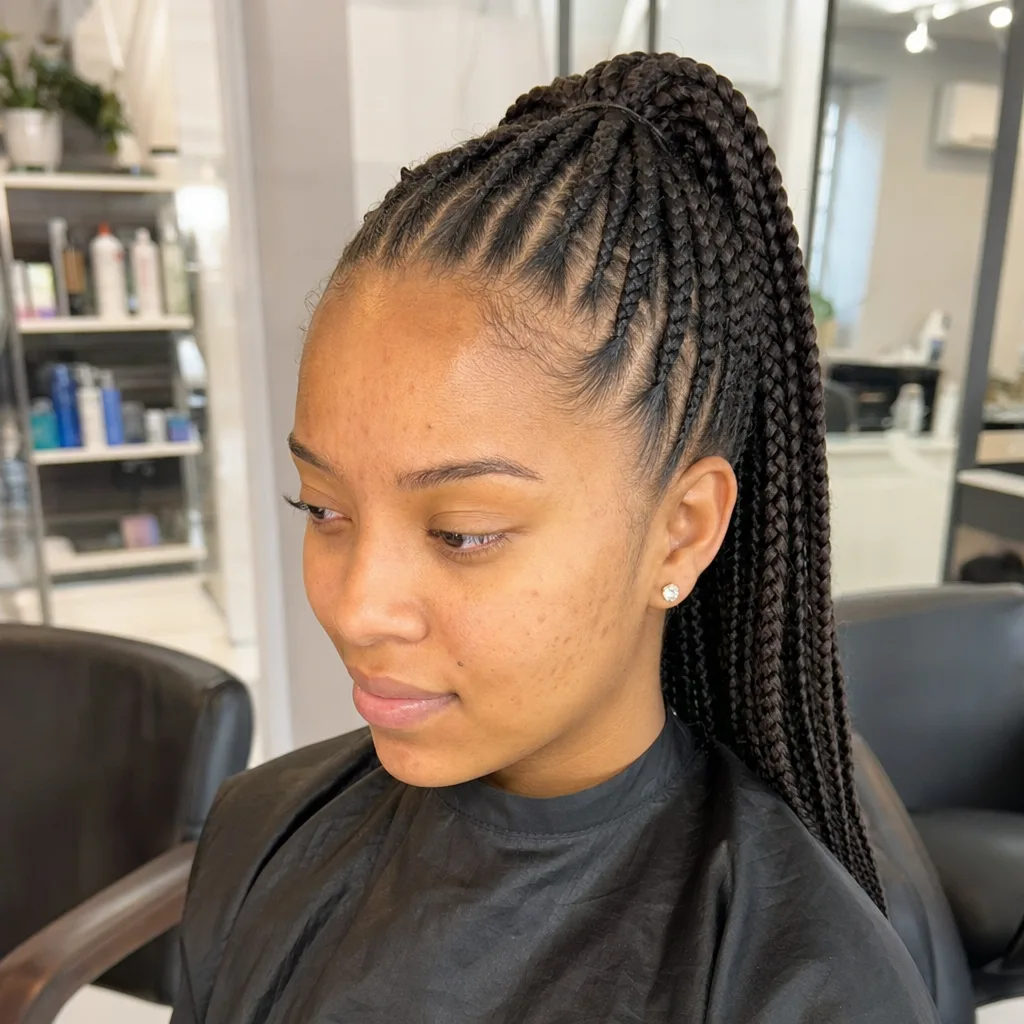
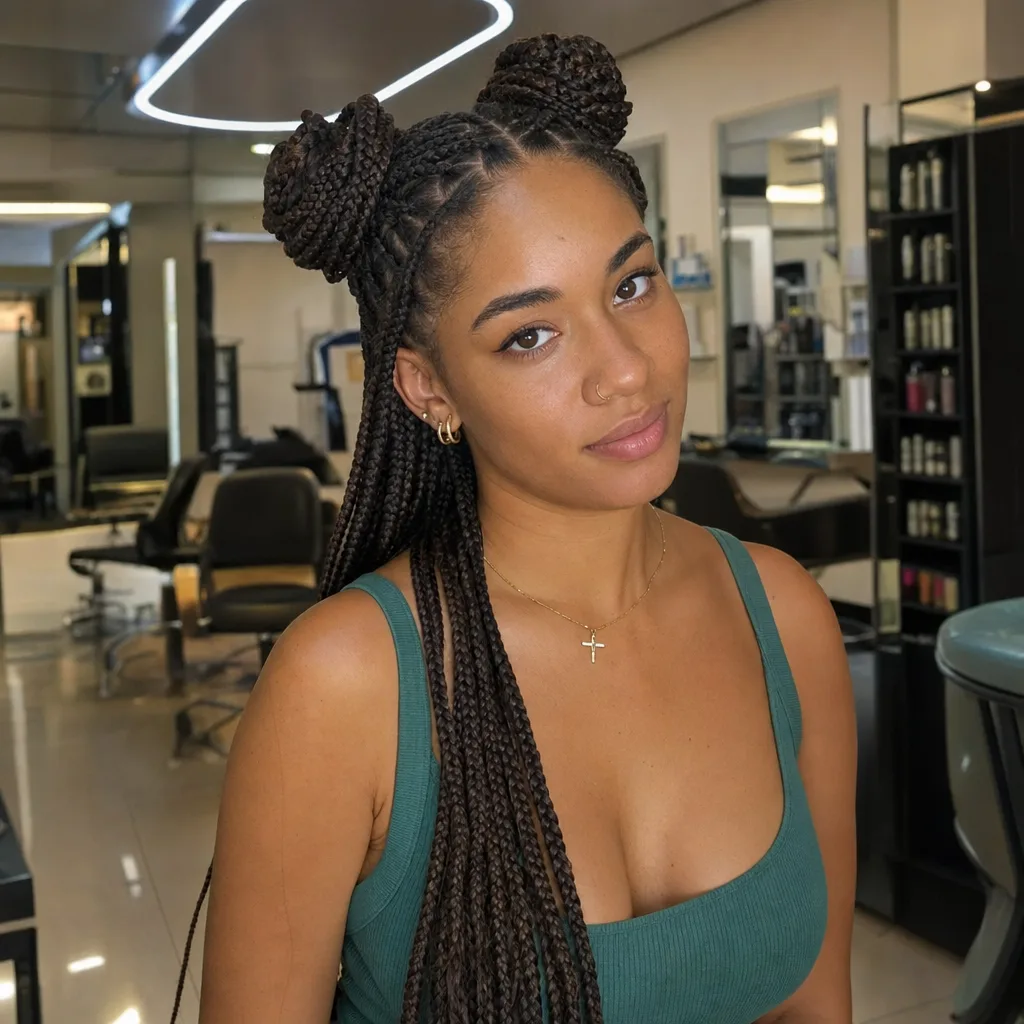
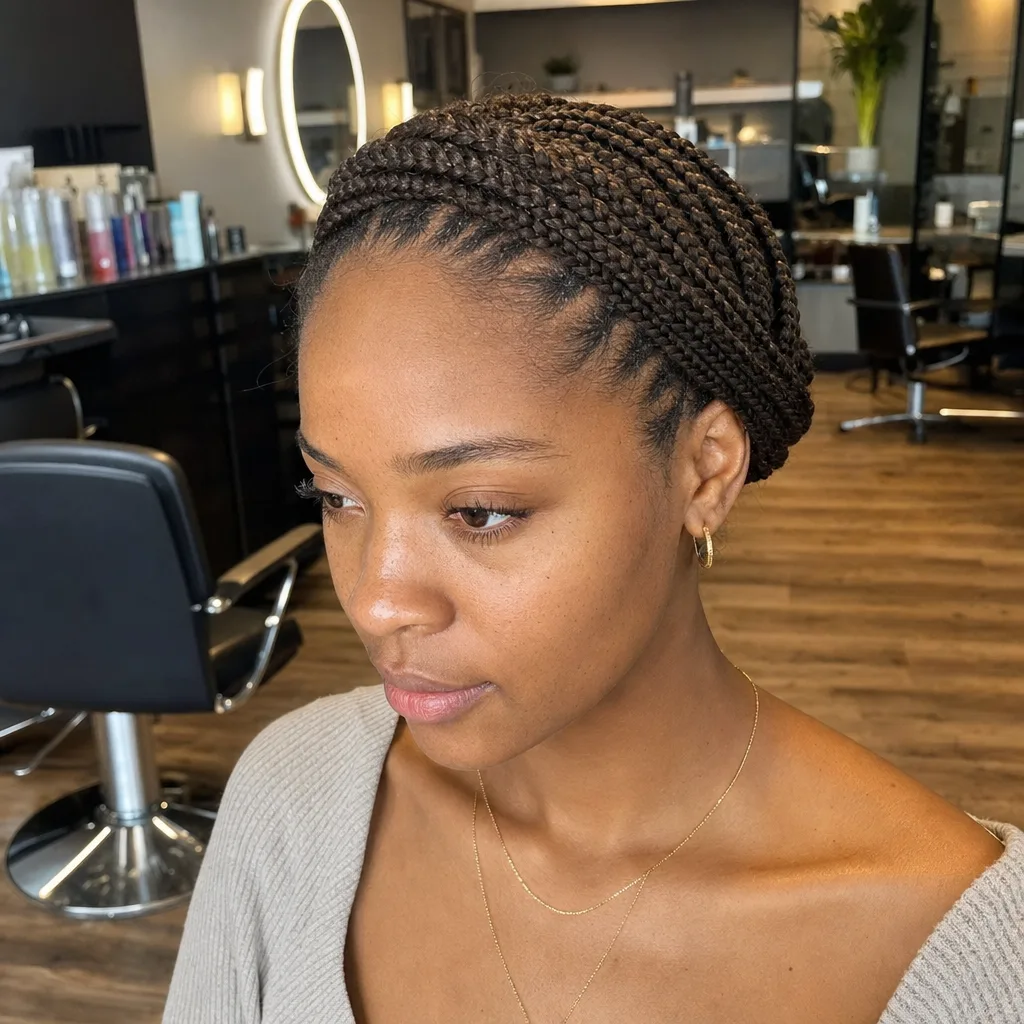
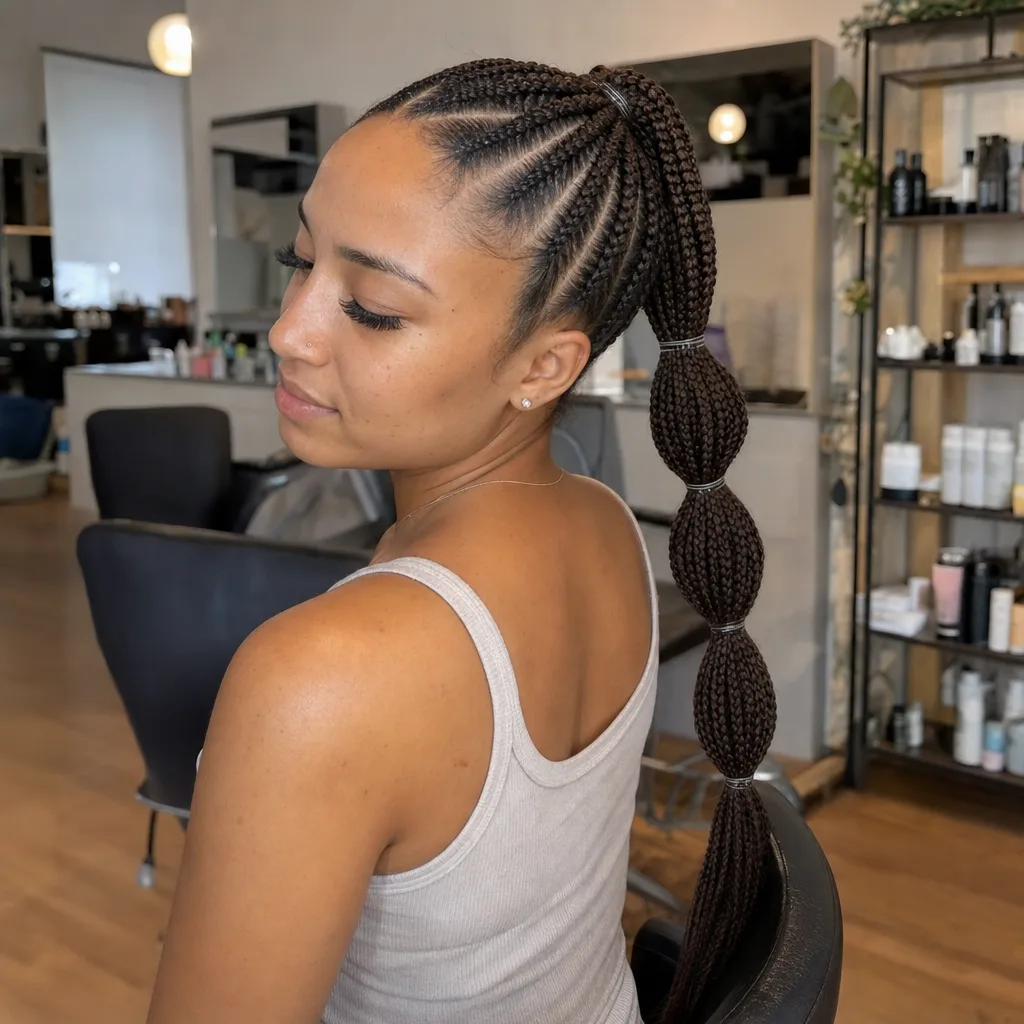
One set of medium knotless braids, ten different styles. This is the argument for the size: the braids in every picture below are identical, and only what is done with them changes. Nothing here needs a second appointment. One more that is not pictured: run elastics down the length of a gathered set and pull each section open, and you have bubble braids over your knotless, which takes about five minutes.
Gallery10 photos · tap to enlarge
 Try this on me
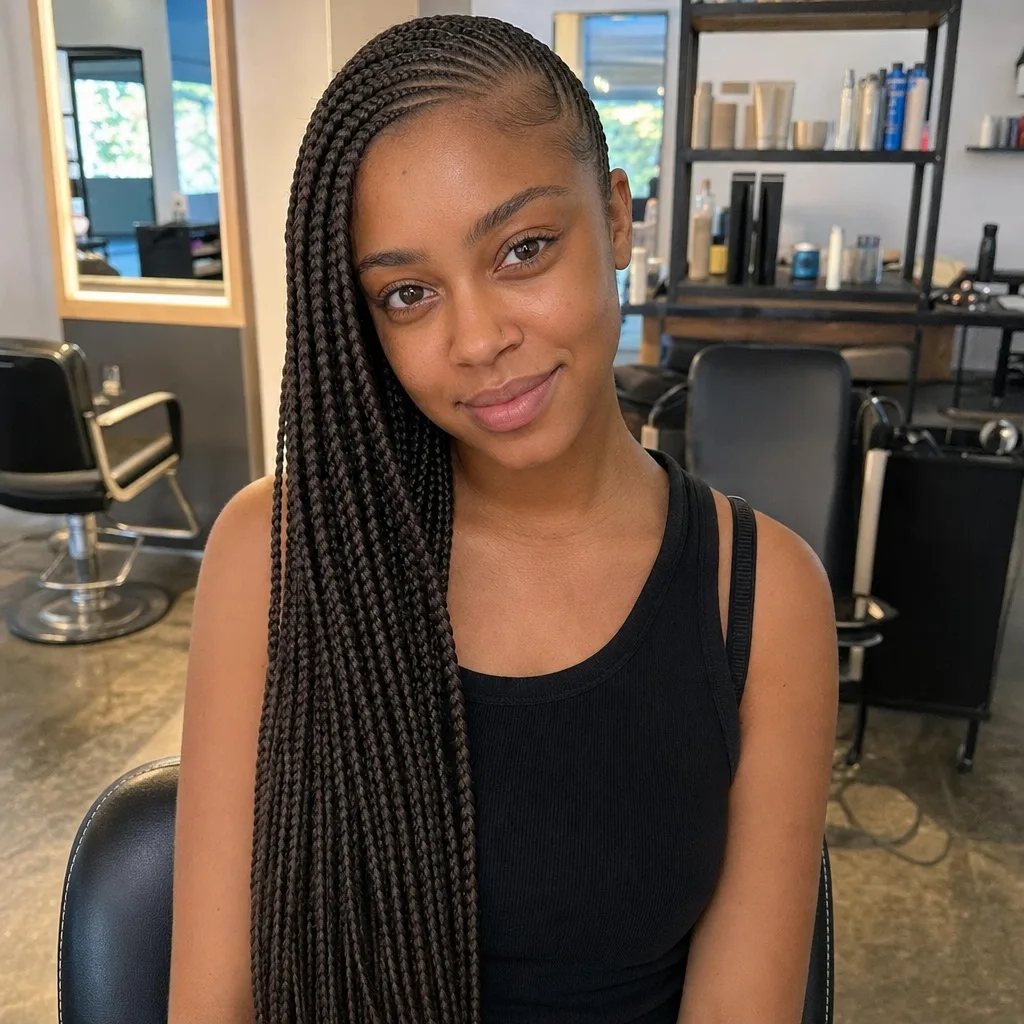 Try this on me
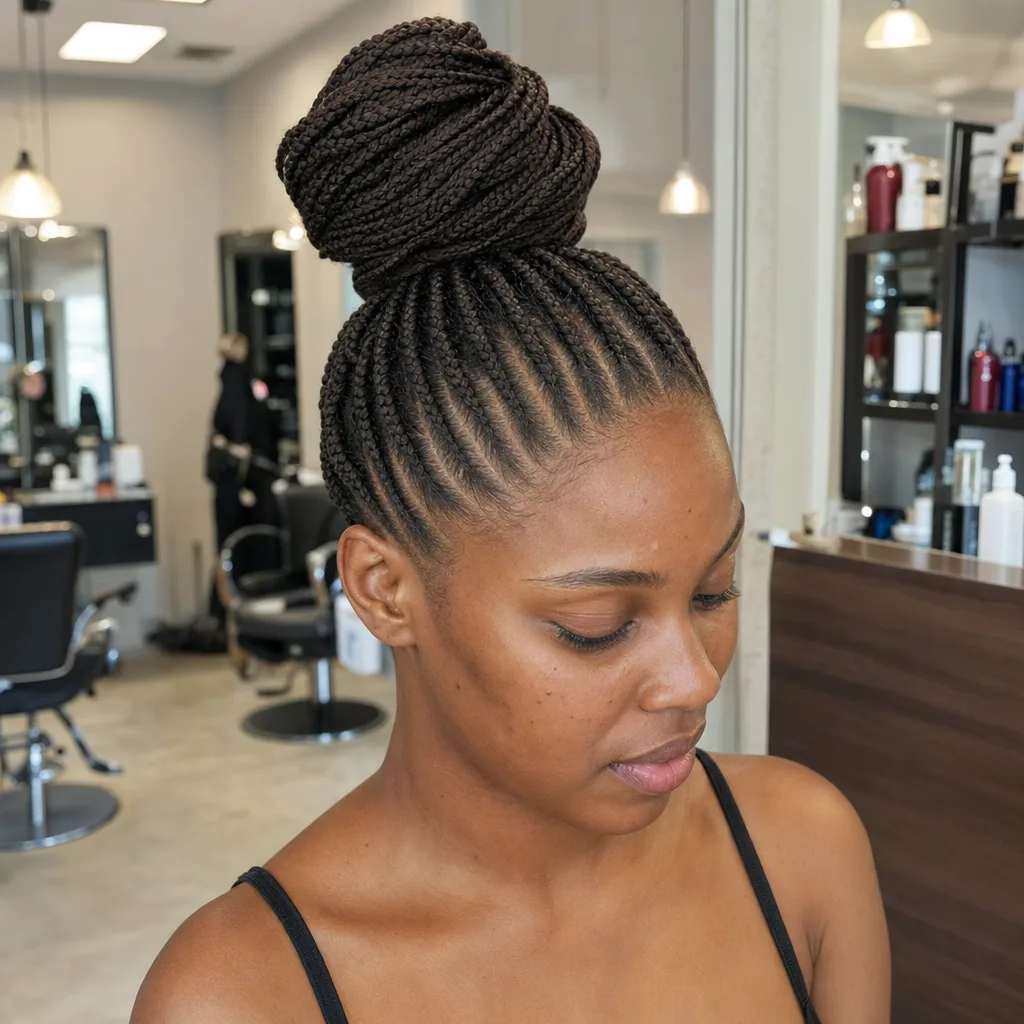 Try this on me
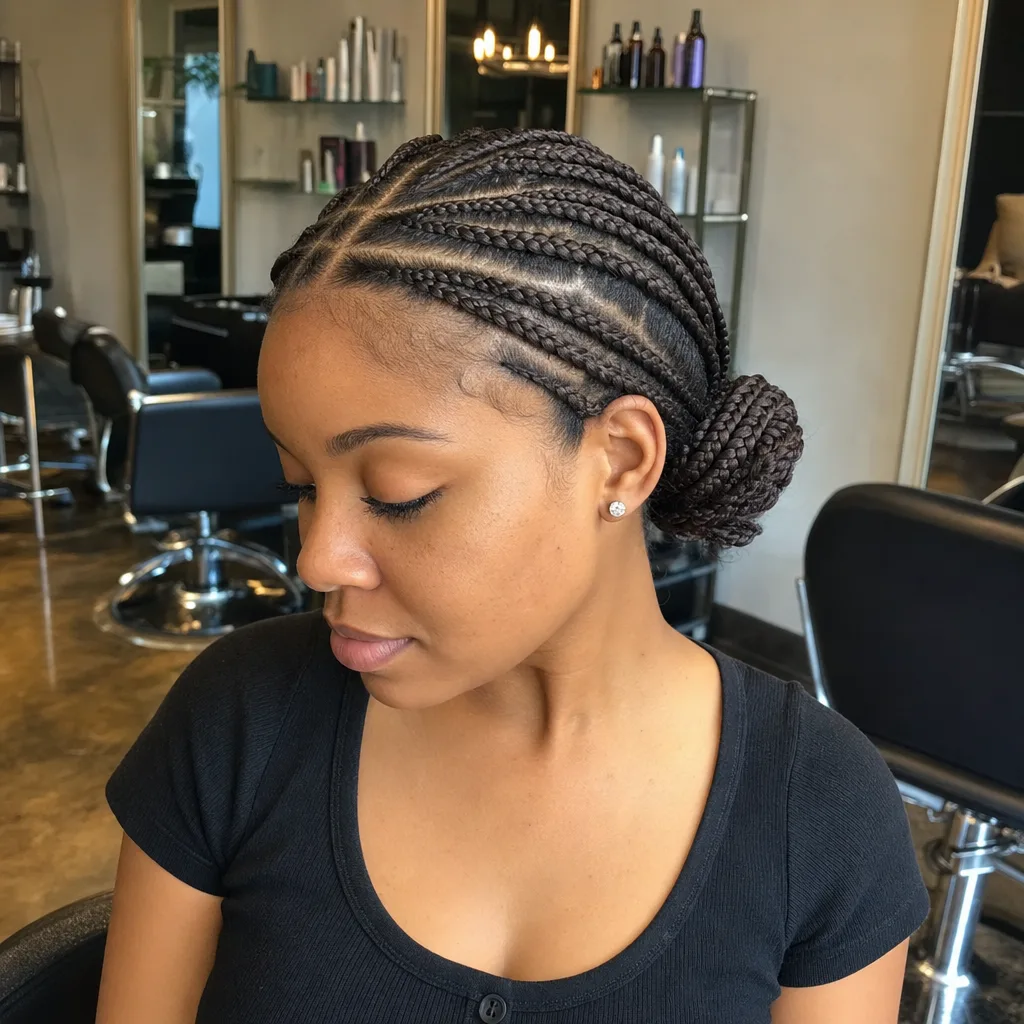 Try this on me
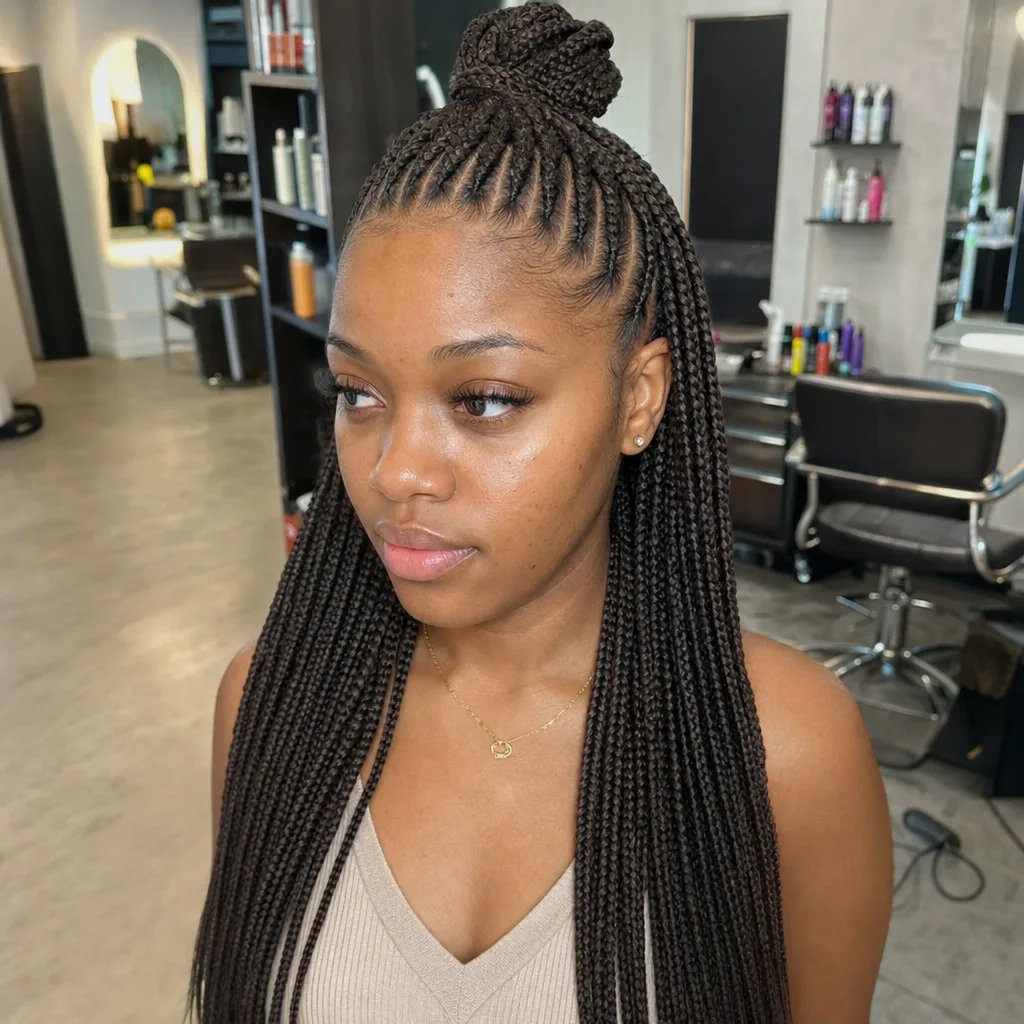 Try this on me
 Try this on me
 Try this on me
 Try this on me
 Try this on me
 Try this on me
Two of those are worth pulling out. The crown wrap is the one to keep for weeks five and six, because it hides the loosening at the root that no styling product will fix. The high bun is the one to avoid on a fresh install, since it puts every braid under tension in the same direction on the day your scalp is most tender.
If you are coming to braids from long loose hair and want to compare, our guide to wearing length without cutting it covers the same styling problem from the other side.
Gathering the front cornrows at the crown and leaving the rest hanging is the most worn version of all, and the gathered crown section works the same way on unbraided hair.
Are knotless braids worth the extra money?
Yes, if you are choosing between knotless and knotted at the same size and length. The premium buys you a flat root, a comfortable first week and edges that survive the takedown, and that is a good trade on a style you will wear for six weeks.
No, if the price is pushing you towards a braider you have not seen work. The install is the whole product here. A knotless set braided too tight is worse than a well-tensioned box braid, because you paid extra for exactly the thing that got skipped.
Braider menus in US cities in 2026 mostly land between $150 and $400 for a full head, and the spread between cities is wider than the spread between sizes. Get the quote for your size and length before you sit down, and if you are still deciding on the look itself, try it on first.
Frequently asked questions
Where the extension joins your hair. A classic box braid ties the braiding hair onto your natural hair with a knot at the scalp. A knotless braid starts with your own hair alone and feeds the extension in gradually over the first two inches, so there is no knot and no bump at the root.
No, they usually last slightly less. Six to eight weeks is normal against eight to ten for a knotted set, because the knot is what grips the extension. You trade a little wear time for a lot less tension.
Knotless, on tension alone. There is no knot concentrating pull on a single follicle, and the weight is distributed down the braid instead of sitting at the root. That said, a tightly installed knotless set is worse for your hair than a loosely installed knotted one. Install quality beats style choice.
Three real ones. They cost more for the same size and length, they take longer to install because the feed-in is slower, and they slip and frizz at the root sooner than knotted braids.
Because nothing is anchoring the extension except the plait itself. As your own hair grows out over five or six weeks, the braid loses its grip on the root and starts to slide. That is the same feature that makes it comfortable.
Yes. Knotting the extension on is a single motion, while feeding it in takes several passes per braid. Expect a knotless set to run one to three hours longer than the same size and length in classic box braids.
A little. More sections share the same amount of new growth, so the loosening is spread out and shows later. Expect a week or two on top of what a jumbo set gives you.
US salon menus in 2026 mostly sit between $150 and $400 for a full head, with small braids at the top of that band and jumbo at the bottom. Your city moves the number more than your size does, so price two or three local braiders rather than trusting a national average.
Plan for most of a day. Jumbo braids to the shoulder are often a three hour appointment, while small braids to the waist are routinely booked at six to nine hours and sometimes split across two sittings. Ask for the booked duration when you book, not when you arrive.
The ones installed with the least tension, at a size your own hair can carry, and taken out on time. Knotless helps on the first count and does nothing for the other two. A medium knotless set, braided loose at the root and removed at week six, is about as low risk as extensions get.
Preview it on your own photo: Virtual Hair Color Try-On.
Share article
About the author
More articles
Women's Haircuts · 14 min
Bleached Hair: How Light Yours Can Go, 14 Shades, Aftercare
How light your bleached hair can go depends on where it starts. See 14 bleached shades on one cut, what each starting color can reach in one session, how toner finishes the job, and the aftercare that keeps it soft.
Women's Haircuts · 16 min
Waves Hair: How to Get Beach, Loose and Hollywood Waves That Last
Waves hair is about what you leave straight. How to get beach, loose, Hollywood and heatless waves, which wave suits your hair type, and why your waves keep falling out.

Women's Haircuts · 15 min
Fino Hair Mask: Who It Suits, How to Use It, and Its Limit
The Fino hair mask makes dry, bleached and frizzy hair smooth and shiny in one use, mostly by coating it. Here is what is in the jar, which hair types it suits, exactly how to use it, and what to do when the ends are past a mask.