Boyish Haircuts: 8 Short Cuts With a Softer Edge
Oleh Onysko Updated 28 September 2026 14 min read
In this article
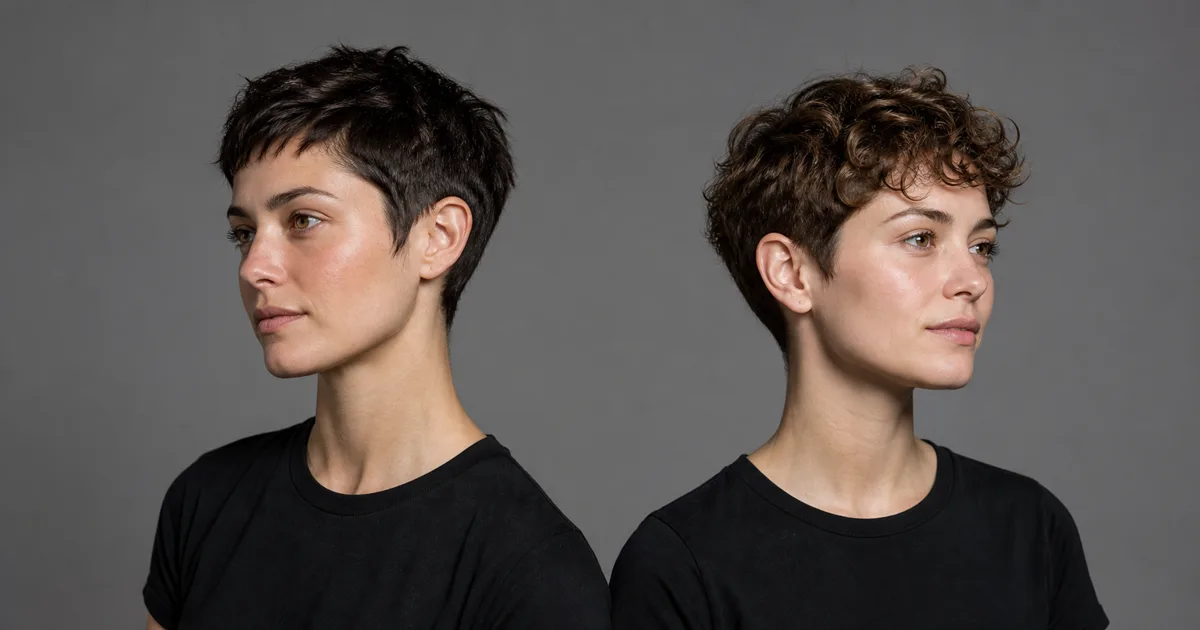
Boyish haircuts are short, exposed-ear cuts with a clean neckline and enough length on top to look intentional rather than freshly buzzed. The most useful version is a connected pixie crop: about half an inch at the neckline, three quarters of an inch over the ears, and two to three inches on top.
If you are still choosing how far to go, the range of short cuts for women runs from a one inch crop to a collarbone lob, and a boyish cut sits at the shorter end of it. The name describes an outline, not a gender rule. A boyish cut can read sharp, soft, androgynous, playful, or polished depending on the finish. This guide shows eight wearable versions, explains who they suit, and gives you exact language for the salon chair.
What counts as a boyish haircut?
A boyish haircut is typically short enough to expose the ears and nape, with a compact shape and more length on top than at the sides. It is not one regulated cut. Pixies, crops, short quiffs, and softly tapered cuts can all fit the label.
Going this short from waist-length hair is roughly two years of growth, so it is worth reading through the cuts that work on long hair before you decide the length itself is the problem.
If exposing the nape is the step you are not ready for, bobs cut with layers get you most of the shape while keeping the neck covered.
The useful distinction is between a connected short crop and a dramatic undercut. A connected cut blends the top into the sides with scissors. An undercut leaves a visible jump between long and short areas. If you want a versatile result that can look softer or sharper from day to day, ask for connection. If the visible jump is exactly what you are after, most classic lesbian haircuts are built on that disconnection.
| Version | Top shape | Best for | Styling time |
|---|---|---|---|
| Classic piecey crop | Flat, side-directed texture | Fine or straight hair | 2 to 4 minutes |
| Soft wavy crop | Airy bends through the top | Natural waves | 3 to 5 minutes |
| Coily pixie crop | Compact defined coils | Coily hair | 5 to 8 minutes |
| Mini quiff | Lift at the front | Fine to medium hair | 4 to 6 minutes |
| Forward copper crop | Broken short bangs | Thick straight hair | 3 to 5 minutes |
| Tapered back crop | Clean connected neckline | Anyone prioritizing shape | 2 to 4 minutes |
| Salt and pepper crop | Matte piecey layers | Gray or blended hair | 2 to 4 minutes |
| Diagonal crop | Low-shine side direction | Fine straight hair | 3 to 5 minutes |
If your main uncertainty is whether short hair works with your features, use the haircut suitability guide before choosing the exact finish. The silhouette matters more than whether a reference photo has the same hair color as you. Color is a separate call, and a hair color simulator lets you test it once the cut is settled.
Boyish pixie gallery by texture and finish
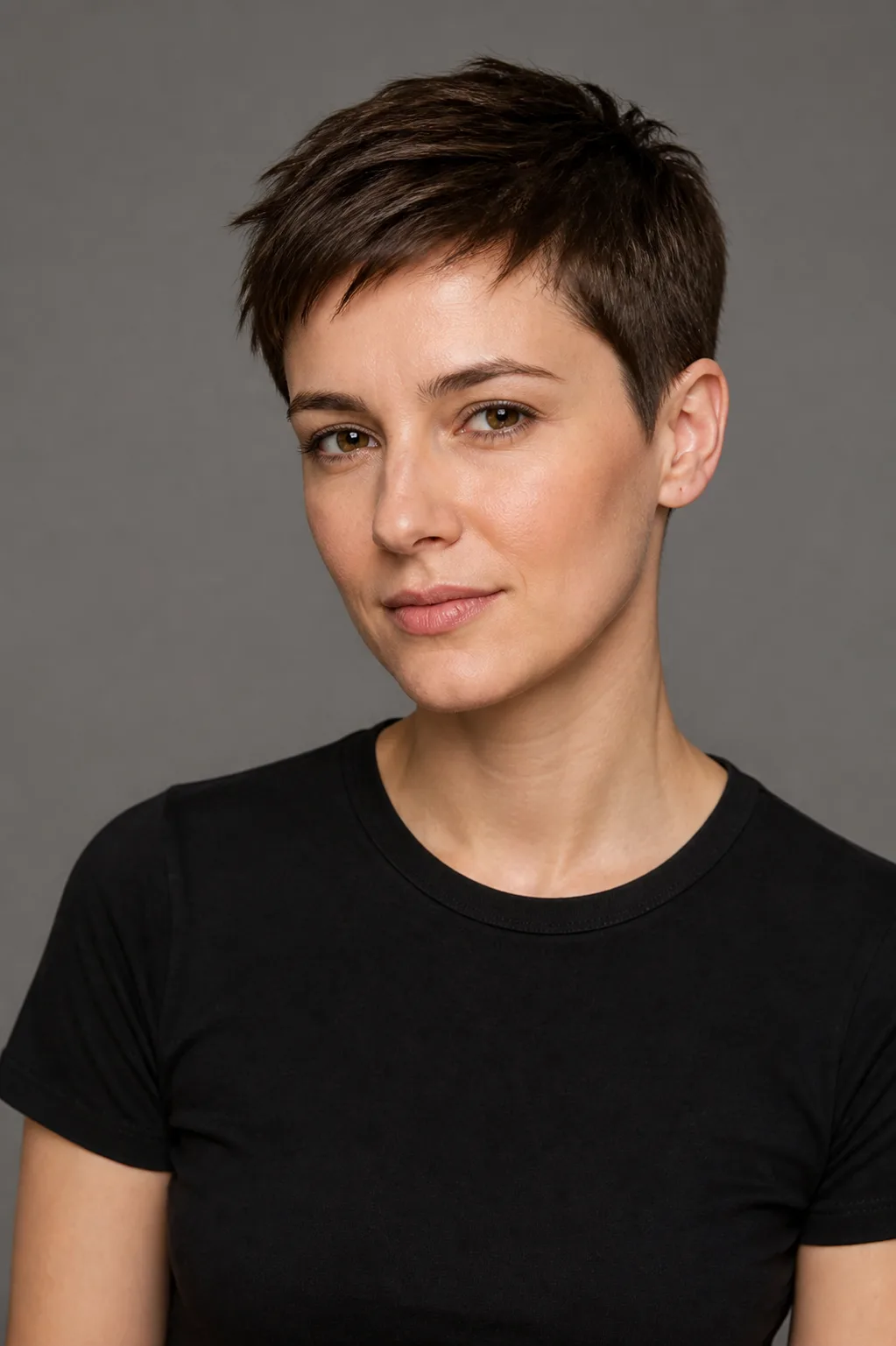
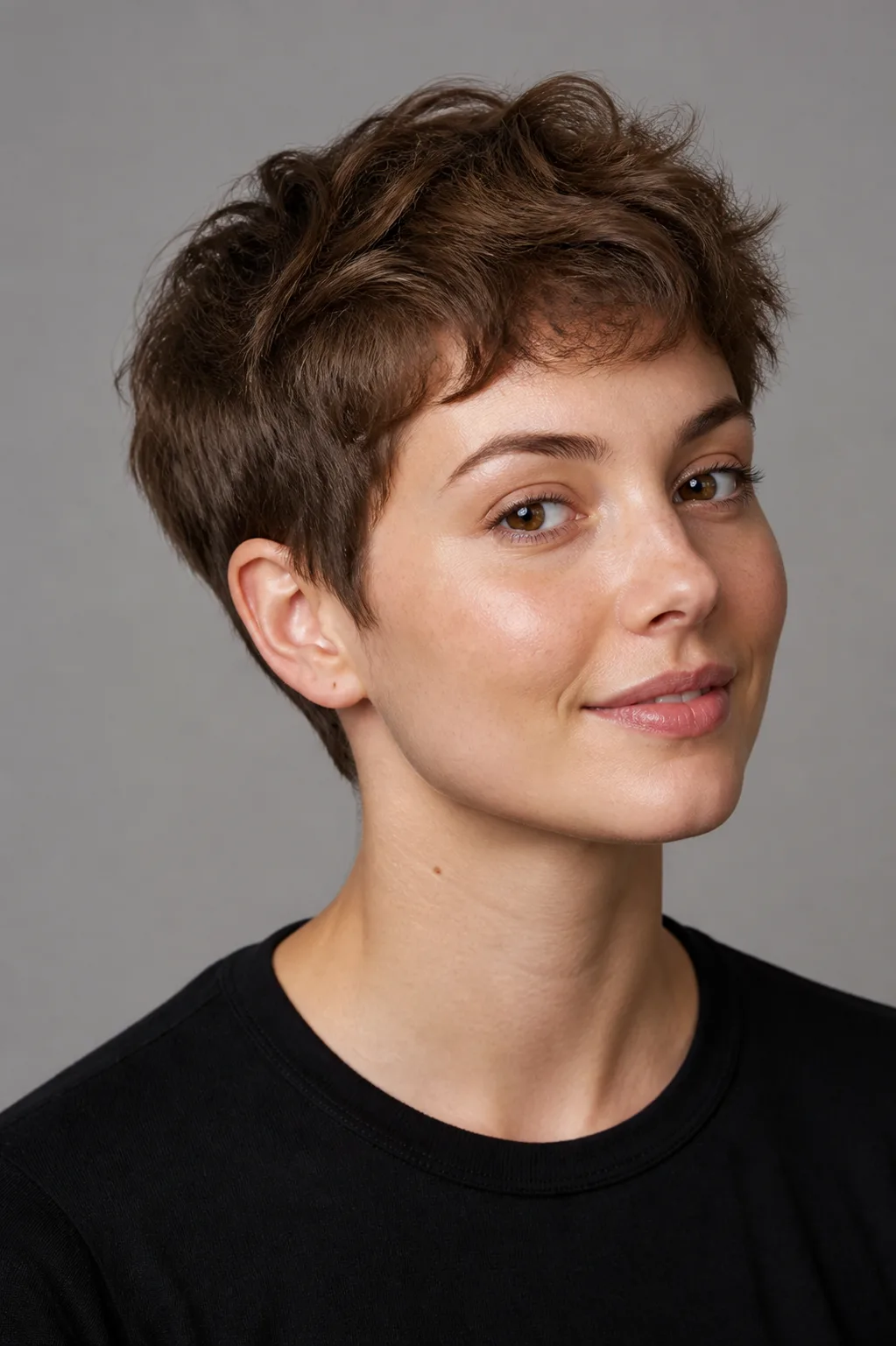
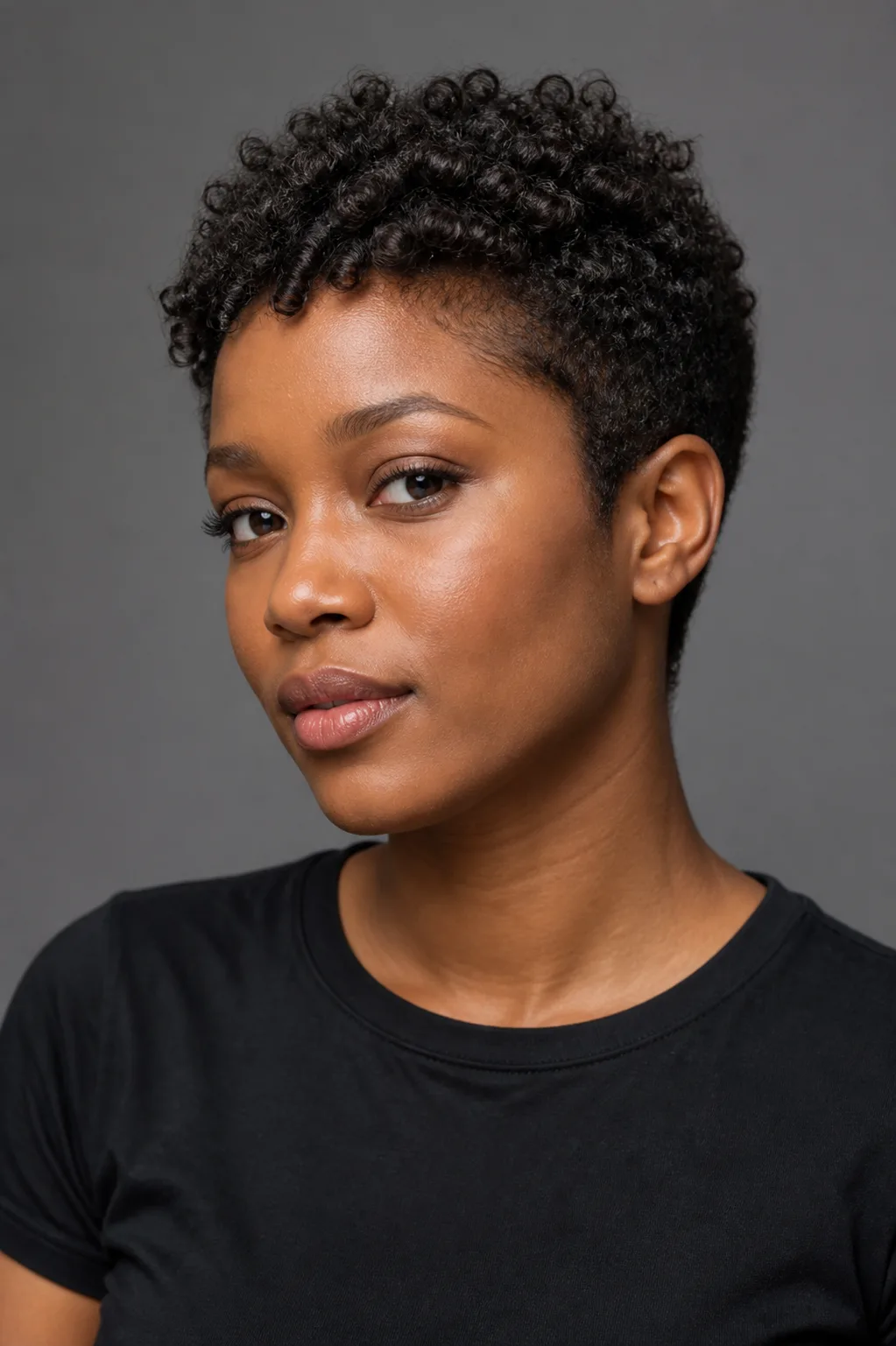
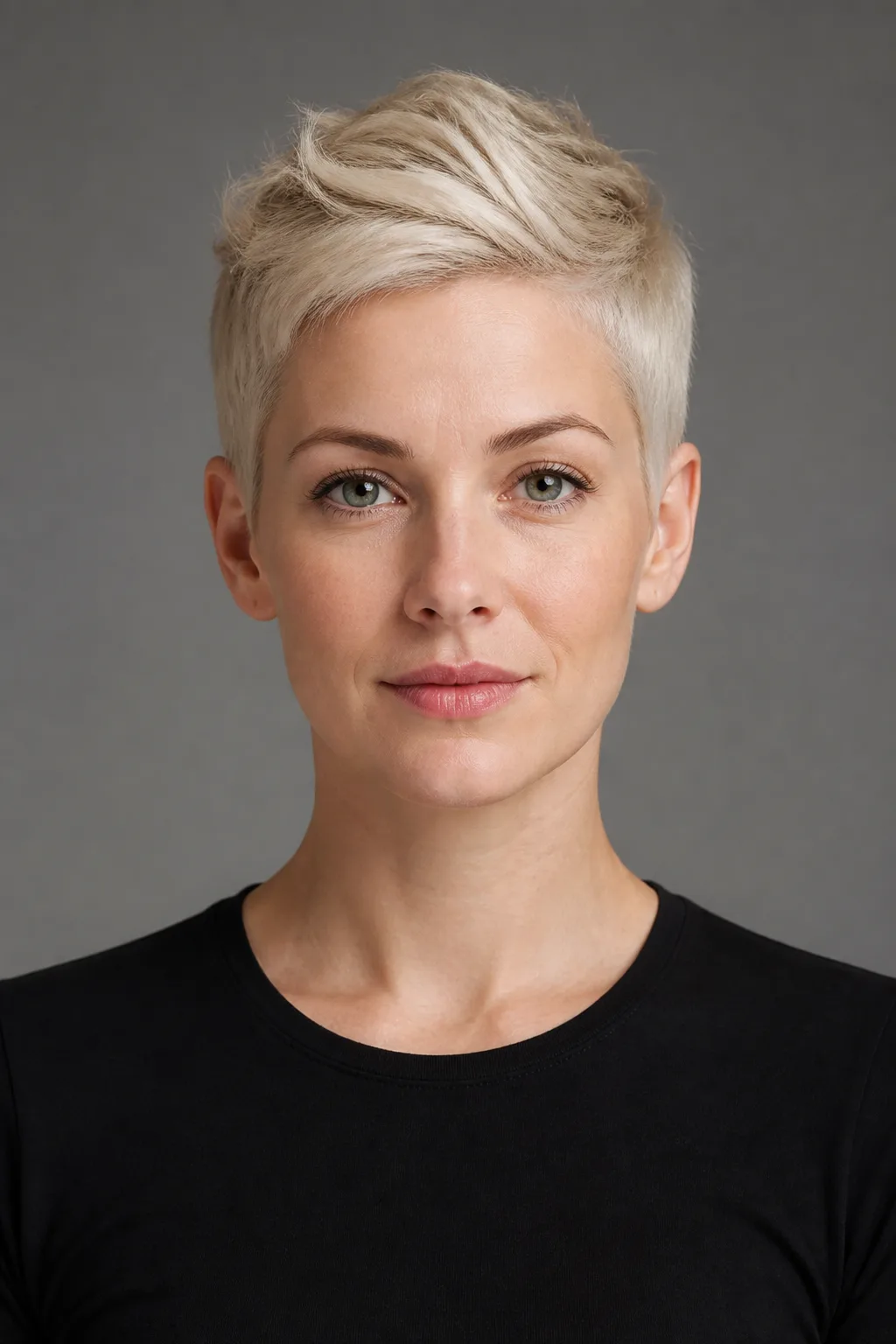
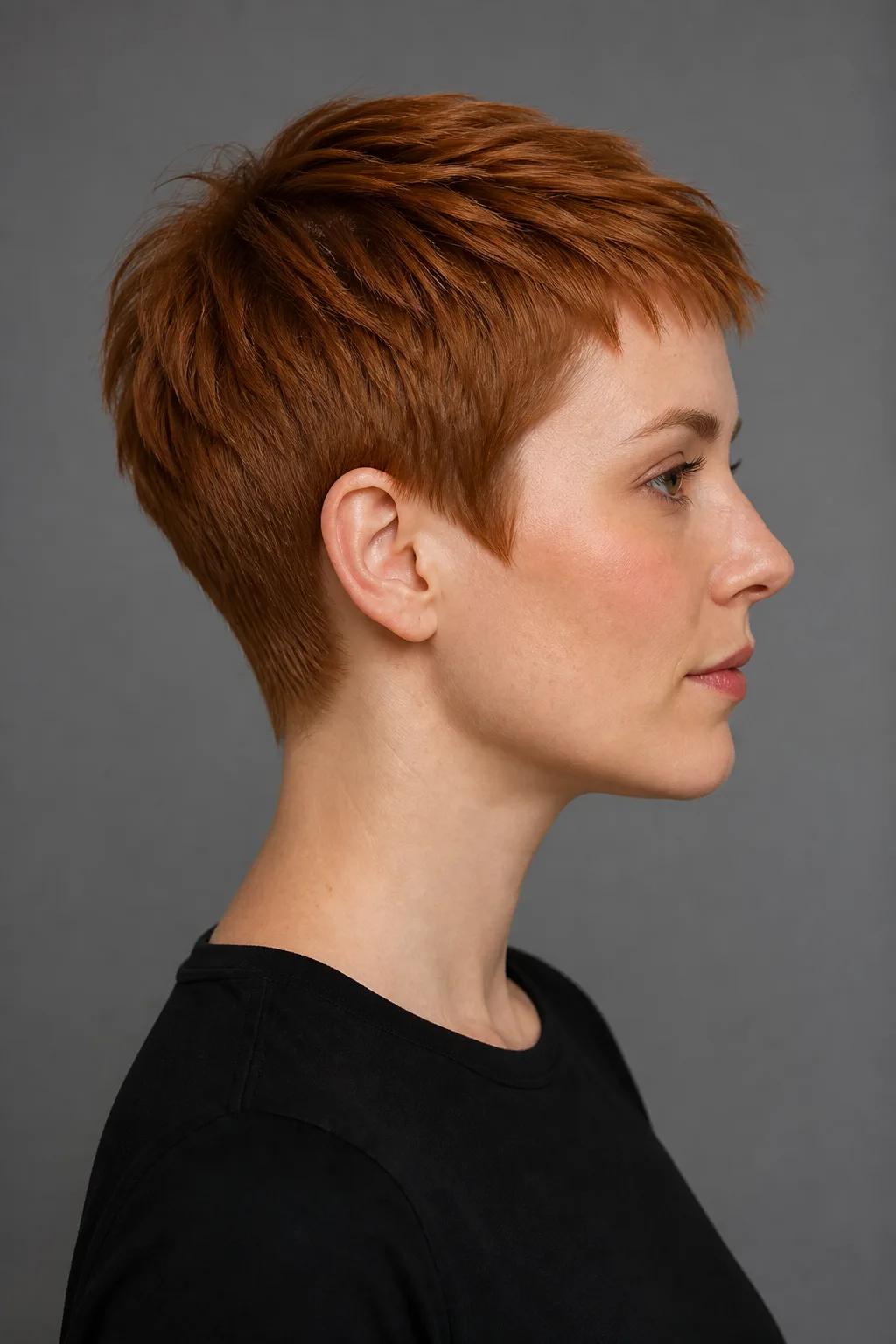
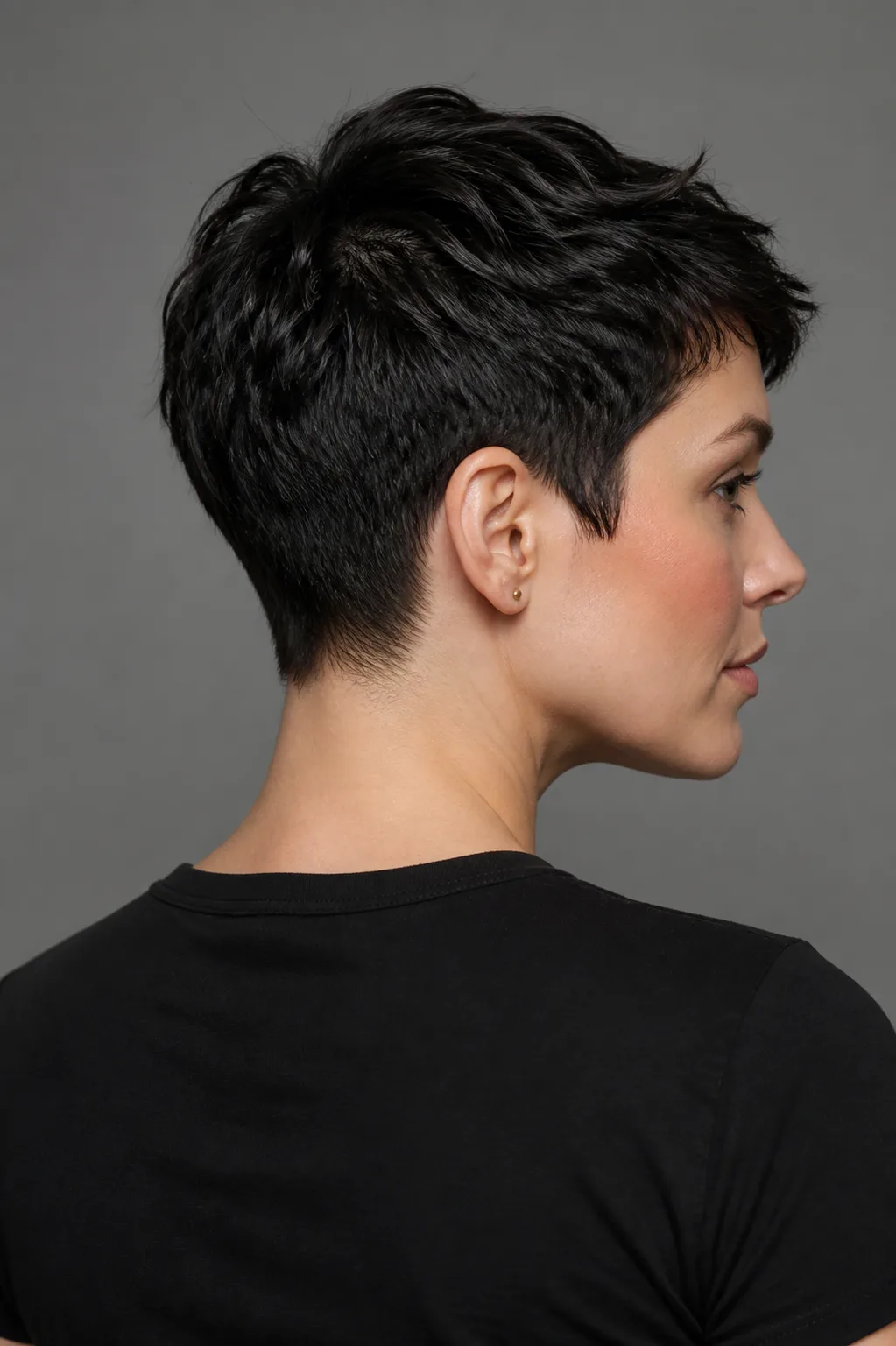
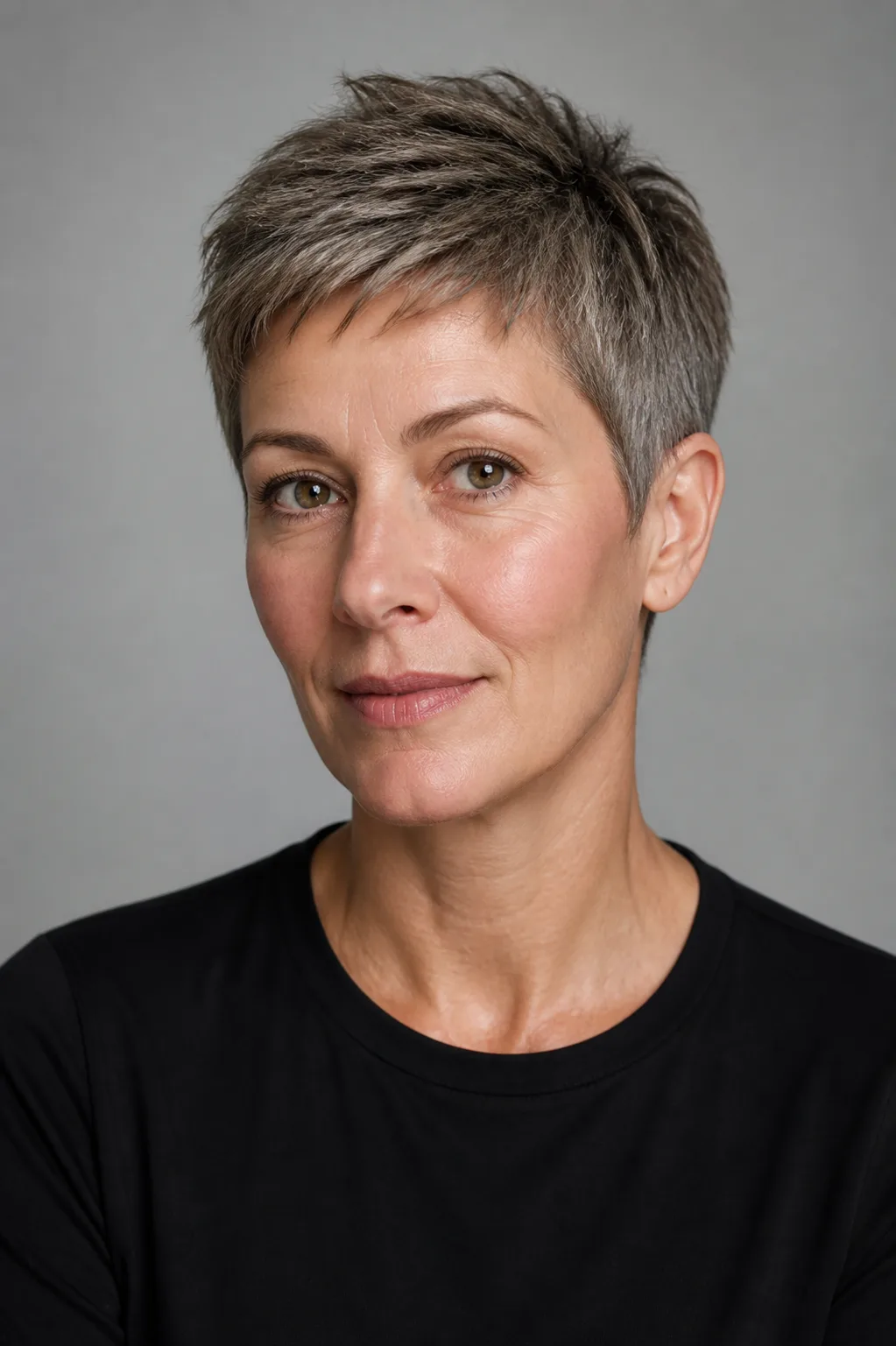
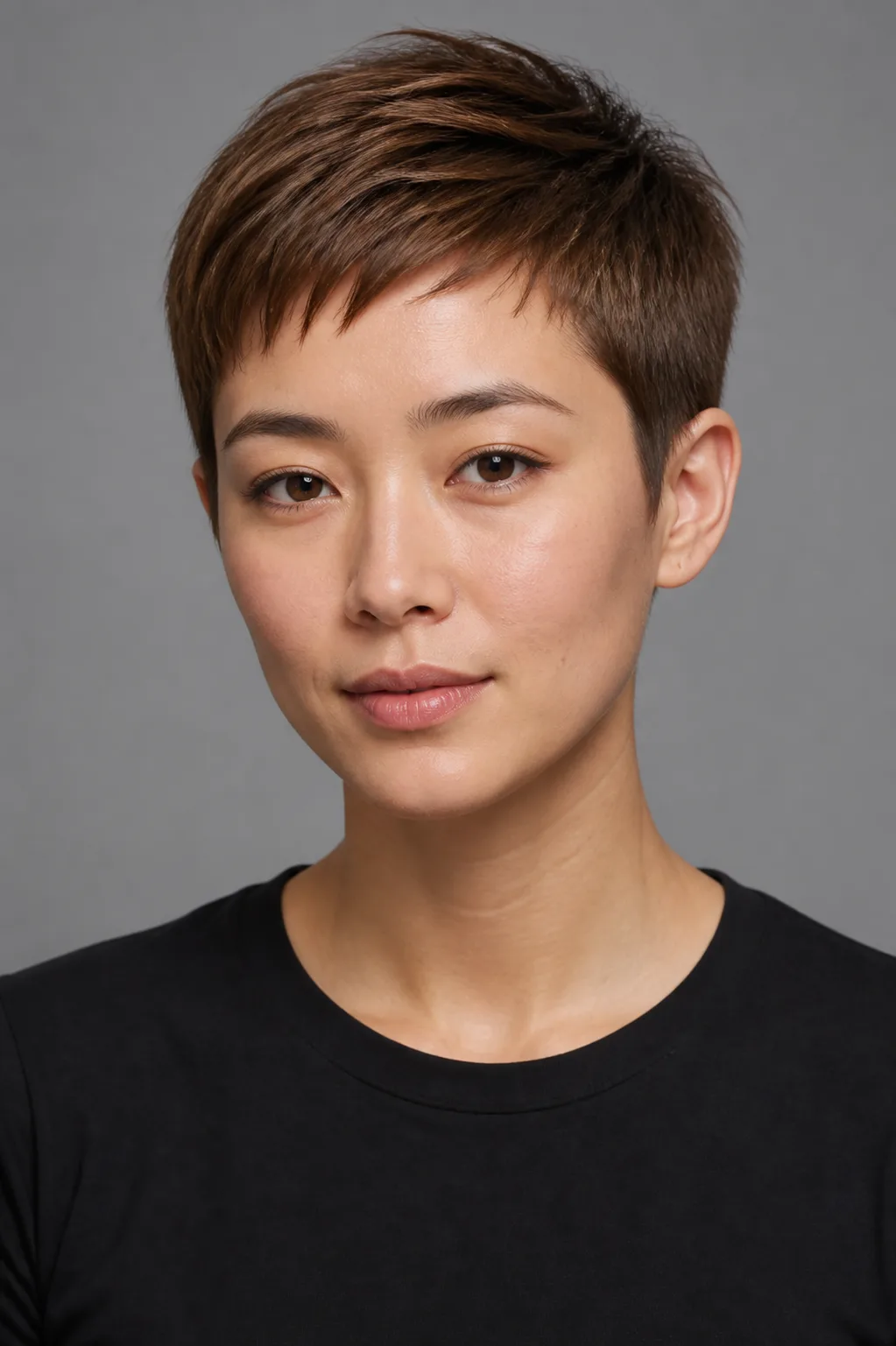
The gallery holds the cut geometry steady and changes the styling axis. Compare the exposed ears, connected sides, and short neckline first. Then decide whether you prefer flat texture, waves, coils, lift, or a neater diagonal direction.
Gallery8 photos · tap to enlarge
 Try this on me
 Try this on me
 Try this on me
 Try this on me
 Try this on me
 Try this on me
 Try this on me
 Try this on me
 Yours could be here.
Start with one selfie.
One photo, twenty seconds, and you'll know. Free account, no card for your first render.
Eight boyish haircuts worth taking to the salon
These eight looks keep the same exposed-ear, connected pixie structure. The variable is texture and styling. That makes the comparisons useful: you can see what changes when the base haircut stays controlled.
1. Classic piecey crop
This is the safest first boyish cut. The top lies forward and slightly to one side, while point-cut ends stop it looking like a helmet. It works especially well on fine or straight hair because separation creates visible movement without needing height.
Use a pea-sized amount of matte paste on dry hair. Rub it between your palms first, then pinch only a few ends. Coating every strand makes short hair separate into oily spikes.
2. Soft wavy crop
Natural bends soften the square outline without hiding the ears. Keep the wave concentrated on top and avoid leaving bulky corners above the ears. That balance gives you texture without drifting toward a short bob.
Dry with your fingers instead of a round brush. A brush can inflate the shape and erase the compact outline. If you want to test the balance before cutting, the short hair filter gives you a quick visual reference.
3. Coily pixie crop
A coily boyish cut should preserve definition on top and stay connected at the sides. The key salon instruction is stretched length. Asking only for two inches can produce a much shorter result once the coils spring back.
Ask the stylist to show you where the dry curl will sit. Defined finger coils or a small amount of curl cream keep the top readable. Heavy gel can make the sides look shaved even when they were cut with scissors.
4. Mini quiff pixie
A small quiff adds height without turning the cut into a pompadour. It is useful when you want the face to look a little longer or when fine hair collapses flat at the crown. The front still needs to stay short enough that it cannot fall over the eyes.
Blow-dry the front upward with your fingers for less than a minute, then let it fall slightly to one side. The point is controlled lift, not a rigid crest.
5. Forward textured crop
The forward version has a broken edge high on the forehead and a clear side profile. It gives thick straight hair somewhere to go, so the top does not puff into a round cap. Point-cutting is essential here because blunt bangs can turn the same length into a bowl shape.
This is also the best reference if you care about how the cut reads from the side. The ear is fully open, the temple remains soft, and the top still has enough movement to avoid a clipper-cut look.
6. Softly tapered back
The back determines whether a boyish haircut looks deliberate after two weeks. A scissor taper follows the head and narrows toward the neckline without exposing skin. It grows out more quietly than a hard, shaved border.
If you actually want obvious length behind the neck, you are asking for a different family of cut. Compare the back shape with a modern mullet before you commit, because the grow-out and silhouette are not the same.
7. Salt and pepper crop
Gray variation makes point-cut texture easier to see, which is an advantage on a short cut. A matte finish keeps the layers distinct. Avoid heavy shine products if you want the natural color variation to remain visible.
This version proves that the cut is not tied to one age or trend cycle, and it is one of the easiest short haircuts for women over 60 to live with. What keeps it current is the soft temple and broken top, not a specific color.
8. Diagonally combed crop
Combing the top diagonally creates a neat finish without forming a hard side part. It suits fine, straight hair that needs direction more than volume. Keep the finish low-shine so the top still looks textured.
This is the most office-ready version in the set, but it can be loosened with your fingertips after work. There is no hard part to maintain.
Which face shapes suit boyish haircuts?
Boyish haircuts can suit every face shape, but the top direction and temple fullness should change. The goal is not to hide your face. It is to place width and height where they support the proportions you already have.
| Face shape | Best adjustment | Avoid |
|---|---|---|
| Round | Add a small amount of height and keep temples neat | Flat, wide volume at ear level |
| Square | Use soft waves or a broken front edge | A blunt horizontal bang |
| Oval | Keep the balanced connected shape | Excess height that elongates the face |
| Heart | Leave slight softness at the temples | Very tight sides with a tall top |
| Long | Style forward or diagonally with modest lift | A narrow vertical quiff |
| Diamond | Keep texture near the temples | Removing all side softness |
For a round face, a mini quiff is usually more helpful than shaved sides. It adds vertical direction without making the head look smaller than the face. For a long face, do the opposite: direct the top forward and keep the lift modest.
Measure it instead of guessing
Both numbers in the same unit — the answer is a ratio, so it does not matter which.
Under 1.15 reads round, 1.15 to 1.5 reads oval, over 1.5 reads long. Oval and long split on the jaw rather than the ratio: an oval tapers toward the chin, a long face runs straight down.
Use the face measurement as a clue, not a verdict, and see our guide to haircuts for your face shape for the full breakdown by shape. Hair density, curl shrinkage, glasses, and how much forehead you want visible all affect the final balance.
How to ask for a boyish haircut
Bring a front, side, and rear reference. A single front photo does not tell the stylist whether the sides are connected, whether the nape is shaved, or how much length sits at the crown.
Say this to your barber
I want a connected boyish pixie crop with exposed ears, a softly scissor-tapered nape, about two and a half inches of point-cut length on top, and no fade, undercut, bowl line, or long tail at the back.
How to ask for a connected boyish pixie crop
- Show the silhouette from three angles
Use front, side, and rear references. Point to the exposed ear, the connected side, and the soft neckline separately.
- Agree on dry top length
Ask for about two and a half inches on top. If your hair curls, agree on stretched length and where the dry curl should sit.
- Choose scissors or clippers
Request scissors over the ears and at the nape if you want a soft grow-out. If clippers are used, agree on the guard and confirm that no skin fade is planned.
- Define the front edge
Ask for point-cut texture and a broken edge high on the forehead. Say clearly if you do not want blunt bangs or hair falling over your eyes.
- Check the back before finishing
Use a mirror to confirm that the neckline is soft, connected, and free of a tail or hard shaved border.
The most important phrase is connected. Without it, one stylist may picture a soft pixie while another pictures a disconnected undercut. If you prefer to preview the overall silhouette, try the women's hairstyle try-on with one clear, front-facing photo.
What usually goes wrong?
Most disappointing boyish cuts are not too short everywhere. They are too short in one area and too heavy in another. That imbalance is what creates a mushroom cap, accidental fade, or awkward tail. The one case where going this short is a shortcut rather than a risk is a grey hair transition, which finishes in about six months on a pixie instead of two years on long hair.
The sides are shaved too high
High clipper work can turn a soft crop into an undercut and make the top look disconnected. If that is not your goal, state that the side must remain connected and scissor-cut.
The top is left blunt
A blunt two-inch top carries more visual weight than a point-cut two-inch top. On thick hair, that can create a rounded cap. Ask for internal texture only if your density can support it, but always clarify the outer edge.
Curl shrinkage is ignored
Wet length is not the result. Coily and curly hair can sit substantially shorter when dry. Agree on dry placement rather than trusting a number alone. You can also compare curl placement with the curly hair try-on.
The neckline is made too hard
A crisp shaved box can look clean on day one and obvious during grow-out. A softly tapered neckline is more forgiving if you do not want frequent edge-ups. Worth knowing before you go further: if you are considering lasering the nape to keep it permanently clear, that soft taper is exactly what you give up.
How often does a boyish haircut need trimming?
Plan on a shape-up every four to six weeks if you want the ears and neckline to stay clean. Fine hair and soft scissor tapers can sometimes reach six to eight weeks, while dense hair and tight outlines show growth sooner.
The first sign is usually not overall length. It is bulk above the ears or a shelf at the back of the head. If you are growing the cut out, keep trimming only the neckline and bulky corners while preserving length at the crown. Some people bridge the grow-out with a unit instead, which is a real option once you know what separates a good human hair wig from a cheap one.
The best starting point
Start with a connected piecey pixie if you want a boyish haircut without committing to a fade or undercut. It gives straight, wavy, and coily hair enough top length to change direction, while the exposed ears and soft nape keep the outline clear.
Save the front, side, and rear examples that match your texture. Then use the chair brief word for word. Specific measurements and exclusions protect you better than asking for a cut that is simply short, edgy, or androgynous.
Frequently asked questions
A connected pixie crop, short textured crop, or soft undercut can all work. The best choice depends on whether you want a subtle masculine outline or a visibly disconnected style. A connected pixie is the most flexible starting point because it can be styled soft or sharp, and if you are coming down from long hair, the long pixie version is the gentler first step.
There is no single official name. Common salon terms include textured pixie, short crop, boyish pixie, and androgynous crop. Show photos and describe the ears, nape, top length, and connection instead of relying on one label.
Popular options include a textured pixie, French crop, short quiff, bowl-inspired crop, undercut, buzz cut, and modern mullet. They differ most in side connection, top length, and the amount of length left at the back.
A connected crop with neat temples and modest height on top is a strong option. Avoid adding maximum width at ear level. A small quiff or diagonal top creates direction without requiring a severe fade.
Ask for a connected boyish pixie crop, then give measurements and exclusions. Specify exposed ears, a scissor-tapered neckline, two to three inches on top, and whether you want a fade, undercut, bangs, or neither.
Several cuts get that label, including the textured crop, middle-part curtains, fluffy taper, and modern mullet. For women seeking a boyish short cut, textured pixie or androgynous crop is usually clearer salon language.
The phrase is used inconsistently online and is not a universal salon standard. Do not depend on it when ordering a cut. Give actual lengths, show multiple angles, and confirm how the top connects to the sides.
Yes. Keep enough stretched length on top for curls to form and ask the stylist to judge the shape when dry. The sides can stay short and connected without being shaved, which preserves a softer outline and easier grow-out.
Preview it on your own photo: Virtual Hair Color Try-On.
Share article
About the author
More articles
Women's Haircuts · 14 min
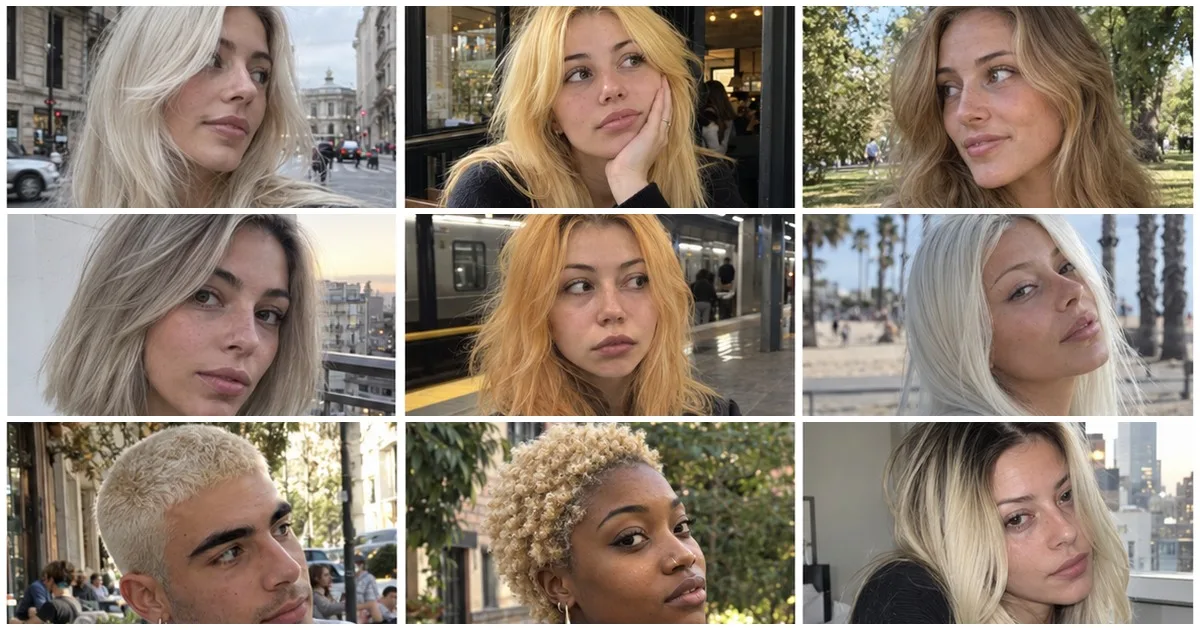
Bleached Hair: How Light Yours Can Go, 14 Shades, Aftercare
How light your bleached hair can go depends on where it starts. See 14 bleached shades on one cut, what each starting color can reach in one session, how toner finishes the job, and the aftercare that keeps it soft.
Women's Haircuts · 16 min
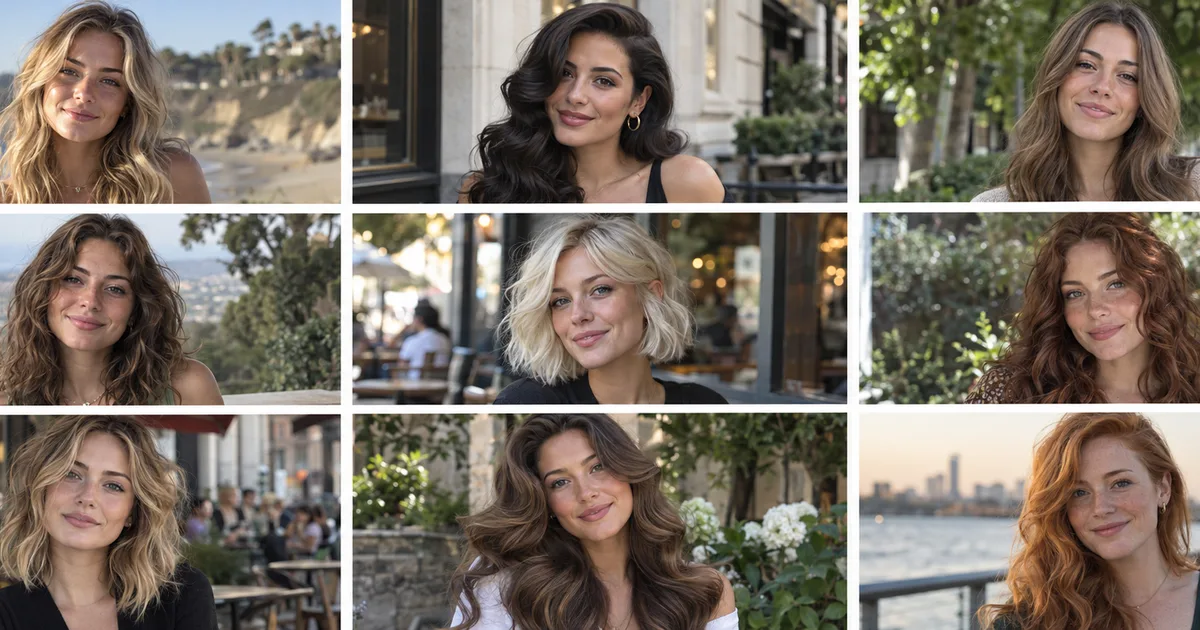
Waves Hair: How to Get Beach, Loose and Hollywood Waves That Last
Waves hair is about what you leave straight. How to get beach, loose, Hollywood and heatless waves, which wave suits your hair type, and why your waves keep falling out.
Women's Haircuts · 15 min
Fino Hair Mask: Who It Suits, How to Use It, and Its Limit
The Fino hair mask makes dry, bleached and frizzy hair smooth and shiny in one use, mostly by coating it. Here is what is in the jar, which hair types it suits, exactly how to use it, and what to do when the ends are past a mask.