Short Haircuts for Women Over 60: 14 Cuts by Hair Type
Oleh Onysko 27 September 2026 17 min read
In this article
The best short haircuts for women over 60 are a textured pixie, a chin-length bob and a short shag, and which one is yours depends on your hair, not your birthday. Pick the cut that fixes what changed in your hair: usually a thinner crown and part, and a coarser texture as the grey comes in.
That is the whole trick, and it is why two women of the same age can need opposite cuts. Below are 14 short haircuts on women in their 60s, a table that sorts them by upkeep and hair type, and one rule most salons get backwards: if your hair is thinning, you want fewer layers, not more.
What makes a short haircut work after 60?
A short cut works after 60 when it puts volume where your hair has thinned and keeps a solid edge where it has not. Age itself is not the variable. Density and texture are.
Three things usually change in your 50s and 60s, and each one points at a different cut.
- The crown and part get thinner. The American Academy of Dermatology notes that in female pattern hair loss the part often gets wider rather than the hairline receding, and that it is more common after menopause. A cut that lifts the crown hides this. A cut that lies flat on top shows it.
- The ends get sparse. Fine hair that used to look fine at shoulder length now looks see-through at the bottom. Cutting it short with a blunt line makes every strand end at the same place, which reads as thick.
- Grey hair behaves differently. It is often coarser and more wiry than the colour it replaced, so it frizzes and sticks out where smooth hair used to lie down. Short cuts that go with that texture, like a shag or a textured pixie, look deliberate. Short cuts that fight it, like a sleek one-length bob on wiry grey, need a flat iron every morning.
So before you pick from the photos, answer two questions. Where is your hair thinnest? And do you want to style it every day, or wash it and leave?
Most women at 60 who say "I want something easy" mean the second one. Remember that shorter is not automatically easier. A pixie takes two minutes to style, but it needs a trim every four to six weeks or it loses its shape. A chin-length bob takes longer to blow dry, but it can go eight weeks between cuts.
Short haircuts compared: upkeep, styling time and hair type
Here is the quick version before the pictures. "Best for" is the hair each cut flatters most, not the only hair it works on.
| Cut | Length | Trim every | Daily styling | Best for |
|---|---|---|---|---|
| Textured pixie | 1.5 to 3 in | 4 to 6 weeks | 2 minutes | Fine, thinning crown, grey |
| Long pixie (bixie) | Mid-ear | 5 to 7 weeks | 5 minutes | Fine to medium, anyone nervous about going very short |
| Chin-length blunt bob | Jawline | 6 to 8 weeks | 10 minutes | Fine and thin ends |
| Soft layered bob | Below the jaw | 6 to 8 weeks | 10 minutes | Medium to thick |
| Stacked bob | Short nape, chin at front | 5 to 7 weeks | 5 to 10 minutes | Flat crown, fine hair |
| Short shag | Chin | 6 to 8 weeks | 3 minutes | Thick, wavy, coarse grey |
| Short tapered curls | Short sides, curls on top | 4 to 6 weeks | Wash and go | Curly and coily |
If you only read one row: the chin-length blunt bob is the safest first short cut for thin hair, and the textured pixie is the lowest-effort cut for grey hair.
14 short haircuts for women over 60, side by side
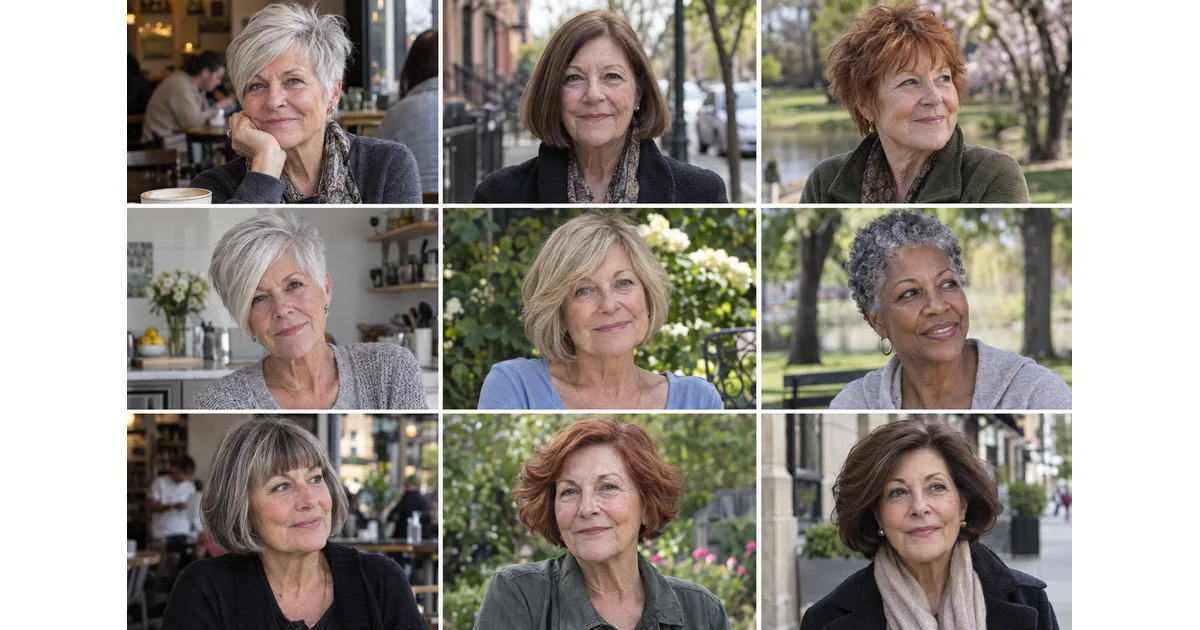
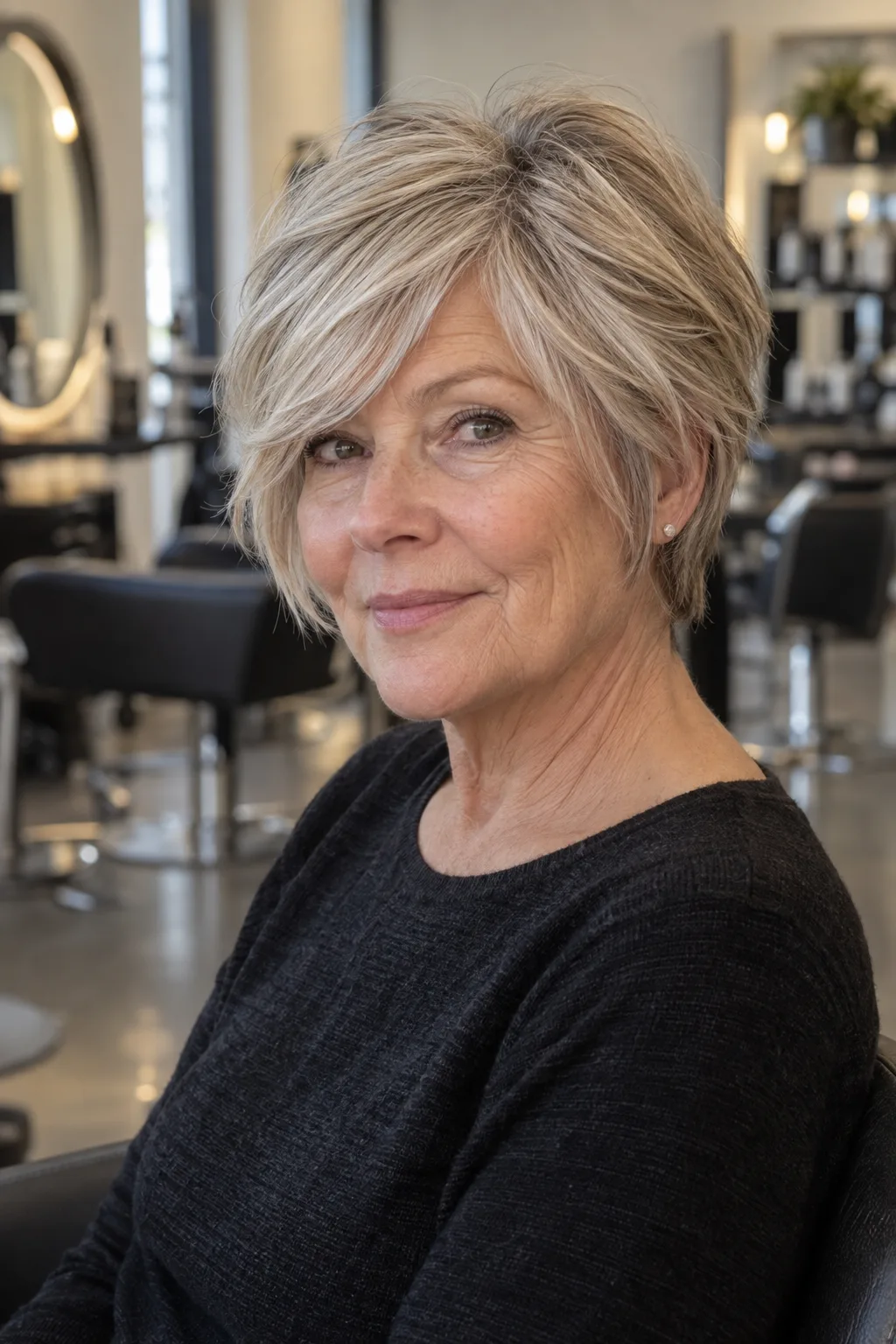
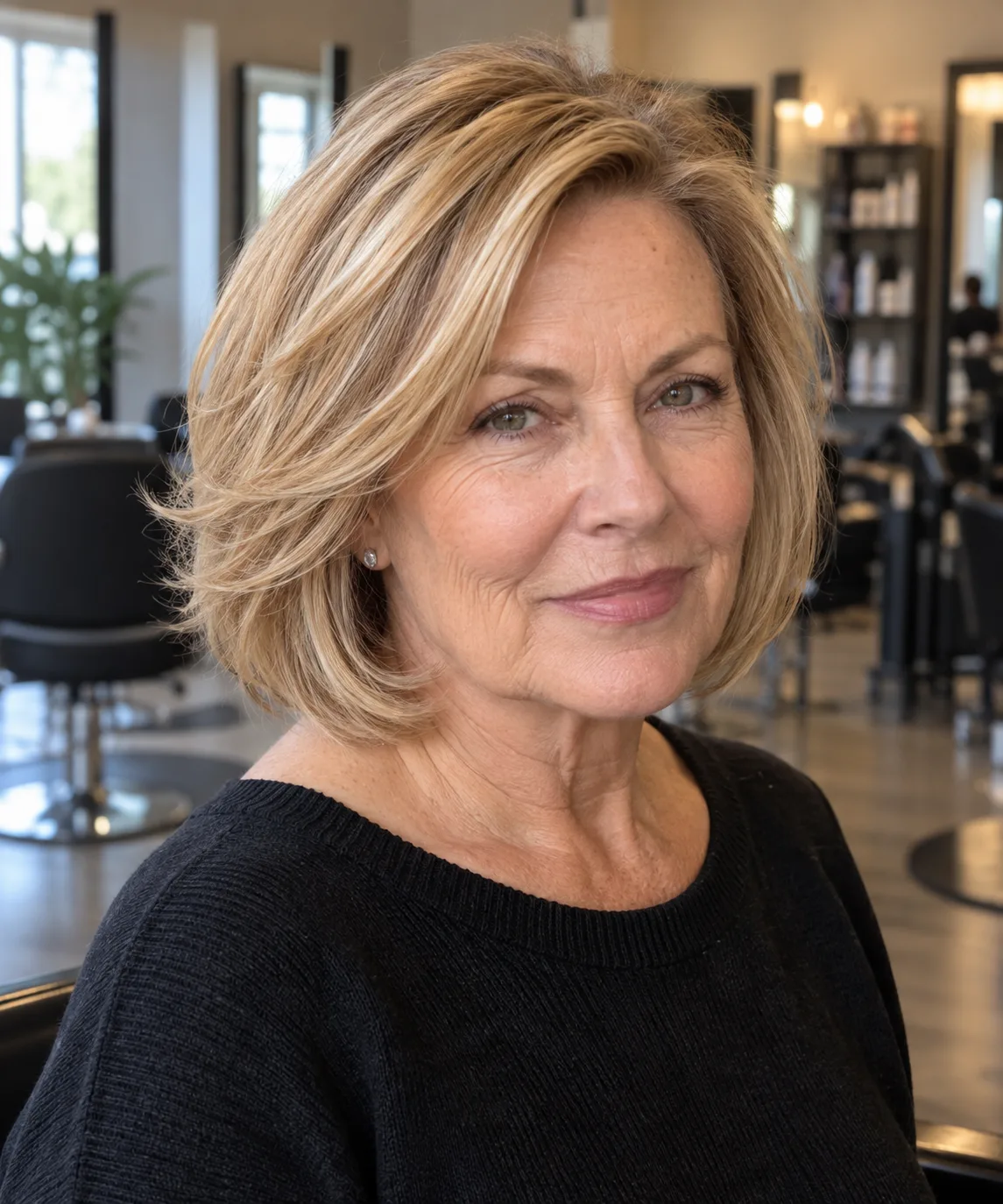
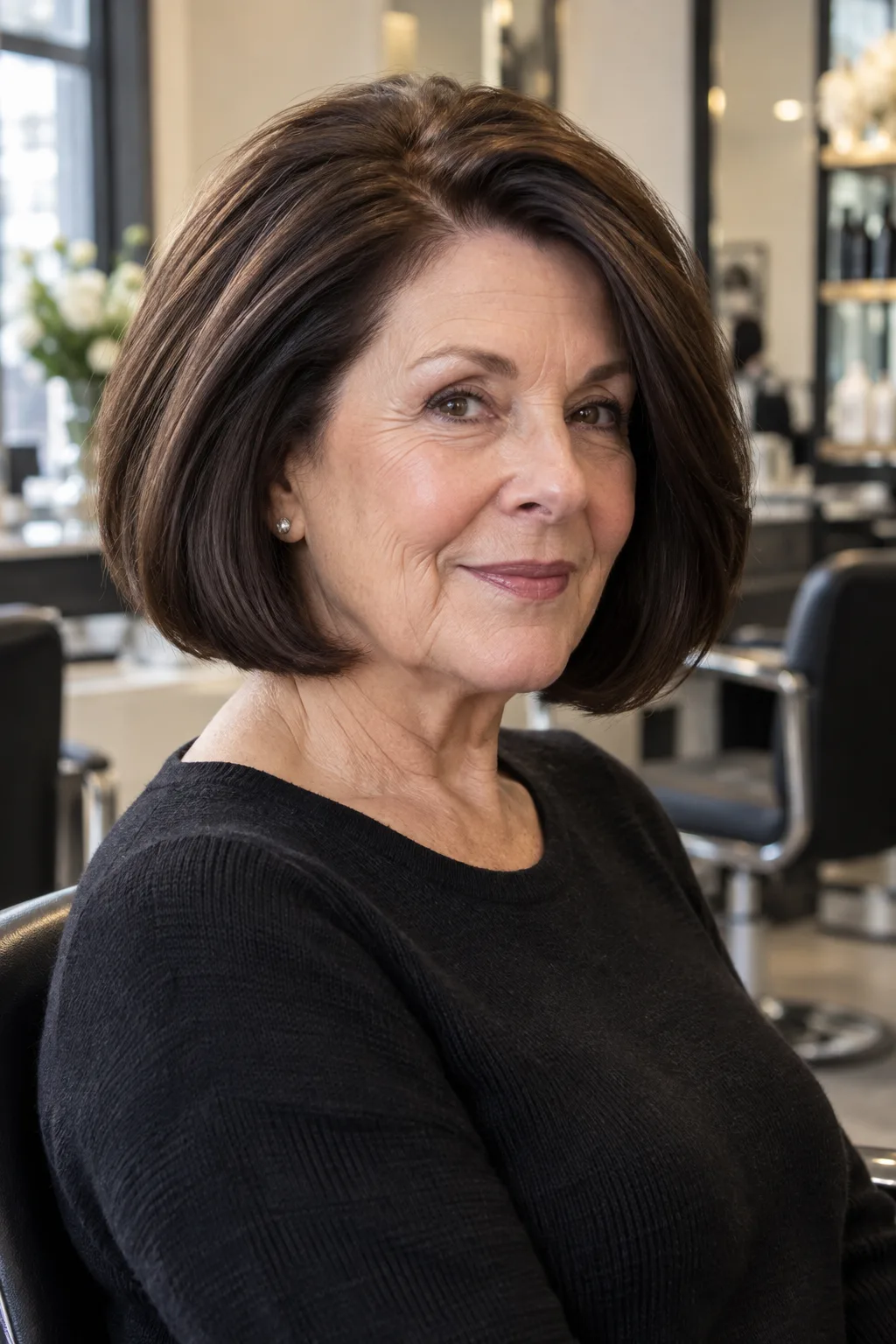
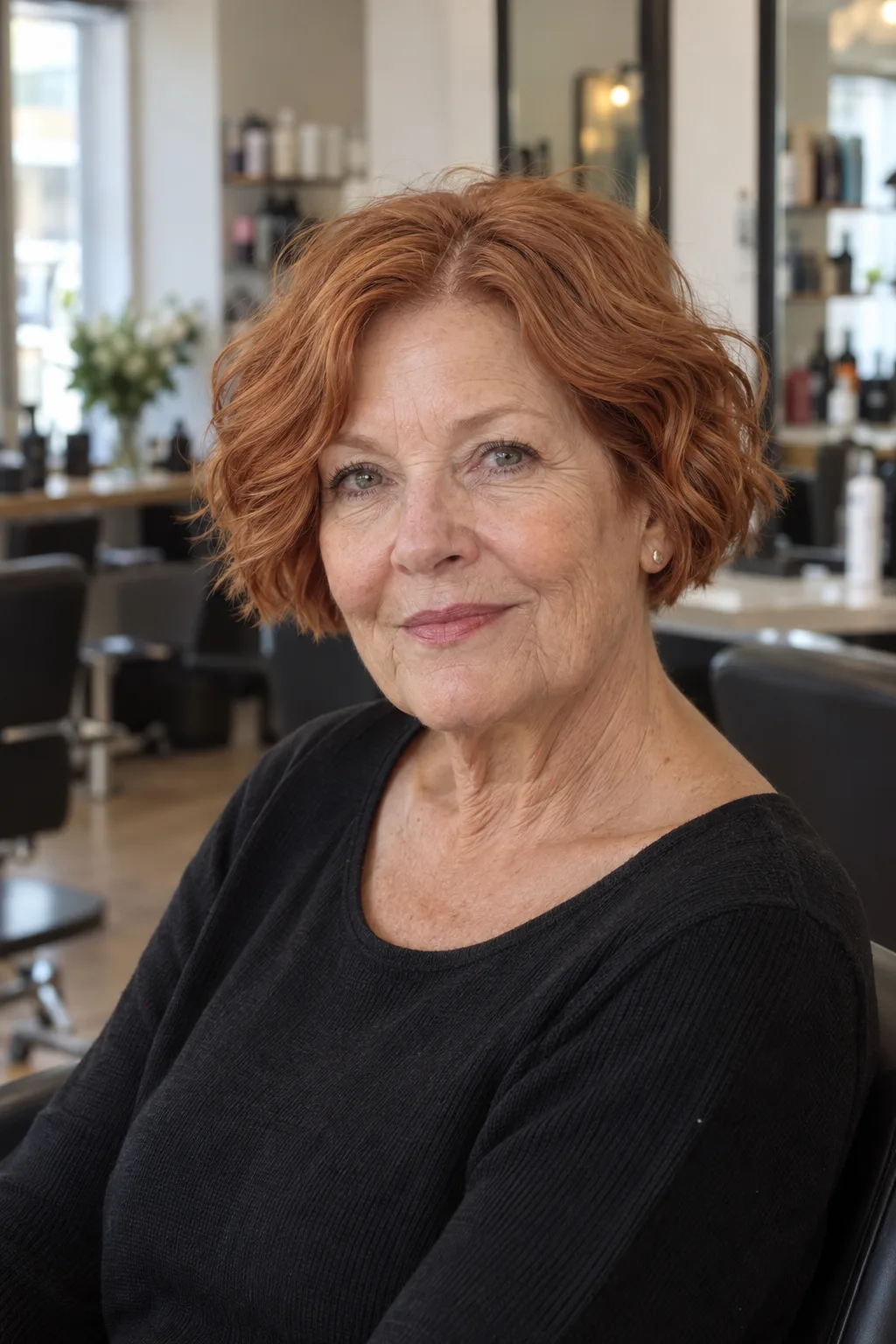
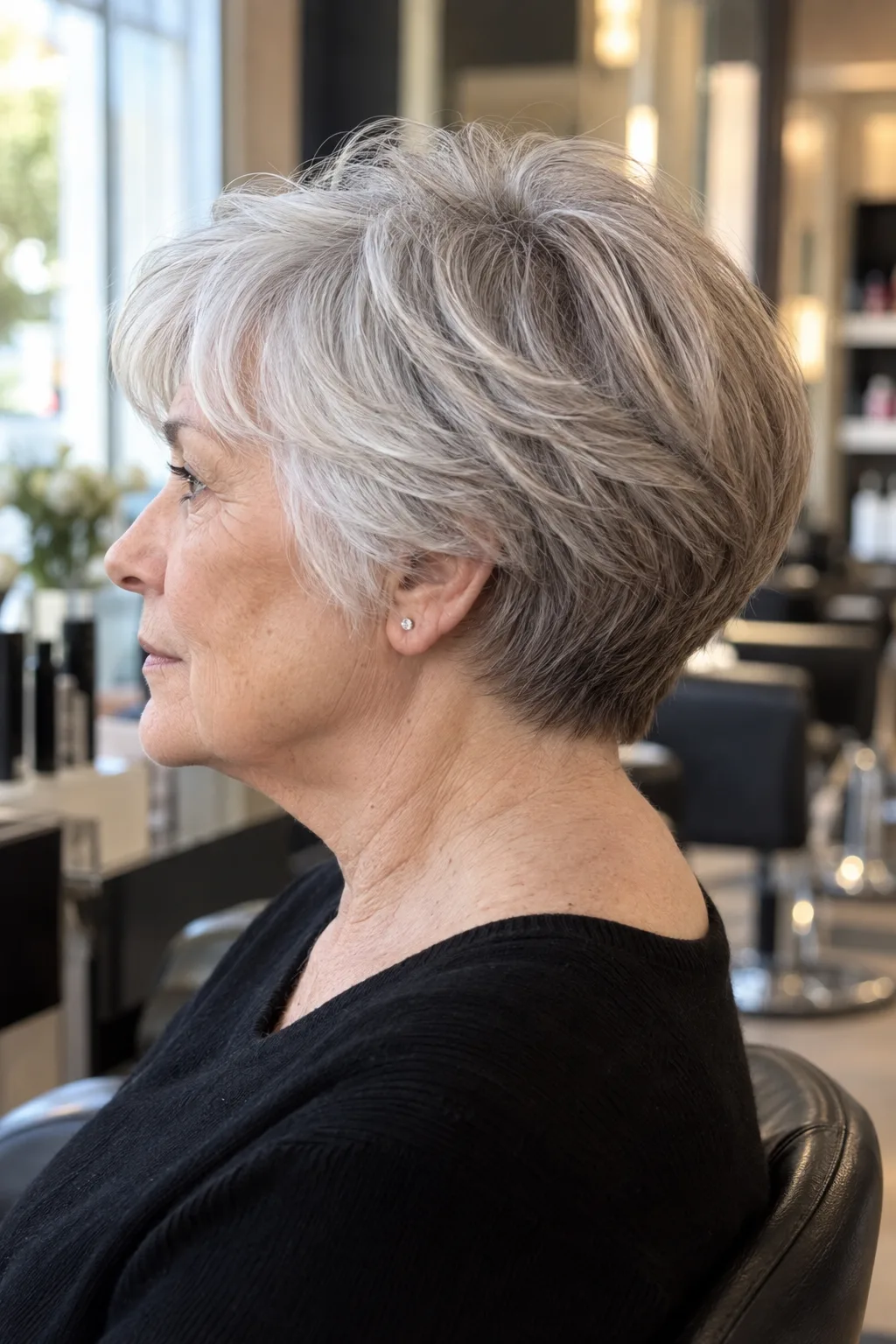
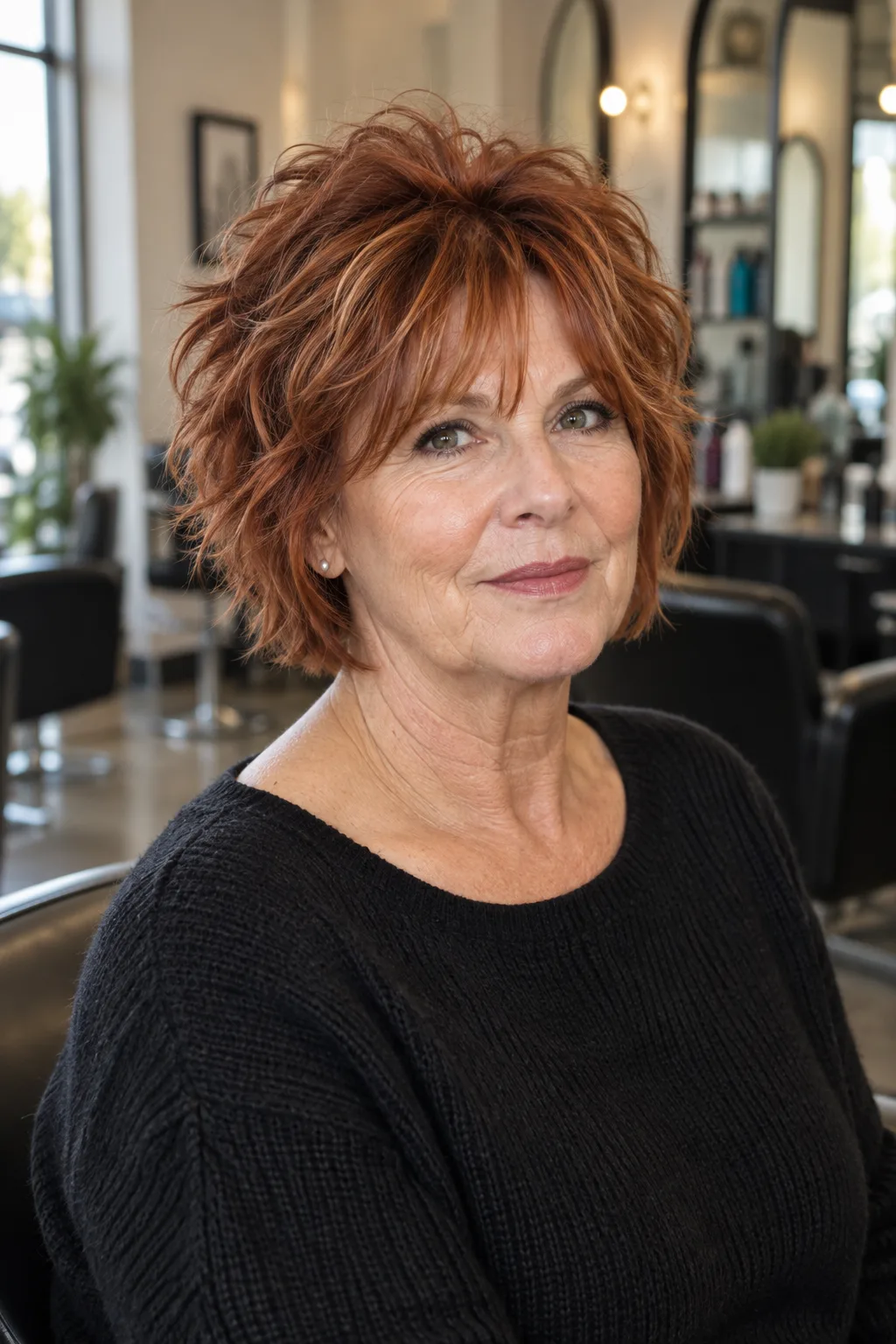
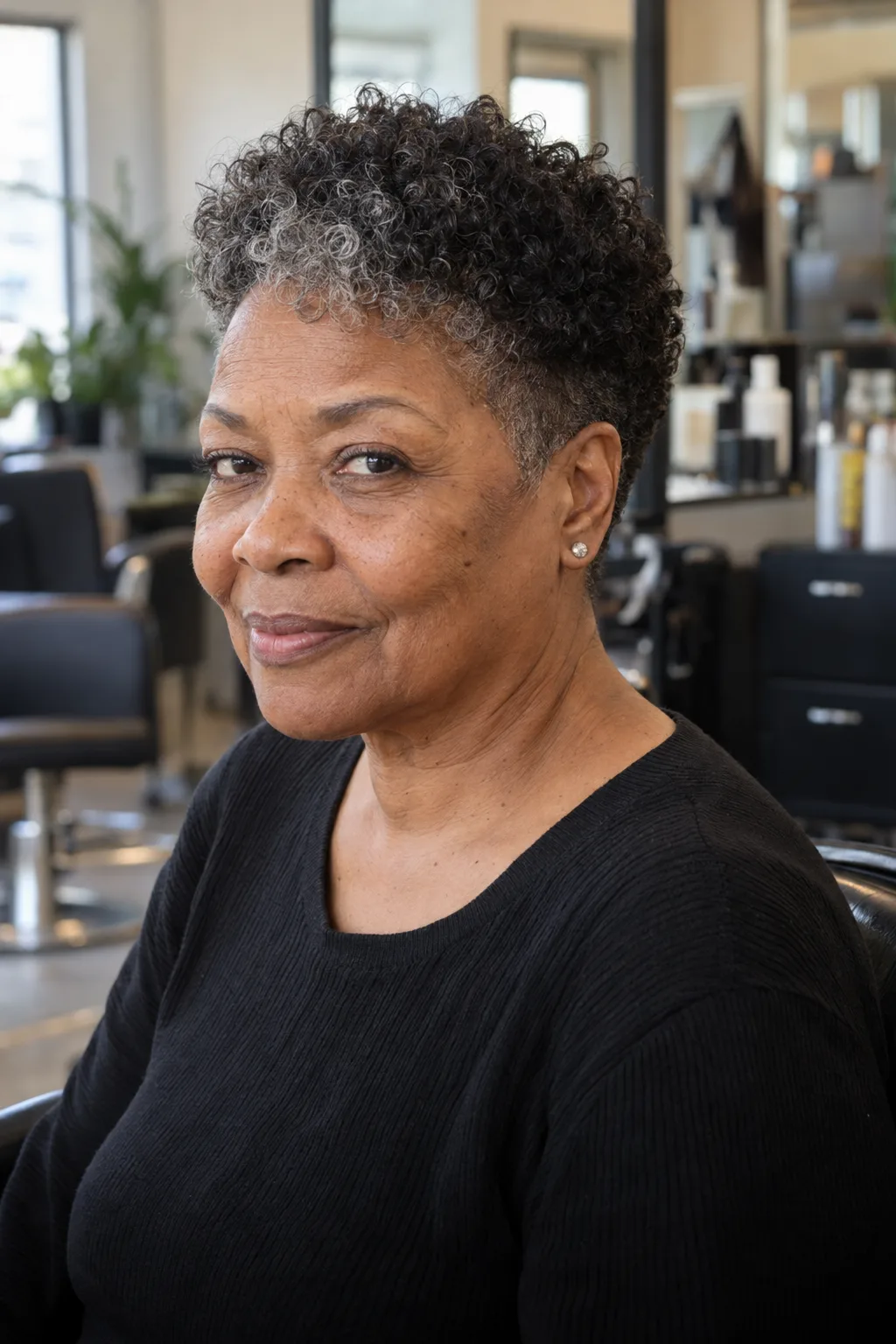
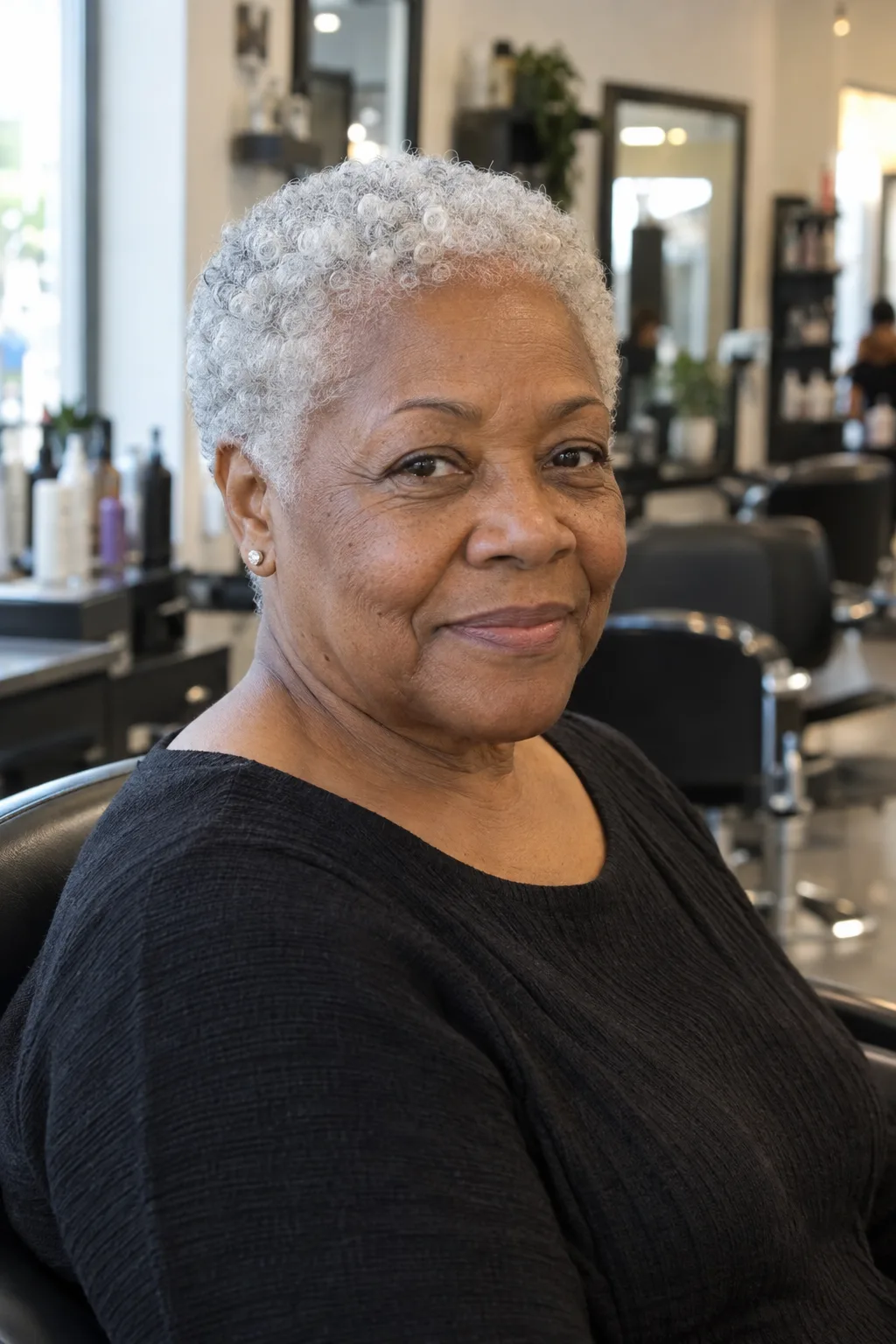
Every photo below keeps the same setting, light and framing, so the only thing that changes is the cut. Scroll through them with your own hair in mind: its thickness, its texture and how much time you give it in the morning. Tap any of them to try it on your own photo.
Gallery14 photos · tap to enlarge
 Try this on me
 Try this on me
 Try this on me
 Try this on me
 Try this on me
 Try this on me
 Try this on me
 Try this on me
 Try this on me
 Try this on me
 Try this on me
 Try this on me
 Try this on me
 Try this on me
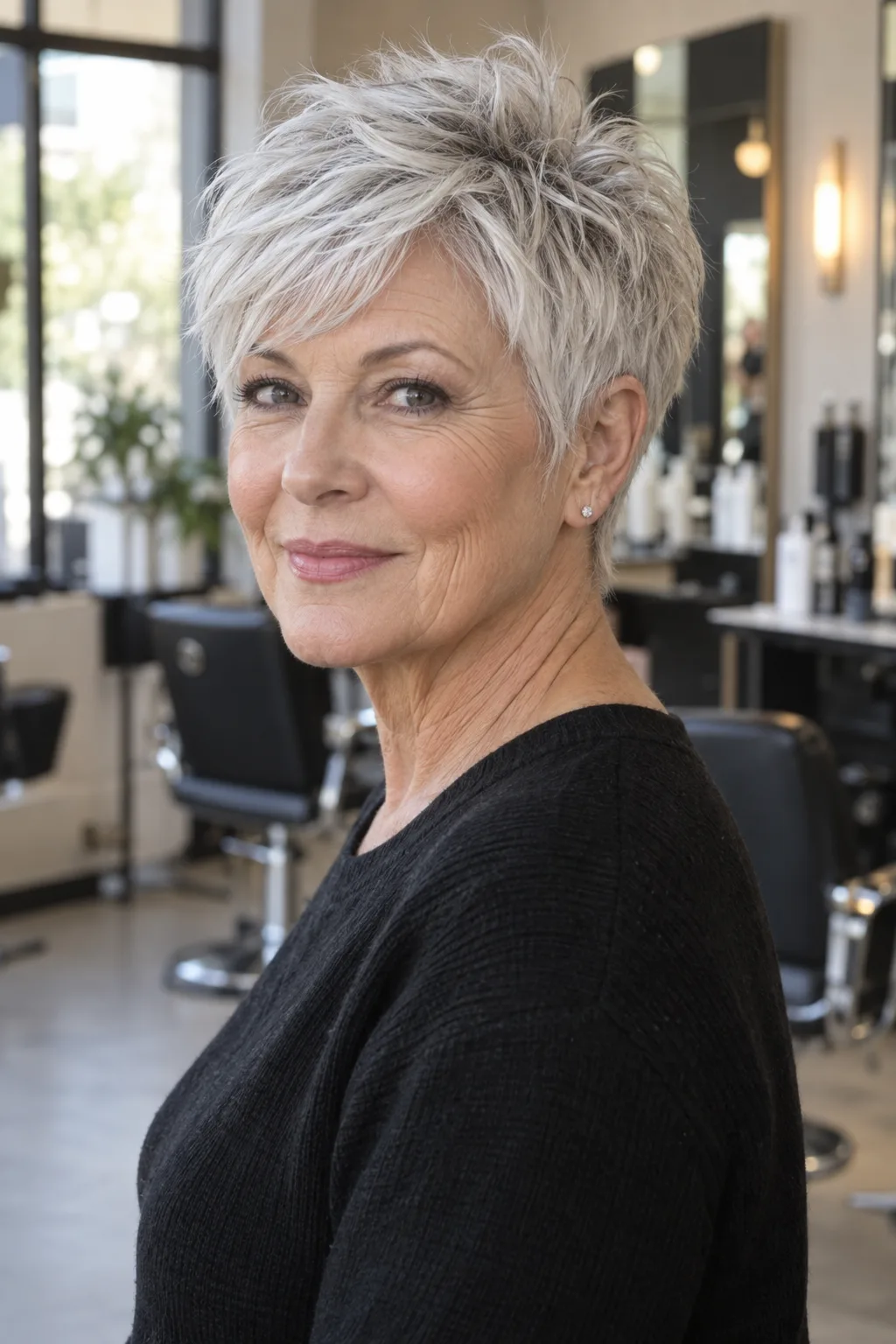
Textured pixie
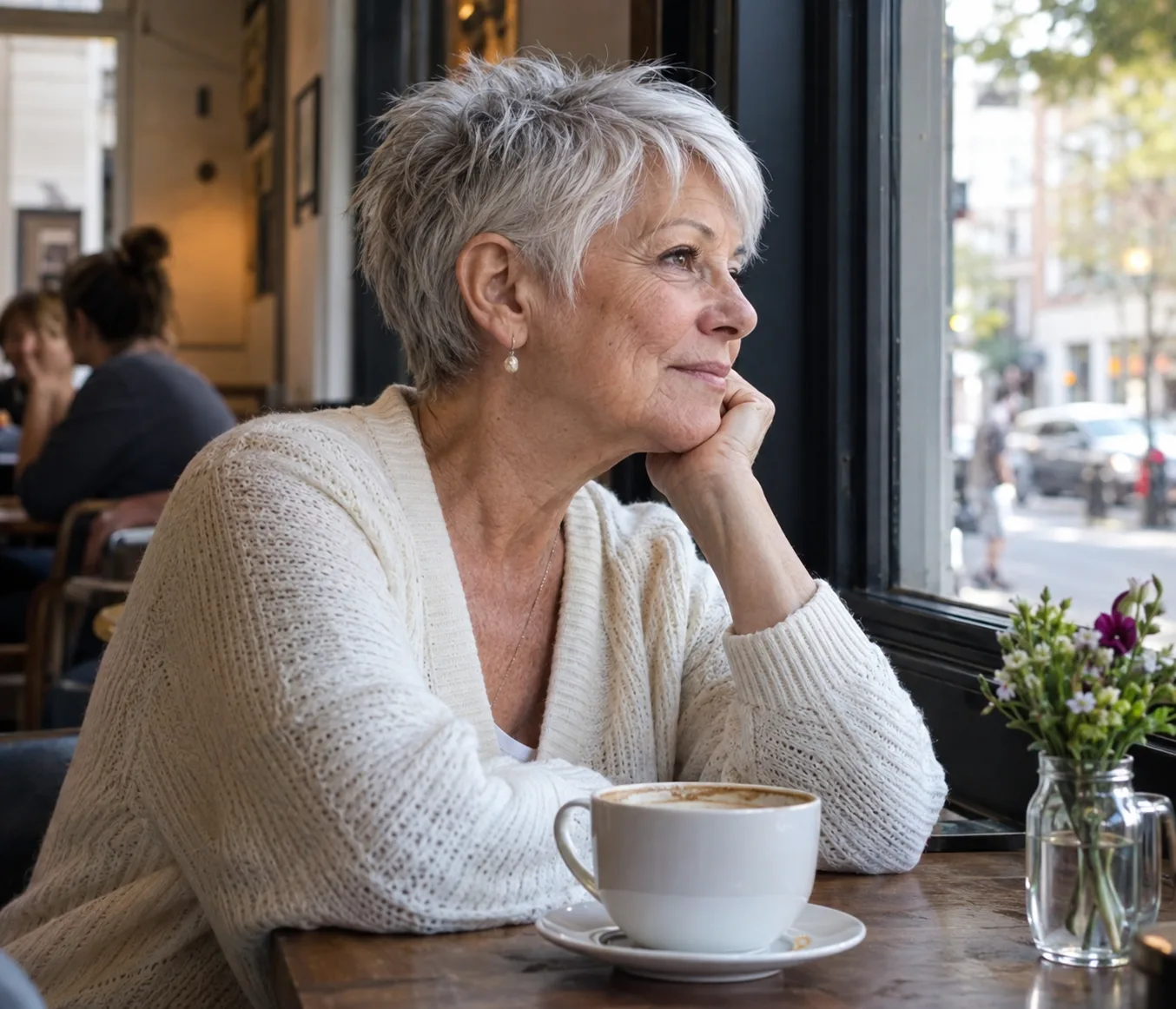
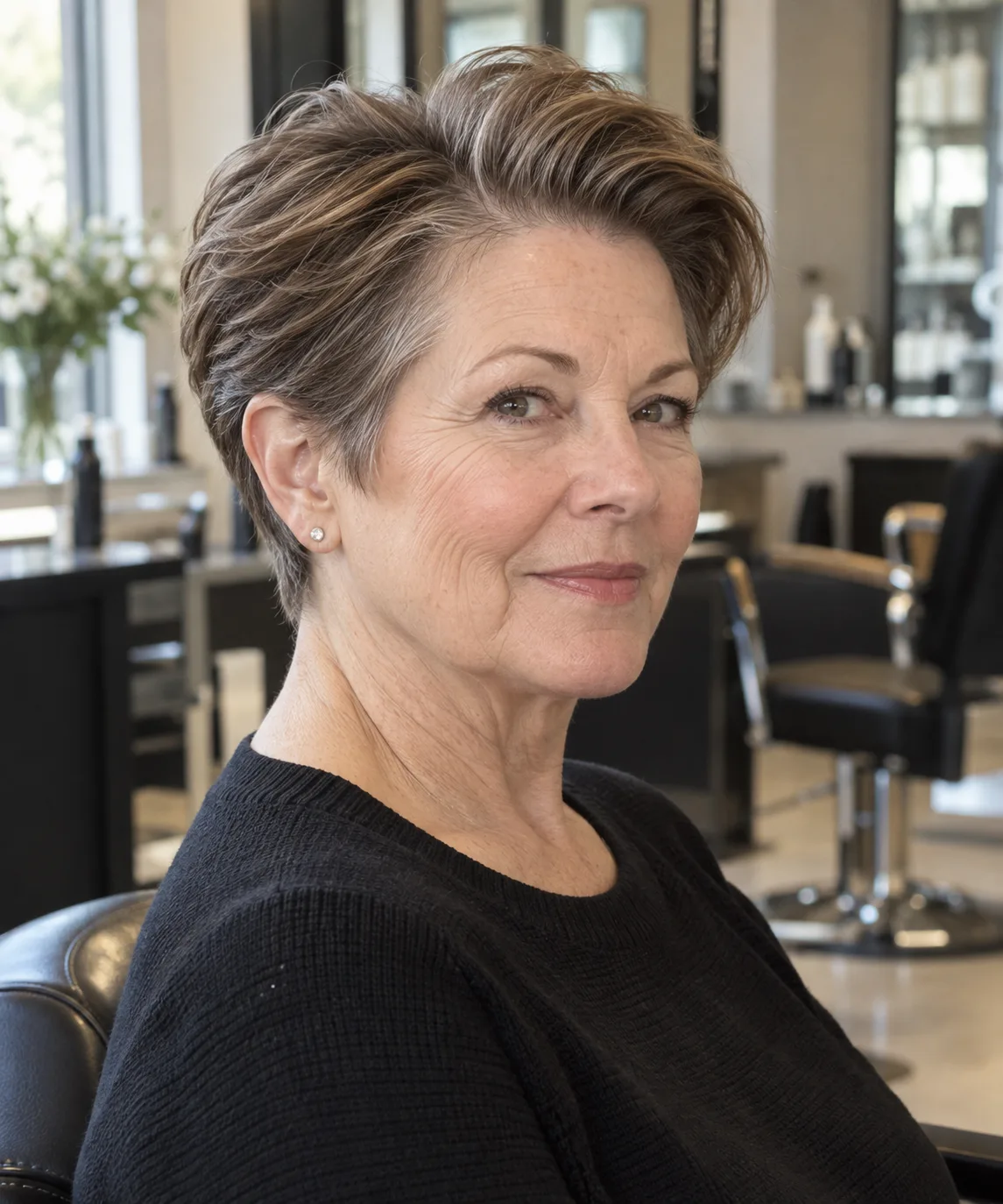
The textured pixie is the cut most stylists reach for after 60, and for good reason. It is about 1.5 inches at the sides and nape and about 3 inches on top, point-cut so the crown stands up on its own. That lift is exactly what a thinning crown needs.
It is also the easiest way to show off grey. Silver and white hair look brightest when they catch light on short, piecey ends. Ask for a little texture paste rather than gel, which clumps grey hair and shows scalp. If you are going from long to short in one sitting, read our guide to going from long hair to a pixie first.
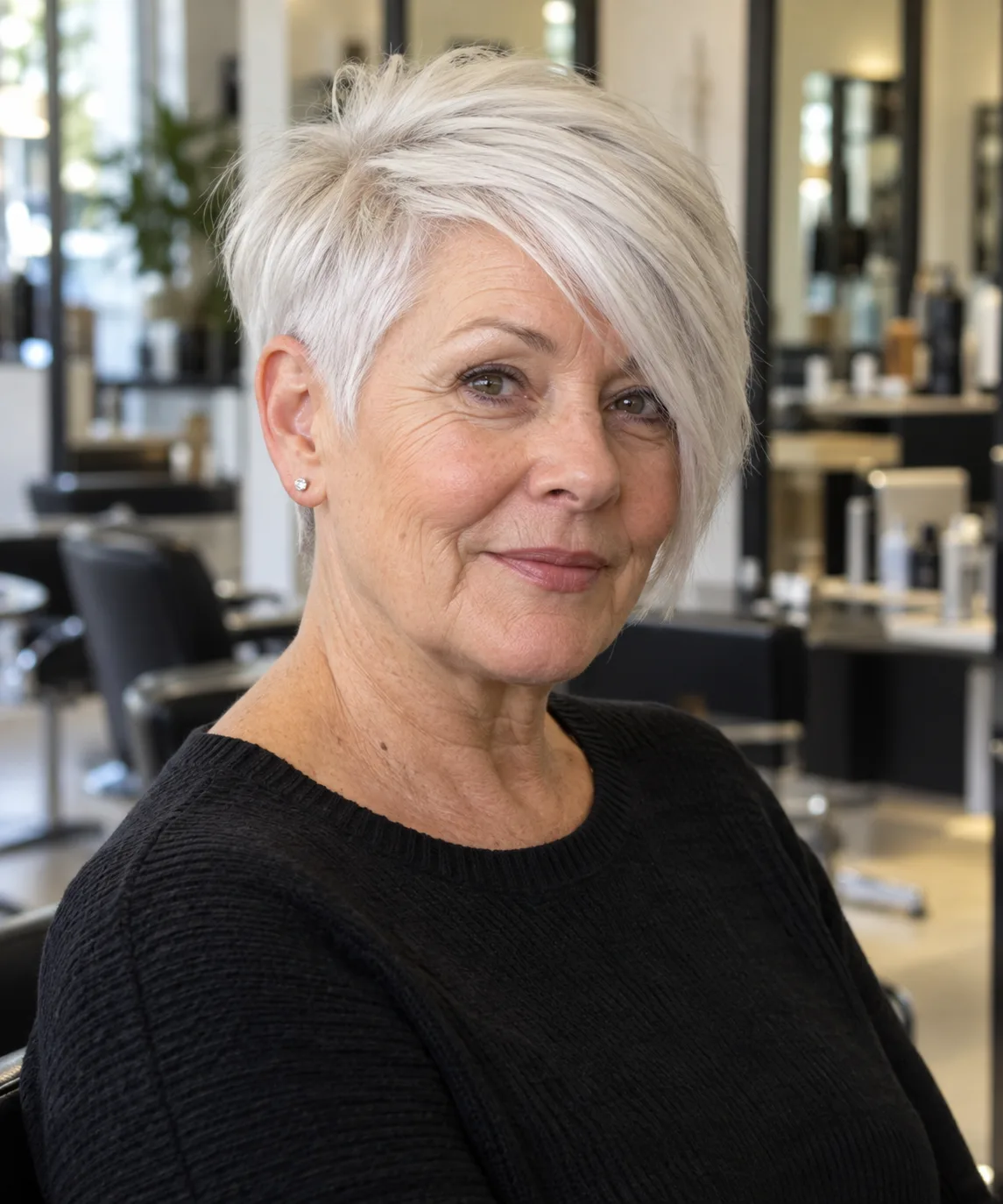
Long pixie, or bixie
The long pixie sits halfway between a pixie and a bob: sides at the middle of the ear, a soft nape and a long side-swept fringe. It is the one to choose if the idea of a very short cut makes you nervous, because it still covers the ears and grows out into a bob without an awkward stage.
Asymmetric pixie
One side short and neat, the other with a long diagonal fringe to the cheekbone. The long side softens a strong jaw and hides a high or uneven hairline. It needs a smooth finish to look right, so it suits straight or lightly wavy hair more than coarse grey.
Chin-length blunt bob
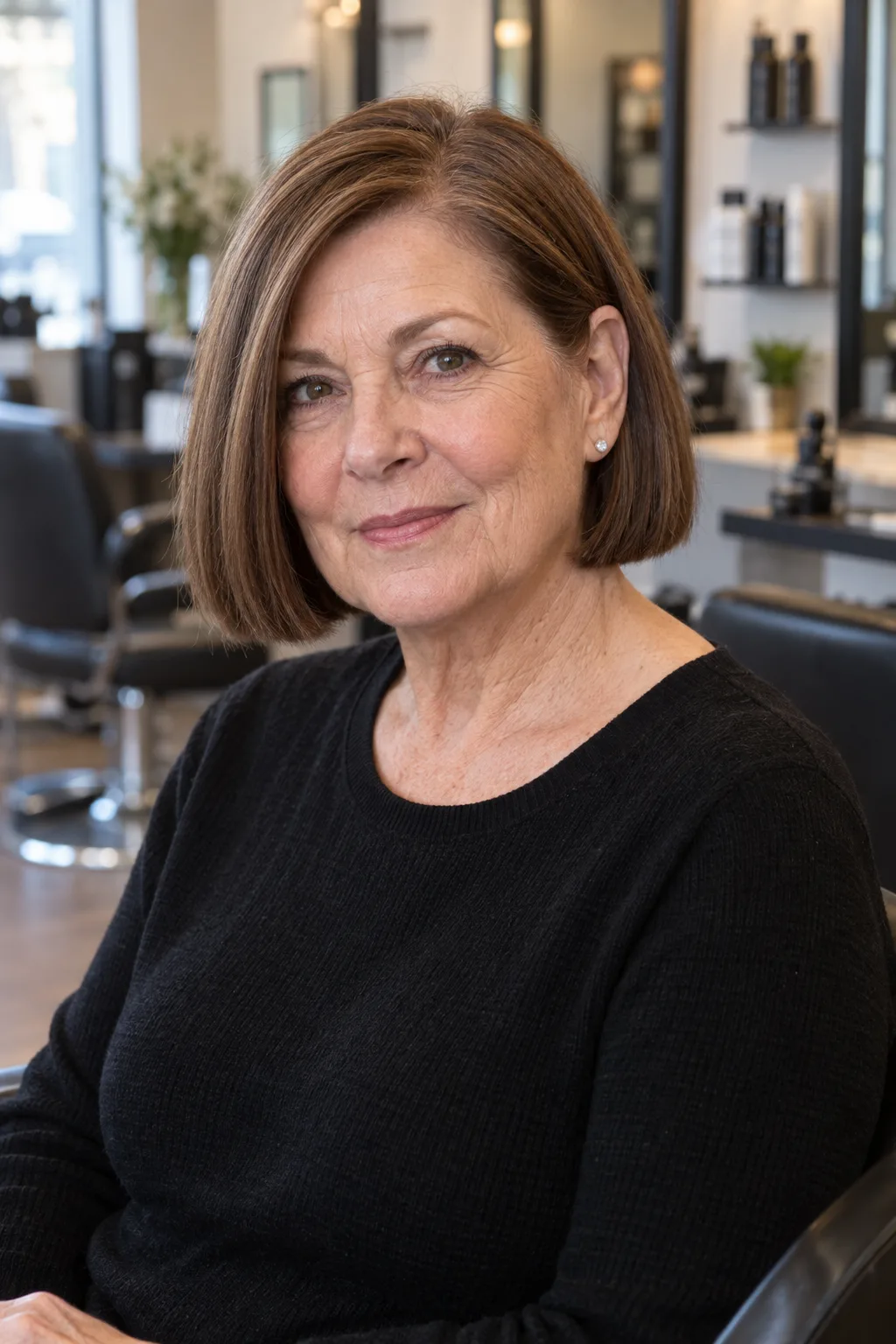
One length, cut in a single solid line at the jaw. This is the best short cut for thin, fine hair because it has no layers pulling weight away from the ends. The line makes sparse hair look twice as full. Keep a side part and tuck one side behind the ear so it does not read as severe.
French bob with bangs
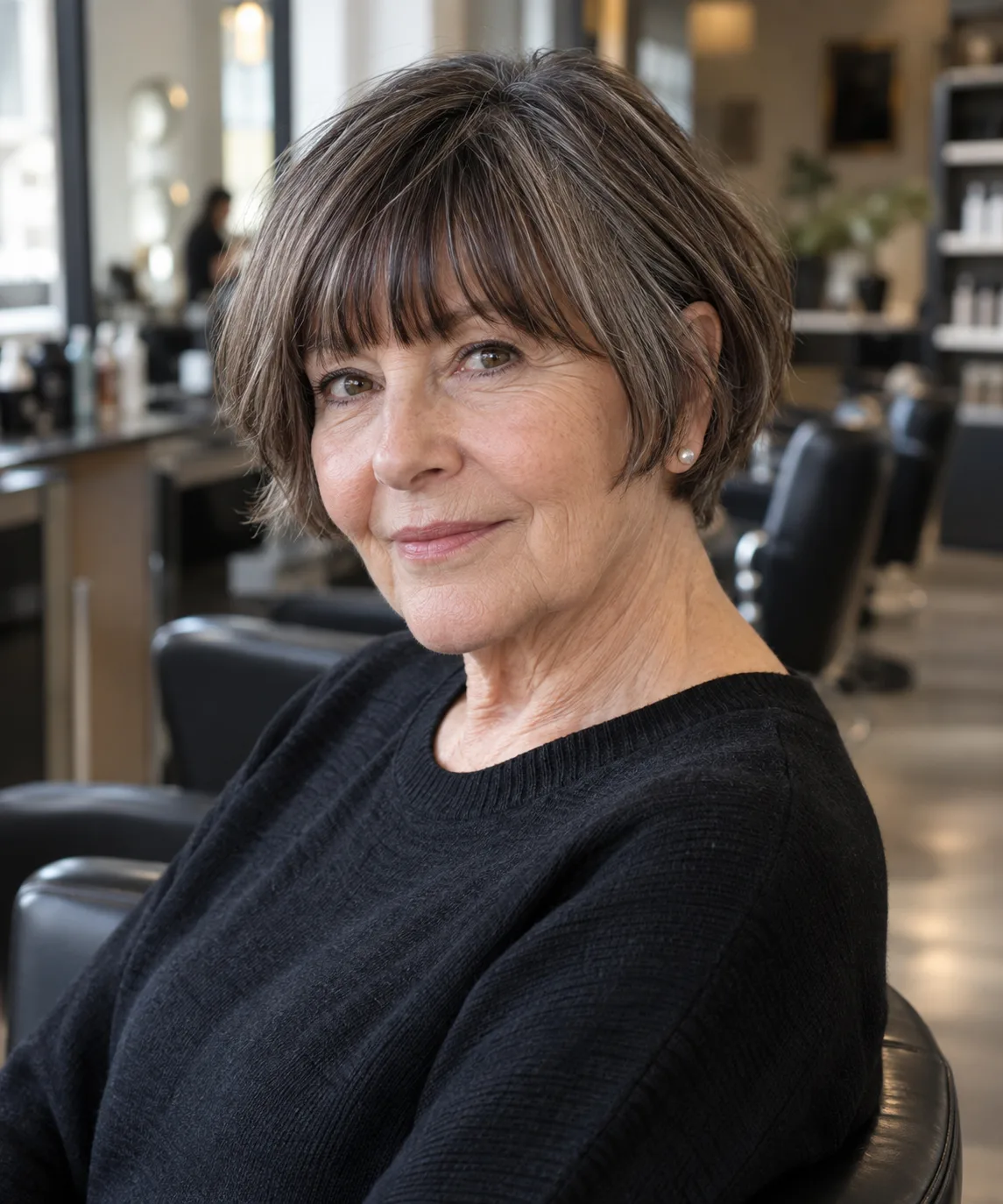
Shorter than the jaw, a soft slightly undone edge and eyebrow-length bangs. The bangs cover forehead lines and draw attention to the eyes. It is a strong choice if your hair has lost density at the front hairline, because the bangs cover it by design. If you have never worn bangs, our guide to side bangs is a gentler way in.
Stacked bob
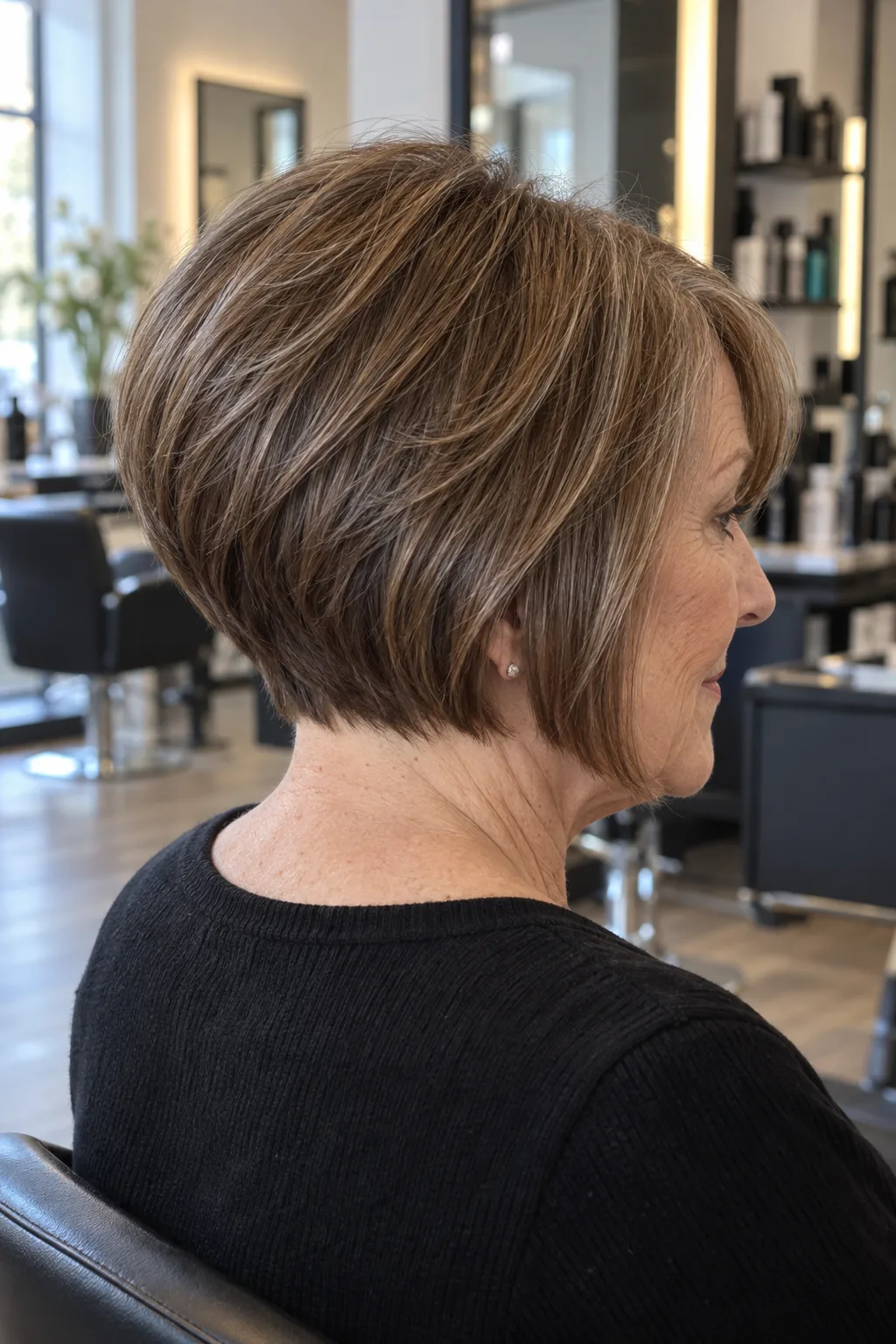
Short and close at the nape, then built up in graduated layers so the back of the head curves out, with longer pieces at the front. It gives a flat crown the shape it lost. It does need a trim every five to seven weeks, because the stacking softens fast.
Soft layered bob
Just below the jaw, long layers from the cheekbone down and a soft bend at the ends. This is the bob for medium to thick hair, where the layers remove bulk instead of removing the little you have. There are more versions in our layered bob guide.
Italian bob
A thick, full bob with a heavy blunt edge, blown out with a round brush so the ends curve under. It needs real density to work, so it is a thick-hair cut. On fine hair it collapses by lunchtime.
Short shag
Chin length, short choppy layers stacked at the crown, piecey ends and a wispy fringe. The shag is the rare cut that gets better as grey hair gets coarser, because it is meant to look a bit messy. Our full shag haircut guide covers how to style it in three minutes.
Short tapered curls
Sides and nape tapered short with scissors, about 3 inches of curls left on top, shaped round and a little taller at the crown. It is wash and go, and it frames the face without adding width at the sides.
Short natural cut on coils
About an inch all over, shaped evenly close to the head. On silver 4c coils this is one of the most striking cuts in the gallery, and it takes almost no time. For more on this texture, see our 4c hair guide.
Wedge cut
A classic from the 1970s that still works: close at the nape, then graduated out into a rounded wedge above it, with feathered sides and fringe. It has more volume at the back than any other cut here, which makes it a quiet fix for a flat back of the head.
Yours could be here.
Start with one selfie.
One photo, twenty seconds, and you'll know. Free account, no card for your first render.
Which short haircut suits your hair type?
Your hair type matters more than your face shape after 60, because it decides whether a cut holds its shape past the salon door. Match the row first, then read the section.
| Your hair | Go for | Avoid |
|---|---|---|
| Fine or thinning | Blunt bob, textured pixie, stacked bob | Heavy layering, razored ends |
| Thick | Soft layered bob, Italian bob, shag | One-length blunt cuts with no weight removed |
| Curly or coily | Tapered curls, short natural cut | Cutting curls wet and straight |
| Coarse grey | Short shag, textured pixie | Sleek styles that need a flat iron |
Fine or thin hair
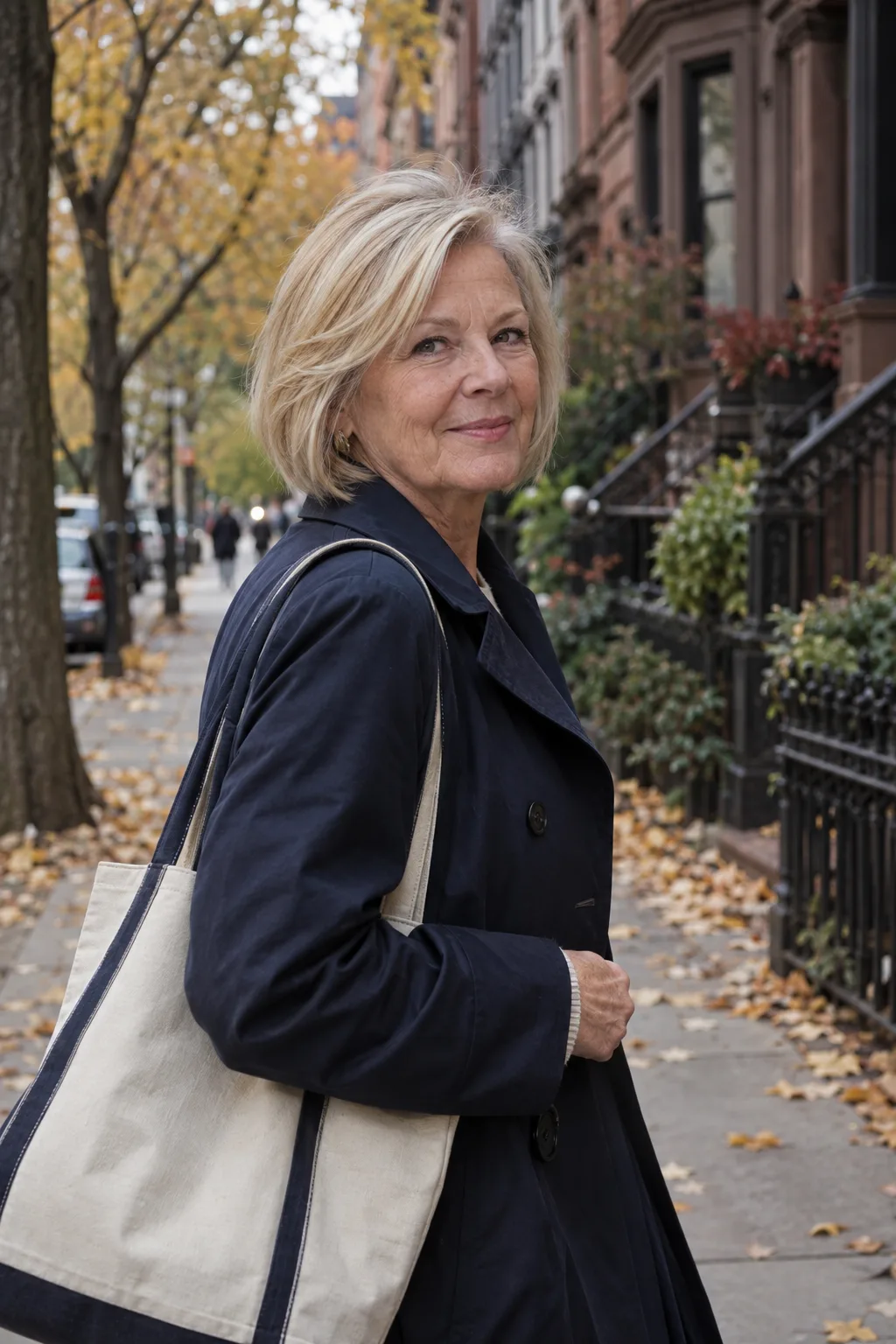
Fine hair over 60 needs a solid perimeter and lift only at the crown. The blunt line makes ends look thick, and a few short layers at the crown stop the top lying flat. This is where the most common mistake happens: a stylist sees thin hair, reaches for thinning shears and layers it all over, and the result is wispier than before.
To see how a bob sits on your own face before the scissors come out, use the bob haircut try-on.
Thick hair
Thick hair can carry more layers, and needs them, or a short cut turns into a triangle. Ask for weight removed from the inside so the outline stays neat. The soft layered bob and the shag are the easiest to live with.
Curly and coily hair

Curls should be cut dry, curl by curl, so the stylist can see where each curl lands. A tapered cut keeps the sides neat and leaves the volume on top, which lifts the face. If you want to test lengths on your own curls, the curly hair try-on renders your texture, not a straightened version of it. Our 3c hair guide covers care for this curl type.
Coarse grey hair

Grey that has come in wiry is easiest when the cut leans into the texture. A short shag or a textured pixie makes the flyaways look intentional. If you are still growing out colour, our grey hair transition guide explains how to cut through it faster, and the gray hair filter shows you the end result before you commit.
Short haircuts for women over 60 with glasses

With glasses, the best short cuts keep the bangs above the frames and the sides tucked behind the ears. Hair resting on the lenses or bunching over the arms is what makes glasses look heavy.
- Bangs should end above the top of the frame, or be long enough to sweep to the side. Eyebrow-length bangs under thick frames hide your eyes.
- Short sides beat full sides. A pixie or a bob tucked behind the ears lets the glasses sit flat.
- Match weight to weight. Heavy, dark frames suit a cut with some volume, like a layered bob. Thin wire frames suit a sleeker cut.
Short haircuts for a round face over 60
For a round face, choose a short cut with height at the crown and some length or angle at the front, like a long pixie, an asymmetric pixie or a stacked bob with longer front pieces. Height makes the face look longer. Width at the cheeks makes it look rounder, so avoid full volume at ear level.
Not sure what shape your face actually is? Measure it instead of guessing.
Measure it instead of guessing
Both numbers in the same unit — the answer is a ratio, so it does not matter which.
Under 1.15 reads round, 1.15 to 1.5 reads oval, over 1.5 reads long. Oval and long split on the jaw rather than the ratio: an oval tapers toward the chin, a long face runs straight down.
Short haircuts for women over 70
The same rules hold after 70, with one addition: choose a cut you can style without reaching up for long. If shoulder stiffness makes blow drying the back of your head hard, a textured pixie or short tapered curls need nothing but a towel and your fingers. A bob that needs a round brush at the back is a cut you will end up wearing flat.
Mistakes that make short hair look older
- Layering thin hair all over. It removes the little weight you have and the ends go see-through. Ask for a blunt line and crown layers only.
- A helmet shape. Hair set or sprayed into one rigid dome is what reads as dated. Movement and a little texture read as current.
- Going too short at the nape with clippers. A hard clipper line on a woman's cut rarely softens. Ask for the nape to be tapered with scissors.
- Fighting the texture. Cutting a sleek style into coarse grey hair commits you to heat styling every day. Pick a cut that works air-dried.
- Skipping trims. Short cuts lose shape in weeks. A pixie left for three months stops being a pixie.
How to ask for a short haircut over 60
Bring two photos: one of the cut you want, and one of the back view. Then say it in a sentence your stylist cannot misread.
Say this to your barber
A chin-length bob with a blunt line, a few short layers at the crown for lift only, no thinning shears, nape tapered with scissors, and a side part.
How to ask for a short haircut over 60
- Say where your hair is thinnest
Tell the stylist whether it is the crown, the part or the front hairline. That decides where the layers go.
- Show the back, not just the front
Most short cuts are defined by the nape and the back of the crown. A front photo alone leaves half the cut to guesswork.
- Say how long you style it
Two minutes, ten minutes or none. This rules out cuts that need a round brush every morning.
- Ask for scissors at the nape
A scissor taper grows out softly. A clipper line grows out as a ridge.
- Agree the trim schedule before you leave
Book the next appointment for four to six weeks for a pixie, six to eight for a bob.
Can you see a short haircut on yourself first?
Yes, and there is a free way to start. Save photos of two or three cuts from the gallery above, hold your phone next to a mirror in daylight, and cover the model's face with your thumb so you only compare the shape around the head. It rules out the obvious mismatches in ten minutes.
It stops working at your own face. You cannot see how a pixie changes your jaw, or whether bangs sit well above your glasses, until the hair is gone. That is the wall.
Hairstyle Atlas puts the cut on your own photo. The first look is free and needs no card. After that, plans start at $9 a month or $60 a year, with a seven-day refund. The women's hairstyle try-on covers every cut in this guide.
The one thing to remember
The best short haircut after 60 is the one that fixes what changed in your hair. Thin crown, get lift. Thin ends, get a blunt line. Coarse grey, get texture. If you remember nothing else, remember that thinning hair wants fewer layers, not more, and find a stylist who agrees before they pick up the shears.
Frequently asked questions
A textured pixie or a chin-length bob suits most women at 60. The pixie is best for grey hair and a thinning crown because it lifts the top. The bob is best for fine hair because the blunt line makes the ends look thick.
Cuts with movement and lift look younger than rigid, set styles. A textured pixie, a soft layered bob or a short shag all add height at the crown and soft pieces around the face, which reads as fresh rather than dated.
A chin-length blunt bob, with layers only at the crown for lift. Avoid heavy layering and thinning shears, which take weight out of the ends and make fine hair look sparse.
One length, mostly. A blunt perimeter makes thin hair look fuller. A few short layers at the crown help, but layers through the ends make thin hair look thinner.
A short cut with height at the crown and length or an angle at the front, such as a long pixie, an asymmetric pixie or a stacked bob. Avoid width at ear level, which makes a round face look rounder.
A long pixie or a stacked bob with the sides tucked behind the ears and side-swept bangs that end above the frames. That combination adds height, keeps the cheeks clear and lets the glasses sit flat.
Either can work. What matters is where the volume sits. Short cuts with lift at the crown and longer front pieces flatter a full face, while cuts that are wide at the cheeks do not.
Softer, textured short cuts are replacing set and sprayed styles: piecey pixies, undone French bobs and short shags. Many women are also keeping their natural grey and choosing cuts that show it off rather than covering it.
Bring a front and a back photo, say where your hair is thinnest, say how long you spend styling, and ask for the nape to be tapered with scissors. Book the next trim before you leave.
Preview it on your own photo: Virtual Hair Color Try-On.
Share article
About the author
More articles
Women's Haircuts · 14 min
Bleached Hair: How Light Yours Can Go, 14 Shades, Aftercare
How light your bleached hair can go depends on where it starts. See 14 bleached shades on one cut, what each starting color can reach in one session, how toner finishes the job, and the aftercare that keeps it soft.
Women's Haircuts · 16 min
Waves Hair: How to Get Beach, Loose and Hollywood Waves That Last
Waves hair is about what you leave straight. How to get beach, loose, Hollywood and heatless waves, which wave suits your hair type, and why your waves keep falling out.
Women's Haircuts · 15 min
Fino Hair Mask: Who It Suits, How to Use It, and Its Limit
The Fino hair mask makes dry, bleached and frizzy hair smooth and shiny in one use, mostly by coating it. Here is what is in the jar, which hair types it suits, exactly how to use it, and what to do when the ends are past a mask.