Bleached Hair: How Light Yours Can Go, 14 Shades, Aftercare
Oleh Onysko 30 September 2026 14 min read
In this article
Bleached hair is hair that has had its natural pigment chemically removed, usually with a lightener built on hydrogen peroxide, so it can be worn pale or colored over. How light it gets, and how much damage it takes on the way, depends less on the product than on one number: how many levels your hair has to climb from where it starts.
That is the part most guides skip. Going from light brown to platinum is a routine one-sitting job. Going from black to platinum is a project spread over weeks, and it costs the hair something every time. This guide shows you the fourteen places bleached hair can land, tells you which ones your starting color can reach in one go, and gives you the aftercare that keeps it from turning into straw.
What bleached hair actually is
Bleach does not add color. It oxidizes the melanin inside each strand, and as that pigment breaks down the hair passes through a fixed order of undertones: red, then orange, then gold, then yellow, then pale yellow. Stop early and you get brass. Nobody's hair lifts straight to white; even the palest platinum is pale yellow hair with a toner on top.
To get in, the lightener has to swell the cuticle, the outer layer of overlapping scales. That is where the damage comes from, and it is why bleached hair feels rougher and soaks up water faster than it did before.
Developer strength matters as much as time. A 20 volume developer lifts slowly and is the usual choice on the scalp; 30 and 40 volume lift faster and do more harm, which is why a patient colorist often picks the lower number and gives it longer. Heat speeds bleach up too, so the hair nearest the warm scalp lightens faster than the lengths. That is where hot roots, a band of brighter color at the part, come from, and why a good colorist applies the roots last.
The American Academy of Dermatology puts the line clearly: lightening more than three shades needs higher volumes of peroxide, which causes more hair damage. Colorists count those shades as levels, from 1 (black) to 10 (lightest blonde).
| Level reached | What you see | What it still needs |
|---|---|---|
| 5 to 6 | Red-orange, copper | More lift, or a deliberate warm color over it |
| 7 | Orange-gold brass | More lift before any blonde toner will work |
| 8 | Gold | Honey, caramel or golden blonde toner |
| 9 | Yellow | Butter, champagne or beige toner |
| 10 | Pale yellow, like the inside of a banana peel | Platinum, icy, silver or pastel toner |
The finish you want decides the level you need. Platinum and silver need a clean level 10; honey needs only level 8. That gap is two fewer levels of damage.
Bleached hair shades: one cut, fourteen finishes
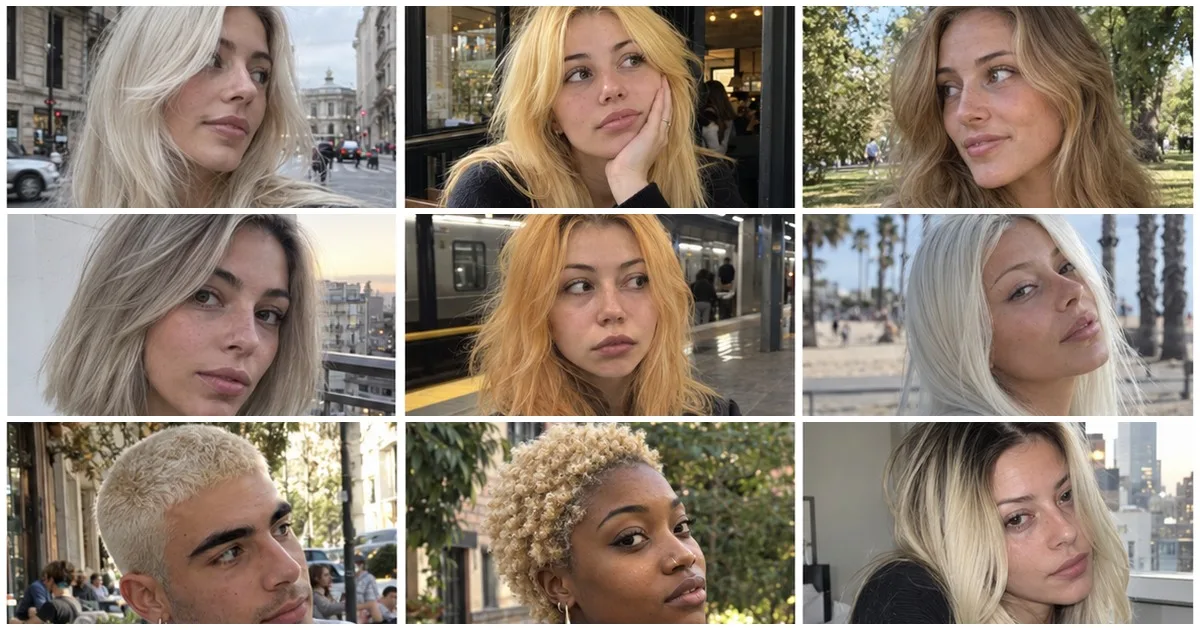
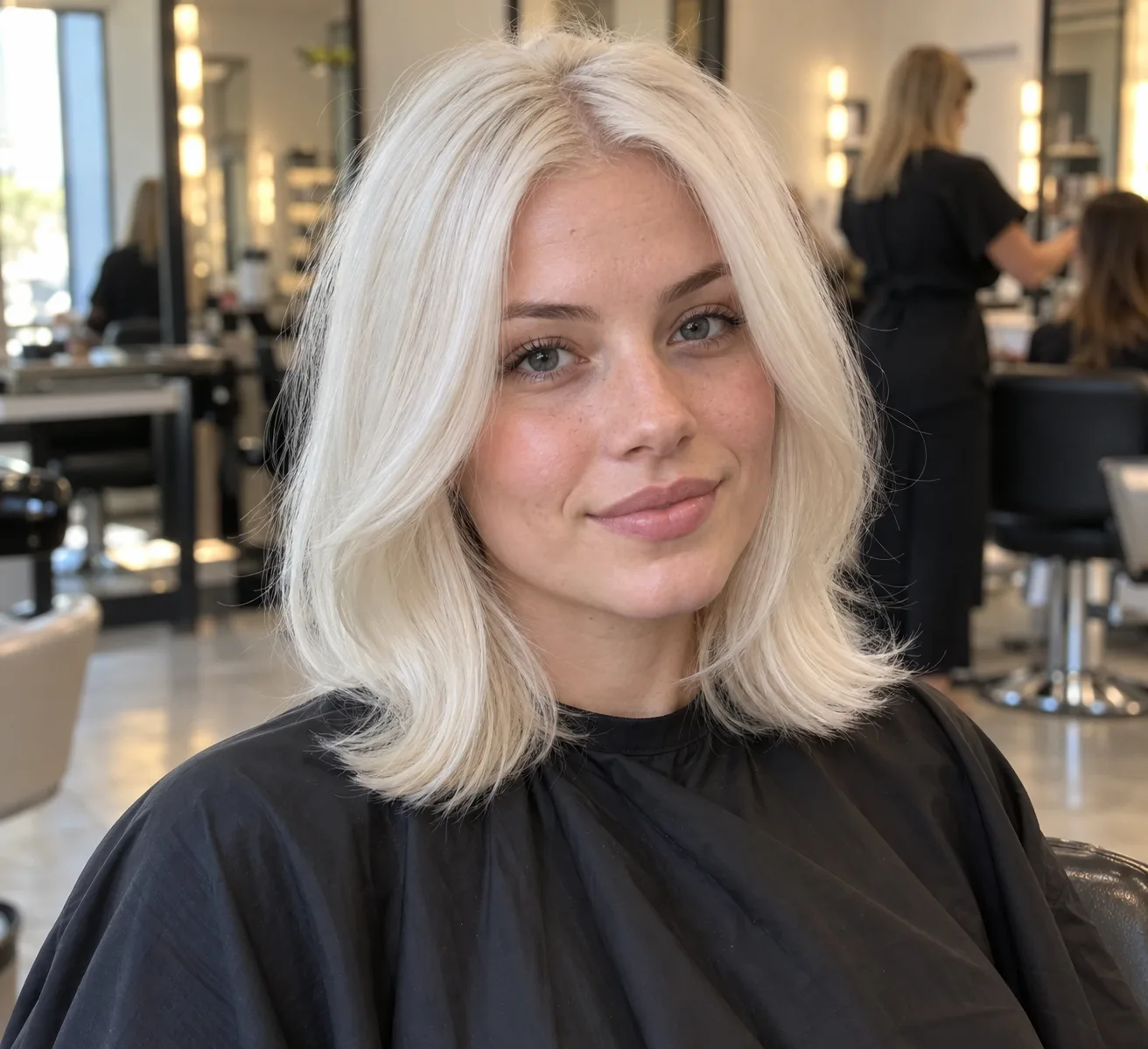
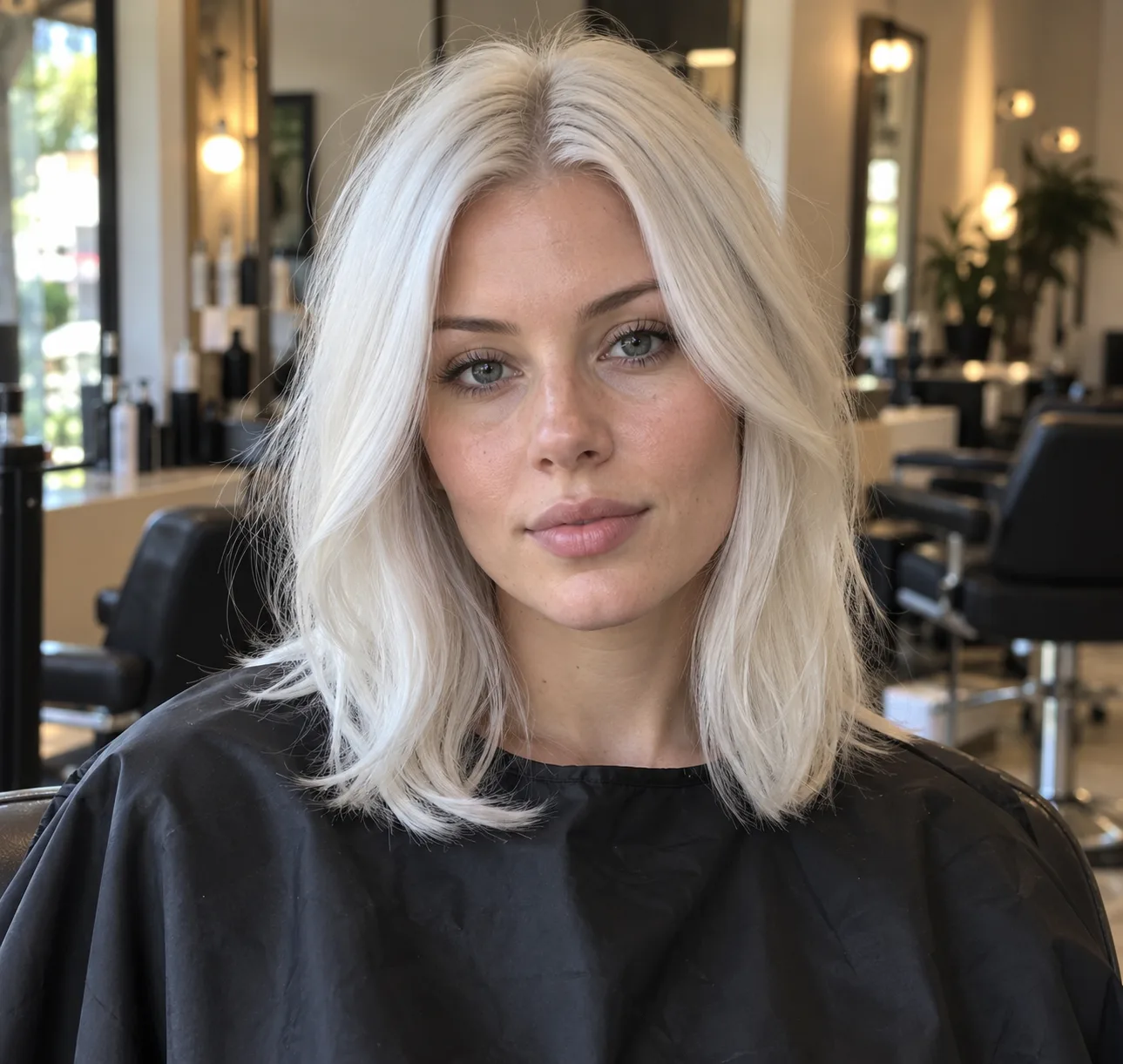
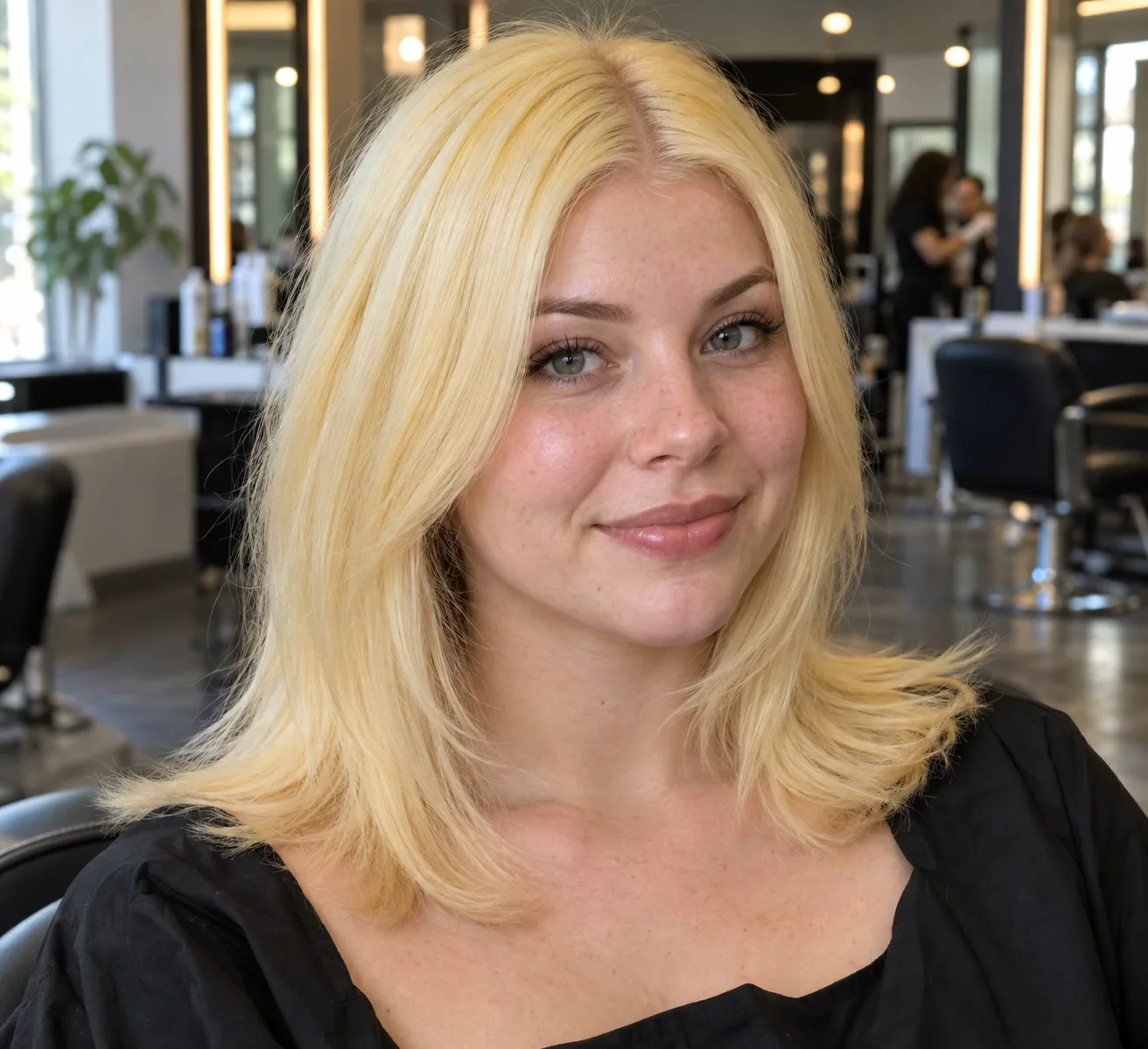
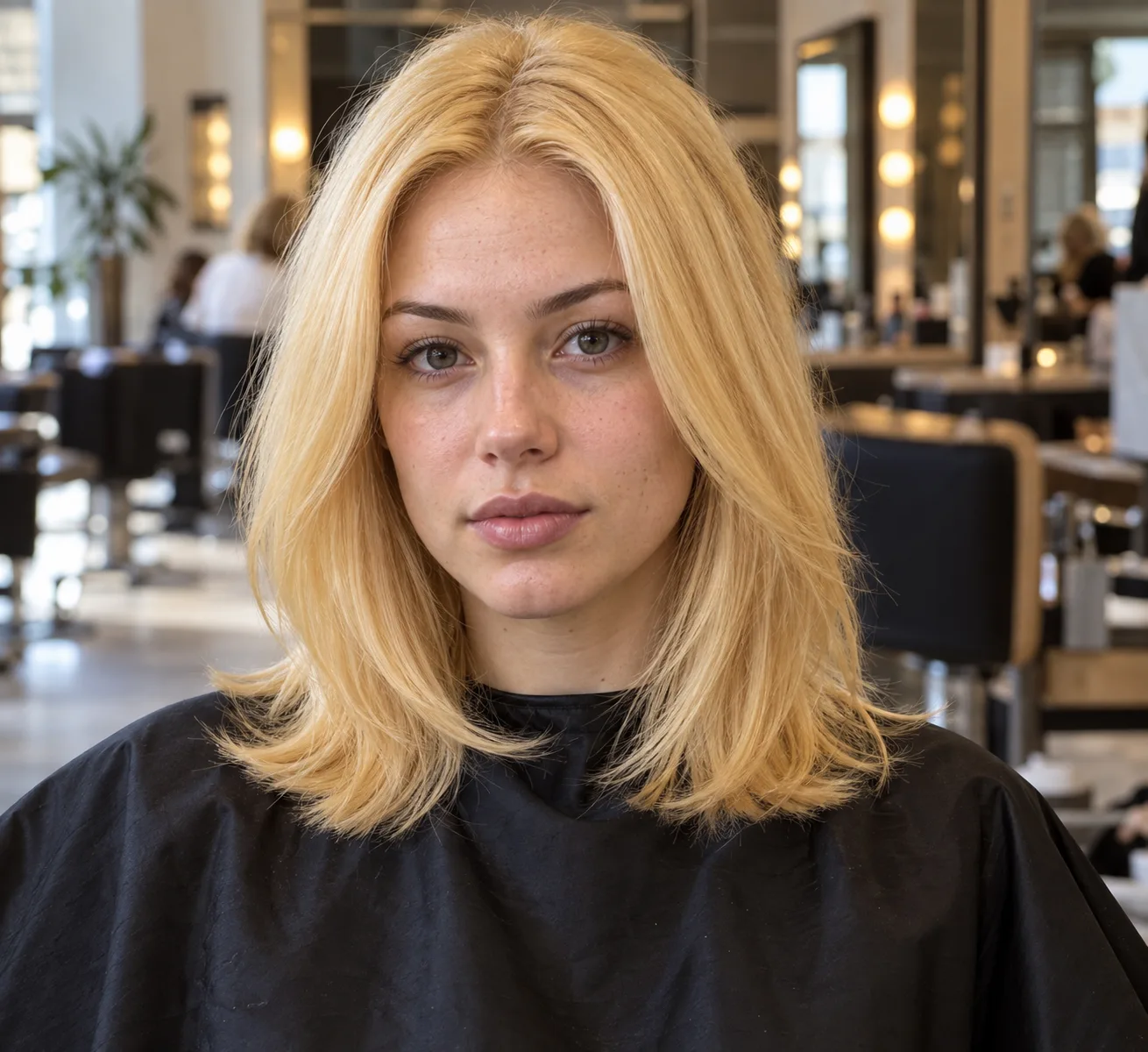
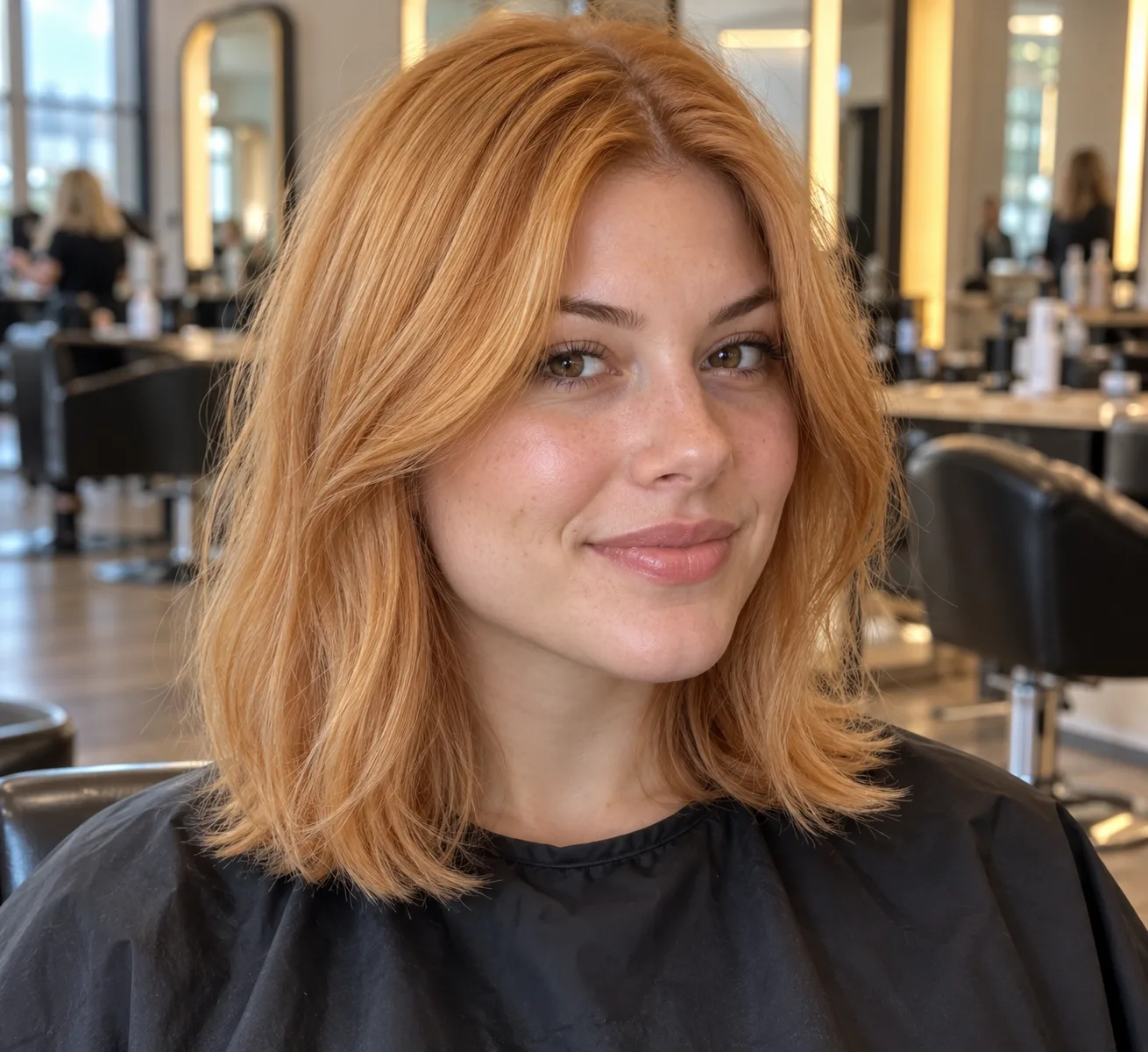
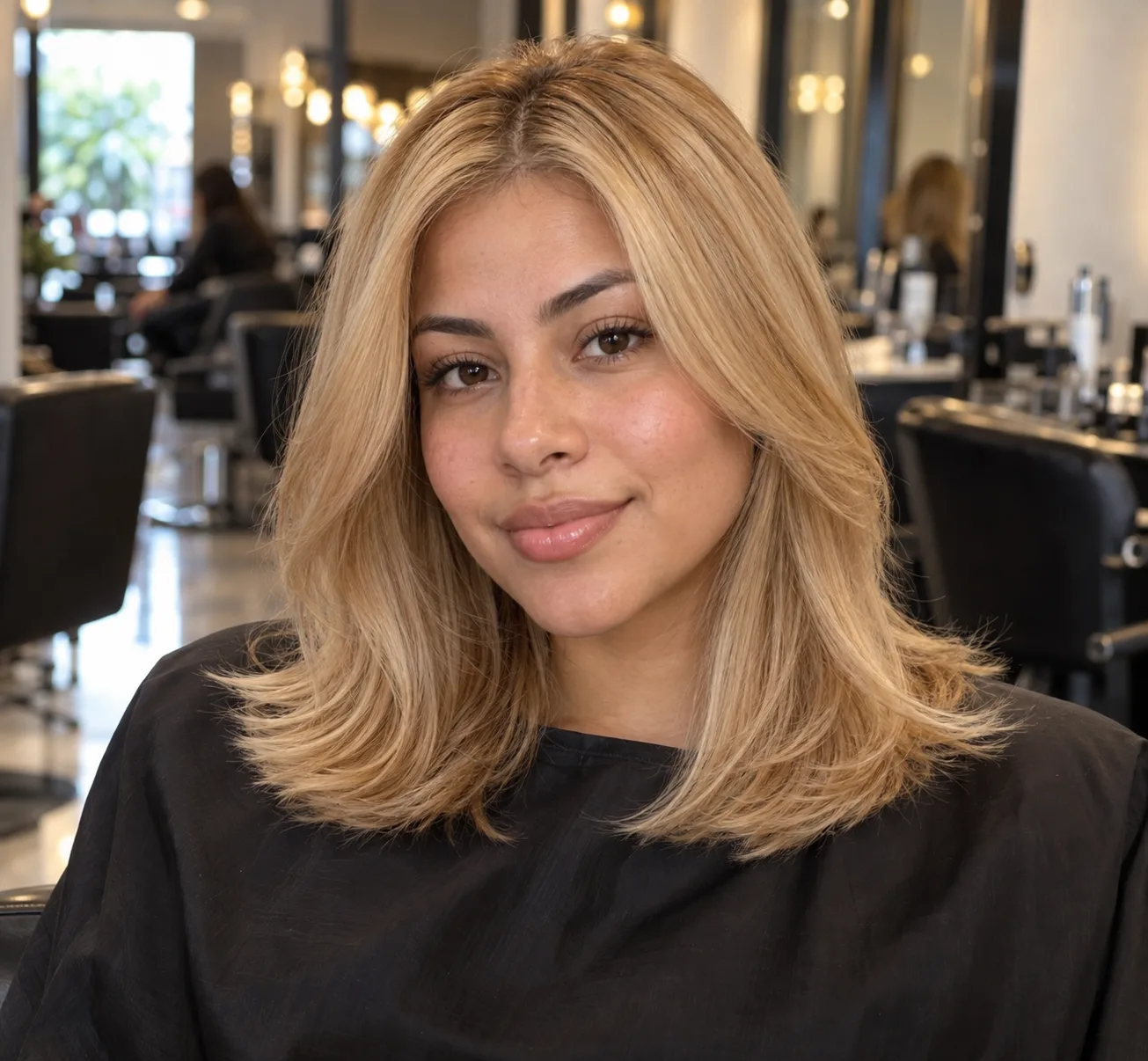
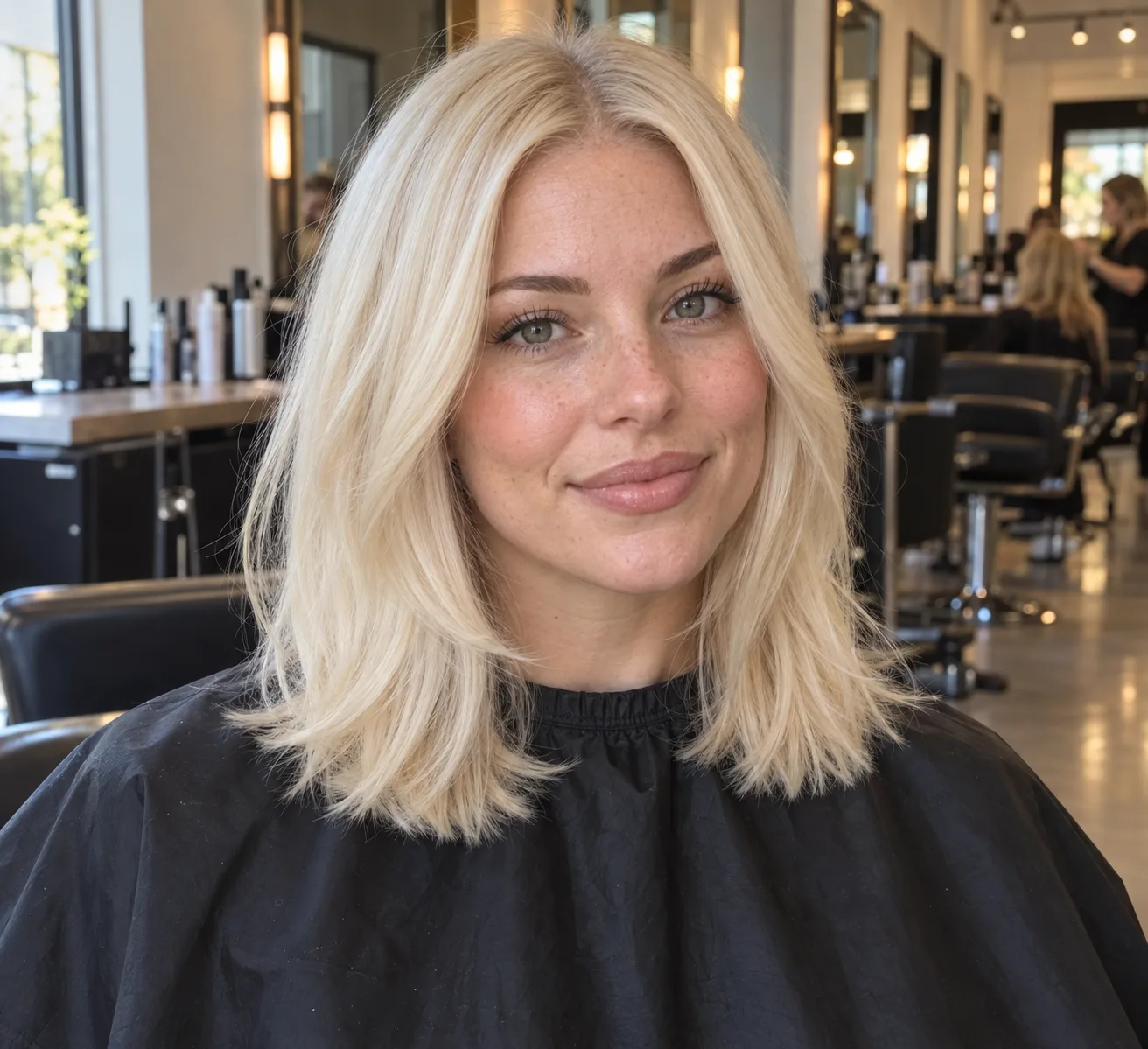
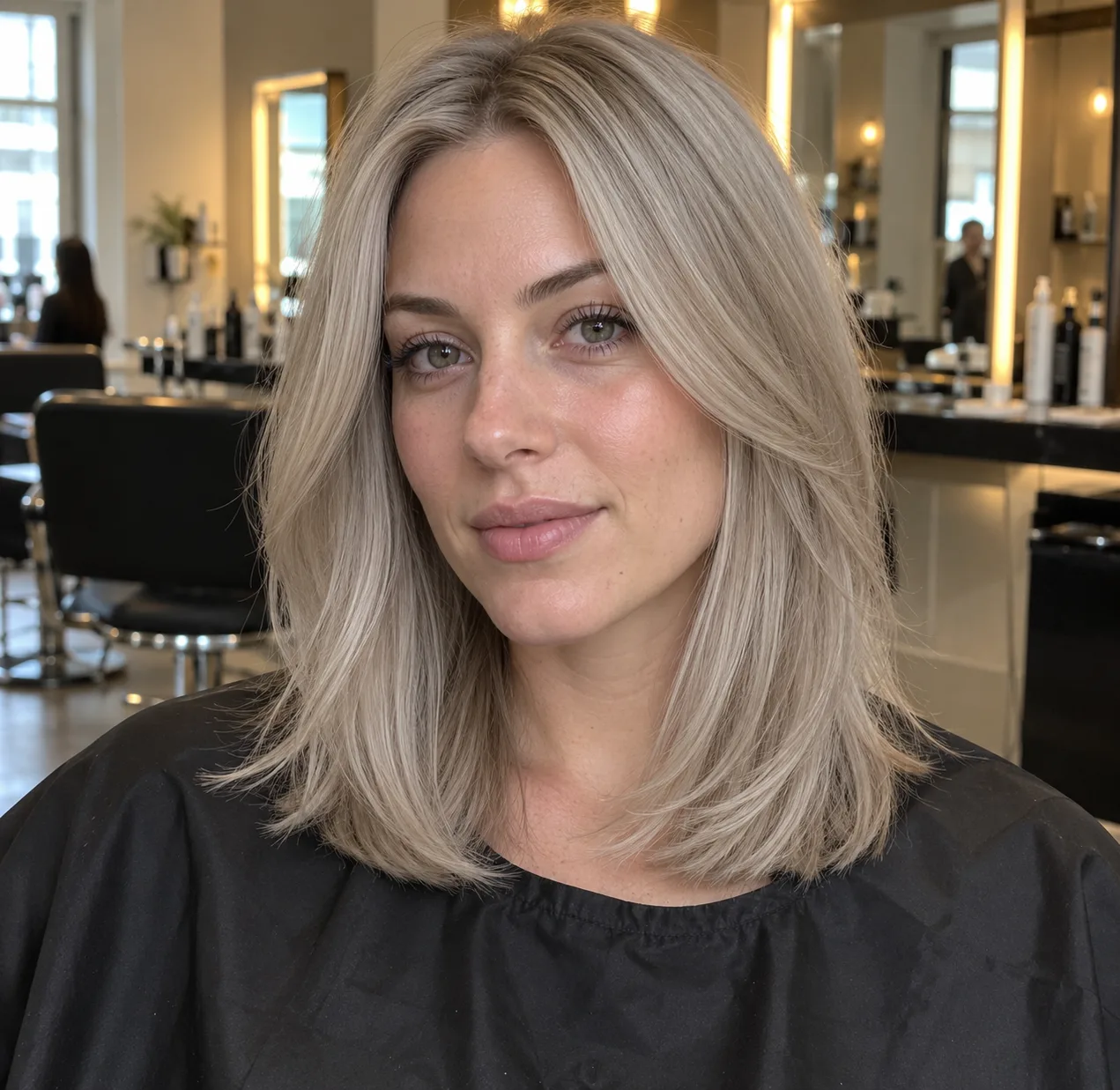
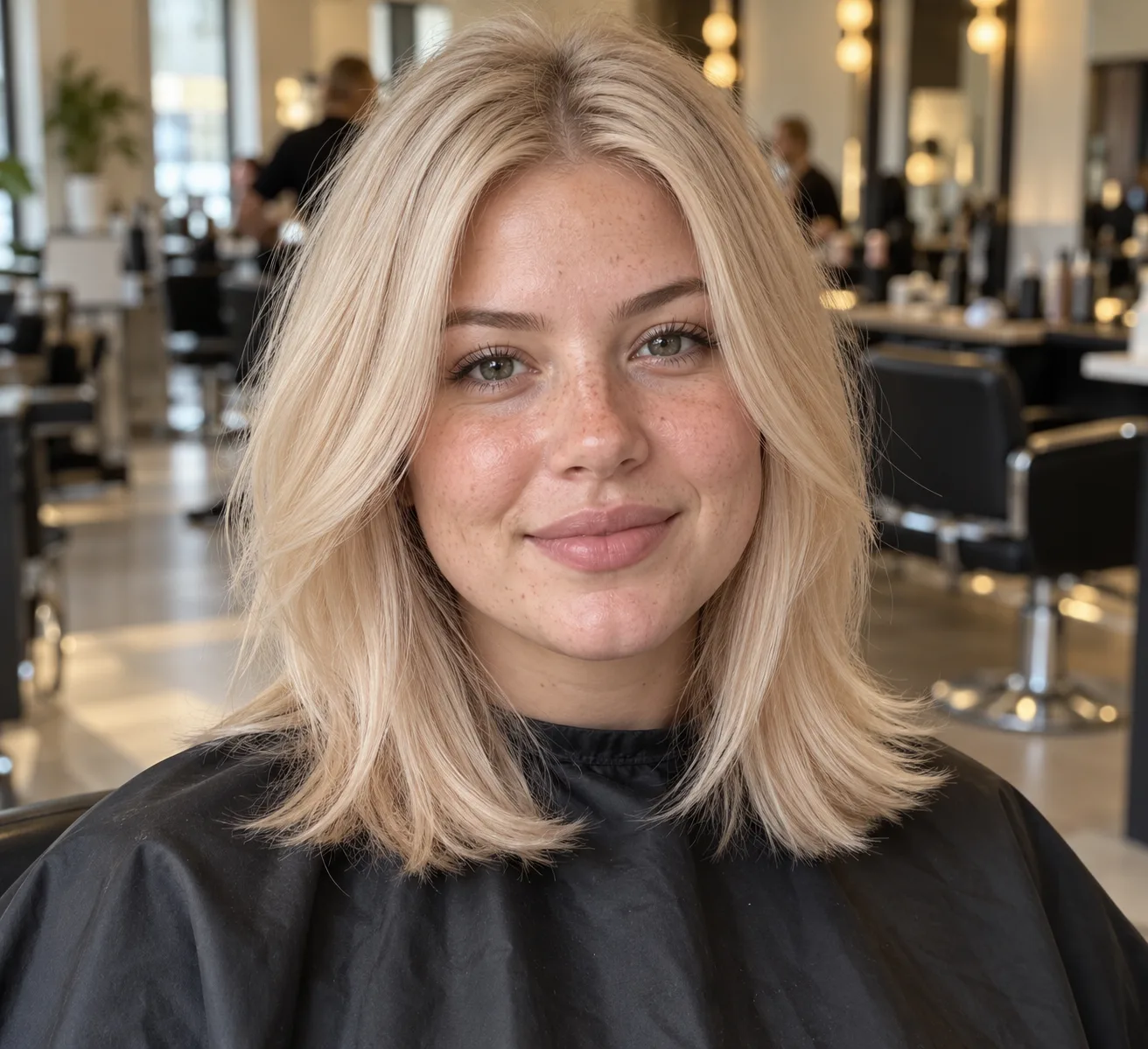
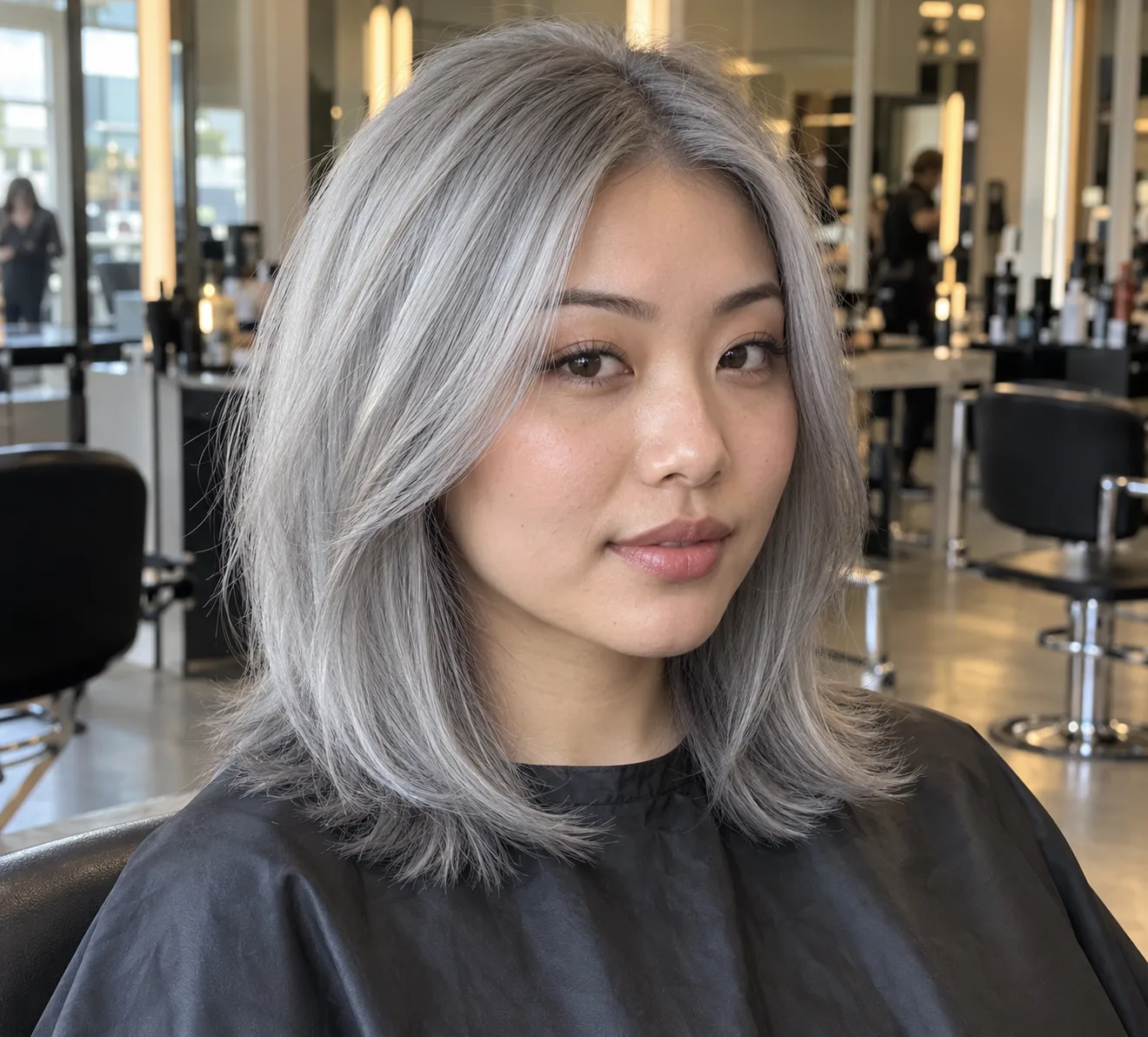
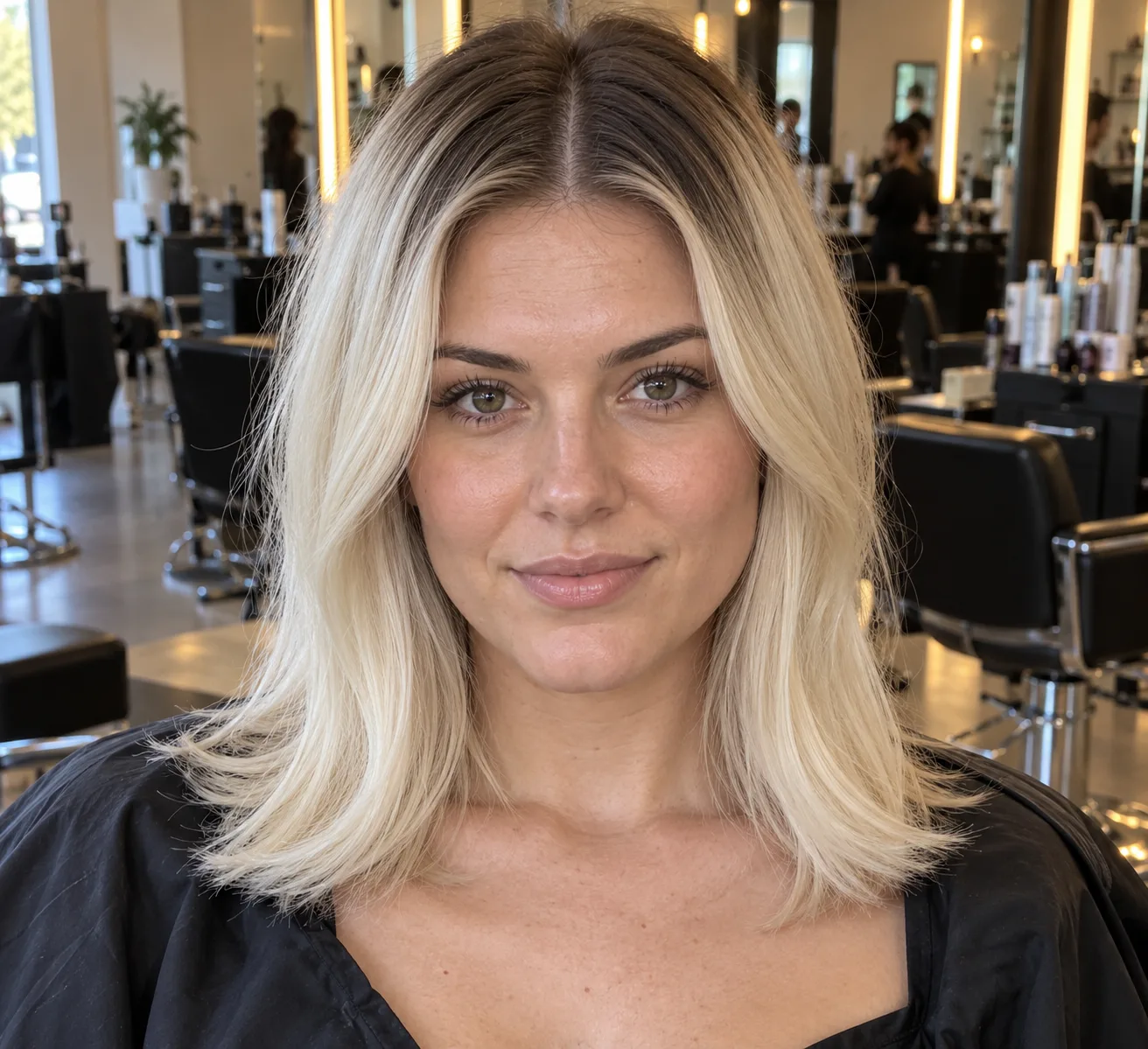
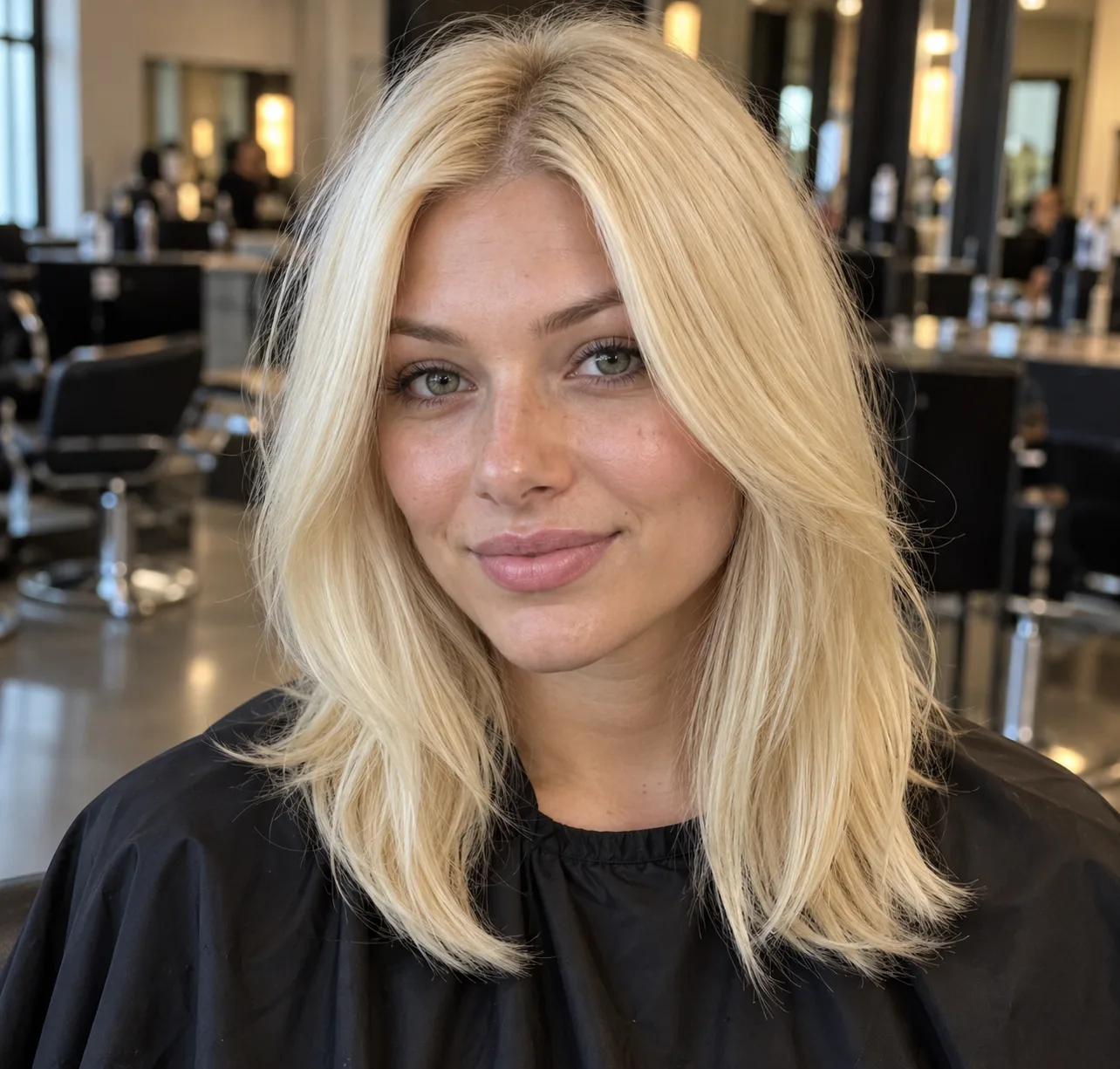
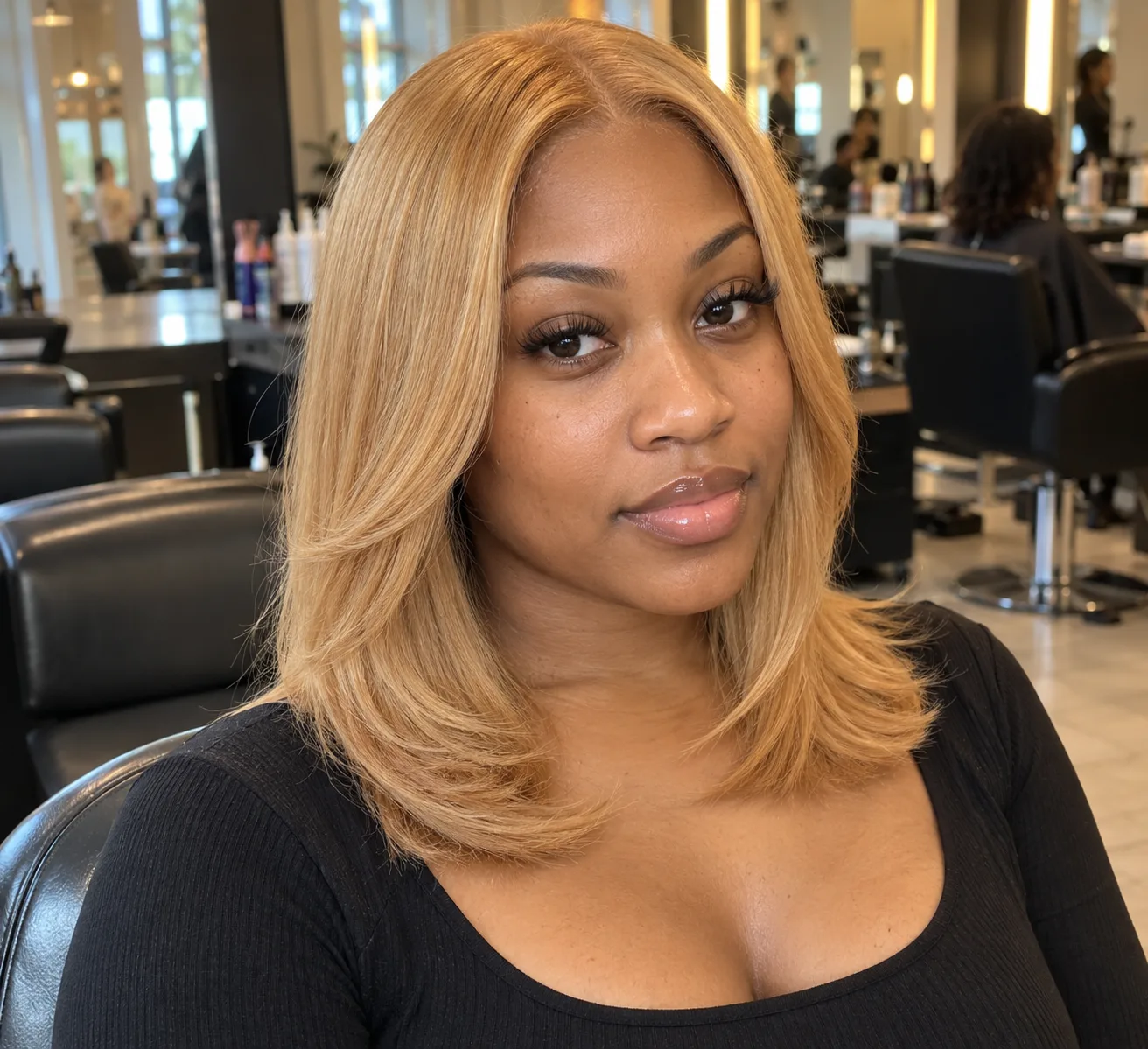
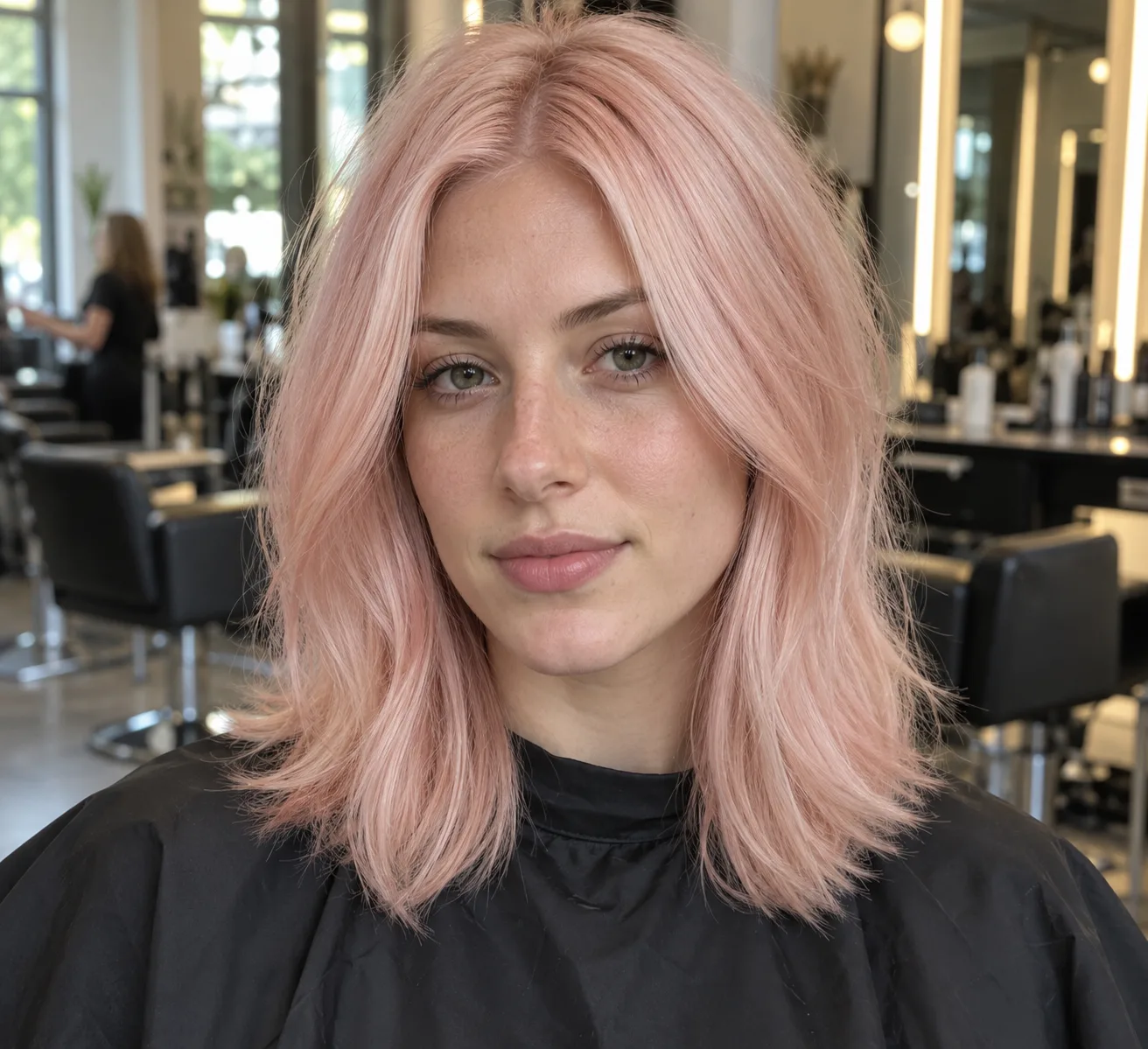
Every picture below is the same shoulder-length layered cut in the same salon light. The only thing that changes is where the bleach stopped and what went on top of it, so you can compare the shade and nothing else.
Gallery14 photos · tap to enlarge
 Try this on me
 Try this on me
 Try this on me
 Try this on me
 Try this on me
 Try this on me
 Try this on me
 Try this on me
 Try this on me
 Try this on me
 Try this on me
 Try this on me
 Try this on me
 Try this on me
Notice how different the raw yellow and the toned platinum look, even though the bleach work under them is identical. That last step is covered below, and it matters more than people expect.
Yours could be here.
Start with one selfie.
One photo, twenty seconds, and you'll know. Free account, no card for your first render.
How light can your hair go? It depends where you start
Your natural color decides how many levels stand between you and the finish you want, and that decides how many sessions, how much damage and how much money. Here is the honest version.
| Your starting color | Levels to pale yellow | Realistic in one session | Worth planning for |
|---|---|---|---|
| Light or dark blonde (7 to 8) | 2 to 3 | Platinum, icy, anything | Nothing special; this is the easy case |
| Light brown (6) | About 4 | Champagne, butter, often platinum | A toner the same day |
| Medium to dark brown (4 to 5) | 5 to 6 | Honey, caramel, golden | Platinum usually takes two sittings |
| Black (1 to 3) | 7 to 9 | Copper to caramel | Platinum over several sittings, weeks apart |
| Box-dyed or red | Unpredictable | Whatever the old dye allows | A strand test before anything else |
Light or dark blonde hair
You have the shortest trip. Two or three levels gets you to a clean pale yellow, so a stylist can take you to platinum or icy white in one appointment with a lower-volume developer. Your risk is overprocessing ends that were already lightened by sun.
Light brown hair
Four levels is well within one session for healthy hair. Champagne and butter blonde are easy landings. Platinum is often possible the same day, but ask for a strand test if your ends have old color on them.
Medium to dark brown hair
This is where most people get burned, sometimes literally. Five or six levels in one sitting pushes the hair hard, and it often stalls at orange. Plan honey or caramel as your first stop, and treat platinum as a second appointment. If you want blonde without committing the whole head, blonde highlights on brown hair put the lightener on a fraction of the strands.
Black hair

Black hair can go blonde, but it passes through a strong red-orange stage, and seven to nine levels is too much for one appointment on most hair. Golden caramel is the realistic first result. On textured and coily hair the fragility is higher still, so read up on caring for 4c hair before you bleach, and consider a bleached money piece at the front instead of a full head.
Box-dyed or red hair
Old permanent dye does not lift the way natural pigment does. It can band, go patchy or refuse to move past orange. A strand test on a hidden section tells you in forty minutes what a full head would tell you the hard way.
Bleached hair for guys
Men bleach for the same reason women do: it changes the whole face in one move. Short hair is actually the easier case. There is little old length to protect, most of the hair is new growth, and a buzz or crop is trimmed away every few weeks anyway.
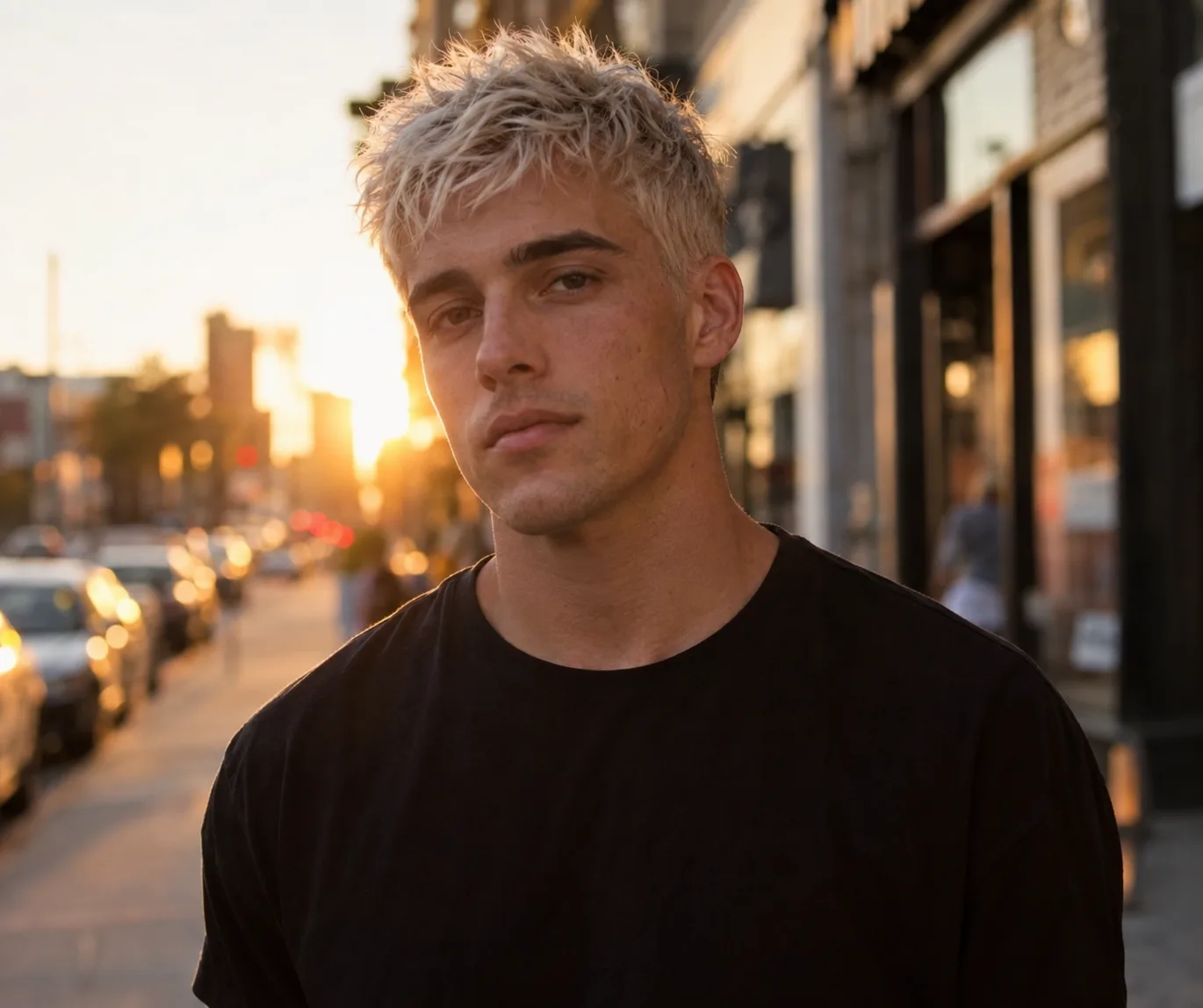
The catch is the root. On a short cut, regrowth shows at about half an inch a month, and on dark hair it reads fast. Plan a root touch-up every four to six weeks, or pick a warmer blonde that forgives a dark shadow. Keep your natural brows if you like the contrast; bleaching eyebrows at home is a bad idea.
Toner: the step that makes bleached hair look finished
Toner is a thin, low-commitment color that cancels the undertone bleach leaves behind. Violet cancels yellow, blue cancels orange. Without it, level 10 hair reads yellow, which is exactly what the untoned tile in the gallery shows.

Toner fades, usually over a few weeks of washing, and the yellow comes back. That is normal. A purple shampoo once or twice a week slows it down; a salon gloss every six to eight weeks resets it. What to say in the chair:
Say this to your barber
I want an all-over lift to a clean level 10, then a violet toner to a cool pearl blonde, and please stop and tone at level 8 honey if my hair starts to feel weak.
How damaging is bleached hair?
Bleach always does some damage, because it has to open the cuticle to work. How much depends on the levels lifted, the developer strength, and whether bleach overlaps onto hair that was already lightened. One careful session from light brown leaves hair that feels a little drier. Repeated sessions from black, or bleach laid over old bleach, can leave the ends gummy when wet and snapping when dry.
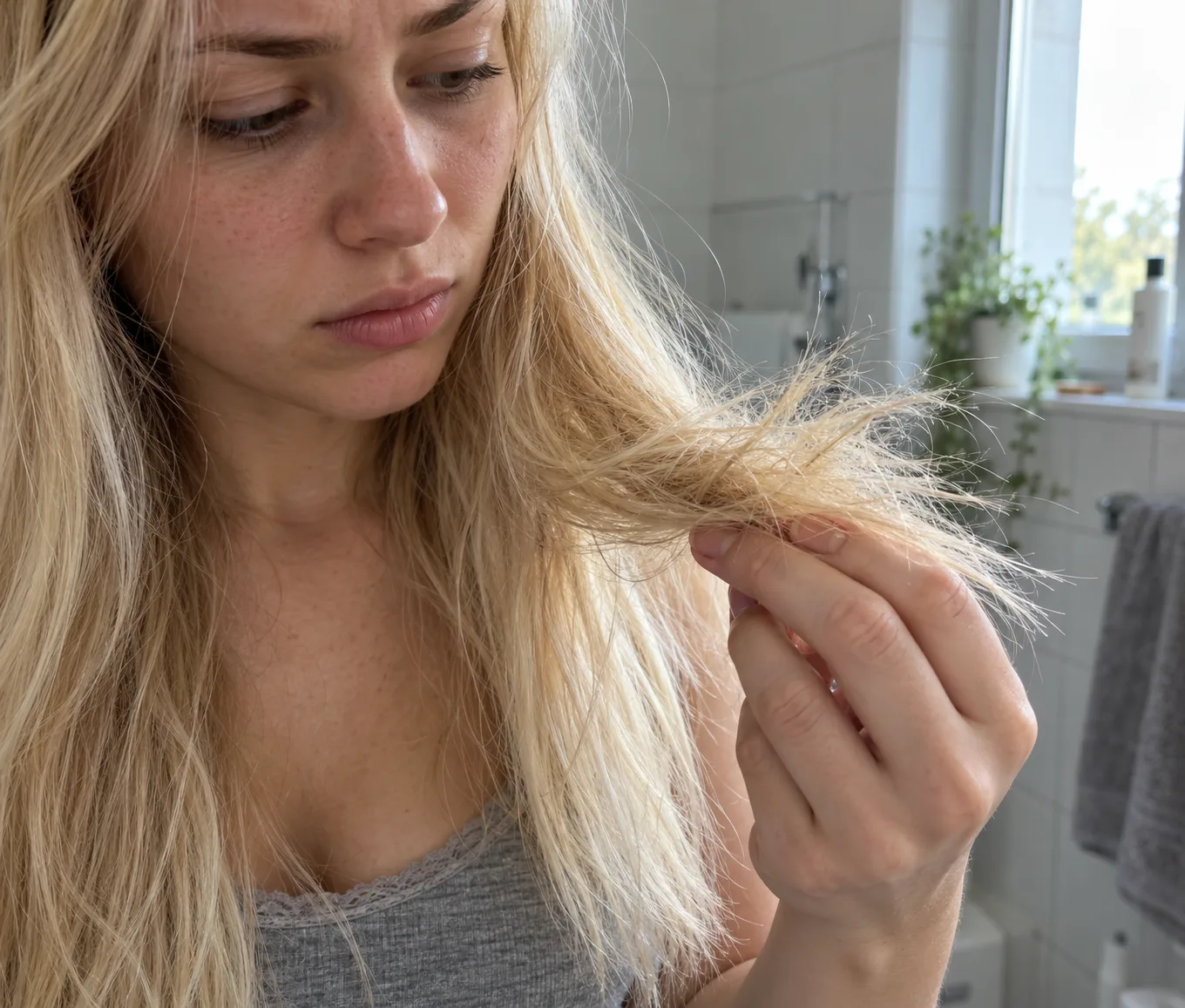
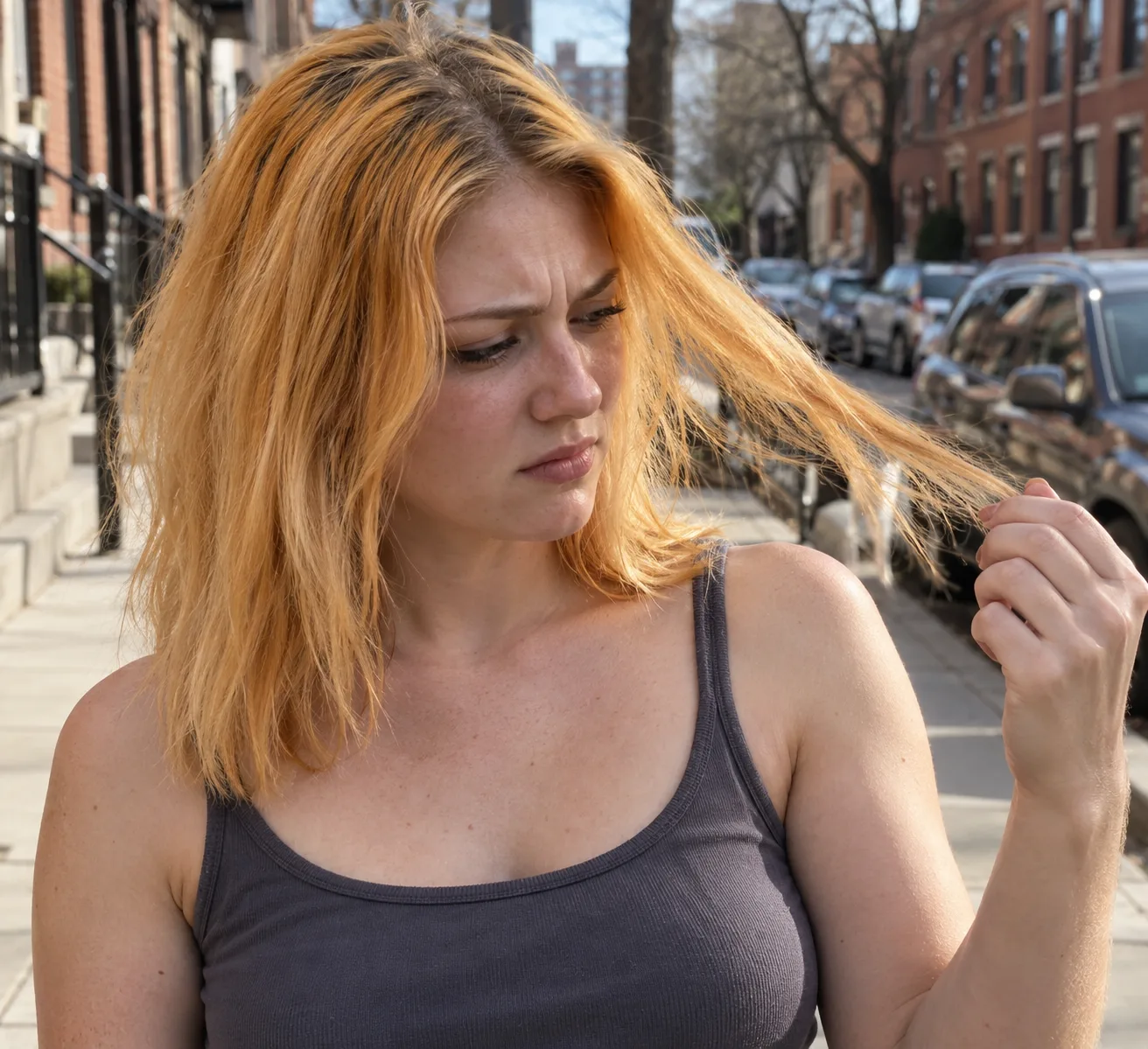
The ends show it first because they are the oldest hair on your head. If your ends look like the picture above, no mask will fully reverse that; a trim will.
How to take care of bleached hair
- Wait 48 to 72 hours before the first wash
Give the cuticle time to close and the toner time to settle. Rinse with water only if you must.
- Switch to a gentle, sulfate-free shampoo
Harsh cleansers strip the little oil bleached hair has left and speed up toner fade. Wash two or three times a week, not daily.
- Condition every wash and deep condition weekly
Use a rich conditioner every time and a deep conditioning mask once a week. Bond-building treatments are worth it for heavily lifted hair.
- Turn the heat down
Air dry when you can. When you do use heat, use a heat protectant and keep tools at low to medium settings.
- Keep the sun and chlorine off it
Wear a hat outside and wet your hair with clean water before swimming. Sun weakens and dries bleached hair faster than untreated hair.
- Trim the ends every six to eight weeks
Split ends travel up the strand. Small regular trims keep the length you have.
Mistakes that cost you
- Chasing platinum in one sitting from dark hair. You save a week and pay with breakage that takes a year to grow out.
- Overlapping bleach onto bleached hair at a root touch-up. The previously lightened lengths take a second hit and snap at the line. Root touch-ups should stay on the regrowth.
- Skipping the strand test on box dye. Old dye can go patchy or refuse to lift, and you find out on the whole head.
- Treating yellow as failure. Yellow is a stage, not a disaster. It needs toner, not more bleach.
- Picking a shade from someone else's photo. Icy white looks striking on one skin tone and washes out another. That is the one thing no strand test shows you.
See the shade on your own face first

The free way to preview a shade is honest and worth doing: pin a blonde swatch or wig next to your face in daylight, or hold a photo of the shade up to a mirror. It tells you roughly whether warm or cool suits your skin.
The wall is that a swatch is a patch, not a head of hair. It cannot show you platinum framing your face, how a dark root would read after five weeks, or whether honey makes you look warmer or just washed out. Those are the questions that decide whether bleaching is worth it, and they are decided before the lightener goes on, not after.
The blonde hair filter is built for exactly that comparison, and the virtual hair color try-on covers the non-blonde finishes like rose gold and silver.
Is it free to try a bleached shade on your face?
Yes, for the first look. Hairstyle Atlas gives you one hairstyle with one color on it free, with no card needed, which is enough to test the shade you are leaning toward. Trying more shades side by side is on the paid plans, which start at $9 a month; the pricing page has the current terms.
Bleached hair is a trade, and the price is set by distance. Start close to blonde and almost any finish is one appointment away. Start dark and the smart move is to pick a shade two or three levels closer to home, then decide if you want to go further once you have lived with it. Whatever you choose, it is toner and aftercare, not the bleach itself, that decide how good it still looks six weeks later. If you are also weighing other color projects, the guides to peekaboo hair and grey hair transition cover the same kind of trade.
Frequently asked questions
It means your hair's natural pigment has been removed with a lightener, usually a mix of bleach powder and peroxide developer. The hair is then worn at that lighter level or toned or dyed on top. It stays lighter until it grows out or is colored darker.
Bleach itself is permanent on the hair it touched; that hair never goes back to its old color. What fades is the toner on top, usually within a few weeks of washing. The visible limit is regrowth: roots grow about half an inch a month, so most people touch up every four to eight weeks.
The bleached lengths cannot regain their pigment or original texture. You can dye them back to your natural shade, and the new hair growing from the scalp is completely unaffected. Most people get back to fully natural hair by growing it out and trimming off the bleached ends over time.
It can look and feel much healthier with bond-building treatments, deep conditioning and less heat, but badly damaged ends do not fully repair. The healthy hair is the new growth. Regular trims let that replace the damaged length.
Do not wash it for the first two or three days, do not use hot tools at high settings, and do not swim in chlorinated water without wetting and protecting your hair first. Avoid rebleaching the same lengths within a few weeks.
Two or three times a week is enough for most people. Bleached hair loses moisture fast and toner fades with every wash, so dry shampoo between washes helps both.
Give it about two to three days for the cuticle to close and the toner to settle. The final tone can look a touch different after the first couple of washes, which is normal.
The same as for anyone: the bleached hair stays light until it is cut off. On short men's cuts, that happens quickly, and dark roots show within a few weeks, so plan a touch-up every four to six weeks to keep it looking deliberate.
Preview it on your own photo: Virtual Hair Color Try-On.
Share article
About the author
More articles
Women's Haircuts · 16 min
Waves Hair: How to Get Beach, Loose and Hollywood Waves That Last
Waves hair is about what you leave straight. How to get beach, loose, Hollywood and heatless waves, which wave suits your hair type, and why your waves keep falling out.
Women's Haircuts · 15 min
Fino Hair Mask: Who It Suits, How to Use It, and Its Limit
The Fino hair mask makes dry, bleached and frizzy hair smooth and shiny in one use, mostly by coating it. Here is what is in the jar, which hair types it suits, exactly how to use it, and what to do when the ends are past a mask.
Women's Haircuts · 13 min
Easy Hairstyles: 14 Five-Minute Styles and the Cut That Makes Them Work
The easiest hairstyles need one tie or one clip and under five minutes: a claw clip twist, a low ponytail, a messy bun, a half-up knot, a side braid. Here are 14 on the same haircut, which suits your length and texture, and why your cut matters more than your skill.