Lesbian Haircuts: 14 Cuts and the One Detail That Makes Them Read
Oleh Onysko 28 September 2026 15 min read
In this article
Lesbian haircuts are the cuts queer women have used for decades to be recognized by each other: the swoop, the undercut pixie, the buzz, the mullet, the shag and the shaved side. What makes one read as a lesbian haircut is rarely the length. It is one deliberate detail that breaks the default, like an exposed nape, a shaved panel or a back that is longer than the sides.
That is the useful part, because it means you do not have to go short to get the look. This guide shows 14 cuts, sorts them by how much length you are willing to lose, and gives you the exact words for the chair.
What makes a haircut a lesbian haircut?
A lesbian haircut is any cut worn as a visible queer signal, usually by removing hair where women are expected to keep it: the nape, the sides, the ears. No single cut owns the label. The swoop and the undercut pixie are the classics, and the mullet and the shag are the current favorites.
Sociologist David Hutson interviewed gay men and lesbians about how their appearance changed after coming out, and hair was one of the main ways they described becoming recognizable to their own community. That is still how it works. A cut reads as queer when it looks chosen rather than defaulted into.
Here is the counterintuitive bit. The signal lives in one detail, not in the overall length. A buzz cut sends it, but so does waist-length hair with a shaved panel above one ear. Pick the detail first, then pick how much length you want around it.
| Cut | The detail that signals | Length you lose | Trim every | Best on |
|---|---|---|---|---|
| The swoop | Tapered sides, long top swept over | Most of it | 4 to 6 weeks | Straight or wavy, medium density |
| Undercut pixie | One clippered side | Most of it | 3 to 5 weeks | Thick hair that needs weight removed |
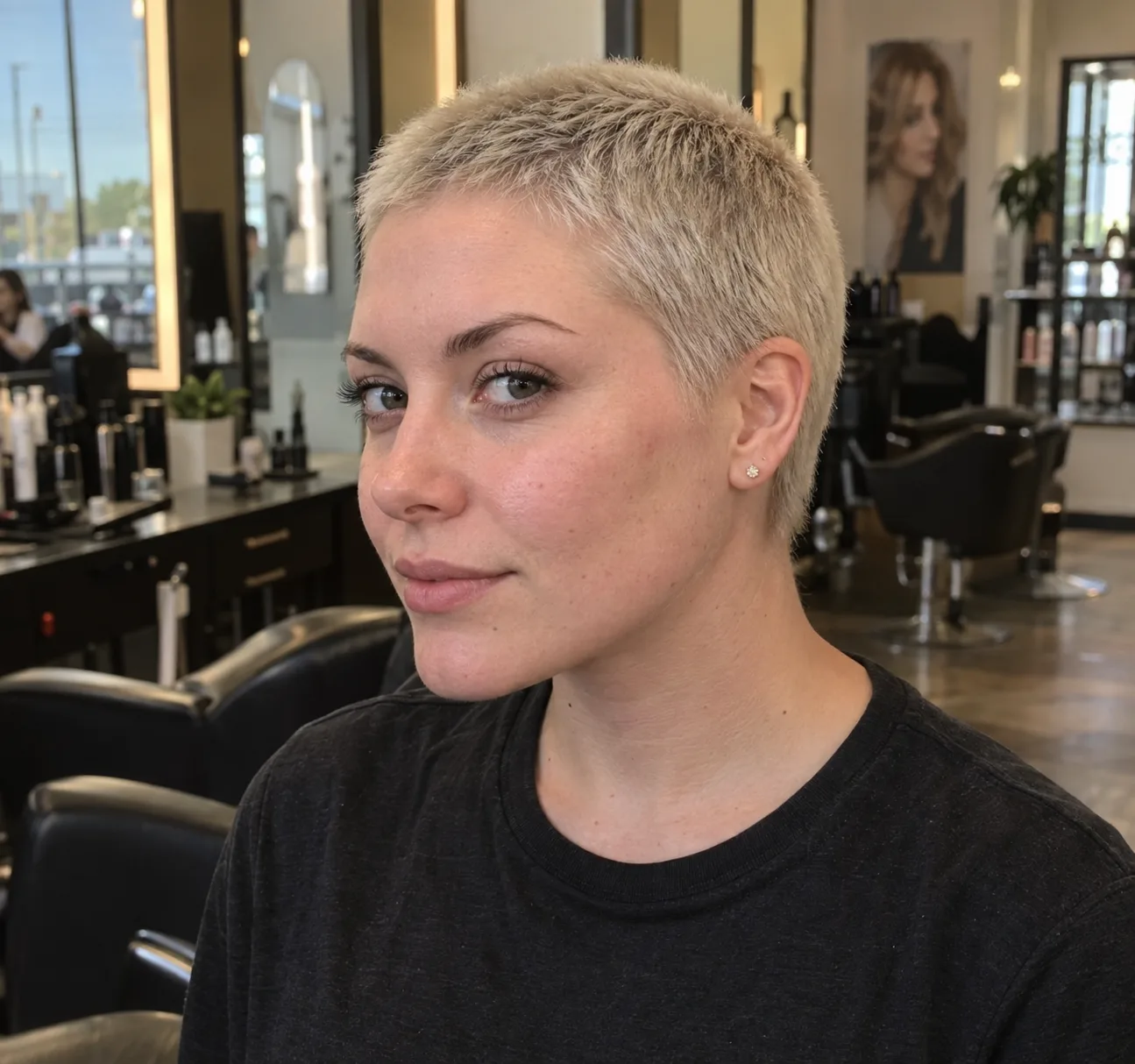
| Textured pixie | Exposed ears and nape | Most of it | 4 to 6 weeks | Fine to medium hair, oval or heart faces |
| Buzz cut | No length anywhere | All of it | 2 to 4 weeks | A head shape you like, strong brows |
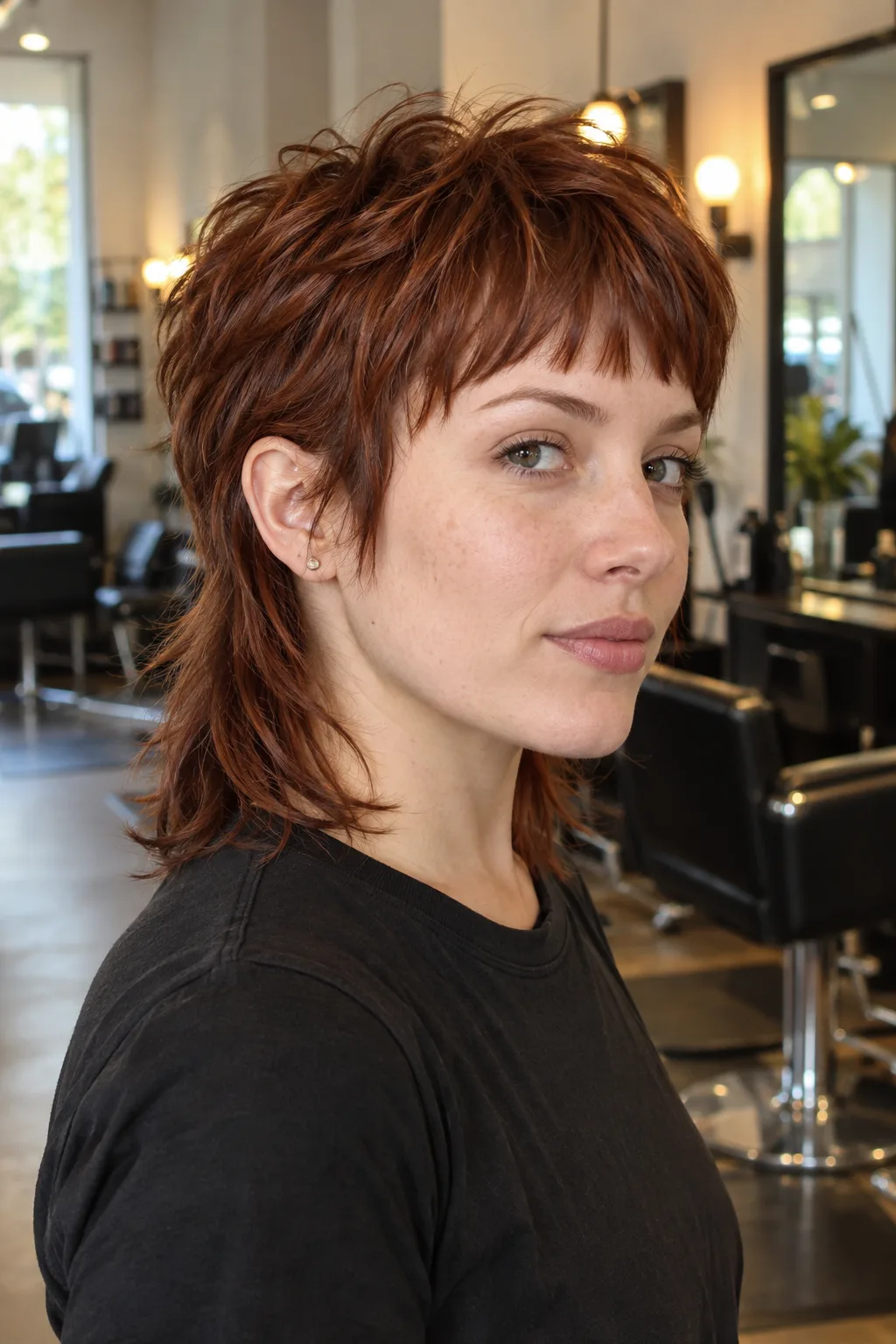
| Modern mullet | Back longer than the sides | Some | 6 to 8 weeks | Wavy or thick hair |
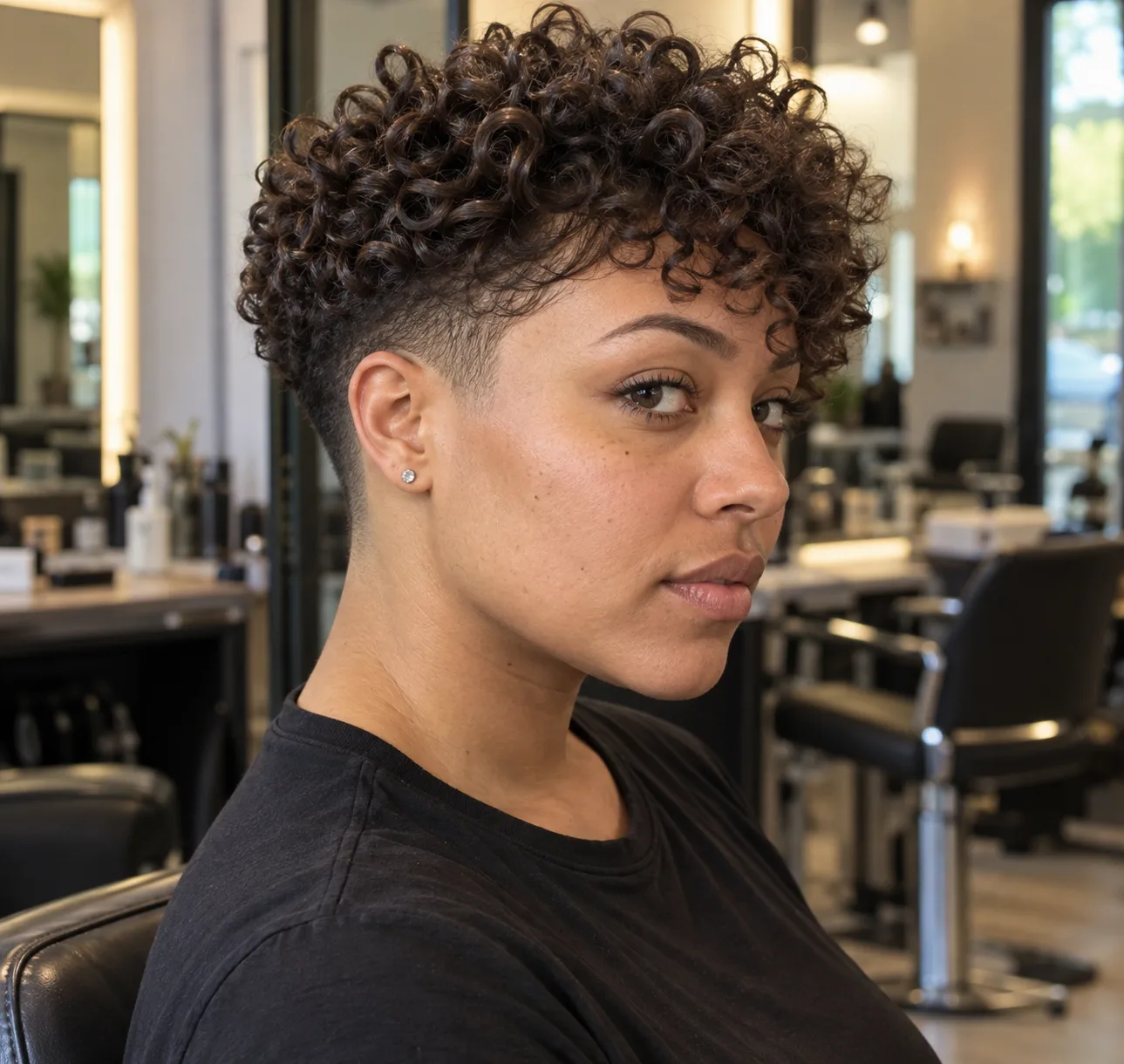
| Curly taper | Short sides under full curls | Most of it | 3 to 5 weeks | Curly and coily hair |
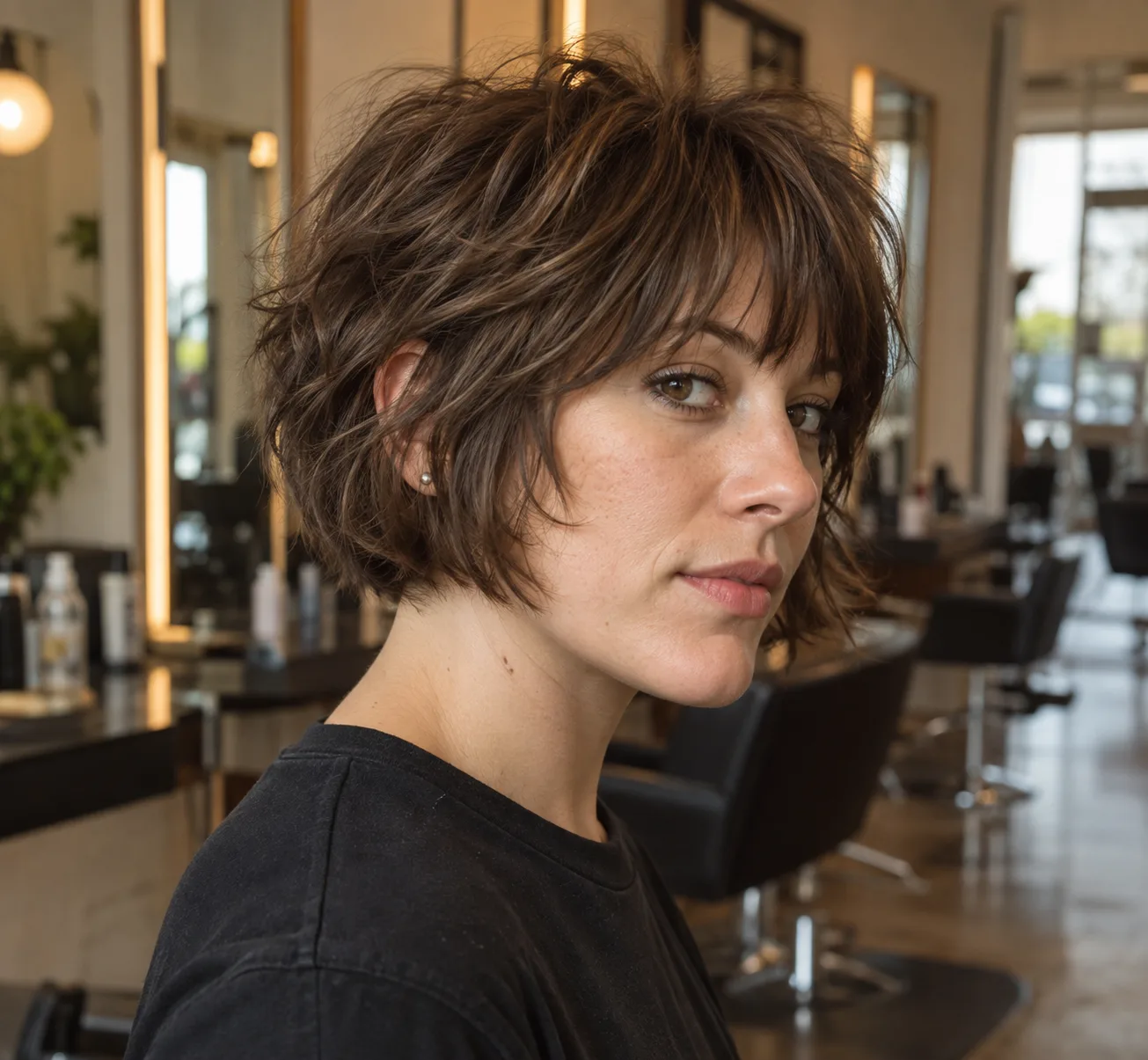
| Chin-length shag | Choppy layers and bangs | Some | 6 to 8 weeks | Wavy hair, round or square faces |
| Wolf cut | Crown layers, wispy ends | Very little | 8 to 10 weeks | Thick or wavy hair |
| Hidden undercut | Shaved panel under long hair | None visible | 3 to 4 weeks for the panel | Anyone keeping length |
| Short side part | Tailored, combed from a part | Most of it | 4 to 5 weeks | Straight hair, any face shape |
The trim column is the real cost. Anything with a clippered area loses its shape in about a month, because hair grows roughly half an inch a month and half an inch is the difference between a crisp side and a fuzzy one.
The lesbian haircut look book
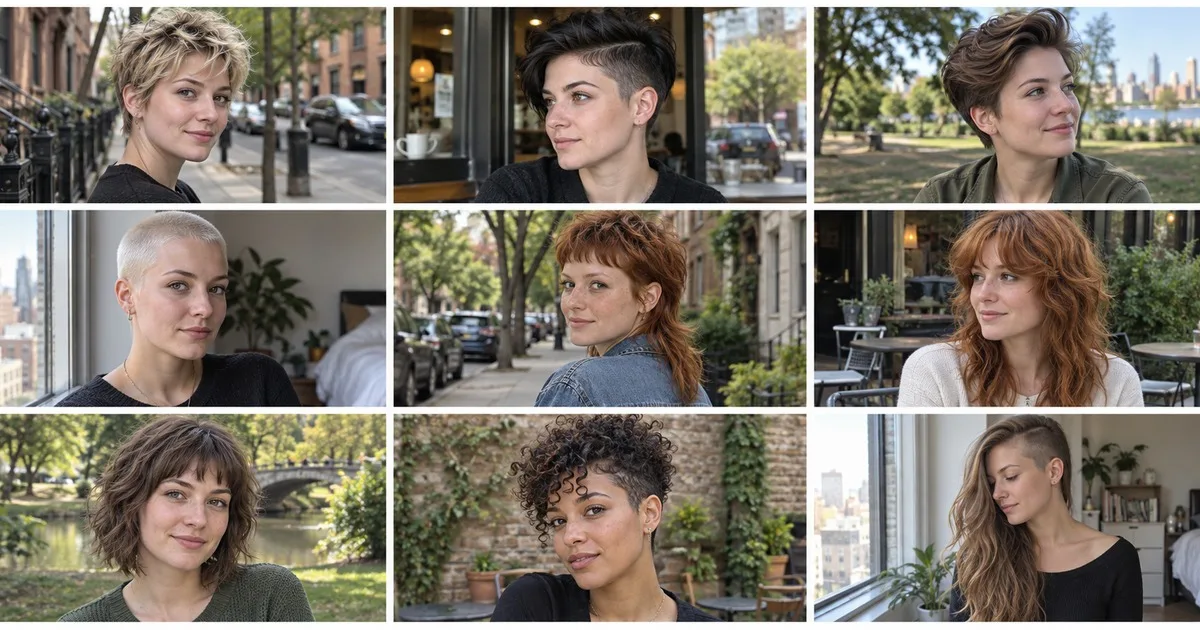
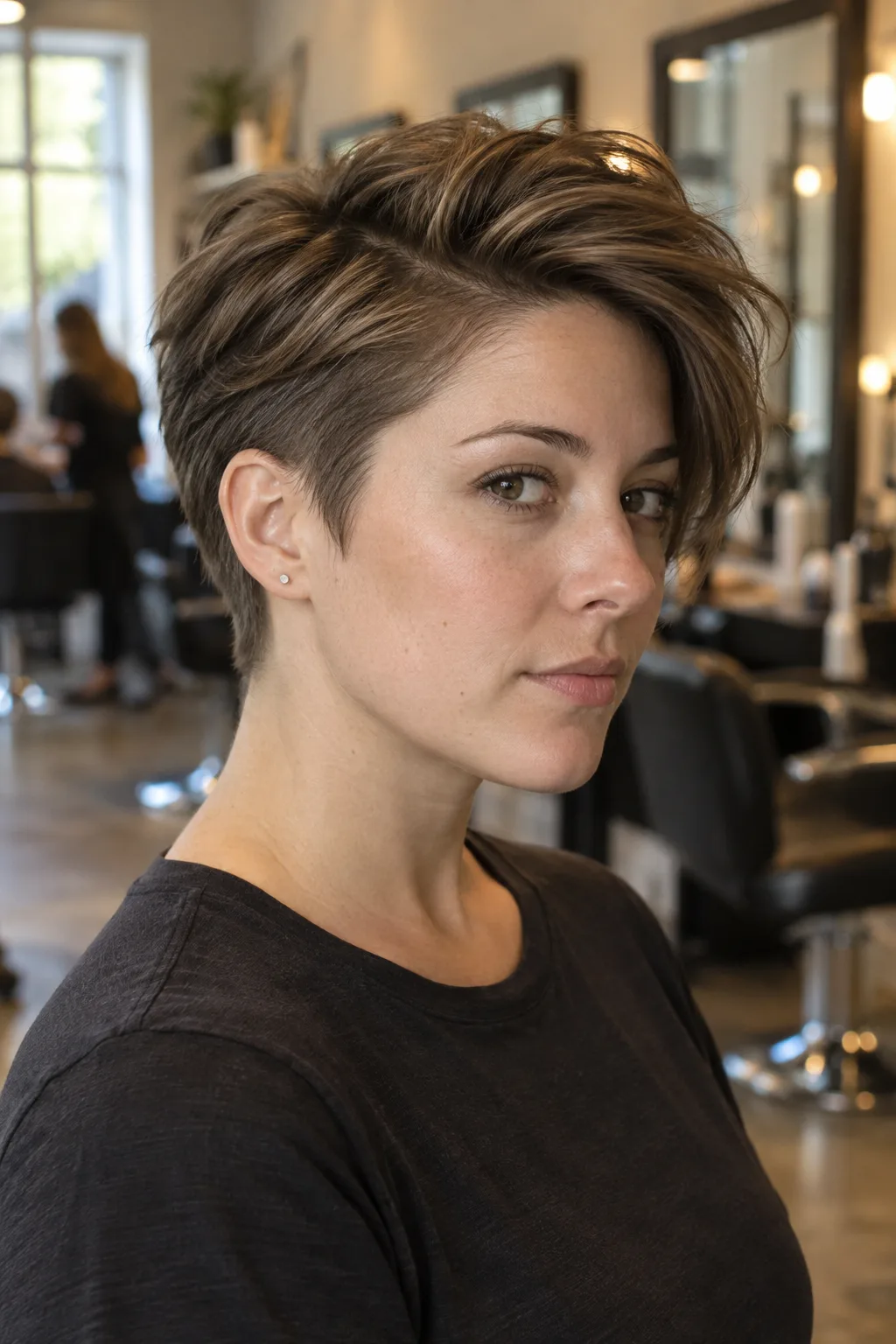
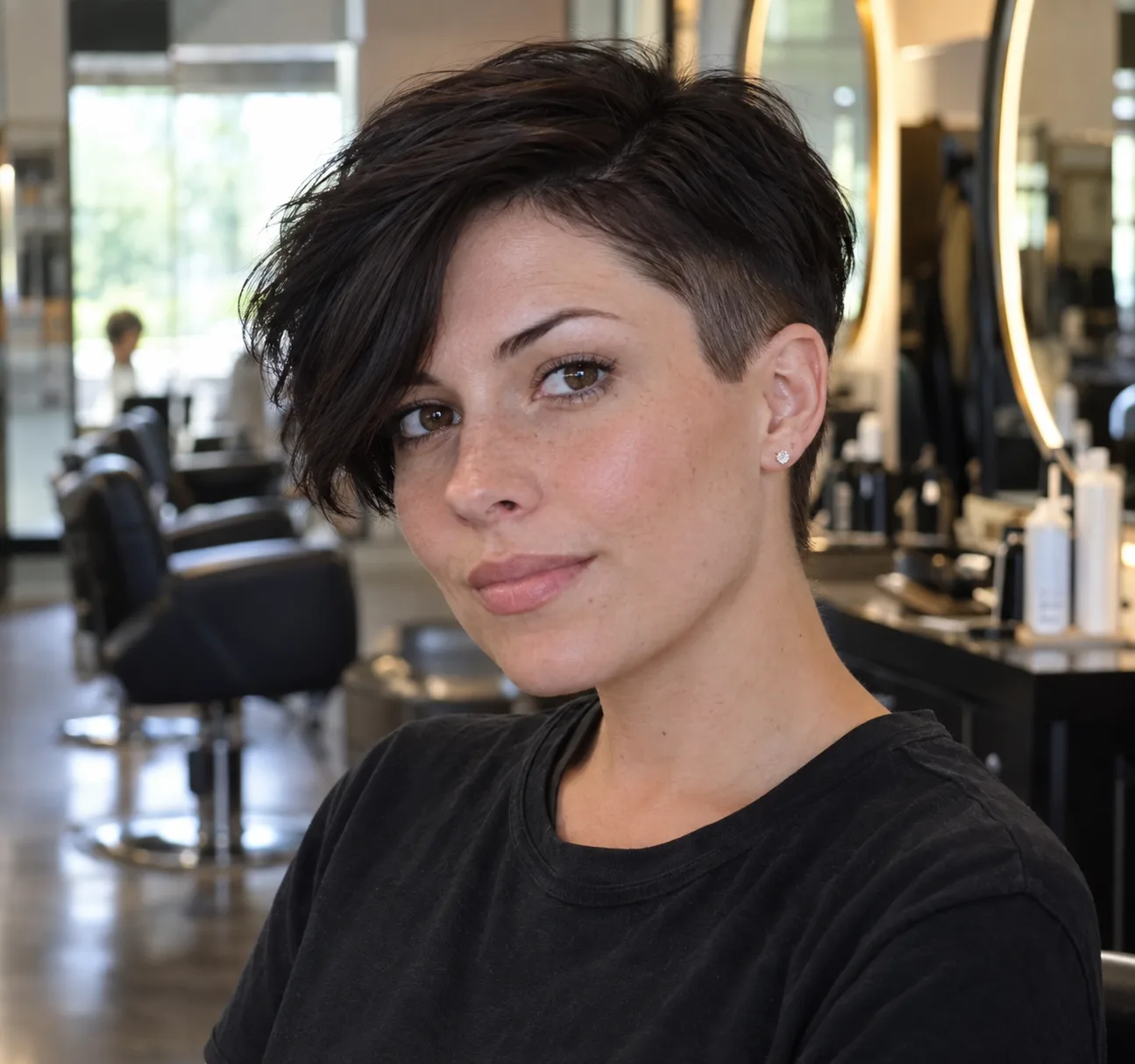
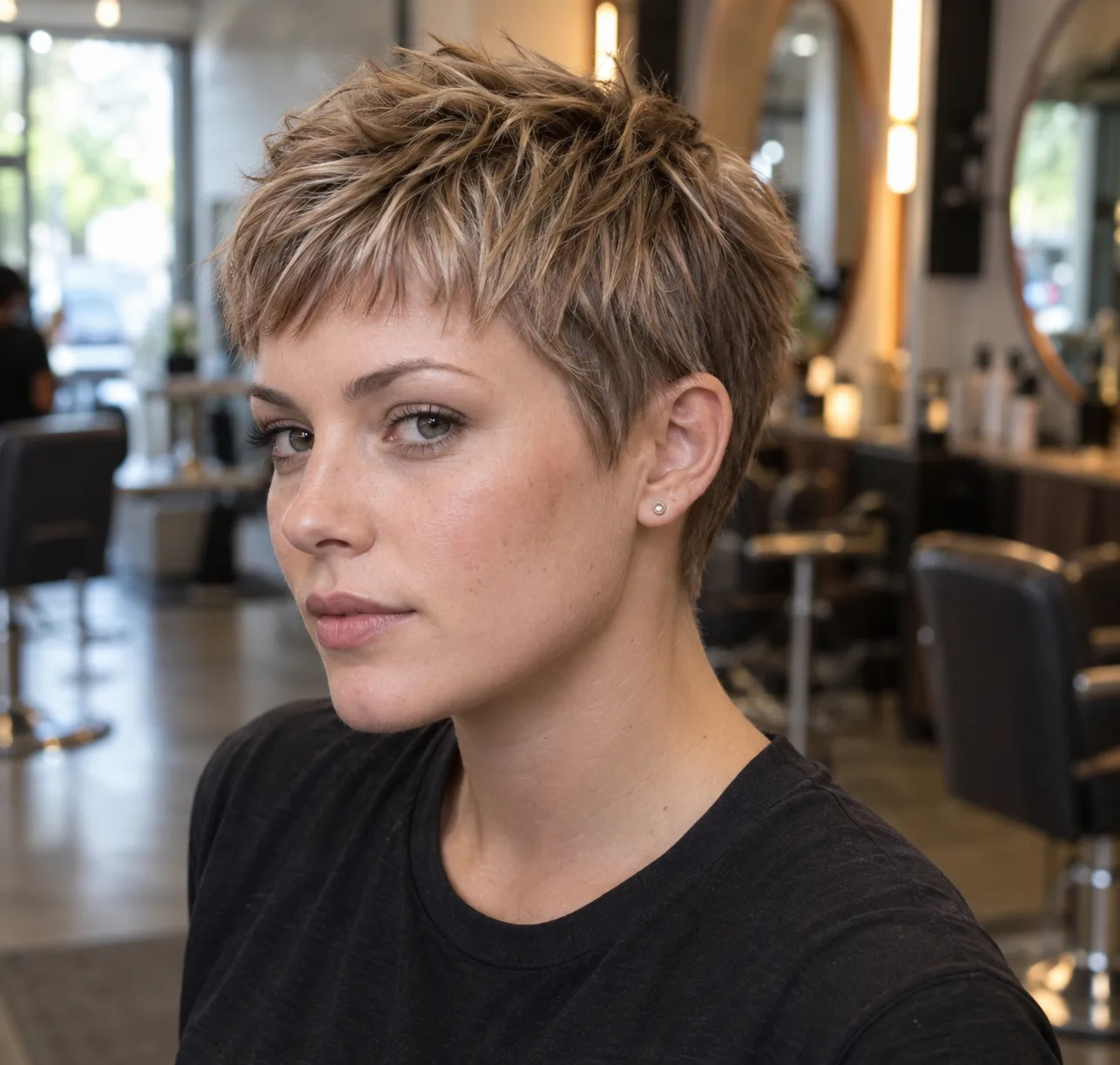
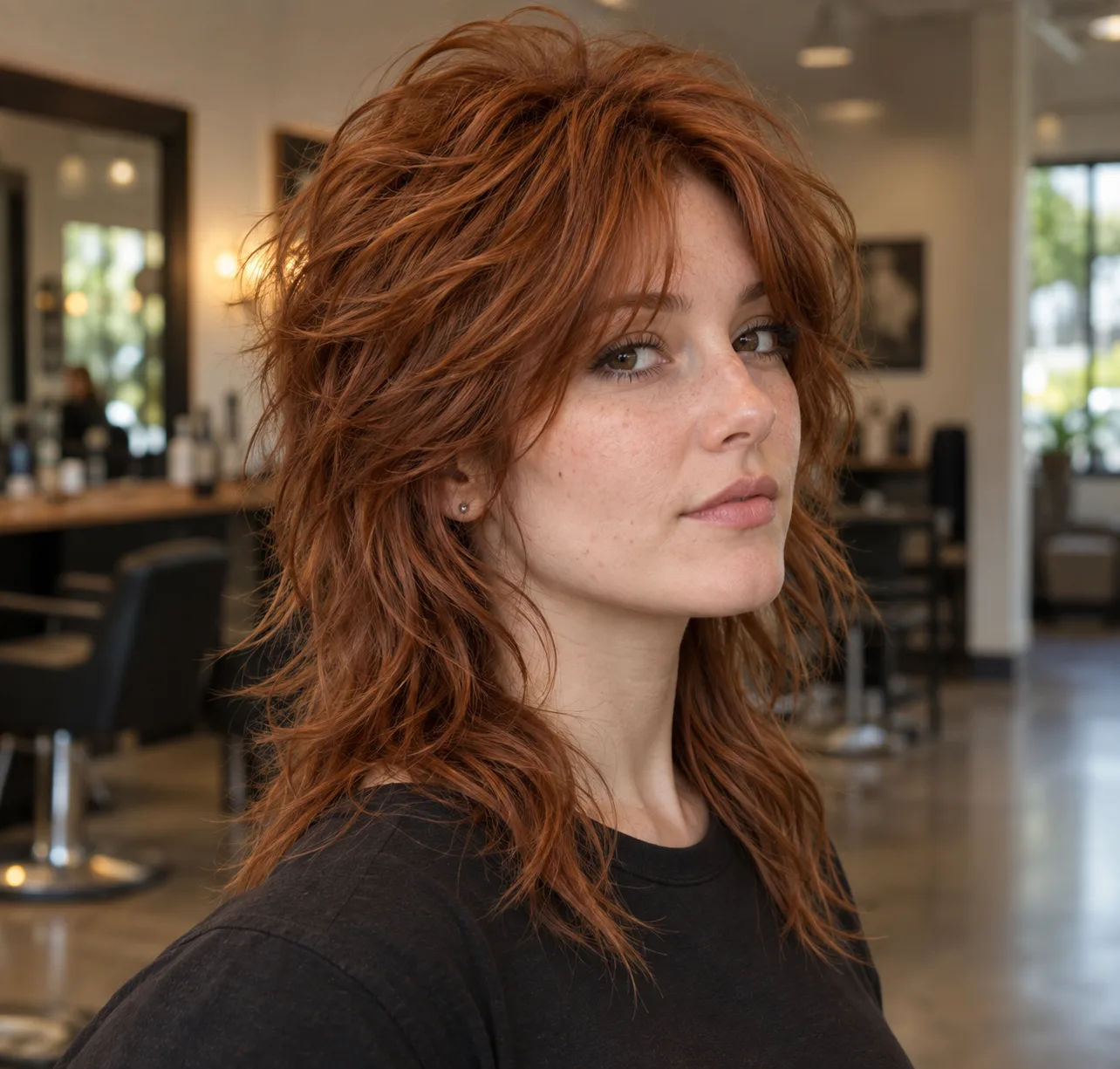
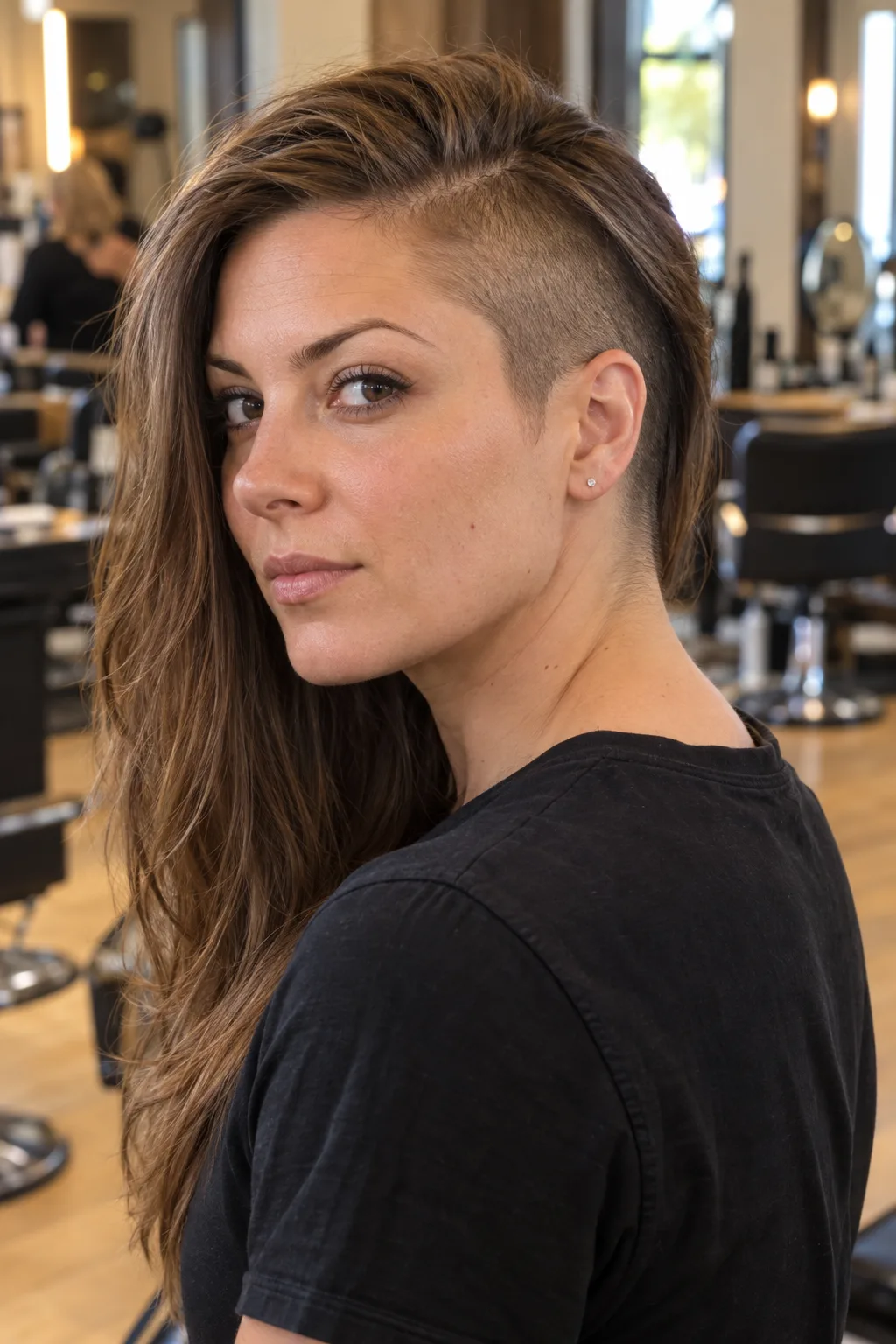
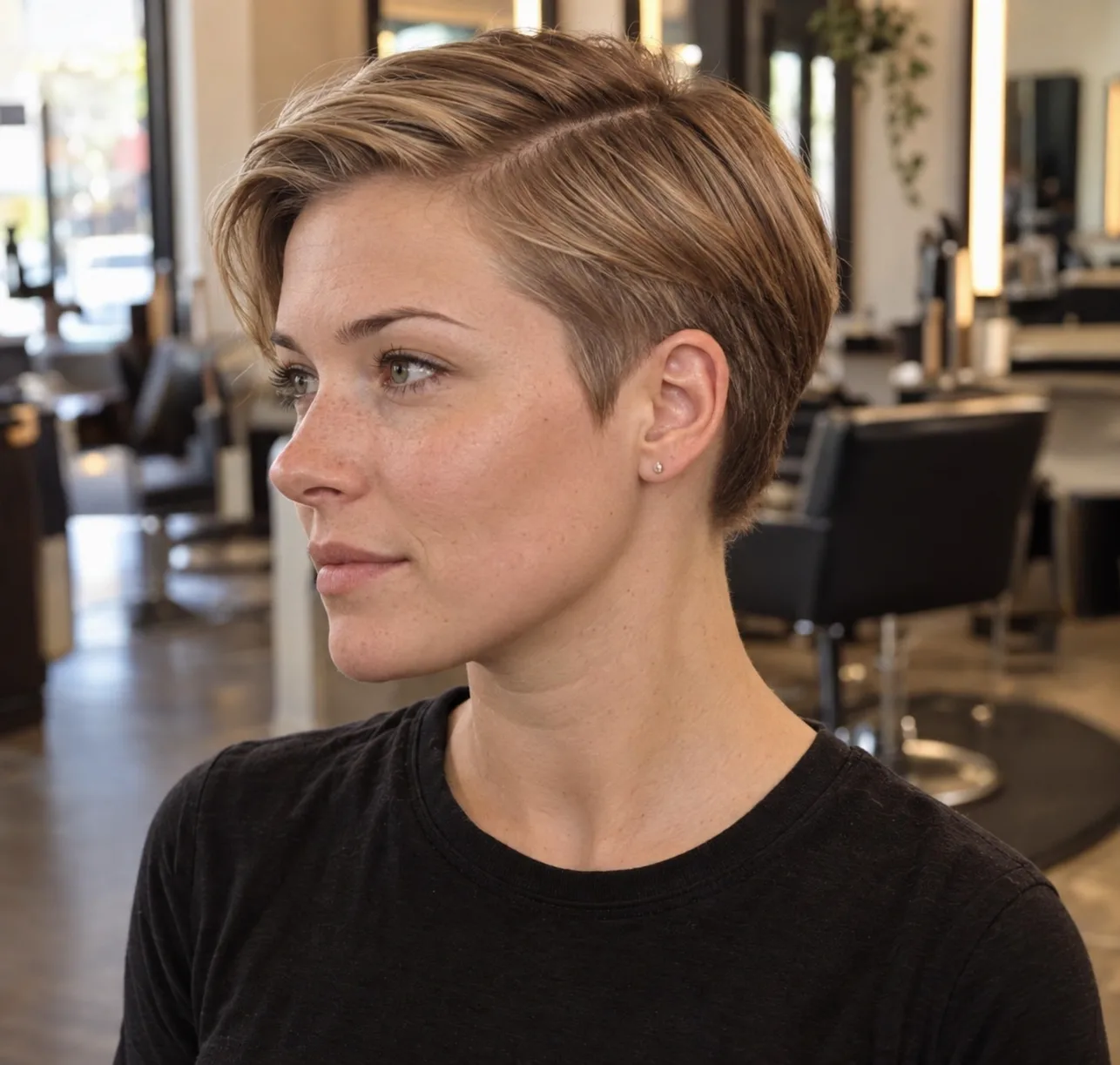
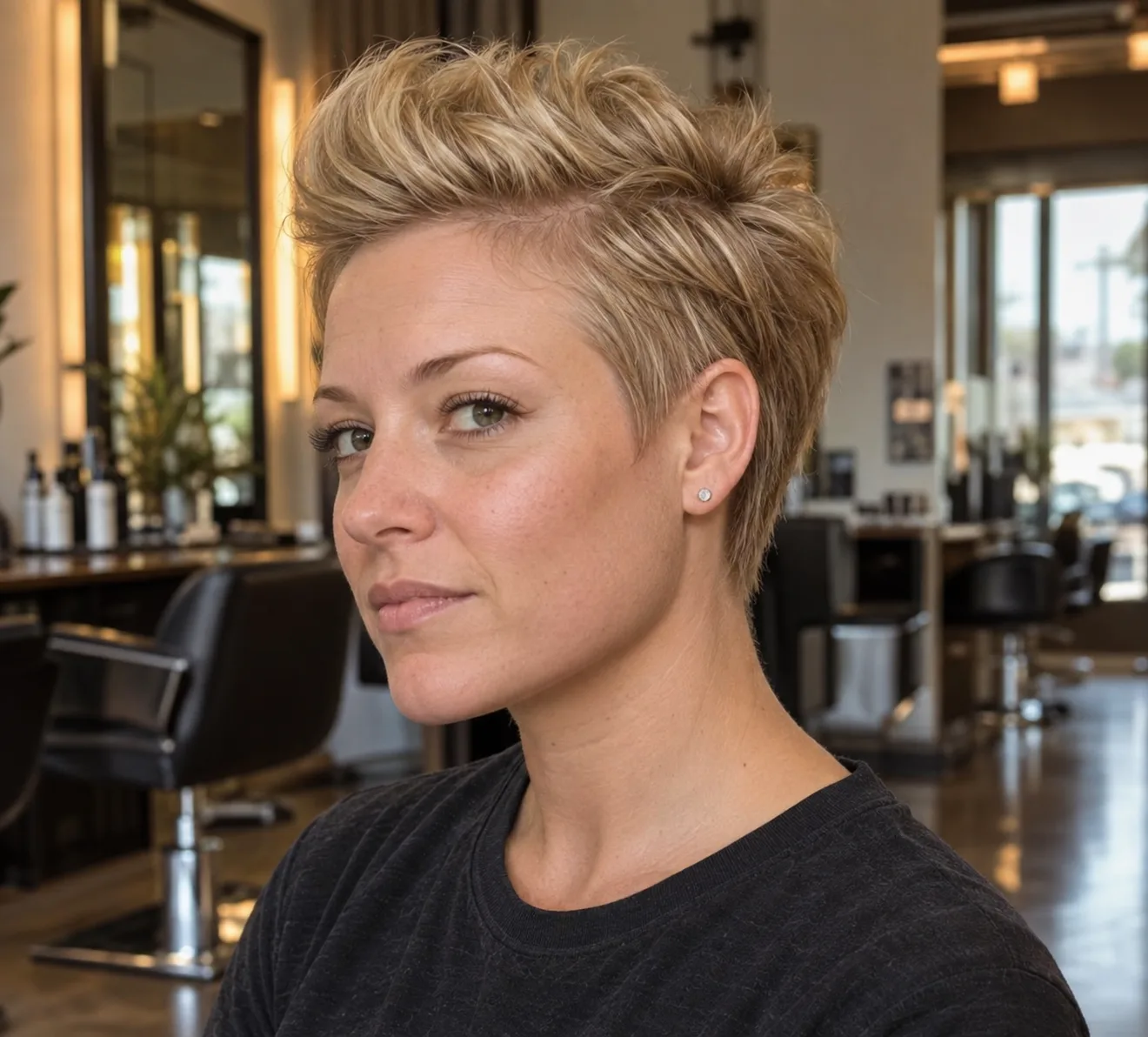
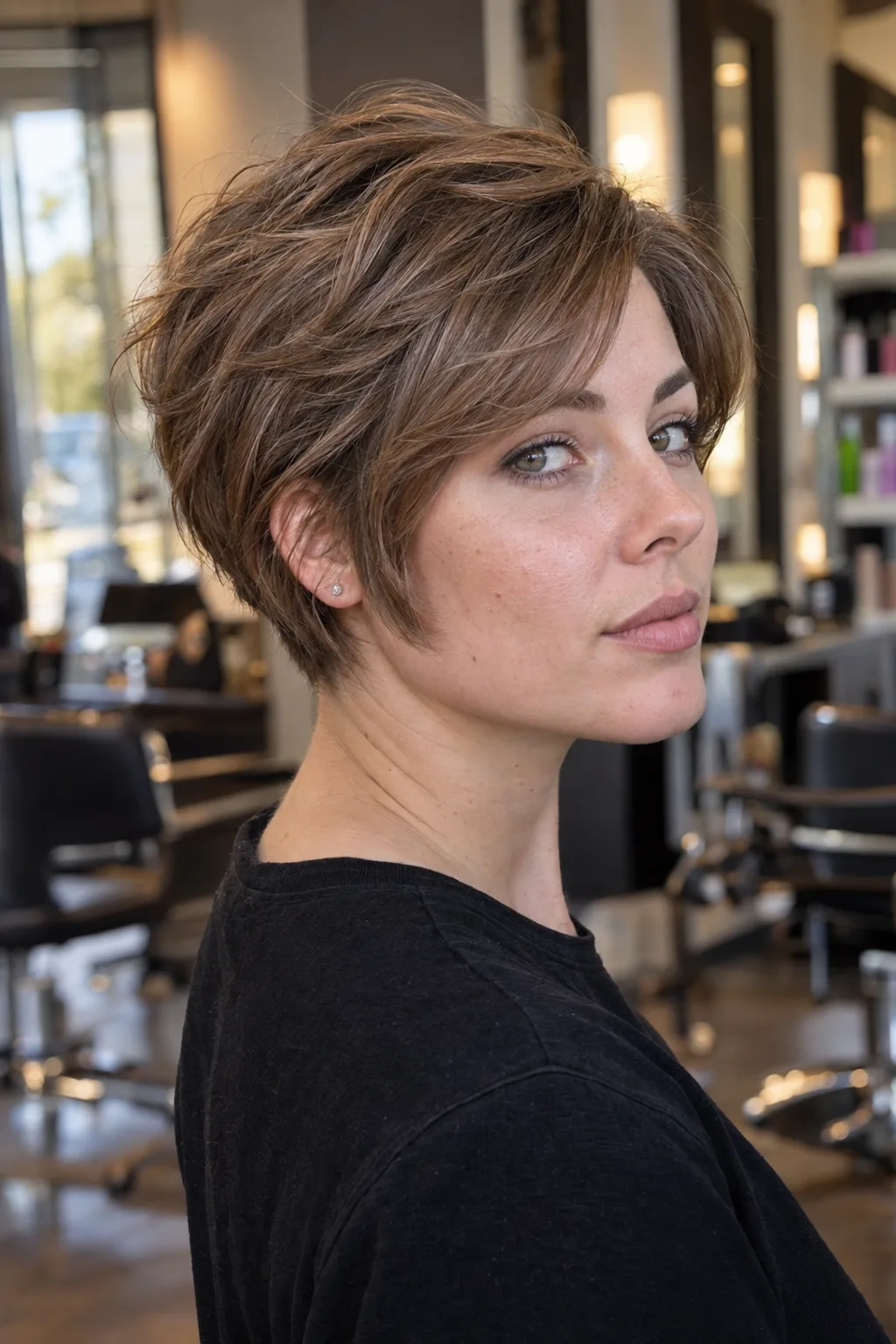
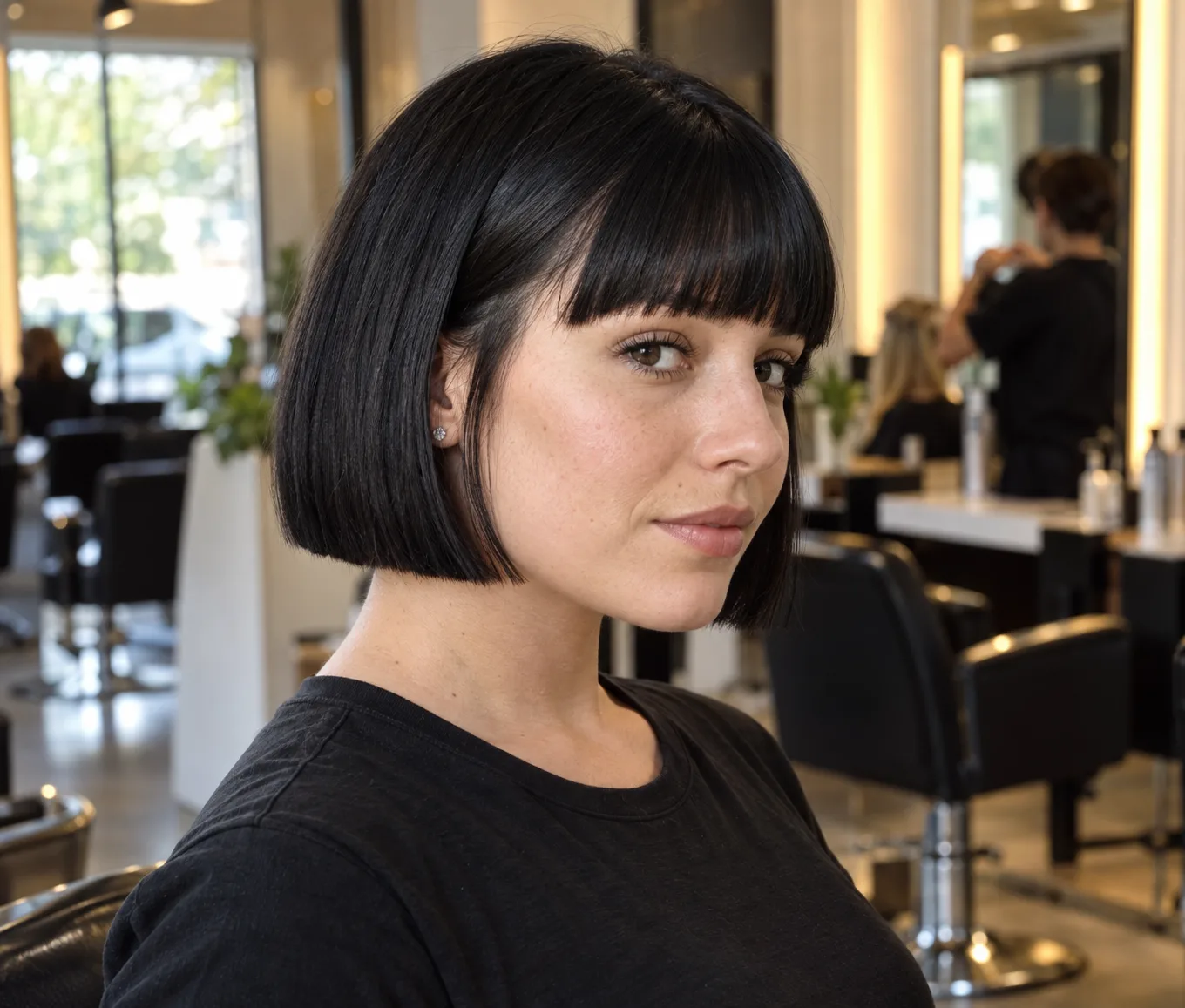
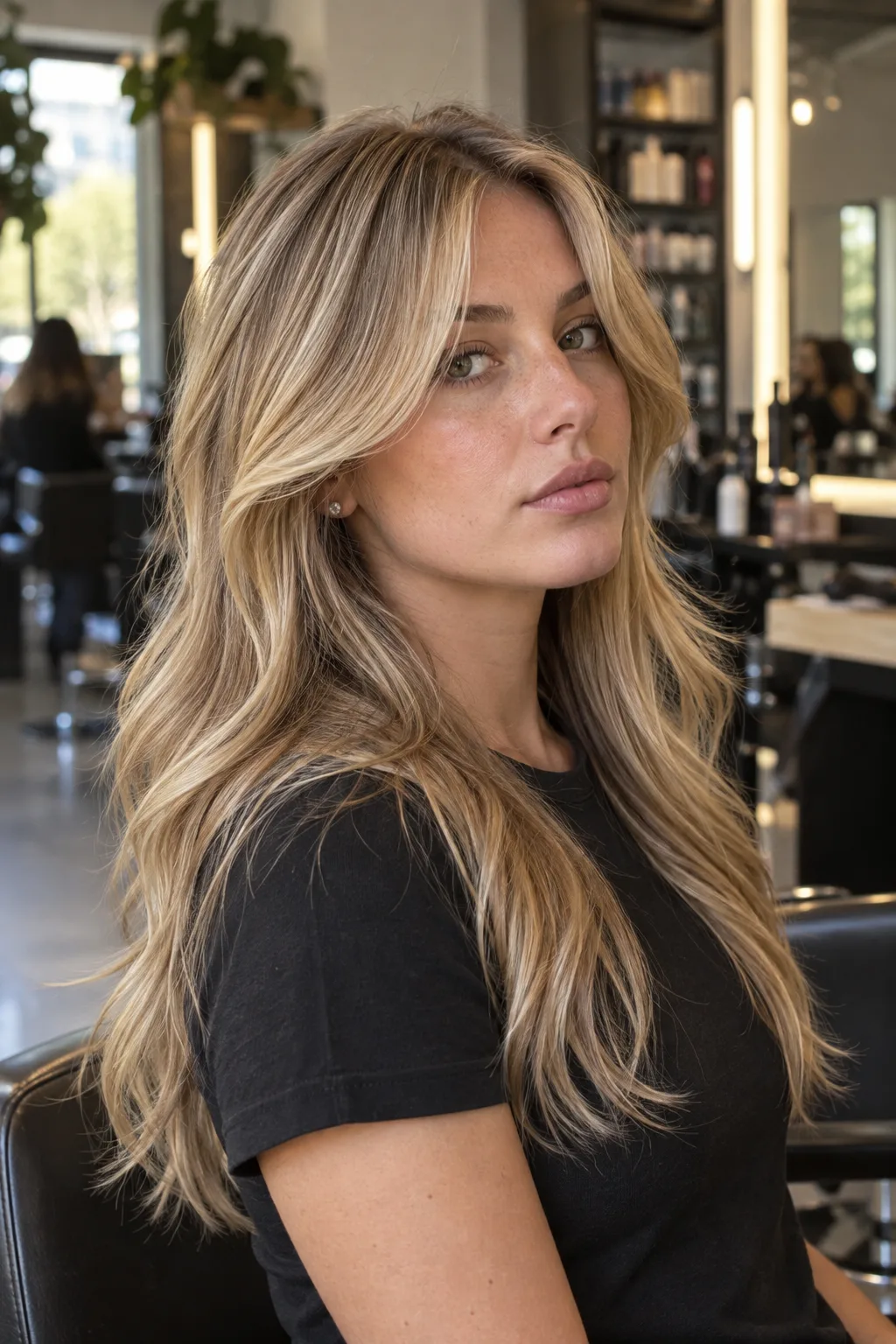
Every look below is shown in the same salon setting with the same framing, so the only thing changing is the cut. Look at the ears and the nape first. That is where most of these cuts do their work. The last four in the set are the quieter versions. A faux hawk is the swoop pushed upward. A bixie is a pixie that keeps the ears half covered. A blunt bob with heavy bangs reads sharp and deliberate, and long layers with curtain bangs are the classic stem and femme choice when you want to keep your length but still look styled on purpose.
Gallery14 photos · tap to enlarge
 Try this on me
 Try this on me
 Try this on me
 Try this on me
 Try this on me
 Try this on me
 Try this on me
 Try this on me
 Try this on me
 Try this on me
 Try this on me
 Try this on me
 Try this on me
 Try this on me
 Yours could be here.
Start with one selfie.
One photo, twenty seconds, and you'll know. Free account, no card for your first render.
The swoop
The swoop is the most recognizable lesbian haircut there is: short tapered sides, ears out, and four to five inches on top swept up and over to one side. It works because it has two readings. Brush it forward and it is soft, push it up and back and it is sharp.
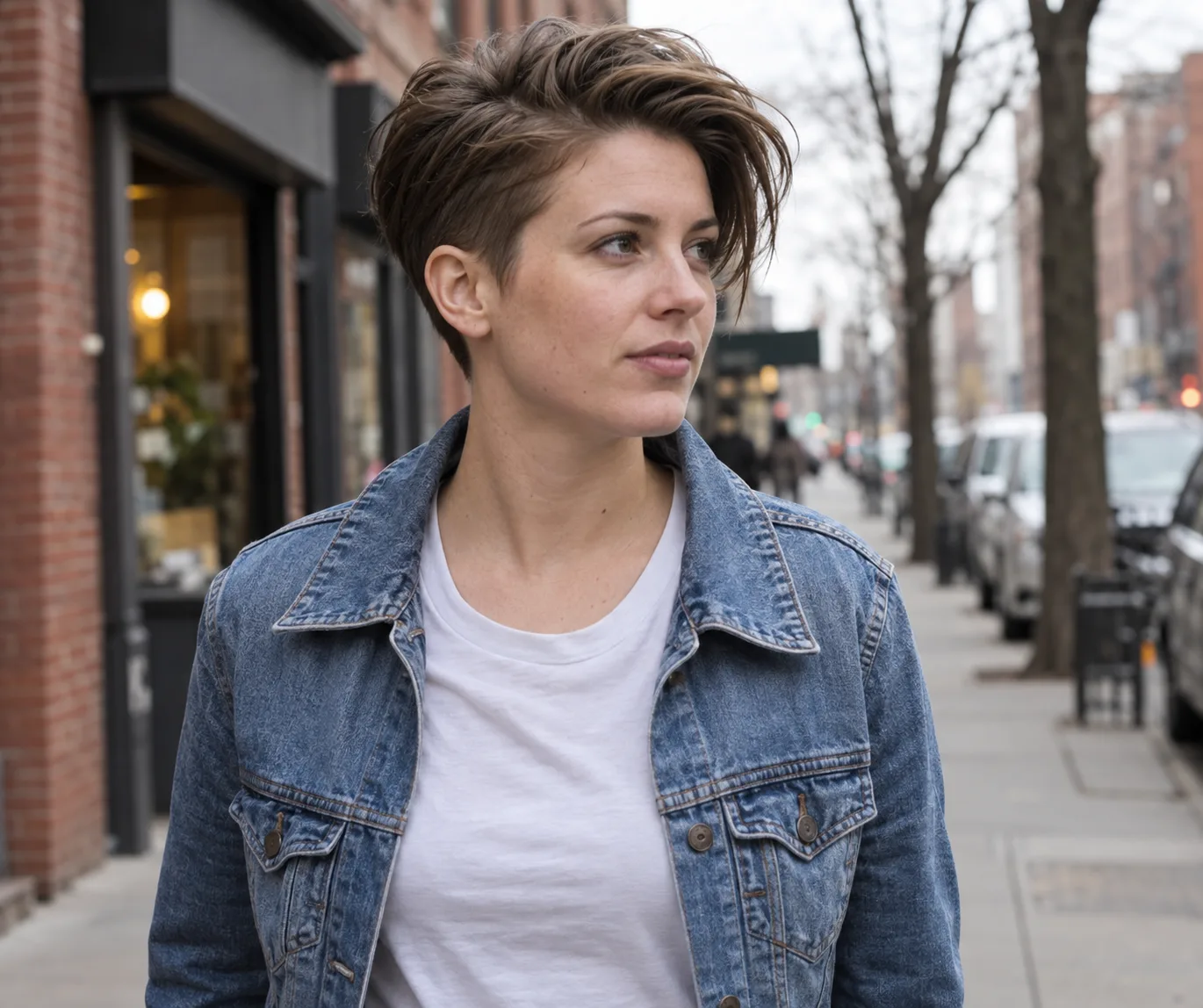
Ask for the sides to be scissor tapered, not clippered, if this is your first short cut. Scissors leave about half an inch at the hairline, which grows out gracefully. It suits straight and wavy hair best. Very fine hair collapses flat unless you blow dry the top upward with a round brush.
Undercut pixie
An undercut pixie takes one side down to a number 2 guard from the ear up to just below the temple, and leaves the top long enough to fall across the forehead. The clean line between the shaved side and the long top is the whole point.
This is the best short cut for thick hair, because the undercut removes the bulk that makes a regular pixie puff out at the sides. The cost is maintenance. The shaved side looks sharp for about three weeks, then soft.
Textured pixie
A textured pixie keeps everything short, about an inch at the sides and two to three inches on top, cut with point cutting so the top breaks into pieces instead of lying flat. No clippers, no hard lines.
It is the easiest first big chop because it grows out into a bixie and then a bob without an awkward stage. If you are coming from long hair, the long to pixie guide walks through doing it in one cut or in stages.
Buzz cut
A buzz cut is the same clipper length all over, usually a number 2 to 4. It is the loudest version of the signal and the cheapest to keep, since you can redo it at home in ten minutes.
Bleaching a buzz is common and costs less than bleaching any longer cut, because every strand is new growth. The honest drawback is that it shows your head shape and your ears with nowhere to hide, so look at a side profile photo of yourself before you commit.
Modern mullet
The modern mullet is short and choppy on top and at the sides, with the back left long enough to touch the shoulders. It reads as queer mostly from behind, which is exactly why people like it: it is subtle head on and unmistakable walking away.

Ask for a soft mullet if you want the length contrast without a shelf. Wavy and thick hair wear it best, because the texture blends the short top into the long back. On fine straight hair the back can look thin, so keep it at collar length rather than shoulder length. Our modern mullet guide covers the sharper versions.
Curly taper
The curly taper keeps two to three inches of curls on top and takes the sides and nape down to about a quarter inch, blended with no hard line. It gives curly hair the same short sides, full top shape as the swoop without fighting the texture.

Go to a stylist who cuts curls dry. Curls shrink by a third or more once they dry, so a top cut wet to three inches can spring up to two. If you are not sure of your curl type, the 3c hair guide explains how pattern changes the cut.
Chin-length shag
A chin-length shag is short razored layers all over, ending at the jaw, with choppy bangs. It is the cut people mean when they say soft butch or "a little 70s rock." It keeps your ears covered and still looks nothing like a default bob.

It works best on wavy hair and flatters round and square faces, because the layers break up the width at the cheeks. For the longer versions and how to style one, see our shag haircut guide.
Wolf cut
The wolf cut piles short choppy layers at the crown and around the face, then thins the lengths out past the shoulders. It is the mullet's gentler cousin, and the easiest way to get a queer shape while keeping most of your hair.
It is also the lowest maintenance cut on this list. Trims every eight to ten weeks are enough, because messy is the brief.
A hidden undercut shaves the lower half of one side, from the top of the ear down to the nape, and lets the long hair fall over it. Tuck your hair behind your ear or put it in a ponytail and it shows. Leave it down and nobody knows.
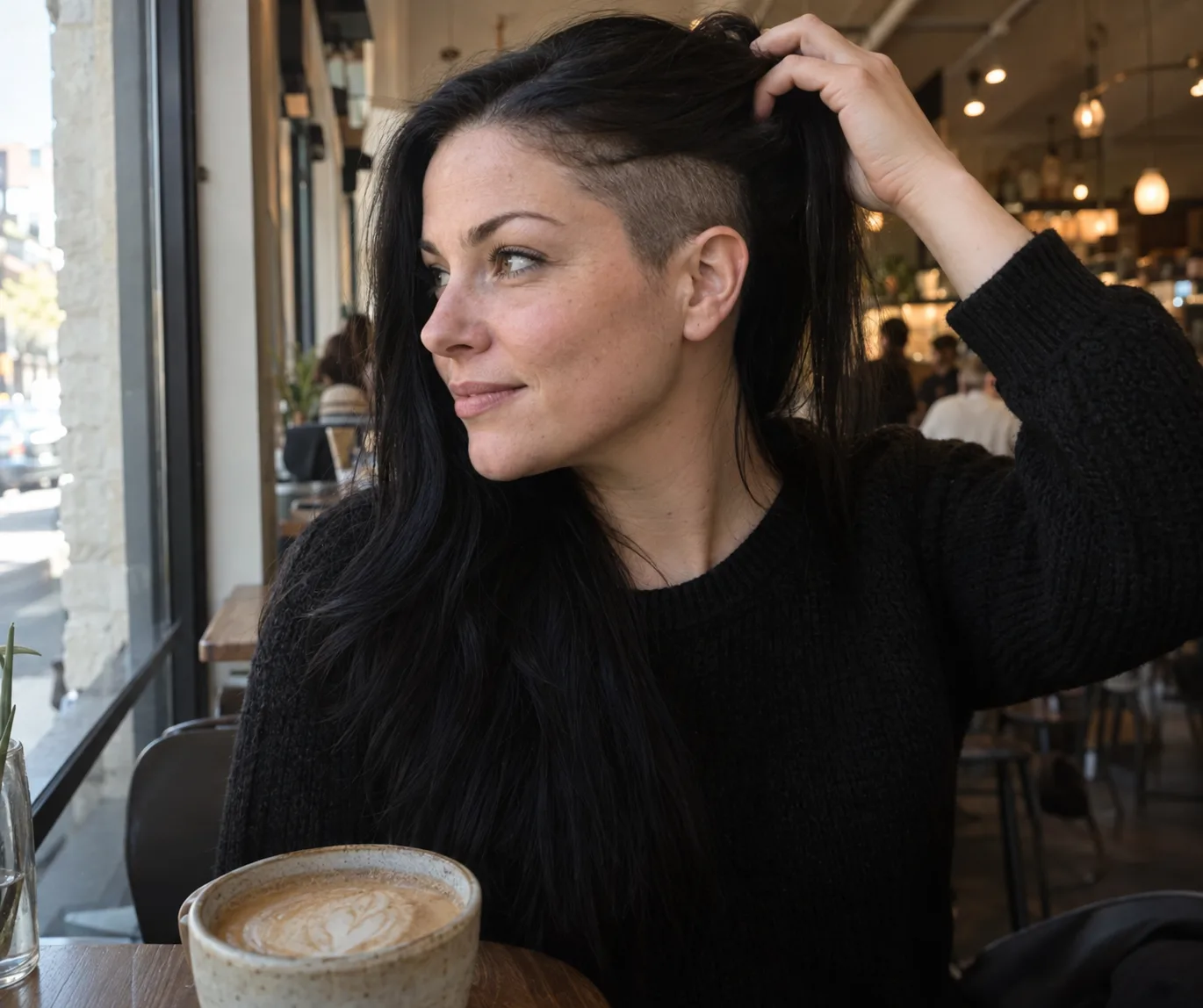
This is the answer for anyone who wants the signal on their own terms, including at a conservative job. It also takes weight out of very thick hair. Keep the shaved panel above the bottom of your ear if you want it fully hideable.
Short side part
The short side part is a tailored cut: about an inch at the sides, two to three inches on top, combed over from a clean part with a little matte cream. It is the vintage gentleman's cut, and on a woman it reads as confident rather than trendy.
It suits almost every face shape, because the part adds height and the tapered sides stay close to the head. Straight hair holds the part best. Curly hair fights it.
How to ask for a lesbian haircut
Most bad lesbian haircuts come from one phrase: "short, but not too short." Every stylist hears that differently. Bring numbers and a landmark instead.
How to ask for a lesbian haircut
- Name the detail first
Say which part should be short: the nape, one side, or the sides and back. That is the part that makes the cut read, so it goes first.
- Give lengths in inches or guard numbers
Say "a number 2 on the right side" or "about an inch over the ears" rather than "short on the sides." Guard numbers mean the same thing in every shop.
- Say where the short part stops
Pick a landmark: above the ear, at the temple, at the top of the ear. This decides whether you get a subtle cut or a dramatic one.
- Show a photo of the cut on someone like you
Same hair texture and similar density. A swoop photo on thick straight hair will not come out the same on fine wavy hair.
- Ask what it will look like in four weeks
A good stylist will tell you how it grows out and when to come back. If they cannot, that is useful information too.
Say this to your barber
Scissor taper the sides and nape to about half an inch, leave four to five inches on top, and cut it so I can sweep it up and over to the left.
The wall with all of this is step four. A photo shows the cut on someone else's face, with someone else's hairline and hair type, and your head is not theirs. The only way to know how a swoop or a mullet sits on your own face before the clippers come out is to see it there.
Lesbian haircuts for round faces
The best lesbian haircuts for round faces add height on top and keep the sides close: the swoop, the undercut pixie and the faux hawk all do this. The cut to be careful with is a chin-length blunt bob, which ends at the widest part of the face and makes it look wider.
A short shag also works, as long as the layers start below the cheekbones. Avoid a center part with flat sides. If you do not know your face shape yet, the face shape guide shows how to measure it in two minutes.
| Face shape | Go for | Be careful with |
|---|---|---|
| Round | Swoop, undercut pixie, faux hawk | Blunt chin bob, flat buzz |
| Square | Chin-length shag, wolf cut, textured pixie | Blunt bob at the jaw |
| Oval | Almost anything, including the buzz | Nothing in particular |
| Heart | Bixie, shag, curtain bangs | Very short sides with a tall top |
| Long | Blunt bob with bangs, mullet, shag | Tall swoop, very long straight hair |
Mistakes that cost you months
- Going to clippers on your first cut. Scissor tapered sides grow out in six weeks. A skin close undercut takes months to blend back in. Start soft, go harder next time.
- Copying a photo on the wrong hair type. Fine hair cannot hold a tall swoop, and thick hair turns a pixie into a mushroom without an undercut. Match the texture, not the face.
- Forgetting the trim schedule. A clippered cut left eight weeks is not a cut anymore, it is a grow out. If you cannot get to a stylist every four weeks, pick the shag or the wolf cut.
- Cutting to prove something. Plenty of people get a buzz the week they come out and spend a year growing it back. The hidden undercut or a mullet sends the same signal with a much cheaper exit. Our list of haircuts people regret is mostly this.
Can you try a lesbian haircut on for free?
Yes. Your first look on Hairstyle Atlas is free and needs no card: one hairstyle and one color on it, from the front. More looks, other angles and clean downloads are on the paid plans, which start at $9 a month. If you only want to know whether a pixie suits you, the free look answers that.
Pick the detail, then the length. If you want the signal loud, go for the buzz, the swoop or the undercut pixie. If you want it on your own terms, a hidden undercut, a mullet or a shag does the same job with less to lose. Whatever you choose, bring guard numbers and a landmark, not "short but not too short." And if you are stuck between two, see both on your own face with the haircut suitability tool before you sit in the chair.
Frequently asked questions
The swoop is the most recognized: short tapered sides with a long top swept over to one side. The undercut pixie and the modern mullet are close behind, and the mullet is the most popular new version right now.
Short cuts that expose the ears and nape, undercuts and mullets are the ones most associated with lesbian culture. They became signals because they remove hair where women are traditionally expected to keep it, which makes the choice visible.
It is not one specific haircut. "Lesbian cut" is shorthand for any cut worn as a visible queer signal, most often a swoop, a pixie with an undercut, a buzz or a mullet.
The modern mullet, the wolf cut and the chin-length shag are the most requested, along with bleached buzz cuts. All four favor texture and a lived in finish over sharp, clippered lines.
Choose cuts with height on top and close sides: the swoop, the undercut pixie or a faux hawk. Avoid a blunt bob that ends at the chin, because it sits at the widest part of the face.
A butch haircut is a short, traditionally masculine cut on a woman, like a short side part, a swoop, a crop or a buzz. The sides are short and the finish is usually tailored rather than messy.
In barbering, a butch cut is the same short clipper length all over, while a crew cut leaves the top slightly longer than the sides. In queer slang, "butch haircut" just means any short masculine cut on a woman.
Ask for a chin-length shag, a wolf cut, or long layers with curtain bangs and a hidden undercut on one side. You keep your length and softness, and the texture or the shaved panel does the signaling.
Preview it on your own photo: Virtual Hair Color Try-On.
Share article
About the author
More articles
Women's Haircuts · 14 min
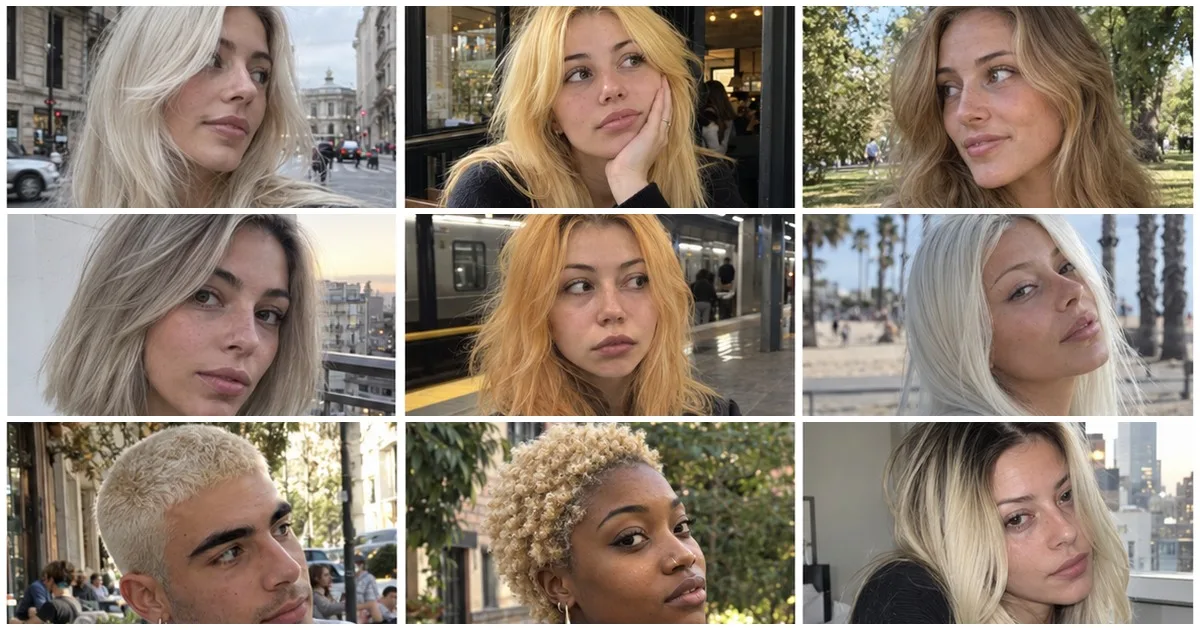
Bleached Hair: How Light Yours Can Go, 14 Shades, Aftercare
How light your bleached hair can go depends on where it starts. See 14 bleached shades on one cut, what each starting color can reach in one session, how toner finishes the job, and the aftercare that keeps it soft.
Women's Haircuts · 16 min
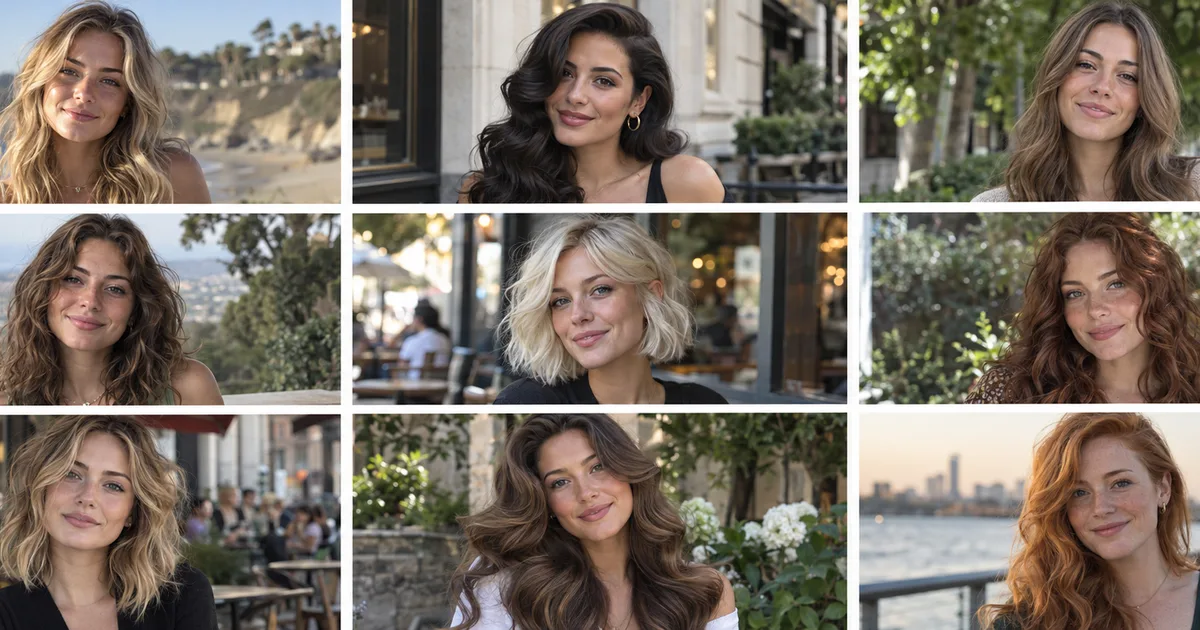
Waves Hair: How to Get Beach, Loose and Hollywood Waves That Last
Waves hair is about what you leave straight. How to get beach, loose, Hollywood and heatless waves, which wave suits your hair type, and why your waves keep falling out.
Women's Haircuts · 15 min
Fino Hair Mask: Who It Suits, How to Use It, and Its Limit
The Fino hair mask makes dry, bleached and frizzy hair smooth and shiny in one use, mostly by coating it. Here is what is in the jar, which hair types it suits, exactly how to use it, and what to do when the ends are past a mask.