Side Bangs: 10 Looks and the Right Length for Your Face
Oleh Onysko Updated 27 September 2026 14 min read
In this article
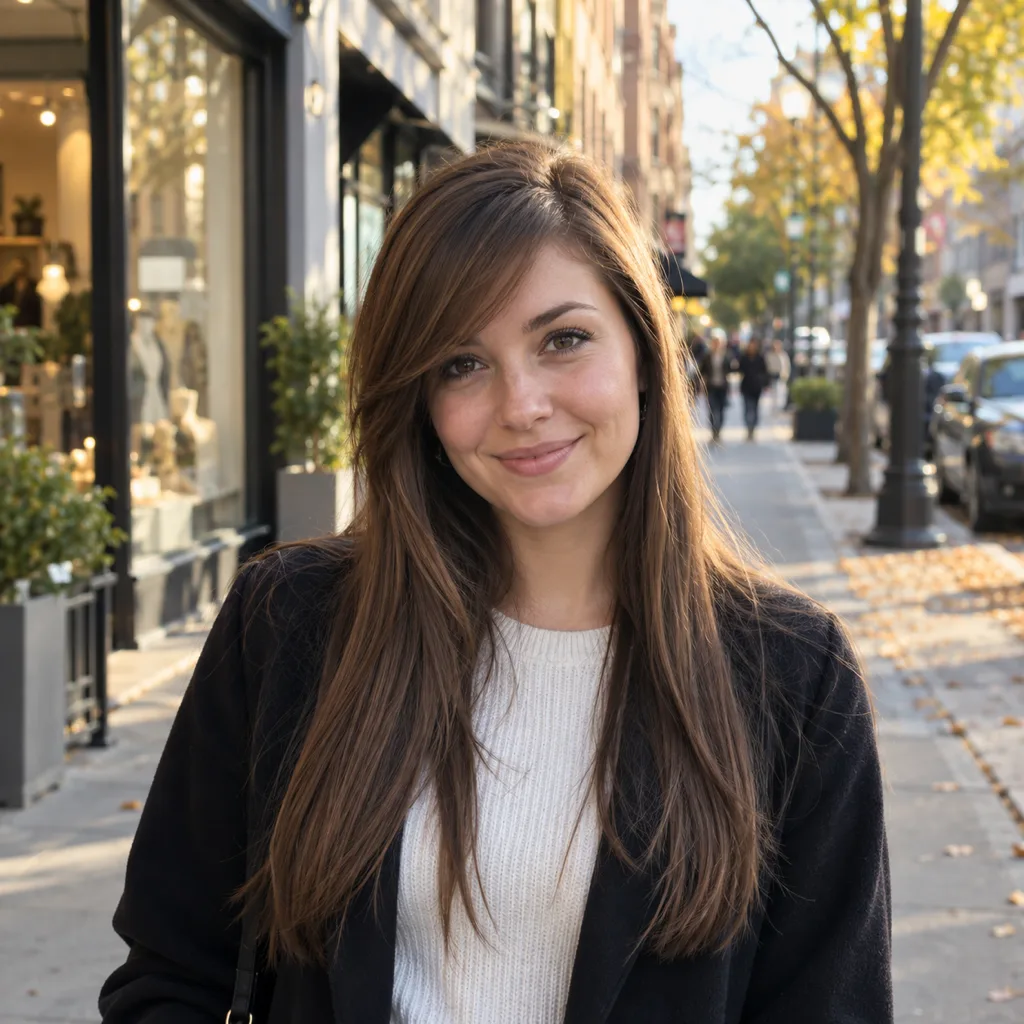
Side bangs are a fringe cut on a diagonal and swept to one side from a deep part, short near the part and longest at the far cheek. They suit almost every face shape and hair type, and they are the easiest bang to grow out, because at full length they simply become face-framing layers.
The part most guides skip: you do not get to choose the side. Your hairline already has, and a side bang cut against it will flip back every morning. Get the side right, cut the bang longer than you think, and the rest is styling.
What are side bangs?
Side bangs are a triangular section of hair at the front hairline, cut on an angle and worn swept across the forehead toward one side. They cover part of the forehead, never all of it, so one eyebrow stays fully visible. That partial cover is what makes them forgiving: there is no hard line across your face to fight with.
Side-swept bangs and side bangs are the same cut. Stylists sometimes use "side-swept" for a longer, softer version that blends into layers, but ask for either and you get a diagonal fringe from a side part.
| Bang type | Where it parts | Shape | Grow-out | Daily effort |
|---|---|---|---|---|
| Side bangs | Deep side part | Diagonal, short to long | Easiest, becomes layers | Low, one pass with a dryer |
| Curtain bangs | Center part | Two sides, like open curtains | Easy | Medium, needs a round brush |
| Blunt bangs | None, straight across | Horizontal line | Hardest, awkward stage | High, trims every few weeks |
| Wispy bangs | Usually center | Thin, see-through | Easy | Low |
If you have been told bangs are high maintenance, that is mostly about blunt bangs. A side bang hides a week of growth because its length is already uneven by design.
Your hairline picks the side, not you
Look at where your hair parts when it air-dries without a brush. That is your natural part, and the side it falls toward is where a side bang wants to go. Most people also have a cowlick at the front hairline that pushes hair one way. Cut the bang so it sweeps with that push, never against it.

Here is the test before any scissors come out. Wet your hair, comb everything forward over your face, then let it dry without touching it. The front section will split and drift in one direction. That direction is your bang. If a stylist wants to put your bang on the other side because it "balances your face", ask them to watch it dry first. A bang cut against a cowlick lifts at the root and springs back to the side it prefers, usually by lunchtime.
The second rule: the deeper the part, the more dramatic the sweep. A part about 1.5 inches off center, above the arch of your eyebrow, is the classic spot. Go further out and the bang gets heavier and more retro. Stay closer to center and it drifts toward curtain bangs.
Side bangs by face shape
Side bangs work on every face shape. What changes is the length at the longest point and how much hair goes into the bang. Not sure of your shape? Measure it here first.
Measure it instead of guessing
Both numbers in the same unit — the answer is a ratio, so it does not matter which.
Under 1.15 reads round, 1.15 to 1.5 reads oval, over 1.5 reads long. Oval and long split on the jaw rather than the ratio: an oval tapers toward the chin, a long face runs straight down.
| Face shape | Verdict | Longest point | Weight |
|---|---|---|---|
| Round | Yes, one of the best bangs for you | Cheekbone or lower | Light to medium |
| Oval | Yes, any version works | Any | Any |
| Square | Yes, softens the jaw | Lip or chin | Wispy |
| Heart | Yes, covers a wider forehead | Cheekbone | Medium |
| Oblong or long | Yes, shortens the face | Eyebrow to cheekbone | Medium to heavy |
| Diamond | Yes, balances the cheekbones | Cheekbone | Light |
Round faces
A diagonal line is exactly what a round face needs. The angle breaks up the width and draws the eye down and across instead of around. Keep the longest point at the cheekbone or below; a short, heavy bang sits like a horizontal band and makes the face read wider. Pair it with length past the chin.
Square faces
Go long and wispy. A side bang that ends near the lip creates a soft curve that cuts across the corner of the jaw. Avoid a thick bang with a crisp edge, which repeats the angles you are trying to soften.
Heart faces
This is the face shape side bangs were made for. The bang covers part of a broader forehead and ends at the cheekbone, the widest point, which evens out a narrower chin.
Long faces
Here a side bang does the opposite job: it shortens. Cut it heavier, with the longest point between the eyebrow and cheekbone, so more of the forehead is covered. Our face shape guide goes deeper on each shape.
Side bangs by hair length
Side bangs with long hair
Long hair is where side bangs look most effortless. Cut the bang long, to the top of the lip, and let it flow straight into face-framing layers so nothing looks stuck on. This is also the version with the longest grace period between trims. If you want more ideas for long lengths, see our guide to hairstyles for long hair.

Side bangs with layers are the natural pairing. The bang becomes the first layer, and each layer below it starts a little lower. Without layers, a long bang on one-length hair can look like a stray piece that fell out of a ponytail.
Side bangs with medium hair
At shoulder length or on a lob, a cheekbone-length side bang gives the cut a shape it would not have on its own. It works especially well on a layered bob or any of these shoulder length haircuts, where the bang lines up with the angle of the ends.
Side bangs with short hair
On a pixie, the side bang is the whole point of the cut. Keep the sides short and leave 3 to 4 inches at the front so it can sweep across to the eyebrow. That longer front section is what keeps a short cut soft rather than severe, and it gives you options: sweep it for a polished look or push it back when you want an edge. For more short shapes, browse our boyish haircuts.

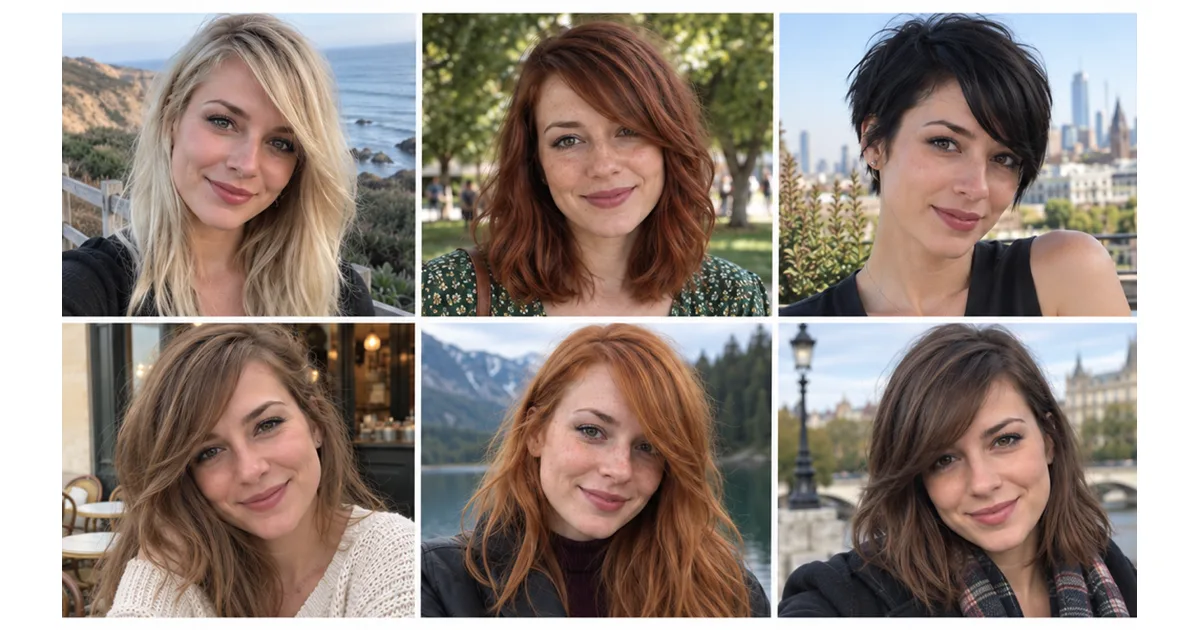
Yours could be here.
Start with one selfie.
One photo, twenty seconds, and you'll know. Free account, no card for your first render.
Side bangs by hair texture
Straight hair is the easiest canvas, and the bang will fall exactly where it was cut. Every other texture needs a bit more length and a bit more thought.
Wavy hair. Cut the bang dry or at least check it dry, about half an inch longer than the target. Waves shrink and bend, and a side bang on 2a hair or 2b hair should follow the wave, not fight it with a flat iron every day.

Curly hair. Side bangs work on curls if the stylist cuts curl by curl while dry. Leave at least an inch more than you want to see, because curls spring up. On 3a hair a curly side bang looks great pushed over with a little gel. On tighter patterns, a side bang is usually better as face-framing curls than as a true fringe.
Fine hair. Keep the bang thin. Taking too much hair from the crown to make a thick bang leaves the rest of your hair looking sparse.
Thick hair. Ask for the bang to be thinned from underneath with point cutting, or it will sit like a wedge.
How to ask for side bangs
Bring a photo, and say where the longest point should land using a face landmark, not a length in inches. "Cheekbone" means the same thing to every stylist; "a few inches" does not. Then say which side, and why.
Say this to your barber
I'd like side bangs swept to my natural part side, cut on a diagonal, shortest near the part and longest at my cheekbone, point cut and soft, not blunt, blended into my face-framing layers.
Ask them to cut it slightly long, then trim it dry once you have seen it fall. You can always take more off. You cannot put it back.
How to cut side bangs at home
If you already have face-framing layers, cutting side bangs yourself is realistic. If you are starting from one-length hair, go to a stylist for the first cut and maintain it at home.
How to cut side bangs at home
- Find your part and section the bang
Dry your hair and part it where it falls naturally. Take a small triangle from the part to the outer corner of the opposite eyebrow, about an inch deep at the hairline. Clip everything else back.
- Twist the section toward the long side
Twist the triangle once and hold it toward the side where the bang will be longest. The twist puts the angle in the cut for you.
- Cut longer than you want
Cut straight across below the twist at your lip or chin. It will land higher once released. Use proper hair shears, not kitchen scissors, which crush the ends.
- Point cut to soften
Let the section go, sweep it across, and hold the scissors vertically. Snip small notches into the ends to break up any hard line.
- Check it dry and trim again
Style it the way you normally will and look in the mirror from a normal distance. Take off a quarter inch at a time until the longest point hits your cheekbone.
How to style side bangs
Style the bang first, while it is still damp, before the rest of your hair. Once a bang dries in the wrong direction, it stays that way until you wet it again.
Blow-dry it with the nozzle pointing down, brushing the bang across your forehead to the side with a flat brush, then flip the brush and dry it the opposite way for a few seconds. Brushing it back and forth kills the cowlick's grip at the root. Finish by sweeping it to the side and hitting it with the cool setting to set it. Use heat protection and a moderate heat setting, as the American Academy of Dermatology recommends, since the bang gets styled every day and takes the most heat of any section.
On day two, do not restyle the whole head. Wet just the bang, blow-dry it again, and you are done in two minutes. When you want it off your face, a side bang tucks behind the ear or pins back neatly, which works well with half up half down hairstyles.
Side bang mistakes and what they cost
- Cutting against your natural part. Costs you a bang that lifts and flips every day. The only fix is growing it out.
- Cutting it wet. Hair shrinks as it dries, so a bang cut at the cheekbone wet can land at the eyebrow dry, and on wavy hair even shorter.
- Too much hair in the section. Taking the bang from too far back on the head makes a heavy wedge that stops sweeping and starts sitting.
- Cutting it straight. A side bang cut straight across and then pushed sideways is just a crooked blunt bang. The diagonal has to be in the cut.
- Reaching for thinning shears. If you want the softer, piecey version, the fix is point-cutting the ends rather than thinning the body, which is the same rule that governs messy bangs.
- Going short on a round face. A short, heavy side bang reads as a horizontal line and widens the face. Keep it at the cheekbone or below.
- Skipping trims. Side bangs forgive growth, but past a couple of months they fall into your eyes. A quick trim every four to six weeks keeps the shape.
See it on your face before you cut
Everything above is how to get side bangs right on paper: the natural part test, the length for your face shape, the texture allowance. It gets you close. What it cannot tell you is how a bang will actually look across your forehead, with your features, before the scissors come out. That is the wall. A photo of someone else with side bangs shows her face, not yours, and a bang is the one cut where an inch changes the whole picture. The bangs filter exists for exactly this step.
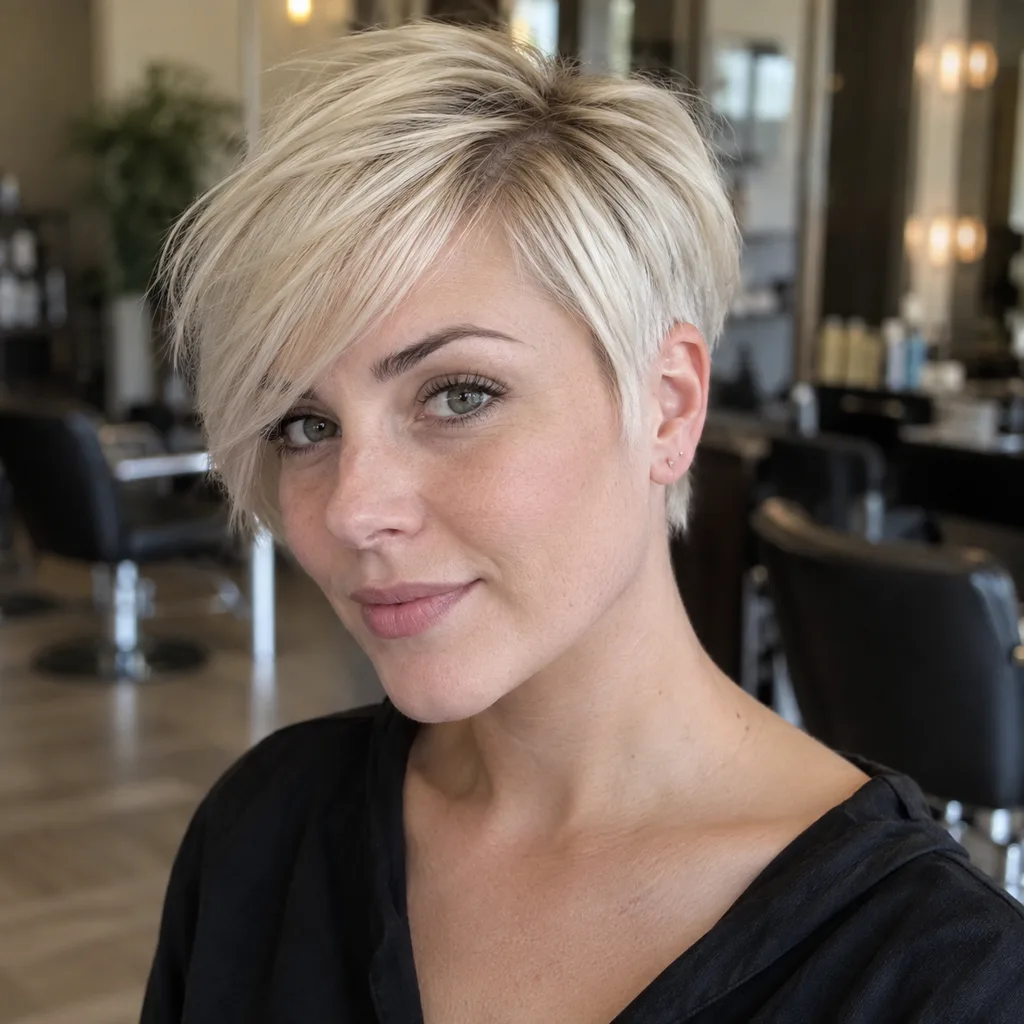
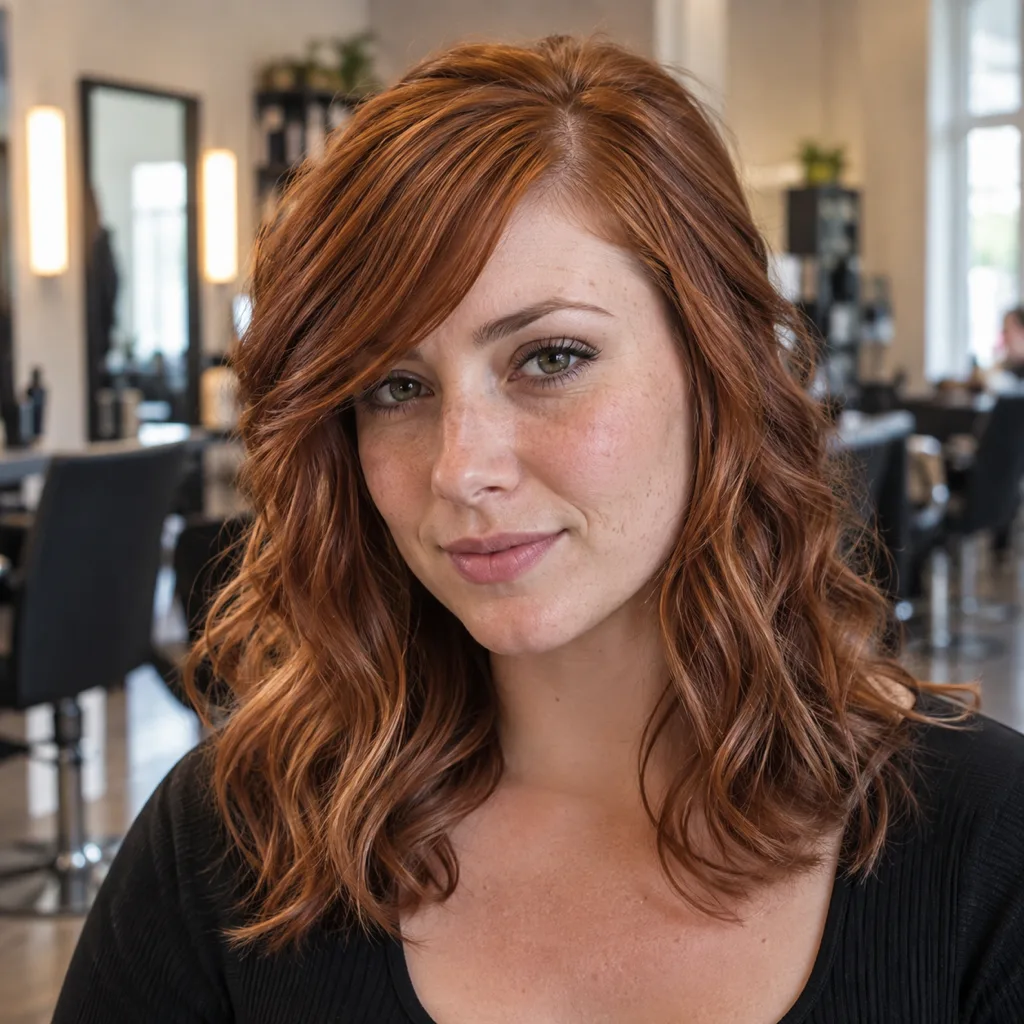
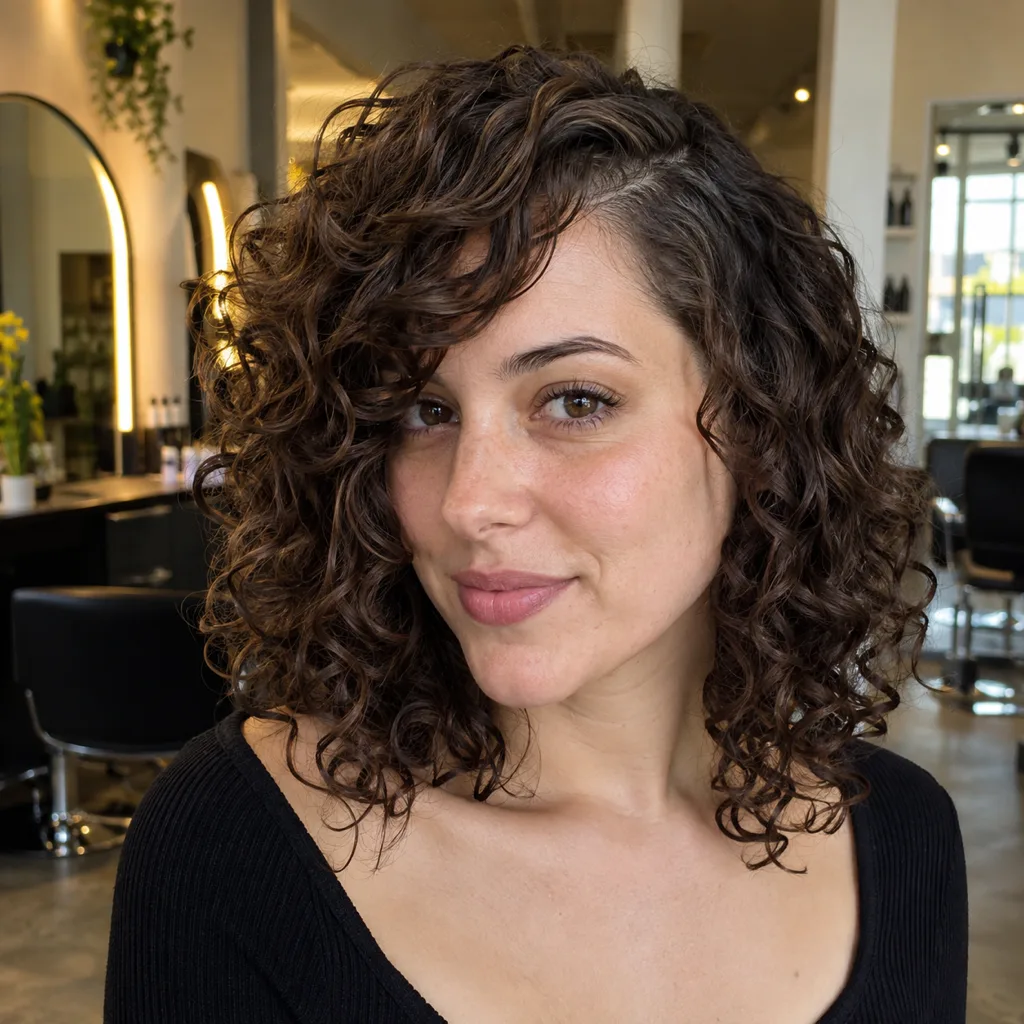
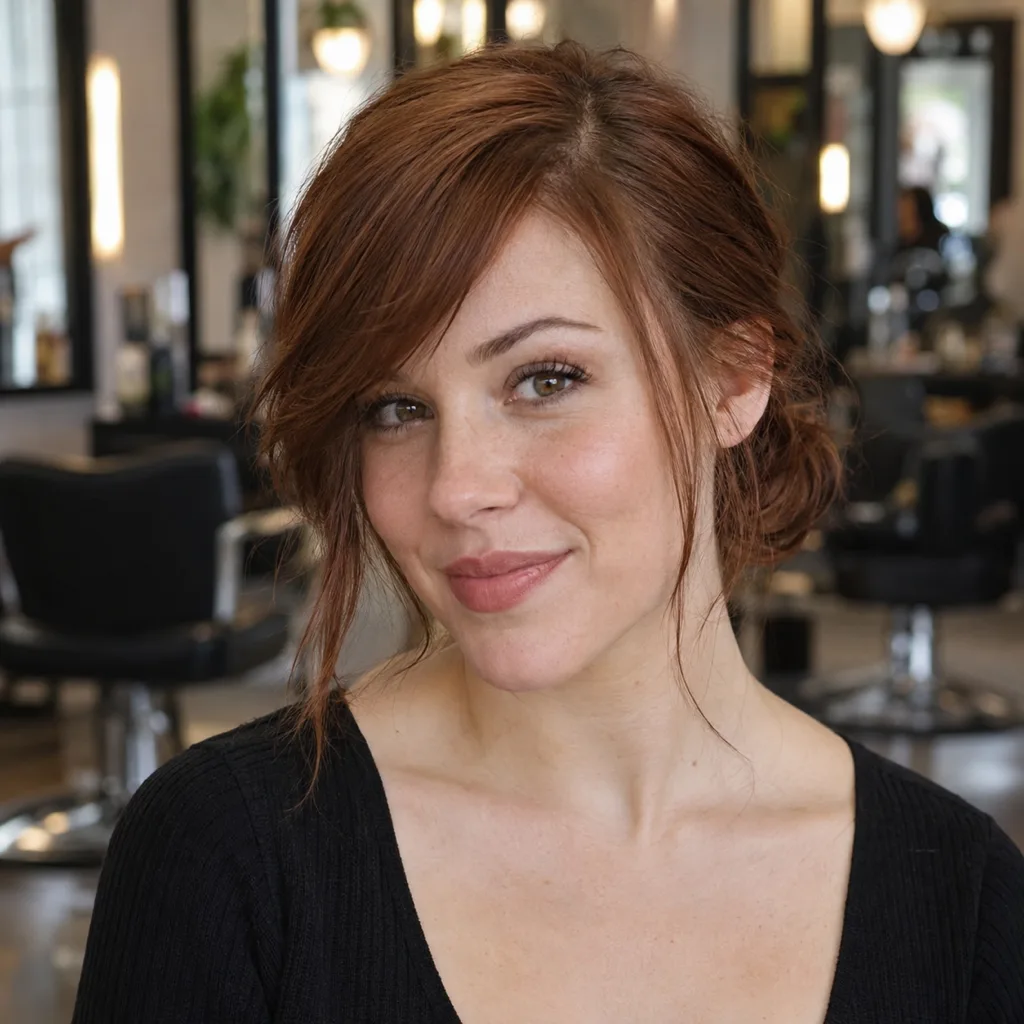
Side bangs gallery: 10 looks by length and weight
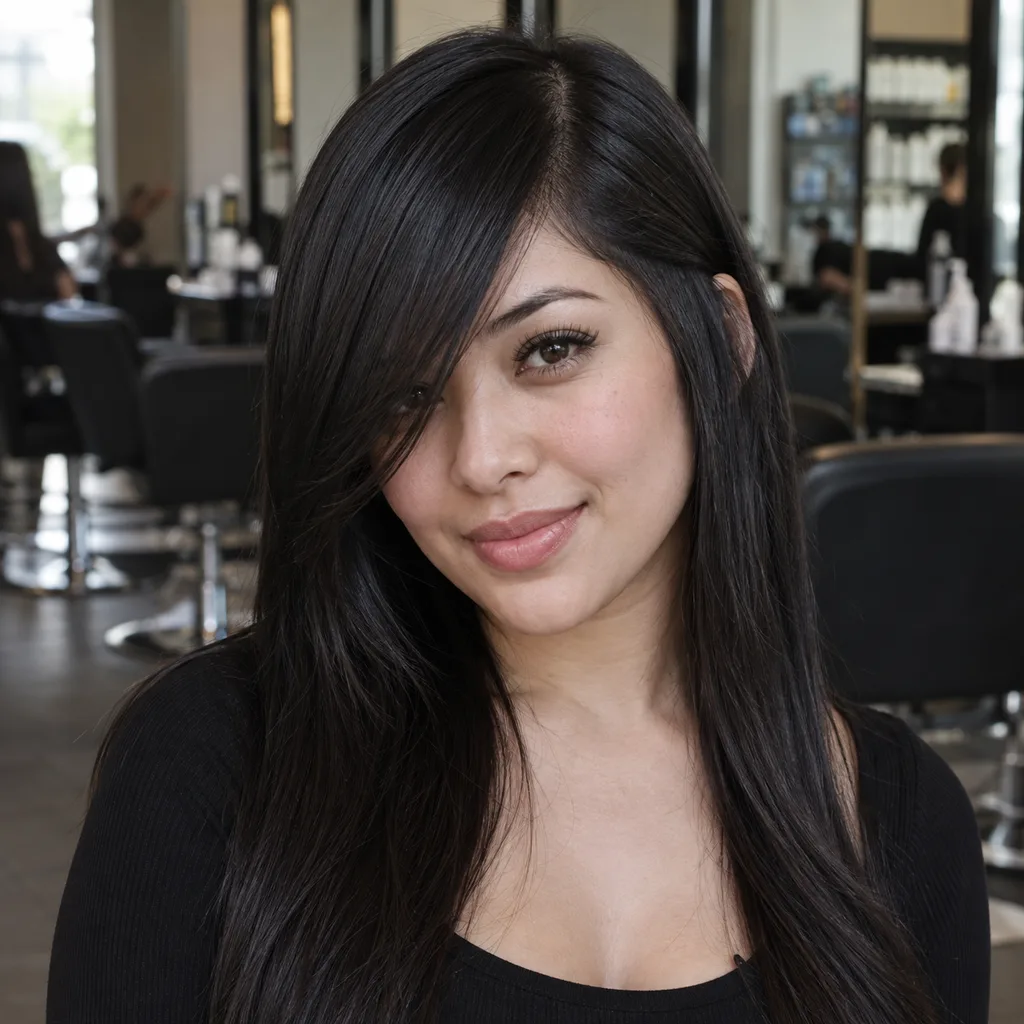
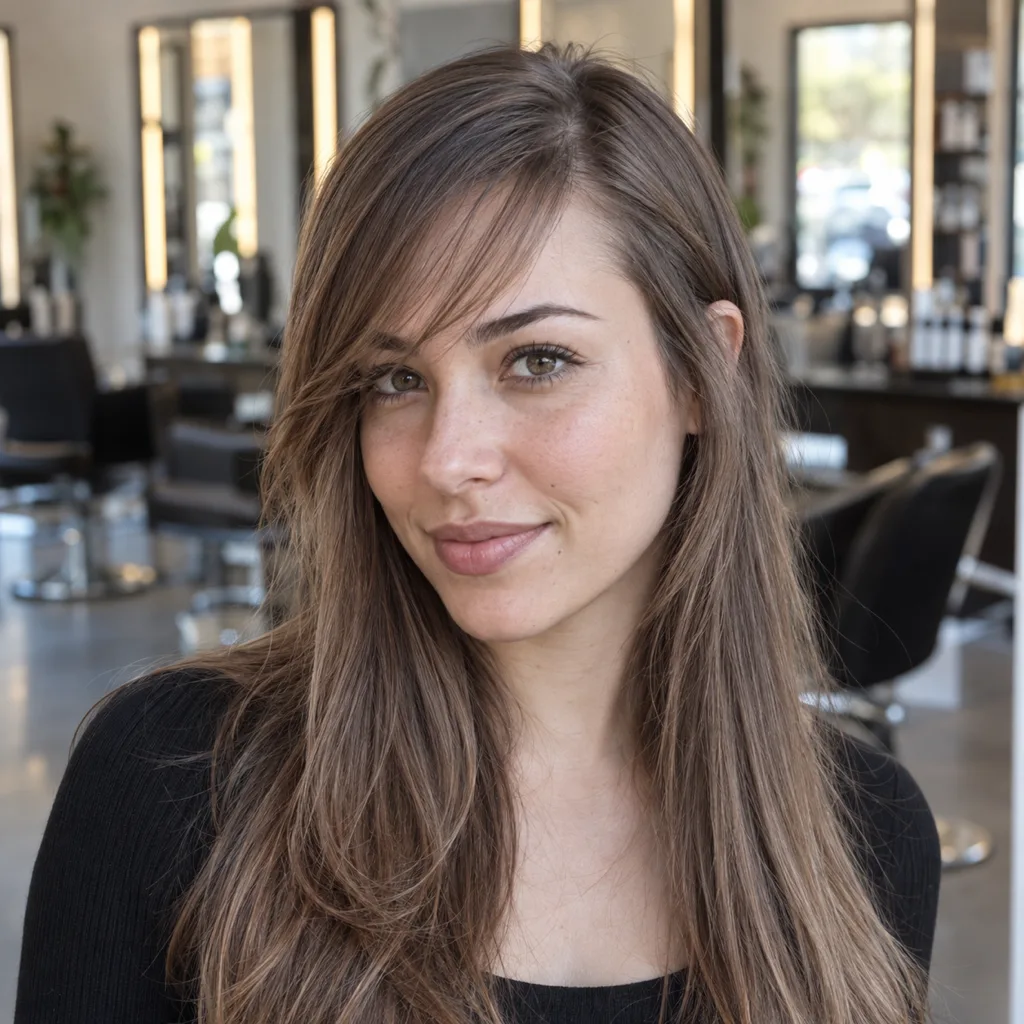
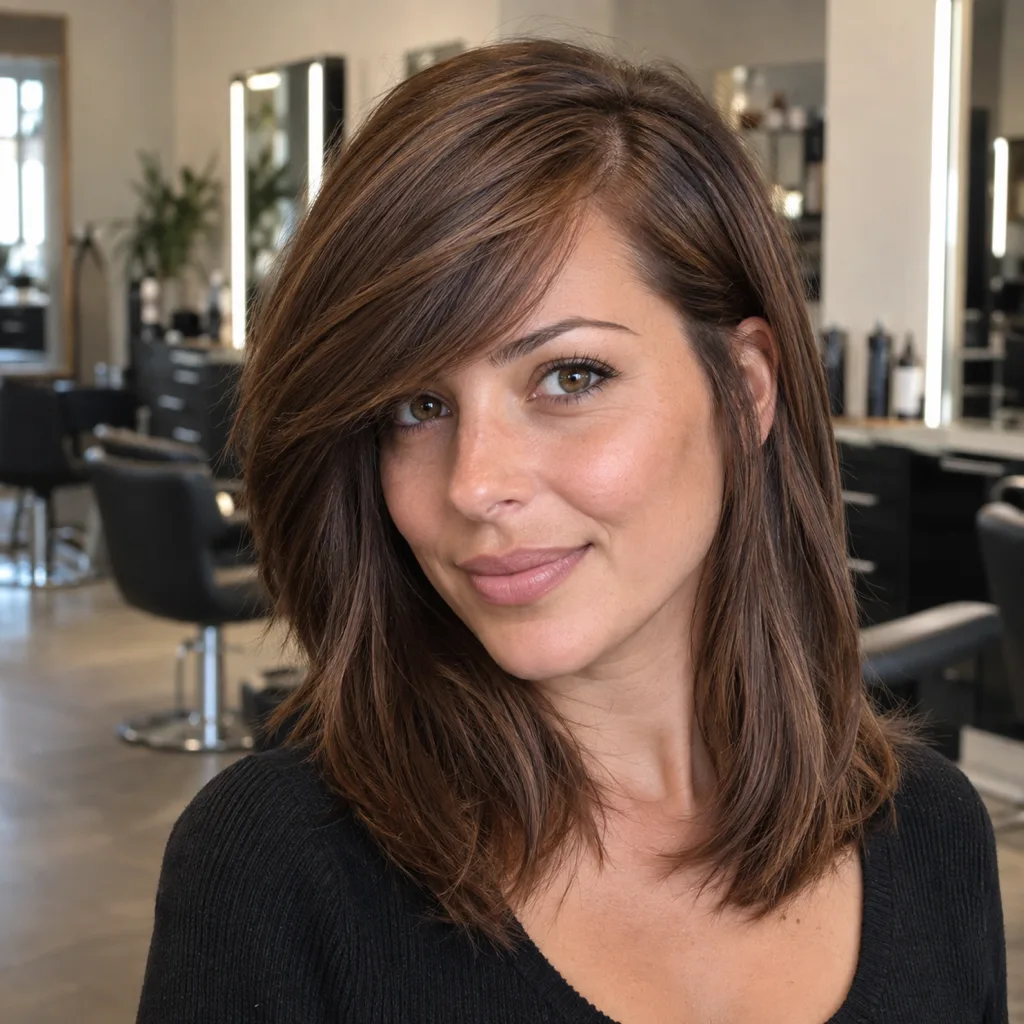
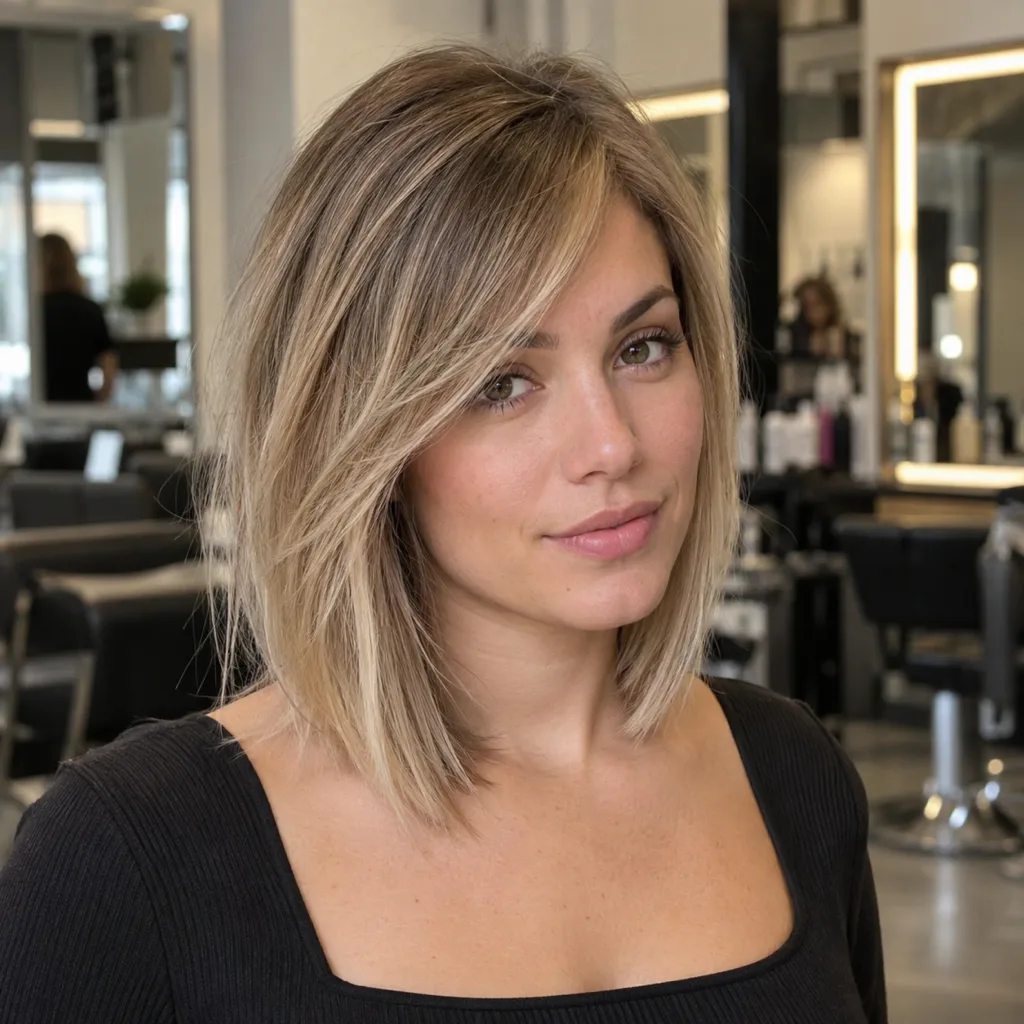
Every photo below holds the same cut, a diagonal side bang from a deep part, and changes one thing: how long the bang is, how much hair is in it, or what it is paired with. Use it to point at the exact length you want.
Gallery10 photos · tap to enlarge
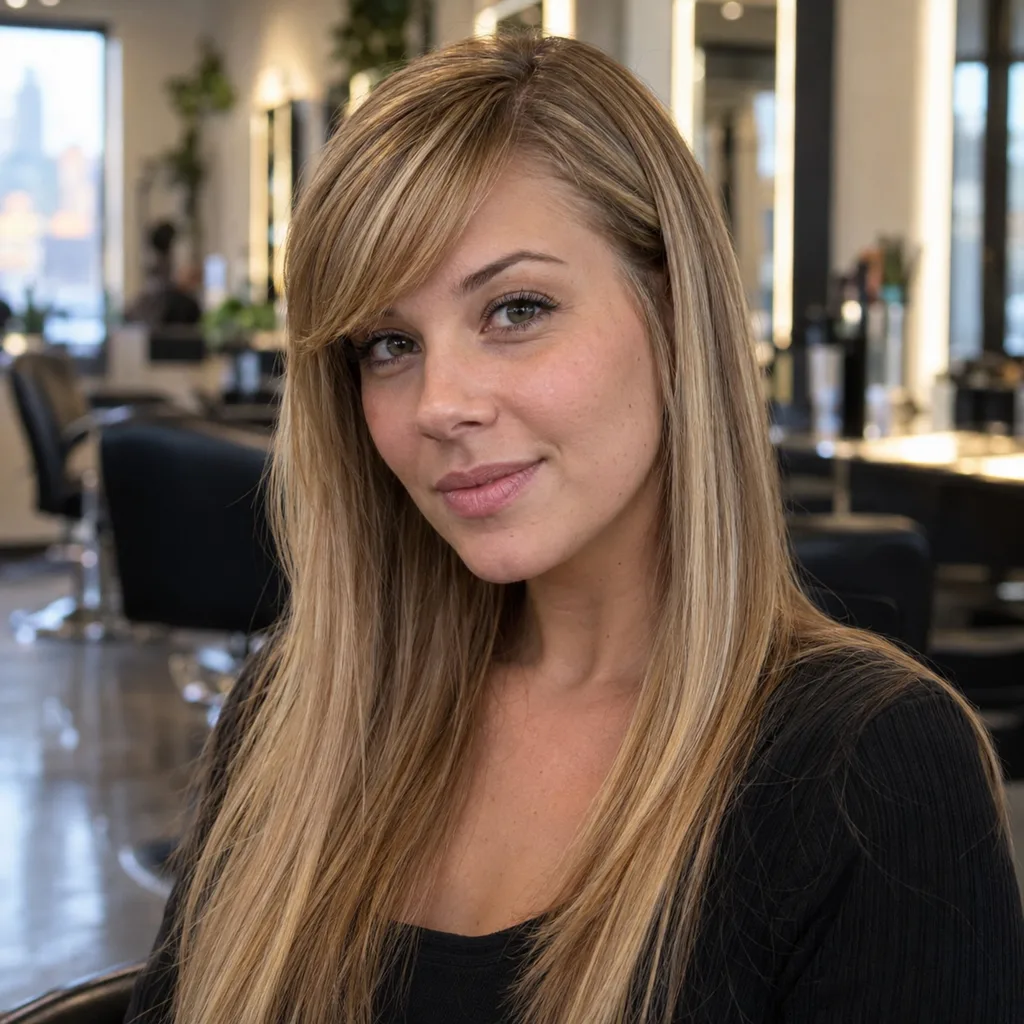 Try this on me
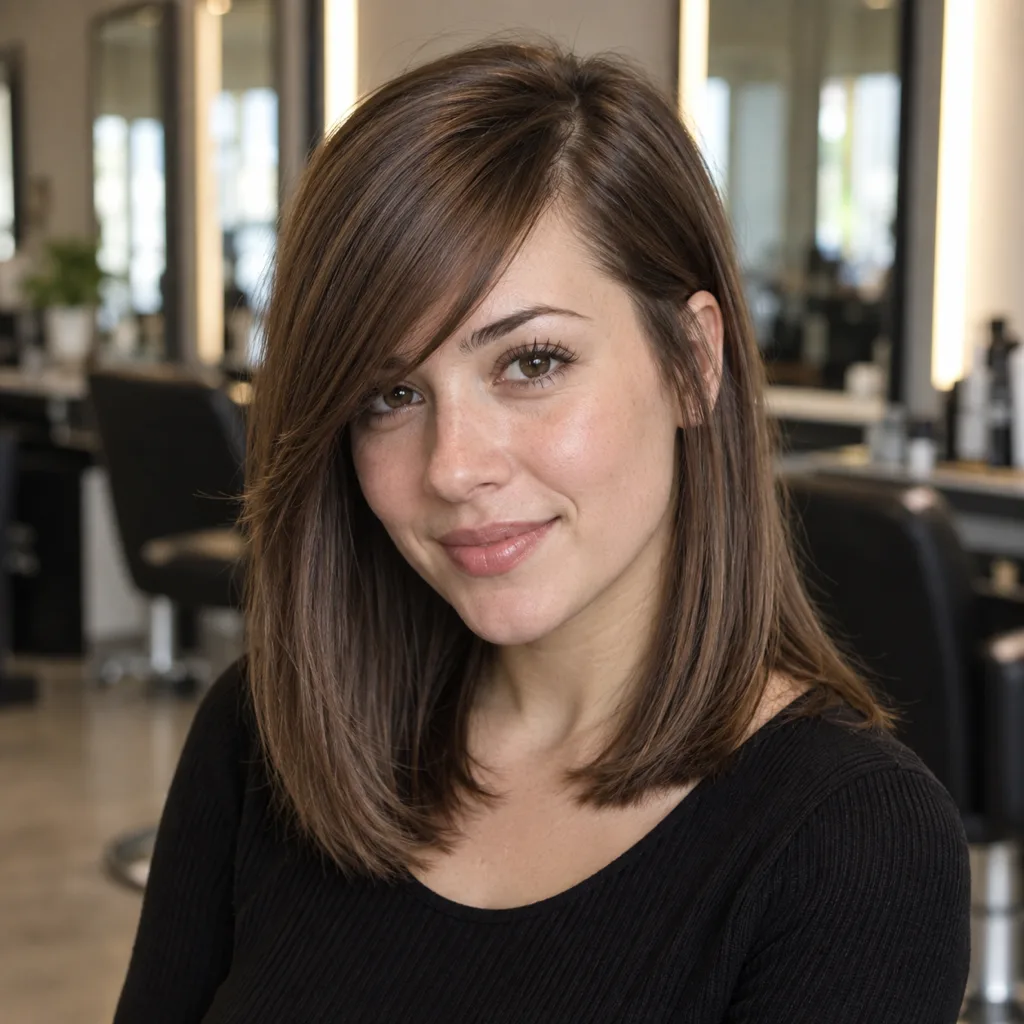 Try this on me
 Try this on me
 Try this on me
 Try this on me
 Try this on me
 Try this on me
 Try this on me
 Try this on me
 Try this on me
The short version
Side bangs are the lowest-risk bang there is. Let your hairline choose the side, set the longest point with a face landmark, cheekbone for most faces, and cut it longer than you think, dry. If you like it, trim every four to six weeks. If you do not, give it two months and it turns into face-framing layers nobody will know were ever bangs. For a messier, more textured take on the same idea, look at the shag haircut, which is built around a similar swept fringe.
Frequently asked questions
Side bangs usually make you look younger. They soften the forehead, draw attention to the eyes and cheekbones, and hide forehead lines without the harsh edge of a blunt fringe. A very heavy, stiff side bang can look dated, so keep it soft and point cut.
Almost every face suits side bangs. Heart, round and oval faces are the easiest matches. Square faces do best with a long, wispy version, and long faces with a heavier bang that ends between the eyebrow and cheekbone.
Regular bangs usually mean a straight-across fringe that covers the whole forehead. Side bangs are cut on a diagonal and swept to one side from a side part, so they only cover part of the forehead and grow out much more gracefully.
They are the same cut. Some stylists use "side-swept bangs" for a longer, softer version that blends into layers, and "side bangs" for anything swept to one side, but either phrase gets you a diagonal fringe from a side part.
Yes. Side-swept bangs have come back with the wider 2000s revival, in a softer, longer form than the heavy versions of that era. The modern take is wispier, point cut, and blended into face-framing layers.
Yes, side bangs are one of the best bang choices for a round face. The diagonal line breaks up the width. Keep the longest point at the cheekbone or lower and avoid a short, heavy bang, which reads as a horizontal line.
Check your natural part and cowlick first: if your hair already falls to one side, side bangs will cooperate. Then match the length to your face shape using the table above. The fastest way to be sure is to try them on a photo of your own face before you cut.
Bangs can look great at any age, and side bangs are the most forgiving choice. They soften forehead lines without the upkeep of a blunt fringe. A long, soft side bang blended into layers tends to look the most current.
Preview it on your own photo: Virtual Hair Color Try-On.
Share article
About the author
More articles
Women's Haircuts · 14 min
Bleached Hair: How Light Yours Can Go, 14 Shades, Aftercare
How light your bleached hair can go depends on where it starts. See 14 bleached shades on one cut, what each starting color can reach in one session, how toner finishes the job, and the aftercare that keeps it soft.
Women's Haircuts · 16 min
Waves Hair: How to Get Beach, Loose and Hollywood Waves That Last
Waves hair is about what you leave straight. How to get beach, loose, Hollywood and heatless waves, which wave suits your hair type, and why your waves keep falling out.
Women's Haircuts · 15 min
Fino Hair Mask: Who It Suits, How to Use It, and Its Limit
The Fino hair mask makes dry, bleached and frizzy hair smooth and shiny in one use, mostly by coating it. Here is what is in the jar, which hair types it suits, exactly how to use it, and what to do when the ends are past a mask.