Messy Bangs: 10 Cuts and the One Thing That Ruins Them
Oleh Onysko 23 September 2026 14 min read
In this article
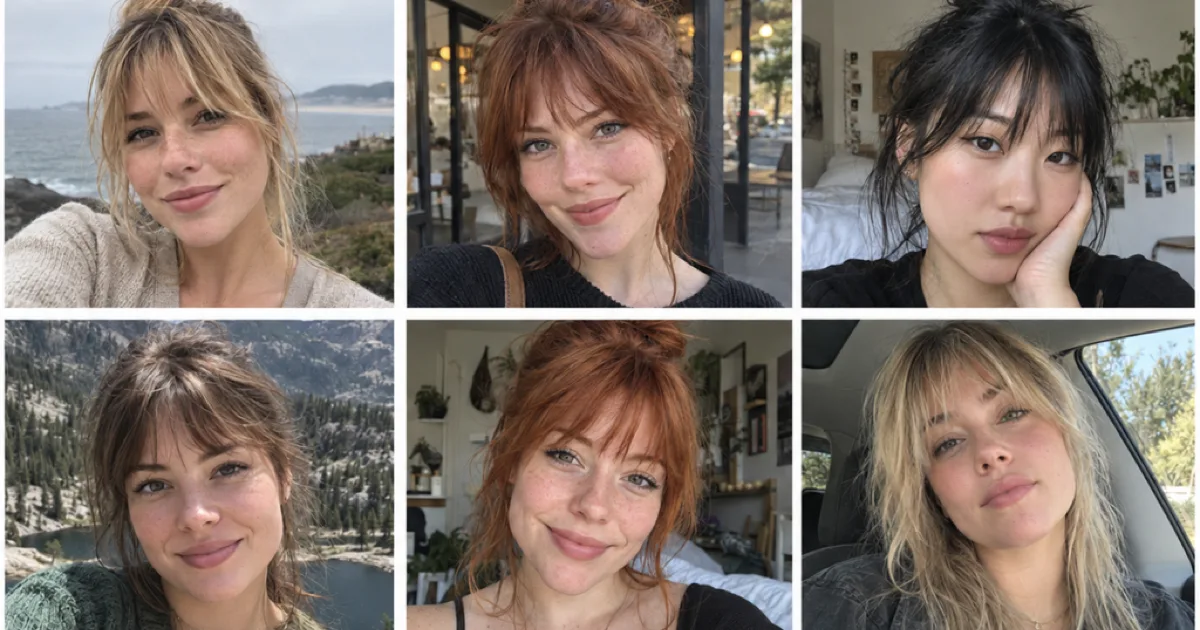
Messy bangs are a fringe whose ends are point-cut so they finish at slightly different lengths, then left to fall where they want instead of being blown into place. The mess is a cutting decision, not a styling one. That is why a blunt fringe never reads messy no matter how much texture spray you fight it with in the morning.
Most people go at it backwards. They ask for messy bangs, get a clean solid edge, then try to break it up at home with thinning shears, a flat iron or half a can of dry shampoo. All three make it worse. Below is what to ask for instead, ten versions you can point at in the chair, and the one tool that quietly ruins more messy bangs than anything else.

What Messy Bangs Actually Are
Messy bangs are a fringe cut so the ends finish unevenly, usually within about half an inch of each other, so the hair separates into soft pieces with small gaps of forehead showing through. You should be able to see skin between the sections. That separation is the whole look, and it is the single thing that tells your eye "undone" rather than "styled".
They are not thin bangs. A messy fringe still has weight in the body of the hair, which is what lets the pieces fall heavy enough to hold a shape. Sparse, see-through bangs that cling to the forehead are a different thing entirely, and usually an accident.
Length is the part you get to choose. Below the brow is the safest place to start because you can always go shorter next week. At the eyebrow you get the classic look. Above the brow is the micro version, and it is the least forgiving of a bad day.
The Mess Is Made at the Ends, Not the Middle
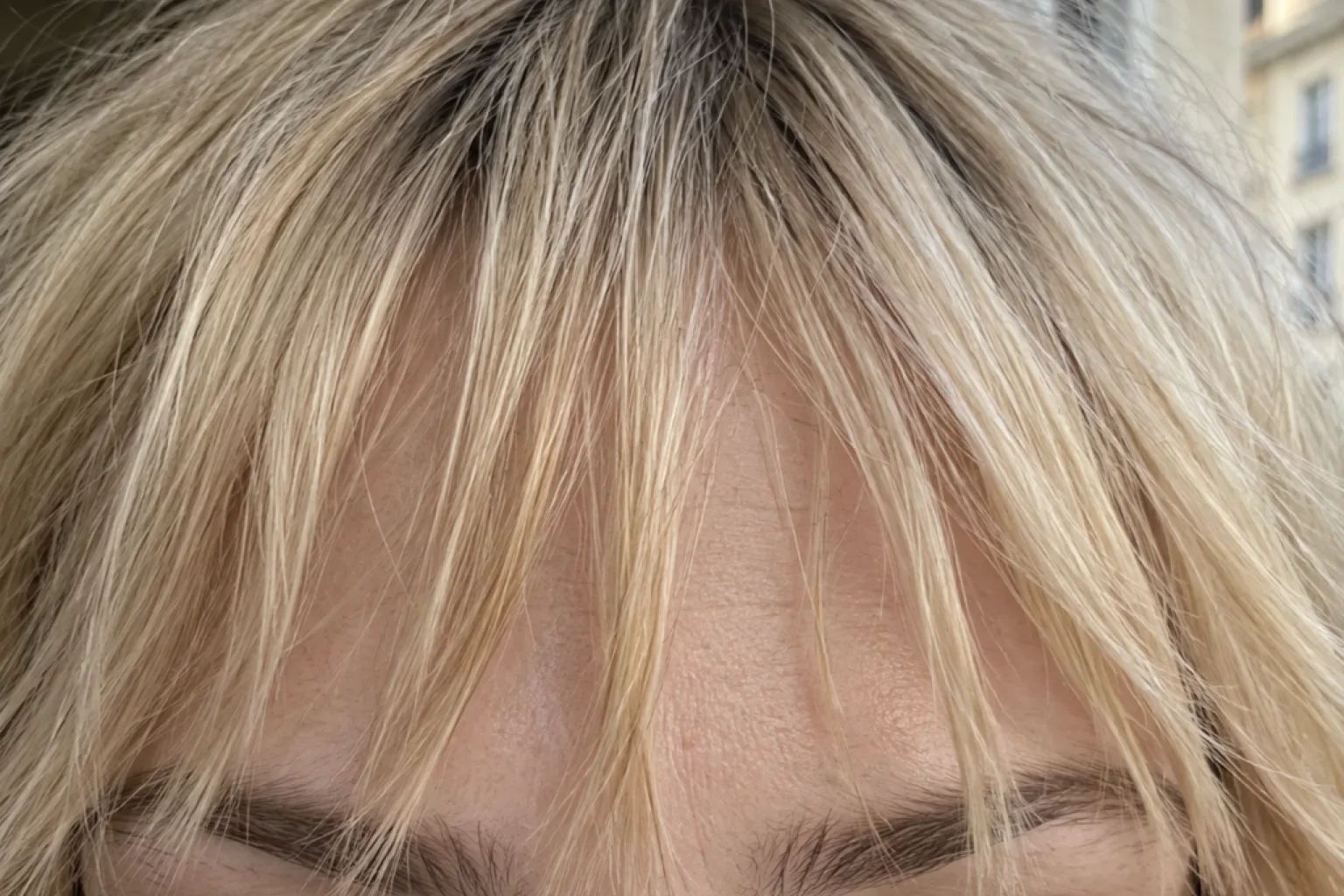
Here is the part almost every guide gets wrong. When people want messier bangs, they reach for thinning shears and run them through the middle of the fringe. That removes bulk from the body of the hair and leaves a field of short stubble underneath. The stubble props the long hair apart, so the fringe goes stringy and see-through within two hours of washing. That is not messy. That is sparse, and it takes months to grow past.
Mess comes from the last half inch. Your stylist should hold the fringe and point-cut straight up into the ends, taking small notches out of the edge so it finishes at a dozen slightly different lengths. The weight stays. The line disappears. That is the entire technique.
If you have already been thinned out, do not try to fix it with more cutting. Let the short pieces grow to fringe length before you touch it again. Healthy hair grows about half an inch a month, so a badly thinned fringe is roughly a three month problem. Our guide to recovering from a bad haircut covers the holding pattern.
Say this to your barber
Keep the weight in my bangs. No thinning shears through the body. Just point-cut straight up into the last half inch so the ends break up.
10 Messy Bangs to Show Your Stylist
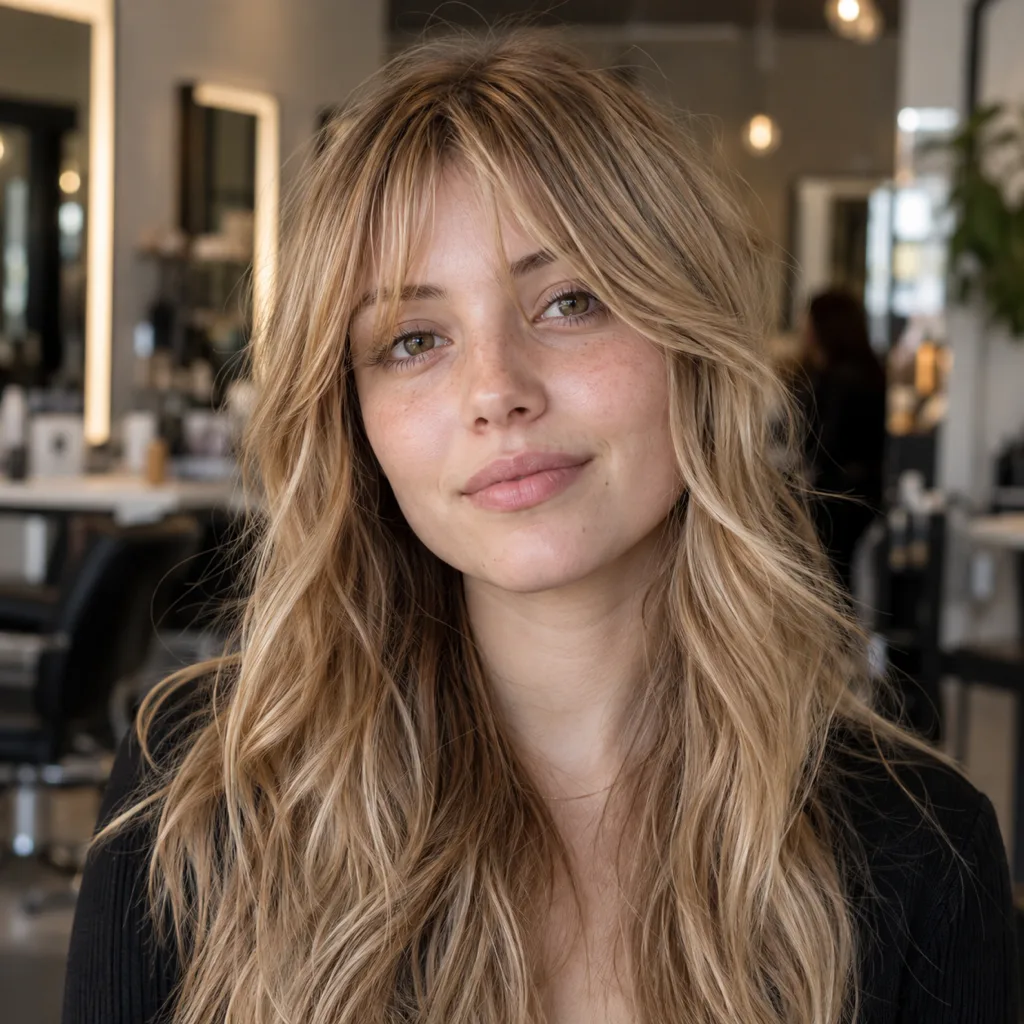
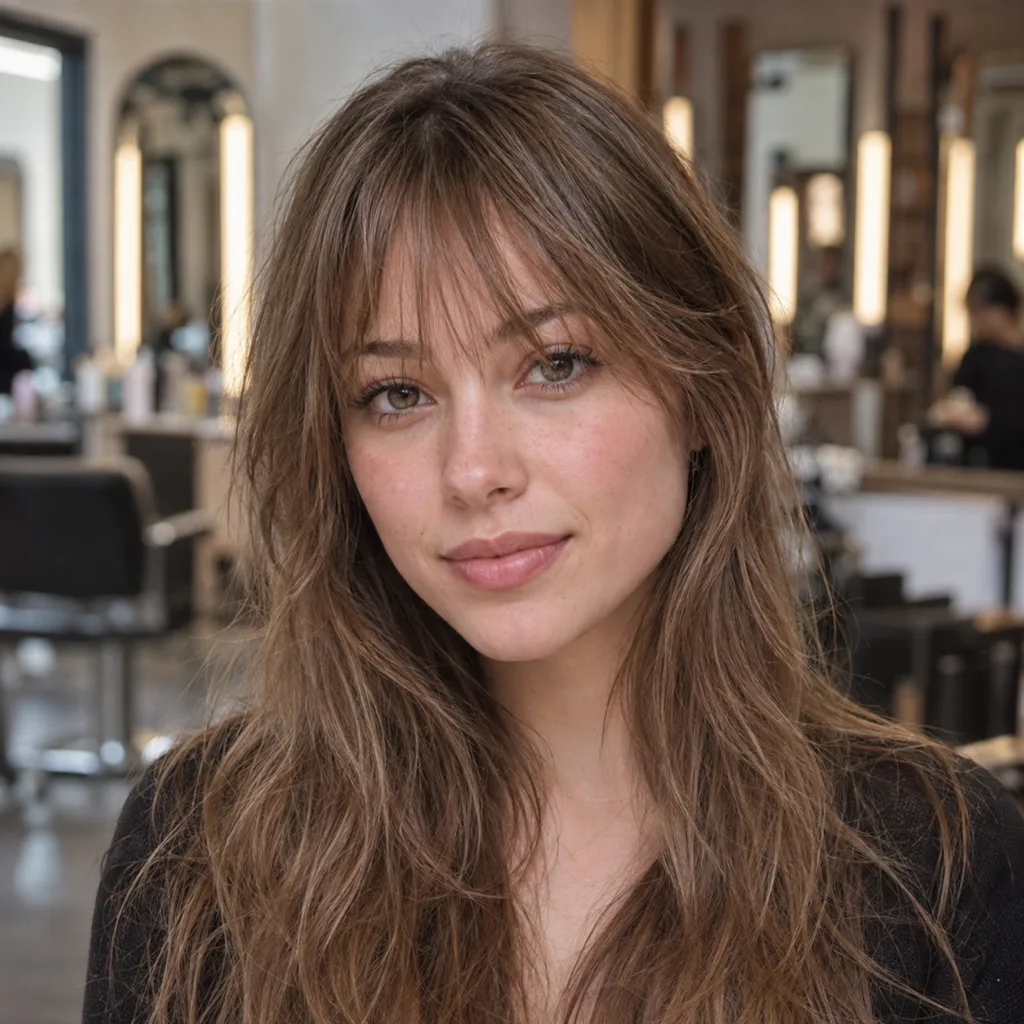
Every look below is the same idea with one thing changed: the shape of the fringe itself. Finish, length behind the fringe and styling are held constant, so what you are comparing is the cut and nothing else.
Gallery10 photos · tap to enlarge
 Try this on me
 Try this on me
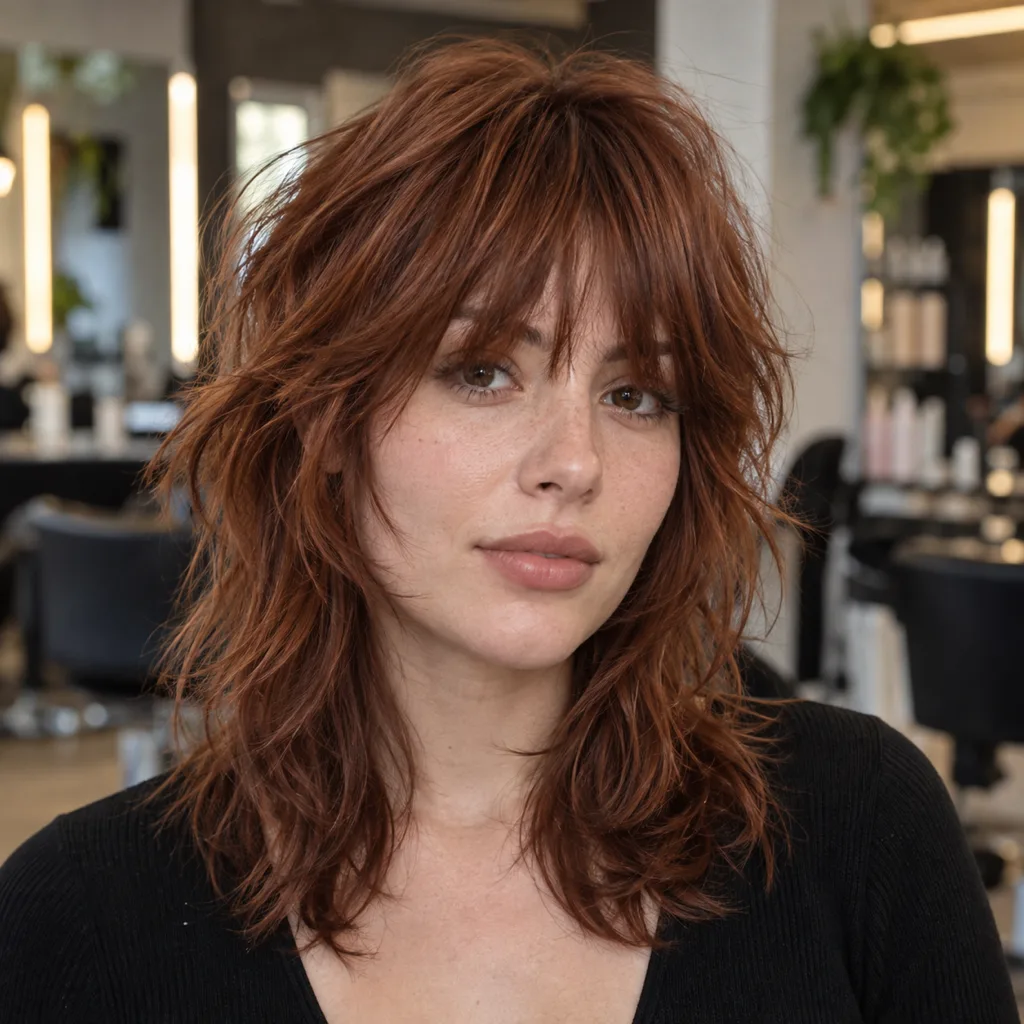 Try this on me
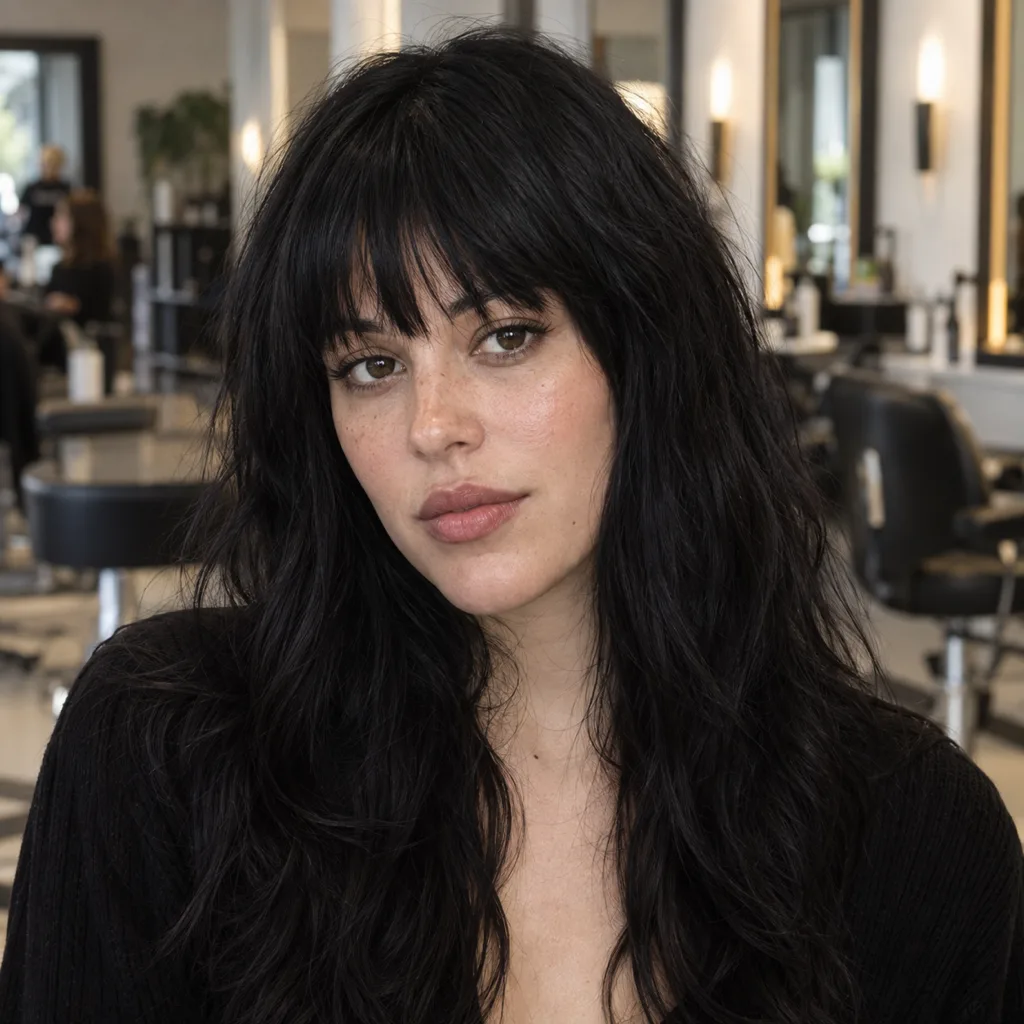 Try this on me
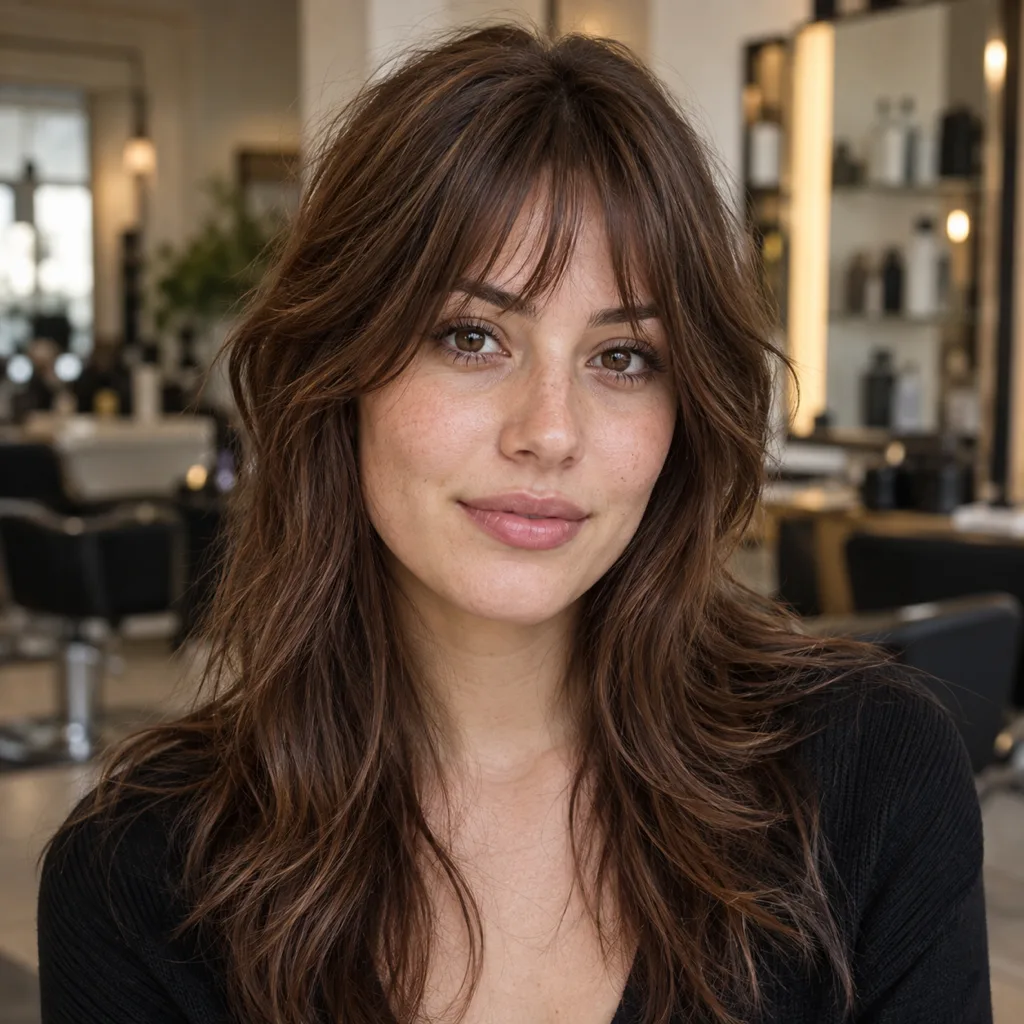 Try this on me
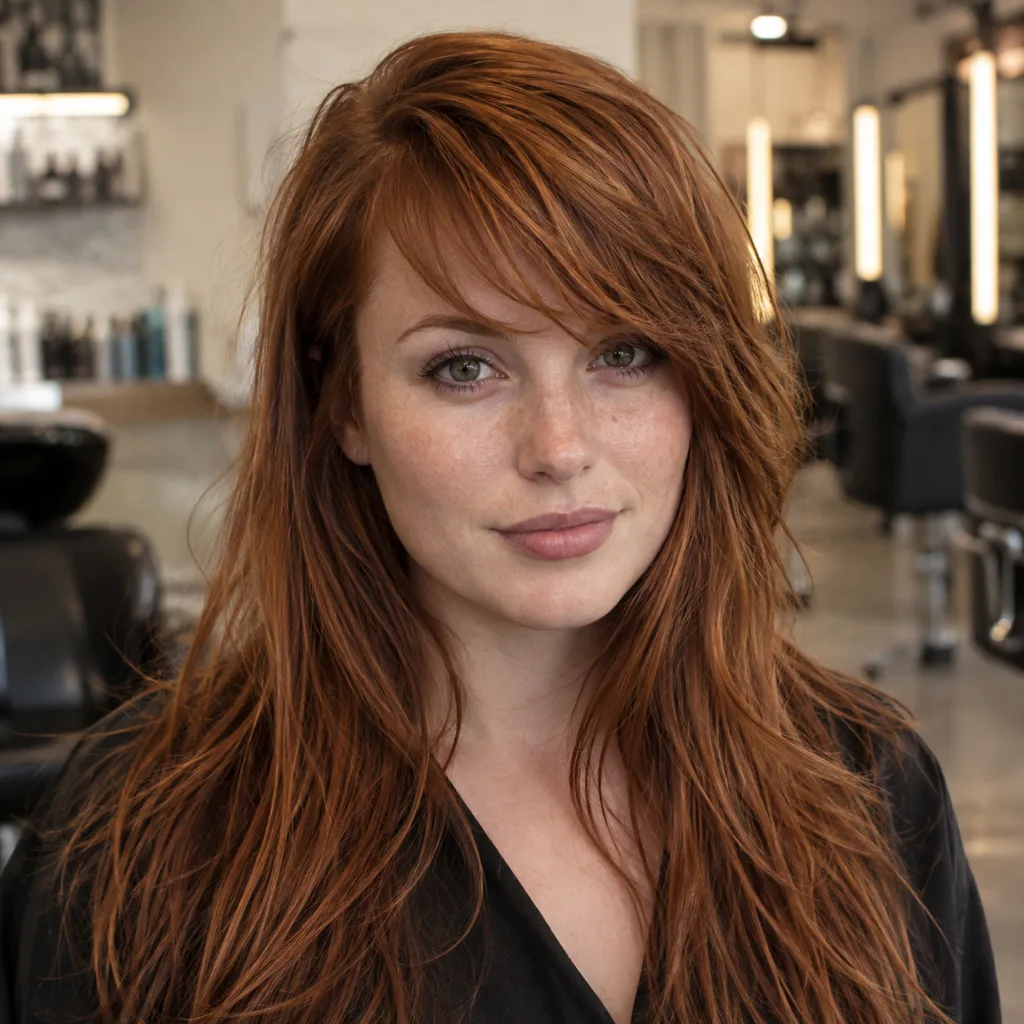 Try this on me
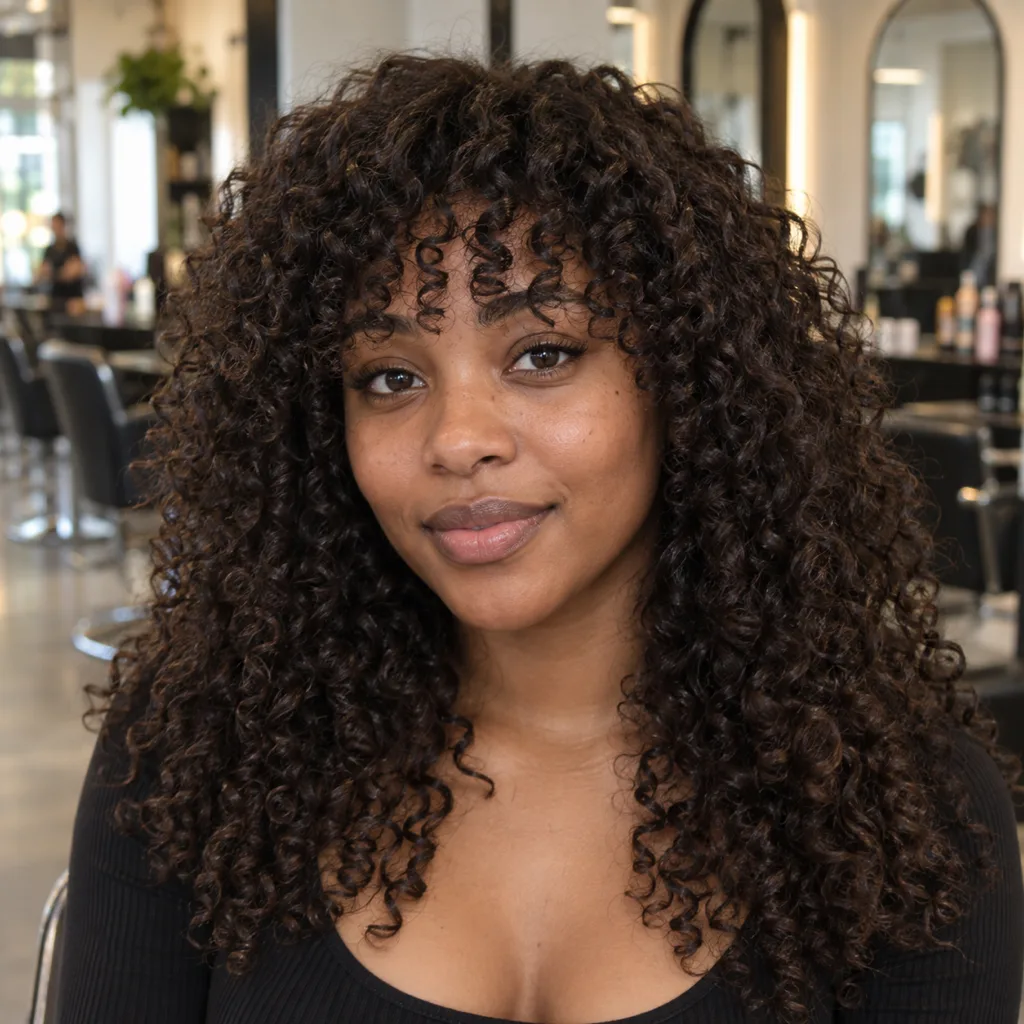 Try this on me
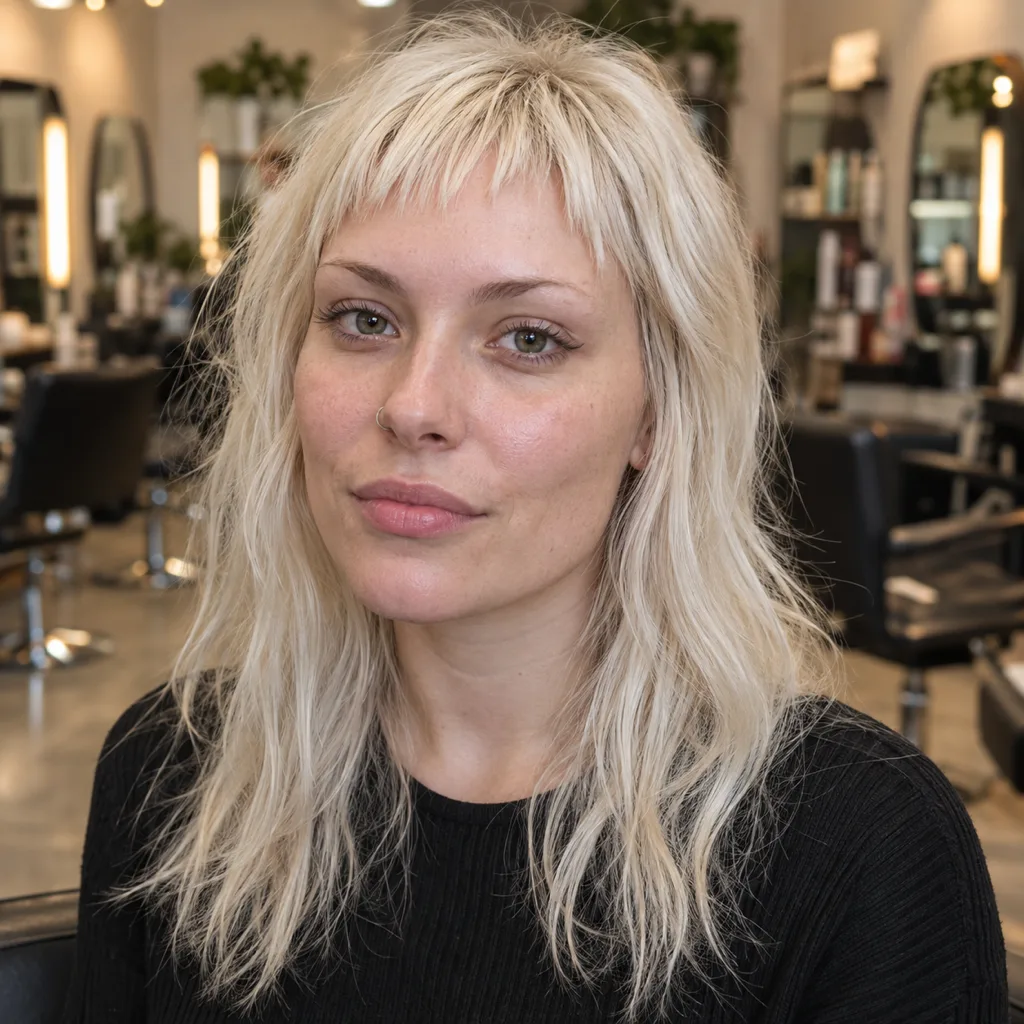 Try this on me
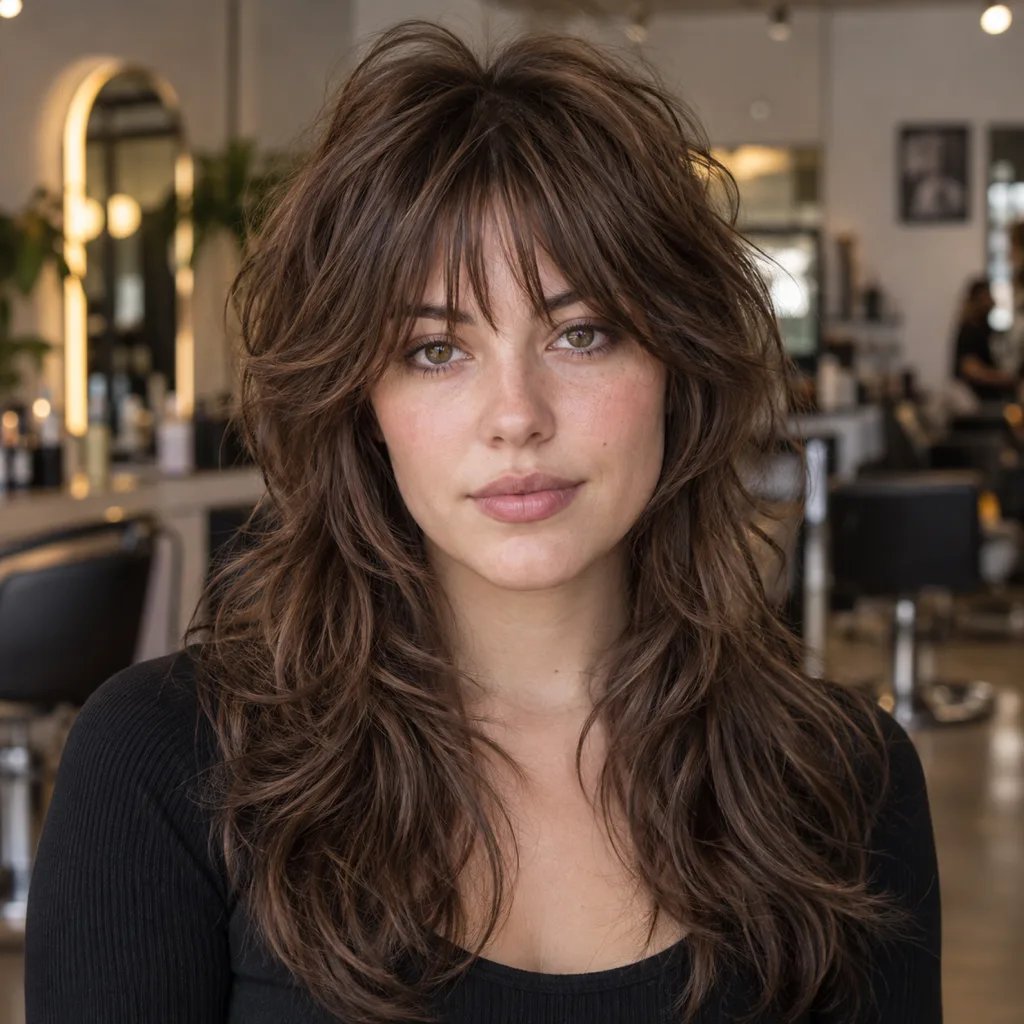 Try this on me
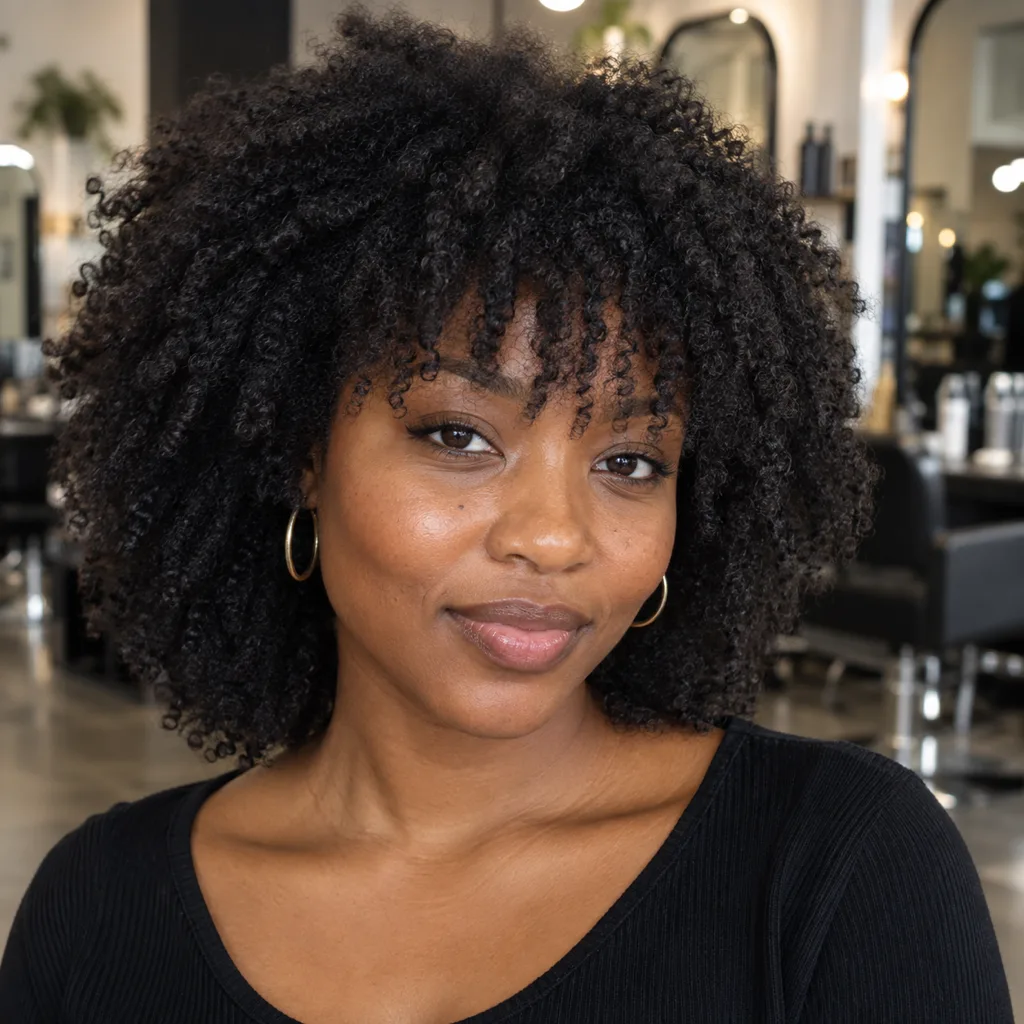 Try this on me
 Yours could be here.
Start with one selfie.
One photo, twenty seconds, and you'll know. Free account, no card for your first render.

Which Messy Bangs Suit Your Face Shape
Face shape does not decide whether you can have bangs. It decides which direction the fringe should travel. A fringe that runs straight across adds width at the cheekbones; a fringe that splits and sweeps down adds length. Pick the one that pushes against your face shape rather than agreeing with it.
| Face shape | Best messy bang | Avoid | Why |
|---|---|---|---|
| Round | Curtain or bottleneck | Blunt full fringe at the brow | Splitting the fringe opens the center and pulls the eye down the face |
| Oval | Any of them | Nothing in particular | The only shape with no correction to make |
| Square | Wispy or side-swept | Micro fringe | Soft diagonal pieces break up a strong jaw and hairline |
| Heart | Shaggy or curtain, longest at the cheekbones | Micro fringe | Weight low down balances a wider forehead |
| Long | Blunt-weight fringe worn undone | Curtain | A full fringe across the brow shortens the visible face |
| Diamond | Bottleneck | Heavy straight-across fringe | Narrow in the middle, wide at the corners, which softens the cheekbones |
If you are not sure which one you have, measure it rather than guess.
Measure it instead of guessing
Both numbers in the same unit — the answer is a ratio, so it does not matter which.
Under 1.15 reads round, 1.15 to 1.5 reads oval, over 1.5 reads long. Oval and long split on the jaw rather than the ratio: an oval tapers toward the chin, a long face runs straight down.
Your Hair Type Changes the Answer
Face shape gets all the attention, but texture decides whether a messy fringe will behave at all.
Fine and straight
Fine hair separates on its own, which means you are already halfway there and the risk is going too far. Ask for the least point-cutting of anyone in this article and skip the thinning entirely. A short fringe on fine hair will sit flat by lunchtime, so keep it at or below the brow where the weight helps.
Thick and coarse
Thick hair fights a fringe by pushing it forward off the forehead. You need weight removed, but from underneath the fringe rather than through it: ask for the internal layer to be shortened slightly so the top sits down. A wider fringe section also helps, because a narrow one on thick hair turns into a wedge.
Wavy
Waves give you free mess, which is why loose 2a waves look good with almost any fringe shape. Cut it dry if your stylist will, because a wave shrinks up around half an inch when it dries and a wet cut will land short.
Curly and coily
Curl pattern beats fringe shape here. Tight ringlets need the fringe shaped rather than cut to a line, and shrinkage means you cut it long and let it spring. 3c curls hold a curly fringe well with almost no styling. For 4c hair, a fringe is picked forward and shaped rather than scissored into a fringe line at all.
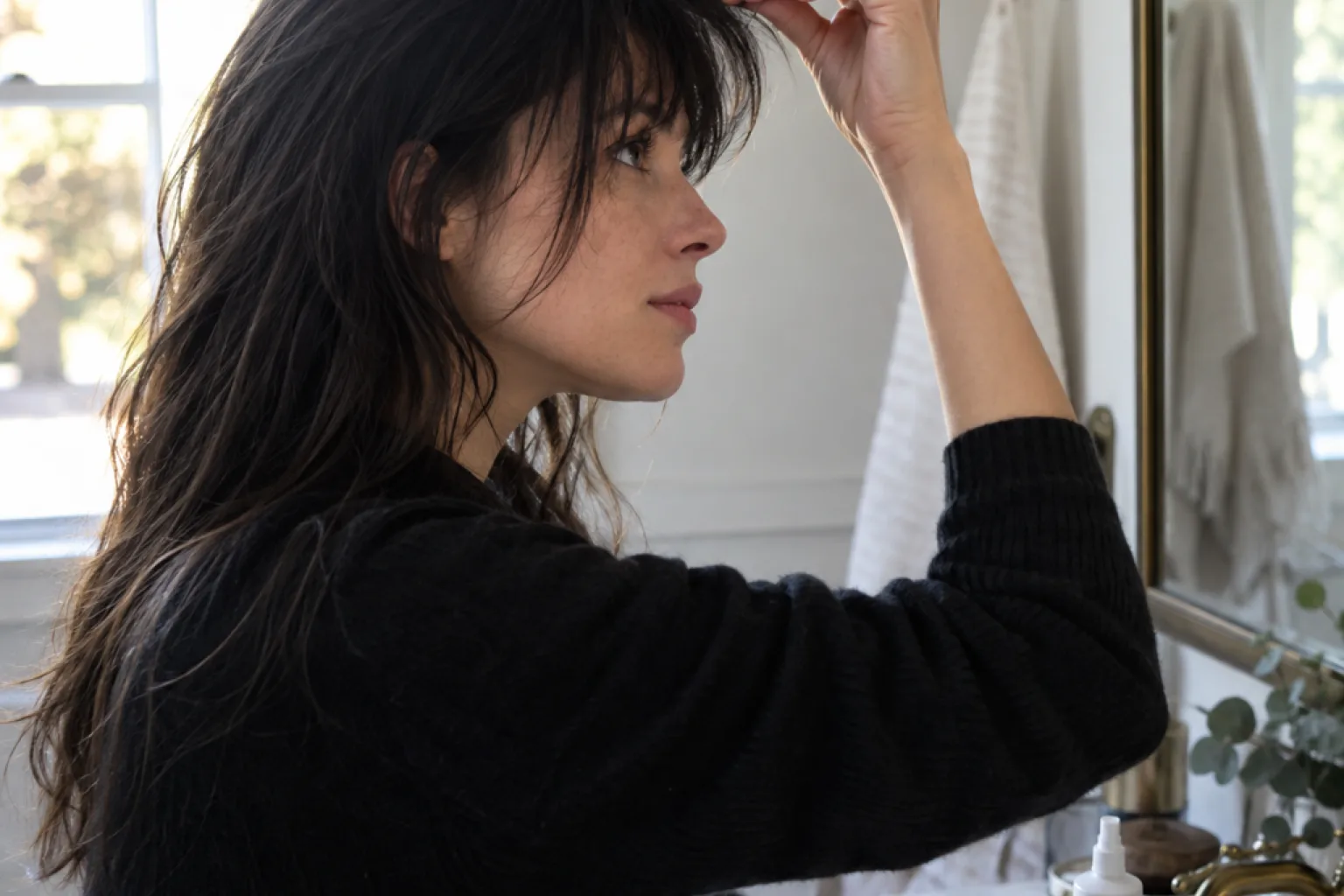
How to Style Messy Bangs in Four Minutes
The hardest day for messy bangs is the day you wash them. Clean hair is slippery, has no grip, and falls into a curtain. Everything below is about putting grip back.
How to style messy bangs
- Wash only the fringe
Bangs collect forehead oil faster than the rest of your hair, so rinse just the fringe under the tap on the days between washes. Two minutes at the sink beats washing your whole head and losing the texture in the length.
- Rough dry it forward, then back
Point the dryer at the roots of the fringe and push the hair forward with your fingers, then sweep it back the other way. Alternating directions is what stops it lying in one flat sheet. Ten seconds each way is enough.
- Break it with your fingers, not a brush
A round brush sets a smooth curve, which is the opposite of what you want. Pinch small sections between finger and thumb and pull down so the ends separate.
- Add texture spray at the mid-lengths
Spray an inch or two above the ends, never at the roots and never at the tips. Roots go greasy looking, tips go crispy. The middle is where grip actually helps.
- Leave it alone
Every touch after this point flattens it. If it moves during the day, push it with the back of your hand rather than combing it.

Five Mistakes That Turn Messy Into Unkempt
Thinning shears in the body of the fringe. Covered above, and still the number one cause. The short pieces it creates take a season to grow out and there is no styling fix in the meantime.
Cutting wet without allowing for shrink. Hair lifts as it dries. Wavy and curly hair lifts a lot. A fringe cut at the eyebrow while wet will sit an inch above it by the time you leave.
A fringe section that is too wide. The fringe should be taken from a triangle roughly between the outer edges of your eyebrows. Go wider and you start pulling hair from the sides, which leaves a gap behind the fringe and wrecks your ponytail.
Dry shampoo as texture spray. Dry shampoo absorbs oil and leaves a powder that dulls and stiffens the fringe. Texture spray adds salt and grip. They feel similar in the can and do opposite things on the hair.
Trimming it yourself with the hair pulled flat. Pulling down and cutting straight across gives you a shorter middle than edges, because your forehead is curved. If you must trim at home, cut with the hair held forward and the scissors pointing up into the ends.

Growing Messy Bangs Out Without the Awkward Stage
Messy bangs grow out better than almost any other fringe, because the point-cut ends already blend rather than sitting as a shelf. The trick is to stop cutting the length and start cutting the corners. Once the fringe reaches your cheekbones, have the outer edges trimmed on a diagonal so they run into the hair at the sides. It becomes side bangs for a month or two, then face-framing layers, and then it is gone without you ever having a bad week.
If you want to go further and make the grow-out into a whole cut, this is the natural moment to move to a shag, a layered bob or a shoulder length cut that treats the old fringe as the shortest face-framing layer.
Can You See It On Yourself First, and Is That Free?
Yes, and the first look costs nothing. Hairstyle Atlas gives you one free try-on with no card: upload a selfie, pick a cut, see the result on your own face and hairline. Paid plans start at $9 a month if you want more looks, color on top of a cut, and downloads without a watermark. Length, bangs and part changes do not cost extra credits, so trying the fringe at three different lengths on one cut is a single render.
That matters more with bangs than with any other cut, because bangs are the one decision you cannot undo the next morning. Everything else grows back in a month without anyone noticing.
The Short Version
Ask for weight kept and ends point-cut. Refuse thinning shears anywhere in the body of the fringe. Start below the brow and go shorter on the second visit, not the first. Pick the direction the fringe travels based on your face shape, and pick the length based on your texture. Then leave it alone, because the whole point of messy bangs is that they look better when you stop working on them.
If you are still deciding between a fringe and no fringe, browse the rest of the long hair guides first. Bangs are a three month commitment; the rest of your hair is not.
Frequently asked questions
They go by several names depending on the shape. The broad category is a textured or piecey fringe. Specific versions have their own names: curtain bangs split down the middle, bottleneck bangs narrow in the center and flare at the corners, wispy bangs are the finest version, and shaggy bangs come attached to a layered shag. A stylist will understand "point-cut, no thinning shears" faster than any of those names.
Rough dry the fringe forward and then back with your fingers, pinch small sections at the ends to separate them, and spray texture spray an inch above the tips. If it still falls into a flat curtain, the problem is the cut rather than the styling, and no product will fix a solid blunt edge.
Most stylists sort bangs by the direction they travel: straight across, swept to one side, and split in the center. Everything else, including messy bangs, is a variation on one of those three with a different length or finish. Messy is a finish, not a fourth direction, which is why it can be applied to all three.
Softer bangs usually read younger, and hard geometric ones usually do not. A wispy or curtain fringe covers forehead lines and draws attention to the eyes. A heavy blunt fringe cut straight across at the brow creates a strong horizontal line that emphasizes the lines it sits near. The messy versions in this article are on the softer side of that split.
Curtain and wispy bangs, for the same reason. They break up the forehead without creating a hard edge, and they keep movement near the face. Keep them long enough to reach the cheekbones and the effect is stronger, because the hair frames rather than covers.
Waterfall bangs are a long, layered fringe cut so it cascades down past the cheekbones with no clear stopping point, blending into the length behind it. They sit between curtain bangs and face-framing layers. They are a good choice if you want the look of a fringe with a grow-out you barely notice.
Butterfly bangs are a curtain fringe cut in two lengths: a shorter inner section around the cheekbone and a longer outer section that blends into the layers, so the two pieces flare away from each other like wings. They need enough thickness to keep both lengths visible, so fine hair tends to lose the effect.
No, though the shape in demand has moved. The blunt, heavy, straight-across fringe of the early 2020s has given way to softer point-cut versions that separate and move, which is exactly what this article is about. The fringe itself is not going anywhere; the hard line is.
Preview it on your own photo: Virtual Hair Color Try-On.
Share article
About the author
More articles
Women's Haircuts · 14 min
Bleached Hair: How Light Yours Can Go, 14 Shades, Aftercare
How light your bleached hair can go depends on where it starts. See 14 bleached shades on one cut, what each starting color can reach in one session, how toner finishes the job, and the aftercare that keeps it soft.
Women's Haircuts · 16 min
Waves Hair: How to Get Beach, Loose and Hollywood Waves That Last
Waves hair is about what you leave straight. How to get beach, loose, Hollywood and heatless waves, which wave suits your hair type, and why your waves keep falling out.
Women's Haircuts · 15 min
Fino Hair Mask: Who It Suits, How to Use It, and Its Limit
The Fino hair mask makes dry, bleached and frizzy hair smooth and shiny in one use, mostly by coating it. Here is what is in the jar, which hair types it suits, exactly how to use it, and what to do when the ends are past a mask.