Fluffy Hair: The 3 Inch Rule Most Guys Get Wrong
Oleh Onysko 13 September 2026 16 min read
In this article
Fluffy hair is a haircut before it is a styling job. Three to four inches left on top, weight point-cut out of the interior so the mass gets lighter without getting shorter, and sides tapered low instead of faded high. Get those three right and a hairdryer plus thirty seconds of cold air does the rest.
Get them wrong and nothing fixes it. Not mousse, not texture powder, not sea salt spray. A two-inch top cannot fluff because it has nowhere to bend. A six-inch top cannot fluff because its own weight beats the lift at the root. Most fluffy hair advice sells you a product for a problem your barber created.
So this guide runs in that order: the length window, the taper that holds it up, the sentence to say in the chair, the eight-minute routine, and what changes for straight, wavy, curly and coily hair.
What is fluffy hair?
Fluffy hair is hair that lifts away from the scalp at the root and moves as one soft mass. Not spikes, not separated strands, not a helmet. Tilt your head and the whole top shifts, then settles back.
Three things make that happen, in this order:
- Length. Enough that the hair bends over instead of standing straight up.
- Interior weight removal. Point-cutting inside the section, so the ends get lighter while the outline stays the same length.
- A supported base. The sides have to stay long enough to hold the top up from underneath.
Product is the fourth thing and the smallest of the four. If your cut is right, mousse adds maybe fifteen percent. If your cut is wrong, mousse adds nothing.
The 3 to 4 inch window
This is the number nobody puts in the headline. Fluffy lives between about three and four inches on top, measured at the front.
Under two and a half inches, hair is too stiff to fall. It stands up and reads as spiky or as a flat brush, depending on your hair type, but it will not round over. Past about five inches, the strand is heavy enough that gravity wins at the root, and you get length instead of volume. That is the mistake most guys make when they try to grow into fluffy hair: they keep going, it keeps getting flatter, and they conclude their hair "cannot do it".
The pull test. Pull a strand at the very front straight down toward your eyebrow. If the end lands somewhere between the middle of your eyebrow and just below it, you are in the window. Above the brow is too short. On the cheekbone is too long, and that is medium length territory rather than fluffy.
Starting from a buzz, that window is roughly six to eight months of growing, and the middle four months look worse than the start. Plan for it.
Why the taper matters more than the fade
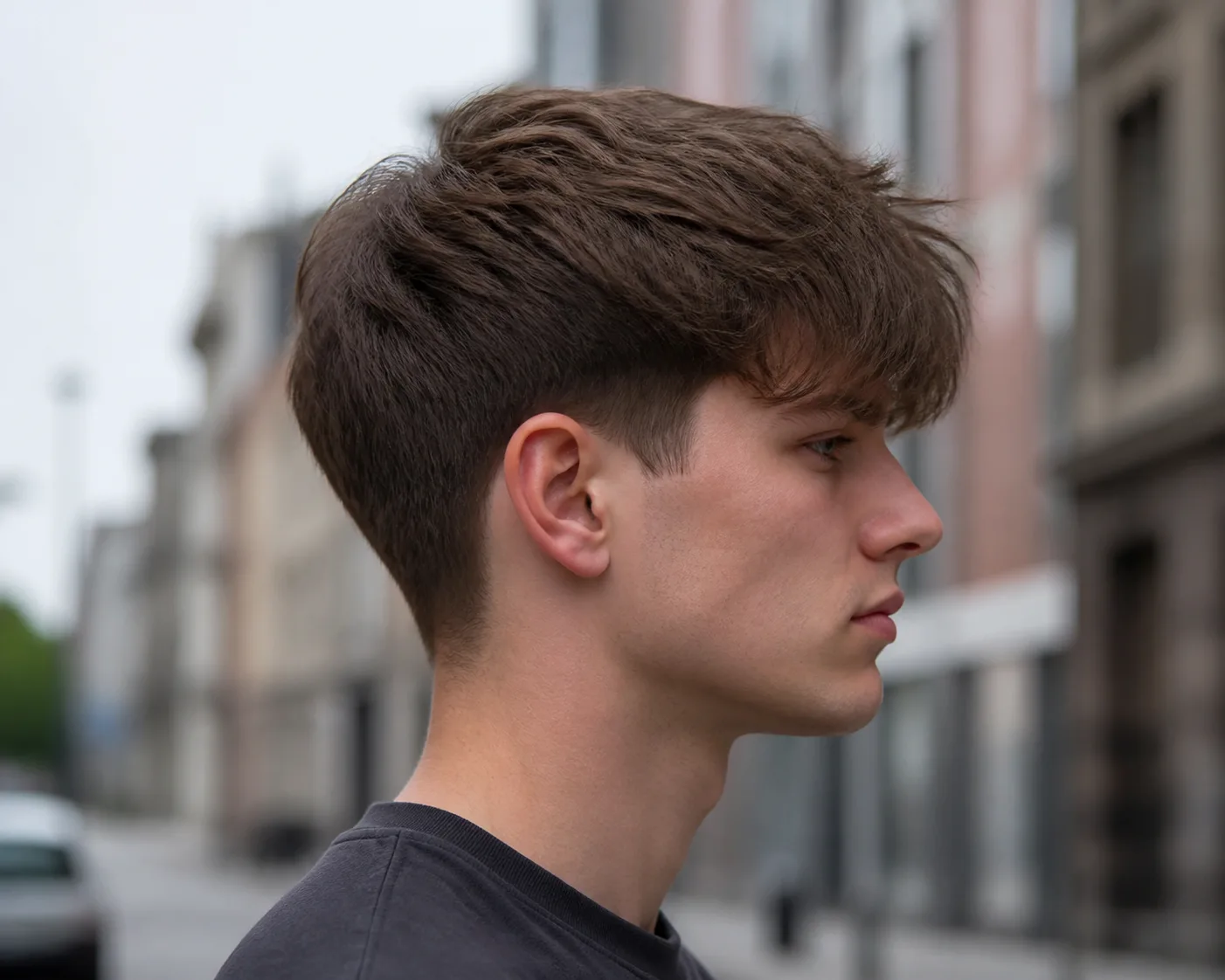
A high skin fade takes the hair off the side of the head above the ear. That hair was doing a job: it propped up the underside of the top section. Take it away and the top has no base, so it sits like a cap on a mushroom, and the fluff turns into a floating disc with a hard edge underneath it.
A low taper does the opposite. The shortest point sits just above the ear and just behind the temple, the hair gets gradually longer as it climbs, and the weight stays below the parietal ridge. The top has something to sit on, so it lifts instead of hanging.
If you want the sides tighter than that, go to a mid taper and stop. Anything higher and you are choosing a different haircut, which is fine, but it is not this one.

What to ask your barber for
Bring a photo. Then say this, which is more useful than the photo:
Say this to your barber
Leave three to four inches on top and point-cut through the interior to take the weight out without losing length. Taper the sides low with scissors, shortest just above the ear, no skin and no hard line, and keep the weight below the parietal ridge so the top has something to sit on.
The phrase that does the work is "take weight out of the interior". Say "thin it out" and a lot of barbers reach for thinning shears at the ends, which makes the ends wispy and the fluff worse. Interior weight removal is a different cut.
How to style fluffy hair in 8 minutes
The routine matters less than the cut, but it is not nothing. Four minutes of it is just drying.
How to style fluffy hair
- Wash, then get it to damp
Wash with a light shampoo and keep conditioner on the ends only, never the roots. Towel it until it is damp rather than wet. Soaking hair takes a heat blast to move and that is where damage comes from.
- Mousse at the root, a pea of it
A pea-sized amount of mousse, worked from root through mid-length with your fingertips. Mousse beats wax here because it dries hard and light instead of staying heavy and soft.
- Rough dry with your head upside down
Flip forward, medium heat, and push your fingers through the roots against the direction the hair grows. Ninety seconds. You are not styling yet, you are breaking the root's memory of lying flat. The AAD recommends the lowest heat setting you can get away with, and for lift you genuinely do not need high.
- Flip up and dry forward
Stand up, aim the dryer at the roots from the back of the head forward, and use your fingers as a rake. This is what points the top forward into the fringe shape. Two minutes.
- Cold shot, twenty seconds
Switch the dryer to cold and go over the whole top. Cool air sets the shape you just made. Skip this and it collapses inside an hour, which is why your hair looks great in the bathroom and flat by lunch.
- Break it up with dry texture spray
A light mist of texture spray or a fingertip of texture powder at the roots. Then stop touching it. Fluffy hair is ruined by hands.
Fluffy hair by hair type
This is where the same advice stops working for everyone. Straight hair has to be made to fluff. Coily hair has to be shaped so it does not fluff in every direction at once.
| Hair type | How hard is fluffy? | The cut change | What to skip |
|---|---|---|---|
| Straight, 1a to 1c | Hardest | Stay at the short end, about 3 inches, and cut a heavier interior so it does not go limp | Conditioner at the roots, any cream product |
| Wavy, 2a to 2c | Easiest | The full 3 to 4 inches, heavy interior point-cutting | Brushing it dry, flat irons |
| Curly, 3a to 3c | Already fluffy, badly shaped | Cut dry, shape the outline, low taper to control the sides | Thinning shears, combing it out dry |
| Coily, 4a to 4c | Fluffy by default | A shaped sponge-twisted top with a taper, height on top | Trying to force a forward fringe |
Straight hair
Straight hair is the hard case and the most common search. The strand has no bend to hold air, so everything depends on the cut being light through the middle and on the cold shot at the end. Stay at three inches rather than four; the extra inch just adds weight you cannot lift.
If you have tried this twice and it still goes flat by midday, a soft perm is the honest answer rather than more product. A men's texture perm puts a loose bend in the strand, and the bend is what holds the volume when the dryer is gone.
Wavy hair
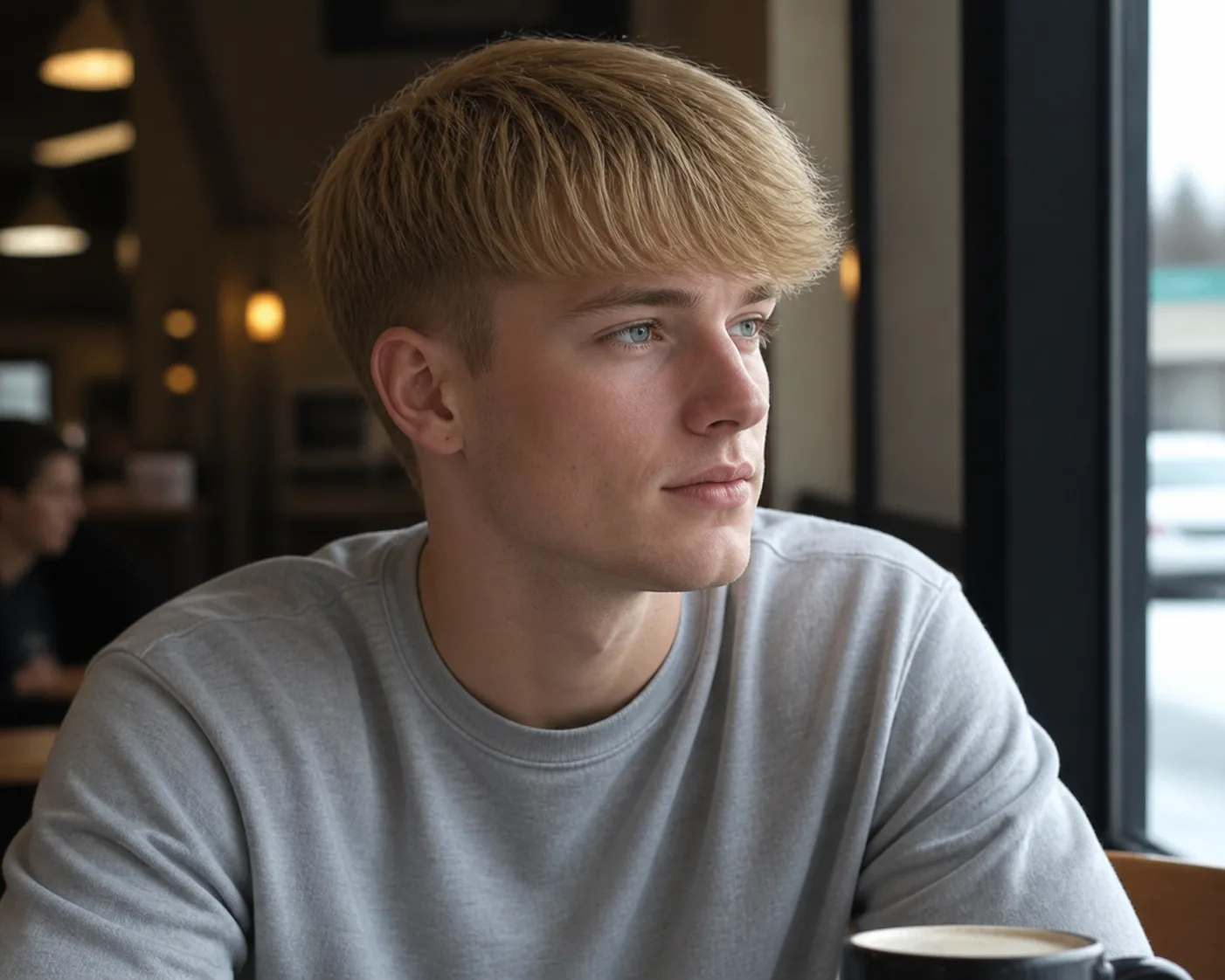
Wavy hair is the cheat code. The bend is already there, so the cut does almost all of it and the routine can be two minutes. Take the full four inches, ask for heavy interior point-cutting, and dry it about eighty percent and let the rest go on its own.
The one rule: no brush after it dries. A brush splits the wave pattern into frizz and you lose the mass.

Curly hair
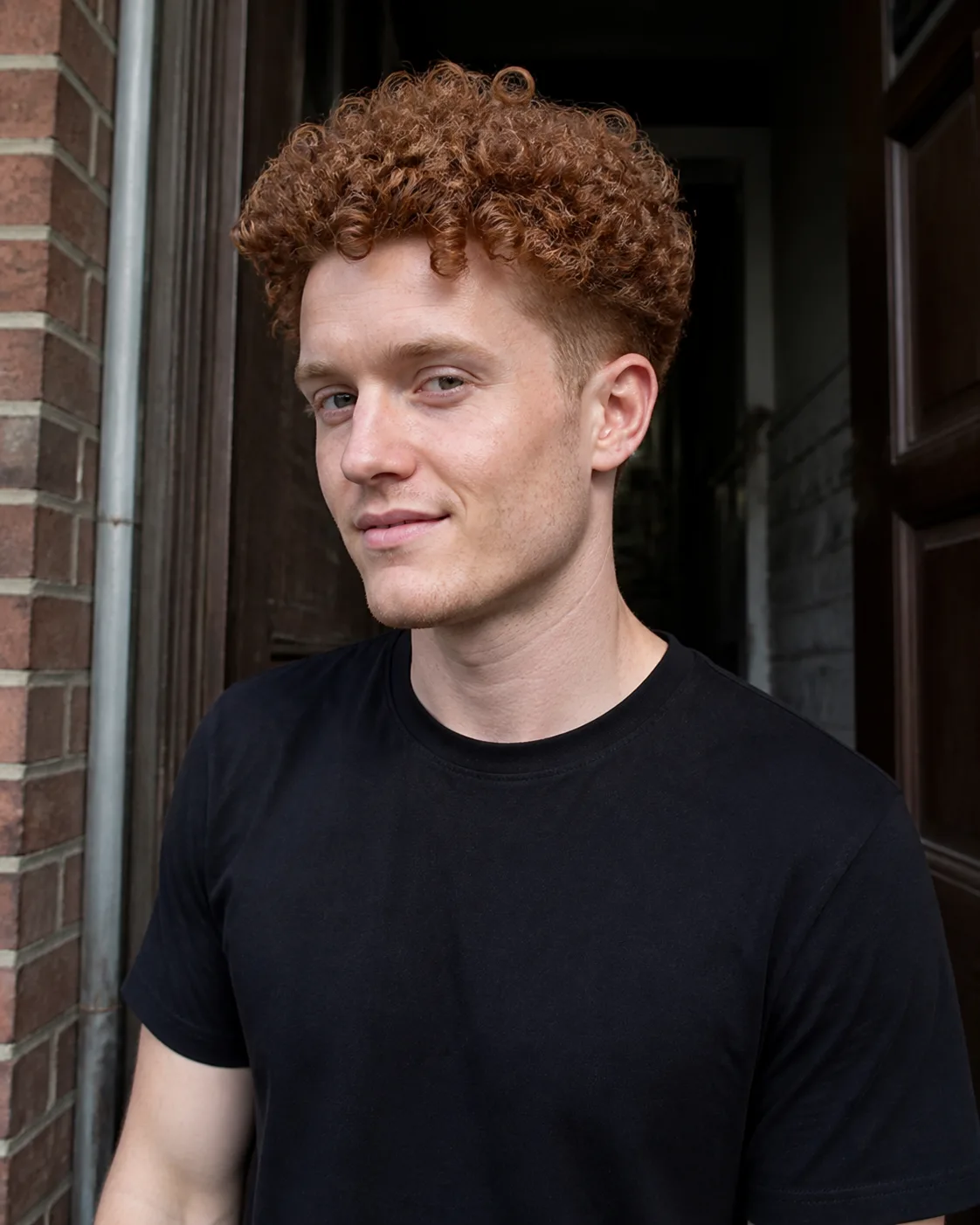
If your hair is curly you already have fluffy. Your problem is that it goes wide before it goes up, and the sides grow out instead of down. The fix is a dry cut so the stylist can see where each curl sits, a shaped outline, and a low taper to stop the sides mushrooming.
Length rules change here: measured stretched, curly hair wants four to five inches because it draws up. Our guide to curly haircuts for men goes deeper on the cutting method.
Coily hair
On 4a to 4c the question is never how to get volume. It is how to get a shape. A tapered top with height, edges kept soft rather than lined out hard, and sponge twists or a pick to open the coils.
Read the 4c hair guide for the moisture routine, because on coily hair a dry strand is what kills the shape, not a lack of lift.

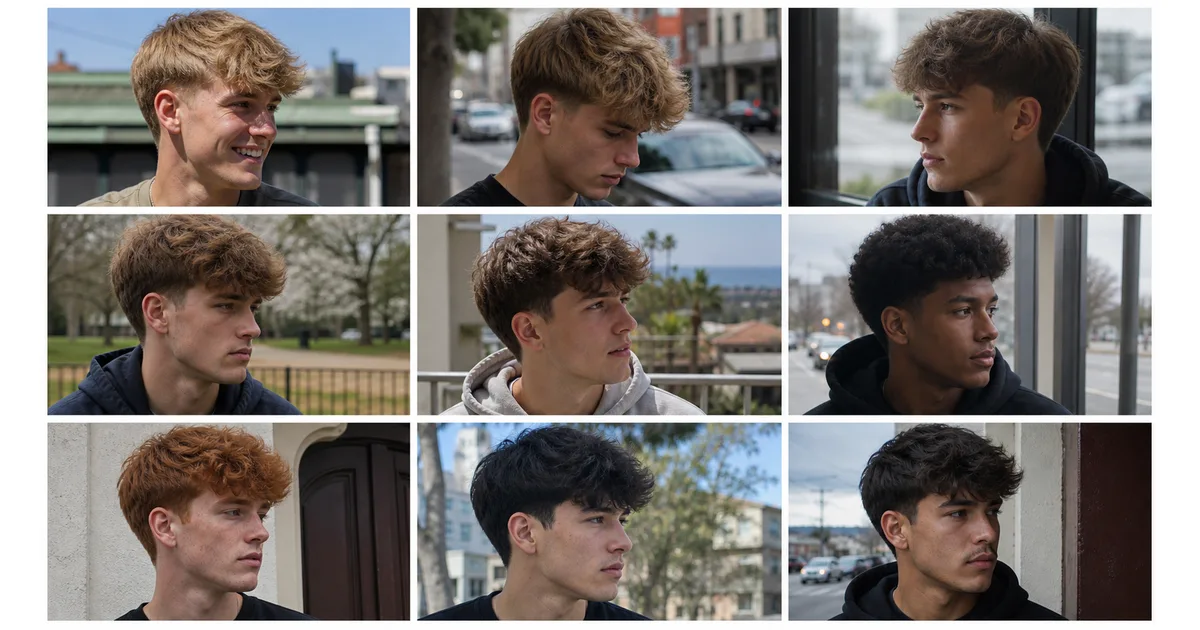
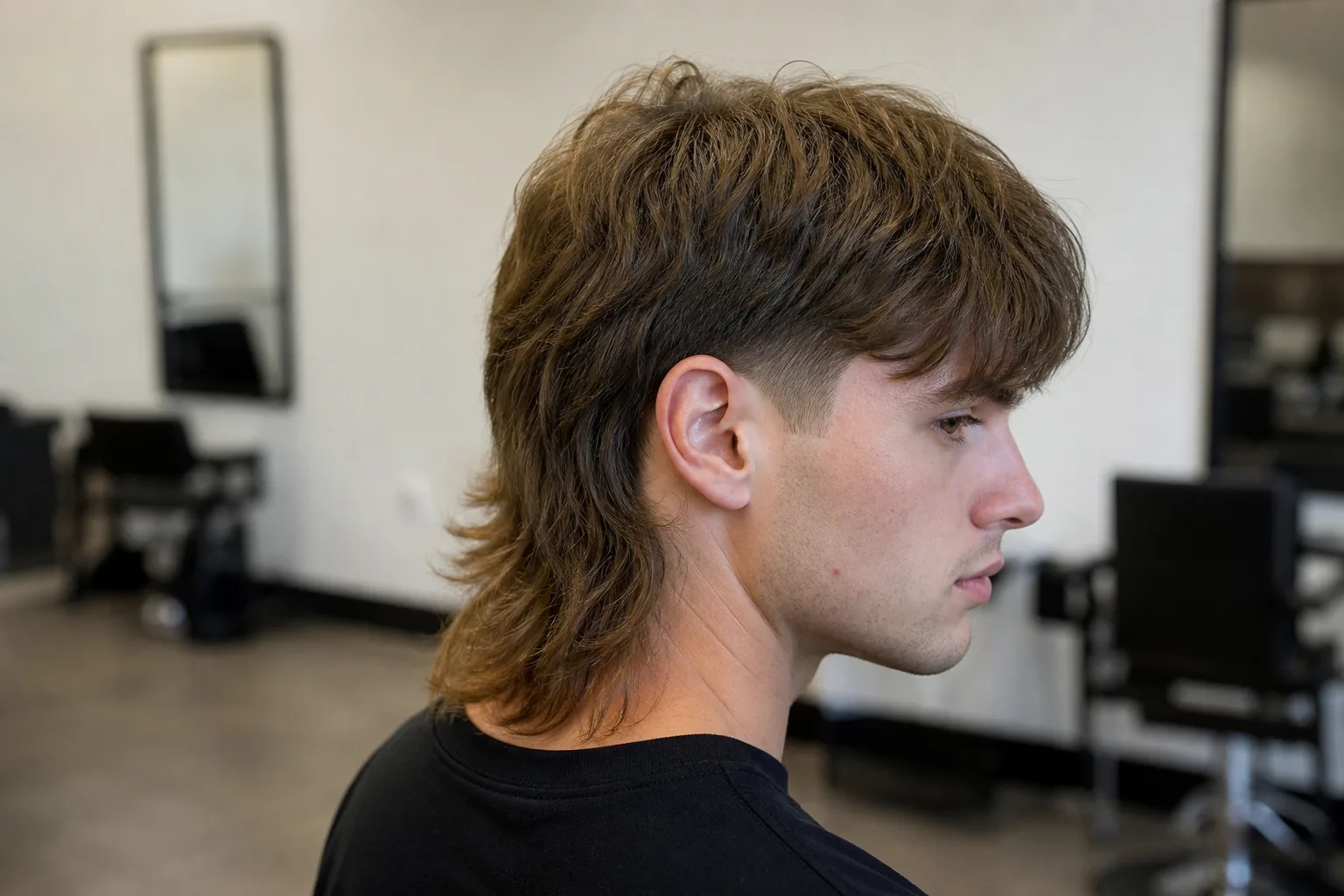
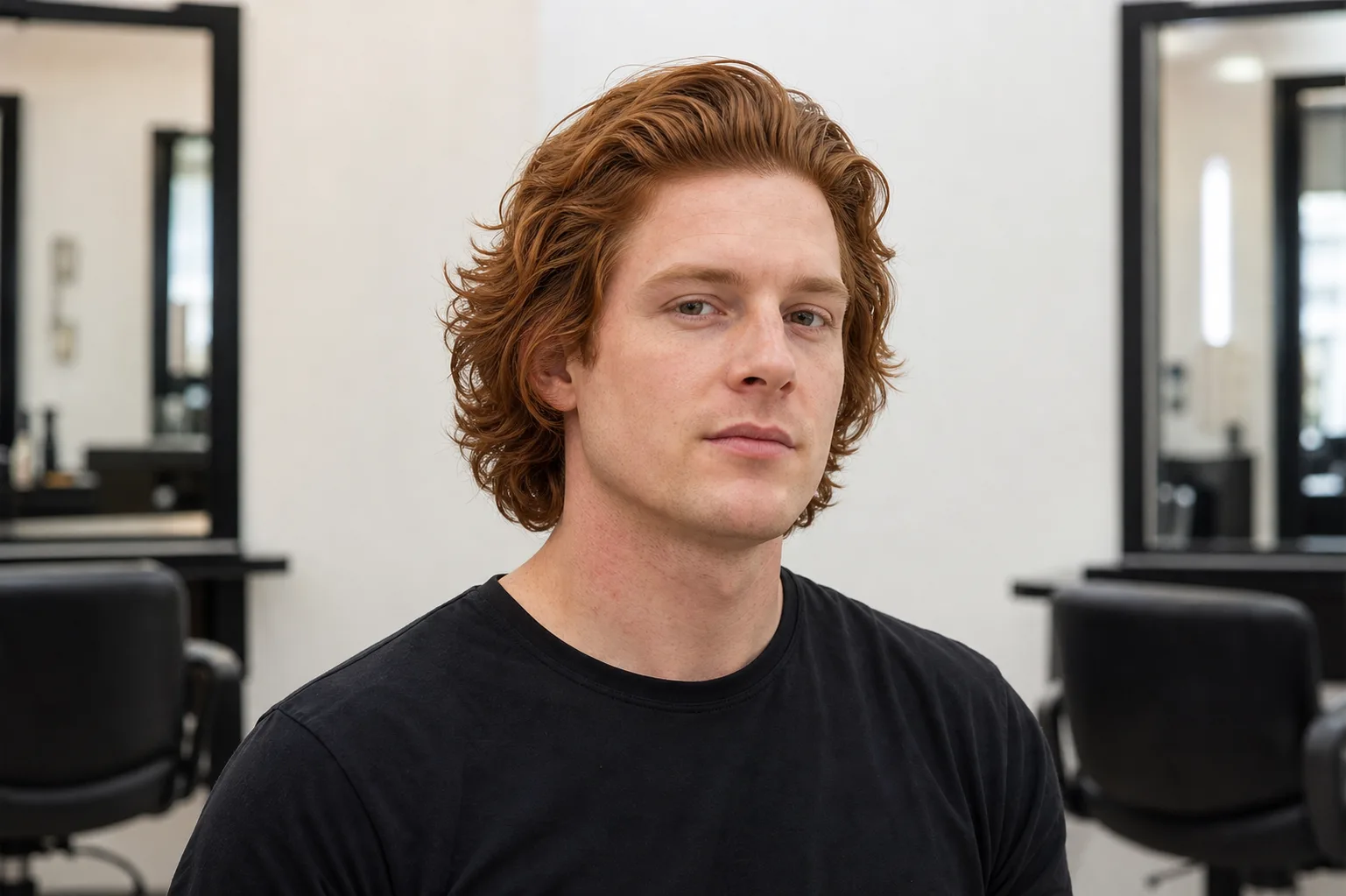
Ten fluffy cuts, shortest to longest
One thing changes across these ten: how much length is on top and how high the sides come up. Everything else is the same cut. Find the row you want and take it to the chair.
Gallery10 photos · tap to enlarge
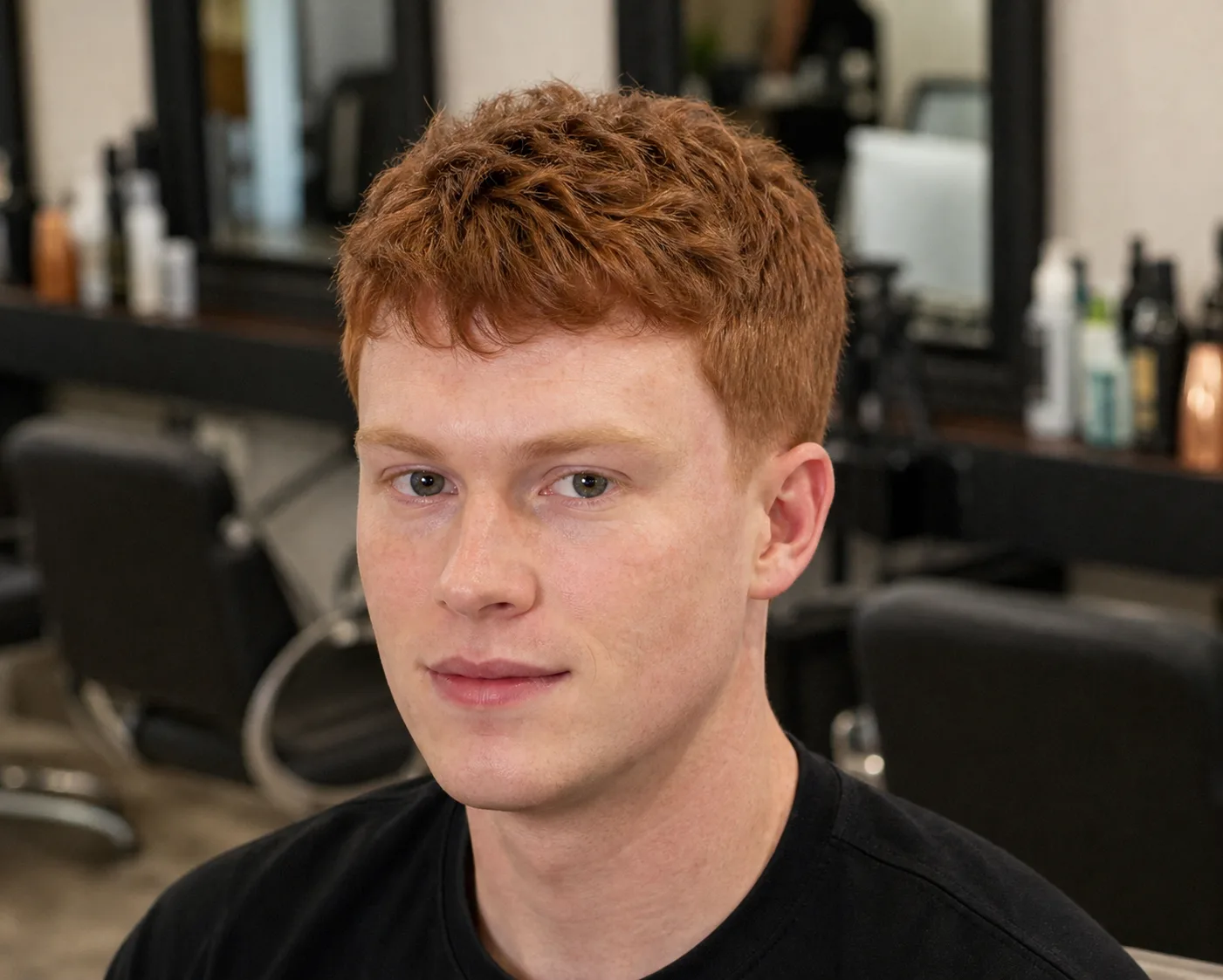 Try this on me
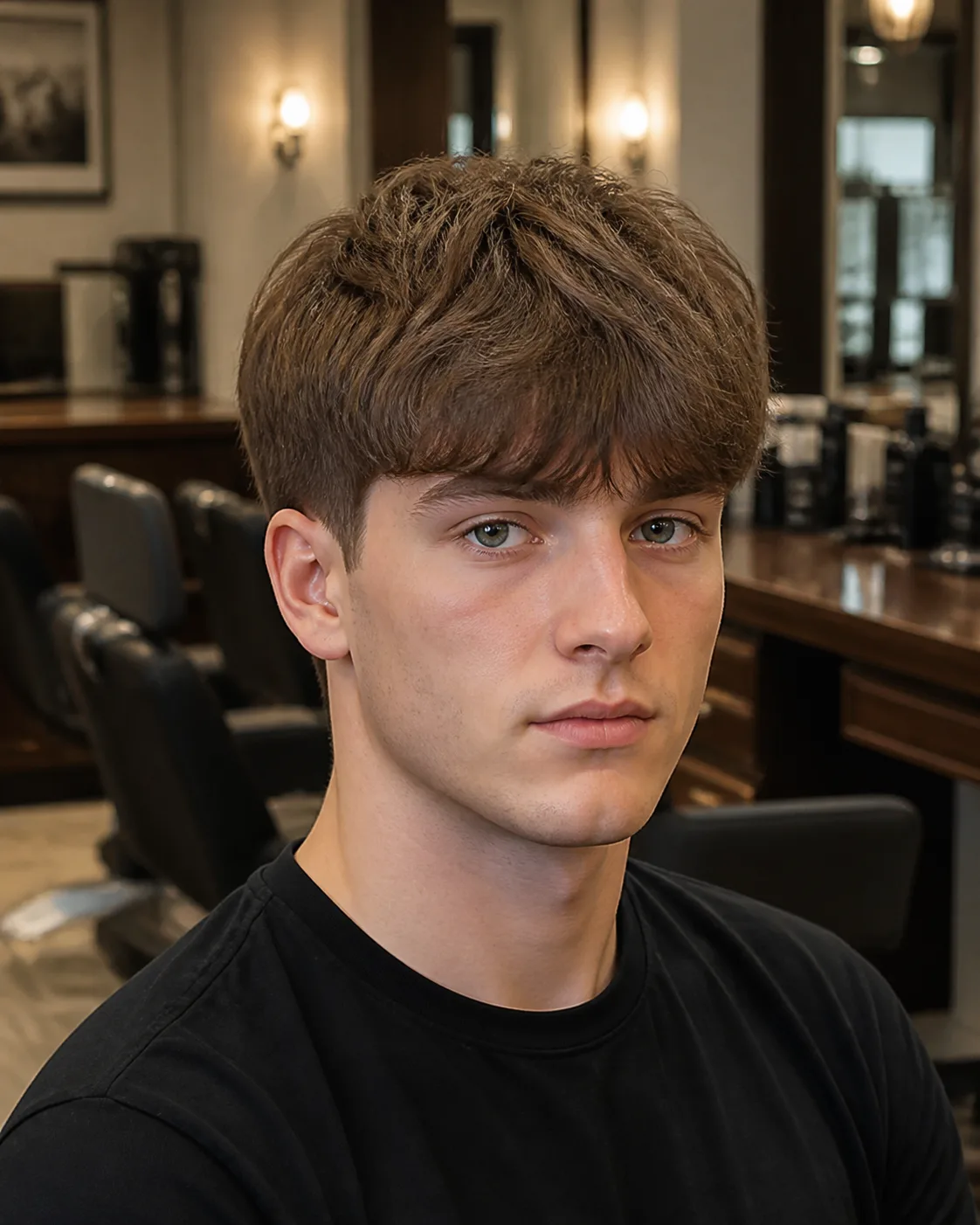 Try this on me
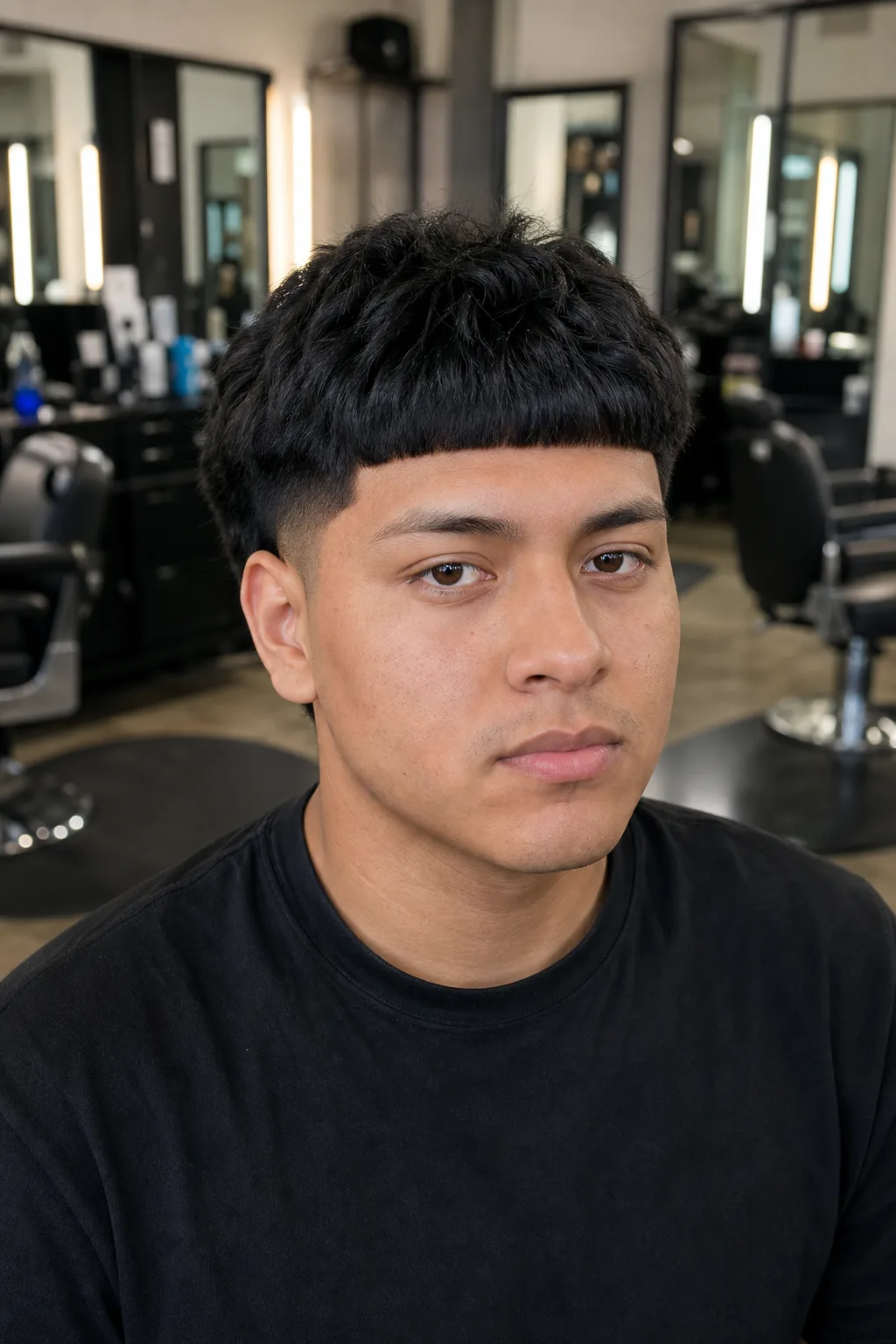 Try this on me
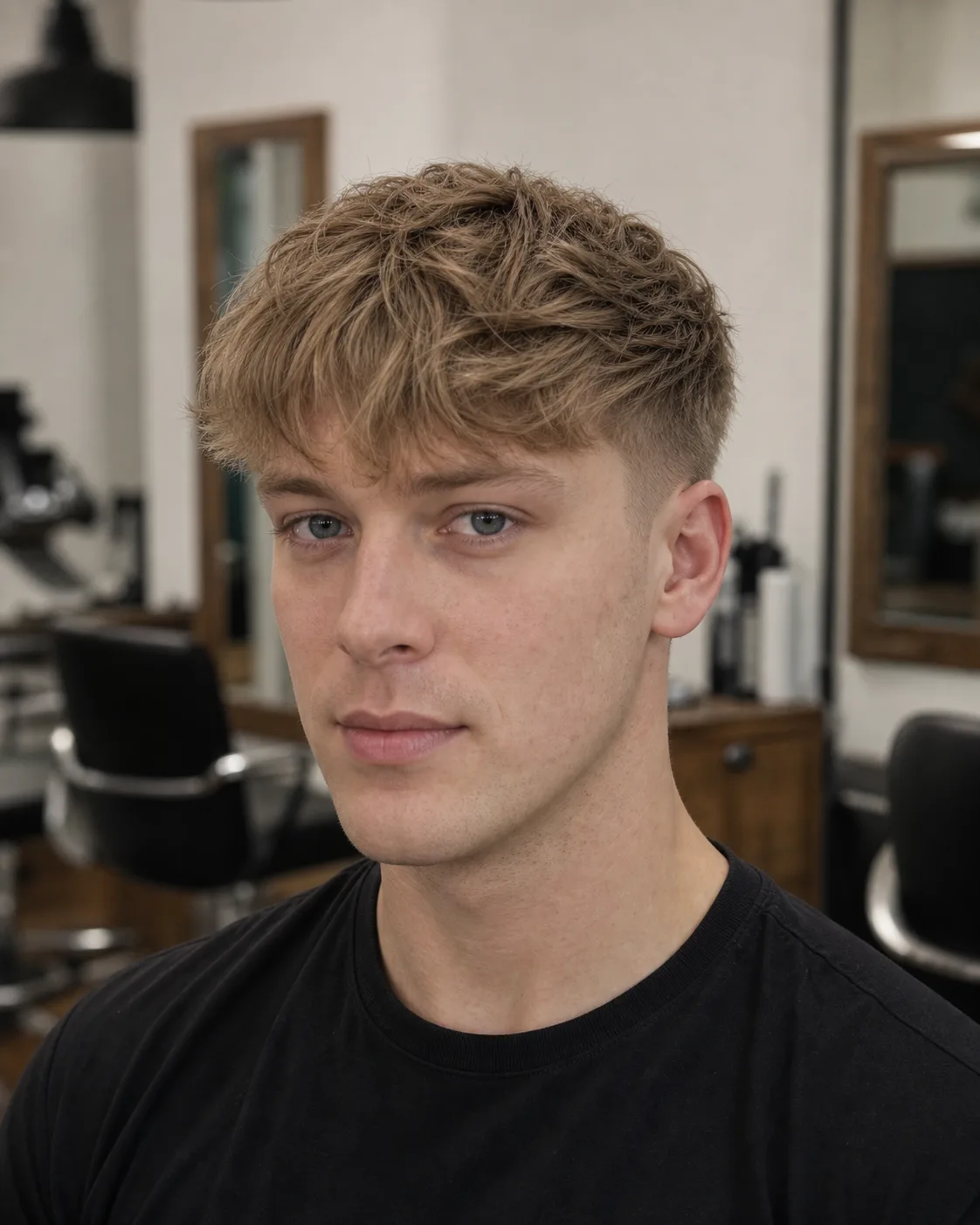 Try this on me
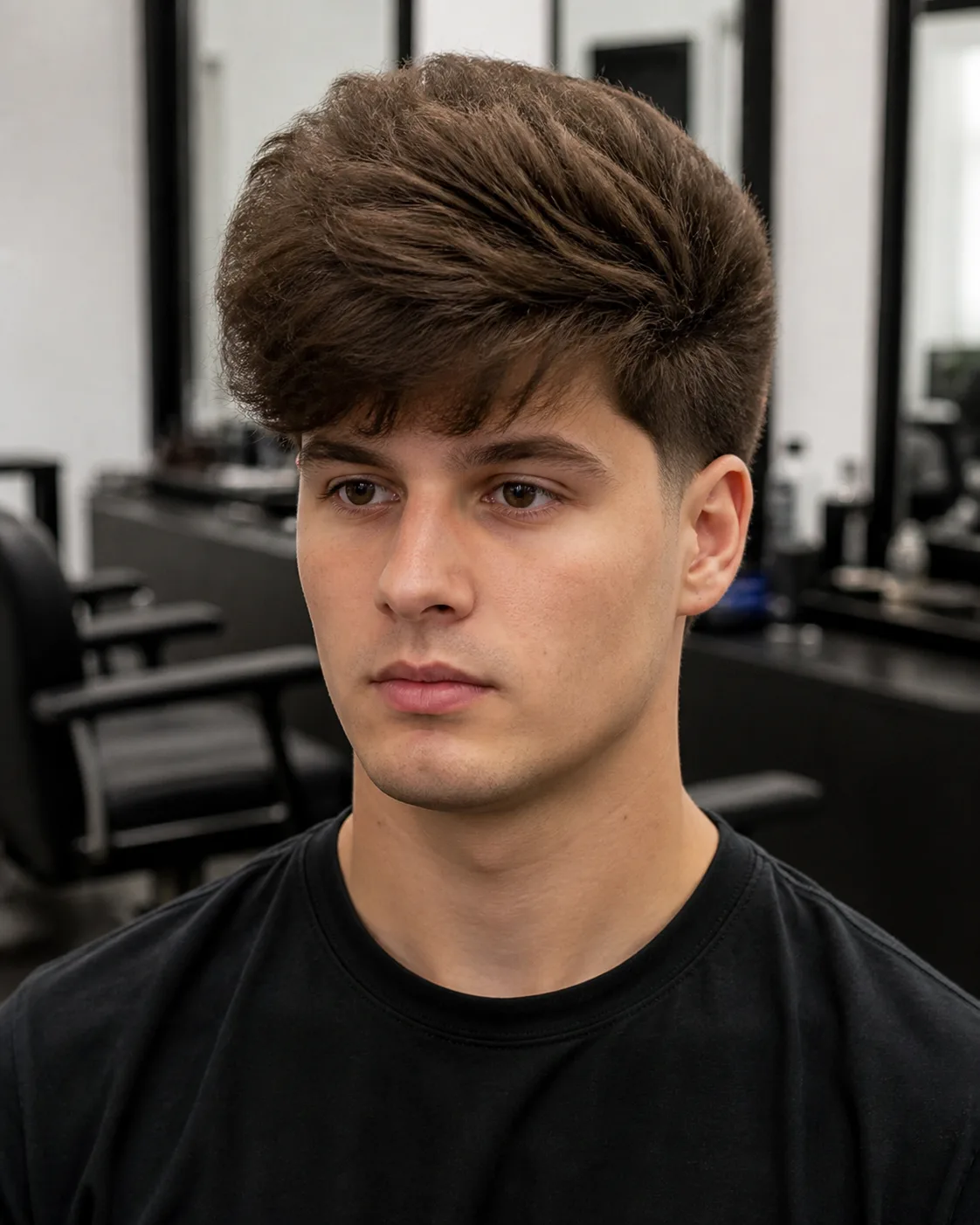 Try this on me
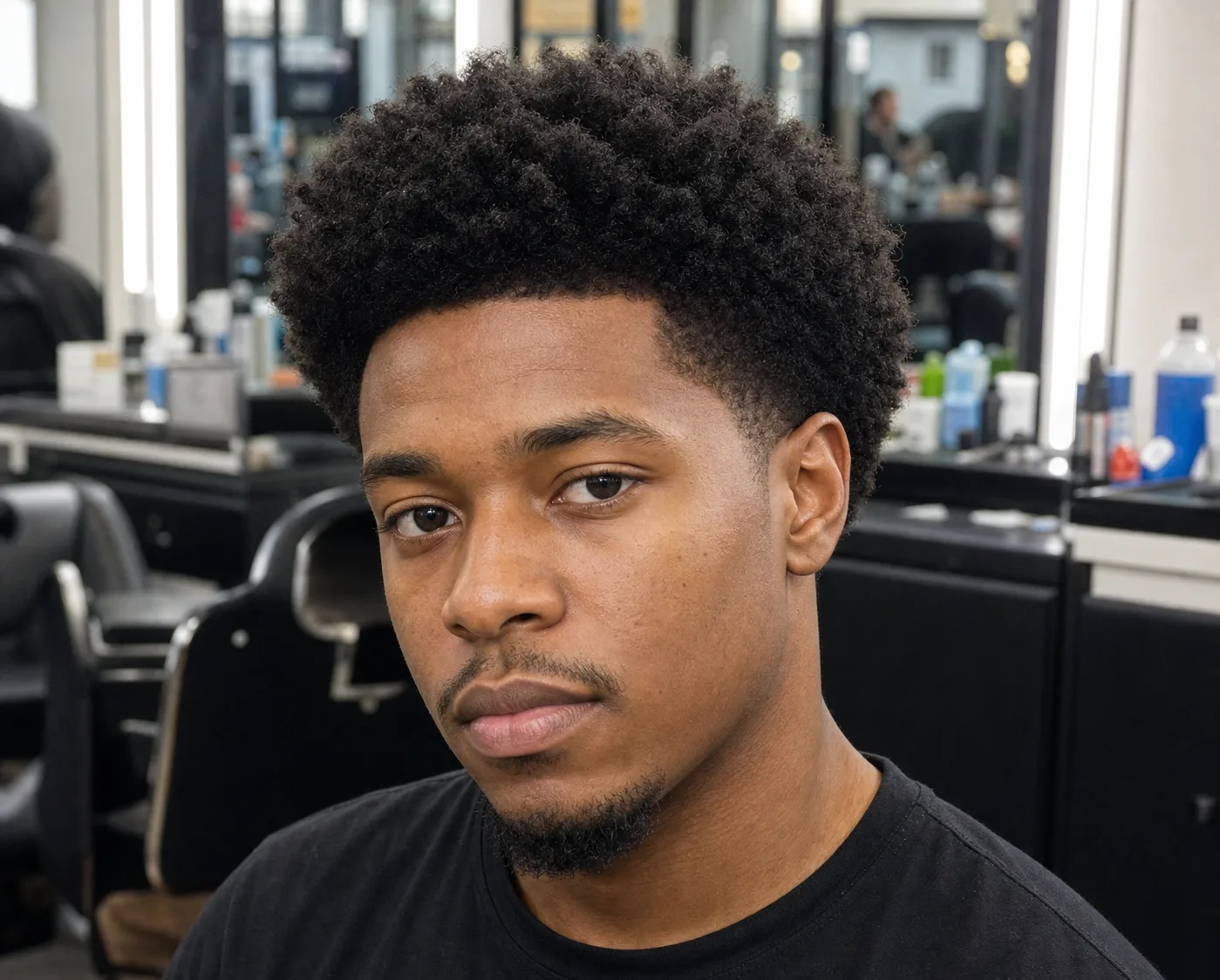 Try this on me
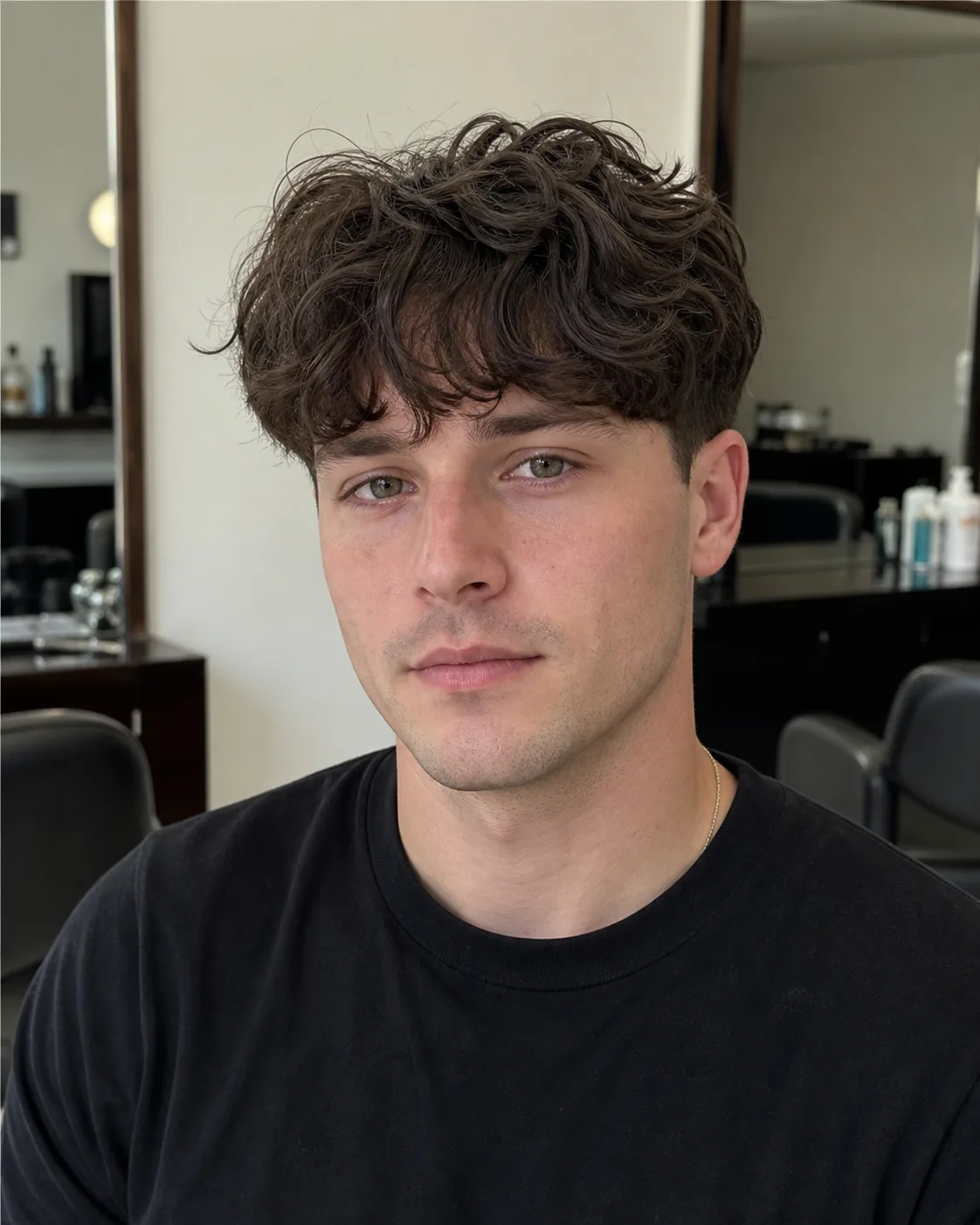 Try this on me
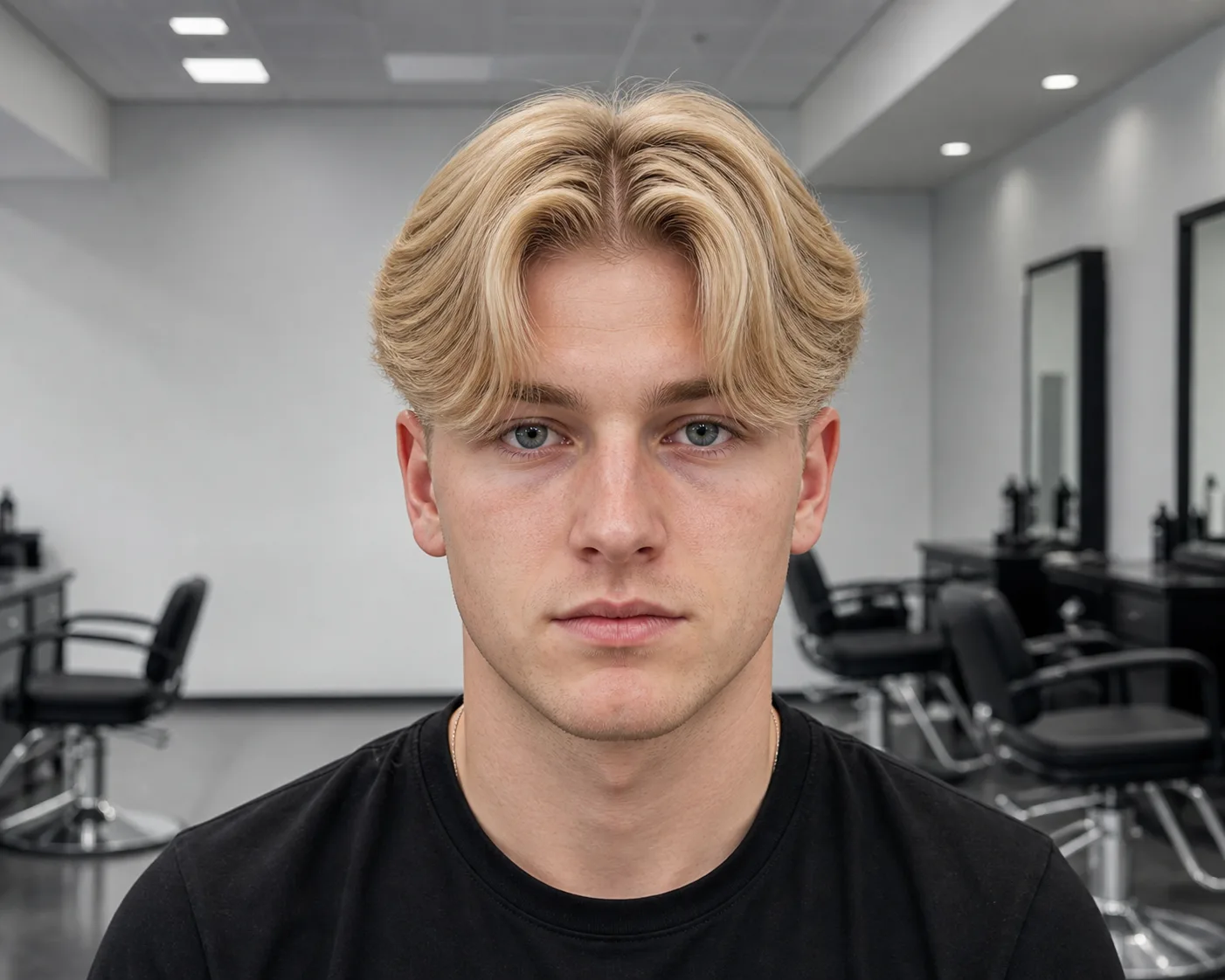 Try this on me
 Try this on me
 Try this on me
 Yours could be here.
Start with one selfie.
One photo, twenty seconds, and you'll know. Free account, no card for your first render.
The mistakes that flatten it
- Conditioner at the roots. It coats the shaft near the scalp and the hair lies down. Ends only, every time.
- Washing every day. Not because of oils, but because a daily blast of heat on the same hair wrecks the ends, and wispy ends will not hold a mass.
- Wax or pomade. Both are heavy and both stay soft. You want something that dries. Mousse, then dry texture spray.
- Going higher on the sides to "make the top look bigger". It makes the top look detached. The top looks bigger when the sides support it.
- Growing past five inches. The most common one. Longer is not fluffier, it is heavier.
- Air drying. Hair dries in whatever shape it is in. Flat on the pillow, flat all day.
One thing not to worry about: the hairs on the towel. The AAD puts normal shedding at 50 to 100 hairs a day, and blow drying the top does not change that number.
Can you see it on yourself first?
The free method works, and you should do it before anything else. Take a photo of yourself at eye level in daylight. Find three photos of fluffy hair on someone with your hair type and roughly your face shape. Then book a fifteen-minute consultation instead of a cut, and have the barber tell you what your growth pattern will actually do with four inches on top. Good barbers do this free and it is the single most useful thing on this page.
Here is where it stops working. You cannot see three and a half inches of blow-dried fluff on a head that is currently carrying a flat one-inch crop, and neither can the barber. You are both guessing at a shape that does not exist yet, from a reference photo on somebody else's face. That is a six-month bet on a guess, and the middle four months of it look bad.
That gap is the whole reason this site exists. Upload one photo and see the cut rendered on your own face and your own hairline before you grow anything. The first look is free and does not need a card. After that it is $9 a month for the full atlas of 120 or so cuts and colours, with a before and after sheet you can hand to your barber, and a seven-day refund with no conditions on it.
You can also browse the wider men's cuts if you are not sure fluffy is the direction, or look at a textured fringe if you want the same volume with a blunter front.
If you take one thing: measure before you buy anything. Pull a front strand to your eyebrow. If it does not reach, you have a growing problem and no product solves it. If it passes your cheekbone, you have a weight problem and cutting two inches off will do more for your volume than every mousse on the shelf.
Then get the sides tapered low, not faded high, and dry it upside down with a cold shot at the end. That is the whole method. The modern mullet and the taper are the two nearest neighbours if you want a variant on it.
Frequently asked questions
Cut it to three or four inches on top with the weight point-cut out of the interior, taper the sides low rather than fading them high, then dry it upside down on medium heat with a pea of mousse and finish with twenty seconds of cold air. The cut is most of it. The routine takes eight minutes and only works if the cut is right.
Fluffy hair is hair that lifts away from the scalp at the root and moves as one soft rounded mass rather than as separated pieces or a stiff helmet. It needs enough length to bend over, light interior weight, and sides left long enough to support the top from underneath.
For men it is usually a low taper blowout, a fluffy fringe, or a textured crop grown out, depending on how the front is worn. On TikTok the same shape gets called fluffy hair or a blowout taper. Ask a barber for a low taper with three to four inches left on top and they will know the cut.
A low taper with a blown out top is the most reliable, because the taper leaves the base intact. Beyond that it depends on the front: a forward fringe for an Edgar shape, a soft centre part for curtains, and a longer back for a fluffy mullet. All four use the same three to four inch top.
Almost always one of three things. It is under two and a half inches so it cannot bend over. It is past five inches so its own weight is pulling the root flat. Or the sides have been faded too high and the top has no base to sit on. Conditioner at the roots and heavy wax are the next two causes.
Cut it shorter than you think, around three inches, keep the interior light, and lean on the drying rather than on product. Rough dry upside down, dry forward at the roots, and finish cold. If it still drops by midday, a loose men's texture perm puts a bend in the strand, and that bend is what holds volume without a dryer.
There is no data that settles this, so take it as opinion: fluffy hair reads as young, soft and current, and it has been the dominant young men's shape for several years running. It suits angular faces and thinner faces well because the volume balances a narrow head. On a very round face it can widen you, and a higher taper plus more height at the front fixes that.
You can get most of it. Wash, towel to damp, rough dry upside down on medium heat, then dry forward at the roots and finish with a cold shot. That will hold a few hours on wavy hair and less on straight. Product is what buys the rest of the day, not what creates the volume.
From a buzz, roughly six to eight months to reach the three to four inch window. The awkward stretch is months two through five, when the top is long enough to lie down and too short to bend over. A low taper on the sides through that period keeps it looking deliberate instead of overdue.
Preview it on your own photo: Men's Hairstyle Try-On.
Share article
About the author

More articles
Men's Haircuts · 14 min
Benny Blanco Haircut: The Fake Half Shave and the Real Curls
Benny Blanco did not shave half his head. It was a prosthetic bald cap, and the buzz cuts are AI. Here is what his curly mop actually is, the short version, and exactly what to tell your barber.
Men's Haircuts · 16 min
1A Hair: How to Tell If You Have It + 14 Cuts That Work
1A hair is pin-straight with no bend from root to tip. How to tell it from 1B and 1C, why it goes flat, 14 haircuts that work on it, and how to style it for volume.
Men's Haircuts · 15 min
High and Tight Haircut: 4 Versions and the Head Shape Rule
A high and tight clips the sides almost to skin all the way up to the top of the head, so it shows your skull shape more than your face. The 4 versions, 14 photos, what to tell your barber, and how long it lasts.