Ponytail Hairstyles: 14 Looks and the Height That Suits You
Oleh Onysko 9 November 2026 15 min read
In this article
A ponytail is all your hair gathered at one point on the head and tied with a single elastic, with the length left hanging free. Where you tie it matters more than how: a high ponytail at the crown lifts the face and reads sporty or polished, a low one at the nape reads quiet and grown-up, and the mid height in between is the everyday default.
Here is what most ponytail tutorials skip. The tail shows your haircut more honestly than any other style, because every layer, thin end and blunt line is lined up in one place. A ponytail that looks thin is usually a cut problem, not a technique problem, and no amount of teasing fixes ends that are wispy by design.
This guide shows 14 ponytail hairstyles side by side, explains which height suits which face, gives a two-minute method that holds all day, and covers the mistakes that cost you a headache or, worse, your hairline.
What is a ponytail?
A ponytail is a hairstyle where the hair is brushed or gathered back and secured with an elastic at one point, so the length below the tie hangs loose like a horse's tail. It can sit anywhere from the top of the crown to the nape, or behind one ear, and the tail can be left straight, curled, braided or sectioned.
It is not a bun, where the length is wrapped around the base, and it is not a half up style, where only the top section is tied and the rest stays down. If any part of the length is wrapped or pinned away, you are looking at something else, like a messy bun or a full updo.
Want to see it first? See a new hairstyle on your face with the AI hairstyle changer.
High vs mid vs low ponytail: which height to wear
Height is the one decision that changes the whole look. Texture and finish come second. If you only remember one table from this page, make it this one.
| Height | Where it sits | Reads as | Best for | Needs |
|---|---|---|---|---|
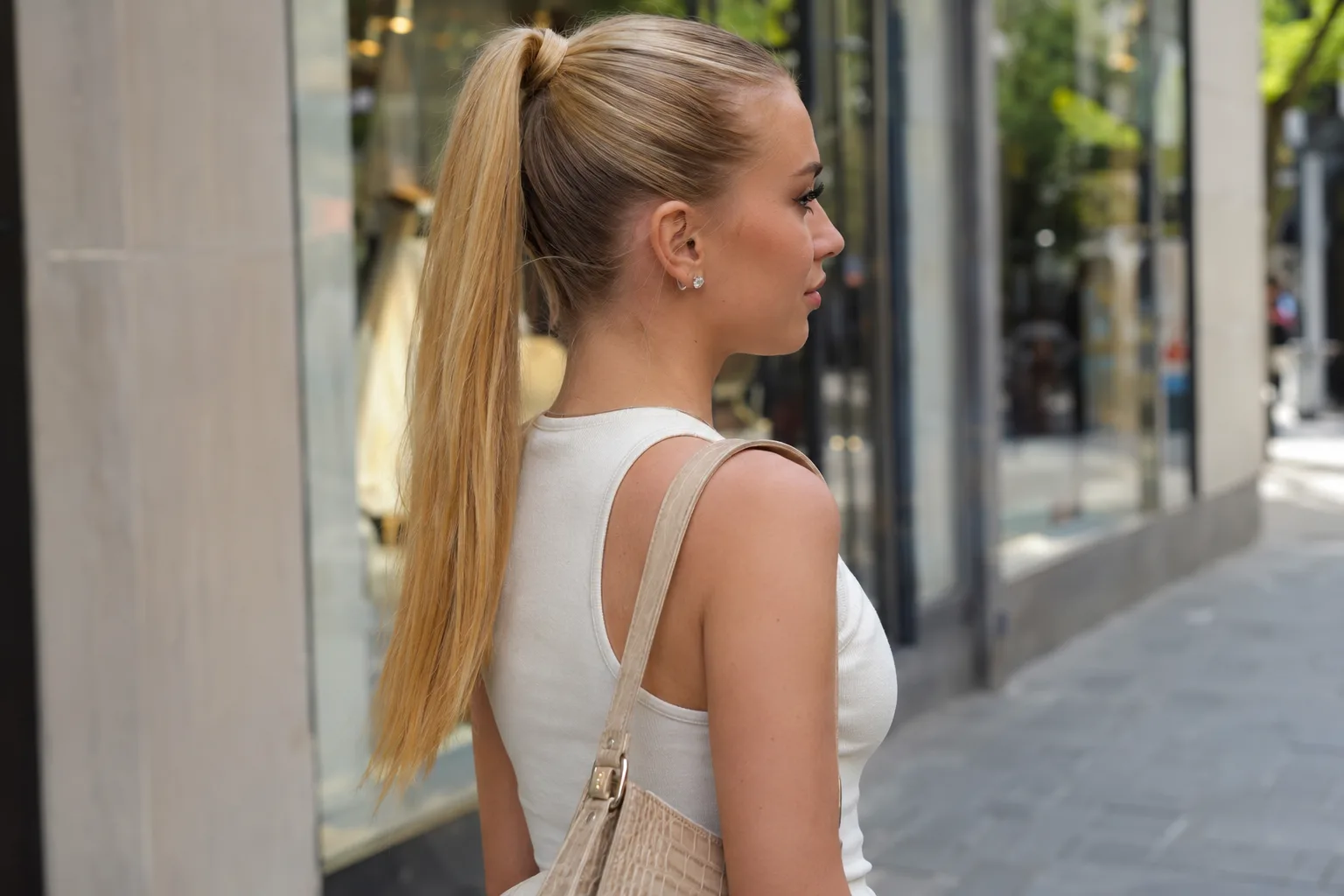
| High ponytail | On the crown, top-back of the head | Sporty, lifted, confident | Round and square faces, gym, nights out | Hair past the shoulders, a strong elastic |
| Mid ponytail | Back of the head, level with the top of the ears | Everyday, easy | Most faces, work, school | Any length that reaches the back of the head |
| Low ponytail | At the nape, just above the collar | Polished, calm | Long and oval faces, dinners, interviews | Any length that reaches the nape |
| Side ponytail | Behind one ear, draped forward | Soft, a bit romantic | Heart-shaped faces, events | Long hair, ideally with waves |
Not sure? Start mid. It is the easiest to tie, it puts the least strain on the hairline, and it works with almost every neckline. Move it up for lift, down for calm.

14 ponytail hairstyles, side by side
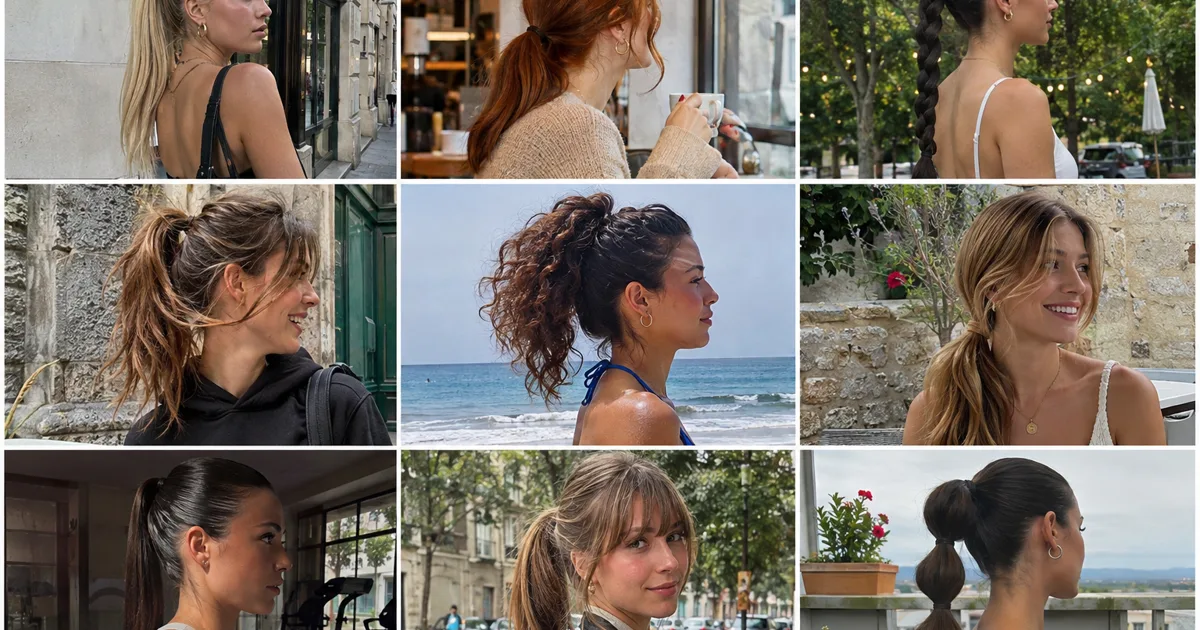
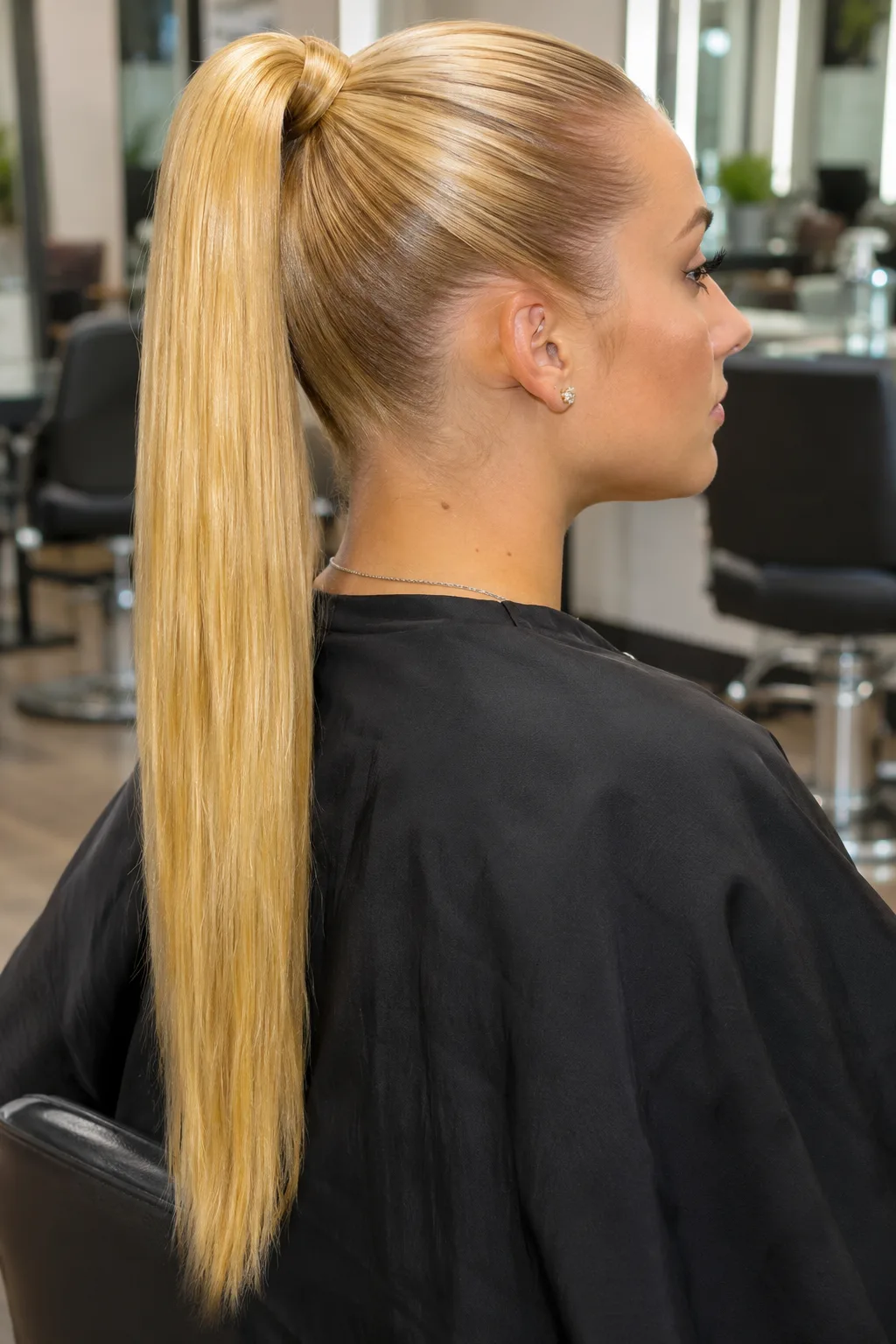
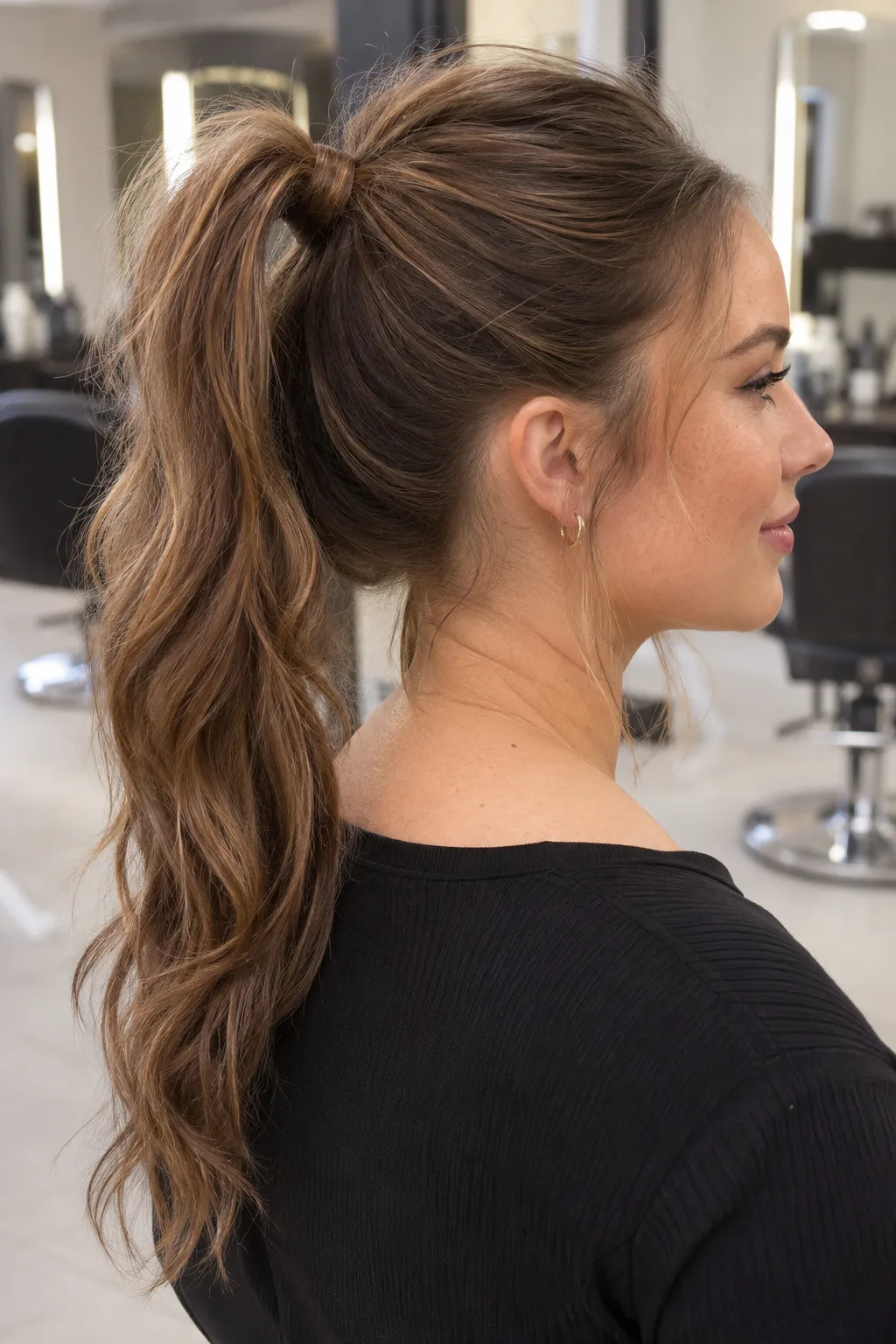
Every photo here is a ponytail shown from the same three-quarter side angle, so you can see the tie point and the full tail. What changes from tile to tile is the style itself: the height, the finish and what happens to the tail. Hair color changes too, so you can see how the same shape reads on blonde, brown, red and black hair.
Gallery14 photos · tap to enlarge
 Would this suit me?
 Would this suit me?
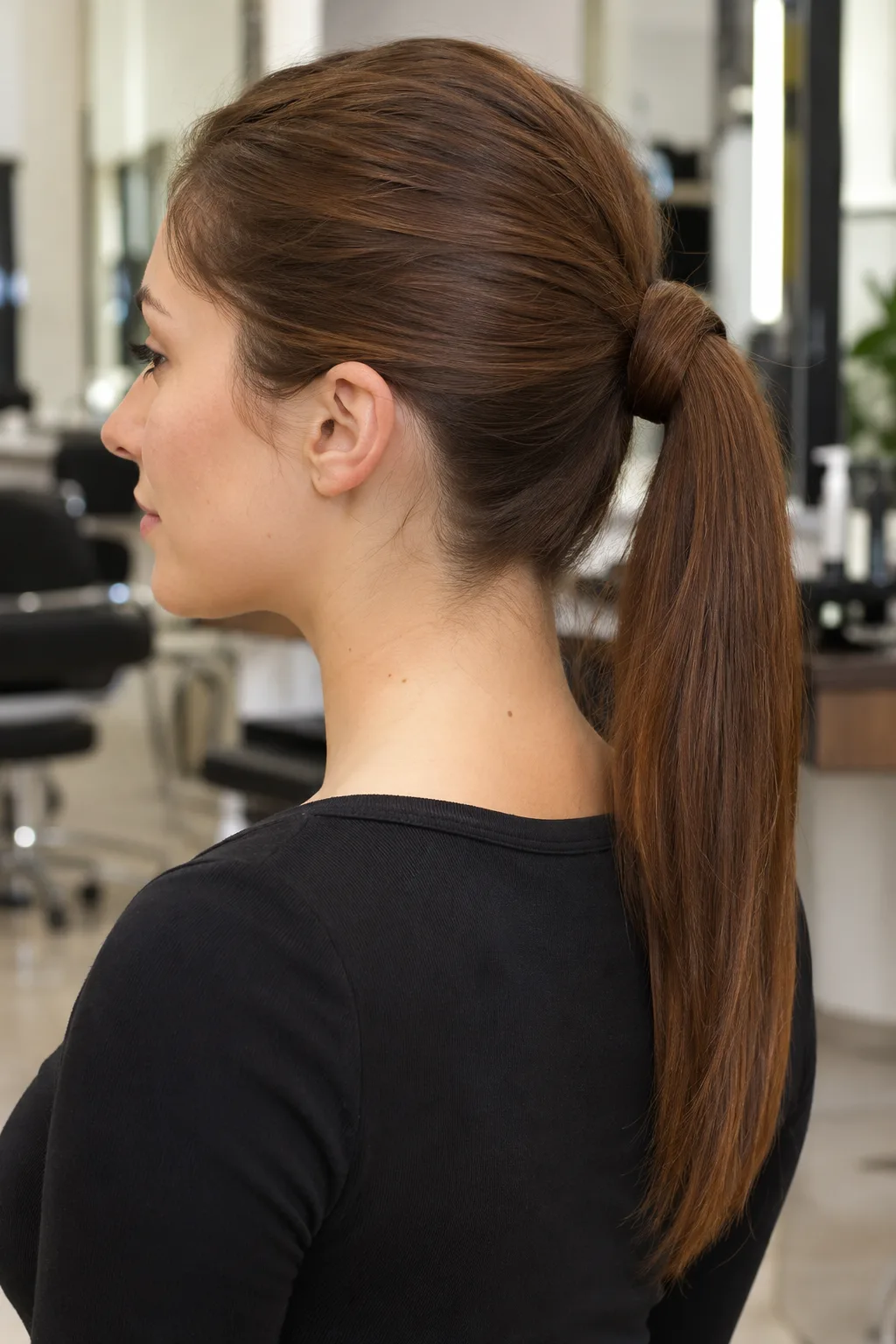 Would this suit me?
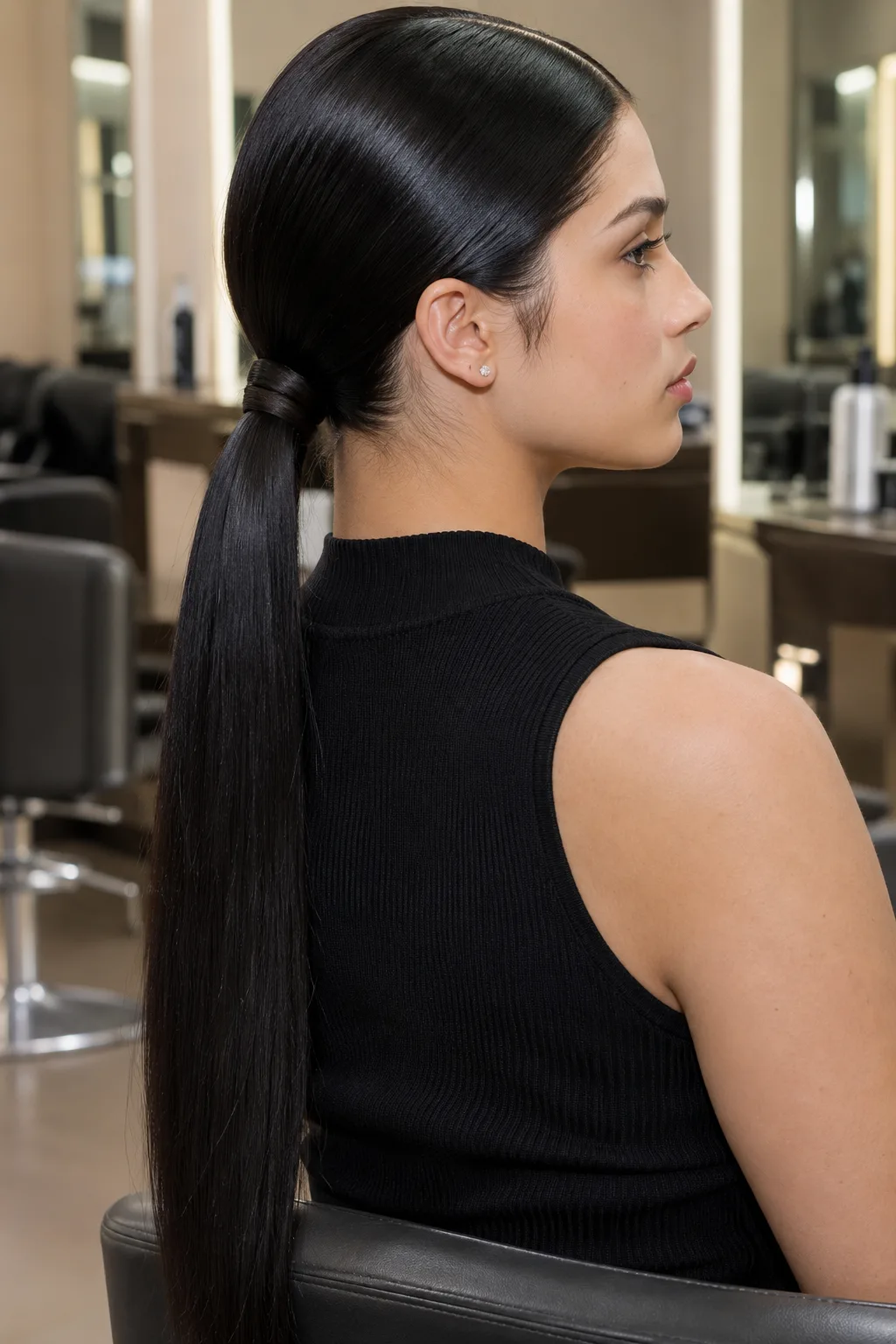 Would this suit me?
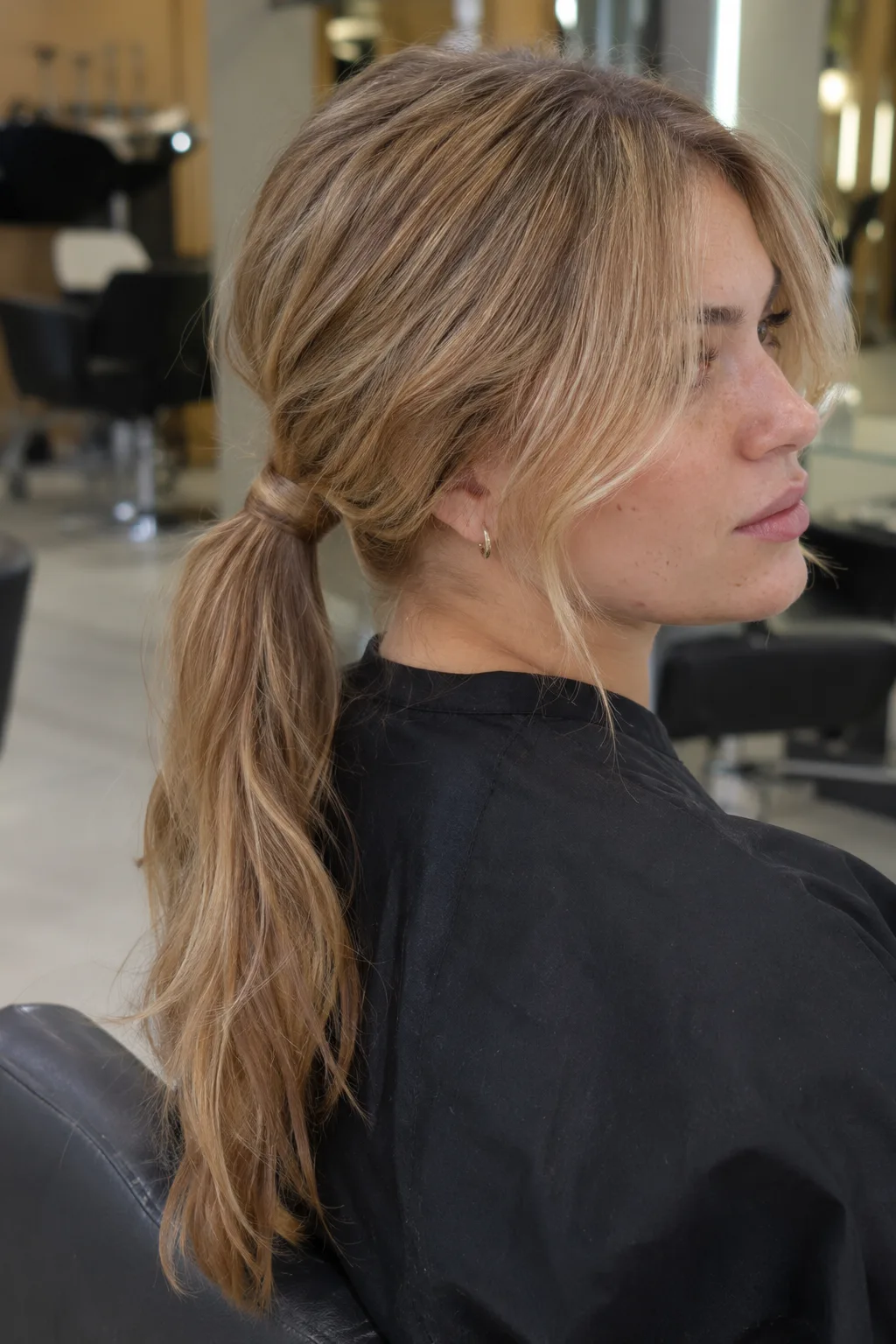 Would this suit me?
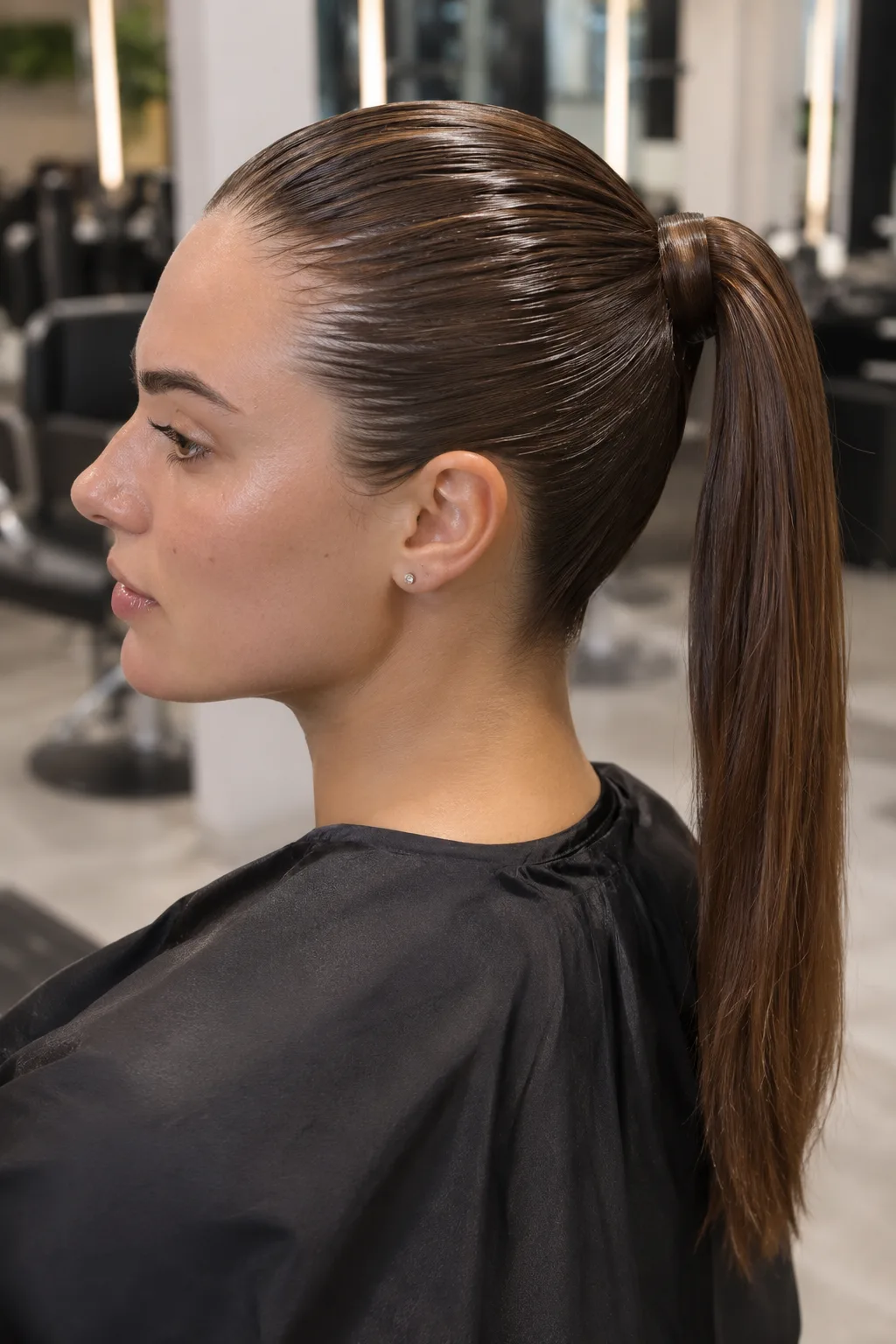 Would this suit me?
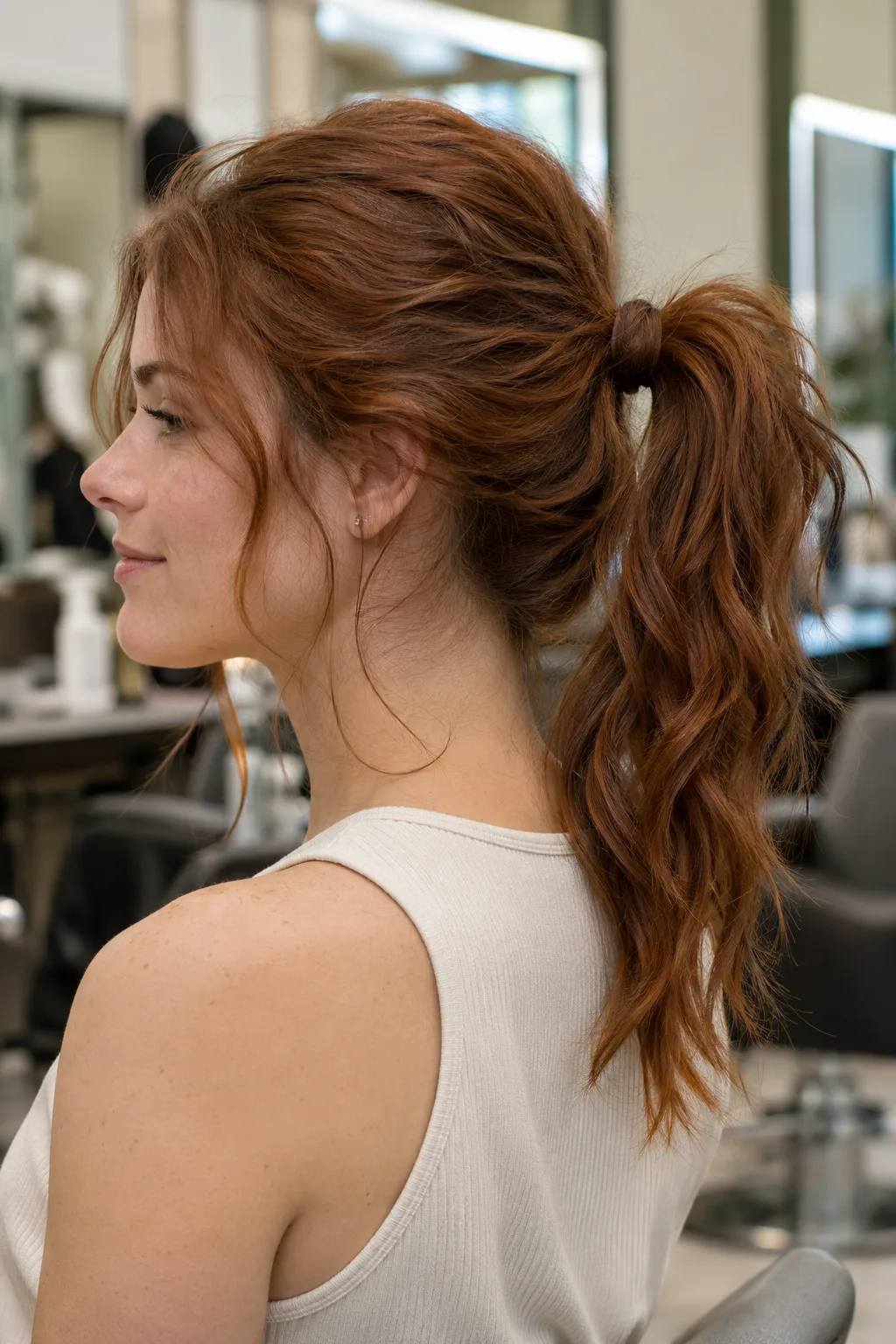 Would this suit me?
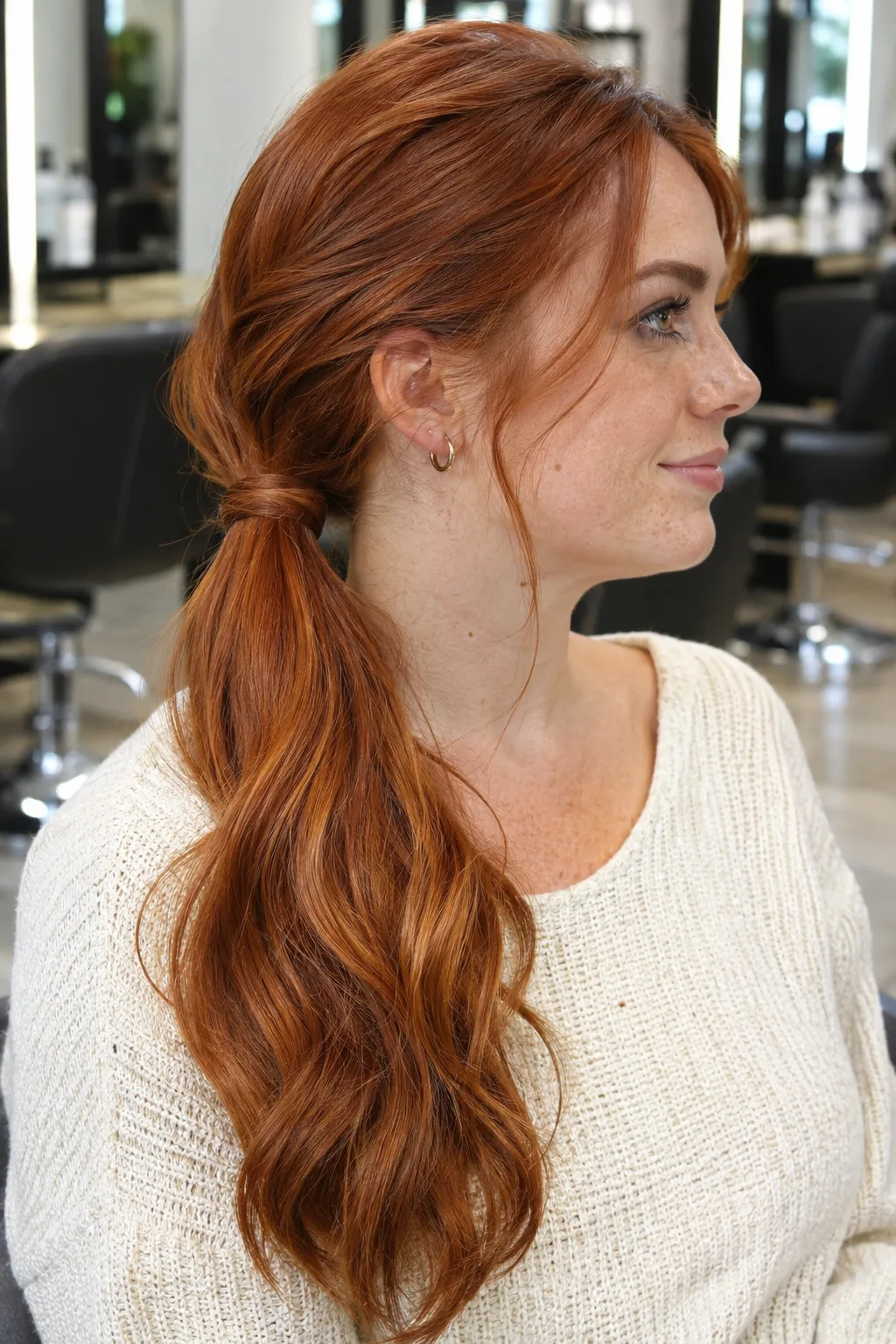 Would this suit me?
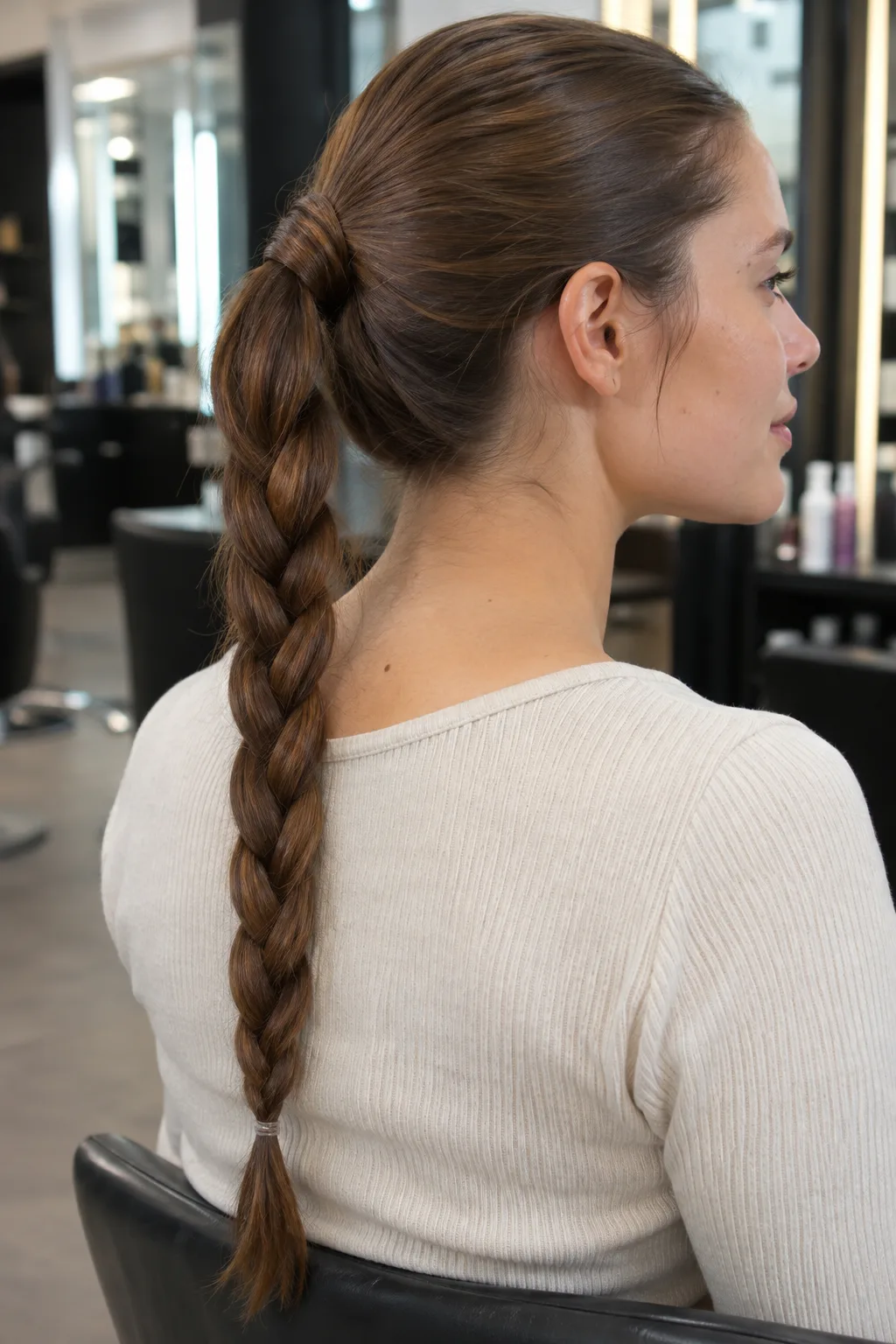 Would this suit me?
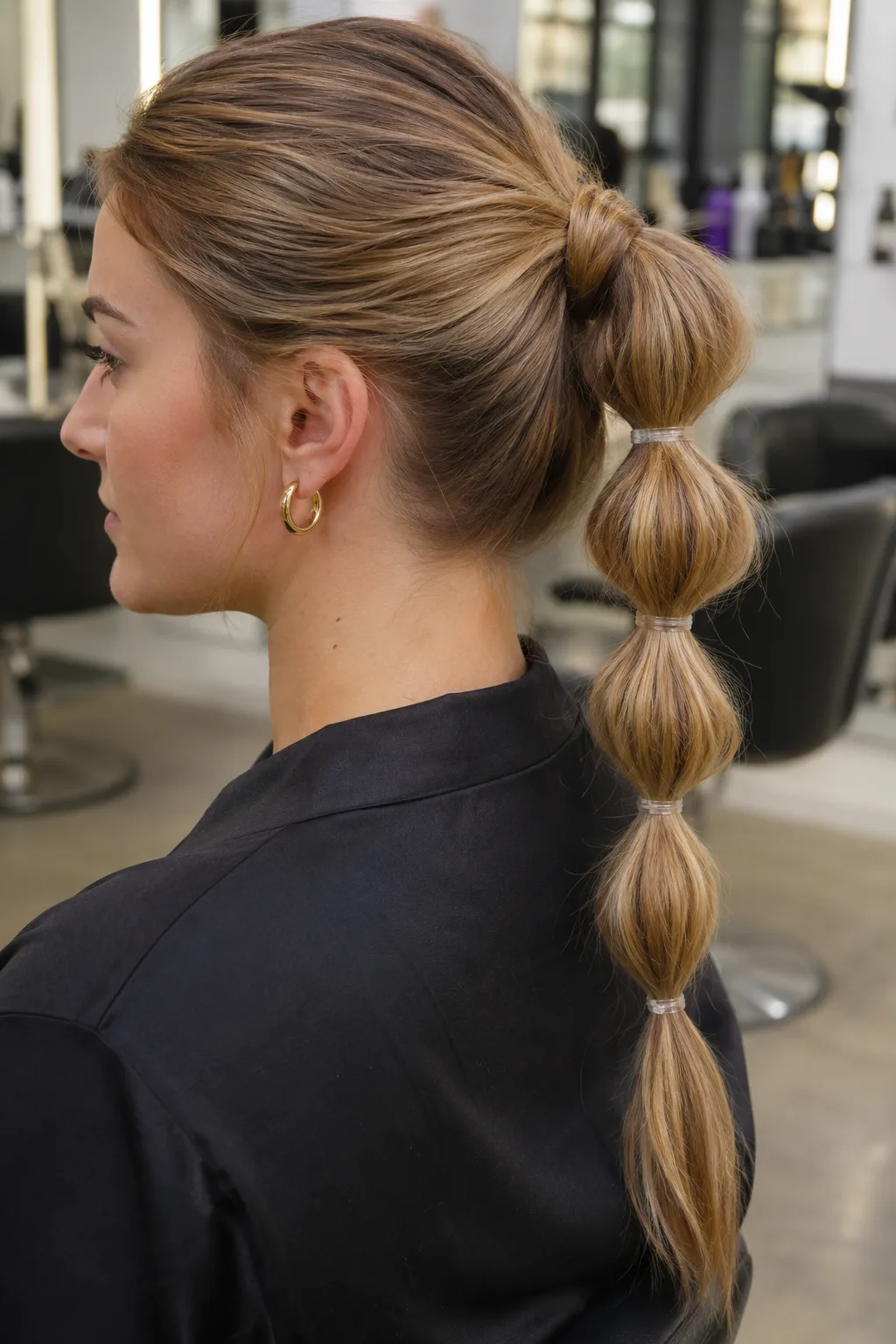 Would this suit me?
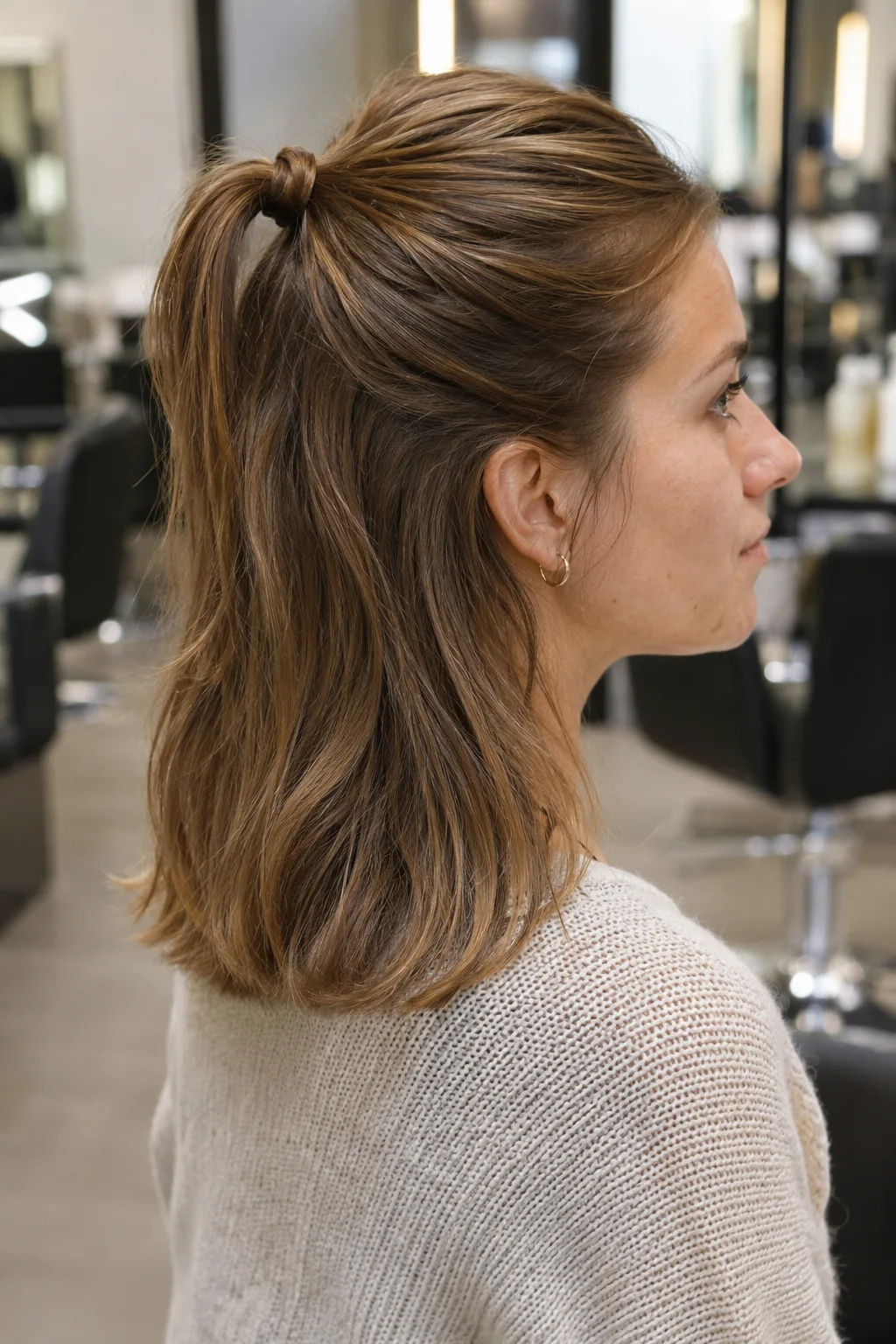 Would this suit me?
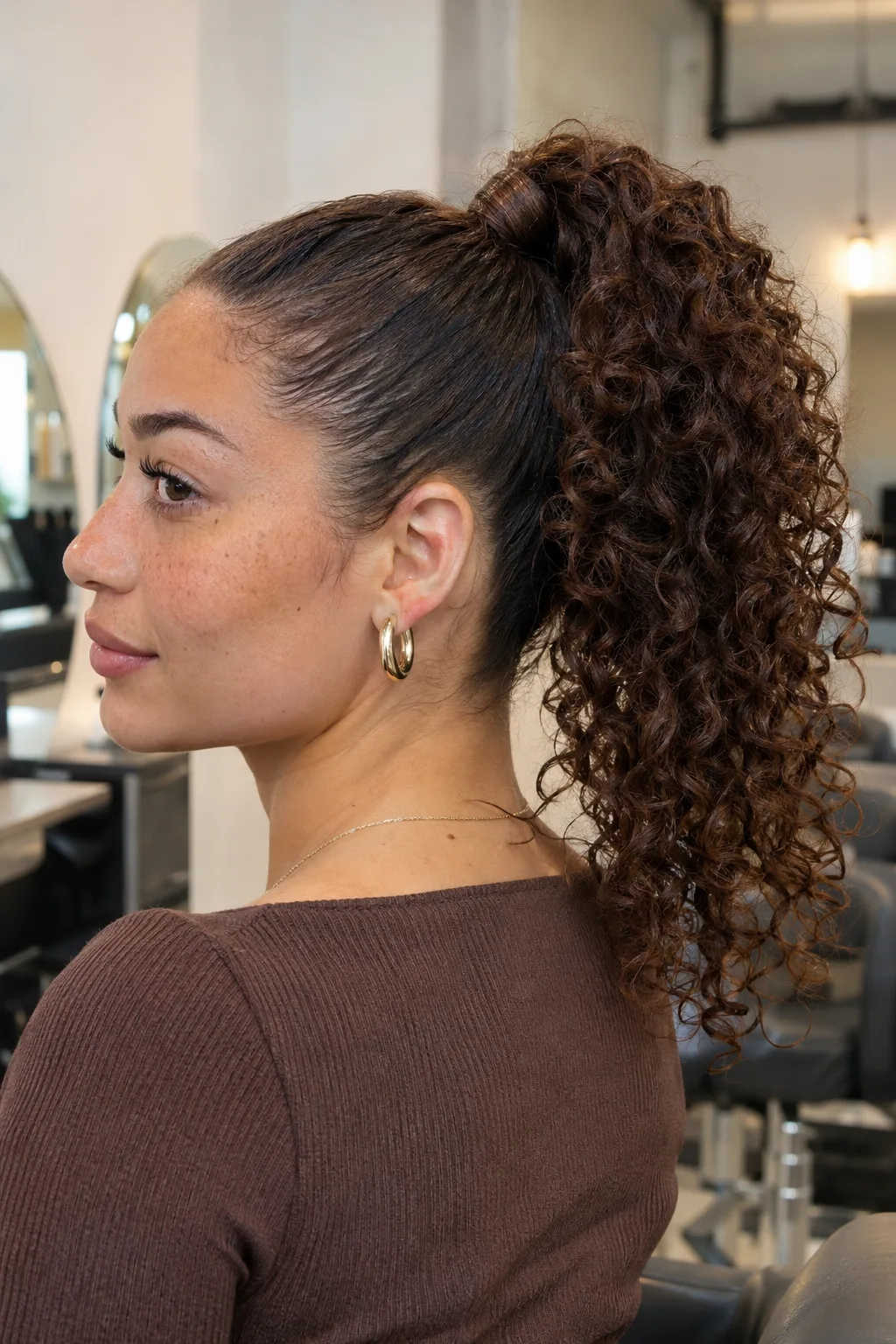 Would this suit me?
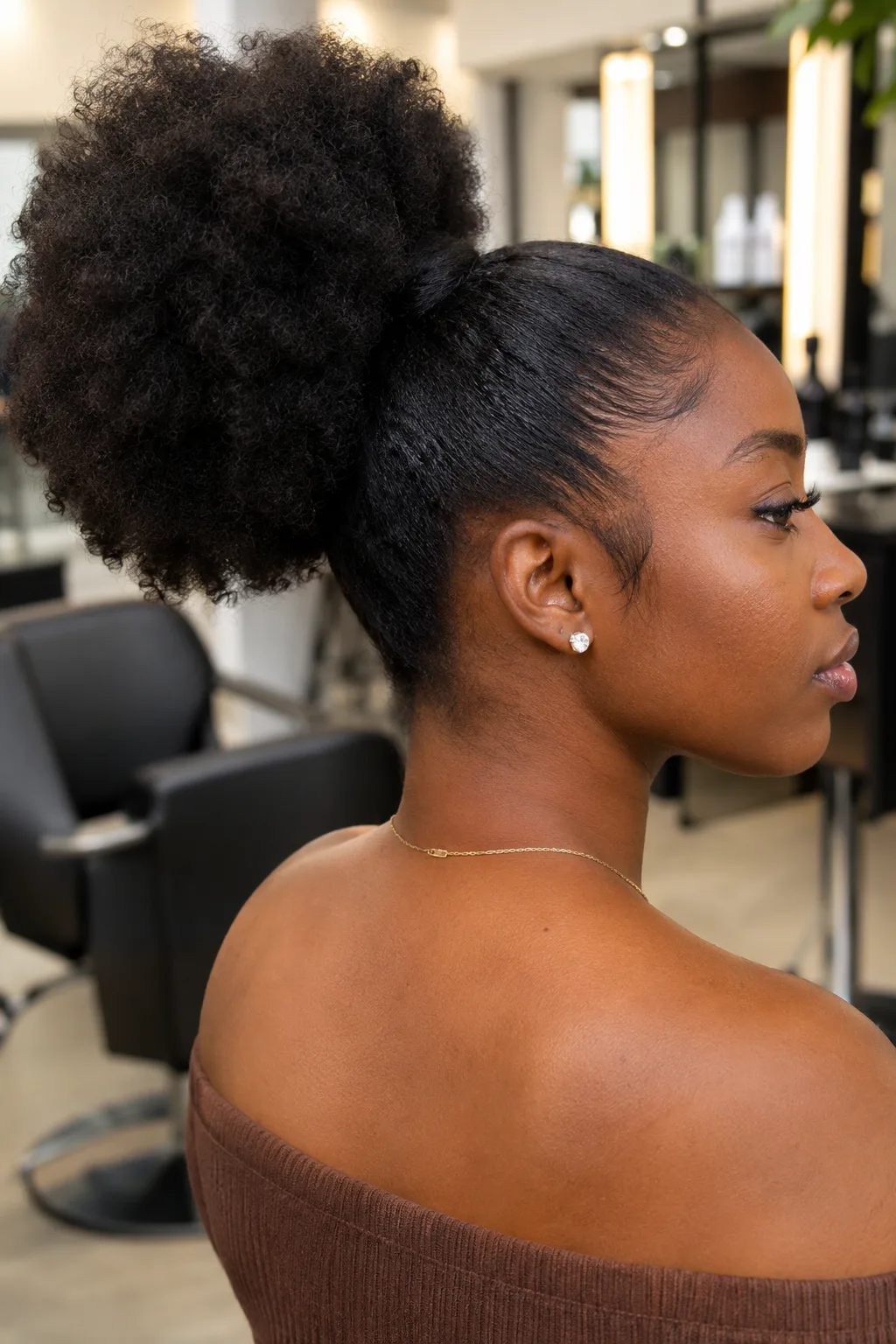 Would this suit me?
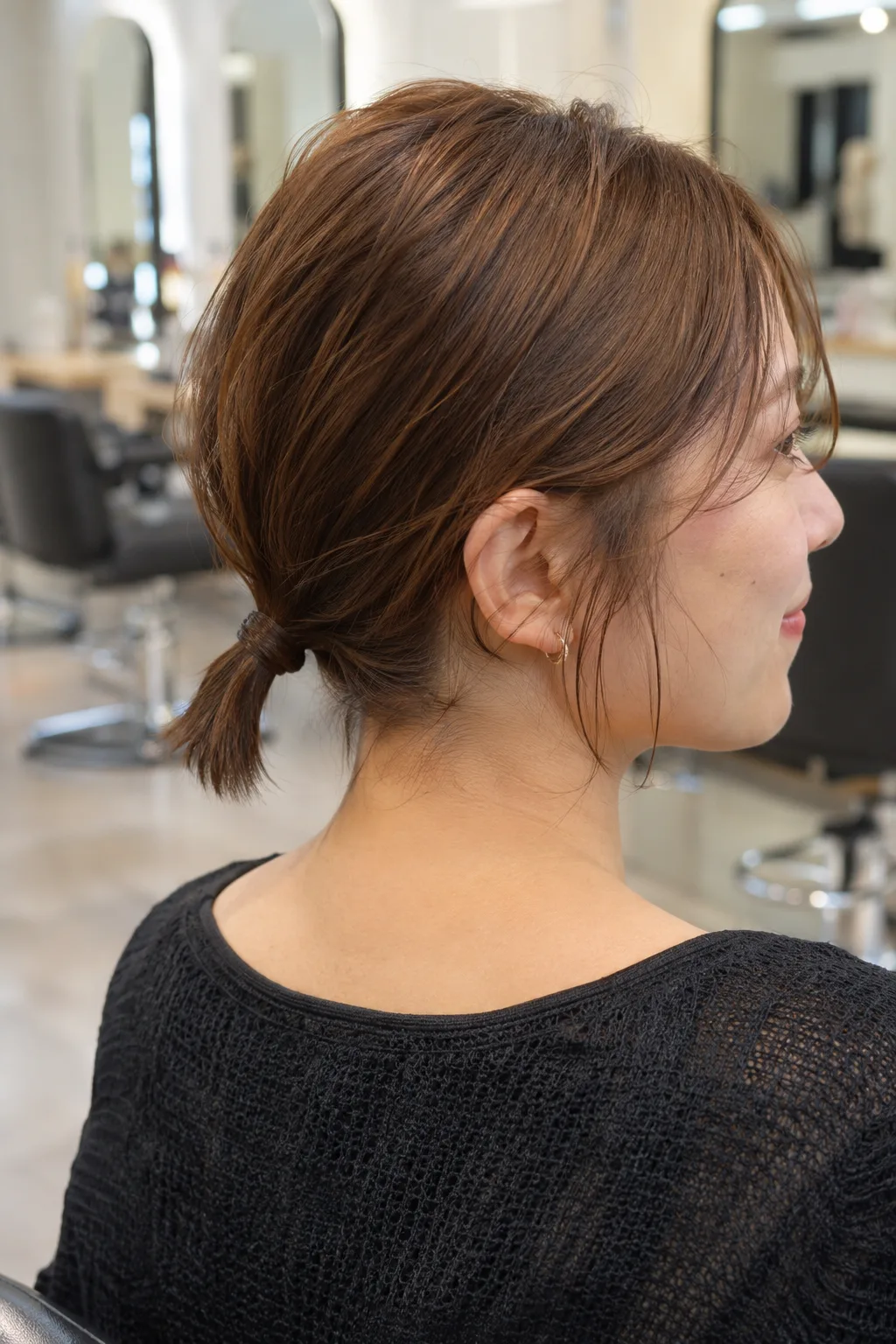 Would this suit me?
Look at where the ponytails look fullest. It is not the ones with the most hair. It is the ones where the ends are blunt and the crown has a little lift. The sleek and slick back versions look expensive because the surface is flat and shiny, and the textured, curly and coily ones look full because the texture fills the tail. The braided and bubble ponytail versions cheat: they turn a thin tail into a shape.
Which cut makes you look best?
Find out in 60 seconds.
A few quick taps and one selfie, and you'll know. Free account, no card for your first render.
How to do a ponytail that holds all day
This works on any hair long enough to reach the tie point. Second-day hair grips better than freshly washed hair, so if you just washed it, add a little dry shampoo or texture spray first.
How to do a ponytail
- Pick the height first
Decide where the ponytail sits before you start brushing: crown for high, level with the top of the ears for mid, nape for low. Tip your head back for a low one and forward for a high one, so the hair lies flat against the head on the way up.
- Brush or rake toward that point
Use a paddle brush for a sleek finish or your fingers for a soft one. Brush from the hairline to the tie point in all directions, then smooth the sides with your palms.
- Tie it with one strong elastic
Hold the gathered hair in one fist and wrap a fabric-covered or spiral elastic around it two or three times. Do not tie it so tight that you feel pull at the hairline. Firm is enough.
- Lift the crown a little
Hold the base and gently pull small pieces up at the crown with your fingertips. A quarter inch is enough. It stops a flat, helmet look and makes the tail look longer.
- Hide the elastic
Take a half-inch strand from underneath the tail, wrap it around the elastic, and pin the end under the base with one bobby pin. This is the single step that makes a ponytail look finished.
- Finish the tail
Smooth the tail with a drop of oil for sleek, mist it with texture spray for messy, or leave curls alone and scrunch them. Done.
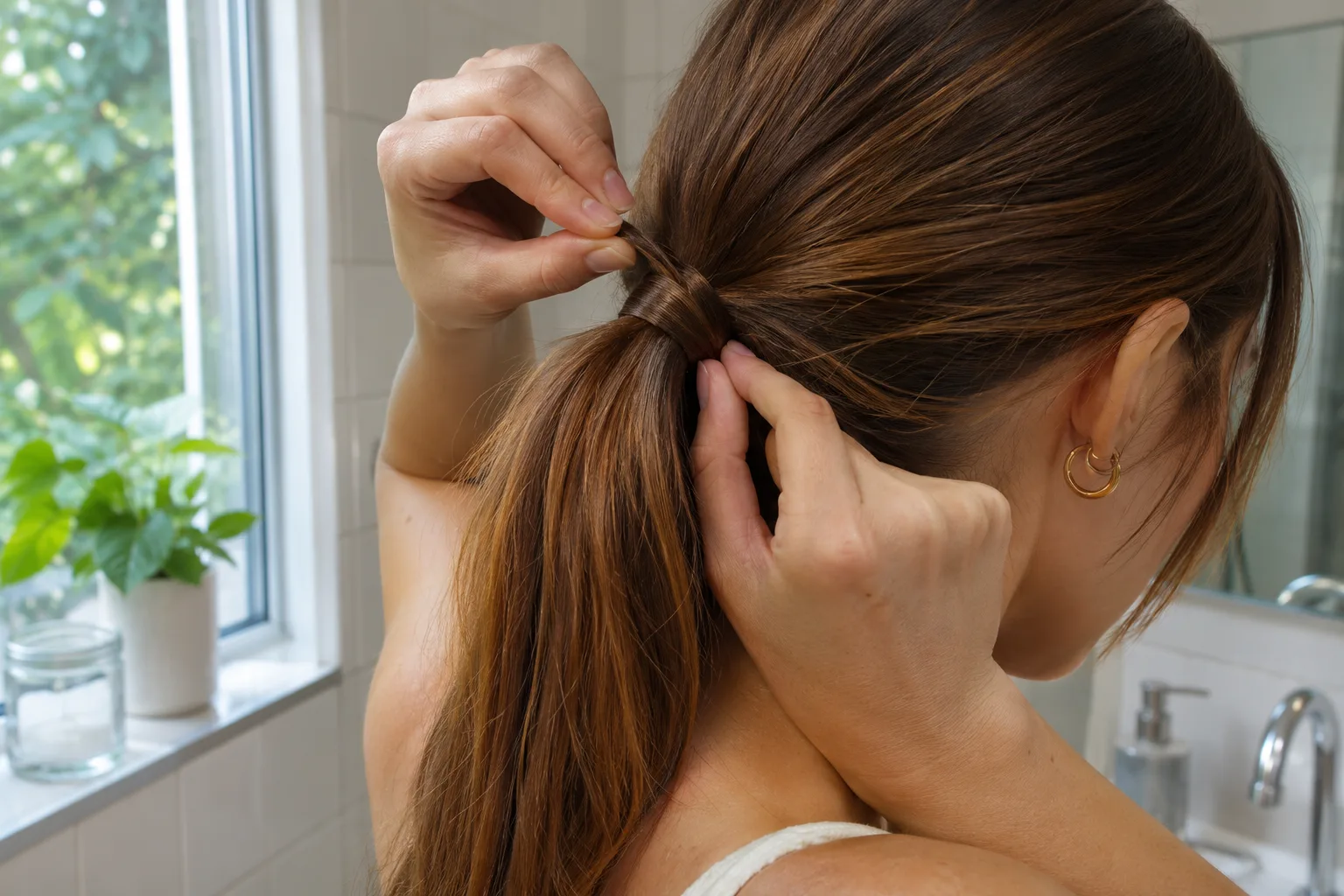
The wrapped strand is the detail people notice without knowing why. A bare elastic says "gym", a wrapped base says "styled", even on the same hair.
Which ponytail suits your face shape?
A ponytail pulls everything off your face, so it shows your face shape more than most styles do. That is good news if you choose the height on purpose. Use this as a starting point, then check it on your own face before a big event.
| Face shape | Best height | Why | Add |
|---|---|---|---|
| Round | High, at the crown | Height adds length and slims the cheeks | A little lift at the crown, no tight sides |
| Square | High or mid, soft | Lifts the eye up and away from the jaw | A few loose pieces at the temples |
| Long | Low or mid | A high tie makes the face look longer still | Bangs or curtain bangs left out |
| Oval | Any | Balanced proportions take every height | Whatever suits the outfit |
| Heart | Low or side | Puts volume near the jaw to balance a wider forehead | Side part, soft waves |
There is also a quick rule stylists use, often called the jawline rule: draw an imaginary line from the corner of your jaw, up past the top of your ear, and tie the ponytail where that line meets the back of your head. It lands most people at a high-mid height and it flatters almost everyone, because it continues the line of the jaw upward.
Not sure which shape you have? This calculator measures it from a few points on your face.
Measure it instead of guessing
Both numbers in the same unit — the answer is a ratio, so it does not matter which.
Under 1.15 reads round, 1.15 to 1.5 reads oval, over 1.5 reads long. Oval and long split on the jaw rather than the ratio: an oval tapers toward the chin, a long face runs straight down.
Ponytail with bangs
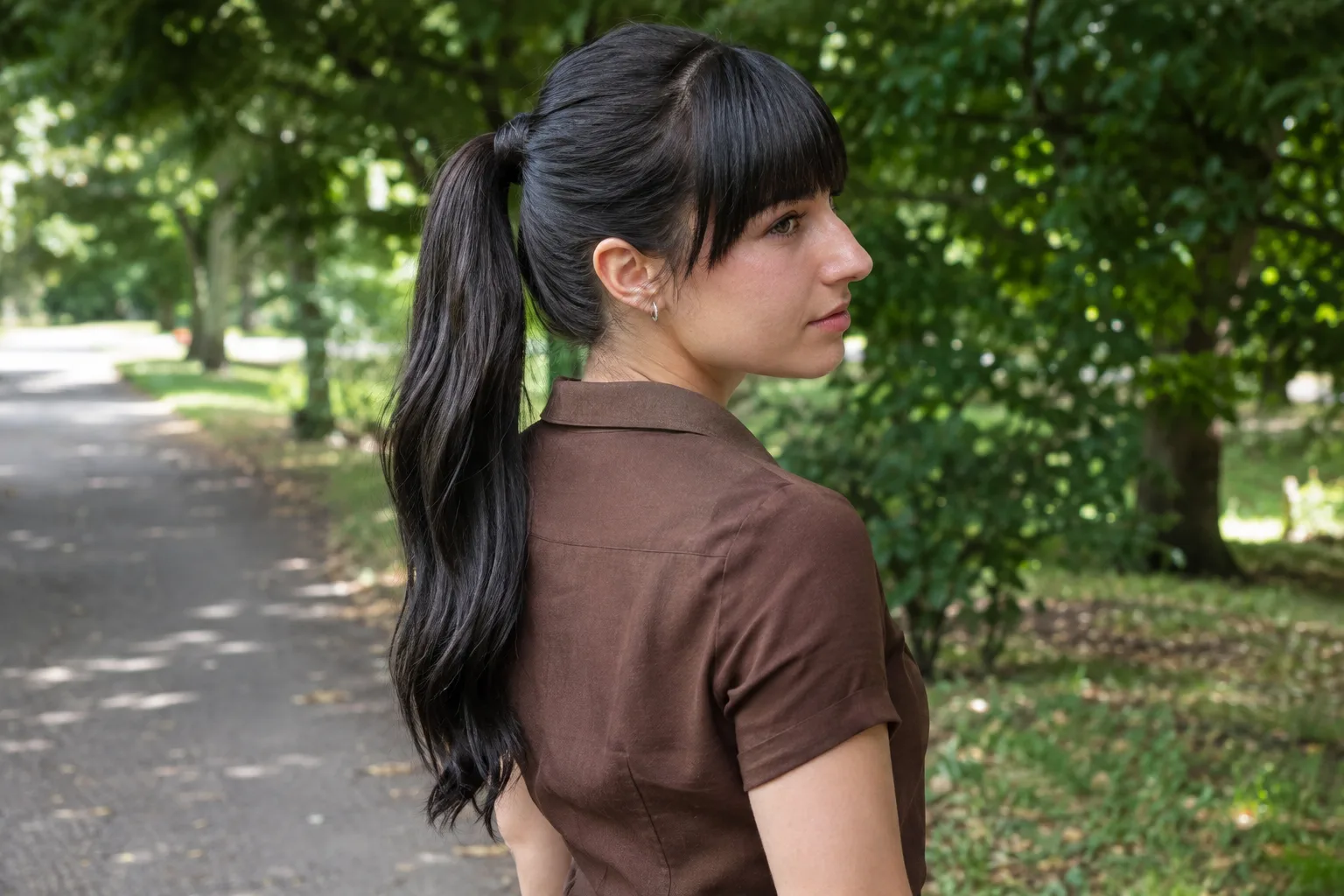
Bangs change the ponytail more than any other cut. They keep something soft at the front when everything else is pulled back, which is why they work so well on long faces. Full blunt bangs make a mid ponytail look graphic and deliberate. Long wispy bangs or curtain bangs left out of a low ponytail frame the cheekbones and hide the hairline, which is useful on days your edges or baby hairs will not lie flat.
Ponytail for curly and coily hair
Curly hair makes the easiest full ponytail there is, because the texture fills the tail on its own. Tie it looser than you would straight hair, never brush the curls dry, and smooth only the hairline with a little gel. On type 4 hair, a high puff is the classic shape: gather with your hands or a wide-tooth comb, use a large scrunchie or a stretched cotton band instead of a thin elastic, and lay the edges softly. Our 4c hair guide covers how to keep it moisturized under the band.

Ponytail for short hair
If your hair reaches the back of your head when you pull it back, you can tie a ponytail. On a chin-length bob that means a short low tail, a couple of inches long, with a few pieces escaping at the ears. Use two small elastics if you need to: one low at the nape for the bottom layer, one just above for the shorter top layer. Pin the strays and call them face framing.
Ponytail mistakes and what they cost
Most ponytail problems come from one of five things. Some only cost you a nice photo. One can cost you hair.
- Tying it too tight, every day. Constant pull at the same spot can cause traction alopecia, hair loss along the hairline and temples. The American Academy of Dermatology lists tight ponytails among the styles that can cause it and advises loosening them and changing where you tie. If the style hurts, it is too tight.
- Thin rubber bands. They snag and snap hair at the tie point, which is why a broken line of short hairs appears exactly where you always tie. Use fabric-covered or spiral elastics.
- The same height every day. Move the tie point up or down by an inch from day to day so the stress does not land in one place.
- Brushing the crown flat. A completely flat crown with a high tail makes the head look small and the face look bigger. Lift the crown a quarter inch.
- Blaming your technique for a thin tail. If your ends are see-through, the tail will be too. That is the haircut.
Why your ponytail looks thin (and the cut that fixes it)
A full ponytail needs density at the ends, and layers take density away. Lots of short layers look great worn down and give you a thin, stringy tail when tied up. So if a full ponytail is the look you wear most, ask for long layers that start below the shoulder, or a blunt perimeter with only invisible internal layers.
There are two quick tricks for the day itself. The first is the ponytail trick: split the hair into a top and a bottom half, tie the top half at the crown and the bottom half directly underneath, then let the top tail fall over the bottom one. The tail looks longer and twice as thick. The second is a braided ponytail or a bubble tail, which turns a thin tail into a shape. If you wear your hair long most of the time, our guide to hairstyles for long hair covers which layer patterns keep the ends full.
Say this to your barber
Long layers starting below my shoulders, blunt ends, and enough length at the front to tie back into a full ponytail.
Here is the wall. You can practice a ponytail at home, but you cannot see a new cut, bangs or a different color on your own face before the stylist starts, and a cut that thins your tail takes months to grow out. You also cannot see how a high ponytail sits with your jaw and cheeks without a second mirror and a lot of guessing.
Can you see a ponytail on your own face before you try it?
Yes. Upload one selfie to HairstyleAtlas and it renders the hairstyle on your own face, so you can compare a high ponytail with a low one, or check how it looks with bangs, before an event or a cut. Your first look is free and needs no card. After that, Plus is $9 a month for 150 credits, according to our pricing page, which is enough to compare a handful of styles and colors. You can read more about seeing a haircut on your own face before you commit.
Learn the mid ponytail first, with a wrapped base and a little lift at the crown. Then move it up for a round face or a big night, and down for a long face or a calm one. If the tail always looks thin, stop practicing and look at your cut, because a ponytail is your haircut with nowhere to hide. For more pulled-back styles, try half up half down hairstyles, which keep length on your shoulders.
Frequently asked questions
Decide the height first, brush the hair toward that point from every direction, and tie it with one fabric-covered elastic wrapped two or three times. Lift the crown slightly, then wrap a small strand of hair around the elastic and pin it underneath. Second-day hair or a little texture spray keeps it from sliding.
Start with a mid ponytail, level with the top of your ears, because it is the easiest height to reach. Gather the hair with your fingers instead of a brush, tie it firmly but not tight, and fix bumps by pulling small sections out from the base rather than starting again. Once that holds, try a high one.
It is a two-ponytail method that makes the tail look longer and fuller. Split the hair horizontally, tie the top half at the crown and the bottom half right underneath it, then let the top tail fall over the lower one so the elastics are hidden. It works best on hair past the shoulders.
A French ponytail starts as a French braid along the top of the head, picking up hair from the hairline back, and finishes as a ponytail at the crown or the back of the head. The braid keeps the front neat and adds grip, so it is a good choice for sport or long days.
Start on smooth, dry hair and use a paddle or boar bristle brush. Add a little smoothing cream or gel at the hairline, brush everything to the tie point, and secure it with one strong elastic. Wrap a strand around the base and finish the tail with a drop of oil. A center or side part both work.
Every face shape can wear one; the height is what changes. Round and square faces look best with a high ponytail, long faces with a low one, heart shapes with a low or side ponytail, and oval faces with any height. Bangs or loose pieces at the front soften any shape.
Draw an imaginary line from the corner of your jaw up past the top of your ear and tie the ponytail where that line meets the back of your head. That spot usually lands at a high-mid height and continues the angle of your jaw upward, which flatters most faces.
Yes, for rough long layers. Tie all the hair into one ponytail at the forehead for more layering, or at the crown for softer layers, then cut straight across the tail. It is quick and cheap, but it cannot shape layers around your face precisely, so expect to tidy it, or see a stylist for anything precise.
Preview it on your own photo: Virtual Hair Color Try-On.
Share article
About the author
Related posts
Women's Haircuts · 15 min
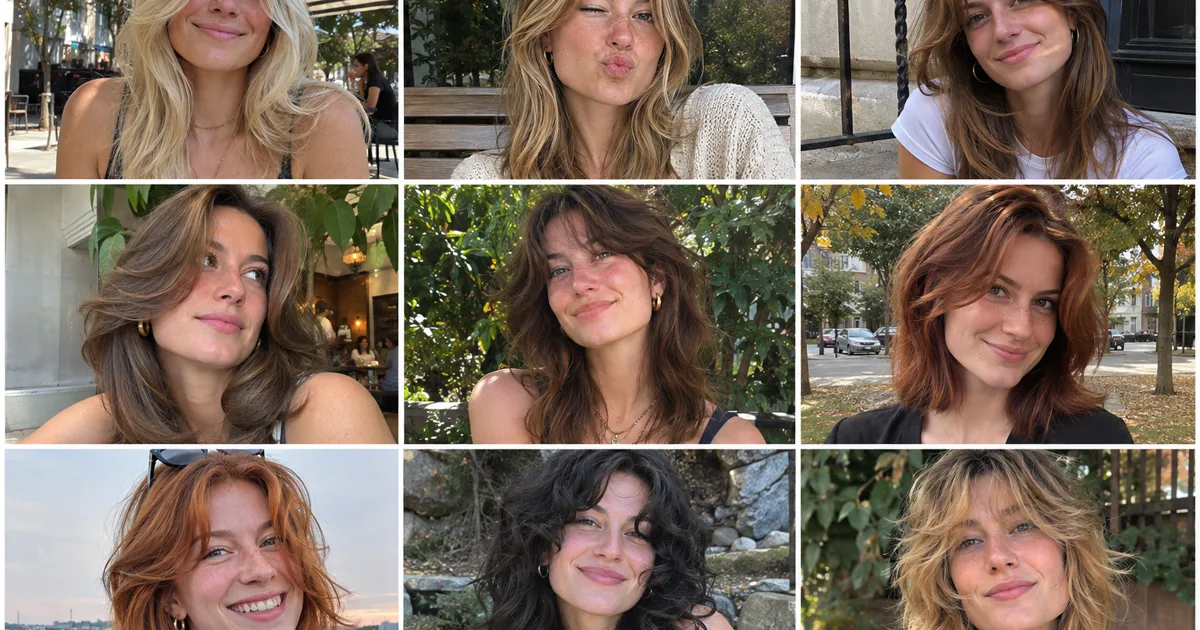
Lob Haircut: 14 Long Bob Ideas and the One Call That Decides If It Suits You
A lob is a long bob that ends between the jaw and the collarbone. Fourteen versions at the same length, which one suits your face and hair type, and the exact words to say in the chair.
Women's Haircuts · 11 min
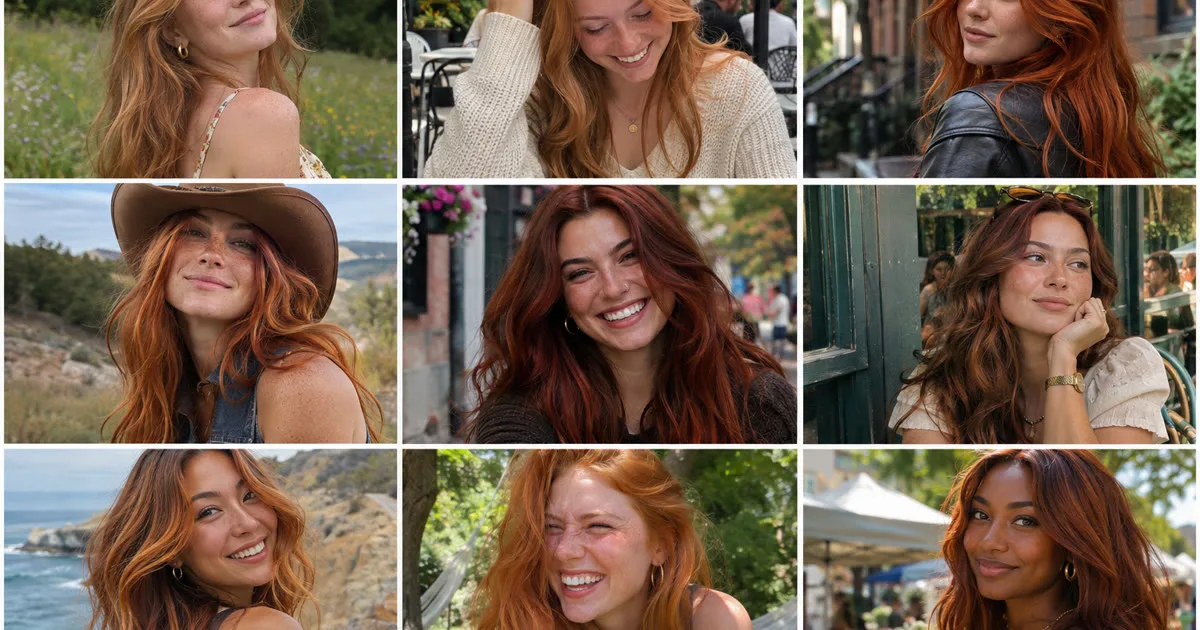
Layered Hair: 14 Looks and the One Number That Decides Each
Layered hair comes down to one number: the gap between your shortest piece and your longest. See 14 layered looks sorted by that gap, which suits your face and hair type, and what to say in the chair.
Women's Haircuts · 13 min
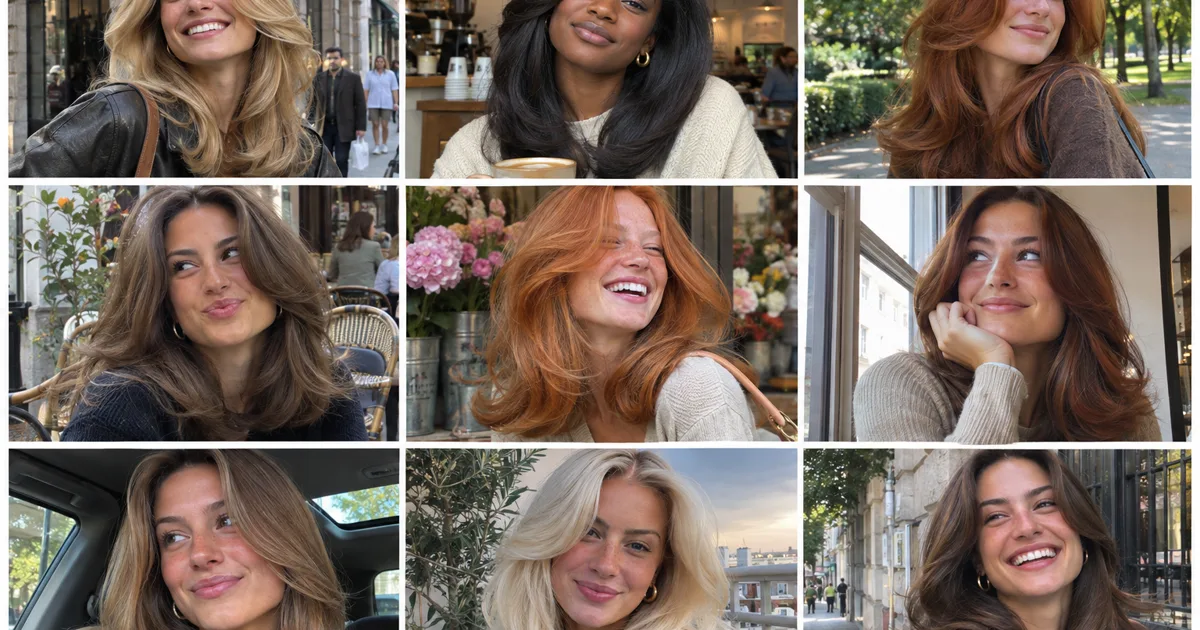
Copper Hair Color: 14 Shades and Which One Suits Your Skin
Copper is a bright orange-red, like a new penny. See 14 copper shades side by side, which one suits your skin tone, what to say at the salon, and why maintenance matters more than your complexion.
Women's Haircuts · 12 min
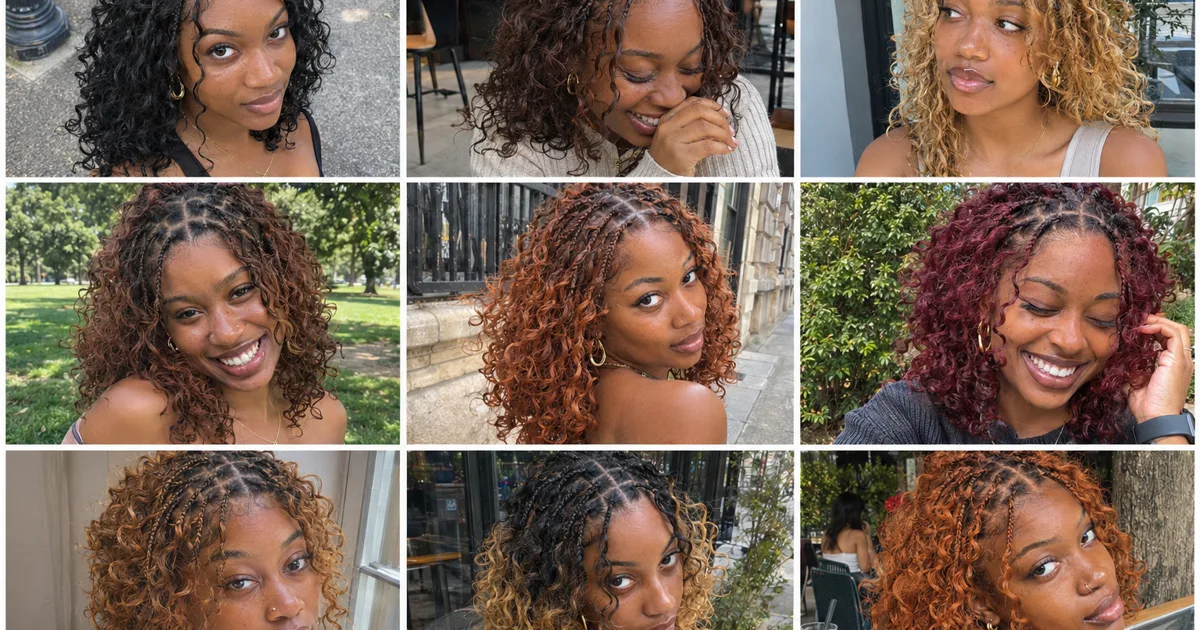
Blowout Hair: 14 Looks and How to Do a Salon Blowout at Home
Blowout hair is set by the cool shot, not the heat. See 14 blowout finishes from sleek to 90s bounce, the at-home routine step by step, and which version suits your hair type.
Women's Haircuts · 14 min
Miracle Knots Hair: 12 Looks, How It Works and How Long It Lasts
Miracle knots loop curly human hair into small plaits of your own hair: boho braids in 2 to 3.5 hours, with less weight. How it works, how many bundles, which hair it suits and how long it lasts.
Women's Haircuts · 14 min
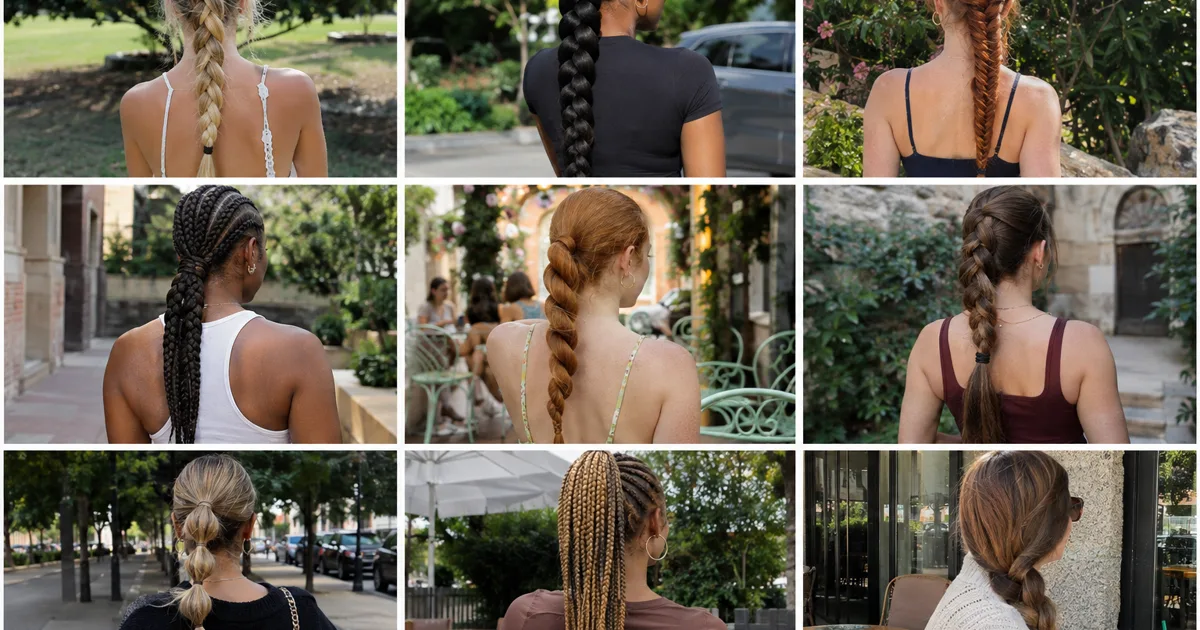
Braided Ponytail: 14 Styles and How to Do One That Lasts
The braid is the easy part. 14 braided ponytail styles side by side, which one suits your hair type, how many packs of braiding hair to buy, and how to keep the base from pulling out your edges.