Men's Hair Cuts: 14 Styles and the Numbers to Ask For
Oleh Onysko 2 October 2026 15 min read
In this article
The men's haircuts worth getting right now are short at the sides with real length on top, and the safest one for most men is a low taper with a textured fringe. Every name on a barbershop wall, from crew cut to Edgar, is shorthand for the same three numbers: the guard on the sides, where the short part stops, and how many inches stay on top.
That is the part nobody explains. Names drift between shops and between decades, so two barbers can give you two different "crew cuts". The numbers do not drift. Learn the three of them and you can walk into any chair in the country and get the cut you pictured.
Below are the 14 cuts men actually ask for, the guard numbers decoded, which cut suits your face and hair, and the exact sentence to say in the chair.
What men's haircuts are in right now?
Short sides, textured length on top, and a soft finish rather than a sharp one. The low taper with a forward textured fringe is the cut of the moment, followed by the quiff, the modern mullet and curtains. Hard parts, high skin fades and slick shine are fading out.

The reason the low taper won is practical, not trendy. The short section only covers the sideburn, the area around the ear and the nape, so it grows out without a visible line and still looks deliberate in week five. A low taper fade is also the one fade that works on almost every face shape, because it never removes enough width to make a long face look longer.
The 7 basic men's haircuts
Almost every men's cut is a variation on seven bases. Read the table across: the name on the left is what you say, the three columns in the middle are what the barber actually does.
| Base cut | Sides | Where the short part stops | Top | Back to the barber |
|---|---|---|---|---|
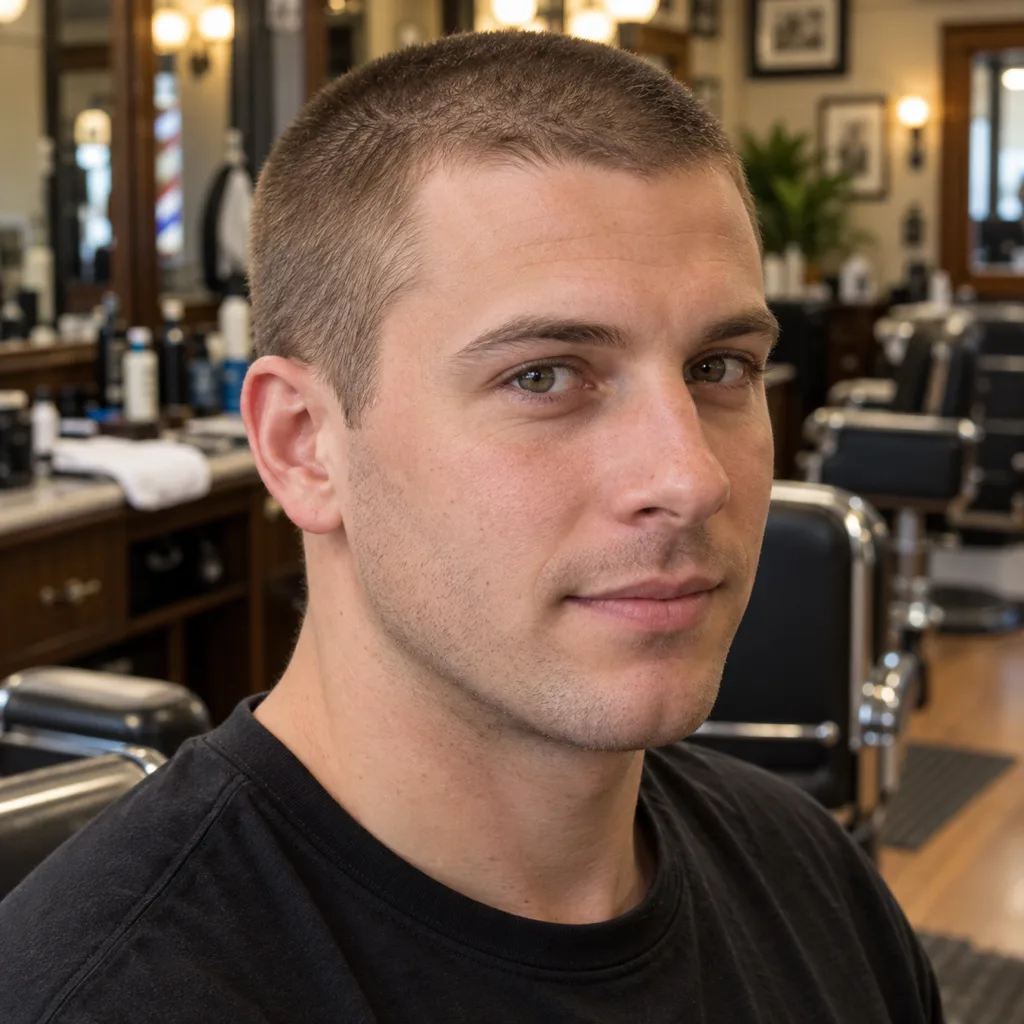
| Buzz cut | Guard 1 to 4 | Nowhere, same length all over | Same as sides | 2 to 3 weeks |
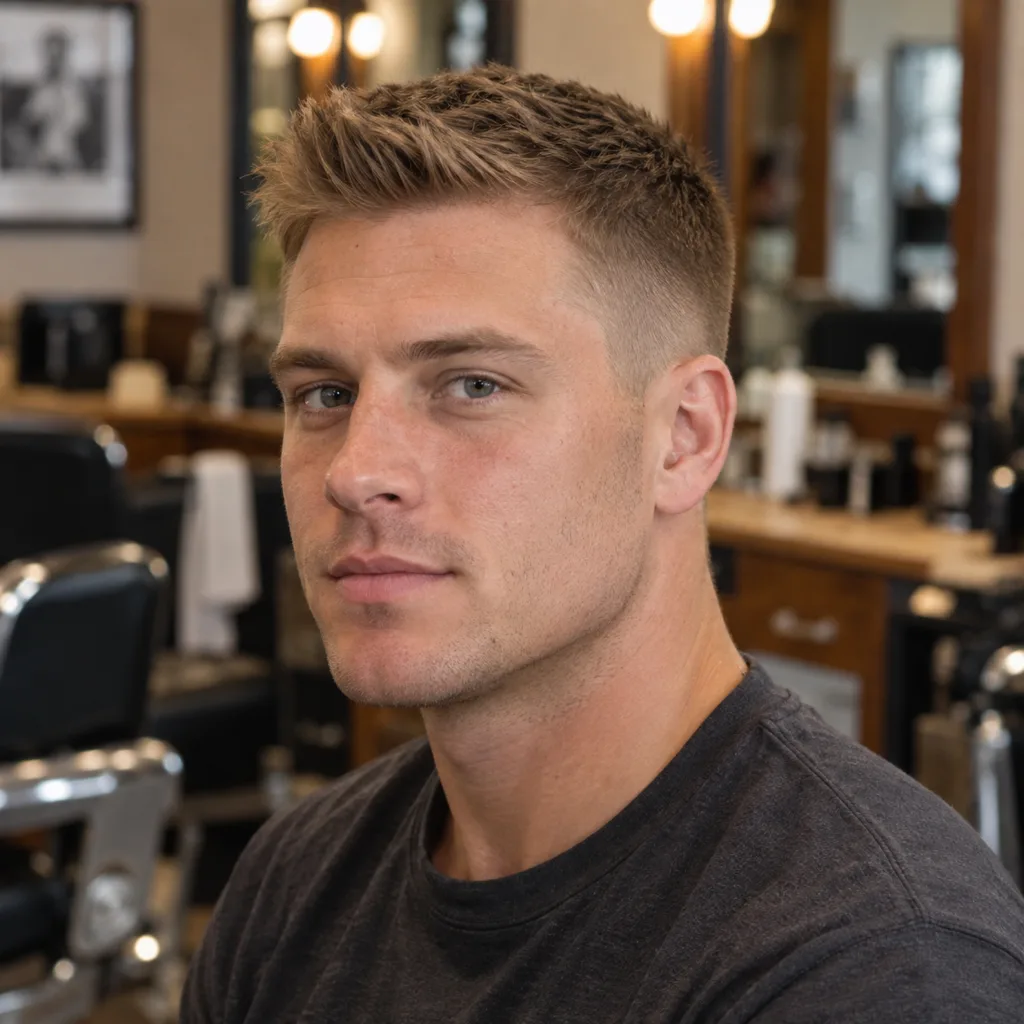
| Crew cut | Guard 2 or 3 | Gradually blends up | About 1 inch | 3 to 4 weeks |
| Ivy League | Guard 3 or scissors | Just under the crown corner | 1.5 to 2 inches, side part | 4 weeks |
| Textured crop | Fade or taper | Mid head | 1 to 2 inches, fringe forward | 3 to 4 weeks |
| Taper with length | Taper | Just above the ear | 2 to 4 inches | 4 to 5 weeks |
| Undercut | Guard 1, disconnected | Crown corner, no blend | 4 to 6 inches | 3 to 4 weeks |
| Long, no clippers | Scissors only | Nowhere | Chin length and longer | 8 to 10 weeks |
If you only remember one row, remember the fifth. A taper with two to four inches on top is the most forgiving cut on this list, and it is the base under most of the named styles below.
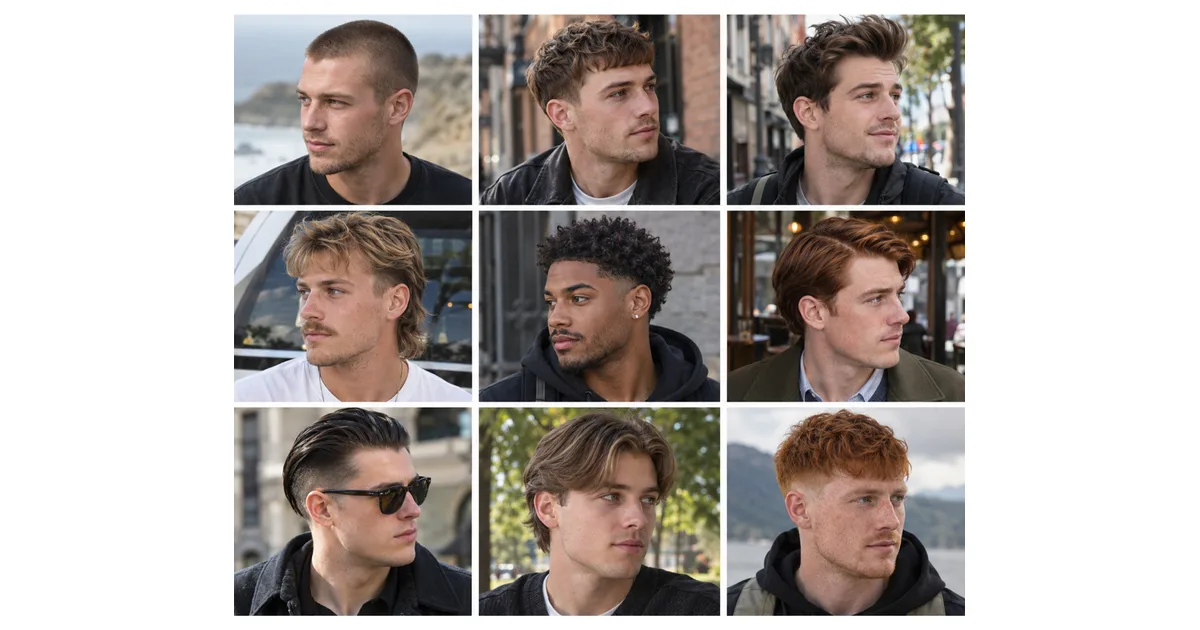
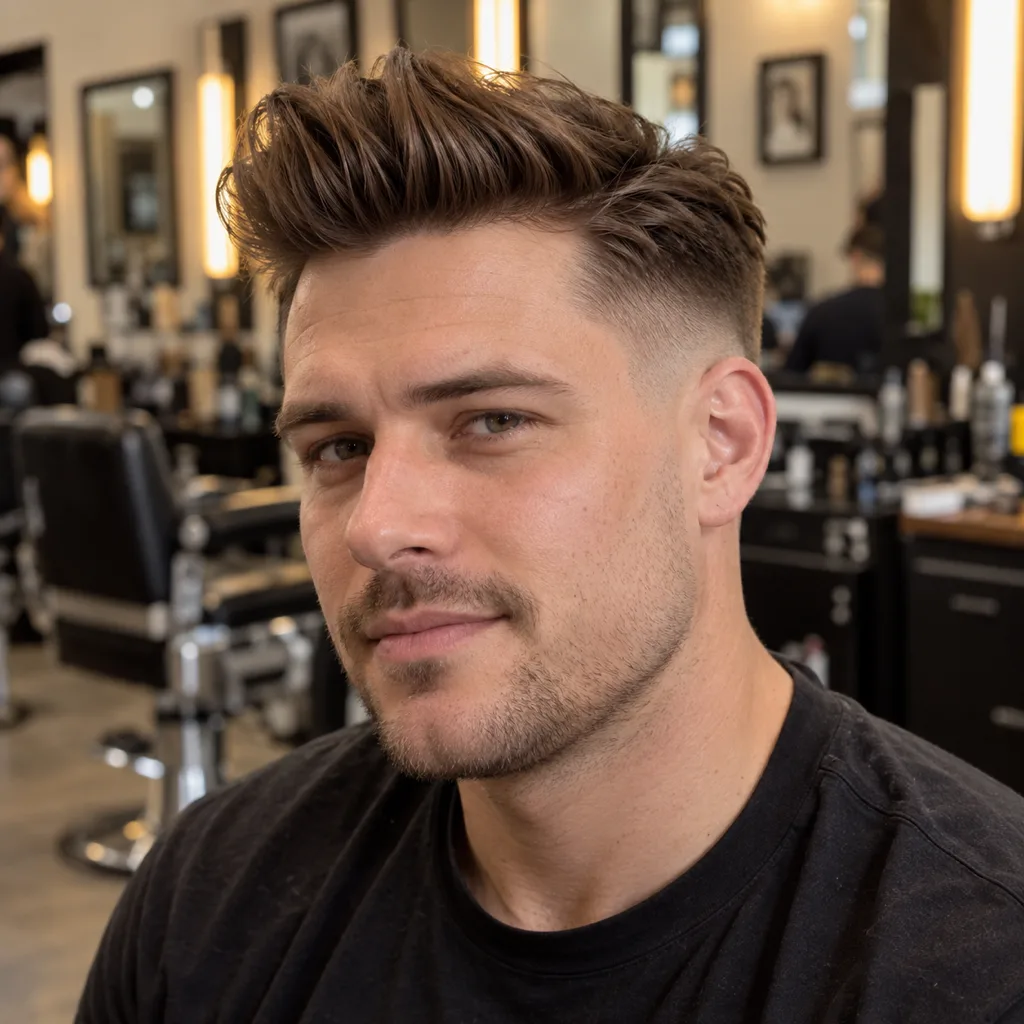
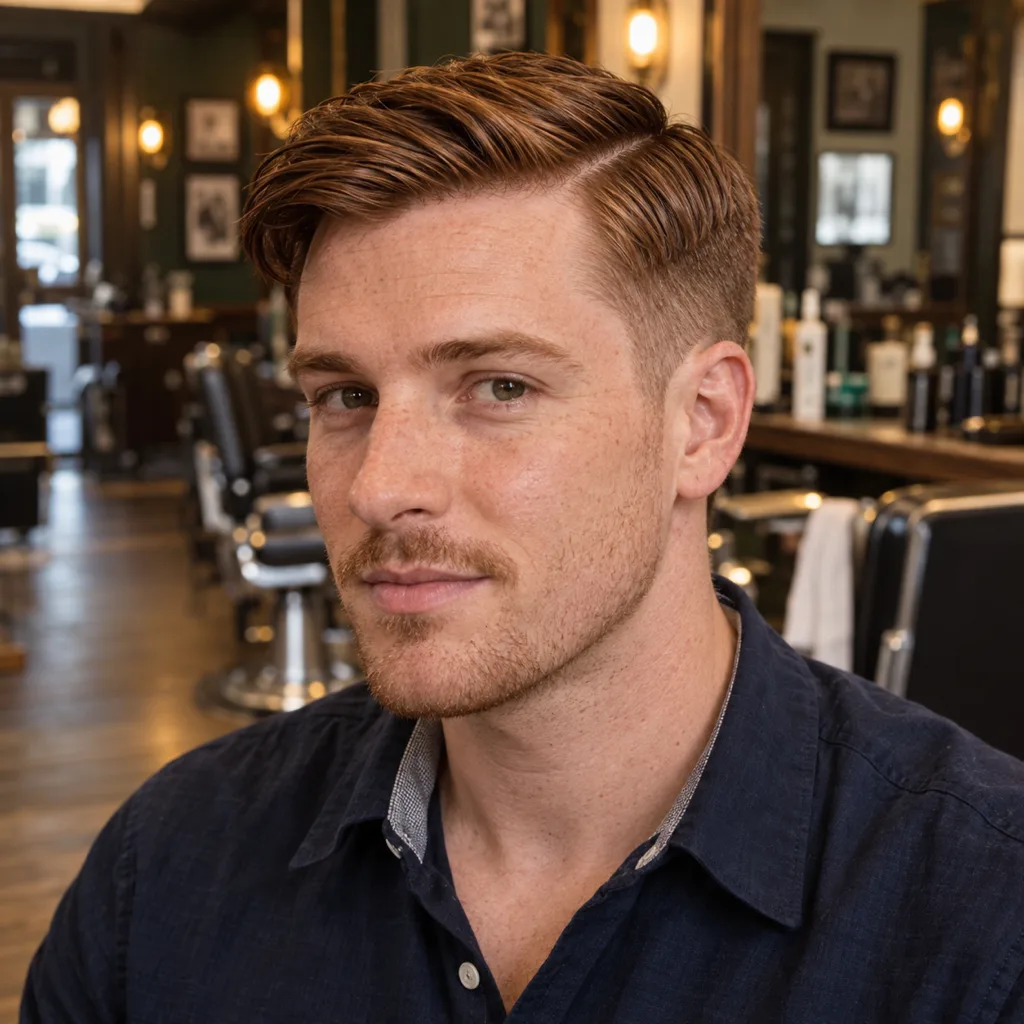
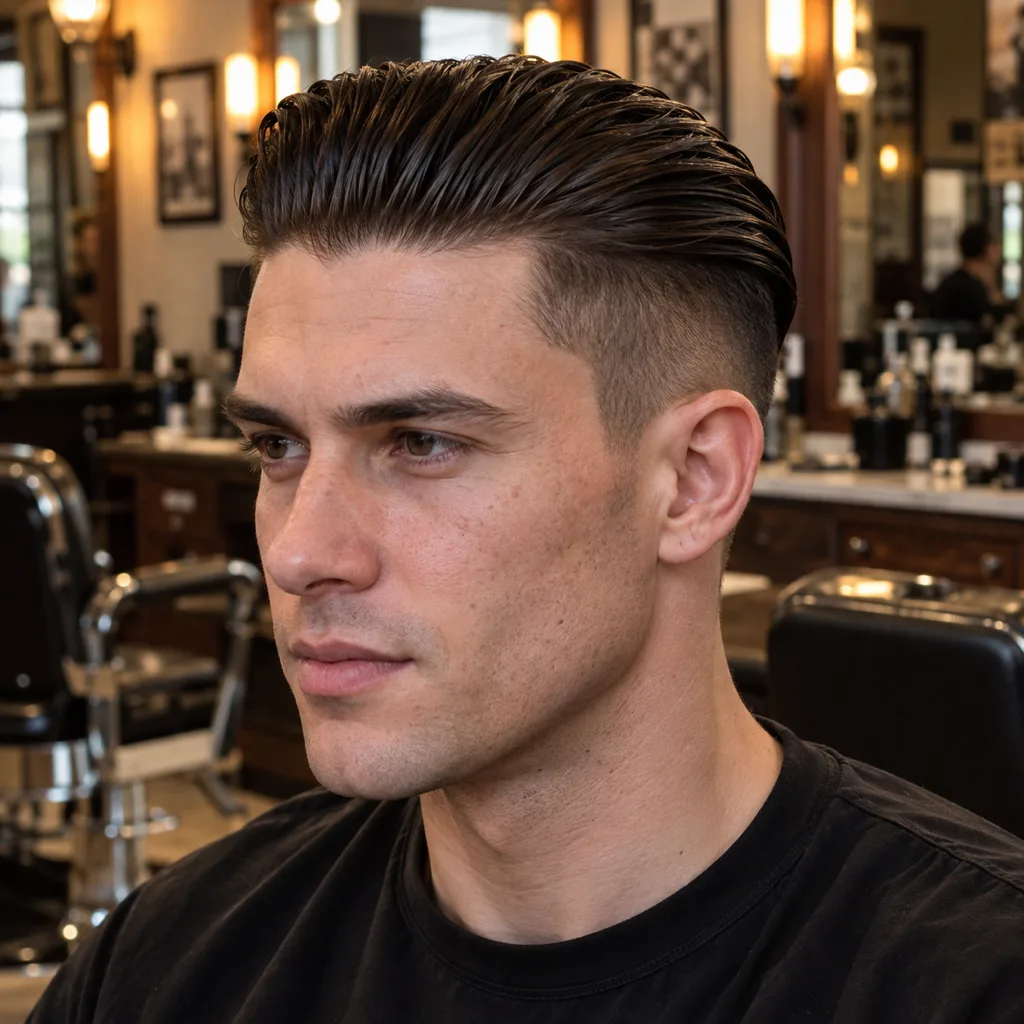
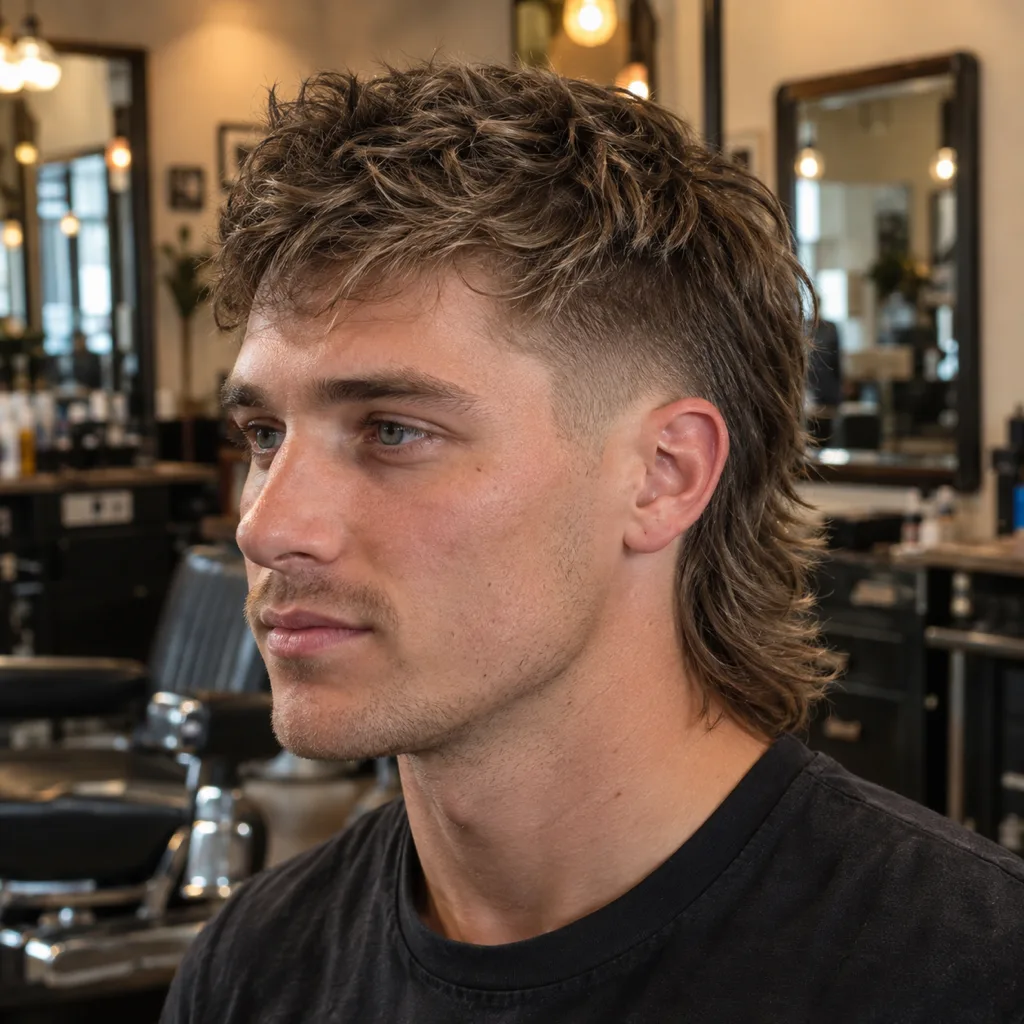
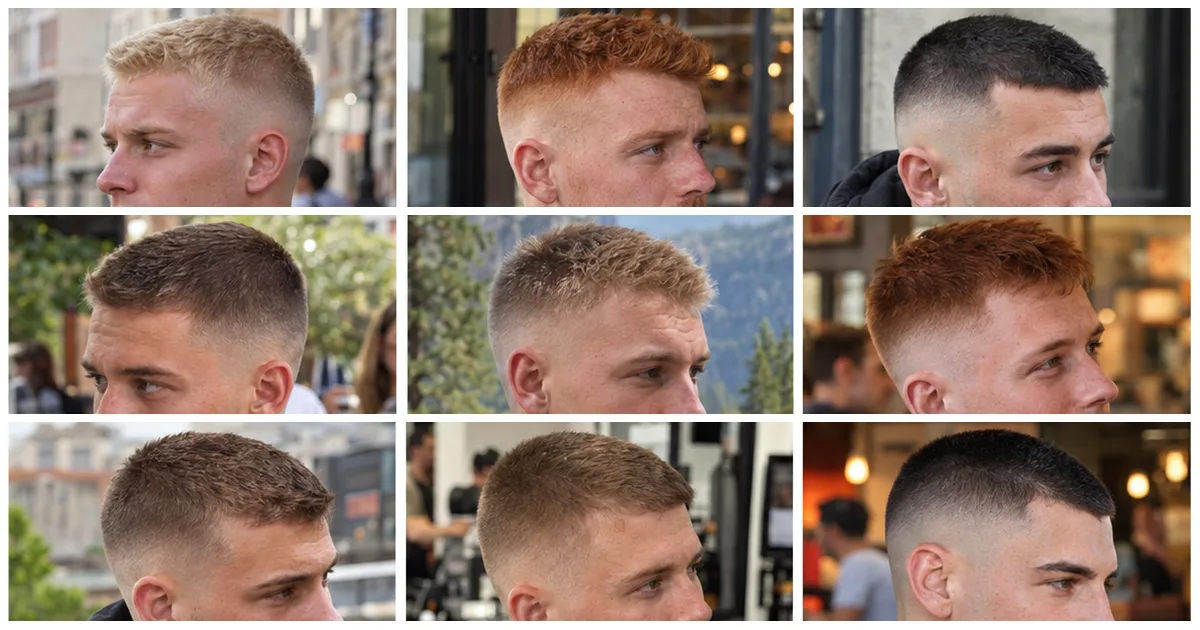
14 men's haircuts, side by side in one shop
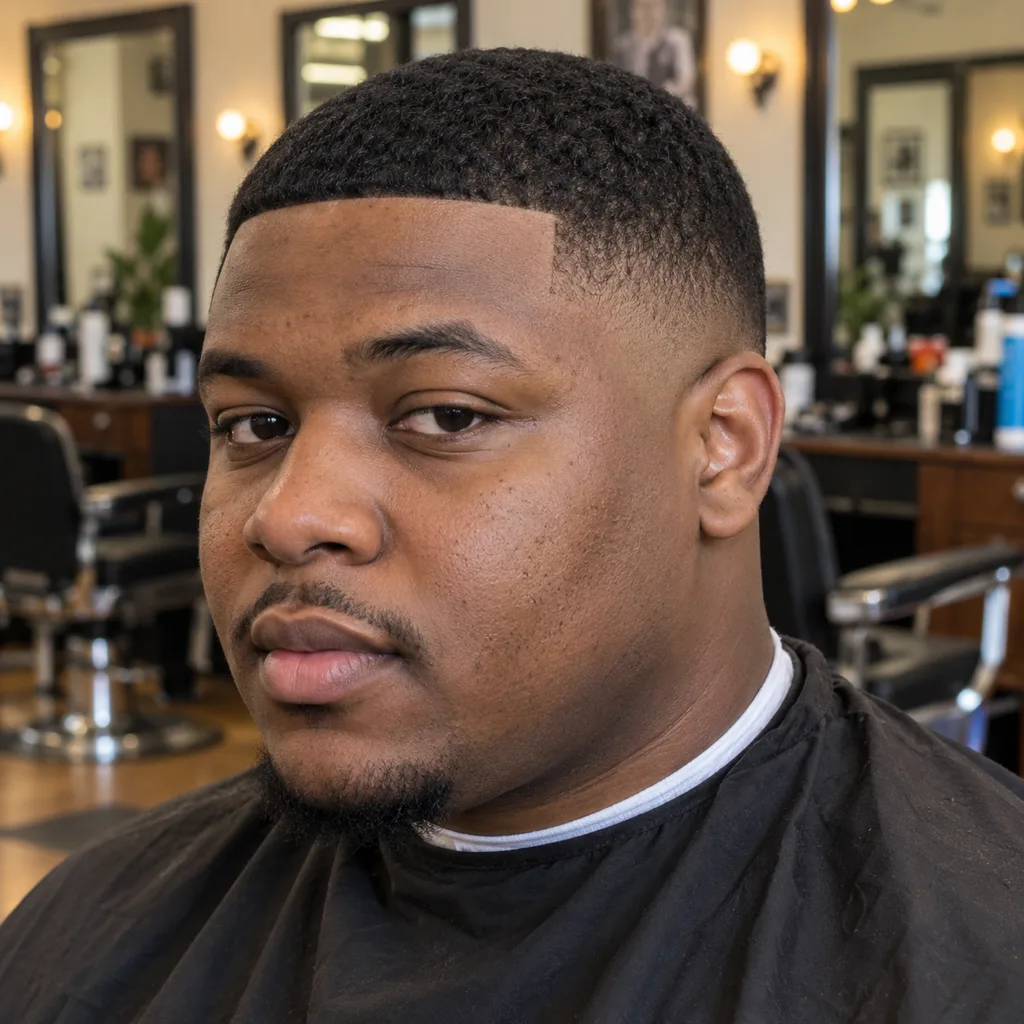
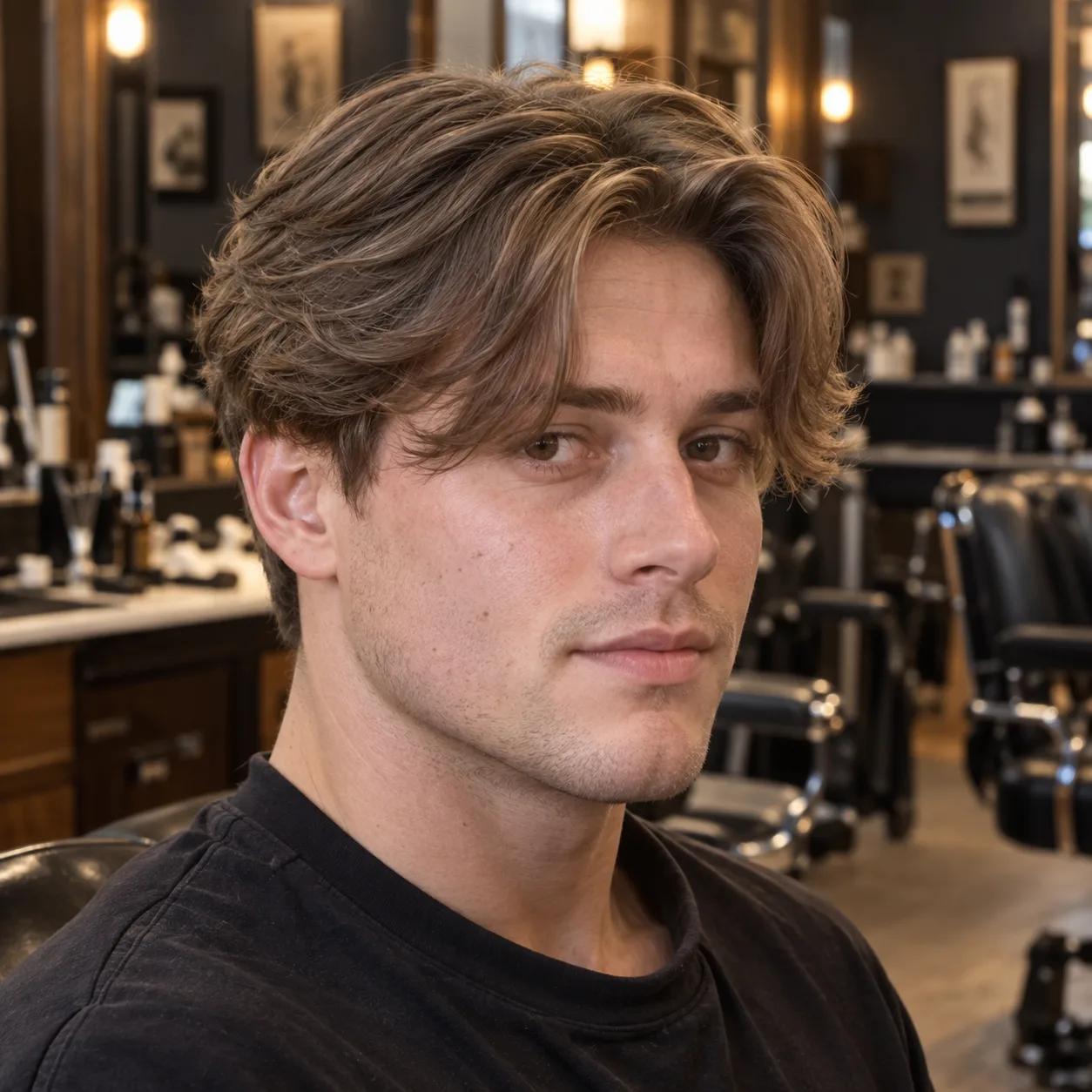
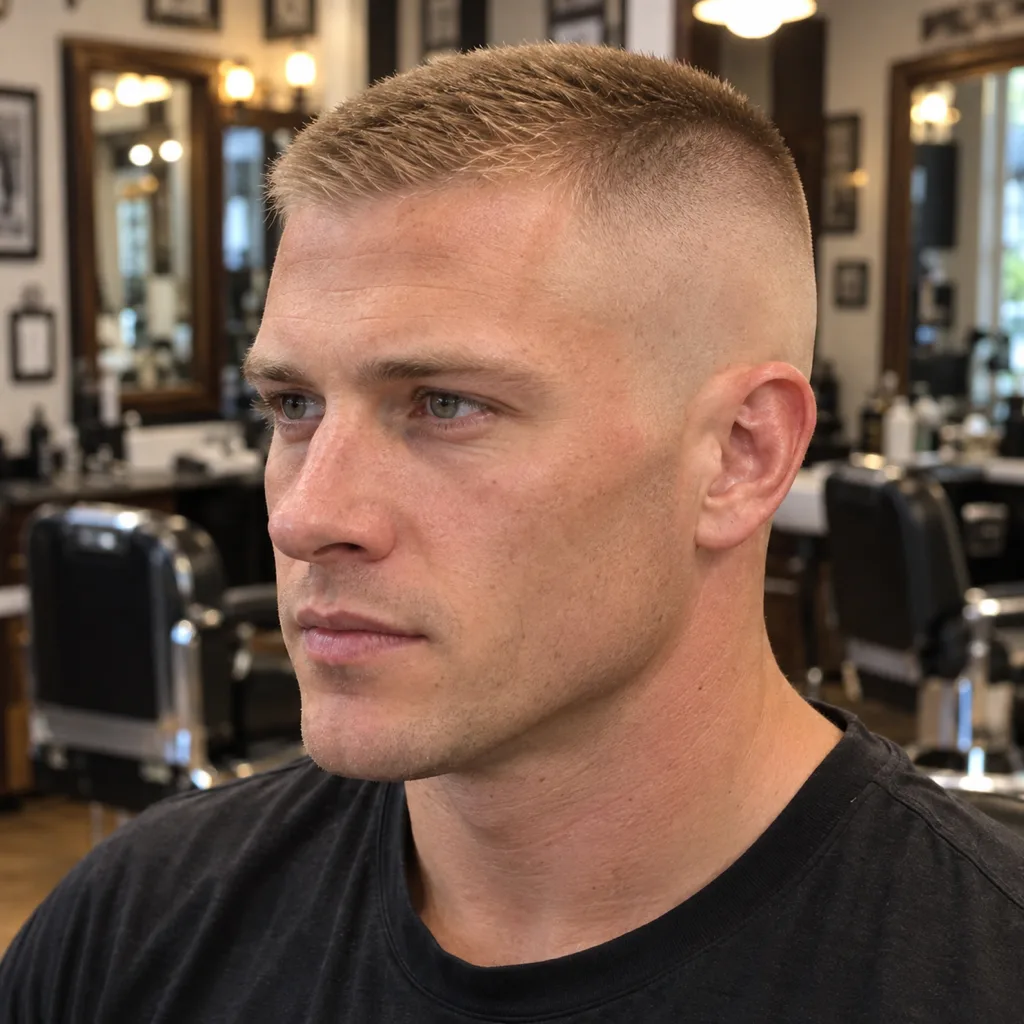
Same barbershop, same angle, same age band. The only thing that changes from tile to tile is the cut, so you can compare the sides and the top directly instead of comparing lighting and photographers.
Gallery14 photos · tap to enlarge
 Try this on me
 Try this on me
 Try this on me
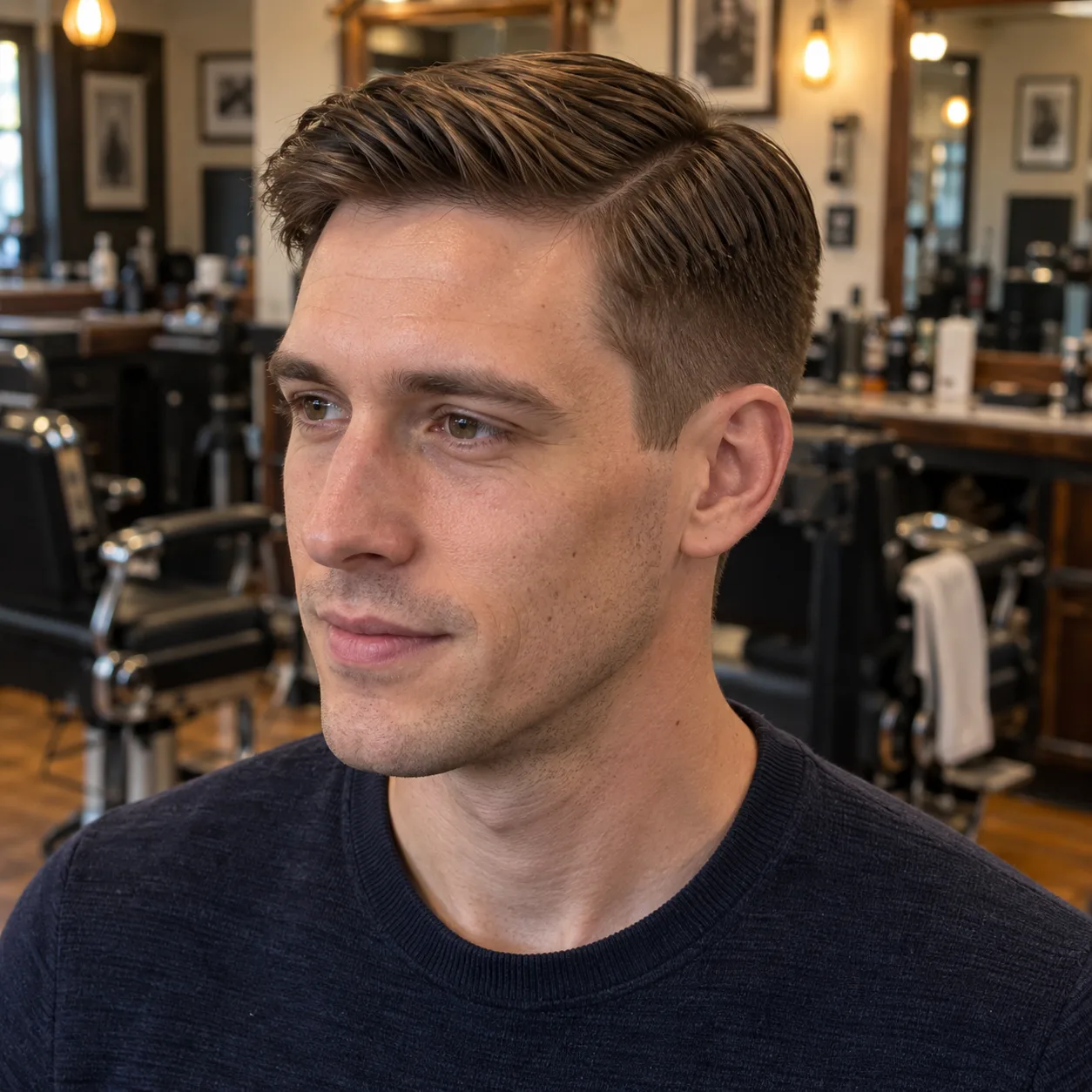 Try this on me
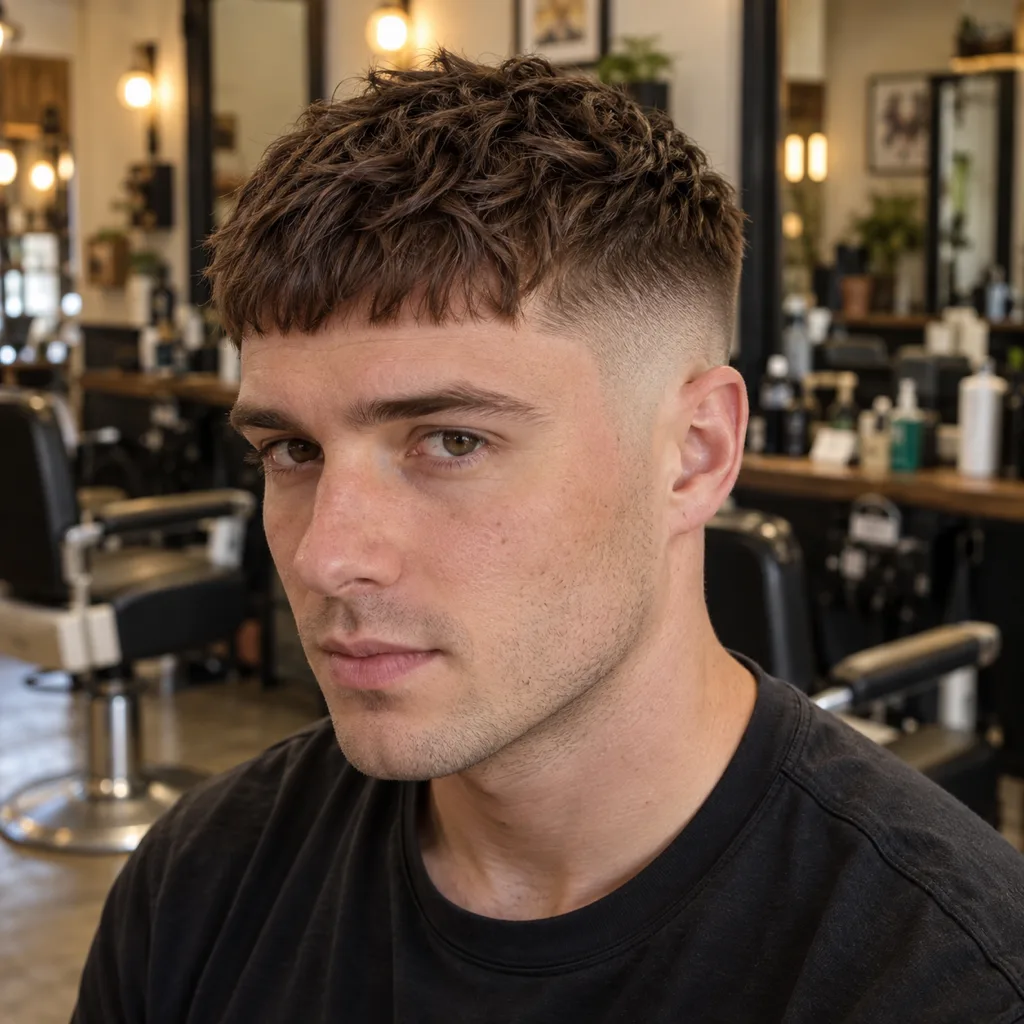 Try this on me
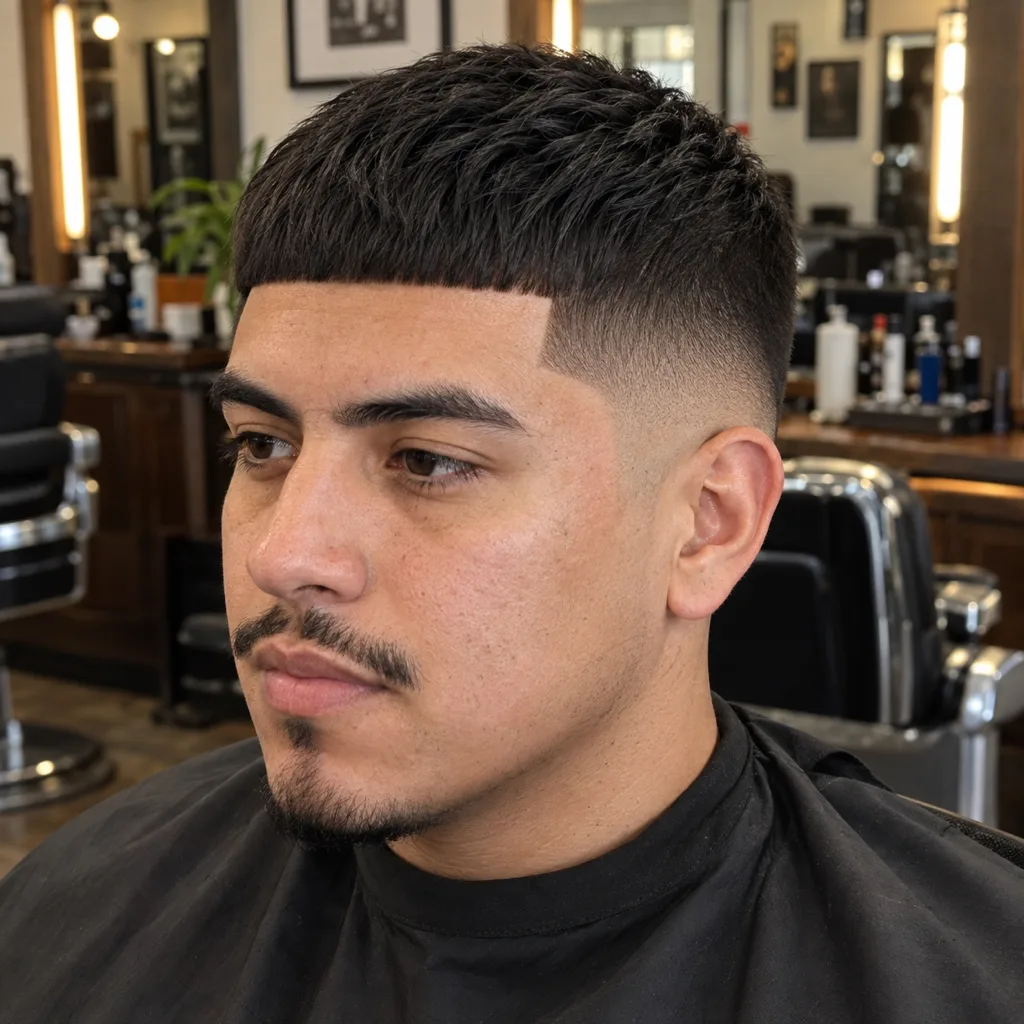 Try this on me
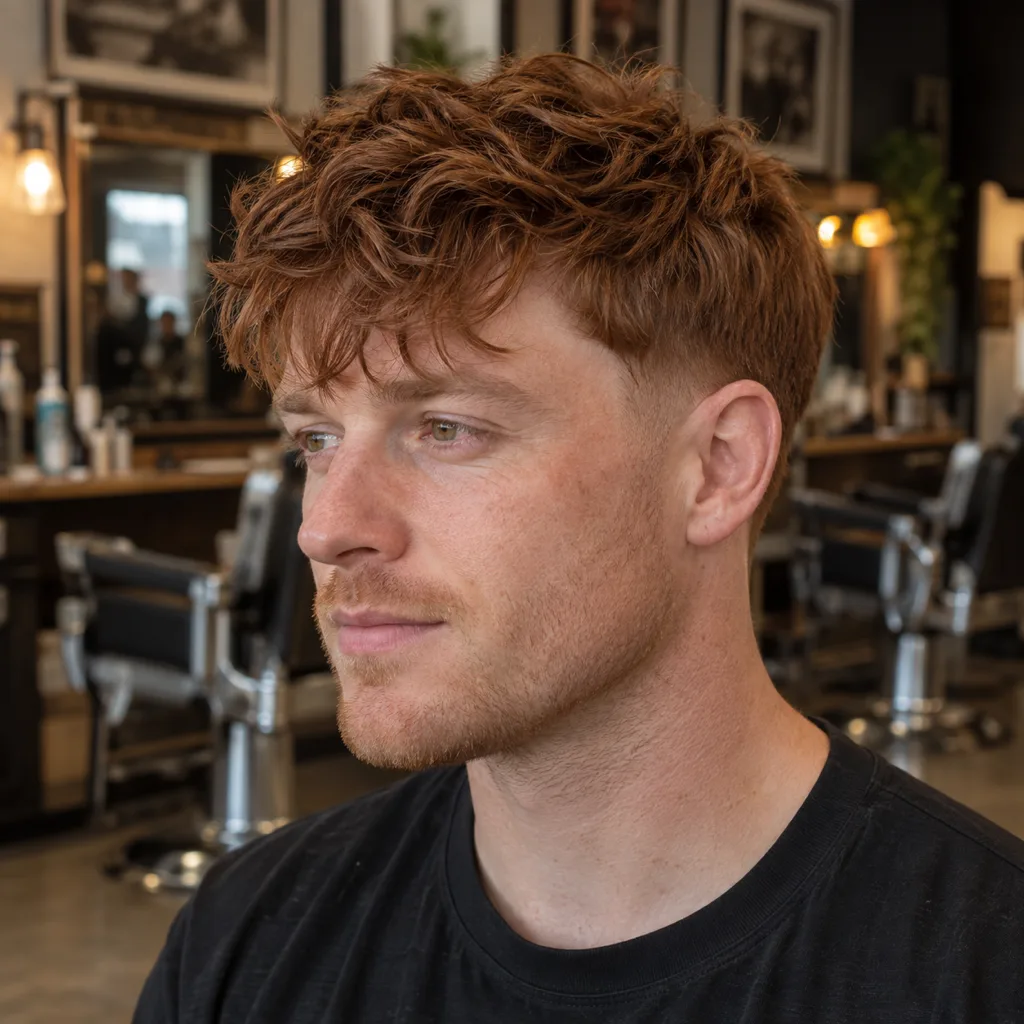 Try this on me
 Try this on me
 Try this on me
 Try this on me
 Try this on me
 Try this on me
 Try this on me
 Try this on me
Notice how many of them share the same sides. The crop, the Edgar, the quiff and the side part are nearly identical below the temple. What separates them is the top: its length, its direction, and whether the fringe is cut straight or broken up. That is why the top is the decision worth spending time on, and the sides are mostly a question of how often you want to come back. The fade guide shows every fade height side by side if the sides are what you are stuck on.
Yours could be here.
Start with one selfie.
One photo, twenty seconds, and you'll know. Free account, no card for your first render.
Haircut numbers: what 1, 2, 3 and 4 mean
The number is the guard clipped onto the clippers, and it sets how much hair is left. Each step adds an eighth of an inch. A 1 leaves an eighth of an inch, a 2 a quarter, a 4 half an inch, and an 8 a full inch.
| Guard | Hair left | Roughly | What it looks like |
|---|---|---|---|
| 0 (no guard) | Under 1/16 inch | 1 mm | Scalp shows clearly |
| 1 | 1/8 inch | 3 mm | Shadow of hair, scalp visible |
| 2 | 1/4 inch | 6 mm | Short but covers the scalp |
| 3 | 3/8 inch | 10 mm | Classic short back and sides |
| 4 | 1/2 inch | 13 mm | Soft, still neat |
| 6 | 3/4 inch | 19 mm | Long buzz, starts to lie flat |
| 8 | 1 inch | 25 mm | Longest standard guard |
Guard numbers are close to standard across the big US clipper brands, but not identical, so treat a quarter of an inch as the real instruction and the number as the shortcut. If you plan to cut it yourself, our buzz cut clippers guide covers which kits come with which guards.
The 3:2:1 rule
The 3:2:1 rule is shop shorthand rather than a fixed standard, but the common version grades the sides in three bands: a 1 at the very bottom around the ear and nape, a 2 in the middle, and a 3 just below where the head starts to curve over. Some barbers instead read it as a 3 on top, a 2 on the sides and a 1 at the edges. The result is a graduation you can see in three steps rather than a seamless fade.
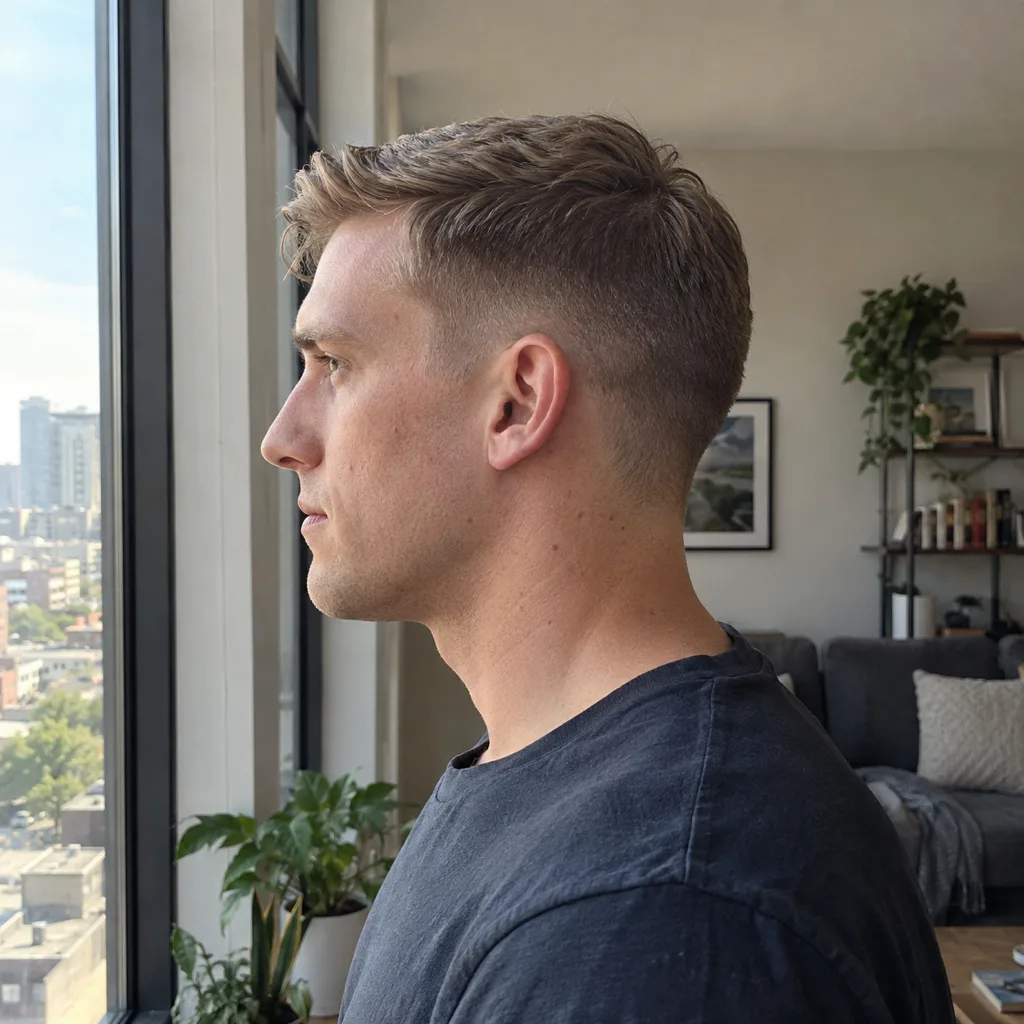
It is the haircut your dad got, and it is still a good one. It never shows scalp, it grows out evenly, and any barber can do it in fifteen minutes. If you want it softer, ask for the steps to be blended so the lines between the numbers disappear.
Which men's haircut suits your face and hair?
Face shape decides where the volume goes. Hair type decides how much length the top can hold. Find your row, then read the section under it.
| Your situation | Go for | Avoid | Why |
|---|---|---|---|
| Round face | Quiff, textured crop, high taper | Curtains, buzz cut | Height on top and tight sides make the face read longer |
| Long or oblong face | Low taper fringe, Ivy League, curtains | Tall quiff, high and tight | A fringe and some side weight shorten the face |
| Square jaw | Almost anything, buzz included | Nothing in particular | The jaw carries short sides and hard lines |
| Curly or coily hair | Taper with 3 inches or more on top | Short crops | Curl needs length to form a loop |
| Fine or thinning hair | Short blunt crop, crew cut | Long flow, slick back | Short, blunt ends read thicker |
| Thick coarse hair | Fade with a thinned top | Long sides | Thick hair grows out as well as up |
Round face
You want height and narrow sides. A mid fade with four inches pushed up and back is the strongest move, because it adds length to the face where a round face needs it and takes width off where it does not.
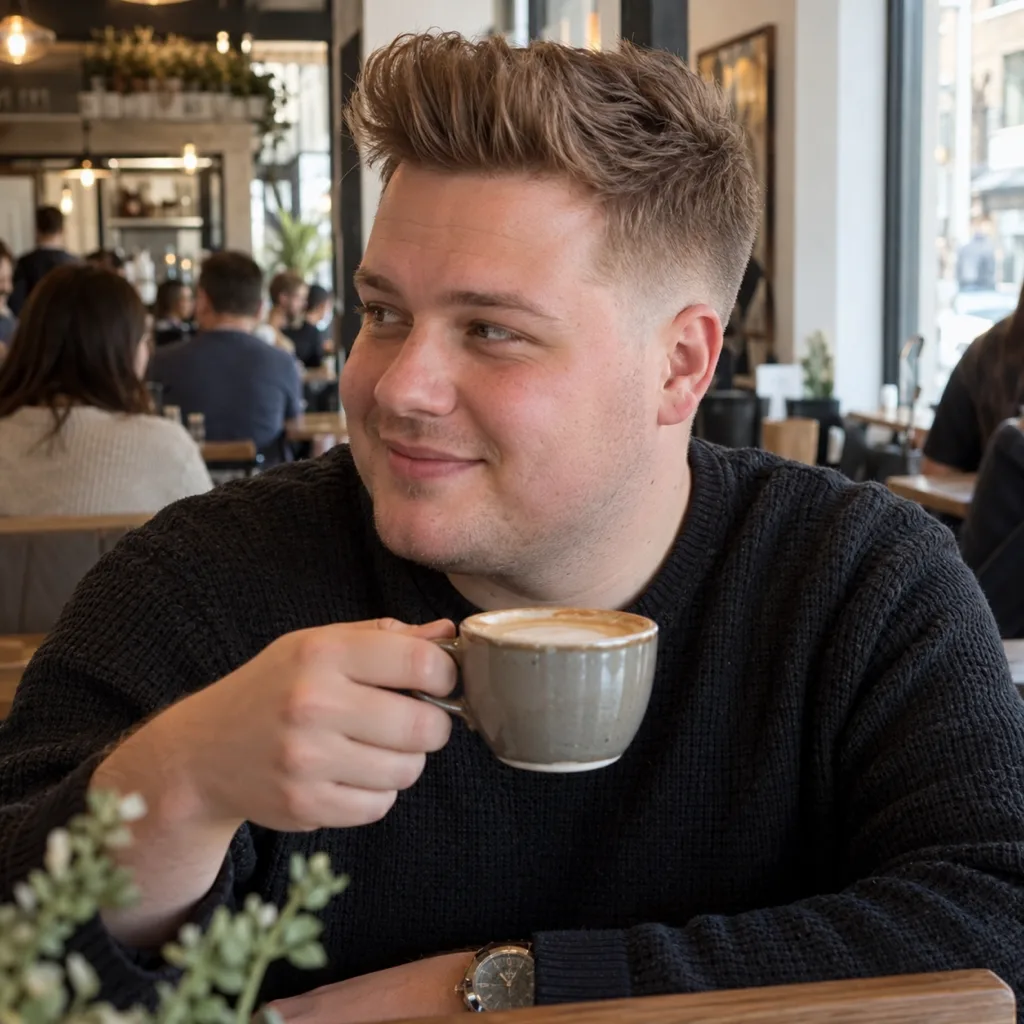
A heavy fringe straight across the forehead does the opposite: it cuts the face into a wider rectangle. If you like a fringe, wear it short and broken up, not long and blunt.
Long face
Keep some weight at the sides and bring the fringe forward. A low taper with a textured fringe is close to ideal here, and the textured fringe guide breaks down the fringe options one by one. Skip anything tall. A quiff on a long face adds three inches to a face that did not need them.
Curly hair
Curl needs at least two to three inches to form, so short crops on curly hair usually come out as frizz rather than texture. Keep three inches or more on top and ask for a low taper to take the bulk off around the ears without touching the curl.

We sorted curly cuts for men by curl type if you want the specifics for your pattern.
Fine or thinning hair
Go shorter and blunter than feels natural. Fine hair at three quarters of an inch stands up and looks dense; the same hair at four inches lies flat and shows scalp. Ask for the top to be cut blunt with scissors, not thinned, and wear it forward with a matte product.

Thinning is common, not a personal failing. MedlinePlus puts it at more than half of men over 50 having some degree of hair loss, and it can start in the teens. The cut cannot stop it, but a short blunt top hides it better than any amount of length.
Not sure which face shape you have?
Measure it instead of guessing. The calculator below takes four measurements and tells you which row of the table is yours. Our face shapes guide goes deeper on each shape.
Measure it instead of guessing
Both numbers in the same unit — the answer is a ratio, so it does not matter which.
Under 1.15 reads round, 1.15 to 1.5 reads oval, over 1.5 reads long. Oval and long split on the jaw rather than the ratio: an oval tapers toward the chin, a long face runs straight down.
What is the Gen Z boy haircut called?
There is no single official name, but the cut people mean is a low taper with a messy textured fringe, sometimes called a "taper fringe" or a "mop top with a taper". On curly hair the same idea is nicknamed the broccoli cut: tight sides, a big curly top. The modern mullet sits in the same family, with the length moved to the back.
Mistakes that cost you a month of bad hair
A bad men's haircut takes three to five weeks to grow out. These are the five that cause most of them.
- Saying "short on the sides" without a number. Short means a 1 to one barber and a 4 to the next. Give a guard number.
- Saying "low fade" without pointing. Low and mid are about an inch apart on your head. Put a finger where you want it to stop.
- Going to bare skin on the first visit. A skin fade shows regrowth in ten days. Start at a 1; you can go shorter next time, never longer.
- Asking for a cut your hair cannot hold. A textured crop on fine hair at three inches will lie flat by lunchtime. Match the length to the hair, not the photo.
- Showing a photo of someone else's whole look. The barber copies the cut, not the face, the hair color or the lighting. The photo sets an expectation the chair cannot meet.
How to ask your barber for the cut you want
How to ask for a men's haircut
- Name the base cut
Start with the closest base from the table: crew cut, taper, crop, undercut. It tells the barber which family of technique to reach for.
- Give the sides a number and a height
Say the guard and point to where the short section should stop, for example "a 2, stopping just above the ear".
- Give the top a length in inches
Say "leave two inches on top" or hold up two fingers, then say which way it goes: forward, back, up or parted.
- Ask for a natural neckline
A blocked neckline is a hard straight edge that shows as a ledge in about ten days. A natural or tapered nape stays tidy for a month.
Say this to your barber
Low taper with a 2 at the shortest point, stopping just above the ear, scissors on top leaving about three inches, textured and pushed forward, natural neckline.
Can you see a haircut on yourself before you get it?
Here is the wall every guide on this page hits, this one included. You can study fourteen photos and a table of guard numbers, and you still will not know what any of it looks like on your face, with your hairline and your hair color, until the clippers are already running.
That is what Hairstyle Atlas does. Upload one selfie and the cut is drawn onto your own photo, so you can compare a low taper fringe against a quiff on your actual face before you book. The first look is free with no card: one hairstyle, and one color on it, from the front. More cuts and angles start at $9 a month on the pricing page. If you want to browse men's cuts first, the men's hairstyle try-on has the full catalogue.
If you want one answer, get a low taper with two to three inches on top, textured and pushed forward. It suits more faces than any other cut here, it grows out without a line, and it gives you options at the next visit. Everything else on this page is that cut with one number changed.
Learn the three numbers, point at your head, and you will stop leaving the barbershop with somebody else's idea of your haircut. For the wider picture on styling and growing it out, our hairstyles for men guide picks up where this one ends.
Frequently asked questions
Short sides with textured length on top. The low taper with a forward textured fringe leads, followed by the quiff, the modern mullet, curtains and the textured crop. Slick high-shine styles and high skin fades are on the way out.
Usually a taper fringe or textured mop: a low taper on the sides with a messy fringe falling forward. On curly hair the same shape is nicknamed the broccoli cut.
Buzz cut, crew cut, Ivy League, textured crop, taper with length on top, undercut, and long hair cut with scissors only. Most named styles are one of these seven with a different top.
It grades the sides in three steps: a number 1 guard at the bottom, a 2 in the middle and a 3 near the top of the sides. The result is a classic short back and sides that never shows scalp.
They are clipper guard numbers. Each one adds an eighth of an inch: a 1 leaves 1/8 inch, a 2 leaves 1/4 inch, a 3 leaves 3/8 inch and a 4 leaves 1/2 inch.
A cut with height on top and tight sides, such as a quiff or textured crop over a mid fade. It makes the face read longer. Avoid blunt fringes and cuts that add width at the sides.
Shorter at the sides and longer on top. Length at the sides adds width, while height on top adds length to the face, which is what a round face needs.
A Korean style where the sides and back are clipped short and the top is left long enough to drape over them with no blend between the two. It is a soft version of the undercut.
Preview it on your own photo: Men's Hairstyle Try-On.
Share article
About the author

More articles
Men's Haircuts · 15 min
Buzz Cut Fade: 14 Fade Types and How to Pick Yours
With a quarter inch on top, the fade is the whole haircut. Fourteen buzz cut fades compared, which one suits your face shape, the 3-2-1 rule, and the exact words for your barber.
Men's Haircuts · 14 min
Benny Blanco Haircut: The Fake Half Shave and the Real Curls
Benny Blanco did not shave half his head. It was a prosthetic bald cap, and the buzz cuts are AI. Here is what his curly mop actually is, the short version, and exactly what to tell your barber.
Men's Haircuts · 16 min
1A Hair: How to Tell If You Have It + 14 Cuts That Work
1A hair is pin-straight with no bend from root to tip. How to tell it from 1B and 1C, why it goes flat, 14 haircuts that work on it, and how to style it for volume.