Fino Hair Mask: Who It Suits, How to Use It, and Its Limit
Oleh Onysko 30 September 2026 15 min read
In this article
The Fino hair mask is a Japanese rinse-out treatment, sold in a 230g jar as Shiseido Fino Premium Touch, that makes dry, damaged lengths look and feel smooth and shiny within one use. It works mostly by coating the hair with conditioning agents and silicones, so it is excellent at hiding damage and cannot remove it.
That one fact decides whether you will love it. On thick, dry, bleached or heat-styled hair it is one of the best value masks you can buy. On fine, flat hair it can leave the lengths limp by day two. And no mask, this one included, mends a split end. Below: what is in the jar, who it suits, exactly how to use it, what goes wrong, and what to do when the ends are past saving.
What the Fino hair mask actually is
Fino Premium Touch is a deep conditioning mask from Japan. It launched under Shiseido, and the brand now sits with Fine Today, the company Shiseido's personal care line became in 2021, but the jar still says Shiseido and that is the name people search. It went viral on TikTok for one reason: the difference is visible after a single wash.
The ingredient list on retailer listings starts with water, sorbitol, dimethicone, hydrogenated rapeseed oil alcohol, isopentyldiol, behentrimonium chloride and aminopropyl dimethicone. In plain terms: a humectant to hold water, two silicones to smooth and seal, a fatty alcohol for slip, and a conditioning agent that sticks to the damaged, negatively charged parts of the hair. The marketing talks about royal jelly and "seven beauty essences". Those are real ingredients, but they sit well down the list. The silicones and conditioners are doing the work you see.
That is not a knock. Silicones and cationic conditioners are the standard, well-studied tools for reducing friction and frizz on damaged hair, which is why they appear in almost every salon conditioner. A review of hair cosmetics in the International Journal of Trichology explains why: they flatten the raised cuticle and cut the static and friction that make hair look rough. What they do not do is glue a split strand back together. The shine lasts until you wash it out, which is why the result fades over two or three shampoos and you use it again.
Fino hair mask vs regular conditioner vs a salon treatment
The short version: Fino is a stronger, heavier conditioner, not a bond repair treatment.
| Regular conditioner | Fino Premium Touch mask | Salon bond or gloss treatment | |
|---|---|---|---|
| What it does | Detangles, light smoothing | Heavy smoothing, visible shine, softer ends | Repairs broken bonds or adds tone and shine |
| Time on hair | 1 to 2 minutes | 5 to 10 minutes | 20 to 45 minutes |
| How long it lasts | Until the next wash | 2 to 3 washes | Weeks |
| Fixes split ends | No | No, hides them | No, only a trim does |
| Best for | Everyone, daily | Dry, thick, bleached or heat-styled hair | Heavily bleached or chemically damaged hair |
| Contains silicones | Usually | Yes | Varies |
If your hair is bleached to the point of snapping, a mask is a patch, and you need a bond treatment and a trim as well. If it is simply dry, rough and frizzy at the ends, Fino alone is often enough.
What Fino-level shine looks like on every hair color
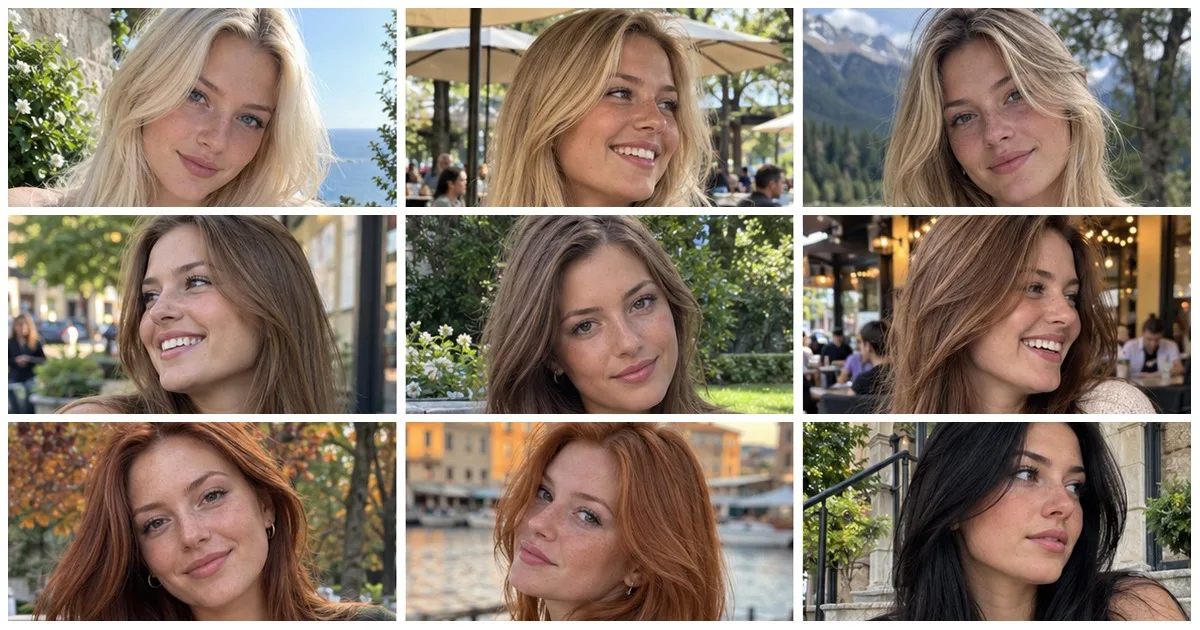
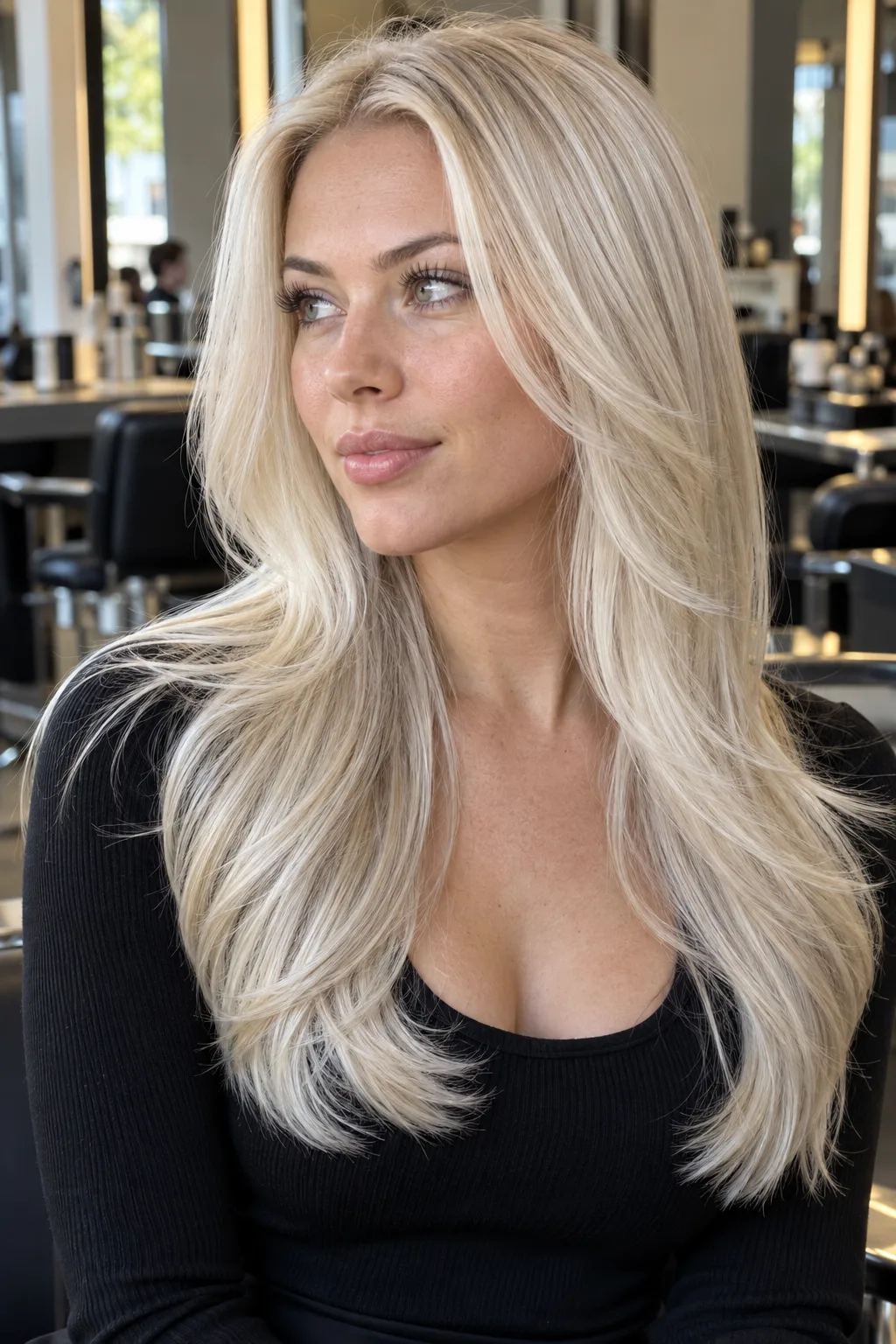
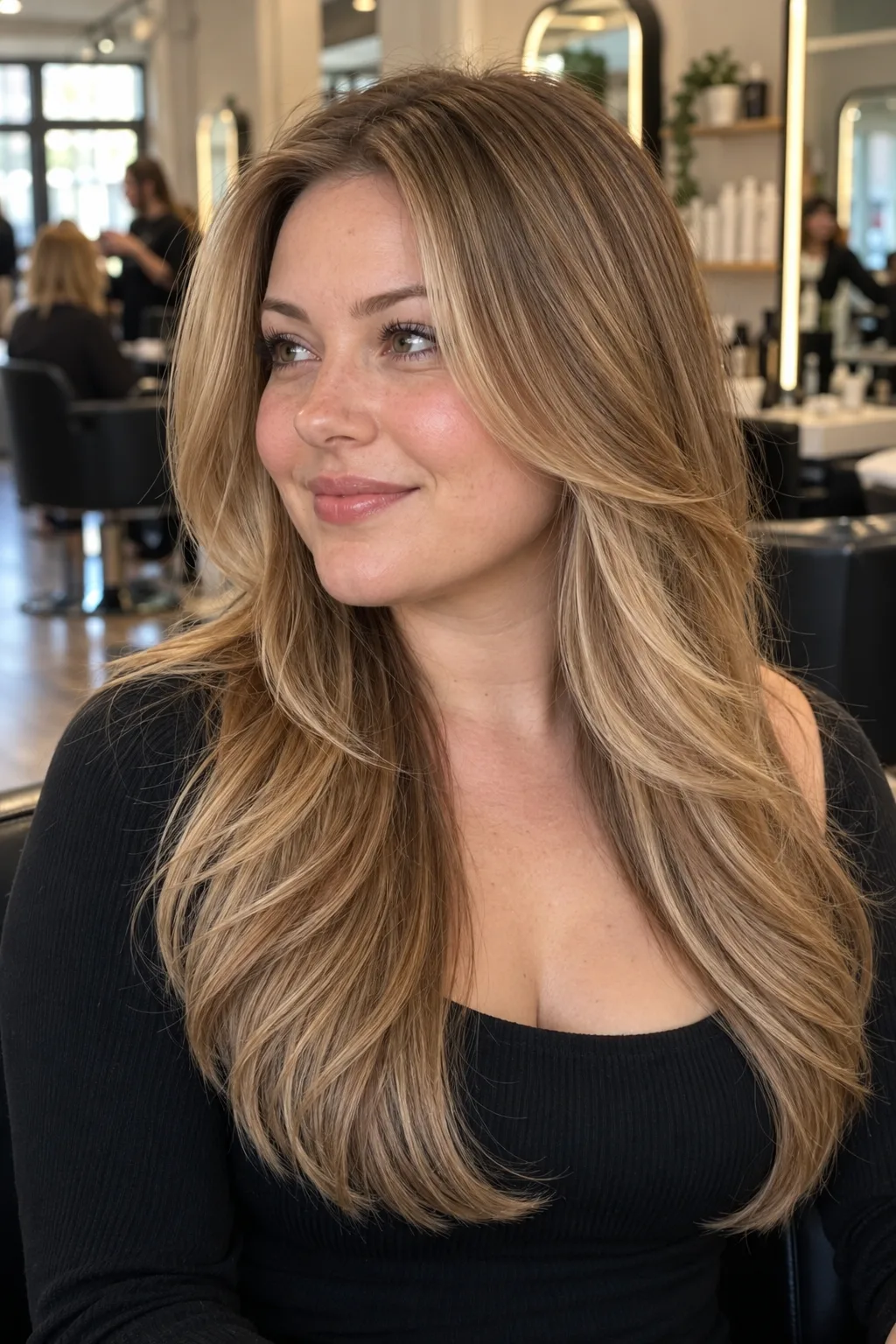
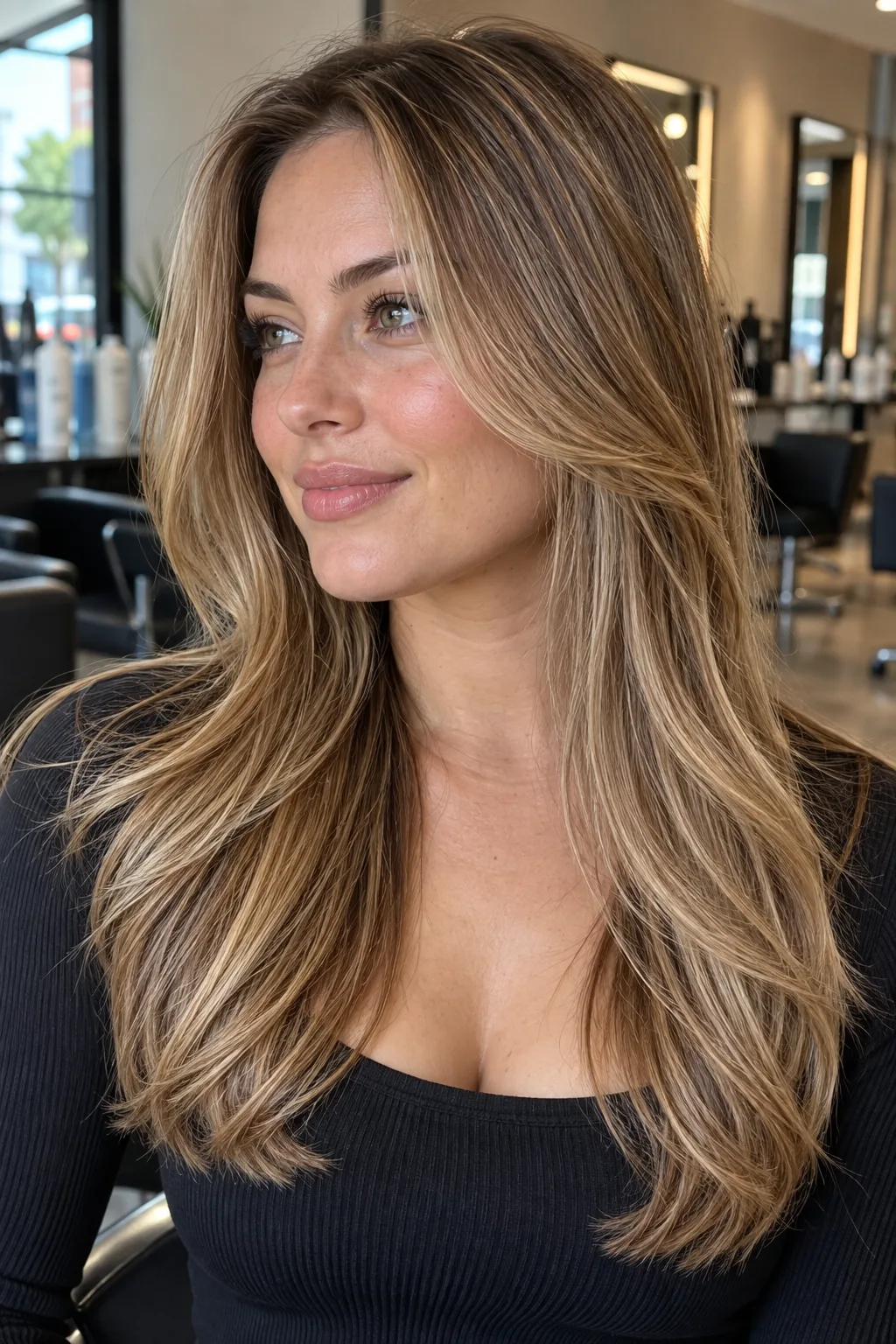
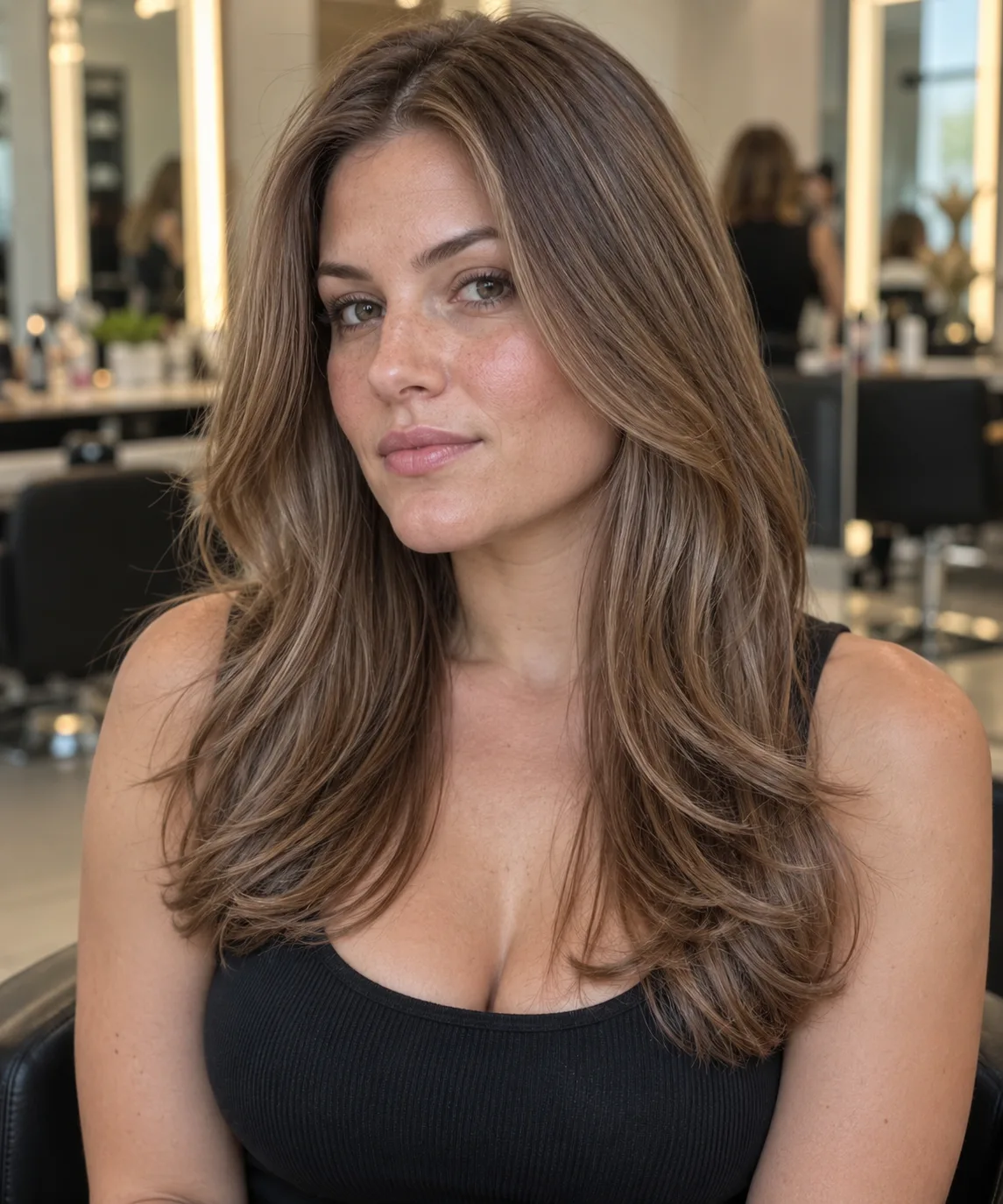
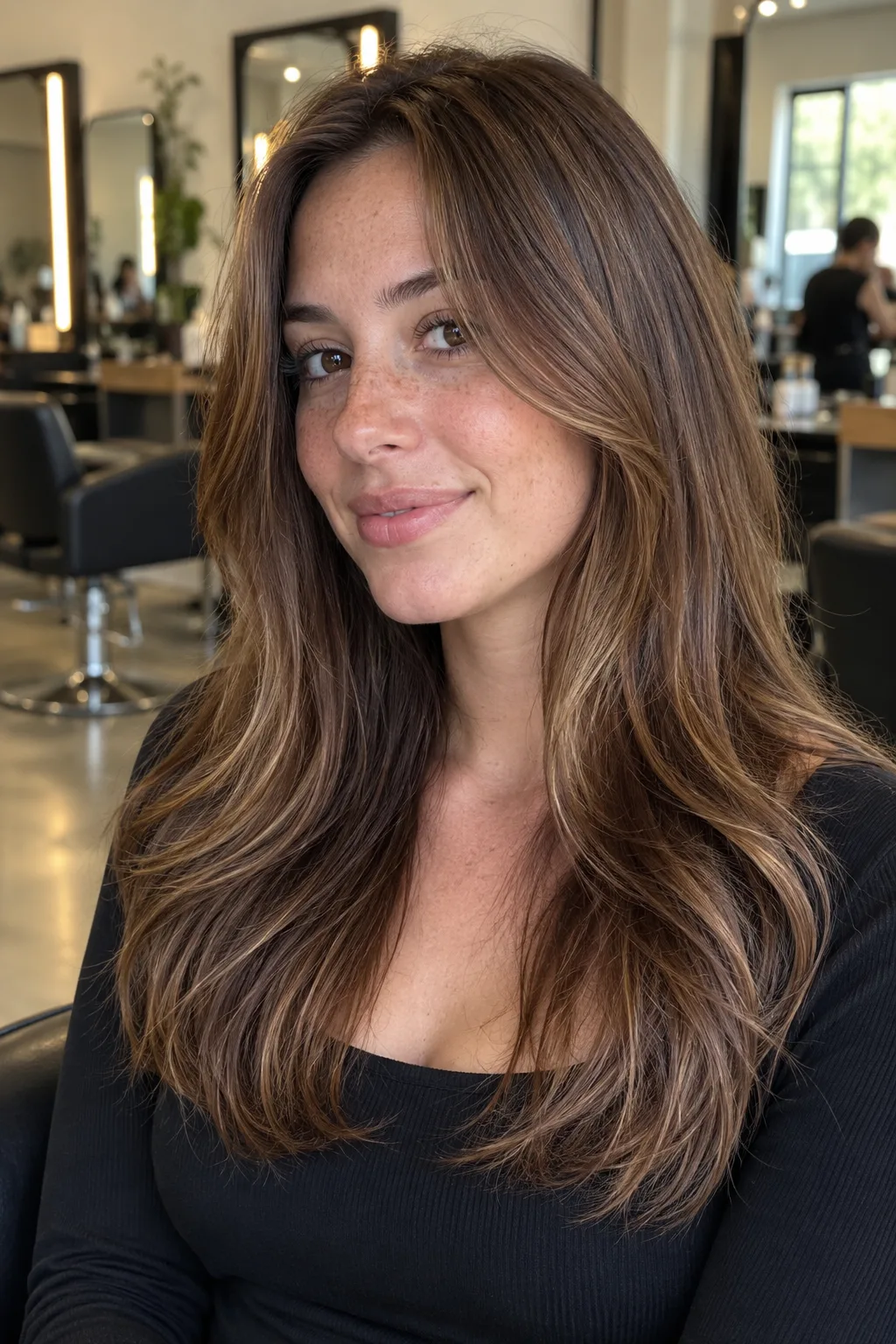
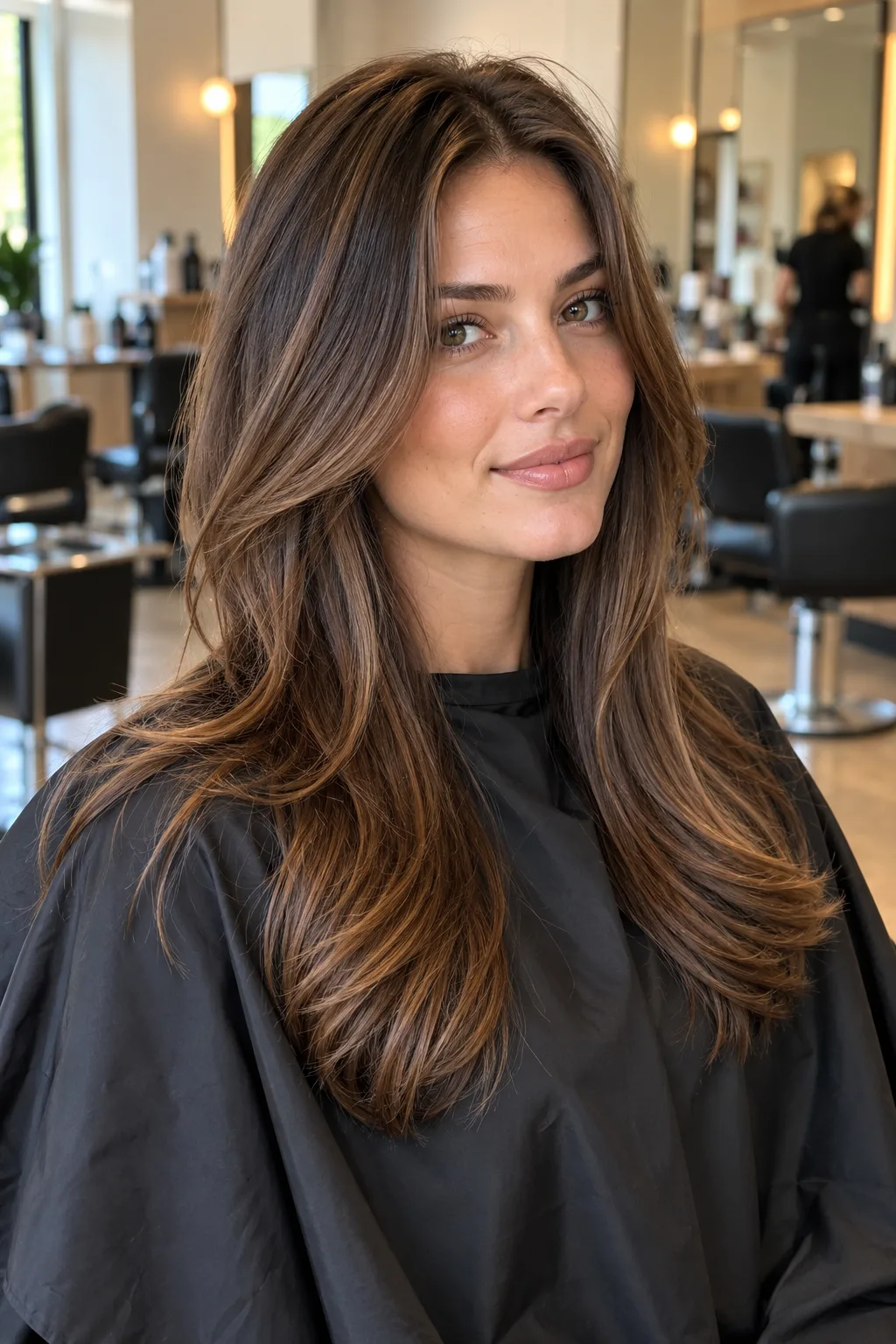
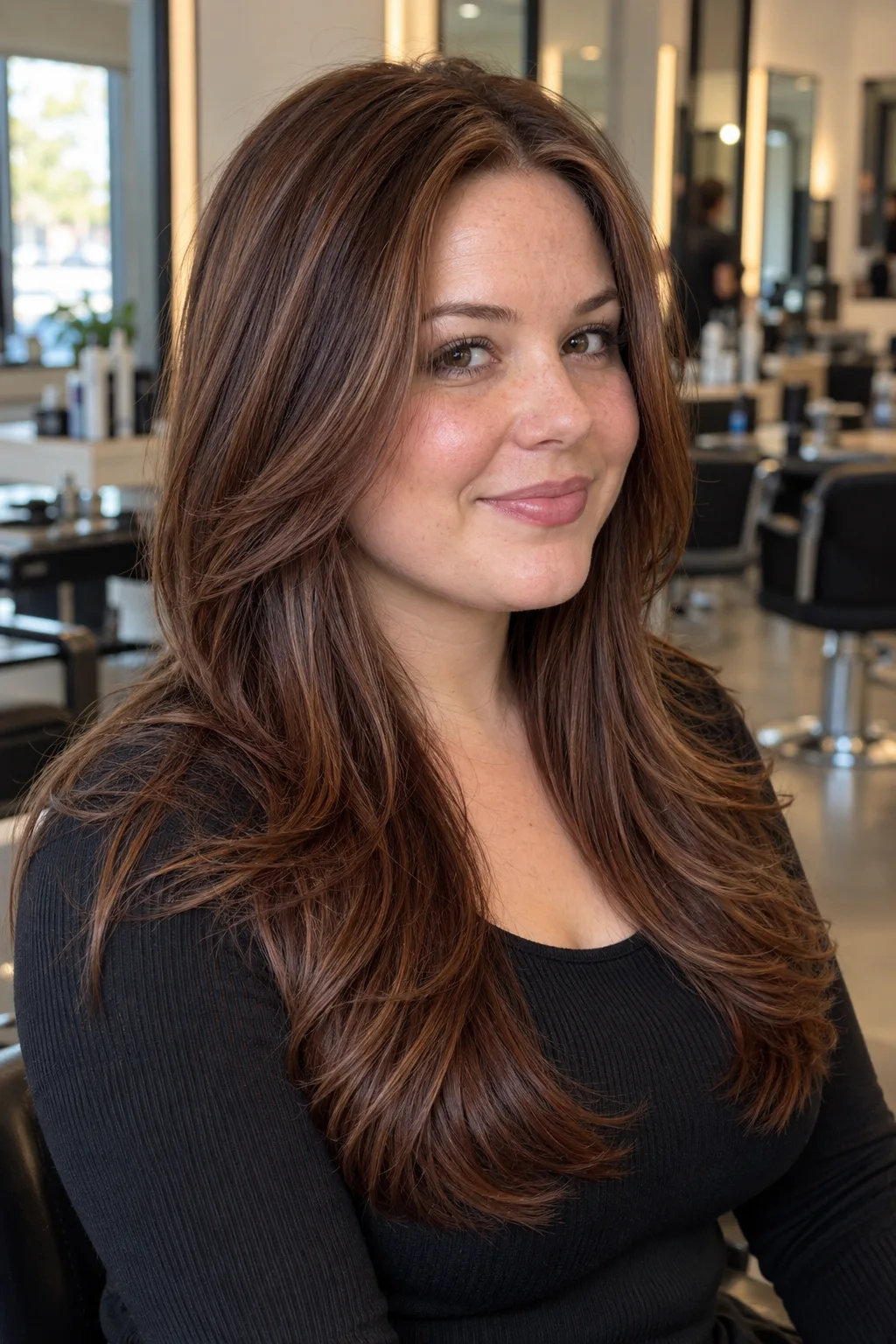
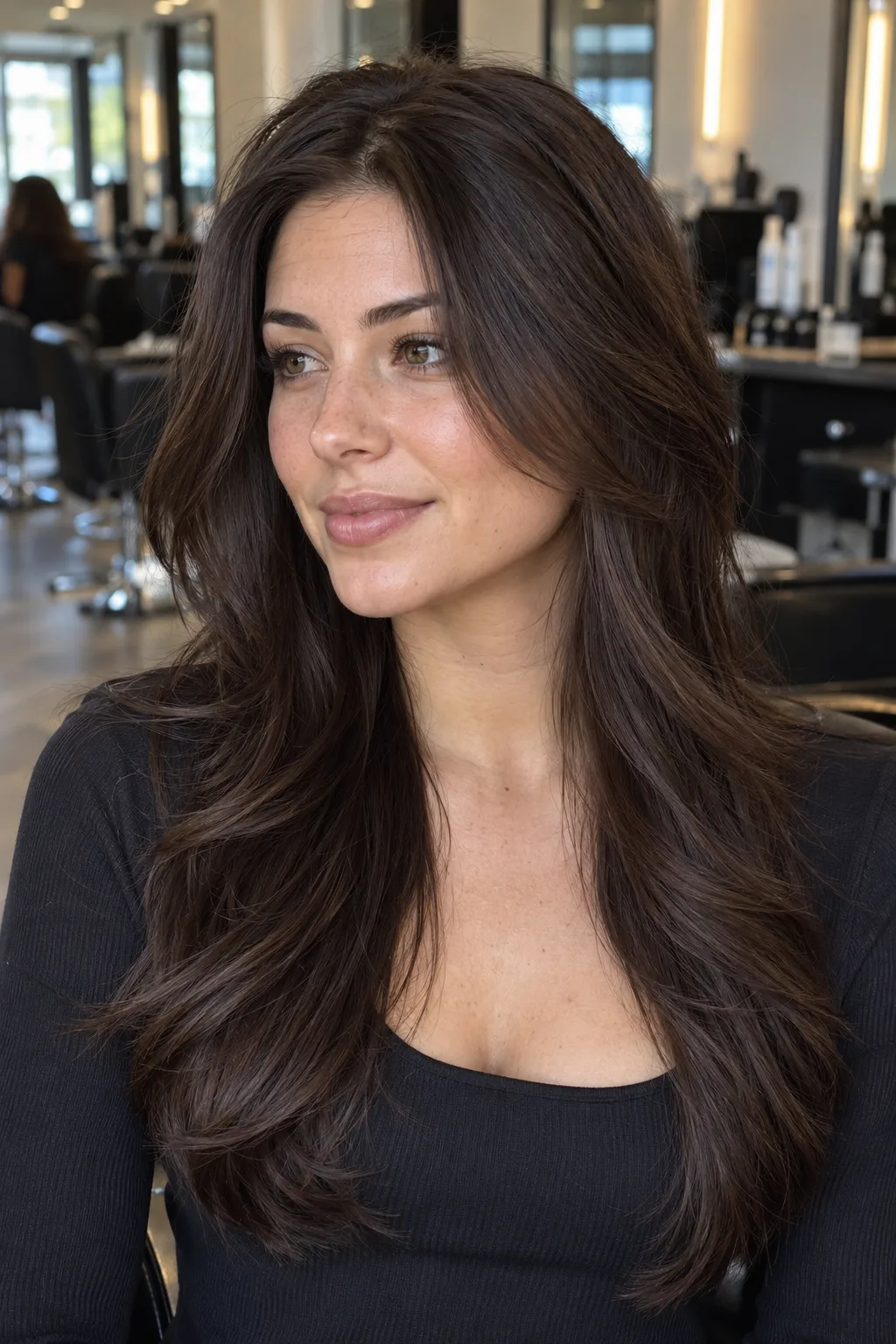
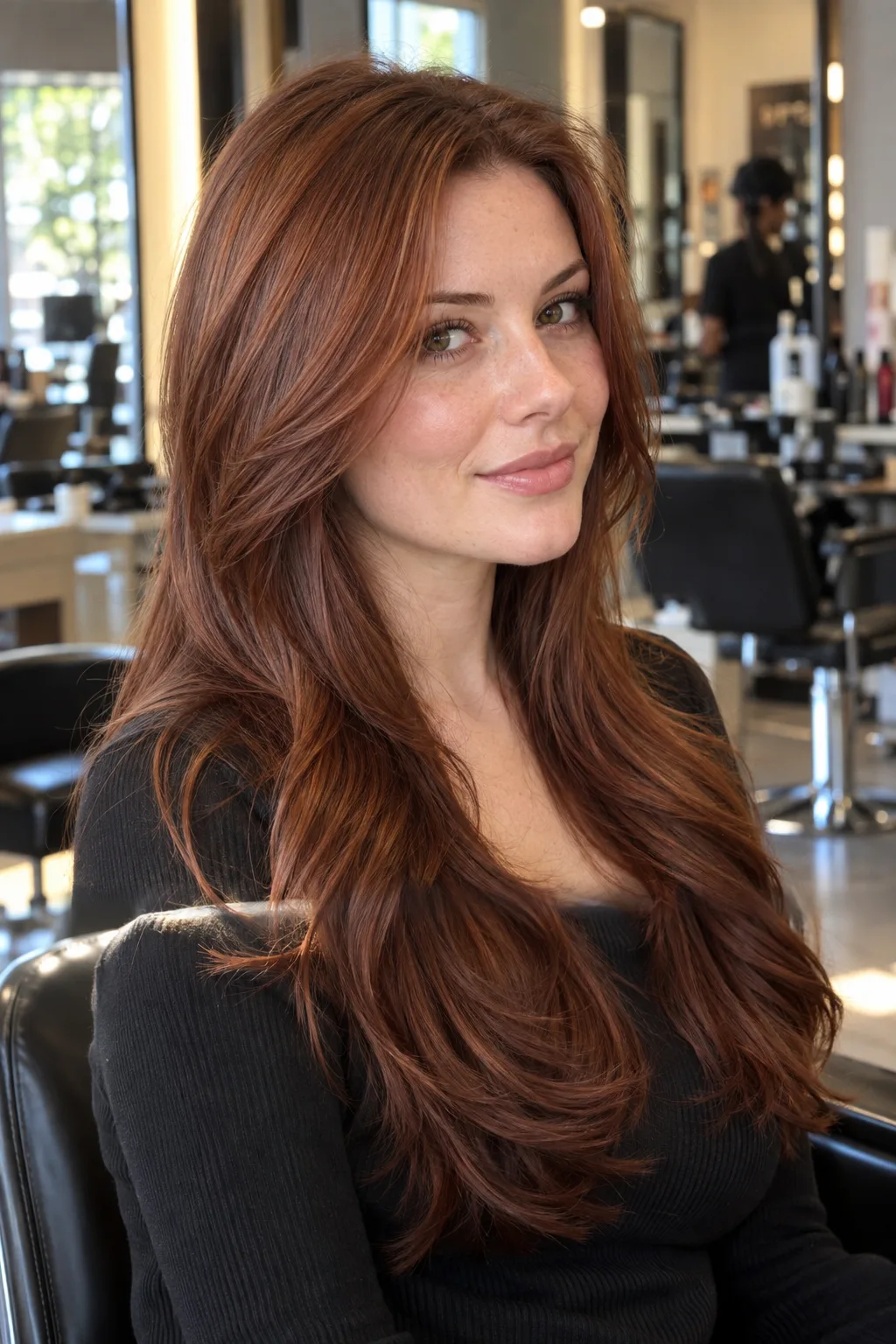
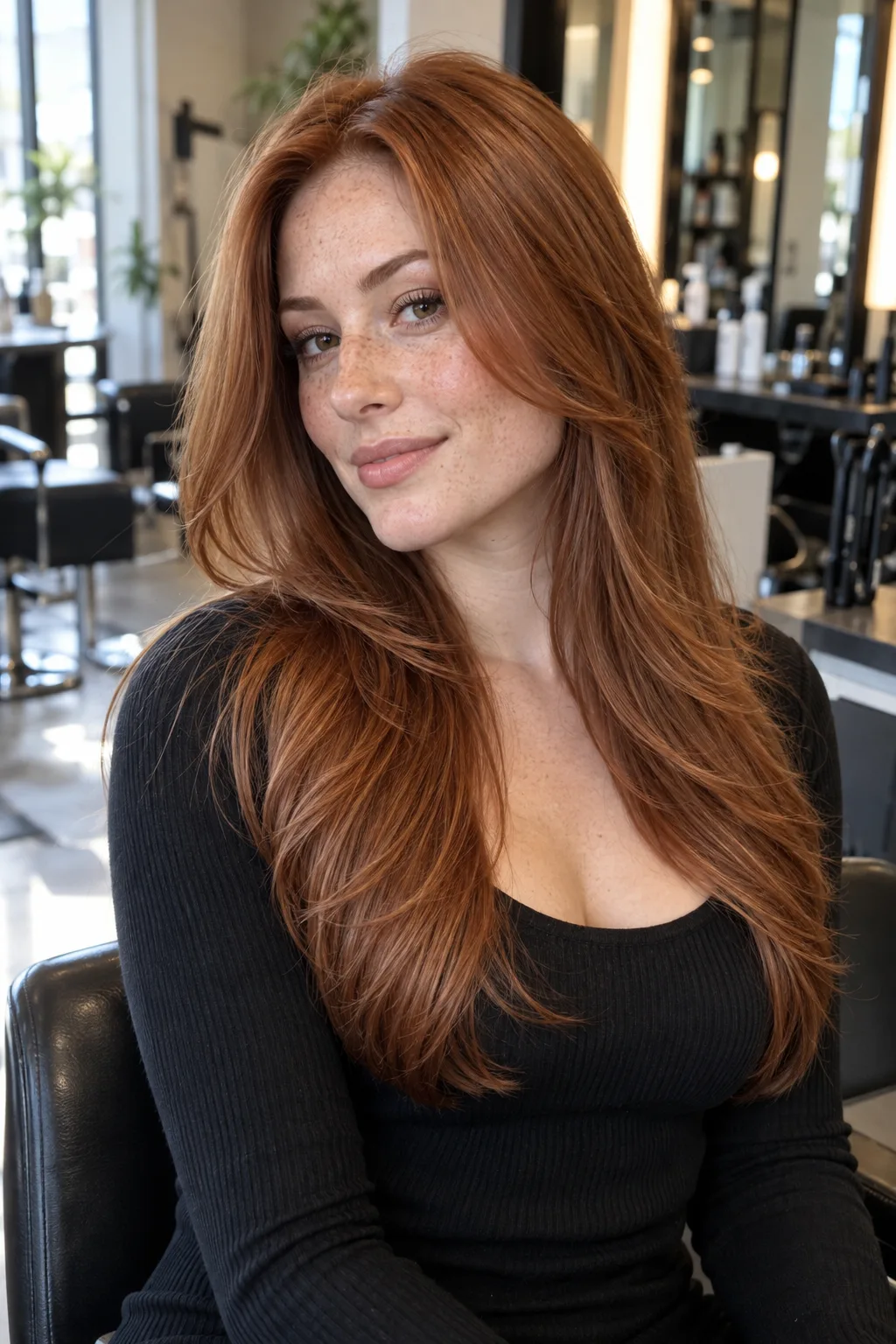
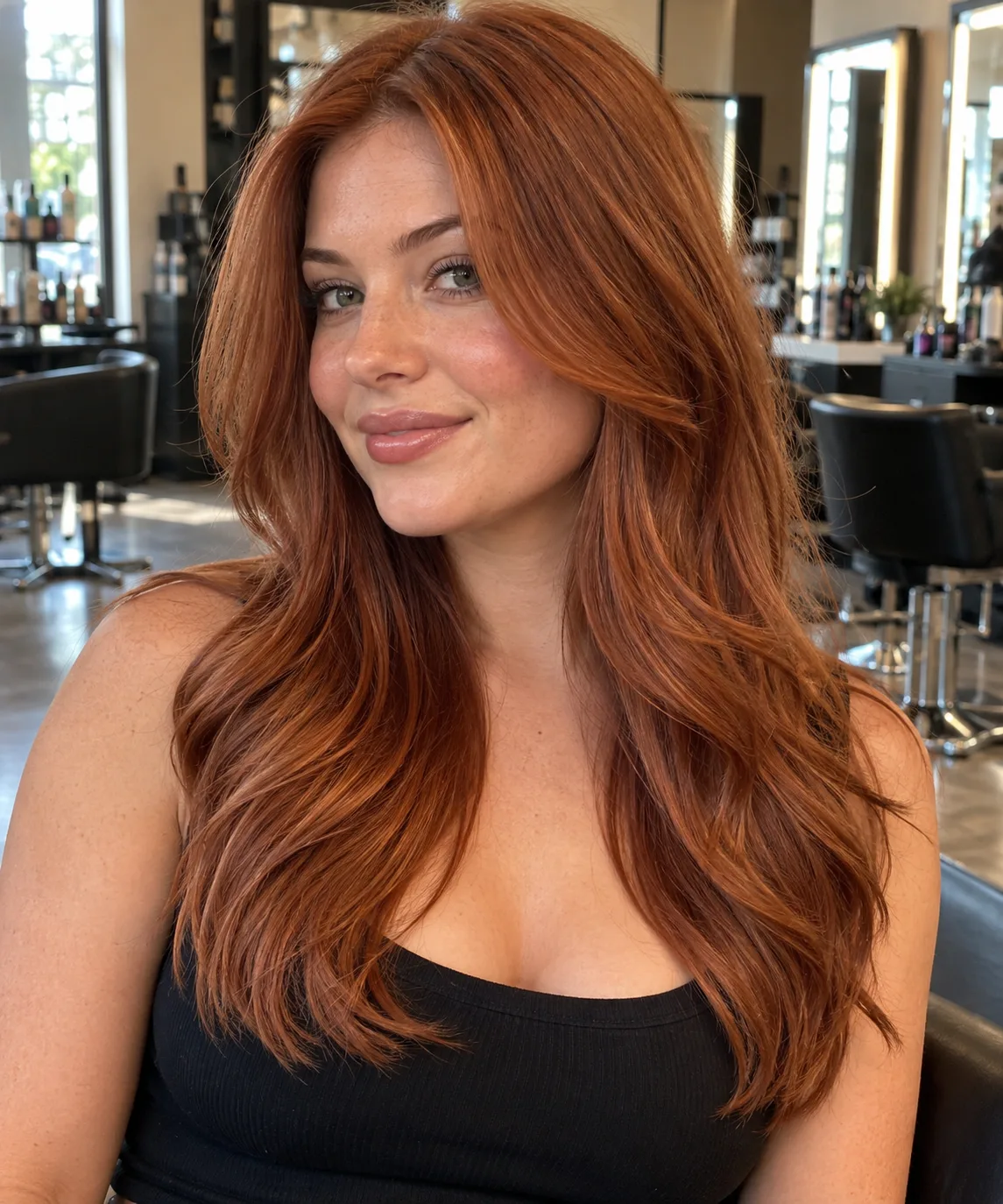
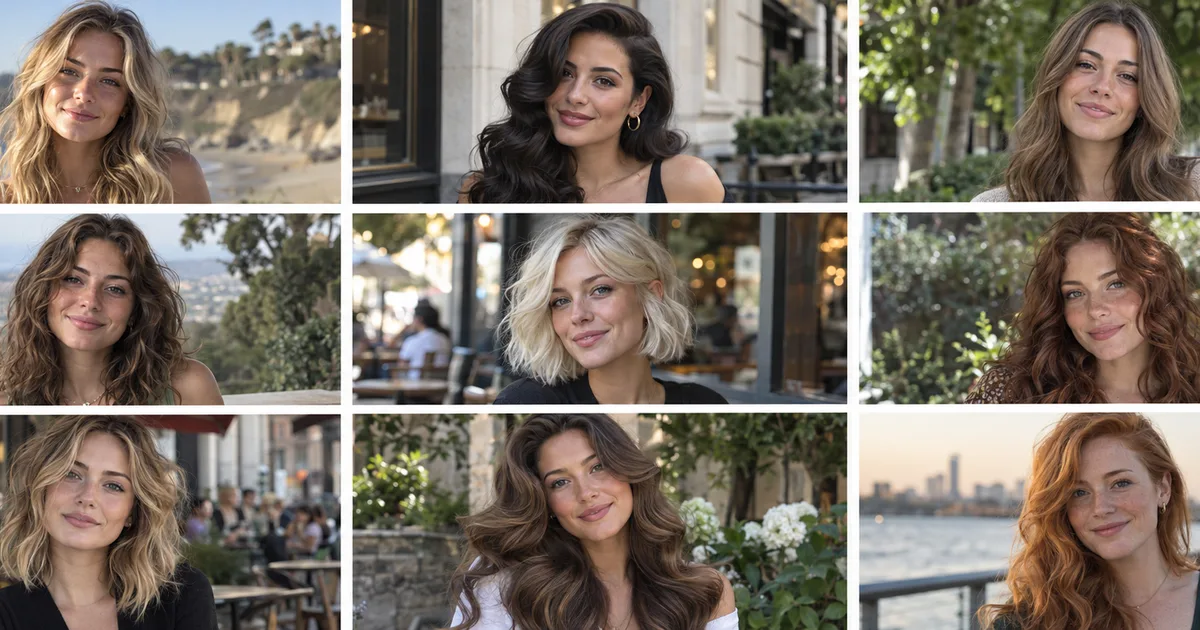
Shine reads differently depending on color, and that is worth knowing before you buy anything that promises gloss. Every picture below is the same cut, long face-framing layers finished smooth, with nothing changed but the color. Light blondes show softness more than shine. Dark brown and black show the strongest band of light. Reds and coppers look most damaged when dry and gain the most from a mask, because a rough surface scatters light and dulls the color.
Gallery14 photos · tap to enlarge
 Try this on me
 Try this on me
 Try this on me
 Try this on me
 Try this on me
 Try this on me
 Try this on me
 Try this on me
 Try this on me
 Try this on me
 Try this on me
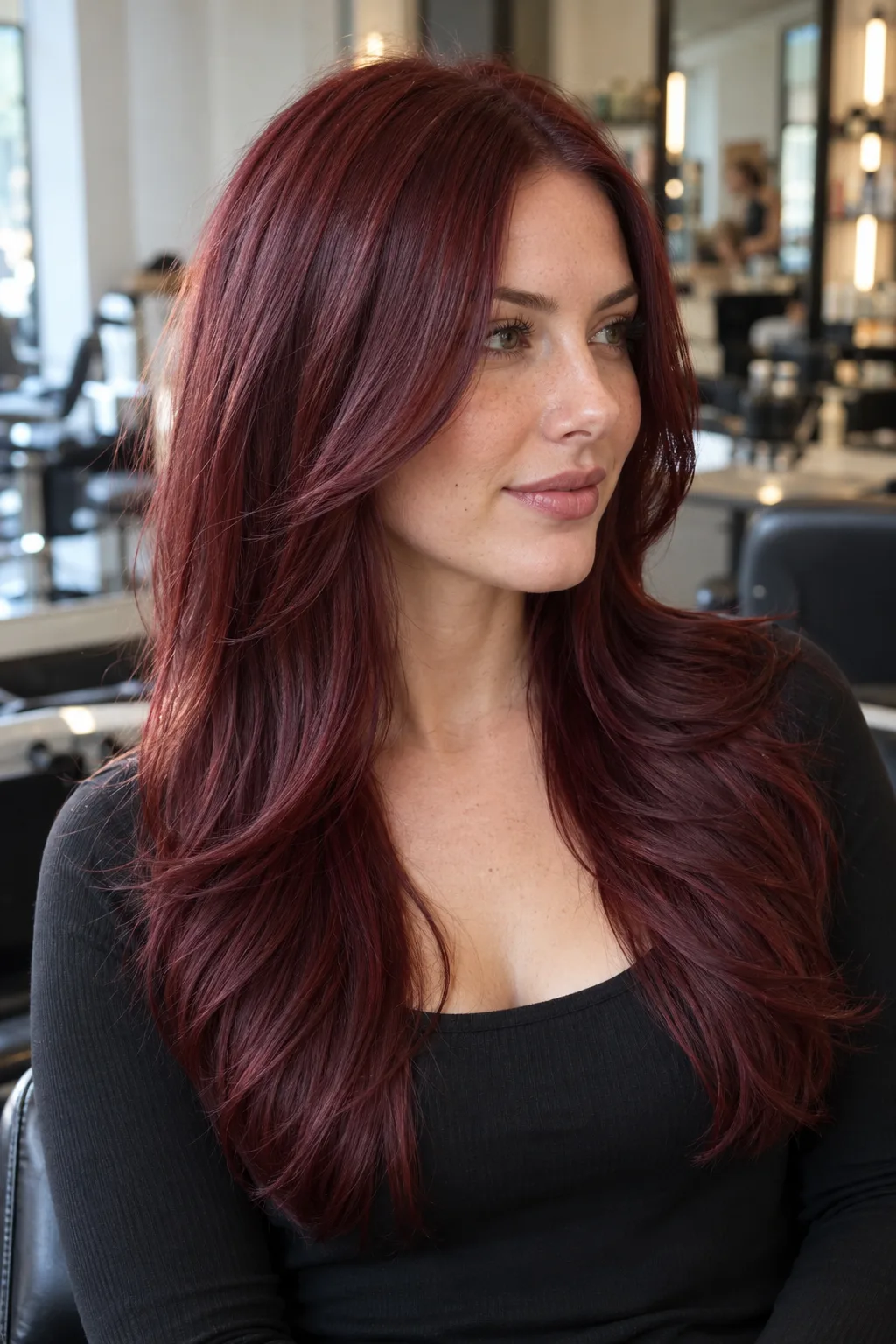 Try this on me
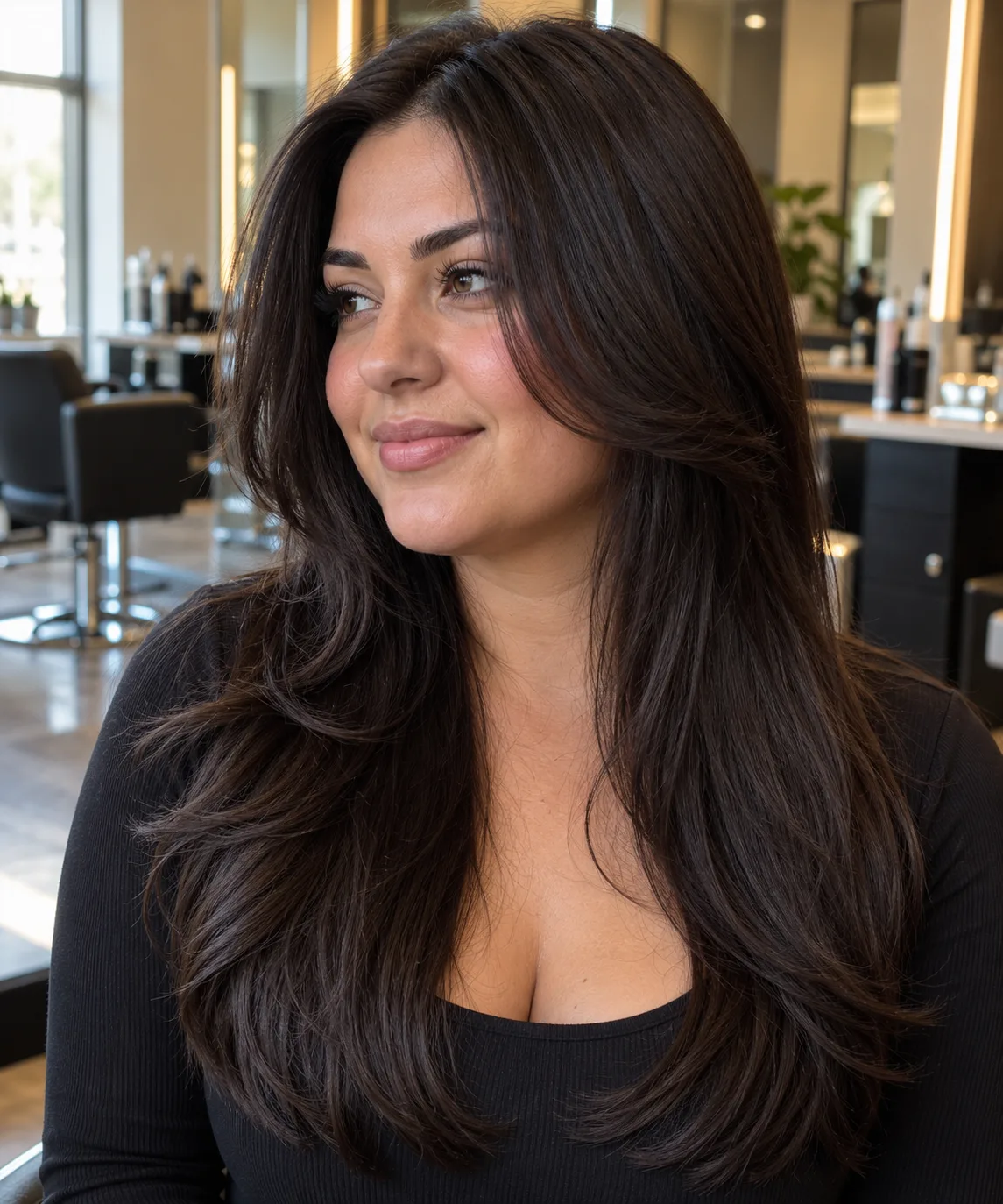 Try this on me
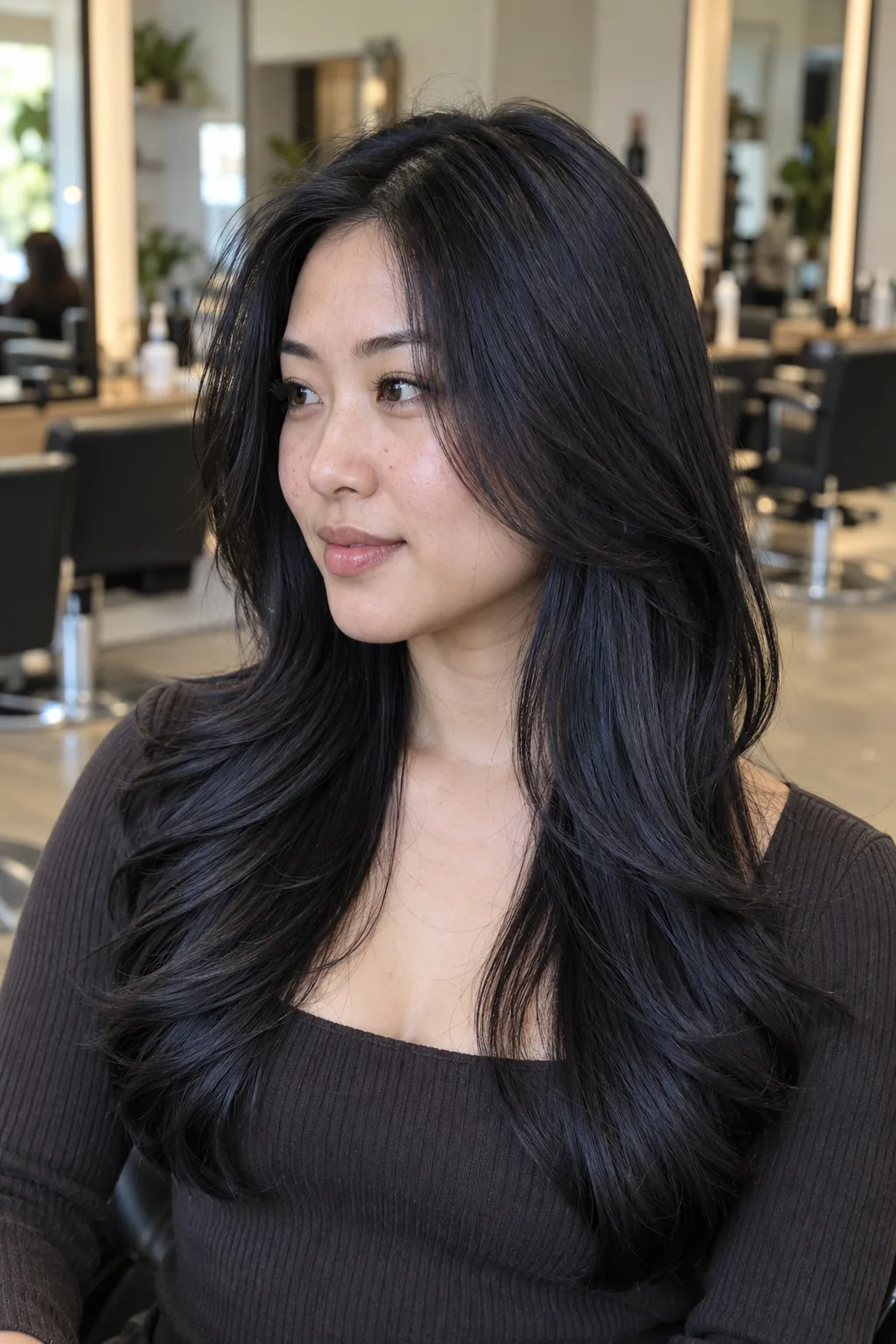 Try this on me
If you are weighing a color change and a mask at the same time, see the color first. Our virtual hair color try-on puts any shade in this gallery on your own photo.
Which hair types the Fino mask suits
Density and damage decide it, not hair color. Thick, porous hair soaks up the silicones and looks better for days. Fine hair gets coated and goes flat.
| Your hair | Verdict | How to use it |
|---|---|---|
| Fine, straight, not damaged | Skip it or use sparingly | A pea-sized amount on the last 2 inches only, 3 minutes, once a week |
| Fine but bleached or heat damaged | Worth it on the ends | Ends only, 5 minutes, rinse well |
| Medium to thick, dry or frizzy | Best match | Mid-lengths to ends, 5 to 10 minutes, 2 to 3 times a week |
| Bleached blonde, highlights, balayage | Strong match | Every wash day at first, then twice a week |
| Wavy (2A to 2C) | Good, watch for weight | Ends only, lighter amount so the wave keeps its bounce |
| Curly (3A to 3C) | Good for softness | Glaze over soaking wet hair, then style as normal |
| Coily (4A to 4C) | Fine as a rinse-out, not a moisture fix | Pair with a water-based leave-in |
| Following the Curly Girl Method | Not compliant | It contains dimethicone |
Fine or thin hair
This is the group most likely to be disappointed, and it is why the reviews are split. The same silicone film that makes thick hair look glossy makes fine hair look flat and slightly greasy at the roots by the next morning. Keep it off the top 6 inches entirely, use less than you think, and rinse longer than feels necessary.

The better lever for fine hair is often the cut. Blunt ends make fine hair look thicker, while long wispy ends make it look thinner no matter what you put on them. If you are deciding how much length to keep, our guide to shoulder length haircuts covers the lengths that make fine hair look fullest.
Bleached and color-treated hair
Bleach lifts the cuticle and leaves the hair porous, which is exactly the condition a heavy mask is built for. This is where Fino earns its reputation: straw-like platinum goes soft and swingy after one use. It also helps highlights and a money piece, where the lightest pieces around the face are always the driest.
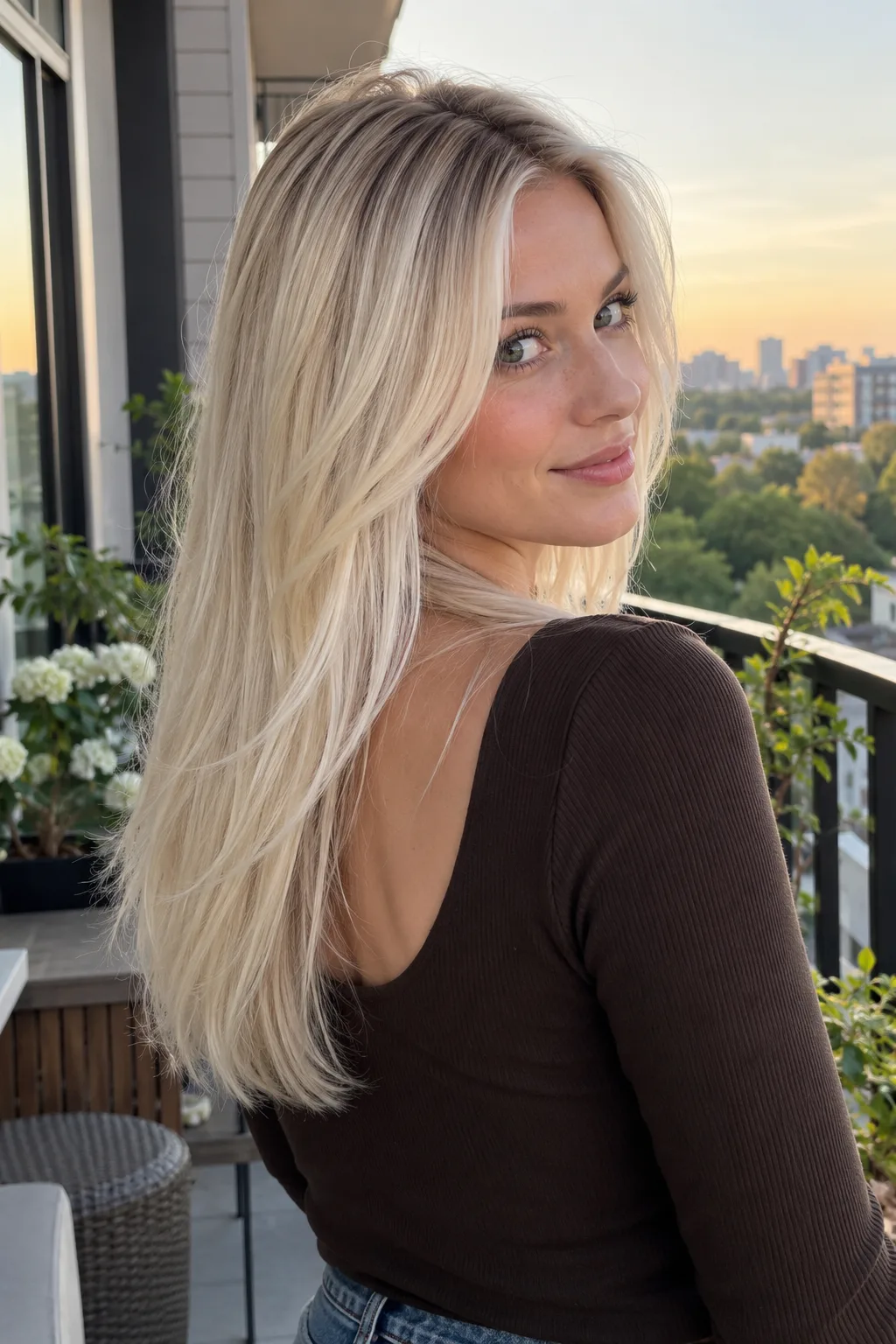
What it will not do is stop breakage from over-processing. If your hair stretches like gum when wet, a conditioning mask is not the fix; a bond treatment and a trim are. If you are thinking about lighter pieces but worried about damage, our guide to brown hair with blonde highlights covers the placements that need the least bleach.
Thick and wavy hair
Thick hair is the easy win. It has the surface area to take a generous scoop and the weight to hold the result without going flat. Wavy hair is in the middle: it loves the frizz control, but too much product drops the wave straight by midday. Use it on the ends only and scrunch as normal. Our 2A hair guide goes deeper on keeping a loose wave from falling flat.

Curly hair
Curls get real softness and clump definition from Fino, especially 3B and 3C patterns that dry out at the ends. Apply it to soaking wet hair, rake it through, rinse only partly if your curls like weight, and style on top. The trade is the silicone. If you avoid silicones or wash with water-only cleansers, it will build up. Our 3C hair guide covers routines that keep those curls defined, and the curly hair try-on lets you see a curly cut on your own face.

How to use the Fino hair mask
Use it on clean, wet hair, after shampoo and instead of conditioner, on the mid-lengths and ends only.
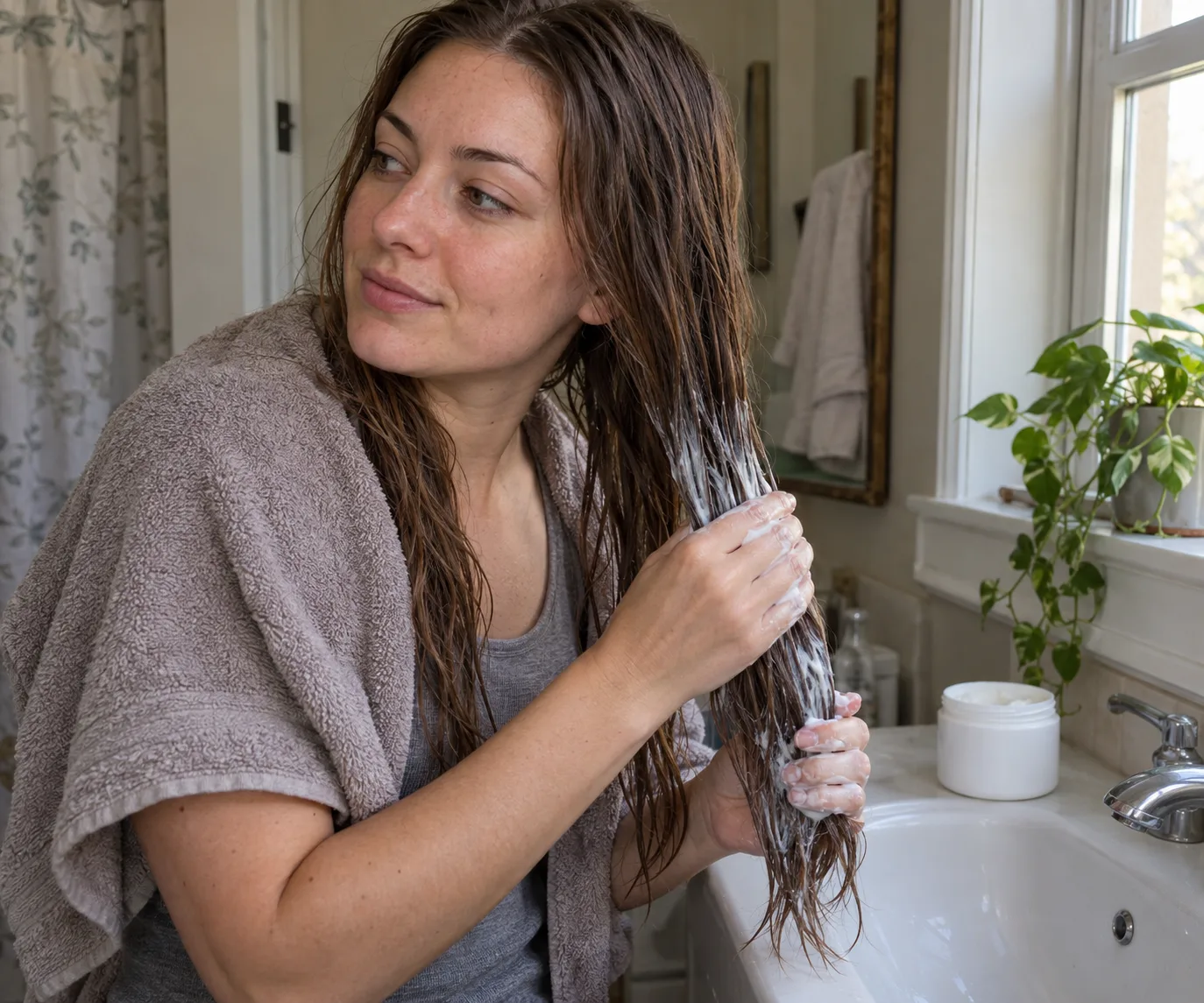
How to use the Fino hair mask
- Shampoo first
Wash as normal. The mask works on clean hair, and anything left on it (oil, dry shampoo, styling product) blocks it from reaching the hair.
- Squeeze out the water
Press the water out with your hands or a towel until the hair is damp, not dripping. On soaking wet hair the mask slides off and rinses away before it does anything.
- Apply to mid-lengths and ends
Take about a quarter-sized amount for shoulder-length hair, more for long or thick hair. Work it in from roughly ear level down, then comb it through with a wide-tooth comb so every strand is coated. Keep it off the scalp.
- Leave it on for 5 to 10 minutes
This is where most of the result comes from. Shower, shave, clip it up. Leaving it much longer does not add much, and overnight is not how it is meant to be used.
- Rinse thoroughly
Rinse with lukewarm water until the hair feels slippery but not coated. A final cool rinse helps the shine. Skip conditioner after.
Two or three times a week is the sweet spot for most people. Very dry, thick or bleached hair can take it every wash day for the first week or two. If your hair starts to feel heavy or waxy, you have built up silicone: use a clarifying shampoo once and cut back.
Mistakes that waste the jar
- Putting it on the roots. Your scalp makes its own oil. Mask at the roots means flat, greasy hair by the next morning, and it is the top reason people with fine hair say it did not work.
- Using it on dripping wet hair. Most of it runs off. You use twice as much and get half the result.
- Rinsing too fast. Under 3 minutes and it barely touches the surface. Most of the effect needs 5 minutes or more.
- Stacking it with a heavy oil and a silicone serum. Three layers of the same thing. Pick one finishing product.
- Never clarifying. Silicone builds up over weeks. The mask that made your hair glossy in week one makes it dull and stiff by week six unless you clarify now and then.
- Expecting it to fix split ends. It glues them down for a few days. The split keeps traveling up the strand until someone cuts it off.
When the ends are past a mask
Here is the honest limit. If you can see white dots at the ends, if the last 2 inches tangle the moment they dry, or if the ends look see-through compared with the rest of your hair, no mask brings them back. The fix is a trim, and usually a cut that moves the damaged length into layers so the shape still looks long.
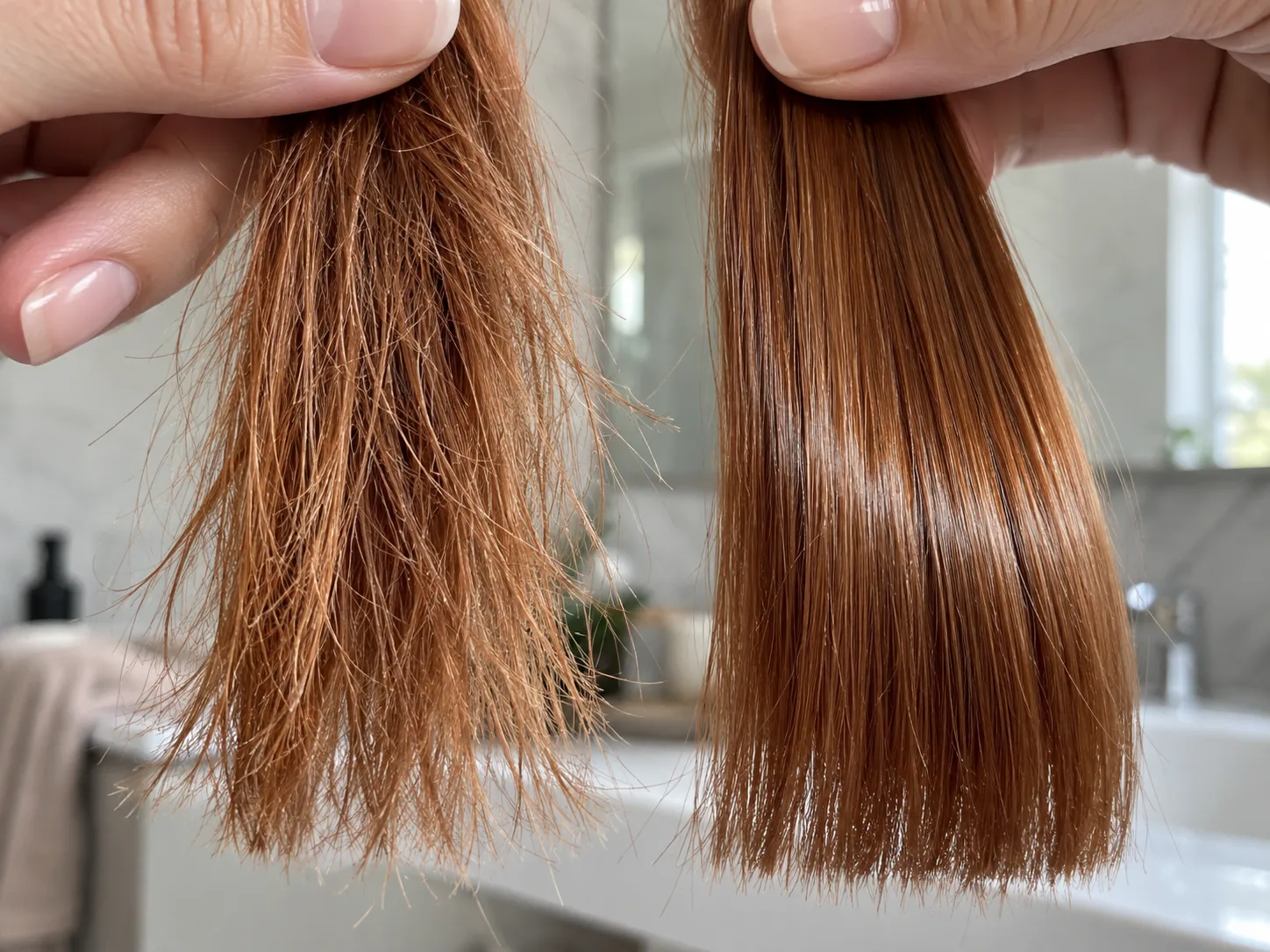
The free way to decide how much to cut is simple and worth doing: stand in good light, hold the ends up, and mark the point where the hair turns thin or rough. That is where your trim goes. Then look at yourself in the mirror with your hair tucked to that length.
The wall it hits: you can see where the damage stops, but you cannot see what your face looks like with 3 inches gone and layers cut in. Hair tucked into a collar is not the same shape as a cut. That is the moment people keep the damaged length out of fear and keep buying masks to hide it.
So see the cut before you book it. Upload one front-facing photo and put long face-framing layers, or any length you are considering, on your own face. The first look is free and needs no card, and the Plus plan is $9 a month if you want every cut and color. Our long hair filter and the guide to hairstyles for long hair show what length you can keep and still lose the damage.
Yours could be here.
Start with one selfie.
One photo, twenty seconds, and you'll know. Free account, no card for your first render.
Say this to your barber
I want to take off the damaged ends, about 2 inches, and add long face-framing layers starting at my cheekbones so it still looks long.
The Fino hair mask is worth buying if your hair is thick, dry, bleached or frizzy, and worth using sparingly or skipping if it is fine and healthy. Use it on clean, damp hair from the mid-lengths down, leave it for 5 to 10 minutes, and clarify every few weeks. Treat the shine as maintenance, not repair. When the ends are past saving, cut them, and see the new shape on your own face first. If you are unsure what length or layers suit you, start with our face shape guide.
Frequently asked questions
It is good for dry, rough, frizzy or bleached hair that needs softness and shine. It smooths the surface of the hair with silicones and conditioning agents, so hair looks glossier and tangles less for two to three washes. It does not repair split ends or broken bonds.
Use it on wet hair after shampooing. Squeeze out the excess water first so the hair is damp, not dripping, then apply from the mid-lengths to the ends and rinse it out after 5 to 10 minutes. It is a rinse-out treatment, not a leave-in.
After shampoo, in place of your conditioner. Shampoo first so the mask sits on clean hair, apply the mask, leave it on, then rinse. You do not need conditioner afterwards.
5 to 10 minutes is enough for most hair. Very thick or bleached hair can go toward 10 minutes. Leaving it on for an hour or overnight adds little and can leave the hair heavy.
It is safe, but most people do not need it. Daily use on fine or healthy hair tends to cause silicone buildup and flat, heavy lengths. Two to three times a week suits most hair; very dry or bleached hair can use it every wash day for a week or two, then cut back.
Yes. The ingredient list includes dimethicone and aminopropyl dimethicone, two silicones. That is a big part of why the shine is so visible, and it is why the mask does not fit the Curly Girl Method. Clarify every few weeks if you use it often.
Because the result is visible after one use. It went viral on TikTok with before and after videos of dry, frizzy hair turning smooth and glossy, and it is easy to find on Amazon and Asian beauty sites.
It can be, if you use very little. Keep it on the last few inches only, leave it for about 3 to 5 minutes and rinse well. Applied like a normal mask from ear level down, it usually leaves fine hair flat by the next day.
Preview it on your own photo: Virtual Hair Color Try-On.
Share article
About the author
More articles
Women's Haircuts · 14 min
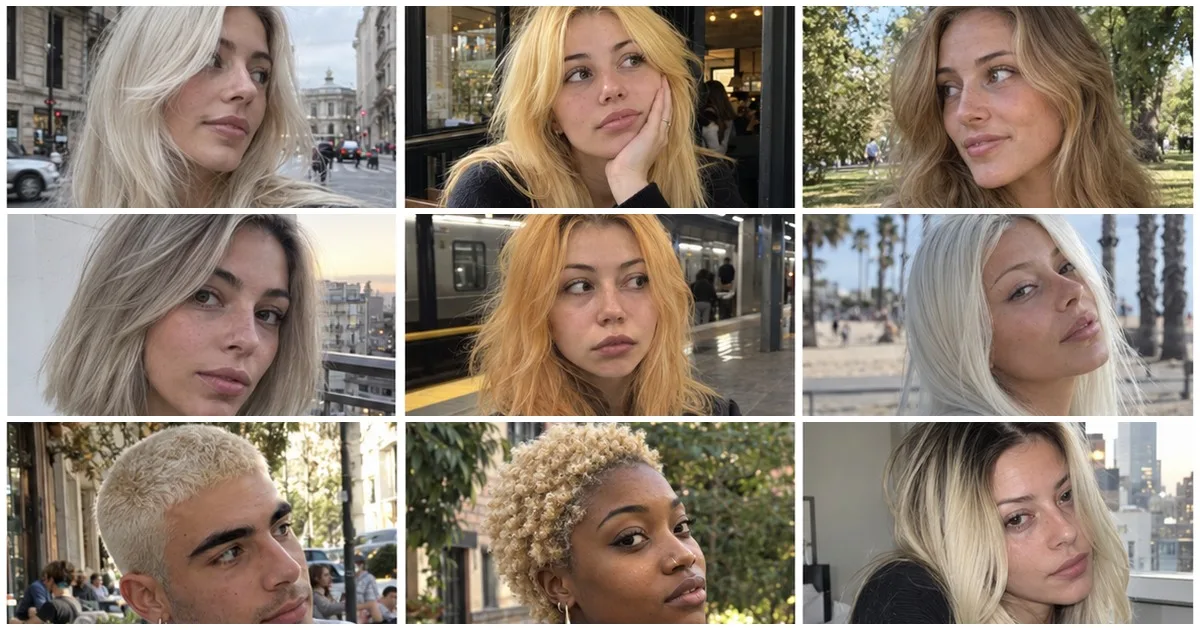
Bleached Hair: How Light Yours Can Go, 14 Shades, Aftercare
How light your bleached hair can go depends on where it starts. See 14 bleached shades on one cut, what each starting color can reach in one session, how toner finishes the job, and the aftercare that keeps it soft.
Women's Haircuts · 16 min
Waves Hair: How to Get Beach, Loose and Hollywood Waves That Last
Waves hair is about what you leave straight. How to get beach, loose, Hollywood and heatless waves, which wave suits your hair type, and why your waves keep falling out.
Women's Haircuts · 13 min
Easy Hairstyles: 14 Five-Minute Styles and the Cut That Makes Them Work
The easiest hairstyles need one tie or one clip and under five minutes: a claw clip twist, a low ponytail, a messy bun, a half-up knot, a side braid. Here are 14 on the same haircut, which suits your length and texture, and why your cut matters more than your skill.