Layered Shoulder Length Hairstyles: 14 Looks, 3 Layer Zones
Oleh Onysko 28 October 2026 13 min read
In this article
The best layered shoulder length hairstyles put their layers in one zone only: around the face, at the crown or at the ends. At this length you have roughly four inches between your chin and your shoulders, which is room for one layer job, not three. Ask for all three and you get a choppy shag you did not want.
For most people the safest pick is face-framing layers with curtain bangs and the ends left heavy, so they sit on the shoulder instead of flipping. Below: the three zones side by side, 14 layered styles at the same length, which one suits your hair type and face, and the exact sentence to say in the chair.
What is a layered shoulder length hairstyle?
A layered shoulder length hairstyle is a cut whose longest hair ends at the top of the shoulders, about 10 to 11 inches at the back, with shorter pieces cut in so the hair moves instead of hanging as one block. The length is fixed. Everything that changes the look is where the short pieces go.
It is not the same thing as a shoulder length haircut in general, which can be one blunt length with no layers at all, and that guide is the place to decide where your length should end. It is shorter than medium layered haircuts, which run from the collarbone down to the shoulder blades and have far more room to stack layers. And it is longer than a layered bob, where the whole cut sits at the jaw.
That short stretch is the whole story. On long hair, layers can start at the chin and still have a foot of hair to blend into. At shoulder length the shortest layer and the longest hair are only a few inches apart, so every layer you add is visible.
Want to see it first? Preview a new hairstyle on your own photo.
The three places layers can go
Pick the zone first and the style name second. Every layered shoulder length look you have saved falls into one of these.
| Zone | Styles | Where volume lands | What happens at the shoulder | Best for |
|---|---|---|---|---|
| Front (face-framing) | Curtain bangs, face-framing layers, side-swept bangs, wispy bangs | Cheeks and forehead | Back stays heavy, ends sit flat | Almost everyone, fine hair, first-timers |
| Crown | Shag, butterfly, wolf cut, 90s blowout | Top and sides | Ends get thin and piecey, flip easily | Thick hair, wavy hair, people who style daily |
| Ends | Long layers, ghost layers, choppy ends | Movement only, little width | Ends lighter but shape unchanged | Fine hair, round faces, growing out |
The zone you choose also decides how the cut behaves on your shoulders. Hair that lands on the shoulder gets pushed outward every time you turn your head. Heavy ends resist that push and bend back down. Thin, layered ends do not, they flip and stay flipped. So the layers that make long hair swing are the same layers that make shoulder length hair flick out. If you hate the flip, keep the layers out of the ends and put them in front.
14 layered shoulder length hairstyles, sorted by zone
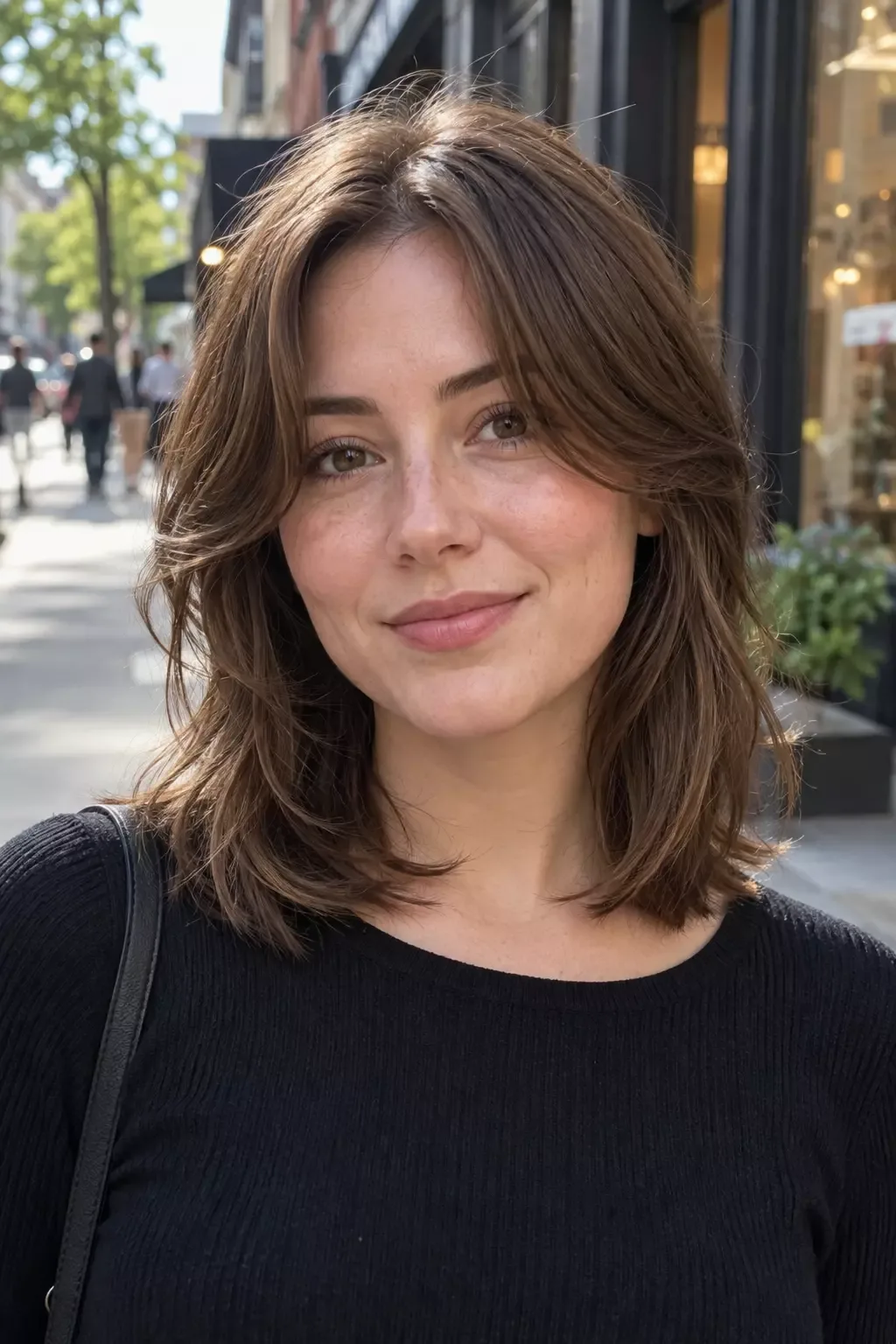
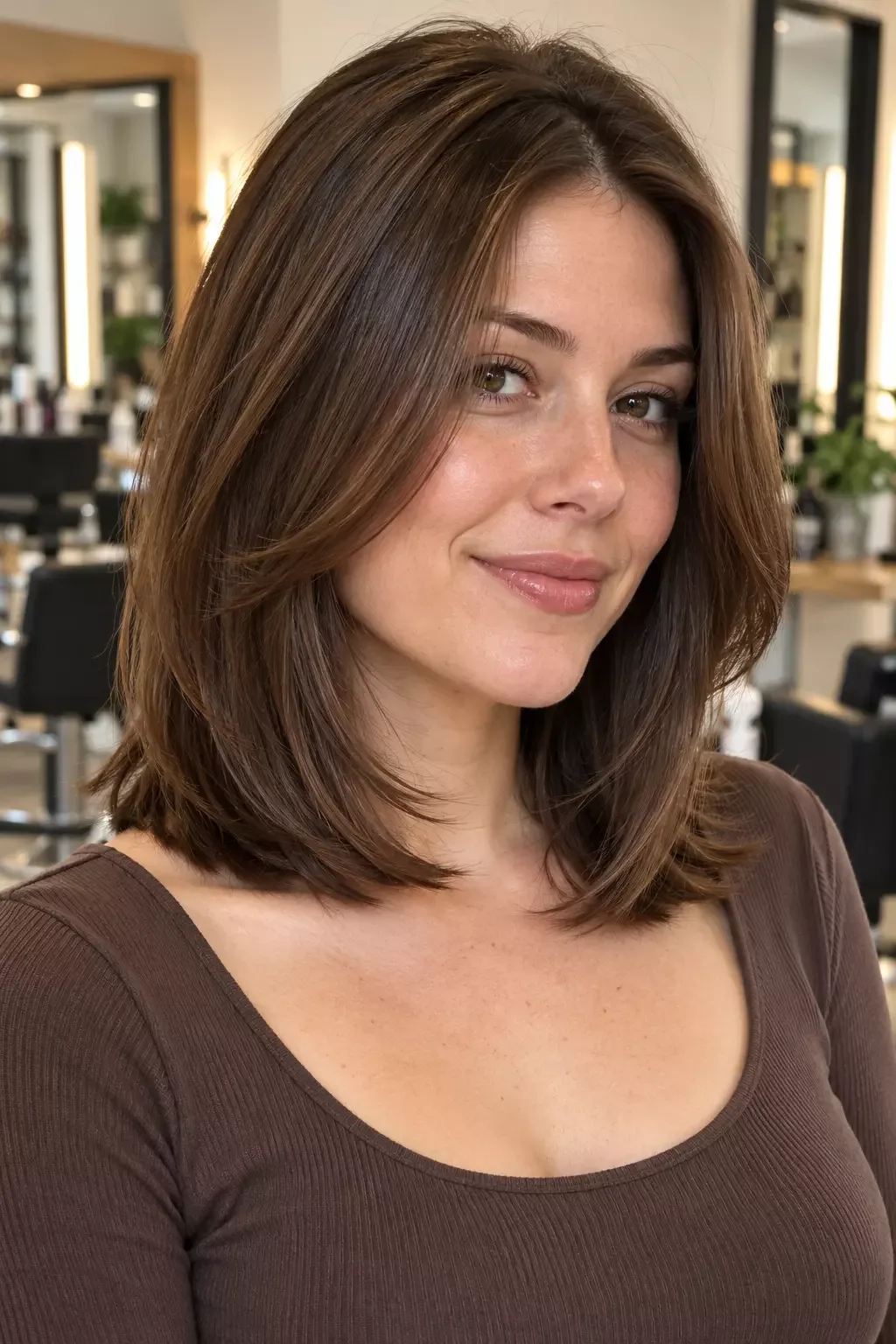
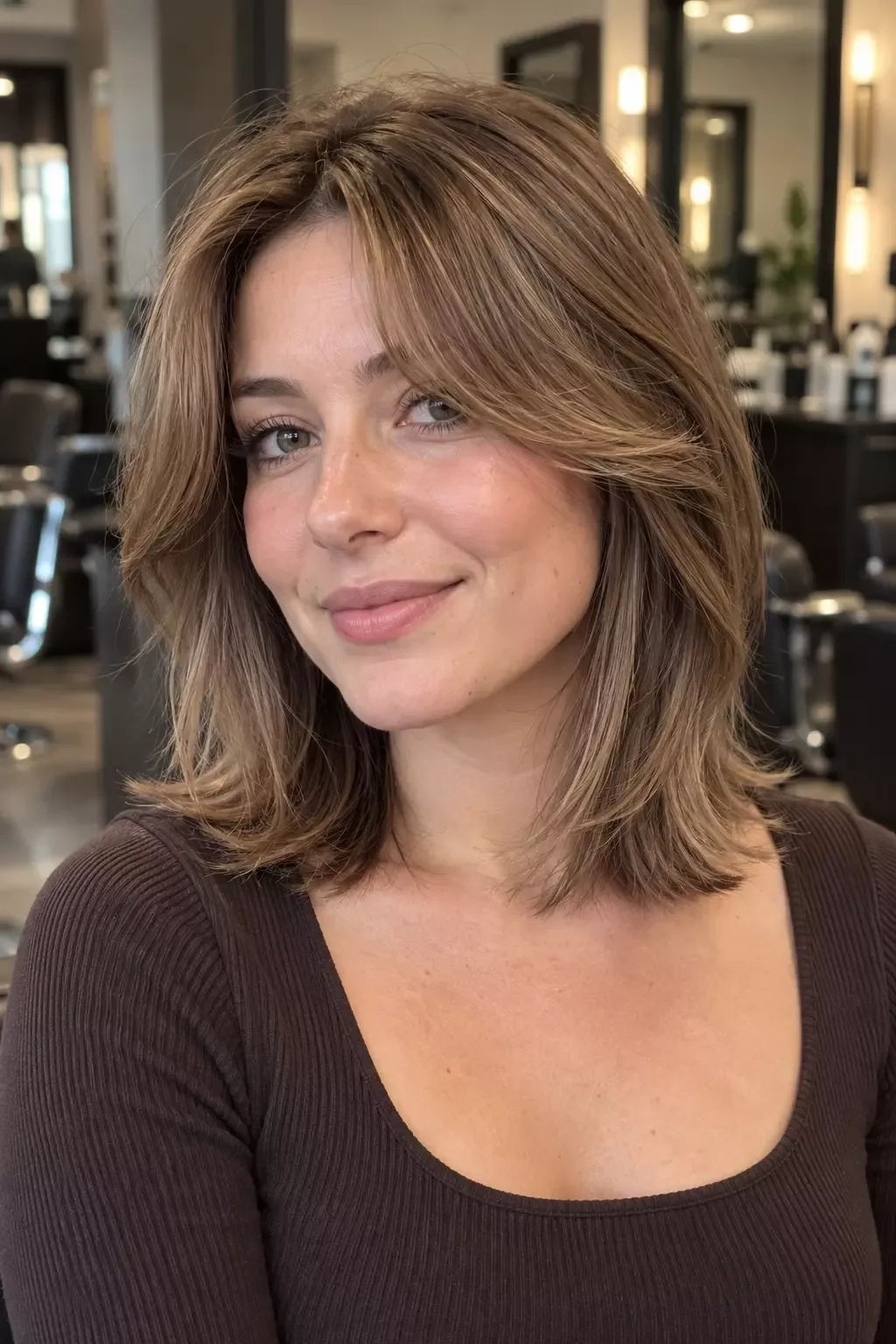
Every look below is cut to the same length, ends at the top of the shoulders, so the only thing that changes from tile to tile is where the layers sit. The first four keep the layers at the front, the next five lift the crown, the last five work the ends and texture. Tap any one to try it on your own photo.
Gallery14 photos · tap to enlarge
 Try this on me
 Try this on me
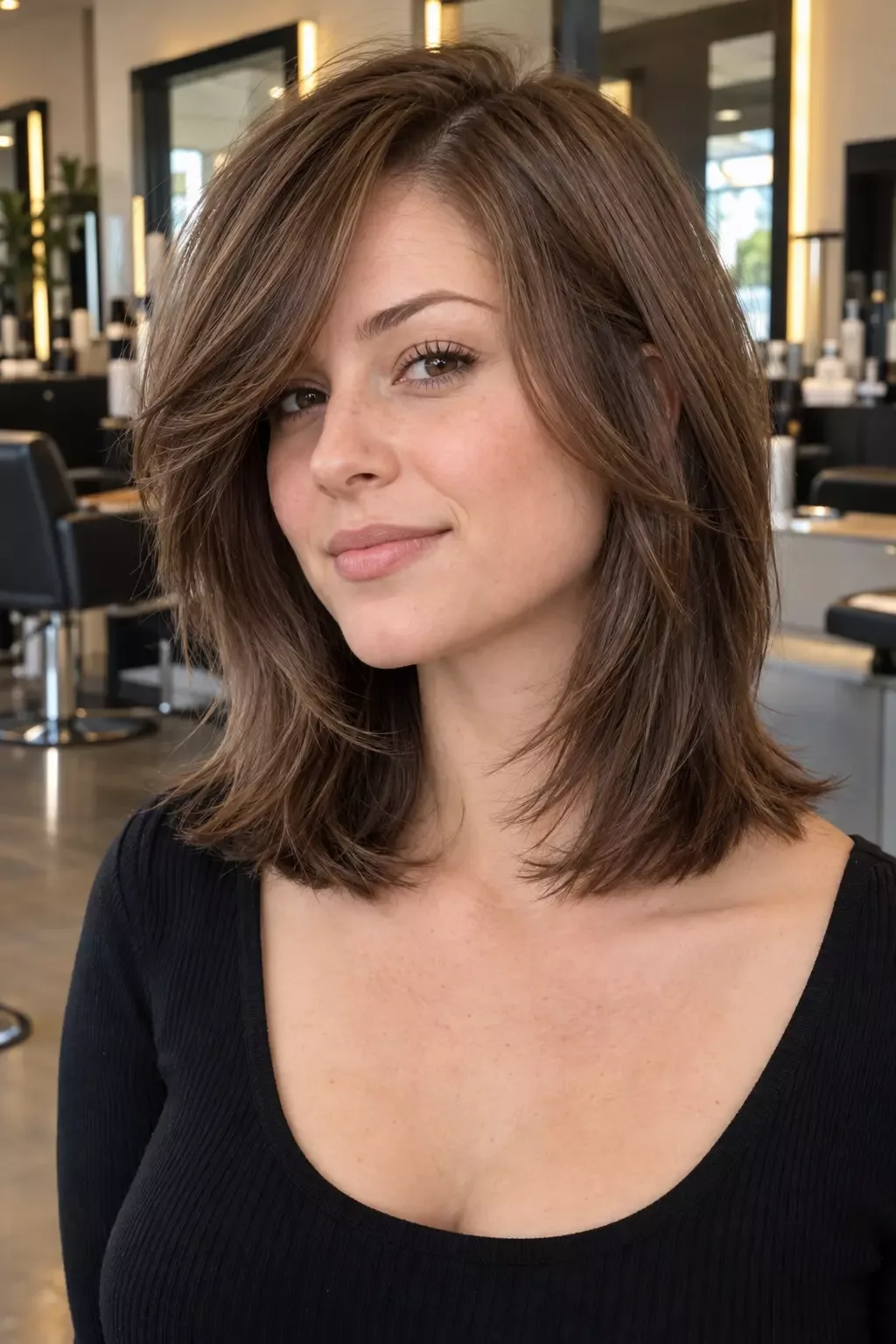 Try this on me
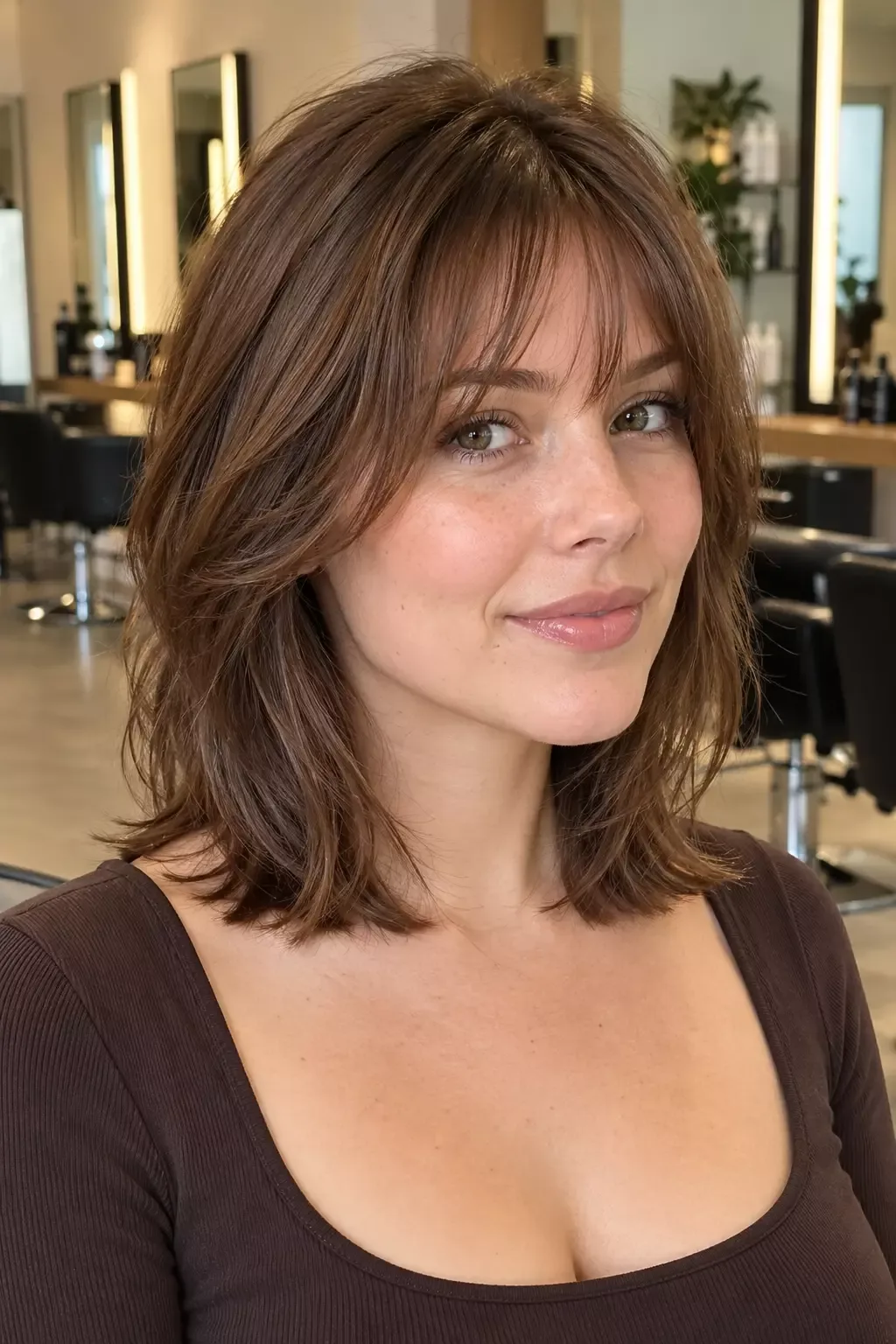 Try this on me
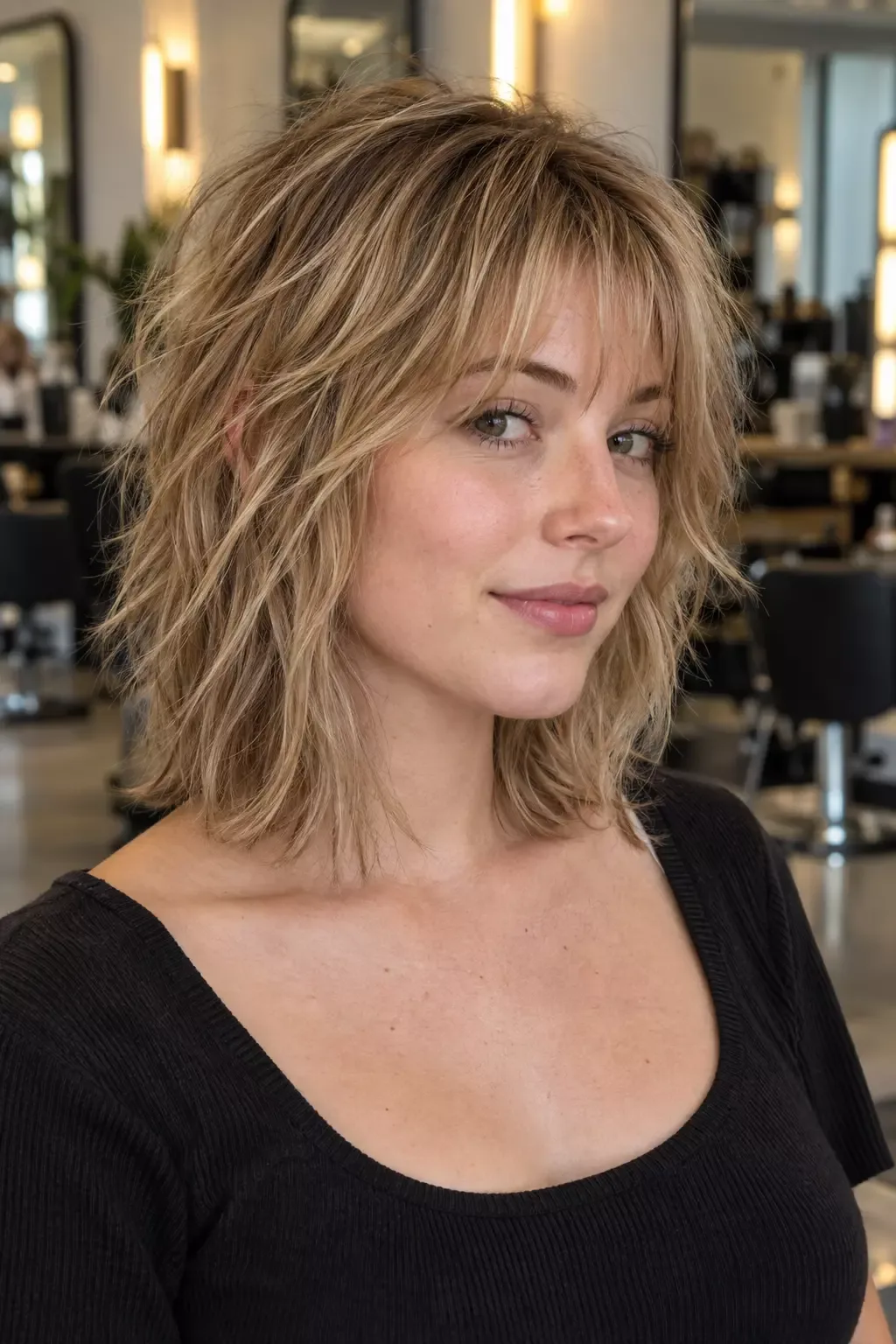 Try this on me
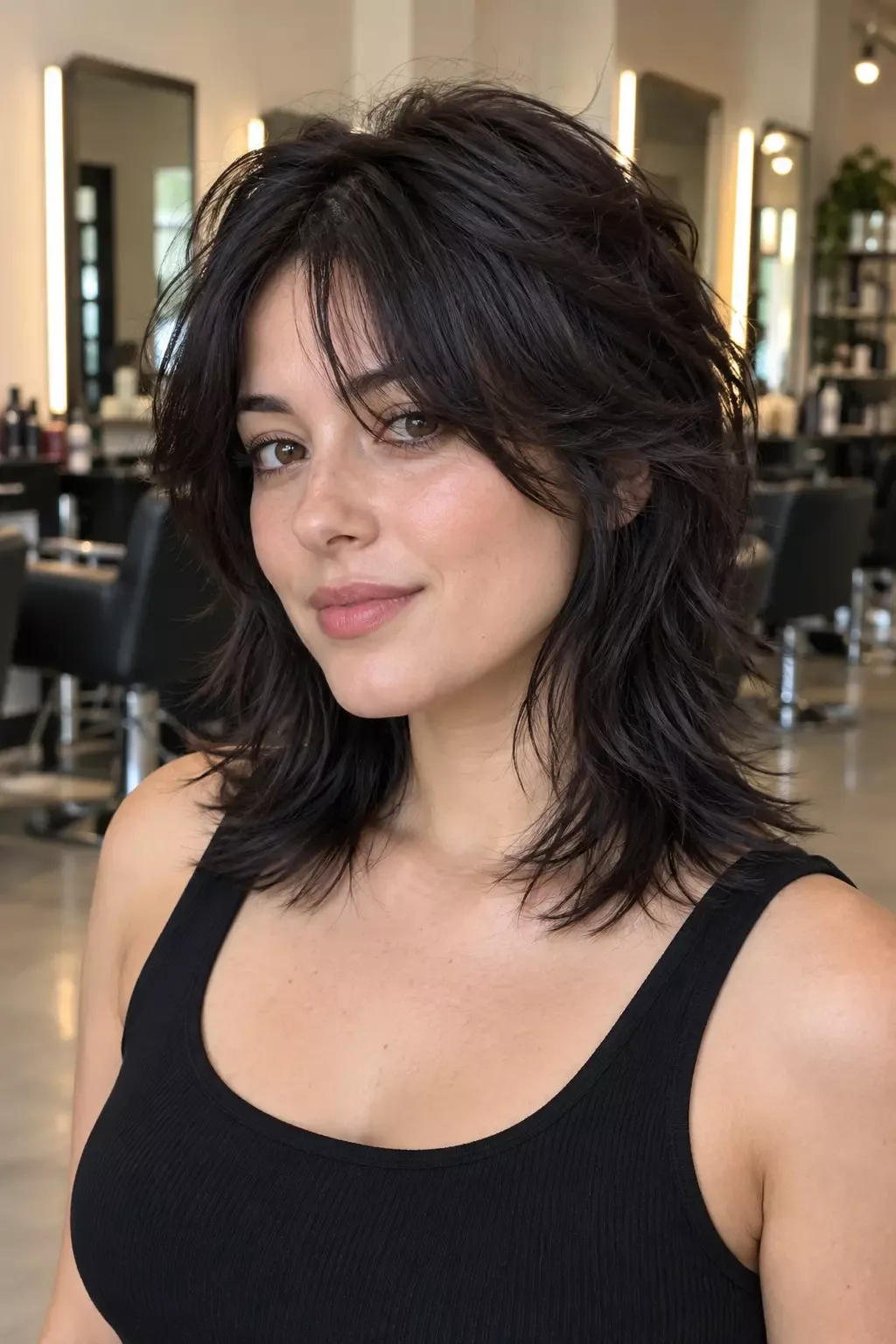 Try this on me
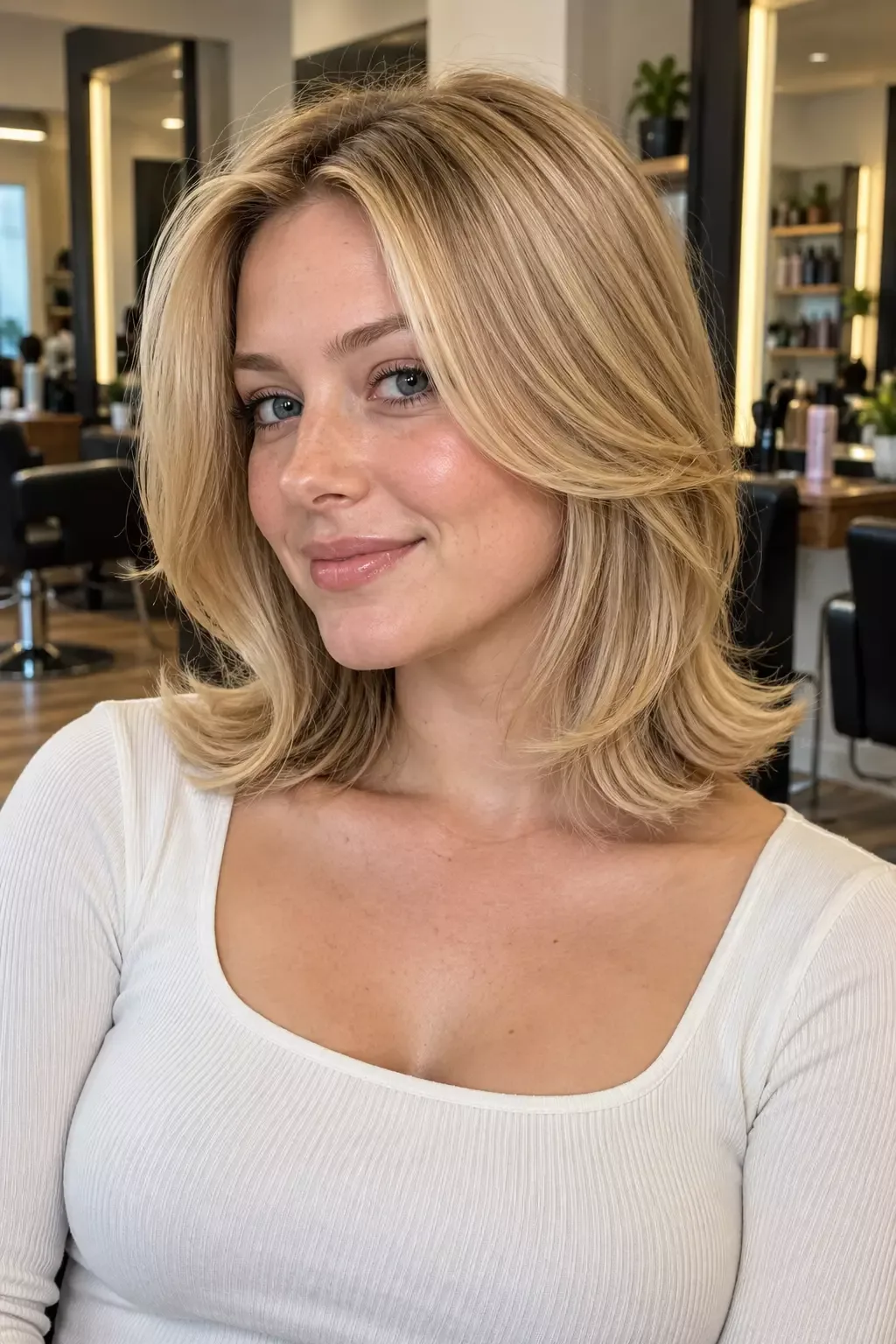 Try this on me
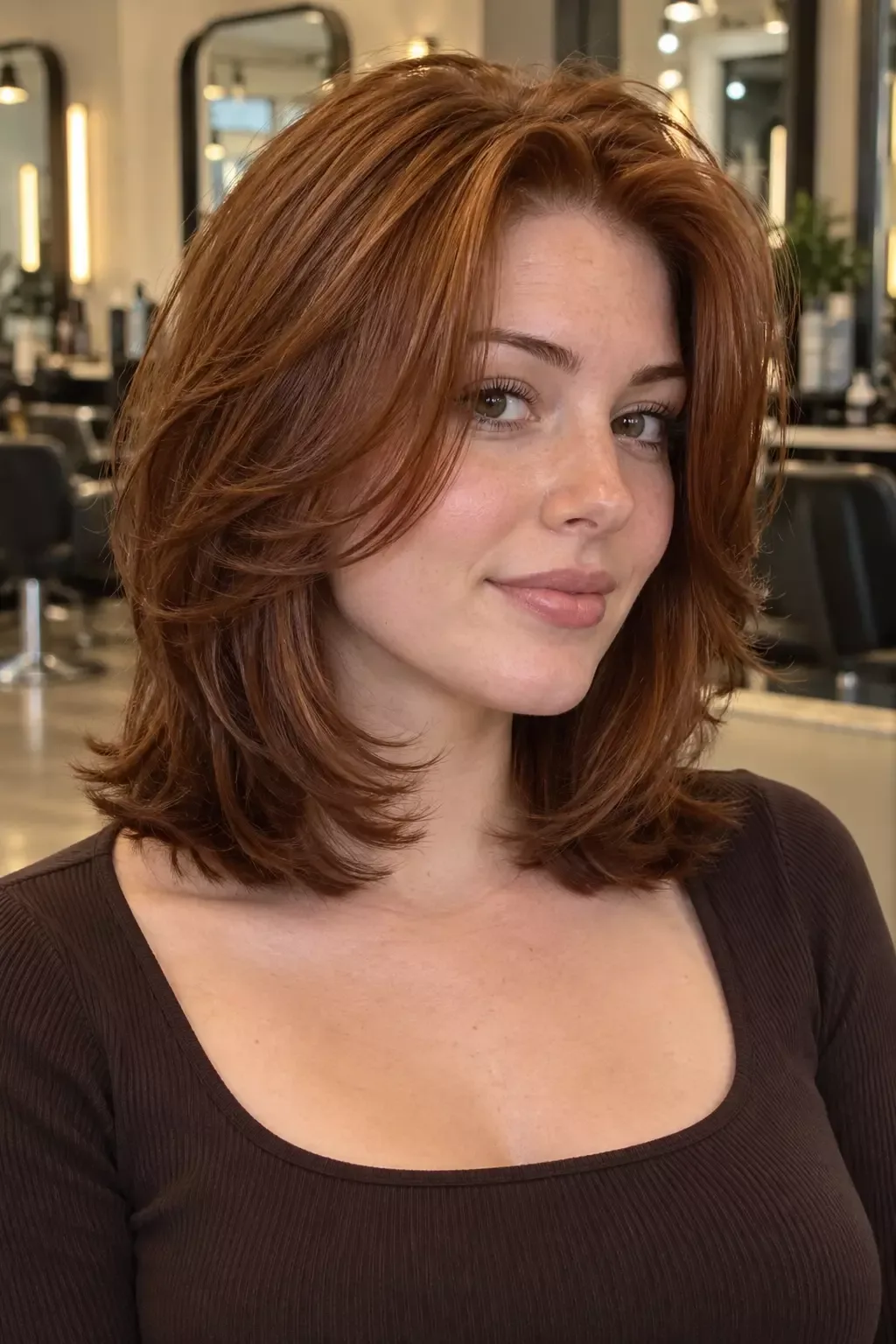 Try this on me
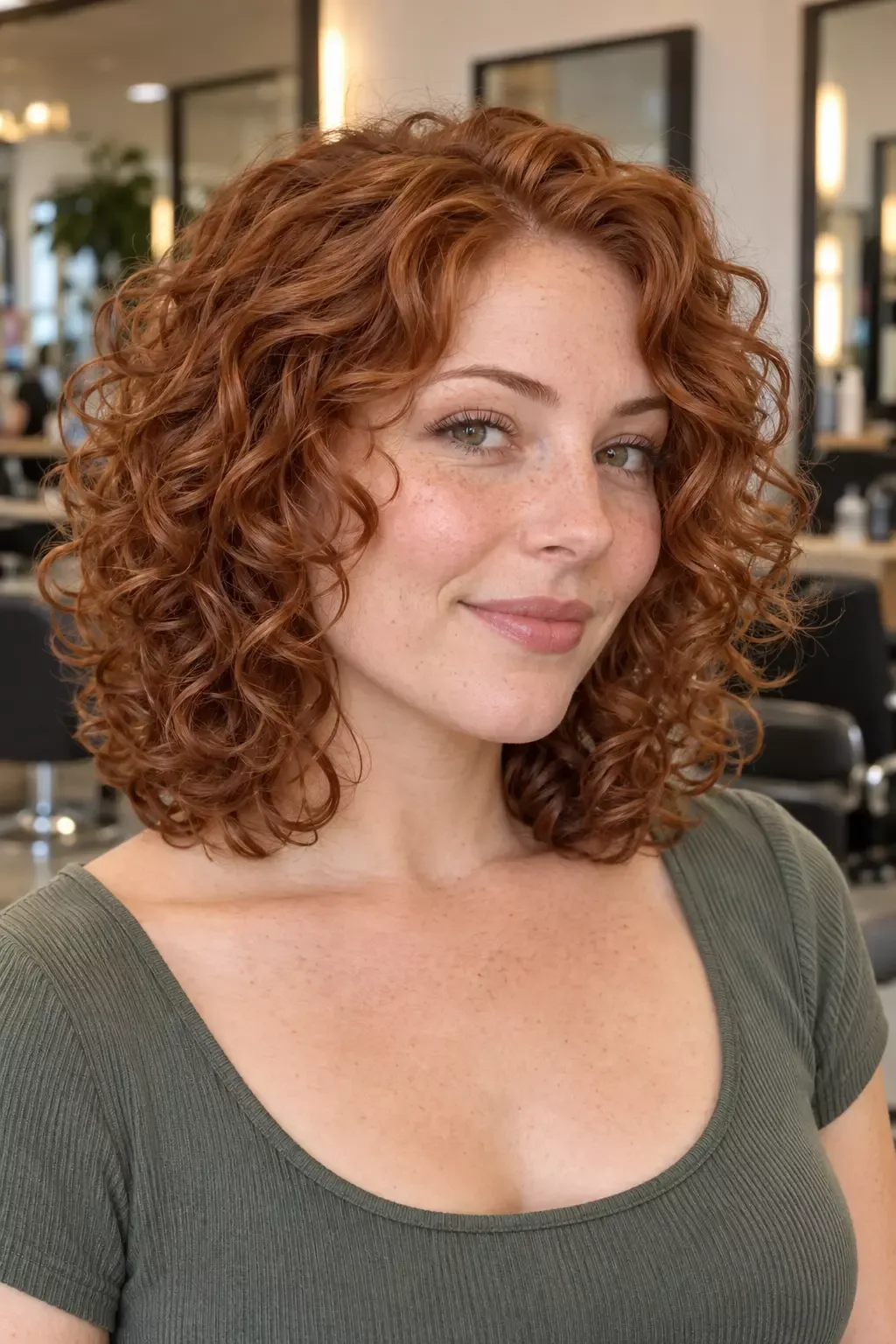 Try this on me
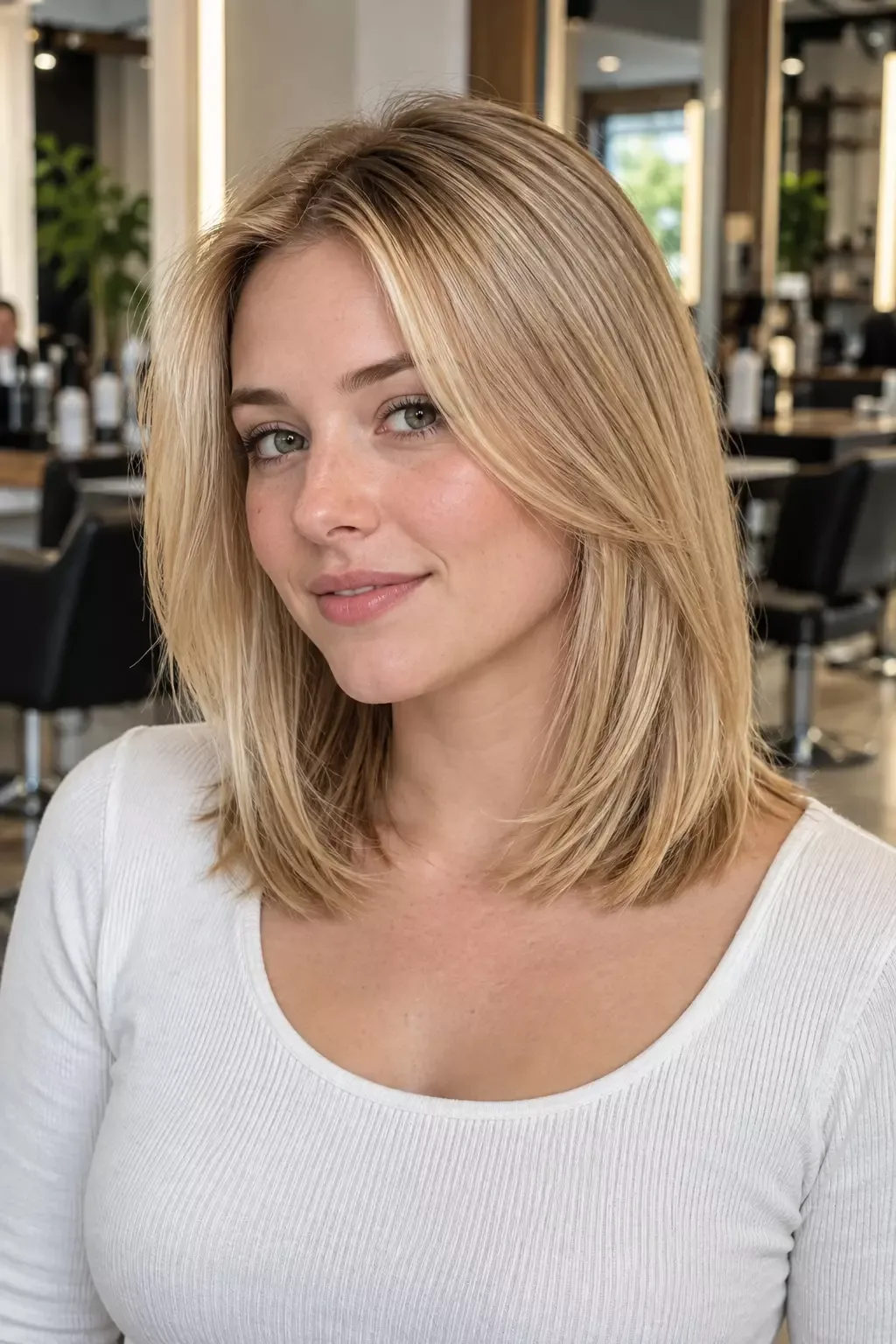 Try this on me
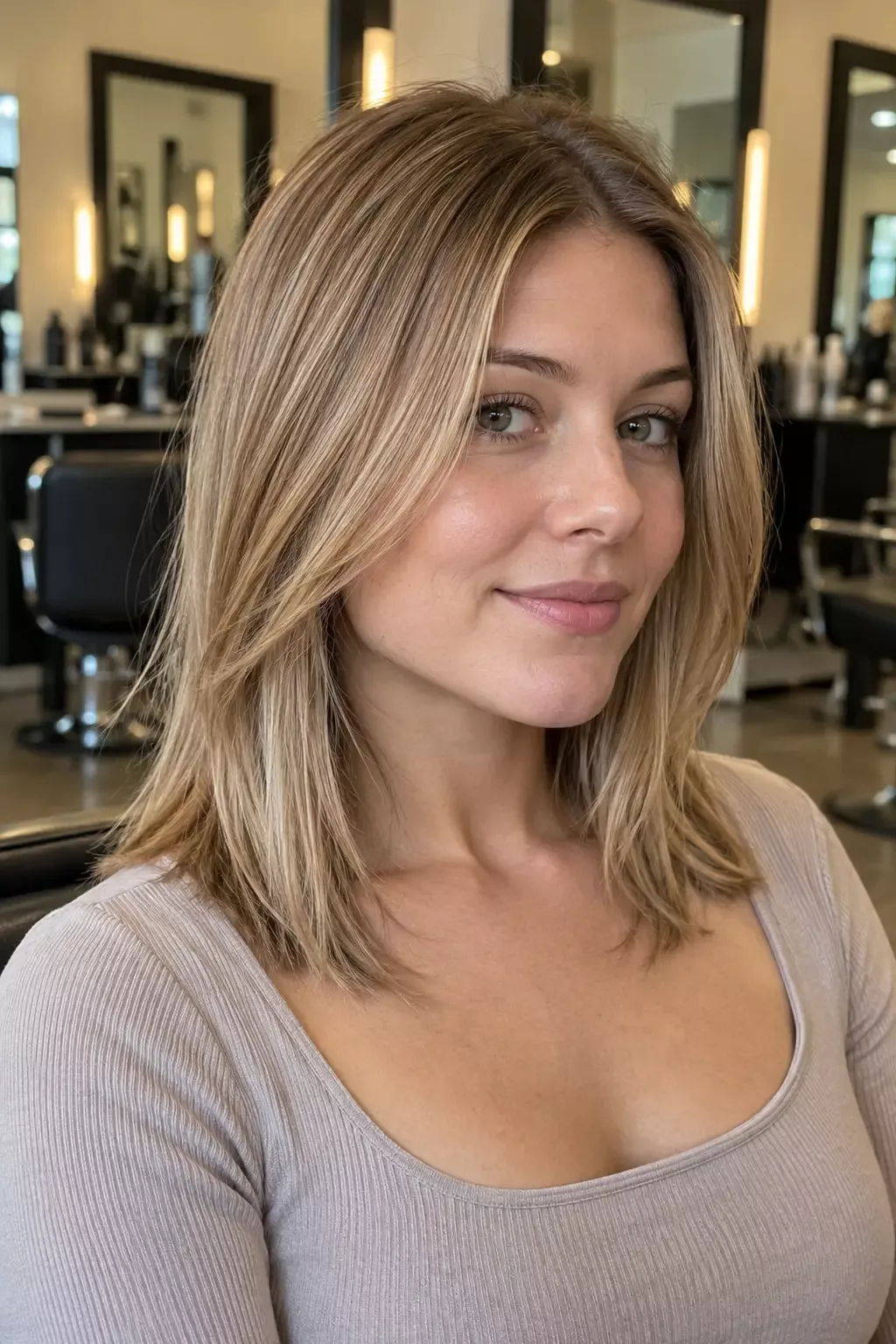 Try this on me
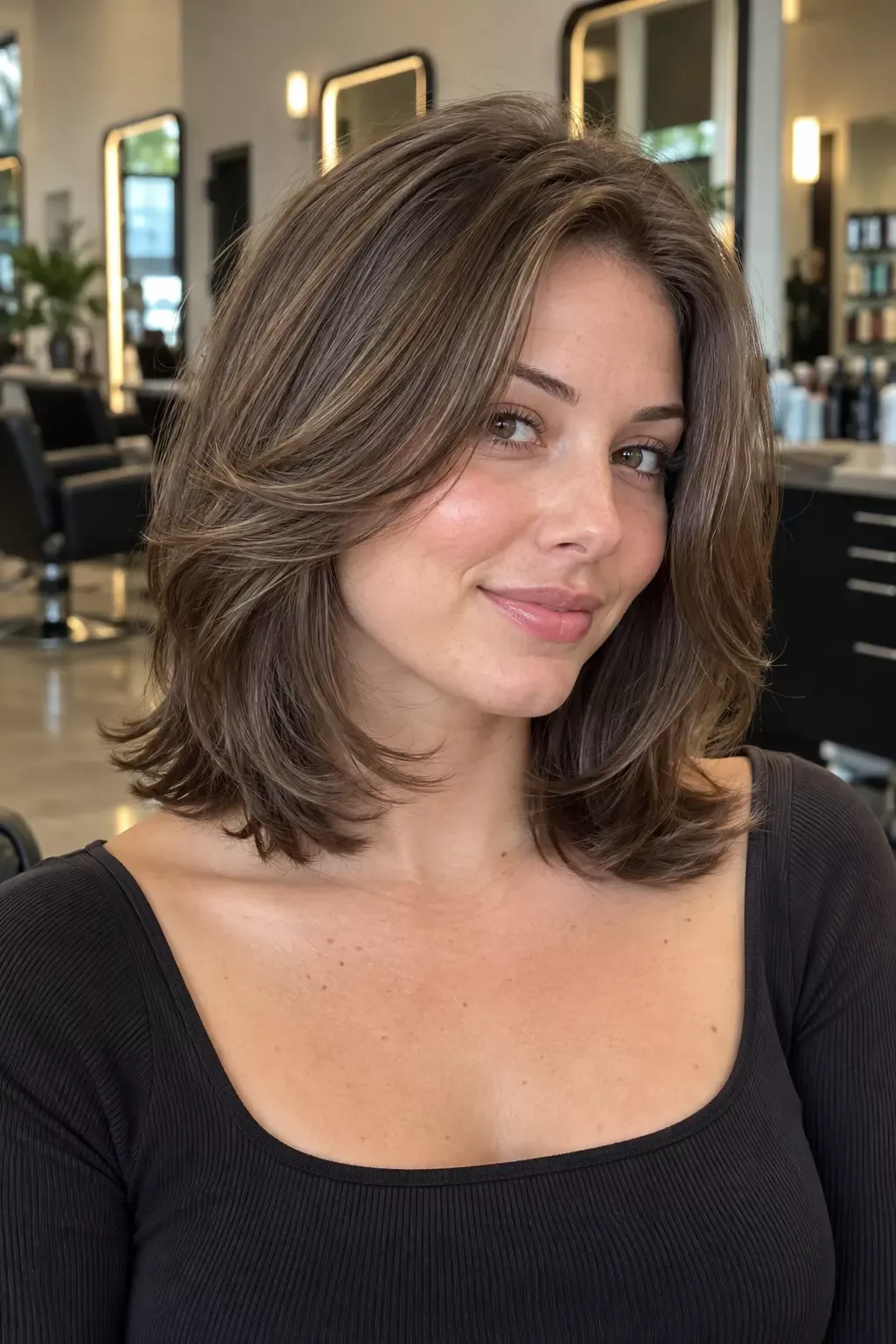 Try this on me
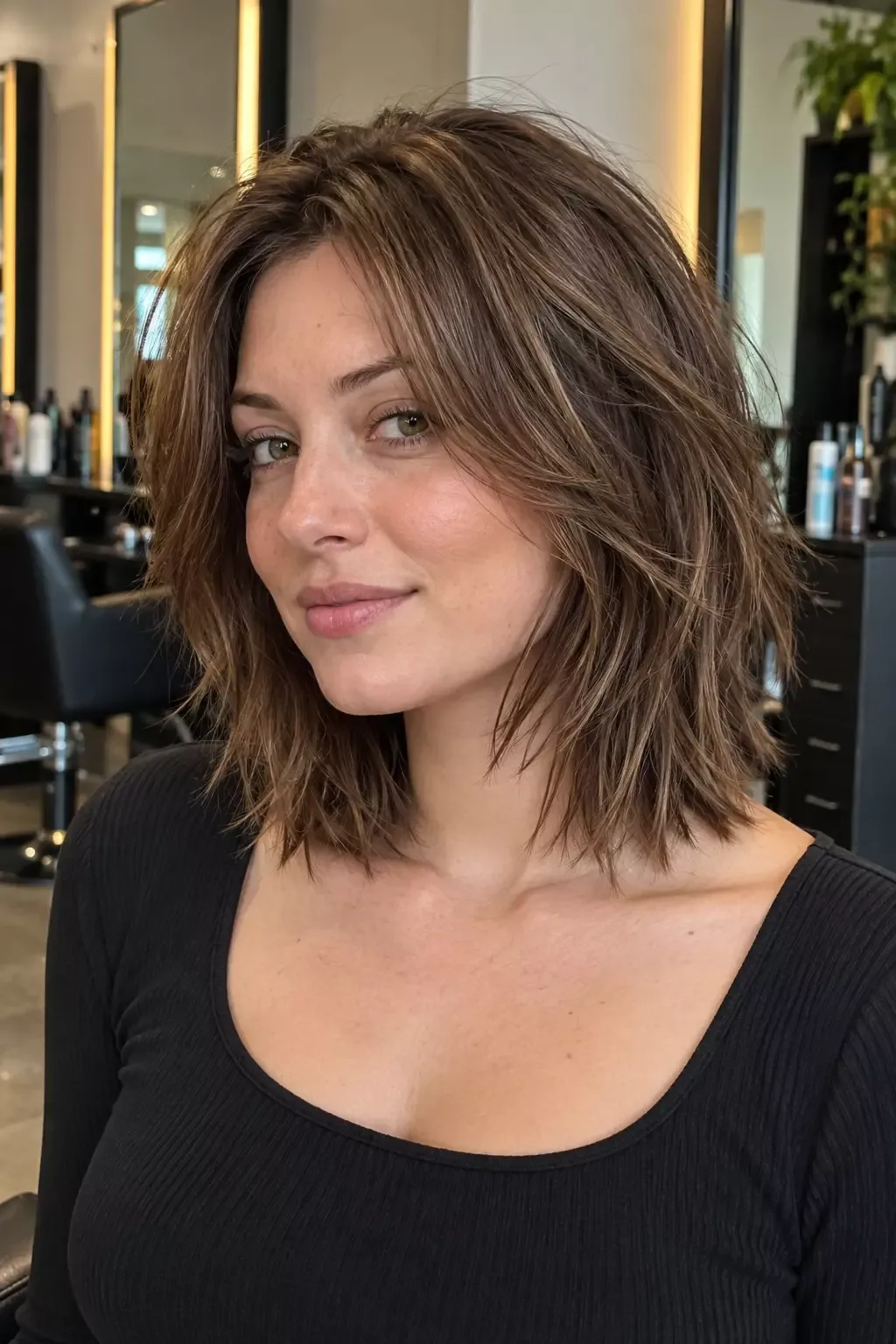 Try this on me
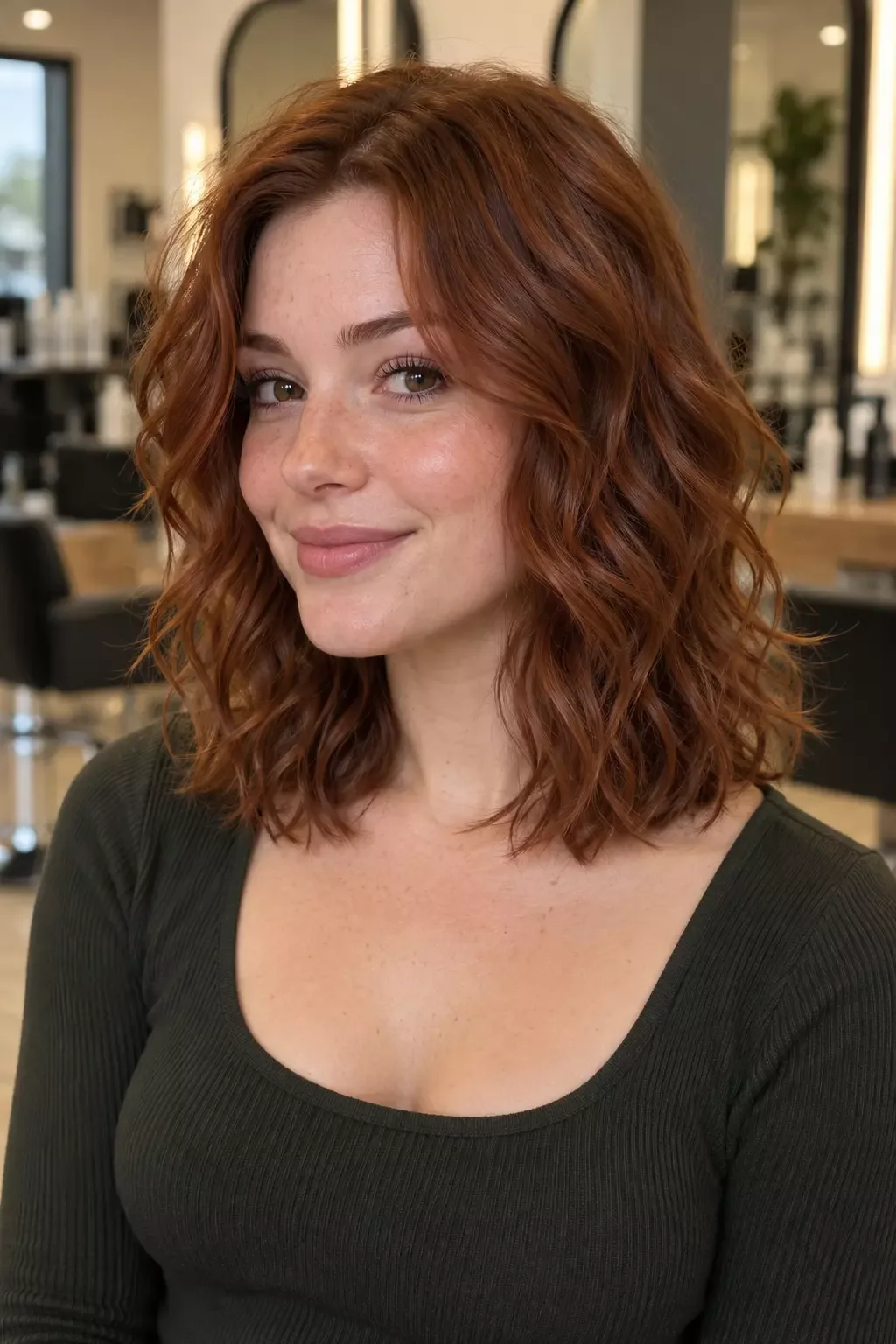 Try this on me
Yours could be here.
Start with one selfie.
One photo, twenty seconds, and you'll know. Free account, no card for your first render.
Which layered style suits your hair type?
Hair type decides how many layers you can afford. Face shape only decides where the front ones start. This is the part most galleries skip, and it is why a cut that looked full on someone else looks thin on you.
| Hair type | Best zone | Ask for | Avoid |
|---|---|---|---|
| Fine or thin | Front or ends | Ghost layers, curtain bangs, heavy perimeter | Crown layers, razor cutting, butterfly |
| Medium density, straight | Front | Face-framing layers from the chin | Layers in the last two inches |
| Thick | Crown | Shag or internal weight removal | Blunt one length, it turns triangular |
| Wavy | Crown and front | Long layers that let waves stack | Short choppy ends, they frizz |
| Curly | Crown, cut dry | Rounded layers cut curl by curl | Thinning shears |
Fine or thin hair
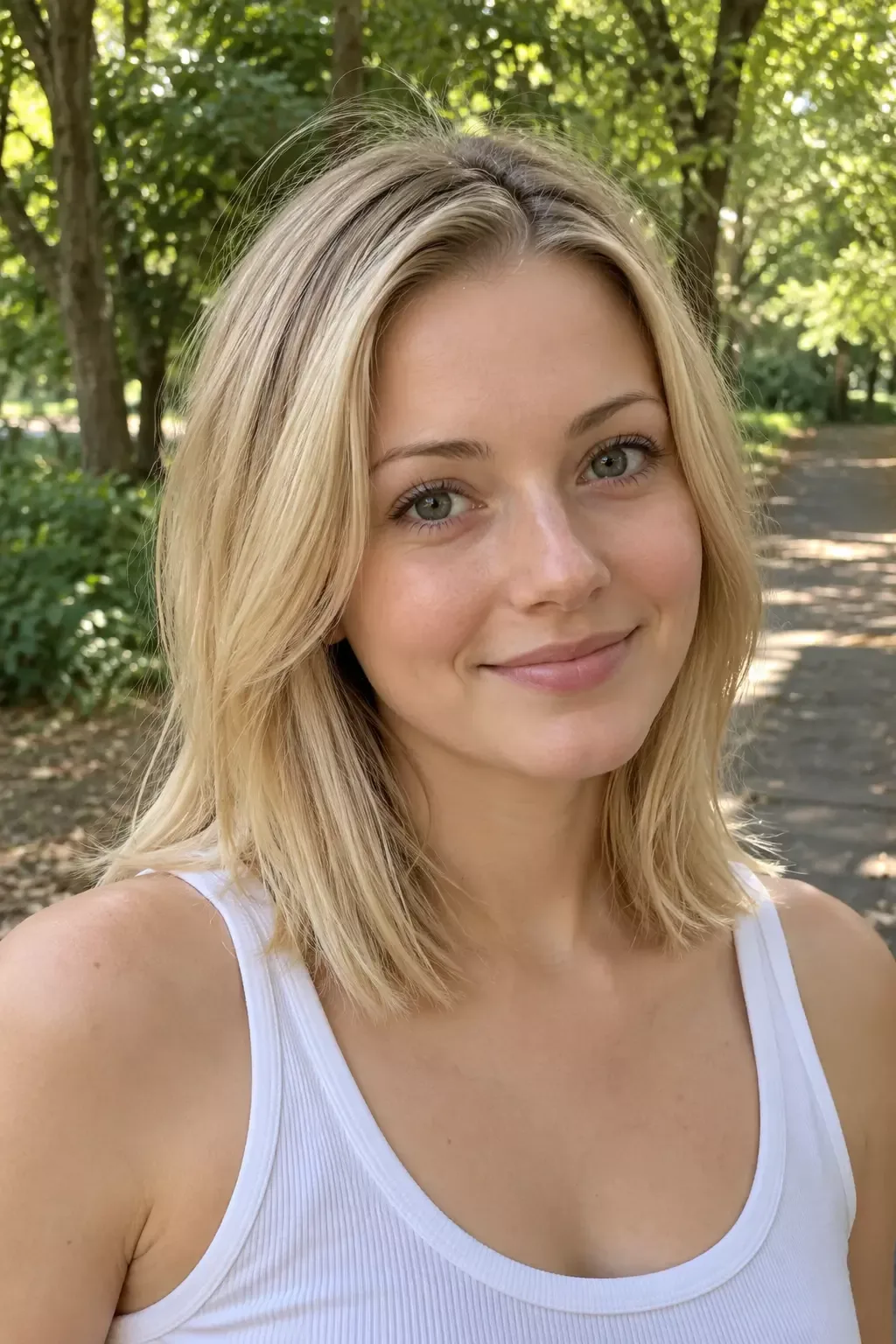
Does layered hair look good on thin hair? Yes, if the layers are hidden. Ask for ghost layers: the short pieces are cut underneath, so the outside still reads as one full length at the shoulders. Visible layers on fine hair remove the very bulk that made the ends look thick, and at shoulder length there is not enough hair left to hide that.
Face-framing pieces are the other safe move, because they take hair from the front only and leave the back heavy. Skip a butterfly cut unless you blow dry every day. Without the round brush, fine hair drops flat and the crown layers just look short.
Thick hair
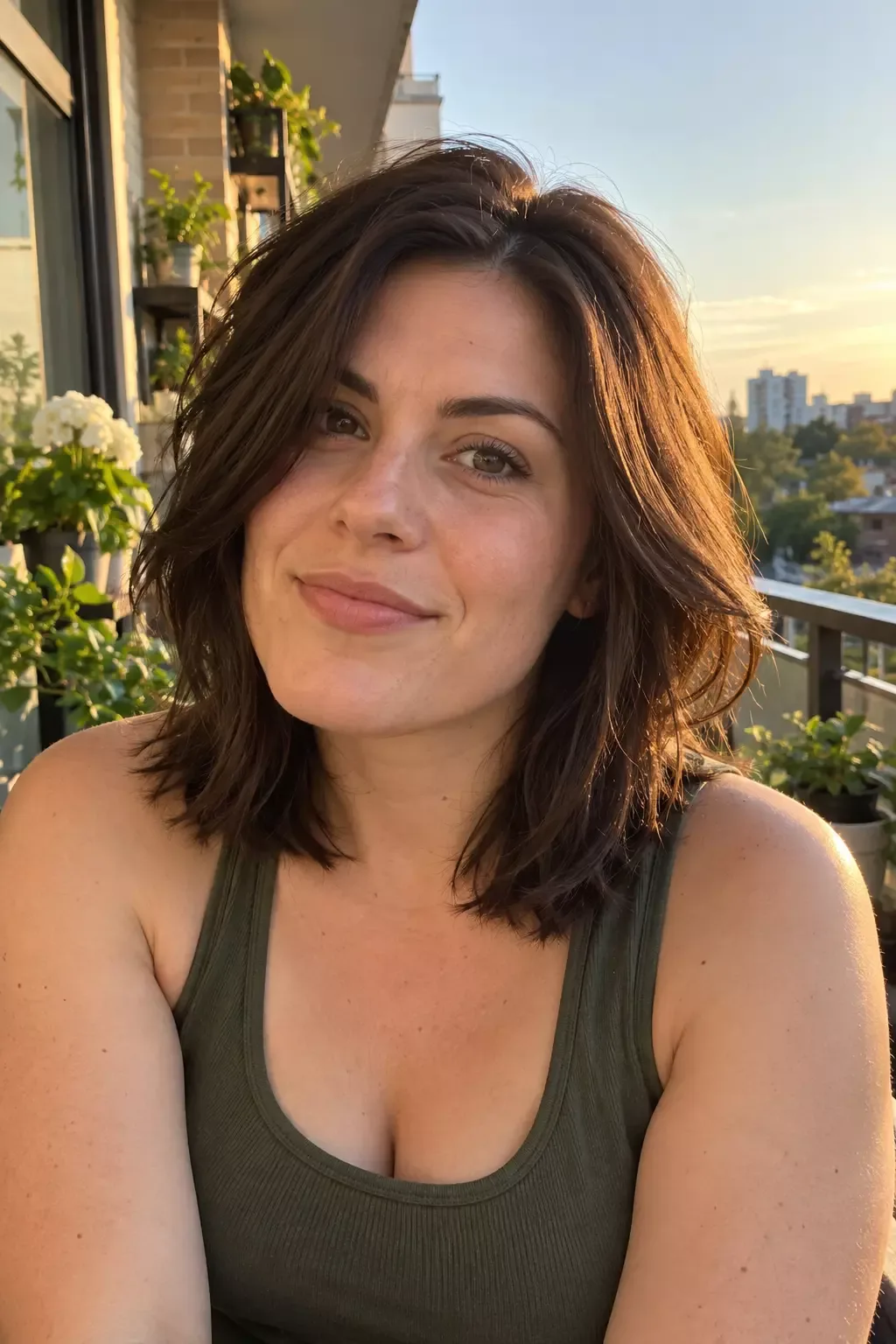
Thick hair is where shoulder length layers earn their keep. One length on thick hair sits at the shoulders like a triangle, narrow at the top and wide at the bottom. Layers through the crown and mid-lengths take that weight out so the hair falls closer to your head.
A shag haircut is the full version of this. If you want something calmer, ask for internal layers instead: weight removed from the inside without short pieces showing on the surface. A smoothing cream on damp hair keeps it from puffing between cuts.
Wavy and curly hair
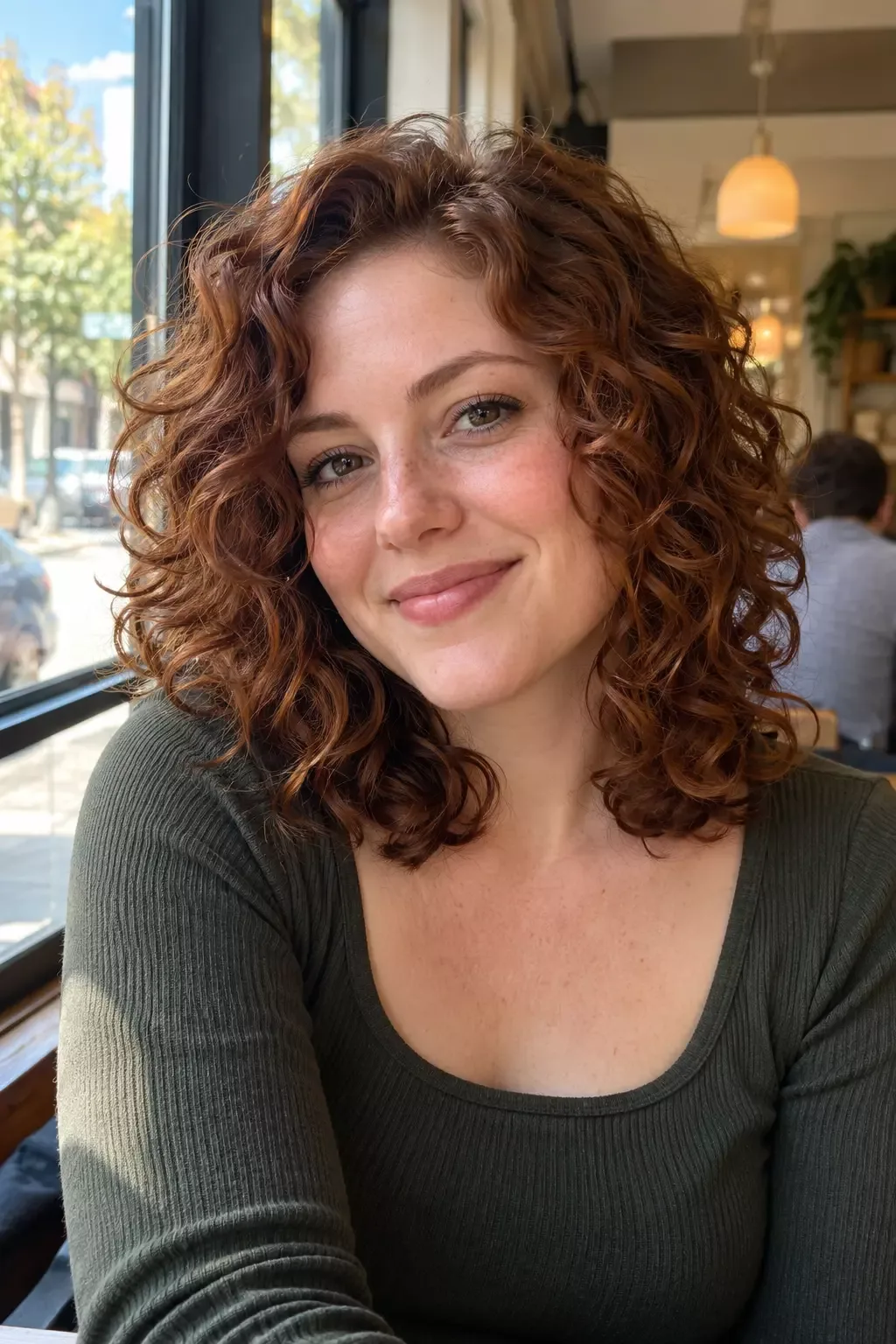
Waves and curls hide the shoulder flip because the ends already move in every direction. The risk is the opposite one: a flat top with all the volume at the bottom. Layers through the crown let the curls stack into a rounded shape instead.
Ask for the cut to be done dry, or at least checked dry, because curls shrink. A layer that looked like chin length wet can spring up to the cheekbone once it dries.
Layered shoulder length hair for a round face

Start the shortest layer below the chin, not at it. Layers add width where they end, so a layer that stops at the cheek line widens the widest part of a round face. Start it just below the jaw and the hair falls straight past your cheeks, which makes the face look longer.
A deep side part helps for the same reason: it breaks up the symmetry that makes a round face look rounder. Skip full blunt bangs and chin-length curtain bangs. Long side bangs that fall past the cheekbone work better.
Not sure your face is round? Most people guess wrong between round and square. Measure instead:
Measure it instead of guessing
Both numbers in the same unit — the answer is a ratio, so it does not matter which.
Under 1.15 reads round, 1.15 to 1.5 reads oval, over 1.5 reads long. Oval and long split on the jaw rather than the ratio: an oval tapers toward the chin, a long face runs straight down.
Then read the face shapes guide for what each result means.
Mistakes that cost you a grow-out
Layers take three to six months to grow back into the length, so these are expensive mistakes.
- Asking for "layers" with no zone. A stylist who hears "layers" at shoulder length often puts them everywhere. You end up with a shag you did not ask for. Say front, crown or ends.
- Layering the ends of straight hair. Thin ends on the shoulder flip outward and stay there. Keep the last two inches heavy unless your hair is wavy.
- Starting the shortest layer too high. Above the cheekbone, a shoulder length cut starts to look like a mullet from the side. The chin is a safe high point for most people.
- Choosing a blowout cut when you air-dry. Butterfly and 90s layers need a round brush. Air-dried, they just look uneven.
- Judging it wet. Layers look longer wet. Ask to check the shortest piece once it is dry.
How to style layered shoulder length hair
Most layered cuts here need five minutes, not thirty. Rough dry until the hair is about 80 percent dry, then use a medium round brush only on the front pieces, rolling them away from your face. Leave the back alone.
For a full blowout, the one butterfly and 90s layers need, take two-inch sections, pull each one up and forward with the brush, and roll the ends under on the last pass. Hair grows about half an inch a month, so a layered cut at this length needs a trim every eight to ten weeks to keep its shape, and curtain bangs every four to six.
How to ask for layered shoulder length hair
Do not say "layers" on its own. Say where the length stops, which zone the layers go in, where the shortest one starts and how heavy the ends should stay. This is the line to say:
Say this to your barber
I want to keep the length at the top of my shoulders, with curtain bangs and face-framing layers starting at my chin, and the ends kept heavy so they do not flip out.
How to ask for layered shoulder length hair
- Name the length
Point to the top of your shoulders. Say whether you want it there or an inch below, at the collarbone.
- Name the zone
Front, crown or ends. This one word stops the stylist from layering everything.
- Name the shortest layer
Chin, just below the chin or cheekbone for curtain bangs. Point to it.
- Say how heavy the ends stay
"Keep the ends heavy" if your hair is straight. "Take weight out" if it is thick or wavy.
- Bring two photos
One of the look you want, one of what you do not want, both on hair like yours.
Can you see it on your own face first?
Everything above works. You can pick the zone, measure your face, bring photos and say the right sentence. The wall it hits is that you still cannot see the layers on your own face until they are cut, and at shoulder length there is no extra length to fix a mistake.
That is the gap HairstyleAtlas fills. Upload one selfie and see a layered lob with curtain bangs, or try the curtain bangs on their own, before anyone picks up scissors. The first look is free and needs no card. After that, plans start at $9 a month, with a seven-day refund.
If you want one layered shoulder length hairstyle that works for nearly everyone, get curtain bangs with face-framing layers from the chin and keep the ends heavy. It frames the face, it does not flip, and it grows out without an awkward stage. Move the layers to the crown only if your hair is thick or wavy, and to the ends only if it is fine. Pick one zone, say it out loud, and leave the rest of the length alone.
Frequently asked questions
If you are unsure, get face-framing layers with the ends kept heavy at the top of the shoulders. It suits most face shapes and hair types and is the easiest to grow out. Thick hair does better with a shag, fine hair with ghost layers.
Yes, when the layers are hidden or kept to the front. Ghost layers and face-framing pieces add movement while the outside still looks full. Avoid crown layers and razor cutting, which remove the bulk that makes thin ends look thick.
Curtain bangs are a fringe parted in the middle that falls to the cheekbones. Layers are shorter pieces cut through the rest of the hair. They are often combined: curtain bangs at the front that blend into face-framing layers below them.
Yes, and shoulder length is where layers change the shape most, because the cut is short enough that every layer shows. Pick one zone, front, crown or ends, rather than layering everything.
Rough dry to about 80 percent, then use a medium round brush on two-inch sections, lifting at the roots and rolling the front pieces away from your face. Roll the ends under on the last pass so they do not flip on the shoulders.
The shape holds for about eight to ten weeks before the layers start to sag at shoulder length. Curtain bangs need a trim sooner, every four to six weeks. Growing layers back to one length takes three to six months.
Yes, if your hair is fine or your face is round. Long layers only touch the last few inches, so the cut keeps its shape and adds movement without width. On thick hair they do too little, and a shag or internal layers work better.
You can trim face-framing pieces at home by twisting the front section and snipping below the chin, but crown layers are hard to cut evenly on your own head. At shoulder length a mistake is visible right away, so book a stylist for the first cut and copy it later.
Preview it on your own photo: Virtual Hair Color Try-On.
Share article
About the author
Related posts
Women's Haircuts · 15 min
Shoulder Length Bob: 14 Looks, Who It Suits and the Half Inch That Matters
A shoulder length bob is a one-length cut that ends just above your shoulders. Fourteen versions at the same length, which one suits your hair and face, and why cutting it half an inch too long makes it flip.

Women's Haircuts · 13 min
Chocolate Brown Hair: 14 Shades and Who Each One Suits
Chocolate brown is a level 3 to 5 brunette with a rich, neutral to warm tone. See 14 shades side by side, which suits your skin tone, and why your starting color matters more than the box.
Women's Haircuts · 13 min
Brown Hair With Highlights: 14 Colors and Which Suits Your Base
Caramel, honey, copper, red, ash, beige and silver on brown hair, compared by how much lift each needs and what it costs to keep. Find the shade that suits your base and skin.
Women's Haircuts · 13 min
Messy Bun: How to Do It in 2 Minutes on Any Hair Type
A messy bun takes two minutes and one hair tie. The part tutorials skip: the messy look comes from your haircut and texture, not your hands. See it on 13 hair types and find the version that holds on yours.
Women's Haircuts · 13 min
Honey Blonde Hair: 14 Shades and How to Get It From Any Base
Honey blonde is a warm golden blonde around level 7 to 8. See 14 versions, how it compares to caramel and golden blonde, the route from your starting colour, and the mistakes that turn it brassy.
Women's Haircuts · 15 min
Bixie Haircut: 14 Looks, Who It Suits and What to Ask For
A bixie is the shaggy cut between a pixie and a bob. See 14 versions, which one suits your face shape and hair type, how it compares to a pixie, and the exact words to say in the salon.