Children's Braids Hairstyles: 14 Kids' Braids by Age and Hair Type
Oleh Onysko 27 October 2026 13 min read
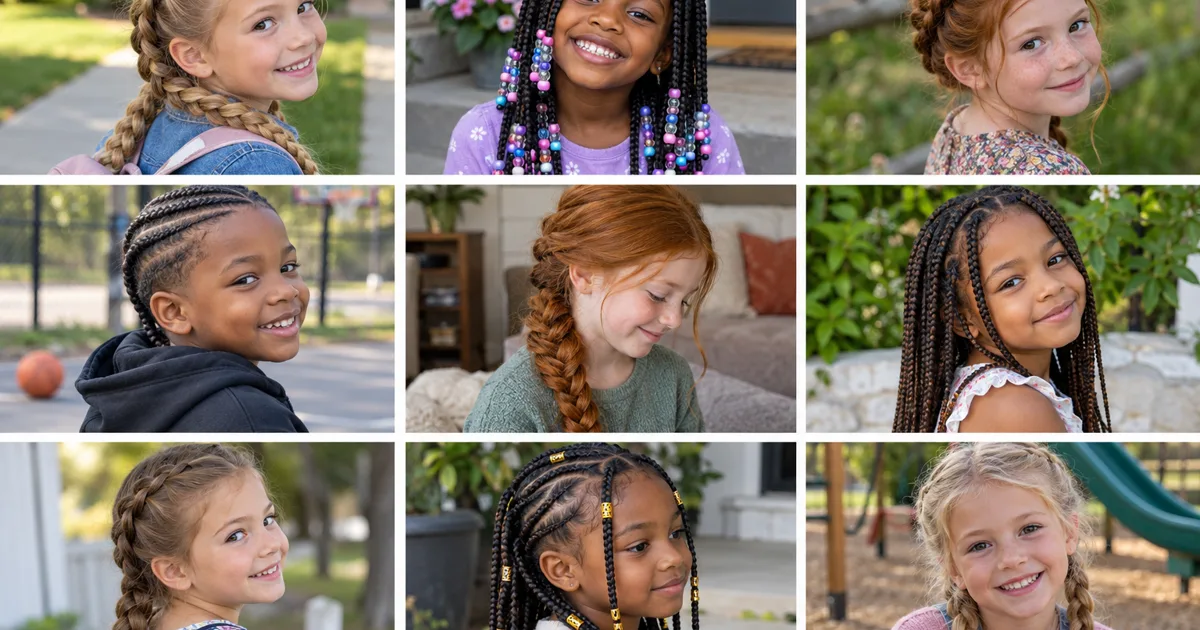
In this article
The best children's braids hairstyles are short, fairly chunky and done on the child's own hair. A style your kid can sit through in under an hour, that stays above the shoulders, will look neater for longer and is far kinder to their scalp than tiny waist-length box braids that took a whole Saturday.
Below: which braids suit which age and hair type, 14 kids' braids side by side, how to braid at home without tears, and the warning signs that a style is too tight. Whether you call them kids braids or kiddies braid hairstyles, the rules are the same.
Pick the braid by how long your child can sit
Most guides sort kids' braids by how cute they look. Sort them by sitting time instead, because a braid you cannot finish is worse than no braid at all. A four year old who gives up halfway leaves you with half a head of cornrows and a fight.
| Braid style | Sitting time | Lasts about | Best for |
|---|---|---|---|
| Two Dutch or French braids | 10 to 20 minutes | 1 to 3 days | Straight, wavy or curly hair, school mornings |
| Braided pigtails | 5 to 10 minutes | 1 to 2 days | Toddlers and preschoolers |
| Fishtail or crown braid | 15 to 25 minutes | 1 to 2 days | Ages 6 and up, parties and photos |
| Straight-back cornrows | 30 to 60 minutes | 1 to 2 weeks | Coily hair, boys and girls, swim season |
| Stitch or heart cornrows | 45 to 90 minutes | 1 to 2 weeks | Kids who can sit through a movie |
| Box braids, medium, shoulder length | 2 to 4 hours | 3 to 6 weeks | Ages 6 and up, holidays and summer |
| Knotless braids, medium | 3 to 5 hours | 3 to 6 weeks | Older kids with tender scalps |
These are typical times for a practiced braider on medium-density hair. Thick hair, tiny parts or a first-timer can double them. If the time in the second column is longer than your child's best movie, pick a row higher up.
Want to see it first? Preview braids on your own photo.
Why shorter, chunkier braids are the kinder choice
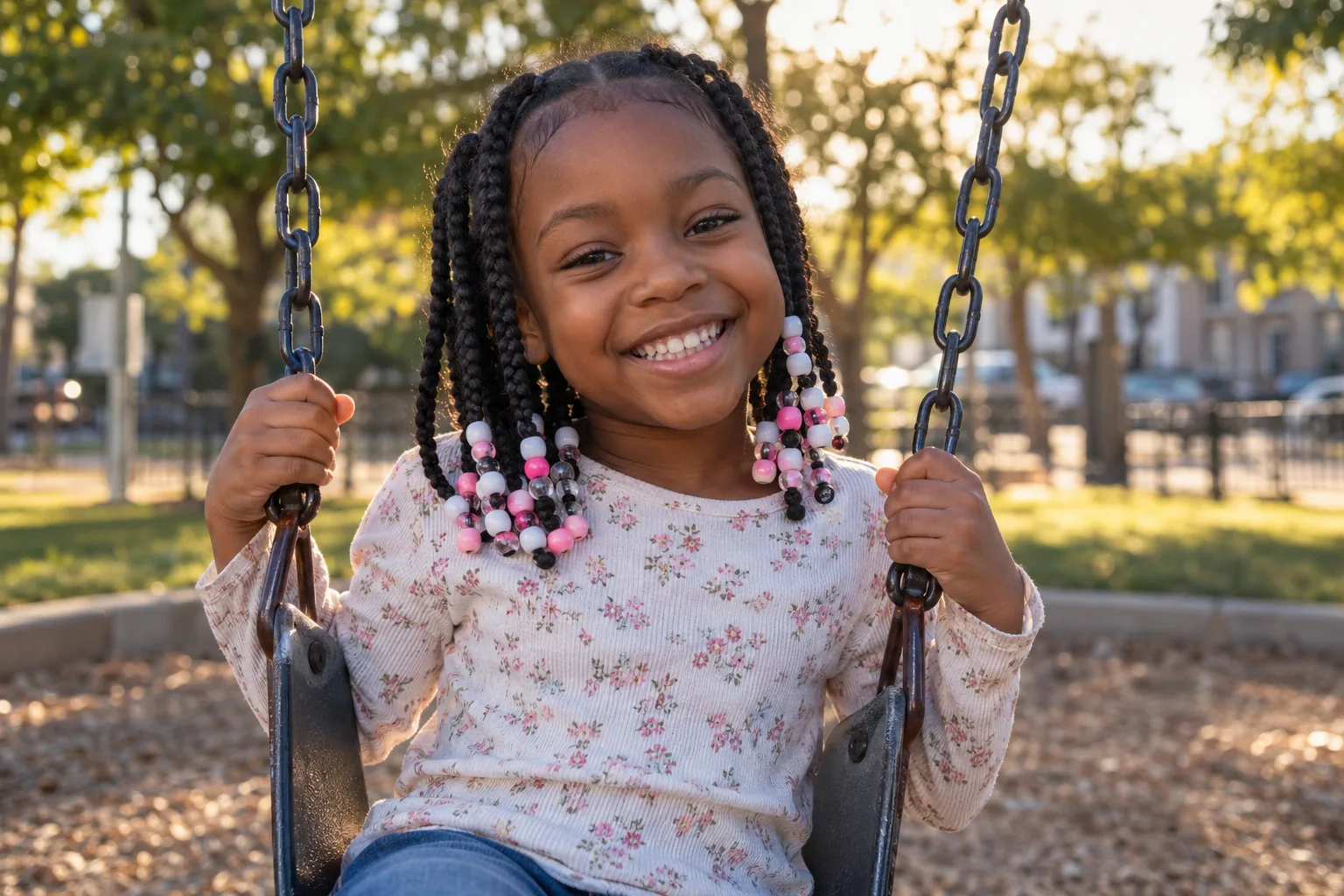
The size and length of the braid matter more than the style. Small braids mean more parts, more tension points and more hours in the chair. Long braids are heavier, and weight hanging from the root pulls all day.
The American Academy of Dermatology lists cornrows and tight braids among the hairstyles that pull and can lead to hair loss, a condition called traction alopecia. Its advice fits kids especially well: keep braids short because longer hair is heavier, loosen braids around the hairline, wear them for no longer than 6 to 8 weeks, and take them out right away if they hurt. If a style is painful, it is too tight.
So the trade is simple. Medium braids that stop at the shoulder take half the time of small mid-back braids, pull less, and are easier to wash. For most kids under ten, that is the style to ask for.
14 children's braids hairstyles in one salon
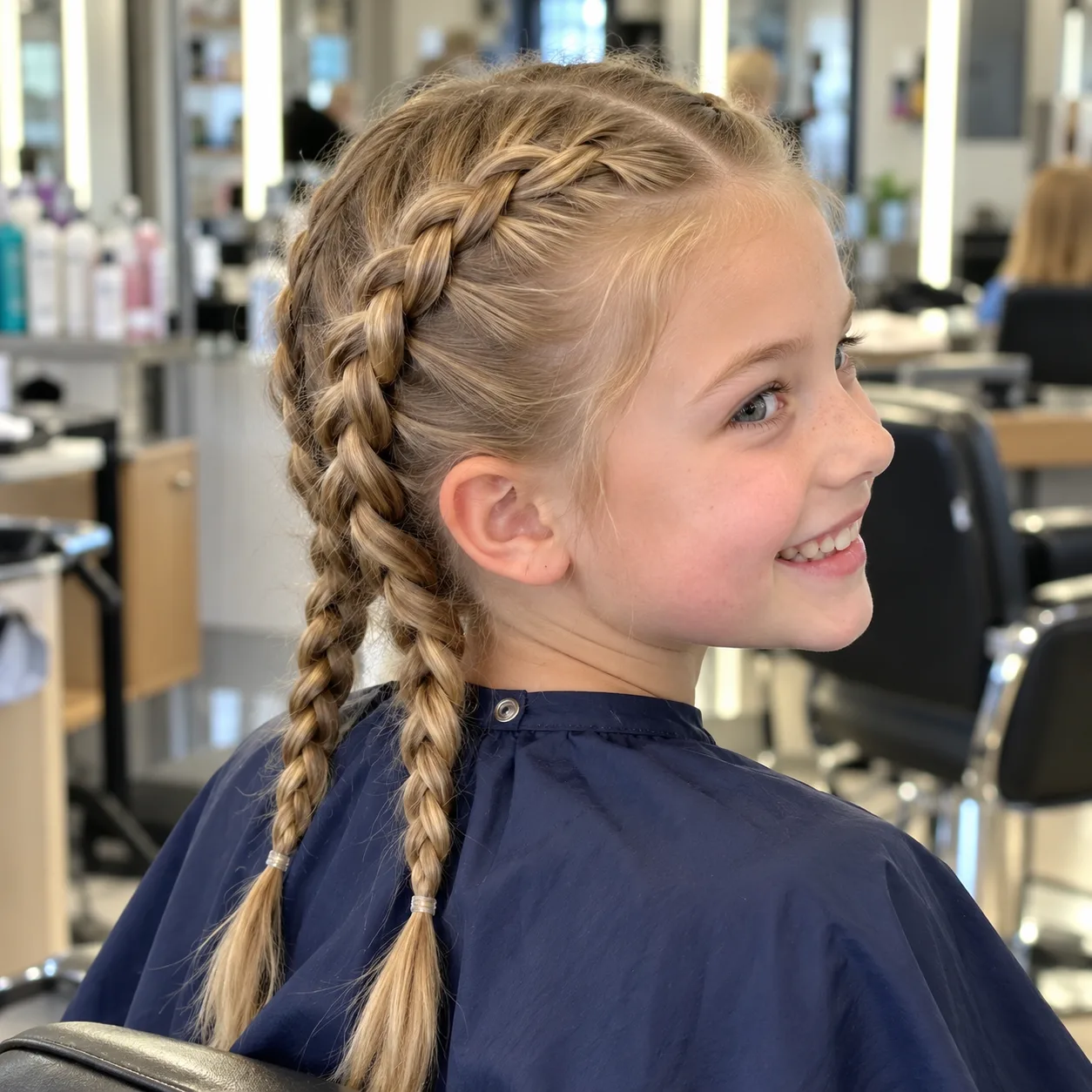
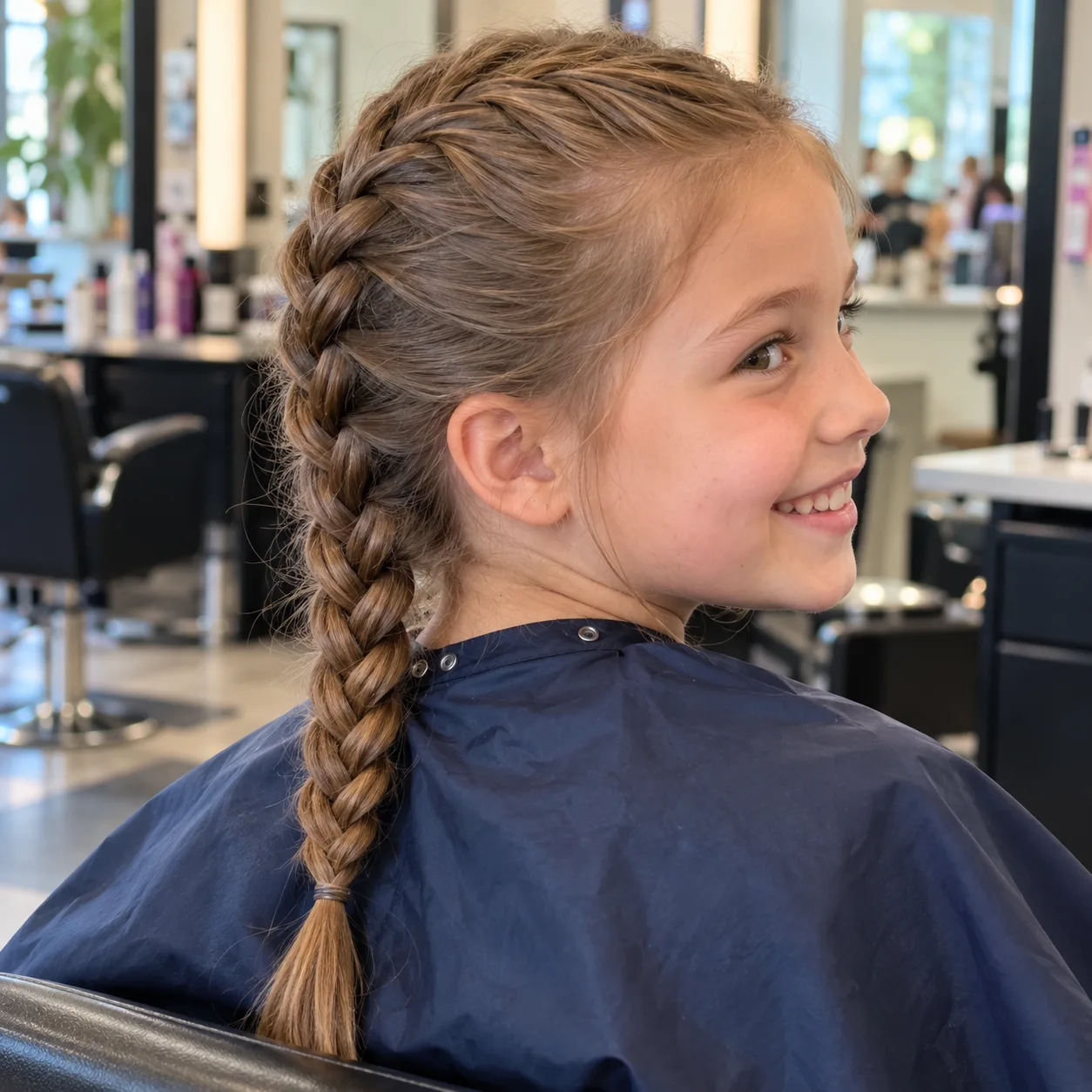
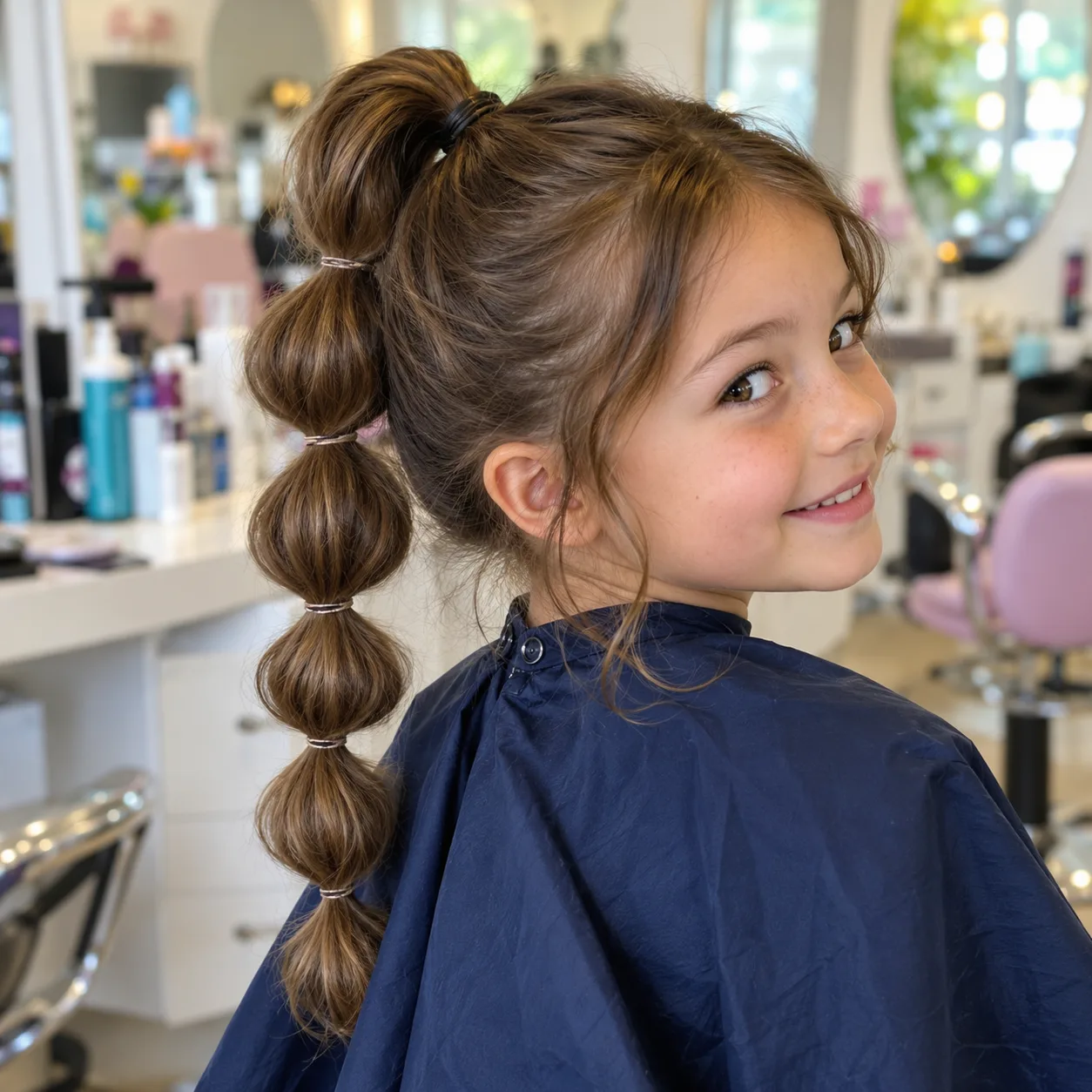
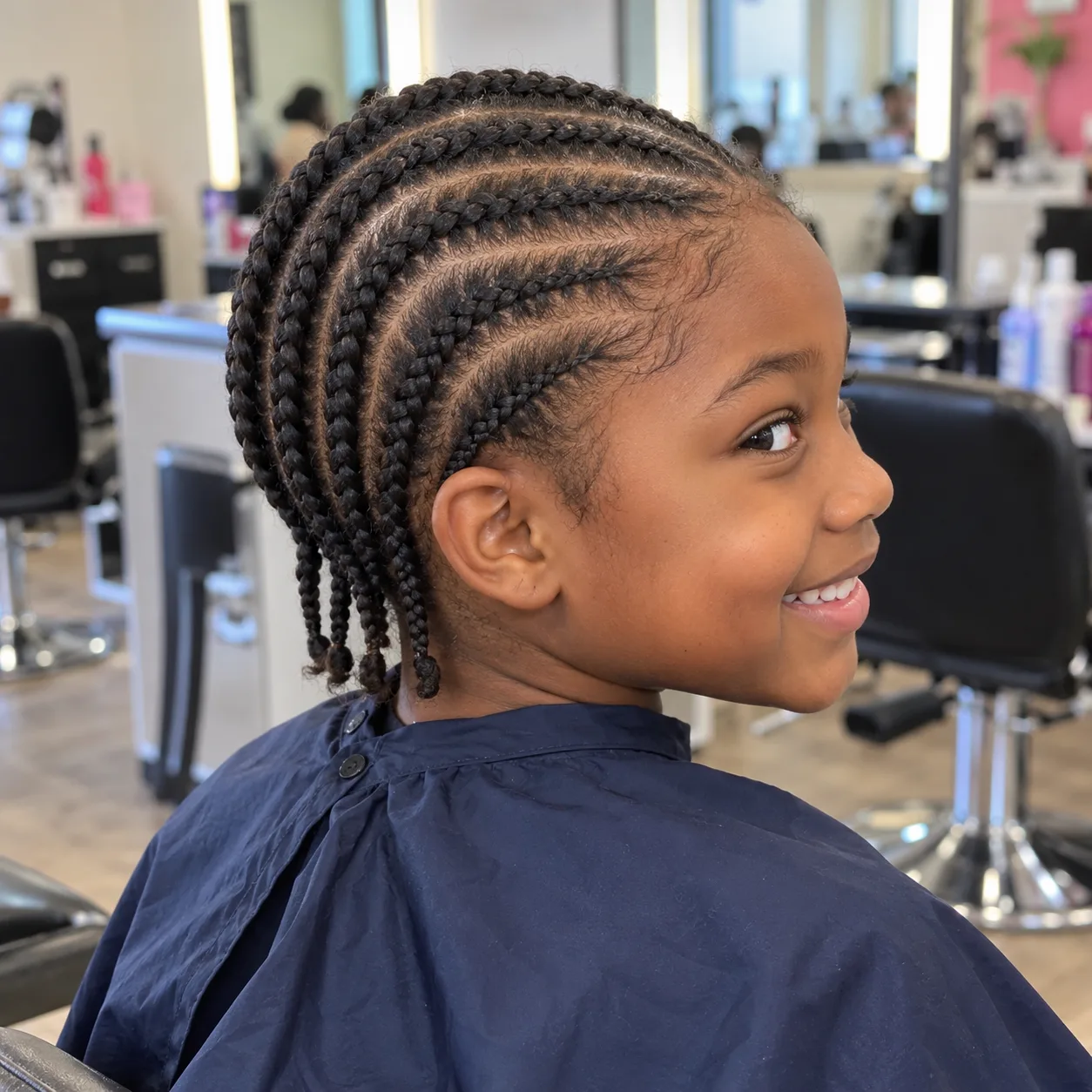
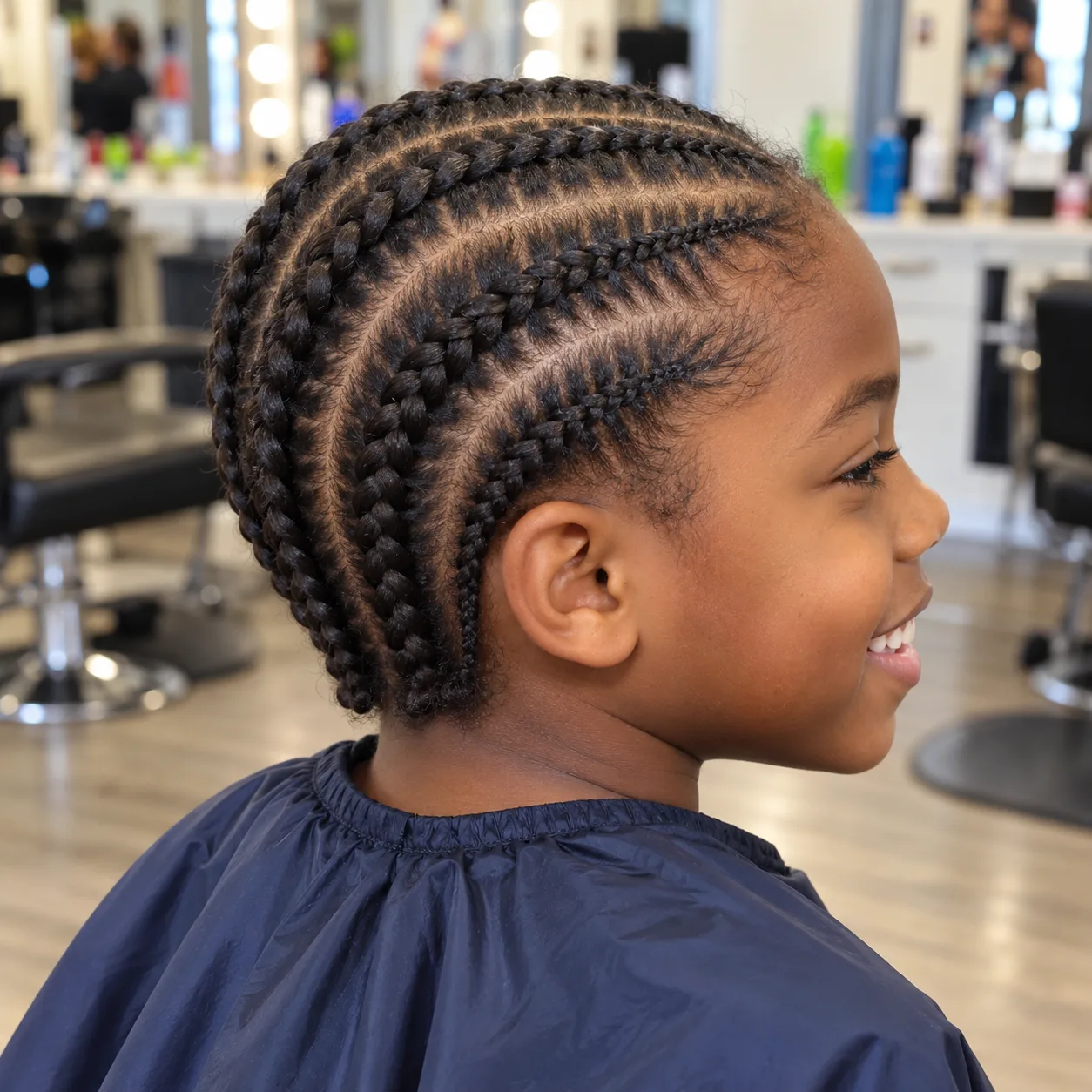
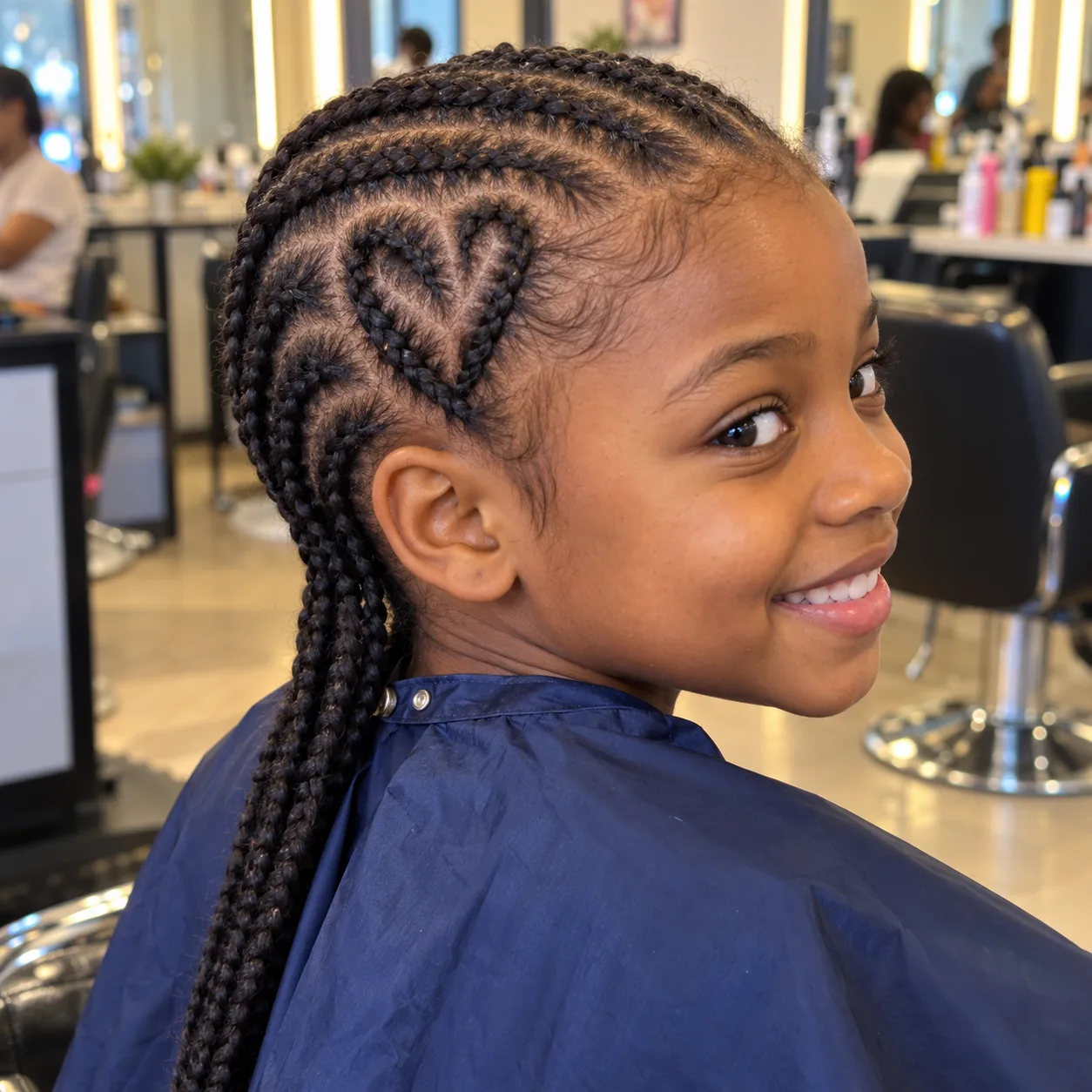
Every picture below uses the same salon, the same cape and a child of about seven, photographed from behind and to the side so you can see the pattern. The only thing that changes is the braid. Use it to point at a shape instead of describing it.
Gallery14 photos · tap to enlarge
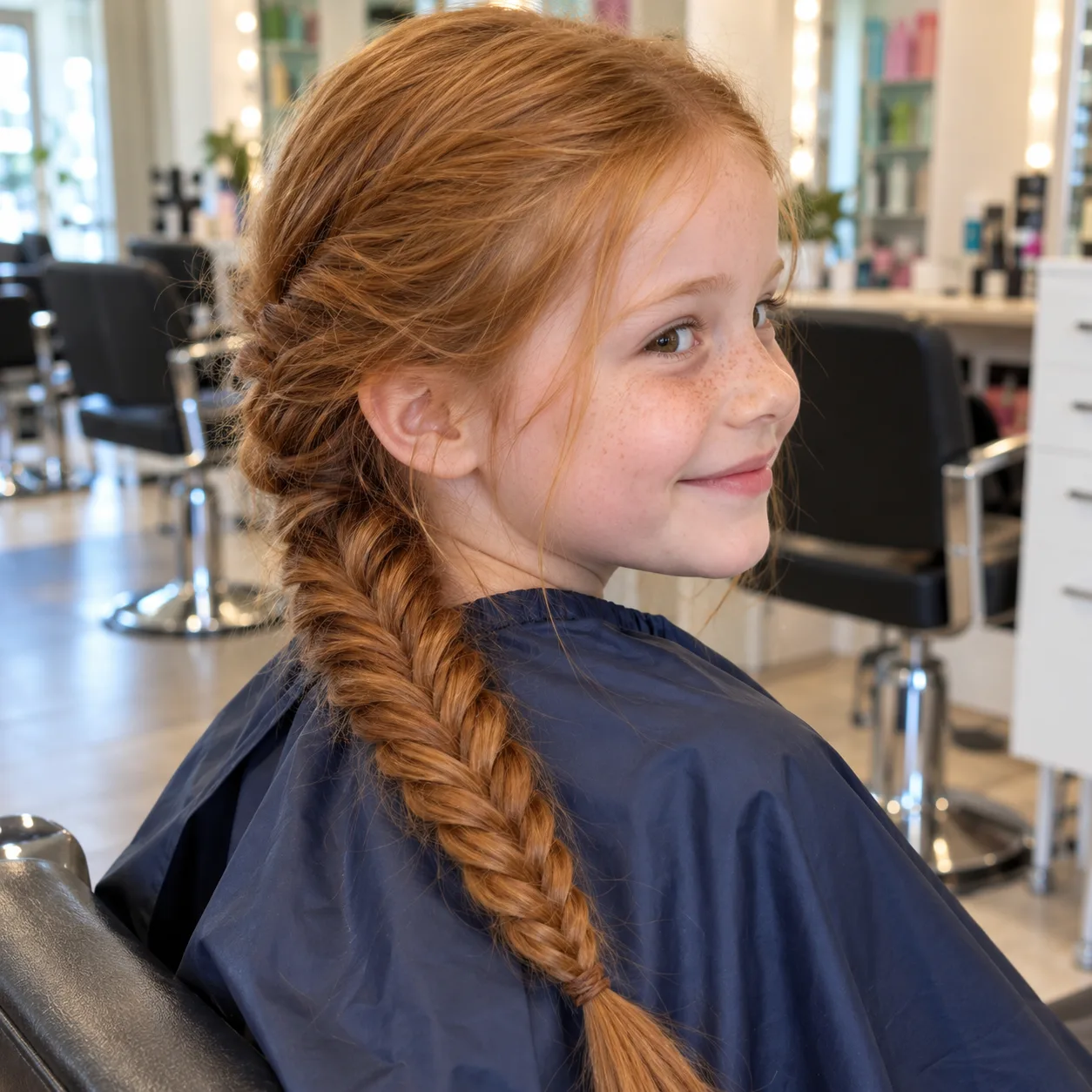
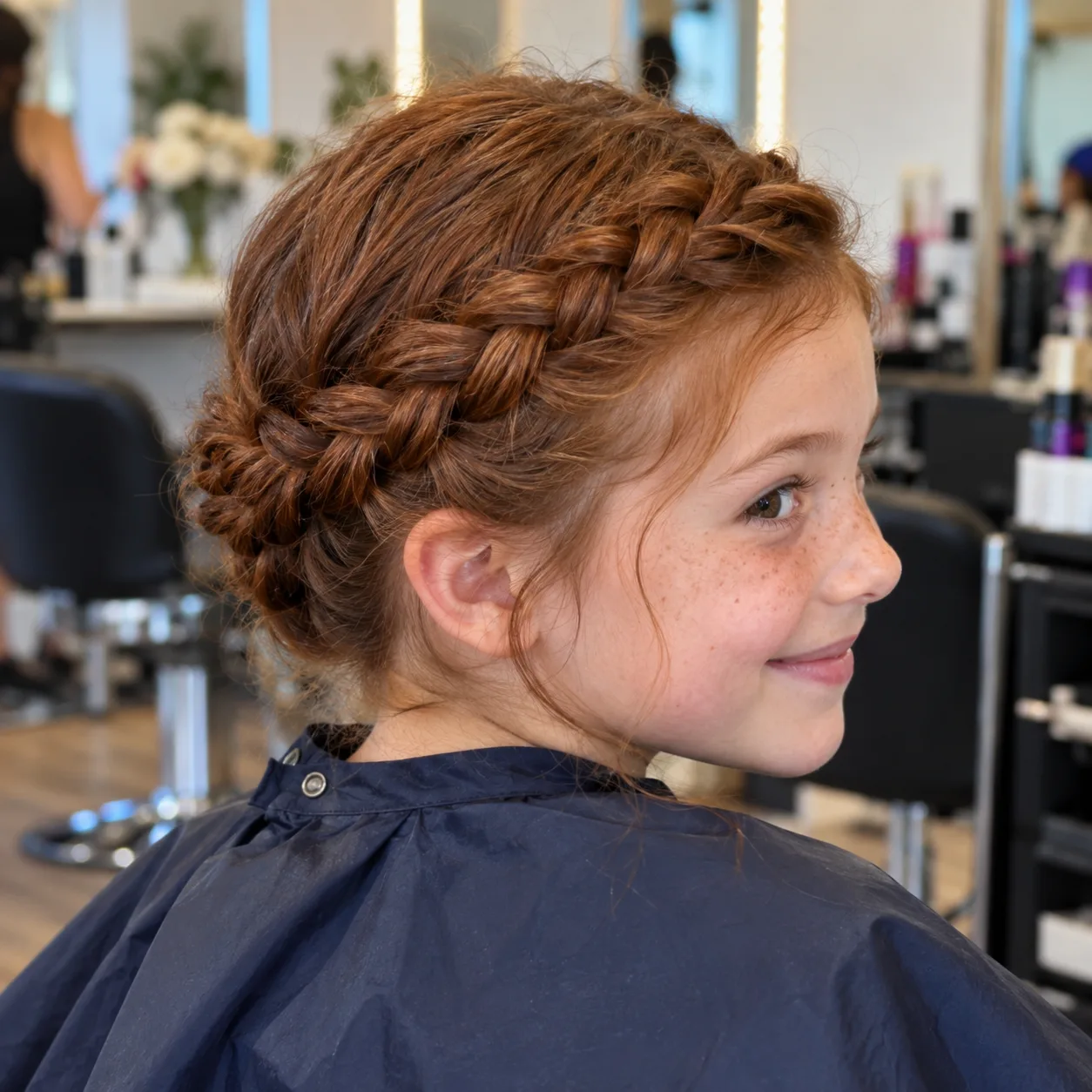
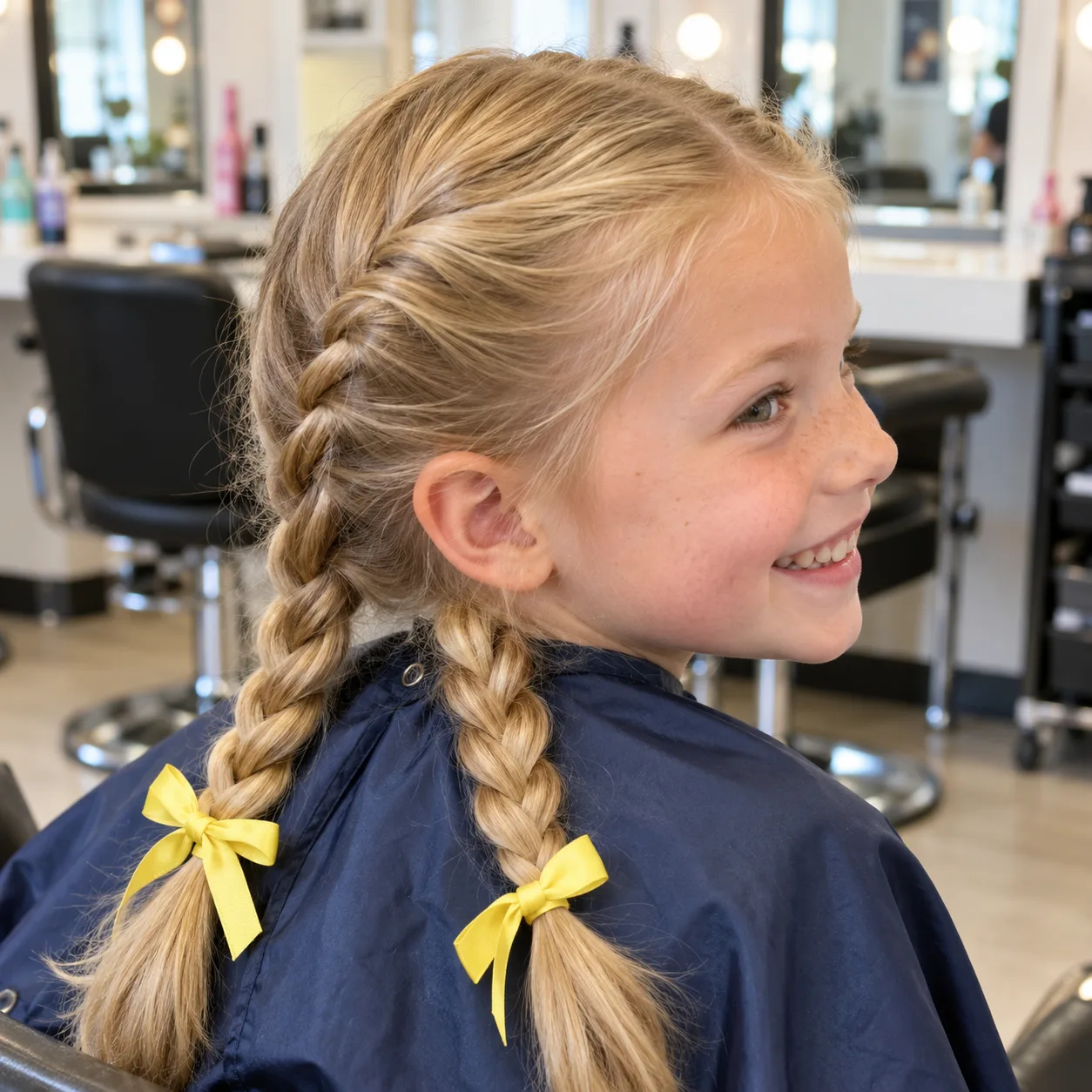
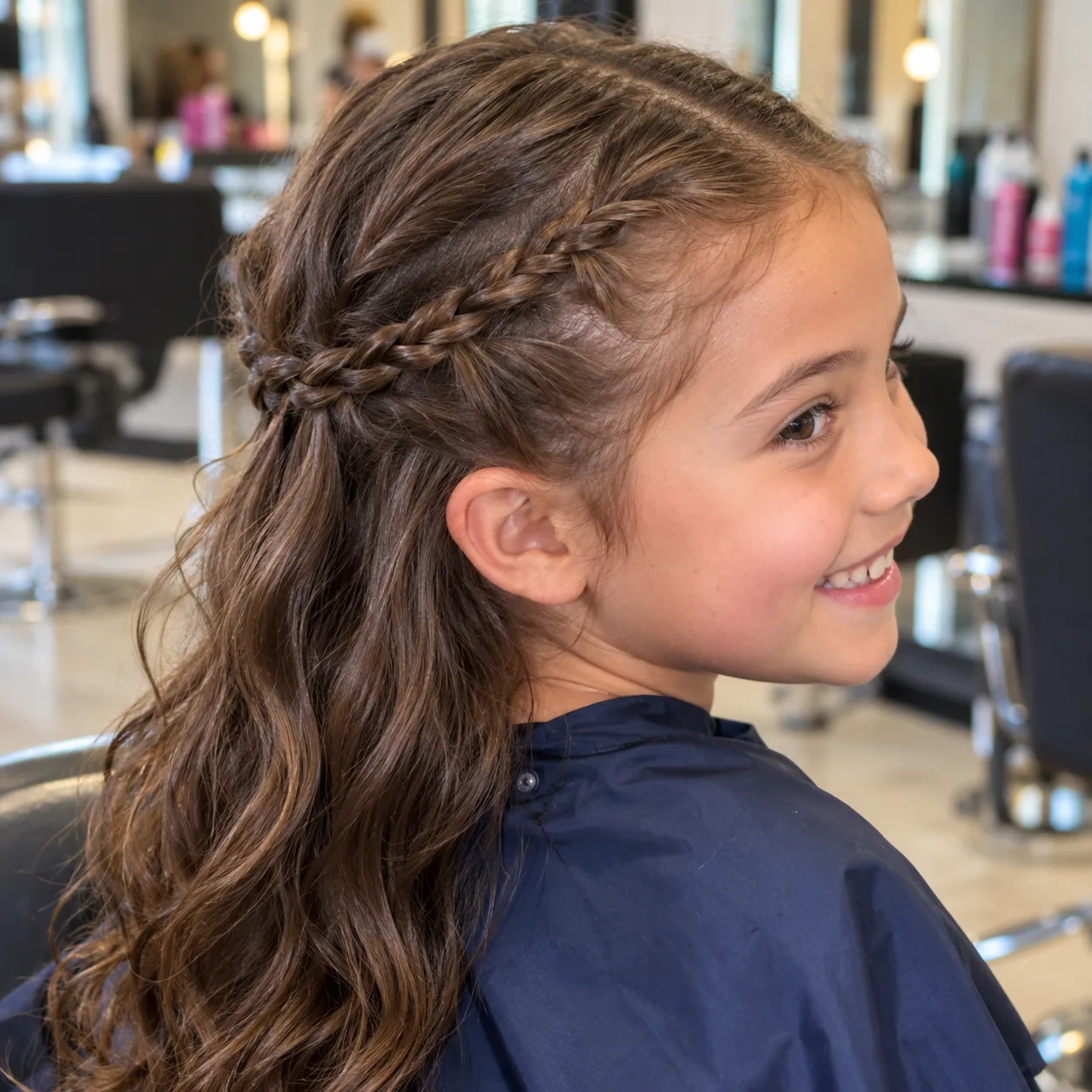
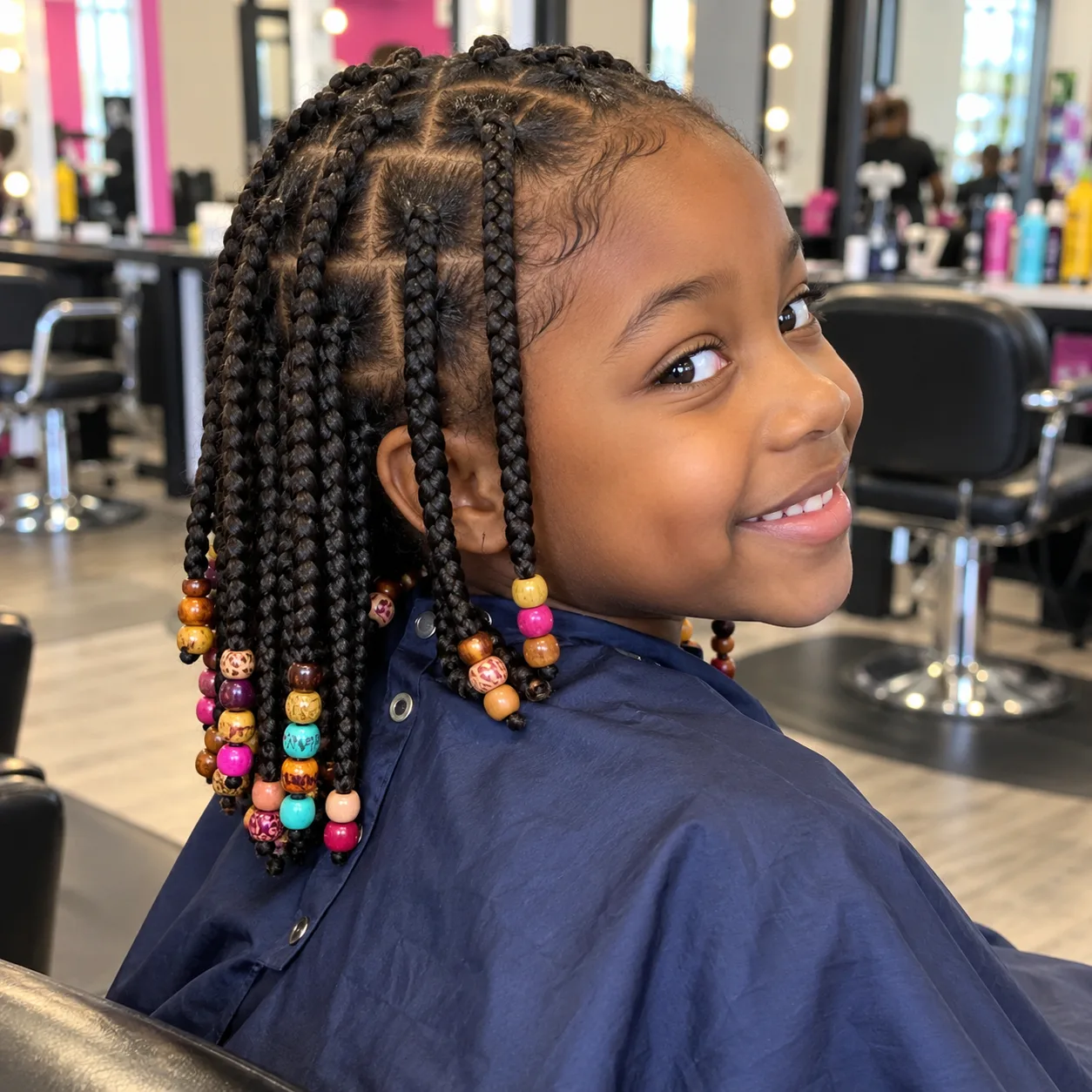
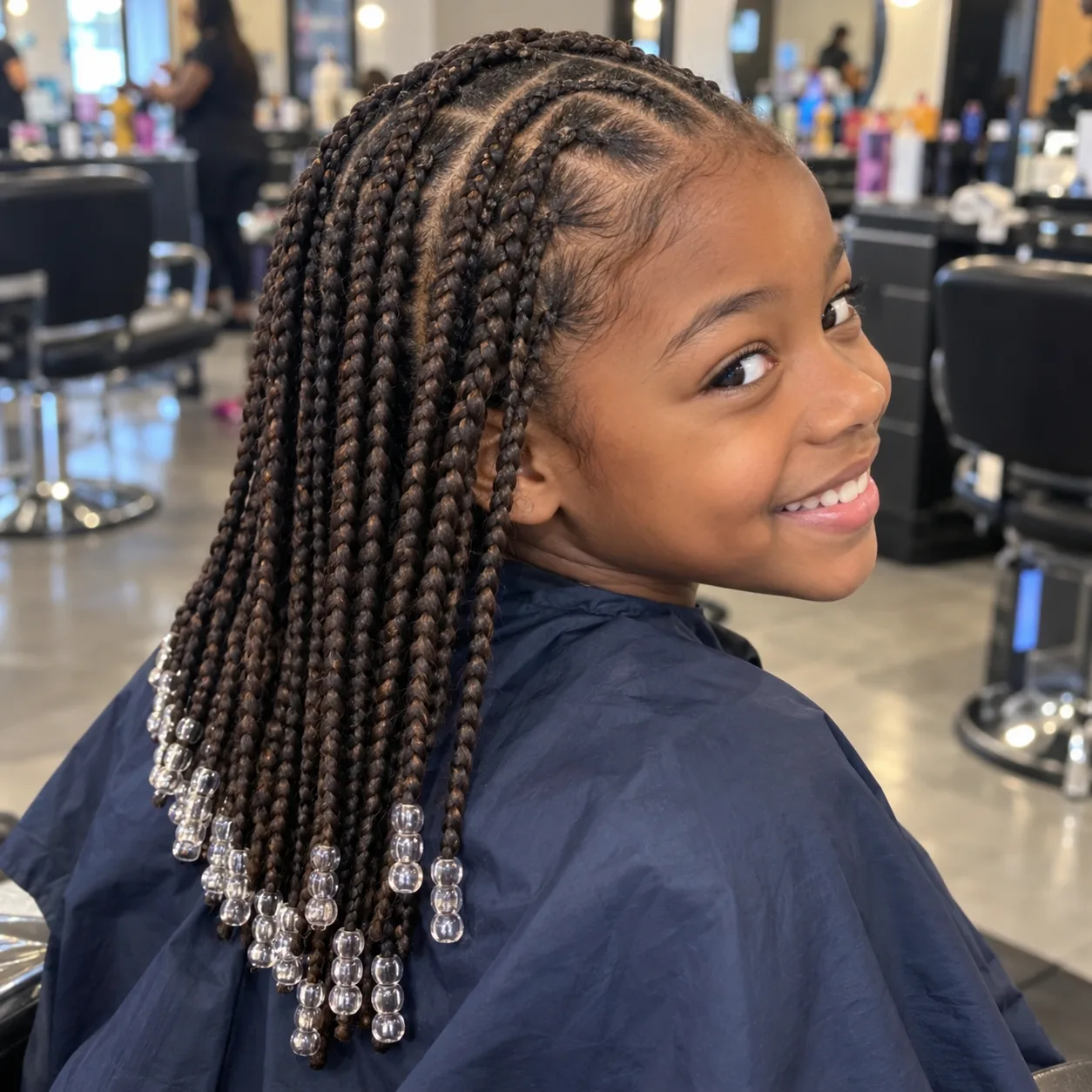
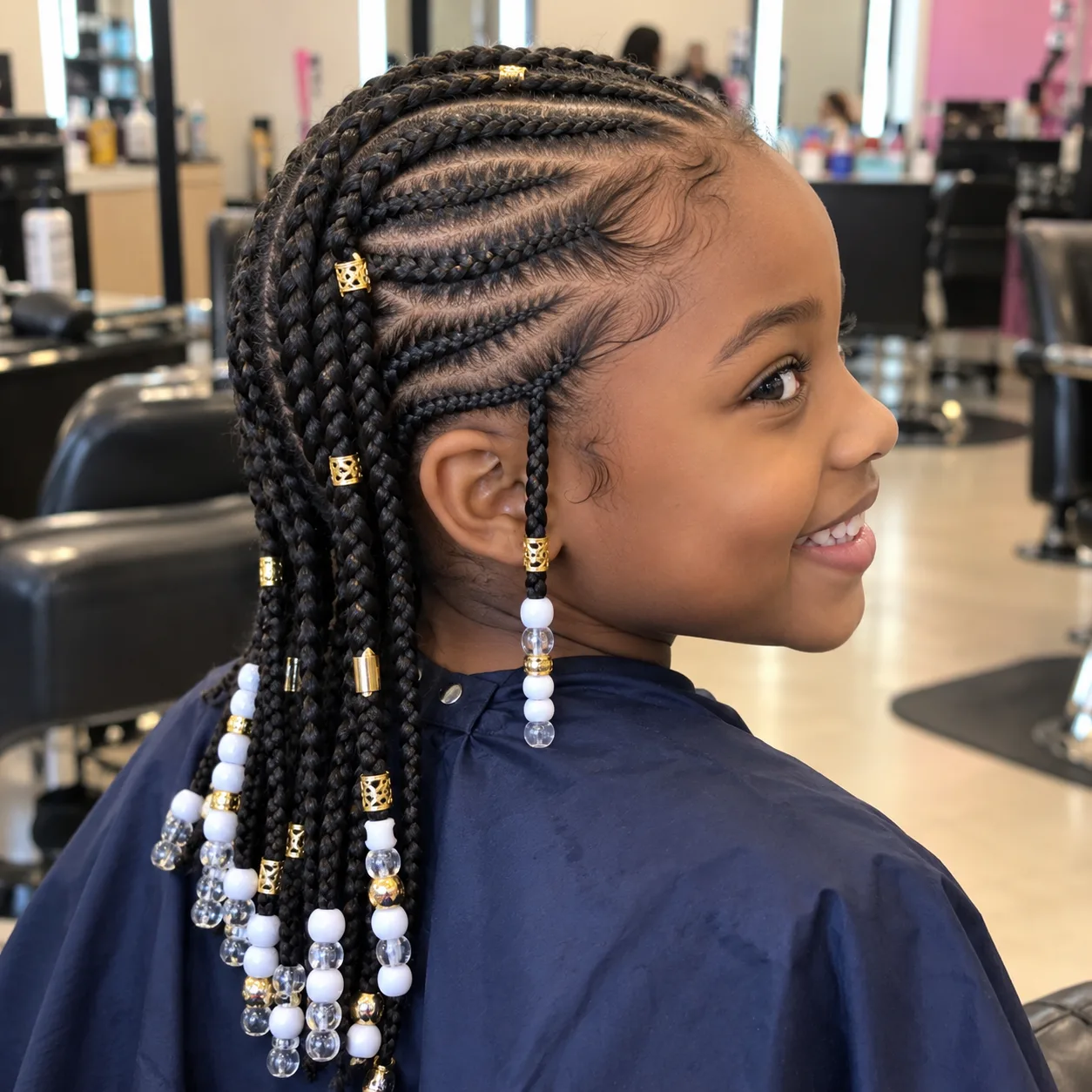
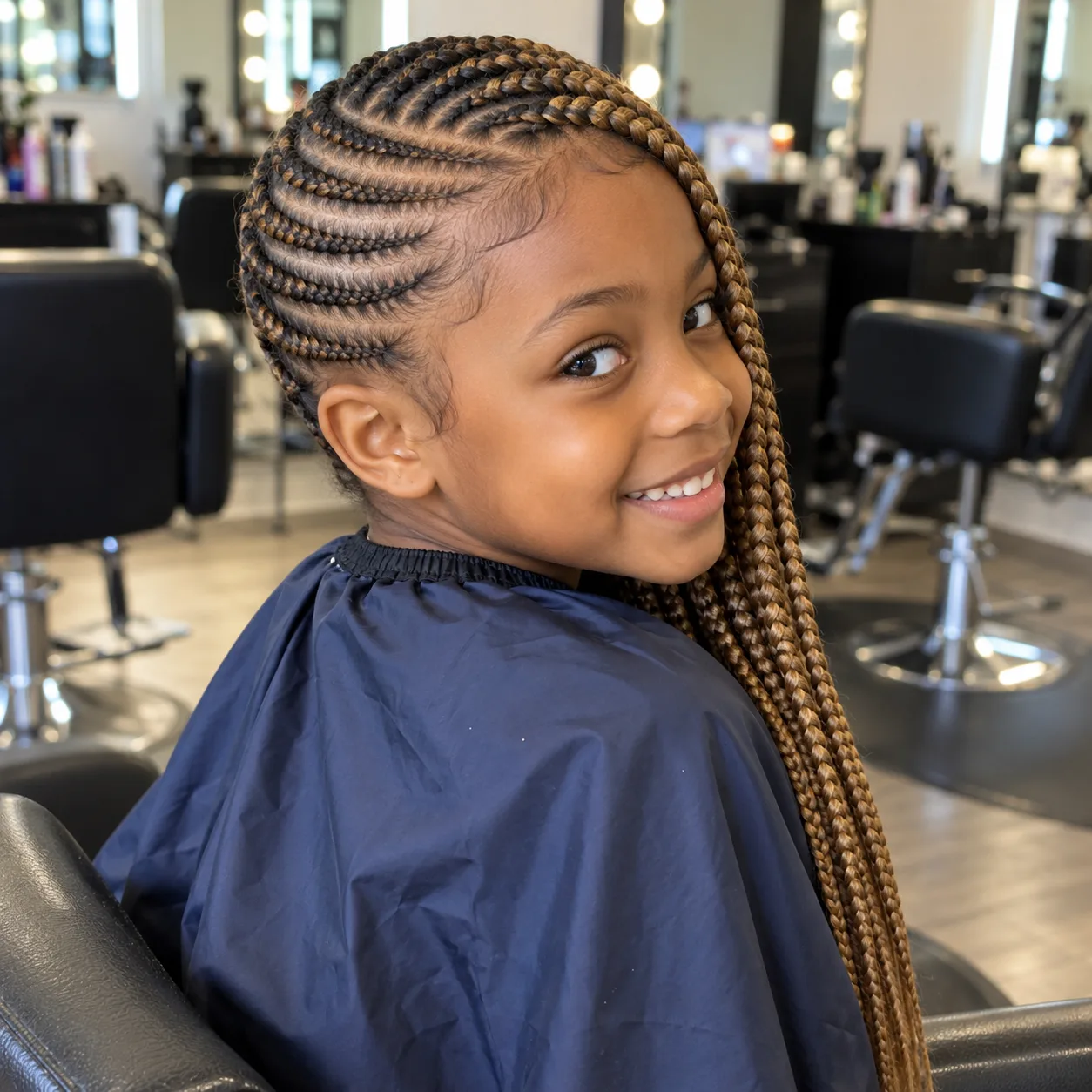
Kids' braids by age
Age decides two things: how long your child can sit, and how much tension a young scalp should take. Both point the same way. The younger the child, the bigger and fewer the braids.
Toddlers, ages 1 to 3
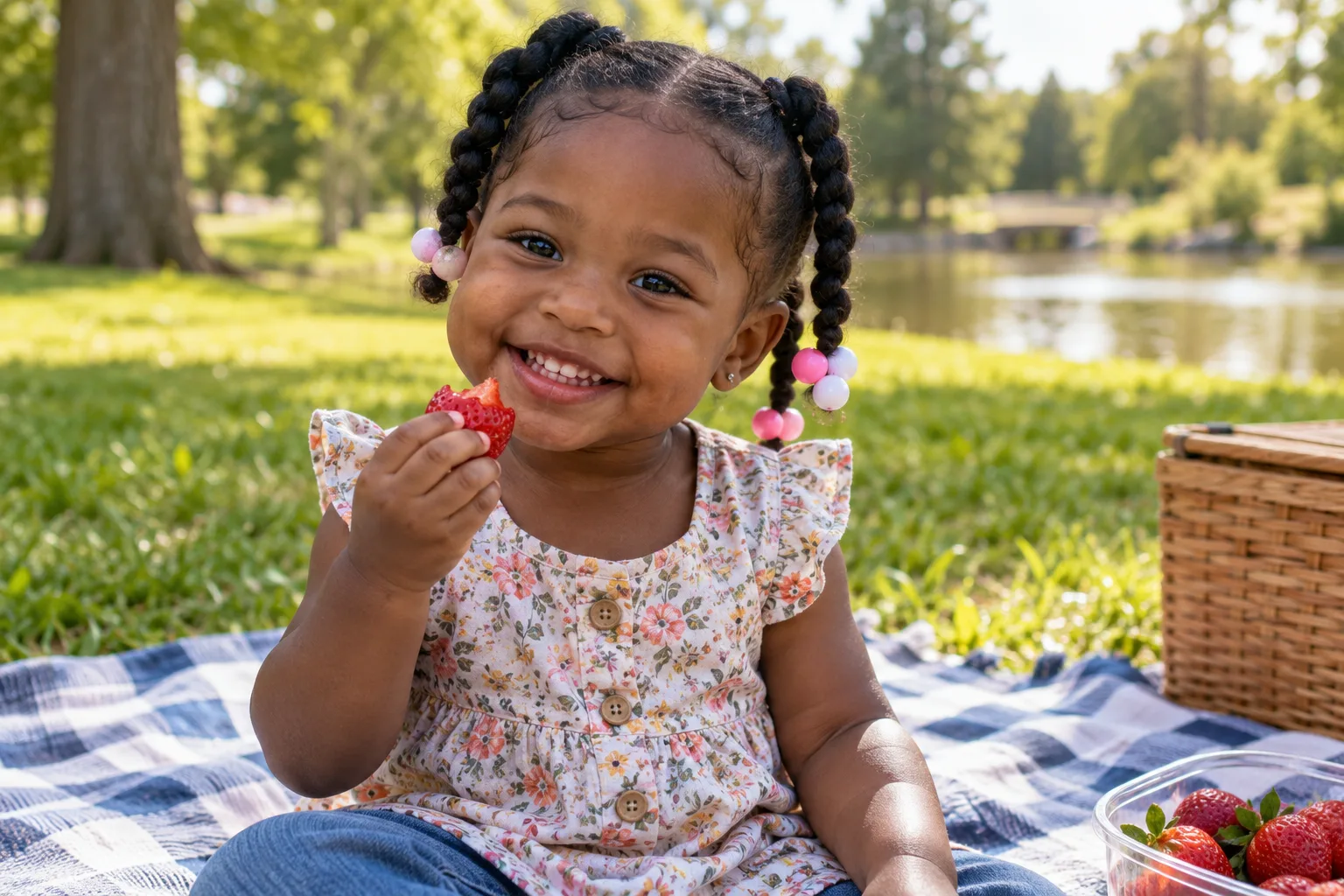
Keep it to two to six big braids or plaits on the child's own hair, with soft bobbles or snag-free elastics. No extensions and no tiny parts. Toddler edges are fine and break easily, so leave the hairline loose and skip the gel. Ten minutes is a realistic ceiling.
Ages 4 to 7
This is the age most parents start asking what braids are best for kids. Two Dutch braids, braided pigtails and simple straight-back cornrows all work, and you can try beads once your child is past putting things in their mouth. A half up half down with a small braid at each temple is a good first "fancy" style because it only takes two thin braids.
Ages 8 to 12
Older kids can handle a longer session and have opinions about the look. Box braids, knotless braids, Fulani braids and stitch cornrows all come into play. Agree on the length before you start: shoulder length or just past it is plenty, and they will thank you on hair-wash day.
Braids for straight and wavy hair
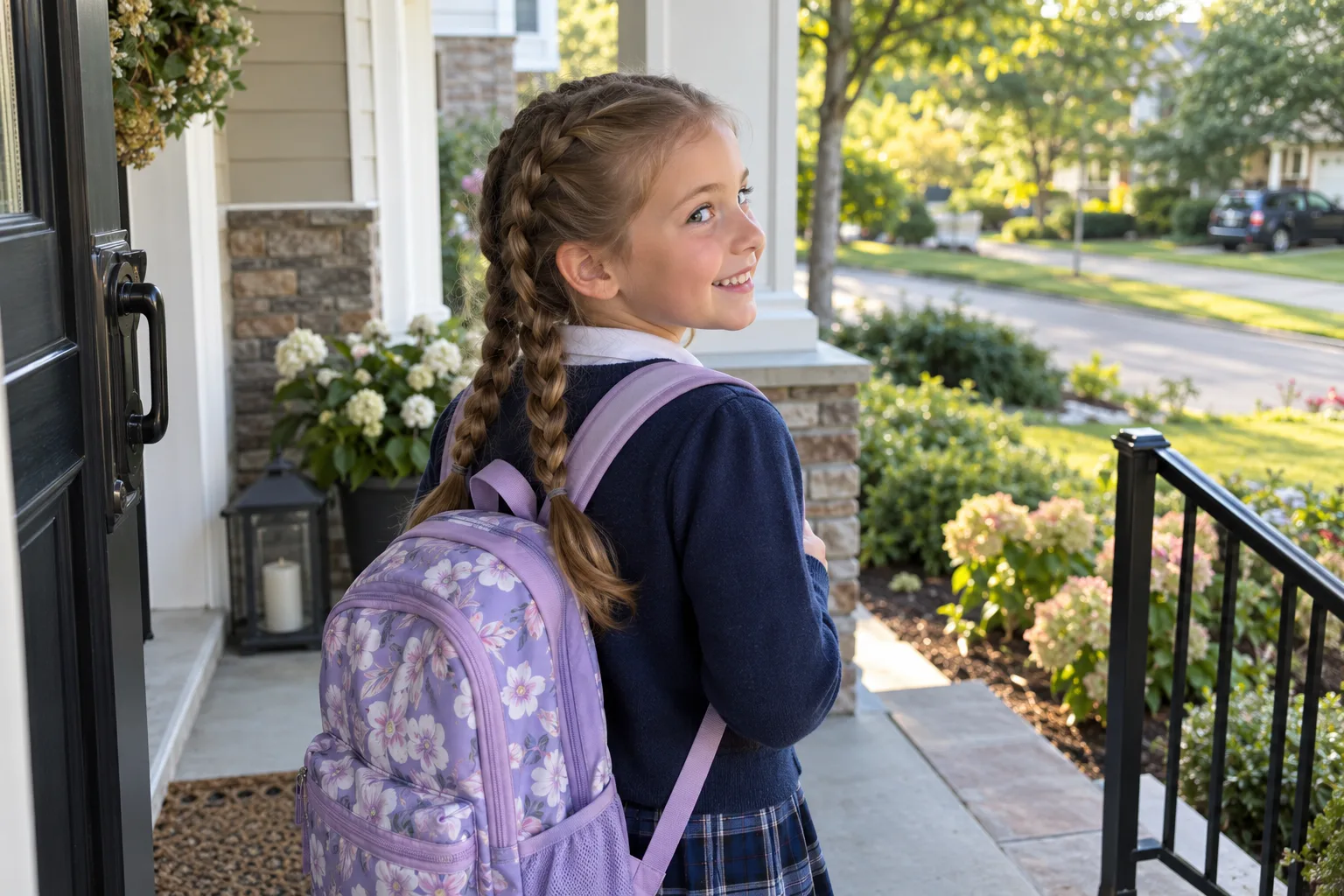
Straight and wavy hair does not hold a braid for weeks, so think of these as day styles. Two Dutch braids are the most useful of them: braid them on damp hair at night, sleep on them, and they still look tidy at school pickup. Take them out the next evening and you get free waves.
French braids lie flatter, fishtails look harder than they are, and a crown braid keeps everything off the face for sport. If your child likes a ponytail but it falls apart by lunch, bubble braids need only elastics and no braiding at all. Babies and toddlers with fine hair usually just need a trim around the eyes, and our children's hair cut guide covers that side of things.
Braids for curly and coily hair
For coily hair, braids are a protective style: they keep the ends tucked away, cut down daily combing, and can last weeks. That is the real reason they are so popular for kids, not just the look.
- Cornrows are the workhorse. Straight back is the fastest and lasts one to two weeks. Hearts, zigzags and stitch lines are the same braid with fancier parts.
- Box braids on the child's own hair, with no extensions, are lighter and safer than the long extension versions you see on adults. Add beads for weight at the ends instead of length.
- Knotless braids start flat at the root without the small knot of a classic box braid, so they pull less on day one. Our knotless braids guide covers sizes and lengths.
- Fulani braids mix a center cornrow, side cornrows and a few hanging braids, and look great with cuffs and beads.
Moisturize the scalp and the braids every few days, sleep in a satin bonnet or on a satin pillowcase, and do not keep any style in longer than six to eight weeks. The 4c hair guide has the full care routine, and the African hair braiding guide explains the main styles in more depth.
Braids for boys
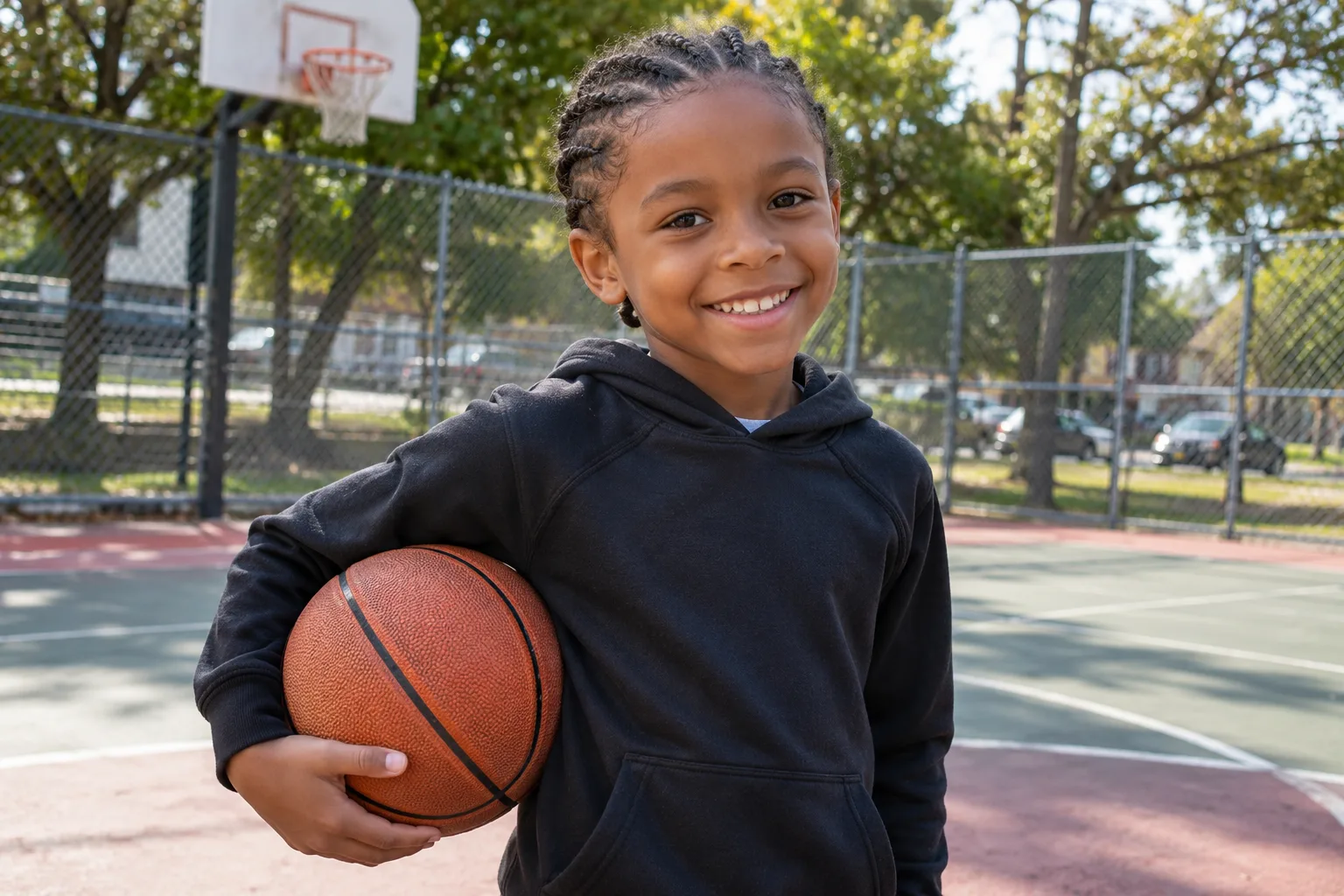
For boys, straight-back cornrows are the go-to: six to eight braids from the hairline to the nape, done in under an hour, lasting one to two weeks. Stitch braids add sharp horizontal lines along each braid. Box braids work on boys with longer hair, and twists are an easy alternative; the twist hairstyles guide shows the main kinds. Many of the styles in our braids for men guide work on older boys too, just in a smaller size.
How to braid your child's hair at home
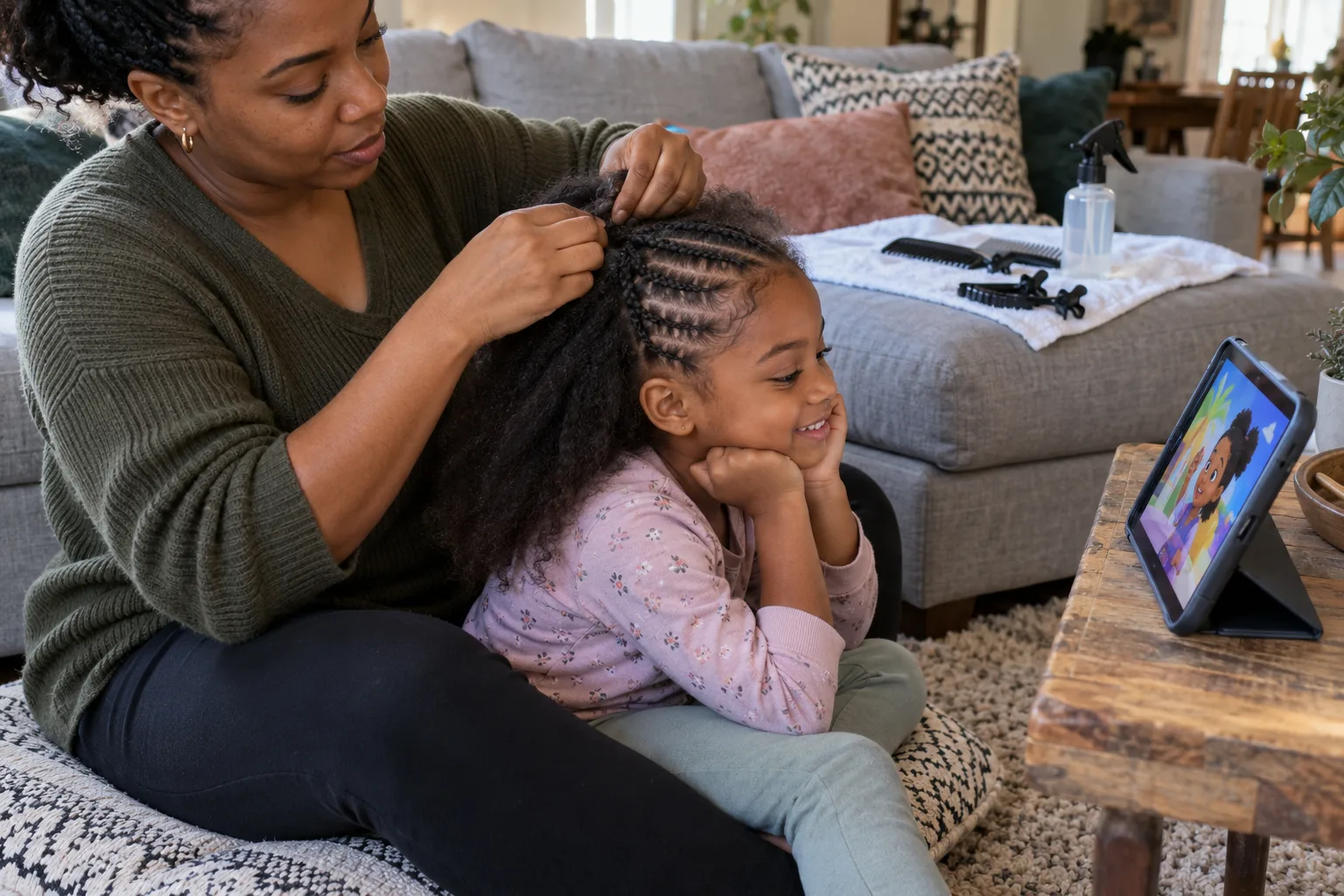
Most braiding battles are lost before the first part. A detangled, moisturized head and a good distraction matter more than braiding skill.
How to braid a child's hair at home
- Wash, condition and detangle the day before
Braid on clean, fully detangled hair. Detangling on the day doubles the sitting time and the tears.
- Set up the seat and the screen
Sit your child on a cushion on the floor between your knees, or on a low stool in front of you, with a show or a snack. Have the comb, clips, elastics and a water spray within reach.
- Part in sections and clip the rest away
Use the tail of the comb to make one part at a time, and clip everything else out of the way. Bigger sections mean faster braids and less tension.
- Braid firm, not tight
Keep even, gentle tension and stop pulling at the hairline. If your child winces, flinches or you can see bumps or white tight skin along a part, redo that braid looser.
- Finish soft
Use snag-free elastics or beads, not rubber bands, and skip heavy gel on the edges. Check the hairline again after the first night.
Tender-headed kids do better with several short sessions than one long one. Do the front tonight and the back tomorrow.
Mistakes that cost your child their edges
- Going tiny and long. Small braids to the waist look impressive and take six hours. The weight pulls on every root, every day.
- Tightening the hairline for neatness. A crisp hairline on day one is how traction alopecia starts. Leave the edges a little soft.
- Ignoring pain and bumps. Small red or white bumps along the parts, headaches or a child who cannot sleep means the braids are too tight. Take them out.
- Leaving braids in too long. Past six to eight weeks, new growth tangles at the root and the braids start to mat.
- Rubber bands on the ends. They grip and snap the hair. Use coated elastics or beads.
- Never giving the scalp a break. Swap a few weeks of loose styles between long braid sets so the hair can recover.
Thinking about braids yourself?
Plenty of parents leave the braiding appointment wanting a set of their own. If you are weighing up long box braids for yourself, HairstyleAtlas can show them on your own photo before you book. It is for adults only, so use your own selfie, never a photo of your child.
Yours could be here.
Start with one selfie.
One photo, twenty seconds, and you'll know. Free account, no card for your first render.
The short version
Choose kids' braids by sitting time and scalp, not by the photo. Bigger braids, shorter lengths and the child's own hair beat tiny long extensions for nearly every child under ten. Keep the hairline loose, take any style out within six to eight weeks, and stop the moment it hurts.
Frequently asked questions
For most kids, medium braids on their own hair that stop around the shoulder: two Dutch braids for straight or wavy hair, and straight-back cornrows or medium box braids for coily hair. They are quick, light and gentle on the scalp.
Braided pigtails, two Dutch braids, a half up half down with two small braids, and bubble braids are all quick enough for a school morning. For coily hair, four to six chunky braids with beads are the easiest cute option.
Two Dutch braids, braided pigtails, simple straight-back cornrows, or a few chunky braids with beads. Keep the session under about 45 minutes and skip extensions at this age.
Simple big braids on a child's own hair are fine from toddler age, as long as they are loose at the hairline. Many stylists wait until around age 5 or 6 for longer sessions like box braids, when kids can sit for a few hours.
Straight-back cornrows usually last about one to two weeks before they look fuzzy. Box braids on longer hair can last several weeks. Take any style out within six to eight weeks.
It depends on the braid size, the length, whether extension hair is included and where you live, so prices vary a lot between salons. Bigger, shorter braids on the child's own hair are almost always the cheapest option because they take the least time. Ask for a quote by style, size and length before you book.
Moisturize the scalp every few days, sleep in a satin bonnet or on a satin pillowcase, wash gently with diluted shampoo focused on the scalp, and avoid heavy products that build up. Even well kept braids should come out within six to eight weeks.
Yes, if the hair is long enough to grip, usually about two inches or more. On shorter hair, a stylist will either add a little extension hair or suggest small twists or cornrows instead.
Preview it on your own photo: Braids Try-On.
Share article
About the author
Related posts
Women's Haircuts · 13 min
African Hair Braiding: 10 Styles and How Long Each Lasts
Every African braiding style belongs to one of two families, and that fork decides your hours, your wear time and your hairline. Ten styles compared, with the one number to say when you book.
Women's Haircuts · 10 min
Black Hairstyles: Find Your Best Look by Hair Type
A plain-English guide to Black hairstyles by family: afros and twist-outs, box and knotless braids, twists and locs, silk press and puff, and short tapered cuts. Who each suits, how long it lasts, and the tension mistakes that cost you edges. Preview any look on your own selfie.
Women's Haircuts · 14 min
Fulani Braids: 8 Styles, Cost, Care and What to Ask
Fulani braids explained with the exact scalp pattern, eight wearable variations, cost factors, care, braid sizes, and a salon-ready request.

Women's Haircuts · 13 min
Chocolate Brown Hair: 14 Shades and Who Each One Suits
Chocolate brown is a level 3 to 5 brunette with a rich, neutral to warm tone. See 14 shades side by side, which suits your skin tone, and why your starting color matters more than the box.
Women's Haircuts · 13 min
Brown Hair With Highlights: 14 Colors and Which Suits Your Base
Caramel, honey, copper, red, ash, beige and silver on brown hair, compared by how much lift each needs and what it costs to keep. Find the shade that suits your base and skin.
Women's Haircuts · 13 min
Messy Bun: How to Do It in 2 Minutes on Any Hair Type
A messy bun takes two minutes and one hair tie. The part tutorials skip: the messy look comes from your haircut and texture, not your hands. See it on 13 hair types and find the version that holds on yours.