Children's Hair Cut Guide: 10 Kids' Cuts by Age and Upkeep
Oleh Onysko Updated 27 September 2026 13 min read
In this article
The best children's hair cut is the one that still looks fine on day 40, not the one that looks sharpest on day one. For most kids that means a scissor cut with a little length left in it, booked every 6 to 10 weeks, rather than a tight clipper cut that needs a trip back every 3 or 4.
This guide covers which cuts suit which age, how long each one lasts, what to say in the chair, what it should cost, and how to do a basic trim at home when the salon is not an option.
Why short is not the low-maintenance choice
Most parents ask for "short" because short sounds easy. It is easy in the morning. It is not easy on the calendar.
A close clipper cut has a sharp edge around the ears and the neck. Kids' hair grows roughly half an inch a month, and on a quarter-inch side that half inch doubles the length and blurs the edge in a few weeks. A longer scissor cut has no edge to lose. It just gets a bit longer.
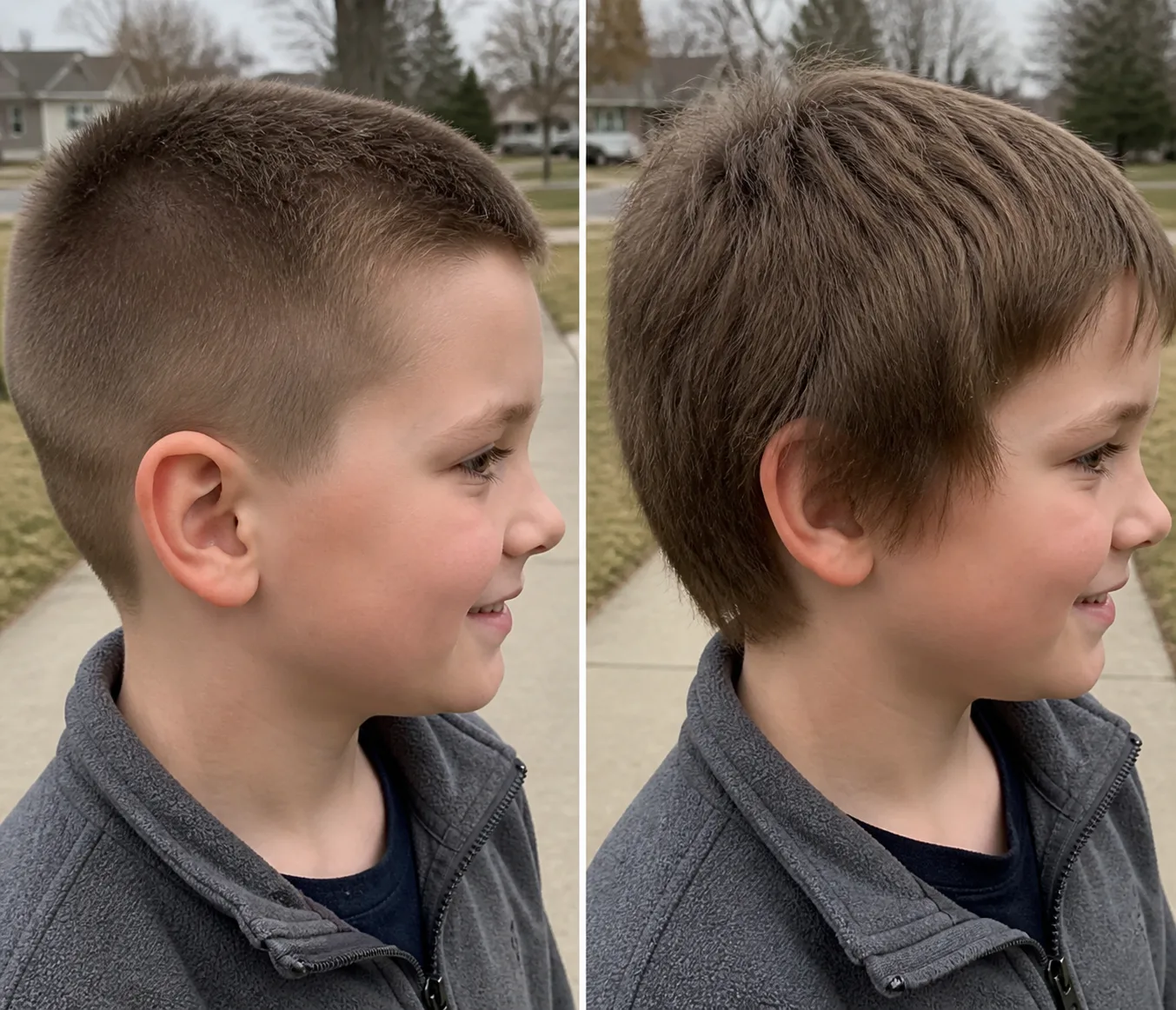
So the real question is not "short or long". It is how often you want to be back in the chair, and how many minutes you have before school.
| Cut | Looks tidy for | Morning effort | Best for |
|---|---|---|---|
| Buzz cut | 3 to 4 weeks | None | Hot summers, swim season, sensory kids who hate brushing |
| Crew cut | 3 to 5 weeks | None | Kids who want short but not shaved |
| Textured crop | 5 to 7 weeks | 1 minute, fingers only | Straight or wavy hair, school age |
| Longer surfer cut | 8 to 10 weeks | 1 to 2 minutes | Thick hair, kids who hate clippers |
| Chin-length bob | 6 to 8 weeks | 2 minutes | Fine or straight hair, tangle-prone kids |
| Shoulder-length one-length | 8 to 12 weeks | 3 to 5 minutes | Kids who want to wear it up for sport |
| Long hair with layers | 10 to 12 weeks | 5 minutes plus | Kids old enough to brush it themselves |
These are working intervals, not rules. Fast-growing, thick hair needs the short end of each range.
Children's hair cuts by age
The right cut changes more with age than with anything else, because age decides how long the child can sit still and who does the styling.
| Age | What works | Sitting time to plan for | Who styles it |
|---|---|---|---|
| Under 2 | A trim around the eyes, ears and neck only | 5 to 10 minutes | You |
| 2 to 4 | Simple one-length shapes, a soft fringe, a short scissor cut | 10 to 15 minutes | You |
| 5 to 8 | Crew cut, textured crop, bob, shoulder length | 15 to 20 minutes | You, with help |
| 9 to 12 | Anything, including their own choice | 20 to 30 minutes | Mostly them |
Babies and toddlers

The first haircut does not need to be a style. It needs to get hair out of the eyes and stop the tangles at the back of the neck. Ask for a "tidy up only": fringe cut above the eyebrows, hair trimmed off the ears, neckline evened out. Leave everything else alone.
Skip clippers on a toddler unless they already tolerate the noise. A buzzing tool right next to the ear is a quick way to turn a first haircut into tears.
Ages 5 to 8
This is where most parents actually pick a style. Kids can sit for 15 to 20 minutes, and they have opinions. For straight or wavy hair, a textured crop is the most forgiving short cut: a short fringe hides the uneven grow-out, and it styles with wet fingers. If you want to understand the fringe options before you go, the textured fringe guide shows how the length at the front changes the look.

For girls, a chin-length bob with no layers is the lowest-effort cut there is. Nothing to tie back, nothing reaching the knots at the nape. It grows into a shoulder-length cut without needing a reshape.
Ages 9 to 12
Tweens want a say, and they should get one. The best thing you can do here is agree on the upkeep before the cut. A skin fade looks great for ten days. If you are not paying for a trip back every three weeks, steer toward a taper haircut instead, where the sides get shorter gradually but never to bare skin. A low fade is the next step up if they want the sharper look and you are fine with the extra visits.
Longer hair suits this age too, because they can finally manage it themselves. Two easy styles that buy a longer cut a few more weeks are a half up half down and bubble braids, neither of which needs any braiding skill.
Curly and coily hair needs a different brief
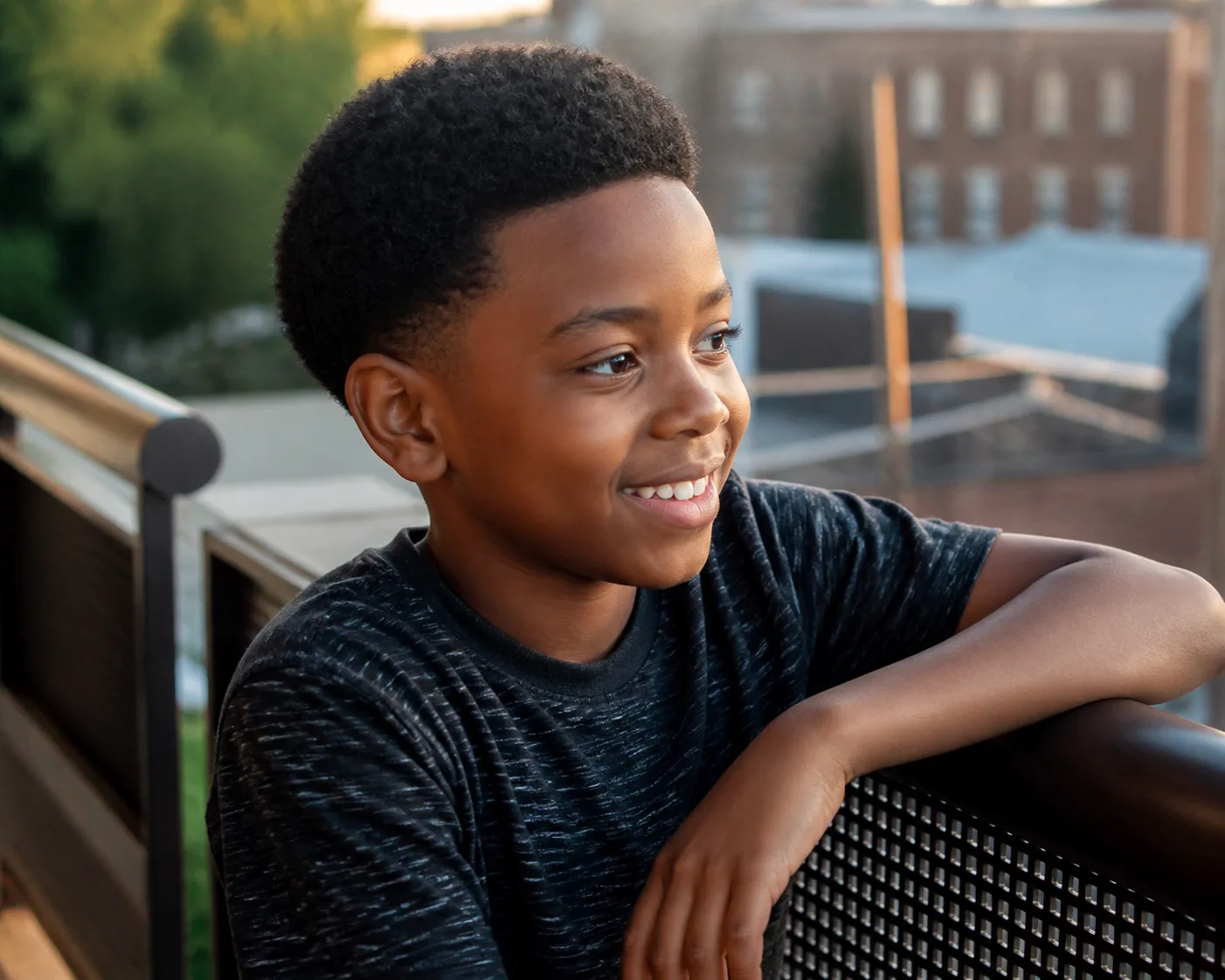
Curly hair shrinks when it dries, sometimes by half or more. Cut it wet and stretched to the "right" length, and it springs up much shorter than you asked for. Ask for curly hair to be cut dry, or at least checked dry before the stylist finishes.
For tight curls and coils, a rounded shape on top with a soft taper at the ears and neck is the classic kids' cut, and it grows out evenly. Moisture matters more than the cut for how it looks day to day. The 4c hair guide covers the care side, and it applies to kids as much as adults.
Not every kids' salon cuts textured hair well. Before booking, ask whether a stylist there regularly cuts curly or coily hair. Look at their recent work, not their star rating, and if the brief is a soft taper at the ears, our low taper fade guide has the exact words to ask for.
Mistakes that cost you a second appointment
- Asking for a number without an inch. Guard sizes differ between clipper brands, and the "2" in your head may not be the one in the drawer. Say the length in inches and point to where it stops.
- Booking at nap time or dinner time. A tired four year old sitting still for 15 minutes is not going to happen. Morning slots, right after breakfast, go best.
- Cutting curly hair wet and short. It dries up to half its length. You get a cut you did not ask for and a four-month wait to fix it.
- Going too short for a special event. Any cut looks best about a week later, once the edges soften. Book photos and weddings accordingly.
- Fixing the fringe yourself the night before. Cutting straight across on wet hair gives a fringe that dries half an inch shorter and crooked. Trim fringes dry, in tiny snips.
What to say in the chair
Most bad kids' haircuts come from a vague request, not a bad stylist. Give one length for the top, one for the sides, and say what the back should do when it grows.
Say this to your barber
Keep about 2 inches on top, scissor-cut the sides to half an inch with no skin showing, and leave the neckline natural so it grows out soft.
Swap the numbers for your kid's cut, but keep the shape of the sentence. Top, sides, grow-out.
How much a children's hair cut costs
At national chains like Great Clips and Supercuts, a kids' cut typically runs around $15 to $25 in the US, depending on the location. Kids-only salons with car chairs, cartoons and a first-haircut certificate usually cost more.
Tip what you would tip on your own cut, 15 to 20 percent. On a $20 kids' haircut, that is $3 to $4, and a little more if your child made the job hard.
If your child finds haircuts overwhelming, ask about quieter times, a scissors-only cut and breaks mid-cut. Autism Speaks publishes a free haircutting training guide with a step-by-step visual schedule that helps any anxious kid, not only autistic children.
How to cut a child's hair at home
A basic trim at home is realistic. A fade is not. Stick to fringe, ears and a light trim on top, and leave anything with clippers and blending to a professional.
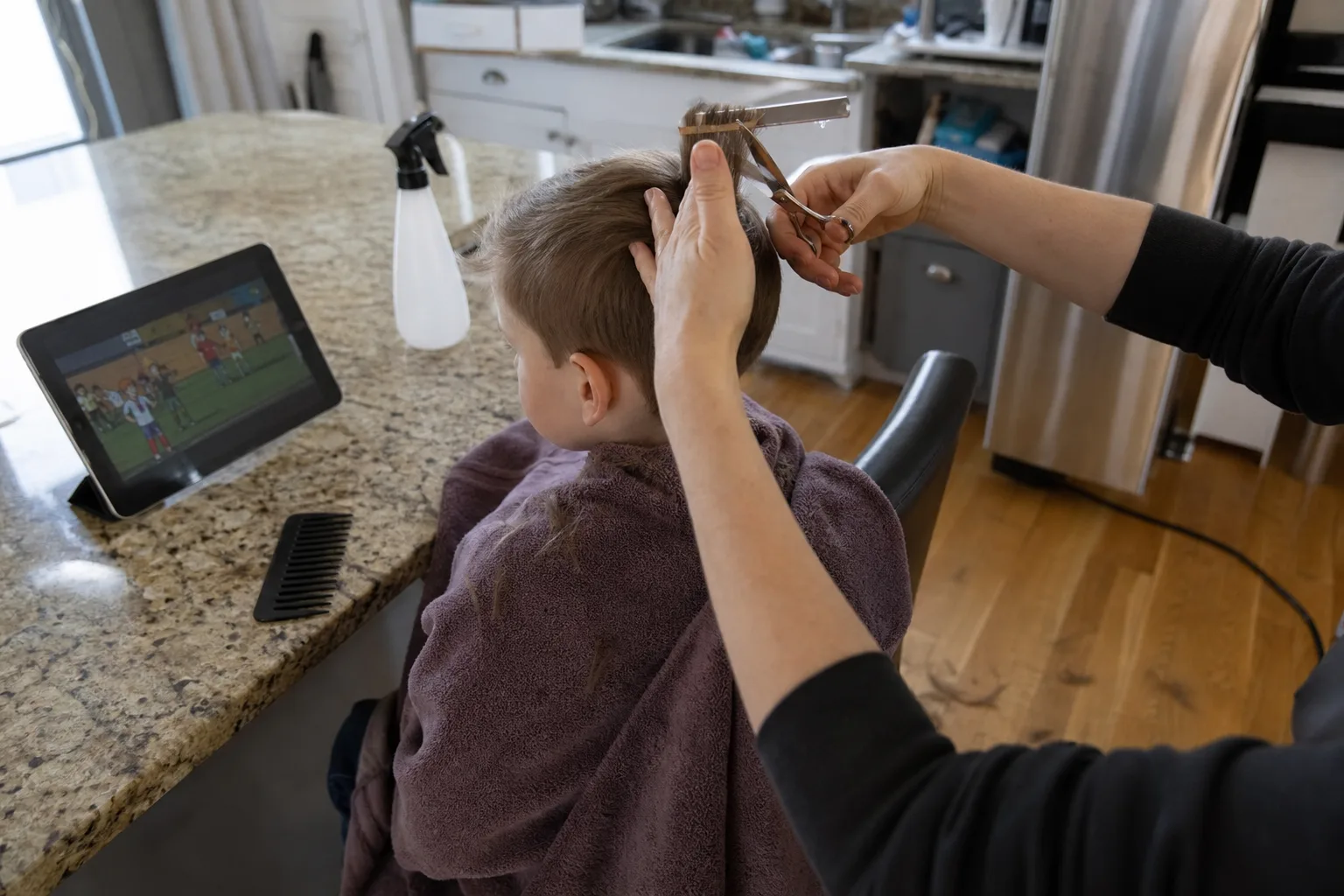
How to cut a child's hair at home
- Set up the distraction first
Sit your child on a high stool at a table, with a tablet or a snack in front of them. A still head matters more than anything you do with the scissors.
- Dampen, do not soak
Mist the hair with a spray bottle so it combs flat. Soaked hair shrinks more when it dries, so cuts made wet come out shorter than they looked.
- Trim the top between two fingers
Take a small section, hold it up between your index and middle finger, and snip no more than a quarter inch off the ends. Move across the head in rows, using the last section as your guide.
- Tidy around the ears and neck
Fold each ear down gently and trim the hair along it with the tips of the scissors. Even the neckline by trimming straight across, then soften it with small vertical snips.
- Cut the fringe dry, last
Let the fringe dry, then point the scissors up into the ends and take tiny snips. Cutting straight across leaves a hard, crooked line.
Use proper hair scissors, not kitchen scissors. Dull blades bend the hair and leave a chewed edge.
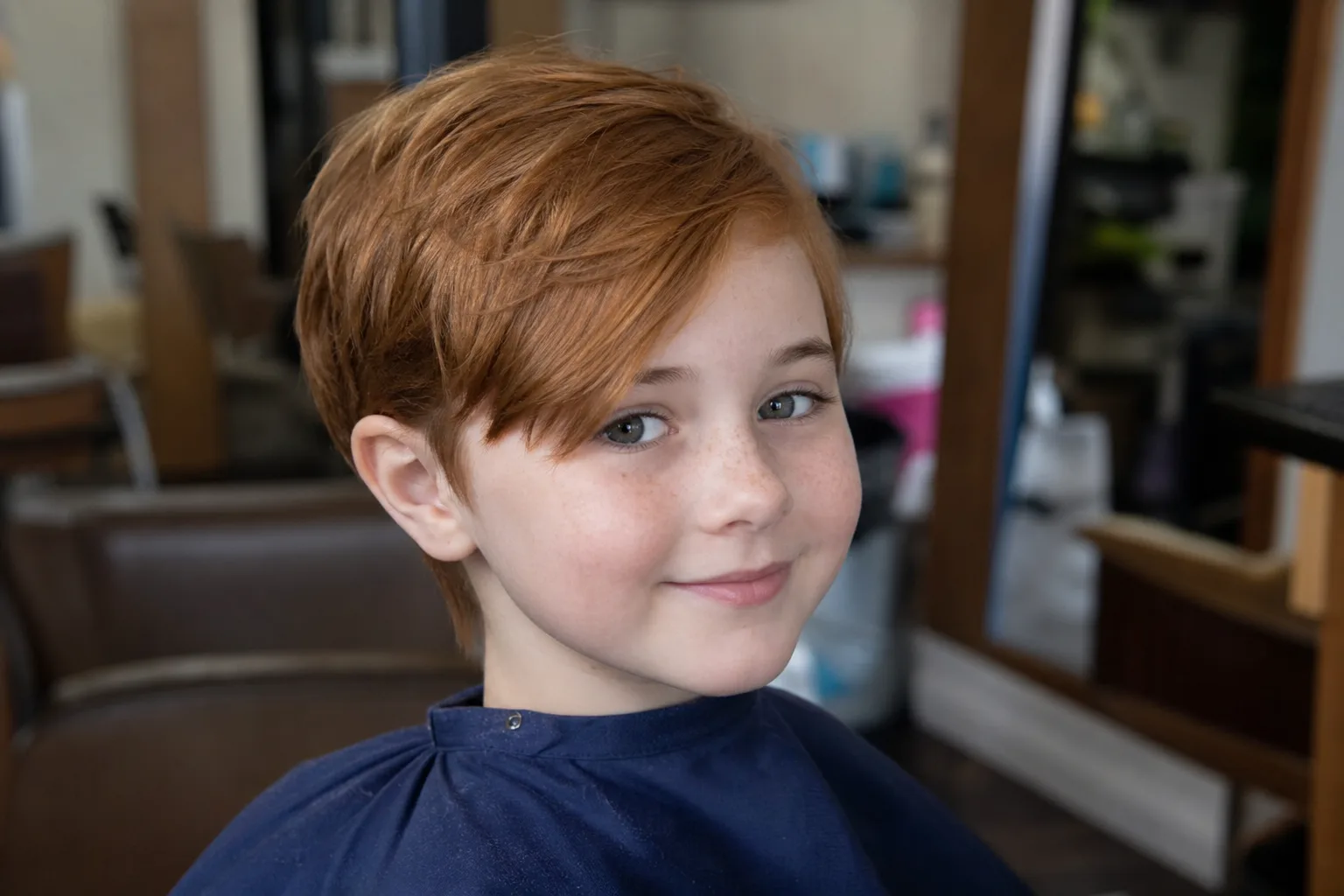
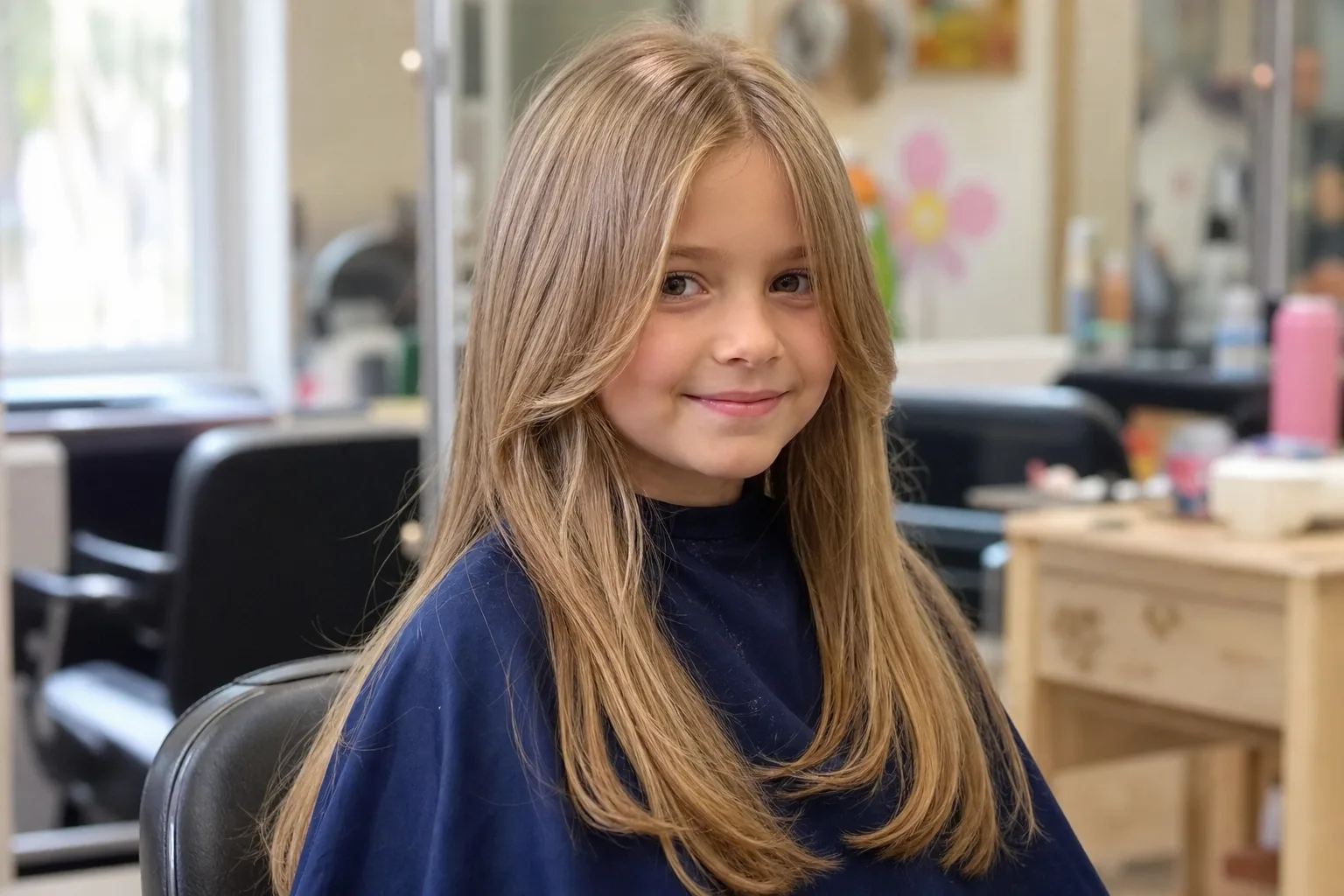
Ten children's hair cuts in one salon
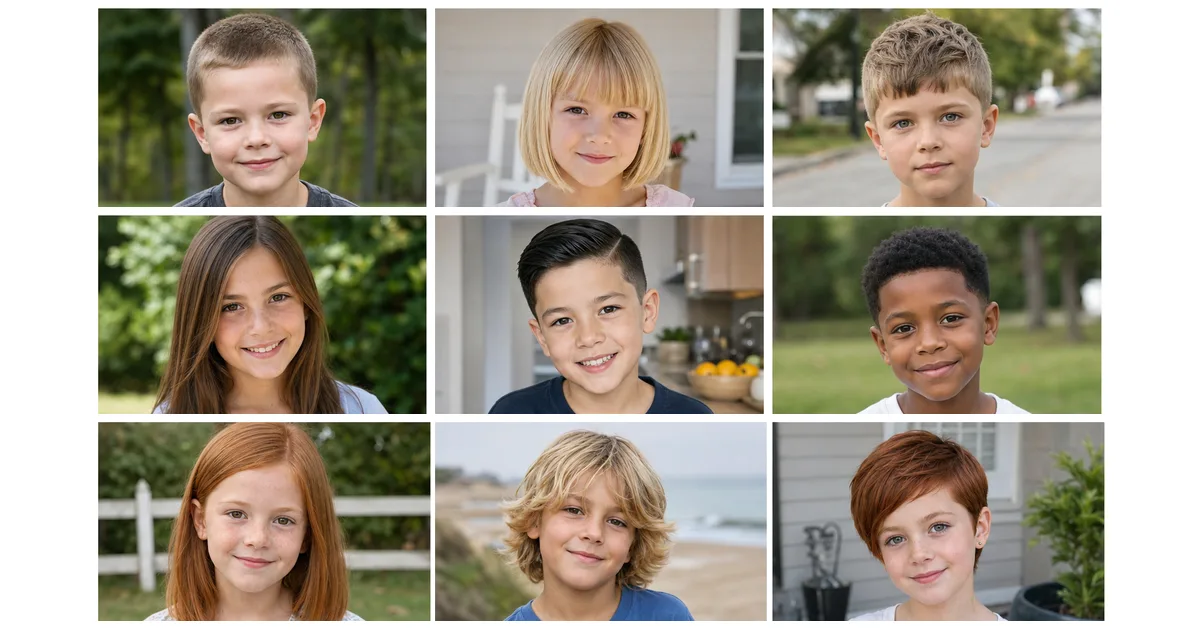
Every picture below uses the same salon, the same angle and a child around seven, so the only thing that changes is the cut. Use it to show your stylist a shape rather than describing it.
Gallery10 photos · tap to enlarge
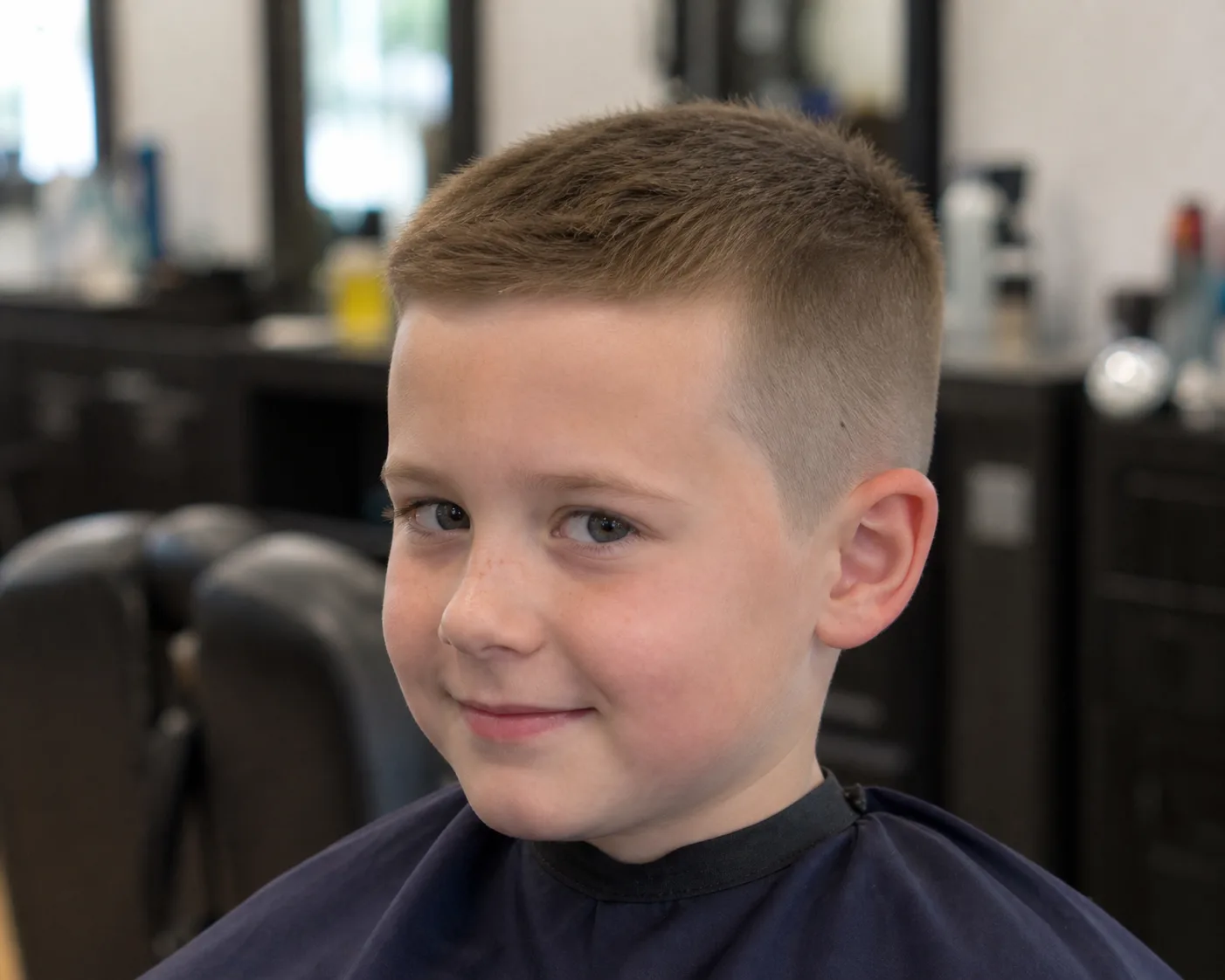
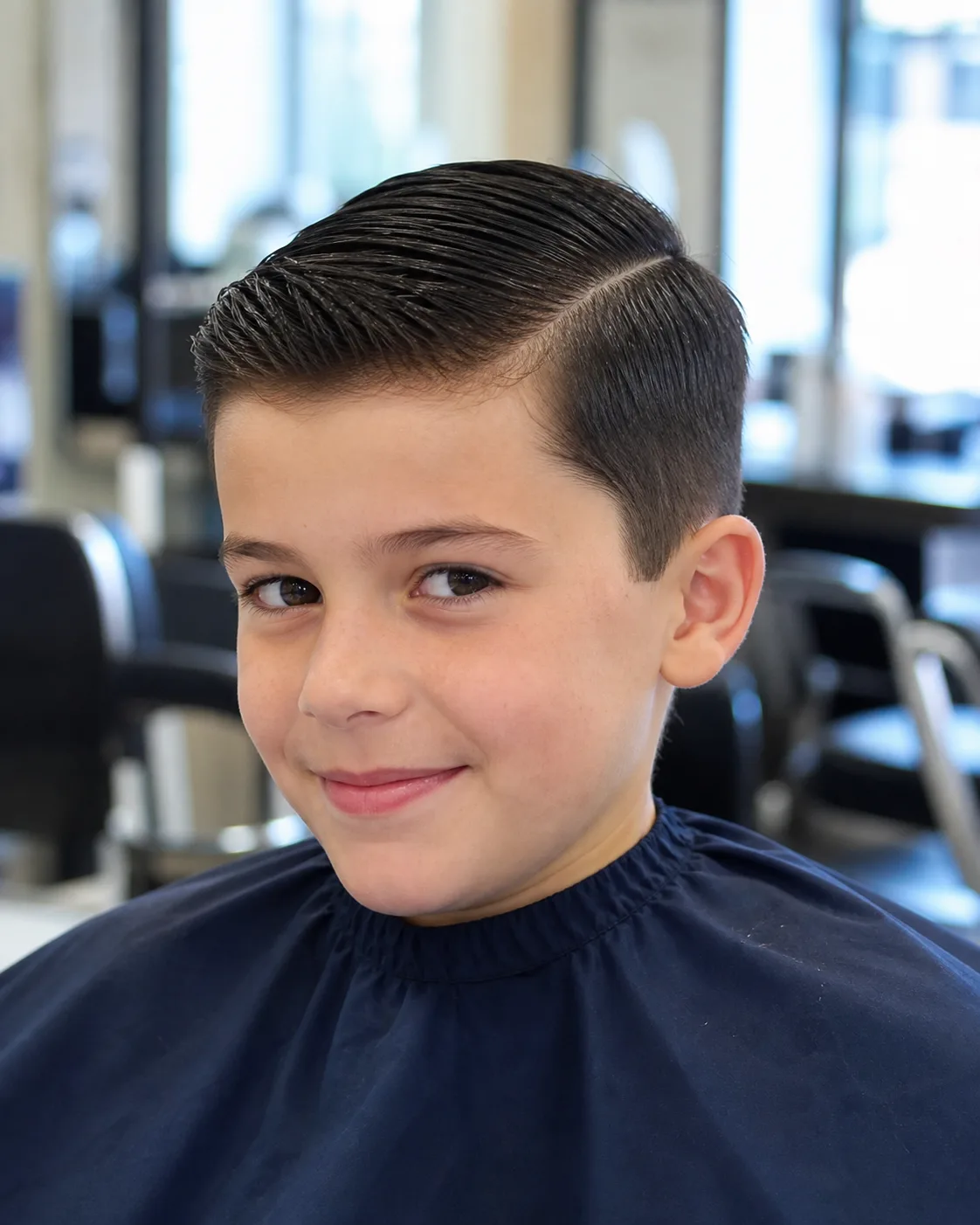
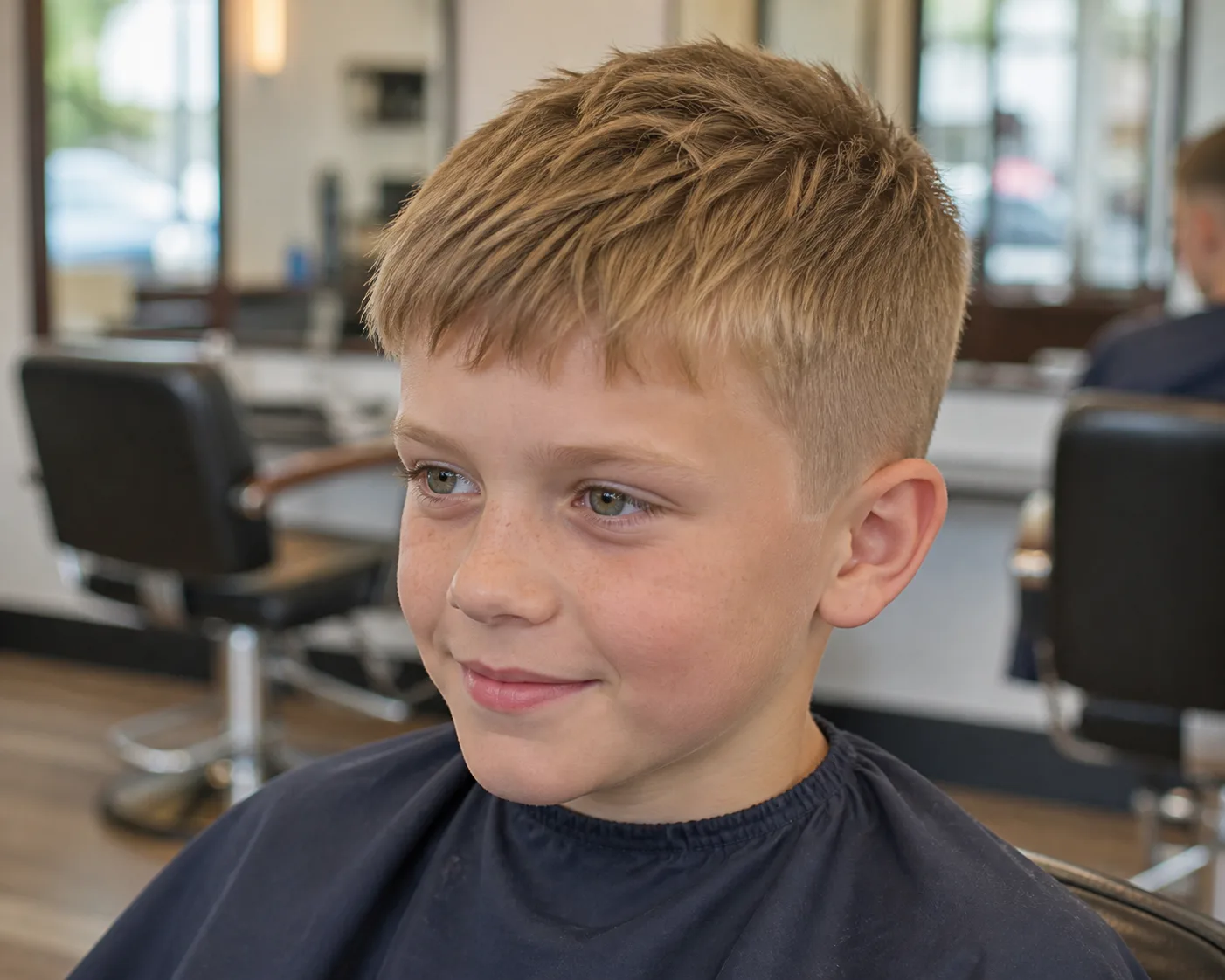
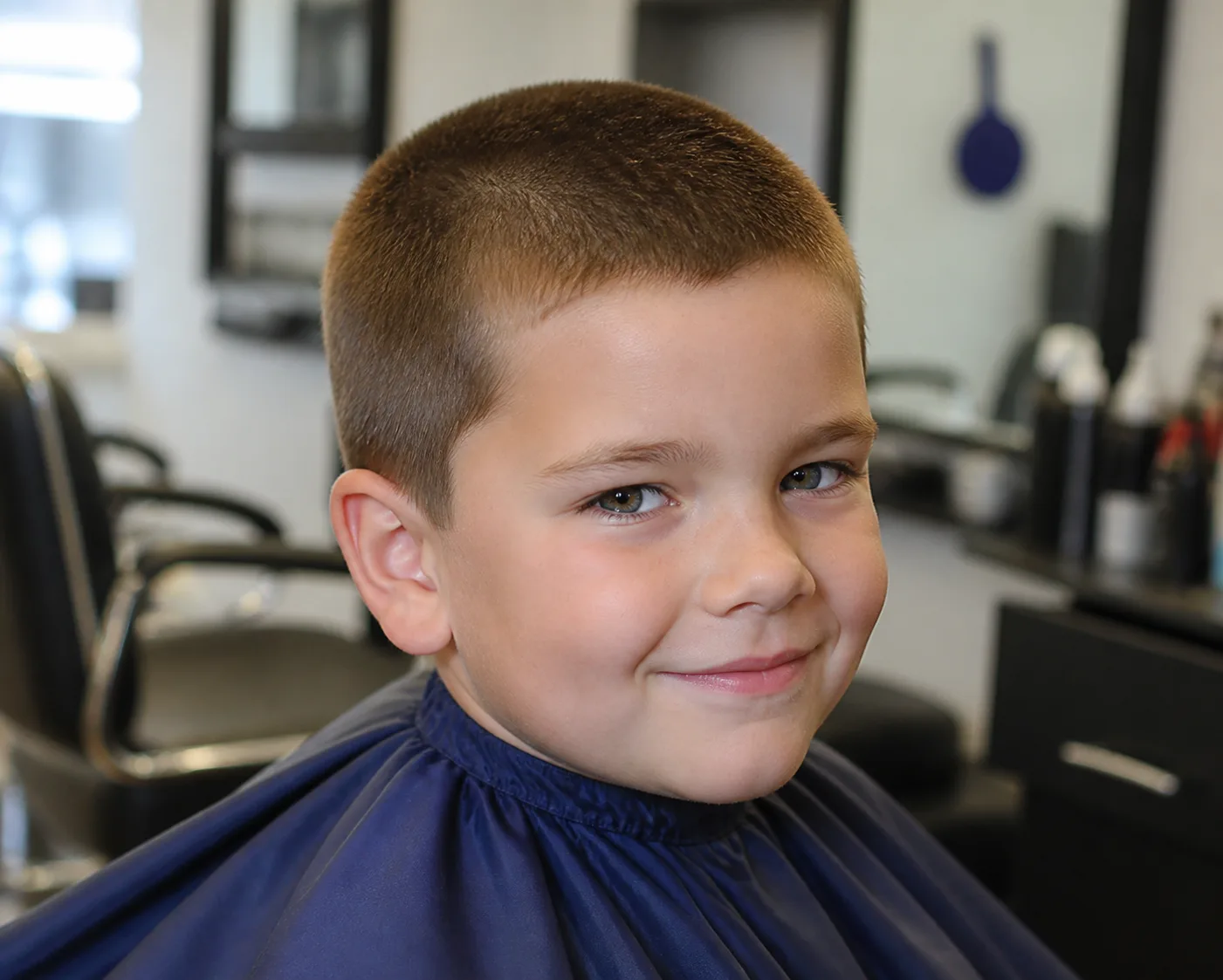
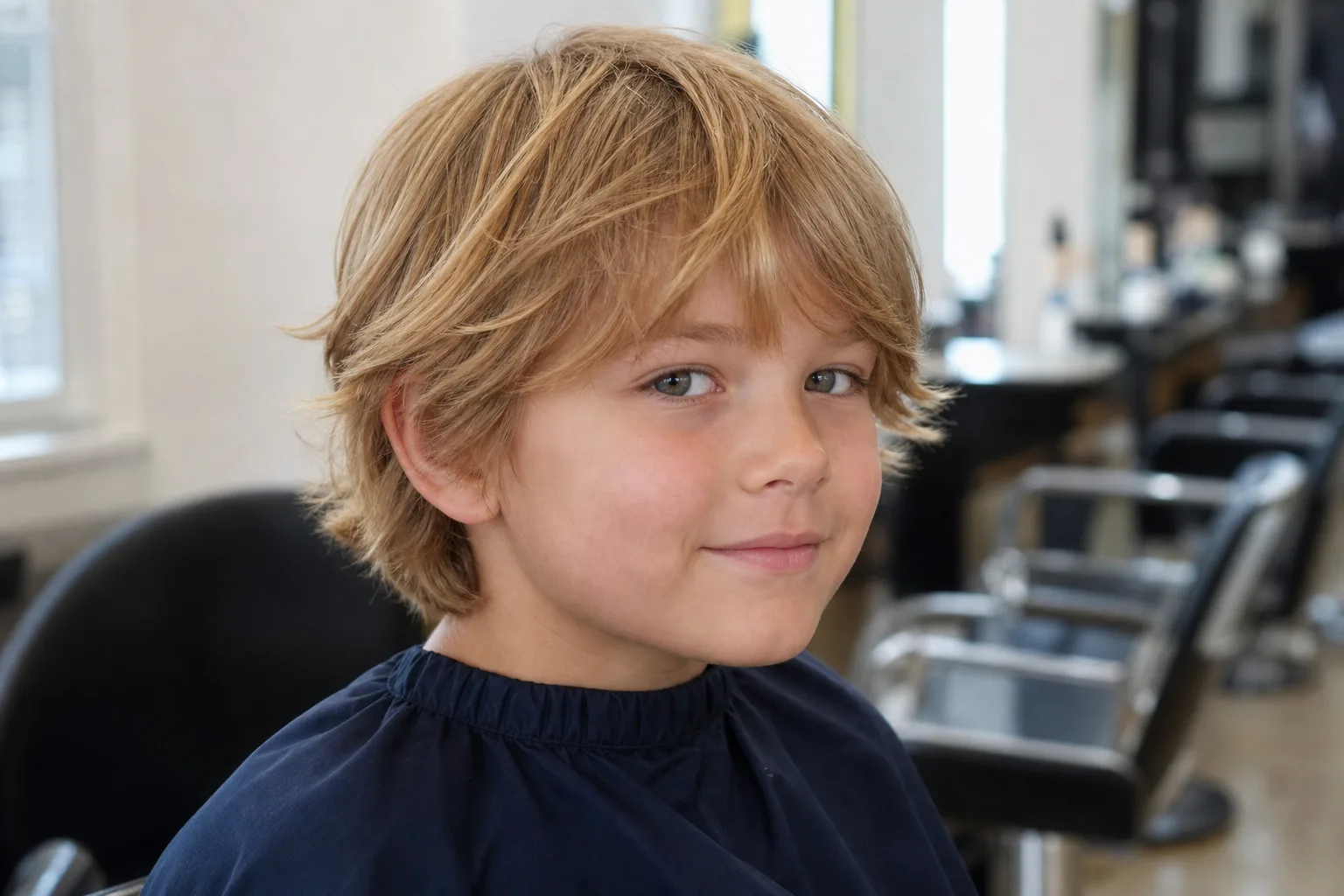
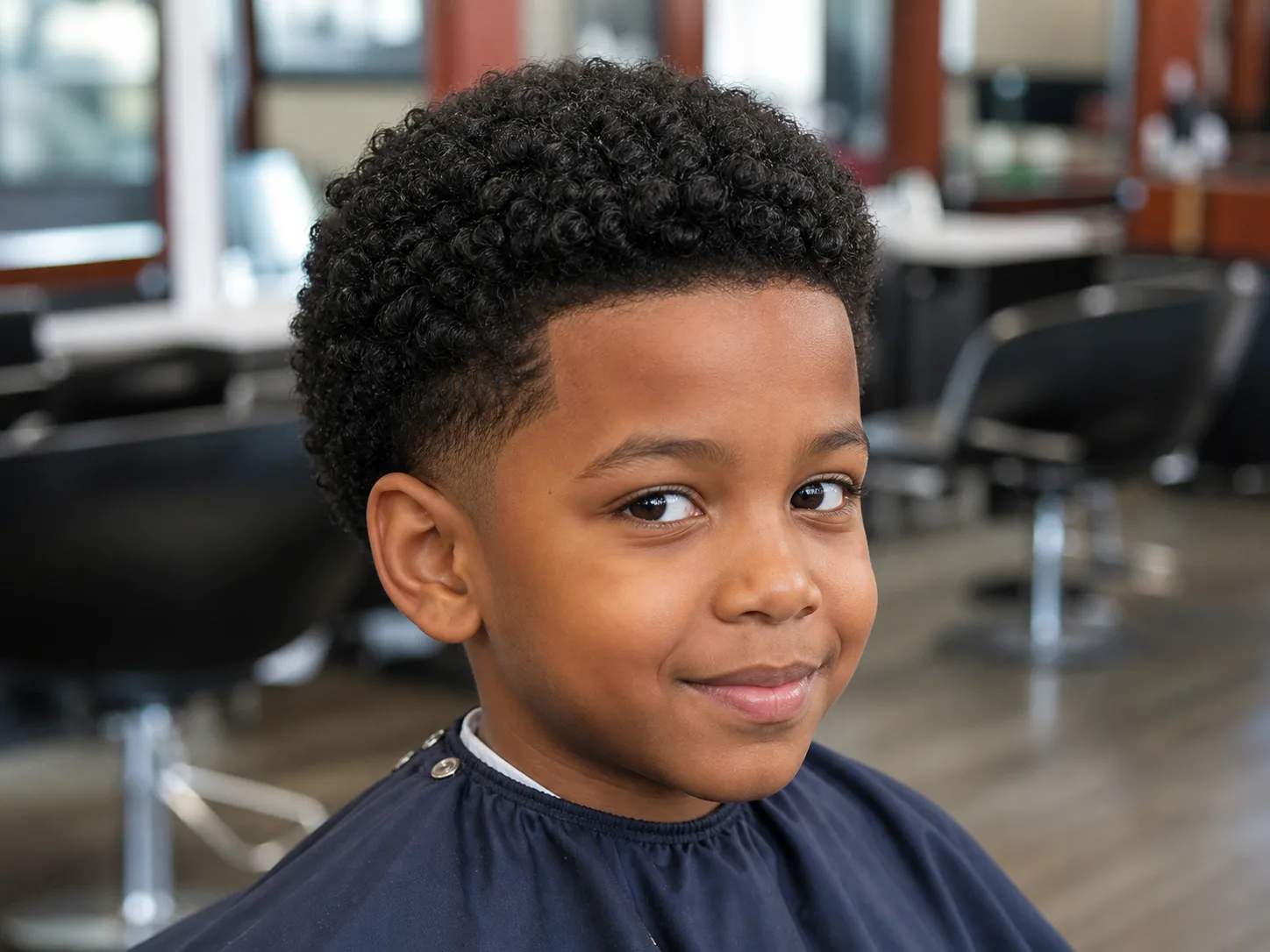
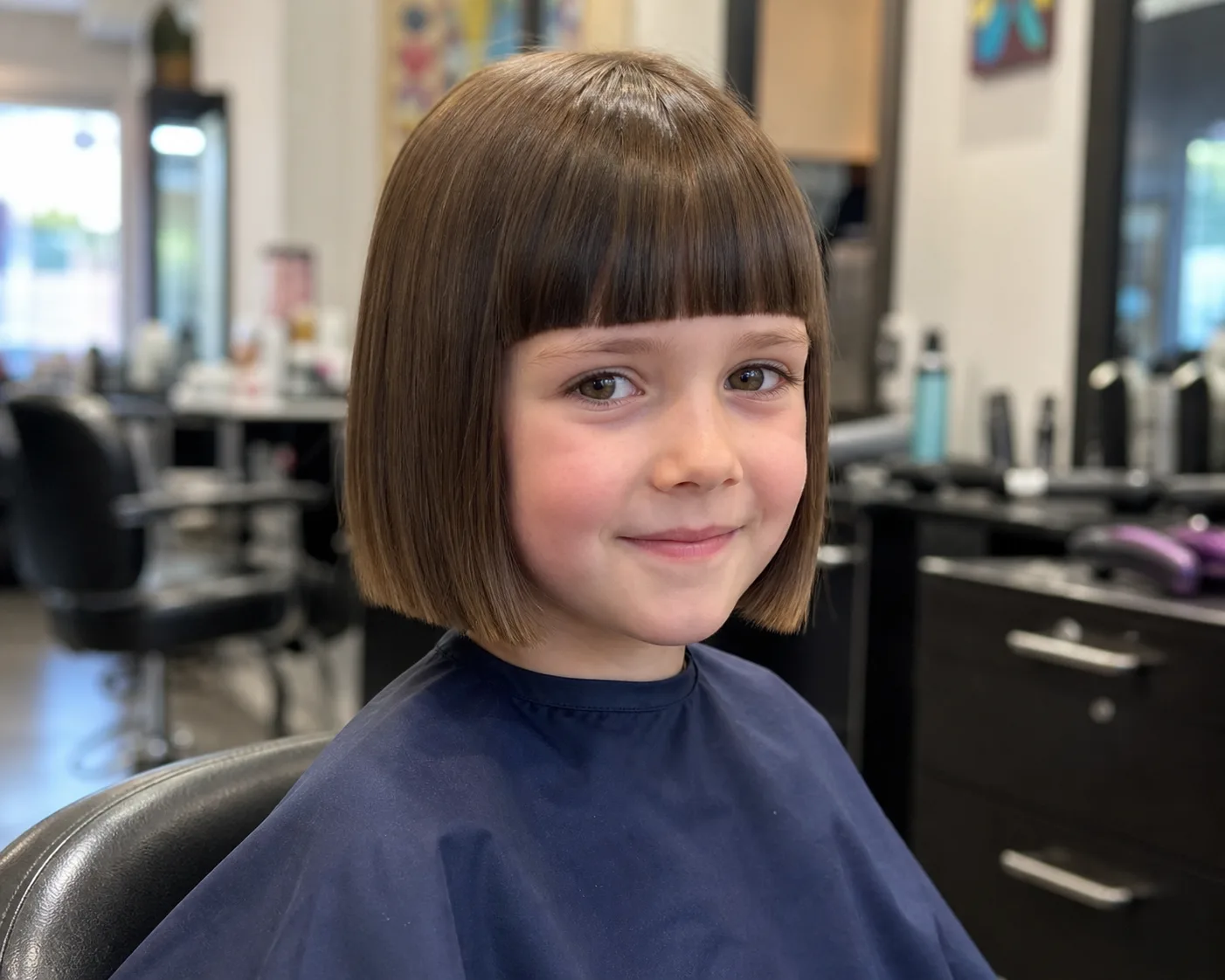
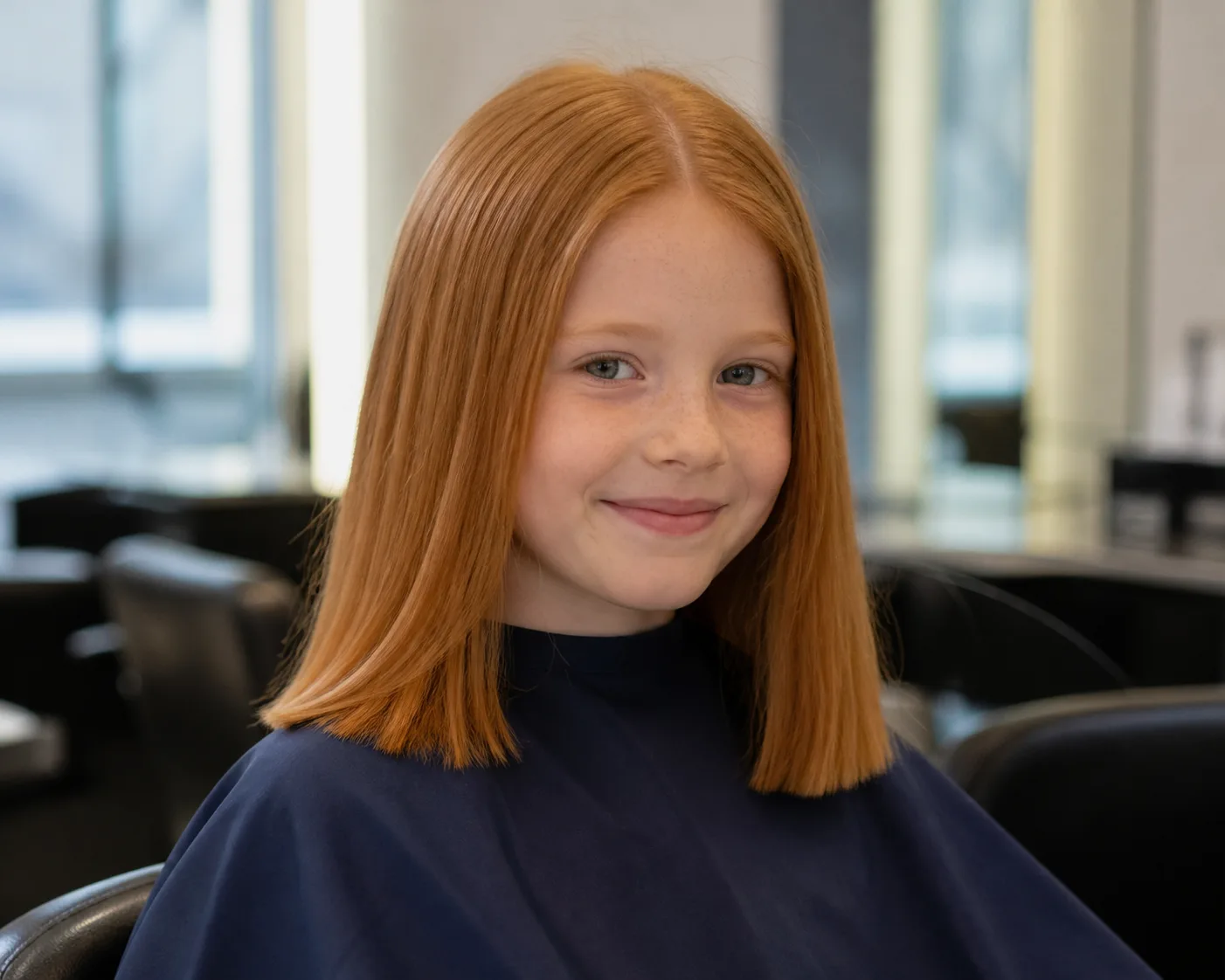
Your own haircut, while you are there
Plenty of parents book their own cut in the same visit. If you want to see a new style on yourself before you commit, HairstyleAtlas can show it on your photo. It is for adults only, so use your own selfie, never a picture of your child.
The short version
Pick the cut by the calendar you can keep, not the photo. If you can get back every four weeks, any short clipper cut is fine. If you cannot, a scissor cut with some length on top, a bob, or a one-length shoulder cut will look better for longer and cost you fewer appointments.
Say the lengths in inches, book the morning slot, and cut curly hair dry. That covers most of what goes wrong.
Frequently asked questions
For boys, a short scissor cut or crew cut with some length on top, often with a short fringe, is the most requested. For girls, a one-length cut at the chin or shoulder is the most common, because it is easy to wash, brush and tie back.
It is barber shorthand that usually means about 3 inches on top, 2 on the sides and 1 at the taper, a way to describe proportions. For a child, skip the rule and give the actual lengths you want for the top and sides, since kids' heads and hair density vary a lot.
At US chains a children's cut is usually around $15 to $25 depending on the location. Kids-only salons and barbershops doing fades tend to charge more. Call ahead, because prices vary a lot between branches of the same chain.
Around $3 to $4, which is 15 to 20 percent. Tip a little more if your child needed extra patience, breaks or a very wriggly cut.
There is no set age. Cut when the hair falls into the eyes, tangles badly at the neck, or bothers your child. For many kids that is somewhere between their first and third birthday, and some need a fringe trim earlier.
Yes. There is no medical reason to wait, and cutting does not make hair grow back thicker or faster. Keep it to a small fringe or neckline trim with rounded safety scissors while the baby is calm or asleep.
Seat them high with a distraction, mist the hair, trim the top a quarter inch at a time between two fingers, tidy the ears and neckline, and cut the fringe dry last. Leave clipper work and fades to a professional.
Only if it is in the way. A trim to keep hair out of the eyes and off the collar is plenty at two. A full style can wait until your child can sit still for 15 minutes.
Preview it on your own photo: Virtual Hair Color Try-On.
Share article
About the author

More articles
Women's Haircuts · 14 min
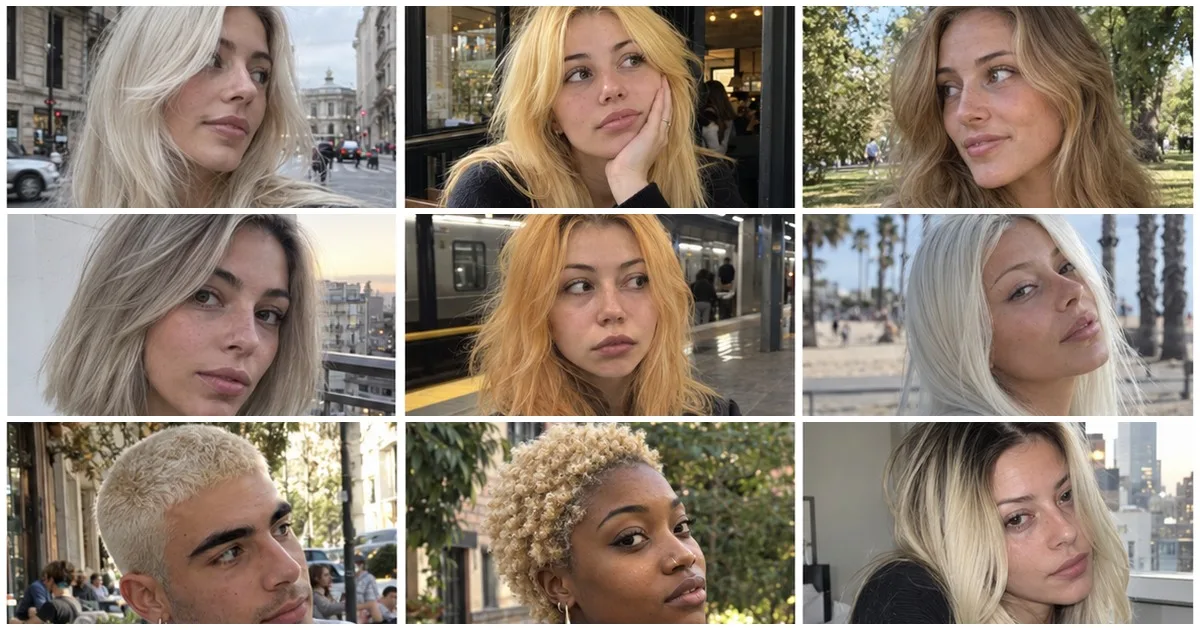
Bleached Hair: How Light Yours Can Go, 14 Shades, Aftercare
How light your bleached hair can go depends on where it starts. See 14 bleached shades on one cut, what each starting color can reach in one session, how toner finishes the job, and the aftercare that keeps it soft.
Women's Haircuts · 16 min
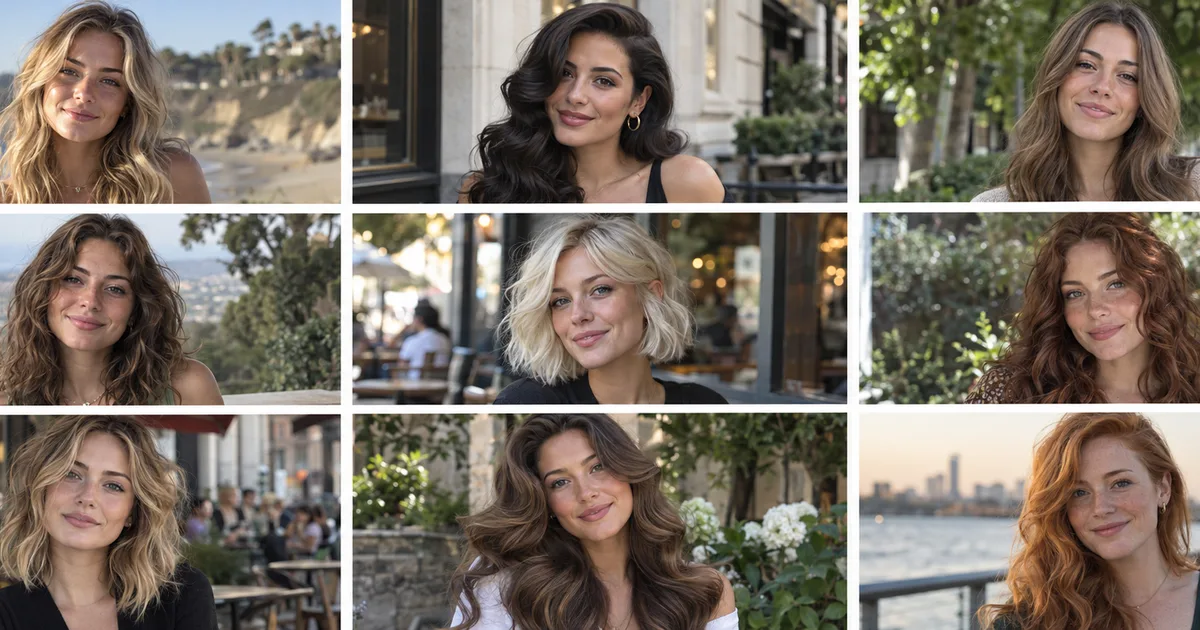
Waves Hair: How to Get Beach, Loose and Hollywood Waves That Last
Waves hair is about what you leave straight. How to get beach, loose, Hollywood and heatless waves, which wave suits your hair type, and why your waves keep falling out.
Women's Haircuts · 15 min
Fino Hair Mask: Who It Suits, How to Use It, and Its Limit
The Fino hair mask makes dry, bleached and frizzy hair smooth and shiny in one use, mostly by coating it. Here is what is in the jar, which hair types it suits, exactly how to use it, and what to do when the ends are past a mask.