Crimped Hair: 10 Looks and the Volume Trick Nobody Uses
Oleh Onysko Updated 30 September 2026 13 min read
In this article
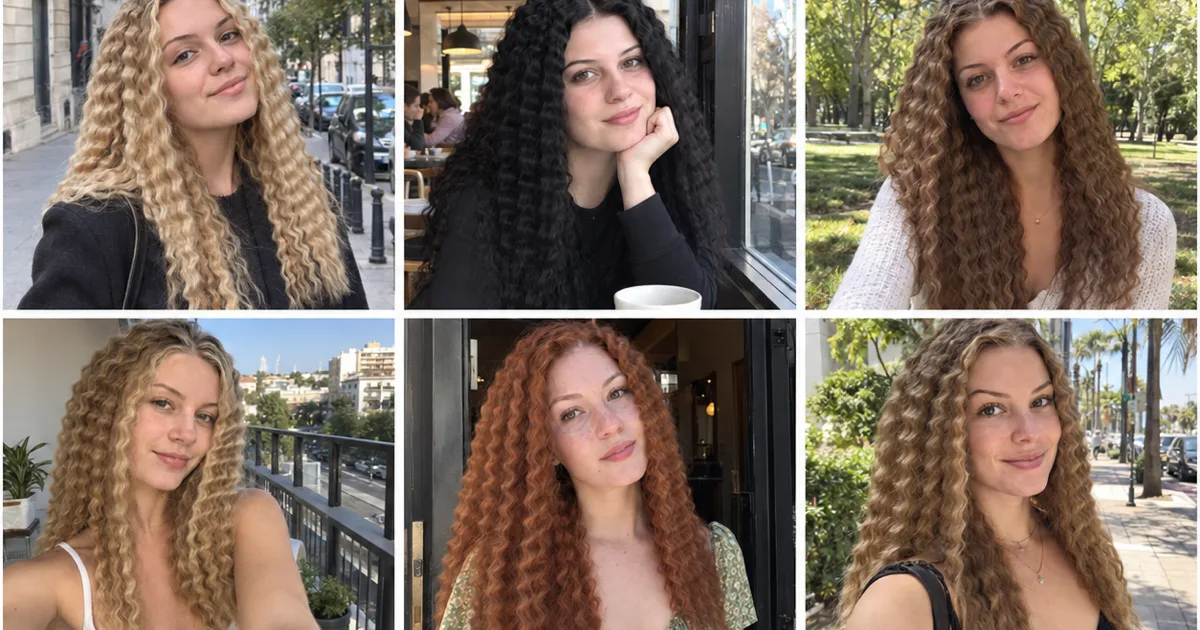
Crimped hair is hair pressed into a continuous zigzag by flat ridged plates, root to end, and the single most useful thing about it is not the pattern. It is the width. Crimping is the only heat style that makes hair bigger instead of longer, which is why it belongs in your routine even if you never want to look like 1987.
Most guides treat crimping as a curl alternative. It is not. A curl adds shape. A crimp adds volume, and it adds so much of it that the smartest version of this look is the one nobody can see: crimp only the under-layers at the root, leave the top sheet smooth, and you get real lift at the roots with no visible zigzag. That trick is below, along with 10 crimped looks by hair length, the at-home method, and what to do when you do not own a crimper.
What crimped hair actually is
Crimped hair is made by clamping sections between two flat ridged plates. The ridges press a fixed zigzag into the hair shaft: sharp corners, straight runs between them, an identical repeat every half inch or so. That is the tell. A curling iron wraps hair around a round barrel and gives you a rounded S. A crimper folds it, and folded hair stacks against itself instead of lying flat, which is where the volume comes from.
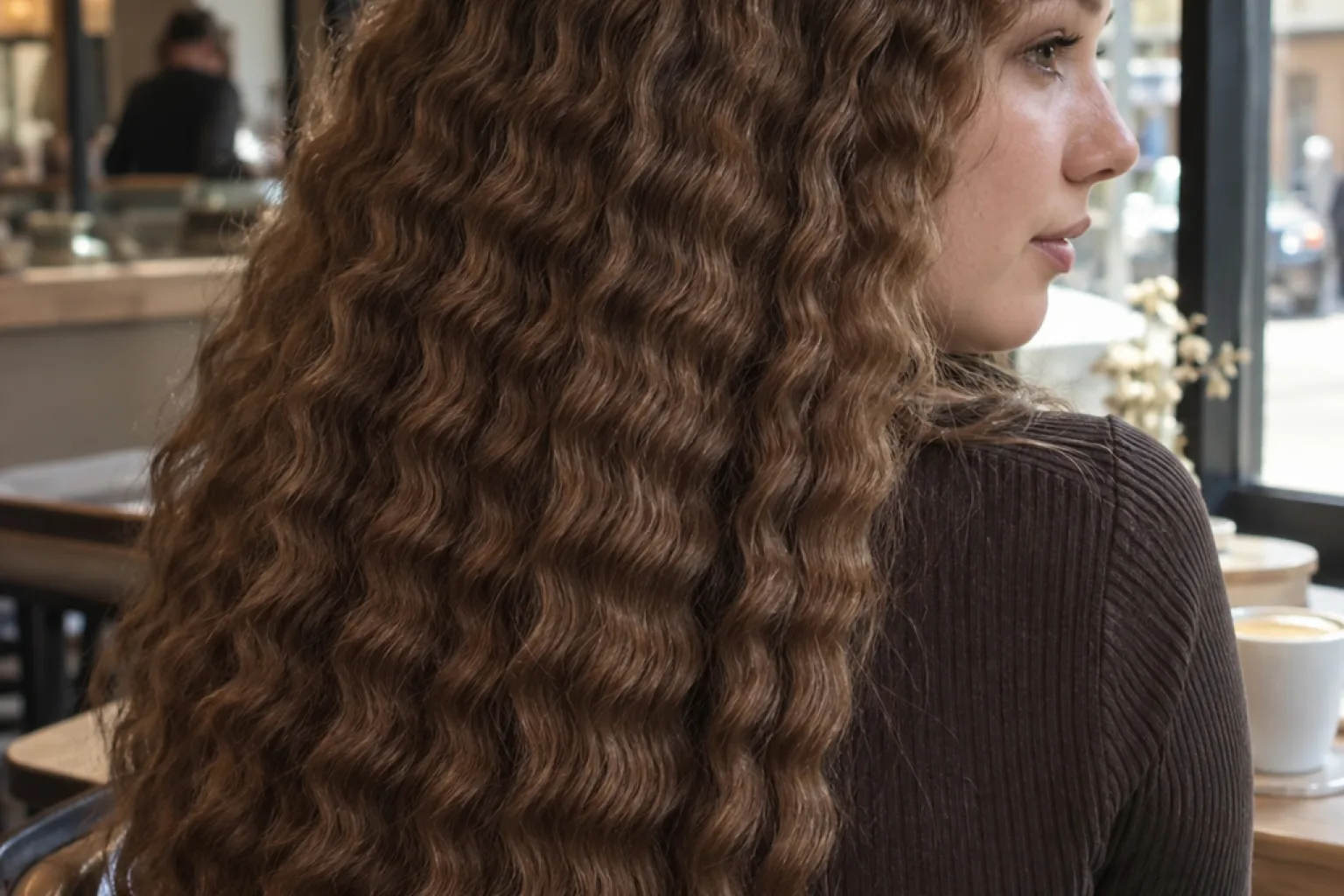
The pattern is also the reason crimped hair looks bigger the shorter it is. Every bend eats a little length and pushes the hair outward. On waist-length hair the effect is a wider curtain. On a bob it is a full triangle. Same tool, completely different silhouette, and that is the part worth planning around before you plug anything in.
Say this to your barber
I want a tight even crimp from root to end, not curls, and I want to keep the length I have.
Crimped versus curled versus waved
These three get used interchangeably and they do not do the same job. Crimping is angular and adds width. Curling is rounded and adds movement. Waving is loose and adds softness. If you want your hair to read as bigger, only one of them works. If softness is what you are after instead, our guide to waves that actually last covers the flat iron twist and the overnight braid.
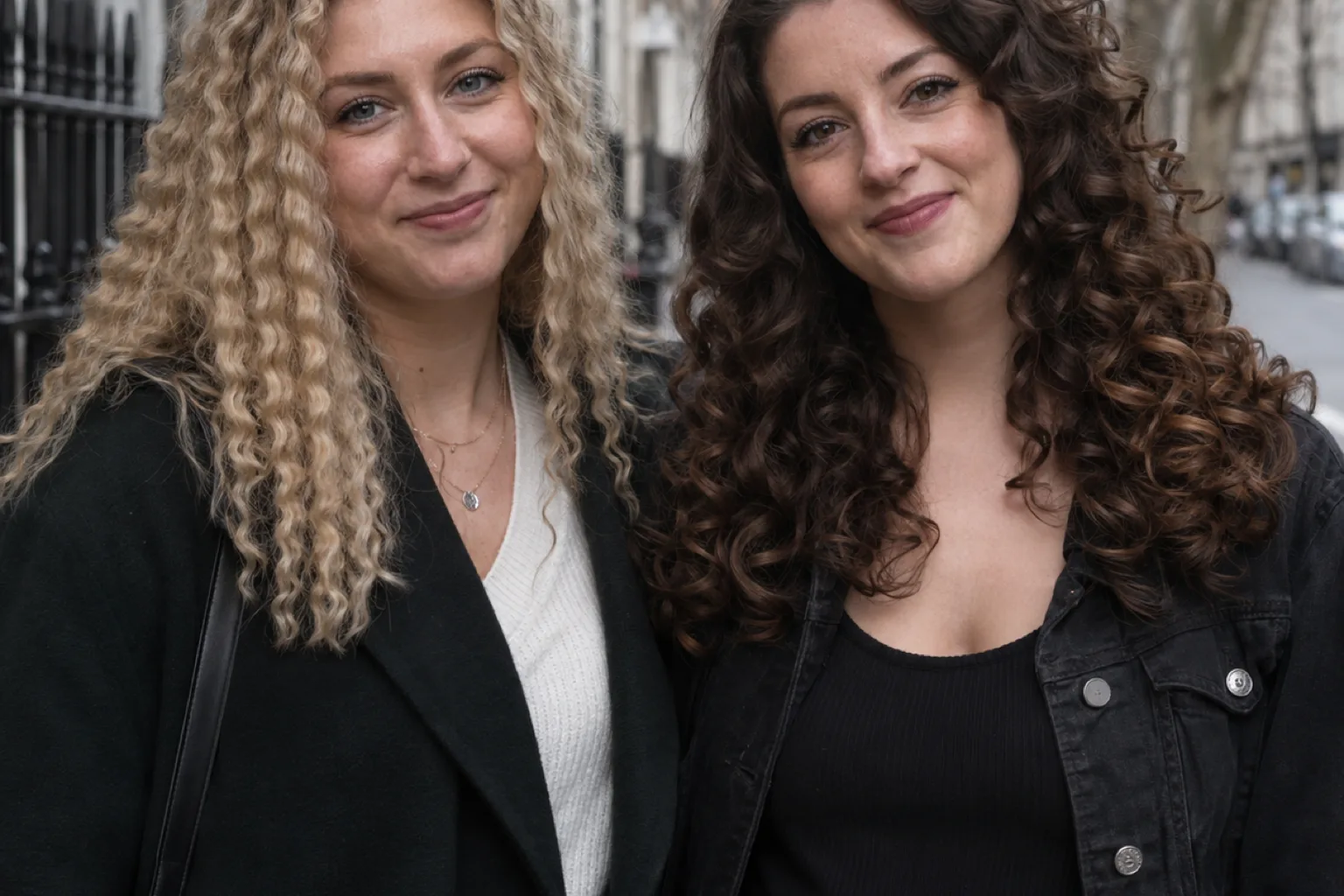
The practical difference is how long each one survives. A crimp is a crease, so it holds far better than a curl in humidity and holds overnight in a loose braid. A curl relaxes as it drops. If you have fine hair that refuses to keep a curl past lunchtime, this is the reason to try crimping rather than buying a third curling iron. Natural wave patterns behave differently again, which is worth knowing if your hair already has a soft S-bend of its own.
The crimp nobody sees
Here is the part the SERP does not tell you. You do not have to wear the zigzag.
Take the top inch of hair and clip it out of the way. Crimp only what is underneath, and only the first two or three inches from the root. Then drop the smooth top sheet back over it. The crimped layer underneath acts like scaffolding and holds the smooth hair up and away from your scalp. From the outside it looks like thick, glossy, expensive hair. Nobody can see a single bend.
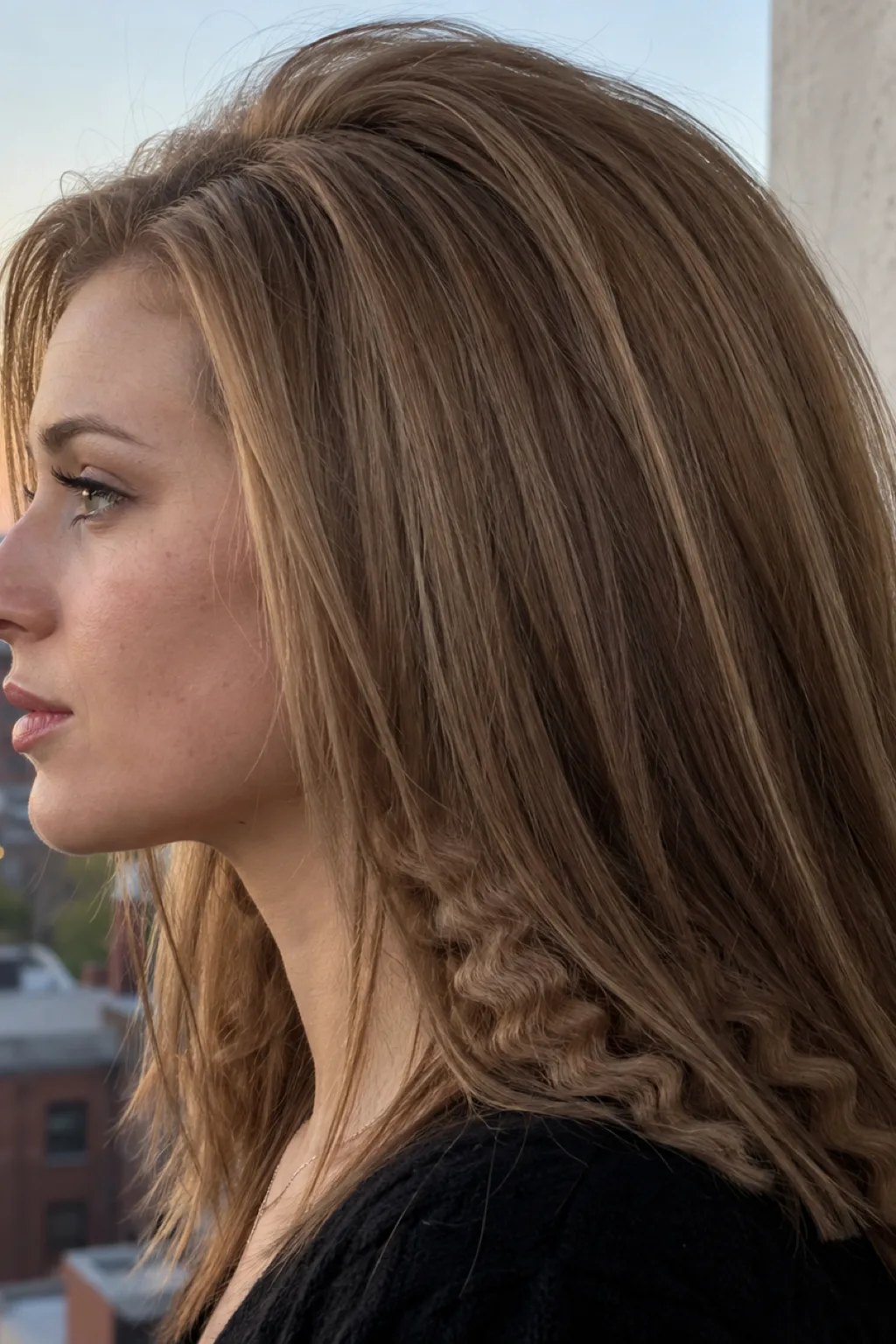
This is the version that earns a place in a normal week. It survives a full day, it works under a ponytail, and it costs about four minutes. If your hair is fine or flat at the roots, this will do more for you than any volume product or fluffy blowout, because it is structural rather than cosmetic.
Two rules make or break it. Stay off the last half inch of root nearest the scalp, or you will see the crimp when your part moves. And do the under-layers only at the back and sides where they are genuinely hidden, not the pieces that frame your face.
How to crimp your hair at home
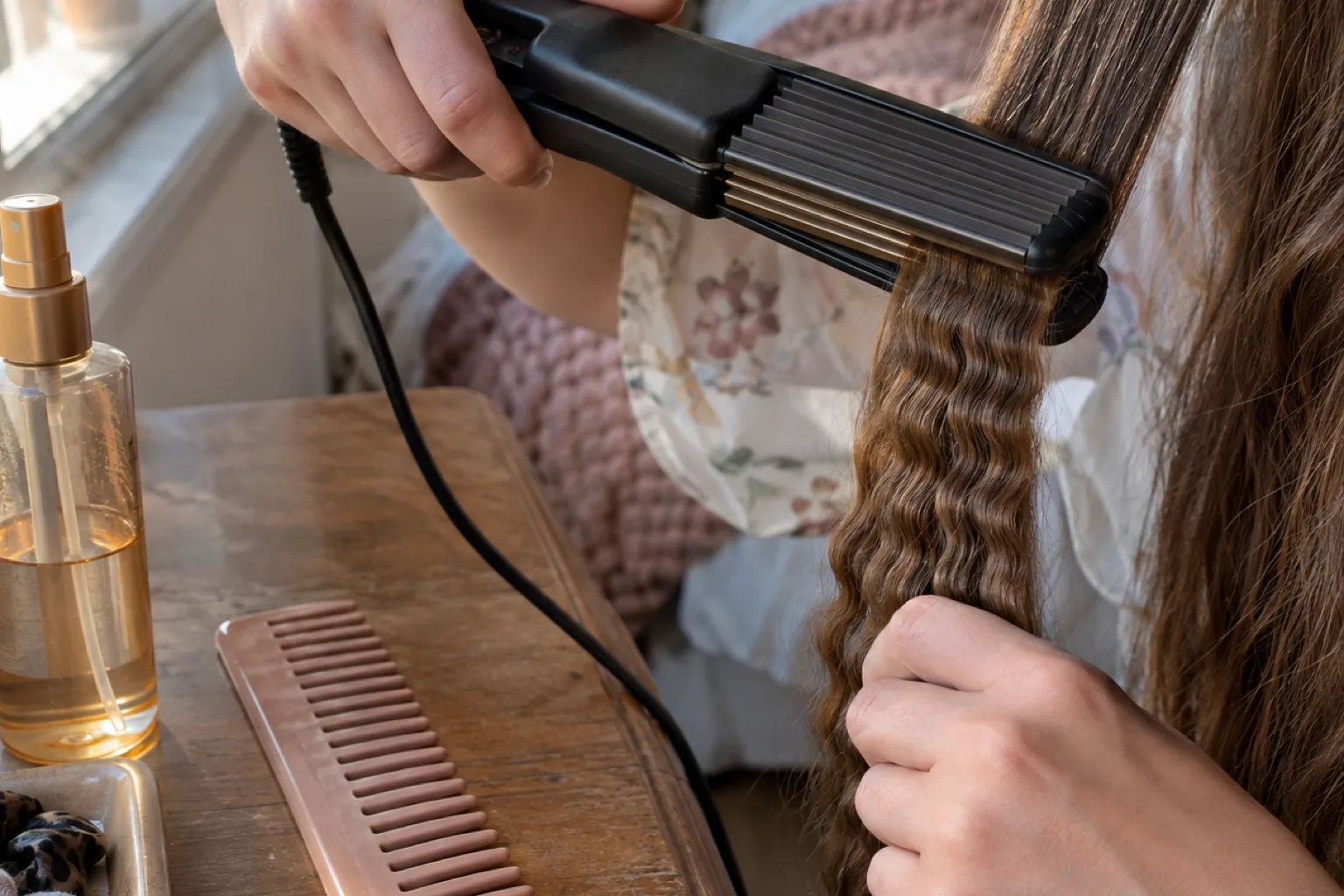
How to crimp your hair
- Start on dry, brushed hair
Crimping wet hair boils the water inside the shaft and that is what causes the damage people blame on the tool. Hair must be fully dry, and brushed through, because a tangle crimped into the pattern stays there.
- Spray heat protectant section by section
Not a cloud over the top of your head. Lift each section and spray it before it goes near the plates. The American Academy of Dermatology puts heat protection ahead of tool choice for exactly this reason.
- Set the temperature to your hair, not to the dial
Fine or colour-treated hair sits around 300F. Medium hair takes 350F. Coarse or very thick hair can handle 400F. Starting high to save time is how you get the crunchy, dull crimp that never looks intentional.
- Work in one inch sections from the nape up
Wider sections do not press evenly, so half the section comes out smooth. Clip everything else away and build upward in horizontal rows.
- Clamp for five seconds, then move down the length
Close the plates at the root, hold five seconds, release, and reposition so the top edge of the plates sits exactly where the last bend ended. Overlapping gives you a double crease. Leaving a gap gives you a straight patch.
- Let it cool completely before you touch it
The pattern sets as the hair cools, so brushing or scrunching it warm undoes the whole thing. Wait two minutes, then break the texture up with your fingers only.
No crimper? Three methods that actually work
You can get the pattern without owning the tool, and one of these is better than the tool.
Tight braids overnight. Six to eight small plaits on damp hair, slept in, brushed out lightly in the morning. This gives you the softest crimp of the three and it is the only heatless option, so it is the one to use if your hair is bleached. The same principle drives sectioned braid styles that hold shape for days.
A flat iron on a braid. Braid a section, run a straight iron slowly down the braid, let it cool, unravel. Slower than a crimper and the pattern is less regular, which some people prefer.
A straightener with a zigzag hand. Clamp, turn your wrist a quarter turn, move down, turn back. It takes practice and the result is uneven, but it works in a hotel room.
What none of them give you is the uniform machine-pressed repeat. If you want the sharp 80s version, you want the plates.
Crimped hair by length
This is the decision that matters, because crimping changes your silhouette more than it changes your style. Pick by what the width does to your proportions.
| Hair length | What crimping does | Verdict |
|---|---|---|
| Pixie to ear length | Compact halo, lifts flat crowns | Excellent for fine hair, adds visible density |
| Chin-length bob | Wide triangle, much broader than shoulders | Bold. Great on long faces, heavy on round ones |
| Collarbone lob | Full through the body, tapers at the ends | The easiest length to wear, most forgiving |
| Shoulder length | Big volume with the length still readable | Best all-rounder, works with bangs |
| Mid-back and longer | Wide curtain, dramatic, needs 30 minutes | Highest impact, highest time cost |
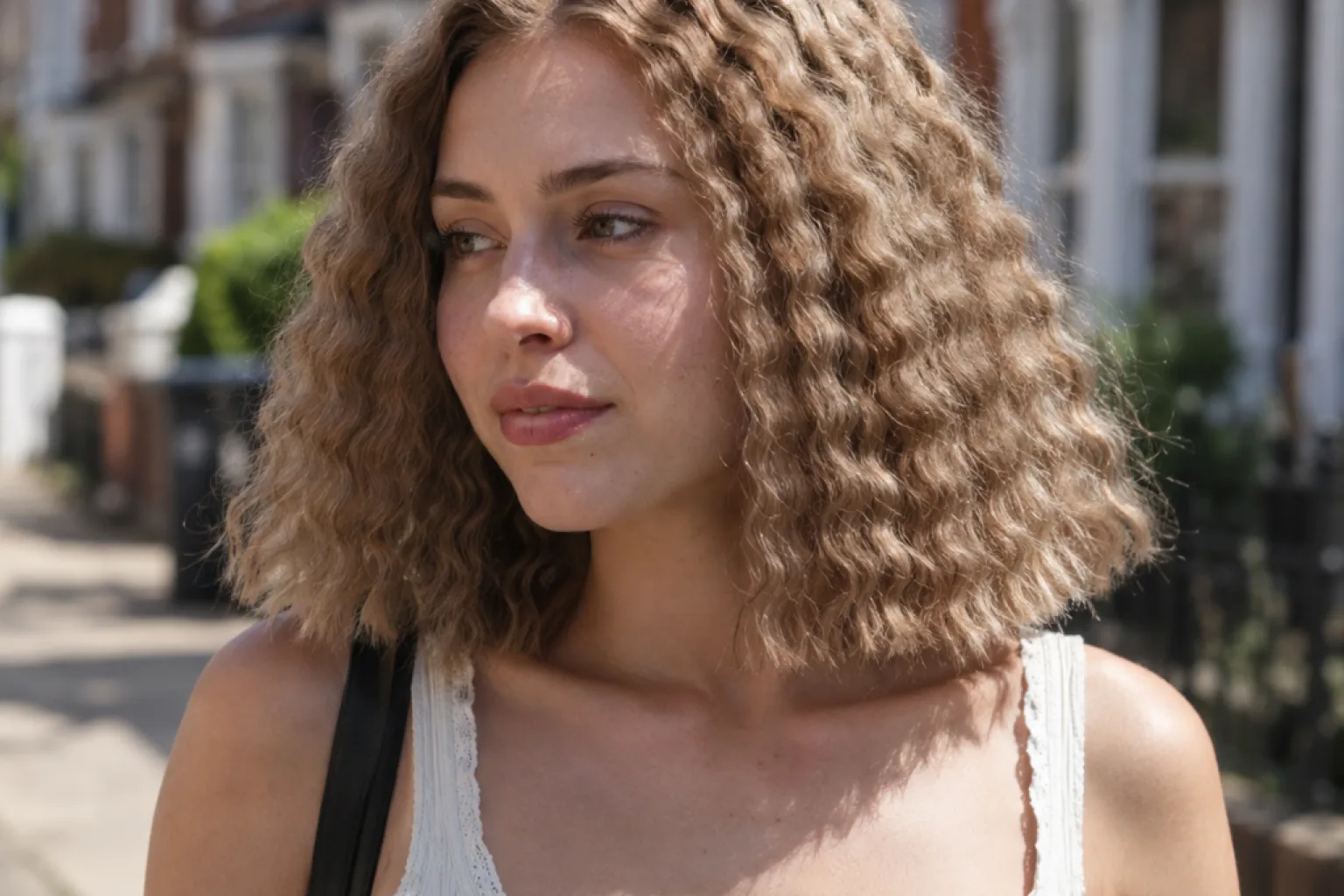
The width is the reason face shape genuinely applies here where it usually does not. Crimping adds horizontal volume at the jaw and cheekbones, which flatters a long or oval face and fights a round or square one. If you have a round face and you want the texture, keep it to longer lengths where the width sits below your jaw, or use the hidden under-layer version instead.
Measure it instead of guessing
Both numbers in the same unit — the answer is a ratio, so it does not matter which.
Under 1.15 reads round, 1.15 to 1.5 reads oval, over 1.5 reads long. Oval and long split on the jaw rather than the ratio: an oval tapers toward the chin, a long face runs straight down.
A shoulder-length cut is where most people land. It is long enough that the crimp reads as volume rather than a costume, and short enough to finish in 15 minutes. On a layered bob the layers break the pattern up and soften the triangle, which is usually an improvement.
Yours could be here.
Start with one selfie.
One photo, twenty seconds, and you'll know. Free account, no card for your first render.
Ten crimped looks, sorted by length
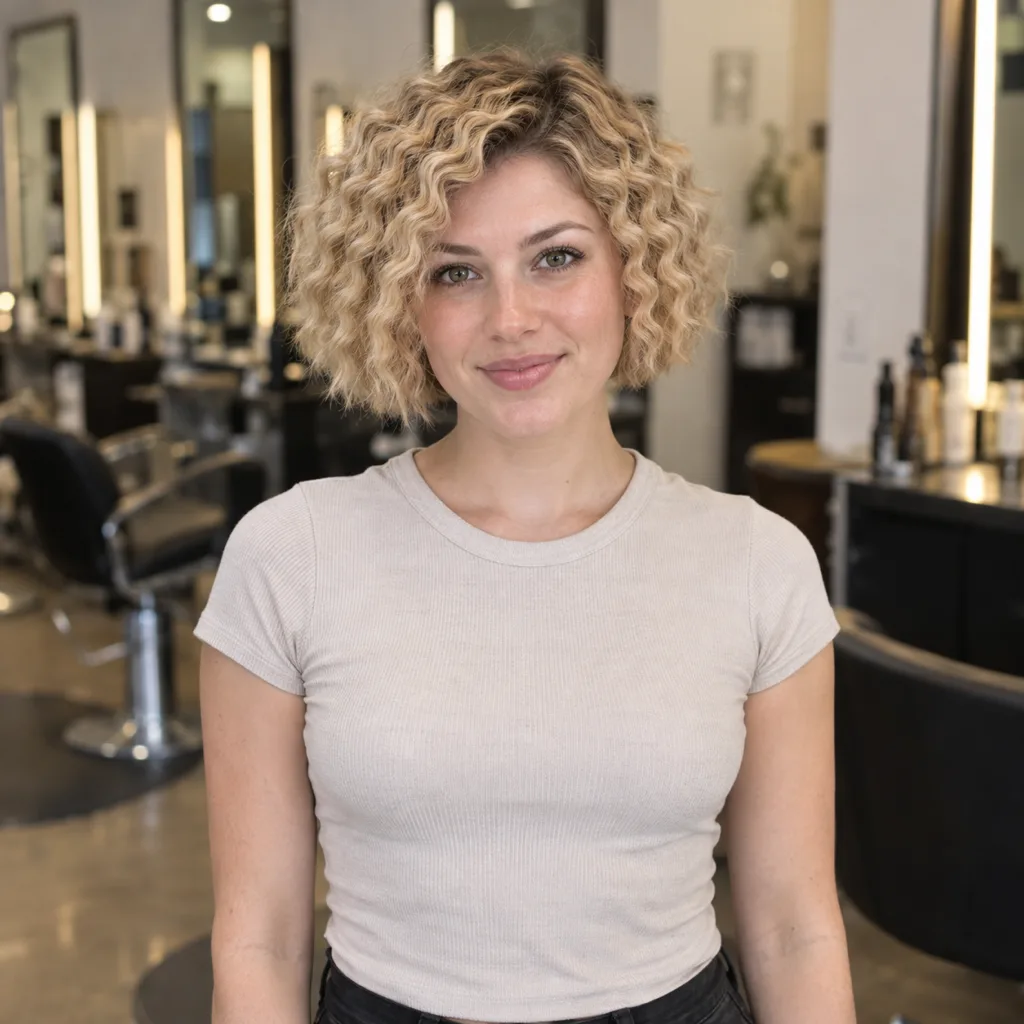
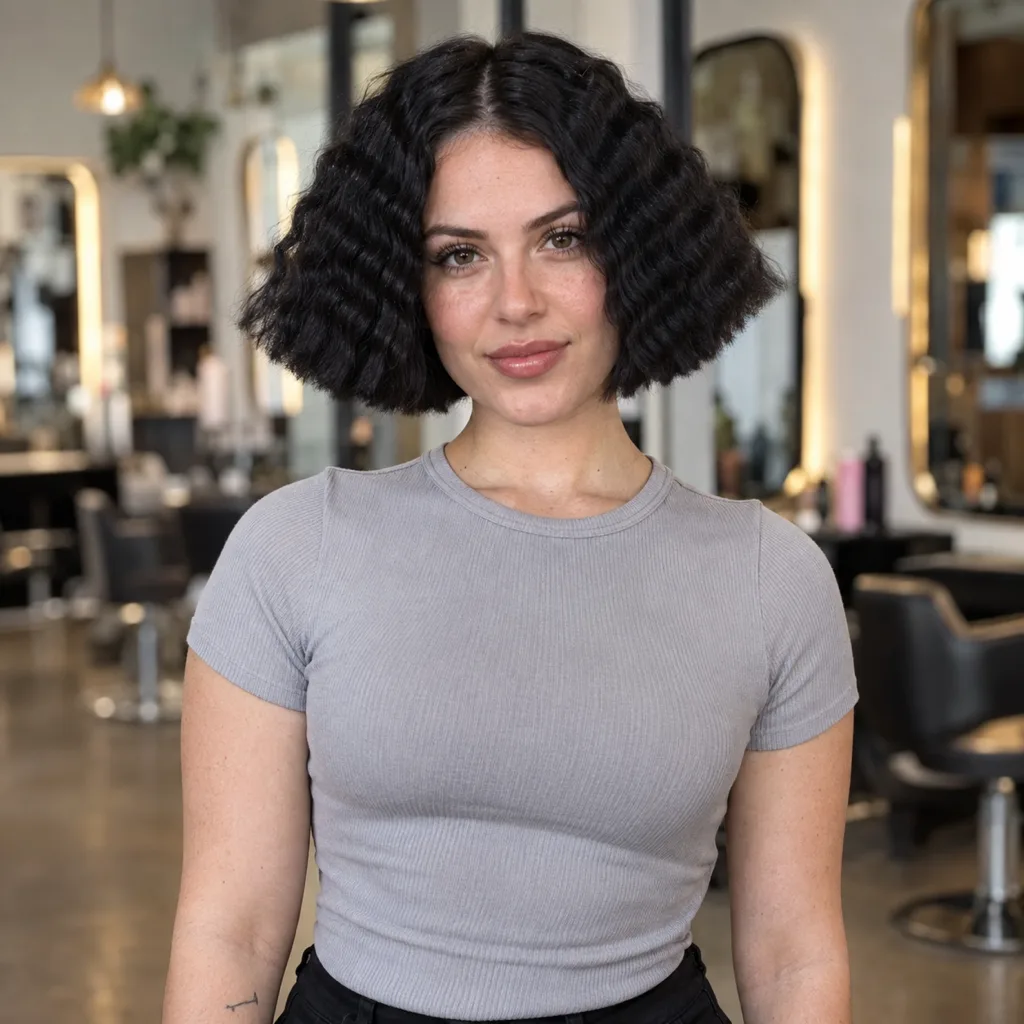
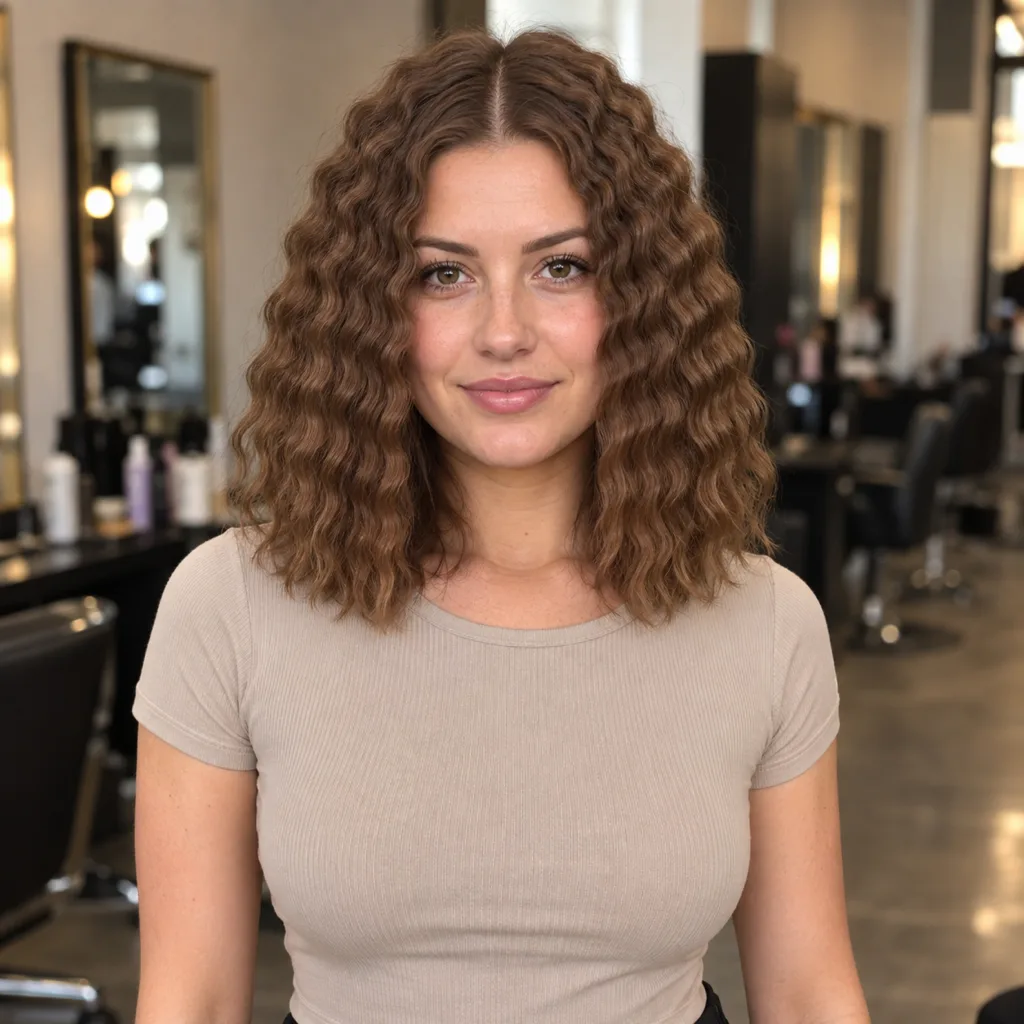
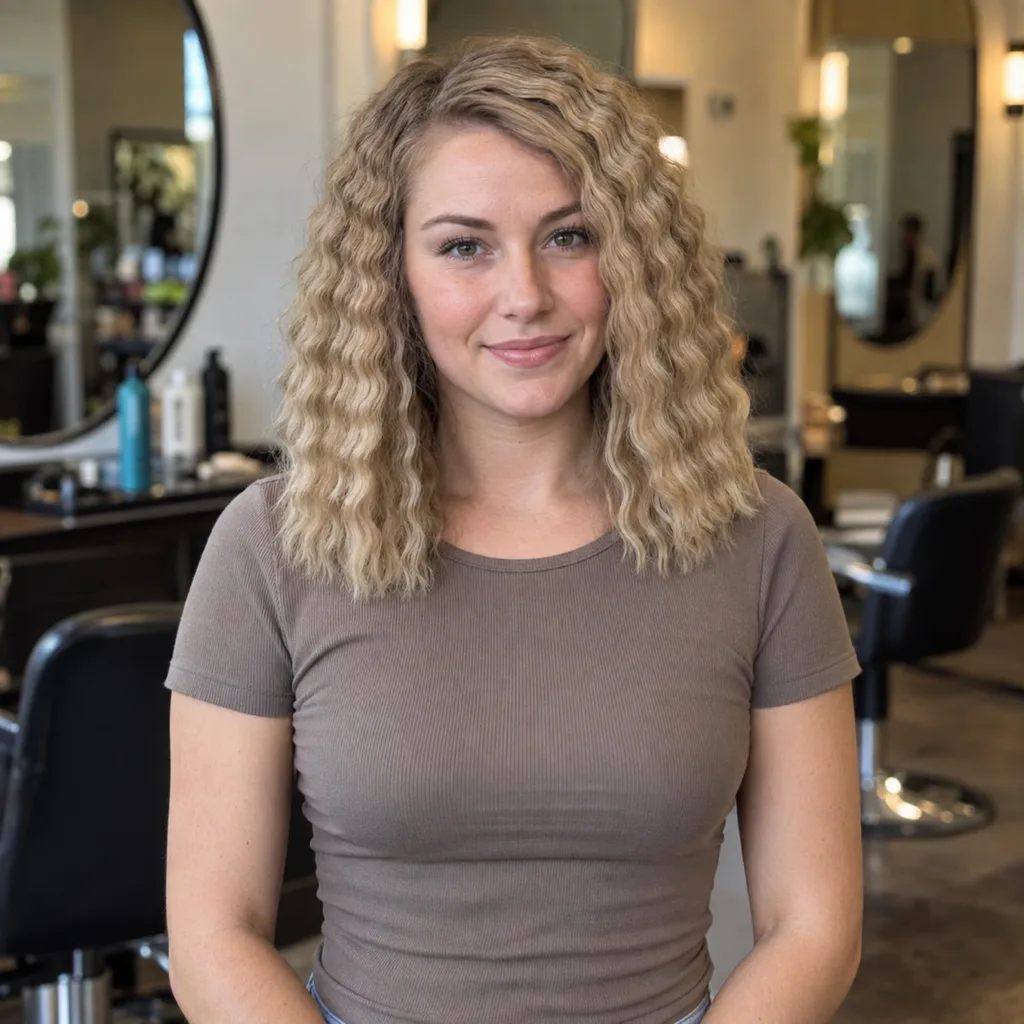
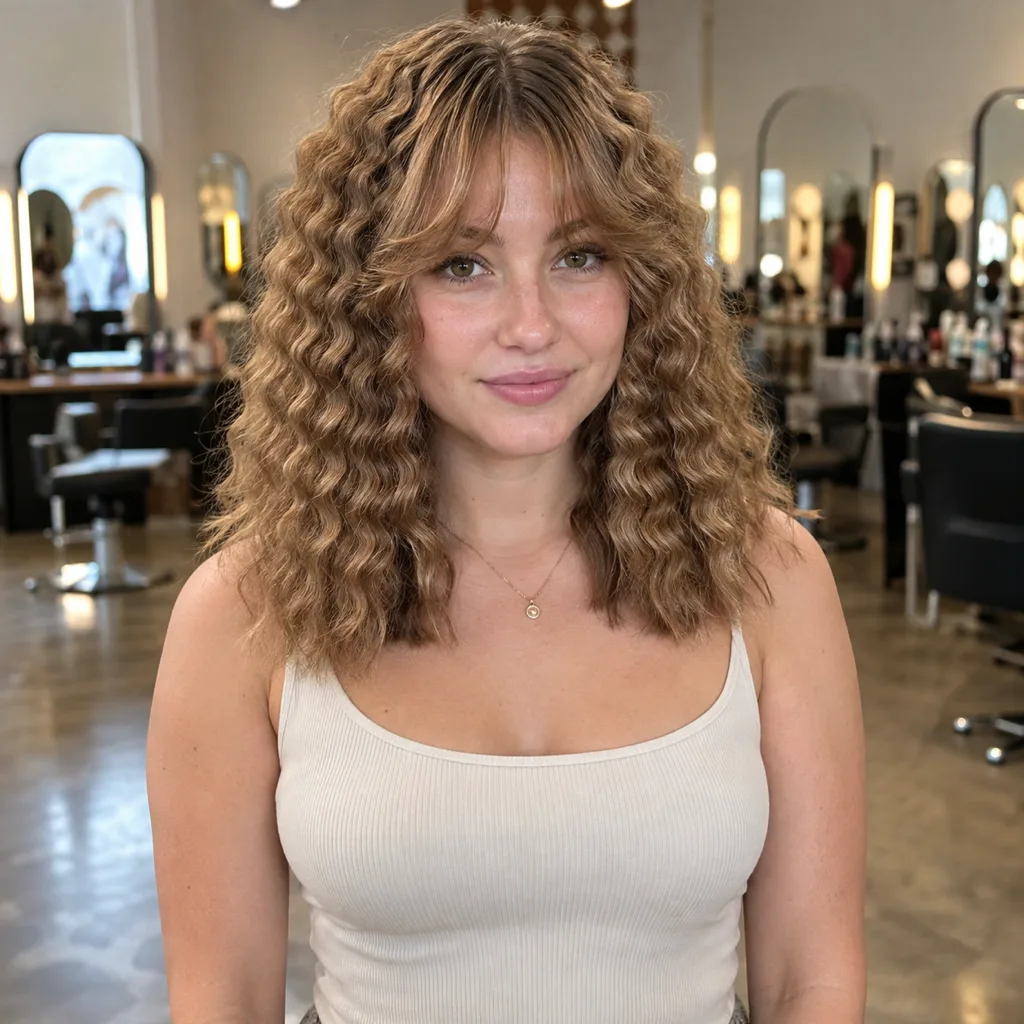
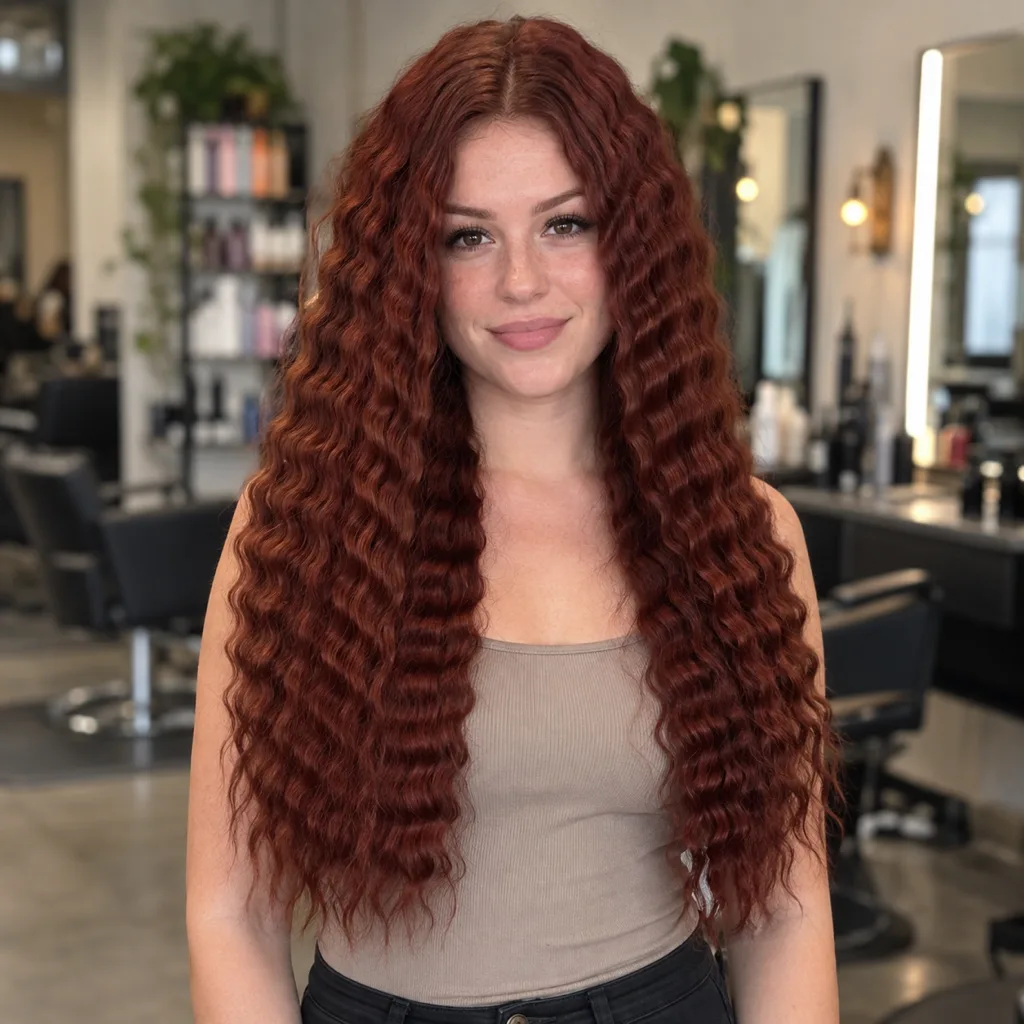
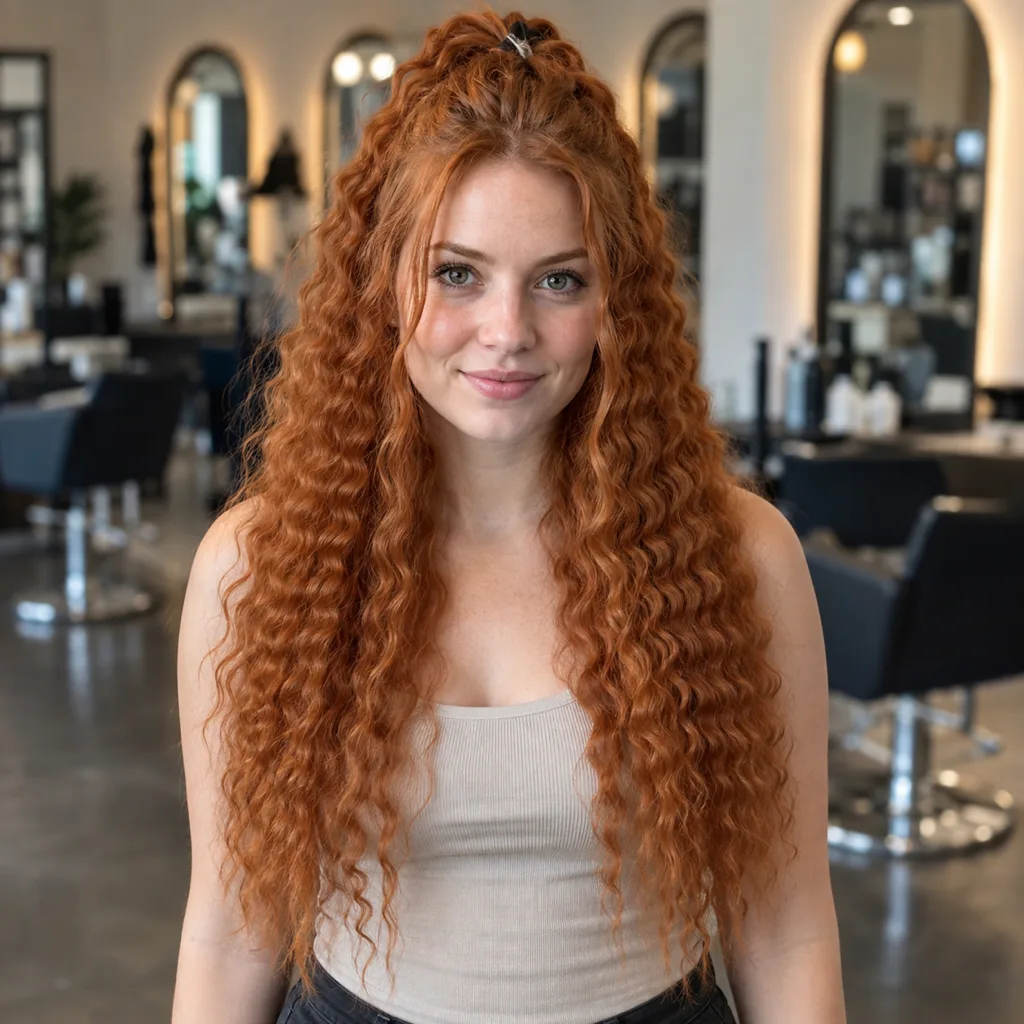
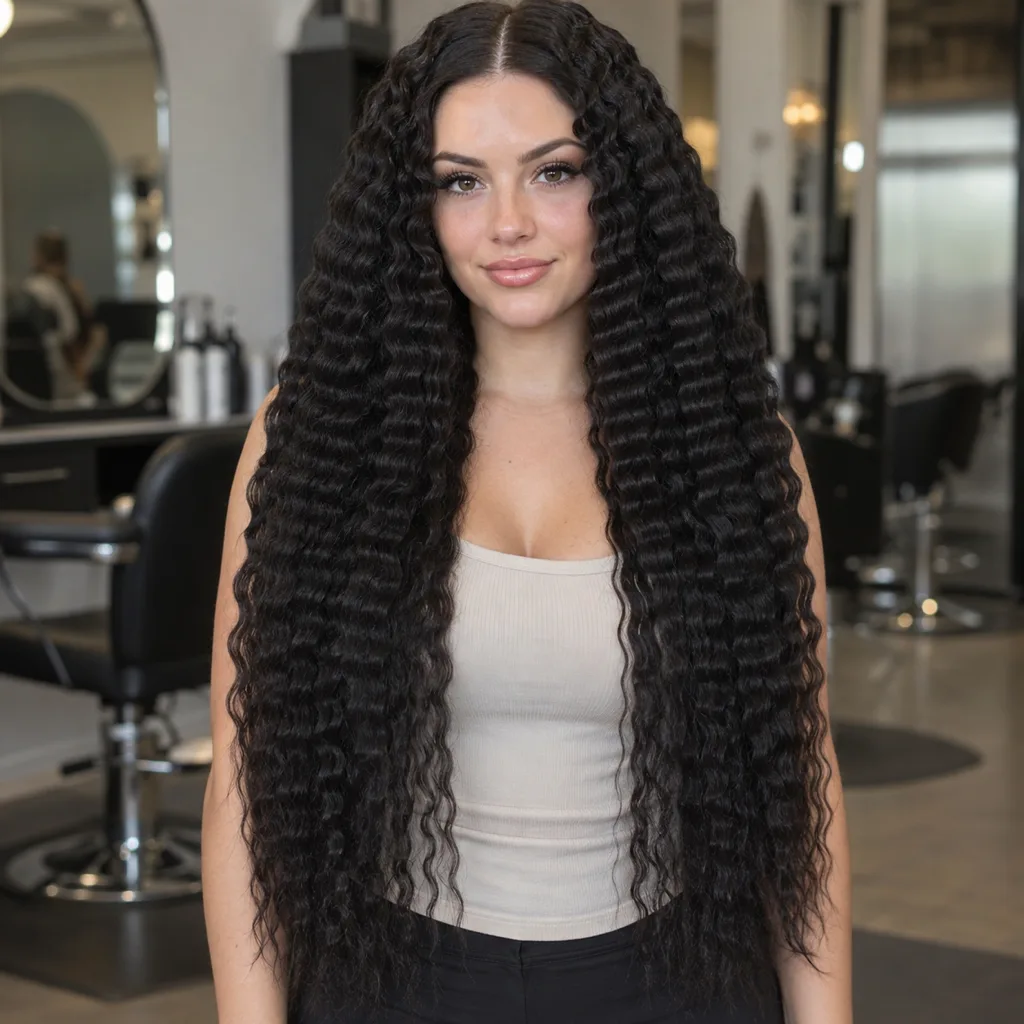
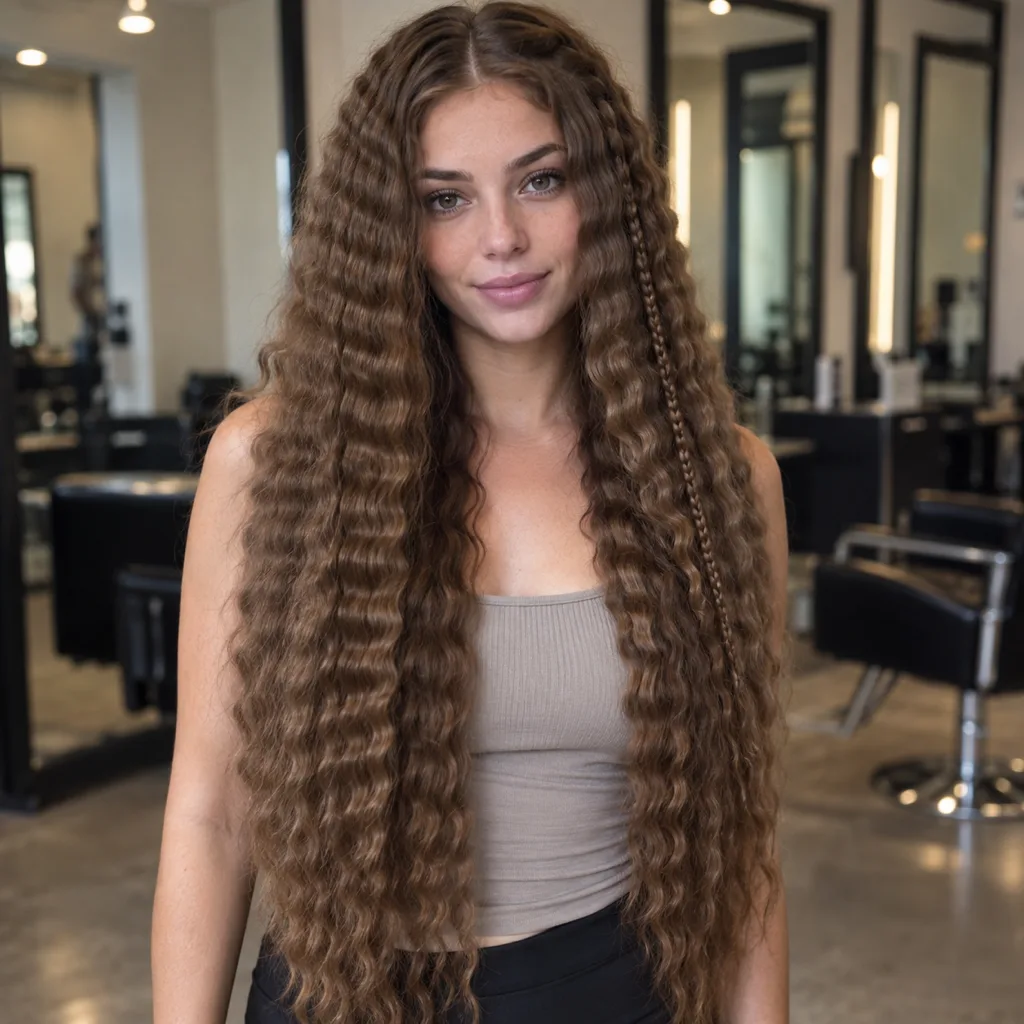
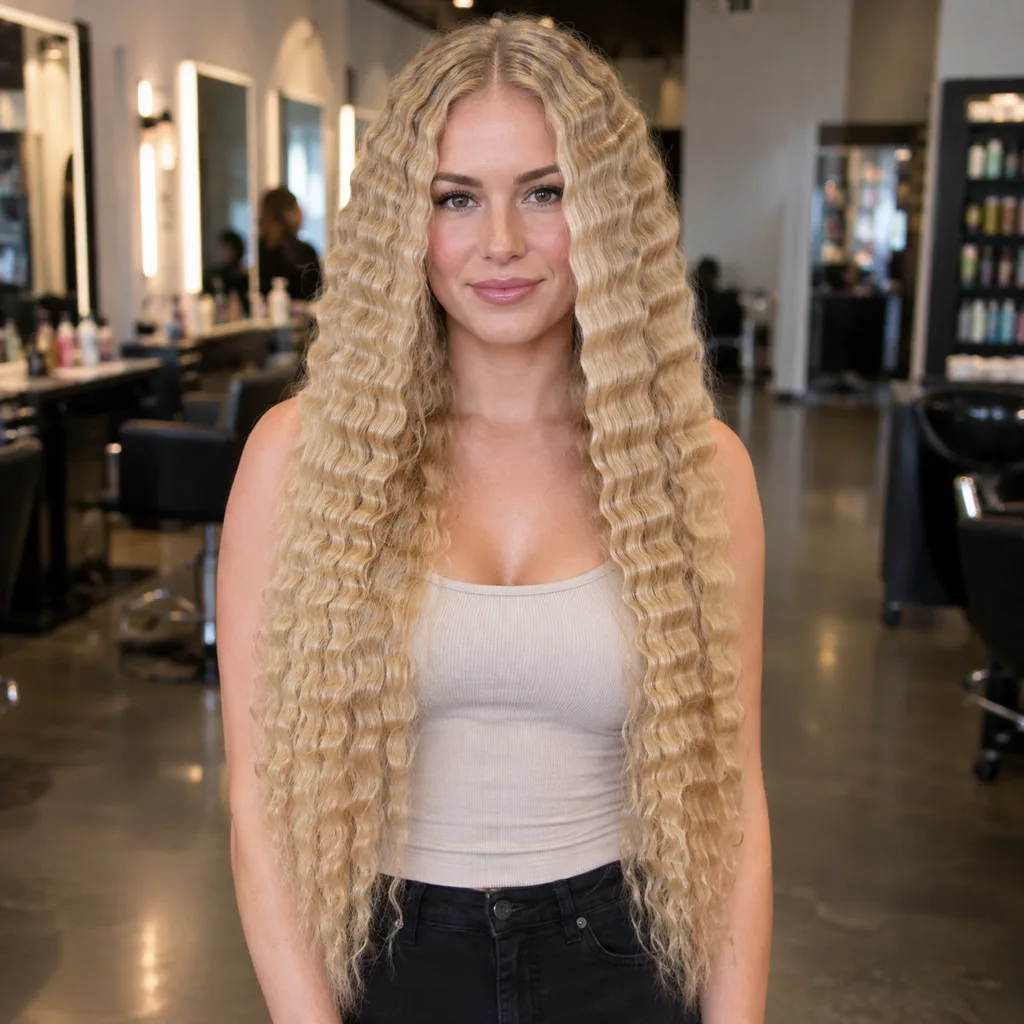
Everything below is the same crimp pattern at the same tightness. The only thing changing between pictures is how much hair it is pressed into, which is the single biggest factor in how crimping will look on you.
Gallery10 photos · tap to enlarge
 Try this on me
 Try this on me
 Try this on me
 Try this on me
 Try this on me
 Try this on me
 Try this on me
 Try this on me
 Try this on me
 Try this on me
The half-up version is worth singling out. It keeps the texture visible while taking the width off your face, which solves the round-face problem without giving up the look. Most half-up styling transfers straight onto crimped hair because the crease holds the section in place without a single pin.
What goes wrong
Crimping damp hair. The most common mistake and the most expensive one. Water trapped in the shaft turns to steam against the plates and blows out the cuticle. That is the crunch you cannot condition away.
Sections too wide. If the plates cannot close fully on the section, only the outside gets pressed. You end up with a head that looks half finished, and adding a second pass over the same section doubles the heat for no gain.
Skipping the cool-down. Brushing warm crimped hair drops the pattern in about 20 seconds. Everyone does this once.
Crimping bleached hair on a high setting. Bleached hair has less internal structure to hold the crease and far less tolerance for 400F. Use the overnight braid method instead and accept the softer pattern.
Treating it as all or nothing. A full head of tight zigzag is a strong look with a narrow window. The under-layer version, or crimping four or five random sections and leaving the rest straight, reads as texture rather than as a theme night.
Is it free to see crimped hair on your face?
The first look on Hairstyle Atlas is free and needs no card. That gets you one hairstyle and one colour on your own photo, front view, which is enough to answer the question that sends most people to this page: does this much width suit my face. Paid plans start at $9 a month for 150 credits, all 120 plus cuts and colours, and HD downloads without a watermark.
That is the honest answer to why the tool exists here. The braid method costs nothing and works, but you find out tomorrow morning whether the width suits you, after you have slept on eight plaits. A photo answers it in about a minute. Everything else on this page, the sections, the temperatures, the no-crimper methods, works whether or not you ever upload anything.
The short version
Crimp for width, not for curl. If you want the full 80s pattern, work on bone-dry hair in one inch sections at the lowest temperature that holds, and let it cool before you touch it. If you just want your hair to look twice as thick on a Tuesday, crimp the under-layers at the root and leave the top smooth, which takes four minutes and nobody will ever spot.
The only thing worth checking before either is what the extra width does to your face. That is a two-minute answer and it changes which version you should be doing.
Frequently asked questions
Crimping means pressing hair between two flat ridged plates so it takes on a fixed zigzag pattern. The bends are angular rather than rounded, they repeat every half inch or so, and they run the whole length of the section. The effect is more volume and width rather than curl or movement.
Both, in different forms. The full-head tight crimp peaked in the mid to late 1980s alongside big blow-dried hair. The 1990s kept it but used it in pieces, often crimping a few sections under straight hair, which is closer to how it is worn now.
It is no worse than any other heat tool at the same temperature, and the damage almost always comes from technique rather than the crimper. Crimping damp hair, running above 350F on fine or bleached hair, and doing repeat passes over the same section are the three things that cause it. Dry hair, heat protectant and one pass keep it manageable.
Crimp if you want volume, width or a texture that survives humidity. Curl if you want movement, softness or a rounded shape. Fine hair that drops curls by midday usually does much better with a crimp, because a crease holds where a curl relaxes.
Braid damp hair into six to eight tight plaits, sleep in them, and brush the pattern out lightly in the morning. You can also braid a dry section and run a flat iron slowly down the braid, or clamp a straightener and rotate your wrist a quarter turn as you move down the length. The braid methods give a softer, less regular pattern than plates.
Yes, and it is one of the best uses for it. On ear-length and chin-length hair the crimp builds a compact halo that adds obvious density, which is why it suits fine short hair so well. The tradeoff is width, so expect a much broader silhouette than the same cut worn straight.
A crimp on dry hair typically holds one to two days, and longer than a curl of the same age, because a crease is more stable than a coil. Humidity softens it rather than dropping it. Sleeping in a loose braid keeps most of the pattern into a second day. It is gone the moment the hair gets wet.
Yes, though mostly not as the full 80s head. The current versions are partial: a few crimped sections under straight hair, crimped under-layers used purely for root volume, and crimped texture inside braided or half-up styles. Hair tools have kept crimping plates in the range because that partial use never went away, much like other revived styling like hair tinsel.
Preview it on your own photo: Virtual Hair Color Try-On.
Share article
About the author
More articles
Women's Haircuts · 14 min
Bleached Hair: How Light Yours Can Go, 14 Shades, Aftercare
How light your bleached hair can go depends on where it starts. See 14 bleached shades on one cut, what each starting color can reach in one session, how toner finishes the job, and the aftercare that keeps it soft.
Women's Haircuts · 16 min
Waves Hair: How to Get Beach, Loose and Hollywood Waves That Last
Waves hair is about what you leave straight. How to get beach, loose, Hollywood and heatless waves, which wave suits your hair type, and why your waves keep falling out.
Women's Haircuts · 15 min
Fino Hair Mask: Who It Suits, How to Use It, and Its Limit
The Fino hair mask makes dry, bleached and frizzy hair smooth and shiny in one use, mostly by coating it. Here is what is in the jar, which hair types it suits, exactly how to use it, and what to do when the ends are past a mask.